A group of freshman students pose for the camera during their student orientation at the APC Auditorium as the School Year 2024-2025 starts.
Asia Pacific College (APC), a part of the SM group, continues to invest back in its students and the school through degree programs certified by international and local standards institutions. With a grand vision of university status on the horizon and strategic partnerships with esteemed institutions such as the University of Adelaide to bolster the quality of education it provides, APC is proving that it is in the business of social good.
The SM group’s advocacy in championing education was realized when SM founder Henry Sy, Sr. through SM Foundation, Inc. partnered with IBM Philippines to establish APC in 1991 as a nonstock, nonprofit institution.
“APC envisions becoming a leading institution in the region,” said APC President Dr. Ma. Teresita ‘Tata’ Medado. “Aiming to become a university is our mission in the next 4to 5 years. APC has proven excellence in innovative teaching and learning. It is our goal to expand programs and reach out to more students especially those from underserved communities.”
At the start of the year, APC received certification from the ASEAN University Network-Quality Assurance (AUN-QA) for the following programs: Computer Engineering, Computer Science, Information Technology, and Multimedia Arts. APC holds the distinction of being a Center of Excellence in IT Education since 2007 and a Center of Development in Computer Engineering since 2009.
APC’s computer engineering, computer science, information technology and multimedia arts programs are now certified by the ASEAN University Network-Quality Assurance (AUN-QA) Standard.
The AUN-QA certification indicates that the programs recognized have met the high standards of quality in terms of teaching, research, and overall academic delivery.
“This recognition is a testament to our commitment to excellence in education and our dedication to providing top-tier academic programs,” added Dr. Medado.
APC’s international accolade is further complemented by its consistent delivery of quality education retaining its Autonomous Status from the Commission on Higher Education (CHEd) for seven consecutive years. The status was granted by CHEd citing APC’s steady high performance in areas such as curriculum development, faculty qualifications, research output, and community service.
Meaningful partnerships
The institution first established a landmark partnership with Carnegie Mellon University- Australia (CMU-A) in 2022 and continues to expand its collaboration with the University of Adelaide (UofA) in 2024. This led to the delivery of capacity-building programs for faculty, staff, and government professionals, with the support and funding from Australia Awards Scholarships, a program offering candidates from a wide range of countries to undertake postgraduate studies in Australia.
Student welfare is also a part of APC’s initiatives with the recently launched Digital Defender Program in the last quarter of 2024 together with Gogolook, a key player in the TrustTech industry. The Taiwan-based developer introduced the Whoscall application, a global anti-scam software that provides users with top tools and free features to help them avoid online scams.
APC students join the launch of GogoLook’s Digital Defender program, a new partnership of the college to equip the community with cybersecurity measures for an empowered and safer digital space.
“We seek to empower students with greater awareness of online safety and cybersecurity through this app,” said Dr. Medado.
“The value of GogoLook extends to professional ethics and character formation. We are preparing our students to become responsible global citizens,” she added.
As part of APC’s vision to become a university, Dr. Medado said the school aims to be more responsive to industry needs in order to bring access to quality education for all.
For the coming year, APC aims to uphold the standards of quality education that it has set in its QS 5-star ratings across four categories namely:inclusivity through a wide array of scholarships; online learning via Hyflex (Hybrid-Flexible), which emphasizes empathy, equity, and engagement; flexible teaching methods; and, employability with 92.8% of graduates securing key positions in the industry.
APC is now focusing on improving the category of internationalization emphasizing transnational collaborations, exchange programs, international students, and other related initiatives.
This is aligned with its mission of giving educational opportunities through differentiated and enhanced pathways to help develop productive citizens of the global economy.
Spotlight is BusinessWorld’s sponsored section that allows advertisers to amplify their brand and connect with BusinessWorld’s audience by publishing their stories on the BusinessWorld Web site. For more information, send an email to online@bworldonline.com.
Join us on Viber at https://bit.ly/3hv6bLA to get more updates and subscribe to BusinessWorld’s titles and get exclusive content through www.bworld-x.com.
An esteemed panel of industry leaders recently selected the Platinum Award winner among the Gold awardees of this year’s Araw Values Awards.
The Platinum Judging was chaired by Ruperto “Jun” S. Nicdao, Jr., chairman of the Advertising Foundation of the Philippines (Ad Foundation) and a longstanding advocate for Philippine advertising and communications. Mr. Nicdao is also the president of the MBC Media Group and has held various prestigious positions, including serving as Chairman of the Board for the Kapisanan ng mga Brodkaster ng Pilipinas (KBP).
Joining Mr. Nicdao in the Special Jury are influential figures in various fields, including politics, culture, and communications.
Senator Grace Poe-Llamanzares, incumbent Chairperson of the Senate Committee on Finance and former Chairperson of the Movie and Television Review and Classification Board (MTRCB), has served in the Philippine Senate for two terms and is a recognized leader in government and public policy.
Congressman Roman T. Romulo, currently serving as the Chairman of the House Committee on Education, has been a member of the House of Representatives for three terms and has consistently championed education reform in the country.
Ed G. Sunico, Undersecretary for Communications at the Department of Trade & Industries and Senior Vice-President for Strategic Communication & Business Development at Unilever Philippines, has been an integral part of the advertising industry, having served on the Ad Foundation and as Chairman of the 9th Araw Values Awards Organizing Committee in 2014.
Felice Prudente-Sta. Maria, a multi-awarded author and renowned cultural leader, has a legacy in cultural advocacy that includes serving as the former president of the Metropolitan Museum and as an opinion columnist on Philippine arts and culture.
PANA Foundation Chair and incumbent 12th ARAW Values Awards Organizing Chairperson Blen Fernando is also part of the jury.
In addition, several other key figures from the ARAW Values Awards Organizing Committee were present in the selection: Ad Foundation Assistant Board Secretary & Executive Director Linda Gamboa, Lito Yabut of the KBP Board, Alan Fontanilla of POD Network, Former ASC Executive Director & Consultant Digna Santos, Amrei Dizon of Vitalstrats Creative Solutions, Vie Matomal of People’s Journal Group, Len Pozon of Pioneer Insurance, Vince Reyes of Executive Decisions IMC, and Liezl Rebullida and Jo Alvero of the Ad Foundation Secretariat.
The Platinum Award is only granted to a campaign that stands out as an exemplary representation of the Filipino spirit. It will be awarded at the Awards Night in March.
Spotlight is BusinessWorld’s sponsored section that allows advertisers to amplify their brand and connect with BusinessWorld’s audience by publishing their stories on the BusinessWorld Web site. For more information, send an email to online@bworldonline.com.
Join us on Viber at https://bit.ly/3hv6bLA to get more updates and subscribe to BusinessWorld’s titles and get exclusive content through www.bworld-x.com.
Technology can be used to predict which customer tends to miss out on their loan payments, Rahul Sharma, its head of collections technology, AI & delivery, said.
Interview by Patricia Mirasol Audio editing by Jayson Mariñas
Eggs are displayed at a shop in Sta Cruz, Manila. — PHILIPPINE STAR/EDD GUMBAN
A REACCELERATION of inflation is still the biggest headwind to the Philippines’ economic outlook this year, which may pose a risk to the central bank’s easing cycle, a Moody’s Analytics economist said.
“The acceleration in inflation is the biggest risk for the Philippine economy and these are coming from both domestic and external factors,” Moody’s Analytics economist Sarah Tan said in an interview on Money Talks with Cathy Yang on One News on Wednesday.
“Domestically, I think the risk is that food inflation remains elevated due to frequent weather disruptions that could hurt domestic supply,” she said.
In January, inflation remained steady at 2.9% although food inflation alone accelerated to 4% from 3.5% in December.
Several storms hit the country late last year, which resulted in billions of pesos worth of agricultural damage.
“Externally, I think we worry that the tariffs imposed by the US could cause global inflation to rise due to the disruptions to supply-chain networks,” Ms. Tan said.
However, she said that the impact of the US President Donald J. Trump’s restrictive trade policies on the Philippines will likely be minimal.
“If we take a step back and look at the trade relationship between the Philippines and the US, it is quite clear that the Philippines’ trade deficit with the US is rather small, especially when you compare that with other economies, be it globally or with ASEAN (Association of Southeast Asian Nations) economies.”
“That really means that the Philippines is unlikely to be high on President Trump’s list,” she added.
Since taking office in January, Mr. Trump has already slapped a 10% tariff on Chinese goods as well as duties on all steel and aluminum imports beginning March.
On the other hand, Mr. Trump’s plan to impose reciprocal tariffs on all countries that charge duties on US imports may have a more significant impact on the Philippines.
“If there’s a universal reciprocal tariff that’s going to be imposed by the US, then that will hurt the Philippines because the duties that are levied on US imports into the Philippines is higher than the other way around,” she said.
“If there is a matching of tariffs, then that will make Philippine goods to the US more costly and less competitive, which will ultimately hurt our Filipino manufacturers and exporters.”
The US is typically the top destination for Philippine-made goods. In 2024, exports to the US were valued at $12.12 billion or 16.6% of total export sales.
“I believe the impact on the Philippines is rather small given the low trade exposure with the US. That said, there are indirect channels of impact on the Philippines,” Ms. Tan added.
RISKS TO EASING Inflationary pressures from these risks could prompt the Bangko Sentral ng Pilipinas (BSP) to be more cautious about further easing, Ms. Tan said.
“If we have inflation accelerating again beyond the BSP’s target, that could delay the timing and magnitude of a potential policy easing in the Philippines,” she said.
“If that is the case, then the combination of borrowing costs and inflation staying higher for longer will be a recipe for further weakening in private consumption which is not great for the economy, given how it’s the main driver of growth.”
The BSP surprised markets after it left the benchmark unchanged at 5.75% at its Feb. 13 meeting. This after the central bank cut rates at three straight meetings since it began its easing cycle in August.
Ms. Tan was the only economist in a BusinessWorld poll of 20 analysts that correctly predicted the hold.
“It is a balancing act that the BSP has played. They have to balance both inflationary risks as well as the strength of the peso.”
“But that said, we don’t expect the pause to be felt very long. In fact, the next rate cut could come as early as in April, which is the next time the Monetary Board will meet,” she added.
Despite the pause, BSP Governor Eli M. Remolona, Jr. has said that a rate cut is still on the table at the Monetary Board’s next rate-setting meeting on April 3.
He also said the central bank is still on an easing path, signaling the possibility of up to 50 basis points (bps) worth of cuts this year.
“With inflation now largely back on target, and GDP (gross domestic product) growth still slightly below the government’s expectations, these will prompt the next rate cut sooner rather than later,” Ms. Tan added.
The Philippines’ GDP expanded by a slower-than-anticipated 5.2% in the fourth quarter. This brought full-year 2024 growth to 5.6%, short of the government’s 6-6.5% target.
Meanwhile, Ms. Tan said the upcoming midterm elections in May could provide a boost to spending.
“In general, elections, whether it’s national or midterm, they have to give a boost to the economy, especially through the consumption channel.”
“So, we will see spending on campaign-related goods and services increase. But at the same time, you know, all that increase in demand could also signal bad news for inflation,” she added. — Luisa Maria Jacinta C. Jocson
A MEAT VENDOR waits for customers at a market in Manila. — PHILIPPINE STAR/EDD GUMBAN
THE Department of Agriculture (DA) is finalizing the minimum access volume (MAV) quota for pork imports this month amid pressure from meat importers and traders.
“The general direction for MAV will be 55,000 metric tons (MT), although not yet finalized,” Agriculture Secretary Francisco P. Tiu Laurel, Jr. said on the sidelines of an event in Valenzuela City.
Of the 55,000 MT, Mr. Laurel said 30,000 MT will be allocated for meat processors and 10,000 MT will be “equally distributed” among traders.
The DA will be given an allocation of 15,000 MT to address any potential spike in pork prices.
Under Executive Order No. 50, pork tariffs are at 15% for shipments within the MAV and 25% for those exceeding the quota.
Meat traders have been calling on the DA to issue the MAV allocation for 2025 as soon as possible to avoid supply disruptions. They claimed that the MAV quotas should have been released in the first week of January.
In a Viber message to BusinessWorld, Meat Importers and Traders Association (MITA) President Jess C. Cham said the DA is tweaking the MAV guidelines to favor processors over traders, a move that the group called a “2-class distinction.”
“It is unfair and unjust to licensees who are not processors,” he said.
“They have acquired quota legally and fairly following the MAV guidelines. Other sectors will be deprived of affordable pork and rendered uncompetitive.”
In a letter addressed to Mr. Laurel, the MITA expressed concern that the quotas for the MAV have not been distributed. The group noted that last year, the full pork quota was only released in September.
“We do not think the outcome was good for the consumers or the economy,” it said.
MITA also opposed a proposed amendment to the guidelines that only processors would be eligible to file an application either as a regular licensee or entrant.
Under the amendment, public and private entities may also qualify to secure license for the purpose of participating in the government’s food security programs.
The existing guidelines state there are only “licensees” and new entrants, and the only way to retain and acquire quota is by the licensees’ utilization or performance.
“The reemergence of ‘class distinctions’ is obviously contrary to existing guidelines and very problematic — classifying the licensees only as trader or processor,” MITA said.
“What about the producers and commercial food service providers? What are they entitled to?”
MITA noted that a two-class distinction is “very shallow and superficial.”
“After nearly three decades of MAV, the licensees have developed and established their unique characteristics. They are no longer confined to the four classes of the initial year. We now see the emergence of licensees with meat shops, meat cutting plants, cold storage facilities and logistics, serving across different trade channels and not merely confined to any solitary one,” it added.
MITA said licensees have acquired and retained quota in accordance with the guidelines.
“Hence any reallocation not in accordance with current guidelines is in fact an ‘appropriation’ and that is unfair and unjust,” it said, adding that the move will affect small processors who are unable to import and will render them uncompetitive against the larger establishments that have access to MAV.
“Some meat processors have also engaged in meat trading, while others have established meat trading companies. While MDM (mechanically deboned meat) is the major poultry item, there are ‘processors’ that currently import chicken meat that are used in food service,” MITA said.
“Will these processors be deprived of quota as well? How about rice, corn, sugar, and coffee? Or will this rule apply only to pork, making it a ‘special’ commodity?”
MITA said taking away MAV quotas from all licensees except processors will deprive direct consumers of affordable pork and poultry meat.
“Currently MAV pork and poultry are sold in wet markets, supermarkets, meat shops, restaurants, and canteens. They can easily be sold in the Kadiwa stores too.”
National Federation of Hog Farmers, Inc. (NatFed) Vice-Chairman Alfred Ng said Mr. Laurel’s MAV pronouncement was discussed during a meeting with stakeholders on Tuesday.
“Giving more to the processors is a prudent move because they are directly involved in the manufacturing of our processed meats,” he said in a Viber message.
“Before, more was taken by the traders who enjoyed the much lower tariffs with not much risks unlike processors who have facility and machine investments,” he added.
British Chamber of Commerce of the Philippines Executive Director Chris Nelson welcomed the expected issuance of the MAV allocation.
“But what I would say is we want to see a smooth issuing. We would want that the MAV be issued as before, and that we have supply coming to the country,” he said in a Viber call.
He said the original system has benefited both the United Kingdom and the Philippines.
The Philippines is still the United Kingdom’s second-largest export market for pork.
Pork prices have surged in the country, prompting the DA to consider the imposition of a maximum suggested retail price (MSRP) for the commodity.
The DA has said the reasonable price for pork is P380 per kilo, given that the farmgate price is at P250 plus a profit margin of P100.
Mr. Laurel said the DA is eyeing to buy pork from producers and to sell the commodity directly to retailers to avoid any “layering.”
The government “will be forced to intervene” if pork prices remain high, he noted.
“I am skeptical about DA directly engaging in the sale of pork to lower prices,” Federation of Free Farmers National Director Raul Q. Montemayor said in a Viber message.
He noted DA’s role is to ensure that the market runs smoothly and is not distorted by profiteers and price manipulators.
“They have powers under the Price Act and the Anti-Economic Sabotage Law to run after these criminals,” he said. “If there is excessive layering, why not find a way to reduce these layers without having to buy and sell pork directly?” — K.A.T. Atienza
FINANCE SECRETARY Ralph G. Recto recently met with US Ambassador to the Philippines MaryKay L. Carlson. — DEPARTMENT OF FINANCE FACEBOOK PAGE
ECONOMIC MANAGERS expect ties between the Philippines and US to remain strong amid the Trump administration’s tariffs threats.
“Generally, we see that the strong economic and investment ties between the Philippines and the US will remain,” Finance Secretary Ralph G. Recto told BusinessWorld in a Viber message on Feb. 18.
Economic managers held their monthly meeting on Monday, where they discussed current macroeconomic and trade policies, including those announced by the US.
Other officials who attended the meeting include Trade Secretary Ma. Cristina Aldeguer-Roque, Office of the Special Assistant to the President for Investment and Economic Affairs Secretary Frederick D. Go, Budget Secretary Amenah F. Pangandaman, and National Economic and Development Authority Secretary Arsenio M. Balisacan.
“The economic managers discussed how we can capitalize on implementation of the Corporate Recovery and Tax Incentives for Enterprises to Maximize Opportunities for Reinvigorating the Economy (CREATE MORE) Act,” Mr. Recto added.
Mr. Recto and Ms. Roque signed the implementing rules and regulations (IRR) of CREATE MORE.
President Ferdinand R. Marcos, Jr. last November signed into law the CREATE MORE Act, which seeks to make the country more competitive and attractive to investors.
Meanwhile, Mr. Recto also recently met with US Ambassador to the Philippines MaryKay L. Carlson to advance trade and investment ties between the two countries “in line with the new Trump administration policies.”
“Ambassador Carlson reaffirmed that the countries’ bilateral trade relationship is in a good position and is aligned with the US’ prosperity agenda,” the Department of Finance (DoF) said in a Facebook post.
Ms. Carlson also noted the US investors’ “bullishness” towards the Philippines, particularly on the planned Luzon Economic Corridor and other high-value industries such as semiconductor and manufacturing supply chains.
“The Finance chief also highlighted the alignment of the country’s economic and development priorities with the foreign policy of the Trump administration,” the DoF said.
US President Donald J. Trump on Wednesday threatened a 25% tariff on automobiles, pharmaceuticals, and semiconductor imports, with an announcement expected as early as April 2.
He is also eyeing to impose reciprocal tariffs on countries that tax US imports, which raised concerns of a broader trade war.
The Philippines’ semiconductor industry may face lower demand if Mr. Trump pushes through with the plan to impose 25% tariffs on semiconductor imports.
“Philippines is at risk of losing demand for its semiconductor products especially as the US being one of our biggest trading partners for these products,” Oikonomia Advisory and Research, Inc. economist Reinielle Matt M. Erece said.
The US remained the top destination for Philippine-made goods in 2024, with exports valued at $12.12 billion representing 16.6% of total export sales.
Electronics exports slumped last year as global demand remained soft. Electronic products, which made up more than half of all exports, dropped by 6.7% to $39.08 billion in 2024. Semiconductors also fell by 13.5% to $29.16 billion in 2024.
“But these things will not happen instantly, as the US will need time to develop their own semiconductor industry. In the meantime, they will have to accept the additional tariffs and still look into importing these from foreign producers such as the Philippines,” he said.
Mr. Erece said it is crucial for the Philippines to further develop the semiconductor industry to become more globally competitive.
“It is important to still develop this key industry to produce it more efficiently and gain an advantage in the global marketplace, as well as in diversifying its portfolio of trading partners to ensure demand stability and competitive edge through FTAs (free trade agreements) and other preferential trading contracts,” he said.
The Philippines is pushing for a bilateral FTA with the US. It is also currently negotiating an FTA with the European Union.
Rizal Commercial Banking Corp. Chief Economist Michael L. Ricafort warned that higher US import tariffs could slow international trade between the long-standing allies.
“This would adversely affect the biggest Philippine exports to the US such as electronic products ignition wiring sets; other manufactured goods; coconut oil; machinery and transport equipment; among others,” he said.
Mr. Ricafort also pointed out that reciprocal tariffs would make Philippine exports to the US more expensive. — Aubrey Rose A. Inosante
Gold has roared higher this year, setting successive records in a seven-week winning run. — AKOS STILLER/BLOOMBERG
GOLDMAN Sachs Group, Inc. raised its year-end gold target to $3,100 an ounce on central-bank buying and inflows into bullion-backed exchange-traded funds, highlighting Wall Street’s enthusiasm for the metal.
Central bank demand may average 50 tons a month, more than previously expected, analysts Lina Thomas and Daan Struyven said in a note. Should uncertainty over economic policy persist, including on tariffs, bullion could hit $3,300 an ounce on higher speculative positioning, they said. The latter figure implies an annual gain of 26%, according to Bloomberg calculations.
The precious metal has roared higher this year, setting successive records in a seven-week winning run that’s built on last year’s surge. The commodity’s sustained advance has been driven by increased purchases by central banks, a streak of rate cuts from the Fed and, more recently, mounting investor concern over US President Donald Trump’s disruptive tariff announcements.
“‘We reiterate our ‘Go for Gold’ trading recommendation,” Thomas and Struyven wrote. “We see significant hedging value in long gold positions because of a potential increase in trade tensions.”
In addition, inflation fears and fiscal risks “may push central banks — especially those holding large US Treasury reserves — to buy more gold,” they said.
The more bullish outlook — which came after Goldman pushed back a year-end $3,000 forecast last month — followed official-sector purchases estimated at 108 tons in December, according to the analysts. Elsewhere, there’ll be a “gradual boost” to ETF holdings on two expected Fed cuts, they said.
The revised forecast sits alongside a host of other bullish predictions from leading banks. Among them, Citigroup, Inc. said earlier in February that it expects prices to hit $3,000 an ounce within three months, with geopolitical tensions and trade wars stoked by Trump boosting demand for haven assets.
Central bank accumulation has been a major theme in the global bullion market over recent quarters. In Asia, the People’s Bank of China expanded its holdings for a third straight month in January. Other official buyers have included Poland and India, according to the World Gold Council.
Holdings in bullion-backed ETFs have been expanding too, although the total figure remains far below the peak hit in 2020, during the pandemic. So far in 2025, such funds have climbed by about 1%, according to a Bloomberg tally.
Spot gold traded 1.4% higher at $2,935.96 an ounce as of 2:47 p.m. in New York, after setting a record above $2,942 last week. Prices have surged by more than 45% during the past 12 months, outpacing the 18% gain registered by a gauge of global stocks. — Bloomberg
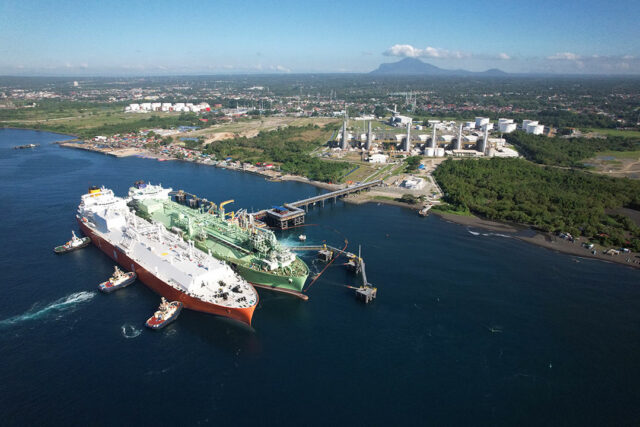
TOKYO GAS Co., Ltd., Japan’s largest natural gas utility company, has completed its acquisition of a 20% equity stake in FGEN LNG Corp., the liquefied natural gas (LNG) terminal subsidiary of Lopez-led First Gen Corp.
“This subscription will deepen our partnership and enhance synergy that will boost our efforts in support of the Philippines’ energy security and stability, even as we all pursue decarbonization,” Francis Giles B. Puno, vice-chairman and chief executive officer of FGEN LNG and concurrent president of First Gen, said in a statement on Wednesday.
The acquisition marks the Japanese company’s first investment in a commercially operational liquefied natural gas terminal project overseas. First Gen did not disclose the transaction amount.
Tokyo Gas is one of the world’s largest LNG buyers, with an annual purchase volume of 13 million tons.
It operates over 63,000 kilometers of gas pipelines, serving approximately 8.8 million customers.
In May last year, First Gen LNG Holdings Corp., a wholly owned subsidiary of First Gen, executed a shareholders’ agreement and a share subscription agreement with Tokyo Gas for the latter to subscribe to shares in FGEN LNG.
Upon effectivity, FGEN LNG Holdings will hold an 80% stake, while Tokyo Gas will own the remaining 20% in FGEN LNG.
FGEN LNG is the owner and operator of the offshore LNG terminal project located within First Gen’s Clean Energy Complex in Batangas City.
Before the acquisition deal, Tokyo Gas partnered with First Gen in December 2018 for the development and construction of the terminal, which broke ground in May 2019.
Earlier this year, the company secured a permit from the Department of Energy, allowing it to operate and maintain its interim offshore LNG terminal for its own use for 25 years.
For the nine months ending in September, First Gen’s attributable net income fell by 16.1% to $39.8 million due to lower contributions from its renewable energy business.
Gross revenues went down by 5.9% to $568.48 million while gross expenses increased by 3.5% to $1.46 billion.
First Gen and its subsidiaries are primarily engaged in the power generation business and operate power plants that run on geothermal, wind, solar, hydro, and natural gas.
At the local bouse on Wednesday, shares in the company closed unchanged at P16.98 each. — Sheldeen Joy Talavera
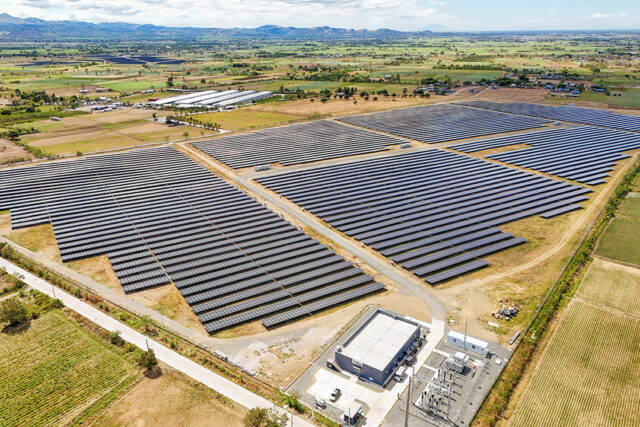
MGEN Renewable Energy, Inc. (MGreen), the renewable energy arm of Meralco PowerGen Corp. (MGen), has energized its solar power plant in Bongabon, Nueva Ecija, which can generate 19.8 megawatts alternating current (MWac) of clean energy.
The solar power project was completed at least six months ahead of schedule and could supply power to at least 20,000 households, the company said in a media release on Wednesday.
“More than just a solar power plant, MGreen Bongabon Solar is about creating opportunities, reducing our carbon footprint, and setting a new standard for renewable energy initiatives in our country,” said Dennis B. Jordan, president and chief executive officer of MGreen.
Currently, MGreen has a gross generating capacity of 344.46 MW of renewable energy. The newly completed facility will contribute to MGen’s goal of developing up to 1,500 MW of attributable renewable energy capacity by 2030.
“We acknowledge the role of this facility in fostering energy independence and reducing our carbon footprint,” said Sharon O. Montaner, director at the Energy Regulatory Commission. “The Bongabon Solar project is an example of how private sector initiatives align with the GEA (Green Energy Auction) program, providing the much-needed boost to our country’s clean energy capacity.”
This year, MGreen anticipates the completion of another solar plant in Cordon, Isabela, with a capacity of 52.8 MWac, and the expansion of an existing solar facility in Baras, Rizal, increasing its capacity to 12.6 MWac.
The company is also looking forward to completing the first phase of the MTerra Solar project in Nueva Ecija next year.
The project consists of a 3,500-megawatt-peak (MWp) solar power plant and a 4,500-megawatt-hour (MWh) battery energy storage system. Once completed by 2027, it is expected to provide clean energy to more than two million households.
MGen, the power generation arm of Manila Electric Co. (Meralco), holds a portfolio with a combined gross capacity of 2,602 MW from both traditional and renewable energy sources.
Meralco’s controlling stakeholder, Beacon Electric Asset Holdings, Inc., is partly owned by PLDT Inc. Hastings Holdings, Inc., a unit of PLDT Beneficial Trust Fund subsidiary MediaQuest Holdings, Inc., has an interest in BusinessWorld through the Philippine Star Group, which it controls. — Sheldeen Joy Talavera
PROPERTY DEVELOPERS in Metro Manila are unable to adjust condominium prices as inflation and supply chain issues keep costs high, according to real estate services firm Cushman & Wakefield.
“Developers are grappling with increased input costs due to persistent global inflation and supply chain issues, exacerbated by geopolitical tensions. These factors hinder their ability to adjust prices quickly, leading to slower sales and impacting revenues,” Claro dG. Cordero, Jr., director and head of research, said in a statement on Tuesday.
The mid-end segment faces a supply-demand mismatch, mainly driven by elevated condominium prices. Buyers also prefer larger units, while available studio types are often less than 25 square meters (sq.m).
Condominium prices dropped by 9.4% year on year, reversing the 8.3% increase recorded last year and the 10.6% rise in the previous quarter, according to the latest data from the Philippine central bank.
“Until a balance is achieved between buyers’ expectations and developers’ pricing, excess inventory in the mid-end residential condominium sector will persist,” Mr. Cordero said.
The Metro Manila market has a total supply of 450,000 mid- and high-end condominium units, with around 8% remaining unsold.
Before the pandemic, the annual average completion rate for residential condominiums was 35,000 units. Over the past five years, it has declined to 25,000 units.
Outside Metro Manila, unsold inventory is lower at 5%, with about 250,000 completed units.
Dominant locations include Metro Cebu at 54%, followed by the Cavite-Laguna-Batangas corridor (24%), Metro Davao (13%), and Metro Iloilo (3%).
In the Metro Manila office market, vacancy rates are expected to stabilize at around 17–18% in 2025, Cushman & Wakefield said.
“Despite the return of office space from POGO (Philippine offshore gaming operators) companies, absorption rates have improved from pandemic lows but remain influenced by flexible work trends and corporate policies. On the other hand, some companies mandating a return to the office are positively impacting demand growth,” it said.
In central business districts (CBDs), average office rentals have declined by 2.9% annually, while rental rates in non-CBDs fell by 4.2%.
“This trend reflects a continued flight to quality, with CBD office developments benefiting from their superior finishes, amenities, and tenant mix,” Cushman & Wakefield said.
It also noted the rise of office spaces in non-CBDs, with 2.9 million sq.m. added outside Makati and Bonifacio Global City in the past decade. This was driven by flexible work trends and developments outside CBDs.
For retail, the property consultant noted an increase in redevelopments of existing spaces, incorporating additional features to enhance the shopping experience. Mid-end and high-end shopping malls have an average annual supply of about 376,000 sq.m., Cushman & Wakefield reported.
In the hotel segment, Cushman & Wakefield cited uneven regional recovery due to the untapped potential of many tourist destinations. It expects 1,600 additional keys in the mid-end and higher-end hotel and serviced residence segments this year.
However, it may take five years to reach the projected 70,000 keys due to construction delays.
Meanwhile, Cushman & Wakefield highlighted rising demand in the logistics and industrial sub-sector, driven by the growth of the digital economy.
However, it emphasized the need to improve the quality of logistics facilities to meet the demands of new occupiers. Challenges in the sector include achieving sustainability targets, clarifying restrictions related to data privacy laws, and addressing the high costs, availability, and viability of support utilities.
“Across all key Philippine real estate sub-sectors, the increased demand for higher-quality, well-located, and resilient developments is significantly shaping the future real estate landscape,” Mr. Cordero said. “Investors and tenants prioritize properties in prime locations with superior amenities and robust infrastructure.” — Beatriz Marie D. Cruz
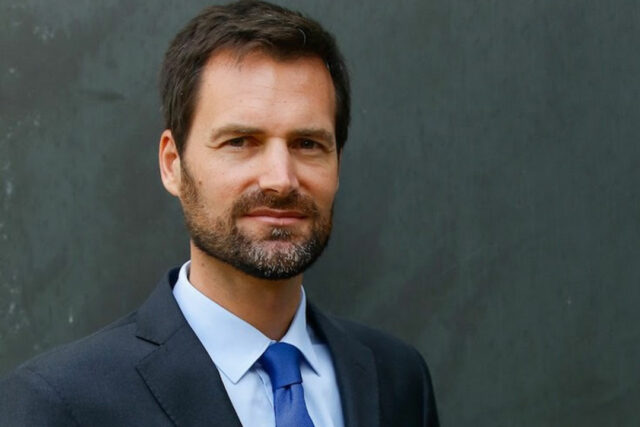
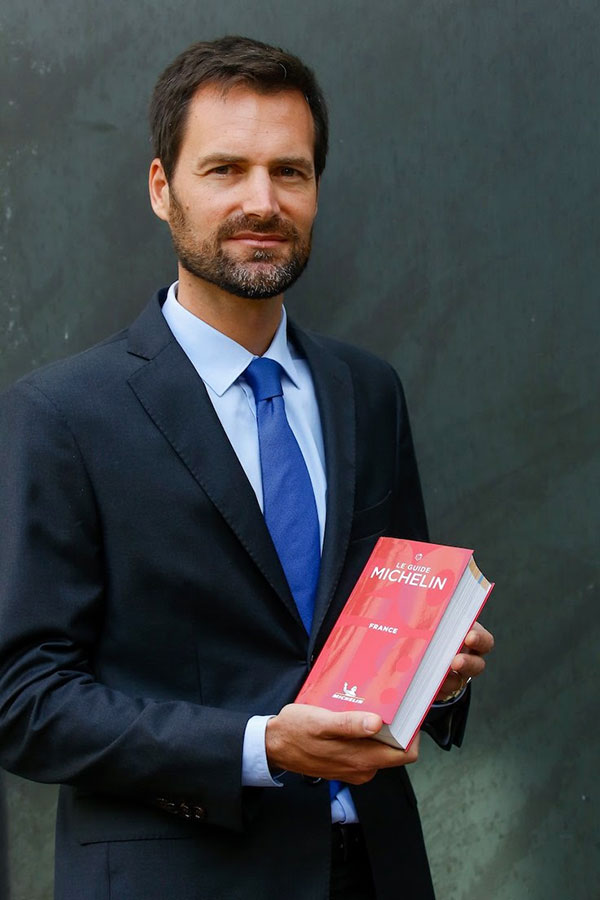
GWENDAL Poullennec, international director of The Michelin Guide.
GWENDAL Poullennec, international director of The Michelin Guide.
SINCE late last year, the country’s culinary set has been abuzz with the rumor that the dining bible, The Michelin Guide, will soon include the Philippines in its coverage. The rumors are true: on Feb. 18 (Philippine Time), The Michelin Guide announced it would be coming here.
“The Michelin Guide has set its sights on the Philippines, marking an exciting new chapter for the country’s dynamic culinary scene. Today, the prestigious Guide announces its latest expansion into the vibrant culinary landscapes of Manila and Cebu. This new selection will focus on the bustling Metro Manila and the dynamic city of Cebu, while also beginning to explore the environs of Manila, including Pampanga, Tagaytay, and Cavite,” said the food guide in the News and Views section of its website, dated Feb. 17.
“Our Michelin Inspectors have been following the evolution of the Filipino culinary scene with great excitement. The country’s deep-rooted culinary traditions, combined with a strong openness to global influences, create a uniquely diverse dining culture,” said Gwendal Poullennec, international director of TheMichelin Guide, in the statement. “In Manila, we see young, talented chefs redefining Filipino cuisine with fresh perspectives; while Cebu, as a leading tourist destination, offers an impressive range of dining experiences with world-class hospitality.”
Joshua Boutwood of Helm, The Test Kitchen, and Savage fame said in a message forwarded to BusinessWorld, “It’s a milestone of great magnitude for the industry.”
The Michelin Guide was created in 1900 by the Michelin tire company in response to a greater demand for cars in that year. The company released a guide for the road ahead with information for particulars like gas stations, but also hotels and restaurants. In 1926, it began to list restaurants with a star awards system:one star is awarded to restaurants for “high-quality cooking that is worth a stop,” two stars for “excellent cooking that is worth a detour,” and three stars for “exceptional cuisine that is worth a special journey.” While first centered only in Europe (particularly France, Italy, and Britain), the Guide expanded to other regions such as the Americas, the rest of continental Europe, and entered Asia in the 21st century. Countries recently added to the list include Vietnam, Estonia, the United Arab Emirates, and Malaysia.
Alongside the coveted Star ratings, the selection also includes the Bib Gourmand category, a distinction awarded to restaurants that provide good quality food at a moderate price.
According to TheMichelin Guide, they rate restaurants according to five criteria “to ensure consistency between each selection,” including: the quality of the ingredients, the mastery of cooking techniques, the harmony of flavors, the personality of the cuisine, and the consistency both over time and through the menu as a whole.
“These evaluations are carried out objectively and independently, ensuring that external factors do not influence the results. This dedication to impartiality and excellence guarantees that only the outstanding dining establishments are recognized,” the guide said. “With their signature discretion and expertise, the anonymous Michelin Guide Inspectors have been meticulously exploring these regions, seeking out the most exceptional dining destinations. This highly anticipated selection will shine a spotlight on the Philippines’ most talented chefs and dedicated teams, celebrating their passion, innovation, and deep respect for local flavors and traditions.”
The Philippine government welcomes the arrival of the Guide to our shores. In a statement, Department of Tourism Secretary Christina Garcia Frasco said, “We extend our warmest welcome to TheMichelin Guide, whose international recognition of the Philippines’ rich culinary heritage celebrates the diversity of flavors and exceptional creativity that permeate our nation. We are proud to share our vibrant culture and distinct cuisines to the world, which can be enjoyed through exceptional dining experiences across our dynamic cities and beautiful islands. We invite travelers to visit the Philippines and experience the love, warmth, and creativity of Filipino cuisine, while savoring innovative culinary creations shaped by diverse global influences.
“The arrival of TheMichelin Guide is not only a testament to our country’s culinary excellence but also a significant leap forward for Filipino tourism, with gastronomy now forming a key part of our national tourism priorities. In the Philippines, every dish tells a story and every flavor is an invitation to experience our nation’s rich cultural tapestry,” Ms. Frasco added.
FANS AND FEARS People in the culinary industry shared both their joys, their fears, and more with BusinessWorld over this development.
No slouch when it comes to awards, Martin Narisma, Senior Food Editor for the digital channel Featr and a restaurateur himself (his new ventures include Gacha, Llamado, and Sabong Fried Chicken) said in an Instagram message, “With their arrival, I’m very excited to see how most establishments will up their game. Food quality and taste is one thing, but I’m really looking forward to seeing restaurants work on customer service and satisfaction. I’m also hoping that a few places with great food but affordable prices be considered for a Bib gourmand. That would be a nice surprise.” The digital channel Featr, under Erwan Heussaff’s Fat Kid Inside Studios, has received numerous nominations from the prestigious James Beard Foundation Awards while Mr. Heussaff has had a win.
Chef Luis Chikiamco, executive chef of award-winning Discovery Primea, said, “If not now, when? We have top caliber chefs. Our Filipino gastronomy is interesting and unique. Our offerings can compete with the best of the world and this is a great time for the world to know about our cuisine and culinary practices, disciplines and techniques.”
Hernan Christian de Jesus of Provenciano, Jeepney, Casa Mojica and Fat Cousins, in a message, said, “It’s exciting to know about this announcement; as part of the restaurant industry we are welcoming the Michelin group,as the most recognizable and credible world-renowned restaurant guide and rating.
“Finally they are here because they see the importance and the strength of Filipino cuisine in the international community. Me as a chef admits that our food is very diversified and has many variations. But, now I think with the modern and innovative take on our cuisine we are now ready and able to meet with the standards and quality of a Michelin requirements.”
Chef Robby Goco of Cyma, Elaia, and Souv by Cyma, was also quite positive. “The Michelin Guide not only helps position the Philippines as a top gastronomy destination on the global stage but also gives us a platform to showcase how we prepare food with our unique traditions, flavors, and creativity. This is an opportunity to promote excellence in the industry and elevate the standard of dining in our country. I believe it will inspire us to continuously improve and innovate, while also honoring our rich culinary heritage.”
Asked about the school’s reaction to the news, chef Philip John Golding, Center for Culinary Arts, Manila’s culinary director, wrote to BusinessWorld: “If Michelin enters the Philippines, it has the potential to elevate Filipino cuisine globally, boost tourism, and refine industry standards. However, to truly benefit the country, it should balance fine dining with authentic, everyday Filipino food, ensuring a holistic and inclusive culinary evolution.”
He noted that “Michelin has been highlighting sustainability with its Green Star initiative.” This in turn “could encourage Filipino restaurants to adopt sustainable sourcing, reduce food waste, and promote ethical farming and fishing practices.”
He also noted that “Filipino chefs and restaurateurs would strive for excellence, leading to a more competitive and refined dining landscape. This could also influence training programs and culinary schools to align with global best practices.”
Some have greeted the news with mixed feelings.
Myke “Tatung” Sarthou, whose cookbooks have won at the World Gourmand Awards multiple times, said in a Facebook message, “Actually, I have mixed feelings about it. Both happy and excited but also a bit intimidated about it coming over. It’s very good for the industry, but personally, I also feel pressured to get back in the kitchen and take my chance for an award. Hahaha, I don’t know. For now, let’s celebrate this win for the Philippines.”
Kalel Chan of the Raintree Restaurants group said, “The ones who would (want to) go for the stars would have to work ten times harder. Night and day. Local farmers and logistics ha(ve) to step up. Food quality will surely be top notch but everything will come with a cost. Cost of dining, labor, ingredients, mental strain to the chef and front of the house service team to keep everything consistent.”
Waya Araos-Wijangco, owner-chef of Gourmet Gypsy by Chef Waya in Baguio and a sustainability advocate said in a message forwarded to BusinessWorld, “Hmmm, I have always felt the Michelin rating system favored old white boys clubs. So I have never really subscribed to it. My priority has always been creating delicious, nutritious, sustainable and approachable food. And to make sure my restaurants contribute to the upliftment of farmers, fisherfolk and artisanal food purveyors.”
The full restaurant selection of TheMichelin Guide Manila and Environs & Cebu 2026 will be unveiled at an event to be held in the last quarter of 2025. It will be available exclusively in digital format on all the Guide’s interfaces: website, mobile applications, and social networks. It will join the global Michelin Guide restaurant and hotel selections to be found for free on its digital platforms. — Joseph L. Garcia
MPIC CHAIRMAN, President, and Chief Executive Officer Manuel V. Pangilinan — BW FILE PHOTO
METRO PACIFIC INVESTMENTS Corp. (MPIC) sees double-digit profit growth for 2024, driven by its power business and other subsidiaries.
“The numbers are looking good, driven by all of the subsidiaries. The outstanding example would be Manila Electric Co. (Meralco). Meralco’s numbers would be quite good for 2024,” MPIC Chairman, President, and Chief Executive Officer Manuel V. Pangilinan told reporters recently.
Mr. Pangilinan said MPIC’s net income for 2024 may have increased by double digits.
2024 marks MPIC’s first full year as a private company after voluntarily delisting from the Philippine Stock Exchange in October 2023.
For 2023, MPIC posted an 89.7% increase in attributable net income to P19.92 billion, up from P10.5 billion in 2022, driven by growth in its power, toll roads, and water businesses.
Operating revenue rose 20.5% to P61.33 billion.
MPIC has a presence in the toll roads sector through Metro Pacific Tollways Corp. and in the water sector via Maynilad Water Services, Inc. and Metro Pacific Water.
The conglomerate also has investments in healthcare, light rail, fuel storage, real estate, waste management, and agribusiness.
MPIC is one of the three key Philippine units of Hong Kong-based First Pacific Co. Ltd., alongside Philex Mining Corp. and PLDT Inc.
Hastings Holdings, Inc., a unit of PLDT Beneficial Trust Fund subsidiary MediaQuest Holdings, Inc., holds a majority stake in BusinessWorld through the Philippine Star Group, which it controls. — Revin Mikhael D. Ochave