Home Blog Page 135

DoLE releases list of double-pay workdays in April

BW FILE PHOTO

PRIVATE SECTOR reporting for duty during the Easter and Araw ng Kagitingan holidays will be entitled to up to double their daily wage, the Department of Labor and Employment (DoLE) said.

In Labor Advisory No. 05, Series of 2026, DoLE said Maundy Thursday (April 2), Good Friday (April 3), and Araw ng Kagitingan (April 9), are regular holidays. On these dates, the employer must pay 200% of the employee’s wage for the first eight hours.

DoLE said that if the regular holiday falls on an employee’s rest day, the employer must pay an additional 30% of the 200% wage. 

For those not working on these regular holidays, the employer must pay 100% of the wage if the employee worked or was on leave with pay on the day immediately before the holiday.

DoLE added that if the day before the holiday is a non-working day or a rest day, the worker is still entitled to holiday pay if they were present or on paid leave on the day immediately before that non-working day.

It said Black Saturday, April 4, is a special non-working day where the “no work, no pay” principle applies.

This means employees who do not work are not paid unless a company policy or collective bargaining agreement says otherwise.

Those who do report for work on this special day will be paid an additional 30% of their basic wage for the first eight hours.

If the work is done on a special day that also falls on the employee’s rest day, the employer must pay an additional 50% of the basic wage.

It said any work done in excess of eight hours on these holidays and special days will result in an additional 30% of the hourly rate for that day.

The guidelines were signed by Benedicto Ernesto R. Bitonio, Jr., officer-in-charge, on March 17.

President Ferdinand R. Marcos, Jr. signed Proclamation No. 1006 in September, which set the official list of regular holidays and special non-working days for 2026. — Erika Mae P. Sinaking

Haus Talk lists P1.8-B bonds on PDEx

The Granary in Biñan, Laguna — HAUSTALK.COM.PH

LISTED affordable housing developer Haus Talk, Inc. (HTI) has listed its P1.8-billion fixed-rate bonds on the Philippine Dealing & Exchange Corp. (PDEx) following an upsized offer from the original P1 billion.

In a statement on Thursday, the company said the issuance consists of three-year and five-year tenors priced at 7.0896% and 7.5924%, respectively.

Haus Talk Chairman Terence Madlambayan said the bond offering’s strong reception reflects investor confidence in the company’s plans.

The company said proceeds from the issuance will fund its expansion in Luzon, including land banking, project development, and general corporate requirements as it grows its residential portfolio.

PDEx President Stephanie Marie Zulueta said HTI’s participation in the bond market marks another step in its capital market engagement following its 2022 listing on the Philippine Stock Exchange’s Small, Medium and Emerging Board.

Haus Talk develops affordable horizontal and vertical residential projects in select locations across Metro Manila, Rizal, Laguna, and Cavite.

At the local bourse on Thursday, Haus Talk shares rose 0.88% to close at P1.14 each. — Alexandria Grace C. Magno

Dune director Villeneuve nearly took a break before Part 3

LOS ANGELES — Canadian filmmaker Denis Villeneuve revealed he nearly took a break before completing Dune: Part Three, the conclusion to his epic science-fiction trilogy, but changed his mind after he saw how audiences embraced the first two films.

“I felt an appetite for the third movie that I was not expecting,” said Mr. Villeneuve on Monday in Los Angeles at a preview event for the movie’s trailer, which was released to the public on Tuesday.

The film, distributed by Warner Bros., arrives in theaters on Dec. 18. It is based on Dune Messiah, the second book in the Dune series of novels written by Frank Herbert, about the battle for control of the fictional planet of Arrakis, a harsh desert locale that contains a valuable spice that can extend life.

The new trailer shows the main character, Paul Atreides, played by Timothée Chalamet, and Chani, played by Zendaya, years after the first two films as they ponder their future as parents. The first two films, released in 2021 and 2024, grossed a combined $1.1 billion worldwide and received numerous accolades, including several Academy Awards.

Mr. Villeneuve describes the third film as a departure from the first two, as Paul Atreides must also reckon with the consequences of the power and influence that he holds.

The director recalled how he kept waking up at night with visions of the final chapter. “I was supposed to do another movie in the meantime but the image kept coming back. And I said, ‘All right, let’s do it.’”

In a surprise, Mr. Villeneuve brought out several cast members at the event, including Zendaya, Robert Pattinson, Anya Taylor-Joy, and Javier Bardem.

Zendaya reflected on how she spent her entire 20s working on the Dune films. “They have such a special place in my heart,” the Euphoria actor said.

Mr. Pattinson, known for his appearances in The Batman and the Twilight series of films, joins the cast as the antagonist, Scytale. “I absolutely adored these movies — I saw them multiple times in theaters,” he said. “He’s a very unusual character in the book,” the actor added. “You can’t really tell whose side he’s on. He’s not a conventional bad guy — he might even be a good guy. Who knows?”

Mr. Villeneuve noted the final movie will take fans to new planets on sets that they have yet to see. — Reuters

BSP pushes Islamic banking

DC Studio | FREEPIK

THE BANGKO SENTRAL ng Pilipinas (BSP) has reaffirmed its commitment to expanding Islamic banking and finance in the Philippines, aiming to widen access to Shari’ah-compliant financial products and promote greater financial inclusion.

“Our goal is not simply for Islamic finance to exist alongside conventional banking, but for it to flourish as an integral and mutually reinforcing part of our financial ecosystem, broadening access to finance and serving communities that have long aspired for financial services aligned with their values,” BSP Deputy Governor Lyn I. Javier said in a statement on Thursday.

The central bank said building an inclusive financial system requires accommodating the cultural and religious traditions of all Filipinos.

BSP Senior Assistant Governor and Islamic Finance Coordination Forum (IFCF) Chairperson Arifa A. Ala said the regulator’s efforts extend beyond policy, citing the importance of engagement with communities.

“The Bangko Sentral plays a key role in advancing Islamic finance, but tonight’s gathering reflects something broader — it affirms our belief that a truly inclusive financial system must also respond to the traditions, values and needs of the communities we serve,” she said.

The remarks followed the BSP’s annual evening meal with stakeholders including the IFCF, Bangsamoro government, National Commission on Muslim Filipinos, Islamic banking institutions, government agencies and the diplomatic corps.

The IFCF, a BSP-led interagency body, coordinates initiatives to promote Islamic finance, including regulatory frameworks, licensing of Islamic banking and takaful institutions, and sukuk issuances. Its members include the BSP, Asian Development Bank, Bureau of the Treasury, Department of Trade and Industry, Insurance Commission, Philippine Deposit Insurance Corp., Securities and Exchange Commission and other agencies.

“IFCF continues to push collaboration in Islamic banking and finance,” the BSP said. “Its work has led to milestones such as roadshows here and abroad, sukuk and regulatory framework issuances, and licensing of Islamic banking and takaful players.” — Katherine K. Chan

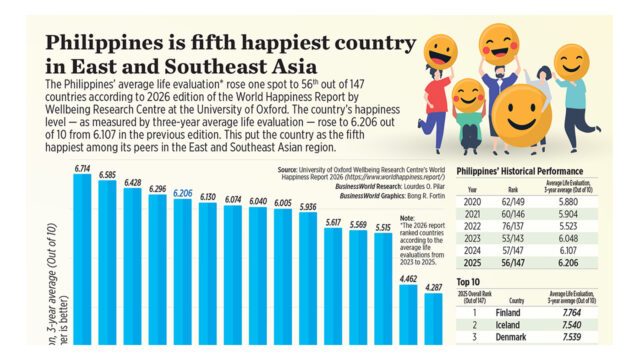
Philippines is fifth happiest country in East and Southeast Asia

THE PHILIPPINES climbed one spot to 56th in an annual survey that measures peoples’ level of happiness globally, but analysts said the ranking does not capture the social and economic pressures that Filipinos face today. Read the full story.

Foodies unlimited

STOCK PHOTO | Image from Freepik

During Lent, foodies must fast, abstain (and starve). Thus, like the orphan Oliver in the musical, they dream about “food, glorious food.”

To survive, we need essential elements — clean air and water, food, shelter, and clothing. Food nourishes us and satisfies our energy requirements, and inner psychological needs.

The gourmet considers good food, the raison d’être. He loves food and lives to eat. Our food preferences and manner of eating reveal much about ourselves, our culture, social background, personality and eccentricities.

Taste and presentation matter.

Many activities — business, social, and family — revolve around the gratification of eating. A Freudian theory is evident in the number of meals and snacks that we take.

We nibble when we are happy. We binge when we are sad, frustrated, anxious, and stressed. Or the reverse, depending on one’s emotional profile.

Psychologists have said that our physical appetite and emotional needs are interrelated. There is an irresistible craving for chocolate when one is feeling low. Eating it causes the brain to release serotonin, which is associated to the feeling of happiness, elation, and “being in love.”

We celebrate contract signings, inaugurations, and trade exhibits over lunch or cocktails. Visiting firemen from the international head office are deluged by genuine Filipino hospitality. They are treated to an inexhaustible round of parties and restaurant hopping despite their desire to rest and eat light.

Baptisms, debuts, engagements, and wedding feasts happen everywhere. Wakes, funerals, and novenas are like parties with buffets, music, and Tivoli lights. Recently, the soigné set have added annulments and divorces to the list of celebrations.

On a socio-psychological scale, it is amusing to observe how each generation’s food profile varies. There is a discernible pattern among urbanites. People are classified according to age, epicurean taste, and diet.

Baby Boomers were raised on high protein meals.

The Flower Children and Martial Law babies share an affinity for high energy carbohydrates — pasta, croissants, risotto, and paella, with good fish and seafood, and heathy leafy greens. They crave high-cholesterol beef, jamon Iberico, and charcuterie with fruits. The Millennials are blessed to have been raised by enlightened parents who served high-fiber health foods, cereal, soy milk, fresh fruits, veggies, salads, and sushi. The new generations play sports and do cross training exercises in the gym, and sports in the courts or fairways, pool, or gym.

We have taller, leaner, and smarter specimens of fitness and wellness. They are IT-savvy, so they tend to play with their gadgets and focus on social media instead of interacting with their parents and professors.

The well-preserved folks of the pre-war, WWII, and Liberation era are known as the Spam generation. They liked the US military bases with their processed food packed and spiked with sodium, sodium nitrate, and preservatives — bacon, corned beef, Vienna sausages, hot dogs, canned milk, and PX chocolate brands. Like the soldiers and Scouts, the Spam generation survived with the no-fuss instant coffee and comfort junk food. These items appeal across generations — salty chips, greasy nuts, and peanut butter.

The children of the Spam generation have eclectic dietary habits combining the best and the worst in nutrition. They were force-fed spinach, avocados, monggo, and other unpalatable veggies.

The sinful treats were frozen TV dinners, fried eggs with crispy bacon, canned peaches with syrup, whipped cream, churros and hot chocolate. Dietary deficiencies were offset by multivitamins and supplements.

We had been programmed to accept polarity — lyrical poetry and chaos in our love lives.

Although many of us are aware of and practice good health habits, we still tread the food tightrope of pleasure and pain, satisfaction and guilt.

We manifest some of the old colonial mentality and hanker for the “lite,” “low fat,” “sugar-free.” We know the long-term use of sugar substitutes is harmful.

Food tastes are evolving now to healthy levels. Fibrous muesli, bran, whole wheat bread, and oats are more visible now. Brown or red rice, tofu, veggies, fruits, fish, and the (skinless) white meat of chicken. Organic is in. GMO is out. Preservatives are out except among embalmers and unscrupulous farmers.

(Still, some high-end brands of makeup have certain ingredients that are carcinogenic. These items — shampoos, lipstick, and lotions — are banned in California. If only these well-known companies would check or re-check all the items).

People travel more frequently, and they acquire diverse culinary experiences through exposure.

They can experience exotic Beluga caviar, Scandinavian reindeer, the Turkish delicacies like baklava, Greek lamb, Basque pintxos, Shanghai crabs, Belgian chocolates made with cocoa beans from Davao. There has been a gradual shift to global taste.

An epicurean adventure requires a sense of risk, a love of novelty, and no allergies. Exploration on a culinary level connects people and diffuses generation gaps.

Bon appetit!

A blessed Easter to all!


Maria Victoria Rufino is an artist, writer and businesswoman. She is president and executive producer of Maverick Productions.

mavrufino@gmail.com

Red flags to watch for in a prospective employer

I have a scheduled final job interview with my prospective boss, a factory vice-president. It’s the first time I will be exploring other avenues after spending close to 15 years with my current job as manager. What are the signs I might be in for a positive long-term relationship? Please advise. — Red Lantern.

You know the drill. Job applicants must walk into an interview while showing their best. You must be punctual, well-prepared, energized, and with a positive aura. But here’s the twist. What if the prospective employer can’t do the same thing?

If an interviewer shows bad habits during the first 30 minutes of your scheduled encounter, then consider it a preview of coming attractions. Consider it a double whammy if that interviewer holds a high-ranking position.

It’s like watching a superstar in a movie trailer. If it’s bad, then expect the full film to be a disaster.

Job interviews are not just evaluations of candidates; they’re the stage for showing off the good things about one’s organization. While red flags could emerge in any frontline interviewer, your focus should be on the decision maker, especially your prospective boss.

This is one lesson for professionals. They must see to it that their interaction with applicants shapes the employer’s brand. If they can’t get through without showing an interview meeting with basic courtesy, imagine how they might handle career pathing, performance reviews, internal conflicts, or strategic decisions in the future.

RED FLAGS
Trust what you see. Let’s break this down into specific warning signs you should watch for. First impressions in this context are not misleading. They can reveal much of what you can expect from them.

Therefore, observe their acts and omissions the moment you enter their workplace. Here are some of the red flags interviewers display that tell you the company may not deserve you:

One, the interviewer arrives late. And doesn’t apologize. Punctuality is one simple test of professionalism. If an interviewer walks in more than 10 minutes late and acts as if it’s not a big deal, then you’ve been given an early glimpse of their culture and management style.

Two, they badmouth other people. A dynamic leader lifts people up. A lousy one brings others down, especially those who are no longer around to defend themselves. If the interviewer spends time airing their dirty laundry, it reflects more negatively about themselves than of other people.

Three, they brag about an unpopular culture. When you hear them talking about “doing overtime work without pay,” be wary. In a positive workplace, people talk about collaboration, support, and psychological safety. In unhealthy workplaces, unpaid overtime is often disguised as teamwork.

Four, they ask questions that are already clear in your CV. A prepared interviewer studies your background carefully. A bad interviewer shows they are incapable of asking intelligent questions. That means you’re not being evaluated for your potential and strengths.

Five, they ask inappropriate or illegal questions. There are some questions that deserve only a polite smile. These questions include: When are you planning to get married? Do you live with your boyfriend or girlfriend? How many kids do you plan to have?

Six, they rush the interview for an “important” meeting. If the interview is completed in ten minutes or less, then don’t bother trying to find out about your chances. Either they’ve already chosen someone, or they don’t care enough to properly evaluate candidates.

Seven, they give unclear answers to your questions. The best candidate always asks smart questions. If the interviewer dodges your inquiries about workload, expectations, career paths, or turnover, it’s a sign they’re hiding something.

Eight, they oversell the job. Watch out for these key phrases: “several opportunities” and “dynamic workforce.” When you hear those, ask: “How? What’s the reason for this vacancy?” When a job is truly great, it sells itself.

Nine, they keep checking their phone or laptop. An interviewer who can’t stop checking the phone during the interview is saying: “You’re not important.” Full attention is respect. If you can’t have it during a conversation, you can’t have it on the job.

Ten, they pressure you to accept immediately. Good employers allow you to think. Bad employers rush you with statements like: “Let us know by tomorrow. We have other applicants waiting.” This may suggest urgency due to high turnover or poor planning.

REVERSE INTERVIEW
Try reverse interview questions. Flip the script by vetting the company’s culture, professionalism, and stability. Ask permission if you can ask questions which they should accept. Then proceed with killer questions like the following:

What happened to the previous occupant of this job? What does success look like in this role after six months? How does your department handle mistakes? What’s the most common reason people leave this company? How do you support professional development and learning?

Can you describe the last time the team celebrated a win? How is feedback typically delivered here? If there’s one thing you would like to change in this organization, then what is it?

When you’re seeking job opportunities elsewhere, remember that you’re not just being interviewed for the job. Rather, you must seek to interview them to discover if they’re worth your talent. After all, you’re leaving your current employ of 15 years.

Bad interviewers are easy to detect. They will show the signs in an instant. Again, if the movie trailer looks bad, don’t wait for the full movie. There are better employers somewhere. Save your talent for the ones who deserve it.


Send questions to elbonomics@gmail.com or DM Facebook, LinkedIn or X. Alternatively, e-mail https://reyelbo.com. Anonymity is guaranteed.

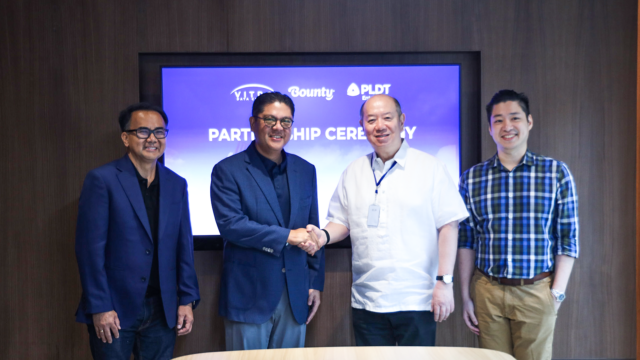
VITRO partners with Bounty Fresh for digital operations

(L-R) Vic Y. Tria, FVP and Head of Enterprise Domestic Business and SME, PLDT Enterprise; Victor S. Genuino, President & CEO ePLDT; Kenneth Cheng, CEO, Bounty Fresh Group Holdings, Inc.; Warren Chase Uy, Chief Information Officer, Bounty Fresh Group Holdings, Inc. — PLDT INC..

VITRO, INC., the data center arm of PLDT Inc., has partnered with Bounty Fresh Group Holdings, Inc. to support the latter’s digital operations.

“As our organization continues to grow, investing in resilient and future-ready digital infrastructure is essential. Our supply chain must never stop, and real-time visibility across our operations is critical to maintaining efficiency and quality,” Bounty Fresh President and Chief Executive Officer Kenneth G. Cheng said in a media release on Thursday.

PLDT said Bounty Fresh operates in a time-sensitive environment that requires systems to connect farms, processing plants, and distribution channels. These systems support data visibility for managing supply chains, production, and inventory.

The company said its enterprise solutions, delivered through PLDT Enterprise and VITRO, will support Bounty Fresh’s network across its operations and brands.

In a separate media release on Thursday, PLDT, through its corporate arm PLDT Enterprise, said it launched Metro Ethernet Trusted Route for Accelerated Cloud Connectivity (TRACC), which provides direct connectivity to cloud services via VITRO data centers.

“Metro TRACC allows enterprises to experience the full potential of cloud computing by providing a direct, secure, and high-performance route to leading cloud platforms,” said Benedict Patrick V. Alcoseba, PLDT first vice-president and head of enterprise product management and global capacity.

At the local bourse on Thursday, shares in PLDT fell P5, or 0.38%, to close at P1,300 each.

Hastings Holdings, Inc., a unit of the PLDT Beneficial Trust Fund subsidiary MediaQuest Holdings, Inc., holds a majority stake in BusinessWorld through the Philippine Star Group, which it controls. — Ashley Erika O. Jose

BMG sues Anthropic for using Bruno Mars, Rolling Stones lyrics in AI training

MUSIC company BMG Rights Management has sued artificial intelligence (AI) company Anthropic in California federal court for allegedly using its copyrighted lyrics to train the large language models powering its Claude chatbot.

BMG said in the complaint reproduced lyrics from hit songs by the Rolling Stones, Bruno Mars, Ariana Grande, and other prominent rock and pop musicians, infringing hundreds of copyrights.

The lawsuit is the latest among dozens of high-stakes cases of authors, news outlets, and other copyright owners against tech companies for using their work in training the models behind their chatbots. BMG rival Universal Music Group and other music publishers filed a related lawsuit that Anthropic settled for $1.5 billion last year.

Spokespeople for Anthropic did not immediately respond to a request for comment on Wednesday.

“Anthropic’s practice of training AI models on copyrighted works sourced from unauthorized torrent sites, among other acts, stands in direct opposition to the standards required of any responsible participant in the AI community,” BMG said in a statement.

AI companies have argued that they make fair use of copyrighted material by transforming it into something new.

BMG, owned by German media group Bertelsmann, cited 493 examples of copyrights that Anthropic allegedly infringed. Statutory damages for copyright infringement under US law can range from hundreds of dollars up to $150,000 per work if the court finds the infringement was willful. — Reuters

Seeing opportunity in pressure

Smoke rises in the Fujairah oil industry zone, caused by debris after interception of a drone by air defenses, according to the Fujairah media office, amid the US-Israel war with Iran, in Fujairah, United Arab Emirates on March 14, 2026. — REUTERS

When oil prices cross the $100 mark, most discussions quickly turn technical. Economists talk about inflation bands, central banks and global supply shocks. I understand why. These are important. But from where I sit, working with business leaders across industries, the real story is not just about economics. It is about decisions. It is about leadership under pressure.

I have seen this pattern repeat itself in every crisis. Costs rise fast. Revenues do not keep up. Margins tighten. Then the pressure builds. And that is where the real test begins.

In the Philippines, the effects are immediate and visible. Higher oil prices push up electricity costs. Transport fares follow. Food prices creep up because logistics becomes more expensive. Even mom-and-pop stores feel it. What used to be a manageable cost structure suddenly becomes unstable. For many companies, especially those operating on thin margins, this is not a theoretical issue. It is survival.

The instinct of many leaders is to react quickly by cutting costs. Freeze hiring. Reduce budgets. Delay projects. I have advised companies during past crises, and I understand why this happens. It feels like the safest move. But I have also seen how this approach, when done without clear thinking, creates long-term damage.

Cutting too deep can weaken the very capabilities a company needs to recover. You lose talent. You slow down innovation. You damage morale. In the short term, the numbers may look better. In the long term, you fall behind competitors who made smarter choices.

Leadership during inflation is not just about reducing expenses. It is about deciding what to protect.

I often ask executives a simple question during these times. What are the few things that must not be compromised? For some, it is customer experience. For others, it is product quality. For many, it is key talent. The answer is different for every organization, but the discipline is the same. You cannot protect everything. But you must protect what defines your value.

At the same time, leaders need to face reality. Not all costs can be absorbed. Passing on price increases to customers becomes necessary. This is where leadership judgment becomes critical. Raise prices too fast and you risk losing demand. Delay too long and you erode margins further.

Many business leaders navigate this well by being transparent. They explain the situation clearly to their customers. They adjust pricing in stages. They offer alternatives, smaller packages, flexible terms. It is not just about the price itself. It is about how you communicate the change.

There is also a deeper shift that leaders need to make. Inflation exposes inefficiencies that were easy to ignore when costs were stable. Suddenly, processes that used to work no longer make sense. Excess inventory becomes expensive. Long approval cycles slow down response time. Old supplier contracts become a liability.

This is the moment to rethink operations — not in a theoretical way, but in a very practical sense. Where are we wasting time? Where are we overpaying? Where can we move faster? I have seen companies use crises like this to simplify processes, renegotiate contracts and redesign how work gets done. These are not glamorous moves, but they create real impact.

One area that often gets overlooked is decision speed. In stable times, organizations can afford to move slowly. During a cost shock, delay becomes expensive. Every week of inaction can mean lost margin or missed opportunity.

Leaders need to shorten feedback loops. Decisions that used to take weeks must now take days. Information needs to flow faster. Teams need clearer authority. This does not mean being reckless. It means being responsive.

I remember working with a company during a previous oil spike. Instead of waiting for quarterly reviews, they shifted to weekly operational check-ins. They tracked costs closely. They adjusted pricing and procurement strategies in near real time. It was not perfect, but it allowed them to stay ahead of the curve while competitors were still reacting.

Another important point is mindset. When pressure hits, most leaders go into defensive mode. The focus shifts to staying afloat, keeping costs under control and avoiding losses. That is understandable. But if that is all you see, you miss what is changing around you. When oil prices climb, behavior shifts. People look for cheaper ways to move, produce and consume. That creates openings.

I have worked with transport operators who started tightening routes and tracking fuel use more closely, not as a long-term plan, but as a quick response. Some later turned that into a real advantage. A few manufacturers began testing solar or other energy sources simply to manage rising costs. Even small businesses adjusted packaging or bundled items differently to keep customers buying.

None of these choices feel comfortable at the start. They require effort at a time when teams are already stretched. But these are the moments that show how leaders think. Some wait for stability. Others act while things are still uncertain.

At its core, inflation is a test of clarity. Can leaders see beyond the noise? Can they focus on what truly matters? Can they make tough calls without losing sight of long-term direction?

The numbers will always matter. Costs, margins, pricing, all of these are critical. But behind every number is a decision. And behind every decision is a leader.

When oil prices rise, the environment becomes harder for everyone. There is no escaping that. But not all companies will respond the same way. Some will retreat and protect the short term. Others will act with discipline, make focused choices and position themselves for what comes next.

I have learned over the years that crises do not create leaders. They reveal them.

The views expressed here are his own and do not necessarily reflect the opinion of his office or FINEX.


Reynaldo C. Lugtu, Jr. is the founder and CEO of Hungry Workhorse, a digital, culture and customer experience transformation consulting firm. He is a fellow at the US-based Institute for Digital Transformation. He is the chairman of the AI and Digital Transformation and Governance program of the FINEX Academy. He teaches strategic management and digital transformation in the MBA program of De La Salle University.

rey.lugtu@hungryworkhorse.com

Is the Philippines becoming a battleground for information warfare?

AI GENERATED IMAGE/FREEPIK

By Recce Cubero, Patrick Joson, and Amadeus Quiaoit

A RECENT STATEMENT from the National Security Council confirming the dismantling of a Chinese espionage operation involving the recruitment of young Filipino government workers has raised serious concerns about national security. While espionage cases are not new, the incident highlights a larger reality: modern geopolitical competition is no longer limited to ships, missiles, or soldiers. Increasingly, it is fought in digital and information spaces that shape public opinion and political decisions.

For the Philippines, this evolving form of competition is especially significant due to the country’s strategic location in the Indo-Pacific region and its long-standing alliances with regional partners. The country has become a focal point of great power rivalry. But influence today does not always come in the form of military confrontation. Instead, it often appears through more subtle methods that operate within societies themselves.

One concept frequently discussed in Chinese strategic thinking is “informationized warfare.” This approach combines cyber capabilities, information operations, and psychological influence to shape how other countries perceive political issues and make strategic decisions.

Rather than relying purely on military force, this strategy aims to influence the narratives that guide public debate and national policy.

THE BATTLE FOR NARRATIVES
In the Philippine context, these influence operations often appear in the digital information environment. Social media platforms, messaging apps, and online communities have become major channels where narratives compete for attention and credibility.

One recurring example involves the 2016 arbitral ruling on the South China Sea, which invalidated many of China’s maritime claims. While the decision was widely seen as a legal victory for the Philippines, online disinformation campaigns have repeatedly attempted to portray the ruling as illegitimate, meaningless, or harmful to Philippine interests. These campaigns frequently rely on coordinated social media activity. Identical videos, infographics, and talking points may suddenly appear across multiple accounts at the same time, creating the impression that a large number of Filipinos share the same views.

In reality, some of these accounts may be part of coordinated networks designed to amplify specific narratives. By flooding online spaces with emotionally charged content and conflicting claims, such operations can blur the line between fact and opinion. Over time, this environment can weaken public trust in institutions and make it harder for citizens to distinguish credible information from manipulation.

TARGETING PUBLIC CONFIDENCE
The impact of these campaigns goes beyond online debate. Strategic messaging may attempt to reframe maritime disputes, cast doubt on international legal rulings, or portray Philippine defensive actions as unnecessarily provocative. At times, misleading information has also targeted institutions such as the Armed Forces of the Philippines (AFP) and the Philippine Coast Guard (PCG).

When combined with cyber intrusions or data leaks, these activities can reinforce the perception that government institutions are vulnerable or ineffective.

Even when the information is misleading or incomplete, repeated exposure to such narratives can erode public confidence over time.

WHY THE PHILIPPINES IS VULNERABLE
The Philippines’ unique social and cultural landscape can make the information environment particularly complex.

The country’s linguistic diversity, strong regional identities, and deeply rooted community networks mean that information often travels through trusted personal channels: family members, religious groups, local leaders, and online communities. While these networks are an important part of Philippine society, they can also make it easier for misleading narratives to spread quickly within tightly connected groups. Influence campaigns may exploit existing political divisions or economic concerns. In some cases, sovereignty disputes may be framed as elite political conflicts or unnecessary geopolitical risks, potentially weakening public support for national security policies.

INFLUENCE BEYOND PROPAGANDA AND NOISE
It is also important to recognize that influence does not always occur through overt propaganda or direct government messaging. In many cases, influence can emerge indirectly through economic relationships, information exchanges, and social interactions that shape how people understand national interests and foreign policy.

Business groups, cultural organizations, and civic associations often play valuable roles in strengthening economic ties and promoting cultural exchange between countries. Many Filipino-Chinese organizations, for instance, have long contributed to trade, education, and philanthropy in the Philippines.

However, in an era of intense geopolitical competition, even legitimate platforms for cooperation can intersect with broader political narratives and strategic messaging.

Recognizing this complexity requires careful analysis rather than suspicion or oversimplification.

Beyond information campaigns, cybersecurity experts have also warned about digital vulnerabilities. Some China-linked cyber groups have reportedly conducted reconnaissance activities within government information systems and critical infrastructure networks. These activities may allow malicious actors to gain access to sensitive systems and potentially exploit them during periods of political tension.

Such tactics create opportunities for coercion without traditional military escalation.

BUILDING RESILIENCE — MOVING FORWARD TO THE FUTURE
Addressing these challenges will require strengthening both institutional and societal resilience.

Improving media literacy is an important first step. Helping citizens identify misleading information and verify sources can reduce the impact of online disinformation campaigns.

Supporting independent journalism and rapid-response fact-checking initiatives can also help ensure that accurate information reaches the public quickly.

At the government level, agencies must strengthen strategic communication. Clear, transparent messaging about national interests and security issues can reduce the space in which misleading narratives thrive.

Cybersecurity governance must also improve. This includes holding digital platforms accountable for coordinated manipulation, dismantling bot networks, and protecting critical infrastructure from cyber intrusion.

A NEW KIND OF SECURITY CHALLENGE
Ultimately, safeguarding Philippine sovereignty today requires more than military preparedness. It also demands resilience in the information and cognitive domains, where public perception, political legitimacy, and national decision-making are increasingly shaped.

In an era where narratives can spread faster than missiles and influence can be exerted without invasion, the Philippines must recognize that the struggle over national security is no longer fought only in contested waters or military bases. It is also unfolding in the digital spaces where Filipinos form opinions, debate national issues, and decide the country’s future in the next decades to come.


Recce Cubero is a Resident Fellow of the International Development and Security Cooperation (IDSC), and an alumnus of the George Marshall European Center for Security Studies in Garmisch-Partenkirchen, Germany. He holds a Master of Science in Environmental Management from Webster University in St. Louis, Missouri, USA. Patrick Chris Rodriguez Joson is a PhD Candidate in Environmental Diplomacy and Negotiations at the University of the Philippines Los Baños and serves as a Resident Fellow at IDSC. He holds a Master in National Security Administration from the National Defense College of the Philippines. Amadeus Quiaoit is a Resident Fellow at the IDSC. He is a graduate of BA International Studies at the Polytechnic University of the Philippines.

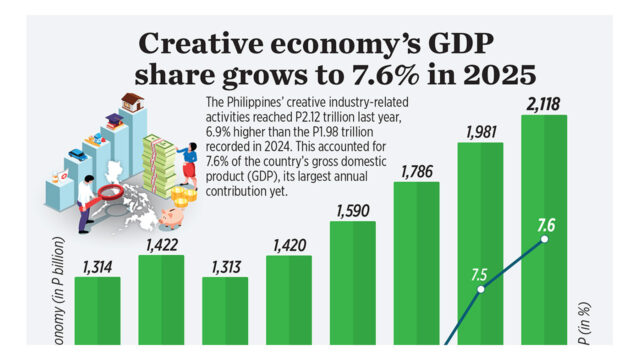
Creative economy’s GDP share grows to 7.6% in 2025

THE VALUE of the Philippines’ creative economy rose to P2.12 trillion in 2025, the Philippine Statistics Authority (PSA) reported on Thursday. Read the full story.

ADVERTISEMENT
ADVERTISEMENT