Home Blog Page 130

Potable water costs in remote barangays falling

PHILIPPINE STAR/EDD GUMBAN

THE Department of Environment and Natural Resources (DENR) said residents in isolated barangays are seeing potable water costs fall by more than half with the rollout of government-supported water system programs.

In a statement on Sunday, the DENR said the Water Resources Management Office (WRMO) indicates that households in underserved communities are now paying less for drinking water after the installation of refilling and filtration facilities.

In areas served by local water districts, the DENR has deployed high-grade refilling equipment that allows barangays to reduce the retail price of drinking water to P15 per five-gallon container, or roughly half of prevailing commercial rates.

The DENR said installation was completed in 2025 in parts of Zamboanga del Sur, Lanao del Norte, Leyte, Negros Oriental, and Cagayan.

Meanwhile, the DENR said a separate filtration program reduced water prices in remote island communities in Romblon, Sorsogon, Occidental Mindoro, Bohol, and Zamboanga City to between P20 and P25 per container from previous levels of P50 to P70.

“In 2026, two additional sites are operational in Bohol and Bulacan, while the remaining sites are nearing completion, such as those in Zamboanga City, Occidental Mindoro, Palawan, and Eastern Samar,” the DENR added.

The DENR said it also undertook technical measures to support long-term water supply, including the completion of 66 georesistivity surveys as of May 2025.

The surveys, which are used to identify potential groundwater sources prior to drilling, were provided to local government units at no cost, the DENR said.

It added that the rollout of the Infiltration Gallery Project, which taps subsurface river flows, has benefited more than 79,000 individuals.

The WRMO expects its programs to provide safe water access to about 440,000 people by year’s end, supported by a P256.9-million budget for 2026.

Planned projects include new filtration and desalination systems in 59 barangays, support for 13 water districts to expand coverage, and upland spring water systems, some of which will incorporate micro-hydropower, the DENR said. — Vonn Andrei E. Villamiel

Protests, impeachment biggest negatives for stock market in 2025, BSP says

A protestor holds a placard depicting a crocodile during the second Trillion Peso March at the People Power Monument in Quezon City, Nov. 30, 2025. — PHILSTAR FILE PHOTO/MIGUEL DE GUZMAN

POLITICAL UNREST was an unusually strong negative influence on the stock market last year after the public works corruption scandal sparked protests, increasing market volatility alongside the still-ongoing moves to impeach the country’s top two officials, Bangko Sentral ng Pilipinas (BSP) researchers found.

A discussion paper written by analysts from the BSP Research Academy concluded that the unrest that manifested last year was more hard-hitting than usual, increasing volatility in the stock market. 

“Political instability, in general, has no significant relationship with the level of stock market returns,” BSP researchers Tristan A. Canarea, Carl Francis C. Maliwat and Elisa G. Nebres said. “However, some forms of political instability — particularly those related to strikes, protests, rallies, impeachment, coup d’etat, and rebellion — are associated with higher stock return volatility.”

In September, thousands of protesters gathered across Metro Manila after extensive flooding nationwide revealed billions of pesos in fraud and waste tied to flood control projects.

Public works officials, legislators, and contractors were accused of colluding to win projects that turned out to be substandard or even non-existent, generating billions of pesos in kickbacks, thereby damaging investor interest and consumer sentiment.

This led to a stock market to slump in 2025, with the benchmark Philippine Stock Exchange index (PSEi) falling 7.29% or 475.87 points over 12 months to end the year at 6,052.92.

The central bank researchers also noted that impeachment trials negatively impact stock returns.

Earlier this year, the PSEi slumped anew following attempts to impeach President Ferdinand R. Marcos, Jr. over the flood control corruption scandal.

Vice-President Sara Duterte-Carpio has for her part faced a long-running impeachment campaign over allegations of fund misuse at the Office of the Vice-President and from her stint as Education Secretary.

“Whether a specific political instability event has an effect on stock returns — and the direction of effect — depends on conditions surrounding such events and on the level of uncertainty, instability, and unrest that it created,” the researchers concluded. — Katherine K. Chan

The next move: Reshaping strategy through AI

(Second of two parts)

IN BRIEF:

• Philippine CEOs are advancing transformation agendas to sustain growth and competitiveness in a rapidly digitalizing market.

• AI and digital technologies are becoming central to strategic decision‑making as leaders recalibrate investments amid global shifts.

• Governance, capability building, and strategic transactions are emerging as critical levers for CEOs preparing for the next phase of enterprise reinvention.

CEOs are entering the next phase of transformation with a clearer mandate: to convert measured optimism into decisive, capability‑building action. As digital acceleration and geopolitical shifts redefine the competitive landscape, leaders are anchoring their strategies on modernization, strengthened governance, organizational resilience, and AI‑driven reinvention. At the same time, they are leveraging strategic transactions to reshape portfolios, reinforce competitive positioning, and unlock new avenues for sustainable growth.

The first part of this article discussed how CEOs face a complex economic and technological landscape marked by measured optimism amid global uncertainty, with AI readiness emerging as a critical priority for competitive advantage and growth.

The second part of this article will discuss how CEOs are advancing transformation agendas focused on modernization, AI integration, governance, and strategic transactions to sustain growth and competitiveness amid a rapidly digitalizing and geopolitically shifting market.

TRANSFORMATION INTENSIFIES AS CEOS PURSUE GROWTH
Philippine CEOs are accelerating their transformation agendas in 2026 as they work to sustain growth in an increasingly digitalized market. Revenue growth remains their top priority, with 65% placing top‑line acceleration at the core of their strategic agenda.

At the same time, CEOs maintain a balanced mix of ambition and measured optimism, showing strong confidence in their competitive positioning as they invest in digital tools, deepen customer engagement, and strengthen workforce capabilities. This momentum carries into their operational focus. Although operational optimization ranks as the second‑highest priority at 53%, only one‑third of CEOs are very confident in fully achieving this goal — underscoring the inherent complexity of transforming processes, improving efficiency, and integrating new technologies at scale.

This more cautious sentiment around operational transformation contrasts with the stronger confidence CEOs express in people‑ and customer‑centric outcomes. A notable 75% are very confident in improving employee engagement and retention, while 66% report the same level of confidence in strengthening customer engagement. These perspectives reinforce a consistent theme: people and customer experience remain foundational to long‑term competitiveness, even as organizations push forward with broader enterprise transformation.

As organizations lean more heavily on technology to enable these ambitions, the growing role of AI introduces both new possibilities and new pressures. Yet despite AI’s rising strategic importance, execution challenges continue to temper expectations. A net 46% of CEOs currently view AI outcomes unfavorably, reflecting a persistent gap between ambition and realized value. Additionally, 28% cite the rapid pace of technological change as a key barrier to effective integration and long‑term sustainability.

Still, momentum is building. Despite the implementation hurdles many CEOs face, the survey shows that leaders continue to view AI as a critical driver of business success in the years ahead. Nearly half of CEOs have implemented significant transformation initiatives, and their expectations for AI’s impact further reinforce this momentum: 12% anticipate AI to be truly transformative, and 42% expect it to deliver significant improvements across their organizations.

As AI becomes increasingly central to strategy, one message is clear: the next phase of growth will belong to companies that embed AI at the core of their business, enabling not only operational efficiency but enterprise‑wide reinvention. This growing momentum reflects the measured optimism taking shape in Philippine boardrooms — confidence grounded not in assumption, but in deliberate, forward‑looking action.

CEOS RECALIBRATE INVESTMENT AMID GEOPOLITICAL SHIFTS
Geopolitical and trade policy developments have prompted CEOs to recalibrate their investment strategies. Over the past year, many leaders adjusted their plans — 42% accelerated a planned investment in response to global shifts, while others delayed or halted initiatives as part of a disciplined reassessment. Rather than pull back, CEOs repositioned by relocating operational assets, shifting suppliers, entering new markets, or exiting unviable ones, underscoring a deliberate effort to reinforce resilience while protecting growth momentum.

CEOs are now prioritizing levers they can directly influence, with 32% identifying AI and digital technologies as their most important strategic response — well ahead of supply‑chain diversification or market realignment. By contrast, engaging policymakers registered a –16% net importance, signaling a preference for internally driven, high‑impact actions.

GOVERNANCE STRENGTHENS AS AI ADOPTION ACCELERATES
As AI adoption deepens, governance is becoming a central priority for Philippine CEOs. As much as 68% now report clear C‑suite or board‑level accountability for AI outcomes, signaling a shift toward stronger oversight, clearer ethical guardrails, and enterprise‑wide alignment. Leaders increasingly recognize that AI is not simply a technological upgrade; it is a strategic capability requiring transparency, responsible design, and disciplined execution.

Expectations for AI’s impact vary, but momentum is evident. 54% of CEOs anticipate that AI will drive major improvements and become a key determinant of business success, while 22% expect benefits limited to specific functions and another 22% foresee only incremental gains. These differing views highlight a leadership climate that is optimistic but pragmatic — pursuing AI’s potential while carefully managing capability readiness, risk, and pace of change.

STRATEGIC TRANSACTIONS TO STRENGTHEN POSITIONING
Strategic transactions are gaining importance as CEOs reshape portfolios and pursue new pathways for value creation. More than half at 54% plan to actively pursue deals in the next year, with 34% specifically considering mergers, acquisitions, or strategic partnerships. Leaders are placing strong emphasis on operational optimization within their acquisition and divestment strategies, underscoring a disciplined approach to strengthening enterprise performance.

Among CEOs actively evaluating opportunities, 65% expect acquisition activity to accelerate revenue growth, reflecting the role of M&A in reinforcing growth and productivity. Cost optimization remains a dominant theme, with 70% identifying cost reduction as essential to competitiveness. Confidence in the domestic market is also firm, as 72% of CEOs plan to invest capital in the Philippines — reinforcing the cautiously optimistic sentiment shaping strategic decisions across the business community.

AI AT THE CENTER OF ENTERPRISE STRATEGY
As CEOs look to 2026, their strategies reflect a renewed sense of purpose grounded in the same measured optimism shaping the broader business landscape. Leaders are sharpening priorities, accelerating modernization, and elevating governance as they navigate a rapidly evolving environment. AI and digital capabilities have shifted from promising enablers to core strategic drivers — reshaping how organizations invest, compete, and grow.

The next move for Philippine CEOs is unmistakable: modernize systems, build future‑ready talent, and embed AI at the center of enterprise strategy. Those who act decisively today will not only chart the next phase of their organization’s growth — they will help define the direction and competitive strength of Philippine enterprise in the years ahead.

This article is for general information only and is not a substitute for professional advice where the facts and circumstances warrant. The views and opinions expressed above are those of the authors and do not necessarily represent the views of SGV & Co


Noel P. Rabaja is the deputy managing partner, strategy and transactions leader, and markets leader, and Christine Rose L. Lapada is a strategy and transactions associate director, both of SGV & Co.


Abrupt ICI closure signals waning urgency in gov’t’s anti-graft drive

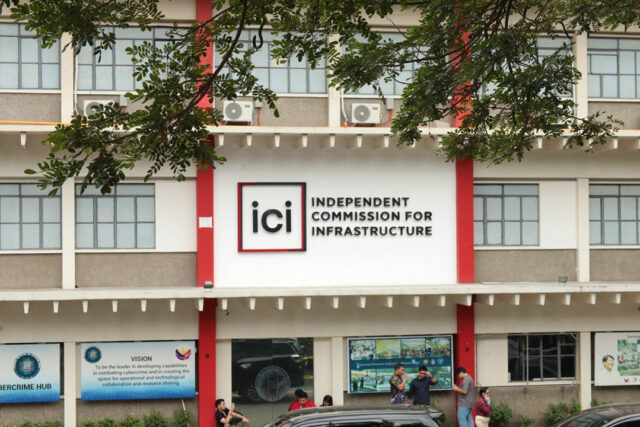
ICI office facade — BW FILE PHOTO

By Chloe Mari A. Hufana, Reporter and Kaela Patricia B. Gabriel

THE administration may be losing urgency in its anti-graft drive, analysts said, as the independent body tasked to probe anomalies in flood control infrastructure projects concludes its investigation on March 31.

The “abrupt closure” of the Independent Commission for Infrastructure (ICI) may be perceived as “unfinished business,” Gary G. Ador Dionisio, dean of the De La Salle-College of St. Benilde’s School of Diplomacy and Governance, said in a Messenger chat, as no sitting lawmakers and top Public Works officials mentioned during hearings were sent behind bars.

The ICI was created through Executive Order No. 94 in September 2025, as a response to allegations of a multibillion-peso public works scandal involving flood mitigation projects.

Originally comprising Chairman Andres B. Reyes, Jr., and members Rogelio B. Singson and Rossana A. Fajardo, the body was reduced to Mr. Reyes by the end of 2025, raising questions about its lifespan.

In February, the ICI submitted an accomplishment report to Malacañang, which later served as basis for President Ferdinand R. Marcos, Jr.’s decision to close it on March 31.

While the seizure of assets, freezing of bank accounts, and jailing of some personalities could mean the investigative phase is largely completed, Mr. Ador Dionisio flagged a “significant governance risk” in closing the ICI before its expected results are fully delivered.

“The closure of a high-profile investigative body may create the perception that the effort is losing urgency.”

The lack of “substantive achievement” ahead of its shutdown would also suggest that the ICI’s corruption crackdown is “performative,” Joy G. Aceron, convenor-director of transparency group Government Watch, said.

“If they are not continued, they’ll come down as mere performative. Their purpose was only to manage the anger of the people. It did not mean to address corruption,” she said in a Facebook Messenger chat.

University of Santo Tomas Political Science Professor Eric Daniel C. de Torres added the flood mess just leaves Filipinos questioning whether the commission’s work was meant to pursue accountability or just to appease the public.

Hansley A. Juliano, who teaches political science at the Ateneo de Manila University, said the credibility of the anti-graft push will hinge less on individual officials’ reputations and more on whether the administration pursues accountability in a visibly fair and policy-driven manner.

“The Ombudsman’s pursuit of persons of interest and the recovery of relevant assets would be key to the achievement of justice, albeit there would be a clear need to demonstrate cross-party accountability across the accused,” he said via Facebook Messenger.

For Mr. Ador Dionisio, the next phase of the ICI must promote reforms on infrastructure protocols, processes and procurement, and jail time for individuals linked to alleged corruption cases from 2016 to the present.

“If the findings of the commission are systematically integrated into prosecutorial processes, legislative reforms, and long-term oversight mechanisms, the closure may represent the completion of a phase rather than the end of accountability,” he said.

“If not, it risks signaling a premature conclusion to anti-corruption efforts, potentially undermining broader governance reforms,” he added.

Despite its looming shutdown, Mr. Marcos ordered both chambers of Congress to fast-track a measure that would institutionalize and strengthen the body through the creation of the Independent People’s Commission (IPC).

Ms. Aceron said the ICI’s closure paved the way for this measure but noted the IPC will only be sustainable with people’s participation.

Mr. de Torres, however, questioned the need for an IPC, noting existing laws that already established mechanisms for accountability through the Ombudsman and Citizen’s Charter. He also flagged what seems to be a lack of interest to certify the bills granting the commission more teeth as urgent.

Senate Bill No. 1512, filed by Senate President Vicente C. Sotto III last year, proposed an independent body to probe corruption and irregularities in government public works projects. The IPC will hold the power to subpoena, freeze assets and blacklist contractors to boost transparency and accountability in public spending. A similar proposal was filed in the House of Representatives.

“I think that it will not push through; to pass it is a political decision. With the way the early stage of investigation had gone through, it is expected that the individuals, offices, and systems in place is a web-like relationship that is very deep,” Mr. de Torres said in anticipation of possible conflicts of interest in the composition of an IPC.

The Philippines, a climate-vulnerable nation hit by an average of 20 typhoons annually, has consistently dedicated billions of pesos in its annual budgets to flood control projects to shield communities and protect local economies.

However, a series of storms mid-last year further exposed the gaps in the outdated flood control systems of the nation.

Senate’s anti-political dynasty bill closer to Constitution, analysts say

PCOO

By Kaela Patricia B. Gabriel and Adrian H. Halili, Reporter

CONGRESS should adopt a more stringent version of the anti-dynasty measure, analysts urged, noting the Senate bill is more aligned with the 1987 Constitution than the House bill over its broader and clearer provisions, including on politicians’ de facto relatives.

“[The Congress should] adopt the stringent version of the anti-dynasty bill. If there would be negotiations, the compromise bill should be a result of a principled settlement,” Dennis C. Coronacion, chairman of the University of Santo Tomas (UST) Political Science Department, said in Facebook Messenger chat as he as described House Bill No. 6771 as “diluted.”

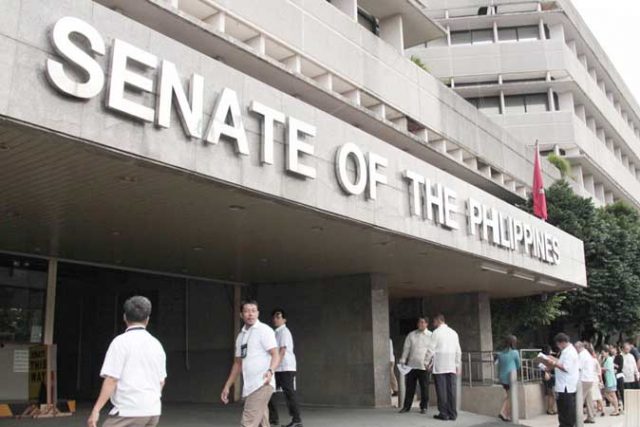
Two separate versions of the anti-political dynasty bill, both seeking to bar second-degree relatives from holding public office, were under plenary deliberation before the Senate and House adjourned for a six-week break.

The Senate’s version sought to bar overlapping terms in national and local offices, prohibit relatives from occupying positions across party-list groups and elective posts, and prevent immediate succession by disallowing a spouse or family member from taking over right after an incumbent’s term. These provisions are all absent in the House’s version.

He said Congress should adopt an anti-political dynasty bill that bans relatives up to the fourth degree of civil relations.

Mr. Coronacion added that the House of Representatives (HoR) has been an obstacle to the immediate enactment of the anti-political dynasty bill.

“The House is making its enactment more difficult by adopting the weak and watered-down anti-dynasty bill of Speaker Faustino ‘Bojie’ G. Dy III and Cong. Ferdinand Alexander ‘Sandro’ A. Marcos III, and delaying the process,” he said.

The House bill also still allows dynasties to “thrive and persist” in effect, Eric Daniel C. de Torres, who teaches political science at UST, said in a separate Messenger chat.

“The version from the HoR won’t change anything as it focuses on the restriction of family members holding multiple offices simultaneously but would still allow the succession of family members, their rotation and possible substitution.”

He added the Senate bill addresses de facto partners of politicians, unlike the House version, which is silent on illegitimate relationships.

“The Senate version in my view is more formidable because it addresses the spouses and children that are either legitimate or illegitimate,” Mr. de Torres said.

“More importantly, the inclusion of the nominees from the party-list groups that I always argue that already becomes an extension of dynastic family by the propagation of regional party-list in accordance with the votes they muster on a particular province.”

Joy Aceron, convenor-director of Government Watch, added that lawmakers can include a provision that staggers the ban on relatives, with provisions on review and amendment every after five years as political dynasties may adapt to undermine democratic reforms.

“This is why a periodic assessment is key. This will determine if we need to expand regulation or redefine it based on the law’s impact and how the dynasties adapt,” she said in a Facebook Messenger chat.

Ms. Aceron said that political education remains crucial to involve people in the reform process and to avoid the people and communities from getting abused by dynasties.

CHECKS AND BALANCES
Congress should also adopt an anti-dynasty bill that prevents families from occupying government posts meant to check and balance each other, Ms. Aceron said, to strengthen accountability measures.

“Posts in government that are supposed to check and balance each other must not be occupied by the same family or personal network,” she said in a Facebook Messenger chat.

Ms. Aceron said it is vital for Congress to determine what institutions will have the capacity and resources to enforce the measure.

“Just like any regulations, enforcement spells all the difference. So, what institutions will enforce, their capacity and resources and their ability to mobilize the public and other stakeholders would be crucial,” she said.

Meanwhile, Edmund S. Tayao, president and chief executive officer of Political Economic Elemental Researchers and Strategists, said the anti-dynasty bills filed in the House and Senate would be best complemented by reforms in the country’s political party-list system.

Mr. Tayao said the measure may pass as a piece of legislation but will not solve the country’s electoral problems.

“The solution is not in operationalizing the anti-political dynasty provision in the 1987 Constitution, but in establishing a real political party,” Mr. Tayao said via telephone.

He noted that other countries, such as the US, also have political dynasties, but it is balanced by standards imposed by their party-list system on their nominees.

“The difference between these countries that have political dynasties is that even if they are sons of previous presidents or related to prominent political leaders, they go through the same rigorous process before they can run for election,” Mr. Tayao added.

The anti-political dynasty bill, which has been included in the Marcos administration’s priority measures, is expected to be passed once Congress resumes session in May and before the President’s fifth State of the Nation Address.

A measure seeking to abolish political dynasties has long been pushed in Congress but has repeatedly faltered over a lack of support from a Legislature dominated by political families.

Eight of 10 lawmakers belong to dynasties, according to a report by the Philippine Center for Investigative Journalism.

Speaker Dy keeps control of House but political issues may test his grip

BW FILE PHOTO

By Kenneth Christiane L. Basilio, Reporter

THE House of Representatives, under Speaker Faustino “Bojie” G. Dy III, advanced key priority bills ahead of its six-week break, showing the administration coalition can still marshal lawmakers to act on urgent measures, political analysts said over the weekend.

But the speaker faces the challenge of balancing lawmakers’ demands as politically charged issues, such as the ouster bid against Vice-President Sara Duterte-Carpio and the approaching 2028 polls, expose factional interests.

“It was productive, but uneven,” Ederson DT. Tapia, a political science professor at the University of Makati, said in a Facebook Messenger chat. “Congress passed key fiscal and regulatory measures, but structural reforms did not gain enough traction.”

The House approved on final reading bills abolishing the travel tax, promoting digital payment platforms and establishing a scholarship program for top Filipino high school students before Congress adjourned last week.

Lawmakers also passed measures allowing President Ferdinand R. Marcos, Jr. to suspend fuel excise taxes and halt the blending of biofuels in gasoline and diesel. Congress will reconvene on May 4.

“The session fared well since it prioritized the bread-and-butter issues,” Dennis C. Coronacion, who heads the Political Science Department of the University of Santo Tomas, said in a Facebook chat. “These moves showed that our lawmakers can immediately respond to the immediate needs of the country.”

While “expectations were partly met,” Mr. Tapia said lawmakers fell short on pushing for “deeper governance reforms.”

Left on the shelf were bills banning political dynasties and strengthening the country’s freedom of information, both part of Mr. Marcos’ legislative agenda. Debate on the anti‑dynasty measure stalled on second reading, while the information bill cleared the committee level last week.

“The shift of public attention away from anti-corruption towards the current oil crisis, the anti-political dynasty bill and other political reform measures might end up being left to rot for the sake of more ‘pertinent’ economic and social welfare legislation,” Anthony Lawrence A. Borja, an associate political science professor at De La Salle University.

Mr. Tapia described those legislative “misses” as evidence that lawmakers were slow to act on institutional reforms concerning the political system.

“They should set aside their political agenda and private interests so as not to waste the taxpayers’ money,” Mr. Coronacion said, adding lawmakers should have “spent more time with the political reform bills.”

In a statement, Majority Leader and Ilocos Norte Rep. Ferdinand Alexander “Sandro” A. Marcos III said the House headed into the six-week legislative break having passed 18 of 52 priority bills set by the President.

“Your House of Representatives is eager in passing the administration’s priority measures,” he said.

The session also showed Speaker Mr. Dy still held the reins over the chamber despite politically sensitive developments, including a bloc pressing for stronger evidence in the impeachment bids against Ms. Duterte.

“He has maintained coalition discipline and legislative throughout, but politically sensitive issues like impeachment complaints may test unity,” Mr. Tapia said. “These could consume legislative bandwidth and expose factional interests.”

Mr. Coronacion said Mr. Dy’s challenge now is balancing the interests of individual lawmakers.

“Since we’re just two years away from the next elections, the biggest challenge for him is how to address the increasing practical demands of our congressmen,” he said. “If he fails, it would precipitate the demise of the majority coalition.”

Comelec defends legality of ending Marcoleta probe amid criticisms

THE COMELEC office in Intramuros, Manila — PATRICK ROQUE

By Erika Mae P. Sinaking, Reporter

THE termination of a campaign finance investigation involving a Philippine senator has drawn attention to persistent loopholes and risks to transparency in the electoral system, analysts said over the weekend, as the poll body maintains it is strictly adhering to existing law.

George Erwin M. Garcia, chairman of the Commission on Elections (Comelec), said the poll body acted within the bounds of existing statutes when it cleared Senator Rodante D. Marcoleta of any potential election offense regarding the non-declaration of campaign donors in his 2025 statement of contributions and expenditures.

“The Comelec merely applied the law. We have no call on what the law is and/or should be,” Mr. Garcia told BusinessWorld in a Viber chat. “The law may be harsh but that is the law. And we are not permitted to go beyond it.”

“All our effort must be directed to Congress for the enactment of amendatory laws. In fact, as an initial initiative, our Resolution can be elevated to the Supreme Court to determine if our action is right or wrong for jurisprudence purposes as a useful guidance in future cases of similar import,” he added.

In an en banc resolution last week, the commission voted 6-0-1 to adopt a recommendation to terminate the probe due to a lack of evidence and the decriminalization of specific non-disclosure offenses. Mr. Garcia inhibited himself from the vote to avoid any potential conflict of interest.

Despite clearing the legislator, the poll body confirmed that a preliminary investigation would proceed for three individuals linked to the questioned donations. Mr. Garcia noted this process ensures the “opportunity to be heard.”

Former Comelec Commissioner Luie Tito F. Guia explained that the resolution hinged on Republic Act (RA) No. 7166, which decriminalized a candidate’s failure to disclose contributors.

“That’s the reason why the investigation against Marcoleta was dismissed. However, the fact that the donors will be investigated instead shows that Comelec concluded that there was an unreported election donation, although received before the campaign period,” Mr. Guia told BusinessWorld in a Facebook Messenger chat.

BLIND SPOT
“In any case, the pre-campaign period becomes a blind spot for public oversight because the aspirant (is not yet a candidate) does not have a compulsion to report what he may have received and spent during said period,” he said.

“It is established that candidates already spend the bulk of their election budget before election period. Not knowing how much money candidates spent and where the money comes from, deprives the people of information that may lead to contributors influencing the divisions and actions of public officials. Conflicts of interest are harder to detect,” he added.

Mr. Guia said the penera doctrine correctly interpreted what he called a bad law, Section 13 of RA No. 9369, which effectively allows premature campaigning and therefore needs to be revisited.

Hansley A. Juliano, a political science lecturer at the Ateneo de Manila University, said that the premise for terminating the investigation “screams technicality” and effectively tarnishes the spirit of campaign finance accountability.

“They belie the fact that Mr. Marcoleta’s long public visibility (both as a member of INC and as a representative of 2 separate party-lists) means his finances cannot be purely adjudged as personal funds,” Mr. Juliano said, referring to the Iglesia ni Cristo, a 2-million strong church known for bloc voting.

“Inasmuch as the letter of the law is being invoked, the entire spirit of campaign finance accountability has already been tarnished in this case, as it creates additional loopholes for other future lawmakers,” he added.

Carl Marc L. Ramota, a professor at the University of the Philippines Manila’s Department of Social Sciences, said the move establishes a “dangerous precedent” that raises grave concerns regarding the government’s actual commitment to accountability.

“This duplicity transcends party affiliations, as evidenced by the exoneration of Senator Rodante Marcoleta by the Comelec and the recent pronouncement of the Independent Commission for Infrastructure that absolves former Speaker Martin Romualdez of any liabilities related to the flood control corruption,” he said.

“Not only does it perpetuate double standards… worse, it establishes a dangerous precedent for future elections and emboldens candidates and parties to engage in clandestine dealings with questionable election contributors and contractors,” he added.

This lack of consequence, he said, compromises the integrity of future electoral exercises by allowing potentially illicit financial relationships to persist without legal repercussion.

25 Filipinos from Israel back in PHL

DMW FACEBOOK

THE FOURTH BATCH of Filipinos from Israel have arrived in the Philippines, the Department of Migrant Workers (DMW) said.

In a statement, the agency said that 25 Filipinos have safely arrived at the Ninoy Aquino International Airport on March 21. They included 24 overseas Filipino workers (OFWs) and one child.

“Those who returned home are the fourth batch of affected overseas Filipino workers who traveled across the Taba Border in Egypt,” the agency said on Saturday night.

The DMW said that the Filipinos were immediately given appropriate financial, medical, transportation, and hotel accommodation assistance.

In an earlier statement, the Department of Foreign Affairs (DFA) said that a fifth batch of Filipinos repatriated from Israel are now in transit to return home, these included nine OFWs and two tourists.

“The DFA assisted them in processing their immigration documents at the Egyptian Immigration Arrival Hall,” the agency said, following the Filipino’s transit from Israel to Egypt through the Taba Border crossing.

The Philippine government has intensified its repatriation program amid the escalating conflict in the Middle East. — Adrian H. Halili

Panel ready to defend VP ouster bid

Vice President Sara Duterte arrives at the Department of Justice, May 9, 2025. — PHILIPPINE STAR/RYAN BALDEMOR

A CONGRESSIONAL panel handling impeachment bids against Vice-President (VP) Sara Duterte-Carpio is prepared to defend the proceedings at the Supreme Court if she contests the charges there, a congressman said on Sunday.

In a statement, Party‑list Rep. Terry L. Ridon said the House Justice Committee’s handling of the complaints was “evidence‑based,” countering claims the accusations rested on speculation.

“Every step of the committee is rules‑based and evidence‑based,” he said in mixed English and Filipino. “And if the matter is brought before the Supreme Court, the committee is ready to defend the process properly, fairly, and in accordance with the Constitution.”

Last week, the Justice committee ruled the two complaints seeking Ms. Duterte’s removal from office were sufficiently grounded under impeachable offenses in the 1987 Constitution and should proceed to hearings to determine whether there is enough proof to support the charges.

Lawmakers will hold impeachment hearings even while Congress is on a six-week break, with proceedings beginning on March 25 and continuing on April 14, 22 and 29.

Ms. Duterte faces a range of accusations, including claims she misused hundreds of millions of pesos in secret funds under the Office of the Vice-President and the Education department during her tenure as its secretary.

The complaints also alleged she amassed wealth greater than her income, moved to destabilize the government and plotted to assassinate President Ferdinand R. Marcos, Jr., his wife and former Speaker Ferdinand Martin G. Romualdez, charges which she has denied. — Kenneth Christiane L. Basilio

VP Sara: Sustain insurgency drive

VICE-PRESIDENT SARA DUTERTE-CARPIO FACEBOOK PAGE PHOTO

VICE-PRESIDENT (VP) Sara Duterte-Carpio on Sunday urged the Philippine Army to sustain its campaign against insurgency and terrorism while upholding institutional integrity as the military transitions toward a broader national security role.

In a video message, Ms. Duterte pressed troops to remain steadfast in ensuring that security gains are preserved and expanded, warning against complacency even as threats from the New People’s Army and extremist groups have receded.

“I count on you to stay steadfast as our pillar of hope, ensuring that no Filipino has to live in fear,” she said.

“Continue to be the shield that protects our democracy and the strength that guards our future.”

Ms. Duterte also urged the Army to deepen its role in civilian protection, particularly in disaster response, where it has become a critical first responder during typhoons and emergencies.

The Philippine Army celebrated its 129th anniversary last March 19. — Chloe Mari A. Hufana

Bill imposing fines on ticket scalpers advances in Senate

BW FILE PHOTO

A BILL seeking to prohibit hoarding and reselling of admission tickets, imposing fines of up to P500,000 on violators, has secured committee approval in the Senate.

Under Senate Bill No. 1989, lawmakers sought to penalize ticket scalpers with a P100,000 fine on the first offense, P250,000 on the second offense, and P500,000 on the third offense.

“Aside from protecting consumer rights, this act will help the artists and the government through better direct revenues, stronger fanbases, and a more stable events industry,” Senator Francis Pancratius N. Pangilinan, who co-authored the bill, said in a mix of English and Filipino during his sponsorship speech.

Mr. Pangilinan added that ticket scalping is not a mere business but a systematic exploitation.

Talks of filing an anti-ticket scalping bill emerged in late 2024 following Filipino-American artist Olivia Rodrigo’s concert which sold tickets for P1,500 for all tiers. However, ticket scalpers resold the tickets from P10,000 to P15,000.

Acts punishable under the bill, which entails penalties ranging from P100,000 to P500,000 and six months to three years of imprisonment, include unauthorized selling and distribution of tickets and usage of automated bots, fake accounts, and other fraudulent methods to bypass ticketing systems.

The bill also provided that individuals found aiding and abetting the violations under the measure will be fined with P50,000 to P250,000 and may face six months to one year of imprisonment.

Ticketing companies and services will also face penalties, should they fail to disseminate anti-ticket scalping warnings within their premises and online platforms. — Kaela Patricia B. Gabriel

CTA voids P849-M tax case vs Eastern Petroleum

CTA.JUDICIARY.GOV.PH

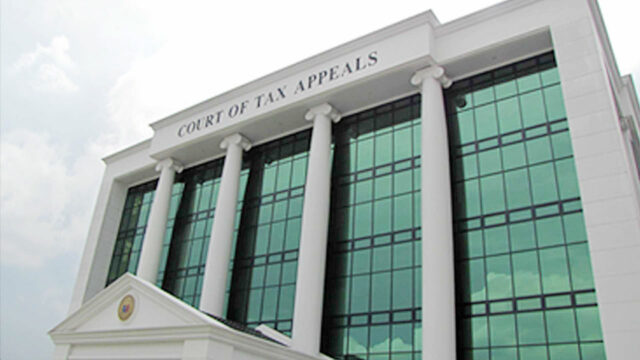
THE Court of Tax Appeals (CTA) has canceled deficiency tax assessments totaling P849.14 million against Eastern Petroleum Corp., citing a breach of the company’s right to due process.

In a 16-page decision dated March 18, the CTA special second division ruled that the formal assessment notices issued by the Bureau of Internal Revenue for the 2014 taxable year were void because they lacked definite due dates.

The court found that the final assessment notice issued on Oct. 22, 2019, set a payment deadline of Sept. 30, 2019 — a date that had already lapsed before the company received the notice on Oct. 24, 2019. Similarly, the final decision on disputed assessment was issued on June 29, 2020, yet it set a payment deadline of Feb. 15, 2020, making it impossible for the company to comply.

“If a taxpayer only receives the demand for payment past the due date, then clearly the written demand does not give the taxpayer any time to consider the demand and prepare for payment when it falls due,” the decision penned by Presiding Justice Ma. Belen M. Ringpis-Liban read.

“The purpose of prior notice is negated. The taxpayer’s right to due process is clearly breached,” it added.

The decision reversed claims for deficiency income tax, value-added tax, and other miscellaneous levies. The court also set aside P267,000 in compromise penalties because the firm did not consent to them.

“Compromise penalties are only amounts suggested in settlement of criminal liability and may not be imposed or exacted on the taxpayer in the event of refusal to pay the suggested amount,” the tax court said. — Erika Mae P. Sinaking

ADVERTISEMENT
ADVERTISEMENT