Home Blog Page 1234

SM debuts biggest rooftop solar panel system at SM Fairview

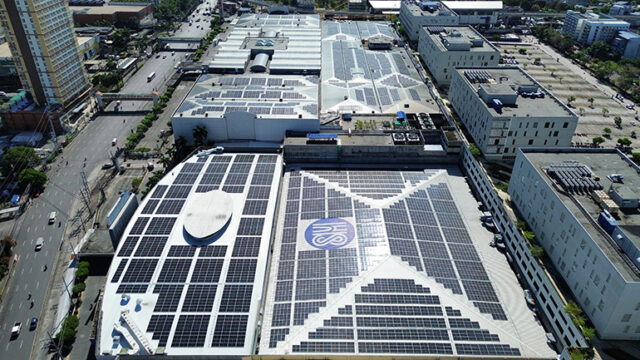
SM City Fairview’s rooftop solar photovoltaic system

In line with its 40th anniversary, SM Supermalls has unveiled the largest rooftop solar photovoltaic (PV) system on a commercial building in the country at SM City Fairview, reinforcing its commitment toward environmental sustainability and corporate resilience. This is a significant contribution to SM Prime Holding’s Net Zero 2040 goal.

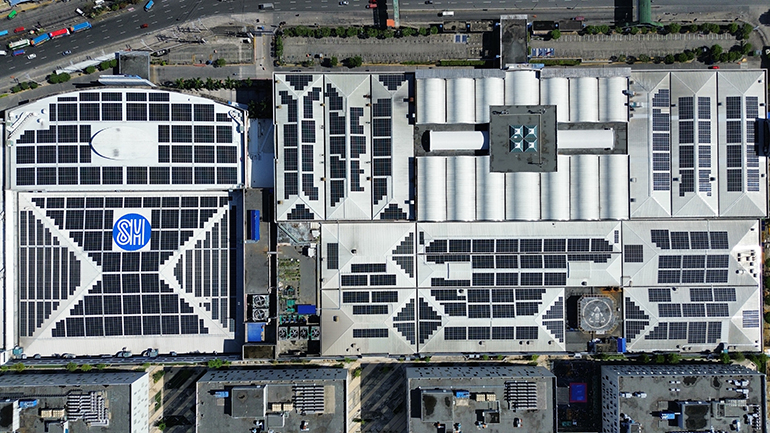
With a 3.785-Megawatt peak (MWp) solar power capacity, the SM City Fairview solar PV system has 6,882 solar modules over a total area of 4.3 hectares and an average annual solar production of up to 5,960-Megawatt-hour (MWh). This means that 11% of the mall’s annual energy consumption will now come from the sun, which is equivalent to powering SM City Fairview’s 44 escalators and all its mall and perimeter lights for up to two and a half years. The mall ultimately offsets or prevents the release of 4,133 tons of carbon dioxide into the atmosphere with every year of operations, supporting climate action and ensuring a more sustainable future for Filipinos.

In photo are (front L-R) SM Supermalls VP for Mall Operations Engr. Junias Eusebio, Quezon City Mayor Joy Belmonte, SM Supermalls President Steven Tan, Quezon City District 5 Rep. Patrick Michael Vargas, SM SAVP for Mall Operations Ronald Allan Brosas, (behind L-R) SM Supermalls EVP for Marketing Joaquin San Agustin, SM Engineering Design & Development SVP Engr. Teodoro Bautista, Department of Energy — Energy Utilization Management Bureau Director Patrick Aquino, and SM Supermalls VP for Corporate Compliance Engr. Liza Silerio.

The SM City Fairview solar PV system also contributes to the malls’ program solar pipeline and SM Prime Holdings’ Net Zero 2040 goal towards a significant reduction of the company’s total carbon footprint. SM Prime’s total rooftop solar capacity is currently at 73-MWp and will be further boosted up to 100-MWp by the end of the year.

In partnership with Buskowitz Energy, this project enables SM to further reduce its carbon footprint and reliance on the national grid. It also supports the government’s thrust towards renewable energy for the benefit of the environment.

Top shot of SM City Fairview’s solar PV system that features a 3.785-Megawatt peak solar power capacity.

The first Philippine mall to have a rooftop solar PV installation was SM North EDSA in 2014 with a 1.5-MWp capacity. The installation at SM Fairview augments the rooftop solar PV system of SM City Santa Rosa, which was previously the largest installation with a 3.088-MWp capacity.

Hans T. Sy, SM Prime Chairman of the Executive Committee, is at the forefront of the property giant’s sustainability programs — from energy demand management to potable water and wastewater management to solid waste management, which he has led for more than two decades.

For more information, visit www.smsupermalls.com or follow SM Supermalls’ official social media accounts.


Spotlight is BusinessWorld’s sponsored section that allows advertisers to amplify their brand and connect with BusinessWorld’s audience by publishing their stories on the BusinessWorld Web site. For more information, send an email to online@bworldonline.com.

Join us on Viber at https://bit.ly/3hv6bLA to get more updates and subscribe to BusinessWorld’s titles and get exclusive content through www.bworld-x.com.

Savor authentic flavors at Watami Japanese casual restaurant

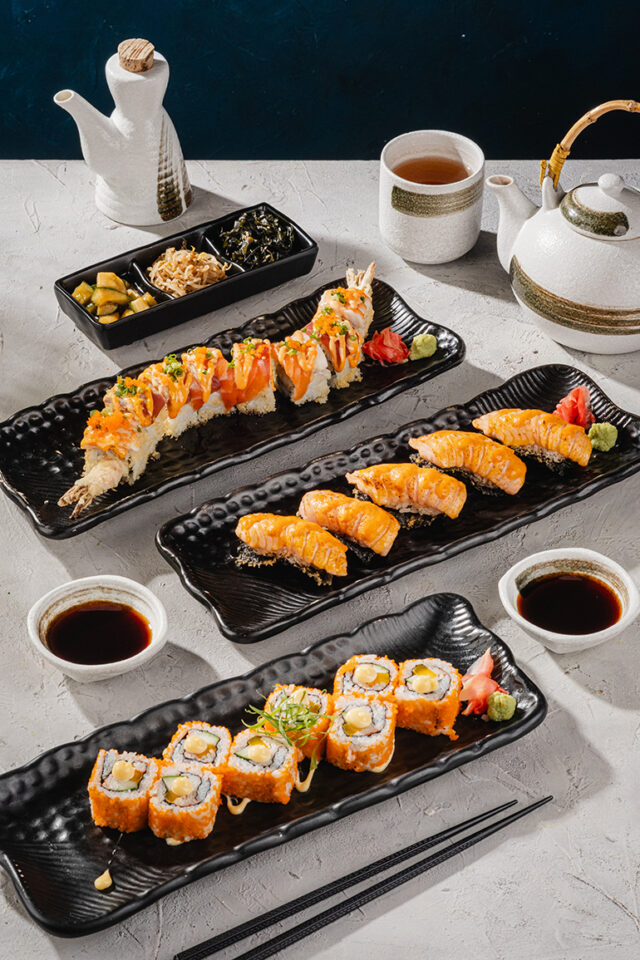
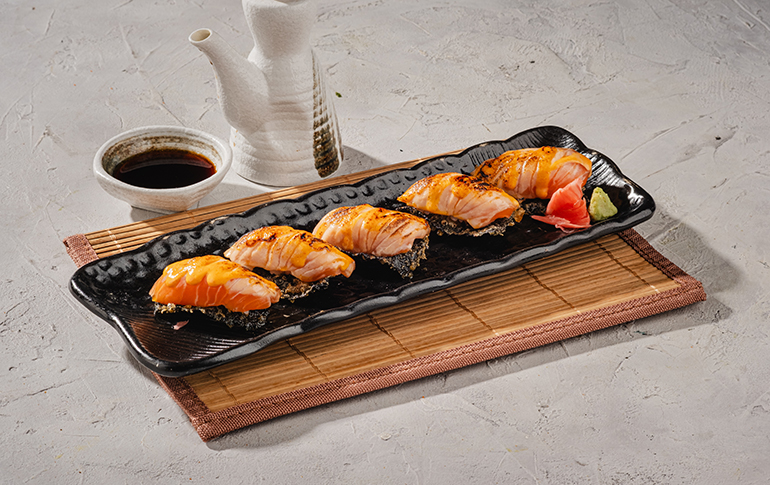
Sushi

Step into Watami, the Philippines’ beloved Japanese casual dining destination where tradition meets innovation in every dish. Since opening its first Manila branch, Watami has become synonymous with warm hospitality, exquisite craftsmanship, and an approachable menu that invites diners to explore Japan’s rich culinary heritage — no passport required.

A Welcoming Ambiance

From the moment you enter, Watami’s interior charms with its modern minimalist design accented by natural wood, soft lighting, and lush greenery. Communal tables encourage shared moments over food, while intimate booths provide cozy corners for date nights or quiet catch-ups. Whether you’re gathering with friends or bringing the family, the restaurant’s relaxed vibe sets the stage for an unforgettable meal.

Menu Highlights

Watami’s chefs artfully balance tradition and creativity, sourcing premium ingredients to craft flavors that linger long after the last bite:

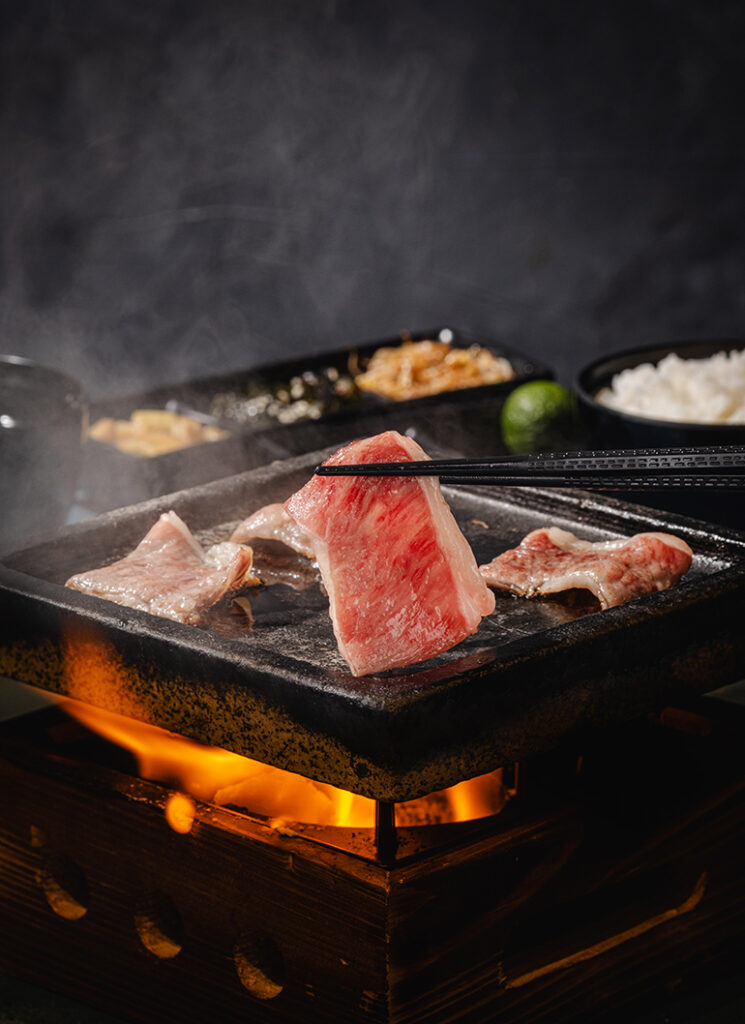
  • Yakiniku: Tender, marinated beef slices seared tableside to smoky perfection — grill your way to yakiniku bliss.

  • Creative Skewers: A playful parade of flavors — from miso-glazed mushroom to teriyaki chicken — skewered for maximum taste.

  • Salmon Taco Aburi: Fresh salmon torched to a light char, nestled in a crisp wonton shell with zesty avocado cream.

  • Grilled Mackerel: Wild-caught mackerel, simply seasoned and flame-grilled, delivering rich umami with every flaky bite.

  • Pepper Beef Rice Stone Pot: Sizzling pepper-kissed beef over steaming rice, finished with a drizzling of savory sauce for ultimate comfort.

  • Salmon Miso Roll: Delicate salmon wrapped around creamy rice, drizzled with savory miso sauce for a blissful ocean-kissed bite.

  • Beef Rice Stone Pot: Sizzling to perfection — tender beef, peppery heat, and fluffy rice served in a hot stone pot for bold flavor in every bite.

Elevated Experience

Complement your meal with handcrafted mocktails, sake flights, or Japanese craft beers. Don’t miss Watami’s seasonal specials — like Sakura-themed desserts in spring or spicy miso bowls during cooler months — that showcase the chefs’ inventive flair.

Commitment to Quality

Watami takes pride in sustainability, partnering with local farmers and fisheries to ensure each ingredient meets rigorous freshness standards. This farm-to-table ethos not only supports Filipino communities but also guarantees every dish bursts with authentic flavor.

Join the Celebration of Japanese Hospitality

With multiple branches across Metro Manila and beyond, Watami Japanese Casual Restaurant invites you to experience genuine omotenashi — Japanese hospitality that anticipates your needs and treats you like family. Whether you crave comforting classics or crave-worthy innovations, let Watami be your go-to haven for Japanese cuisine in the Philippines.

Visit Watami today and discover why every meal here feels like coming home.


Spotlight is BusinessWorld’s sponsored section that allows advertisers to amplify their brand and connect with BusinessWorld’s audience by publishing their stories on the BusinessWorld Web site. For more information, send an email to online@bworldonline.com.

Join us on Viber at https://bit.ly/3hv6bLA to get more updates and subscribe to BusinessWorld’s titles and get exclusive content through www.bworld-x.com.

What Bagong Pilipinas really means under President Ferdinand R. Marcos, Jr.’s leadership


Spotlight is BusinessWorld’s sponsored section that allows advertisers to amplify their brand and connect with BusinessWorld’s audience by publishing their stories on the BusinessWorld Web site. For more information, send an email to online@bworldonline.com.

Join us on Viber at https://bit.ly/3hv6bLA to get more updates and subscribe to BusinessWorld’s titles and get exclusive content through www.bworld-x.com.

Department of Agriculture backs Kamote ni Juan launch, aims to revolutionize fries with nutritious, locally grown sweet potatoes

From left to right: Dietician Shereene Ko, Kamote ni Juan (KNJ) Co-Founder and BOD Bianca Angeles, KNJ President Michelle Estrada-Bederi, DA High Value Crops Development Program (HVCDP) Director Joseph Manicad, DA HVCDP Project Development Officer IV Lasker Belleza, and KNJ Business Development Manager Lyn Inductivo

A new Filipino food venture is setting out to redefine the country’s fast-food industry with an innovative twist on a beloved snack: sweet potato fries. Kamote ni Juan, a homegrown chain, is on a mission to replace traditional potato fries with a healthier, locally sourced alternative, positioning the sweet potato as the star of the snack aisle.

“We’re here to offer a snack that’s both familiar and innovative,” said Michelle Estrada-Bederi, president of Kamote ni Juan. “Sweet potatoes are a Filipino staple, but we’re giving them a twist, making them accessible in a way that resonates with modern eating habits.”

On National French Fry Day, the brand launched its first kiosk at Robinsons Galleria, introducing a fresh alternative to the conventional fast-food snack. Offering both air-fried and deep-fried sweet potato fries, Kamote ni Juan aims to create a wholesome option without sacrificing flavor. The opening event attracted supporters, from mallgoers to government officials, and signaled the brand’s ambition to grow rapidly, with a goal to open 500 kiosks across the Philippines by 2026.

From Filipino Farms to Conscious Cravings

Kamote ni Juan stands out not only for its innovative product but also for its commitment to sustainability. The company’s business model centers on sourcing sweet potatoes directly from local farmers, helping stimulate the domestic agricultural economy while offering customers a better-for-you snack option.

John Estrada, who supports his sister Michelle Estrada-Bederi in her leadership of the brand, was present at the opening event. Mr. Estrada, known for his love of “kamote merienda,” expressed his excitement about the business, saying, “I’ve always loved sweet potatoes as a snack, so I’m thrilled about their business idea.” Also supported by her husband Buck Bederi II.

“We want to create a lasting impact on how Filipinos view fast food,” Ms. Estrada-Bederi explained. “By sourcing locally and offering a better option, we are contributing to the well-being of both our customers and the industry.”

Nutritionally, sweet potatoes are a superior alternative to traditional fries. “Sweet potatoes are naturally sweeter, high in beta-carotene, fiber, and lower in glycemic index,” said Shereene Ko, a dietitian. “When air-fried, they provide a crunchy, satisfying snack with fewer calories and less cholesterol than regular fries.”

Kamote ni Juan offers a variety of flavors, including cheese, barbecue, and sour cream, along with a selection of traditional Filipino dips, allowing customers to indulge an equally delicious alternative to the classic fast-food snack.

The Department of Agriculture (DA) has expressed support for Kamote ni Juan’s model, recognizing its potential to provide a reliable market for Filipino farmers while offering consumers a wellness-forward, locally sourced snack.

Joseph Manicad, DA High Value Crops Development Program Director, noted, “This is a partnership that works both ways. Filipino farmers get a sustainable market, and consumers get proudly local food that supports wellness. We are optimistic about the positive ripple effect this will have on agricultural livelihoods.”

Aggressive Expansion Plans

Kamote ni Juan’s expansion strategy is set to be ambitious, with plans to open additional branches across Metro Manila in the coming months. The brand is on track to rapidly grow its presence, with over 500 kiosks targeted for launch nationwide by 2026.

“This isn’t just about fries. It’s about providing a modern snack option that doesn’t compromise on taste or nutrition,” said Ms. Estrada-Bederi. “We believe this is the future of Filipino snacking.”

The company’s fast expansion signals the growing demand for better snack choices in the Philippines, aligning with the global trend towards sustainable eating. With its innovative take on the classic fry, Kamote ni Juan is set to change the landscape of Filipino fast food. By promoting mindful eating, supporting local agriculture, and staying true to Filipino flavors, Kamote ni Juan represents a bold shift in the snacking culture.


Spotlight is BusinessWorld’s sponsored section that allows advertisers to amplify their brand and connect with BusinessWorld’s audience by publishing their stories on the BusinessWorld Web site. For more information, send an email to online@bworldonline.com.

Join us on Viber at https://bit.ly/3hv6bLA to get more updates and subscribe to BusinessWorld’s titles and get exclusive content through www.bworld-x.com.

From Harvard to Oxford to Duke: Mon Abrea concludes executive program on tax policy, strengthening global push for inclusive reforms

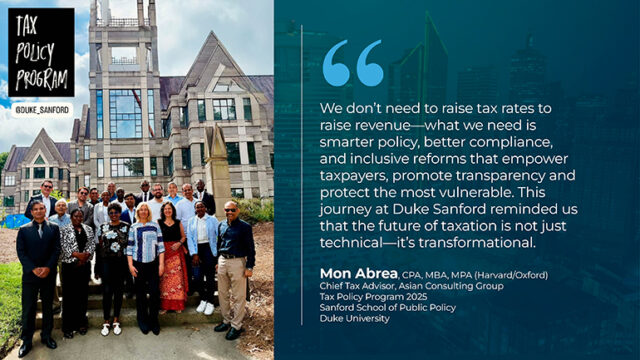
Khaled A. Syed, Md Bodruzzaman Munshi, Thobile E. Dlamini, Idris I. Holman, Ching Hua Wee, Mohd Khairul bin Mat Yaacob, Marcela Rozo, Adnan A. Ghumman, Bilal Malae, Mon Abrea, Gilbert Tumusabe, Aigba O. Ilesanmi, Evelyn Parra, Jedah N. Orweno, Dean Luneta, Elizabeth Nanyangwe, Gangadhar P. Shukla, and Sebastian S. James

Durham, North Carolina — Mon Abrea, the Philippines’ most prominent advocate for genuine tax reform and Chief Tax Advisor of the Asian Consulting Group (ACG), has completed the Executive Tax Policy Program at Duke University’s Sanford School of Public Policy, capping a global academic journey that began at Harvard Kennedy School and University of Oxford.

His final presentation, delivered before a global cohort of tax professionals and policy makers, focused on the Philippine case study and its application of three advanced revenue forecasting models, micro-simulation, and incentive-based policies. The presentation emphasized how revenue forecasting, tax incentives, and international taxation can be leveraged to strengthen developing economies, empower taxpayers, and attract responsible investment.

An alumnus of Harvard and Oxford, Mr. Abrea is widely recognized as a global tax policy expert working alongside various international organizations and policy makers worldwide to shape more transparent, equitable, and investment-friendly tax systems. His reform agenda promotes smarter policy design, simplified compliance, and pro-growth tax incentives to support MSMEs and attract sustainable foreign direct investment (FDI).

From left to right: Cory Krupp, Professor of the Practice; Gangadhar P. Shukla, Program Co-Director; Sebastian S. James, Program Co-Director; Mon Abrea, PH Tax Whiz; and Fernando R. Fernholz, Professor of the Practice Emeritus

A Reform Roadmap for the 20th Congress

Following his graduation from Duke, Mr. Abrea is set to present his five-point tax policy proposal to Philippine legislators as they open the 20th Congress. These include:

  1. A 10% minimum tax for self-employed and professionals;
  2. Risk-based audit and enforcement systems;
  3. Super Incentives for green and strategic industries;
  4. Full digital automation of tax administration — or outright abolition of BIR inefficiencies;
  5. A streamlined tax regime to encourage more MSME compliance and foreign investment.

Global Engagement and Upcoming Book Launch

Mr. Abrea continues his international tax and investment roadshow, leading strategic briefings in New York, Washington D.C., Los Angeles, San Francisco, Madrid, Paris, London, and Milan — positioning the Philippines as a future-ready, ESG-aligned investment hub in Asia.

His second book, Reimagining the World: Without Climate Change, will launch next month at Oxford University, where the concept was developed during his climate policy program. This follows the 2023 release of Without Corruption at Harvard. The third and final book in the series — Without Poverty — is now in development.

ACG’s Global Expansion

As ACG scales its global footprint, new satellite offices will be launched in Singapore, Sydney, and Dubai, followed by London, New York, and San Francisco. With this expansion, ACG strengthens its role as the go-to tax expert and strategic investment advisor for foreign investors and multinational firms entering the Philippines and the broader Southeast Asia region.

About ACG:

ACG is the most trusted tax advisory firm in the Philippines, providing tax strategy, compliance, and policy advisory services to multinational corporations, foreign investors, and government institutions. With a strong presence in Asia and an expanding global network, ACG continues to bridge the gap between international investors and the dynamic Philippine market.

To explore partnership opportunities or join ACG’s global investment promotion initiatives, CONSULT ACG, or you may also send an email to consult@acg.ph.


Spotlight is BusinessWorld’s sponsored section that allows advertisers to amplify their brand and connect with BusinessWorld’s audience by publishing their stories on the BusinessWorld Web site. For more information, send an email to online@bworldonline.com.

Join us on Viber at https://bit.ly/3hv6bLA to get more updates and subscribe to BusinessWorld’s titles and get exclusive content through www.bworld-x.com.

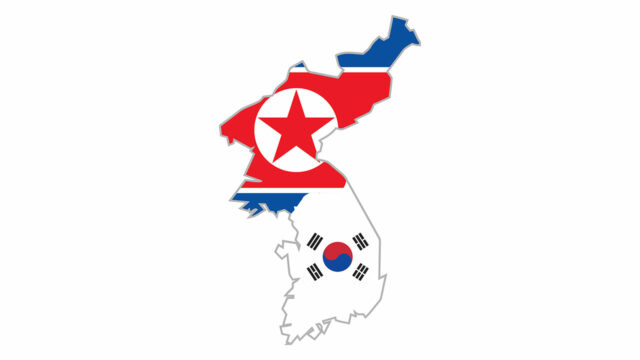
North Korea says South Korea’s overtures ‘great miscalculation’

 – North Korea has no interest in any policy or proposals for reconciliation from South Korea, the powerful sister of its leader Kim Jong Un said on Monday in the first response to South Korean liberal President Lee Jae Myung’s peace overtures.

Kim Yo Jong, who is a senior North Korean ruling party official and is believed to speak for the country’s leader, said Lee’s pledge of commitment to South Korea-U.S. security alliance shows he is no different from his hostile predecessor.

“If South Korea expects to reverse all the consequences of (its actions) with a few sentimental words, there could be no greater miscalculation than that,” Mr. Kim said in comments carried by official KCNA news agency.

Mr. Lee, who took office on June 4 after winning a snap election called after the removal of hardline conservative Yoon Suk Yeol over a failed attempt at martial law, has vowed to improve ties with Pyongyang that had reached the worst level in years.

As gestures aimed at easing tensions, Mr. Lee suspended loudspeaker broadcasts blasting anti-North propaganda across the border and banned the flying of leaflets by activists that had angered Pyongyang.

Mr. Kim, the North Korean official, said those moves are merely a reversal of ill-intentioned activities by South Korea that should never have been initiated in the first place.

“In other words, it’s not even something worth our assessment,” she said.

“We again make clear the official position that whatever policy is established in Seoul or proposal is made, we are not interested, and we will not be sitting down with South Korea and there is nothing to discuss.”

South Korea’s Unification Ministry said Kim Yo Jong’s comments “show the wall of distrust between the South and the North is very high as a result of hostile and confrontational policy over the past few years.”

South Korea will continue to make efforts for reconciliation and cooperation with the North, ministry spokesperson Koo Byoung-sam told a briefing.

There has been cautious optimism in the South that the North may respond positively and may even show willingness to re-engage in dialogue, particularly after Pyongyang also shut off its loudspeakers, a move Lee said was quicker than expected.

Still, Mr. Lee, whose government is in the midst of tough negotiations with Washington to avert punishing tariffs that President Donald Trump has threatened against a string of major trading partners, has said U.S. alliance is the pillar of South Korea’s diplomacy.

Mr. Lee said on the anniversary of the Korean War armistice on Sunday Seoul would make efforts in all areas to “strengthen the South Korea-U.S. alliance that was sealed in blood.”

North Korea also marked the anniversary which it calls victory day with events including a parade in Pyongyang, although state media reports indicated it was at a relatively lesser scale compared to some previous years.

Columns of soldiers marched holding portraits of commanders including state founder Kim Il Sung with spectators and frail veterans in historic army uniforms in attendance in state media photos, which did not show major weapons as part of the parade.

A formation of military jets flew over the Pyongyang Gymnasium square in the night sky trailing streaks of flares and fireworks. State media made no mention of leader Kim Jong Un’s attendance.

The two Koreas, the United States and China, which are the main belligerents in the 1950-53 Korean War, have not signed a peace treaty. – Reuters

China opposes Czech president’s visit to Dalai Lama

FILE PHOTO | By Evan Osherow, via en:User:Mind meal - flickr, CC BY 2.0, https://commons.wikimedia.org/w/index.php?curid=5372169
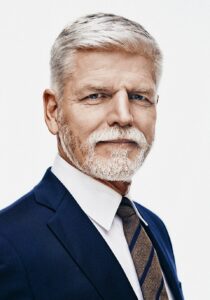
President of the Czech Republic Petr Pavel | FILE PHOTO | By Jana Jabůrková, Jiří Turek (J3T) – Kancelář prezidenta republiky, CC BY-SA 4.0, https://commons.wikimedia.org/w/index.php?curid=131513000

 – China said it “resolutely opposed” Czech President Petr Pavel’s meeting in India with Tibetan spiritual leader the Dalai Lama, and urged the Czech side to “abide by its one-China political commitment” and maintain healthy and stable relations.

China’s embassy in the Czech Republic posted the notice late on Sunday and said China firmly opposes any form of contact between officials of any country and the Dalai “clique”.

Mr. Pavel met with the Dalai Lama on July 27, it said.

“China urges the Czech side to abide by its one-China political commitment, take immediate and effective measures to eliminate the bad influence,” the statement said.

It added that the Czech side should stop sending “any wrong signals to ‘Tibetan independence’ separatist forces.”

The Dalai Lama has been living in exile in India since 1959 following a failed uprising against Chinese rule in Tibet, and Indian foreign relations experts say his presence gives New Delhi leverage against China.

India is also home to about 70,000 Tibetans and a Tibetan government-in-exile. – Reuters

Thai and Cambodian leaders head to Malaysia for peace talks

STOCK PHOTO | Images by Aranjuezmedina from Freepik

 – The leaders of Thailand and Cambodia were set to hold talks in Malaysia on Monday to reach a ceasefire in their deadly border dispute, with the United States saying its officials would be assisting in the peace process.

Thailand’s government said it was attending talks arranged by Malaysia in its role as chair of the regional ASEAN bloc, while Cambodian Prime Minister Hun Manet said the talks were co-organized by the United States with the participation of China.

U.S. Secretary of State Marco Rubio said State Department officials were in Malaysia to assist peace efforts, after President Donald Trump had earlier said that he thought both leaders wanted to settle the conflict.

“We want this conflict to end as soon as possible,” Mr. Rubio said in statement released late on Sunday in the U.S. and early Monday in Asia.

“State Department officials are on the ground in Malaysia to assist these peace efforts.”

Tensions between Thailand and Cambodia have intensified since the killing in late May of a Cambodian soldier during a brief border skirmish. Border troops on both sides were reinforced amid a full-blown diplomatic crisis that brought Thailand’s fragile coalition government to the brink of collapse.

Hostilities broke out last Thursday and have escalated into the worst fighting between the Southeast Asian neighbors in more than a decade.

The death toll has risen above 30, including more than 20 civilians, while authorities report that more than 200,000 people have been evacuated from border areas.


ANWAR TO CHAIR TALKS

Malaysian Prime Minister Anwar Ibrahim had proposed ceasefire talks soon after the border dispute erupted into conflict on Thursday, and China and the United States also offered to assist in negotiations.

Thailand had said it supported calls for a ceasefire in principle but wanted to negotiate bilaterally, while Cambodia had called for international involvement.

Anwar said he expected to chair the negotiations after being asked by representatives of the two governments to try to find a peace settlement, state media agency Bernama reported.

“So, I’m discussing the parameters, the conditions, but what is important is (an) immediate ceasefire,” he said late on Sunday. – Reuters

US, China to launch new talks on tariff truce extension, easing path for Trump-Xi meeting

STOCK PHOTO | Image by kjpargeter from Freepik

 – Top U.S. and Chinese economic officials will resume talks in Stockholm on Monday to try to tackle longstanding economic disputes at the center of a trade war between the world’s top two economies, aiming to extend a truce by three months and keeping sharply higher tariffs at bay.

China is facing an August 12 deadline to reach a durable tariff agreement with President Donald Trump‘s administration, after Beijing and Washington reached preliminary deals in May and June to end weeks of escalating tit-for-tat tariffs and a cut-off of rare earth minerals.

Without an agreement, global supply chains could face renewed turmoil from U.S. duties snapping back to triple-digit levels that would amount to a bilateral trade embargo.

The Stockholm talks come hot on the heels of Trump’s biggest trade deal yet with the European Union on Sunday for a 15% tariff on most EU goods exports to the U.S., including autos. The bloc will also buy $750 billion worth of American energy and make $600 billion worth of U.S. investments in coming years.

No similar breakthrough is expected in the U.S.-China talks but trade analysts said that another 90-day extension of a tariff and export control truce struck in mid-May was likely.

An extension of that length would prevent further escalation and facilitate planning for a potential meeting between Trump and Chinese President Xi Jinping in late October or early November.

A U.S. Treasury spokesperson declined comment on a South China Morning Post report quoting unnamed sources as saying the two sides would refrain from introducing new tariffs or other steps that could escalate the trade war for another 90 days.

Mr. Trump’s administration is poised to impose new sectoral tariffs that will impact China within weeks, including on semiconductors, pharmaceuticals, ship-to-shore cranes and other products.

“We’re very close to a deal with China. We really sort of made a deal with China, but we’ll see how that goes,” Mr. Trump told reporters on Sunday before European Commission President Ursula von der Leyen struck their tariff deal.


DEEPER ISSUES

Previous U.S.-China trade talks in Geneva and London in May and June focused on bringing U.S. and Chinese retaliatory tariffs down from triple-digit levels and restoring the flow of rare earth minerals halted by China and Nvidia’s H20 AI chips and other goods halted by the United States.

So far, the talks have not delved into broader economic issues. They include U.S. complaints that China’s state-led, export-driven model is flooding world markets with cheap goods, and Beijing’s complaints that U.S. national security export controls on tech goods seek to stunt Chinese growth.

“Geneva and London were really just about trying to get the relationship back on track so that they could, at some point, actually negotiate about the issues which animate the disagreement between the countries in the first place,” said Scott Kennedy, a China economics expert at the Center for Strategic and International Studies in Washington.

“I’d be surprised if there is an early harvest on some of these things but an extension of the ceasefire for another 90 days seems to be the most likely outcome,” Kennedy said.

U.S. Treasury Secretary Scott Bessent has already flagged a deadline extension and has said he wants China to rebalance its economy away from exports to more domestic consumption — a decades-long goal for U.S. policymakers.

Analysts say the U.S.-China negotiations are far more complex than those with other Asian countries and will require more time. China’s grip on the global market for rare earth minerals and magnets, used in everything from military hardware to car windshield wiper motors, has proved to be an effective leverage point on U.S. industries.


TRUMP-XI MEETING?

In the background of the talks is speculation about a possible meeting between Mr. Trump and Mr. Xi in late October.

Mr. Trump has said he will decide soon on a landmark trip to China, and a new flare-up of tariffs and export controls would likely derail planning.

Sun Chenghao, a fellow at Tsinghua University’s Center for International Security and Strategy in Beijing, said that a Trump-Xi summit would be an opportunity for the U.S. to lower the 20% tariffs on Chinese goods related to fentanyl. In exchange, he said the Chinese side could make good on its 2020 pledge to increase purchases of U.S. farm products and other goods.

“The future prospect of the heads of state summit is very beneficial to the negotiations because everyone wants to reach an agreement or pave the way in advance,” Mr. Sun said.

Still, China will likely request a reduction of multi-layered U.S. tariffs totaling 55% on most goods and further easing of U.S. high-tech export controls, analysts said. Beijing has argued that such purchases would help reduce the U.S. trade deficit with China, which reached $295.5 billion in 2024. – Reuters

US and EU avert trade war with 15% tariff deal

STOCK PHOTO | Image by Bruno from Pixabay

 – The U.S. struck a framework trade agreement with the European Union on Sunday, imposing a 15% import tariff on most EU goods – half the threatened rate – and averting a bigger trade war between the two allies that account for almost a third of global trade.

U.S. President Donald Trump and European Commission President Ursula von der Leyen announced the deal at Mr. Trump’s luxury golf course in western Scotland after an hour-long meeting that pushed the hard-fought deal over the line, following months of negotiations.

“I think this is the biggest deal ever made,” Mr. Trump told reporters, lauding EU plans to invest some $600 billion in the United States and dramatically increase its purchases of U.S. energy and military equipment.

Mr. Trump said the deal, which tops a $550 billion deal signed with Japan last week, would expand ties between the trans-Atlantic powers after years of what he called unfair treatment of U.S. exporters.

Ms. Von der Leyen, describing Mr. Trump as a tough negotiator, said the 15% tariff applied “across the board”, later telling reporters it was “the best we could get.”

“We have a trade deal between the two largest economies in the world, and it’s a big deal. It’s a huge deal. It will bring stability. It will bring predictability,” she said.

The agreement mirrors key parts of the framework accord reached by the U.S. with Japan, but like that deal, it leaves many questions open, including tariff rates on spirits, a highly charged topic for many on both sides of the Atlantic.

The deal, which Mr. Trump said calls for $750 billion of EU purchases of U.S. energy in coming years and “hundreds of billions of dollars” of arms purchases, likely spells good news for a host of EU companies, including Airbus, Mercedes-Benz and Novo Nordisk, if all the details hold.

German Chancellor Friedrich Merz welcomed the deal, saying it averted a trade conflict that would have hit Germany’s export-driven economy and its large auto sector hard. German carmakers, VW, Mercedes and BMW were some of the hardest hit by the 27.5% U.S. tariff on car and parts imports now in place.

The baseline 15% tariff will still be seen by many in Europe as too high, compared with Europe’s initial hopes to secure a zero-for-zero tariff deal.

Bernd Lange, the German Social Democrat who heads the European Parliament’s trade committee, said the tariffs were imbalanced and the hefty EU investment earmarked for the U.S. would likely come at the bloc’s own expense.

Mr. Trump retains the ability to increase the tariffs in the future if European countries do not live up to their investment commitments, a senior U.S. administration official told reporters on Sunday evening.

The euro rose around 0.2% against the dollar, sterling and yen within an hour of the deal’s being announced.


MIRROR OF JAPAN DEAL

Carsten Nickel, deputy director of research at Teneo, said Sunday’s accord was “merely a high-level, political agreement” that could not replace a carefully hammered out trade deal: “This, in turn, creates the risk of different interpretations along the way, as seen immediately after the conclusion of the U.S.-Japan deal.”

While the tariff applies to most goods, including semiconductors and pharmaceuticals, there are exceptions.

The U.S. will keep in place a 50% tariff on steel and aluminum. Von der Leyen suggested the tariff could be replaced with a quota system; a senior administration official said EU leaders had asked that the two sides continue to talk about the issue.

Ms. Von der Leyen said there would be no tariffs from either side on aircraft and aircraft parts, certain chemicals, certain generic drugs, semiconductor equipment, some agricultural products, natural resources and critical raw materials.

“We will keep working to add more products to this list,” von der Leyen said, adding that spirits were still under discussion.

A U.S. official said the tariff rate on commercial aircraft would remain at zero for now, and the parties would decide together what to do after a U.S. review is completed, adding there is a “reasonably good chance” they could agree to a lower tariff than 15%. No timing was given for when that probe would be completed.

The deal will be sold as a triumph for Mr. Trump, who is seeking to reorder the global economy and reduce decades-old U.S. trade deficits, and has already reached similar framework accords with Britain, Japan, Indonesia and Vietnam, although his administration has not hit its goal of “90 deals in 90 days.”

U.S. officials said the EU had agreed to lower non-tariff barriers for automobiles and some agricultural products, though EU officials suggested the details of those standards were still under discussion.

“Remember, their economy is $20 trillion … they are five times bigger than Japan,” a senior U.S. official told reporters during a briefing. “So the opportunity of opening their market is enormous for our farmers, our fishermen, our ranchers, all our industrial products, all our businesses.”

Mr. Trump has periodically railed against the EU, saying it was “formed to screw the United States” on trade. He has fumed for years about the U.S. merchandise trade deficit with the EU, which in 2024 reached $235 billion, according to U.S. Census Bureau data.

The EU points to the U.S. surplus in services, which it says partially redresses the balance.

Mr. Trump has argued that his tariffs are bringing in “hundreds of billions of dollars” in revenues for the U.S. while dismissing warnings from economists about the risk of inflation.

On July 12, Trump threatened to apply a 30% tariff on imports from the EU starting on August 1, after weeks of negotiations failed to reach a comprehensive trade deal.

The EU had prepared countertariffs on 93 billion euros ($109 billion) of U.S. goods in the event a deal to avoid the tariffs could not be struck. – Reuters

DigiPlus, BingoPlus Foundation bring urgent relief to storm-hit Cavite

BingoPlus Foundation, the social development arm of DigiPlus Interactive Corp., continues to deliver critical relief to storm-stricken communities, reaching hundreds of families in Cavite while also preparing a major donation to the Department of Social Welfare and Development (DSWD) for next week.

Upon declaration of the province of Cavite under a State of Calamity, the Foundation responded with relief operations in affected areas. In coordination with Imus Councilor Mark Villanueva and barangay officials, the Foundation on July 26 handed over 400 food relief packs for families in Barangays Poblacion 4A, Poblacion 4B, Malagasang 2B, and Anabu F. An additional 55 packs were provided by the local government, bringing the total to 455 families served.

Brgy. Pulvorista in Kawit, Cavite

These efforts form part of the P5-million relief commitment announced by DigiPlus and BingoPlus Foundation earlier this week in response to widespread flooding across the country following Typhoon Crising. The relief is made possible by the combined strength of DigiPlus’ brands, BingoPlus, ArenaPlus, and GameZone, whose success fuels the company’s growing commitment to social impact.

The Foundation also donated 1,000 relief packs to families in Kawit, Cavite, valued at P450,000. This was part of its ongoing P2-million relief partnership with ABS-CBN Sagip Kapamilya, which began in 2024 and continues to support communities in need through 2025. This effort is separate from the Foundation’s newly announced P5-million relief commitment for Typhoon Crising response.

Brgy. Tabon in Kawit, Cavite

“In moments like these, what families need most is the reassurance that help is on the way,” said Angela Camins-Wieneke, executive director of BingoPlus Foundation. “At BingoPlus Foundation, we do our very best to act fast, to help put food on tables, lighten the burden, and remind them that they are not facing this alone.”

Looking ahead, the Foundation will deliver 100 cabans of rice to the DSWD National Resource Operations Center in Pasay City next week, enough to support over 800 families. More than 50 DigiPlus employee volunteers have pledged to join the repacking effort, marking one of the company’s largest hands-on community mobilizations to date. Further relief operations are under way in affected areas in Metro Manila, CALABARZON and North Luzon provinces.

Brgy. Poblacion in Imus, Cavite

“We know that rebuilding doesn’t happen overnight,” Ms. Camins-Wieneke added. “That’s why we’re staying the course, not just responding to emergencies, but standing by communities as they rise again, stronger.”

Through sustained partnerships and the power of collective action, DigiPlus and BingoPlus Foundation reaffirm their mission: to multiply the good, and stand with Filipinos when they need it most.


Spotlight is BusinessWorld’s sponsored section that allows advertisers to amplify their brand and connect with BusinessWorld’s audience by publishing their stories on the BusinessWorld Web site. For more information, send an email to online@bworldonline.com.

Join us on Viber at https://bit.ly/3hv6bLA to get more updates and subscribe to BusinessWorld’s titles and get exclusive content through www.bworld-x.com.

US tariff may trim PHL GDP growth

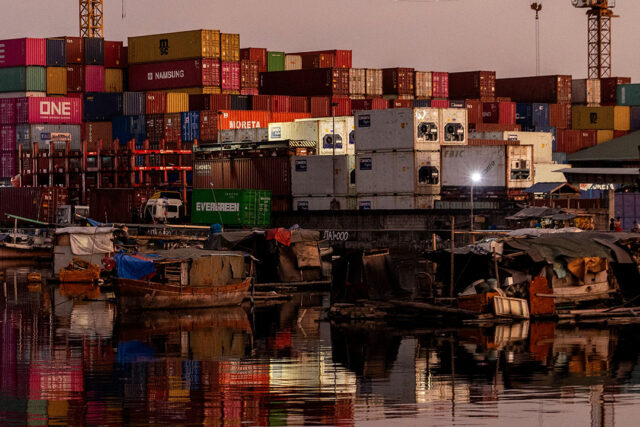
A container terminal is seen from Navotas, Metro Manila in this photo taken April 11, 2025. — REUTERS/ELOISA LOPEZ

By Luisa Maria Jacinta C. Jocson, Senior Reporter

THE United States’ 19% tariff on Philippine goods could cut the Philippines’ gross domestic product (GDP) growth by 0.4 percentage point (ppt), Nomura Global Markets Research said.

In a report, Nomura said the US tariff of 19% on Philippine goods is “fairly high” and poses downside risks to growth.

“We estimate the direct effects could reduce our baseline GDP growth forecasts by a still-substantial 0.4 ppt in the Philippines.”

Nomura said this projection is “relatively substantial” compared to its baseline growth forecasts of 5.3% and 5.6% for this year and 2026, respectively.

“This is partly because we assigned 10% as the level where the reciprocal tariff rate could settle, on the assumption that the Philippines is a strong ally of the US and is not a third country for transshipments,” Nomura said.

“As it turns out, despite the visit to Washington by President Marcos and both sides reiterating the need for a strong partnership, the tariff was still set at 19%, which is even higher than the ‘Liberation Day’ level of 17%.”

Last week, Philippine President Ferdinand R. Marcos, Jr. met with US President Donald J. Trump at the White House in Washington, DC.

Mr. Trump announced a 19% tariff would be imposed on Philippine goods, which will take effect starting Aug. 1.

“The trade ‘deals’ therefore represent upside surprises in terms of tariff rates, especially for the Philippines,” Nomura said.

“As a result, if implemented and these tariff rates are sustained, these will likely further weigh on growth in both countries relative to our current baseline forecasts.”

The government expects GDP to grow by 5.5-6.5% this year, lower than its previous target of 6-8%.

“While these ballpark estimates make sense to us, uncertainty remains high and these are ‘only’ taking into account the direct effects on these ASEAN countries’ exports to the US,” Nomura said.

These estimates do not account for sectoral tariffs, such as in semiconductors and pharmaceuticals, which are currently exempted, it added.

“But as our US team highlights, the risk is these could be set higher, though some countries could be exempted, adding to the uncertainty. As mentioned above, the details of the trade deals with Indonesia and the Philippines are still limited.”

“Meanwhile, other major trading partners, particularly the European Union, are still in negotiations and an escalation of trade tensions could pose additional risks for the region,” it added.

The Department of Trade and Industry has said it is still negotiating the final details of the trade agreement with the US to ensure the protection of local industries.

ONE BIG BEAUTIFUL BILL
Meanwhile, Mr. Trump’s recent One Big Beautiful Bill Act could also impact the Philippines’ own economy, Metropolitan Bank & Trust Co. (Metrobank) Research said in a separate report.

“While the US faces the direct effects of Mr. Trump’s mega bill, the Philippines will feel the aftershocks. After 2027, the federal funds rate is forecasted to tick up after rate cuts in the short-term.”

Metrobank noted this will have spillover effects on the Bangko Sentral ng Pilipinas’ (BSP) monetary policy and overseas Filipino workers’ (OFW) remittances.

“This can, in turn, push up the BSP’s reverse repurchase rate, hindering domestic consumption. To add, if US GDP growth is dampened by crowding out of private investment, demand for exports and OFW remittances may also take a hit.”

Under the bill, Mr. Trump’s 2017 tax cuts are made permanent and also introduces new tax breaks.

“As the US seeks funding to address the increased expenditure, interest rates are expected to edge higher, perhaps as early as next year. Elevated US rates would in turn attract foreign capital to the US away from emerging market economies like the Philippines,” Metrobank said, adding the BSP could hike rates to “ensure the Philippines remains a competitive choice for investors.”

The Philippine central bank lowered interest rates by a total of 125 basis points (bps) since it began its easing cycle in August last year. It delivered a second straight rate cut in June, reducing borrowing costs by 25 bps to bring the key rate to 5.25%.

Metrobank said higher rates would discourage consumption and business investment, which could potentially slow Philippine growth.

Slowing US growth could also hit the Philippines’ exports sector, as the US is the top destination for Philippine export goods, it said.

“With potentially hampered US economic growth, goods from the Philippines could face a reduction in demand. Fewer exports combined with steeper tariffs can make the trade deficit more drastic and weigh on overall GDP,” it said.

Metrobank said softer US growth may also dampen foreign direct investment in emerging markets like the Philippines.

Meanwhile, OFW remittances may also be dampened as the US starts imposing a 1% excise tax on cash remittance transfers from the US to other countries in 2026.

“The US is a hotspot for OFWs, with approximately 2 million OFWs in the US. OFWs influence the Philippine economy through remittances, which could be negatively impacted by a slowdown in US growth,” Metrobank said.

Around two-fifths of the Philippines’ remittance flows come from the United States. The US was the top source of remittances in the five-month period, accounting for 40.2% of the total, latest central bank data showed.

“If OFWs get pay cuts or even lose their jobs, this would cap remittances headed for home. Remittance payments spur household spending, which contributes 78.2% of the Philippines’ GDP.”

The BSP earlier estimated that the remittance tax could trim the country’s remittance growth by 0.5 ppt. The central bank expects cash remittances to grow by 2.8% this year and by 3% in 2026.

“A decline in remittances pulls down household expenditure, rocking the boat for growth,” Metrobank added.


ADVERTISEMENT
ADVERTISEMENT