Home Blog Page 123

Japanese combat troops to join PHL Balikatan war games for first time
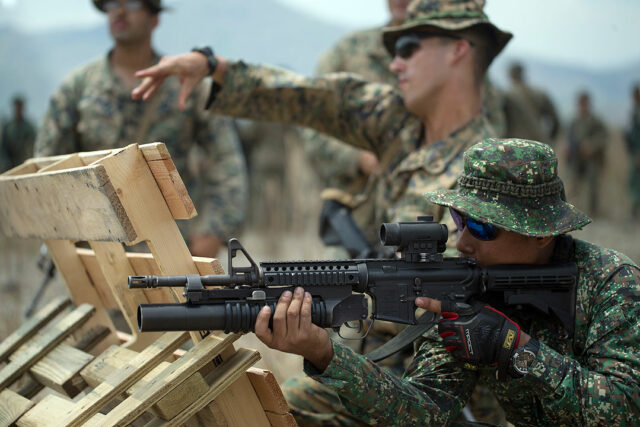
DVIDS/ LANCE CPL. ISAIAH CAMPBELL

By Kenneth Christiane L. Basilio, Reporter

JAPANESE combat troops are set to participate in annual war games in the Philippines for the first time next month as Manila and Tokyo seek to boost interoperability amid shared security concerns with China.

Japan’s combat forces will take part in the Philippines’ flagship Balikatan military exercises in April alongside US troops, in drills expected to be the most extensive in scope and intensity to date, Philippine military Chief of Staff General Romeo S. Brawner, Jr. said on Tuesday.

“For the very first time, after a very, very long time, combat troops from Japan, from the Japanese Self-Defense Forces, will be coming here to the Philippines to join us in the Balikatan exercise,” he told reporters on the sidelines of a forum organized by think tank Stratbase Institute.

“Aside from having more participants — we can see Japan’s participation — this will expand the scope of our defensive operations,” he said in mixed English and Filipino. “Our exercises will be broader, and we will be better prepared for any eventuality.”

The Armed Forces of the Philippines will launch Balikatan — Filipino for “shoulder‑to‑shoulder” — on April 20, Mr. Brawner said.

The annual drills have evolved into Southeast Asia’s premier combat rehearsal as the Philippines and its allies deepen security cooperation in response to China’s growing assertiveness in the region.

Philippine and US forces have traditionally anchored the exercises, but Japan’s participation this year highlights Manila’s efforts to expand its network of security partners beyond Washington.

Mr. Brawner declined to provide detailed information about the scale of Japan’s involvement but said the drills would be more intense and would include efforts to strengthen capabilities against emerging threats, including cyberwarfare. Japan is expected to take part in command‑and‑control exercises as well as live‑fire drills.

“I cannot divulge the exact numbers of what type of units are coming in or the equipment they’re going to bring here, but suffice to say that they will be sending a bigger contingent,” he said.

Japan’s participation is particularly notable given its pacifist Constitution, imposed by the US after World War II that renounces the use of military force. Japan invaded several Asian nations during the war, including the Philippines.

“In 1945, we found ourselves on opposite sides of the war,” Mr. Brawner said. “This time, we find ourselves on the side of efforts to promote a rules‑based international order.”

Japan has emerged as a “like‑minded partner” of the Philippines in promoting regional stability, Mr. Brawner said, as China intensifies what Manila describes as coercive actions in the South China Sea while Tokyo faces its own maritime disputes with Beijing.

“It is a partnership that not only responds to present challenges, but anticipates future demands that are anchored in mutual respect, guided by shared values and committed to lasting peace and stability,” he said.

China claims sovereignty over much of the South China Sea based on a so‑called nine‑dash line map that dates back to the 1940s.

The claim overlaps with the Philippines’ exclusive economic zone, where Beijing has deployed coast guard and maritime militia vessels despite a 2016 ruling by a United Nations‑backed arbitral tribunal that voided its claims. Beijing has continued to reject the ruling.

Like the Philippines, Japan is also embroiled in a dispute with China over the Senkaku Islands, which lie near key shipping lanes and are believed to be rich in marine resources.

“Some countries promote only their own interests and do this through coercion, forcing what they want to happen in the region,” Mr. Brawner said. “That cannot be allowed.”

“This is why the coalitions we are building are important, and one of our most significant partners is Japan,” he added.

Separately, the Philippine Coast Guard (PCG) said China’s coast guard plans to conduct a “clearing operation” near the disputed Scarborough Shoal, a traditional fishing ground for Filipino fishermen.

In a statement, the PCG said it deployed vessels to protect more than 20 Filipino fishing boats from harassment after monitoring a Chinese coast guard ship that broadcast its “intention to conduct a clearing operation” southeast of the shoal.

The Chinese Embassy in Manila did not immediately reply to a request for comment sent via Viber.

Two PCG vessels, along with five patrol boats from the Bureau of Fisheries and Aquatic Resources, were dispatched to escort Filipino fishermen in the area.

The deployment followed encounters last week in which Chinese coast guard ships allegedly used sirens and deployed rigid‑hull inflatable boats to drive Filipino fishermen away from the contested feature.

“The joint deployment ensured the safety and security of the Filipino fishermen,” the PCG said, adding that authorities also provided fuel, food packs, and ice bags to extend their fishing operations in the area.
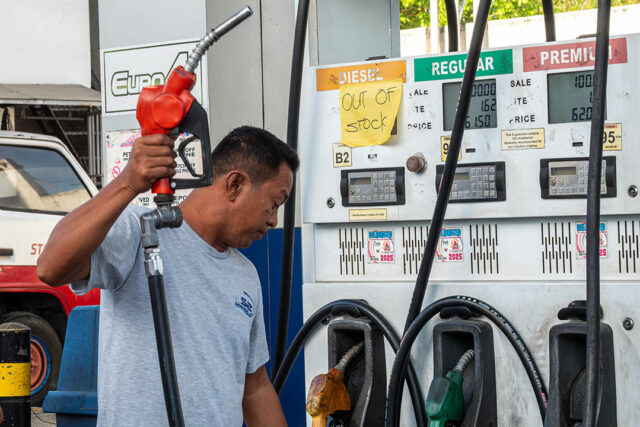
Philippines declares energy emergency amid surging fuel prices 

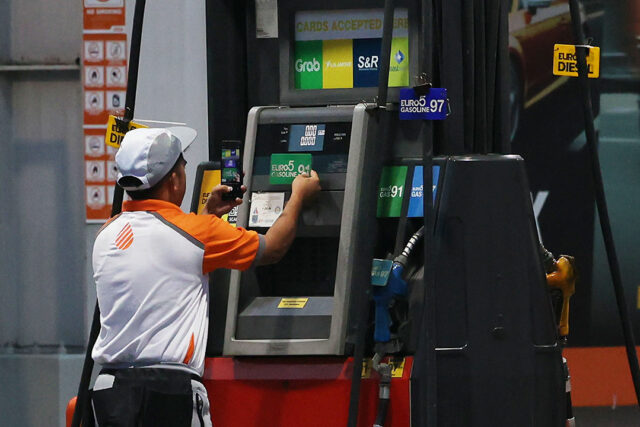
An attendant updates the fuel prices at a gas station in Cubao, Quezon City, March 10, 2026. — PHILIPPINE STAR/MIGUEL DE GUZMAN

By Chloe Mari A. Hufana, Reporter

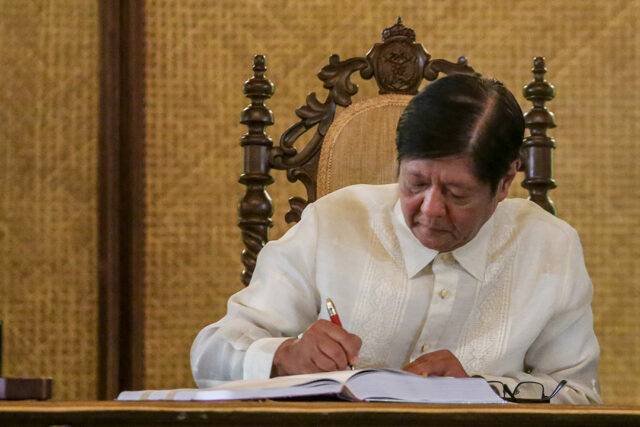
Philippine President Ferdinand R. Marcos, Jr. declared a national state of energy emergency on Tuesday, which gives the government expanded powers to secure fuel supplies and shield the economy from surging oil prices triggered by the war involving Iran, Israel and the US. 

In Executive Order No. 110, Mr. Marcos said escalating hostilities in the Middle East and disruptions in critical shipping routes such as the Strait of Hormuz pose an “imminent danger” to the country’s energy security, underscoring the Philippines’ vulnerability as a major importer of petroleum products. 

The order activates a coordinated response framework known as UPLIFT or Unified Package for Livelihoods, Industry, Food and Transport, aimed at stabilizing fuel supply, sustaining economic activity and protecting sectors most exposed to rising energy costs. 

Global oil prices have surged since the conflict erupted late February, raising inflation risks for the Philippines, where fuel costs directly affect transportation fares, food prices and electricity rates. 

The move comes even as Malacaсang has maintained that the country is not facing an immediate fuel shortage, citing stable inventories and diversification of supply sources. 

The Palace said the government is negotiating with alternative suppliers including China, Russia, Japan, South Korea, Brunei and India to reduce reliance on Middle Eastern oil. Mr. Mr. Marcos earlier said talks with these countries had been “positive,” though no supply agreements have been announced. 

Under the executive order, the Department of Energy (DoE) may take emergency actions such as direct procurement of petroleum products and closer coordination with state‑owned companies, including the Philippine National Oil Co. Authorities are also empowered to tighten oversight of fuel pricing and crack down on hoarding, profiteering and market manipulation. 

The government will prioritize fuel allocation for critical sectors including public transport, healthcare, power generation and utilities. 

Approvals for energy projects will be fast‑tracked to boost domestic generation capacity, while government offices will implement stricter conservation measures, including a four‑day workweek to curb energy use. 

Short‑term relief measures include fuel subsidies for transport operators and drivers, fare support for commuters, expanded public transport services and targeted assistance for households and industries most exposed to higher fuel costs. 

The order also outlines longer‑term steps to reduce dependence on imported oil, including accelerating renewable energy development, expanding electric vehicle adoption in mass transport and promoting energy‑efficiency measures across sectors. 

A Cabinet‑level committee headed by Mr. Marcos will oversee implementation, bringing together officials from economic, transport, agriculture and social welfare agencies to coordinate supply‑side interventions and targeted relief. 

As the Iran war nears its one‑month mark, the Philippines has relied heavily on fuel and cash subsidies to cushion the impact on consumers. 

The President has asked Congress to grant him emergency powers to suspend or reduce excise taxes on petroleum products, though he has yet to sign the proposed measure and has cited complex fiscal calculations. 

Fuel prices rose again this week, extending one of the longest streaks of increases in recent years. Some oil companies raised diesel prices by as much as P18 per liter and gasoline by about P8, while government estimates pointed to increases of up to P11.88 for diesel, P6.47 for gasoline and P13.66 for kerosene. 

In Metro Manila, pump prices could climb to P126.78 per liter for diesel, P98.07 for gasoline and P157.45 for kerosene, marking the 13th straight weekly increase for diesel and kerosene and the 11th for gasoline. 

Fuel subsidies to be paid through digital platforms

MOTORISTS queue at a gasoline station along Norzagaray Road in San Jose del Monte on March 8, 2026. — PHILIPPINE STAR/RYAN BALDEMOR

THE Philippine government plans to use digital payment platforms to distribute fuel subsidies to transport workers, President Ferdinand R. Marcos, Jr. said on Tuesday, as authorities move to cushion the impact of rising oil prices on Filipinos.

Speaking during a fuel subsidy distribution event at the Parañaque Integrated Terminal Exchange, Mr. Marcos said the government would tap multiple payment channels, including digital wallets and traditional banks, to ensure faster and more convenient aid distribution.

“Maybe it’s more convenient, it’s easier, more practical, as much as possible, if we use digital payment,” the President told bus operators and drivers in Filipino, citing the mobile wallet application GCash.

The government has activated fuel and cash subsidy programs to help public utility vehicle (PUV) drivers and operators cope with surging fuel costs driven by war in the Middle East.

Mr. Marcos last week suspended a proposed fare increase for PUVs, citing the need to balance the welfare of commuters and transport workers, while assuring the latter of additional government support.

During Tuesday’s event, the President oversaw the distribution of fuel subsidies to at least 27 bus operators covering 1,096 units. Operators received P10,000 per unit, while drivers were given P5,000 each.

“There are still a few who really want it — they don’t want to go digital,” Mr. Marcos said. “It’s also possible that they can issue a check, and if it’s really necessary, even cash is still possible.”

The Department of Transportation has allocated P2.5 billion for PUVs under the Fuel Subsidy project, while the Department of Social Welfare and Development (DSWD) is implementing separate cash aid under its Assistance to Individuals in Crisis Situations program.

Also on Tuesday, the DSWD began distributing P5,000 in cash aid to ride-hailing drivers. About 27,000 drivers in Metro Manila are expected to benefit, according to DSWD Secretary Rexlon T. Gatchalian.

Mr. Marcos urged transport operators to work with the National Government to mitigate the impact of rising fuel prices on commuters.

“Please help us so that our riding public doesn’t have to suffer too much, and they don’t have to pay too much because we know what’s going on — oil prices are changing all over the world,” he said.

“With cooperation, I’m bold enough to say that as long as we work together — the private sector, operators, and government — we can ensure commuters’ travel is smooth,” he added.

Several transport groups have scheduled nationwide strikes to protest rising fuel prices and to press the President to sign a measure suspending or reducing excise taxes on fuel.

The subsidy program covers multiple transport sectors, including jeepneys, buses, taxis, ride‑hailing platforms, tricycles and delivery services. More than 245,000 drivers and operators of over 1.18 million vehicles are expected to benefit.

The government began distributing P5,000 subsidies in Metro Manila on March 17, with provincial rollouts set for April.

Fuel prices surged following the outbreak of the Iran war on Feb. 28, after coordinated US and Israeli airstrikes on Iranian targets triggered retaliatory attacks and disrupted key oil supply routes, including the Strait of Hormuz.

Local pump prices are set to rise again this week, extending a streak of weekly increases, although officials said the pace of hikes is beginning to slow as global oil markets show signs of stabilizing.

The Department of Energy said gasoline prices could increase by as much as P6.47 per liter, diesel by up to P11.88, and kerosene by as much as P13.66.

These adjustments would mark the 13th consecutive weekly increase for diesel and kerosene, and the 11th straight week of hikes for gasoline. — Chloe Mari A. Hufana

PHL‑China pact to omit sensitive operations

PHILIPPINE COAST GUARD PHOTO

THE Department of Foreign Affairs (DFA) said the proposed memorandum of understanding (MoU) between the Philippine Coast Guard (PCG) and China Coast Guard would be limited in scope and exclude sensitive operations.

“The proposed amendments are limited in scope,” DFA Maritime Affairs spokesman Rogelio E. Villanueva, Jr. said in a statement late on Monday. “They are focused on reestablishing the Joint Coast Guard Committee, which is intended to serve as a formalized channel of communication between the two coast guards.”

Mr. Villanueva stressed that the agreement would not involve sensitive operational areas such as joint patrols between Philippine and Chinese vessels.

The DFA earlier disclosed plans to draft an MoU between the PCG and the China Coast Guard aimed at addressing operational concerns and preventing further incidents in the South China Sea, where encounters between vessels of the two countries have intensified in recent years.

Manila and Beijing signed a memorandum in 2016 to establish a Joint Coast Guard Committee on Maritime Cooperation, which was designed to provide a mechanism for communication and coordination between the two sides.

“Since 2024, both parties have been engaged in discussions to amend and update that agreement,” Mr. Villanueva said.

Earlier, Chinese Ambassador to the Philippines Jing Quan said the MoU was almost complete and would be finalized soon.

His remarks were later contradicted by Philippine Coast Guard spokesman Jay Tristan Tarriela, who said the PCG commandant was not involved in the negotiations.

Mr. Villanueva, however, said discussions had been conducted through proper diplomatic channels and were not confined to meetings under the Bilateral Consultation Mechanism.

“They have been duly reported to and are known by all relevant principals including the national security adviser, the secretary of Foreign Affairs and the PCG commandant,” he said.

The mechanism was established in 2017 as a diplomatic platform for the Philippines and China to discuss issues of mutual concern and explore areas of cooperation, particularly in oil and gas development. The two countries last held a meeting in January 2025.

DFA officials said the discussions are in line with President Ferdinand R. Marcos, Jr.’s order to maintain open lines of communication and engagement with China despite persistent tensions in the South China Sea.

Relations between Manila and Beijing have deteriorated amid repeated confrontations at sea, as China continues to assert and expand its presence in disputed waters.

This is despite a 2016 ruling by a United Nations‑backed arbitral tribunal that voided its expansive maritime claims — a decision Beijing has continued to reject.

“The department reaffirms that engagement and vigilance are complementary, not contradictory,” Mr. Villanueva said, adding that the Philippine government would continue to pursue practical maritime cooperation while upholding national interests.

Philippine authorities have reported multiple incidents involving Chinese coast guard and maritime militia vessels, including harassment through water cannon use, dangerous maneuvers and swarming near maritime features that Manila considers part of its exclusive economic zone. — Adrian H. Halili

House committee to keep inviting Duterte despite silence on impeachment

VICE-PRESIDENT SARA DUTERTE-CARPIO — FACEBOOK.COM/MAYORINDAYSARADUTERTEOFFICIAL

A HOUSE OF REPRESENTATIVES committee handling the impeachment complaints against Vice‑President Sara Duterte‑Carpio will continue sending invitations despite her failure to respond, a congressman said on Tuesday, as hearings on the charges are set to begin.

The House Justice Committee will persist in inviting Ms. Duterte to attend the proceedings so she could answer the allegations if she chooses to do so, Batangas Rep. Gerville R. Luistro said, noting that the Vice‑President had yet to confirm her attendance at Wednesday’s hearing.

“As long as the hearing proper has not yet concluded, we will keep on sending her invitations so that at any point during the proceedings, she can actually come,” Ms. Luistro, who heads the committee, said in a statement in mixed English and Filipino.

Michael T. Poa, spokesman for Ms. Duterte’s legal team, did not immediately reply to a Viber message seeking comment.

The 39‑member House panel is set to begin hearings on Wednesday, in proceedings expected to be politically charged as they could affect Ms. Duterte’s presidential ambitions.

The Vice‑President has announced plans to run for President amid impeachment complaints that, if elevated to the Senate, could result in her removal from office and permanent disqualification from holding public office.

The complaints accuse Ms. Duterte of conspiring to have President Ferdinand R. Marcos, Jr., the First Lady and a former Speaker killed, and of misusing hundreds of millions of pesos in confidential funds — allegations she has denied.

Last week, Ms. Duterte asked the Justice committee to dismiss the complaints, saying the accusations were unsupported by evidence and based largely on speculation.

She said the cases failed to state “ultimate facts” and merely recycled allegations raised during a previous impeachment attempt last year.

“If you’re claiming innocence, you should take advantage of all opportunities to prove your innocence,” Ms. Luistro said. “The hearing proper is the best opportunity for her to defend herself from the allegations in the complaints.”

In early March, the Justice committee advanced two of the four impeachment complaints against Ms. Duterte.

One complaint was dismissed for violating the constitutional ban on filing multiple impeachment cases against the same official within a one‑year period, while another was withdrawn by the complainants.

Lawmakers will now determine whether sufficient evidence exists to support the charges and whether they should be endorsed for a vote in the House plenary.

At least 106 lawmakers must vote in favor for the articles of impeachment to be sent to the Senate, which would convene as an impeachment court.

Ms. Luistro said the committee would also act on several motions related to the cases, including requests to subpoena documents from Ms. Duterte.

Party‑list Rep. Terry L. Ridon said last week these records could include the Vice‑President’s statements of assets, liabilities and net worth, as well as bank, tax and corporate documents.

Resolving these motions would allow the panel to proceed to the “evidentiary phase,” during which lawmakers would assess the merits of the impeachment complaints, Ms. Luistro said.

“If the complainants are ready, we can proceed with the presentation of evidence and witnesses,” she said. “Members will study all the evidence by both the complainants and the respondent.” — Kenneth Christiane L. Basilio

Excise tax bill sent to Palace

PRESIDENT FERDINAND R. MARCOS, JR. — PHILIPPINE STAR/NOEL PABALATE

SENATE President Vicente C. Sotto III on Tuesday said that he has transmitted to Malacañang a bill that would allow the President to suspend or cut the excise tax on petroleum products.

In a Viber message to reporters, the Senate chief said that he has transmitted to the Office of the President the enrolled copies of the excise tax bill.

The House of Representatives, last week, adopted Senate Bill No. 1982 which bypassed the bicameral conference committee.

The measure would provide President Ferdinand R. Marcos, Jr. authority to reduce or halt collection of taxes imposed on fuel and other petroleum product, to respond to rising fuel prices amid the Middle East crisis.

Mr. Sotto on Monday night said that he has signed the measure and had sent it to the House of Representatives for signing. This was signed and transferred to the Senate on Tuesday afternoon.

In a separate message, Palace Press Officer Clarissa A. Castro said that the Presidential Palace has not yet received a copy of the enrolled bill, as of press time.

Also included in the Senate transmittal is a measure that sets the first election of the Bangsamoro Autonomous Region of Muslim Mindanao to Sept. 14, and every three years after. — Adrian H. Halili

DMW helps 2,630 overseas Filipinos

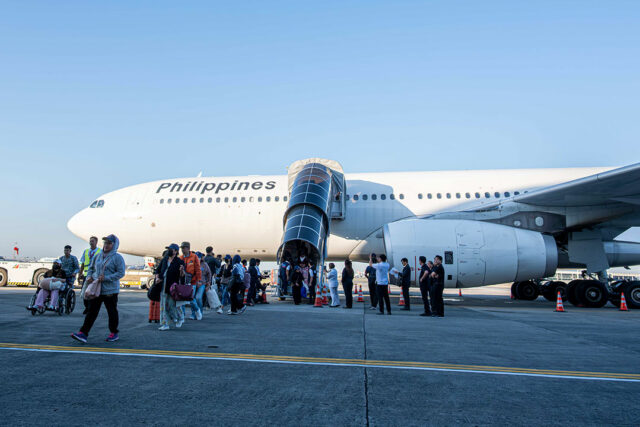
More than 300 Filipinos repatriated from the Middle East arrived at Villamor Airbase, March 23, 2026. — PHILIPPINE STAR/RYAN BALDEMOR

THE Department of Migrant Workers (DMW) on Tuesday reported a total of 2,630 Filipinos have been assisted with their pre-repatriation and post-repatriation needs.

Of this, the government has provided government-funded flights to 1,837 Filipinos, including 1,407 overseas Filipino workers and 430 dependents, Migrant Workers Secretary Hans Leo J. Cacdac told the newly created Proactive Response and Oversight for Timely and Effective Crisis Strategy ad hoc committee in the Senate.

The department has also provided food, transport, and cash aid to 16,660 Filipinos.

The Overseas Workers Welfare Administration (OWWA) also told the panel it has approximately P1.7 billion funds for the repatriation program, of which 20% have already been utilized for commercial and chartered flights, land transportation, and temporary accommodation of the Filipinos requesting to return to the Philippines.

OWWA Administrator Patricia Yvonne M. Caunan said the repatriation costs P175,000 to P190,000 per person inclusive of financial assistance and initial reintegration assistance.

The agency said it would need approximately P4.8 billion to repatriate 1% of overseas Filipinos in the affected region.

According to the Department of Foreign Affairs, 2.4 million Filipinos live in the Middle East. — Kaela Patricia B. Gabriel

ICI denies clearing Rep. Romualdez

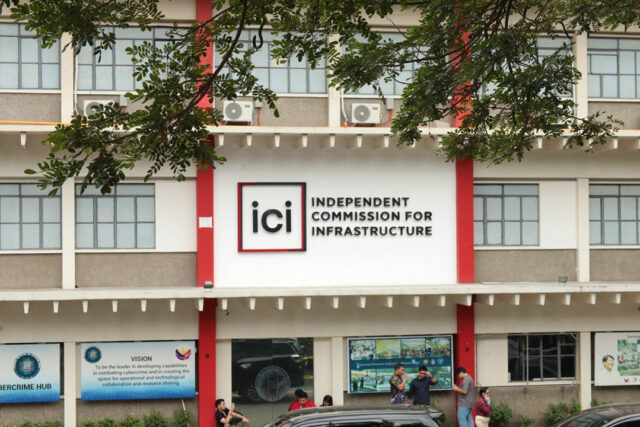
ICI office facade — BW FILE PHOTO

THE Independent Commission for Infrastructure (ICI) has denied clearing Leyte Rep. Ferdinand Martin G. Romualdez of liability in the flood control probe, refuting a lawmaker’s interpretation of its findings.

In a statement on Monday evening, the ICI addressed remarks made by Party-list Rep. Jude A. Acidre, who claimed that the commission’s Nov. 21 referral to the Office of the Ombudsman indicated there were no findings of guilt or liability against the former speaker.

The commission said that Mr. Acidre “selectively quoted the Referral and presented this excerpt without its full context.”

“These statements in the Referral clearly show that the ICI did not make a determination of innocence or guilt on the part of former Speaker Romualdez. It is precisely for this reason that the commission referred this matter to the Office of the Ombudsman for further investigation,” the ICI said.

“As a fact-finding body, the ICI does not have prosecutorial authority. As stated in Executive Order No. 94, the ICI is mandated to recommend the filing of appropriate criminal, civil, or administrative actions before the proper disciplinary and prosecutorial authorities,” it added.

The ICI said it transmitted the referral to the Ombudsman along with a complete evidentiary record, including Mr. Romualdez’ affidavit and transcripts of his testimony before the commission.

Mr. Romualdez appeared before the ICI last October, where he denied allegations of involvement in a kickback scheme linked to anomalous flood control projects. He stepped down as speaker of the House in September amid the controversy. — Erika Mae P. Sinaking

Metro Manila number coding scheme suspended during Holy Week

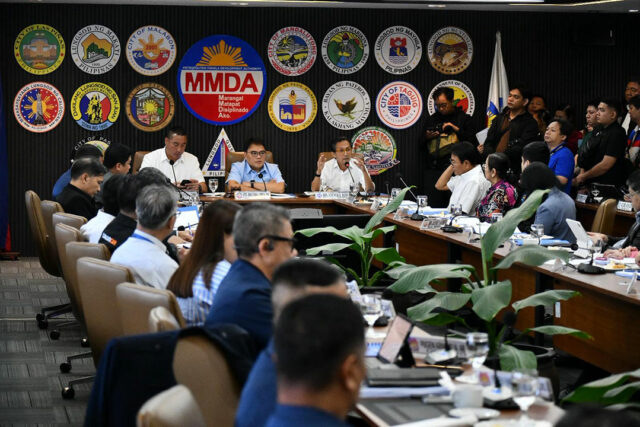
The Metropolitan Manila Development Authority and Metro Manila mayors agreed to suspend its number coding scheme and ease traffic restrictions ahead of the Holy Week, March 25, 2026.

METRO MANILA will suspend its number coding scheme and ease key traffic restrictions ahead of the Holy Week exodus, while expanding exemptions for fuel and essential goods trucks to safeguard supply lines amid global oil market volatility.

The Metropolitan Manila Development Authority (MMDA) and Metro Manila mayors on Tuesday agreed to lift the Unified Vehicle Volume Reduction Program starting noon of April 1 and automatically suspended on Maundy Thursday and Good Friday, as authorities prepare for a surge in travel.

Holy Week starts on Wednesday, April 1 until Easter Sunday, April 5.

Provincial buses will also be allowed along the Epifanio de los Santos Avenue from the evening of April 1 until the morning of April 6 to help decongest terminals and speed up passenger movement.

Also on Tuesday, Metro Manila mayors approved broader exemptions from number coding and the truck ban for fuel tankers and cargo trucks carrying essential goods to prevent supply disruptions linked to conflict in the Middle East.

“This would ensure the unimpeded movement of energy sources and ease the mobility of goods amid the rising price of fuel products,” MMDA Chairman Romando S. Artes said in a statement.

The agency will deploy 2,476 personnel during the Holy Week, enforcing a no day off and no absent policy. — Chloe Mari A. Hufana

SC to hold summer sessions in Manila

BW FILE PHOTO

THE Supreme Court (SC) said it will hold its 2026 summer sessions in Manila instead of Baguio City due to rising fuel costs.

In a statement on Tuesday, the SC said the anticipated oral arguments on consolidated petitions challenging provisions on unprogrammed funds and special accounts in the 2024, 2025, and 2026 general appropriations acts will proceed as scheduled on April 7 and April 21.

The court is also set to hear a foreign divorce recognition case on April 28, which could redefine how the Philippines recognizes divorces obtained by Filipinos abroad.

“Chief Justice Alexander G. Gesmundo announced the change after consulting with the SC en banc, noting the Court’s responsibility to remain mindful of current national conditions while continuing to ensure the steady delivery of justice,” the SC said.

“The adjustment is also part of the SC’s energy conservation measures under SC Memorandum Circular No. 02-2026, which took effect on March 8, 2026, in line with broader government efforts to address rising fuel costs,” it added.

While the Baguio sessions have been a tradition since 1948, the SC noted that the relocation to Manila is a practical response to current economic challenges and does not prevent a return to the Summer Capital once conditions stabilize. — Erika Mae P. Sinaking

Customs seizes P1-B illicit vapes

STOCK PHOTO | Image from Pixabay

THE Bureau of Customs (BoC) said that it seized P1 billion worth of illicit vaporized nicotine products on Monday, marking the government’s largest enforcement action against the illegal vape trade.

In a statement on Tuesday, the Trade department said that 3.17 million units of illicit vape devices and pods were confiscated in a joint operation in San Rafael Village, Navotas City, following the issuance of a letter of authority and mission order.

“The authorities found a substantial volume of vape products and related items suspected to have been misdeclared and unlawfully imported,” the BoC said.

The seized products, which were unregistered, did not have the required Philippine Standard license or import commodity clearance.

The BoC and the Department of Trade and Industry also discovered illegal promotional materials, including t-shirts, jackets, caps, and lanyards bearing the names of vape brands that have already been suspended from trading.

These brands, according to the Trade Department’s Office for the Special Mandate on Vaporized Nicotine and Non-Nicotine Products, Their Devices, and Novel Tobacco Products, have already been the subject of regulatory action.

“[These] were previously suspended in 2024 due to packaging violations, including noncompliance with the required placement of tax stamps and graphic health warnings,” it added. — Justine Irish D. Tabile

DoJ subpoenas Vibal sisters

BW FILE PHOTO

THE Department of Justice (DoJ) has ordered the three sisters who control Vibal Group, Inc. (VGI), one of the Philippines’ oldest educational publishing houses, to respond to allegations of syndicated estafa involving an estimated P1.6-billion fraud scheme.

In a subpoena dated March 19, Senior Assistant City Prosecutor Joselito C. Bacolor of the Quezon City Office of the City Prosecutor directed the three sisters to appear and submit their counter-affidavits on April 16 and April 30. The order follows a case build-up by the DoJ to determine the sufficiency of evidence in the criminal complaint.

“We have not yet received a copy of this syndicated estafa case filed by Mandigma. Without a copy of the complaint, we cannot give a comment in relation to this case,” Rizzle May R. Ostia-Alburo, legal counsel for the Vibal sisters, told BusinessWorld in a Viber message.

“We believe that this case is part of Mandigma’s retaliation for having been terminated in VGI as CEO (chief executive officer),” she added.

The complaint, filed by reinstated Vibal CEO Maria Kristine E. Mandigma, cites 458 counts of syndicated estafa against the sisters, who serve as directors and top officers of VGI and its related entities. Under Philippine law, syndicated estafa is a non-bailable offense punishable by life imprisonment.

The sisters are also facing charges of “estafa through falsification of commercial and private documents and obstruction of justice.” The complaint names 11 other respondents, including former accounting and management personnel of the Vibal Group.

According to Ms. Mandigma’s complaint-affidavit, the case allegedly stems from a 2025 internal review of archival records that allegedly uncovered a “long-running fraudulent financial scheme.”

The respondents allegedly utilized fictitious supplier invoices to increase recorded costs and facilitate the unlawful diversion of corporate funds into personal and joint bank accounts controlled by the sisters and the late Vibal matriarch.

Internal records, as cited in the complaint, indicate that between 2003 and 2014, one primary supplier alone accounted for over P2.05 billion in purported paper purchases that could not be reconciled with the company’s actual production requirements or revenues. The complaint further alleges that these funds were used for personal expenses, real estate acquisitions, and “advances” that were later cycled back into the company to create a false appearance of shareholder capitalization.

This DoJ subpoena follows separate regulatory action by the Securities and Exchange Commission, which in February ordered the sisters to answer a complaint for alleged violations of the Revised Corporation Code.

Ms. Mandigma, the complainant, said in her affidavit that she was recently reinstated as CEO by a January 2026 decision of the National Labor Relations Commission, after which she moved to formalize the criminal charges. — Erika Mae P. Sinaking

ADVERTISEMENT
ADVERTISEMENT