Home Blog Page 1104

SEC flags 5 more crypto platforms lacking registration

STOCK PHOTO | Image by Diana.Grytsku from Freepik

THE Securities and Exchange Commission (SEC) warned the public in an Aug. 20 advisory against five cryptocurrency platforms it said lack the required registration.

The SEC listed Blofin, CoinW, DigiFinex, LBank, and Pionex in the advisory published on its website.

“[These] entities have been identified as providing features that specifically enable access within the Philippine territory, such as options to register with a Philippine mobile number, accept Philippine peso through on-ramp methods including banks or e-wallets, and make their platforms accessible within the country without securing the necessary registration and crypto asset service provider (CASP) license from the SEC,” the advisory said.

The SEC said its Memorandum Circular (MC) No. 4 on CASP rules and MC No. 5 on CASP guidelines, which took effect on July 5, apply to any person or entity offering, promoting, or facilitating access to crypto asset trading venues or intermediation services such as buying, selling, and derivatives trading of crypto assets.

The commission reminded the public not to invest through unregistered platforms and to verify the registration and licensing status of entities offering crypto asset services.

Investors engaging with unregistered platforms face the risk of total loss of invested funds; lack of legal protection or recourse; exposure to fraud, identity theft, market manipulation, and misuse of personal data; and increased vulnerability to money laundering and terrorist financing, the SEC said.

The SEC added that the new list is in addition to ten crypto platforms flagged in a separate advisory dated Aug. 1 for operating without the required registration.

“Other platforms with similar features designed to onboard Philippine users without registration shall likewise be considered in violation of Philippine securities laws and will be subject to enforcement action,” the SEC said.

The five platforms had yet to respond to BusinessWorld’s e-mailed request for comment as of press time.

Amid its recent enforcement actions against unregistered platforms, the SEC clarified in an Aug. 14 advisory that there is no ban on crypto trading.

It said that CASP rules require entities to secure the necessary registration and licenses before offering their services in the Philippines.

“We recognize the importance of a free, competitive market, but one that is responsibly regulated to protect investors and support the sustainable growth of the crypto industry in the Philippines,” the SEC said. — Revin Mikhael D. Ochave

Great Expectations

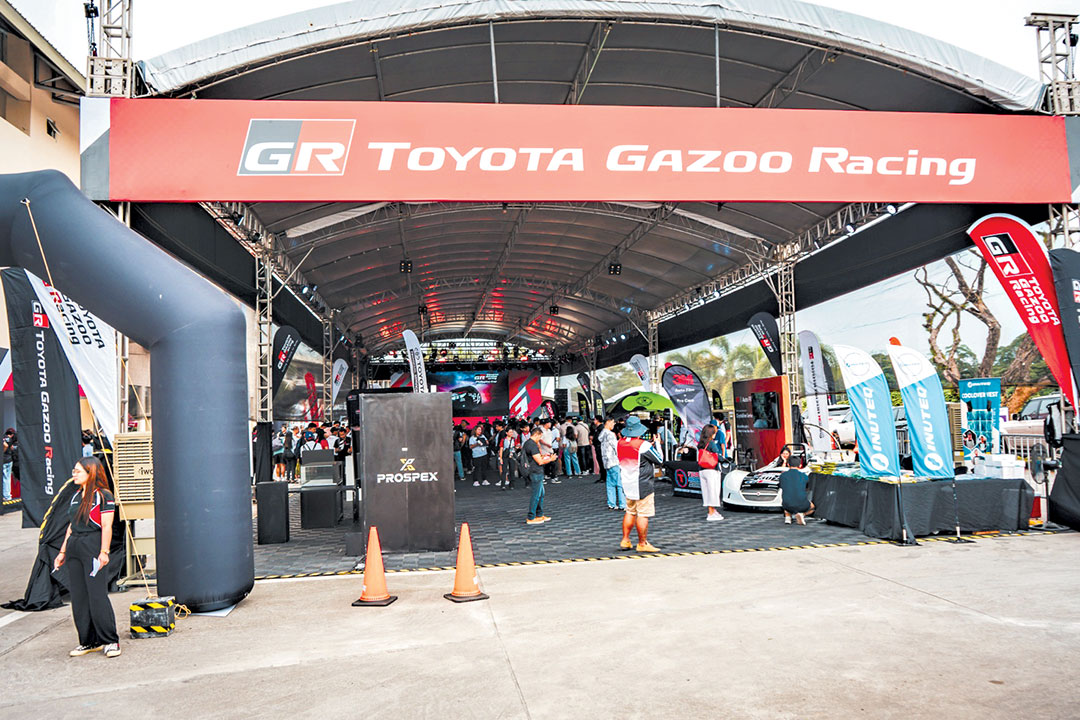
What used to be simply known as the Vios Cup has become a full-fledged Gazoo Racing (GR) spectacle. — PHOTO BY KAP MACEDA AGUILA

Gazoo Racing to continue revving up the excitement for TMP’s future

ELEVEN YEARS AGO, Toyota Motor Philippines (TMP) presented a one-make series that was envisioned to not just safely scratch the itch of a burgeoning group of weekend racers, but to provide access to the spectacle for fans of all ages as well.

That was the Vios Cup, starring the bulletproof sedan product of Toyota that is still being assembled here in TMP’s Santa Rosa, Laguna plant. The ubiquitous car, stripped-down and fortified for on-track use, epitomized not only the durability of the Japan-headquartered car maker’s vehicles but an earnest desire to promote grassroots motorsports.

The beginnings of what would be Toyota’s performance and tuning division, Gazoo Racing, were playing out as future Toyota Motor President (now Chairman) Akio Toyoda raced Celicas in the mid ’70s. Together with the late legendary chief test driver Hiromu Naruse, Mr. Toyoda was logging hours behind the wheel of Toyotas entered into events such as the 24 Hours of Le Mans and others. To assume a lower profile, the Toyota executive used the alias “Morizo,” and substituted “Team Gazoo” for Toyota. Gazoo means “image” or “picture.”

Today, the images evoked when one hears of Gazoo Racing or GR are surely the exciting races of all manner that Toyota participates in — races that have served as the forge to make “ever-better cars.” The company stated that “roads build people and cars.” It is not wrong. And, it continued, “Toyota refines every aspect of its cars on the world’s roads and unsparingly applies the knowledge and technology gained in this way as feedback.”

Gazoo Racing is now a full-fledged sub-brand within Toyota. Its unmistakable decal now symbolizes increased performance and, yes, desirability — particularly in the case of “GR”-prefixed offerings: the GR Supra, GR Yaris, GR Corolla, and GR 86. “Motorsports initiatives have given Toyota broad perspective and deep experience, which the company has applied to the development of numerous production cars. Some of these model lineups are ideally suited for passing on the special motorsports DNA, particularly Toyota’s GR Series… Packed with technologies and pumping with the passion of motorsports.”

Here in the Philippines, even as the GR branding is certainly being driven home and given the prominence it deserves, TMP has also established a section presently under the Marketing Services Division to work on everything related to GR.

We asked TMP Assistant Vice-President Andy Ty what exactly falls under the ambit of this section. “So right now, we have four members, and everything related to GR falls under our purview — any GR-related events, GR vehicles as well whether it’s GR models or GR Sport models, everything.” He added that the section also deals with digital activations. But because it’s presently a four-person operation, they “can only do so much.”

Mr. Ty revealed, “This is why, as part of our direction and also aligning with TMC (Toyota Motor Corp.), Toyota’s head office, and some of the other distributors, we definitely would want to grow our section more. The expansion of Toyota Gazoo Racing is a major focus, especially from the direction of Akio Toyoda. We are definitely aligned in terms of that expansion. So eventually we will grow. Slowly but surely, that’s what we plan.”

The executive did express gratitude to TMP for the support of people outside the section, but the ideal for the long term is to set up a GR “task force” to include members of other departments as well.

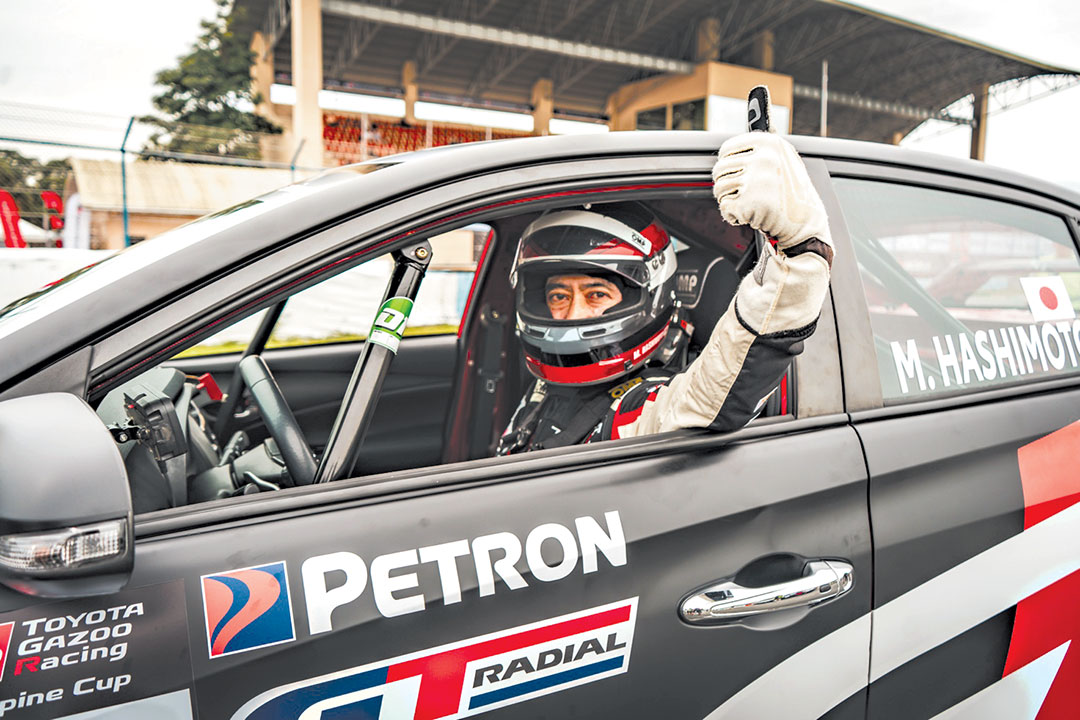
Responding to the same question, TMP President Masando Hashimoto added that, in the case of Toyota Thailand, there’s a marketing division within a GR scope. “They are handling as well GR products and variants.” TMP is looking to “cut and paste” organizational functions from other countries into its territory, with respect to product planning and dealership input. “They are the gateway of this brand,” he said of dealerships. “Sometimes, customer service, after-sales service (can be) more important for race organization, for the scrutineering. We are kind of the task force team to develop for making this kind of event or activities happen.”

In 2021, the Vios Cup name was changed to Toyota Gazoo Vios Cup; just last year, it became Toyota Gazoo Racing Philippine Cup — ostensibly to reflect the growing girth of the multi-race-weekend event to include models aside from the Vios. We’re seeing a closer affinity for the all-new Tamaraw, for instance.

The just-concluded 2025 season was extra memorable for a number of reasons. “When we went to Villar City for our street race, we gathered a record-breaking crowd witnessing our exciting races,” shared TMP Marketing Services Vice-President Elvin Luciano in a separate interview with media. He, of course, also pointed to the inclusion henceforward of the Tamaraw in the series. The come-backing workhorse model will have its own one-make race, as with the Vios.

He continued, “When we launched the next-generation Tamaraw, one of the key features (we wanted to highlight) is the versatility and the flexibility of this vehicle. What better way to exhibit these than to try them on racetrack?”

Mr. Luciano also touched on a crucial aspect of what TGR (Toyota Gazoo Racing) is all about. “Toyota Gazoo Racing has always been about community. So, we are building racing communities, the car culture in the country. We are very happy to attract more and more fans into our races, whether here at the Clark International Speedway or in our street race venues,” he maintained. “That’s something that we have always been aspiring for; for TGR to be a venue, not just for Toyota fans or Toyota customers to enjoy, but also to gather like-minded people and to have that one venue for all the race enthusiasts in the country to feel that they belong and it’s something that they can pursue, and the dream of being a racecar driver is closer to their reality.”

That’s perhaps the lingering “gazoo” that people will come away with.

Looking for commute-friendly makeup? Try I’mma Beauty and Vice Co.

By Zsarlene B. Chua

A FEW MONTHS AGO, I transitioned into the corporate world, where showing up at the office means braving the morning and afternoon commute. With the implicit expectation to always look put together, long-wearing makeup becomes essential for those who want to be presentable without the constant need for touch ups.

That’s when I started looking for affordable and accessible local makeup brands I’d be confident carrying in my small office cosmetics bag. The goal was for it to be low-maintenance, long wearing, and versatile enough to take me from my morning commute to after-work errands without fuss.

Here are some of the brands I’ve been trying the past few months.

I’MMA BEAUTY
One of the newest entrants into the growing local beauty scene is I’mma Beauty. Created by iFace, the company that distributes BYS Cosmetics, Bioten, and VMV Hypoallergenics in the Philippines, the newest brand is all about “no-frills, no limits” and “makeup that works.”

Launched in May, the brand introduced a modest line of blushes, blush toppers, lip tints in cream and water formulas, eyebrow pencils, matte lip bullets, and color balms — all priced at P199 each — signaling its positioning as an affordable makeup brand. The collection spans brights, berries, and safe neutrals, giving consumers both playful and everyday options.

The company sent me a couple of products to try and while none of the colors were those I’d choose for an everyday look (as I typically go for more of a natural look) I did give it a good ol’ try just to see if these products are RTO-worthy.

I tried the Hydro Hue Water Lip Tint in Candid, a deep berry shade, which applied smoothly with good color payoff but faded quickly. The Cream Plush Lip Tint in Soiree, a bright coral, fared no better — though its formula works well if you’re after the soft, blurred lip effect. I also tested the Flush Blush Powder in Crochet, another berry shade, and of all the products, this was my favorite. While it doesn’t suit me as a blush since my skin tone leans warm-fair, I enjoyed using it as a smoky eyeshadow. I also tried their Cheek Beam Blush Topper in Playdate, a bright red shade. While designed to be layered over blush for extra dimension, I found it works just as well on its own for a sheer wash of color.

Taken together, these products reflect I’mma Beauty’s positioning as a brand for consumers who want to explore color at an accessible price point. The lineup is playful and affordable, making it easy to experiment with, though product performance can be uneven across the range.

Will I buy I’mma Beauty? I won’t seek them out, especially the tints since I’m finding I’m not really a tint girl, but when it comes to the blushes I definitely will try other shades — mostly because the price point is something that’s hard to beat.

VICE CO. PERFECT KIZZ VELVET LIP SHAPER AND LIP BULLETS
I recently wrote about the launch of these new products from Vice Co. While I’mma Beauty is all about bringing back color for those who want to experiment, the positioning of Perfect Kizz lip products is for those looking for wearable yet understated shades.

The Velvet Blur Diffused Lip Shaper, created for those who want to emulate the diffused, blurred lip effect, comes in eight shades ranging from a light rosy pink (Sweet Kiss) to cocoa brown (Midnight Kiss). Meanwhile, the Velvet Soft Diffused Lip Bullet comes in 12 shades from a neutral nude shade (So Cozy) to a deeper wine red (So Timeless). The products are P345 each.

I’ve been pairing the Soft Kiss Lip Shaper in nude beige with the So Plush Lip Bullet in rosewood — a shade that leans more mauve than brown — and it has quickly become my daily go-to. The texture applies smoothly and settles into a comfortable soft matte finish. Staying power is moderate as I find myself reapplying after a meal, but it does handle drinks well.

I also fell in love with Forbidden Kiss, a brick-red Lip Shaper, paired with So Chic, a pinkish rose petal shade. Together, they create the perfect “I’m not fully committing to red, but I still want a hint of it” look — ideal for days when you need just a bit more color and confidence.

If there’s a minor drawback, it’s that some shades can appear quite similar — for example, Sweet Kiss (rosy pink) and Soft Kiss (nude beige) are close in tone, with the former just a touch lighter. It’s definitely not a deal-breaker as the line has enough colors and tones for those looking for their perfect beige.

Will I buy it again? Yes — because the shades are versatile, the formula is comfortable, and it fits seamlessly into my everyday routine.

In the end, everyday makeup is about balance — products that last through commutes and long office hours while staying effortless to wear. I’mma Beauty offers playful experimentation, while Vice Co. delivers versatile, dependable shades. For my routine, Vice Co. wins out, but both make affordable, long-wearing options more accessible to Filipinas on the go.

I’mma Beauty and Vice Co. are available nationwide via online and offline platforms.


Zsarlene B. Chua is a former BusinessWorld reporter who is now a fledgling PR girl. She’s all about skincare, makeup, and video games — and occasionally food. None of the products she reviews or writes about are the writer’s clients. Contact the author at zsarlene.chua@gmail.com.

Peso may extend rise with BSP likely to cut

BW FILE PHOTO

THE PESO could strengthen further against the dollar before the Bangko Sentral ng Pilipinas’ (BSP) policy meeting on Thursday, where it is expected to deliver a third straight rate cut.

On Friday, the local unit closed at P56.95 per dollar, inching up by a centavo from its P56.96 finish on Wednesday, data from the Bankers Association of the Philippines showed.

Week on week, the peso climbed by 11.5 centavos from its P57.065 close on Aug. 15.

The peso rose on Friday after Japan-based credit rater Rating and Investment Information, Inc. affirmed the Philippines’ investment-grade “A-” rating with a stable outlook amid steady economic growth, Rizal Commercial Banking Corp. Chief Economist Michael L. Ricafort said in a Viber message.

He said this was a “continued vote of confidence on the country’s economic and credit fundamentals from the point of view of international investors and creditors.”

The peso moved sideways against the dollar on Friday on expectations of hawkish signals from US Federal Reserve Chair Jerome H. Powell’s speech at the US central bank’s Jackson Hole symposium, Philippine Institute for Development Studies Senior Research Fellow John Paolo R. Rivera said in a Viber message.

“The peso’s close last Friday reflected lingering pressure from external headwinds, particularly expectations of a prolonged higher-for-longer stance by the Fed and persistent geopolitical tensions,” Mr. Rivera said.

“Despite easing inflation locally, the peso remains vulnerable to global US dollar strength and risk-off sentiment.”

Mr. Powell on Friday signaled a possible interest rate cut at the US central bank’s meeting next month, saying that risks to the job market were rising but also noting inflation remained a threat and that a decision wasn’t set in stone, Reuters reported.

While his comments were not as explicit as those previewing rate cuts following last year’s Jackson Hole conference, investors quickly bumped up bets that the Fed will reduce its policy rate by a quarter of a percentage point at its Sept. 16-17 meeting.

“The stability of the unemployment rate and other labor market measures allows us to proceed carefully as we consider changes to our policy stance,” Mr. Powell told international economists and policymakers at the Fed’s annual conference in Wyoming. “Nonetheless, with policy in restrictive territory, the baseline outlook and the shifting balance of risks may warrant adjusting our policy stance.”

Traders assigned about an 85% probability that the Fed would deliver a quarter-percentage-point rate cut next month, up from about 75% earlier in the day. Market bets also strongly favor a second rate cut in December.

For this week, Mr. Ricafort said the peso could rise ahead of an expected rate cut from the BSP at its policy meeting on Thursday.

The Monetary Board will hold its policy meeting on Thursday (Aug. 28). BSP Governor Eli M. Remolona, Jr. earlier said that a rate cut is “quite likely” this week amid benign inflation.

If realized, this would be the BSP’s third straight reduction since April. The Monetary Board has lowered benchmark interest rates by a cumulative 125 basis points since it began its easing cycle in August 2024, with the policy rate now at 5.25%.

Meanwhile, Mr. Rivera said the peso could weaken if “global oil prices rise or if remittance inflows taper post-back-to-school season.”

“Markets will also watch for US data releases and signals from the BSP on rate adjustments.”

Mr. Ricafort sees the peso moving between P56.75 and P57.25 against the dollar this week, while Mr. Rivera expects it to range from P56.50 to P57.50. — A.M.C. Sy with Reuters

Camarines Sur cold storage complex up and running by Dec.

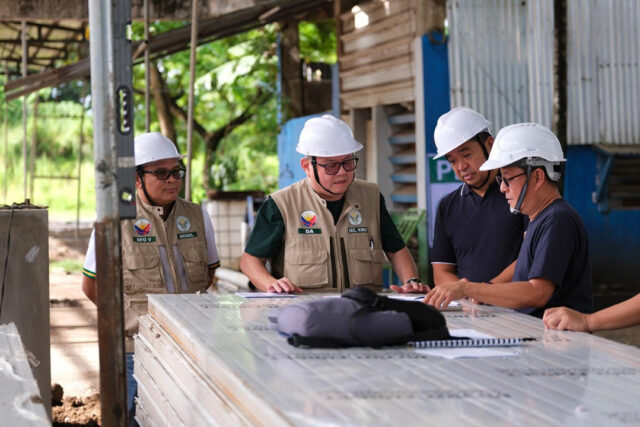
AGRICULTURE Secretary Francisco P. Tiu Laurel, Jr. and Camarines Sur Governor Luis Raymund Villafuerte inspected the ongoing construction of a P500-million cold storage facility. — DA PRESS OFFICE

THE Department of Agriculture (DA) said a P500-million cold storage facility is set to open in Camarines Sur in December.

The proposed facility in Pili is expected to “enhance food security, generate jobs, spur agri-investments, and significantly boost farmers’ incomes in Bicol and nearby regions,” the DA said in a statement.

It is designed to store a wide range of agricultural commodities including vegetables, meat, chicken and fish, the DA added.

The cold storage complex will have six refrigerated warehouses, each capable of storing approximately 224 tons of agricultural products.

With a total capacity exceeding 1,300 tons, the facility is designed to serve not just Camarines Sur, but also other parts of Bicol, the Visayas, and even Mindanao, whose products pass through the province on their way to Metro Manila and other major markets.

The DA said the facility features a solar power system to help cut electricity costs, a blast freezer, and a processing and packing area to support value-adding services for farmers.

“It will allow them to preserve their harvest longer, reduce spoilage, and access new markets,” Agriculture Secretary Francisco P. Tiu Laurel, Jr. said.

The DA said sites in Taguig City, Cabanatuan City, Occidental Mindoro and Isabela are set to open starting next year.

“In addition, over 100 modular cold storage units will be deployed to various farming communities across the country,” it added. — Kyle Aristophere T. Atienza

FedEx hosts webinar to help Filipino businesses navigate US trade policy changes

Federal Express Corp. (FedEx), one of the world’s largest express transportation companies, hosted a special webinar titled, “Understanding the Latest ​US Tariff Changes and ​Their Impact on Shipping” on Aug. 20.

This session aims to help Filipino businesses navigate the impact of the removal of the United States’ de minimis exemption and learn how to adapt to the new trade requirements.

The previous de minimis rule allowed goods valued at $800 or less to enter the US duty-free, simplifying the export process for low-value shipments. With the new policy changes in effect, the webinar will offer practical insights on maintaining compliance, managing costs, and sustaining cross-border operations.

These policy changes come on the heels of broader tariff measures announced by the US government. US President Donald Trump announced a 19% tariff on imports from the Philippines as part of a trade pact under which Manila would remove duties on US goods and deepen military cooperation with Washington.

Currently, the Philippines holds the second-lowest tariff rate in the region at 19%, with Singapore, which has a bilateral Free-Trade Agreement (FTA) with the US, maintaining the lowest at 10%. US tariffs for other Association of Southeast Asian Nations (ASEAN) countries range between 19% to 49%.

This initiative reflects the broader mission of FedEx to support Filipino SMEs as they navigate the complexities of international trade. By providing timely knowledge, expert advice, and access to innovative tools, FedEx continues to empower local entrepreneurs to scale globally, stay ahead of regulatory changes, and unlock new growth opportunities in a rapidly evolving economic environment.


SparkUp is BusinessWorld’s multimedia brand created to inform, inspire, and empower the Philippine startups; micro, small and medium enterprises (MSMEs); and future business leaders. This section will be published every other Monday. For pitches and releases about startups, e-mail to bmbeltran@bworldonline.com (cc: abconoza@bworldonline.com). Materials sent become BW property.

Will President Marcos light his own ‘Blazing Furnace?’

PRESIDENT FERDINAND R. MARCOS, JR. — PHILIPPINE STAR/KJ ROSALES

In April 2024, a Vietnamese court handed down a death sentence to businesswoman Truong My Lan in what became the country’s — and possibly Southeast Asia’s — largest-ever financial fraud case. As head of the Vạn Thịnh Phát conglomerate, Lan secretly concealed her stake in the Saigon Commercial Bank (SCB), which was then Vietnam’s fifth-largest bank. Beginning in the early 2010s, she embezzled an estimated $12 billion in loans using fake documents, shell companies, and her control over key executives.

When the scheme unraveled in 2022, it triggered a bank run that forced the State Bank of Vietnam (SBV) to mount a $24-billion bailout to prevent wider financial collapse. The fallout led to the conviction of 85 defendants, from Lan’s niece to SBV officials tasked with supervision and inspection of the banking system. Her death sentence was later commuted to life imprisonment, in line with Vietnam’s treaty commitments on sentencing standards.

Though Lan’s crimes were rooted in the private sector, the scale of the bailout and the near collapse of a major bank rattled Vietnam’s political and financial establishment. For Communist Party leaders, it brought back memories of the late 2000s, when state-owned enterprises squandered billions in stimulus funds and loans — undermining both economic stability and threatening systemic collapse.

The Vạn Thịnh Phát scandal has become the defining episode of Vietnam’s decade-long “Blazing Furnace” anti-corruption drive, launched in 2014 by then General Secretary Nguyen Phu Trong. By one estimate, nearly 10% of all Party cadres have faced disciplinary action, while 60,000 public employees resigned between 2021 and 2023. Among those forced out were two presidents (Nguyen Xuan Phuc and Vo Van Thuong), two deputy prime ministers (Pham Binh Minh and Vu Duc Dam), and a health minister (Nguyen Thanh Long).

One of the campaign’s architects, Minister of Public Security To Lam, succeeded Trong as Communist Party chief last year and — barring missteps — appears set to be reelected early next year as Vietnam’s top leader for another five years. Yet speculation lingers that both Trong and Lam used the Blazing Furnace not only to fight corruption but also to sideline rivals. That suspicion is hardly surprising: around the world, anti-corruption crusades often double as political weapons.

The campaign has also had negative side effects. It made bureaucrats risk-averse, slowed project approvals, and left billions in public funds undisbursed. It had a palpable effect on the economy. Still, the prevailing view is that Blazing Furnace has been a net positive. For a country chasing long-term growth of 8% or more, leaving corruption unchecked would have carried far greater risks — financial, political, and institutional.

The broader lesson is simple: corruption doesn’t just waste money; it corrodes governance and erodes the rule of law. Those who benefit from it burrow deep into the political system to undermine oversight, avoid scrutiny, co-opt anti-corruption agencies and the courts, and silence critics. This weakening affects foreign investor perceptions, who rely on the rule of law, impartial courts and competent bureaucracies.

Over time, corruption seeps deep into political and social life, leaving citizens disillusioned. People grow less willing to pay taxes or obey laws when they see officials flaunting stolen wealth without consequence. The result is a society where the rule of law feels abstract, and survival reduces to a dog-eat-dog mentality. For many, the question becomes: are you the first dog, or the second?

In the Philippines, voters still care about clean government, but decades of broken promises have left them cynical. Lofty pledges of reform are dismissed as being worth no more than “the spit on their lips.” Reformers who succumb to corruption are quickly branded with the familiar phrase “Nilamon na” — swallowed whole by the system.

This erosion of trust ultimately threatens the credibility of the political order. Ironically, Vietnam’s communist leaders appear to grasp this more clearly than many of their democratic counterparts in Manila.

That is why figures like Pasig City Mayor Vico Sotto stand out. For now, he remains an outlier — a well-known political name, successful in Metro Manila, yet still untainted by scandal. His currency is credibility, and that makes him valuable in a landscape where voters are tired of politics as usual. Still, his path to the presidency may be a decade away and he will inevitably be targeted.

For President Ferdinand Marcos, Jr., the issue is far more fraught. His family’s association with corruption is, to put it gently, complicated. As BBC journalist Gareth Evans wrote during the 2022 campaign: “Mr. Marcos Sr., his wife Imelda and their cronies plundered an estimated $10 billion while millions of Filipinos lived in poverty. Only $4 billion has ever been recovered.” Yet Marcos Jr. still won 60% of the vote.

He will never acknowledge his family’s checkered past — that much is certain, as he is, after all, his father’s son, and it is only human nature. But he has begun to take aim at today’s corruption, particularly in flood-control projects where the money lost translates directly into suffering. In his recent State of the Nation Address, his most striking moment came when he denounced graft in the public sector. He has now staked his name on this fight. Skeptics see it as performance — an attempt to reclaim moral ground from the Duterte family while still depending on politicians who feed off the same corrupt system.

But whatever his motives, results will matter more than rhetoric.

The harder question is where to begin. When corruption permeates every level of governance, the system itself, like some autonomous, self-preserving artificial intelligence such as the Terminator movies’ Skynet — fights back against reform. From manipulating public perceptions in the media to hidden maneuvers inside institutions, the resistance to prosecution and reform by those who profit from corruption is relentless.

The solutions are not a mystery: finish ongoing investigations, strengthen the framework for prosecution, break the nexus between campaign donors and government contracts, and empower civil society to hold officials accountable from local budgets to national programs. The challenge is how to perform the triage against corruption, which is essentially pursuing the corruption investigations, while not losing sight of the systemic reforms that are needed.

Marcos may not wield the iron grip of Vietnam’s Communist Party. But he has something else — an angry public, weary of wholesale corruption and ready to rally behind a leader willing to risk political capital to confront it.

The president has lit the spark of this campaign. The question now is whether he will, as Trong and Lam did, allow it to burn into a fire that destroys the structure of Philippine corruption, or let it die and leave Filipinos to again curse the darkness.


Bob Herrera-Lim is a managing director at Teneo, a New-York based consulting firm that advises companies and investors globally. He covers all of Southeast Asia for the firm’s clients. He is also a fellow of the Foundation for Economic Freedom.


MPTC seeks TRB approval for NLEX expansion

NLEX.COM.PH

METRO PACIFIC TOLLWAYS CORP. (MPTC) has submitted to the Toll Regulatory Board (TRB) its proposal to expand the North Luzon Expressway (NLEX), as part of its plan to implement a barrierless toll collection system across its expressways by 2027.

“We already informed the government that we are intending to expand it (NLEX),” MPTC President and Chief Executive Officer Jose Ma. K. Lim told reporters on Aug. 6.

“We have recently submitted to the government the multi-lane free flow that will allow us to go barrierless,” he added.

He said the company’s earlier proposal to build a skyway along NLEX is also under engineering review.

“We need to have it (barrierless) approved by the government. They will review our proposal to see whether it is acceptable — the cost and the impact on the motorist are acceptable, as well as the amount and the mechanism of the return on investment,” Mr. Lim said.

Once approved, Mr. Lim said, a barrierless toll system can be expected on all the company’s toll roads.

“Once it is approved [maybe we can implement] by two years. If it is approved by the end of the year, then by 2027,” he said.

MPTC said it will allocate up to P10 billion for the implementation of a barrierless toll system.

The first stage of the barrierless system will be the implementation of cashless transactions, followed by interoperability or the introduction of a unified radio frequency identification (RFID) wallet system along expressways.

Earlier this year, the Department of Transportation postponed the full implementation of cashless toll collection indefinitely.

The government, through the TRB, said the implementation of cashless toll collection is needed for the planned electronic toll collection interoperability. The TRB also plans to introduce a unified RFID wallet system that can be used across tollways.

Mr. Lim said the MPTC has also secured the concession for the expansion of the Cebu-Cordova Link Expressway (CCLEX).

The company is planning to expand both ends of CCLEX, linking it to Bacalso and Lapu-Lapu to connect with the Mactan-Cebu International Airport (MCIA).

“In fact, we have already acquired the LLEX (Lapu-Lapu Expressway) concession to build the connection between the bridge and the airport. So, we are addressing the problems in Cebu,” he said, noting that the tollway arm of Metro Pacific Investments Corp. (MPIC) will tap a partner for this project.

In 2024, MPTC said it was negotiating with a European company for the expansion of CCLEX, noting that the foreign investment may range from P5 billion to P10 billion.

The expansion of CCLEX is part of MPTC’s strategy to make the expressway viable, as it currently reaches only 30% of its projected traffic volume and struggles to meet the target of 50,000 motorists per day, the company said earlier.

MPTC is the tollway subsidiary of MPIC, one of three key Philippine units of Hong Kong-based First Pacific Co. Ltd., alongside Philex Mining Corp. and PLDT Inc.

Hastings Holdings, Inc., a unit of PLDT Beneficial Trust Fund subsidiary MediaQuest Holdings, Inc., holds a majority stake in BusinessWorld through the Philippine Star Group, which it controls. — Ashley Erika O. Jose

Maxxis rolls out 4 new tires

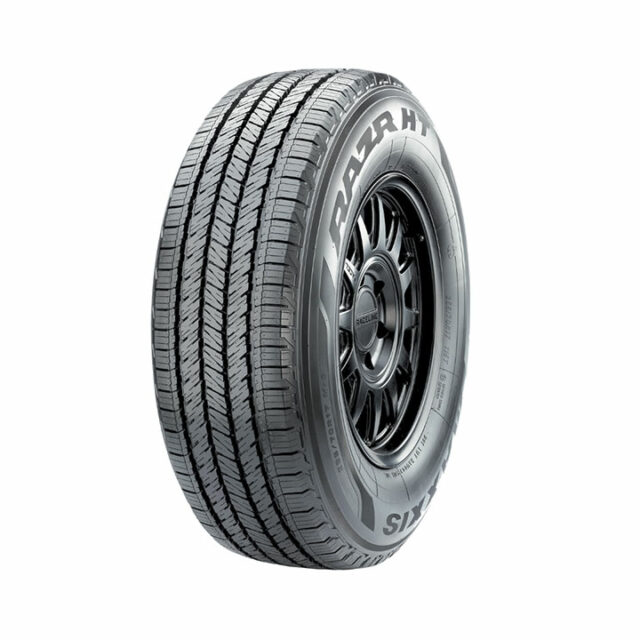
Maxxis Razr HT — PHOTO FROM AP BLUE WHALE CORP.

MAXXIS is a global manufacturer of tires for a wide range of vehicles, including bicycles, motorcycles, cars, trucks, ATVs, trucks and buses offering a “balance of performance and value.” Maxxis International recently released four new tires across its Philippine dealership network exclusively administered to by AP Blue Whale Corp.

Said AP Blue Whale Corp. Chief Operations Officer Ronald L. Ang, “These tires represent a significant advancement in our tire technology and our response to the continuously expanding electric vehicle market, and we are happy to offer drivers an unparalleled experience on both dry and wet roads, whether for conventional or electric vehicles.”

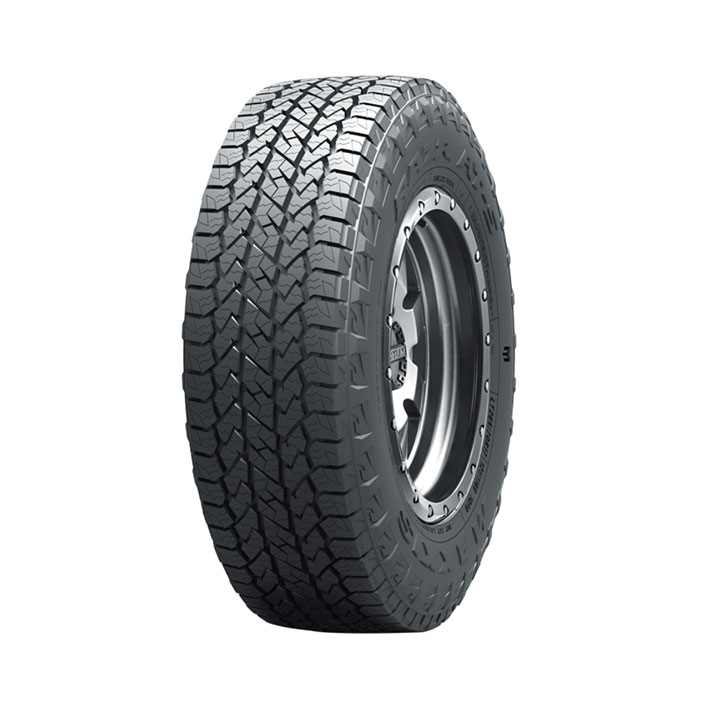
The Maxxis HT 780 is a premium-quality highway terrain tire designed for SUV and utility vehicle drivers looking for optimal comfort, a quiet ride, and prolonged tire life. Meanwhile, the Maxxis Razr AT 781 is positioned as a refined all-terrain tire for crossovers, pickups, and SUVs that provides “excellent off-road traction, improved tread life, dry/wet performance, silence and riding comfort.”

AP Blue Whale Corp. Director of Product Management Jaybee Atanacio, also present during the presentation of the new tires, said that the SEMA Best New Product Award-Winning Maxxis Victra Sport EV uses cutting-edge technology as an ultra-high performance all-season tire for electric vehicles “designed to maximize efficiency and grip, lower rolling resistance and noise, enhance durability, and improve traction.” Developed for electric vehicles, it is notable for its high-dispersion nanotechnology and a special tread design that increase range and improve energy efficiency.

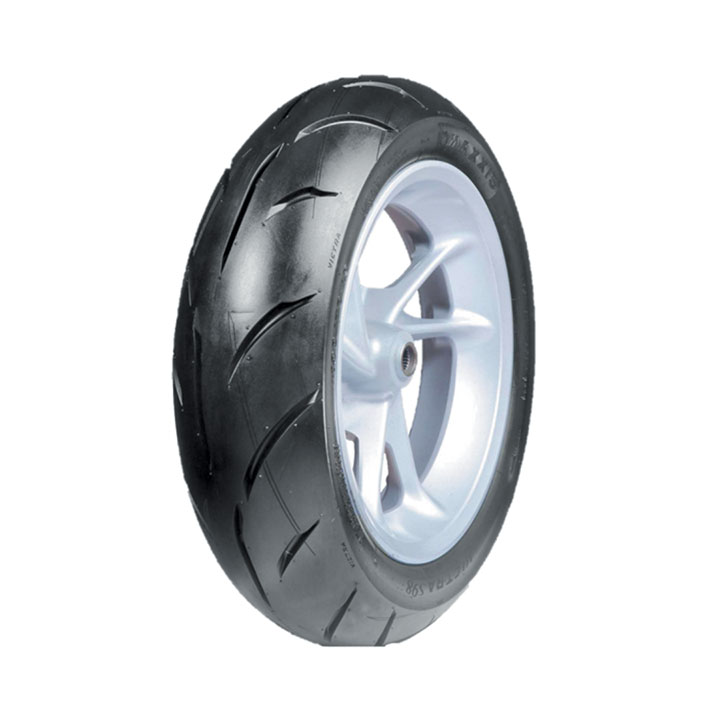
Also presented was the Maxxis Victra S98 CT, an “urban-ready scooter tire, built specifically for city riding.” It is positioned as offering smooth and stable performance ideal for daily scooter commutes. Its high-grip compound and optimized tread pattern ensure excellent handling and control on both wet and dry urban roads. The tread pattern’s deco groove is optimized to ensure confidence during wet weather. A reinforced casing and long-lasting construction guarantee consistency and extended tire life.

The four Maxxis tires are available in a range of sizes. For more information, visit www.maxxis.com.ph.

Of diamonds and gold

EARRINGS from the new collection at the Tessera Podium store.

Tessera unveils Podium store, new collections

NATURAL diamonds meet contemporary gold designs in the new store of jewelry company Tessera at The Podium Mall in Mandaluyong City.

Tessera was founded by husband-and-wife duo Carl and Papat Fider in 2011. The Podium branch is their 5th store, and it will be the only one to house their new collections — Bold in Gold and Bridal Edit.

Ms. Fider told BusinessWorld that these are for clients who already have their signature classics. Sought-after items among the classics include standard engagement rings, diamond studs, and tennis necklaces, which are basically symmetrical strands adorned with uniformly sized diamonds.

In contrast, the new collections incorporate gold with diamonds and sport more contemporary designs for younger women.

“From the ‘Bold in Gold’ collection, the chunky necklace is very modern, something different from the usual. It’s fashion-forward and has a touch of modern luxury,” said Ms. Fider.

“The reason we created ‘Bridal Edit’ is we want the younger brides to wear something their age, like statement earrings, something they won’t feel scared of wearing for their weddings,” she added.

The store in The Podium also reflects these collections, with white, green, and gold interiors as opposed to their other stores that are bronze and green.

Their 6th store in Molito, Alabang — which will be the first in the south of Metro Manila — will follow a similar direction as well, according to the jewelry company. It is set to open within the year.

THE VALUE OF DIAMONDS
Although lab-grown diamonds are more affordable, Ms. Fider told BusinessWorld that naturally mined diamonds can still reflect high quality under a certain budget.

Tessera’s stones, certified by the Gemological Institute of America, are “responsibly obtained” and “conflict-free” diamonds. Choosing which to buy is a matter of preference.

“It all boils down to budget, regardless of how much you research about clarity and specs. Google will always tell you to get the highest-quality one, but it’s pricier. It should always go back to what can fit your budget,” Ms. Fider said.

The Philippine market, for one, tends to prioritize size over specs, she explained. “Flawless diamonds tend to be the most expensive ones. For me, as long as the inclusions are not obvious, or to my naked eye the stone still looks brilliant and clear, I’m okay with it.”

Diamonds with a tinge of color can also distinguish them from lab-grown diamonds.

“Lab-grown ones are too perfect, too white, too brilliant, too flawless,” Ms. Fider said, “And it’s a natural characteristic of diamonds to have inclusions. So I always have a soft spot for natural, imperfect diamonds.”

Most of all, diamonds are a good investment, she concluded.

“The diamond industry has always been there, proving that it will last. It is not disposable. You can pass it on, and people really use it. That’s what makes it a good investment.” — Brontë H. Lacsamana

BSP securities fetch lower rates even as both tenors go undersubscribed

YIELDS on the central bank’s short-term securities dropped on Friday even as both tenors went undersubscribed despite the lower volume offered.

The Bangko Sentral ng Pilipinas (BSP) bills fetched bids amounting to P59.557 billion, well below the P100-billion placed on the auction block and the P115.207 billion in tenders for the P120-billion offer a week prior. However, the central bank awarded only P55.057 billion in securities.

Broken down, tenders for the 28-day securities reached P17.921 billion, lower than the P40-billion offer and the P44.231 billion in bids seen for the P60 billion placed on the auction block a week prior. The BSP only accepted P14.421 billion in bids for the one-month bills.

Banks asked for rates ranging from 5.34% to 5.42%, narrower than the 5.295% to 5.43% margin seen a week earlier. This caused the average rate of the one-month bills to fall by 1.44 basis points (bps) to 5.3784% from 5.3928% previously.

Meanwhile, bids for the 56-day securities amounted to P41.636 billion on Friday, also below the P60-billion offer as well as the P70.976 billion in tenders for the P60 billion auctioned off by the BSP a week prior. However, the central bank awarded just P40.636 billion in two-month papers.

Accepted yields were from 5.358% to 5.4%, a slimmer range compared to the 5.35% to 5.4% band seen a week ago. With this, the average rate of the two-month BSP bills slipped by 0.53 bp to 5.3849% from the 5.3902% recorded in the previous auction.

The central bank uses the BSP securities and its term deposit facility to mop up excess liquidity in the financial system and to better guide short-term market rates towards its policy rate.

The BSP bills also contribute to improved price discovery for debt instruments while supporting monetary policy transmission, the central bank said.

The central bank securities were calibrated to not overlap with the Treasury bill and term deposit tenors also being offered weekly.

Data from the central bank showed that around 50% of its market operations are done through its short-term securities.

The BSP bills are considered high-quality liquid assets for the computation of banks’ liquidity coverage ratio, net stable funding ratio, and minimum liquidity ratio. They can also be traded on the secondary market. — Katherine K. Chan

Brazil’s FRIGON sees PHL demand for beef growing with middle classes

A BRAZILIAN beef processor and exporter said the Philippines’ growing middle class will fuel demand for high-quality protein.

FRIGON (Irmãos Gonçalves Comércio e Indústria Ltda.), currently exports mainly grass-fed Nelore cattle to the Middle East, Asia, Africa, and the Americas.
“The Philippine market represents an exciting opportunity,” the company told BusinessWorld.

“We see the country as a dynamic economy with a growing demand for high-quality protein, where beef consumption continues to expand alongside a rising middle class,” it added.

The company said it is “confident” of servicing Philippine market requirements for “safe, reliable, and premium Brazilian beef,” citing its “strong capacity, international certifications, and flexibility in adapting our products to the clients’ demand.”

“We are looking forward to building long-term partnerships in the Philippines and to supporting the development of stronger trade relations between our countries,” FRIGON said.

FRIGON has the capacity to slaughter 2,000 head of cattle per day, with an expansion underway to double capacity by 2026 in response to growing global demand.

In 2024, the Philippines was the 5th largest destination for Brazilian beef, accounting for 92,200 metric tons or 3.19% of Brazil’s total exports. — Kyle Aristophere T. Atienza