Home Blog Page 1059

Risks, gaps in blockchain-based budget plan flagged

FREEPIK

By Beatriz Marie D. Cruz, Reporter

A PROPOSAL to use blockchain technology to enhance transparency in the national budget process would require significant investment in digital infrastructure and safeguards to prevent insider misuse, analysts said.

“Blockchain technology is not a silver bullet,” Lito M. Villanueva, founding chairman of FinTech Alliance Philippines, said in a Viber message. “While it ensures immutability of records, risks can still emerge from endpoints, insider misuse or poorly designed smart contracts.”

He said the proposed blockchain-based budget system should be rolled out in phases and anchored on clear governance standards, with public-private collaboration to ensure effective oversight. “Safeguards must therefore cover the whole ecosystem, not just the blockchain ledger itself,” he added.

Senate Bill No. 1330, filed last week by Senator Paolo Benigno “Bam” A. Aquino IV, seeks to establish a blockchain-based budget system that records transactions across the entire budget cycle in real time and immutable form. Budget preparation, legislation, execution and audit would all be logged into digital public assets accessible through a public-facing portal.

Mr. Aquino said the measure would help deter corruption. “No more fly-by-night contractors. No more hidden projects unknown to local governments,” he said in the bill’s explanatory note.

The Philippines, struggling with record-high debt and limited fiscal space, has faced growing scrutiny over corruption in infrastructure projects. Last month, the Department of Budget and Management (DBM) launched its own blockchain platform to track public funds.

“From our own rollout of blockchain for budget documents in DBM, we’ve seen that the technology works,” Budget Secretary Amenah F. Pangandaman told BusinessWorld in a Viber message. “The challenge is really about making it fit with existing government systems and making sure people know how to use it.”

She said training would be crucial to ensure government workers, auditors and the public understand and apply the system. “Even if the system is secure, it won’t be effective unless our government workers and the public can easily understand and apply it.”

Paul Soliman, chairman and chief executive officer at BayaniChain Ventures, the local firm behind DBM’s blockchain platform, said the system must align itself with cybersecurity standards.

“Vulnerabilities in government applications, identity theft of officials approving transactions, or poorly secured nodes could become attack points,” he said.

Mr. Soliman recommended hybrid security measures such as strong encryption, zero-trust frameworks and continuous monitoring. He added that inclusivity is also vital, with blockchain records viewable through public dashboards, SMS queries or mobile apps.

“Blockchain is not a magic solution, but it can be a strong foundation,” Ms. Pangandaman said. “If we combine the right technology, good governance and support from institutions, we can open a new era of transparency and accountability in government.”
Palace creates body to probe flood control, infrastructure anomalies

PHILIPPINE STAR/MIGUEL DE GUZMAN

By Chloe Mari A. Hufana, Reporter

MALACAÑANG on Thursday issued Executive Order (EO) No. 94 establishing the Independent Commission for Infrastructure (ICI), as the government probes irregularities in flood control and other public works projects.

The six-page order, signed by Executive Secretary Lucas P. Bersamin, said the ICI would act as an ad hoc fact-finding body “to investigate and undertake appropriate measures against those involved in irregularities in government infrastructure projects.” It will be composed of a chairman and two members.

The body may initiate probes on its own or act on complaints to “hear, investigate, receive, gather, and evaluate evidence, intelligence reports, and information” against officials, employees, or people linked to anomalies in the planning, financing and implementation of government projects, according to the order.

Its mandate covers flood control and other infrastructure projects undertaken within the past 10 years.

The commission will recommend the filing of criminal, civil or administrative cases before the Office of the President, Office of the Ombudsman, Department of Justice (DoJ) and Civil Service Commission. It may also propose corrective measures or legislative reforms to improve oversight and prevent misuse fund misuse.

The body can hold hearings, issue subpoenas, request financial records and recommend preventive suspensions. It may also endorse evidence for prosecution and collaborate with technical experts in support of its investigations.

The ICI can refer witnesses to the Witness Protection Program, recommend state witnesses and access information from Congress, the courts and other authorities.

It may request documents, financial records, hold departure orders and asset freezes related to anomalous projects, as well as recommend preventive suspensions, transfer evidence for prosecution and collaborate with experts or advisers.

It is also empowered to draft its own rules and perform other functions necessary to fulfill its investigative mandate or as directed by the President.

The ICI will be supported by a secretariat led by an executive director, appointed by the President with the rank of undersecretary, to oversee daily operations and implement policies under the chairman’s supervision.

The secretariat will have its own staff, and within 30 days, the executive director must propose its organizational structure and staffing for approval by the President or Department of Budget and Management.

All relevant government agencies, including DoJ, the National Bureau of Investigation, Department of Public Works and Highways, Department of the Interior and Local Government and the Philippine National Police must provide full assistance and cooperation to the ICI.

To promote transparency, the EO mandates the ICI to submit regular updates.

“The ICI shall provide monthly reports to the Office of the President, through the Office of the Executive Secretary. The ICI shall likewise cause the publication of its accomplishments and such other relevant reports,” according to the EO.

“The effective implementation of government flood control and related projects is vital to safeguarding the lives, property, and welfare of the Filipino people, who have repeatedly suffered from the devastating impacts of natural calamities and disasters,” it added.

In his fourth State of the Nation Address on July 28, President Ferdinand R. Marcos, Jr. called for an investigation into irregular flood control projects, noting how billions of pesos had been allocated to these initiatives, yet many areas remained prone to flooding.

He stressed that such anomalies not only squander public funds but also leave communities vulnerable to the intensifying impact of typhoons and heavy rainfall.

Earlier, Mr. Marcos revealed that the sumbongsapangulo.ph website, launched on Aug. 11, had received more than 12,000 complaints related to flood control and similar projects within just a month.

PHL-Japan RAA enters into force

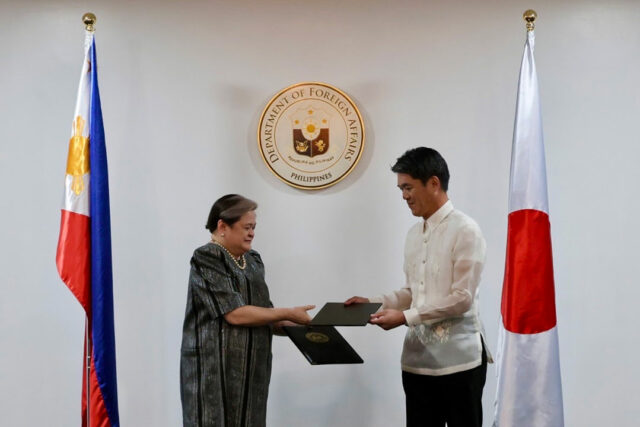
Secretary of Foreign Affairs Ma. Theresa P. Lazaro and Japanese Ambassador ENDO Kazuya exchanged the diplomatic notes on the entry into force of the Philippines-Japan Reciprocal Access Agreement — DFA

A DEFENSE pact between the Philippines and Japan allowing reciprocal access to military forces has taken effect, Manila’s Defense department said on Thursday.

Both the nations’ Reciprocal Access Agreement (RAA) would help elevate Manila and Tokyo’s security ties and help boost deterrence in the contested South China Sea, it said in a statement, amid Chinese assertiveness in the waters.

The Defense department said the military agreement underscores “the strength of our people-to-people ties, shared values and international principles, and common purpose for the security and stability of the region.”

Signed by Manila and Tokyo last year, the RAA allows for the entry of equipment and troops for military drills and disaster responses on each other’s soil.

It was ratified by the Philippine Senate in December 2024, while Japan’s National Diet ratified it in early June.

Manila has sought to expand its web of alliances to bolster its efforts to push back against Beijing’s sweeping claims in the South China Sea, entering into similar agreements with New Zealand, Australia and the US earlier. Talks for visiting forces agreements with Canada and France are also underway.Kenneth Christiane L. Basilio

Marcos signs E-Governance Act

NOEL B. PABALATE / PPA POOL

PRESIDENT Ferdinand R. Marcos, Jr. has signed Republic Act No. 12254 or the E-Governance Act, which seeks to streamline government processes and improve transparency through a unified digital system.

Signed on Sept. 5, the law designates the Department of Information and Communications Technology (DICT) as the lead implementor of the law. It will craft an e-government master plan to modernize services and align with the Philippine Development Plan.

The measure mandates the integration of agencies such as the Land Transportation Office and Department of Foreign Affairs into a single digital platform accessible via a mobile app.

Local government units (LGUs) must also establish their own digital portals or adopt the eLGU system within a year.

The law further requires agencies and LGUs to improve their websites and set up e-bulletin boards to ensure timely and efficient public information. — Chloe Mari A. Hufana

VP’s travel spending hits P20.68M

Vice President Sara Duterte arrives at the Department of Justice, May 9, 2025. — PHILIPPINE STAR/RYAN BALDEMOR

THE Office of the Vice-President (OVP) spent P20.68 million on travel in the first seven months of 2025, accounting for nearly a third of its annual travel budget.

Vice-President Sara Duterte-Carpio spent P13.27 million on domestic travel from January to July this year, with P3.1 million allotted for her security detail and P10.49 million for accompanying personnel, an infographic posted on the OVP’s Facebook page showed.

The office, meanwhile, spent P7.47 million on international travel, exclusively covering costs for Ms. Duterte’s security and staff as she covered her own expenses abroad, it added.

“We’d like to emphasize that all the travel overseas of the Vice-President is covered by travel authority, and did not use any public funds,” OVP Budget Division Chief Kelvin Gerome L. Tenido said in a media briefing.

The Vice-President’s travel has come under scrutiny from critics following a series of trips, some of which are tied to calls for the release of her father, ex-President Rodrigo R. Duterte.

Mr. Duterte has been detained at the International Criminal Court in The Hague since March on charges of crimes against humanity linked to his administration’s deadly anti-drug campaign. — Kenneth Christiane L. Basilio

BoC: Discaya’s unpaid tax at P72M

The Bureau of Customs recovered 12 luxury vehicles linked to the Discaya family following a court-ordered search operation in Pasig City, Sept. 2, 2025. — BUREAU OF CUSTOMS

THE Bureau of Customs (BoC) has uncovered P71.66 million in unpaid duties and taxes linked to luxury vehicles imported by the Discaya family.

In a statement on Wednesday, the BoC said an investigation revealed that Cezarah Rowena “Sarah” Discaya and Pacifico “Curlee” F. Discaya II declared only P33.06 million in duties and taxes for vehicles brought in through various ports, far below the assessed total of P104.72 million.

“The investigation revealed that eight motor vehicles were imported without any corresponding entry, classifying them as smuggled and subject to the issuance of Warrants of Seizure and Detention,” the BoC said.

The seven other vehicles, while covered by import entries, lacked Certificates of Payment and showed deficiencies in declared duties and taxes.

Meanwhile, only 14 vehicles have filed import entries and supported by Certificates of Payment will also undergo verification under Post Clearance Audit Group’s transaction audit. Another vehicle will undergo verification.

The BoC said it has now seized 30 vehicles linked to the Discayas, up from the initial 12 confiscated.

“The BoC will not allow any attempt to evade the payment of lawful duties and taxes. The deliberate evasion of customs laws, particularly involving high-value goods, undermines government revenue and erodes public trust,” Customs Commissioner Ariel F. Nepomuceno said.

The Omega & Alpha Construction and St. Timothy Construction, allegedly owned by the Discayas, were among the top 15 flood-control contractors that cornered P100 billion worth of projects since 2022. — Aubrey Rose A. Inosante

Israel eyes PHL as key health market

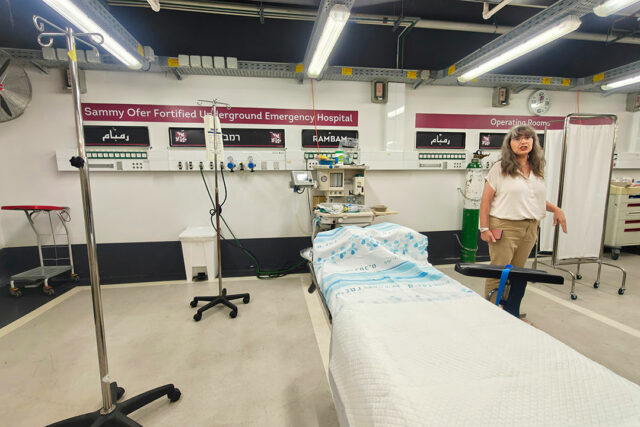
THE Rambam Health Care Campus in Haifa, Israel features the Sammy Ofer Fortified Underground Hospital — an underground parking that can be converted into a 2,000-bed medical facility that is the largest of its kind in the world. Its reinforced structures ensure it can operate under wartime or disaster scenarios, including potential missile attacks. — NORMAN P. AQUINO

THE PHILIPPINES is becoming a key market for Israeli health companies, driven by cultural similarities and opportunities to address gaps in the country’s healthcare system, according to an official from Israel’s economic mission in Manila.

Ofek Venecianer, head of the Israel Economic Mission to the Philippines, told BusinessWorld during a health tech forum that the Philippines offers significant growth potential for Israeli firms.

“Israel is a small market, and I think that all start-ups know they’ll begin in Israel and then scale up abroad,” she said. “The Philippines is one of the most interesting countries for Israeli companies to scale up in.”

Ms. Venecianer also cited cultural commonalities, noting that both countries share warm and welcoming people.

Telemedicine is one area where Israeli health firms see significant opportunity. The Philippines’ archipelagic geography presents challenges to healthcare delivery, making remote access to services highly beneficial.

“The number of people that need telemedicine and remote access to health services is really big,” Ms. Venecianer added.

Beyond healthcare, she identified agriculture and cybersecurity as sectors where Israeli firms could make an impact.

“We had to grow our own food in this desert, so we have a lot of technologies that can definitely be suitable for the challenges the Philippines is facing,” she said. “We’re also leading in the market when it comes to cybersecurity solutions.”

Bilateral trade between the Philippines and Israel reached $400.4 million last year, down 16.3% from a year earlier. Both countries are working toward finalizing a free trade agreement by 2028.

During Thursday’s forum, five Israeli health companies presented solutions designed to address gaps in the Philippines’ healthcare system. One of them, Envomed, showcased a solution for safely treating hazardous biomedical waste. The company’s model reduces carbon emissions by 95% and offers a cost-effective treatment method for hospitals.

Envomed is set to pilot its solution at a Department of Health hospital in Las Piñas City and is in talks for further expansion, according to local partner ITech, Inc.

“Most of them are willing to try this kind of technology to address the problem of medical waste,” ITech Chief Executive Officer Glenn Ampongan said. — Edg Adrian A. Eva

Lacson wants ex-DPWH engineer under Senate custody

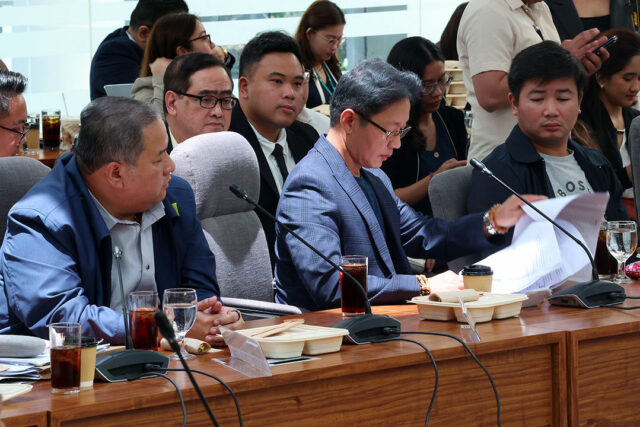
CONGRESSMEN quiz former Public Works engineers Henry Alcantara, JP Mendoza and Brice Ericson Hernandez at a House of Representatives hearing investigating bogus flood control projects. — PHILIPPINE STAR/MIGUEL DE GUZMAN

A PHILIPPINE Senator on Thursday said that he will request the return of a former Public Works engineer involved in anomalous flood control project to the Senate’s custody after being transferred to the Pasay City.

In a news briefing, Senate President Pro Tempore Panfilo “Ping” M. Lacson pushed for ex-Public Works Assistant District Engineer for Bulacan Brice Ericson Hernandez to be returned to the Senate premises.

“I have to clear this with the Senate President if he will approve that after the next hearing on Thursday (Mr. Hernandez) will remain in the Senate,” Mr. Lacson, who also heads the Blue-ribbon committee, told reporters.

Last Monday, Mr. Hernandez was cited in contempt and detained at the Senate after allegedly lying that he frequented casinos and had won millions of pesos.

Following a lengthy debate last Wednesday, senators had agreed to move Mr. Hernandez to the Pasay City jail from Camp Crame in Quezon City. This came after senators had questioned the Senate chief’s order to move him to the custody of the Philippine National Police.

Mr. Lacson added that the committee will also investigate the money laundering scheme allegedly conducted by Mr. Hernandez and other Public Works officials.

The Senator had previously revealed that some officials of the Department of Public Works and Highways (DPWH) have been using flood control funding to play in casinos ang exchange them for chips.

Meanwhile, a senator said that he has filed a bill seeking to expand jail time for public officials found guilty of graft and corruption.

“Public officers and employees must at all times be accountable to the people, serve them with utmost responsibility, integrity, loyalty, and efficiency, act with patriotism and justice, and lead modest lives,” Senator Erwin T. Tulfo said in a statement on Thursday.

Senate Bill no. 1359 seeks to amend Republic Act 3019 or the Anti-Graft and Corruption Practices Act by increasing the jail time for graft and corruption to 12-20 years from the current six to 15 years.

“By increasing the penalties, we are sending a clear message that betrayal of public trust has severe consequences,” Mr. Tulfo said in his explanatory note.

During separate Congressional investigations, lawmakers and government officials have been tagged to be involved in a multibillion-peso infrastructure scandal involving flood control projects. — Adrian H. Halili

Customs flags P227-M of marijuana in Manila airport

LOREN BISER-UNSPLASH

THE Bureau of Customs (BoC) seized P227 million worth of illicit drugs at the Ninoy Aquino International Airport (NAIA) last week, which it described as the largest high-grade marijuana drug haul at the airport.

In a statement on Thursday, the BoC said it intercepted 151,334 grams of alleged “Kush” concealed in six checked-in bags belonging to Filipino passengers arriving from Bangkok via Cebu Pacific Flight 53932 at NAIA Terminal 3.

“During routine passenger profiling, the baggage was directed for x-ray screening. Suspicious images prompted for 100% physical inspection, revealing multiple transparent packs of suspected ‘Kush,’” it said.

Customs said the seized drugs and suspects were turned over to Philippine Drug Enforcement Agency for proper investigation and disposition.

“This significant interception highlights our intensified efforts to combat drug trafficking and secure our borders. The Bureau of Customs will remain vigilant and steadfast in preventing illegal drugs from entering the country,” BoC Commissioner Ariel F. Nepomuceno said.

Customs earlier reported it seized P85.18 billion in smuggled products in 2024. Out of this, P1.90 billion came from illegal drugs. — Aubrey Rose A. Inosante

Study finds Gen Zs want transparent, effective leaders

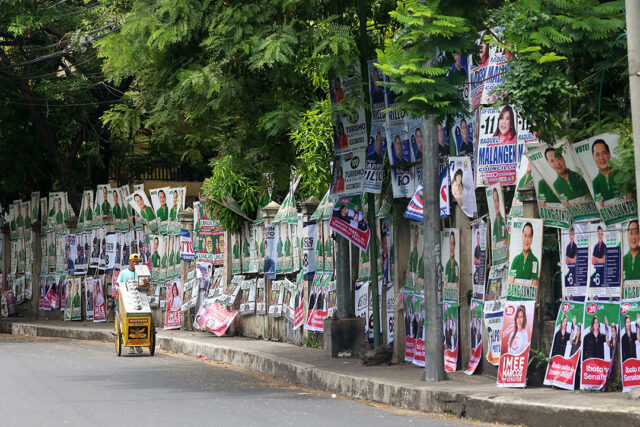
AN ICE CREAM VENDOR passes by a wall covered in campaign posters in Quezon City. — PHILIPPINE STAR/MIGUEL DE GUZMAN

GEN Z Filipinos want leaders who are transparent, effective, and free from “trapo” politics, according to the WR Numero’s inaugural Filipino Perspectives Digest.

“For Filipino Gen Zs, good leadership isn’t about charisma or popularity. It’s about allocating resources honestly and effectively, putting the public’s welfare above personal gain,” WR Numero said in a statement.

The Digest is a companion to the firm’s Philippine Public Opinion Monitor, which draws insights from six focus group discussions with 46 participants aged 18 to 25 across different regions.

Participants said corruption, inefficiency, and political infighting directly block access to quality education, healthcare, and social services.

They stressed the need to fix schools, pay teachers fairly, and fund hospitals properly.

Views on political dynasties were split, with some rejecting them outright and others saying continuity can benefit communities if families have proven service.

“We need people… other than political dynasties. It really needs to be erased,” said a 21-year-old male participant from Camarines Sur.

Respondents agreed almost universally that celebrities and influencers have no place in government, saying popularity cannot replace competence or genuine commitment.

Many also called for unity in leadership, pointing to the rift between President Ferdinand R. Marcos, Jr. and Vice-President Sara Duterte-Carpio as a symbol of dysfunction.

“They [should not be] fighting with each other. My ideal vice-president and president give more focus and give importance to youth issues and teachers as well,” a female participant from Metro Manila said.

Inclusion also mattered, with calls for LGBTQIA+ rights and, in the Bangsamoro region, for stronger interfaith understanding between Muslims and Christians.

Some in the Bangsamoro added that clearer separation of communities may be needed to ensure freedom of religion and practice.

“Across regions and perspectives, one thread was clear: Filipino Gen Zs are ready to imagine a new kind of politics — one built on service, unity and inclusion, not power and privilege,” WR Numero said. — Erika Mae P. Sinaking

Experts link poor health literacy, costs to low cancer care confidence 

VECTEEZY/ STELLA E

POOR HEALTH literacy and expensive healthcare costs lead to low confidence in cancer care in the Philippines, according to health experts.

“I think there’s really a lot of misconceptions in our culture,” Emmeline Elaine L. Cua-De Los Santos, surgical oncologist & breast surgeon, told BusinessWorld in a Zoom interview.

“I hope more doctors in my generation will be more open to sharing more about literacy because people are craving for it,” she added.

A survey conducted by YouGov revealed that the country has the lowest levels of confidence in cancer care across Southeast Asia, with only 34% respondents believing cancer care in the country is well-coordinated.

It added that although cancer awareness is relatively high, only 13% of respondents had undergone cancer screening, the second lowest in the region. Of the 13%, just 4% had taken specific cancer screening tests.

“In our culture, a lot don’t want to be diagnosed because they have misconceptions like cancer,” Ms. De Los Santos said.

“You’ll notice that, since we’re Asians, the pull of herbal remedies on our population is often stronger than that of evidence-based medicine and practices,” she added.

Health reform advocate Anthony C. Leachon added that low confidence in cancer care is also caused by accessibility and “financially burdensome” costs.

“While PhilHealth (Philippine Health Insurance Corp.) may cover some procedures, access is uneven and often requires a doctor’s referral. For many, the cost alone is a deterrent to early detection,” he said.

The survey showed that 24% of respondents refused to get screened because it is too costly, and 23% said they do not have any medical coverage to afford the test.

In the Philippines, lung cancer is the most common type of cancer. Ms. De Los Santos said the average cost for a chest CT (Computed Tomography) scan to detect such illness ranges from P30,000 to P70,000, depending on the hospital or laboratory.

In the early stages of lung cancer, she noted that surgery in a private hospital would cost around P200,000 to P500,000 on top of the P40,000 to P50,000 chemotherapy.

“For other types of cancer, depending on which one, some stage 4 cases require treatment for a lifetime — until the cancer grows again, worsens, or returns,” she said. “That makes it really expensive.”

In August, PhilHealth began outpatient cancer screening tests under its new Yaman ng Kalusugan Program (YAKAP).

Under the YAKAP, PhilHealth will cover mammogram (P2,610), breast ultrasound (P1,350), low-dose chest CT scan (P7,220), Alpha Fetoprotein (P1,230), liver ultrasound (P960), and colonoscopy (P23,640). — Almira Louise S. Martinez

Younger Umali takes over Nueva Ecija’s top post

BAGUIO CITY — Vice-Governor Gil Raymond Umali, younger brother of suspended Governor Aurelio Umali, has taken over as Nueva Ecija Governor after the Interior department enforced the one-year suspension of the older Umali on Wednesday.

The suspension order was signed by Department of Interior and Local Government Undersecretary Hubert V. Gervacio as directed by Secretary Juanito Victor C. Remulla.

Sangguniang Panlalawigan Member Eduardo Joson, as the highest-ranking board member, assumed as acting vice governor.

The older Umali’s suspension stemmed from a June 19 decision by the Office of the Ombudsman, which imposed a one-year suspension without pay.

Private citizen Roberto Duldulao in March 2024 complained against the Governor’s issuance of 205 quarry permits without securing the required Environmental Compliance Certificates from the Department of Environment and Natural Resources.

The Ombudsman’s Field Investigation Office found the Nueva Ecija governor’s issuances of quarry permits violated environmental regulations.

Mr. Umali earlier belied allegations and tagged his complaint as part of dirty politics. — Artemio A. Dumlao