CEB hopes for fuel easing by Q3, reviews passenger growth target
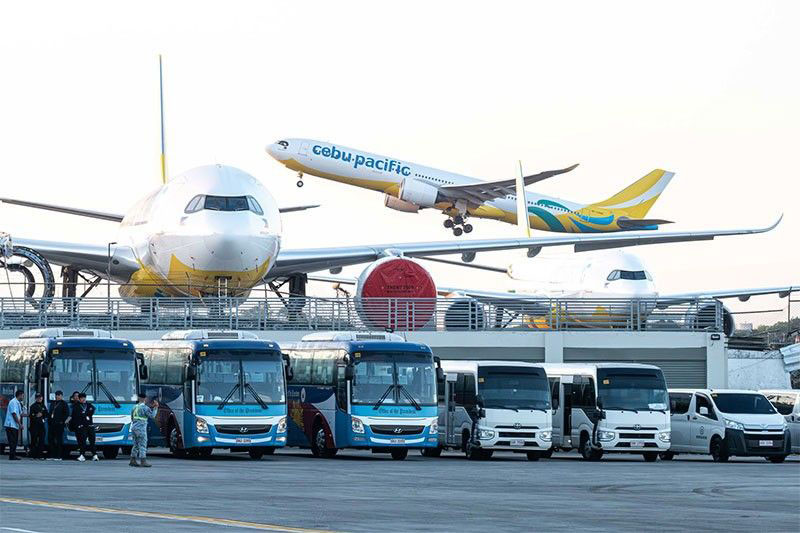
CEBU PACIFIC, operated by Cebu Air, Inc. (CEB), said it expects fuel price volatility to persist in the coming months but is hoping for easing prices by the third quarter, even as it reviews its passenger growth target for the year.
“Hopefully, as we get into the third quarter, the fuel prices will have come back. It is a very volatile situation in terms of trying to understand what’s going on. Now, of course, (jet fuel’s) gone lower. But we’re a very solid airline coming off very strong financial results. We’ve got a lot of financial resilience,” Cebu Air Chief Executive Officer Michael B. Szücs told reporters on the sidelines of the budget carrier’s training academy inauguration on Monday.
Mr. Szücs said the airline is reassessing its outlook amid changing conditions.
“I think we have to review (our passenger volume target). I mean, this year, a lot has changed. So, it is difficult to predict exactly what the passenger numbers will be, but certainly we were on track to grow by sort of 10% plus again this year,” he said.
Fuel costs remain the main challenge, with the company citing disruptions linked to the conflict in the Middle East.
“Right now, it is a very challenging time for the aviation industry, especially in the Asia-Pacific region. We import most of our fuel from the Middle East, so the war has severely impacted the availability and the prices of fuel,” Cebu Air Chairman Lance Y. Gokongwei said.
The airline said it has secured enough jet fuel supply to support operations until June and is working to procure additional supply.
“We think we have got an adequate supply of fuel. The real challenge is on the price because we have seen some extremely elevated prices. We are hoping that once we get into June, July, August, prices will come off,” Mr. Szücs said.
According to the International Air Transport Association, jet fuel prices fell 6.7% week on week to $184.63 per barrel as of April 17, but surged 105.1% on a yearly basis.
The company said it has been adjusting operations to manage costs and demand.
“I think we are very well set. I think we have to keep an eye on the long term and the prospects of the country. On a day-to-day basis, we will have to maybe do some tactical adjustments on the schedule,” Mr. Szücs said.
Since February, Cebu Pacific has recalibrated its network through flight frequency reductions and temporary cancellations.
Cebu Pacific said it will continue assessing demand, particularly during the low season, noting that demand levels in April and May remain unchanged.
The airline initially expected to close 2026 with 30 million passengers, up from 27 million in 2025. In the first quarter, passenger traffic rose by 8.4% to 7.54 million, driven by higher domestic passenger volumes.
Fuel surcharges have also increased, with the Civil Aviation Board raising rates to Level 19 for April 16-30, the highest since 2022.
At this level, fuel surcharges range from P627 to P1,834 per way for domestic flights, and from P2,070.77 to P15,397.15 for international flights, depending on distance.
For 2025, Cebu Pacific reported a more than twofold increase in net income to P12.3 billion, driven by higher passenger revenues.
“And again, I think the point I’d like to make is we see this as a challenging number of months now and in the months ahead, but we see the long-term potential both in the country,” Mr. Szücs said.
The airline inaugurated on Monday a training academy for pilots and cabin crew in Parañaque City.
The 1,685-square-meter facility includes aircraft door trainers, cabin mock-ups, slide trainers, and classrooms for scenario-based training.
Cebu Pacific currently operates 35 domestic and 26 international destinations across Asia, Australia, and the Middle East.
Cebu Air shares closed at P33 on Monday, up 1.85%. — Ashley Erika O. Jose