Home Blog Page 973

BDO dismisses ‘baseless’ viral claims on unauthorized transactions

BDO Unibank, Inc. said on Thursday that a viral social media post alleging there was system compromise and insider involvement in unauthorized transactions is baseless,
“BDO has put in place different features intended to protect clients’ accounts. These controls will not work if clients ignore warning signs and messages sent by the bank through official channels,” the Sy-led bank said in a statement.

On Sept. 15, a content creator Maria Jamila Cristiana Gonzales Berenguer, known as Jana Berenguer, claimed that three of her bank accounts were allegedly hacked after she saw a significant decrease in her balance.

Ms. Berenguer said that she did not receive a one-time password (OTP) for the transaction that happened around noon.

“The maximum amount for an online transaction is P50,000 to P100,000 per day, but they were able to withdraw almost P200,000,” she added in Filipino.

In her initial call with the bank, the client said that the case was dismissed as a hacking incident because she used her account’s QR Code for her business.

In a statement, BDO said it repeatedly tried to engage with Ms. Berenguer but was declined.
Through its own investigation, the bank said that a password reset was recorded on the client’s account on September 14, followed by a device registration.

A day before the reported incident, the reset and device registration were validated through an OTP on the registered device.

“There was no change in the mobile number used to receive the OTP. The client’s official device remains to be the device that receives official client communication,” BDO said.

It added that log-in and registration alerts were also sent to the client, along with transaction alerts sent six hours before the incident was reported via the BDO hotline.

The bank also noted that the client admitted in another media interview that her mobile device was “in the hands of other people at some point in time.”

“The Bank reiterates that transfer limits were not bypassed, and our security controls remain in place,” it said. “BDO’s system remains secure, with no evidence of any breach or insider involvement.” — Almira Louise S. Martinez

Magnitude 5.6 earthquake hits La Union, felt across Luzon

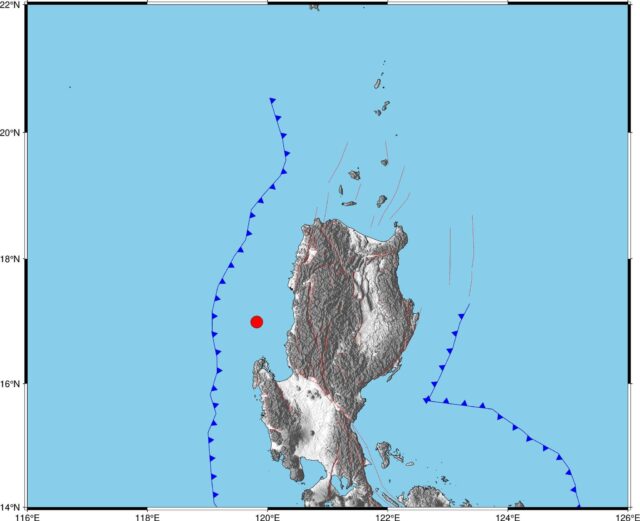
A magnitude 5.6 earthquake hit La Union province on Friday morning, and was felt in more than a dozen areas in Luzon, according to the Philippine Institute of Volcanology and Seismology (PHIVOLCS).

In its bulletin, PHIVOLCS reported that the earthquake occurred at 3:52 a.m., with its epicenter located 61 kilometers northwest of La Union, offshore, at a depth of 10 kilometers.

The tremor was felt in several areas across Luzon, with varying intensities, it said.

The quake registered an Intensity III in Bolinao and Bani, Pangasinan; Sinait and the City of Vigan, Ilocos Sur; and Bontoc, Mountain Province.

Intensity II was recorded in the City of Laoag, Ilocos Norte; Candon and Narvacan, Ilocos Sur; Bangar, La Union; the City of Dagupan; and Urdaneta and Lingayen, Pangasinan.

Meanwhile, Intensity I was observed in Dinalupihan and Orani, Bataan; the City of Baguio; Obando and Calumpit, Bulacan; Claveria, Cagayan; San Nicolas, Ilocos Norte; Tagudin, Ilocos Sur; the City of Malabon; Guagua, Pampanga; Umingan and Sison, Pangasinan; Ramos and Bamban, Tarlac; and Subic, Iba, Masinloc, San Marcelino, and Cabangan, Zambales.

PHIVOLCS said no damage is expected from the earthquake, but aftershocks are likely to occur. – Edg Adrian A. Eva

Nvidia takes $5 billion stake in Intel, offers chip tech in new lifeline to struggling chipmaker

The logo of technology company Nvidia is seen at its headquarters in Santa Clara, California February 11, 2015. — REUTERS/ROBERT GALBRAITH/FILE PHOTO

SAN FRANCISCO/WASHINGTON – Nvidia said on Thursday it would invest $5 billion in Intel INTC.O, throwing its heft behind the struggling U.S. chipmaker just weeks after the White House engineered an extraordinary deal for the federal government to take a massive stake in the company.

Nvidia’s support offers Intel a new chance after years of turnaround efforts failed to pay off, and triggered a 23% jump in the US chip manufacturer’s shares. The stake will make Nvidia one of Intel’s largest shareholders, giving it roughly 4% of the company after new shares are issued.

Intel – once the chip industry’s flag bearer that claimed to put the “silicon” in Silicon Valley – appointed a new CEO, Lip-Bu Tan, in March. He quickly came under fire from U.S. President Donald Trump, who called his resignation due to concerns about his connections with China. This led to a swiftly arranged meeting in Washington that ended with Intel’s unusual arrangement to give the U.S. a 10% stake in the company.

Nvidia CEO Jensen Huang told reporters on a call on Thursday that the Trump administration had not been involved in the partnership deal but would have been supportive. Huang was seen with Trump and other business leaders during the U.S. president’s state visit to the United Kingdom on Thursday.

This new pact includes a plan for the two companies to jointly develop PC and data center chips, but crucially, will not involve Intel’s contract manufacturing business – or foundry – making computing chips for Nvidia. Intel’s foundry business will, however, supply the central processors and advanced packaging for the joint products. Huang said his company was continuing to evaluate Intel’s foundry technology and had been working with the rival for nearly a year.

Most analysts believe that for Intel’s foundry to survive, it would need to win a large customer such as Nvidia, Apple, Qualcomm or Broadcom.

“This may be the first step of an acquisition or breakup of the company (Intel) among U.S. chip makers though it is entirely possible the company will remain a shadow of its former self but will survive,” said Nancy Tengler, CEO of Laffer Tengler Investments, which holds Nvidia stock.

Nvidia, whose must-have chips are powering a global artificial intelligence boom, said it would pay $23.28 per share for Intel common stock, slightly below the $24.90 Wednesday closing price but higher than the $20.47 price the U.S. government paid. Nvidia shares were up 3.8% on Thursday.

The companies did not disclose the financial terms of their collaboration but said they would make “multiple generations” of future products.

The deal adds to Intel’s growing reserve of capital, following a $2 billion investment from Softbank and the $5.7 billion investment from the U.S. government.

CEO Tan has vowed to make Intel’s operations lean and build factory capacity only when there is demand to match it.

“This is a massive game-changer for Intel and effectively resets its position of AI-laggard into a cog in future AI infrastructure,” said Gadjo Sevilla, senior AI and tech analyst at eMarketer.

RISKS TO COMPETITORS
The pact represents a potential risk to Taiwan’s TSMC. TSMC currently manufactures Nvidia’s flagship processors, a business the world’s most valuable company could one day extend to Intel. AMD, which competes with Intel for supplying chips to data centers, also stands to lose thanks to Nvidia’s backing.

TSMC declined comment. An AMD spokesperson said the company continued to deliver high-performance products that power everything from PCs to data centers, and would keep driving market share growth with its AI-forward strategy.

“AMD has been seizing market share in desktops and laptops for quite some time and this will help Nvidia out against its closest domestic peers, but I think TSMC may have the bigger risk to its operation over the long term,” said David Wagner, portfolio manager at Aptus Capital Advisors.

Under the terms of the deal, Intel will design custom data-center central processors Nvidia plans to package with its AI chips, known as GPUs. A proprietary Nvidia technology will let the Intel and Nvidia chips communicate at higher speeds than before.

Speedy links are a key differentiator in the AI market because many chips must be strung together to act as one to chew through massive amounts of data. Currently, Nvidia’s best-selling AI servers with those links are only available using Nvidia’s own chips; this deal would put Intel on equal footing, giving it a chance to make money off each Nvidia server.

The combined Nvidia-Intel chips could also challenge Broadcom, which has chip-to-chip connection technology and helps companies such as Alphabet’s Google develop AI chips. Broadcom did not respond to a request for comment.

AMD shares were down 1.3%, while Broadcom shares fell 0.5%.

The companies did not say when the first joint products would come to market, but said their product plans prior to the deal had not changed. — Reuters

Volkswagen pulls out of Philippine market

PHOTO FROM VOLKSWAGEN PHILIPPINES

Volkswagen AG is pulling out of the Philippine car market, the company announced on Thursday.

“We’d like to inform you that Automobile Central Enterprise, Inc. (ACEI) and Volkswagen AG have agreed to conclude the distribution of Volkswagen vehicles in the Philippines,” the company said in a statement posted on Facebook.

Volkswagen and the Ayala-led ACEI have partnered to distribute the former’s vehicles in the country since 2013.

Volkswagen’s showroom in Bonifacio Global City will only be open until Sept. 30.

Despite the pullout, Volkswagen said existing customers can avail of after-sales support through designated service centers in Alabang, Pampanga, and Cebu.

“Your experience remains our top priority. Rest assured, Volkswagen vehicles will continue to receive expert care and support,” the company said.

The designated facilities are:

Alabang Service Center, located at Acacia Avenue, Madrigal Business Park, Muntinlupa; and
Pampanga Service Center, located at MacArthur Highway, Dolores, San Fernando, Pampanga.

For customers in Cebu, servicing will be processed by the Alabang service center but conducted at A. Soriano Ave, Cebu City.

Customers may book a service appointment in Alabang or Cebu through https://idiph.odoo.com/appointment/15 or just send an email to volkswagen.service@acmobility.ph.

A special pickup and delivery service for Metro Manila customers will also be available. — CRAG

Nando intensifies into Tropical Storm

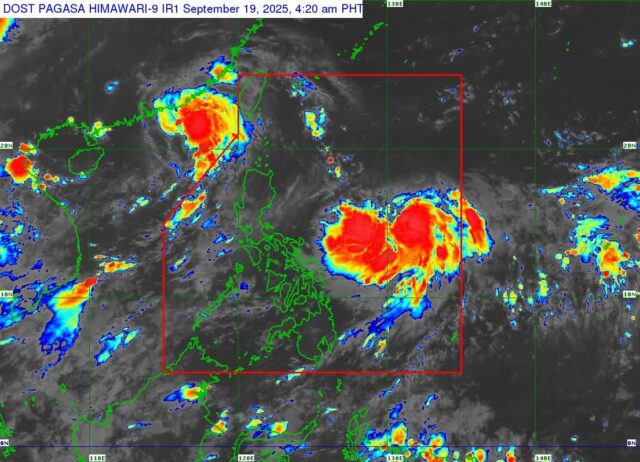
Tropical Cyclone Nando intensified into a tropical storm as it slowly moved toward Northern Luzon, the Philippine Atmospheric, Geophysical and Astronomical Services Administration (PAGASA) said on Friday.

The cyclone, with sustained winds of 75 kilometers per hour (kph) and gusts of up to 90 kph, was located 1,075 kilometers east of Central Luzon, according to PAGASA’s 5:00 a.m. bulletin. It was moving west-northwestward at 15 kph.

During the forecast period, Nando is less likely to directly affect the country’s weather in the next 48 hours, but it may enhance the prevailing southwest monsoon and bring rains by Sunday or Monday.

PAGASA said a tropical cyclone wind signal may already be hoisted as early as Saturday morning.

Nando is expected to intensify into a typhoon, or possibly a super typhoon, as it nears Northern Luzon by Monday or Tuesday, the bureau also said. – Edg Adrian A. Eva

Fed cut gives BSP more room to ease

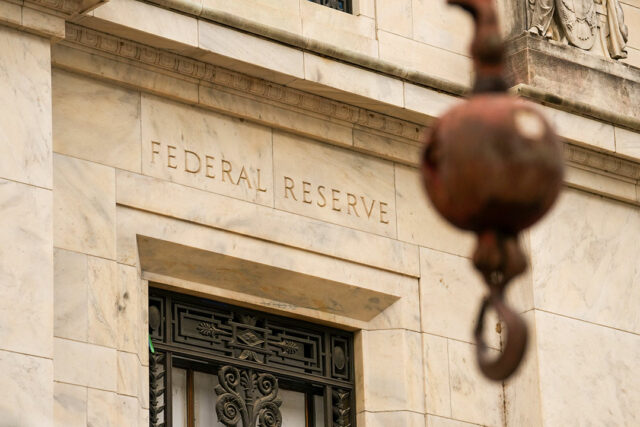
View of the facade as construction continues on the Federal Reserve Board Building in Washington, DC, Sept. 17, 2025. — REUTERS/KEN CEDENO

By Katherine K. Chan

THE BANGKO SENTRAL ng Pilipinas (BSP) now has more room to continue its policy easing to support economic growth after the US Federal Reserve delivered a much-awaited cut on Wednesday but may stay cautious amid lingering inflation risks.

“The Fed decision is but one additional factor for BSP’s policy calculus… Last night’s decision and potential subsequent easing would afford BSP more space to cut rates further should growth remain in need of support,” Metropolitan Bank & Trust Co. (Metrobank) Chief Economist Nicholas Antonio T. Mapa said in a Viber message.

Speaking at the Philippine Economic Briefing in Cebu held on Thursday, BSP Deputy Governor Zeno R. Abenoja said the central bank will continue to monitor both inflation and growth.

“This year, we think inflation will average below the target. The target is 2% up to 4%. We may be averaging at around 1.7%… But for the next two years, 2026, 2027, inflation will be back in the middle of the target, around 3.3% to 3.4%, and because of that, we may be near the appropriate interest rates for policy. So, we are moving towards that, what we call the ‘sweet spot’ where interest rates are at the right level to promote growth but at the same time control inflation,” he said.

“What are we looking at? We are looking at future inflation or underlying inflation pressures. We are looking at growth numbers. If growth numbers continue to be resilient, we don’t have to do big adjustments, but we will continue to do baby steps. We are looking at inflation expectations… So, for the rest of the year, we still have two policy meetings. It is possible that there could be some policy actions, but we will take it one meeting at a time.”

Last month, the BSP lowered borrowing costs by 25 basis points (bps) for a third straight meeting to bring the policy rate to 5%. It has now reduced benchmark interest rates by a cumulative 150 bps since it began its rate cut cycle in August 2024.

BSP Governor Eli M. Remolona, Jr. has left the door open to one more reduction within this year to support the economy if needed, which would likely mark the end of its easing cycle.

He also said that they see “more significant risks to the inflation outlook than the output outlook,” even as they expect prices to be manageable.

The Monetary Board’s last two meetings this year are scheduled for Oct. 9 and Dec. 11.

Meanwhile, at Wednesday’s meeting, the Fed lowered its policy rate by 25 bps to a range of 4%-4.25%, its first cut since December, and signaled a gradual easing cycle in response to mounting labor market concerns, Reuters reported. This brought its cumulative cuts since September 2024 to 125 bps.

At the same time, Fed Chair Jerome H. Powell highlighted “a challenging situation” for policymakers, noting that risks to inflation were tilted to the upside and risks to employment to the downside.

The comments dampened market optimism despite a much hoped-for dovish shift after recent data that showed unemployment climbing to 4.3% in August and payrolls growing far less than expected. A steep downward revision to benchmark jobs figures for the year through March also recently added weight to the view that the labor market is losing steam, bolstering the case for multiple rate cuts ahead.

The US central bank’s release on Wednesday of updated quarterly economic projections, including rate forecasts issued in a chart known as the “dot plot,” reflected expectations of more easing this year when compared to the “dots” from the June meeting, with 50 bps in cuts seen before yearend.

At the same time, the Fed’s projections still put inflation ending this year at 3%, well above the central bank’s 2% target, while its projection for economic growth was slightly higher at 1.6% versus 1.4%.

PESO SUPPORT
Rizal Commercial Banking Corp. Chief Economist Michael L. Ricafort said the BSP could match the Fed’s future cuts to maintain a “healthy” rate differential, but only if the data show a weakening economy and manageable inflation. The US central bank’s latest move put the difference between its target rate and the BSP’s to 75 bps.

Mr. Remolona has said that the rate differential’s potential impact on the peso does not worry them as much anymore as the local unit has performed well against the dollar, even as this margin has been below 100 bps for some time.

Metrobank’s Mr. Mapa said a wider spread between the BSP and the Fed’s key rates could attract foreign inflows, which would prop up the peso against the dollar and help limit imported inflation.

“The Fed’s easing gives BSP more room to cut without risking sharp peso depreciation… If BSP cuts again while the Fed continues easing, the differential will likely remain within a safe range, especially if both move in tandem. However, if BSP moves faster than the Fed, peso depreciation risks could rise. This is why the BSP is careful with its succeeding steps and continues to stress their data dependency,” Ruben Carlo O. Asuncion, chief economist at the Union Bank of the Philippines, said in a Viber message.

He said that the peso could weaken if the BSP eases “too aggressively,” which could then cause import costs to go up and stoke prices.

“Secondly, while inflation is currently below target, risks remain from typhoon-related supply shocks, higher rice tariffs, and energy prices. The BSP must avoid over-easing if these materialize,” Mr. Asuncion said.

“Lastly, US trade policy uncertainty and geopolitical tensions could affect global capital flows. A sudden reversal in Fed policy or a spike in US inflation could force BSP to pause or even reverse easing.”

Philippine National Bank economist Alvin Joseph A. Arogo said in an e-mail that they do not expect the BSP to move in lockstep with the Fed, but a wider gap between rates could provide a “margin of safety” for the peso.

The BSP is more focused on domestic economic indicators, particularly inflation and GDP (gross domestic product) growth, when calibrating its monetary policy,” he said.

On Thursday, the peso closed at P57.06 per dollar, weakening by 17 centavos from its P56.89 finish on Wednesday.

Year to date, the local unit is up by 78.5 centavos from its P57.845 close on Dec. 27, 2024.

“At this point, it appears the BSP won’t move as fast or as deep as the Fed in cutting rates, so a widening policy rate differential between the US and the Philippines will further strengthen the peso. It is also worth noting that a wide policy rate differential gives the BSP significant scope for lowering rates to boost the economy while ensuring the peso’s stability,” China Bank Capital Corp. Managing Director Juan Paolo E. Colet said in a Viber message.

Prospects of more BSP and Fed rate cuts will be positive for domestic bond yields and the stock market, he said, adding these could push the Philippine Stock Exchange index (PSEi) to the 6,500-6,600 levels in the coming months.

The PSEi went up by 22.96 points or 0.37% to close at 6,233.62 on Thursday.

“We expect a downward bias for yields, with any upward correction to be limited as investors would prefer locking in yields at this point,” a bond trader added.

Regina Capital Development Corp. Head of Sales Luis A. Limlingan said in a Viber message that the US central bank’s decision had no immediate impact on Philippine markets as the cut has already been priced in by investors.

“Moving forward, more economic data such as CPI (consumer price index) and employment data, may impact the timing of the Fed and BSP cuts,” he said. — with a report from Aaron Michael C. Sy


Holiday spending boost to prop up PHL GDP growth

FAMILIES browse through various stalls selling food and affordable gift items at the city plaza of Imus, Cavite on Friday night. — PHILIPPINE STAR/ MIGUEL DE GUZMAN

By Aubrey Rose A. Inosante, Reporter

THE SEASONAL INCREASE in household spending amid the upcoming holiday season could help propel Philippine economic growth to reach the government’s target, Department of Economy, Planning, and Development (DEPDev) Secretary Arsenio M. Balisacan said.

Mr. Balisacan said faster growth in household final consumption, which accounts for over 70% of gross domestic product (GDP), can push economic growth to meet the 5.5% to 6.5% goal for this year.

“Household consumption should be enough because the inflation has continued to be low,” he told reporters on the sidelines of an event on Thursday.

“Interest rates are also (low), and there are lagged effects from previous interest rate (cuts). I think in general, confidence is still there for consumers and businesses.”

Mr. Balisacan said the economy must grow by 5.6% in the second half to meet the low end of the full-year target and by 7.5% to hit the upper end.

DEPDev Undersecretary Rosemarie G. Edillon also told BusinessWorld on the sidelines of a House briefing on Wednesday that the holiday-driven boost in private spending could bring GDP growth to the lower end or middle of the 5.5% to 6.5% target.

Philippine GDP grew by 5.5% in the second quarter, supported by a rebound in agriculture production and faster household spending. Household final consumption expenditure jumped by 5.5% during the period.

Economic growth averaged 5.4% in the first semester, just a tad below the 2025 goal.

Meanwhile, headline inflation averaged 1.7% in the first eight months of the year, below the Bangko Sentral ng Pilipinas’ (BSP) 2-4% target.

Manageable inflation has allowed the BSP to continue its easing cycle, with cumulative cuts since August 2024 now at 150 basis points (bps) following its latest 25-bp reduction delivered last month.

BSP Governor Eli M. Remolona, Jr. has signaled that they are nearing the end of their rate cut cycle and could lower borrowing costs one last time this year if inflation remains low to provide support to the economy.

Mr. Balisacan flagged potential risks to economic growth, including delays in the rollout of infrastructure projects due to the ongoing probe into alleged irregularities in government flood-control contracts.

“That’s what we’re hoping — to still reach the lower end. But of course, there could be surprises, like this issue of flood control. Hopefully, that will not slow down the implementation of legitimate projects,” he said.

Budget Secretary Amenah F. Pangandaman has said that infrastructure spending, a key growth driver, is unlikely to be affected by the probe.

Foundation for Economic Freedom President Calixto V. Chikiamco said slowing inflation may provide a “marginal boost” to consumer spending, but weak global trade due to the tariffs imposed by the United States could affect supply-side drivers like exports.

He added that real interest rates are still high despite the BSP’s easing moves.

Moody’s Analytics also said in a report on Thursday that the Asia-Pacific region is expected to “feel the sting from tariffs more than others” as most countries are backed by export-led growth. “With business and consumer spending across the region tepid, there is little homemade demand to fall back on.”

“While increased consumption can help fuel GDP growth, it cannot stand alone as it must be matched by a corresponding boost in productive investments, which in turn depends on restoring investor confidence through good governance,” said John Paolo R. Rivera, a senior research fellow at the Philippine Institute for Development Studies. “In an environment of low public trust due to corruption, achieving the upper bound of GDP growth targets will require going beyond the usual growth drivers and addressing credibility, transparency, and accountability head on.”

“Holiday spending will give GDP a lift, no doubt. But to hit the 6%, we’ll need more than Christmas cheer. We need stronger job creation, better remittance flows, and a rebound in exports. Consumption helps, but it’s not a solo act,” Jonathan L. Ravelas, a senior adviser at Reyes Tacandong & Co., said in a Viber message.

Export sales may hit only $105 billion this year as US orders slow down — Philexport

STOCK PHOTO | Image from Freepik

By Justine Irish D. Tabile, Reporter

SOME EXPORTERS have seen slower orders from the United States after the 19% “reciprocal” tariff took effect last month, which could cause outbound shipments this year to be lower than previously expected, the Philippine Exporters Confederation, Inc. (Philexport) said.

Philexport President Sergio R. Ortiz-Luis, Jr. said export sales may only reach between $105 billion and $110 billion for this year amid the slowdown in orders from the US.

This is below the $115.49-billion export target under the updated Philippine Development Plan (PDP) and significantly lower than the $163.6-billion projection under the Philippine Export Development Plan (PEDP).

Humina talaga ang orders. Noong April nag-canvass kami (Orders have really slowed down. When we asked them in April), 90% of the exporters to the US that we canvassed said that it is business as usual,” he told reporters on the sidelines of the group’s general membership meeting on Thursday. “The other 10% said that they are having problems with their buyers because they are very cautious. Noong lumabas [’yong tariffs] noong August, lalo nang nawala ’yong buyers sa US (This worsened when the tariffs were implemented in August).”

“The PEDP is unworkable already, so we are just adopting the PDP because it is more attainable. But with [US President Donald J.] Trump coming in, we might also not reach it. Our target now is $110 billion. So, I hope our exports will be between $105 billion and $110 billion,” Mr. Ortiz-Luis added.

Union Bank of the Philippines, Inc. Chief Economist Ruben Carlo O. Asuncion said the Philexport’s year-end forecast is a more realistic range.

“While electronics remain a bright spot, external headwinds — such as slower US demand and tariff risks — pose challenges,” he said in a Viber message.

“Our trade outlook sees the deficit narrowing gradually, but export diversification and value-added growth will be key to sustaining momentum.”

The Philippines’ trade deficit narrowed to $28.46 billion in the first seven months from the $29.93-billion gap a year ago.

The country’s trade balance has been in deficit for over a decade or since the $64.95-million surplus recorded in May 2015.

In the January-to-July period, exports increased by 13.9% to $48.62 billion, while imports rose by 6.1% to $77.09 billion.

The Development Budget Coordination Committee projects a 2% contraction and 3.5% growth in exports and imports, respectively, this year.

Mr. Ortiz-Luis said frontloading was the main driver of the country’s merchandise exports for the first seven months of the year.

“That is when we still had a tariff advantage… But when the new rate came out, everybody’s tariff went down except us and Brunei,” he said.

“Our competitiveness disappeared immediately… Unless something positive comes, our exports to the US will slow down.”

Amid lingering uncertainty in the global trade environment, exporters need to look for alternative markets, which Philippine companies cannot do “as we don’t have funds, postings, and research and development,” he said.

“So far, [the government’s support for] exports has only been lip service.”

Most exporters, especially smaller companies, cannot promote overseas through trade fairs because they lack funding, Mr. Ortiz-Luis said.

The outlook for semiconductor exports also remains uncertain as Mr. Trump has threatened to impose a 100% tariff on chips entering the US, he added.

“The tariff for electronics, until now, we don’t know. Because if the US puts all of it at 100% and then South Korea, Japan, and Taiwan have special rates, our electronics will be dead, and they will have no choice but to leave.”

“In the meantime, we do not know. We are still uncertain about it. Everybody is just interpreting what Trump is saying,” he said, adding they still expect the country’s chip exports to grow by 1-2% this year.

In the first seven months, the country’s electronic exports reached $25.61 billion, up 7.2% from $23.88 billion in the same period last year.

Data quality key to using AI tools for gov’t policymaking, anti-corruption efforts

REUTERS/DADO RUVIC/ILLUSTRATION

By Beatriz Marie D. Cruz, Reporter

THE PHILIPPINES must increase its data-related investments so it can harness artificial intelligence (AI) technologies for improved policymaking and accountability in government, according to experts.

“I don’t think the government even looks at data as an asset that can be used for better governance, and for producing evidence-based policymaking and regulation,” Mary Grace Mirandilla-Santos, ICT policy analyst at cybersecurity advocacy group Secure Connections, said at the Philippine Institute for Development Studies’ 11th Annual Public Policy Conference on Thursday.

“Data in itself does not have value if it is not properly classified, processed, managed, and shared.”

Baguio City Mayor Benjamin B. Magalong, a member of the government’s Independent Commission for Infrastructure (ICI) that will investigate corruption in flood-control spending, said AI can strengthen the fight against corruption.

“We now see AI-driven integrity analytics, automated red flagging of anomalous transactions, predictive risk scoring, and advancing pattern recognition in procurement and budgeting,” he said. “These are not imagined. They are real and already being tested in many parts of the world.”

Jacopo Costa, senior specialist, prevention, research and innovation at the Swiss-based Basel Institute on Governance, said key information sources for AI tools that can be used in the fight against corruption include public procurement data; company registries and financial records; income, asset, or interest declarations; financial transactions; lists of politically exposed persons; cryptocurrency assets; sanctions lists; air and maritime registers; video feeds; leaks; prosecution files; and news archives.

Former Commission on Audit Chair Heidi Lloce-Mendoza said AI can also help modernize state auditing processes, such as by detecting anomalies in transactional data.

“The only question remaining is in the quality of data that you’re going to use and input in these AI machines or data systems,” she said in a panel discussion. “We can only dream, but we lack the basic infrastructure, and our state of data governance is still lacking.”

Ms. Mendoza said challenges that must be addressed are those related to data quality and availability, interpretability and trust, regulation and standards, lack of skills training, and cybersecurity risks.

Department of Economy, Planning, and Development Secretary Arsenio M. Balisacan said the country’s AI adoption push faces challenges such as fragmented governance across agencies, inconsistent data practices, and a skills gap in the workforce.

“The age of AI is not about replacing humanity — it is about enriching it. It is about combining human and artificial intelligence to make governance inclusive, transparent, and resilient,” he said during the forum.

Mr. Balisacan said AI can help curb anomalies in state procurement and corruption as it can reduce bureaucratic friction and prevent fraud.

“With tools like eGovPH (e-Government Philippines) and the national digital ID, the foundations are in place. The challenge now is embedding AI in oversight systems that strengthen, not weaken, public trust.”

Opportunities abound in Islamic banking

DC Studio | FREEPIK

By Bjorn Biel M. Beltran, Special Features and Content Assistant Editor

Islamic banking is quietly becoming a major part of the financial services industry worldwide. According to a report by international financial data and market services firm LSEG and the Islamic Corporation for the Development of Private Sector (ICD) of the Islamic Development Bank Group, Islamic finance sector reached $4.9 trillion in assets in 2023.

The Islamic Finance Development Indicator (IFDI) report assesses Islamic banks’ performance in 136 countries around the world across five metrics: financial performance, governance, knowledge, sustainability, and awareness.

“Malaysia, Saudi Arabia and the United Arab Emirates top this year’s IFDI as they continue to maintain the development of their local industries, which are supported by enabling ecosystems and infrastructure,” the report said.

“At the same time, less developed Islamic finance jurisdictions Kenya, Malawi, the Philippines and Tanzania posted notable milestones that advanced the progress of their own industries.”

Indeed, the Philippines has slowly been making strides in developing the Islamic financial sector since the passing of Republic Act No. 11439, or the Islamic Banking Law of the Philippines, in 2019.

It was enacted to provide a clear regulatory framework for Islamic banking in the country, supporting financial inclusion particularly for Muslim Filipinos and aligning the Philippines with global Islamic finance standards. Prior to this law, the sector was limited to the state-owned Al-Amanah Islamic Investment Bank, initially established as the Philippine Amanah Bank in the 1970s, with no comprehensive system for new entrants.

Before the law was passed, the lack of a comprehensive legal framework was a major obstacle that hindered the growth of the industry and prevented the entry of new players. The new law addresses this by providing guidelines for the establishment of new Islamic banks and Islamic banking units within conventional banks.

“Since passage of the Islamic Banking Law, the industry has seen progress with Maybank Philippines, Inc. (MPI) being the first private bank to launch an Islamic banking unit,” Maybank Philippines said in an interview.

“This milestone demonstrates that the regulatory framework now enables commercial banks in offering Shari’ah-compliant products. MPI’s entry has set the benchmark for expanding Islamic banking services nationwide.”

Islamic banking differs from conventional banking as it operates in accordance with Shari’ah law, the moral and religious principles of Islam. Its defining feature is the prohibition of interest (riba). Instead of earning money through interest, Islamic banks structure transactions around profit-and-loss sharing, trade, and asset-backed financing.

EDD GUMBAN | PHILIPPINE STAR

Supporting the growth of Islamic finance

Recently, the Bangko Sentral ng Pilipinas (BSP) expressed its intent to support the sector by easing regulations and taking suggestions from the industry to amend the basic guidelines in establishing Islamic banks and Islamic banking units.

According to BSP data, 29% of the cities and towns in the Philippines remain unbanked, with the Bangsamoro Autonomous Region in Muslim Mindanao the most unbanked region. This initiative aims to promote inclusive finance in the region by making financial services that conform to Islamic faith be available as an alternative to existing conventional banking facilities.

In addition, the Philippine Deposit Insurance Corp. (PDIC) announced the official inclusion of Islamic banks and Islamic banking units in the Philippine deposit insurance system last May, following amendments to Republic Act No. 3591, or the PDIC Charter.

Under the new framework, deposits in these banks are insured in the same manner as conventional deposits up to the maximum deposit insurance coverage (MDIC) of P1 million per depositor, per bank.

“The expansion of deposit insurance to include Islamic deposits guarantees that depositors of Islamic banks have the same level of protection as those of conventional banks, thereby fostering confidence in the Islamic banking system. This is a welcome development that also aligns with the National Government’s pursuit of promoting financial inclusion and strengthening of the Islamic banking sector in the country as this encourages more individuals and businesses to save in banks,” PDIC President and CEO Roberto B. Tan said.

These developments signal the blossoming of new opportunities in the sector, especially for commercial banks with Islamic banking units like Maybank Philippines.

“The BSP framework has provided the stability and confidence needed for institutions like MPI to operationalize Islamic banking by setting clear standards on licensing, Shari’ah governance, and compliance,” Maybank Philippines said.

“Beyond banking, this framework has also laid the foundation for the introduction of takaful (Islamic insurance or Shari’ah-compliant insurance system) in the country. This enabled MPI to successfully launch its Islamic banking unit, while its sister company Etiqa Philippines, became one of the first insurance companies to secure license as a takaful operator,” it added.

There is a long way to go, however, if the Islamic banking sector were to become as competitive as conventional banks. Maybank noted that awareness about Islamic finance is a challenge, even within Muslim communities themselves.

“For MPI, the main challenge has been market awareness or financial literacy. One of the main challenges is that awareness and understanding of Islamic finance within Muslim communities remain limited, with many not fully familiar with how Shari’ah-compliant products differ from conventional banking,” they said.

“Beyond this, there is also a broader perception that Islamic banking is a service exclusively for Muslims, when in fact, it can be availed by anyone looking for ethical, inclusive and sustainable banking.”

The bank further pointed out that policy enhancements remain necessary to achieve regional competitiveness as the primary gap in the country is the lack of Shari’ah-compliant investment outlets and Islamic financing products to deepen the financial ecosystem. The Philippines also lacks the presence of a central Shari’ah Board, which could further strengthen governance and ensure consistency across the financial industry sector.

“MPI is well-positioned to respond and support these opportunities, having laid the groundwork through its Islamic banking unit and leveraging on the expertise and support of the Maybank Group, which also owns Maybank Islamic Berhad, one of the top five largest Islamic banks globally,” the lender said.

However, given that their Islamic banking offerings are still in its early stage of market rollout with only five Islamic banking units, the bank noted that accessibility is more limited as compared to its conventional offerings. To address this, Maybank is leveraging on its nationwide branch network and digital partnership to make digital Islamic banking products more accessible.

“MPI envisions Islamic banking evolving from a niche offering into a mainstream financial service over the next decade. With continued regulatory support and growing public awareness, more banks are expected to establish Islamic banking windows in the Philippines, complemented by the development of Islamic financing, sukuk, takaful, and other Islamic products,” Maybank Philippines said.

“MPI intends to be at the forefront of this growth by continuously expanding reach, innovating Islamic products, and supporting the development of the Halal industry in the Philippines that will position the country as an emerging hub for Islamic finance in the ASEAN region.”

PHL companies remain near bottom in AI adoption amid investment gaps — Hitachi

OJ SERRANO-UNSPLASH

By Beatriz Marie D. Cruz, Reporter

PHILIPPINE COMPANIES sit closer to the lower end of the artificial intelligence (AI) adoption curve due to limited investment, cultural and language barriers, and weak scaling strategies, according to Hitachi Vantara, the US-based digital infrastructure unit of Japan’s Hitachi, Ltd.

“From a regional perspective, APAC (Asia-Pacific) overall is moving quickly, with significant investments flowing from countries such as Singapore, South Korea, Japan, and China — in some cases matching the pace of the US,” Jason Hardy, chief technology officer for AI at Hitachi Vantara, said in an e-mail interview with BusinessWorld.

“In contrast, Australia and New Zealand remain slow adopters. The Philippines sits closer to the lower end of the adoption curve — moving faster than Australia and New Zealand, but still behind regional leaders like South Korea, China, and Singapore,” he added.

He said one reason is the lack of comparable commitment to build AI infrastructure locally.

He also cited a 2024 study by the Philippine Institute for Development Studies showing that while 90.8% of enterprises have computers and 81% have internet access, only 14.9% use AI.

At the same time, the country also faces cultural and language barriers in adopting AI since many systems are not optimized for the local context, he noted.

“Unlike markets such as India or China, where governments and enterprises are creating foundational models tuned to local languages and contexts, the Philippines has not yet made a concerted push in this area,” he said.

“Without that foundation, adoption is slower, as systems are not yet optimized for the country’s unique cultural and linguistic landscape.”

Mr. Hardy noted that early adoption of agentic AI — which acts with a degree of autonomy based on real-world inputs — has become a competitive differentiator for companies.

“Companies that invest early will be able to process information faster, make better-informed decisions, and execute more quickly than their peers,” he said.

He added that many firms confuse generative AI with agentic AI which produces content such as text or images based on context.

“This could mean anything from creating marketing material in response to customer behavior to monitoring the power grid and making recommendations based on live system data,” he said.

A common misstep among Philippine companies, he said, is focusing on pilots and proofs-of-concept without scaling the necessary architecture to support autonomous operations.

“This results in stalled projects and limited return on investment (RoI),” Mr. Hardy said, adding that many firms also overlook the importance of governance and auditability processes that could strengthen trust and accelerate adoption.

He said organizations should prepare their environment for agentic workloads, with architectures that support multi-agent coordination and dynamic resource allocation, and prioritize generating high-quality data to avoid the “garbage in, garbage out” problem.

“In reality, these are capabilities and tools designed to accelerate outcomes, not plug-and-play solutions. Expecting instant RoI is flawed; it takes practice, expertise, and a willingness to accept failures along the way before consistent successes emerge,” he said.

A report by Boston Consulting Group estimates that AI and generative AI could contribute around $120 billion to the combined gross domestic product of six ASEAN economies — Indonesia, Malaysia, the Philippines, Singapore, Thailand, and Vietnam — by 2027.

AboitizPower to redeem P2.5-B bonds three years ahead of maturity

ABOITIZPOWER.COM

LISTED power generator Aboitiz Power Corp. (AboitizPower) will redeem P2.5 billion worth of fixed-rate retail bonds this month, three years earlier than their 2028 maturity.

In a regulatory filing on Thursday, AboitizPower said its board of directors approved the early redemption of its ten-year Series C bonds issued in 2018, which carry an annual interest rate of 8.6091%.

The company said it will fully prepay the bonds using proceeds from its retail bond issuance earlier this year.

BDO Unibank, Inc.-Trust and Investment Group and the Philippine Depository and Trust Corp. were tapped as trustee and paying agent, respectively, to issue the redemption notices and compute amounts due to bondholders.

In July, AboitizPower raised up to P30 billion from fixed-rate retail bonds, proceeds of which were earmarked for refinancing obligations.

The offer consisted of P20 billion in retail bonds with an oversubscription option of up to P10 billion, the first tranche of its P100-billion bond program.

AboitizPower is targeting 9,200 megawatts of attributable net sellable capacity by 2030, split evenly between renewable and thermal sources.

The company held a 23.86% share of the national grid as of July, according to the Energy Regulatory Commission. — Sheldeen Joy Talavera

ADVERTISEMENT
ADVERTISEMENT