Home Blog Page 9

Nestlé Philippines says it may focus on basic goods if fuel supply tightens

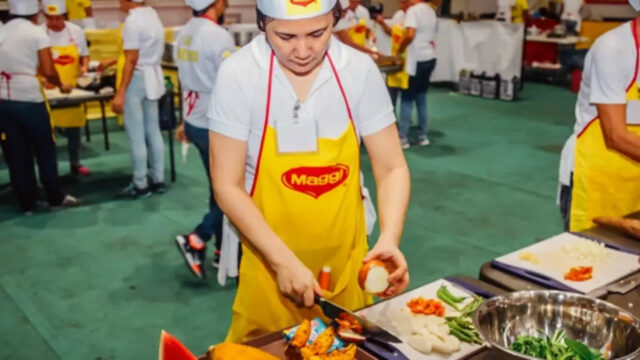
Maggi is a brand owned by Nestlé. — NESTLE.COM.PH

NESTLÉ PHILIPPINES, INC. said it may prioritize the production of basic goods if fuel supply tightens amid rising costs linked to the ongoing conflict in the Middle East.

“We have to plan and optimize what to produce, and we will prioritize basic necessities and prime commodities,” Nestlé Philippines Head of Corporate Affairs José T. Uy III said on the sidelines of a forum on Thursday.

The company, however, said it continues to have sufficient inventory and has no immediate plans to raise prices.

“Our inventories are still there. Of course, it’s not the same as the usual. That is expected because now, shipments sometimes are delayed,” he said.

“But we still have inventories that will hold up until May.”

Global oil prices have surged amid the conflict in the Middle East, with Brent crude averaging about $103.01 per barrel as of April 14.

Nestlé is among manufacturers and retailers that committed to the Department of Trade and Industry not to increase the prices of basic goods until April 30.

Mr. Uy said the company is preparing contingency plans as fuel supply risks could affect production, transport, and logistics costs.

Energy Secretary Sharon S. Garin earlier said the Philippines has enough fuel supply to last about 50 days, or until early June.

Nestlé Philippines said its factories, offices, and distribution centers are now powered by 100% renewable energy, although some operations still depend on fuel.

“But of course, to run the factories, the main lines, we need steam, and also that’s still dependent on LPG (liquefied petroleum gas). That’s why we’re launching our second biomass boiler to be less dependent,” Mr. Uy said.

Meanwhile, Nestlé Philippines Chief Executive Officer Mauricio Alarcón said geopolitical uncertainty highlights the need for sustainability investments.

“Sustainability is a business imperative — and in an uncertain world, it is one of the smartest investments we can make,” he said during the forum.

Nestlé launched its Net Zero Roadmap in 2020, targeting net-zero emissions by 2050 through supply chain reforms, including regenerative agriculture and the shift to renewable energy. — Beatriz Marie D. Cruz

Megaworld to open Belmont Hotel Iloilo amid tourism push

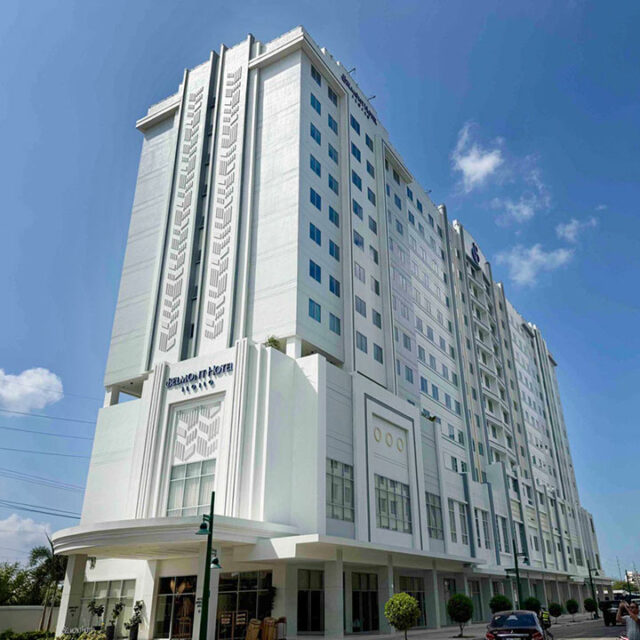
BELMONT HOTEL ILOILO in Iloilo Business Park — MEGAWORLD CORP

TAN-LED Megaworld Corp. is set to open Belmont Hotel Iloilo, its third hotel development within Iloilo Business Park, as it expands its hospitality footprint in key regional destinations.

In a statement on Thursday, the property developer said the 12-story hotel will offer 405 rooms ranging from 24 to 48 square meters, including twin, queen, and premier rooms, as well as one-bedroom suites. The hotel will also have rooms for persons with disabilities and themed children’s rooms.

Located along Festive Walk Parade, the hotel is near the Iloilo Convention Center and other commercial establishments within the 72-hectare Iloilo Business Park township.

Belmont Hotel Iloilo will bring Megaworld’s total hotel inventory within the township to about 880 room keys, accounting for nearly 25% of Iloilo City’s hotel supply, according to the company.

The company also operates Richmonde Hotel Iloilo and Courtyard by Marriott Iloilo in the area.

Megaworld said the project forms part of its efforts to support tourism growth in the Visayas and strengthen its presence in Iloilo, which it described as a growing destination for business and leisure travelers.

“We are excited to offer a truly refreshing experience for everyone at Belmont Hotel Iloilo, and this chapter marks an important milestone in our commitment to help boost tourism in the Visayas,” Megaworld Hotels & Resorts Managing Director Cleofe A. Albiso said.

The hotel will feature a ballroom that can accommodate up to 310 guests, meeting rooms with breakout areas, a swimming pool, fitness center, spa facilities, and several dining outlets, including an all-day dining restaurant and bar concepts.

Megaworld currently has 16 operational hotel properties with around 7,500 rooms nationwide. It plans to open six more hotels across key tourism destinations in the Philippines by 2030, expanding its portfolio to about 9,000 room keys. — Juliana Chloe A. Gonzales

Prime Video invests in Filipino content

CAST MEMBERS from the various Prime Video Philippines licensed content shows.

ABS-CBN, GMA bring in original and licensed titles

PRIME VIDEO, the global streaming service of Amazon, is set to deliver more Filipino storytelling by collaborating with leading studios ABS-CBN and GMA.

“Our content strategy for the Philippines is built on a simple principle: meet customers where they are and give them what they love,” said David Simonsen, director for Prime Video Southeast Asia, Australia, and New Zealand, in an e-mail interview with BusinessWorld.

It’s not about imposing a one-size-fits-all approach. It’s about understanding that Filipino audiences want authentic local stories, premium international content, and live sports all in one place,” he said, adding that the goal is to be a “one-stop entertainment destination.”

With this, Prime Video is beefing up its Filipino content slate, spanning family drama, political thrillers, suspense, romance, crime, and comedy.

THE LINEUP
Leading the charge is LOL: Last One Laughing Philippines, which had its first season premiere on the platform in 2024. Directed by Randolph Longjas and hosted by Vice Ganda, it is a competition show where the contestants face off in a showdown, with the goal to make others laugh without cracking up themselves.

“Season two will be crazier,” Mr. Longjas told BusinessWorld on the sidelines of Prime Video’s event announcing the slate on April 14. Though they can’t yet reveal the new set of contestant comedians, he promised that it will represent “comedy from different platforms across all generations.”

LOL proved that we don’t need to pretend to be someone else. If we stick to our core [as Filipino storytellers], that can become global,” he added, explaining how the series has reached other countries.

Released in March was the crime drama The Silent Noise, starring Angelica Panganiban and Zanjoe Marudo. It will be followed by more in the thriller genre — romance-thriller Love Is Never Gone featuring Joshua Garcia and Ivana Alawi, and psychological thriller The Loyalty Game featuring Janine Gutierrez and Jericho Rosales.

Meanwhile, Paulo Avelino and Kim Chiu take on their third Prime Video project as co-stars after Linlang and The Alibi, to deliver the Filipino-Korean cross-cultural drama Kopino.

CROSS CULTURAL, CROSS NETWORK
Rondel Lindayag, ABS-CBN creative head, spoke at a panel at the slate announcement, saying that these collaborations are their way of “experimenting with how to write and produce content.”

“When it comes to bringing stories to the global market, it’s all about sharing our authentic Filipino narratives while also experimenting,” he said.

There’s Honor Thy Mother, marking a monumental collaboration between ABS-CBN and GMA, with Kapamilya (ABS-CBN) icon Sharon Cuneta and Kapuso (GMA) star Barbie Forteza leading the family drama.

“At the height of the network wars, there was a wall between us and there was no crossing that boundary, so this is a golden era,” said Aloy Adlawan, GMA creative director. “Barbie grew up before our eyes and she’s a generational talent because she can do comedy and drama. We’re happy and excited that she’s doing this with Sharon.”

Rounding out the slate of Filipino Prime Originals is Behind Closed Doors, starring Marian Rivera in an unfamiliar yet juicy role as a journalist and mistress. It reunites her with GMA Network director Dominic Zapata.

Walang dahilan para mag-no for this project kasi ang offbeat niya para sa akin! (I had no reason to say no for this project because it’s quite offbeat for me!)” Ms. Rivera said at the launch. She expressed excitement, this being her comeback project after two years.

Mr. Simonsen explained in an e-mail that building “the infrastructure, relationships, and content pipeline that serves the audience at scale” allows them to help Filipino stories reach a global customer base.

“We’re enabling new models of collaboration — bringing together talent and partners in ways that weren’t possible in traditional broadcasting — because we can focus purely on what creates the best customer experience,” he said.

Prime Video is currently offered in over 240 countries and territories worldwide.

PINOY MOVIES, NBA
Caitlin Parkinson, head of APAC programming strategy at Prime Video, said that their customer-first approach has led them to balance both local and international opportunities.

“It’s about getting to know what drives audiences. We would never create something for the Philippines that Filipino audiences don’t want to see,” she said.

Along with the seven original titles, Prime Video announced exclusive licensed Filipino films: Samahan ng mga Makasalanan; Gabi ng Lagim; the Bayaniverse trilogy: Quezon, Heneral Luna, and Goyo: Ang Batang Heneral; Bar Boys: After School; and Open Endings.

K-drama titles set to premiere later this year include the romance drama, A Love Other Than Yours, starring Seo Kangjun, Ahn Eun-jin, Lee Joo Ahn, and Jo Aram; Final Table, featuring global sensation Ahn Hyo-seop as an overseas-based chef who joins a cooking tournament; and Nine to Six, starring Park Min Young, Yook Sung Jae, and Go Soo in an office romance.

Live basketball is another major content offering that Filipinos can expect on the platform, said Chaitanya Divan, head of content acquisition at Prime Video Southeast Asia. Because basketball is the number one sport in the Philippines, they will exclusively stream live NBA games for that market.

“NBA has the power to bring people together. The data is very revealing, with more than 50% of the population here saying they are NBA fans, 70 to 80% of which regularly engage with NBA content,” Mr. Divan said.

He added that the “pulsating, youthful energy” of the Philippines can be seen in the data they’ve gathered about Filipino customers.

“There’s the immense diversity in content consumption. There are weeks where local content tops the charts and there are weeks where US and global originals are on top,” he said. “The diversity is fascinating.”

Mr. Simonsen assured that they constantly look at customer data to inform decisions about what content to bring to the platform.

“What we’re seeing is that Filipino audiences are incredibly sophisticated — they don’t want to choose between local and international content; they want both, and they want quality across the board,” he said.

Prime Video is available in the Philippines for P149 per month. — Brontë H. Lacsamana

BSP’s real-time gross settlement system processed record P601 trillion in 2025

REUTERS

TRANSACTIONS that went through the Bangko Sentral ng Pilipinas’ (BSP) Peso Real-Time Gross Settlement (RTGS) Payment System reached P601.32 trillion in 2025, marking its strongest performance since its launch in 2021.

The value of transactions processed by the Philippine Payment and Settlement System (PhilPaSS) Plus grew by 15.84% to a record high from P519.08 trillion in 2024, the BSP said in its maiden Peso RTGS Payment System report released this week.

Transaction volume also increased by 8.96% to an all-time high of 1.73 million in 2025 from 1.59 million in the prior year.

The BSP said these show “expanding participation and deepening reliance on the system.”

“The year 2025 was marked by further infrastructure enhancements and strengthened resilience, sustaining the growth of economically critical large-value funds transfers, which were safely and efficiently settled through the Peso RTGS Payment System operated by the BSP,” the central bank said.

It attributed the increase in transaction volume to flows related to dollar-peso and government securities (GS) trading, “reflecting a mix of financial market and monetary policy developments, which include exchange rate movements mostly in favor of USD, large GS issuances, and improved liquidity following the BSP’s reserve and policy rate reductions.”

“Meanwhile, the increase in value stemmed from higher bank placements in the BSP’s Overnight Deposit Facility and the quicker turnover of wholesale funds enabled by its enhanced ISF (intraday settlement facility).”

Average daily volume processed via PhilPaSS Plus reached 7,000 valued at about P2.47 trillion. “Meanwhile, daily availment of the ISF averaged P50.60 billion, underscoring the facility’s effectiveness in addressing intraday liquidity needs within the payment system and ensuring the smooth processing of high-value transactions.”

“[B]etween 2021 and 2025, PhilPaSS Plus consistently settled annual transaction values equivalent to 20-30 times the Philippine gross domestic product (GDP), highlighting its systemic importance to the financial sector.”

The central bank said the volume of transactions recorded in the Peso RTGS Payment System has consistently been driven by customer or corporate payments, which account for some 40% of the total

Meanwhile, in terms of value, flows related to the BSP’s monetary operations and peso-dollar trades have been the dominant contributors, accounting for about 78% or P433 trillion annually. Client payments and transactions between participating financial institutions have been among the top contributors in recent years.

The Peso RTGS system also achieved a 99.96% efficiency in 2025, reflecting an average of less than a second speed of settlement and high availability, the BSP said. This was also above the 95% acceptable rate.

While the system encountered connectivity issues encountered in the first half of the year, it achieved 100% efficiency in the last seven months, the data showed.

“This system performance demonstrates operational reliability amidst an uptrend in settlements volume and value,” the BSP said.

“Aside from keeping PhilPaSS Plus in top operating condition, the BSP streamlined its standard operating procedures for local holidays and work suspensions by delivering essential central bank functions, encompassing currency withdrawal and large-value settlement services, as well as open market operations, even during government work suspensions and other disruptive incidents. This initiative bolstered the certainty, reliability, and availability of central bank support, contributing to increased wholesale funding flows, which are vital for the conduct of major economic activities.”

PhilPaSS Plus also onboarded 16 new institutions in 2025 — 12 rural/cooperative banks, two thrift banks, as well as two electronic money issuers. This brought total participants to 265.

“By welcoming new participants, including nonbanks, and deepening engagement through forums and consultations, the BSP has reinforced inclusivity and shared responsibility in shaping the payment system’s future,” BSP Senior Assistant Governor for Financial Markets and Peso RTGS Management Committee Chairperson Edna C. Villa said in the report’s foreword.

“Ahead lie transformative milestones — extending operating hours to near-continuous availability, harmonizing local payments data with global standards, and building cross-border interlinkages. These initiatives will not only enhance domestic markets but also connect our economy more seamlessly to the world, ensuring that remittances, investments, and trades flow through channels that are efficient, transparent, and accessible.”

Ongoing initiatives also include further enhancements to the ISF via the introduction of a daylight credit facility, the development of a policy on participants’ business continuity plans, and digital transformation projects like its Robotics Process Automation Project that streamlines and automates key operational processes, including PhilPaSS Plus User Registration, Virtual Private Network Connectivity, and Smart Card Renewal/Replacement. — A.M.C. Sy

Jollibee sees demand in Compose Coffee Taiwan debut

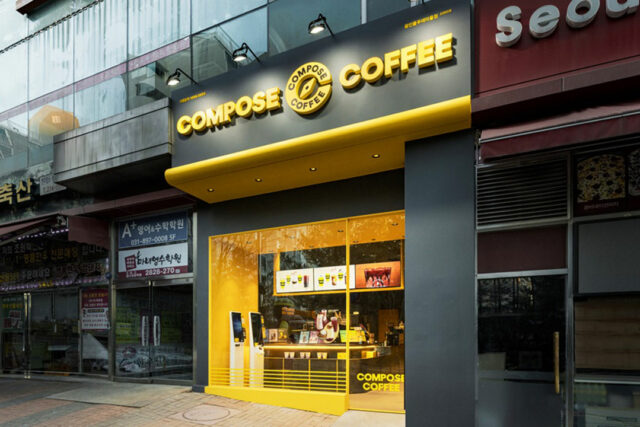
JOLLIBEEGROUP.COM

JOLLIBEE FOODS Corp. (JFC) said its Korean coffee brand Compose Coffee saw strong initial demand during its debut in Taiwan.

“We are encouraged by the strong early response to Compose Coffee’s proposition in Taiwan. We believe the brand has unlimited potential to become a leading global brand,” Jollibee Group International Chief Executive Officer Richard Shin said in a statement on Thursday.

The company said customers began lining up as early as 8 a.m., with foot traffic increasing throughout the day. At peak hours, the store sold about one cup every 20 seconds, while wait times reached up to two hours.

First-day sales reached about NT$70,000.

JFC said it is reviewing pre-opening turnout to refine operations ahead of the official launch.

The company said the brand’s store format and value-led menu are designed for replication across international markets, supporting its expansion plans in the coffee segment, including its previously announced entry into the Philippines this year.

Earlier this year, JFC’s subsidiary Fresh N’ Famous Foods, Inc. signed a master franchise agreement to launch Compose Coffee in the Philippines.

Compose Coffee, founded in South Korea in 2014, operates about 3,000 stores. The brand is expected to be integrated into JFC’s Philippine portfolio to expand its beverage business.

The company said Compose Coffee has begun supplying pour-over coffee to all rooms of a 500-room hotel in Madrid under a new partnership, which is expected to generate recurring revenue.

In a separate statement, JFC said the Korea Fair Trade Commission (FTC) has approved its planned acquisition of All Day Fresh Co., Ltd., operator of the Shabu All Day hot pot chain in South Korea, through its 70%-owned subsidiary Jolli-K Co., Ltd.

“Securing Korea FTC approval is an important milestone that advances our planned acquisition of Shabu All Day. This investment strengthens our Korea growth platform and reflects our focus on scalable, high-return concepts that support profitable growth for the Jollibee Group,” Jollibee Group Global President and Chief Executive Officer Ernesto Tanmantiong said.

Upon completion of the transaction, Shabu All Day is expected to add about 2% to JFC’s revenue, 8% to global earnings before interest and taxes (EBIT), and 1% to store count.

Elevation Equity Partners Korea Ltd. and JFC formed a partnership in August 2024 through the acquisition of Compose Coffee. Elevation holds a 30% effective stake in Jolli-K and remains JFC’s strategic partner.

Separately, JFC said its subsidiary Highlands Coffee posted strong performance, with 2025 revenue growing at a high double-digit rate from 2024.

On a like-for-like basis, this translated to high single-digit same-store sales growth in the first quarter of 2026 from a year earlier.

The company said it maintained strong store-level profitability, supported by cost discipline and an efficient operating model.

Its largely company-owned store network allows for closer operational adjustments and improved unit economics, supporting expansion into more capital-efficient formats.

Digital channels also contributed to growth, with most sales coming from third-party delivery platforms, while Highlands Coffee’s own application continues to expand its share.

“Highlands Coffee’s market leadership and continued strong performance are a strong validation of our brand and business model. We’re seeing robust and improving store performance and continued traction across channels, supported by disciplined execution and compelling unit economics,” Highlands Coffee Founder and Chief Executive Officer David Thai said in a separate statement.

“As we scale, our priority is to keep raising the bar on consistency and customer experience — while investing in the capabilities that will sustain long-term growth, including product innovation, operational excellence, and digital,” he added.

At the local bourse on Thursday, shares in JFC rose 2.81% to close at P164.50 each. — Alexandria Grace C. Magno

All Of The Noise presents live sessions, conferences

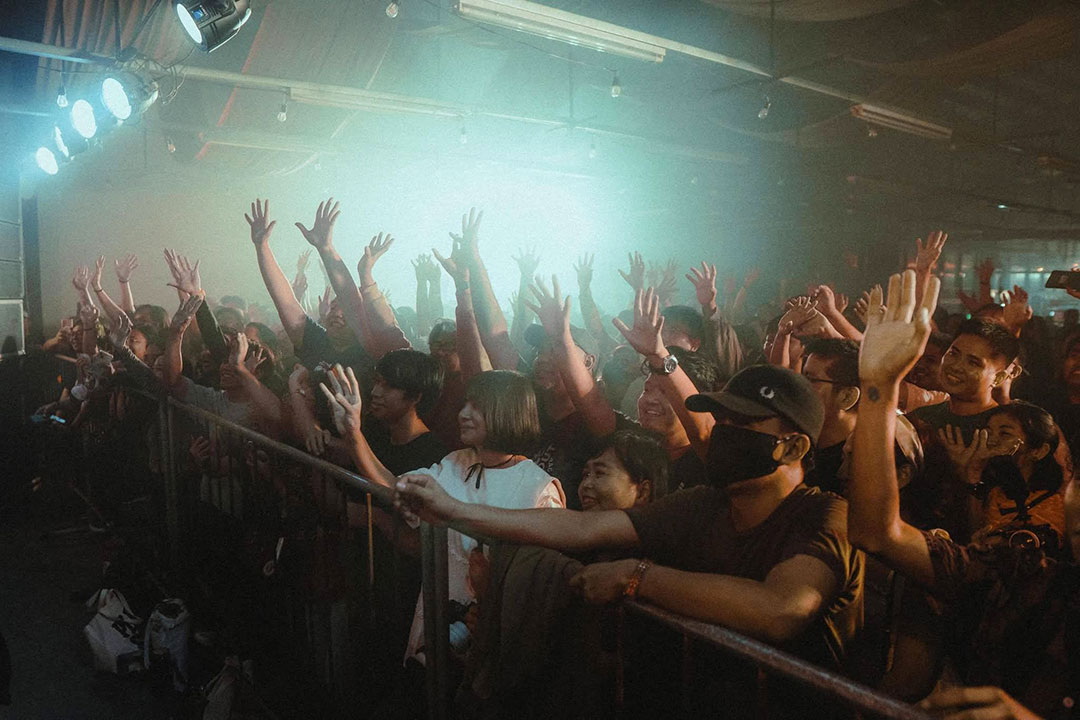
PHOTO BY MAYKS GO

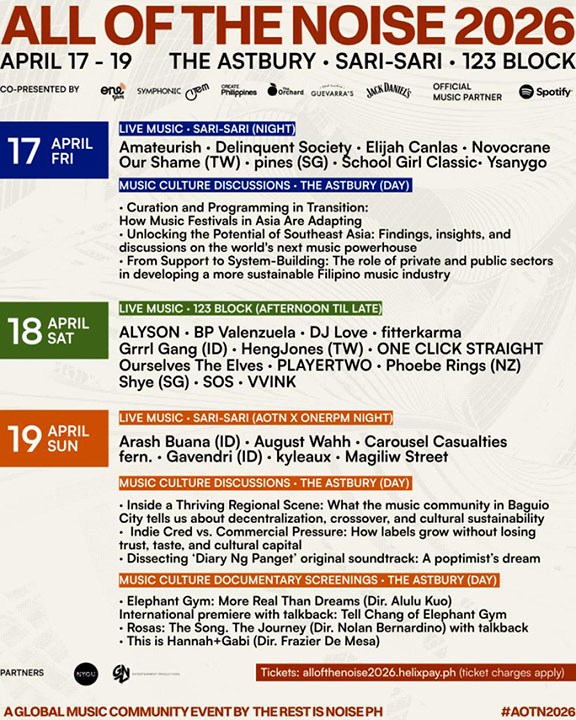
ALL OF THE NOISE — a Manila-based music showcase and conference — is back. This year, it will be a three-day event bringing nearly 30 artists and multiple music industry conferences to the venue.

The multi-format gathering, known as AOTN, is programmed by music events production outfit The Rest Is Noise PH. Like last year, which was its first edition since the COVID-19 pandemic, it aims to unite international and Filipino artists as well as industry leaders for both performances and dialogue.

AOTN 2026 will take place in three venues across Metro Manila: Astbury Makati (April 17 and 19), Sari-Sari in Makati City (April 17 and 19), and 123 Block in Mandaluyong City (April 18).

“We had two editions before the pandemic, in 2018 and 2019,” said MC Galang, co-founder and creative director of The Rest Is Noise PH, at an April 14 press conference in San Juan City. Last year, they revived the festival for the company’s 10th anniversary.

“By then, we had gone to many showcases abroad and found things that could work here,” Ms. Galang said. “We came up with panels that would be beneficial to either musicians or music industry professionals.”

Their programming is “centered on community building, cross-cultural collaboration, and visibility, positioning Filipino and Asian music as vital forces within the global creative economy.”

The international acts set to perform are Phoebe Rings (New Zealand), Grrrl Gang, Arash Buana, and Gavendri (Indonesia), Shye and Pines (Singapore), and HengJones and Our Shame (Taiwan).

The local acts are BP Valenzuela, Fitterkarma, SOS, Ourselves the Elves, Elijah Canlas, DJ Love from Davao, VVINK, Playertwo, fern, August Wahh, School Girl Classic from Cebu, Delinquent Society from Davao, Alyson, Novocrane, Amateurish from Baguio, Carousel Casualties, Magiliw Street, Ysanygo, and kyleaux.

In addition to live showcase performances, the music culture programming also highlights the music conference format, featuring panels and keynote discussions, documentary screenings, and networking activities.

“All Of The Noise exists to create meaningful intersections between artists, industries, and cultures,” said Ian Emmanuel C. Urrutia, the festival’s program director. “As the region continues to assert its voice on the global stage, our role is to build the infrastructure, dialogue, and opportunities that allow that voice to travel further.”

“We see this platform not only as a showcase but also as a long-term investment in the sustainability and global visibility of Filipino and Asian music,” he added.

CONFERENCES
This year’s edition of “Cut Through The Noise,” the festival’s conference program, will feature panel discussions and keynote presentations from music industry experts and professionals from the Philippines and abroad.

Designed to address the evolving needs of the local and regional music sectors, the topics of the panel segments range from market development and cross-border collaboration, to innovation, policy, and audience growth.

“We want to equip musicians with the knowledge and networks necessary to navigate an increasingly competitive global landscape,” said Ms. Galang. “For us, aside from the creativity aspect of music, the focus on music education is for Filipino artists, who have a surplus of talent, but can only make do with what they have.”

There will be panels on the potential of Southeast Asia, on curating music festivals, on system-building from both the private and public sectors, and on growing indie labels.

More specific panels are set to take place about the original soundtrack of Diary ng Panget and about the music community in Baguio City.

OTHER PROGRAMS
This year’s All Of The Noise will feature three films under its “Echoes Of The Noise” music documentary program. These are: the international debut screenings of Elephant Gym: More Real Than Dreams; Rosas: The Song. The Journey; and This is HANNAH+GABI.

Spotify will also power a key educational component of the program through a Spotify for Artists Masterclass led by the Spotify Asia team.

It is designed as a practical beginner session for artists and music stakeholders, focused on the “essential tools, insights, and platform knowledge needed to strengthen presence on Spotify, promote music more effectively, better understand audience behavior, and navigate the wider music streaming landscape with more clarity and confidence.”

Finally, there will be curated studio sessions, programmed by The Rest Is Noise PH, which brings Filipino songwriters and producers together with international guest performers to co-create original music. Under the “All Of The Noise Music Creatives Program,” the participating artists get to come up with newly written songs.

The inaugural session will feature Filipino producers Tim and Sam Marquez from One Click Straight and Taiwanese alternative pop band Our Shame, with guidance from DJ Joey Santos of Love One Another Sound Production. The Studio Sessions will also pair rising Filipino R&B artist kyleaux with acclaimed Taiwanese hip-hop artist HengJones, facilitated by CHEKE’s Justin Wieneke.

Tickets, priced from P400 to P700 depending on the day, are available via https://allofthenoise2026.helixpay.ph. A three-day pass worth P999 is inclusive of all programs. — Brontë H. Lacsamana

Fiscal policy at the frontline: responding to the Iran war shock

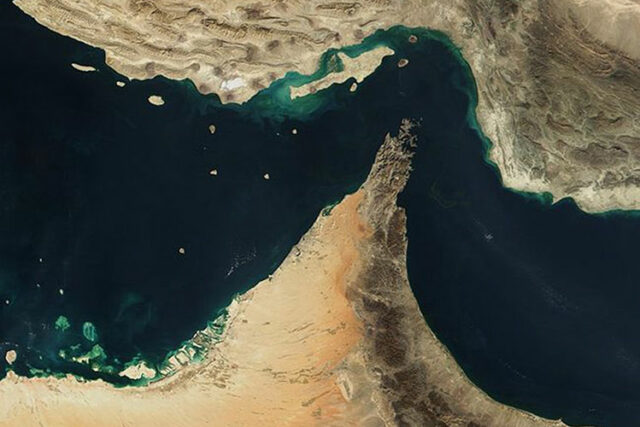
Satellite image of the Strait of Hormuz. — JACQUES DESCLOITRES/NASA/FLICKR

The fiscal response to the Iran war shock is not conceptually complex but it is politically and institutionally difficult. The escalation of hostilities, particularly threats to the Strait of Hormuz, is driving energy price volatility at a time when global public finances are already under severe strain. As the International Monetary Fund (IMF) warns, governments are confronting these shocks “at a moment when public finances are already stretched by long-term pressures.”

The policy challenge is clear: protect the vulnerable without destroying fiscal sustainability. Anything less risks compounding today’s crisis with tomorrow’s instability.

A WORLD WITH NO FISCAL CUSHION
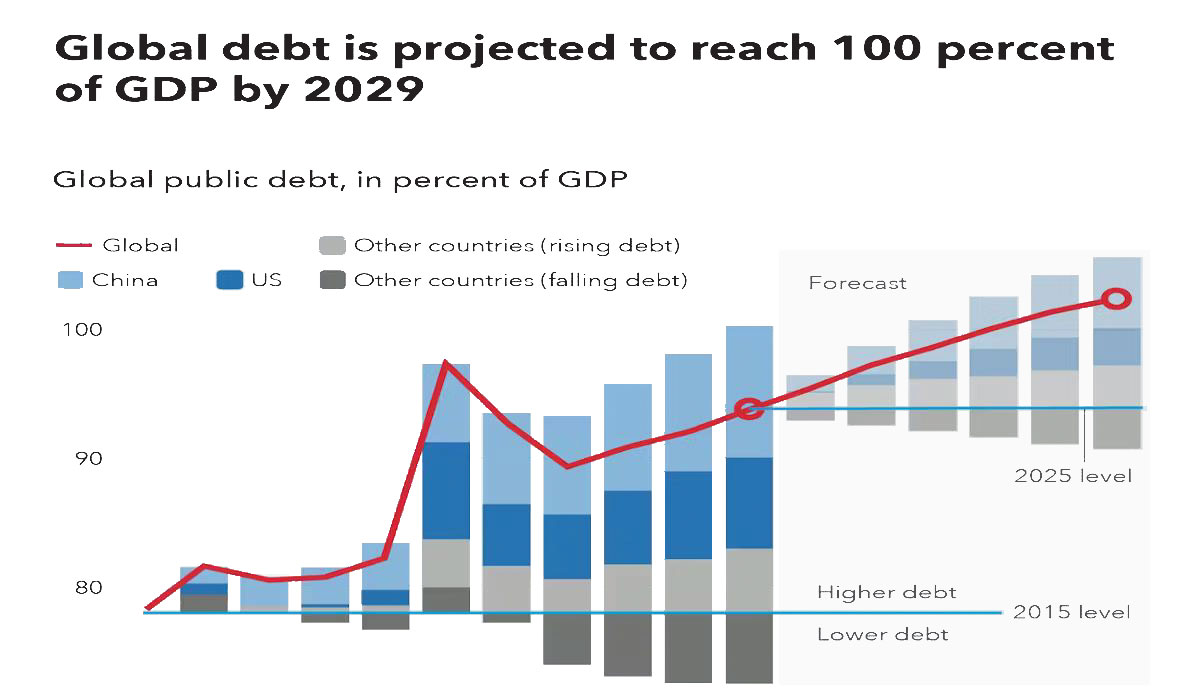
The global starting point is weak. Fiscal deficits hover around 5% of GDP, while public debt is nearing 100% of GDP. Interest payments at 3% of GDP alone are consuming an increasing share of national income. Many economies are still scarred from the pandemic, leaving governments with limited room to respond.
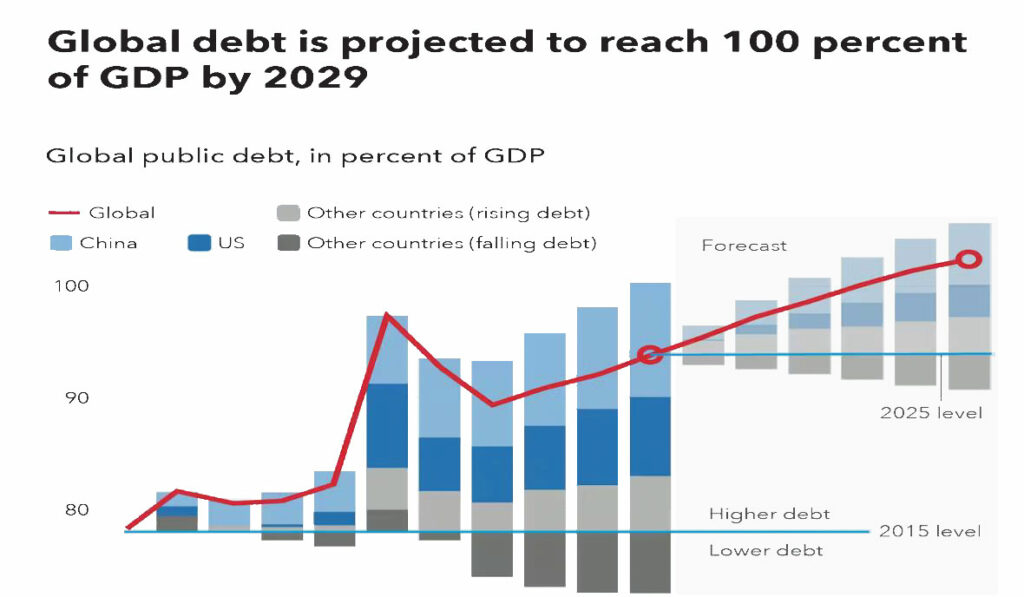
This is not a normal starting point. Governments are entering this crisis with very little buffer, if at all.

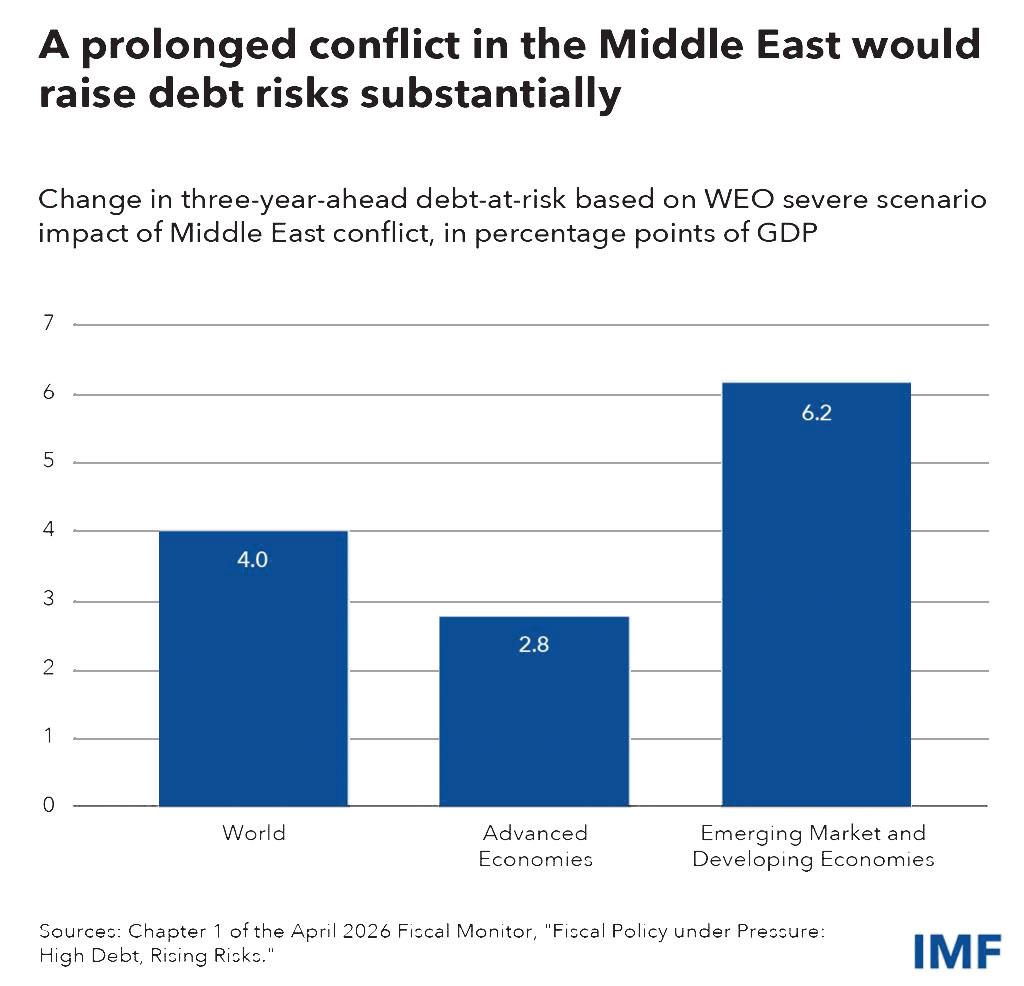
This matters because the Iran war shock is not a one-off disturbance. In a severe scenario where oil prices double and financial conditions tighten, debt vulnerabilities could surge, particularly in emerging markets. In short, there is no fiscal buffer to waste, no room for indiscriminate fiscal expansion. Every peso spent must be justified, targeted, and temporary.

WHEN THERE IS POLICY COMPLACENCY
There is also the danger of policy complacency. In a severe scenario where oil prices surge and financial conditions tighten, the IMF estimates that debt-at-risk could exceed 120% of GDP, especially in emerging markets.

This is the risk channel policymakers often underestimate: what begins as an energy shock can quickly become a debt sustainability crisis. Short-term fiscal support must be paired with a credible medium-term consolidation strategy, or markets will impose discipline abruptly and painfully.
THE PHILIPPINES: HIGH EXPOSURE, LIMITED SPACE
The Philippines enters this crisis with constrained fiscal space:

• Fiscal deficits have averaged over P1.5 trillion in recent years

• Public debt has risen to about 63% of GDP

• Interest payments now exceed 3% of GDP

• Structural spending needs on infrastructure, poverty reduction, education, and health remain large.
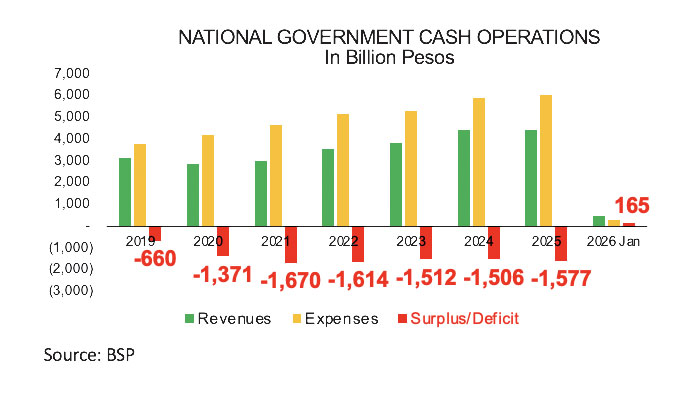
Compared with ASEAN peers, the country’s fiscal position is among the weakest. Even as consolidation has begun, the margin for policy error is thin. The country faces a classic squeeze. Its high spending needs are to be accommodated within a weak fiscal space, and rising financing costs.

WHAT FISCAL DISCIPLINE SHOULD MEAN NOW
Fiscal discipline today cannot mean blunt austerity. As the IMF stressed, the more relevant definition is strategic: protect stability today without compromising tomorrow.

This implies three non-negotiables:

1. Targeted and time-bound support. Support for households and firms is justified — but only if tightly focused on those most exposed and least able to cope. In the Philippines, pandemic-era safety nets, without the corruption and incompetence, can be reactivated, but they must not become permanent entitlements.

2. Reallocation before borrowing. For fiscally constrained countries like the Philippines, new spending should come primarily from reprioritization, not additional debt. This requires politically difficult choices of either cutting or delaying low-impact programs in favor of crisis response. Congress should have learned its lesson by now to avoid flood-control scandals that only plunder public resources without any payback.

3. Credible commitment to consolidation. Any short-term expansion must be paired with a clear medium-term consolidation path, or risk triggering higher borrowing costs and weakening investor confidence. When business trust is lost, business activities are curtailed, economic growth loses its momentum and joblessness ensues.

THE FUEL SUBSIDY DILEMMA
Fuel subsidies are the most contentious instrument — and for good reason. As the IMF warns, broad subsidies are:

• Costly

• Poorly targeted

• Difficult to withdraw

• Distortive to consumption behavior

Yet in the Philippine context, a blanket rejection is unrealistic. The collateral harm is just too immense.

Without intervention:

• Transport fares will spike

• Inflation will broaden through higher logistics costs

• Real wages will erode

• Growth will weaken

• Social pressures will intensify

The real policy choice, therefore, is not whether to intervene, but how.

This means we need to adopt narrow, temporary, and well-targeted transport subsidies focused on public utility vehicles and vulnerable commuters while avoiding economy-wide price suppression.

THE HIDDEN COSTS OF INACTION
Failing to act or acting poorly carries its own fiscal risks:

• Higher social protection spending from economic distress

• Lower tax revenues due to weakened activity

• Reduced productivity as mobility declines

• Market distortions in transport and logistics sectors

In other words, poorly designed austerity can be as costly as poorly designed subsidies.

GOVERNANCE: THE BINDING CONSTRAINT
All policy prescriptions collapse without credible governance.

In the Philippines, persistent concerns about corruption and inefficiency highlighted by controversies such as flood control spending and impeachable malversation of public funds undermine the feasibility of expenditure reallocation. Without reforms:

• Fiscal space will continue to leak

• Public trust will erode

• Necessary adjustments will be politically blocked

Fiscal policy is only as strong as the institutions that implement it. Fiscal space is not just about higher revenue, it is also about trust.

WHAT MUST BE DONE NOW
A credible fiscal response to the Iran war shock requires a shift from reactive spending to strategic policy design, one that is rules-based:

1. Institutionalize targeting mechanisms. Build robust systems to identify and deliver support to vulnerable sectors quickly and accurately. Use of financial technology and automation will prevent leakages, especially at the barangay level in the Philippines.

2. Enforce spending discipline. Audit and reallocate low-impact or corruption-prone expenditures toward crisis priorities. Our state auditors should remain independent, shielded from politics and partisanship.

3. Strengthen transparency and communication. Clearly explain policy trade-offs to the public to sustain support for difficult decisions. Public ownership of public policy is essential to successful reforms and social change.

4. Adopt flexible fiscal rules. Incorporate escape clauses that allow countercyclical intervention during shocks without abandoning long-term discipline. Fiscal consolidation should lead to better fiscal outcomes and growth paths.

5. Mobilize domestic revenue. Rationalize tax incentives and broaden the base to finance necessary interventions sustainably. There should be a space for considering a wealth tax or even monopoly tax with limited economic repercussion.

BEYOND FISCAL POLICY: A WHOLE-OF-GOVERNMENT RESPONSE
The Iran war shock is not a purely fiscal problem. It demands coordination across:

• Energy policy (diversification, renewables)

• Monetary policy (inflation containment)

• Transport regulation (efficiency and competition)

• Social policy (targeted protection)

The current crisis committee created by President Ferdinand Marcos, Jr. is a good start but the civil society expects quicker responses to the many proposals already forwarded. That would cover precisely intersectoral concerns and collaboration and produce more responsive results. Coordination gaps should be tackled at the cluster groups, especially for energy and economics. The challenge is to ensure that there is one single command center for easier coordination and expand the scope for pre-emptive strategy as the crisis quickly unfolds.

Relying on a single tool, whether subsidies or austerity, will fail. As the saying goes, if all you have is a hammer, everything looks like a nail.

THE CHOICE FOR THE PHILIPPINES
The Philippines cannot afford either fiscal recklessness or fiscal paralysis.

The path forward is narrow but clear: targeted support, disciplined spending, stronger governance, and credible long-term consolidation.

Anything less risks turning a temporary external shock into a permanent fiscal crisis.


Diwa C. Guinigundo is the former deputy governor for the Monetary and Economics Sector, the Bangko Sentral ng Pilipinas (BSP). He served the BSP for 41 years. In 2001-2003, he was alternate executive director at the International Monetary Fund in Washington, DC. He is the senior pastor of the Fullness of Christ International Ministries in Mandaluyong.


Peso climbs on hawkish signals from BSP chief

BW FILE PHOTO

THE PESO strengthened anew against the dollar on Thursday, supported by hawkish signals from the Philippine central bank chief and amid continued market uncertainty due to the Middle East war.

The local unit climbed by 14.5 centavos to close at P59.97 against the greenback from its P60.115 finish on Wednesday, data from the Bankers Association of the Philippines showed.

The currency opened Thursday stronger at P59.999 per dollar. Its intraday best was at P59.85, while its worst showing was at P60.05.

Dollars traded inched down to $1.71 billion from $1.73 billion on Wednesday.

The peso was supported by hawkish signals from the Bangko Sentral ng Pilipinas (BSP) governor, Rizal Commercial Banking Corp. Chief Economist Michael L. Ricafort said in a Viber message.

BSP Governor Eli M. Remolona, Jr. told BusinessWorld on the sidelines of the International Monetary Fund and World Bank’s 2026 Spring Meetings in Washington D.C. that the central bank has room to raise rates to temper rising inflation amid the Middle East conflict as they expect government spending to support growth.

Mr. Remolona said that second-round effects may emerge sooner than expected as the global oil price shock is expected to spill over into domestic food and transport costs. In March, elevated oil prices due to the war drove inflation to a near two-year high of 4.1%, faster than the BSP’s 3.1%-3.9% forecast and 2%-4% target for the year.

The Monetary Board last raised rates in October 2023.

“The dollar-peso traded sideways amid market caution as players await developments in the second round of US and Iran’s peace talks,” a trader said in a phone interview.

President Donald J. Trump said the US-Israeli war on Iran was “close to over,” while the White House expressed optimism about a deal, saying more in-person talks would likely take place in Pakistan again, Reuters reported.

For Friday, the trader sees the peso moving between P59.70 and P60.20 per dollar, while Mr. Ricafort expects it to range from P59.85 to P60.10. — Aaron Michael C. Sy

Energy costs weigh on hotel outlook — LPC

FREEMAN/ALDO NELBERT BANAYNAL

HOTEL OPERATORS in the Philippines are facing pressure from rising costs and weakening demand as the ongoing energy crisis drives up airfares, disrupts flights, and dampens hotel demand, according to Leechiu Property Consultants (LPC).

In its first-quarter market report, LPC said “64% of hotels report significant to severe operational impact from the energy crisis.”

LPC Director of Hotels, Tourism, and Leisure Alfred Lay said the industry is entering a more difficult period as cost pressures intensify.

“Philippine hotels are entering their most challenging period since the pandemic. Occupancy is expected to fall sharply in April and May as the fuel crisis drives up airfares, dampens traveler confidence, and squeezes household budgets,” he said in a statement.

Early 2026 tourism data showed modest growth, although underlying demand remains uneven. Foreign tourist arrivals reached 1.32 million in January and February, up 3.09% from a year earlier, according to LPC.

Long-haul markets expanded 9.7%, led by the United States, Canada, Australia, the United Kingdom, and France. Short-haul markets grew at a slower 3.4%, with gains from Taiwan and Japan partly offset by declines in South Korea and China. LPC said a recovery in Chinese arrivals is expected by the third quarter, supported by the expansion of e-visas.

However, rising costs are beginning to alter travel behavior. The report said tourists are expected to take fewer trips, shorten their stays, and shift to cheaper and shorter routes, while booking patterns are reverting to pandemic-era practices.

Occupancy levels showed limited improvement last year. “Hotel occupancy in 2025 remained at 60%, flat year on year, and still below the 68% recorded in 2019,” LPC said.

Performance across destinations remained uneven. “Cebu/Mactan held ADR (average daily rate) but struggled to fill rooms, with occupancy sliding to 54%,” the report said.

Industry conditions have become more challenging in early 2026 as higher fuel costs drive up travel expenses and weigh on demand.

“Jet fuel costs doubled within three weeks, leading to airfare increases of 25% to 50% for long-haul routes, and destination transport costs rising by 20% to 30%,” LPC said.

Hotels are already seeing the effects on bookings, with declines in occupancy already underway or expected in the coming months.

LPC noted that “80% of hotels already feeling occupancy declines.”

The meetings, incentives, conferences, and exhibitions (MICE) segment is also under pressure, which may further affect hotel revenues.

It said that “650 in-person ASEAN meetings are expected to be canceled, dampening room and event revenues.”

Mr. Lay said the outlook remains uncertain as both international and domestic demand face pressure.

“With international arrivals under threat and domestic spending softening, the industry is bracing for a difficult second half of the year, and the outlook beyond that depends entirely on how quickly the Hormuz crisis resolves,” he added.

In response, hotel operators are adjusting strategies to manage revenues and costs.

LPC said that “30% of hotels are offering value-added packages instead of direct discounting, while 28% are choosing to hold rates and absorb the occupancy drop.”

The report also noted that some operators are reducing rates to defend occupancy.

The outlook for the sector remains uncertain and depends on how long external pressures persist.

“In a prolonged conflict scenario, national occupancy could drop below 45%, potentially making a majority of hotels loss-making in 2026,” LPC said.

Under a more moderate scenario, national occupancy is expected to fall between 45% and 50%, while a favorable outcome could see occupancy recover to 50% to 55%, the report said.

Domestic tourism is expected to provide some support as international travel becomes more expensive.

“Domestic tourism remains the backbone of the industry,” it said.

Uncertainty is also affecting investment and expansion plans in the sector. Rising construction costs and weaker demand visibility are prompting developers to reassess projects.

“Many hotel construction projects are being shelved, delayed, or renegotiated due to surging costs and uncertain demand,” LPC said. LPC said a return to more normal conditions may be possible by the fourth quarter under a favorable scenario. — Arjay L. Balinbin

When sustainability becomes risk management

STOCK PHOTO | Image by Macrovector from Freepik

Sustainability has long been framed as a matter of values. It is about responsibility, stewardship, and long-term thinking. These remain essential. But in periods of volatility, values alone are not enough to sustain action. What ultimately determines whether sustainability initiatives endure is whether they are tied to something more immediate: risk.

The current instability in the Middle East, and its continuing impact on global oil markets, provides a clear test. Even when prices temporarily ease on diplomatic signals, the underlying condition remains uncertain. Supply routes are vulnerable. Production assumptions are fragile. Markets respond not only to disruption, but to the anticipation of it.

For economies like the Philippines, this is not a distant concern. Oil is embedded in transport, electricity, logistics, and food systems. When prices rise, the effects move quickly and broadly. Costs increase across sectors. Inflation builds. Consumption adjusts. Businesses face pressure on margins and pricing.

In this environment, sustainability cannot remain a parallel agenda. It must be understood as part of risk management.

Too often, sustainability sits at the edges of the organization. It is supported by reporting frameworks, compliance requirements, and communication programs. It is important, but not always treated as urgent. When a crisis hits, this positioning becomes a vulnerability. Initiatives that are not clearly linked to operational performance are easily deferred.

But there is another way to understand sustainability. Not as a separate commitment, but as a mechanism for managing exposure.

For the Philippines, the urgency is not abstract. It is structural. The country’s heavy reliance on imported fuel, combined with inherent inefficiencies in logistics, inter-island distribution, and energy systems, amplifies the transmission of global shocks into domestic costs. Every increase in oil prices feeds into transport, power, and food supply chains. The result is immediate pressure on margins, pricing, and demand. In this environment, exposure is not theoretical. It is direct, measurable, and recurring. Which makes the cost of inaction not just high, but compounding.

Seen through this lens, sustainability initiatives take on a different role.

Energy efficiency is no longer simply about reducing emissions. It is about reducing sensitivity to fuel price volatility. A company that lowers its energy intensity is not only improving its environmental footprint. It is stabilizing its cost structure.

Supply chain strategy follows the same logic. Businesses that rely heavily on long, complex, and import-dependent networks are more exposed to disruption. Those that diversify sourcing, localize where feasible, or reduce material intensity are not just more sustainable. They are less vulnerable to external shocks.

Even product design becomes part of this framework. Goods that last longer, consume less energy, or reduce waste are not only aligned with environmental goals. They deliver practical value in a high-cost environment. They help both businesses and consumers manage constraints more effectively.

What emerges is a convergence between sustainability and financial discipline.

This convergence has implications for how organizations think about investment. In stable conditions, sustainability projects are often evaluated based on long-term returns or compliance requirements. In a volatile environment, the criteria must expand. The relevant question is not only what these investments deliver over time, but how they reduce risk in the present.

Does this investment lower cost volatility? Does it reduce dependence on uncertain inputs? Does it improve supply continuity? Does it make performance more predictable?

These are not abstract considerations. They go to the core of business resilience.

Boards and management teams are already familiar with managing exposure in other areas. Foreign exchange risks are monitored. Interest rate movements are hedged. Commodity inputs are managed carefully. Sustainability, when properly integrated, performs a similar function. It reduces sensitivity to external shocks. It smooths cost structures. It supports continuity.

The difference is that sustainability requires structural adjustment. It is not achieved through financial instruments alone. It requires changes in how energy is sourced and used, how supply chains are organized, how products are designed, and how operations are managed.

This is not a simple transition. It requires capital, coordination, and a shift in mindset. But the alternative is to remain reactive, absorbing the impact of each new disruption as it comes.

There is also a broader implication for shared values.

Sustainability has always been framed as a shared responsibility among business, government, and society. That framing still holds. But shared values must now translate into shared resilience. When businesses invest in reducing their exposure to volatility, they are not only protecting their own performance. They are contributing to greater economic stability.

Energy transition, for example, is not only about environmental outcomes. It is about reducing dependence on imported fuel and stabilizing long-term costs. More efficient logistics systems do not only lower expenses. They improve the movement of goods across the archipelago, benefiting producers and consumers alike. More responsible sourcing does not only address environmental concerns. It strengthens supply security.

In this sense, sustainability becomes a form of collective risk reduction.

For the Philippines, this is particularly important. The country’s exposure to global shocks is amplified by geography and structure. This makes resilience not just a corporate concern, but a national one.

The private sector has a critical role to play. Companies cannot wait for perfect policy alignment or complete infrastructure solutions. They must act within their own operations, identifying areas of exposure, and addressing them systematically.

At the same time, policy and regulation must support this shift. Incentives for renewable energy, investments in infrastructure, and frameworks that encourage efficiency can accelerate progress. Sustainability, in this context, is not a competing priority. It is part of economic strategy.

The lesson from the current crisis is not that sustainability must be protected from disruption. It is that sustainability, when properly understood, is what enables organizations to withstand disruption.

Values still matter. But in volatile environments, values must be translated into systems.

Because in the end, sustainability that endures is sustainability that manages risk.

And in a world where shocks are becoming more frequent, that may be its most important function.


Dr. Ron F. Jabal, APR, is the CEO of the PAGEONE Group (www.pageonegroup.ph) and founder of Advocacy Partners Asia (www.advocacy.ph).

ron.jabal@pageone.ph

rfjabal@gmail.com

Beef Season 2 pits Gen Zs, Millennials against each other

LOS ANGELES — While the first season of the TV series Beef sprang from a road-rage incident experienced by show creator Lee Sung Jin, the second season was inspired by something more intimate — a heated debate between a romantic couple in their home, which he overheard.

When Mr. Lee told Netflix executives about the argument he had heard between the couple, he said, “Netflix was like, ‘There it is. We can sense that you’re passionate about this direction.’”

Mr. Lee told Reuters that when he described the domestic argument to his friends, he was struck by the differing reactions. Younger peers, he said, perceived the exchange as a potential case of domestic violence, while older ones viewed it as a familiar — and even routine — conflict between partners.

“I think what inspired me was not the actual incident, but hearing people’s reactions to it,” Mr. Lee said.

Those contrasting perspectives helped shape the new season of Beef, a dark comedy known for examining the complexity of relationships. “There’s a show there about juxtaposing the different stages of love against each other,” Mr. Lee said.

The first season of Beef, which won Golden Globe Awards in three categories, starred Steven Yeun and Ali Wong.

Season 2 of the Netflix series follows a Gen Z couple, Austin and Ashley, played by Charles Melton and Cailee Spaeny. They become entangled in the unraveling marriage of their boss Josh, a Millennial, and his wife, Lindsay. They are played by Oscar Isaac and Carey Mulligan, respectively.

Their worlds collide after Austin and Ashley witness a volatile altercation between Josh and Lindsay, setting off a spiral of manipulation and rivalry at the country club Josh manages.

“It (the couple’s altercation) needed to feel real — enough to be something that could be held over us,” Ms. Mulligan said of filming the scene with Mr. Isaac. “Not just how it looked, but how it sounded and what we said to each other.”

Generation Z typically refers to people born between 1997 and 2012, while people born between 1981 and 1996 are considered Millennials.

Like its debut season, Beef continues to explore class, gender, and race inequities, along with emotional control and interpersonal conflict.

“You feel like you’re inside the characters’ minds,” Mr. Melton said. “You either relate, judge, or think, ‘I’ve been there too.’ That’s what makes it such a juicy experience to watch.”

For Mr. Isaac, the series captures the reckoning faced by couples when the life they imagined slips out of reach — a reality shared by every relationship in Beef.

“All these possibilities start to collapse,” he said. “It can feel claustrophobic, because we’re told anything is possible.” Ultimately, he added, “you have to let go.” — Reuters

ASEAN’s AI race will be won by data flows, not data centers

Southeast Asia is once again rallying around a familiar ambition: to become a global hub for the digital economy.

This year, with the Philippines hosting ASEAN, that ambition is increasingly framed around artificial intelligence (AI). Governments are crafting AI roadmaps, companies are announcing new investments, and the region is positioning itself as a destination for the next wave of hyperscale infrastructure.

But beneath the momentum, a more fundamental question is emerging: what actually determines where AI investment goes?

The common assumption is infrastructure. Build enough data centers, attract enough capital, and the ecosystem will follow.

But that assumption is quickly being tested because AI does not operate in isolation. It depends on two things that are becoming increasingly constrained across the region: data mobility and power.

AI systems are only as effective as the data they can access. Training models, running inference, and delivering services all depend on the ability to move data — across networks, across jurisdictions, and across time zones. In a fragmented regulatory environment, where cross-border data flows are restricted or inconsistent, that movement becomes inefficient.

For hyperscalers, this is not a secondary issue. It is central to where they deploy capital.

At the same time, AI infrastructure is energy-intensive. Data centers supporting AI workloads consume vast amounts of power, and as global energy markets tighten, availability and sustainability are becoming critical constraints. The question is no longer simply where AI can be built, but where it can be sustained.

Taken together, these forces are reshaping the competitive landscape. The future of AI infrastructure will not be defined solely by large, centralized facilities. It will be distributed, adaptive, and orchestrated across borders. Workloads will move depending on where data can legally flow, where power is stable, and where latency requirements can be met.

In this model, the real advantage lies not in isolated capacity, but in connected systems.

This is where ASEAN faces both a challenge and an opportunity. As a region, ASEAN has scale, growth, and strategic positioning. But it also has fragmentation — different regulatory regimes, varying levels of infrastructure maturity, and uneven energy capacity. If these differences remain unaligned, the region risks becoming a collection of digital markets rather than a single, integrated one.

For AI, that distinction matters. A fragmented environment limits the ability to train regional-scale models, deploy services efficiently, and optimize infrastructure use. An integrated one, by contrast, allows data, workloads, and investment to move where they are most effective. This is not just a policy issue. It is a systems issue.

Cross-border data flows must be treated as critical infrastructure — on par with fiber networks and power grids. That means clear, interoperable frameworks that enable secure data movement across ASEAN, while maintaining trust and accountability.

At the same time, energy constraints must be addressed not only through capacity expansion, but through smarter allocation. In a distributed AI ecosystem, workloads can be routed to locations where power is more available or sustainable, reducing strain on any single market.

For the Philippines, this presents a distinct strategic path. We are unlikely to dominate the region in terms of hyperscale capacity alone. Our geography and power costs impose real constraints. But we are well-positioned as a connectivity node — linked to major subsea cable systems and supported by a growing base of network operators. Our opportunity is not just to host infrastructure, but to enable flow.

By strengthening cross-border connectivity, aligning regulatory frameworks, and supporting distributed network architectures — including those built by smaller operators — we can position ourselves as a key participant in a regional AI ecosystem, because even the most advanced AI systems depend on something more basic: networks that work.

In many parts of the Philippines, and across ASEAN, connectivity is still delivered through hybrid systems — fiber where available, wireless where necessary, and resilience built through experience rather than scale. These systems may not feature in investment headlines, but they form the pathways through which data ultimately travels. If they are excluded, the system breaks.

ASEAN’s AI ambitions, therefore, cannot be built solely from the top down. They must be constructed as complete systems — from cross-border frameworks to last-mile connectivity. As leaders gather and strategies are discussed, it is worth grounding the conversation in this reality.

Artificial intelligence may define the future of the digital economy, but its success will depend on something more fundamental: whether data can move freely, whether power can sustain it, and whether the infrastructure we build — at every level — actually works.

In that race, scale will matter. But systems that are connected, efficient, and grounded in reality may matter more.

The views expressed herein are his own and do not necessarily reflect the opinion of his office as well as FINEX.


Joel Luis E. Dabao serves as the President of Kabankalan Community Antenna Television (K-CAT, Inc.), a key cable and internet service provider based in Kabankalan City, Negros Occidental. Under his leadership, the company has been a staple for connectivity in Southern Negros.

ADVERTISEMENT
ADVERTISEMENT