Home Blog Page 842

Megaworld allocates P300M from MREIT share sale to Cebu, Bacolod projects

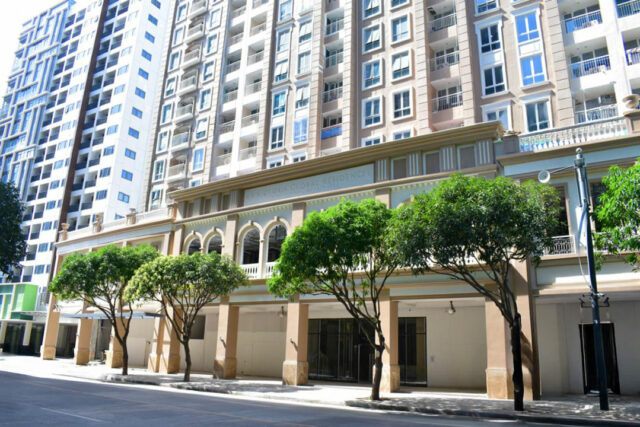
LISTED property developer Megaworld Corp. said it has allocated P300 million from proceeds of a recent block sale of shares in its real estate investment trust unit MREIT, Inc. to fund expansion of its residential and township developments.

In a disclosure on Wednesday, Megaworld said P200 million will go to its 30-hectare Mactan Newtown township in Cebu, envisioned as a business and leisure hub.

The company earmarked another P100 million for the development of malls, offices, and land in Bacolod.

As of Sept. 30, Megaworld said it has yet to disburse P857.6 million from the total P1.16 billion raised from the July block sale of 84.4 million common shares in MREIT.

In a separate disclosure, Megaworld said it reinvested an additional P100 million from another sale of MREIT shares to projects in Cebu, Palawan, and Bacolod.

Of the amount, P40 million was allocated to the 462-hectare Paragua Coastown in Palawan, P30 million to The Mactan Newtown, and P30 million to Bacolod developments.

The reinvested funds came from the P2.21 billion raised from the sale of 168.63 million MREIT common shares.

Megaworld’s second-quarter attributable net income climbed 35% to P5.6 billion from P4.15 billion a year earlier, driven by stronger leasing, residential, and hospitality revenues.

At the local bourse on Wednesday, shares in Megaworld slipped by 5% or 10 centavos to close at P1.90 apiece, while MREIT shares declined by 0.87% or 12 centavos to P13.70 each. — Beatriz Marie D. Cruz

How PSEi member stocks performed — October 15, 2025

Here’s a quick glance at how PSEi stocks fared on Wednesday, October 15, 2025.


Marcos trust rating dips amid flood scandal; Filipinos doubt ICI probe

PRESIDENT Ferdinand R. Marcos, Jr. addressed the media on Wednesday, tackling key issues about transparency in budget proceedings and government officials’ wealth. — PHILIPPINE STAR/NOEL B. PABALATE

By Kenneth Christiane L. Basilio, Reporter

PRESIDENT Ferdinand R. Marcos, Jr. and Vice-President Sara Duterte-Carpio’s trust ratings fell in September, according to a poll released late on Tuesday, amid a widening corruption scandal involving flood-control projects.

About 43% of Filipinos said they trusted Mr. Marcos, down from 48% in June, according to a statement from policy think tank Stratbase Institute, which commissioned the survey by the Social Weather Stations (SWS).

Ms. Duterte’s trust rating dropped by eight points to 53%, the steepest decline this year, according to the think tank.

“These results reflect a shifting public mood,” Stratbase Institute President Victor Andres C. Manhit said in a statement. “Filipinos are reassessing their confidence in the country’s top leaders.”

SWS interviewed 1,500 Filipinos from Sept. 24 to 30 for the poll, which had an error margin of ±3 points.

Mr. Marcos spotlighted a flood control scandal involving billions worth of pesos during his July state of the nation address, bringing the issue to the public that has sparked a political fallout for his administration.

The controversy gripped the flood-prone country, fueling street protests, exposing cracks within the political establishment and has dimmed economic outlook.

Authorities have since formed a fact-finding body to investigate anomalous flood control deals that has summoned key political figures including a former Speaker, senators, congressmen and the government’s Budget secretary.

But the Independent Commission for Infrastructure (ICI) has opted to hold its hearings behind closed doors, compared with earlier televised congressional inquiries that brought the issue into limelight.

“When people see decisive, transparent action on the issues affecting their daily lives, confidence follows,” Mr. Manhit said. “When they don’t, it erodes, no matter how popular the leader once was.”

Palace Press Officer Clarissa A. Castro said the President is unfazed by survey figures, citing his priority remains delivering public service.

Mr. Marcos’ trust ratings have fluctuated since February (43%), coinciding with Ms. Duterte’s impeachment. Support fell to its lowest so far this year in April (36%), when ex-President Rodrigo R. Duterte was flown to The Hague to face crimes against humanity charges before the International Criminal Court.

“President Marcos is clearly seen as someone who is genuinely working and fighting against corruption,” Ms. Castro told reporters in a Viber message in Filipino. “He remains relentless in his efforts to improve the lives of every Filipino, even amid the challenges brought by natural disasters.”

While the administration’s anti-corruption drive is commendable, “the public no longer rewards words, they demand results,” Ederson DT. Tapia, a political science professor at the University of Makati, said in a Facebook Messenger chat.

“Exposing wrongdoing is one thing; ensuring full accountability is another,” he said. “Unless investigations lead to actual prosecution and convictions, reforms and cleaner systems, the public will see this as political theater.”

“Right now, both the President and the Vice-President are losing the moral high ground… They want leaders who face scrutiny, not those who hide behind it,” he added.

In a separate poll, nine of 10 Filipinos think there is collusion among politicians, contractors and other officials to defraud infrastructure funds, though opinions remain split on whether the government could be trusted to resolve the issue.

About 56% of respondents said they were uncertain whether they could trust the ICI in solving the corruption scandal, according to a noncommissioned Pulse Asia Research, Inc. survey released on Wednesday.

“In governance, credibility is earned not by revelation but by resolution,” Mr. Tapia said.

Only two of 10 Filipinos said they trust the fact-finding body, while 21% expressed distrust, according to a poll of 1,200 respondents from Sept. 27-30, with an error margin of ±2.8 points.

About 45% of Filipinos said they do not trust Mr. Marcos to resolve the flood control scandal, while only 32% expressed trust and 23% remained undecided, showing widespread skepticism over the administration’s handling of the issue.

The poll showed that about seven of 10 Filipinos think government officials linked to the flood control projects will be held accountable. “[This is] an opinion shared by huge majorities across areas and classes,” Pulse Asia said.


Filipinos see US as top ally amid tensions with China

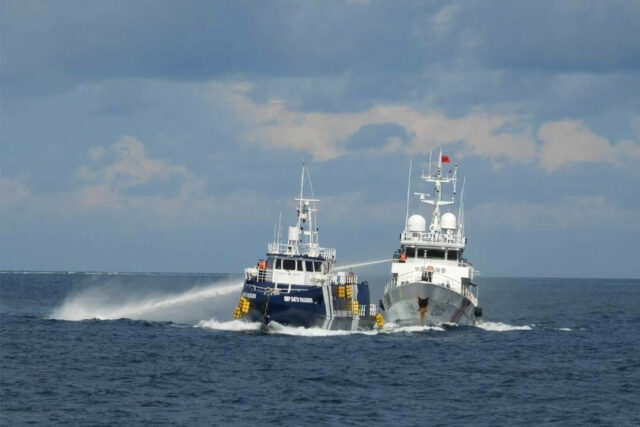
FILE PHOTO of a China Coast Guard vessel fires a water cannon at the BRP Datu Pagbuaya near Thitu Island, in the latest flare-up between Manila and Beijing in the disputed South China Sea. — PCG

MOST Filipinos view the US as the Philippines’ most dependable ally in managing tensions with China in the South China Sea, a commissioned poll showed on Wednesday, amid growing concerns over Beijing’s increasingly assertive maritime claims.

About 77% of respondents said the US is the “top country capable of helping the Philippines manage Chinese provocations and safeguard its maritime rights,” according to nongovernment group We Protect our Seas (WPS), which commissioned Pulse Asia Research, Inc. to conduct the survey.

The pollster interviewed 1,200 Filipinos on Sept. 27-30 for the survey, which had a ±2.8% error margin.

Trust in Washington as a security ally led across all major island groups, with support highest in Metro Manila at 82%, followed by Luzon (81%), the Visayas (77%) and Mindanao (65%).

“The result reflects the enduring strength of the Philippine-US alliance and widespread public confidence in Washington’s role in maintaining regional stability and upholding international law in the South China Sea,” WPS said in a statement.

The Chinese Embassy in Manila did not immediately reply to a Viber message seeking comment.

Manila and Washington maintain a defense partnership anchored on a 1950s Mutual Defense Treaty that binds both to defend one another in case of an armed attack.

Relations between the Philippines and the US have strengthened under President Ferdinand R. Marcos, Jr., whose administration has taken a tougher stance against China’s sweeping claims in the South China Sea.

He expanded the number of sites for joint military use with Washington, including bases near strategic flashpoints in the contested waterway and close to Taiwan.

Beijing claims nearly all of the South China Sea via a U-shaped, 1940s nine-dash line map that overlaps with the exclusive waters of the Philippines and neighbors like Vietnam and Malaysia despite a 2016 ruling by the Permanent Court of Arbitration in The Hague that voided its claims.

China refuses to recognize the ruling and has continued to deploy an armada of vessels in the disputed waters, leading to maritime confrontations with Manila.

The poll showed that 45% of Filipinos trust Japan, ranking it second after the US. Australia followed at 30%, then Canada (29%) and the UK (25%).

Other countries cited in the poll include South Korea, trusted by 22% of respondents, followed by Germany (17%), France (10%) and India (3%).

The group said the results suggest that the public is aware of the Philippines’ growing security partnerships with the countries in the South China Sea, reflecting support for a multilateral approach to regional stability.

“The survey underscores that Filipinos clearly recognize the importance of working with like-minded democracies to defend the country’s sovereign rights and sustain a rules-based maritime order,” WPS President Jeffrey Ordaniel said in the statement.

“Strong public confidence in the United States — our sole  treaty ally — and the favorable perception towards partners such as Japan, Australia and Canada demonstrate a deepening awareness that international cooperation, credible deterrence and transparency — not silence or appeasement — are vital to countering Beijing’s aggression and coercive activities in the West Philippine Sea,” he added, referring to parts of the waterway within Manila’s 200-nautical mile exclusive economic zone. 

The Philippines, already bound by military agreements with the US, Japan and Australia, is pursuing closer security ties with other nations amid boiling tensions with Beijing over disputed features in the South China Sea.

TRANSPARENCY DRIVE
Meanwhile, about nine of 10 Filipinos expressed support for state efforts to publicize China’s actions in the strategic waterway that Manila has described as coercive and aggressive, according to a separate commissioned Pulse Asia survey by WPS.

About 94% of the respondents said the Philippines should continue transparency in the South China Sea, where confrontations between Philippine and Chinese vessels frequently occur — largely due to actions attributed to Beijing.

China has said its actions are aimed at upholding its sovereignty in the disputed waters. The poll had an error margin of ±2.5 points.

“This near-universal support underscores the public’s firm backing for the government’s approach of transparency and factual reporting on maritime incidents in defense of the country’s sovereignty, sovereign rights and other maritime interests in the South China Sea,” WPS said in a separate statement.

Manila has pursued a transparency policy in the disputed waters, routinely disclosing maritime incidents with China, including the presence of Chinese vessels in contested features claimed by both countries, as part of efforts to raise public awareness.

“Exposing China’s bad behavior at sea serves important purposes: first, it demonstrates nonacquiescence to Beijing’s unlawful claims, preventing any claim that the People’s Republic of China has effective control over certain maritime spaces or offshore territories,” Mr. Ordaniel said. “Second, it rallies global public opinion against the use of coercion and force to press claims, making it easier for Philippine allies and partners to pressure China.”

“After all, if the Philippines was silent in the face of Chinese bullying, why should its allies and partners even say something about it?” — Kenneth Christiane L. Basilio

Speaker: House to review asset disclosure rules amid transparency push

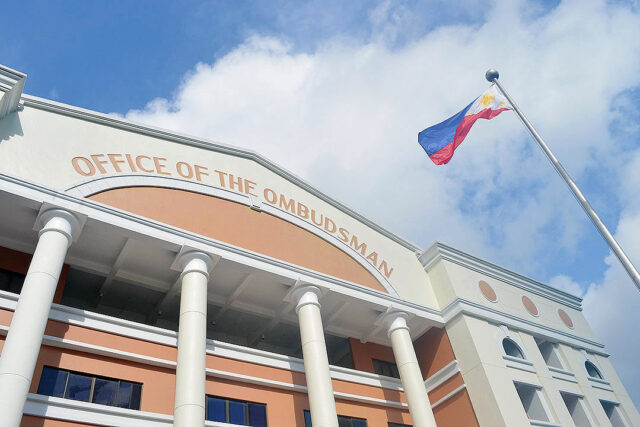
OFFICE OF THE OMBUDSMAN PHILIPPINES FACEBOOK PAGE

By Kenneth Christiane L. Basilio and Chloe Mari A. Hufana, Reporters

SPEAKER Faustino “Bojie” Dy III on Wednesday said the House of Representatives is reviewing its policy on the disclosure of net worth statements, responding to growing calls for greater government transparency.

He said congressmen are open to the idea of publicizing their statements of assets, liabilities, and net worth (SALN), and the chamber will draft procedures on the document release during the congressional break to craft the guidelines.

“I think it’s a good topic to discuss,” he told True FM radio, based on a statement in Filipino released by his office. “During our break, we’ll talk it over thoroughly so we can come up with clear guidelines on how we’ll show our support for releasing our SALNs.”

Ombudsman Jesus Crispin C. Remulla on Tuesday reversed a restrictive policy limiting SALN access imposed during the Duterte administration.

Under Memorandum Circular No. 3, the public can again request copies of SALNs without the consent of the official, subject to safeguards that balance transparency and data privacy.

Mr. Dy said he is prepared to release his SALN to “lead by example,” if needed.

Lawmakers should release their SALNs to help regain public trust, said Anthony Lawrence A. Borja, an associate political science professor at De La Salle University in Manila, but cautioned that disclosures must be accurate to be meaningful.

“Transparency means nothing without guarantees for accuracy,” he said in a Facebook Messenger chat.

SALNs are filed with designated offices, and the authority to release them depends on the custodian. The Office of the Ombudsman handles the SALN of officials in the Executive branch and constitutional offices, while lawmakers submit their SALNs to their respective chambers.

Hansley A. Juliano, a political science lecturer at the Ateneo de Manila University, said the Ombudsman should hold copies of all officials’ SALNs — regardless of where they are originally filed — for better oversight.

Also on Wednesday, Philippine President Ferdinand R. Marcos, Jr. said he and his Cabinet officials would follow the reinstated rules allowing public access to SALNs.

“We will follow the old rules,” Mr. Marcos told a palace briefing when asked if he would take the lead in making his SALN public. “These old rules were suspended in the last administration, where it was much, much easier to get a copy of the SALN and to examine it.”

The President said he was “quite surprised” upon assuming office to learn that the process of obtaining SALNs had become “almost impossible.”

“We are just going back to the old procedure,” he said, adding that his SALN would be made available to those who request it through the proper channels.

“Again, my SALN will be available to whomever would like to [have it]. If the ICI (Independent Commission for Infrastructure) asks us for [it], of course I will give it to them. If the ombudsman asks, we will give it to them.”

The new ombudsman on Tuesday restored public access to officials’ SALNs. This was curtailed by former Ombudsman Samuel R. Martires under the Duterte government.

The Philippines has launched an investigation into a multibillion-peso public works scandal following Mr. Marcos’ revelation in his fourth state of the nation address that some lawmakers had received kickbacks from infrastructure projects.

His remarks triggered a wave of inquiries across government agencies, uncovering more irregularities in public spending and intensifying calls for greater transparency and accountability in the use of state funds.

“The purpose of the SALN is to promote transparency in civil service and establish a deterrent against government officials bent on enriching themselves through unlawful means,” according to the Civil Service Commission.

Under former Ombudsman Conchita Carpio-Morales, the public was allowed to access SALNs upon request, following rules similar to those cited by Mr. Remulla.

That policy changed in September 2020, when Mr. Martires issued Memorandum Circular No. 1, which restricted access to SALNs, permitting their release only when requested by the filer or their authorized representative, when ordered by a court in relation to a pending case, or when sought by the Ombudsman’s Field Investigation Office for a fact-finding probe.

Marcos: Budget bicam to be livestreamed

BW FILE PHOTO

PHILIPPINE President Ferdinand R. Marcos, Jr. on Wednesday said discussions on the 2026 national budget would be livestreamed, marking the first time the bicameral conference committee will be opened to the public amid growing calls for transparency in the spending process.

Mr. Marcos said he had agreed with Senate President Vicente “Tito” C. Sotto III and Speaker Faustino “Bojie” G. Dy III to make the entire bicameral process public, ensuring that last-minute insertions or amendments to the spending bill could be traced.

“There will be no more small committee,” Mr. Marcos told reporters in Malacañang. “If there are questionable insertions or additions, people will know who made those changes.”

He said livestreaming the bicam would let Filipinos see firsthand how lawmakers reconcile budget differences and understand the process behind congressional adjustments. “The bicam is actually a public hearing,” he said. “Now, it will all be out.”

The move follows Mr. Marcos’ order to investigate a multibillion-peso flood control scam involving alleged kickbacks from public works projects. The scandal has prompted scrutiny of how congressional realignments are made during final budget deliberations.

Last week, the House of Representatives approved a record P6.793-trillion national budget for 2026 that it plans to transmit to the Senate before yearend.

The spending plan is 7.4% higher than this year’s outlay and was approved after lawmakers realigned P201.1 billion, or nearly 79% of the P255-billion initially allotted for flood control, toward education, food security and healthcare programs.

The realignment followed Mr. Marcos’ order to suspend flood control projects next year pending corruption probes. He said he would make sure that every peso goes to projects that truly serve the people.

The President added he does not expect to veto any item in the 2026 budget, saying the House-approved version aligns with his administration’s priorities.

“As far as we have examined, there are no projects listed there that are outside the socioeconomic development plan,” he said. “I don’t think we need to veto — but let’s see, because the process is not yet finished.”

Mr. Marcos said the Senate version of the budget would still undergo scrutiny before being finalized through the bicameral committee.

Budget watchdogs have long urged Congress to open bicameral sessions to public view, noting that the closed-door process has often shielded last-minute insertions. — Chloe Mari A. Hufana

Stronger ties with Belgium, UK eyed

PHILIPPINE President Ferdinand R. Marcos, Jr. welcomed new British Ambassador Sarah Hulton in a courtesy visit in Malacañan Palace, Oct. 15. — PCO

PHILIPPINE President Ferdinand R. Marcos, Jr.  said he eyes stronger diplomatic ties with Brussels and London as he welcomed new Belgian and British ambassadors in Manila on Tuesday.

Belgian Ambassador Vladislava Iordanova and British Ambassador Sarah Hulton formally presented their credentials to the President on Tuesday in Malacañang.

Mr. Marcos said the Philippines and Belgium have long enjoyed “warm and cordial relations” and expressed optimism that cooperation would expand across political, economic, and people-to-people levels.

“I look forward to the work we will do to bring our countries closer together,” he told the Belgian envoy.

Ms. Iordanova reaffirmed her commitment to strengthen bilateral cooperation, noting Brussels’ continued interest in expanding development and trade ties with Manila.

Diplomatic relations between the two nations date back to July 4, 1946.

Meanwhile, Mr. Marcos described the United Kingdom as a “steadfast partner” of the Philippines whose relationship has “stood the test of time.”

Ms. Hulton, returning to Manila after nearly two decades, conveyed condolences for victims of recent natural disasters and vowed to bolster collaboration on growth, climate, and security priorities.

“We are proud to work alongside your government in advancing growth, climate, and security priorities,” the envoy told Mr. Marcos.

The Philippines and the UK also established diplomatic relations in 1946. — Chloe Mari A. Hufana

ICI: Discayas no longer cooperating

CONSTRACTORS Pacifico F. Discaya II and Cezarah Rowena C. Discaya attends a Senate investigation on anomalous flood control projects, Sept. 8, 2025. — SENATE PRIB FILE PHOTO

THE Independent Commission for Infrastructure (ICI) on Wednesday confirmed that two controversial government contractors, Pacifico F. Discaya II and his wife Cezarah Rowena C. Discaya, will no longer cooperate with its ongoing investigation into alleged anomalies in government flood control and infrastructure projects.

ICI Executive Director Brian Keith F. Hosaka said that the couple, following their counsel’s advice, invoked their right against self-incrimination during their third hearing before the commission.

“Upon the advice of their counsel, they invoked their right to self-incrimination and manifested they will no longer cooperate with the investigation being conducted by the ICI,” Mr. Hosaka told reporters in a press briefing.

“They were thinking that when they cooperate before the ICI they will be getting a favorable recommendation from the commission as state witness,” he added.

The Discayas’ withdrawal comes after they had previously requested a one-week reset of proceedings to retrieve documents sought by the commission. The couple reportedly decided to pull out during Wednesday’s hearing after learning, through a recent interview conducted by journalist Karen Davila with ICI Commissioner Rogelio “Babes” L. Singson, that the commission had not yet recommended any individual for state witness status.

“They said that there was a statement by Commissioner Singson regarding his own personal take, his opinion, that as of now, no witness or no person who may be recommended by the commission as state witness,” Mr. Hosaka said.

Because of this the Discayas decided not to appear in future proceedings, he added.

The Discayas are key figures in the ongoing flood control and infrastructure investigations, overseeing nine firms that collectively secured about P77.9 billion in Department of Public Works and Highways (DPWH) flood control projects.

Public Works Secretary Vivencio B. Dizon said earlier that potential penalties for alleged bid rigging and contract manipulation across more than 1,200 projects from 2016 to 2025 could reach P300 billion.

Assistant Ombudsman and spokesperson Jose Dominic F. Clavano IV, said the couple move was “misguided.”

“Cooperation with the government is their only option right now. It will serve the public’s interest as well,” he told reporters via a Viber chat.

Despite the Discayas’ withdrawal, the commission assured that its investigation will continue, noting that the testimonies and affidavits the couple submitted during earlier hearings have already provided significant material for the case build-up.

“We still have many sources of information. In fact, many have already testified, and by connecting all of these, we will be able to determine what really happened and recommend filing cases against those responsible,” Mr. Hosaka said.

Meanwhile, the Department of Justice on Wednesday said it had already approved the ICI’s second request, dated Oct. 13, to issue immigration lookout bulletin orders against 16 additional individuals allegedly connected to an alleged kickback scheme involving flood control projects.

Also on Wednesday, the Department of Public Works and Highways (DPWH) has signed a memorandum of agreement with the Insurance Commission (IC) to enhance monitoring, and validation of infrastructure projects amid the ongoing flood control project scandal.

“This signing of this agreement between IC and the DPWH establishes a data-sharing framework that enables closer monitoring, validation, and more importantly, the enforcement of security in procurement of projects,” Public Works and Highways Secretary Vivencio B. Dizon said in a press briefing on Wednesday.

According to the agency, the partnership targets to enable facilitation of security in favor of the government, the performance and surety bonds of contracts tied to anomalous flood control projects.

Mr. Dizon said that with the establishment of the agreement this would allow the government to claim up to 30% of the contract value of the projects found to be anomalous by also securing bonds for procurement of the projects.

This agreement would also allow faster and easier claiming of bonds, Mr. Dizon said.

The agency earlier partnered with Blockchain Council of the Philippines (BCP) for the development of blockchain digital ledger to monitor foreign-assisted infrastructure projects. — Erika Mae P. Sinaking and Ashley Erika O. Jose

DBM greenlights P3-B boost for free internet in remote areas

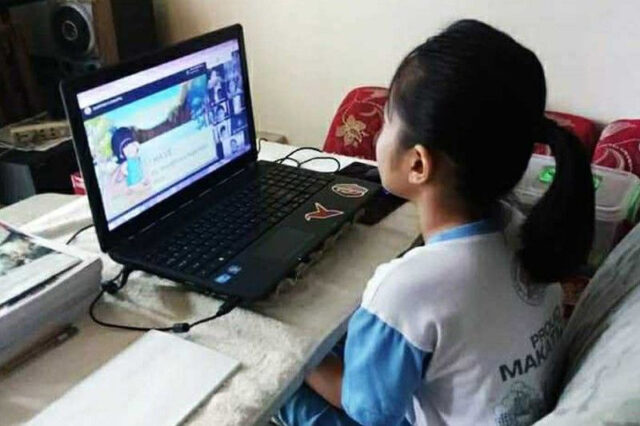
PHILSTAR FILE PHOTO

THE Department of Budget and Management (DBM) has approved the release of a P3-billion funding for the expansion of free internet access to underserved schools and communities in remote areas.

In a statement on Wednesday, the DBM said the fund will boost internet access for students and teachers, especially those in “last mile” schools and Geographically Isolated and Disadvantaged Areas (GIDAs).

Of this, P1.5 billion will be allocated to the Department of Education’s Connectivity Enhancement Program for E-Learning, which seeks to provide access to online learning materials and digital tools, even in the most remote barangays.

The program is expected to benefit at least 8,253 public schools, many of which are located in areas that have long struggled with poor or no internet connectivity.

The remaining P1.5 billion was released to the Department of Information and Communications Technology to support the Free Public Internet Access Program. — Aubrey Rose A. Inosante

NFA budget hike sought

PHILIPPINE STAR/MICHAEL VARCAS

THE NATIONAL Food Authority (NFA) on Wednesday sought additional funding to rent more warehouses for its buffer stocking needs.

“We are now looking at private warehouses, but because our budget is limited, we are looking for support from the President through an Executive Order,” NFA Administrator Larry R. Lacson said in a Senate committee hearing, in Filipino.

He added that the additional funds will be used to increase the NFA’s storage facilities for rice stocks.

Mr. Lacson said that the agency has already exhausted the local government units that could lend their warehouses.

“In fact, the warehouses that were lent to us turned out to be evacuation centers, so when storms hit, they still wanted to evict us,” he added.

The NFA procures locally produced rice buffer stocking in cases of emergencies and national calamities. It is required to maintain a rice reserve equivalent to about 15 days’ demand.

Mr. Lacson said that the current NFA stock is equivalent to around 12 days of local demand.

He added that the agency still has about P6 billion in funds to procure 4 million bags of local rice. — Adrian H. Halili

UE breaks ground on Laguna campus

UE Vice Chairman David O. Chua and President Zosimo M. Battad, and Eton Properties Philippines Inc. President Kyle C. Tan and Director Karlu Tan Say lead the groundbreaking of the UE Eton Laguna campus in Santa Rosa City with Santa Rosa Mayor Arlene Arcillas and Cabuyao Mayor Dennis Felipe Hain.

THE University of the East (UE) recently broke ground on a new campus in Eton City, Santa Rosa in Laguna, expanding its academic footprint beyond Metro Manila.

“This embodies the spirit of partnership. It represents the alliance of three vital forces: the University of the East, Eton Properties Philippines, and the government and people of Santa Rosa, Laguna. And today all three are here together to witness the beginning of this remarkable endeavor,” UE Vice Chairman David O. Chua said in a press release on Wednesday. 

“This groundbreaking marks more than just the start of construction. It signifies the unfolding of a shared dream built on collaboration and a sense of community,” Mr. Chua added.

The first part of the 19-hectare UE Eton Laguna campus plans to provide facilities for both basic and higher education, along with training programs.

Present at the groundbreaking were government officials, UE officials, members of the board of trustees, and executives from Eton Properties Philippines, the project’s development partner.

“As we break ground today, we also break new ground in our mission. UE Eton Laguna will not just be a campus—it will be a hub of learning, innovation and hope for the South,” UE President and Chief Academic Officer Zosimo M. Battad said.

The new campus will be UE’s fourth location, in addition to its campuses in Manila, Caloocan, and Quezon City. — Alexandria Grace C. Magno

CHR: More funding needed for victims of human rights violations

THE Commission on Human Rights (CHR) on Wednesday said that it is seeking additional budgetary allocation to fund its program to support victims of human rights violations.

During the agency’s budget hearing, CHR Chairperson Richard P. Palpal-latoc said that they are requiring additional funds in the 2026 national spending plan to fund its financial assistance program.

“There is an increase in the demand for granting financial assistance,” Mr. Palpal-latoc said. “In the previous years, we were constrained to reduce the amount from the original rate of P30,000 to P10,000 per case because we cannot sustain the program.”

Under the 2026 national expenditure plan, the CHR was allocated P16 million for the program, from its proposed P51 million.

Finance committee head Senator Sherwin T. Gatchalian suggested that the agency tap the Department of Social Welfare and Development to address the needs of human rights victims.

“Maybe, you can tap into the funds of DSWD. They have the funding, and their social services program are quite flexible,” he added.

Human Rights Protection Program provides financial assistance to victims of grave human rights abuses involving violations on child rights, gender-based violence, right to life, security cases involving disappearances, arbitrary arrests, and detentions. — Adrian H. Halili

ADVERTISEMENT
ADVERTISEMENT