Home Blog Page 7898

Development of NFTs and crypto art raise many questions


SCREENSHOT of Satoshi The Creator – Genesis (by L. Buenaventura and J. Delbo) — NIFTYGATEWAY.COM

A COLLABORATION on a minted non-fungible token (NFT) by Filipino artist Luis Buenaventura III and Argentinian comic book artist Jose Delbo began through conversations on Twitter.

“He shared an idea that he had about this particular superhero character. And then he asked me if I wanted to collaborate on it — create the animation, the video, and the sound design,” Mr. Buenaventura recalled of the beginning of their collaboration.

“He is 87 years old. He started drawing comics, Wonder Woman, Transformers, [and] a lot of DC stuff. He started drawing that in the ‘50s and ‘60s,” Mr. Buenaventura said of Mr. Delbo.

“I’ve never met him in real life. He lives in Buenos Aires in Argentina, and I live in La Union in the Philippines… But he is old enough to be my grandfather. In fact, his son is older than me,” he added. “That’s one of the things that makes him very unique is he is probably the oldest NFT artist.”

In April 2021, Messrs. Buenaventura III and Delbo sold 222 editions of Satoshi The Creator – Genesis for $1,999 each on the Nifty Gateway platform.

Art Fair Philippines, which went online on May 6 to 15 this year, highlighted digital arts in a section called the “Metaverse,” with a NFT 101 Showcase. During the virtual fair, visitors were introduced to the local and international digital art scene through various talks, which are available on the Art Fair Philippines’ YouTube page.

Bought through cryptocurrency in a digital ledger called a blockchain, NFTs are one-of-a-kind digital properties such as jpeg files, GIFs, music, and short videos. The sale of limited NFTs or through auctions recently gained traction in the mainstream. Notable NFT platforms include SuperRare, Nifty Gateway, Rarible, and Foundation.

During a panel discussion with ArtReview magazine titled, “NFT: A New Revolution or the Emperor’s New Clothes?,” Dubai-based arts writer and editor Rahel Aima said that NFTs open up access not only to who can sell work but also to who is allowed to buy it.

“As an art critic, I tend to think a lot about where the work begins and ends and how much the context informs and functionality completes the work,” Ms. Aima said. “No matter what their material is, artworks aren’t stable. They’re contingent, messy, constantly building and unraveling. And I think this applies to digital works too. What an NFT does is to point to a single iteration of a work and freeze it forever in time.”

Art historian, critic, and curator at Albright-Knox Art Gallery (New York) Tina Rivers Ryan stressed that the beginning of digital arts should be part of the conversation in understanding developments in the growing technological system.

“As we know now, no technology is neutral. One of my fundamental responses to the rise of the NFTs to try to understand the way in which crypto art is embedded within this larger technological system that does have an ideology and economic history,” Ms. Ryan said.

“It’s very important that people understand that working with new technologies, even with digital technologies, has a history that’s half a century old at this point,” she said, noting that digital arts have a history dating back to the 1960s.

With the advent of digital arts come the questions, “What exactly is an aesthetic object? Who gets to make it? And how does it circulate?”

Ms. Ryan cited the first exhibition of computer-generated images which was mounted in New York in 1965. It was called “Computer Generated Pictures” at the Howard Wise Gallery. It featured works by two scientists, Bela Julesz and Michael Noll, who worked at Bell Laboratories.

Noll recounted in a memoir, Ms. Ryan explained, that he and Julesz argued over whether they should title their show: “Computer-Generated Art” or “Computer-Generated Pictures.”

“In other words, this sort of anxiety about the aesthetic status or validity of the digitally made art object as has been going,” Ms. Ryan said. “There’s so much to learn from that history. And it’s very frustrating to see none of that being part of this conversation.”

Ms. Ryan also clarified that purchasing an NFT does not mean it transfers the ownership of the asset to the buyer.

“In many cases, the legal transaction of buying an NFT according to the terms and conditions of the platforms is that you’re not actually acquiring possession or ownership of the associated asset,” she said. “You’re literally just buying the NFT that points to that asset, which means that the responsibility for acting as a steward and conserving that asset is not being passed from the artist to anybody else.”

NFTS IN SEA, THE PHILIPPINES
In the Philippines, the crypto art scene is slowly gaining traction in the mainstream art market.

“There are definitely Southeast Asian (SEA) artists that are rising to commercial success, generally. [What] we are doing in Narra Art Gallery is trying to help that funnel of getting artists started in Southeast Asia,” Narra Art Gallery co-founder Colin Goltra during the virtual tour of the gallery. Narra Art Gallery is a digital art gallery on Decentraland — a virtual world made possible by the blockchain.

Mr. Goltra said that their gallery has a “First Mint Fund” which helps the artist mint their first NFTs. “We’re willing to subsidize and pay the minting costs of your first NFT and get you started on the platform,” he said.

In his talk called “How to Become a crypto artist,” NFT artist Luis Buenaventura mentioned the basic mechanics of notable NFT marketplaces or platforms.

Mr. Buenaventura explained that platforms such as MakersPlace and Nifty Gateway have an approval process prior to minting NFTs. “What that means is an artist can’t just show up and start selling there… Now, there’s so many artists that are trying to get into this stuff right now, there are very pessimistic estimates of how long it will take you to apply and then get approved,” he said. The approval may take between four to six weeks (for MakersPlace), or five to six months (for Nifty Gateway).

The advantage of entering platforms that require approval is that “they (marketplaces) spend marketing money on promoting the artists,” he said.

Meanwhile, marketplaces such as OpenSea and Rarible require no approval prior to minting.

The cost of minting an NFT also varies and can range from $50 to $300.

“NFTs have to compete for space… the price is different on any given day because sometimes, there is congestion on the network, sometimes there is no congestion,” Mr. Buenaventura said.

“If you’re trying to hit the low end and you don’t want to spend too much money on just the act of minting your piece, the best recommendation I can make is Saturday evenings (Manila Time),” he added.

That payment for a sold NFT is in the digital currency Ethereum, he said. “It is not dollars; it is not pesos. But it has its own exchange rate in the same way as dollars have against pesos.”

For those who want to get started in crypto art, he recommended building a network with artists on social media. Mr. Buenaventura said that he began most of his network on Twitter where he currently has about 9,000 followers.

“You can’t just have thousands of Twitter followers and expect your art will do well. It needs to be the correct type of Twitter (#cryptoartPh) followers,” he said — those who know about NFT art and crypto currencies.

“The type of followers that you have matters more than the number of followers you have.”

ENVIRONMENTAL CONCERNS
In May 2021, CBS News wrote that Ethereum is currently estimated to annually consume “roughly 44.94 terawatt-hours of electrical energy, which is comparable to the yearly power consumption of countries like Qatar and Hungary.” It added that, “It is responsible for about 21.35 metric tons of carbon dioxide released each year, comparable to the carbon footprint of Sudan.”

On separate Art Fair talks, the artists said that there are misconceptions about the energy usage of blockchains.

Mr. Buenaventura said that it is a limited perspective to consider minting in blockchains as the cause of global warming. “This technology is work in progress, and the people that are working on it are trying to make it as sustainable as possible because we’re building this stuff for the long-term,” he said.

“You have to think of the relative energy consumption whether you are minting an NFT, using Google and Facebook servers,” co-founder of Narra Art Gallery Gabby Dizon said. He added that NFTs are a low single digit percentage of the use case of the network. “Doing NFTs is a very small part of that and is negligible compared to the cost of the entire network.”

NFT marketplace SuperRare is looking into more efficient alternatives with the development of ETH2 which aims to increase Ethereum sustainability. Other sustainable blockchain options in development are Polygon (FKA Matic) and Polkadot.

As for questions on whether NFTs will be in the art scene in 10 years, Mr. Buenaventura’s quick and honest answer is, “I don’t know.”

“The thing that you have to remember about crypto in general — it’s a sunrise industry. You can’t see beyond the horizon just yet.”

Like watching a sunrise, he said, “You’re looking, [but] can barely see what’s actually going on, on the horizon. You have to wait until the sun is actually risen.” — Michelle Anne P. Soliman


Treasury makes full award of bond offer on strong demand

BW FILE PHOTO
THE BUREAU of the Treasury fully awarded the 10-year bonds it offered on Tuesday amid strong demand from the market. — BW FILE PHOTO

THE GOVERNMENT made a full award of the reissued Treasury bonds (T-bonds) it auctioned off on Tuesday as its average rate dropped on strong demand from the market.

The Bureau of the Treasury (BTr) borrowed P35 billion as planned from reissued 10-year T-bonds, which have a remaining life of five years and 10 months.

Total bids for Tuesday’s offering stood at P65.091 billion, nearly twice as much as the auction volume and also more than the P50.25 billion in tenders seen when the same notes were last offered on March 9.

The 10-year bonds fetched an average rate of 3.185%, down 54.7 basis points (bps) from 3.732% previously.

At the secondary market, before the auction, the 10-year tenor fetched a yield of 3.8374%, the PHP Bloomberg Valuation Reference Rates published on the Philippine Dealing System’s website showed.

The BTr opened its tap facility to raise another P5 billion via the debt papers to accommodate the excess demand and take advantage of the low yield.

National Treasurer Rosalia V. de Leon said investor demand was boosted by recycled funds after some government issuances matured recently.

The market also wants higher returns so they are turning to long-dated bonds for yield pickup, Ms. De Leon added.

Meanwhile, a bond trader said the result of Tuesday’s 10-year T-bond auction fell within market expectations “as players are now on a wait-and-see mode ahead of the Monetary Board meeting.”

The Bangko Sentral ng Pilipinas (BSP) will likely keep benchmark interest rates steady on Thursday to support the “fragile” economic recovery, with inflation improving on the back of government initiatives to ease supply issues, analysts said.

A BusinessWorld poll held last week showed 14 out of 16 analysts expect the central bank to retain its key policy rate at its record low of 2% at the Monetary Board’s fourth policy meeting for this year on June 24.

Analysts said it is crucial for the BSP to retain its accommodative stance in the meantime as the economy’s rebound from the impact of the coronavirus pandemic still has a long way to go.

The BSP slashed benchmark rates by a cumulative 200 bps last year. Borrowing costs have been at record lows since the Monetary Board’s last adjustment, which was a 25-bp cut in November.

Meanwhile, headline inflation rose by 4.5% for the third straight month in May. While this was slower than the two-year high of 4.7% in February, it exceeded the central bank’s 2-4% target range.

Year to date, headline inflation averaged at 4.4% as of May. The BSP expects inflation for 2021 and 2022 to reach 3.9% and 2.8%, respectively, within target but quicker than the 2.6% print in 2020.

The BTr wants to raise P215 billion from the local debt market this month: P75 billion via weekly offers of Treasury bills and P140 billion from weekly auctions of T-bonds.

The government is looking to borrow P3 trillion from domestic and external sources this year to help fund a budget deficit that is expected to hit 9.3% of the country’s economic output. — Beatrice M. Laforga

Shakey’s offers plant-based ‘chicken’ nuggets

SHAKEYSPIZZA.PH

SHAKEY’S PIZZA Asia Ventures, Inc. (SPAVI) introduced plant-based “chicken” nuggets to its menu in partnership with unMeat, a local brand that offers meat-free products.

The listed company said in a stock exchange disclosure on Tuesday that “the Goood Nuggets” will be sold nationwide at P179 and is produced in collaboration with unMeat, which is under SPAVI’s sister company, Century Pacific Food, Inc. (CNPF).

“The Goood Nuggets look, taste, and feel like chicken nuggets but are completely meat-free. These nuggets are baked, not fried, and are loaded with plant-based protein, making them healthier and friendlier to the environment,” SPAVI said.

Vicente L. Gregorio, SPAVI president and chief executive officer, said the plant-based nuggets come after the company’s “Goood Burger” plant-based burger launched last year.

Mr. Gregorio added that the products offer customers with healthy meat alternatives made of non-genetically modified organism (GMO) plant-based ingredients that have no cholesterol and trans-fat content.

“At Shakey’s, our guests’ needs are a top priority. They have been looking for healthier, better-for-you, and better-for-the-planet products, so we co-created ‘The Goood menu’ with unMeat to deliver these at an accessible price point,” he said in the disclosure.

“As we carry on our path to recovery from this pandemic, we remain steadfast in our commitment to wow our stakeholders by becoming a more responsible food company. We will continue to integrate sustainability into our business and boost our efforts in areas that will add value to our guests and stakeholders, our Company, and the communities we serve,” he added.

For the first quarter, SPAVI posted a 75% year-on-year decline in net income to P29 million against P114 million in 2020. The company’s revenues for the quarter fell 30% to P1.28 billion from the P1.83 billion logged in the same period last year.

On Tuesday, shares of SPAVI at the stock exchange improved 0.90% or seven centavos to finish at P7.88 apiece. — Revin Mikhael D. Ochave

Del Monte net income up 33% as sales rise

DEL MONTE Philippines, Inc. reported a 33% climb in profits for its fiscal year ending on April 30 on the back of improved sales, favorable mix, decreased expenses, and efficiency.

The company said its net income went up to P4.6 billion from P3.47 billion last year, while gross profit went up by 21.5% to P10.4 billion.

“We focused on adapting to consumer trends through product innovation and digital marketing, while at the same time, strengthening our operations and maximizing efficiencies,” Del Monte Philippines Chief Executive Officer Joselito D. Campos said in a statement on Tuesday.

Sales improved by eight percent to P34.5 billion, two-thirds of which were generated in the Philippines. Sales in the country grew by 10% to P19.2 billion as retail sales offset the decline in food service sales.

Products in the company’s convenience cooking and dessert, healthy beverages, and snack segments saw increased sales volume.

“The Company’s spaghetti sauce, pasta, ketchup and packaged fruit products performed well as a result of an increase in home cooking, anchored on quality and nutrition, and communications targeting specific use recipes and occasions,” Del Monte Philippines said.

Its newly launched fruit and yogurt-flavored Del Monte Mr. Milk drink and Del Monte Potato Crisp Biscuits saw “strong annual sales levels” despite the company’s minimal spending on new product marketing.

Meanwhile, the company’s premium fresh fruit segment saw an improved sales volume but having a strong peso against the US dollar cut its revenue growth to one percent.

The fresh fruit segment generated a sales growth of 24% in the second half due to the easing of logistics and retail restrictions in China and other North Asian markets. This allowed the company to meet the demand for fresh pineapples and to adjust product prices.

Affiliate firm Del Monte Foods, Inc. released its deluxe gold pineapple, a “premium” pineapple grown by Del Monte Philippines. The company said it is a “top 3 exporter” of fresh pineapple to growing North Asian markets.

Export sales of packaged food and beverages grew by 15% as it accounted improved sales in the Americas, North Asia, and Southeast Asia, with the US as its main sales driver.

The company attributed the increased at-home consumption of international consumers to lockdown restrictions brought by the health crisis. 

In April, Del Monte Philippines filed a registration statement with the Securities and Exchange Commission for the public offering of 699.33 million secondary common shares, with an overallotment option of up to 104.899 million common shares.

The offer consists of existing shares owned by the subsidiaries of listed Del Monte Pacific Ltd.

With shares priced at P54.80 apiece, Del Monte Philippines said it aims to raise as much as P44 billion from the offer. The company said proceeds will be used by parent Del Monte Pacific to repay debts and for the redemption of preferred shares.

On Tuesday, shares of Del Monte Pacific at the stock exchange surged by 6.62% or 98 centavos to close at P15.78 each. — Keren Concepcion G. Valmonte

HSBC, Standard Chartered eye $460M in fee windfall on China-Hong Kong investment link

GLOBAL BANKS including HSBC Holdings Plc and Standard Chartered Plc are ramping up hiring to tap into China’s latest market opening — a new investment link with Hong Kong that could yield almost $500 million a year in fees.

The investment scheme will allow bank customers in nine southern Chinese cities such as Shenzhen to invest across the border in Hong Kong and vice versa, further integrating the $1.7-trillion Greater Bay Area economy.

The “Wealth Connect” plan, set to launch in the second half of the year, could open up 3 billion yuan ($464 million) in annual fees for global banks and their domestic rivals including Bank of China Ltd., according to Bloomberg Intelligence estimates.

“This is a breakthrough for the retail investor to open up new ways of investing on the other side, across the boundary,” said Daniel Chan, head of the Greater Bay Area at HSBC, which is hiring 300 to 400 people in Hong Kong for its regional expansion. “We are in full swing preparation.”

The program is expected to start slowly. Mainland residents will initially face a 1 million yuan ($154,600) quota for investments in Hong Kong, meaning it will target the mass affluent rather than the super rich. The investments will likely be limited to safe products, which may not appeal to many Chinese investors who prefer higher-yielding bets.

The plan won’t provide “a significant benefit in the short term” given these initial caps, said Paul McSheaffrey, a partner at KPMG in Hong Kong. “However, in the medium term, as more products are added, greater amounts that people can invest, then absolutely we will start to see that coming through.”

The sheer size of the powerhouse region of 70 million people with more than $400 billion of investable assets is hard to ignore, linking the finance hub of Hong Kong with the technology center of Shenzhen and the manufacturing and transport clout of Guangzhou.

“It’s a game of numbers in some ways,” said Hong Kong-based Samir Subberwal, head of consumer, private and business banking for Asia at Standard Chartered, which is hiring or promoting 3,000 managers for its Asia wealth business over five years. “The total revenue pool on account of this could be quite large.”

SOUTHBOUND
The proposal will open a northbound channel for Hong Kong and Macau residents to invest in onshore financial products and a southbound channel for eligible Chinese residents to invest offshore. Over 80% of mainland investors in the Greater Bay Area plan to invest in Hong Kong through the wealth management connect, according to a survey conducted by HSBC and Nielsen Company (Hong Kong).

Mainland clients expect a 13% annual investment return, on average, in Hong Kong fund products through the wealth connect, according to a survey by the Hong Kong Investment Funds Association and Cimigo.

Both investment routes will operate with a closed-loop currency conversion regime, meaning that proceeds from the redemption of products will be remitted the same way, similar to stock and bond connect programs. There will be a 150 billion yuan cap in each direction.

Standard Chartered sees a “huge opportunity” particularly for southbound investments, as mainland investors’ access to global wealth products lags behind their Hong Kong peers, Subberwal said. Based on the bank’s internal estimates, up to 1 million customers will look at investing through the southbound route.

According to consulting firm Z-Ben Advisors Ltd., mainland investors are also more familiar with Hong Kong financial products, which is likely to fuel interest in southbound investments.

Banks will need to have branches on both sides of the border to join the plan, or partner with another bank. Given travel restrictions due to the pandemic, onshore banks can act as witnesses for new customers making southbound investments, according to the draft plan. There was no mention of a similar option for Hong Kong investors looking to invest in China.

Given their extensive branch networks in the area, China’s four biggest banks including Industrial & Commercial Bank of China Ltd., along with HSBC and its Hong Kong unit Hang Seng Bank Ltd. could benefit the most from the program, according to Bloomberg Intelligence analyst Francis Chan.

“The key players on both sides of the border would be the ones leading the game because of their existing customer base,” said Gilbert Lee, head of strategy and planning at Hang Seng Bank, which has 14 branches in the mainland area near Hong Kong. “We have put a lot of resources into making sure we are ready.”

As the financial hub looks at other cross-border programs including a so-called Insurance Connect plan that could allow Greater Bay residents to buy Hong Kong policies remotely, banks are looking to draw on their experience from the wealth link. The stock connect links between China and Hong Kong, first launched in 2014, has gained traction with record southbound flows in 2020.

“If the banks can provide a good track record through the wealth management connect, they can also apply the same approach with the insurance connect,” Mr. Lee said. “So it’s a very important milestone for connect schemes.” — Bloomberg

DDB urges ‘balanced approach’ in treating substance abuse

IN CONTRAST to President Rodrigo R. Duterte’s hardline stance on drugs, government agencies called for a holistic approach to rehabilitating drug personalities who have surrendered.

“The government approach is transitioning to a more balanced approach to substance use,” Dangerous Drugs Board  (DDB) Undersecretary Benjamin P. Reyes said at the first National Substance Use Science Policy and Information Forum held this June. “We already have policies in place to have this implemented in all local government units (LGUs) in the country.”

Community-based rehabilitation programs (CBRPs) focus on “healing of the body, mind, and soul through counseling and other therapeutic sessions.” Based on data from the Department of Local and Interior Government, 723 cities and municipalities already implement CBRPs. After completing rehabilitation, patients are reintegrated into their communities through an aftercare program conducted by the Department of Social Welfare and Development.

Other government initiatives include the development of detoxification package under the Philippine Health Insurance Corporation, as well as inpatient and outpatient packages for substance users. A substance abuse helpline has been available since June 2020 to provide assistance to callers with substance use disorders.

“But government alone can’t implement such a big intervention program. We call on everyone to remain vigilant and help government efforts address this issue,” said Mr. Reyes, who added that DDB has asked several non-government organizations, as well as the Rotary Public, for assistance.

TRANSNATIONAL PROBLEM
The drug problem is not just a drug supply, law enforcement, or public health problem, said Olivier Lermet, senior policy advisor of the United Nations Office on Drugs and Crime (UNODC) in the Philippines.

“This global drug problem is a VUCA problem: volatile, uncertain, complex, and ambiguous,” he said. “If it stops somewhere, it reappears elsewhere. There is not one corner of the world unaffected by illegal drugs. It is transnational,” he said.

Acknowledging that drug dependence is a complex, multifactorial health disorder characterized by a chronic and relapsing nature is part of the solution added Mr. Lermet.

The senior policy advisor also recognized positive developments in the Philippine response, including the agreement between the Department of Health (DoH) and World Health Organization on protocols of treatment; the drug demand reduction section in the Philippine anti-illegal drugs strategy, which aligns with recommendations from the United Nations General Assembly Special Session on the World Drug Problem; and the expansion of treatment for people who use drugs, especially in community-based interventions.

In the Philippines, there are 4,840 beds in 64 drug rehabilitation centers and 16,751 individuals with severe substance use disorders, according to Dr. Jose Bienvenido M. Leabres, program manager of the Dangerous Drugs Abuse and Treatment Program of the DoH.

“We need — this 2021 — an additional 11,911 beds. Once we have the DoH-accredited facilities, we will have added an additional 1,282 beds, decreasing our gap to 10,629,” he said.

THRIVING TRADE
A UNODC report titled  Synthetic Drugs in East and Southeast Asia: latest developments and challenges 2021” revealed that methamphetamine seizures increased substantially despite the coronavirus disease 2019 (COVID-19) pandemic.

“Organized crime groups have been able to continue the expansion of the regional synthetic drug trade — in particular in the upper Mekong and Shan State of Myanmar — by maintaining a steady supply of chemicals into production areas despite border restrictions that have impacted legitimate cross border trade,” said Jeremy Douglas, UNODC regional representative for Southeast Asia and the Pacific. “While the pandemic has caused the global economy to slow down, criminal syndicates that dominate the region have quickly adapted and capitalized.”

Mr. Lermet said it’s difficult for nations to keep pace and be on top of this evolving drug market. “I call it a market because that’s an important aspect of it. It’s a $60 billion market in our region.”

While seizures of crystal methamphetamine in the Philippines in 2020 have increased compared to 2019, the UNODC report also pointed out that admissions for methamphetamine use in the country more than halved. This is partly due to the COVID-19-related lockdown restrictions, the suspension of admission during the height of the pandemic, and a shift in government priorities from rehabilitation to COVID-19 response.

The anti-narcotics campaign, which topped Mr. Duterte’s agenda pre-pandemic, has seized a total of P40.39 billion worth of illegal drugs from the start of the drug war on July 2016, to November 2019, according to government data. More than 150,000 anti-drug operations, conducted since Mr. Duterte assumed office until November 2019, have also led to the arrest of 220,728 drug personalities and the deaths of 5,552 drug suspects.

The Duterte administration rejected the recommendation by the International Criminal Court’s chief prosecutor to formally open a probe into the alleged crimes against humanity committed in Mr. Duterte’s war against drugs, saying the development is “legally erroneous and politically motivated.” — Patricia B. Mirasol

Reworked South Pacific song urges people to be taught love not hate

INSTAGRAM.COM/ASIASOCIETYPH/

IN 1949, Richard Rodgers, Oscar Hammerstein II, and Joshua Logan worked on a musical whose basic premise was the effect of bigotry. It was called South Pacific.

Set during World War II in a US Marine base in an island in the Pacific, the musical focuses on an American nurse who falls in love with a French expat plantation owner, but finds accepting his mixed-race children difficult. Meanwhile, a Marine lieutenant falls in love with a Tonkinese woman and worries about what would happen if they marry. One song in particular, “You’ve Got to Be Carefully Taught,” explicitly tackles racism.

“You’ve got to be taught before it’s too late,

Before you are six or seven or eight,

To hate all the people your relatives hate,

You’ve got to be carefully taught!

You’ve got to be carefully taught!”

Seventy-two years later, in the midst of an explosion of anti-Asian hate in the United States of America, a group of Filipino musicians have come together to take this Rodgers and Hammerstein song and give it a 21st-century spin, with an important message for America and the world.

“You’ve got to believe, before it’s too late

Before we are six or seven or eight

To love all the people your relatives may hate

That kindness and love are what’s great

You’ve got to be carefully taught.”

The original lyrics reflected on “how hate is not a natural instinct, but something that is actively taught and therefore must be rooted out,” said the Asia Society Philippines a statement. “Asia Society leaders thought, what if the song were to be recast from a perspective of positivity and hope?”

An all-star cast was gathered by the Asia Society Philippines in line with a global Asia Society campaign to #StopAsianHate. The performers in the music video are: Broadway star Lea Salonga, the Black Eyed Peas’ Apl.de.Ap, Martin Nievera, Gary Valenciano, Jed Madela, Daniel Padilla, Jaya, Cris Villonco, Moira Dela Torre, and Sam Concepcion. Mon Faustino provided musical and vocal arrangement, with Miguel Miñana as Concept and Production Head, and Gina Tabuena Godinez as Associate Producer.

Watch the video on Facebook and Instagram: https://fb.watch/6gpTphDV0i/ and https://www.instagram.com/tv/CQYxsu-hhQE/?utm_medium=copy_link

“We are so grateful to this dream team for so generously giving their time and talent to support the campaign,” said Doris Magsaysay Ho, Chairperson of Asia Society Philippines, in a statement.

Tony award-winning playwright David Henry Hwang helped the Asia Society Hong Kong secure permission to tweak the lyrics and made a version with HK-based artists.

Apart from the music video, broadcasters Korina Sanchez and Karen Davila also contributed to the #StopAsianHate campaign with their own messages to support the Filipino-American community.  The videos can be seen on Facebook (https://www.facebook.com/152846088121821/posts/5581913438548365/?sfnsn=mo) and Instagram (https://www.instagram.com/tv/CQYxMU-Bf0h/?utm_medium=copy_link).

Asia Society Philippines also partnered with CANVAS, Art Fair Philippines 2021, and the Ramon Magsaysay Award Foundation, for artwork with the same theme by visual artist Elmer Borlongan which is featured at the opening of the music video.

The global Asia Society campaign includes a series on “Asian Americans Building America,” with Asia Society President Kevin Rudd interviewing successful Asian Americans. Asia Society New York has also organized an ongoing Triennial that celebrates Asian art and culture.

Dialysis patients advised to get COVID jabs ‘right now’

DOCTORS encouraged Filipinos with chronic kidney disease — especially dialysis patients and transplant recipients — to get vaccinated against coronavirus disease 2019 (COVID-19). “The best vaccine is the one you can get right now,” said Dr. Marichel Pile-Coronel, head of the Chronic Kidney Disease Clinic of the National Kidney and Transplant Institute, at a recent forum on kidney health.

“Vaccines are responsible for making antibodies, which then become our body’s frontliners that will fight infections like measles, mumps, hepatitis B, smallpox, pneumonia, polio, and tetanus. COVID-19 is now one of the infections that we can fight using vaccines,” she added.

Dr. Pile-Coronel also emphasized that authorized COVID-19 vaccines, regardless of type or brand, are effective in providing immunity and protection against coronavirus.

While there is no data regarding “the best time” for dialysis patients to be vaccinated, Dr. Pile-Coronel shared that many opt to get their shots after dialysis so that they can immediately go home and rest. Side effects, she added, are the same for those who suffer from kidney disease and those who don’t — muscle pain, fever, and, very rarely, allergic reactions.

“Comorbidities do heighten risks, but everyone should just be proactive,” Dr. Pile-Coronel said. 

Common signs and symptoms for kidney disease include swelling of body parts; and changes in the color, consistency, and smell of urine. The forum was held in line with National Kidney Month. — B. H. Lacsamana

UnionBank’s SeekCap partners with Maxicare to provide MSME loans

SEEKCAP, the online lending platform of UnionBank of the Philippines, Inc., will offer loans to small businesses that have healthcare plans with Maxicare HealthCare Corp.

The new deal will allow Maxicare users, particularly micro-, small-, and medium-sized enterprises (MSME), to avail of credit ranging from P50,000 to P1 million, UnionBank said in a statement.

Maxicare has a set of health management organization (HMO) plans tailored for MSMEs that have a workforce of three to 99 employees. These plans also cover the dependents of employees in small businesses.

“This partnership will enable continued business growth for MSMEs while keeping the best asset of every business — its employees — a priority,” UnionBank said.

The loan offerings for MSMEs will have a repayment period of over 36 months.

The loan application with SeekCap as well as approval are done online, reducing processing time and borrowing costs, the bank said.

“By removing the need for physical paperwork and personal appearances at the bank, approvals that used to take days or weeks, are now completed within a single day,” UnionBank said.

Online lending marketplace SeekCap has over 40,000 MSMEs registered on the platform and has processed over P2 billion in business loans since it was launched in 2019.

Its parent UnionBank saw its net profit climb by 78% year on year to P4.7 billion in the first quarter, backed by an improvement in its risk profile and stronger capital buffers.

Shares of the Aboitiz-led bank closed at P77 apiece on Tuesday, down by 50 centavos from its previous finish. — LWTN

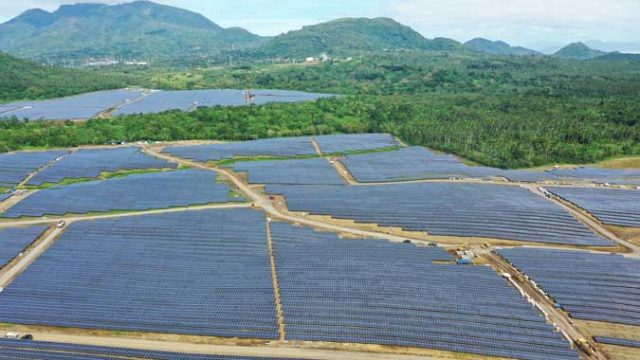
AC Energy’s 120-MW solar plant in Laguna starts commercial run

AC Energy’s 120 MW Gigasol Alaminos, Laguna

AC Energy Corp. said on Tuesday that its 120-megawatt (MW) solar farm in Alaminos, Laguna started commercial operations and is now supplying renewable energy to the grid.

The Ayala-led listed firm touts “GigaSol Alaminos” as the second largest plant of its kind in the country, adding that it can power around 80,000 homes while avoiding 111,034.37 metric tons of carbon dioxide equivalent of greenhouse gases.

“We are pleased to add much needed capacity to the grid as electricity supply remains tight,” AC Energy President and Chief Executive Officer John Eric T. Francia said.

AC Energy also said it partnered up with building and housing solutions provider Green Antz Builders Inc. to collect 32,540 kilograms of plastic from the packaging materials of the solar panels. The plastic waste was subsequently upcycled into eco-bricks and incorporated into building facilities within the plant.

GigaSol Alaminos has a tree nursery that targets to produce 120,000 seedlings in three years. It is surrounded by Ayala Land, Inc.’s Carbon Forest, a woodland reserve that acts as a “carbon trap.”

“AC Energy’s robust line up of projects allows it to play an integral role in the green-led recovery, which is especially critical as the economy gradually reopens and demand for power picks up,” Mr. Francia said.

AC Energy aspires to become the largest listed renewables platform in the region as it has targeted to reach an attributable capacity of 5,000 MW by 2025.

As of May, the company’s power assets in the Philippines had a net attributable capacity of 1,200 MW, of which more than half or 56% come from renewable sources.

AC Energy shares at the local bourse improved 1.19% or 10 centavos to finish at P8.50 apiece on Tuesday. — Angelica Y. Yang

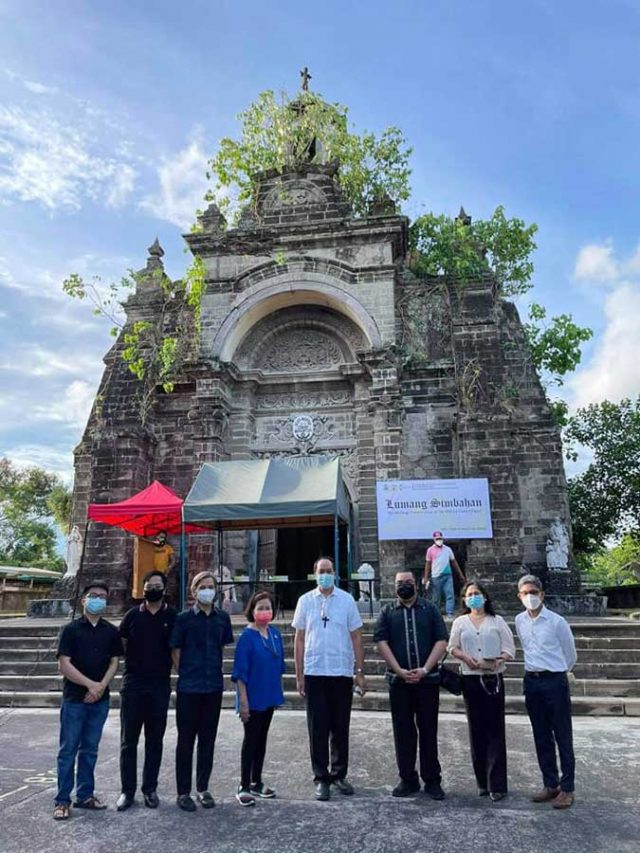
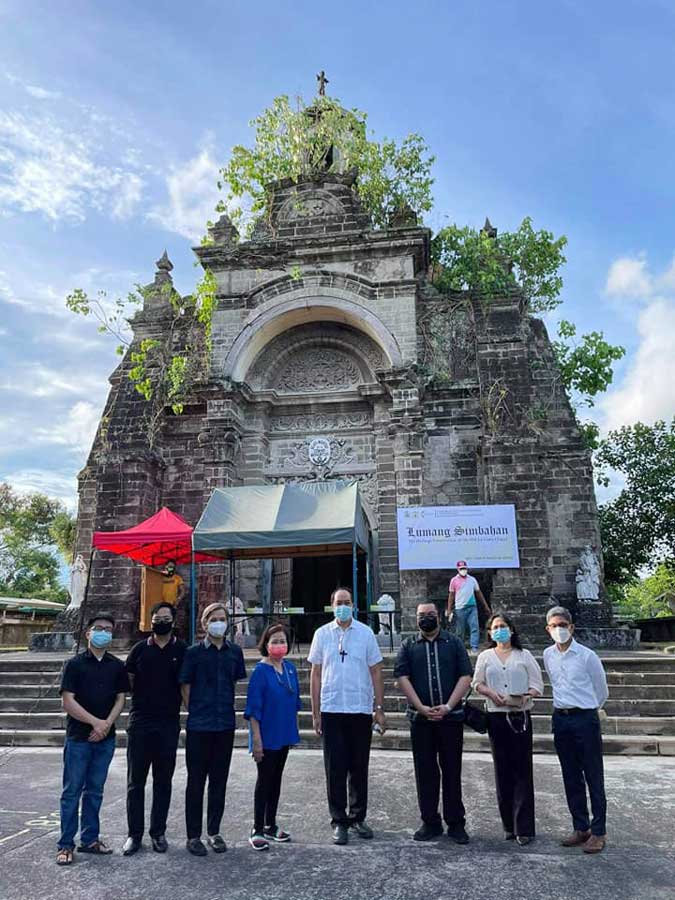
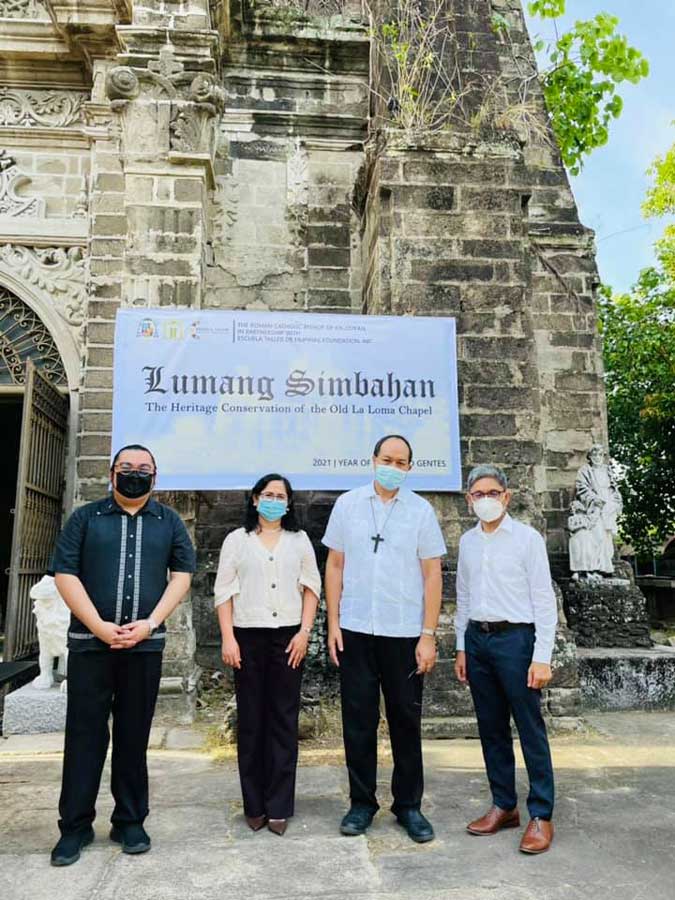
Escuela Taller starts La Loma Chapel conservation

La Loma Conservation Launch

IN order to save La Loma chapel from further deterioration the Diocese of Kalookan has partnered with Escuela Taller de Filipinas Foundation Inc. to undertake conservation work.

The plan for this restoration project dates back in 2017 when Bishop Pablo Virgilio David approached Escuela Taller for assistance in removing the heavy plant growth on the walls of the old cemetery chapel.

The current project will begin with the restoration of the chapel’s facade. After documentation and a survey of the chapel to assess its condition, the next step will be to remove the plants via the use of herbicides and possibly the disassembly of some parts of the masonry wall to completely remove the roots systems.

According to Jeffrey Cobilla, architect and head of Escuela Taller’s conservation team, they expect to complete the work on the facade within eight months. Escuela Taller recommends to then start a preventive maintenance program for the continuous care of the heritage site.

The Old La Loma Cemetery Chapel has been declared as a National Cultural Treasure. La Loma Cemetery, formerly known as Binondo Cemetery, is one of the oldest extramural cemeteries and the oldest active cemetery in Manila.

Director of the Diocesan Commission on Cultural Heritage Fr. Paul Woo said the diocese and the community said they wanted La Loma Chapel to become a center for worship again. The conservation aims to make the chapel more accessible and to provide liturgical services.

Apart from the physical conservation, the Diocese of Kalookan has also been working with Escuela Taller to draft a Conservation Management Plan (CMP) to inform and guide the Diocese and the community on how to manage and care for the chapel regularly and sustainably.

“It is important to educate the community about heritage and heritage sites. The value that comes from every artifact is a gentle reminder for all of us to appreciate the richness of history, culture, and heritage that come from within,” Fr. Woo said in a statement. — MAPS

Regulators tell Biden US financial system in good shape — White House

THE White House in Washington, D.C. — STOCKSNAP/PIXABAY

WASHINGTON — Financial regulators assured President Joe Biden on Monday that the US financial system is in good shape and that financial risks are being mitigated by strong liquidity in the banking system, the White House said.

White House officials said Treasury Secretary Janet Yellen, Federal Reserve Chair Jerome Powell, and acting Comptroller of the Currency Michael Hsu, as well as the heads of the Commodity Futures Trading Commission, Securities and Exchange Commission, and the Consumer Financial Protection Bureau, were among those who met Mr. Biden.

The meeting was Mr. Biden’s first face-to-face encounter with many of the leading federal regulators of the banking industry and financial markets, including Mr. Powell. The Fed chief was appointed by former President Donald Trump.

“The regulators reported that the financial system is in strong condition. They further indicated that financial risks are being mitigated by robust capital and liquidity levels in the banking system, and healthy household balance sheets stemming from fiscal support and the ongoing economic recovery,” the White House said in a statement.

No policy decisions were expected to be made at the routine meeting, said White House press secretary Jen Psaki.

Mr. Biden is seeking to use trillions of dollars in government spending to prod a strong rebound from the coronavirus-triggered recession that put millions of Americans out of work.

A nearly 12% gain in the S&P 500 stock index this year has helped fuel hopes of a strong recovery, but markets are closely watching inflation and government borrowing costs for signs of trouble.

Mr. Biden issued an executive order in May pushing federal agencies to encourage full disclosure of often-hidden climate-related risks to banks, other financial institutions and the federal government.

The White House statement on the meeting said regulators reported that they were making “steady progress” on Mr. Biden’s climate-related executive order, and discussed ideas for promoting financial inclusion and for “responsibly increasing access to credit for potential homeowners and small businesses.” — Reuters

ADVERTISEMENT
ADVERTISEMENT