Home Blog Page 734

SEC eyes higher threshold for audited financial reports to ease MSME burden

PHILIPPINE INFORMATION AGENCY

THE Securities and Exchange Commission (SEC) wants to raise the asset or liability threshold for companies required to submit audited financial statements to reduce compliance costs for micro, small and medium enterprises (MSME).

In a policy paper submitted to the Department of Finance (DoF) on Oct. 28, the corporate regulator recommended that companies with total assets or liabilities of P3 million or less be allowed to file annual financial statements certified under oath by their treasurer or chief financial officer, instead of audited reports.

“We have repeatedly said that MSMEs are the backbone of the Philippine economy, which is why the SEC remains committed to implementing measures that will foster a business environment that is easier to navigate for our budding entrepreneurs,” SEC Chairman Francis Ed. Lim said in a statement on Friday.

At present, corporations with total assets or liabilities of at least P600,000 must submit audited financial statements. Those below the threshold only need certified statements.

Under the proposed rule, the SEC said it would continue to exercise its visitorial powers to maintain oversight, assuring that the policy would not weaken supervision of entities involved in public infrastructure or other regulated sectors that typically exceed the P3-million limit.

If approved, the policy would apply to financial statements for fiscal years ending on or after Dec. 31. The SEC said the change would streamline regulatory requirements and lower operating costs for small firms.

“Our proposed policy will not only improve the ease of doing business, but also cut unnecessary compliance requirements for micro entities, in support of the government’s goal of driving inclusive economic development,” Mr. Lim said.

In October, the SEC reported granting more than P80 million in fee discounts across 40,157 transactions processed under three memorandum circulars issued from July to October, with more than half of the savings benefitting MSMEs.

MSMEs, which account for more than 99% of business establishments and 63% of the workforce in the country, contribute about 40% to the Philippine economy. — Alexandria Grace C. Magno

For Anchor Land’s Elizabeth Ventura, holistic living redefines luxury residences

Anchor Land Property Copeton Baysuites

The next generation of real estate is starting to be defined by the idea of a residential community that engenders a holistic, sustainable lifestyle. This can be seen in wellness-oriented spaces, flexible living terms, as well as living spaces that prioritize fine design, privacy, and amenities.

This can be truly said for higher-income households, as Elizabeth Ventura, president of luxury real estate developer Anchor Land, shared in an interview with BusinessWorld.

 “Today’s high-end investors value tourism-driven developments that seamlessly integrate thoughtful design, privacy, and personalized service with lifestyle-enhancing amenities such as wellness facilities, curated leisure spaces, and tech-enabled living,” Ms. Ventura said in an email.

“For them, true luxury lies not only in the quality of life but also in long-term wealth preservation—owning a tourism-inspired property that balances exclusivity, functionality, and investment stability in a prime, strategic location.”

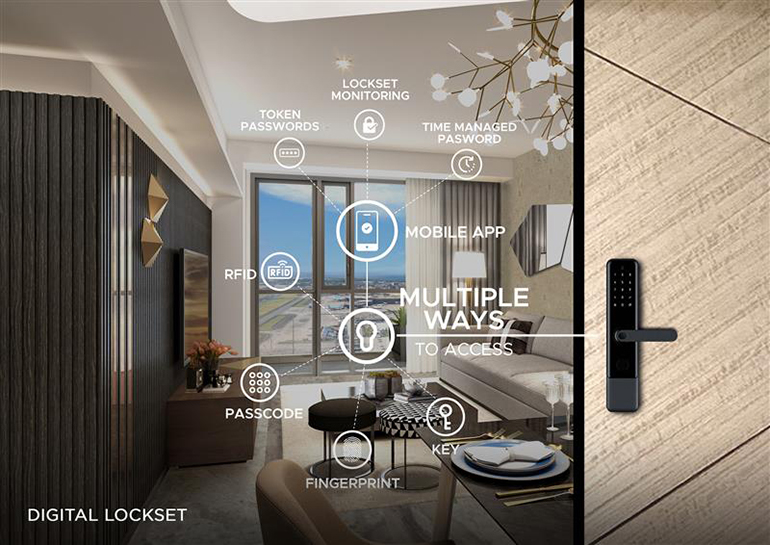
Digital Lockset

Sustainability, Ms. Ventura noted, has become a mark of true luxury as investors are increasingly drawn to properties that emphasize efficiency, sustainability, and long-term livability.

Modern developments now commonly feature green spaces, natural ventilation, energy-efficient systems, and smart home technologies, reflecting a broader shift toward wellness-oriented and environmentally conscious design.

“We’ve embraced this evolution at Anchor Land. Integrating smart technology is no longer an afterthought but a key principle embedded early in our design process. Our team actively keeps pace with the latest advancements in green architecture and collaborates with regional experts to ensure our developments meet global sustainability standards,” she said.

Aspiro-Therapy System

Fully automated units, according to the executive, are equipped with intelligent lighting and air-conditioning controls to minimize energy consumption. The Aspiro-Therapy System, meanwhile, replaces standard exhausts as a cost-efficient and self-sustaining alternative, while smart digital locksets enhance security and convenience within Anchor Land’s developments.

Complementing these is Anchor Land’s Fiber-Optic infrastructure, which ensures high-speed connectivity and uninterrupted browsing, empowering residents to work, study, and stay connected seamlessly from home.

Smart Property Technology

“We also place great importance on open, breathable spaces—seen across all our projects through offerings that range from resort-style settings to pockets of gardens thoughtfully woven into expansive outdoor amenity floors—promoting a lifestyle centered on wellness, comfort, and balance,” Ms. Ventura said.

Besides sustainability, Ms. Ventura also reiterates how luxury properties finely strike the balance between accessibility to urban essentials and perks and retreat from the urban hustle.

“A luxury property that allows its residents to retreat into a serene, well-curated environment while remaining connected to the city’s dynamic rhythm naturally commands higher demand and long-term value,” she explained. “This balance drives sustained appreciation: prime locations ensure continuous interest and liquidity, while exclusivity safeguards the property’s prestige and desirability.”

Club-in-a-Condo Concept Hanging Glass Lounge at One Legacy Grandsuites

Anchor Land, for its part, further strengthens this balance with its signature Club-in-a-Condo concept, which is embodied by top-of-the-line, vacation-style amenities in its premier developments. These amenities offer residents the privilege of resort-like leisure within the privacy of their own community.

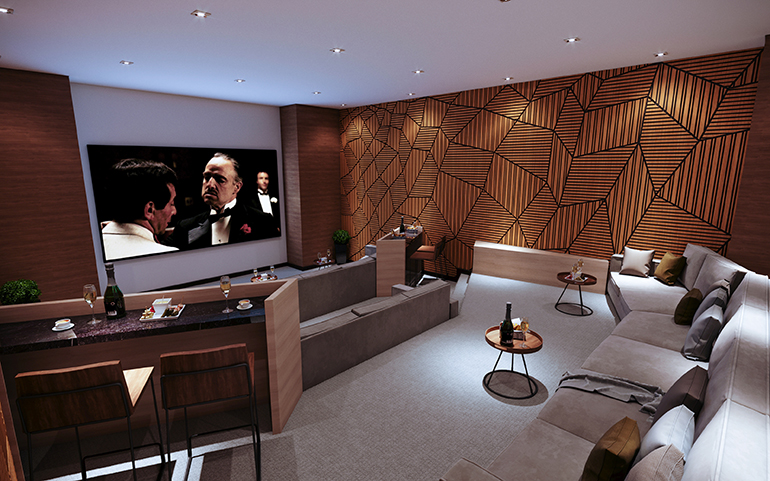
Club-in-a-Condo Concept Indoor Theater at 202 Peaklane

“Designed to be both rare and refined, such amenities are exclusive to select Anchor Land properties, ensuring that each development retains its distinction and lasting market strength,” Ms. Ventura noted. “Together, these elements create a formula for enduring investment performance and a lifestyle defined by understated luxury.”


Spotlight is BusinessWorld’s sponsored section that allows advertisers to amplify their brand and connect with BusinessWorld’s audience by publishing their stories on the BusinessWorld Web site. For more information, send an email to online@bworldonline.com.

Join us on Viber at https://bit.ly/3hv6bLA to get more updates and subscribe to BusinessWorld’s titles and get exclusive content through www.bworld-x.com.

Treasury bills, bonds may fetch mixed rates as Fed view shifts

TREASURY.GOV.PH

RATES of the Treasury bills (T-bills) and Treasury bonds (T-bonds) to be offered this week could end mixed following hawkish signals from the US Federal Reserve.

The Bureau of the Treasury (BTr) will auction off P22 billion in T-bills on Monday, or P7 billion in 91-day securities and P7.5 billion each in 182- and 364-day papers.

On Tuesday, the government will offer P35 billion in a dual-tenor T-bond offering, or P20 billion in reissued seven-year papers with a remaining life of four years and eight months, and P15 billion in reissued 10-year securities with a remaining life of nine years and five months.

T-bill and T-bond rates could follow the mixed week-on-week movements seen at the secondary market after Fed Chair Jerome H. Powell signaled that a December rate cut could be unlikely, Rizal Commercial Banking Corp. Chief Economist Michael L. Ricafort said in a Viber message.

“Yields on government securities traded flat to 2 basis points (bps) higher as players were spooked by the hawkish Fed cut. Bullish sentiment remains intact though, and players are merely playing it safe heading into [this] week’s five-year and 10-year auction,” a trader said in an e-mail.

The trader said the bond offerings will likely be “well received,” with the reissued seven-year papers expected to fetch rates of 5.635% to 5.675% and the reissued 10-year debt seen drawing bid yields of 5.9% to 5.95%.

At the secondary market on Friday, yields on the 91- and 182-day T-bills went down by 3.12 bps and 0.11 bp week on week to end at 4.8951% and 5.0966%, respectively, based on PHP Bloomberg Valuation Service Reference Rates data as of Oct. 30 published on the Philippine Dealing System’s website. On the other hand, the 364-day paper rose by 1.55 bps to close at 5.1781%.

Meanwhile, the seven-year bond increased by 1.14 bps week on week to end at 5.8366%, while the five-year debt, the benchmark tenor closest to the remaining life of the reissued papers to be offered this week, inched up by 0.23 bp to end at 5.7025%.

Lastly, the 10-year bond went down by 4.12 bps week on week to finish at 5.9382%.

On Wednesday, after the Fed’s policy-setting committee voted 10-2 to lower its benchmark interest rate to the 3.75%-4% range, Mr. Powell delivered an unusually clear warning to markets: given “strongly differing views” about how to proceed in December, he said, a rate cut was “not a foregone conclusion, far from it,” Reuters reported.

Financial markets pared what had been near-certain pricing for a December rate cut after Mr. Powell’s remarks, although bets still reflect twice as high a chance of a rate cut as none.

A clutch of Federal Reserve bank presidents on Friday aired their discomfort with the US central bank’s decision to cut interest rates, even as influential Fed Governor Christopher Waller made the case for more policy easing to shore up a weakening labor market.

This yawning divide within the Fed’s policymaking ranks poses a challenge for Mr. Powell in forging a consensus in his final six months as the chair.

While it is not unusual for Fed policymakers to differ on policy, particularly when the economic data is mixed, the frank expression of that disagreement and the explicit focus on what the Fed ought to do at its next meeting, on Dec. 9-10, was striking.

Last week, the BTr raised P25 billion from the T-bills it auctioned off, above the P22-billion plan, as the offer was nearly four times oversubscribed, with total bids reaching P85.365 billion.

Broken down, the Treasury borrowed P7 billion as planned via the 91-day T-bills as total tenders for the tenor reached P29.555 billion. The three-month paper was quoted at an average rate of 4.858%, dropping by 2.6 bps from the previous auction. Yields accepted were from 4.8% to 4.878%.

Meanwhile, the government upsized the award for the 182-day securities to P10.5 billion, above the P7.5-billion plan, as the tenor drew demand amounting to P33.45 billion. The average rate of the six-month T-bill was at 5.044%, down by 1.4 bps from the previous week, with accepted rates ranging from 5% to 5.058%.

Lastly, the Treasury sold the programmed P7.5 billion in 364-day debt as tenders for the tenor totaled P22.36 billion. The average rate of the one-year T-bill inched down by 0.4 bp to 5.093%. Bids awarded carried yields from 5.02% to 5.128%.

Meanwhile, the reissued seven-year bonds to be auctioned off this week were last offered on Sept. 9, where the government raised P30 billion as planned at an average rate of 5.772%, well below the 6.375% coupon rate.

On the other hand, the reissued 10-year bonds were last sold on Oct. 7, where the BTr awarded P20 billion as planned at an average rate of 6.043%, well below the 6.375% coupon rate.

The BTr is looking to raise P158 billion from the domestic market this month, or P88 billion via T-bills and P70 billion through T-bonds.

The government borrows from local and foreign sources to finance its budget deficit, capped at P1.56 trillion or 5.5% of gross domestic product this year. — Aaron Michael C. Sy with Reuters


Celebrating a bag

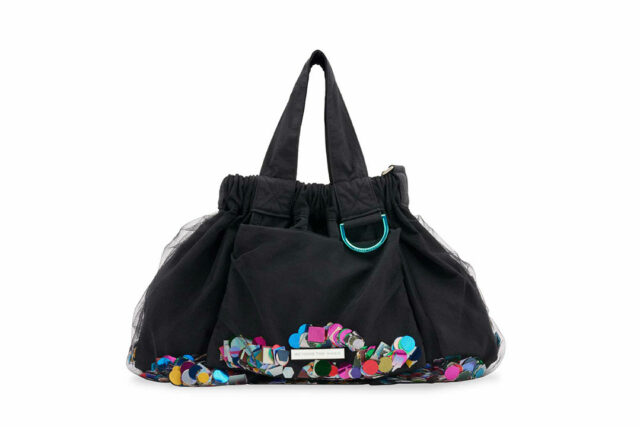
THE Confetti Dumpling Bag comes in black, ivory, and periwinkle.

WITH Singaporean brand Beyond The Vines’ celebration of their 10th year, they’re leaning into one of their hero products: the Dumpling Bag.

For their 10th anniversary, the brand is releasing a limited edition of the Dumpling Bag, with a layer of soft mesh covering it. The soft mesh carries about a handful of confetti, made of recycled store collaterals. A plus, since a chunk of the bags is made of recycled nylon.

Daniel Chew, the brand’s co-founder (the other is his wife, Rebecca), talked about the new bag: “Our community, the fans of the brand, can carry this little celebration with them everywhere they go.”

The bag was created in 2019, and since then has been a traveler’s favorite. Lightweight, foldable, and expanding, it can fit lots more than its size betrays. It had gone viral during its release, with reviews of the bag and videos of it in use numbering in the thousands. The bag’s sales go further: in an interview with BusinessWorld at the opening of the refreshed store in Shangri-La Plaza, Mr. Chew said, “For the bag alone, we have sold close to about a million bags.”

He himself has one: when traveling, he uses it to lug multiple bottles of water. “Once I don’t need them, I can fold (the bag) and put it in my hand luggage.”

While they’re known for this one particular bag, they started with clothes. In fact, when they opened in the Philippines in 2019, they were riding on the tail end of 2015’s normcore minimalist fashions. However, in the refreshed store, we saw decidedly youthful fashions in the colorful, 2000s aesthetic Gen Z favors.

Mr. Chew says that they did the rebrand five years ago. “We were not particularly happy about the direction of the brand. We thought it didn’t truly represent us,” he said. “As adults, we forget to have fun.”

The brand has nine stores in the Philippines, and is increasing its number of stores in Tokyo and Shanghai. “I do think that in this trajectory, we want to grow deep in our market in the Philippines, more than we want to expand.”

Interested parties can find the Confetti Dumpling Bag at www.beyondthevines.ph, or at its locations in the Philippines: Shangri-La Plaza mall, SM Mall of Asia, Power Plant Mall, TriNoma, Uptown Mall, One Bonifacio High Street, SM Megamall Manila, Ayala Center Cebu, and The Block SM North EDSA. — Joseph L. Garcia

Meralco sees flat energy sales this year, eyes 2026 recovery

MERALCO.COM.PH

MANILA ELECTRIC CO. (Meralco) expects flat energy sales this year as milder weather curbs demand, but anticipates a rebound in 2026 on the back of aggressive energization and normalizing temperatures.

Meralco Senior Vice-President and Chief Revenue Officer Ferdinand O. Geluz told reporters last week that full-year energy sales could range from a 0.5% contraction to a 0.8% increase.

The power distributor added 194,000 customers this year, bringing its total to 8.2 million, up 2% from a year earlier. Still, overall consumption fell compared with 2024, when extreme heat from the El Niño phenomenon boosted electricity use.

For 2026, Meralco expects energy sales to rise by about 3% or 1,700 megawatt-hours, driven by higher connections and the transition from El Niño to La Niña conditions.

“We’re hopeful that as weather conditions normalize — shifting from extreme temperatures of El Niño to La Niña — we’ll be able to recover some of the organic sales lost due to normalization of temperature,” Mr. Geluz said. He added that the repurposing of spaces vacated by Philippine offshore gaming operators (POGO) into new offices could also support energy sales in 2026.

For the nine months ended September, Meralco’s energy sales slipped 0.4% to 40,719 gigawatt-hours as prolonged rains dampened residential and commercial demand. Despite the decline, its distribution business remained the largest contributor to core net income, which climbed 14% to P40 billion.

Meralco Chairman Manuel V. Pangilinan said the company is on track to meet its P50-billion profit target this year, citing steady performance from its core distribution and power generation businesses.

Meralco’s controlling stakeholder, Beacon Electric Asset Holdings, Inc., is partly owned by PLDT, Inc. Hastings Holdings, Inc., a unit of PLDT Beneficial Trust Fund subsidiary MediaQuest Holdings, Inc., has an interest in BusinessWorld through the Philippine Star Group, which it controls. — Sheldeen Joy Talavera

EastWest Bank expects 10-15% loan growth

PHILSTAR FILE PHOTO

EAST WEST Banking Corp. (EastWest Bank) expects its loan portfolio to grow between 10% and 15% this year, backed by the strength of its consumer business and despite weakening business sentiment amid domestic corruption concerns.

“A good performing bank on the consumer market needs to grow at a regular pace over time. That’s what we’re trying to achieve. Maybe 10% to 15% is what we’re targeting; in between is probably most likely. So, consumer demand in the country is still okay. My biggest fear is that, again, from a macro perspective, it’s government spending, investments, consumer, net flows, import, export,” EastWest Bank Chief Executive Officer Jerry G. Ngo told reporters on Tuesday.

“And I hope that consumption continues to be robust, because that’s really what’s going to end up driving economic growth.”

As of end-June, EastWest Bank’s loans and receivables stood at P351.41 billion, up by 4.46% from P336.41 billion at end-2024.

Its consumer loans grew by 15% year on year in the first half to P298 billion, making up 84% of its total loan portfolio, Mr. Ngo earlier said.

He said last week that they hope to post steady loan growth in the coming years.

“We continue to be hopeful. Long term, we’ve been looking at low- to mid-teens growth. Actually, right now, we’re probably looking at 10% to 15% ranges of overall growth. And what we want to do is, across the cycle, we want to keep that type of growth.”

Mr. Ngo added that the bank has a low exposure to the expected economic drag from the corruption mess involving state flood control and infrastructure projects amid its consumer-centric lending business.

However, he noted that foreign investors have been harder to attract due to the scandal.

“[Exposure] is very limited because we rely on consumption… [But] the reality is, we will be affected [because] it affects the entire economy. And it’s quite sad, particularly if I speak to foreign investors. Before you even start the conversation, that’s the first thing they ask. So, it’s a bit challenging.”

Meanwhile, Mr. Ngo said they also want to expand their lending to the small and medium enterprise (SME) segment.

“The country’s demographic age is 26 years old, median. At 26 years old, we will consume. And what I always look out for is the employment rate. One of the key things that we’re trying to do is to spur people to do your own business… And I think that’s what we should be doing to really make sure that the country expands that base,” he said.

The bank last week launched its BizAccess Visa Debit card, which caters to SMEs.

Mr. Ngo added that lending growth will be supported by lower interest rates amid the central bank’s easing cycle.

“I think additional rate cuts would boost consumption. We just need to watch the foreign exchange (FX). But the US is cutting rates also, and I know that it is not because of the rate cut that the FX is low. The currency should start appreciating because the inflows should be coming in,” he said.

The peso last week recorded a new all-time low of P59.13 against the dollar, surpassing the previous record of P59 logged on Dec. 19, 2024.

EastWest Bank booked attributable net earnings of P2.3 billion in the second quarter, bringing its first-semester profit to P4.13 billion, rising from P3.49 billion in the comparable year-ago period. — A.M.C. Sy

Thoughtful gift-giving: How to avoid wasteful generosity

STOCK PHOTO | Image by Jcomp from Freepik

By Leo Jaymar Uy

WE’VE BEEN giving gifts for as long as we can remember. Beyond a simple gesture, it’s how we say thanks, celebrate milestones, or sometimes, win someone over.

In the case of acquaintances and colleagues, the gifts tend to be low stakes and more practical. Food packs, organizers, towels, and coin purses are some of the common (and safe) choices. In contrast, gifts exchanged among loved ones invite more variety. The assumption is that we know each other well enough to tailor presents to actual needs or preferences, raising emotional stakes.

Viewed through this lens, gifts function as a “social currency” of sorts. They act as proxies for understanding, signaling attention and emotional fluency in ways that words often can’t.

And yet, how do we know if a gift truly lands?

Economist Joel Waldfogel attempted to quantify this dynamic in his 1993 paper “The Deadweight Loss of Christmas”* wherein he essentially argued that gift-giving often results in a “deadweight loss” (a loss of economic efficiency) because recipients typically value gifts less than what givers paid for them. In his paper, he surveyed students to estimate how much they would be willing to pay for gifts they received, and then compare these valuations to the actual prices paid by gift-givers, barring sentimental value.

The results appear to be intuitive and rather unsurprising. On the one hand, gifts from close friends and romantic partners tended to perform better, that is, the perceived value of the gifts approximates the actual cost of the gifts paid for. On the other hand, gifts from extended family members or distant acquaintances missed the mark, reflecting a huge gap and thus sizeable loss of perceived value. Overall, he estimated that between a tenth and a third of the value of holiday gifts is destroyed by gift-giving.

Waldfogel revisited the topic in his 2009 book Scroogenomics: Why You Shouldn’t Buy Presents for the Holidays wherein he reiterated his critique of holiday gift-giving, but also conceded thoughtful gifts can rival or even exceed the value of items that would have otherwise been bought by the recipients themselves. Thus, he proposed alternatives such as charitable donations and gift cards believing they minimize waste and better match preferences while also retaining the spirit of giving.

Over time, the way we give gifts has changed. More people now opt for digital or experience-based presents such as e-wallet credits, mobile load, store vouchers, or travel perks. These choices offer convenience and a personal touch, while avoiding the discomfort that sometimes comes with handing over cash (unless you are a five-year old waiting for that crisp P1,000 bill from your rich uncle).

Regardless of the format, the intent of giving a gift that resonates remains. Thus, even with the best intentions, the activity may still end up being wasteful. Some items end up getting re-gifted or tucked away unused, while others are used out of obligation to perform gratitude (“I haven’t seen you wear the shirt I gave you.”) or to exercise polite restraint (“These cookies are… experimental”). In these cases, the gift shifts from a gesture of care to a burden. What was meant to signal closeness or at least offer utility, ends up being a cost to the recipient (through that burden) and to the giver (through the actual expense).

So how do we give with intention? Here are some suggestions that might help:

• Think about what they actually need. Self-explanatory.

• Listen for hints. Even throwaway comments can reveal more about one’s preferences.

• Gift cards aren’t lazy if they’re thoughtful. Just make sure they match the person’s interests. If she loves books, go for a bookstore voucher. If he’s into gaming, grab credits for his favorite platform. If they’re into nothing, then go full tito mode and get a handkerchief — classic, safe, and says “I tried.”

• Food still works. A favorite snack, a nostalgic treat, or a curated basket can hit the right note. Comforting, personal, easy to enjoy.

• Just ask. A quick chat or a shared wish list can save everyone the guesswork. Sites like elfster make it easy. Even a Google Sheet does the trick.

• Show up. Visit your parents. Message that friend. As the cliché goes, presence may be the best present (an easy out for the “gift-averse,” but one that still works)

Bottomline: A well-chosen gift, whether it meets a need, strengthens a bond, or simply spreads holiday cheer, can carry more weight than its price tag suggests. In a season often marked by excess, it is intention that gives a gift its meaning. That is the real return on investment.

*Waldfogel, J. (1993). “The deadweight loss of Christmas.” The American Economic Review, 83(5), 1328–1336.


Leo Jaymar Uy was research head at BusinessWorld from 2017 to 2021 and currently works in finance. He enjoys video games, collects obscure but oddly satisfying trivia, and occasionally thinks about the Roman Empire.

Style (11/03/25)


Montblanc releases new Meisterstücks

SUNSET is captured in two new iterations of Montblanc’s Meisterstück: the Meisterstück Golden Hour Solitaire and the Meisterstück Burgundy Red collection, both bringing to life the hues of the setting sun. The metal cap and barrel of the Meisterstück Golden Hour Solitaire feature an engraved hexagon pattern covered by translucent burgundy red lacquer and finished with signature gold-coated fittings. This hexagon pattern decorates the fountain pen’s handcrafted solid Au 750 gold nib, completed with a signature gold coating. On the cap top, the Montblanc emblem crowns the writing instrument. The Meisterstück Golden Hour Solitaire is available in the LeGrand size as a fountain pen, rollerball, and ballpoint. The hues of the golden hour are also captured in the Meisterstück Burgundy Red collection, which presents the Meisterstück form in a deep burgundy-colored resin. The new colorway is available as a fountain pen featuring a handcrafted, bi-color solid Au 585 gold nib, rollerball, and ballpoint in a variety of sizes. Montblanc is available at Rustan’s Makati, Rustan’s Shangri-La, Rustan’s Cebu, Greenbelt 5, and Solaire Resort Entertainment City. For more information, visit Rustans.com.


Dyson releases new Airwrap Co-anda 2x

UNLOCK next-level styling with the new Dyson Airwrap Co-anda 2x multi-styler and dryer, powered by Dyson’s fastest and most powerful hair care motor, the Hyperdymium 2 motor. The supercharged motor delivers twice the air pressure to wrap hair more easily, dries hair as fast as a full performance hair dryer, and creates sleek, straight looks. The Dyson Airwrap Co-anda 2x offers six-in-one versatility to reveal styling possibilities: dry, curl, wave, straighten, smooth, and volumize, with no heat damage. New Radio-Frequency Identification (RFID) enabled attachments automatically adjust to styling needs, and deliver results for all hair types. When connected to the MyDyson app, users can enjoy curling with one-touch i.d. curl technology, a curling sequence customized to the user. Dyson has made the Airwrap2x smaller and lighter in hand for improved maneuverability and control. Styling attachments have been engineered for the Airwrap2x multi-styler. In the Philippines, the Straight+Wavy set is available and comes with six attachments in a Dyson-designed presentation case. These are the 30mm Co-anda 2x curling barrel, 40mm Co-anda 2x curling barrel, Anti-snag loop brush 2x, Round volumizing brush 2x, AirSmooth2x attachment, Fast dryer 2x. The Dyson Airwrap Co-anda 2x multi-styler and dryer is available in the Ceramic Pink and Jasper Plum colorways this month, priced at P38,900. For more information, visit https://www.dyson.ph/.

Filipino students showcase tech-driven business solutions at 51st Philippine Business Conference and Expo

The Byte Forward Hackathon 2025 concluded with a showcase of innovation and collaboration as young Filipino students competed in the Grand Finals held during the 51st Philippine Business Conference and Expo (PBC&E) at the SMX Convention Center.

Organized by Converge ICT Solutions, Inc. and Rev21 Labs, under the auspices of the Philippine Chamber of Commerce and Industry (PCCI), the nationwide hackathon brought together Filipino tech talent from across the country to develop digital solutions that address real-world business challenges. From 200 participants across five regional rounds, 15 finalists advanced to the national stage to showcase how Filipino creativity and technology can shape a smarter, more connected future.

“In launching the Hackathon, we wanted to partner with the largest economic force in the country — our SMEs. They drive so much of our economy and we believe that once we connect these businesses to strong digital infrastructure, they’ll have the power to ideate, build, and innovate. Over the last six months, through our partnership with PCCI, we’ve seen this play out. We took real business challenges from SMEs across the country and gave them to students — and the ideas that came back were nothing short of inspiring,” Rev 21 CEO Ron Puno said.

After intensive rounds of pitching and live demos, Team TECHMEHOW2DOUGIE from De La Salle University Manila emerged as the Grand Winner for their project ‘Caya,’ an AI-powered inventory assistant that helps small business owners make smarter restocking decisions. When an item runs out of stock, Caya automatically evaluates its profitability, negotiates with suppliers and initiates restocking, or recommends reducing or discontinuing purchases, turning complex business data into clear, actionable insights for entrepreneurs.

Second place went to Team K-MAS from the University of the Philippines — Mindanao, while Team CABUYAO from the University of Cabuyao placed third. Each team presented forward-thinking projects that demonstrated the vast potential of Filipino tech talent to create real impact through technology.

Beyond the competition, the hackathon featured workshops, mentorship sessions, and networking opportunities designed to sharpen participants’ skills and connect them with industry professionals. It also served as a platform for collaboration between students, tech experts, and business leaders to turn innovative ideas into impactful solutions.

“The Byte Forward Hackathon reflects our belief that Filipino innovators have the creativity and drive to transform communities through technology. By supporting programs like this, we’re helping bridge digital gaps and empowering the next generation to lead in the country’s digital transformation,” said Converge CEO and 51st PBC&E Chairman Dennis Anthony Uy.

The event was supported by the Department of Trade and Industry (DTI) and the PCCI, further solidifying the collaborative ecosystem driving digital innovation in the Philippines.

“Empowering young developers to build real solutions not only strengthens local businesses but also supports our shared goal of inclusive, technology-driven growth. This kind of collaboration is what truly moves the nation forward,” added Consul Enunina V. Mangio, PCCI president.

The Byte Forward Hackathon is part of Converge SME Solutions’ initiatives to strengthen the country’s tech ecosystem by providing platforms that inspire innovation, encourage collaboration, and develop digital solutions aligned with the government’s digitalization goals.


SparkUp is BusinessWorld’s multimedia brand created to inform, inspire, and empower the Philippine startups; micro, small and medium enterprises (MSMEs); and future business leaders. This section will be published every other Monday. For pitches and releases about startups, e-mail to bmbeltran@bworldonline.com (cc: abconoza@bworldonline.com). Materials sent become BW property.

Cebu Pacific adds Airbus A330neo to domestic fleet

CEBUPACIFICAIR.COM

CEBU PACIFIC, the Philippines’ largest budget carrier, has expanded its wide-body fleet with the arrival of its 13th Airbus A330neo aircraft, part of efforts to boost capacity on key domestic routes.

“Being the largest A330neo operator in Asia reflects our strong commitment to enhancing connectivity across the region,” Cebu Air, Inc. Chief Commercial Officer Alexander G. Lao said in a statement on Sunday. “This aircraft enables us to serve more passengers while keeping costs low, which is a key part of our mission to offer affordable fares.”

The 459-seater aircraft — the third of four A330neos expected to arrive this year — will begin serving Manila-Puerto Princesa flights on Nov. 2, operating four times weekly. It will also be deployed on the Manila-Bohol route starting Nov. 16, with daily operations.

The A330neo is Airbus’ latest-generation widebody jet, designed for improved fuel efficiency and compatibility with sustainable aviation fuel. All Airbus aircraft are certified to operate with up to a 50% sustainable fuel blend, aligning with Cebu Pacific’s sustainability goals.

“The arrival of a widebody A330neo in Puerto Princesa is a testament to how far our regional airports have advanced in terms of readiness and operational standards,” Civil Aviation Authority of the Philippines Director General Raul L. Del Rosario said in the statement.

Cebu Pacific last week said it had signed a lease agreement with Bulgaria Air for two Airbus A320ceo aircraft to serve domestic routes between Manila and Cebu, Davao, Iloilo and Cagayan de Oro from December 2025 to January 2026.

The airline flies to 37 domestic and 26 international destinations across Asia, Australia and the Middle East. — Ashley Erika O. Jose

Peso may move sideways before data

BW FILE PHOTO

THE PESO could move sideways against the dollar this week before the release of October Philippine inflation data.

On Thursday, the local unit closed at P58.85 versus the greenback, dropping by 16 centavos from its P58.69 finish on Wednesday, Bankers Association of the Philippines data showed.

Philippine financial markets were closed on Oct. 31 for a holiday.

Week on week, the peso fell by 22.5 centavos from its P58.625 per dollar close on Oct. 24.

For this week, the market could take cues from the October consumer price index (CPI) report to be released on Wednesday (Nov. 5), a trader said in a phone interview.

A BusinessWorld poll of 17 analysts yielded a median estimate of 1.8% for the October CPI, within the central bank’s 1.4-2.2% forecast for the month.

If realized, headline inflation would have picked up slightly from the 1.7% clip in September but slowed from the 2.3% seen in the same month last year.

This would also be the fastest print in eight months or since the 2.1% logged in February.

Still, this would be the eighth month in a row that inflation was below the Bangko Sentral ng Pilipinas’ (BSP) annual 2-4% target.

The market could also react to the European Central Bank’s (ECB) latest policy decision, the trader added.

The ECB kept interest rates unchanged at 2% for the third meeting in a row on Thursday and repeated that policy was in a “good place” as economic risks recede and the euro zone shows continued resilience in the face of uncertainty, Reuters reported.

The ECB has been on hold since cutting rates by a total of 2 percentage points in the year to June. A sanguine assessment from ECB President Christine Lagarde indicates the central bank is in no hurry to change policy, although sources suggest the debate may heat up at its next meeting in December.

Ms. Lagarde argued that Europe’s trade deal with the United States, the Gaza ceasefire and Thursday’s agreement between US President Donald J. Trump and China’s Xi Jinping to trim tariffs had all mitigated downside risks to growth.

“From a monetary policy point of view, we are in a good place,” Ms. Lagarde told a press conference. “Is it a fixed good place? No. But we will do whatever is needed to make sure that we stay in a good place.”

While growth across the 20 countries that use the euro is not spectacular, Ms. Lagarde said she would not complain about the currency bloc’s 0.2% expansion rate in the third quarter, which beat both market and ECB projections.

But while growth risks have abated, she said, the same could not be said for inflation, which the ECB expects to undershoot the target next year. “I think on that front, it’s a more balanced picture,” Ms. Lagarde said.

The ECB will publish its first set of projections for 2028 in December and some policymakers think that clear evidence pointing to a continued undershooting in inflation that year would justify debating a rate cut at the meeting, four sources told Reuters.

But others argued that long-term projections should be taken with a pinch of salt, given their track record, and in any case, a modest undershooting of just 20 basis points (bps) or 30 bps can be tolerated, the sources added.

Financial investors did not materially alter their view on the policy outlook and still see a 40% to 50% chance of one last rate cut by the middle of next year.

Meanwhile, the peso could be supported by the seasonal increase in remittances to finance holiday-related spending, Rizal Commercial Banking Corp. Chief Economist Michael L. Ricafort said in a Viber message.

The trader sees the peso moving between P58.50 and P59 per dollar this week, while Mr. Ricafort expects it to range from P58.60 to P59.10. — AMCS with Reuters

NASA to Kim Kardashian: We’ve been to the moon six times

KIM KARDASHIAN attends the Baby2Baby gala at Pacific Design Center in West Hollywood, California, US, Nov. 12. — REUTERS

IN A TESTAMENT to Kim Kardashian’s power to grab the spotlight, the head of NASA felt compelled to set the record straight when the reality TV queen said she believed a well-worn conspiracy theory that the 1969 Apollo 11 moon landing was a fake.

In a new episode of Hulu’s long-running family saga The Kardashians, the show’s star said she thinks the lunar landing by astronauts Neil Armstrong and Buzz Aldrin was a fiction.

What convinced her, she said during the segment, was a video she saw online of an Aldrin interview. She said she interpreted his comments in that interview to mean the moon landing never occurred.

Since the 1970s, skeptics have floated the notion that the mission — viewed live by tens of millions of people around the world — was actually staged.

That theory has waxed and waned over the years, but Sean Duffy, US Transportation Secretary and NASA’s acting administrator, wasted no time in shooting it down after Ms. Kardashian told her 4 million viewers that she was embracing the idea.

“Yes, @KimKardashian, we’ve been to the Moon before … 6 times!” Mr. Duffy wrote on Thursday on the X social media platform.

In fact, he said, the US was going back to the moon under the leadership of President Donald J. Trump. In 2026, the Artemis II mission is scheduled to send astronauts on a 10-day trip around the moon, ahead of a planned moon landing in 2027.

“We won the last space race and we will win this one too,” Mr. Duffy wrote.

Ms. Kardashian referenced a video in which Mr. Aldrin, now 95, was asked what was the “scariest moment” during the Apollo mission. Reading from her phone, Ms. Kardashian quoted Mr. Aldrin as saying: “There was no scary moment, because it didn’t happen.”

The reality star then said: “So I think it didn’t happen.”

Mr. Aldrin’s remarks appear to have been taken out of context from a 2015 onstage appearance at Britain’s Oxford Union debating society.

During the event, Mr. Aldrin was asked by someone in the audience, “What was the scariest moment of the journey?”

He hesitated and said, “The scariest?” throwing up his hands as if to dismiss the notion. “It didn’t happen. It could have been scary,” he said, suggesting that nothing frightening happened.

Then someone in the audience asked him about a faulty circuit breaker, and he proceeded to describe a technical problem that arose during the mission.

A spokesperson for NASA could not immediately be reached to elaborate on the story. A spokesperson for Ms. Kardashian did not immediately respond. A spokesperson for Mr. Aldrin was not immediately available. — Reuters