Home Blog Page 701

Cebu Landmasters nine-month profit rises 6% to P3.1 billion

CEBU LANDMASTERS, INC. (CLI) reported a consolidated net income of P3.1 billion for the first nine months, up 6% from P2.9 billion in the same period last year.

Revenues reached P14.3 billion, a 2% increase from P14.1 billion in 2024, with real estate sales contributing P12.4 billion, the company said in a press release on Thursday.

Recurring income from hotel and rental operations grew 72%, supported by new property openings and higher occupancy. Hotel revenues rose 101%, while rental income increased 49%.

Residential reservation sales climbed 27% to P19.3 billion, driven by new launches including One Manresa Place in Cagayan de Oro and Casa Mira Homes Gensan.

Total assets increased 18% to P128.7 billion, while the net debt-to-equity ratio stood at 1.63x.

The company’s landbank expanded to 188 hectares, including a 79-hectare property in Liloan, Cebu, intended for mixed-use development.

CLI currently manages 131 projects, comprising 102 residential developments and 16 income-generating properties, including hotels and offices. — Ashley Erika O. Jose

Stuff to Do (11/14/25)


See Teatro Meron stage Ang Medea

TEATRO MERON is presenting Ang Medea, a restaging of Euripides’ classic, translated into Filipino by the late National Artist for Theater Rolando S. Tinio. Fresh from last year’s sold-out run, this production returns with a cast of theater veterans led by Miren Alvarez-Fabregas as Medea, with Teroy Guzman, Yan Yuzon, Bryan Sy, Joseph dela Cruz, Katski Flores, Gold Soon, Pickles Leonidas, and Joel Macaventa. The director is Ron Capinding, founder and ar-tistic director of Teatro Meron. Performances run from Nov. 13 to 28 at the Special Exhibition Hall of The Mind Museum, Bonifacio Global City. Tickets and schedules are available via Ticket2Me.


Go to a PPO concert with pianist Mark Bebbington

THE Philippine Philharmonic Orchestra (PPO) is continuing its 41st season with the concert Triumph and Thanksgiving, set for Nov. 14, 7:30 p.m., at the Samsung Performing Arts Theater in Circuit, Makati City. With Grzegorz Nowak at the helm, the concert will feature works by Wolfgang Amadeus Mozart, Ludwig van Beethoven, and Modest Mussorgsky. Internationally recognized pianist Mark Bebbington will be the guest, performing Beethoven’s Piano Con-certo No. 5 in E flat Major, Op. 73. Tickets, priced from P1,500 to P3,000, are available at TicketWorld.


Go to a Ryan Cayabyab concert this weekend

THE newly opened Proscenium Theater at Rockwell will be staging its inaugural concert, the MaestroClass Concert Series, featuring the songs of National Artist for Music Ryan Cayabyab and the voices of Martin Nievera, Lani Misalucha, and the Ryan Cayabyab Singers. The three-night event is set to happen from Nov. 14 to 16. It is a celebration of Mr. C’s artistry, which has shaped Original Pilipino Music (OPM) for decades. MaestroClass Concert Series tickets are now available via TicketWorld, priced from P7,000 to P12,000.


Watch a Bruce Springsteen biopic

AYALA MALLS Cinemas has exclusively brought to Philippine cinemas the film Springsteen: Deliver Me From Nowhere. It stars Jeremy Allen White, whose performance as Bruce Springsteen has garnered awards season buzz. Based on Warren Zanes’s best-selling book of the same name, the character-driven drama chronicles the making of Nebraska, one of Springsteen’s most memorable albums. Directed by Scott Cooper, it also stars Jeremy Strong as Spring-steen’s longtime manager and producer. Springsteen: Deliver Me From Nowhere is showing exclusively in Ayala Malls Cinemas.


See Dulaang UP honor Mabesa with twin bill

A TWIN BILL, titled Para Kay Tony: Tungo sa Ginintuang Alaala, featuring classic plays will pay homage to Dulaang UP founder and National Artist for Theater Antonio “Tony” Mabesa. The first half is a staging of Kalahating Oras sa Isang Kumbento by Filipino playwright Wilfrido Ma. Guerrero as translated by Lilia F. Antonio. The story follows Yolanda, a student at a convent school, who seeks comfort and companionship after being expelled. University of the Philippines (UP) Diliman Theatre Arts student Lloyd Sarmiento Uy serves as director. The second play features National Artist Rolando Tinio’s May Katwiran ang Katwiran, about Senyor, a wealthy haciendero who persuades his servant to join him on a journey across the mountains. The staging is directed by Theatre Arts student MJ Briones. The production will run from Nov. 14 to 30 at the IBG-KAL Theater, UP Diliman.


Watch the 3rd Now You See Me movie

NOW YOU SEE ME: Now You Don’t, the third in the Now You See Me franchise, is now showing only in only at Ayala Malls Cinemas. Directed by Ruben Fleischer, the film reunites the Four Horsemen — played by Jesse Eisenberg, Woody Harrelson, Isla Fisher, and Dave Franco — with Morgan Freeman as mentor Thaddeus Bradley. Joining them to play a new batch of young illusionists are Justice Smith, Dominic Sessa, and Ariana Greenblatt, along with Rosamund Pike as the cunning and powerful villain. The film’s MTRCB rating is PG.


Listen to carols at The Pen

THE Peninsula Manila celebrates Christmas in November with some of Manila’s finest choirs performing in The Lobby. Performing on Nov. 14 are the Centro Escolar University Singers Manila, and on Nov. 21, it is the turn of the Servus Dei Vocal Ensemble. The carol-filled month will end with the Mapúa Cardinal Singers on Nov. 28. The performances will take place from 7 to 7:45 p.m. on those dates, with P1,500 as the minimum consumption amount for each guest who dines at The Lobby.


Go to Araneta City’s belen lighting

THE congregation of Our Lady of Perpetual Help Parish as well as Quezon City mayor Joy Belmonte are hosting the festive lighting of Araneta City’s nativity display on Nov. 14. It is located on Gen. MacArthur Ave., between Farmers Plaza and Farmers Garden. The program starts at 5 p.m., with the tree lighting taking place at 6 p.m.


Watch GH Mall light its official Christmas tree

GREENHILLS (GH) Mall’s annual Christmas tree lighting ceremony is happening on Nov. 14, at 5 p.m. Located in GH Mall’s East Wing Atrium in San Juan City, the event includes the tree lighting plus a performance by an orchestra. They will play Christmas songs, and a surprise dance crew will put up a dance performance during the program.


Attend the start of Glorietta’s Christmas light display

ON Nov. 15 at 6 p.m., it will be Glorietta’s turn to light their Christmas tree and Christmas lights display in Makati City. It can be found at the Glorietta Activity Center. Titled “That Holiday Feeling,” the event will include a program that will invite mallgoers to take part and snap pictures and videos of the newly lit display.


Visit Penshoppe’s pop-up at MOA

PENSHOPPE is kicking off its pop-up “All Together Now” campaign at the SM Mall of Asia’s (MOA) Main Atrium. On Nov. 14, starting 4 p.m., celebrities Brent Manalo, Vince Maristela, Josh Worsley, Charlie Dizon, and AZ Rivera will drop by. On Nov. 16, starting 7 p.m., celebrities James Reid, Darren Espanto, Cassy Legaspi, and Ysabel Ortega will grace the pop-up.


Attend Spanish singer Luis Llaneza’s masterclass

THE Embassy of Spain, through its Cultural and Education offices and the Instituto Cervantes, is welcoming a renowned Spanish baritone to the Philippines as part of its cultural program. Luis Alberto Fernandez-Llaneza is welcoming young budding singers to his masterclasses, taking place at the University of Santo Tomas (UST) on Nov. 14 and the Philippine Women’s University on Nov. 19, both at 3 p.m. The classes are for free, with registration required through each university’s social media pages. Mr. Llaneza will also perform at UST on Nov. 22.


Watch TP’s musical on Gregoria de Jesus

TANGHALANG PILIPINO’S (TP) newest production for its 39th season is a groundbreaking original musical that reimagines the life of revolutionary Gregoria de Jesus through the sound of Pinoy pop music. With music by Nica del Rosario and Matthew Chang, and a book by Nicanor Tiongson and Eljay Deldoc, the show stars Marynor Madamesila and is directed by Delphine Buencamino. It is ongoing until Dec. 14, with performances at 3 and 8 p.m., at the Tanghalang Ignacio Gimenez (CCP Black Box Theater), CCP Complex, Pasay City. VIP tickets cost P2,000 while regular tickets are P1,800.

Measuring poverty in the age of climate

By Knut Ostby and Mohamed Shahudh

How we understand and measure poverty has evolved. From early income-based definitions, Nobel laureate Amartya Sen’s “capability approach” in the 1980s broadened the concept, viewing poverty not just as a lack of income but as the absence of basic opportunities and freedoms.

Building on this, the UN Development Programme (UNDP) developed the Human Development Index (HDI) in the 1990s and, in subsequent years, formulated the Multidimensional Poverty Index (MPI). Annually released by the UNDP in partnership with the Oxford Poverty and Human Development Initiative (OPHI), the MPI measures human well-being and examines poverty through deprivations in health, education, and living standards, offering a more complete picture of poverty beyond income.

This year’s Global MPI Report 2025, “Overlapping Hardships: Poverty and Climate Hazards,” covers 109 countries representing 6.3 billion people. It finds that 1.1 billion people, or 18.3% of the global population, live in multidimensional poverty. Most of them are in Sub-Saharan Africa and South Asia, and more than half are children. For the first time, the report links poverty data with climate risk, revealing how climate change worsens the burden of poverty. Nearly 80% of the world’s poor, or around 887 million people, live in areas exposed to at least one of four major climate hazards: extreme heat, drought, flooding, or air pollution. Under high-emission scenarios, these regions could face 37 more days of extreme heat annually by mid-century, deepening existing inequalities.

In the Philippines, 3.9% of the population, or 4.47 million people, are multidimensionally poor, while another 5.2%, or 6.02 million, are at risk. Most deprivations stem from living standards, followed by education and health. The report highlights air pollution in Metro Manila and flooding in southern provinces as major climate hazards that threaten progress toward the Sustainable Development Goals (SDGs). The country’s latest Voluntary National Review identifies Climate Action as one of the SDGs now regressing, an urgent warning that climate impacts are already slowing inclusive development.

Recent events in the Philippines illustrate this growing vulnerability. Just recently, Typhoon Tino battered Central Visayas, including the province of Cebu, with torrential rains and destructive winds. Within a single day, some areas received more than 180 millimeters of rain, enough to flood entire communities. Power and communication lines were cut off in several municipalities, and emergency shelters quickly filled beyond capacity. The storm killed more than 180 people and left over a hundred missing, displacing thousands. Just as relief operations were underway, Typhoon Uwan came, threatening further rainfall and landslides in Northern Luzon. The back-to-back disasters underscored how natural and climate-induced hazards can trap already vulnerable communities in a cycle of loss and recovery.

These overlapping crises reflect what the MPI calls the “double burden” and the intersectionality of poverty and climate change. Poor households are more likely to live in areas exposed to hazards and in housing that cannot withstand extreme events. When disasters strike, they have fewer savings, weaker safety nets, and limited access to insurance or assistance. The MPI report shows that in rural areas, multidimensional poverty is more than four times higher than in urban centers. In the Philippines, where the majority of the population lives in rural barangays, according to the Listahanan 3 survey. This means that millions are exposed to both economic and environmental risks.

Breaking this cycle requires integrating climate action with poverty reduction. Programs such as the Pantawid Pamilyang Pilipino Program (4Ps) already provide a strong foundation, but systems need to become more adaptive and shock-responsive. Emergency cash transfers should be scaled up, local governments should be better coordinated during disasters, and nature-based livelihoods in agriculture, forestry, and fisheries should be expanded to strengthen rural resilience.

Governments can also modernize data systems to combine poverty mapping with climate and hazard data. These integrated systems can trigger pre-arranged budget releases when disaster thresholds are reached, allowing for faster and more targeted support. The Philippines can enhance its adaptive social protection mechanisms by incorporating these anticipatory financing tools to protect vulnerable families before disasters strike.

The stakes are high. The Philippines loses an estimated 1.2% of GDP each year due to typhoons, with losses projected to rise to 7.6% by 2030 and 13.6% by 2040 without stronger adaptation measures. Each year, nearly one million Filipinos are pushed into poverty by climate-related shocks according to the World Bank’s Philippines Country Climate and Development Report (2024). Investing in climate-resilient infrastructure, renewable energy, and adaptive social protection could offset up to two-thirds of these losses while creating jobs and strengthening communities.

As the world prepares for COP30, the 2025 Global MPI reminds us that poverty reduction and strengthening climate resilience must go hand in hand. For the Philippines and its ASEAN neighbors, aligning these priorities is essential to building a future that is resilient, inclusive, and sustainable for all.


Knut Ostby is the UNDP Philippines resident representative ad interim, and Mohammed Shahud is a UNDP Philippines economist.

Peso rebounds on improving risk sentiment

BW FILE PHOTO

THE PESO strengthened against the dollar on Thursday as investor confidence got a boost after President Ferdinand R. Marcos, Jr. said the government is working to boost spending to support the economy amid a slowdown that was largely a consequence of a graft scandal involving allegedly anomalous flood control projects.

The local unit closed at P59 per dollar, jumping by 17 centavos from its record-low P59.17 finish on Wednesday, Bankers Association of the Philippines data showed.

The peso opened the session slightly stronger at P59.13 against the greenback. Its intraday best was at P58.99, while its worst showing was at P59.19 versus the dollar.

Dollars traded went down to $1.42 billion on Thursday from $1.72 billion on Wednesday.

“The dollar-peso closed lower after President Marcos vowed to arrest and give jail time for suspects involved in the flood control projects as well as economic recovery in the fourth quarter, boosting investing confidence and lifting the peso,” a trader said in a phone interview.

On Thursday, Mr. Marcos pledged to ramp up government spending to help boost the economy after gross domestic product (GDP) grew by just 4% in the third quarter, the weakest in over four years.

In the first nine months, GDP growth averaged 5%, below the government’s 5.5%-6.5% full-year target.

For Friday, the trader expects the peso to move between P58.80 and P59.20 per dollar.

DECLINE TO P60 POSSIBLE
A second trader said in a text message that the peso could weaken to the P60 level in the near term unless there are solid signs of economic recovery and improved risk sentiment.

A more dovish Bangko Sentral ng Pilipinas (BSP) versus a cautious US Federal Reserve could also hasten the peso’s depreciation.

For this reason, Bank of the Philippine Islands President and Chief Executive Officer Teodoro K. Limcaoco told reporters on Wednesday that the BSP is unlikely to deliver a jumbo 50-basis-point (bp) rate cut next month.

“I don’t think we would do a 50-bp cut. It’s drastic. It might send the wrong signal. And you have to look at what the Fed is doing because if you cut significantly faster than the Fed, that means a weak peso,” he said.

The BSP last month reduced benchmark rates by 25 bps for a fourth straight meeting, bringing the policy rate to 4.75%. Since starting its easing cycle in August last year, the Monetary Board has cut rates by a total of 175 bps.

BSP Governor Eli M. Remolona, Jr. earlier said another cut at their Dec. 11 meeting is possible, and more reductions are also likely next year amid the expected economic fallout from the flood control mess.

Meanwhile, the Fed last month also cut borrowing costs by 25 bps to bring its target rate to the 3.75%-4% range.

Fed Chair Jerome H. Powell has said that a cut at their December review is not guaranteed as they remain cautious amid a mostly mixed economic picture. — Aaron Michael C. Sy

K-pop group NewJeans to return to label ADOR, Yonhap reports

SEOUL — All five members of K-pop girl group NewJeans plan to resume working with their record label ADOR, South Korea’s Yonhap News outlet reported on Wednesday, citing group members Hanni, Minji, and Danielle.

The group has been on hiatus for months amid a legal battle with ADOR, which has made headlines in South Korea, where record labels traditionally wield power over their stars.

ADOR, a subsidiary of powerhouse label HYBE, released a statement earlier in the day saying that Haerin and Hyein, the other two members of the group, will return to the K-pop music scene, but it was not immediately able to confirm whether the other three are also joining.

“We are checking whether the three members intend to return,” ADOR said in an e-mailed statement.

A South Korean court in March issued an injunction to stop the group from pursuing independent projects, after they began their legal battle with the label over alleged mistreatment.

The court upheld ADOR’s request to maintain its role managing the group and prohibit the five members from engaging in commercial activities without the label’s consent. — Reuters

AbaCore swings to profit in third quarter

https://abacorecapitalholdings.com/website_9ffce9b0/

ABACORE Capital Holdings, Inc. (ABA) reported an attributable net income of P3.04 million for the third quarter (Q3), a turnaround from a P30.25-million net loss in the same period last year, driven by strong performance across its various business ventures.

“Our strong performance for three quarters of 2025 reflects the company’s strategic focus on asset optimization and disciplined financial management,” ABA Chairman and President Atty. Antonio Victoriano F. Gregorio III said in a press release on Thursday.

For the January-to-September period, ABA’s consolidated net income doubled to P82.67 million from P40.35 million a year earlier, largely due to P172.076 million in gains from the disposal of investment properties.

Operational expenses fell 11% to P83.02 million from P93.80 million, reflecting lower professional and management fees, reduced salaries and employee benefits following the demise of a senior officer, and adjustments in government premiums and healthcare contributions.

“We continue to strengthen our balance sheet while pursuing growth opportunities across our key sectors,” Mr. Gregorio added.

During the third quarter, ABA’s subsidiary, Simlong Energy Development Corporation (SEDC), signed a memorandum of agreement with the state-owned Philippine National Oil Co. (PNOC) to conduct a feasibility study for a wind power project at AbaCore’s ABA Energy Hub in Batangas City.

On Thursday, AbaCore closed at P0.38, up 0.02 or 5.56%. — Alexandria Grace C. Magno

Ancestral domain titles: The missing link in the carbon market

STOCK PHOTO | Image from FREEPIK

By Erwin L. Tiamson

As typhoons grow stronger and floods become deadlier, the Philippines faces a stark reality: climate change is no longer a distant threat, but a present crisis. Yet amid the devastation lies an untapped solution — carbon projects rooted in ancestral domains.

There is a real opportunity for the Philippines’ indigenous communities, one that can turn decades of unrewarded stewardship into sustainable local income, jobs, and investment. As carbon finance matures, forest restoration is no longer only a public good: when structured correctly, it can become a durable revenue stream for Indigenous Peoples (IPs) who hold Certificates of Ancestral Domain Title (CADTs) and who, by law, are recognized as the rightful stewards of their ancestral lands — covering over 6 million hectares with more titles still under processing.

The key is institutional design. Treating carbon benefits as an accessory to ownership, much like the fruits of the land belonging to the owner-farmer, can lead to several positive outcomes. This enables indigenous communities to gain clearer entitlement to revenues. At the same time, project bankability improves because investors see stable titles and predictable revenue streams, then denuded land finally attracts long-term capital for reforestation and environmental recovery.

Philippine law already contains the building blocks for this shift in which the Indigenous Peoples Rights’ Act (IPRA, Republic Act No. 8371) awards ancestral domains to indigenous communities as private but communal property — recognizing that ownership arises from their long-standing ecological stewardship, including the reforestation of denuded land. Under this framework, the carbon benefits generated from such restoration rightly belong to them as fruits of ancestral domain ownership.

This principle also finds support in property economics, particularly in Harold Demsetz’s theory where ownership evolves to internalize the gains and responsibilities of productive activity. Assigning rights to those who manage and restore the resource ensures that the benefits of stewardship flow to those who bear its costs. At the same time, the Department of Environment and Natural Resources (DENR) has begun operationalizing carbon accounting, verification, and certification systems (CAVCS), which explicitly include projects in ancestral domains and on private lands — providing a practical platform for ownership-based models.

Another market development makes the moment even more promising. The Philippines recently amended the Investors’ Lease Act (RA No. 12252, 2025) to extend the maximum permissible lease period for foreign investors on private lands not to exceed 99 years, a reform intended to increase long-term private investment certainty. While the amendment principally targets industrial and commercial investment, it also includes ecological conservation projects. The intention is to signal a shift in the investment climate: long-tenure property arrangements are now easier to structure, which can help match long-term restoration returns with long-term capital. This distinction is critical. Ancestral domains under IPRA are classified as private but communal property. As such, they are not subject to the constitutional restrictions on foreign equity or land ownership. This legal status creates room for compliant, long-term partnerships that bring in both local and foreign capital while fully respecting indigenous ownership and control.

Why does ownership matter for carbon financing and for IPs?

First, ownership clarifies entitlement. Lenders and carbon buyers prefer projects with well-defined legal rights to the asset generating revenue. If carbon credits are legally accessory to CADTs, indigenous communities can use projected carbon revenues to access readiness finance, technical assistance, or even structured pay-for-performance contracts that pay upfront for reforestation work.

Second, ownership aligns incentives: when communities own the credits, they have their own equity in the outcome, which strengthens accountability and ensures that reforestation efforts endure.

Third, ownership unlocks local benefits: generating wage jobs in plantation and nursery work, supporting community forestry enterprises, and enabling downstream value-chain activities such as seedling nurseries, eco-tourism, and wood-friendly agroforestry to be realized. These activities not only create sustainable livelihoods within the community but also build a foundation for inclusive local economies rooted in environmental stewardship.

Fourth, ownership helps reduce poverty and counters rural insurgency: Beyond economics, this model also contributes to social stability. Ownership-based projects turn ancestral lands into productive assets, helping reduce rural poverty and foster stability in upland areas long affected by marginalization and insurgency.

To convert opportunity into reality, several institutional steps are needed. They are practical, achievable, and policy-friendly:

  1. Affirm carbon rights as an accessory to CADTs. A clear administrative clarification that carbon benefits arising from restoration within titled ancestral domains belong to the CADT holder will remove ambiguity for buyers and financiers.
  2. Make indigenous communities the default project proponents. IPs should have the legal presumption of project proponent status for carbon activities in their domain, with the option to partner with technical developers — not to be supplanted by them.
  3. Standardize agreements and FPIC to reflect ownership. Agreements must disclose valuation, revenue flows, and service fees; FPIC must confirm who retains carbon rights and under what terms.
  4. Integrate CADTs into carbon registries and Measurement, Reporting, and Verification (MRV). Registries and MRV protocols should recognize indigenous titleholders as registrants or named beneficiaries, so credits are legally and operationally tied to the community.
  5. Shift the Government’s role to capacity and finance facilitation. The government should only provide measurement, legal, and financial readiness support.
  6. Leverage long-term financing instruments. Align project periods and investment horizons with restoration timelines, a shift now more feasible under the recent reform of the Investors’ Lease Act (RA 12252).

Over time, carbon rights anchored on ancestral domain ownership can also be securitized and traded, much like other environmental assets. This would enable a wider range of local and foreign investors to participate in sustainable restoration while channeling capital directly to indigenous-led projects.

When these elements come together, carbon projects in ancestral domains become more than conservation drives: they become inclusive, investment-grade community enterprises that restore forests, create jobs, and provide predictable income for historically marginalized groups. For policymakers, donors, and private investors, the message is clear: prioritize property-aligned design. Doing so transforms carbon finance from a short-term program into a durable pathway for IPs’ prosperity.

Crucially, these efforts also advance the country’s climate adaptation goals. Restoring forest cover, as emphasized by the UP Resilience Institute, is one of the most effective and sustainable flood control measures — acting as a natural first line of defense that is far more resilient than dikes or purely structural interventions. Restoring cover has become more urgent in light of the deleterious effects of climate change on the Philippines, including the destructive floods and typhoons we are experiencing these days.

The goal is to realign incentives so that developers, buyers, and financiers work with indigenous owners on terms grounded in law and fairness, creating stronger projects, lower risk for investors, and lasting gains for the communities that have protected these lands for generations.

The Philippines can show how an ownership-anchored carbon strategy turns stewardship into prosperity. The policy changes are straightforward; the market signals are present; the social benefits are real. What remains is political will, clear rules, and practical capacity-building — small inputs that yield significant outcomes for climate, communities, and a more inclusive green economy.


Atty. Erwin L. Tiamson leads the Indigenous Peoples Property Rights Project of the Foundation for Economic Freedom. He teaches Property and Land Laws at the UP Geodetic Engineering Department and Arellano Law School and is a policy consultant specializing in land rights, environmental law, and institutional design.

Sun Life Philippines is still top life insurer in premium terms

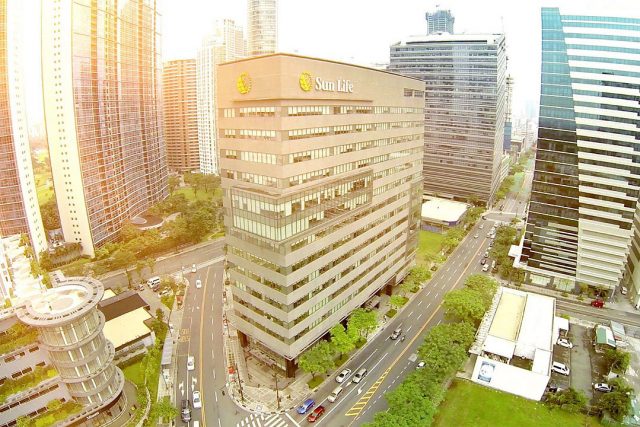
SUN LIFE of Canada (Philippines), Inc. (Sun Life Philippines) kept its place as the top life insurer in the country in terms of premium income in the first nine months of 2025.

The insurer booked a premium income of P44.73 billion in the period as it improved its services and expanded its offerings, it said in a statement on Thursday.

It attributed its performance to its client-centric approach, the commitment of its advisors, and the dedication of its employees.

“At Sun Life, our commitment goes beyond providing financial solutions. As we celebrate our 130th anniversary, we strive to be the Filipinos’ Partner for Life in their journey towards brighter futures. We will continue to innovate and deliver services that empower them to achieve their goals and dreams,” Sun Life Philippines Chief Executive Officer and Country Head Benedict C. Sison said.

The company said it will work to maintain its top spot in the industry to meet the changing needs of its clients while ensuring sustainable growth and positive community impact.

“Sun Life Philippines continues to expand its product offerings and enhance its services to meet the evolving needs of Filipino families in an increasingly dynamic financial landscape.”

The life insurance sector booked a premium income of P299.45 billion in the first nine months of 2025, up by 13.77% from the same period a year prior, the Insurance Commission said. — A.M.C. Sy

Cautious consumption seen weakening seasonal hiring

https://www.philstar.com

By Chloe Mari A. Hufana, Reporter

SLOW AND UNEVEN government aid after recent typhoons could dampen fourth-quarter growth as households curb holiday spending following the hit to their incomes and job opportunities, analysts said.

Federation of Free Workers President Jose G. Matula said delayed assistance and fewer seasonal job openings could dampen holiday consumption, a key driver of gross domestic product (GDP).

“When there are fewer seasonal hires, wallets get thin,” he said via Viber, adding that families might postpone purchases and trim nonessential spending.

The Philippines posted modest economic growth in the third quarter, weighed down by the impact of natural disasters.

Third-quarter growth slowed to 4% year on year, from 5.5% a quarter earlier and 5.2% a year earlier.

The slowdown was largely driven by faltering infrastructure spending, as a high-profile corruption probe into government construction projects — particularly flood-control works — delayed billing and disbursements.

Private consumption, which accounts for more than 70% of GDP, slowed to 4.1% in the third quarter from 5.3% in Q2, dragged down by declining consumer confidence.

The labor market in September was also negatively impacted by natural disasters, as reflected in the most recent jobs report .

The Philippine Statistics Authority reported a 3.8% jobless rate for the month, weakening from 3.7% a year earlier.

September typically marks the start of the holiday season in the Philippines, when businesses ramp up hiring to meet rising demand in the run-up to December.

Mr. Matula called on the government to fast-track emergency job programs, and front-load public works so that “people regain (working) hours now, not after the holidays.”

“Relief work programs like Tulong Panghanapbuhay sa Ating Disadvantaged/Displaced Workers (TUPAD) and cash-for-work reach some displaced workers, but the support is inadequate and too slow,” he noted.

He said payouts from emergency employment schemes remain inconsistent, and most temporary jobs last only a few days — insufficient to replace lost income.

“Relief work should pay at least the regional minimum, be released on time, and automatically start after calamities,” he said.

He urged the government to link short-term cleanup work to long-term reconstruction jobs “with safety gear, proper hours, and union participation,” adding that success should be measured “by paid hours and decent jobs, not photo-ops.”

Labor Secretary Bienvenido E. Laguesma acknowledged that natural calamities have disrupted labor market conditions.

“Natural disasters act as (an) economic shock or disruptor that affects business spending, even leading to downsizing or, at times, closure, lower consumer confidence and demand, and even restrict(ing) availability and mobility of work-ers,” he said via Viber.

He said these factors are expected to weigh on near-term labor performance, but maintained that the overall outlook remains steady.

“We continue to see stable employment trends based on the last two months of the Labor Force Survey, which are well above our target of a 94–95% employment rate,” he added.

He has expressed hope that hiring will pick up in the runup to December.

The holidays might not bring its usual boost to the labor market this year, as weaker exports and recent natural disasters curb seasonal job creation, according to University of the Philippines School of Labor and Industrial Rela-tions Assistant Professor Benjamin B. Velasco.

He said holiday hiring in retail, services, and manufacturing is expected to soften, curbed by sluggish demand for garments and electronics — two of the country’s key export earners.

“Seasonal jobs are not as robust this year,” he said via Messenger, adding that external headwinds and domestic disruptions have made employers more cautious in expanding their workforce.

John Paolo R. Rivera, a senior research fellow at the Philippine Institute for Development Studies, noted the critical role of household consumption.

“The holidays usually bring the biggest boost to retail, food, travel, and services. A strong rebound in spending can help offset weaker government disbursements or exports,” he said via Viber.

Mr. Rivera added that income losses and job disruptions from the typhoons could suppress growth if consumers hold back.

“Private consumption is very sensitive to income and confidence, especially among lower- and middle-income households who drive the bulk of holiday demand. When families prioritize essentials or rebuild after disasters, dis-cretionary purchases drop, which could temper retail and services growth even into early 2026.”

Economist Reinielle Matt M. Erece of Oikonomia Advisory and Research, Inc. noted that consumption remains the economy’s strongest pillar, accounting for the largest share of GDP and serving as the country’s main buffer against external shocks.

“This quarter, we may expect consumption to be the primary driver of growth. Especially as the holiday season takes effect, when households typically receive higher incomes and demonstrate higher propensity to spend,” he said via Viber.

“However, recent calamities may drive spending down as households focus more on preparations and recovery rather than consumption. In addition, weaker government spending may also dampen job absorption in govern-ment and even in the construction sector.”

Mr. Erece added that consumption growth may slow “more than desired” this quarter but said recovery could be possible next year if reforms move ahead.

“We may see proactive measures in 2026, not just in economic reforms but also politically as well. If we improve institutions sooner, recovery is definitely possible in 2026,” he added.

The public works scandal has rippled across key sectors of the economy, including the stock market and the peso. Investor confidence has taken a hit, with shares in construction and infrastructure-related firms sliding as deep-rooted vulnerabilities in government oversight were exposed.

The peso, meanwhile, has struggled against the dollar, reflecting broader concerns about fiscal policy and the potential slowdown in public investment.

Mr. Velasco urged policymakers to seize this moment as a wake-up call to adopt a more progressive industrial policy that strengthens domestic linkages in agriculture and manufacturing.

“We need an industrial strategy anchored not just on export markets, but also on local demand and national goals such as food security, green jobs, and sustainable growth,” he said.

Mr. Rivera noted that preventing a broader economic slowdown will depend on prompt government aid, stable prices, and a quicker recovery in disaster-hit areas to sustain household spending and support overall economic growth.


Now You See Me movie sent new cast members to magic school

LOS ANGELES — For Ariana Greenblatt, learning magic tricks at The Magic Castle clubhouse in Los Angeles was the best part of starring in the third installment of the American heist film, Now You See Me: Now You Don’t.

“Before opening hours, we would spend a couple hours in there and just learn as much as we possibly could in the time given, and it was so much fun,” the former Disney Channel star said of the month the actors spent at the home of the Academy of Magical Arts learning illusions seen in the film.

“It’s so weird. I feel like we have newfound skills, which is my favorite part of this job,” said Ms. Greenblatt, who received several film award nominations for her role in Barbie.

The new movie, directed by Ruben Fleischer, features returning actors Jesse Eisenberg, Woody Harrelson, Dave Franco, Isla Fisher, and Morgan Freeman, along with newcomers Justice Smith, Dominic Sessa, Rosamund Pike, and Ms. Greenblatt.

The film is now showing in the Philippines with an MTRCB Rating of PG.

The film, distributed by Lionsgate and opening in US theaters on Friday, continues the story of “The Four Horsemen” as they reunite to recruit three skilled illusionists for a high-stakes robbery of the world’s largest “queen dia-mond” from a crime syndicate.

“We learned so much… a lot of card tricks,” said Mr. Sessa, whose debut in The Holdovers earned him the Critics’ Choice Movie Award for Best Young Performer. “Ariana did a lot of pickpocketing (in her role), and she was con-stantly trying to use me as her prop to practice on.”

For franchise veteran Mr. Franco, the magic tricks he learned over years of working on the films paid off.

“We’re playing the greatest magicians in the world. So, as an audience, when you’re watching us, you want to believe that we’re actually doing some of these tricks,” he said.

“Our director, Ruben, encouraged us to learn as much as we could to make it look as real as possible,” he added, noting that his card-throwing skills have become especially advanced.

It was important to Mr. Fleischer and the cast that the illusions looked convincing.

“The director really wanted to make sure that the magic was real, that it wasn’t just computer-generated effects, which meant for us as actors, practicing every day, the tiniest little hand moves,” fellow franchise veteran Mr. Ei-senberg said. — Reuters

Managing difficult employees

My long-time worker has turned difficult, absenting himself on critical days, missing out on a routine task that must be delivered every Monday. Due to his frequent absences, I’m forced to do it alone, or with the help of others who must work overtime. I feel he’s trying to sabotage our work. What’s the cure? — Fat Cat.

Some people vanish when the heat is on. You see them all week — laughing, chatting, sipping coffee — until crunch time arrives, and suddenly, they’re “on emergency leave,” “not feeling well,” or “unreachable due to poor signal.” Congratulations! You’ve just met the master of strategic absenteeism.

I was in the same boat before. Three decades back, our department was tasked to produce a print copy of an eight-page bi-weekly newsletter that needed to hit everyone’s desks every first and third Monday of the month. That means all hands on deck on Thursdays and Fridays — editing, proofreading, getting approval, and rushing files to the printer on Saturday.

My assistant, who knows the production cycle better than anyone, used to disappear just when I needed him most. Coincidence? That’s unlikely.

So how do you manage a worker who’s absent not by accident, but by habit and design?

I talked to him about it several times, but he came off convinced I could do it without him. Several weeks after that, he resigned, to my relief. He was eventually replaced by an outsider. Problem solved.

SEVEN-STEP APPROACH

Looking back, if he didn’t resign, I would have resorted to the following measures, with an eye towards demonstrating empathy, holding people accountable, while showing just the right dose of managerial spine:

One, diagnose before you prescribe. Before resorting to any disciplinary action, start with curiosity instead of confrontation. People don’t usually sabotage themselves without reason — though some do it with surprising dedication.

Have a serious, private talk with the employee. Keep it conversational, not confrontational: “I’ve noticed you’re often away on critical days, which are our key production days. What’s going on?” The answer, even if it’s silence, will tell you a lot.

Two, clarify expectations in writing. Make expectations explicit. Ambiguity is the best friend of the underperformer. Say something like: “Since our task must be ready by the first and third Monday, your presence on the last two working days prior is critical.

“Let me know if you have other ideas.” Putting everything in writing eliminates many alibis. It also draws a professional boundary: this isn’t about your feelings — it’s about performance.

Three, document, but don’t dramatize. If the absences continue, document every instance. Record the date, the reason (if any), and the operational impact. This creates a factual trail that protects you from claims of bias. Managers sometimes lose battles not because they’re wrong, but because they failed to keep records.

And they failed to act accordingly. In other words, don’t rely on memory. Memory fades ­— documentation doesn’t.

Four, reassign responsibility strategically. The best way to handle a saboteur is to take away his leverage. Reassign his critical tasks to others, even temporarily, including outsourcing the work outside of the organization. This achieves two things:

It ensures work continuity. Also, it sends a clear message that no one is indispensable.

Five, consult Human Resources (HR). Allow HR to enter the picture. But don’t march in waving frustration. Bring data: attendance logs, written reminders, e-mail summary of your discussions. HR professionals appreciate managers who have done their homework.

Frame the issue as a performance management issue, not a personality conflict. You’re not attacking the person — you’re addressing a behavior that disrupts workflow.

Six, reinforce the culture of dependability. Don’t let one person’s inconsistency and indispensability poison the team’s morale. Praise the reliable ones publicly. Give credit to people who did a lot even if the job is not part of their job description.

Positive reinforcement creates peer pressure — the healthy kind. When dependable employees see that their reliability is noticed, it strengthens the culture.

Seven, be prepared to let go. If all else fails, it may be time to part ways. Repeated absenteeism during critical days is not just a scheduling issue — it’s a trust issue. You can train skills, but you can’t train integrity.

As Peter Drucker warned, “The worst thing you can do for a person who is wrong for the job is to keep him.” Letting go isn’t punishment; it’s protection — for the team, the schedule, and your sanity.

LEADERSHIP TEST

When someone habitually disappears during the busiest days, they’re not just absent physically — they’re absent in spirit. The manager’s role is to convert that absentee into a “non-entity” without him knowing it. Eventually, he will get the message.

In business, deadlines don’t wait for anyone — especially for someone who treats work like a part-time hobby. A manager’s job isn’t just to produce results — it’s to ensure that people show up, literally and figuratively, to make those results happen.

So, when your assistant conveniently hides behind those emergency leaves, remind yourself: this isn’t just a personnel issue. It’s a leadership test.


Consult your workplace issues for free. E-mail REY ELBO at elbonomics@gmail.com or DM him on Facebook, LinkedIn, X or via https://reyelbo.com. Anonymity is guaranteed.

At COP11, the Philippines must promote health and stop carrying the tobacco industry’s agenda

STOCK PHOTO | Image from FREEPIK

By Ulysses Dorotheo

As countries gather in Geneva for the 11th session of the Conference of Parties (COP11) to the World Health Organization (WHO) Framework Convention on Tobacco Control (FCTC) on Nov. 17 to 22, this question looms large: Will the Philippines stand firm to protect public health or will it protect the tobacco industry? If history is any indication, there are grave concerns that tobacco industry influence may again overshadow the nation’s public health commitments.

In 2005, the Philippines ratified the WHO FCTC, committing to protect public health policies from the commercial and vested interests of the tobacco industry, as mandated under FCTC Article 5.3. This means government decisions on tobacco control must be made without industry influence, regardless of the industry’s repeated claims about supposed “economic benefits,” because reality tells another story.

While tobacco excise taxes earn the government about P150 billion annually, this pales against the enormous costs of nicotine addiction and tobacco-caused diseases, disabilities, and deaths. In addition to the P263-billion annual economic burden from tobacco use, more than 112,000 Filipinos are killed every year by tobacco-caused diseases, a staggering and preventable toll. Despite these human and socioeconomic costs, the country implements policies that fail to protect people and allow the tobacco industry to flourish.

This vulnerability is reflected in the Philippines receiving five Dirty Ashtray Awards at previous COPs, an international symbol of shame that calls out governments that speak as if they represented tobacco industry interests. This year, with the country’s rank in the 2025 Global Tobacco Industry Interference Index deteriorating to 68th out of 100 countries, we are again at high risk for international disrepute and perhaps more Dirty Ashtrays. In the 2025 FCTC Scorecard, the Philippines also recorded one of the steepest declines in ASEAN for failing to safeguard government policies from tobacco industry interference.

This regression reflects persistent, well-funded tobacco industry efforts to weaken regulations and create a new generation of nicotine users. While adult cigarette smoking prevalence declined from 28.3% in 2009 to 18.5% in 2021, e-cigarette use among Filipino youth is rising at alarming rates. In this context, the tobacco industry is attempting to rebrand itself as a partner in “harm reduction” and pretending to care about Filipinos, when this is just a deliberate business strategy to ensure its profits by keeping people addicted.

In public health practice, genuine harm reduction helps smokers quit nicotine for good. The tobacco industry, however, has distorted this principle to market e-cigarettes, heated tobacco products, and nicotine pouches as “safer alternatives,” while continuing to aggressively market and profit from conventional cigarettes. The goal of the industry is not to eliminate nicotine addiction but to sustain and expand it, especially among the youth.

Big Tobacco’s dual strategy is clear; while publicly claiming to drive a “smoke-free future,” it is increasing cigarette sales globally and in the Philippines. Meanwhile, these new nicotine products are designed to look cool and are marketed with flavors to appeal to younger customers. The result is not genuine harm reduction, but harm creation.

The industry’s fake harm reduction narrative is being amplified through groups that present themselves as supposedly independent “consumer advocates,” “health champions,” or “scientific experts,” but they simply echo the industry’s misleading messages. They focus on unproven “reduced harm,” while dismissing substantial evidence of health risks and aggressive youth targeting. As Singapore’s Minister of Home Affairs recently highlighted, these groups “are essentially paid mouthpieces for the tobacco industry,” peddling “snake oil” to mislead governments and citizens with overstated claims of safety. The Minister also noted that such arguments do not reflect mainstream public health evidence and can even normalize risky behavior among the youth.

The passage of the Philippines’ Vape Law, which lowered the minimum age of access to nicotine products from 21 years to 18 and shifted regulatory authority away from the health sector, led to a rise in youth vaping and widespread marketing on social media platforms. Instead of reducing smoking, this law opened new pathways to nicotine addiction for younger generations and allowed these fake harm reduction narratives to thrive. These outcomes are not coincidental. They are preventable consequences of policymaking that is shaped by industry influence rather than genuine public health principles.

With more than 110 million Filipino lives on the line, the promise that “Sa Bagong Pilipinas, Bawat Buhay ay Mahalaga” (“Every Life Matters in the New Philippines”) must translate into clearly pro-health policy positions at COP11. If every life truly matters, the entire Philippine government (trade, agriculture, labor, finance, social welfare, justice, local government, foreign affairs, and health) must uphold Article 5.3 by ensuring that the government delegation’s positions on tobacco control are free from industry influence, including groups that indirectly represent industry interests. This also means that the government must reject the industry’s misuse of the term “harm reduction” and ensure that regulations are enforced and strengthened to eliminate youth access by prohibiting tobacco marketing and banning all flavored tobacco and nicotine products.

COP11 is a critical opportunity for the Philippine government to pivot toward genuine public health leadership. Genuine adherence to its WHO FCTC commitments requires rejecting industry narratives, ensuring that tobacco and nicotine use are addressed through evidence-based interventions free from tobacco industry interference.

The Philippine government can either continue down the path influenced by the industry, or it can take this opportunity to put our people first. The question is whether political will exists to make it happen.


Dr. Ulysses Dorotheo is a Filipino neuro-ophthalmologist and public health physician and the executive director of the Southeast Asia Tobacco Control Alliance (SEATCA).

ADVERTISEMENT
ADVERTISEMENT