Home Blog Page 7

Crowds gather in Cameroon for biggest event of Pope Leo’s Africa tour

Pope Leo XIV | Screenshot from Vatican Media Livestream

DOUALA — Thousands of people were gathering early on Friday in Douala, Cameroon’s largest city and economic hub, for a Mass with Pope Leo that will likely be the biggest event of the pontiff’s four-nation Africa tour.

The Vatican is expecting about 600,000 to fill streets around Japoma Stadium to be part of the celebration and hear an address from the pope, who has become outspoken on war and inequality and drawn the ire of US President Donald Trump.

Amid a heavy security presence, Cameroonians began filing into the stadium on Thursday, staying there overnight so they could witness Leo’s homily in person.

Leo, the first US pope, on Thursday criticized leaders who spend billions on wars and, in unusually forceful remarks in Cameroon, said the world was “being ravaged by a handful of tyrants”.

Leo was due to land in Douala around 9:55 a.m. (0855 GMT), after a one-hour flight by plane from Yaounde, Cameroon’s capital. He will spend about four hours in Douala, where he will also visit a Catholic hospital, before returning to Yaounde.

On a 10-day tour across Africa, the pontiff has also decried violations of international law by “neocolonial” world powers and said “the whims of the rich and powerful” threaten peace.

Cameroon, an oil- and cocoa-producing country, faces grave security challenges, including a simmering Anglophone conflict in which thousands of people have been killed since 2017.

Crowds greeting the pope on his visit have been enthusiastic, lining the streets along his routes and wearing colorful fabrics featuring images of his face.

Bishop Léopold Bayemi Matjei called Leo’s visit “a moment of great joy” and said he hoped it meant God would bless Cameroon.

“Our country needs a lot of blessing, a powerful blessing, so that hope will come to rise again,” said the bishop, who leads the Church in Obala, about an hour north of Yaounde. — Reuters

Myanmar cuts ex-leader Aung San Suu Kyi’s sentence, frees former president

MYANMAR’s former leader Aung San Suu Kyi — REUTERS

Myanmar has reduced the sentence of imprisoned ex-leader Aung San Suu Kyi, her lawyer told Reuters on Friday, as part of an amnesty by a new president who ousted her government in a coup five years ago.

Ms. Suu Kyi, 80, was serving a 27-year sentence for a litany of offenses her allies said were politically motivated to keep her at bay, ranging from incitement and corruption to election fraud and violating a state secrets law.

The sentence has been cut by one-sixth, but it remains unclear whether the Nobel Peace Prize winner will be allowed to serve the rest of her sentence under house arrest, the lawyer said.

The wildly popular Ms. Suu Kyi, who had dismissed the charges against her as “absurd”, has not been seen in public since the end of her marathon trials, and her whereabouts have been unknown.

Earlier, state media reported that President Min Aung Hlaing approved an amnesty for 4,335 prisoners, the third such move in the past six months. Amnesties typically take place in Myanmar each year to mark Independence Day in January and New Year in April.

Among the prisoners freed was Win Myint, who served as president from 2018 until the 2021 military coup.

Win Myint, an ally of Ms. Suu Kyi, was “granted a pardon and the reduction of his remaining sentences under specified conditions”, state broadcaster MRTV said.

A spokesperson for the military-backed government did not immediately respond to a request for comment.

The 2021 coup against Win Myint and Ms. Suu Kyi’s democratically elected government was led by Min Aung Hlaing. It plunged the Southeast Asian country into a nationwide civil war that continues to rage.

Min Aung Hlaing was elected president on April 3 following polls in December and January during which the opposition was stifled and largely absent. Critics and Western governments dismissed the vote as a sham designed to entrench military rule behind a democratic facade. — Reuters

Countries to discuss Hormuz mission for when conflict ends

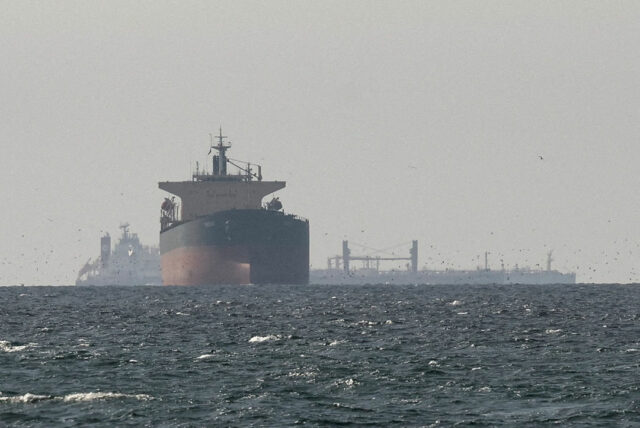
Tankers sail in the Gulf, near the Strait of Hormuz, as seen from northern Ras al-Khaimah, near the border with Oman’s Musandam governance, amid the US-Israeli conflict with Iran, in United Arab Emirates, March 11, 2026. — REUTERS

PARIS — France and Britain will chair a meeting on Friday of around 40 countries aimed at signaling to the United States that some of its closest allies are ready to play a role in restoring freedom of navigation in the Strait of Hormuz once conditions allow.

Iran has largely closed the strait to ships other than its own since the start of US-Israeli air strikes on February 28. On Monday, Washington imposed a blockade on ships entering or leaving Iranian ports.

US President Donald Trump has called on other countries to help enforce the blockade and has criticized NATO allies for not doing so.

Britain, France and others say joining the blockade would amount to entering the war, but they have said they would be willing to help keep the strait open once there is a lasting ceasefire or the conflict ends.

The initiative being discussed does not for now include the United States or Iran, though European diplomats said any realistic mission would ultimately need to be coordinated with both. Washington will be briefed on the outcome of the talks.

SAFETY OF STRANDED SEAFARERS
According to a note sent to invited nations, the aim of the meeting is to reaffirm full diplomatic support for unfettered freedom of navigation through the Strait of Hormuz and the need to respect international law.

The meeting will also address economic challenges facing the shipping industry and the safety of more than 20,000 stranded seafarers and trapped commercial vessels.

It will also outline preparations for the deployment – when conditions are met – of a strictly defensive multinational military mission to ensure freedom of navigation.

A chair’s statement is expected at the end of the meeting to give a more tangible sense of what such a mission could entail, although it is not expected to spell out what specific countries might contribute.

RESOURCES WILL DEPEND ON SITUATION, OFFICIAL SAYS
President Emmanuel Macron, British Prime Minister Keir Starmer, German Chancellor Friedrich Merz and Italian Prime Minister Giorgia Meloni will attend the meeting in Paris, while officials from across Europe, Asia and the Middle East will join by video conference.

China has been invited, although it was not clear whether it will take part.

Several diplomats said the mission might never materialize if the situation in Hormuz returned to normal.

Others said shipping companies and insurers could seek such a deployment during a transitional phase to provide reassurance.

“It can involve intelligence sharing, mine-clearance capabilities, military escorts, information procedures with neighboring countries and more,” a senior French official briefing reporters said.

“The objective is clear, and the resources deployed will naturally depend on the situation.”

Britain said Friday’s talks would feed directly into a multinational military planning meeting next week. — Reuters

Cignal partners with Samsung to expand viewership, accessibility

[From L-R] Samsung Electronics Philippines (SEPCO) Display Business Manager Ben Kim, SEPCO Integrated B2B Business Manager Paul Won Hyo Jung, SEPCO Head of Integrated B2B Kit Andal, SEPCO President, Roman Han, Mediaquest Holdings, Inc., President & CEO Victorico Vargas, CIGNAL First Vice-President & Chief Revenue Officer (CRO) Gerard L. Milan, and Mediaquest Holdings Inc. CFO Christopher Daniel Lizo.— SAMSUNG

Cignal said on Friday that its partnership with Samsung Electronics Philippines will help boost viewership and increase accessibility across its content and channels nationwide.

“Cignal’s partnership with Samsung is key to expanding our viewership,” MediaQuest Holdings, Inc., President & Chief Executive Officer Victorico “Ricky” Vargas said in a news release.

“This allows us to bring high-quality content to millions of Filipinos and meet them where they are,” he added.

Under the partnership, blockbuster movies, series, and other content from CIGNAL TV, CIGNAL Play, Pilipinas Live, and CIGNAL Super will be available on Samsung mobile devices through the Cignal app.

Cignal subscribers can also enjoy bundled offers with Samsung products, while Samsung users can gain access to pre-installed content from homegrown artists and filmmakers.

The partnership also includes joint packages for corporate clients and campaigns that promote both brands to Filipino consumers, expected to commence within 2026.

“We are proud to make Filipino programs and movies accessible to as many Filipinos as possible with this partnership,” Samsung Electronics Philippines President Roman Han said in a news release.

“As we take this step with Cignal, we will continue to work towards accelerating digital content adoption through our large device install base in the Philippines,” he added.

MediaQuest Holdings, Inc., chaired by Manuel V. Pangilinan, is the holding company of Cignal TV.

Hastings Holdings, Inc., a unit of PLDT Beneficial Trust Fund subsidiary MediaQuest, has a majority stake in BusinessWorld through the Philippine Star Group, which it controls. — Almira Louise S. Martinez

Approved construction permits fall 2.2% in February on weak residential demand

PHILSTAR FILE PHOTO

By Heather Caitlin P. Mañago, Researcher

APPROVED building permits inched down 2.2% year on year in February, as high material costs and weaker residential demand weighed on construction activity.

Preliminary data from the Philippine Statistics Authority (PSA) showed building projects covered by the permits numbered 14,996 in February from 15,341 a year earlier.

This was a turnaround from the 3.2% expansion in February 2025 and the revised 1.6% growth in January 2026.

This was the weakest pace in two months or since the 2.6% drop in December 2025.

In February, construction projects covered 3.58 million square meters (sq.m) of floor area, down 3.5% year on year from 3.71 million sq.m.

These building projects that received approval were valued at P56.34 billion, 28.1% higher than a year earlier when it reached P43.99 billion.

“Downbeat economic recovery prospects and mounting building materials costs weighed on construction project appetite for February,” Marco Antonio C. Agonia, an economist at the University of Asia and the Pacific, said in an e-mail.

“The dip in approved building permits in February was mainly driven by weakness on the residential side,” Ser Percival K. Peña-Reyes, director of the Ateneo Center for Economic Research and Development, said in a Viber message.

Mr. Peña-Reyes attributed the contraction to a combination of high interest rates dampening housing demand, softer household spending, and cautious developers.

“It was largely the result of tighter financing conditions and softer housing demand outweighing modest gains in nonresidential construction.”

In February, permits for residential projects, which accounted for 61.8% of the total, fell 5.8% to 9,273.

These projects were valued at P16.42 billion, down from P18.67 billion a year earlier.

Single homes, which accounted for 81.7% of the residential category, fell 9.4% year on year to 7,578.

Applications for apartment buildings also plunged 24.4% to 1,020 from 1,350 in February last year.

Meanwhile, applications for duplex or quadruplex homes soared 381.6% to 549 during that month.

Nonresidential projects, on the other hand, increased 3.4% year on year to 3,542 from 3,426 in February 2025. This accounted for 23.6% of the total.

These permits were valued at P36.41 billion, rising 67% from a year earlier when it reached P21.81 billion.

Meanwhile, approved commercial construction applications inched up 0.3% to 2,426. These made up 68.5% of all nonresidential projects.

Industrial permits also rose 13.7% to 308, while institutional projects climbed 17.6% to 595 approvals.

Agricultural projects totaled 171 approvals, 24.8% higher than the 137 approvals a year earlier.

Meanwhile, other nonresidential works declined 54.8% year on year to 42 approvals in February.

Permits for additions, or construction that increases the height or area of an existing building, also fell 4.1% to 514 approvals.

Alteration and repair permits totaled 1,098 in February, 8% lower from a year earlier and were valued at P2.46 billion.

By region, Calabarzon (Cavite, Laguna, Batangas, Rizal, and Quezon) had the most approved construction projects during the period, accounting for 27.4% of the total with 4,113 permits.

This was followed by Central Luzon (13.9% share with 2,090 permits), and Ilocos Region (9.3% share with 1,390 permits).

“The larger project shares in Calabarzon, Central Luzon, and Ilocos Region show property developers’ preference for projects in suburban areas outside of the dense Metro Manila core,” said Mr. Agonia.

Mr. Peña-Reyes added that this trend likely reflects aggressive decentralization and infrastructure projects unlocking new growth corridors.

“We expect further declines in the coming months as the effects of the Middle East war weighs on property demand and pushes up construction costs,” Mr. Agonia said.

He also noted that elevated borrowing costs resulting from the conflict are also hampering developer appetite.

Mr. Peña-Reyes, meanwhile, said that while a continued sharp decline is unlikely, a “weak-to-flat trend” is the more realistic near-term outlook.

“One can expect mixed data in March and a gradual recovery over the rest of 2026, rather than a strong rebound,” he added.

The PSA said construction statistics are compiled from the copies of original application forms of approved building permits as well as from demolition and fencing permits collected monthly by the agency’s field personnel from the offices of local building officials nationwide.


DepEd considers solarization of public schools by 2027

A man inspects solar panels in this file photo. — PHILIPPINE STAR/EDD GUMBAN

The Department of Education (DepEd) said it is looking into installing solar power panels in public schools next year to conserve electricity and cut costs amid the national energy crisis.

“We’re studying the possibility of solarization of our public schools,” Education Secretary Juan Edgardo “Sonny” M. Angara told reporters in a briefing on Thursday.

“This is a long-term solarization, putting solar panels on the roofs of our public schools because we’re seeing it done a lot in some government buildings,” he added.

Mr. Angara noted that Energy Secretary Sharon S. Garin is open to the idea, and that it aligns with President Ferdinand R. Marcos Jr.’s policy on renewable energy.

“So definitely I can see that this is a good option to add solar panels in our schools to be economical. At the same time, you’re helping the national effort to conserve energy,” he said.

The project, however, is scheduled for next year due to a lack of funding in the agency’s 2026 budget.

“The problem is, as you know, with the government, you have to budget a year ahead. If we want to do it, we don’t have a budget for it yet, unless we have savings or we get it from our maintenance funds,” Mr. Angara said.

“Realistically speaking, if we’re looking at doing it on a large scale, it will be for next year,” he added.

In addition to the energy conservation efforts, the DepEd also issued protocols and flexible work arrangements, following the Memorandum Circular (MC) No. 114 issued by Malacañang in March.

Some of these protocols include maintaining a standard thermostat setting of 24°C for air-conditioned spaces, activating sleep settings on all office equipment, strictly turning off non-essential lights and electronic equipment during lunch breaks and after hours, and minimizing elevator usage.

For the upcoming opening of classes in June, Mr. Angara said the agency has yet to decide whether to transition to blended learning or maintain in-person classes.

“Regarding blended learning, we still don’t have a [directive] yet because our bias is really towards face-to-face instruction.”

DepEd will roll out its trimester system for School Year 2026-2027, replacing the traditional four-quarter system, along with the strengthened Senior High School (SHS) curriculum, marking a shift in the country’s basic education system. — Almira Louise S. Martinez

Palace OKs P4-billion worth of loans for MSMEs

PHILIPPINE INFORMATION AGENCY

President Ferdinand R. Marcos Jr. on Friday approved the P4-billion emergency loan program for micro, small, and medium enterprises (MSMEs) to help businesses affected by the war in the Middle East.

“President Marcos has cleared a program for MSMEs in distress as a result of the global oil shock to avail of easy loans ranging from P30,000 to P20 million each,” Executive Secretary Ralph G. Recto said in a statement.

Mr. Recto added that the new government loan program is a “welcome development for MSMEs in light of the perennial credit squeeze in the country.”

Easy loans offer low interest rates and are repayable over five years, helping small businesses manage rising logistics costs, cash flow constraints, and supply chain disruptions amid the current oil crisis.

The financial assistance, to be implemented by the Department of Trade and Industry (DTI) and its financing arm, Small Business (SB) Corp., also offers a one-year grace period on principal and interest payments.

Applicants can apply for the program online, and the processing takes seven to 10 days.

Citing the data from the Bangko Sentral ng Pilipinas (BSP), Mr. Recto noted that bank lending for MSMEs increased by 5% to PHP574.8 billion as of end-December 2025 from P546.22 billion in the same period a year ago.

This represents only 4.73% of the P12.143-trillion total bank loan portfolio in the country.

“The President has envisioned this loan program as a lifeline to MSMEs against the backdrop of limited access to financing, more so at this time of economic challenges sweeping the globe,” he said.

The local statistics agency said the MSMEs comprise about 99.6% of the locally registered businesses in the Philippines. Of which, 90% are micro enterprises, 10% are small, and 1% are medium.

The sector also accounts for about 65% of total employment in the country, as of 2023. — Almira Louise S. Martinez

Two decades of excellence: Euro Motor celebrates 20th anniversary with landmark debut at Makina Moto Expo 2026

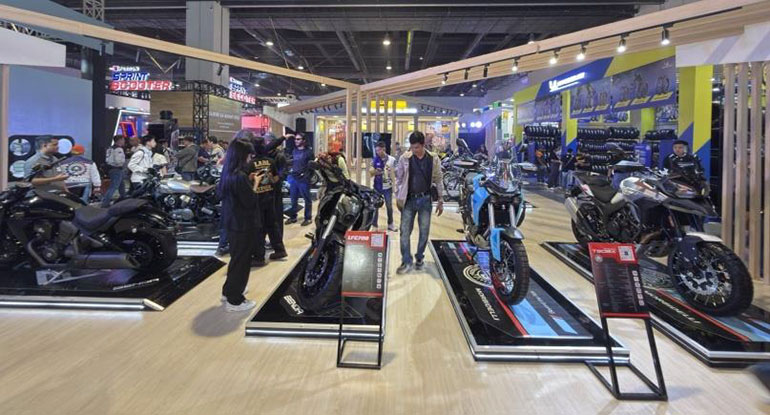
Euro Motor, a pioneer in providing accessible and dependable mobility for Filipinos, marked a historic milestone at the Makina Moto Expo 2026. The event served as the brand’s official debut at the prestigious expo, coinciding with its 20th anniversary of operations in the Philippines.

Since its entry into the local market in 2006, Euro Motor has built a legacy of providing high-quality, reliable motorcycles at competitive price points. Over the last two decades, the brand has become a staple for Filipino riders, offering machines designed specifically for the unique demands of local roads — whether for business, daily commuting, or urban leisure.

A Multi-Brand Showcase

Sharing the spotlight at the Euro Motor pavilion were partner brands Benda and Morbidelli, showcasing a diversified portfolio that caters to different segments of the riding community. This collaborative display highlighted Euro Motor’s growth from a focused utility provider to a versatile player in the Philippine motorcycle industry.

The Pillars of Euro Motor: A Diverse Lineup

Visitors at the expo were treated to a comprehensive look at Euro Motor’s current offerings, categorized into three strategic segments:

  • Business Units: Anchored by the legendary Daan Hari Series, these units are engineered for heavy-duty use. Often paired with sidecars, they remain the trusted choice for tricycle drivers nationwide due to their durability and low maintenance costs.
  • Moped & Underbone Series: With engines ranging from 110cc to 150cc, these models provide the perfect balance of fuel efficiency and practicality for the modern Filipino commuter.
  • Scooters: Ranging from 125cc to 180cc, this lineup focuses on comfort, style, and ease of use, meeting the needs of city riders without compromising on the brand’s hallmark reliability.

A Glimpse of the Future: Concept Models

While celebrating twenty years of heritage, Euro Motor also looked toward the horizon. The brand held a special soft-launch of concept motorcycles, signaling a new era of innovation. These concept models feature modern design languages and advanced technologies, reaffirming Euro Motor’s commitment to evolving alongside the needs of the Filipino rider.

The Sincerity of Aftersales: Partnering with Makoto

Central to the Euro Motor experience is the peace of mind provided by Makoto Philippines. A trusted name in motorcycle spare parts since 1998, Makoto — whose name translates to “Sincerity” — ensures that Euro Motor owners have access to high-quality, affordable genuine parts through an extensive nationwide dealer network. This partnership ensures that every Euro Motor on the road is maintained to the highest safety standards.

The Smart Choice for the Filipino Rider

“Our participation in Makina Moto Expo 2026 is more than just a debut; it is a celebration of 20 years of partnership with the Filipino people,” the company stated in a closing remark. “From the tricycle drivers who power our local economies to the daily commuters and urban explorers, Euro Motor remains dedicated to being ‘The Smart Choice’ — providing dependability today and innovation for the years to come.”


Spotlight is BusinessWorld’s sponsored section that allows advertisers to amplify their brand and connect with BusinessWorld’s audience by publishing their stories on the BusinessWorld Web site. For more information, send an email to online@bworldonline.com.

Join us on Viber at https://bit.ly/3hv6bLA to get more updates and subscribe to BusinessWorld’s titles and get exclusive content through www.bworld-x.com.

PHL crisis response must stay targeted amid thin fiscal buffers, says IMF

The International Monetary Fund's logo at its headquarters in Washington, D.C. — KATHERINE K. CHAN

By Katherine K. Chan, Reporter

WASHINGTON, D.C. — The Philippines’ response to the Middle East war-driven energy crisis should remain time-bound and targeted to help preserve its limited fiscal buffers as price shocks may persist, the International Monetary Fund (IMF) said.

Krishna Srinivasan, director for the Asia and Pacific Department at the IMF, said it is important for cash-strapped economies in the region to only implement focused support to avoid further straining their fiscal positions.

“Why do we say that? Because buffers have come down, and we don’t know how long this shock will last,” Mr. Srinivasan told a press briefing here on Thursday.

“So, providing targeted support is very important, and that applies in the case of (the) Philippines. Debt levels aren’t very low; it’s still at about 60%. So, there’s not much by way of fiscal buffers.”

Since the war in the Middle East erupted in late February, the government has implemented several support measures mainly to ease the financial burden for the public transport sector and consumers.

These include cash aid and a P10-per-liter fuel subsidy for public transport drivers, a 20% fare discount for commuters, as well as the suspension of the excise tax on kerosene and liquefied petroleum gas.

The Department of Finance said the excise tax halt could lead to revenue losses of around P4.1 billion over the next three months.

The crisis poses a fresh challenge to the National Government’s (NG) medium-term fiscal consolidation program, under which it wants to gradually reduce its budget deficit and bring down its outstanding debt, which ballooned during the coronavirus pandemic.

Outstanding NG debt amounted to P17.71 trillion at end-2025, bringing its share in the gross domestic product (GDP) to 63.2%, the highest since the 65.7% posted in 2005. This is above the 60% debt-to-GDP threshold considered by multilateral lenders to be manageable for developing economies.

Keeping support focused on the most vulnerable would prevent the Philippines from further narrowing its fiscal space, which was also affected by a graft scandal related to flood control and infrastructure projects that came to light last year, Mr. Srinivasan said.

“The momentum coming into 2026 was weaker. And this reflects the fact that… sentiment is still weak given the governance issues with these flood control projects, the public flood control projects. So, that was already weighing on sentiment across investors,” he said. “And then comes the shock.”

The IMF now sees Philippine GDP expanding by 4.1% this year, much slower than the 5.6% it earlier projected and the post-pandemic low growth of 4.4% in 2025.

“(The) Philippines is a very energy-intensive economy,” Mr. Srinivasan said. “It relies a lot on imports. So, the shock has a significant bearing on prospects in (the) Philippines.”

Over 90% of the Philippines’ oil supply is sourced from the Middle East, making it vulnerable to shocks emerging from trade disruptions and attacks on energy infrastructure in the region.

The global energy price shock caused double-digit increases in local pump prices in the weeks following the start of the war. As a result, Philippine headline inflation already breached the central bank’s 2%-4% annual goal in March, coming in at 4.1%, which was the fastest pace in nearly two years.

After declaring a year-long energy emergency amid fears of a supply shortage, the government has moved to secure fuel from Japan, Malaysia, India and Oman, among others.

As of April 10, the country’s average fuel stock is estimated to sustain demand for about 50.31 days or 75.55 million liters of consumption.

“So, use your buffers in a very efficient way. And that’s what is important for the Philippines and for other countries in the region, especially those which rely a lot on imports [and] don’t have much by way of physical buffers of oil and gas,” Mr. Srinivasan said.

Marcos says gov’t coordinating with Czech officials for return of ex-lawmaker Co

SCREENSHOT of former Party-list Rep. Zaldy Co’s statement posted on his facebook account. — FACEBOOK.COM/REPZALDYCO

PRESIDENT Ferdinand R. Marcos Jr. on Friday said that the government is coordinating with Czech officials to enable the immediate return of former lawmaker Elizaldy “Zaldy” S. Co.

Mr. Marcos earlier announced on his social media account on Thursday evening that Mr. Co had been captured and detained in Prague.

“Our coordination with Czech authorities continues,” Mr. Marcos said in a Facebook post on Friday.

The President also said that, based on the latest information, the former Ako Bikol representative was stopped at the German border after attempting to enter from the Czech Republic.

“He was denied entry and returned to Czech authorities, where he remains in custody,” Mr. Marcos said.

As the government is in close coordination with the Czech government, Mr. Marcos said that it is ensuring due process will be observed while arranging for his return to the country as soon as possible.

He also said that the government will keep the public informed of further developments.

The Philippine National Police (PNP) said it is prepared to help facilitate Co’s possible return to the country while properly observing all legal processes.

It also said it is already coordinating with concerned agencies and law enforcement counterparts to verify details about Co’s arrest.

Mr. Co is linked to the flood control controversy after being charged with plunder, graft, and malversation over alleged anomalous flood control projects involving ghost and deficient infrastructure works.

The most prominent case involves a P288-million flood control project in Oriental Mindoro that was earlier filed before the Sandiganbayan. — Edg Adrian A. Eva

Canva AI 2.0 brings agentic, automation features to power end-to-end design process

CANVA

VISUAL COMMUNICATION platform Canva has introduced Canva AI 2.0, a new suite of tools that leverage agentic artificial intelligence to redefine the creative process via conversational design.

Launched at the Canva Create 2026 event in Los Angeles on April 16, Canva AI 2.0 marks its shift from a design platform with AI tools to an AI platform with design tools, Cliff Obrecht, Canva chief operating officer, said in an online briefing last week.

He said Canva AI usage tripled over the last year.

The platform now has over 265 million monthly users and over 31 million paid users, he added. Annualized revenue reached $4 billion, with $500 million coming from its business-to-business segment.

Melanie Perkins, Canva chief executive officer, said in the same briefing that the new suite, which marks its “biggest launch ever,” makes Canva a true creative partner through “AI that creates with you.”

Canva AI 2.0 — which is initially launching as a research preview, with access to expand to more users over the coming weeks — transforms Canva into a conversational, agentic platform that can execute ideas just via prompts.

With its new architecture layer, it features conversational design, allowing users to use text or voice prompts to describe what they want to create.

Meanwhile, with agentic orchestration, creatives can turn one prompt into an entire campaign and even delegate tasks.

“It understands your intent, selects the right tools, and coordinates them to create everything you need, in every format. Ask it to ‘create a multi-channel campaign plan to launch our latest summer products,’ and it will generate everything, ready to refine or publish.”

Object-based intelligence also lets users generate fully layered and editable designs, enabling them to edit individual elements without starting over or changing the rest of the design.

It also has living memory that learns from a user’s or team’s designs to adapt to their style and preferences over time.

“With persistent memory, Canva AI understands how you work, keeping every project on brand, applying your style automatically, and evolving over time. It learns from your work and adapts to you and your team’s preferences and goals, becoming more helpful with every use. Personalize it with your existing designs to generate a custom memory library and an ‘About Me’ profile that continuously tailors your experience.”

WORKFLOWS
Canva AI 2.0 also features new intelligent workflows.

Connectors allow users to connect context from all their other apps and tools into Canva AI.

“Connect tools like Slack, Gmail, Google Drive, and Calendar, and Canva AI can draw on your conversations, content, and schedule to create exactly what you need. Generate meeting summaries from Zoom transcripts, turn customer emails into personalized sales pitches, or create company newsletters based on activity across Slack,” it said.

Initial connectors include Slack, Notion, Zoom, Gmail, Google Drive, and Google Calendar.

Meanwhile, with scheduling, users can set tasks that Canva AI can run automatically in the background, even when offline. These include generating social content or creating daily briefing documents from emails or calendars.

Web research also brings insights, including news and market research, on demand via the platform.

With brand intelligence, Canva AI ensures all designs generated stay on brand.

“Just connect your data or describe what you need, and Canva AI automatically applies your fonts, colors, and style to every design. You can also instantly update existing work by asking Canva AI to apply your latest brand, turning hours of manual updates into a single step done in seconds.”

For its part, the updated Canva Code 2.0 brings HTML importing into the platform.

“From there, everything happens in one place. Add forms that collect responses in Canva Sheets, drop interactive elements into presentations, or publish to your own domain…”

Meanwhile, Canva also announced that it has deepened its collaboration with Anthropic to bring its Design Engine and Visual Suite directly into Claude.

“As AI reshapes how content is created, leading platforms are integrating Canva to help users move from draft generations to fully editable, structured, and scalable work.” — Bettina V. Roc

Philippines, US to build industrial hub to strengthen supply chain security

The Pax Silica Summit is a historic gathering of nations at the forefront of the global AI supply chain. — OFFICE OF THE UNDER SECRETARY FOR ECONOMIC AFFAIRS, US DEPT. OF STATE OFFICIAL LINKEDIN PAGE

MANILA — The United States and the Philippines will build a 4,000-acre (1,620 hectares) industrial hub after Manila joined a Washington-led initiative to secure AI and semiconductor supply chains, the US State Department said in a statement.

The Philippines becomes the 13th country to join Pax Silica, a program seeking to safeguard the full technology supply chain, including critical minerals, advanced manufacturing, computing and data infrastructure.

The intiative is a key pillar of the Trump administration’s economic statecraft strategy aimed at reducing its dependence on rival nations and strengthen cooperation among allied partners. Other signatories include Australia, Finland, India, Qatar, South Korea, and Singapore.

The new industrial hub will be built in the Luzon Economic Corridor, a strategic hub for economic activity that includes the capital Manila and neighboring regions with industrial and manufacturing activities. The Philippines, Japan, and the United States have committed to ramp up infrastructure investments in the corridor under a trilateral framework agreement.

“It is intended to serve as a staging point for a purpose-built platform for allied manufacturing,” the State Department said in a statement.

“The two Allies are committed to strengthening shared supply chains in critical minerals, semiconductors, electronics, and other goods,” it added.

Relations between Manila and Washington have blossomed under Philippine President Ferdinand R. Marcos Jr., who has pivoted closer to the United States. The former US colony is also central to Washington’s efforts to counter China’s assertiveness in the South China Sea. — Reuters

ADVERTISEMENT
ADVERTISEMENT