Home Blog Page 6889

PHL economy rebounds in 2021


PHILIPPINE STAR/ MICHAEL VARCAS
Strong consumer spending during the holiday season helped drive Philippine economic growth to 5.6% in 2021. — PHILIPPINE STAR/ MICHAEL VARCAS

By Ana Olivia A. Tirona, Researcher

THE PHILIPPINE ECONOMY expanded more than expected in 2021, as looser restrictions spurred more business activity and consumer spending in the fourth quarter.

Preliminary data by the Philippine Statistics Authority (PSA) showed gross domestic product (GDP) accelerated by 7.7% in the October to December period, picking up from the revised 6.9% in the third quarter and a turnaround from the 8.3% drop in the fourth quarter of 2020.

This brought the full-year growth to 5.6%, rebounding from the record 9.6% contraction in 2020 that was caused by stringent lockdowns.

Philippine economy bounces back in 2021

This was higher than the 5.3% median estimate of 18 economists polled by BusinessWorld, and exceeded the 5%-5.5% 2021 growth assumption of the Development Budget Coordination Committee (DBCC). 

“The door to economic recovery is now fully open. The numbers for 2021 show an economy primed to break out,” Socioeconomic Planning Secretary Karl Kendrick T. Chua said during a briefing on Thursday.

“Our efforts to safely reopen the economy allowed more Filipinos to work and earn their income,” Mr. Chua said, citing the government’s shift to an alert level system with granular lockdowns in the last quarter.

The Philippine capital was placed under a more relaxed Alert Level 2 from November to December, as the number of coronavirus disease 2019 (COVID-19) infections dwindled. More businesses increased their capacity, while consumers flocked to malls and restaurants during the holiday season.

Quarter on quarter, the economy grew by a seasonally adjusted 3.1%.

“This sends a strong signal that we are on track to rapid recovery despite the impact of Typhoon Odette,” Mr. Chua said.

All major sectors posted year-on-year growth in the fourth quarter, led by industry (9.5% from -10.6%), services (7.9% from -8%), and agriculture (1.4% from -2.5%).

UnionBank of the Philippines, Inc. Chief Economist Ruben Carlo O. Asuncion said majority of the expansion was backed up by household consumption and “its improvement throughout 2021 due to rising vaccination rates and consequent reopening of the economy.”

On the expenditure side, household consumption jumped by 7.5% in the fourth quarter, a reversal from the 7.3% decline in the final three months of 2020. Full-year growth stood at 4.2% versus the -7.9% in 2020.

Government spending grew by 7.4%, higher than 5.1% in the same period in 2020.

“Government spending contributed positively to output but has now softened consistent with the government’s pronouncement of the ‘normalization’ of its spending vs. 2020 when it was full crisis-mode,” Mr. Asuncion added.

Likewise, gross capital formation expanded by 12.6% versus the 32.2% contraction recorded in 2020

“While consumption grew in [the fourth quarter], real investment (excluding inventory) seemed to have softened in [fourth quarter] which should be moving together with demand growth. […], this may be due to uncertainty that’s there because of the 2022 presidential elections,” Mr. Asuncion said.

Exports of goods and services also rose by 8.3% (from -10.2% in the fourth quarter of 2020), while imports grew by 13.7% (from -20.2%).

TYPHOON IMPACT
Bank of the Philippine Islands (BPI) Lead Economist Emilio S. Neri, Jr. said he was “surprised” with how “little damping effect” that Typhoon Odette and the coronavirus disease 2019 (COVID-19) Omicron variant had on the previous quarter.

Typhoon Odette hit the southern part of the country in mid-December, resulting in P13.3 billion worth of damage to the agriculture sector.

Mr. Chua, who also sits as the National Economic and Development Authority’s director-general, said most recent data show Typhoon Odette amounted to P33.4-billion total damage and losses, which is estimated at 0.17% of the country’s GDP.

“In terms of impact to growth, our initial estimate, […] full-year GDP growth was reduced by 0.05 percentage point due to Typhoon Odette,” Mr. Chua added.

RECOVERY STILL FAR OFF
Economists warned that the growth momentum is unlikely to continue in the first quarter of 2022.

“While an Omicron wave means the economy’s continued strong performance in Q4 is unlikely to be repeated this quarter, we think growth will pick up again before long. That said, the overall recovery has a long way to go, and the economy will remain in catch-up mode throughout 2022,” Capital Economics Ltd. Asia economist Alex Holmes said in a note.

He noted the country’s recovery began from a “very low base.”

“GDP was still around 3.0% below its pre-crisis level and 14.0% behind its pre-crisis trend in Q4. That’s far weaker than anywhere else in the region,” Mr. Holmes said, adding that a “large negative output gap” will remain.

“That will keep a lid on underlying price pressures and means that the central bank is unlikely to begin tightening policy until 2023.”

For his part, BPI’s Mr. Neri said the Bangko Sentral ng Pilipinas must reconsider its monetary policy amid the higher-than-expected GDP.

“It needs to slowly adjust policy settings to avoid the problems of negative interest rates which the US is experiencing now,” Mr. Neri said in a Viber message.

Oxford Economics Philippines economist Makoto Tsuchiya said in a note that Omicron wave will have a certain pressure in the coming quarter, but “the effect will be less significant compared to Delta.”

“Beyond that, we look for more broad-based recovery this year amid a higher vaccination rate and further opening up of the economy. That said, health-related risks remain, while longer supply chain issues could be another hindrance,” Mr. Tsuchiya added.

Metro Manila and other parts of the country are currently under Alert Level 3, as COVID-19 cases remain elevated.

Economic managers are aiming to achieve 7-9% GDP growth this year.

Faster Fed hikes likely to hit PHL external position

BW FILE PHOTO

By Luz Wendy T. Noble, Reporter

THE PHILIPPINES’ external position and the peso will likely weaken as investors start to price in the US Federal Reserve’s planned March interest rate hike and sustained policy tightening.

Given this possibility, the Bangko Sentral ng Pilipinas (BSP) is now faced with the decision to focus on either growth accommodation by keeping rates low or financial stability by recalibrating monetary policy, said former BSP Deputy Governor Diwa C. Guinigundo.

“If domestic rates don’t adjust, we might see capital outflows, peso depreciation, gross international reserves drain and increase in our debt spreads,” he said in a Viber message.

Fed Chairman Jerome H. Powell said the US central bank was likely to begin hiking interest rates in March to tame runaway inflation, Reuters reported.

In the Philippines, the balance of payments (BoP) position already saw narrower surplus in 2021, and this could deteriorate further when the Fed raises interest rates, ING Bank N.V. Manila Senior Economist Nicholas Antonio T. Mapa said.

BSP data showed the BoP position stood at a surplus of $1.345 billion in 2021, much lower than the $16.022-billion surfeit in 2020 mainly due to wider trade deficit as imports recovered.

“March rate hikes by the Fed could likely lead to a reversal of financial flows, a key support for the country’s external position given that the current account has slid back into deficit territory,” Mr. Mapa said in an e-mail.

A Fed rate hike in March would also hit the peso as investors prepare for more rate increases in 2022, Sophia Ng, an analyst at Mitsubishi UFJ Group Global Markets Research, said.

The peso closed at P50.999 a dollar on Dec. 31, 6.2% weaker than its P48.023 finish a year earlier.

“I think the first order of impact will be on foreign exchange, namely the peso, especially with markets now even starting to price-in a probability of five rate hikes by the Fed this year,” Ms. Ng said in an e-mail.

“We also see risks of more outflows from the equity markets, which will ultimately have an impact on the (Philippine peso) as well,” she added.

On the bright side, she said relatively lower foreign ownership of Philippine equities and bonds will mean the impact of a rate hike on the peso will “unlikely be as large” to what will be seen in other currencies within the region.

At this point, Fed’s hawkish signals and improving economic growth in the Philippines could strengthen the case for the BSP to consider starting tightening monetary policy as well, ING’s Mr. Mapa said.

He noted that BSP Governor Benjamin E. Diokno previously said they would want at least four to six consecutive quarters of economic growth before considering policy rate adjustments.

“With the Philippines posting three quarters of expansion, it looks like we’ll just need one more quarter of decent expansion before this trigger point is hit. This brings a rate hike by May or June a possibility,” he said.

The economy expanded by 7.7% year on year in the fourth quarter of 2021, quicker than the revised 6.9% growth in the third quarter.

This brought full-year growth to 5.6%, surpassing the downgraded 5-5.5% target set by economic managers and a turnaround from the 9.6% record contraction in 2020.

Mr. Diokno has said a rate hike is unlikely within the first half of the year. He assured the BSP’s exit strategies will be carried out smoothly to ensure recovery will be sustainable and to prevent long-term scarring on the economy.

The Monetary Board will have its first policy review meeting of the year on Feb. 17.

Electronics sector sets 10% growth target for 2022

REUTERS

THE SEMICONDUCTOR and Electronics Industries in the Philippines Foundation, Inc. (SEIPI) has set a 10% export growth target for this year, a sign of the manufacturers’ optimism despite the ongoing coronavirus disease 2019 (COVID-19) pandemic.   

SEIPI Chairman Glenn Everett said during a general membership meeting on Thursday that the board of trustees has a “generally optimistic” growth outlook for 2022.

“Given all the local and global trends and conditions, the SEIPI’s board of trustees evaluated the condition of the semiconductor and electronics industry… and together, made an overall growth forecast of 10% for 2022,” he said.   

However, Mr. Everett said the growth target will depend on several factors, including the further reopening of the economy.

“The (SEIPI’s) board of trustees is generally optimistic about our growth in 2022. But they note that it depends very much upon the improvements to inbound and outbound logistics flows, to the health of the supply chain, to the health of the population, and to the continuing opening up of the country,” he added.   

In November, SEIPI raised its electronics exports growth target to 10%, from 7% previously, as global demand recovered.

The value of Philippine electronics products exports in 2021 reached $42.49 million, higher by 11.9% from the previous year, according to trade data released by the Philippine Statistics Authority (PSA) on Thursday.

Semiconductors accounted for the bulk of electronics exports at $31.15 million, followed by electronic data processing at $7.35 million, and consumer electronics at $1.05 million.   

Moving forward, Mr. Everett said emerging technologies will provide more opportunities and investments for the sector, such as the Metaverse, automotive artificial intelligence, advanced driver assistance systems, and augmented reality.   

He urged the Philippine government to create a task force that will boost the sector’s competitiveness.

“The task force should analyze the business environment and incentive structure of other Association of Southeast Asian Nations (ASEAN), because these countries are the Philippines’ competitors for new investment,” Mr. Everett said.   

“In this way, new investment will come here, and their supply chains will automatically follow them. This approach will make it possible for the Philippines to get new starts on the new technologies and the chance to hire many new, high-quality jobs,” he added.   

Meanwhile, Philippine Economic Zone Authority (PEZA) Director-General Charito B. Plaza said during the meeting that the agency is looking to further improve processing time and help local electronics locators. She said PEZA seeks to automate application and permit processing.

“In due time, PEZA will work on the amendment of the 27-year-old PEZA law (Republic Act No. 7916 or Special Economic Zone Act) to provide the most conducive business environment in the ecozones that will promote ecozone development in the countryside, the retention and continuous expansion of existing locators as well as the entry of new investors from diversified product/service sectors catering to both domestic and export markets,” she said. — R.M.D. Ochave

CREIT cuts IPO size to P6B; shares priced at P2.55 each

By Keren Concepcion G. Valmonte, Reporter

CITICORE Energy REIT Corp. (CREIT) cut the size of its initial public offering (IPO) to P6.398 billion from P10.1 billion, while its IPO shares were priced 19% lower at P2.55 each.

CREIT will be the first energy-focused real estate investment trust (REIT) to debut at the Philippine Stock Exchange (PSE). All five listed REITs have portfolios centered on office and mixed-use spaces.

In a listing notice on Thursday, the company said it will be offering nearly 2.51 billion common shares, 1.047 billion of which are primary shares.

Meanwhile, 1.135 billion secondary shares will be offered by sponsor Citicore Renewable Energy Corp. (CREC), along with an overallotment of 327.273 million common shares. CREIT will not receive proceeds from the shares sold by CREC.

Without the overallotment option, CREC will have a 66% stake in CREIT from a previously expected 57.4% now that the offer size has been reduced.

“[CREC] has decided to increase its stake in the company post-IPO,” CREIT said in a separate statement, adding that “the sponsor believes in the long-term value creation of the company.”

Meanwhile, CREIT’s IPO shares were priced at a 19% discount from the P3.15 per share price ceiling it set. The company said the P2.55 per share tag would “provide more upside to public investors who will be its long-term partners in the journey to [a] net-zero carbon future.”

Analysts said the demand remains “attractive” considering the company’s implied 7% yield of its projected 2022 earnings.

COL Financial Group, Inc. First Vice-President April Lynn C. Lee-Tan said in a text message that “demand should still be okay given the attractive yield… this year, and 7.4% next year.”

According to its preliminary prospectus dated Jan. 19, the company plans to use net proceeds from its primary offer to acquire properties owned by Citicore Solar Bulacan, Inc. (Citicore Bulacan), Philippines Solar Energy One, Inc. (Citicore South Cotabato), or other properties owned by its sponsors.

Citicore Bulacan and Citicore South Cotabato both operate solar plants on the properties.

“Following the planned acquisition of the Bulacan property and the South Cotabato property, estimated dividend declaration for this year and next would be 18 centavos per share and 19 centavos per share, respectively,” Regina Capital Development Corp. Head of Sales Luis A. Limlingan said in a Viber message.

CREIT plans to conduct its offer period from Feb. 2 to 8, while its tentatively scheduled to list at the PSE’s main board on Feb. 17 under ticker symbol “CREIT.” The company has yet to publish its final prospectus as of press time.

CREIT engaged Unicapital, Inc., BDO Capital & Investment Corp., PNB Capital and Investment Corp., CIMB Investment Bank Bhd, CLSA Ltd., Investment & Capital Corp. of the Philippines to be part of the underwriting syndicate.

The company has yet to publish its final prospectus as of press time.

Spotify removing Neil Young’s music after his Joe Rogan ultimatum

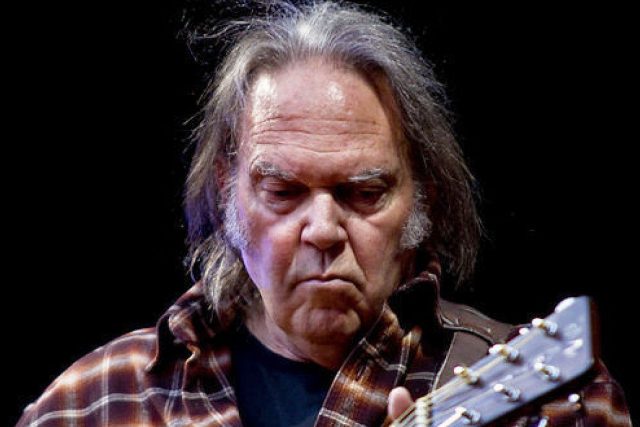
NEIL YOUNG playing a Gretsch White Falcon in Cologne, June 19, 2009 — BODOKLECKSEL/ EN.WIKIPEDIA.ORG

NEIL YOUNG’s music is being removed from Spotify’s streaming service after the singer-songwriter objected to his songs playing on the same platform that offers Joe Rogan’s podcast, the company and the musician said on Wednesday.

Earlier this week, Mr. Young had released a letter addressed to his manager and record label, Warner Music Group, demanding that Spotify no longer carry his music because he said Mr. Rogan spreads misinformation about coronavirus disease 2019 (COVID-19) vaccines.

On Wednesday, the “Heart of Gold” and “Rocking In the Free World” singer thanked his record label for “standing with me in my decision to pull all my music from Spotify,” and he encouraged other musicians to do the same.

“Spotify has become the home of life threatening COVID misinformation,” he said on his website. “Lies being sold for money.”

The Swedish company said it worked to balance “both safety for listeners and freedom for creators” and had removed more than 20,000 podcast episodes related COVID-19 in accordance with its “detailed content policies.”

“We regret Neil’s decision to remove his music from Spotify, but hope to welcome him back soon,”” Spotify said in a statement.

Mr. Rogan, 54, is the host of The Joe Rogan Experience, the top-rated podcast on Spotify, which holds exclusive rights to the program. He has stirred controversy with his views on the pandemic, government mandates and vaccines to control the spread of the coronavirus.

Earlier this month, 270 scientists and medical professionals signed a letter urging Spotify to take action against Mr. Rogan, accusing him of spreading falsehoods on the podcast.

Mr. Young, 76, said Spotify accounted for 60% of the streaming of his music to listeners around the world. The removal is “a huge loss for my record company to absorb,” he said. —  Reuters

MREIT to acquire P20-billion worth of office assets

MREIT, Inc. said it might exceed the target it set for asset infusions this year as it plans to acquire P20-billion worth of office properties.

“We earlier announced an additional 44,300 square meters (sq.m.) by end of the year, but we are working to further bulk it up with more assets as we continuously look for ways to increase dividend yields for our shareholders,” MREIT President and Chief Executive Officer Kevin Andrew L. Tan said in a statement on Thursday.

MREIT is the real estate investment trust (REIT) firm of Tan-led property company Megaworld Corp.

MREIT said it expects a 34% increase in portfolio value to P78.5 billion from P58.5 billion once it acquires new assets this year.

“These new assets may include some of our ‘built-to-suit’ properties, which are considered superior in both quality and lease tenure,” Mr. Tan said.

“These new properties have a multinational tenant base, which include large financial, healthcare, technology, and consulting firms,” he added.

The property infusions will be funded via equity and through debt. MREIT said its debt versus total deposited properties percentage stands at 12%, which is below the 35% limit provided under the country’s REIT law.

MREIT just acquired four commercial properties in December for P9.1 billion, which added 55,700 sq.m. of gross leasable area (GLA) to its portfolio.

As of end-2021, the company’s portfolio includes 14 prime, Grade A buildings that collectively span 280,000 sq.m. of GLA. These are located in Megaworld’s Eastwood City, McKinley Hill, and Iloilo Business Park.

MREIT aims to be “one of the largest REITs in Southeast Asia.” The company is targeting to have a portfolio with 500,000 sq.m. of GLA by 2024, and doubling it before the end of the decade.

“We are currently looking at several properties for potential acquisition, not just in these three townships but also in two more new Megaworld townships,” said Mr. Tan, who is also the chief strategy officer of Megaworld.

“We are very optimistic of our very long growth runway considering that Megaworld is building more offices and even launched new townships last year,” he added.

In a disclosure last week, Megaworld said it plans to buy three parcels of land from the Manila Jockey Club, Inc. The sale is priced at P1.89 billion for 22,143.50 sq.m. of land in Sta. Cruz, Manila.

Mr. Tan said the properties will “surely be part of [Megaworld’s] township portfolio expansion in Metro Manila.”

MREIT shares at the stock market climbed 0.23% or five centavos to close at P22.15 apiece on Thursday, while Megaworld shares declined 1.58% or five centavos to P3.11 per share. — Keren Concepcion G. Valmonte

Neil Young’s ultimatum to Spotify

Neil Young performing in Oslo, Norway, in 2009 — PER OLE HAGEN/ EN.WIKIPEDIA.ORG

shows streaming platforms are now a battleground where artists can leverage power

NEIL YOUNG has given Spotify an ultimatum: remove the Joe Rogan Experience podcast or Neil Young walks. In a letter to his management team and label, the 76-year-old rocker lambasted Spotify for spreading Mr. Rogan’s misinformation about COVID vaccinations.

“I want you to let Spotify know immediately TODAY that I want all my music off their platform,” said Young to his management team and record label.

“They can have Rogan or Young. Not both.”

Mr. Young is the first high-profile artist to condemn Spotify for its handling of COVID misinformation, but far from the first person to single out Mr. Rogan’s podcast on the platform.

The Joe Rogan Experience podcast has the highest number of subscribers on Spotify. In 2020 the podcast became a Spotify exclusive through a deal estimated at $100 million. Despite its massive popularity, the Joe Rogan Experience has been frequently criticized for promoting conspiracy theories, misinformation, and other problematic content.

In Jan. 2022, 270 medical health practitioners and researchers submitted an open letter calling on Spotify to moderate misinformation on its platform. The letter was prompted by an episode that featured a controversial physician who openly promoted conspiracy theories and baseless claims about COVID vaccinations.

“This is not only a scientific or medical concern; it is a sociological issue of devastating proportions and Spotify is responsible for allowing this activity to thrive on its platform,” the letter read.

Two days later, Spotify has reportedly removed Mr. Young’s music from its platform. This isn’t the first time Mr. Young has removed his songs from Spotify, citing poor sound quality as the reason when he temporarily pulled his entire catalogue from Spotify in 2015.

Neil Young is not the first musical artist demanding change from the streaming giant.

Spotify and other music streaming platforms have become a battleground where artists can leverage their power, notably over disputes concerning artists’ revenues and the value of music in an era of streaming.

In 2015, Taylor Swift briefly removed her album 1989 from Apple Music due to the platform offering a three-month free trial that would not generate royalties for artists.

In 2021, the artist payout debate was reignited after the publication of a Parliamentary report in the UK calling attention to Spotify’s handling of artists’ rights management, revenue rates, and commercial fairness.

Recently, following the release of her latest album 30, Adele took aim at Spotify, demanding the shuffle feature be removed from albums and encouraging users to listen to the tracks in their intended order.

Spotify has taken action to regulate harmful content on its service in the past. In 2017, Spotify announced it would remove content from bands connected to white supremacist and neo-Nazi movements.

Spotify also joined several other social media and streaming platforms including Facebook, Apple Music, and podcast platform Stitcher to remove the polemical right wing conspiracy theorist Alex Jones and his podcast InfoWars for spreading misinformation and lies about the 2012 Sandy Hook school shooting.

In 2018, Spotify added a new hate conduct policy to its terms of use that included guidelines for removing music that “promotes, advocates, or incites hatred or violence.” Spotify developed the policy in partnership with the Southern Poverty Law Center and the Anti-Defamation League. The platform faced immediate backlash when it cited the policy to defend removing American artists R. Kelly and XXXTentacion from its editorial and algorithmically curated playlists. The two artists’ catalogues were not removed from Spotify’s streaming library, but would be far less visible to listeners.

Critics viewed Spotify’s use of the policy as an attempt to censor music. With such a sweeping definition of hate conduct, some observers wondered, why were R. Kelly and XXXTentacion removed and not the dozens, if not hundreds, of other artists with controversial pasts or criminal convictions?

The move prompted other prominent artists, most notably Kendrick Lamar, to threaten withdrawing their music from Spotify entirely. Shortly afterwards, Spotify rolled back the policy. In a corporate statement announcing the shift, Spotify also minimized its responsibility in political matters or public controversies: “That’s not what Spotify is about. We don’t aim to play judge and jury.”

Digital platforms have taken steps to moderate misinformation. For example, in the lead up to the 2020 US election, Twitter began adding fact-check labels to tweets shared by former president Donald Trump. Later that year, Facebook’s Oversight Board began hearing cases to oversee key decisions related to content moderation.

Throughout the COVID pandemic, academics and public health officials have called on social media platforms to help fight the spread of dangerous health-related misinformation.

Reliance on platforms to moderate podcast content is a tenuous proposition. As commercial entities operating internationally, platforms simultaneously seek to serve their corporate interests and comply with regulations and laws in multiple jurisdictions.

Significant change can be achieved when platforms act in unison, such as in the decision to ban political advertising implemented by several major digital platforms including Spotify after facing significant public pressure. Still, users and advocates should not hold their breath waiting for platforms to do the right thing.

Failures to moderate harmful content are harder to ignore when they involve bigger name artists. Neil Young has never shied away from political action in a musical career spanning nearly six decades. The singer’s demands were bolstered by a credible threat: he’s removed his music before and now he’s done it again.

Ideally, the pressure from Mr. Young’s fans and other prominent artists will push Spotify to take effective action against misinformation so users can spend time rockin’ in the free world instead of listening to COVID conspiracy theories.


D. Bondy Valdovinos Kaye is a Lecturer, Queensland University of Technology.

SEC clears Philex Mining’s P3-B stock rights offering

THE Securities and Exchange Commission (SEC) “has considered favorably” Philex Mining Corp.’s stock rights offering (SRO) that could reach up to P3.15 billion as the company set the maximum offer price to P4.81 apiece.

“In its meeting on Jan. 27, the Commission En Banc resolved to render effective the registration statement filed by Philex Mining for a stock rights offer covering up to 842 million common shares, subject to certain remaining requirements,” the SEC said in a statement.

The final number of shares issued is dependent on the final offer price, the SEC said. Shares will be offered to eligible shareholders.

According to the latest schedule submitted to the SEC, Philex Mining plans to conduct the offer from Feb. 28 to March 10, while the listing of the offer shares at the stock market is tentatively set to March 21.

Net proceeds from the offer will be used for the company’s investment in Silangan Mindanao Mining Co., Inc. via Silangan Mindanao Exploration Co., Inc.

The funds will be used to finance the mine development and the construction of the mill plant and support facilities, as well as storage tailings of its subsidiary’s Silangan mining project.

Philex Mining tapped BDO Capital & Investment Corp. to be the issue manager and lead underwriter of the offer.

Philex is one of three Philippine units of Hong Kong-based First Pacific Co. Ltd., the others being Metro Pacific Investments Corp. and PLDT, Inc.

Hastings Holdings, Inc., a unit of PLDT Beneficial Trust Fund subsidiary MediaQuest Holdings, Inc., has interest in BusinessWorld through the Philippine Star Group, which it controls. — Keren Concepcion G. Valmonte

Disney says it’s ‘taking different approach’ for Snow White remake after criticism

LONDON — Walt Disney Co. says it is “taking a different approach” for its upcoming live-action remake of animated movie Snow White and the Seven Dwarfs, following criticism from actor Peter Dinklage.

In an interview on comedian Marc Maron’s podcast WTF on Monday, Mr. Dinklage, who has a form of dwarfism known as achondroplasia, said the casting of a Latina actress in the titular role was “progressive” but called the story, based on the 19th-century fairytale, “backward.”

“Literally no offence to anything, but I was a little taken aback… They were very proud to cast a Latina actress as Snow White — but you’re still telling the story of Snow White and the Seven Dwarfs,” the Game of Thrones and Cyrano actor said.

“Take a step back and look at what you’re doing there. It makes no sense to me. You’re progressive in one way…, but you’re still making that fucking backward story about seven dwarfs living in a cave together? What the fuck are you doing, man? Have I done nothing to advance the cause from my soapbox? I guess I’m not loud enough.”

The remake of Disney’s 1937 animated film, in which seven dwarf miners take in a princess after she is exiled by her wicked stepmother, stars West Side Story actress Rachel Zegler as Snow White and Israeli actress Gal Gadot as the Evil Queen.

“To avoid reinforcing stereotypes from the original animated film, we are taking a different approach with these seven characters and have been consulting with members of the dwarfism community,” a Disney spokesperson said in a statement to industry publication The Hollywood Reporter on Tuesday and which was quoted widely in the media.

“We look forward to sharing more as the film heads into production after a lengthy development period.”

When contacted for comment, a Disney representative referred Reuters to the published statement.

The new Snow White movie is scheduled for release next year. — Reuters

ATN group plans joint venture for 100-MW solar project

ATN Holdings, Inc. on Thursday said its board had given the go signal to its energy arm to enter into a joint venture agreement with “key energy partners” to build 50 to 100 megawatts (MW) of solar photovoltaic project in the company’s property in Rizal.

In a stock exchange disclosure, ATN Holdings said it deemed a joint venture approach through ATN Philippines Solar Energy Group, Inc. (ATN Solar) as advantageous and that it would participate in the consortium to be formed with the winning bidder of the competitive selection process (CSP) set by Manila Electric Co. (Meralco).

It said the move comes after the expected power supply deficit arising from project delays due to the coronavirus pandemic.

ATN Holdings said its board, in the same meeting held on Jan. 26, also authorized the company to file ATN Solar’s listing by introduction in the Philippine Stock Exchange and follow-on offering, as well as to appoint an investment banking group and underwriter.

ATN Holdings was also authorized to co-invest with Transpacific Broadband Group International, Inc. a P2-billion equity participation in the consortium to be formed with the winning bidder of the Meralco CSP of renewable solar energy under a 20-year contract.

The company said a joint venture approach and participation in a consortium aims to achieve economies of scale in a 100-MW solar project and “diversify financial and project execution risk” as the participants contribute complementary resources to increase the probability of success.

It said Meralco had programmed two solar project packages in which ATN Solar could participate, namely: a 170-MW solar project for immediate construction to address peaking power during summer, and 850 MW to comply with the government’s Renewable Portfolio Standards, or RPS program.

The solar project will be installed in ATN Holdings’ 256-hectare property in Montalban, Rizal.

Meralco earlier called for competitive bids to challenge an unsolicited offer from Terra Solar Philippines, Inc. — a joint venture between Leviste-led Solar Philippines Power Project Holdings, Inc. and Razon-led Prime Infrastructure Capital, Inc. — for the supply of 850 MW of mid-merit power for two decades.

ATN Holdings also enumerated other factors for the board resolutions, including the phase out of coal power plants, a projection that the Malampaya gas supply will run out in a few years, and opportunities in the renewable energy industry in the next five years. — M.C. Lucenio

China’s new English language song for Beijing 2022 divides opinion

BEIJING — A new English-language song released by Chinese state media for the Beijing Winter Olympics has divided opinion, gaining effusive praise on Chinese social media but panned by overseas critics as “cringey” and out of touch with reality.

The music video “Join Us in Winter” was released this week on China’s Twitter-like platform Weibo by state news agency Xinhua and was also posted on Twitter by other state-backed news outlets such as the Global Times.

The Beijing Games are set to take place from Feb. 4 to 20.

Starring 24-year-old Chinese actor and singer Zeng Shunxi, Xinhua journalist Lu Binqi, and patriotic rap group CDRev, known for their tunes targeting perceived enemies of the Chinese government, the cheery ballad urges listeners to attend the games and said whether athletes “win or lose, we cheer for you.”

It generated a big thumbs-up on Chinese Weibo, especially by fans of Mr. Zeng, who has over 20 million followers on Weibo.

But on Twitter, which is banned in China, others called the lyrics “cringey,” saying the title was misaligned with strict travel restrictions in China and for the Games, such as mandated quarantine for most visitors to the country and the decision not to sell any tickets locally.

The Games will be held in a “bubble” that strictly separates athletes and other Games personnel from the public.

“‘Come join us’…but they haven’t agreed to direct commercial flights, there’s three weeks enforced state quarantine on arrival, and tickets aren’t on sale to the public anyway. My informal advice to (British) winter sports fans: stay on your sofa,” tweeted Christina Scott, deputy head of mission at the British embassy in Beijing.

Xinhua did not immediately respond to a request for comment.

Chinese celebrities, state media, former Olympians and a large number of foreigners, have pushed out over a dozen music videos promoting the Winter Olympics which are facing a diplomatic boycott from the United States and other governments over Beijing’s treatment of the Uyghurs and other Muslim minority groups.

More collaborations between Chinese pop stars and state media are scheduled as the games near. — Reuters

ADVERTISEMENT
ADVERTISEMENT