LOCAL BUSINESS GROUPS and foreign chambers once again pressed the outgoing 18th Congress to pass the last set of economic reform bills in its remaining session days.
In a joint statement issued on Wednesday, thirteen business groups and foreign chambers said they sent letters to Congress leaders to urge them to pass six measures that have been approved at the House of Representatives, and are still pending at the Senate.
“(We are) calling on Congress to pass additional achievable reforms in the remaining session days of the 18th Congress,” they said.
The 18th Congress will resume session on May 23, before its sine die adjournment on June 3.
The business groups’ list of key measures includes last two packages of the Comprehensive Tax Reform Program that is being pushed by the Duterte administration. Package 3 is the Property Valuation and Assessment Reform, while Package 4 is the Passive Income and Financial Intermediary Taxation, which seeks to simplify the taxation of passive income and financial instruments.
Other measures include the Ease of Paying Taxes bill, which aims to simplify and modernize tax compliance; Open Access in Data Transmission, which hopes to promote fair and open competition by lowering barriers to entry for the telecommunications industry; the Philippine Creative Industries Development Act, which would provide support for the creative sector; and the Promotion of Digital Payments Act.
Based on the Senate website, the Open Access in Data Transmission bill and the Promotion of Digital Payments are pending in the committee level while the Philippine Creative Industries bill is being consolidated in the committee.
Foreign chambers and business groups said they are also looking forward to the ratification of the reconciled version of the Philippine Transportation Safety Board Creation and the Rural Agricultural and Fisheries Development Financing System Act.
The Bicameral Conference Committee is currently deliberating on these two measures.
The business groups said they “strongly encourage” the Senate to ratify the Regional Comprehensive Economic Partnership (RCEP) trade agreement.
The Philippines is unable to participate in the key regional trade deal as the Senate has yet to give its concurrence on the RCEP.
RCEP, which entered into force on Jan. 1, is a trade agreement that involves countries such as Australia, China, Japan, South Korea, New Zealand and the 10 members of the Association of Southeast Asian Nations (ASEAN). It is touted as the world’s biggest trade deal as the trade deal represents 30% of the global gross domestic product.
Sought for comment, Senate President Vicente C. Sotto III said in a Viber message it is not possible to pass these bills given the tight schedule.
“In six session days including the national canvass? Unless any of those bills are in the advance stage, not possible,” Mr. Sotto said.
The 19th Congress will open its first regular session on July 25.
The signatories to the joint statement include the American Chamber of Commerce of the Philippines; Australian-New Zealand Chamber of Commerce of the Philippines; Bankers Association of the Philippines; Canadian Chamber of Commerce of the Philippines; European Chamber of Commerce of the Philippines; Financial Executives Institute of the Philippines; IT and Business Process Association of the Philippines; Japanese Chamber of Commerce and Industry of the Philippines, Inc.; Korean Chamber of Commerce of the Philippines, Inc.; Makati Business Club; Management Association of the Philippines; Philippine Association of Multinational Companies Regional Headquarters, Inc.; and Semiconductor and Electronics Industries in the Philippines Foundation, Inc. — R.M.D. Ochave
FOR the third straight year, Okada Manila was awarded the Five-Star Award by the Forbes Travel Guide (FTG).
Forbes Travel Guide, which evaluates service, has over 900 stringent items on their list, 75% of which focus on the guest experience and the rest on the facility.
“Travel has come back strongly, and the resilient hospitality industry is creatively rallying to accommodate the increased occupancy demand for most regions,” Hermann Elger, CEO of Forbes Travel Guide, said in a statement. “While the industry faces some lingering issues, the 2022 award winners proved ready for those challenges and more, demonstrating the best that luxury hospitality has to offer.”
“Forbes sends over mystery guests and without our knowledge, they test the rooms, eat in the restaurants, try out the spas, swim in the pools, and test each and every facility offered,” Okada SVP for Hotel Operations Ivaylo S. Ivanov said in a speech during a press event on April 26.
“We take every comment, good or bad, to heart, and use it to improve our service. Most of all, we thank our dear team members,” he said.
BUFFET RESTAURANT Alongside the announcement of the Forbes Travel Guide Award, Okada Manila said it will be opening a new Filipino buffet restaurant at the Coral Wing.
This restaurant will also serve as the breakfast restaurant of the wing’s guests. Located at the poolside, the restaurant’s name has not been pinned down — it’s working name for now is Sinag. There is also a cocktail bar named Luna.
The permanent names will be announced before the official opening on July 1.
Aside from its proximity to the pool, the restaurant’s location also has a good view of the Manila Bay sunset.
Okada Manila’s Vice President for F&B Andreas Balla admits that it was challenging to cope with the quick changes in coronavirus disease 2019 (COVID-19) lockdown restrictions.
“Some guests are still reluctant with the buffet style, but I think everything returned quickly to a new normal,” Mr. Ballad told BusinessWorld.
The idea for a Filipino buffet restaurant had been in the works since before the pandemic.
“[The lockdown] gave us more time to think about what we actually want to do. The concept is still the same. It will be the hotel’s breakfast [buffet] of the Coral Wing. For the rest of the time, it will be a Filipino restaurant,” Mr. Balla said.
The restaurant can accommodate 250 guests.
“I look forward to having many Filipino feasts for lunch on a busy Saturday or Sunday,” Mr. Balla said.
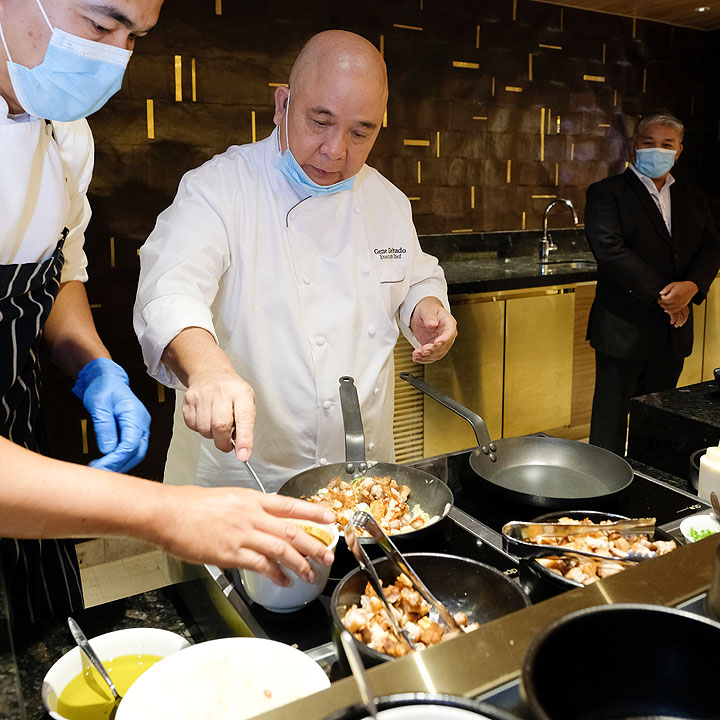
For executive chef Gene del Prado, it has always been his dream to open a Filipino restaurant.
“’Yung mga cooks noon, tuturuan kang proper cooking of native dishes [na] hangang ngayon ginagamit ko pa rin (The cooks I knew before would teach me the proper cooking of native dishes which I apply until now),” Mr. Del Prado, who has four decades of experience in the industry, said.
To come up with the menu, Mr. Del Prado and his fellow chefs went out to dine in famous Filipino restaurants in Quezon City, Makati, Pasay City, and Tagaytay.
“The food is almost the same,” Mr. Del Prado and his team observed. “But even if they serve the same food, puno pa rin ’yung restaurant (the restaurant is still full),” he said. “Ang labanan sa ganoong pagkain ay consistency and quality (The competition with that kind of food is in consistency and quality).”
In the days leading to the restaurant’s opening, Mr. Del Prado is focused on training his staff.
“Bihira tayo makapunta sa restaurant na gusto mong balik-balikan, ’yun ang gusto kong mangyari (We seldom find a restaurant we want to revisit, that’s what I want to happen here),” he said. — Michelle Anne P. Soliman
LOPEZ-LED First Gen Corp. has allocated $550 million, or around P29 billion, for capital spending this year, with its renewable energy subsidiary cornering nearly half of the budget followed by its liquefied natural gas (LNG) terminal project.
“In 2022, we’re expecting to spend $550 million in capital expenditures (capex), mainly driven by EDC (Energy Development Corp.), the First Gen LNG terminal project and the Aya project,” said Emmanuel Antonio P. Singson, the listed company’s chief financial officer and treasurer.
“EDC will continue to have high capex this year, and is planning to spend approximately $266 million to fund its growth initiatives, drilling programs and upgrades,” he told stockholders during their virtual annual meeting on Wednesday.
Mr. Singson, who is also senior vice-president at First Gen, said 50% of the budget is allocated for EDC’s growth projects, specifically the 3.6-megawatt (MW) Mindanao 3 binary project, the 29-MW Palayan Bayan binary project, [the] 20-MW Tanawon plant, and energy storage. He also said part of the funds will go to a silica extraction project and wind energy projects.
First Gen’s LNG terminal project has a $135-million capex this year as it completes construction. The facility is expected to be ready to commercially operate in the fourth quarter of 2022.
“For the project Aya, we expect to spend $70 million this year as we continue development work for the project,” Mr. Singson said, referring to the pumped-storage facility.
“For the natural gas platform, $50 million of capex is allotted for pre-development work on Santa Maria,” he added, referring to a proposed power plant, while $30 million is set aside for the maintenance of existing gas-fired power plants.
Based on data from the Department of Energy, the Santa Maria natural gas-fired combined cycle has an installed rated capacity of 1,260 MW under First Gen EcoPower Solutions, Inc. It is located in Brgy. Santa Rita, Batangas City.
Mr. Singson also disclosed First Gen’s expected capex next year.
“In 2023, we’re expecting a lower capital expenditure of $260M, mainly driven by EDC and project Aya,” he said.
“EDC will continue to have capex and is planning to spend approximately $141 million to fund its drilling programs, growth initiatives including Palayan Bayan, Tanawon and innovation growth projects,” he said.
The Palayan Bayan binary plant will produce power using residual brine from an existing steam field.
“Meanwhile, First Gen LNG terminal project will have a capex of $25 million in January 2023 for payment of transactions that closed in 2022,” Mr. Singson said.
He said the company expects to spend $90 million in 2023 for the 100-MW pumped-storage hydropower project Aya in Nueva Ecija for the beginning of its construction work.
In May last year, First Gen said it was expecting to spend around $530 million for 2021’s capex projects, primarily driven by EDC, the LNG terminal project, and the Aya pumped-storage project.
On Monday, First Gen reported a recurring net income of $59 million for the first quarter, down 24.4% from $78 million in the previous year, as its natural gas and geothermal energy platforms recorded lower operating profit.
The company said it generated more power in the first quarter compared with the same period last year, but its 97-MW Avion gas-fired power plant and EDC were hit by unscheduled shutdowns.
First Gen has 3,495 MW of installed capacity in its portfolio, which it said accounts for 19% of the country’s gross power generation.
On Wednesday, shares in First Gen closed unchanged at P20 each. — Victor V. Saulon
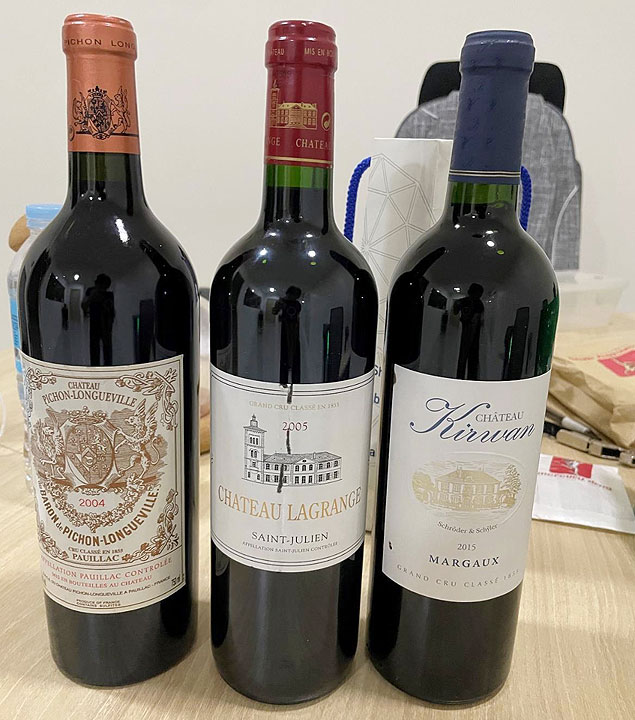
CHATEAU Lagrange and Chateau Kirwan (the 2nd and 3rd bottles from the left) are great Grand Cru bargains.
CHATEAU Lagrange and Chateau Kirwan (the 2nd and 3rd bottles from the left) are great Grand Cru bargains.
WHEN it comes to wines, no other wine region has more pedigree and reach than Bordeaux. But like everything else, not all Bordeaux are created equal. In fact, to me there are as many ordinary to bad Bordeaux as there are good ones.
That is why we must take our hats off to the French for creating the Grand Cru classification system of Bordeaux in 1855 that allowed us consumers to get a list of chateau names and labels to choose from. This was initiated by Napoleon III, the first president of France from 1848 to 1852 who then became the French emperor from 1852 to 1870. All the 61 properties known for their red wines in the 1855 Grand Cru Classification, apart from Chateau Haut-Brion, were from the Medoc part of Bordeaux.
A similar classification with 27 properties was also created for the sweet white wine regions of Sauternes and Barsac, with Chateau d’Yquem as its only first growth.
Subsequently, other Bordeaux sub-regions also had their own hierarchical classifications, like the 1953/1959 Graves Classification (later known as Pessac-Leognan classification) and the more controversial and supposedly every decade-changing St. Emilion Classification that started in 1955, but had changes in 1969, 1986, 1996, 2006, 2012 and is due for an update soon.
REVISITING BORDEAUX Bordeaux is the largest French wine region, with some 120,000 hectares of vineyards and around 7,000 wineries at present, but this number of wineries has steadily been going down over the years because of consolidation. Bordeaux alone has 60 appellations (AOCs), from the most generic Bordeaux AOC to the larger Medoc and St. Emilion AOCs, and to the smaller commune ones like Pomerol AOC.
Bordeaux is a red wine dominant region, with wine production at around 90% red against only 10% white. The region also makes some sparkling wines under the Cremant de Bordeaux, an AOC created in 1990.
Bordeaux, while still the largest wine producer in France, has however seen production numbers go down mainly due to nature and weather issues like frost, drought, hail, and even mildew. The recently concluded 2021 vintage saw Bordeaux production at just over 4 million hectoliters (hl), which is some 25%+ below average yields a decade ago of 5.5 million hl. But there have been some more glaring declines, like in 2013 from severe heat, and in 2017 from extreme frost — with both vintages falling below 4 million hl. Industry stalwart Yann Schyler (of negociant Schroder & Schyler, established in 1739) recently informed me that many chateaux are losing the equivalent of one harvest in every four years due to these lower yields.
In terms of consumption, more than half or around 55% of all Bordeaux production is still consumed domestically. Those being exported are mostly the commercial brands, either the Grand Cru brands, or familiar retail shelf Bordeaux names like Mouton Cadet, Alexis Lichine, Calvet, Maison Castel and the like that are from huge wine conglomerates. Most generic Bordeaux AOC wines in local supermarkets are priced above P500/bottle but below P1,000, except for the premium-priced Mouton Cadet, which is piggybacking on the Mouton-Rothschild Grand Cru status.
FOCUSING ON MEDOC Medoc is the Bordeaux region most associated with the left bank, as it is located to the left of the Gironde Estuary. But Medoc is both a Bordeaux sub-region and an appellation.
Within the Medoc sub-region are eight appellations or AOCs, namely: Medoc, Haut-Medoc, St. Estephe, Pauillac, St. Julien, Moulis, Listrac-Medoc, and Margaux. These were the AOCs of the 60 Grand Cru Classé wines that were assigned to five growth levels, with first growth as highest and fifth growth as lowest, as listed in the sacred 1855 Bordeaux Classification, excluding Chateau Haut-Brion, which is from Passac-Leognan.
Chateau Haut-Brion is like the lone guest entry, but it is still one of only five prestigious first growths in the company of Chateau Lafite, Chateau Latour, Chateau Margaux, and Chateau Mouton-Rothschild (a late promotion from second growth in 1973).
The Medoc sub-region is roughly 15,000 hectares, while the Medoc AOC is around 4,700 hectares, or 31.5% of the total Medoc sub-region size. Pauillac and Margaux are the two most popular AOCs in Medoc. Cabernet Sauvignon is the most dominant grape varietal planted in this region, followed by Merlot, Cabernet Franc, Petite Verdot and very little Malbec.
The Grand Cru wines represent approximately 23% of the entire wine production in the Medoc sub-region. Most of these Grand Cru wines are sold on a trading setup referred to as La Place de Bordeaux where wine merchants, known as negociants, buy from wine producers via a broker, called a courtier. Then these negociants sell the Grand Cru wines all over the world.
THE SURE BETS IN BORDEAUX While several things have changed — including ownership, weather, wine technology and several other factors over the last 165+ years — the 1855 Medoc classification still stands out today as perhaps the most respected and credible wine quality classification ever created.
And with Medoc being the home of some of best wines ever made on the planet (the Lafites, Latours, etc.), this is the Bordeaux region I gravitate to for a sure bet wine to indulge in. I am not saying at all that none-Grand Cru Medoc wines nor the Cru Bourgeois wines in Medoc are dull and ordinary, even if my personal experience kind of suggests that — it is just impossible and unethical to generalize. I am just taking the risk factor out.
Grand Cru wines sound so intimidating and expensive, but reality is not all Grand Cru wines are out of reach, and in fact, several of these Grand Cru labels are much lower in price than the cult wines from Napa Valley, Italian super Tuscans, and even top wines from Australia and Chile — yet none of these other wines have the heritage, legacy and prestige of the Medoc Grand Cru wines.
We actually can have a bit of Grand Cru wine without breaking the bank, and below is the list of wines I highly recommend because of my actual experience drinking them. I listed the vintages of these wines I have tasted. These are great bargains now but for how long, it is hard to say. For one, a label can experience newfound glory and a price increase may follow soon, just on principle of supply and demand.
BARGAIN GRAND CRU WINES TO SPLURGE ON There are several bargains if I was to base on international market prices, but I will only recommend those I have personally tasted as mentioned. So, excluded from my recommendations because I have yet to try a single bottle of them are Chateau Dauzac and Chateau Ferriere, both 3rd growths from Margaux; Chateau La Lagune, a 3rd growth from Haut-Medoc; and Chateau Lafon-Rochet and Chateau Cos Labory, a 4th and 5th growth from St. Estephe respectively.
These wines cost, I estimate, between P3,000/bottle to just a little above P5,000 for recent releases (10 years old or less). I included vintages I tasted from each Chateau since the 2000 vintage.
Below are my 10 Grand Cru Chateaux label recommendations.
FROM THE HAUT-MEDOC AOC 1. Chateau de Camensac (5th growth) — The vineyards are located near boundary of the Saint-Julien-Beychevelle appellation, so it only got a Haut-Médoc appellation. Since 2005 it has belonged to the Merlaut family, affiliated with the Taillan Group. A favorite go-to wine of mine because it is reasonably priced even in on-premise outlets, especially when I travel to Hong Kong, Singapore, or Malaysia. I’ve had the 2002, 2004, 2005, 2008, 2010, 2016, 2017. The 2005 was the one vintage I remembered because of its black currant and juicy features.
2. Chateau Cantemerle (5th growth) — Since the 1980s it has been under French insurance group Les Mutuelles d’Assurance du Bâtiment et des Travaux Public. I’ve tried the 2004, 2009 and 2015 vintages. From the Margaux AOC.
3. Chateau Kirwan (3rd growth) — Owned since 1925 by the négociant company, Schröder and Schÿler. I’ve had the 2000, 2005, 2008, 2009, 2010, 2011, 2015, 2016, 2017, and 2018 vintages. The consistency of quality of the different vintages is incredible despite the diverse weather conditions, but standouts are the 2000, 2009, and 2016.
4. Chateau Du Tertre (5th growth) — While homophonous with the name of our outgoing president, Chateau du Tertre is from the Margaux region, not Davao. Since 1995, the property has been under Eric and Louise Albada Jelgersma, owners of the neighboring estate, Château Giscours. I’ve had the 2006 and 2009 courtesy of a Wine Story event I attended. From the Pauillac AOC.
5. Chateau Lynch-Moussas (5th growth) — Since 1919 it has been owned by the Castéja family, who also owns Chateau Batailley and the negociant company Borie-Manoux. I just recently discovered this label and have had the 2016 and 2017 vintages.
6. Chateau Puy-Ducasse (5th growth) — It has been owned since 2004 by the Crédit Agricole Group, a French international banking group and the world’s largest cooperative financial institution. I have tried the 2016 and 2017 vintages.
7. Chateau Haut-Bages-Liberal (5th growth) — It has been owned since 1983 by the Taillan Group (Merlaut family as with Camensac) and managed by Claire Villars-Lurton. I have tasted the 2016 and 2017, and the 2016 vintage is drinking extremely well now. From St. Julien AOC.
8. Chateau Langoa-Barton (3rd growth) — This is the first of the two Bordeaux wine estates bought by Irishman Hugh Barton in the 1820s, the other being Léoville-Barton, a 2nd Classified Growth. Both chateaux have remained with the Barton family, now under the leadership of Anthony Barton. I have tried the 2008, 2012, and 2014. The 2014 was super nice, powerful, and will be a beauty for years to come.
9. Chateau Lagrange (3rd growth) — It has been under Japanese liquor giant Suntory since 1983. I have tasted the 2000, 2011, 2013, and 2015. The 2000 was superb.
10. Chateau Branaire-Ducru (4th growth) — The Maroteaux family bought the property in 1988 and has invested considerably in the vineyard and winery since. Once more I had these wines courtesy of Wine Story — the 2004, 2007, and 2000. The 2004 was very memorable, with both lovely floral and fruit power.
In case these Grand Cru wines are still a bit too expensive, each of these estates has a second label or second wine — Chateau Kirwan, for instance, has one called Charnes de Kirwan, while Chateau du Tertre has a second label known as Les Hauts du Tertre, and so on. These second labels are typically priced 30-40% below their Grand Cru wine counterparts, but still are part of the terroir of the first wine. I personally believe even these second wines are safer bets than non-Grand Cru Medoc wines.
Bargain hunters should be looking for good recent vintages, and Bordeaux has been blessed since the start of the new millennium. Look for under-the-radar vintages like 2014, 2017, and even 2019.
Do you have your own favorite Grand Cru Medoc wines you feel are reasonably priced? Let me know …..
The author is the only Filipino member of the UK-based Circle of Wine Writers. For comments, inquiries, wine event coverage, wine consultancy, and other wine related concerns, e-mail the author at wineprotege@gmail.com, or check his wine training website at https://thewinetrainingcamp.wordpress.com/services/
MEDIA giant expects gains from election campaign season. — BW FILE PHOTO
‘Friendly, harmonious, proper’ ties seen with Marcos gov’t
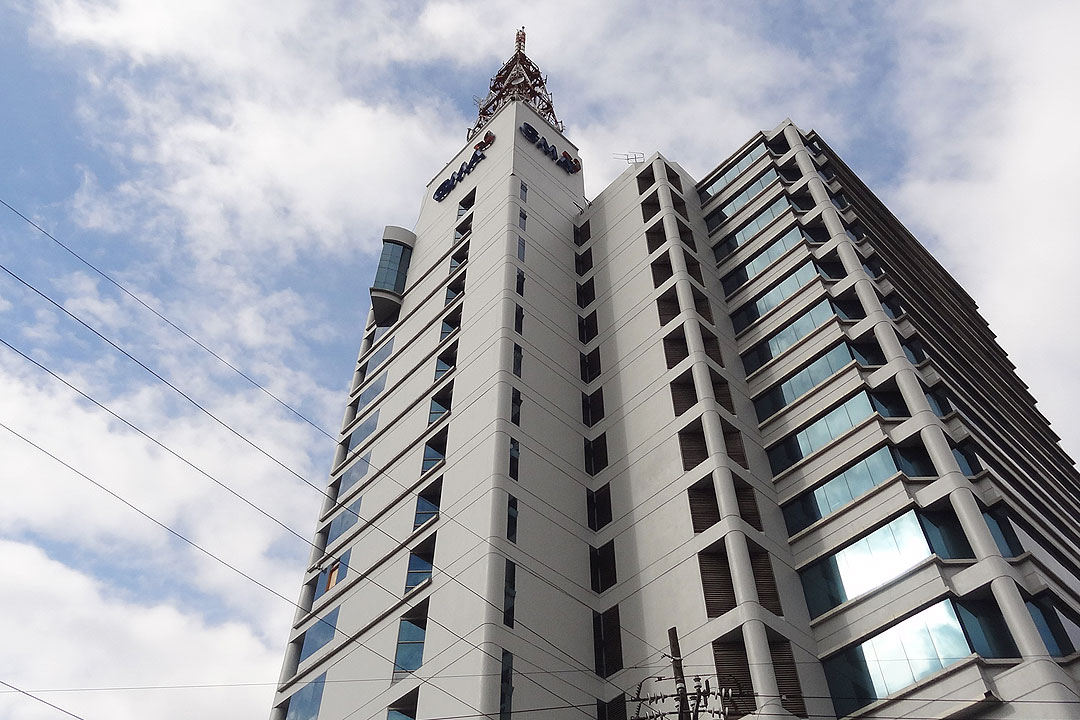
MEDIA giant GMA Network, Inc. expects to grow its net income to P8.2 billion this year from P7.57 billion a year ago, its chairman said on Wednesday.
“The company’s projected net income after tax this year is pegged at P8.2 billion, while the capex (capital expenditure) budget for 2022 is estimated at about P2 billion,”GMA Network Chairman and Chief Executive Officer Felipe L. Gozon said during the company’s annual stockholders’ meeting.
“We are optimistic that earnings post-election heading into fiscal year 2023 will be on track as projected,” he added.
The company expects gains from the recent election campaign season. Mr. Gozon described GMA Network’s 2022 election coverage as the “biggest” and “most expensive” coverage.
When asked about GMA Network’s future under a government run by Ferdinand “Bongbong” R. Marcos, Jr., the son of the late dictator Ferdinand E. Marcos, Mr. Gozon replied the company has nothing to worry about.
“Because we are compliant with the requirements of our congressional franchise and other applicable laws, we do not expect that we will be encountering legal problems with the new government,” he said.
“We have no reason to believe that our relationship with the new government will not be friendly, harmonious, and proper,” he added.
Under the administration of President Rodrigo R. Duterte, lawmakers who supported him rejected the franchise application of ABS-CBN Corp., the former rival of GMA Network in the broadcasting space. The House of Representatives committee on legislative franchises deemed the broadcast network critical of Mr. Duterte “undeserving” of the privilege.
Without ABS-CBN in the free television market, GMA Network easily gained the biggest audience share.
“Based on data from Nielsen, GMA Network was the Number 1 channel in total Philippines [in 2021], with 46% people audience share, reaching 97.5% of total TV households in the country,” Mr. Gozon said.
“We maintained our ratings supremacy in 2022. From January to April 2022, the combined audience share of our free-to-air and DTT (digital terrestrial television) channels reached 57.86% nationwide,” he added.
The media company saw its total revenues for 2021 grow by 16% to P22.45 billion. “Due to the production of fresh programs, consolidated operating expenses climbed by 16%. Benefiting from the reduction in the income tax rate, our resulting net income stood at P7.57 billion, a growth of 26% by far, the highest in our history,” Mr. Gozon said.
Meanwhile, its first-quarter net income grew 5.4% to P2.13 billion from the P2.02 billion earned in the same period a year ago.
“As our core business continues to flourish, we are also energized by new opportunities and potential synergies. Therefore, we established GMA Ventures, our corporate vehicle that will diversify our portfolio by strategic investments in sustainable businesses. We have, so far, invested in a venture capital fund that has given us access to opportunities across Southeast Asia,” Mr. Gozon said.
GMA Network shares closed 8.03% lower at P11.30 apiece on Wednesday. — Arjay L. Balinbin
THE SILVER box of Chivas Regal 12, a familiar sight on liquor cabinets, is no more. Long live the new red box.
“The emperor has changed clothes. But it’s still the emperor,” declared Tony Atayde, Marketing Head for Pernod Ricard Philippines to BusinessWorld during an event earlier this month.
Despite the outfit change, he assured us that the blended scotch, founded in 1786, will remain the same. “The liquid does not change.”
The company achieved prominence in 1843 when it was awarded a Royal Warrant to supply whisky to Queen Victoria. The last of the family died in 1893, after which control went to a board of trustees. It has changed hands multiple times since, until being acquired by Pernod Ricard in 2001.
THE BOTTLE The bottle, whose design has not changed in 200 years according to Mr. Atayde, is also changing.
“It’s always been a historic brand. At the same time, it now has a historic following,” he noted. Hunter S. Thompson reportedly like it, and so did the priests in The Exorcist.
“What we’ve now decided is that the consumer is changing. For us to access that consumer, of what is a redefined luxury, we needed to change the way it looked.”
The bottle is now taller, and the ornate insignias have been removed.
“Now, it will appeal to a much younger audience. For us, it was redefining luxury for that generation.”
The redesigned bottle arrives with a more conscious production that is emblematic of these times. Chivas 12 now uses 100% recyclable and environmentally friendly packaging materials as the brand accelerates toward its 2025 target of 100% recyclable, reusable, compostable or bio-based packaging, which will save 92 tons of plastic per year. The reduced weight of the new Chivas 12 bottle saves more than 1,000 tons of glass each year, with its completely plastic-free packaging saving 2.3 million plastic bottles. Lastly, all-new delivery boxes lessen the energy needed in the recycling process.
K-POP CONNECTION Along with the redesign of the bottle comes a partnership with K-Pop star Lisa of Blackpink, as well as the “I Rise, We Rise” campaign.
“We recognize that the new bottle appeals to a younger generation, and that younger generation is about self-success, and success as a group,” said Mr. Atayde.
In a statement, Lisa said, “After being on such a huge personal journey and hustling over the past few years, I want to inspire people to elevate themselves. It was a no-brainer to partner with Chivas, as their values are so closely aligned with my own, plus I’ve always been a whisky fan!”
Discussing the reputation of whisky as an older person’s drink, Mr. Atayde urged us to take a look at the party brewing at the event, with dispensers filling up glasses of whisky highballs. “It’s much younger, it’s much more vibrant. It’s very maximalist versus how it used to be: in a cigar room, or people in suits and ties and things like that.”
Mr. Atayde looked to the future with Pernod Ricard’s entry into e-commerce in the Philippines, a development sped up by pandemic lockdowns. “E-commerce played a big role. Before the pandemic, it (e-commerce sales) was less than 1% of our business.” Today, he places the figure at 4%-5% of their sales. “Which is a huge growth.” They do this with partnerships with online liquor retailers such as Boozy.ph, The Booze Shop, Thirst.ph, and Clink.ph.
“It took the pandemic for them to really make an impact, and we’re going to continue to partner with them.
“We don’t plan on taking our foot off the gas.” — Joseph L. Garcia
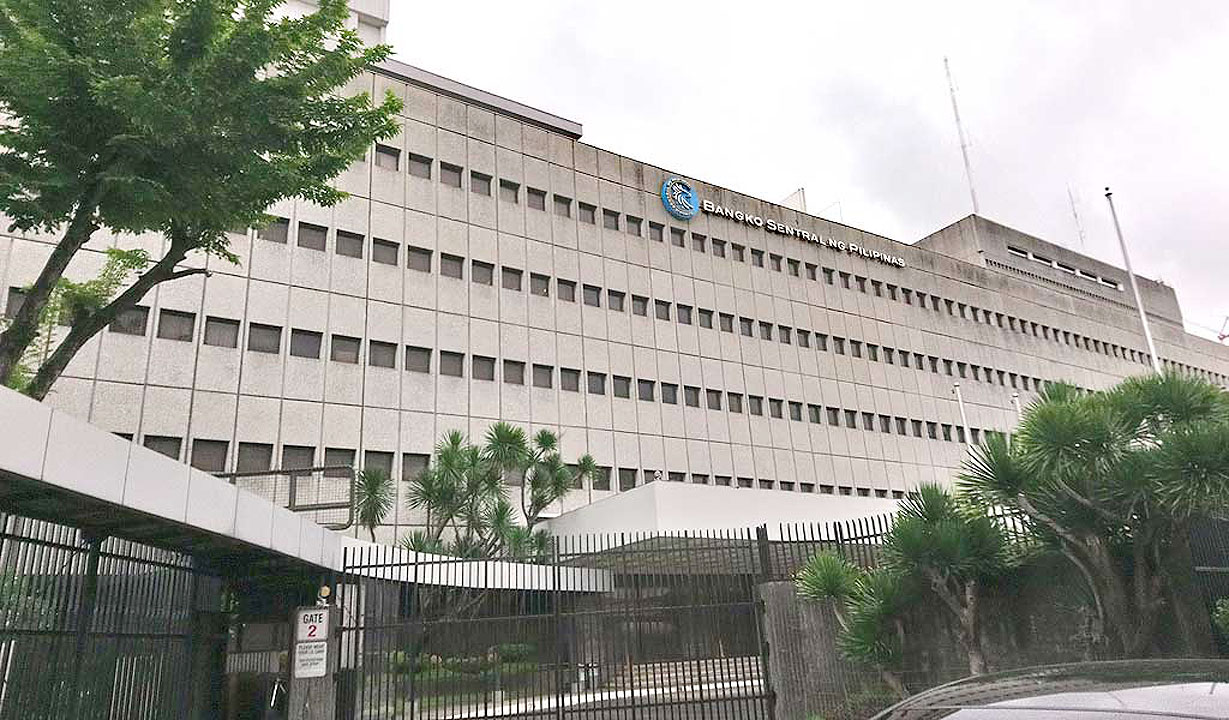
THE central bank’s term deposits fetched higher yields on Wednesday as investors expect a rate hike. — BW FILE PHOTO
YIELDS on the term deposits of the Bangko Sentral ng Pilipinas (BSP) inched higher on Wednesday as investors expect the regulator to start increasing benchmark rates due to inflation risks.
Total demand for the term deposit facility (TDF) of the central bank amounted to P327.962 billion on Wednesday, going beyond the P260-billion offering. This also surpassed the P312.547 billion in bids recorded a week ago.
Broken down, the seven-day papers fetched bids amounting to P146.17 billion, higher than the P120-billion offer but failing to beat the P150.945 billion in tenders last week.
Banks asked for yields ranging from 1.9% to 2.125%, wider than the 1.92% to 1.9827% band seen in the previous week’s auction. This caused the average rate of the one-week paper to increase by 2.24 basis points (bps) to 1.9823% from 1.9599% previously.
Meanwhile, bids for the 14-day term deposits amounted to P181.792 billion, going beyond the P140 billion auctioned off by the BSP as well as the P161.602 billion in tenders seen on May 11.
Accepted rates ranged from 1.95% to 2.2%, barely moving from the 1.9% to 2.25% margin seen a week ago. With this, the average rate of the two-week deposit rose by 6.45 bps to 2.0932% from 2.0287% in the prior auction.
The BSP has not offered 28-day term deposits for more than a year to give way to its weekly auctions of securities with the same tenor.
Both the TDF and 28-day bills are used by the central bank to gather excess liquidity in the financial system and to better guide market rates.
Average TDF yields were higher due to mounting expectations of a BSP rate hike this week amid growing inflation risks, Rizal Commercial Banking Corp. Chief Economist Michael L. Ricafort said in a Viber message.
BSP Governor Benjamin E. Diokno said at an online briefing on Wednesday that “[the] space for maintaining an accommodative policy stance has considerably narrowed” as inflation continues to notch multi-year highs.
Inflation surged to an annual 4.9% in April, the highest in more than three years as soaring food and energy prices continued to hurt consumers.
Consumer prices rose to a 40-month high of 4.9% annually, from 4% in March and 4.1% in April a year ago, preliminary data from the Philippine Statistics Authority showed.
It was the quickest pace since the 5.2% print in December 2018.
The headline figure also breached the central bank’s 2-4% target for the year and is near the upper bound of its 4.2-5% forecast for April.
Inflation averaged 3.7% in the four months to April, lower than the 4.1% seen in the same period last year. However, it was still lower than the central bank’s 4.3% forecast for the year.
Some market players are pricing in a rate hike at the BSP’s meeting on Thursday as faster-than-expected economic growth in the first quarter is seen to put upward pressure on inflation.
A BusinessWorld poll of 17 analysts conducted last week showed they are divided on the BSP’s next move, with nine betting rates will remain unchanged, while eight are expecting a 25-bp hike.
Benchmark rates have been at record lows since November 2020, when the BSP cut rates by 25 bps.
Economic growth in the first quarter accelerated by a higher-than-expected 8.3% annually on strong household spending as lockdowns were eased, the Philippine Statistics Authority reported last week.
It was a reversal from the 3.8% decline in the same period last year and faster than the 7.8% gross domestic product (GDP) growth logged in the final three months of 2021.
The first quarter’s GDP growth figure was the highest since the 12.1% recorded in the second quarter last year. The latest print is also within the 7-9% target of the government.
Meanwhile, the Department of Labor and Employment on Saturday approved a P33 increase for the daily minimum wage in Metro Manila and by P55 to P110 for the Western Visayas region. Wage and fare hikes are among the conditions the central bank said it will monitor for possible second round inflation effects.
Mr. Ricafort added that the increase in TDF rates tracked rising US yields.
Reuters reported that the yield on the 10-year Treasuries rose 10.7 bps to 2.986%. This was following upbeat retail sales data which strengthens the case for continued economic growth in the US. — L.W.T Noble with Reuters
THE Securities and Exchange Commission (SEC) has directed Astrazion entities to immediately cease and desist from engaging in the unlawful and unauthorized solicitation, offer and sale of securities, calling the scheme “fraudulent.”
In an order dated May 12, the commission en banc ordered the group to stop offering their digital currency through an “illegal multi-level marketing platform.”
The group is composed of Astrazion Noble Task Community Foundation, Astrazion Global Holdings Philippines, Inc., and Astrazion International.
The companies and their directors have likewise been prohibited from transacting any business involving funds in its depository banks, and from transferring, disposing, or conveying any related assets to ensure the preservation of the assets of the investors, according to the regulator.
The cease-and-desist order was issued after the commission found that the Astrazion group has been operating an online multi-level marketing platform where it actively promotes the sale of its digital currency called “AZNT Token” for 10 cents per token.
“The Astrazion Group enticed the public to invest by assuring members that the AZNT Tokens will be registered and listed as a cryptocurrency at Coin Market Cap, and will be traded in the digital currency trading platform Binance. The AZNT token’s value could allegedly rise to $10 each from its current price of 10 cents,” the SEC said.
Aside from this, the group also promised investors a residual income and direct referral income distribution.
According to the SEC, this scheme involves the sale and offer of securities to the public in the form of investment contracts, whereby a person invests his money in a common enterprise and is led to expect profits primarily from the efforts of others.
“[T]he commission agrees with the finding, and so holds that the Astrazion Group is engaged in the sale and/or offer of securities in the form of investment contracts… because it has no license to carry out the same,” the order read.
Based on the SEC’s investigation, Astrazion Global and Astrazion Foundation are duly registered corporations with the commission. However, both firms have never secured a secondary license as an issuer of securities or broker dealer.
Meanwhile, Astrazion International is not registered as a corporation, partnership, or one-person corporation.
In February, the SEC had issued an advisory against the Astrazion group to warn the public from investing in them and similar entities.
“[T]he commission finds that the Astrazion Group is willfully defrauding the investing public in its act of selling and offering AZNT Token and in promising a guaranteed return of 3% daily,” the commission said.
The Astrazion group’s, operators, directors, officers, representatives, salesmen, agents, uplines, influencers, and enablers have also been ordered to cease their internet presence related to their unauthorized investment scheme. — Luisa Maria Jacinta C. Jocson
RUSSIANS lined up in a Moscow train station on Tuesday for what may be their last Big Mac from one of the few McDonald’s restaurants still open in the country.
The world’s largest burger chain is rolling down the shutters in Russia after more than 30 years, becoming one of the biggest global brands to leave following Moscow’s actions in Ukraine.
McDonald’s exit ends a chapter in the US company’s history that began when it started serving its burgers in Russia as a symbol of American capitalism.
The company had already decided to temporarily close its restaurants in the country in March. They included the iconic Pushkin Square location in central Moscow, which broke global records when opening on Jan. 31, 1990, as more than 30,000 people queued around the block for Big Macs costing 3 roubles.
“McDonald’s operates in few places now,” said 32-year-old Irina, who was queuing at the branch in Moscow’s Leningradsky Station, from where trains head north to St. Petersburg. “I miss McDonald’s, so when I go to St. Petersburg, I drop by and treat myself to a Big Mac.”
QUALITY CONTROL McDonald’s plans to sell 84% of its nearly 850 restaurants in Russia to a local buyer. The future of the remaining restaurants, operated by franchisees, is unclear.
The new owners will not be allowed to use McDonald’s name, logo, branding, and menu. That left some Russians worried that the quality will suffer.
“I read yesterday that McDonald’s was closing soon and opening under a new name, so I rushed here today to buy my favorite cheeseburger, milkshake and chips,” said Alla, 21. “What if the quality gets worse after the rebranding?”
The franchised restaurants remain open and have seen a pick up in business since McDonald’s closed its outlets.
“In accessible locations in the center of Moscow and St. Petersburg we are seeing elevated demand,” franchisee Rosinter Restaurants said on Tuesday.
McDonald’s will retain its trademark in Russia, which analysts said left the door open for a return. In the meantime, restaurants will start reopening under new ownership and branding in June, a source close to the company said.
DRIVING 250KM FOR MCDONALD’S In southern Russia and Siberia, some franchised outlets are still trading.
One man from southern Russia drove for two and a half hours to find an open restaurant, he said in an online review posted on Yandex on April 21.
“I came to this McDonald’s especially from Samara, only 250km,” the user wrote. “I remembered the atmosphere and happily dived into it.
“The food and burgers are just as tasty and flavorful,” he said. “Thank you for being relatively close by.”
The burger chain came to symbolize a thawing of Cold War tensions and was a way for millions of Soviet citizens to sample Western food and culture, even though the cost of a burger was several times bigger than the daily budgets of many city dwellers.
In the past few years, McDonald’s has became one of the most affordable, and quick, lunch options in Russia. Based on The Economist magazine’s Big Mac index, which shows purchasing power parity, the rouble was the most undervalued currency in early February 2022.
“Standing in a queue for a while is nothing to be afraid of, if one remembers how long we stood in the ’90s,” said Ivan Tumanov, 45, who was also waiting in line at Leningradsky Station. “Let’s remind ourselves today of a taste of the West.” — Reuters
THE BANGKO SENTRAL ng Pilipinas (BSP) and the Philippine Payments Management, Inc. (PPMI) will launch three e-payment streams amid the regulators push to increase the use of online platforms for transactions.
BSP Governor Benjamin E. Diokno said during a recent Eastern Communications E-Huddle webinar that the central bank and PPMI are set to launch Bills Pay, Request to Pay, and Direct Debit facilities, the BSP said in a statement on Wednesday.
Bills Pay allows retail customers to pay their electricity, water, and telephone bills even if the accounts of the customer and the biller are with different banks or other financial institutions.
Meanwhile, Request to Pay will let payees initiate collections by sending a request to the payor without having to provide account details or the amount. The payor will only need to approve the collection instruction.
Lastly, Direct Debit will let clients manage recurring payments like monthly rentals, amortizations or insurance by authorizing billers to automatically pull funds from the customer’s account.
The BSP wants 50% of retail payments done online and 70% of Filipino adults to have transaction accounts with financial institutions by 2023.
Digital payments made up 20.1% of all transactions in terms of volume in 2020, up from the 10% seen in 2018, based on BSP data, while some 53% of adult Filipinos had deposit or an e-money accounts as of the first quarter of 2021. — KBT
MEGAWORLD Corp. on Wednesday said that it has no unpaid taxes with the Bureau of Internal Revenue (BIR), after clarifying that it had not received any closure order from the agency.
“Records with the BIR will confirm that Megaworld has no outstanding or unpaid past tax liabilities needing any enforcement action,” the company said in a statement.
On Tuesday, the BIR released an advisory regarding the issuance of a closure order against the company.
On the same day, the bureau also announced that the closure order would be held in abeyance until further notice, noting that representatives from Megaworld manifested their “full cooperation” with all requirements from the agency.
“Megaworld has not received any closure order duly approved by the commissioner of internal revenue,” the property developer added.
The company said that it is being regularly audited by the large taxpayers service of the BIR head office and all its tax returns up to taxable year 2020 have been examined. It also said that all previous deficiency assessments had been paid by the company and duly cleared by the BIR head office.
“There was an initial disagreement with the BIR Regional Office 8-B after we raised some issues with regard to their jurisdiction on conducting tax audits of some of our properties, but the matter has been clarified and resolved yesterday (Tuesday),” Megaworld added.
For any pending tax audits, the company said it would continue to maintain its stance of full cooperation with tax authorities.
At the stock exchange on Wednesday, Megaworld shares remained unchanged at P2.80 apiece. — Luisa Maria Jacinta C. Jocson
GILAS’ Afril Bernardino sandwiched by two Thai players. — PSC/JEROME ASCANO
HANOI — Heroines came in abandon as the Philippine women’s squad whipped rival Thailand 97-81, on Wednesday for its second straight win in women’s basketball of the 31st Southeast Asian (SEA) Games at the Thanh Tri Gymnasium.
Afril Bernardino showed the way with 20 points and 16 rebounds as the Gilas women’s squad took the lead in the round-robin tournament where the top placer wins the gold.
Four consecutive threes from Fil-Am rookie Stefanie Berberabe, Chack Cabinbin, Janine Pontejos, and Gabi Bade, another US-based player making her SEA Games debut, sparked a big charge that turned a 27-25 lead into a 39-27 bubble in the second period.
“I’m just so happy again. They really worked hard and competed at the start,” said coach Pat Aquino.
Ms. Berberabe, a product of Westmont College in the National Association of Intercollegiate Athletics (NAIA), had 10 points, five rebounds, three assists and two steals while Katrina Guytingco chipped in 10 points. Ms. Cabinbin, Clare Castro and Ms. Bade each had nine markers.
The Philippines tries to stay unbeaten when it battles Vietnam Thursday at 5 p.m. (6 p.m. Philippine time).
“Lagi nating sinasabi na take one game at a time. We are going to be ready with Vietnam tomorrow. We will prepare harder. I know it’s going to be difficult against the host country. But we will do our very best,” said Mr. Aquino.
The Thais, who dominated women’s basketball for decades until they were unseated by Gilas in the 2019 SEA Games, pulled within two points in the second quarter. But that was the closest they got as Gilas stepped on the gas en route to victory.