Home Blog Page 6043

House supermajority expected as Marcos cousin meets more powerbrokers 

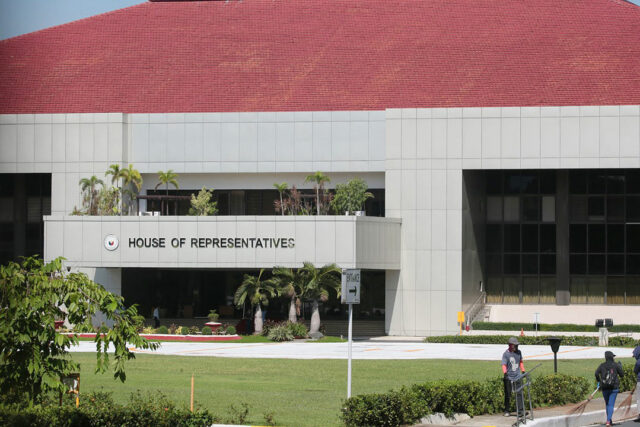
PHILIPPINE STAR/ MICHAEL VARCAS

LEYTE Representative Martin G. Romualdez, cousin of presumptive president Ferdinand BongbongR. Marcos, Jr., continues to meet with leaders of mainstream political parties as he is now poised to assume the speakership of the House of Representatives in the incoming 19th Congress.   

Mr. Romualdez on Monday afternoon met with stalwarts of Nacionalista Party (NP), including presumptive senator Mark A. Villar and Las Piñas City Rep. Camille A. Villar.  

Their parents, former senator and business tycoon Manuel B. Villar and Senator Cynthia A. Villar, are leaders of the conservative party, which has a membership of 39 in the lower chamber.   

The meeting, which was aimed to formalize NPs endorsement of Mr. Romualdezs speakership bid, was also attended by Ferdinand Alexander SandroA. Marcos III, son of Mr. Marcos, Jr.   

Mr. Romualdezs aspired position is now backed by eight mainstream political parties, including the political group chaired by Vice President Maria Leonor LeniG. Robredo.  

With the backing of the countrys largest traditional parties, the House would be on solid ground in promoting the unity agendaof the incoming Marcos administration, Mr. Romualdezs office said in a press release.  

We will work as one in pursuing this agenda and putting in place measures that would get us out of the COVID-19 (coronavirus disease 2019) pandemic and those that would sustain our nascent economic growth,he was quoted as saying.   

More than 200 of around 300 members of the House of Representatives have endorsed the speakership bid of Mr. Romualdez of Lakas-CMD as of Saturday, according to his camp.   

Mr. Romualdez has also received the endorsement of his partymate, former President Gloria M. Arroyo, chair emeritus of Lakas-CMD. The rightist group is now chaired by presumptive vice president Sara Duterte-Carpio.  

Ms. Arroyo is also returning to the House after running unopposed as representative of Pampanga.   

Arjan P. Aguirre, who teaches political science at the Ateneo De Manila University, said the emerging supermajority in Congress would be full of tensionsgiven that the supposed unity among its members is not anchored on principles and platforms.   

In this situation, expect that the emerging supermajority will be full of tensions since not all groups and forces have the same worth and roles to the ruling coalition,he said in a Messenger chat. These groups will continue to strengthen their position by activating their factional resources.”   

Mr. Aguirre said members of the emerging pro-administration faction are expected to compete for a higher place or more favored position in legislative portfolios and committees.”  

Some will resort to promising the prioritization of the agenda of the ruling coalition, others will offer support or sponsorship of personal bills of the leading clique of the coalition.Kyle Aristophere T. Atienza 

Incoming gov’t needs to raise P326-B new annual revenue to cover COVID-related debts 

THE INCOMING Philippine government needs to raise about P326 billion in new revenues annually to pay for debts incurred for the coronavirus response, according to the House Ways and Means Committee chairman.  

If you annuitize the debt service due to deficit spending from Jan. 2020 to March 2022, you will have around P144 billion in principal payments over the next twenty years, and around P181 billion in interest payments,Albay Representative Jose Ma. Clemente S. Salceda said on Monday. 

That will of course vary per year, and some years will need lower debt than others. But if you want to stretch out the payment schedule, thats the kind of fiscal space you need to cover the COVID-19 debts without incurring budget cuts,he said.    

Mr. Salceda said presumptive president Ferdinand BongbongR. Marcos, who won the biggest election victory since 1961,must use his political capital to immediately roll out effective fiscal measures within his first 100 days in office.   

These measures include new packages of tax policy reforms, setting up a digital taxation service, and overall improvement in tax payment procedures, among others.    

Mr. Marcos can use his supermajority in both mandate and Congressional alliances to enact smart, efficient tax and economic policies to address this debt overhang, the Albay representative said.   

The earlier the next administration begins with the fiscal expansion program, the better it will be for investor confidence, the countrys credit ratings, debt overhang and future growth prospects, the solon said. Alyssa Nicole O. Tan 

Duterte signs law granting night pay to gov’t workers 

A mural in Paco, Manila is seen on May 16, 2022. — PHILIPPINE STAR/KRIZ JOHN ROSALES

PRESIDENT Rodrigo R. Duterte has signed into law a measure granting night shift differential pay to government employees, including those working in government-owned corporations.  

The law, signed on April 13, provides a rate not exceeding 20% of the hourly basic rate of an employee for each hour of work performed between 6 p.m. and 6 a.m. the following day.  

It covers government workers occupying position items from division chief and below, or their equivalent, whether they are permanent, contractual, temporary, or casual employees.   

Government workers whose office hours are within 6 a.m. to 6 p.m. are excluded, but will be given overtime pay if they work beyond the regular eight-hour schedule. 

The night shift differential pay shall not diminish whatever benefits or allowances government employees are currently receiving, according to the law.  

The night differential pay provided under the law would not cover government workers whose services are required or are on-call 24 hours daily, such as the military, police, firefighters, jail management officers, and other similarly situated as determined by the country’s civil service commission and budget agency.  

Meanwhile, Mr. Duterte also signed a law raising the mandatory retirement age of key officials in the military to up to 60 years old.   

It also modified the term of key officers of the Philippine armed forces. Kyle Aristophere T. Atienza 

Party-list group pushes for special House sessions to address oil price hike 

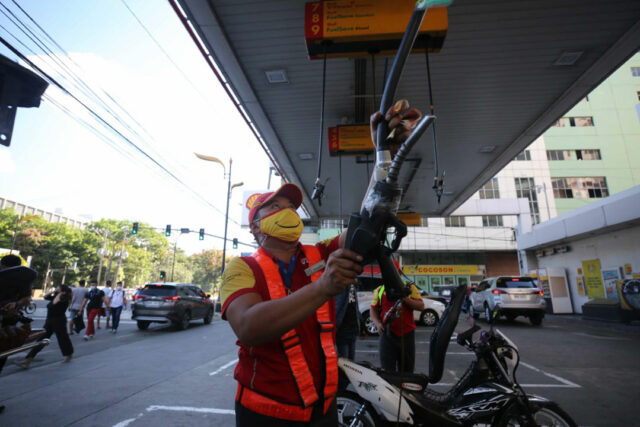
PHILIPPINE STAR/ RUSSELL A. PALMA

CONGRESS should hold special sessions to address the spike in oil prices, said Anakpawis Party-list on Monday, citing its impact on the livelihood and income of poor sectors such as drivers, fisherfolk and farmers.  

“We urge the incumbent lawmakers to decisively carry out the patriotic act of serving the interests of people: to repeal the excise tax and VAT (value added tax) provisions on oil products; and to totally repeal the Oil Deregulation Law,” Anakpawis National President Ariel B. Casilao said. 

Congress will resume sessions on May 23 to June 3.  

Mr. Casilao called the oil price hikes baselessas these do not jibe with the Ukraine crisis and movements in Dubai crude oil prices.  

Oil companies are set to decrease prices on Tuesday, with gasoline by 40 centavos per liter, diesel by P3.10, and kerosene by P2.10.   

He noted that excise tax and VAT imposes an additional cost of P13 to P17 per liter on gasoline and diesel products.  

Mr. Casilao also pushed for local governments to provide P10,000 financial aid to affected sectors to enhance productivity.  

“We appeal to the local governments to take on the noble task of aiding their affected constituents to avoid the catastrophic crisis of displacement and unemployment, and its consequence of worsened poverty and hunger of poor families,” he said. Alyssa Nicole O. Tan 

More universities join work for Mt. Apo’s UNESCO Geoparks listing 

A MINDANAO White Eye bird is spotted by Sta. Cruz town’s senior tourism officer, Julius R. Paner, during a biodiversity monitoring activity along Mt. Apo’s Sibulan Trail in Davao del Sur in Aug. 2021. — JULIUS R. PANER 

FOUR universities and the National Museum of the Philippines are working together for the profiling of flora and fauna at the Mt. Apo National Park, which will be used to support the goal of having the countrys highest peak listed as a UNESCO Global Geo-Park (UGGp) as well as update conservation programs.  

The data-gathering project is under the Biodiversity in Selected Mountain Ecosystems of Mindanao for Conservation and Sustainable Development program of the Central Mindanao University.   

It is funded by the Department of Science and Technology and being undertaken in partnership with the University of the Philippines-Los Baños, Davao Oriental State University, and Davao Del Sur State College.  

The gathering of critical data for the said project will not only aid the generation of knowledge for MANPs (Mt. Apo Natural Park) conservation plans and programs but will also succor its application for recognition as a UNESCO Global Geo-Park (UGGp),the Environment departments Davao regional office said in a statement.    

Indigenous peoples in Mt. Apo, particularly the Bagobo Tagabawa communities, are also collaborating in the research program.    

The partnership shall also act as contribution to the greater body of knowledge for Mountain Ecosystems in Mindanao and the Philippines,the department said.   

Mt. Apos Protected Area Management Board is stepping up efforts this year for the application to the United Nations Education, Scientific and Cultural Organizations (UNESCO) Global Geoparks, a relatively new label ratified by member states in 2015.  

Global Geoparks are single, unified geographical areas where sites and landscapes of international geological significance are managed with a holistic concept of protection, education and sustainable development,according to the UNESCO site.   

There are currently 177 UNESCO Global Geoparks in 46 countries.    

To be listed, a site must have an exceptional geological heritage while its management and conservation programs must involve local stakeholders. There should also be a system for educating visitors.   

Mt. Apo, located in the Philippine southern island of Mindanao, is a dormant startovolcano with an elevation of 2,954 meters above sea level. It serves as a watershed and ecotourism destination. MSJ 

BCDA, PHL Army renew cooperation for New Clark City security 

THE Bases Conversion and Development Authority (BCDA) and the Philippine Army-7th Infantry Division have renewed their partnership for the security of the New Clark City in Tarlac province.   

BCDA Chief Executive Officer Aristotle B. Batuhan and 7th Infantry Commanding General Andrew D. Costelo signed a memorandum of agreement on May 4 for the continued deployment of paramilitary troops to ensure security within the 9,450-hectare community that is under development.  

The move paves the way for the unhampered development of the governments big-ticket projects and private investments in New Clark City, facilitating the inclusive growth of its communities and a business climate primed for continuous commercial activities,the BCDA said in a statement on Monday.   

The New Clark City development requires a devoted, dedicated and exclusive group of personnel to be present in the property during the entire duration of the construction and development … BCDA believes that the presence of the AFP (Armed Forces of the Philippines) in the entire area of New Clark City will assure the deterrence of any potential and possible threats to its development,according to the agreement. Revin Mikhael D. Ochave  

Taiwan’s COVID-19 containment strategy utilizes innovative technology and universal health coverage

LISANTO-UNSPLASH

TWO YEARS into the COVID-19 pandemic, more than 510 million confirmed cases and more than 6.25 million deaths have been reported around the world. As nations continue to battle the pandemic, Taiwan’s achievements have been widely recognized. As of May 10, about 390,000 confirmed cases and 931 deaths had been reported in Taiwan, which has a population of 23.5 million. And thanks to a joint effort by the government and the people, Taiwan’s economic growth rate for 2021 reached 6.45%.

UNIVERSAL HEALTH COVERAGE
Taiwan’s National Health Insurance (NHI) system, which was launched in 1995, has played an important role in the fight against the pandemic. The NHI system provides comprehensive and high-quality health services, achieving universal (99.9%) coverage. Taiwan’s robust healthcare and NHI systems have safeguarded the people and ensured social stability during the COVID-19 pandemic. Furthermore, the NHI’s comprehensive database and other up-to-date information systems have been critical in ensuring the successful application of digital technology for disease prevention. Taiwan’s healthcare system was ranked second in the world in 2021 by CEOWorld. In Numbeo’s annual survey, Taiwan was ranked first among 95 countries surveyed in the Health Care Index category for 2021.

USE OF TECHNOLOGY FOR EPIDEMIC PREVENTION
During the early stages of the COVID-19 pandemic in February 2020, to reduce the risk of community transmission, the government implemented the Quarantine System for Entry by integrating NHI, immigration, and customs databases to allow for big data analysis. Data was introduced to the Digital Fencing Tracking System, which used the positioning system on mobile phones to monitor the whereabouts of people under home quarantine or isolation. Moreover, to ensure privacy, personal data captured was stored for a maximum of 28 days and then deleted.

To ensure that all residents would enjoy equitable access to medical masks as demand increased, people were required to use their NHI card to purchase masks under the Name-based Mask Distribution System, helping to prevent an imbalance in supply and demand. While protecting personal data, a new function for querying the travel and contact history of patients was added to the NHI MediCloud System to effectively integrate health data. This helped frontline medical personnel judge infection risks and take relevant infection control measures.

VACCINATIONS AND DIGITAL CERTIFICATES
To digitalize healthcare services, the NHI Express App was launched. It offers such features as vaccination appointments, personal health data, medical records, COVID-19 vaccination records, and test results. Taiwan joined the EU Digital COVID Certificate program at the end of 2021 and allowed citizens to apply for digital vaccination certificates and test certificates. This program was one of the first global standards developed. It was adopted by many states and was the first one to be applied for international travel. Taiwan’s people can enter 64 countries, including EU member states, with such certificates.

ELECTRONIC MEDICAL RECORDS AND TELEMEDICINE
Taiwan has been building health information infrastructure since 2010, such as the electronic medical records (EMR) exchange system. Since May 2021, Taiwan has expanded its telemedicine services in healthcare institutions and included such services into NHI coverage as a means of reducing the risk of cluster infections at such institutions. Using the NHI MediCloud and EMR systems, zero-contact telemedicine allows medical personnel to obtain patients’ medical records and offer people in remote areas appropriate and comprehensive services, in turn helping to realize the World Health Organization (WHO) goal of health for all.

NEW TAIWAN MODEL
Taiwan was able to contain the pandemic while having people lead normal lives and achieving positive economic growth through the precise use of technology, information transparency, strict border controls, and accurate screening and case investigation.

However, with the worldwide spread of the Omicron variant since the end of 2021, community transmission also began to increase in Taiwan. The variant appears to be much more contagious but to cause mild or no symptoms. Trying to block the transmission of every single case would be a vain effort that would greatly affect people’s livelihoods. Since April, the government has therefore chosen to aim at eliminating severe cases, managing mild cases, minimizing overall impacts, and caring for moderate and severe cases. This new Taiwan Model seeks to allow people to lead normal lives while active epidemic prevention measures remain in place and the country is steadily opening up.

STRENGTHENING PEOPLE’S RESILIENCE
With the introduction of rapid antigen test kits, Taiwan has shortened quarantines and reduced control measures, requiring confirmed cases to notify their close contacts to undergo home isolation and using electronic contact notification during the process. As the demand for rapid tests increases, the government has requisitioned a fixed amount and adopted a name-based rationing scheme, distributing tests to NHI-contracted pharmacies for the public to purchase using their NHI cards.

PRESERVING HEALTHCARE CAPACITY
Taiwan has adopted a triage approach, having milder COVID-19 cases undergo home care and reserving hospital treatment for members of high-risk groups, such as moderate and severe cases and the elderly. During home care, people can access emergency medical consultations through mobile apps. A network of pharmacists and community pharmacies has been put together to provide consultations and deliver medicines.

As of the end of April, about 80% of the people in Taiwan had received a primary series of the COVID-19 vaccine, while 60% had received a booster dose.

TAIWAN CAN HELP, AND TAIWAN IS HELPING
The world today continues to face challenges of the pandemic, vaccine supply, and post-pandemic recovery. Countries should work together and prepare for possible future pandemics. Taiwan is an indispensable partner in ensuring a successful post-pandemic recovery. To contain the pandemic, Taiwan has continued to cooperate with other countries on the research and development of COVID-19 vaccines and drugs and has donated medical supplies, such as medical masks and medicines, to countries in need. This has demonstrated that Taiwan can help, and Taiwan is helping.

The 75th World Health Assembly (WHA) will be held in May. For the past five years, Taiwan has not been invited to participate in the WHA. To ensure that Taiwan is not left behind and there is no coverage gap in global health, Taiwan seeks to participate in the WHA this year in a professional and pragmatic manner, so that it can make contributions as part of the global effort to realize the World Health Organization’s vision of a seamless global disease prevention network.

We urge the World Health Organization (WHO) and related parties to support Taiwan’s inclusion in WHO and allow it to fully participate in WHO meetings, mechanisms, and activities. Taiwan will continue to work with the rest of the world to ensure that all enjoy the fundamental human right to health as stipulated in the WHO Constitution. In the spirit of the United Nations’ 2030 Sustainable Development Goals, no one should be left behind.


Dr. Shih-Chung Chen is Taiwan’s Minister of Health and Welfare.

Zoonotic spillover is the apocalypse you’ll be hearing about a lot

WIRESTOCK-FREEPIK

THE TERM “zoonotic spillover” might sound either reassuringly geeky or deceptively innocuous — like a sticky mess involving a melted ice cream cone between the monkey cage and the aquarium. It refers, in reality, to one of the greatest dangers to humanity. As such, it is neither more nor less menacing than climate change, but a direct consequence of it.

The word “zoonosis” comes from the Greek for “animal disease.” It applies to pathogens that can jump both between critters and from them to us. HIV, the virus that causes AIDS, hopped to humans from chimps, for example. MERS, a respiratory virus, spread to us from dromedary camels. Ebola probably came from apes, monkeys, or bats, or all of them. In similar ways, we’ve imported hundreds of other ills from the wild kingdom — not least, SARS-CoV-2 (COVID-19), which we also picked up from bats.

What does this have to do with climate change? A lot. The more animals mingle — with other fauna or us — the more opportunities the pathogens they’re hosting have to travel, mutate, and spread. And global warming causes exactly such mingling.

As average temperatures rise, they change habitats. Wet areas become arid; cool or lush zones turn into deserts, and so forth. As a result, animals migrate out of their familiar surroundings and come in contact with many other species, most of which they’ve never encountered.

A team working with Colin Carlson, a biologist at Georgetown University in Washington DC, has now used some very fancy math to model the contacts and cross-species virus transmission we can expect. They’ve published the results in the journal Nature.

It makes for frightening reading. Both the mingling and the transmission are already well underway but will accelerate dramatically in our lifetime. Even in the most conservative warming scenario, for example, we can expect another 15,000 viruses to hop among 3,000 species of mammals in the coming decades. The main melting pots won’t be the regions near the polar north or south, as might be expected, but the higher elevations of Asia and Africa.

Mammals play a starring role in this horror movie mainly because they’re genetically close enough to us for their bugs to wreak havoc in our bodies. Bats present a particular threat because they can fly and are thus able to migrate farther and faster. Brazilian free-tailed bats, for example, have spread throughout the southeastern US in recent years.

Global warming also abets pathogens in many other ways. For example, it causes a thaw of the permafrost. That frozen ground in northern latitudes is a vast arsenal of ancient viruses, bacteria, and other nasties. The frost has kept them away from wildlife so long, animals and people no longer have any immunity to them. But now they’re coming out of their icy vaults. There have been outbreaks of anthrax in Siberia recently, after spores wafted out of ancient reindeer carcasses previously sealed in the ice. We can expect much more of this sort of thing.

Can we do anything about all these threats? Only up to a point. We should certainly clamp down on deforestation — especially in the Amazon rainforest — which also forces species into involuntary contact with one another and us. And we should regulate and monitor wildlife markets, farms, and other places where species jostle up against one another.

Above all, we should prepare for future epidemics and pandemics now. For decades before COVID-19 arrived, various Cassandras told us to have a plan and make it global, but we largely ignored them.

But the most urgent and important effort to which we must recommit is the struggle against climate change itself. In the Paris Agreement of 2015, we collectively declared the ambition to keep global warming to a long-term increase of 1.5 degrees over temperatures in the 19th century. No chance. According to new projections by meteorologists, we’re likely to breach that threshold by 2026. From here on, every additional uptick on the thermometer also raises our risk of disease.

BLOOMBERG OPINION

Growth, electricity, vaccination, and the new administration

This article will cover four different topics so we go straight to them.

GDP GROWTH IN FIRST QUARTER 2022
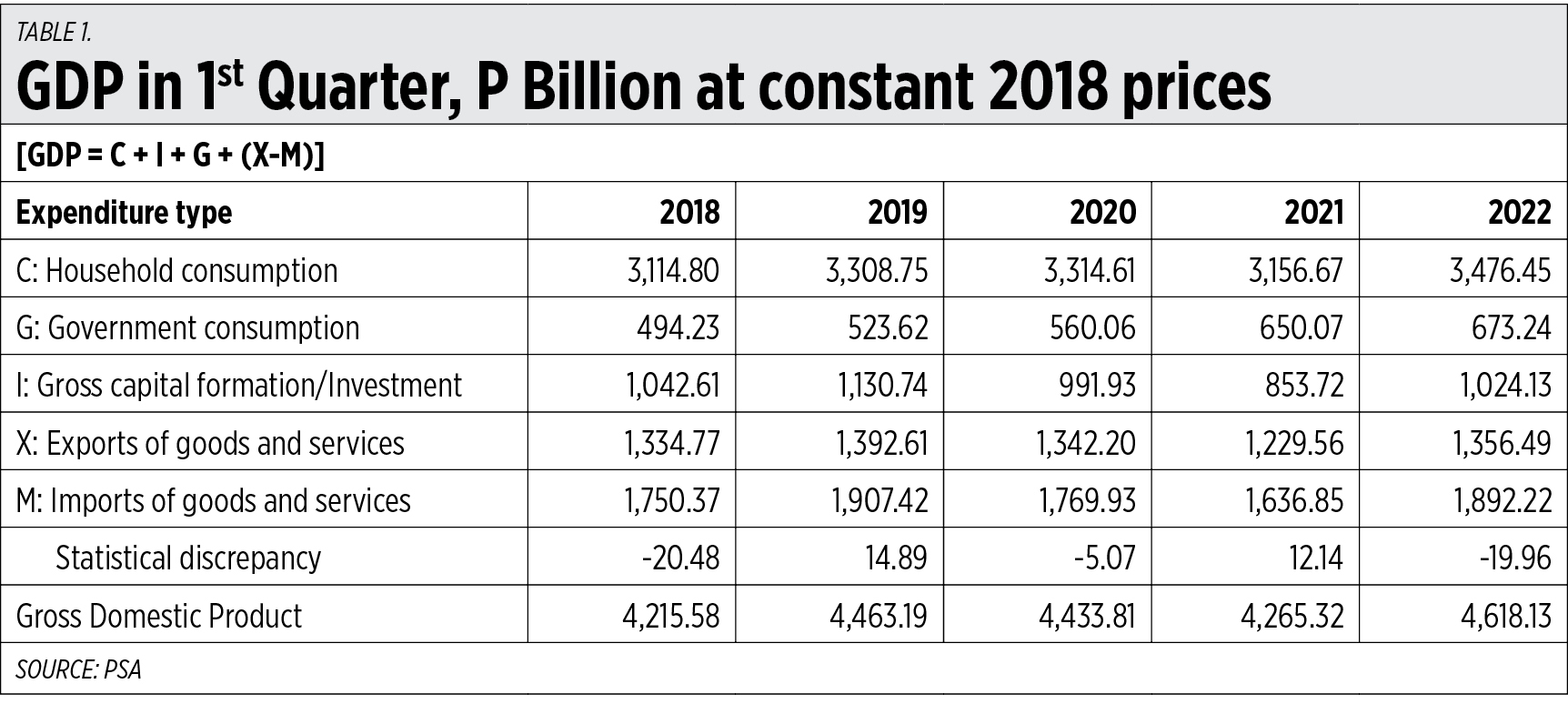
Last week the Philippine Statistics Authority (PSA) released the country’s economic performance in the first quarter (Q1) of the year. Growth was 8.3% compared to the level a year ago — nice. But in terms of pesos worth of goods and services produced, there was little to celebrate actually if we compare Q1 2022 vs Q1 2019 or three years ago.

One, the P4.62 trillion output in Q1 2022 was only P160 billion higher than the P4.46 trillion output three years ago while there was an increase of 4.5 million more Filipinos over the same period. So the per capita income has continued to decline.

Two, the increase was due to more government consumption and spending — a difference of P150 billion — plus household consumption which increased by P168 billion, mainly due to higher spending by politicians and sponsors in this year’s presidential election than in the mid-term election of 2019.

Three, capital formation decreased by P106 billion and is practically comparable to the 2018 level four years ago. Meaning the investment environment remains poor and unattractive (see Table 1).

GROWTH AND ELECTRICITY GENERATION
One of the major man-made “growth killers” in the Cory Aquino administration (1986-1992) was the killing of the 620-MW Bataan Nuclear Power Plant (BNPP) with no alternative set up to replace it. Many big potential investors saw that major blackouts would happen, so they did not come in. And frequent blackouts did happen in 1990-1991. The other man-made “growth killer” was the series of bloody but unsuccessful coup d’état attempts by Gringo Honasan and Johnny Ponce Enrile from 1987-1989.

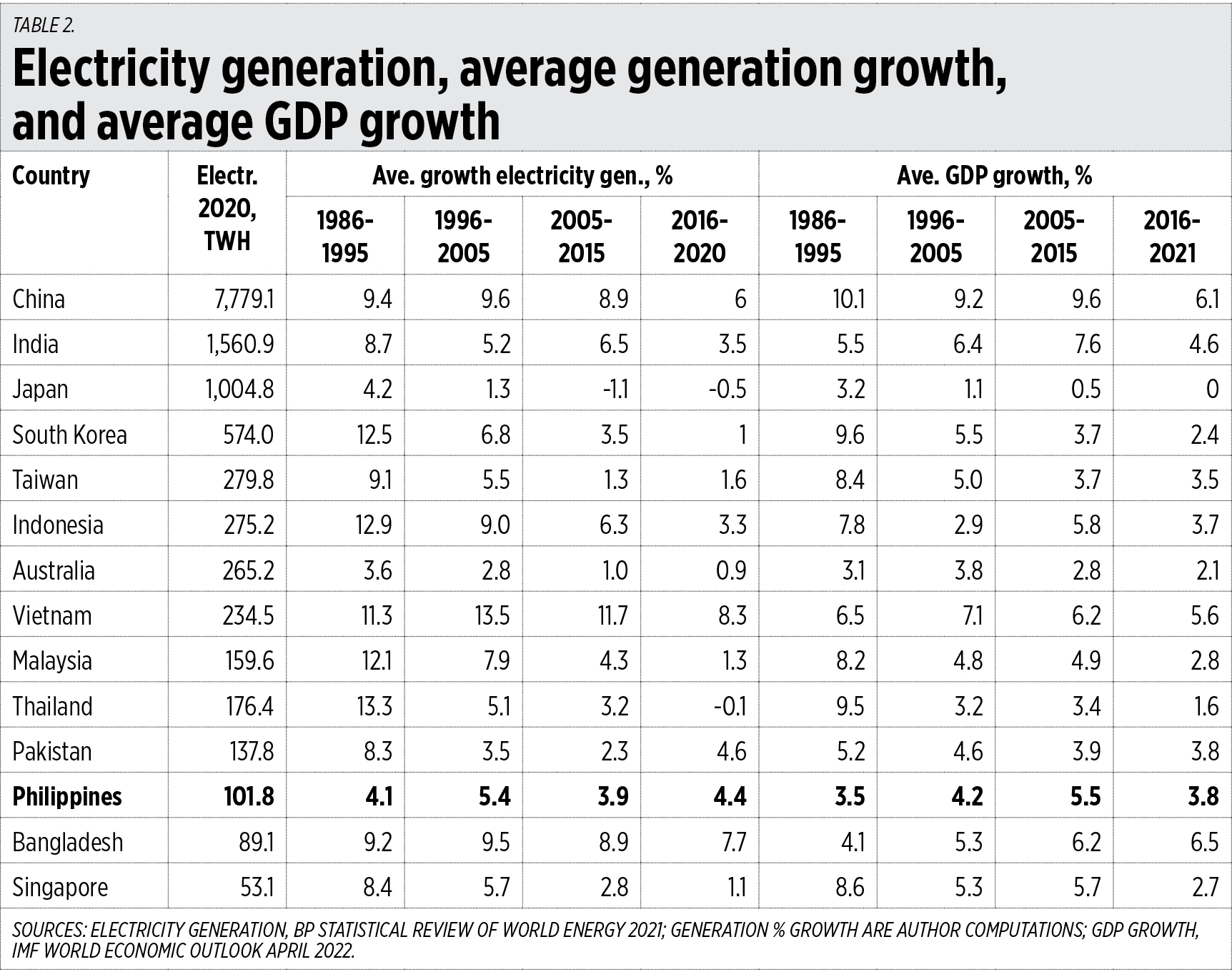
I compared the annual growth in power generation (in terawatt-hours, TWH) and annual GDP growth of many Asian countries plus Australia from 1986 to 2020, and until 2021 for GDP growth. I averaged them by decade and the result is consistent — high or fast power generation led to high GDP growth, and slowing power generation led to slowing GDP growth, for the past 35 years.

The Philippines has the third lowest power generation growth next to Japan and Australia (which have high base already), and is comparable to Pakistan. Consequently, we have low decadal GDP growth similar to Pakistan, while Japan and Australia have much lower GDP growth.

TRANSMISSION CONGESTION BY NGCP
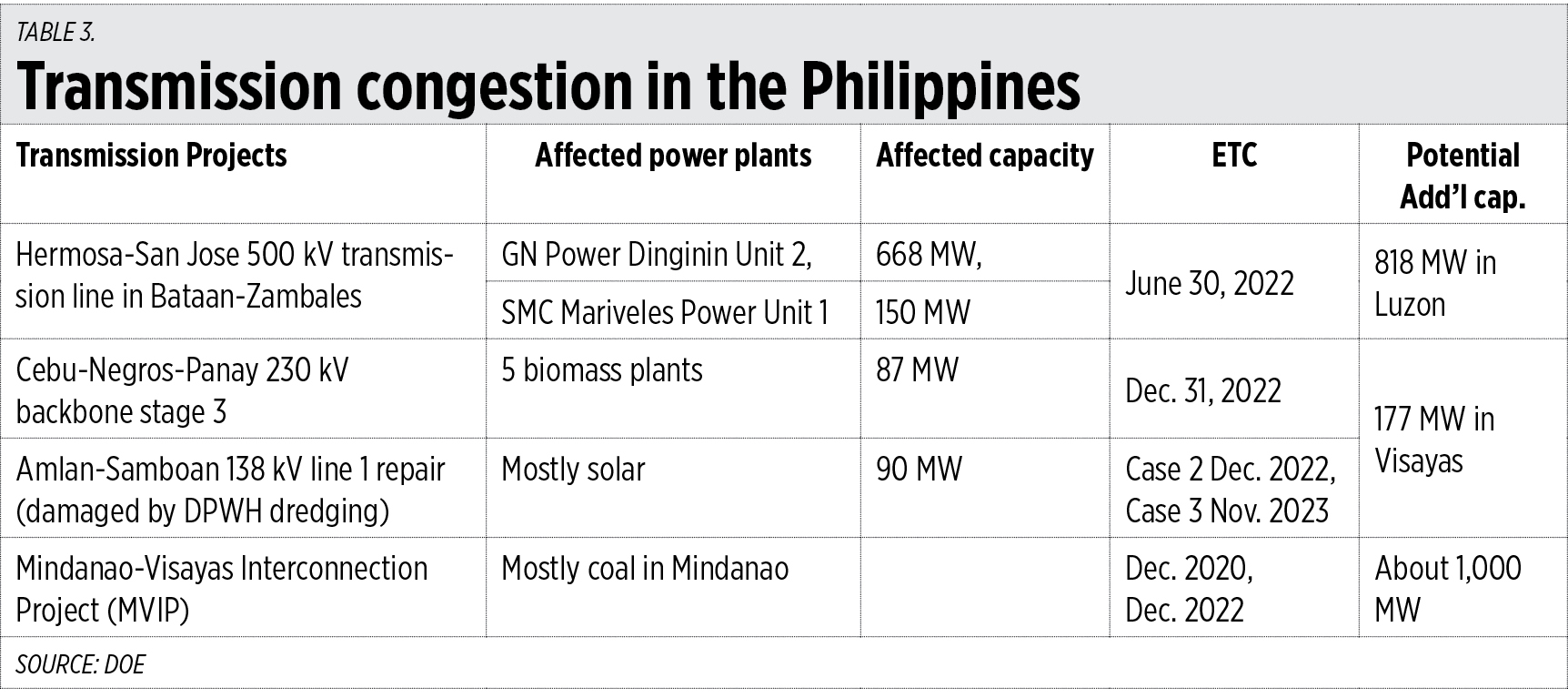
Aside from the low increase in power generation due to various bureaucracies, some of the power plants that were successfully built experience transmission problems. As the power system operator, the National Grid Corporation of the Philippines (NGCP) is occasionally remiss in its mandate of ensuring sufficient transmission lines between actual and potential power plants to distribution utilities, corporations, and cooperatives.

Previously in this column, I cited the Philippine Independent Power Producers Association, Inc. (PIPPA) estimates of “1,000+ MW of stranded capacity in Bataan and Quezon due to transmission line limitations; another 1,000+ MW of power surplus in Mindanao that cannot be exported to the Visayas and Luzon” (see https://bit.ly/Oplas050322).

Table 3 tackles some details, the affected power plants, and expected time of completion (ETC) of transmission projects.

If the power plants are already there but there are no working transmission lines up yet, and construction and commissioning are delayed, then no new power can be dispatched. And this contributes to business uncertainty. Why build a new power plant when the NGCP may not be able to complete the new transmission project or expand the capacity of an existing congested transmission line to connect it to?

This uncertainty caused by the NGCP will hit the brakes on potential high growth. Big investors will factor in the cost of buying big gensets and their maintenance, since the threat of red-yellow alerts and potential blackouts will remain over their heads.

MANDATORY VAX BROUGHT BEFORE THE SC
The Inter-Agency Task Force (IATF) Resolution 148-B issued in November 2021, plus related government orders, on mandatory vaccination of on-site workers are coercive. They require on-site workers who are unvaccinated to take RT-PCR tests regularly at their own expense. The resolution also barred unvaccinated individuals from boarding and riding public transportation with very few exceptions.

With many reports of displaced workers and vaccine injuries, several groups went to the Supreme Court on May 12 and asked the Court to stop the enforcement of all government issuances and policies that impose mandatory vaccination against COVID-19 which the groups say violate Constitutional provisions on due process, equal protection of the law, security and privacy, religious freedom, and freedom of movement and travel.

The petitioners were led by Nick Perlas and lawyers of the group COVID Call to Humanity, doctors and scientists of the Concerned Doctors and Citizens of the Philippines, Legal Lightworkers for Life and Liberty, and Juan Dakila Movement, plus COVID vaccine-injured employee, religious leaders, government and private sector employees, and public-school teachers.

The respondents named in the petition were the IATF, Health Secretary Francisco Duque III, Executive Secretary Salvador Medialdea, Interior and Local Government Secretary Eduardo Año, Transport Secretary Arthur Tugade, Education Secretary Leonor Briones, and Makati City Mayor Abby Binay.

Mandatory orders mean zero choice. It means full government authoritarianism, and that individual freedom and individual choice is disrespected. The mandatory lockdowns and many business closures in 2020-2021 largely contributed to a GDP contraction in 2020 of 9.6%, the worst in Asia, then anemic recovery in 2021 of 5.6% which put the GDP level only at the level of 2018.

The new administration of Bongbong Marcos-Sara Duterte should learn the lessons of the past few years: heavy coercion and authoritarianism is a growth-killer. Insufficient power and repeated threats of blackouts is a growth-dampener. Economic freedom and individual liberty remain the single biggest growth-creator and enhancer.


Bienvenido S. Oplas, Jr. is the president of Minimal Government Thinkers.

minimalgovernment@gmail.com

Obtaining Corporate Registration through fraud

SCOTT GRAHAM-UNSPLASH

Section 164 of the Revised Corporation Code (RCC) provides that “those responsible for the formation of a corporation through fraud, or who assisted directly or indirectly therein,” shall be penalized with a fine ranging from P200,000 to P2 million; but that, when injurious or detrimental to the public, the fine shall range from P400,000 to P5 million. It should be noted that Section 164 does not limit itself to the incorporators who signed the articles of incorporation.

For the ground discussed hereunder, we posit that no successful prosecution can be obtained under the language of Section 164 of the RCC.

1.) What constitutes “fraud” in the formation of a corporation?

The offense covered under Section 164 of the RCC, i.e., that of obtaining registration of a corporation through fraud, actually cast a very wide net in violation of the due process clause, since usually when “fraud” is used to define a crime, the requisites of what constitutes fraudulent acts are usually defined or enumerated. In addition, criminal fraud, when properly defined, requires the element of “injury” or “damage” to amount to a criminal offense.

The term “responsible for the formation of a corporation through fraud,” could cover a wide range of corporate malpractices from the use of dummies in areas covered by nationalization law, mis-declaration or mis-evaluation of the consideration paid for the subscription of the capital stock, to false certification of the amounts actually paid-in.

The term could cover any person responsible for the formation of a corporation, or who assisted directly or indirectly therein, including promoters, passive investors, and bank officers who certified to the subscription contributions, the lawyers who handled the formation of the corporation, the appraisers who undertook the valuation of the property contributions, and even the officers of the Securities and Exchange Commission (SEC) who approved such registration where fraud was involved.

Without defining the requisites of what would constitute “formation of a corporation through fraud,” it would be difficult to convict an accused under Section 164, since the quantum of evidence required in a criminal case is guilt beyond a reasonable doubt. Also, the lack of a proper definition under Section 164 of what acts constitute the criminal offense would be in violation of the rudiments of due process in criminal proceedings.

2.) Title II on the Incorporation and Organization of Private Corporations

The requirements and procedures for the formation of a corporation are detailed under Title II (Incorporation and Organization of Private Corporations) of the RCC, and it can be expected that the offense of “fraud in the formation of a corporation” under Section 164 of the RCC, must impinge upon any of the requirements and procedures provided therein.

Except for the unauthorized use of a corporate name which is expressly penalized under Sections 17 in relation to Section 159, no section under Title II of the RCC imposes a criminal penalty for failure to comply with its provision. In fact, when there are lapses in complying with the requirements for the formation of the corporation, Section 16 provides that the proper action of the SEC is to “disapprove” the articles of incorporation and grant the incorporators, directors, trustees, or officers reasonable time to modify the objectionable portions of the articles of incorporation. On the other hand, the corporation has been duly registered with the SEC but there have been serious flaws in the manner of its formation, Section 19, in laying down the doctrine of de facto corporation, provides that the proper remedy would be for the SEC to work through the Solicitor General to seek a dissolution of the corporation through quo warranto proceedings.

Nothing in the structure of Title II of the RCC can support imposition of the criminal offense referred to in Section 164 as “formation of a corporation through fraud.”

3.) Chilling effect on the whole machinery to promote the use of the corporate vehicle.

Since the broad language of Section 164 of the RCC could ensnare the commercial world in a wide-ranging criminal net, it actually induces a “chilling effect” on the various players and institutions in the commercial world that seek to promote the corporate medium as the medium by which to attract investments in our economy. In that sense, the introduction of Section 164 into the RCC is actually against the principle of promoting the ease of doing business in our country through the corporate medium.

4.) SEC’s Restatement of Section 164 Offense

SEC Memorandum Circular No. 16-2020, entitled “Guidelines on Authentication of Articles of Incorporation in Applications for Registration of New Domestic Corporations,” restates Section 164 of the RCC by providing, under Section 6 thereof, as follows:

SECTION 6. Obtaining Corporate Registration through Fraud or Misrepresentation. — The registration of a corporation, which has procured its Certificate of Registration through fraud or misrepresentation, shall be revoked.

Furthermore, those responsible for the formation of a corporation through fraud, or who assisted directly or indirectly therein, shall be punished with a fine ranging from P200,000 to P2,000,000. When the violation is injurious or detrimental to the public, the penalty shall be a fine ranging from P400,000 to P5,000,000.

It cannot be said that the SEC is defining an administrative offense by the foregoing provisions since the fines imposed are beyond the amounts authorized under Section 158 of the RCC, and that both the language and amounts tract the language of Section 164 (Obtaining Corporate Registration Through Fraud; Penalties) of the Code.

Consequently, SEC Memorandum Circular No. 16-2020 fails to define an offense that can be the subject of an administrative sanction, nor can it complete the inadequacies of the language of Section 164 of the RCC to comply with rudiments of criminal due process.

FRAUDULENT CONDUCT OF BUSINESS
Section 165 of the RCC provides the legal basis to hold a corporation criminally liable as the respondent in a criminal case. On the other hand, Section 165 provides no legal basis to hold criminally liable the directors, trustees, officers and/or employees who are guilty of conducting the company’s business through fraud. In other words, the criminal liability of the acting officers and employees would be based on the laws that punish the fraudulent acts done in the management of the affairs of the corporation. It would then be Section 171, in relation to Section 165 by which to hold the culprit directors, trustees, officers and/or employees liable for conducting the corporation’s business through fraud.

This article reflects the personal opinion of the author and does not reflect the official stand of the Management Association of the Philippines or MAP.


Attorney Cesar L. Villanueva is co-chair for Governance of the MAP ESG Committee, the chair of the Institute of Corporate Directors, the first chair of the Governance Commission for GOCCs, a former dean of the Ateneo Law School, and a founding partner of Villanueva Gabionza & Dy Law Offices.

map@map.org.ph

cvillanueva@vgslaw.com

http://map.org.ph

Shanghai targets return to normal life starting June 1

A VIEW of the city skyline in Shanghai, China, Feb. 24, 2022. — REUTERS

SHANGHAI/BEIJING — Shanghai set out plans on Monday for the return of more normal life from June 1 and the end of a painful coronavirus disease 2019 (COVID-19) lockdown that has lasted more than six weeks and contributed to a sharp slowdown in China’s economic activity.

In the clearest timetable yet, Deputy Mayor Zong Ming said Shanghai’s reopening would be carried out in stages, with movement curbs largely to remain in place until May 21 to prevent a rebound in infections, before a gradual easing.

“From June 1, to mid- and late June, as long as risks of a rebound in infections are controlled, we will fully implement epidemic prevention and control, normalize management, and fully restore normal production and life in the city,” she said.

The full lockdown of Shanghai and COVID curbs on hundreds of millions of consumers and workers in dozens of other cities have hurt retail sales, industrial production and employment, adding to fears the economy could shrink in the second quarter.

The severe restrictions, increasingly out of step with the rest of the world, which have been lifting COVID rules even as infections spread, are also sending shockwaves through global supply chains and international trade.

Data on Monday showed China’s industrial output fell 2.9% in April from a year earlier, down sharply from a 5.0% increase in March, while retail sales shrank 11.1% year-on-year, after falling 3.5% the month before. Both were well below expectations.

Economic activity has probably been improving somewhat in May, analysts say, and the government and central bank are expected to deploy more stimulus measures to speed things up.

But the strength of the rebound is uncertain due to China’s uncompromising “zero COVID” policy of eradicating all outbreaks at all costs.

“China’s economy could see a more meaningful recovery in the second half, barring a Shanghai-like lockdown in another major city,” said Tommy Wu, lead China economist at Oxford Economics.

“The risks to the outlook are tilted to the downside, as the effectiveness of policy stimulus will largely depend on the scale of future COVID outbreaks and lockdowns.”

Beijing, which has been finding dozens of new cases almost every day since April 22, offers a strong indication of how difficult it is to tackle the highly transmissible Omicron variant.

The capital has not enforced a city-wide lockdown but has been tightening curbs to the point road traffic levels in Beijing slid last week to levels comparable to Shanghai’s, according to GPS data tracked by Chinese internet giant Baidu.

On Sunday, Beijing extended guidance to work from home in four districts. It had already banned dine-in services at restaurants and curtailed public transport, among other measures.

In Shanghai, the deputy mayor said the city would begin to re-open supermarkets, convenience stores and pharmacies from Monday, but that many movement restrictions had to remain in place until at least May 21. It is not clear how many businesses have reopened.

From Monday, China’s railway operator will gradually increase the number of trains arriving and departing from the city, Zong said. Airlines will also increase domestic flights.

From May 22, bus and rail transit will also gradually resume operations, but people will have to show a negative COVID test not older than 48 hours to take public transport. — Reuters

Sweden, Finland NATO membership seen to increase Baltic security

BERLIN — Sweden and Finland joining NATO would increase the security of the Baltic region, Estonian Foreign Minister Eva-Maria Liimets said.

“When we see that in our neighborhood also other democratic countries belong to NATO, it would mean that we could have broader joint exercises and also … more defense cooperation,” Ms. Liimets told Reuters in Berlin where she joined a meeting with other NATO counterparts on Saturday.

Ms. Liimets said she hoped Sweden, Finland and Turkey would overcome differences on the Nordic states joining the alliance, adding that the Berlin meeting atmosphere was very supportive.

“We have seen some differences, but we have also seen a willingness of those countries to overcome the differences,” she said.

Estonia appreciates NATO enforcing its presence in the Baltic region but would like the allies to move from enhancing their presence to enhancing their defense.

“It would mean that we would have more robust presence of land forces, but also air and maritime defense,” she added. — Reuters