Home Blog Page 6042

ERC’s Devanadera sees immediate price impact if fuel excise suspended

BW FILE PHOTO

THE HEAD of the Energy Regulatory Commission (ERC) has called for the suspension of the excise tax on coal and petroleum products to immediately bring down the cost of electricity.

“The very immediate (solution) is, we can go into (the) suspension of the excise tax,” ERC Chairperson and Chief Executive Officer Agnes VST Devanadera said in a virtual briefing late Wednesday.

She identified coal and petroleum products as items that can be exempted from the excise tax.

“Here the impositions of (the) government in terms of taxes amount to about 12%,” she said. “You’d see that in your (electricity) bill.”

Ms. Devanadera called the briefing and offered her proposal ahead of the change in political leadership in July, which is also the same month that her term at the ERC ends.

She said the suspension of the excise tax is among the solutions needed to bring down power rates in the Philippines, which are among the highest in Southeast Asia.

“The actual cost that is being billed to us is reflective of the real cost as there is no subsidy,” she said.

She also cited supply constraints brought about by the Russia-Ukraine war that have jacked up the cost of petroleum products, further pushing higher the cost of electricity.

“Unlike other countries, (the Philippines does not) provide a subsidy for energy,” she said.

Ms. Devanadera also called for a review of the multiple imposition of the value-added tax (VAT) that further adds to the cost of electricity. She said VAT is imposed on power generation companies when they sell to the distribution utilities that bring electricity to consumers.

“When Meralco (Manila Electric Co.) bills us, the consumers, meron na namang (there is again) VAT,” she added.

For consumers, the imposition of VAT is a burden because it is applied on power generation, transmission, and distribution, Ms. Devanadera said, adding that the tax should be imposed only on distribution utilities.

Pass-through charges from power generation and transmission are paid to the suppliers and the grid system operator, respectively. Taxes, universal charges, and the feed-in tariff allowance are remitted to the government. Power sellers earn from the distribution charge.

“We don’t need a law to be passed. It’s a matter of interpretation of the agency that can do this,” she said, pointing to the Bureau of Internal Revenue. “That will give us a reduction of about 7%, so that’s a lot.”

Even the system loss — or power that is lost when it is exported from the plant to end-consumers — is charged VAT, she added.

“We don’t need a law for that,” she said, referring to the removal of the system loss VAT. “We only need an issuance by the executive.”

Her sample computation put the VAT component at P1,700 of a monthly electricity bill of P16,000, but if the tax is imposed only on the distribution utility, consumers could end up paying between P400 and P600.

Asked about substitute revenue sources for the government in place of the suspension of the excise tax and VAT, she suggested imposing higher taxes on non-essentials, which she identified as cars, condominiums, and gaming.

Ms. Devanadera was appointed to head the ERC towards the end of 2017. Her appointment papers, authorizing her to serve out the unfinished term of her predecessor, set the end of her term at July 10, 2022. — Victor V. Saulon

Debt-to-GDP ratio seen peaking at 66.8% by 2024

NATIONAL GOVERNMENT debt as a share of gross domestic product (GDP) is expected to peak at 66.8% by 2024, the Philippine Institute for Development Studies (PIDS) said in a recent discussion paper.

Employing a debt sustainability analysis method employed by the International Monetary Fund, the PIDS found that “the National Government debt-to-GDP ratio may remain elevated in the medium term, peaking at 66.8% in 2024 and dipping to 65.7% by 2026.”

It said the recent debt surge is “less worrisome” compared to earlier debt episodes.

The findings were contained in the discussion paper, “Fiscal Effects of the COVID-19 Pandemic: Assessing Public Debt Sustainability in the Philippines.”

“In our analysis of the immediate impact of the COVID-19 pandemic and related fiscal responses on the Philippines’ public finances within a historical frame, the most recent debt surge appears less worrisome than earlier debt episodes in that it is not due to sharp interest rate shocks, excessive external debt, or a buildup of hidden (non-budget) deficits, nor a steady decline in the country’s tax effort,” according to the paper.

“Instead, debt decomposition shows the surge was driven by an exogenous (pandemic-induced) drop in output growth and a resultant rise in primary deficits as revenues temporarily collapsed and relief and recovery spending by government accelerated.”

Once GDP growth returns to pre-pandemic levels this year, “fiscal deficits will trend downwards, and interest-growth differentials will remain negative, generating favorable conditions for debt reduction in the near to medium term,” the PIDS said.

The Philippine economy expanded by a better-than-expected 8.3% in the first quarter, surpassing the pre-pandemic output level as household spending surged amid the easing of coronavirus curbs.

Preliminary data released by the Philippine Statistics Authority showed GDP quickened by 8.3% year on year in the January to March period, a turnaround from the 3.8% contraction in the same period last year. It was also faster than the revised 7.8% growth in the fourth quarter of 2021.

Meanwhile, the National Government’s debt at the end of March was P12.68 trillion, equivalent to 63.5% of GDP, based on data handed by the Bureau of the Treasury (BTr).

The state-run think tank’s estimated debt-to-GDP level by 2024 would be the highest since the 71.6% recorded in 2004, based on historical BTr data.

However, the nature of the debt that piled up during the COVID-19 pandemic augurs well for repayment prospects and reducing the debt ratio relative to the size of the economy, the PIDS said.

“Since half of the accumulated debt during the height of the pandemic crisis (6.3 out of the 15% of GDP increase in 2020) comprised cash buffers of government that were built up in the event of a prolonged pandemic (and to benefit from loose monetary conditions), with such behavior continuing to the present, the scope for a future debt decline is wide. Netting the government’s cash reserves, the debt-to-GDP ratio would follow a similar but much lower trajectory.”

The discussion paper concluded that “it may not be feasible to immediately aim for a low debt ratio to give the economy time and room to recover from the pandemic shock, but nonetheless underscores the importance of a sound medium- to long-term fiscal consolidation plan.”

The analysis also found that the Philippines and other ASEAN countries “respond to rising indebtedness by improving primary balances. In the literature, such systematic behavior indicates responsible fiscal policy and already guarantees fiscal solvency.”

“It is therefore crucial that fiscal policy reforms, especially those that were hard-won, remain intact,” the PIDS concluded.

Written by economists Margarita Debuque-Gonzales, Charlotte Justine Diokno-Sicat, John Paul Corpus, Robert Hector Palomar, Mark Gerald Ruiz, and Ramona Maria Miral, the discussion paper was published on May 18. — Keisha B. Ta-asan

Foreign chambers press Congress to ratify Transportation Safety Board legislation

BW FILE PHOTO

THE Joint Foreign Chambers (JFC) pressed Congress to ratify the bill creating the Philippine Transportation Safety Board (PTSB), calling it an overdue piece of legislation that has been delayed for decades.

In a statement on Thursday, the JFC said it sent letters to the House and Senate leadership to ratify Senate Bill No. 1077 and House Bill No. 9030, which were harmonized in Bicameral Conference.  

“This important reform bill creating the PTSB is ready for immediate passage. With the bicameral conference committee of both chambers having been convened, the JFC eagerly awaits the ratification of the reconciled version. Once ratified by both houses the bill can finally be endorsed for enactment by the President,” the JFC said.

“For over two decades, the PTSB bill has languished in Congress. Only during the current 18th Congress has this bill reached the advanced stage in both chambers which now has solid prospects for enactment into a law,” it added.  

The 18th Congress is set to resume session on May 23 until its sine die adjournment on June 3.

According to the JFC, other groups such as the Safe Travel Alliance, International Air Transport Association, and Air Carriers Association of the Philippines are also pressing for the creation of the PTSB.

It added that major transportation accidents can be prevented under PTSB leadership once the bill is enacted.

The bill seeks to create a non-regulatory and independent agency attached to the Office of the President. The agency will be responsible for impartially investigating transportation accidents and incidents.

The board’s task has been defined as improving transportation safety, minimizing danger to human life and property, and ensuring the implementation of transportation safety standards.

The JFC said various agencies currently handle accident investigations such as the Civil Aviation Authority of the Philippines and the Maritime Industry Authority.

It added that road accidents involving public utility vehicles are handled by the Land Transportation Franchising and Regulatory Board, while other road accidents may also be investigated by the Philippine National Police, Land Transportation Office, and Metro Manila Development Authority.

“With establishment of the PTSB, the gap in bureaucracy which allegedly contributes to inefficiency in the implementation of transportation-safety schemes and ineffectual safety measures will be addressed. PTSB’s regulatory, investigatory, and fact-finding functions will allow the agency to implement a proactive approach and be in control of the situation even before it happens. As an independent and impartial transport safety body, it is tasked to coordinate,” the JFC said.

“As a country that is generally dependent on inter-modal transportation systems to facilitate the movement of goods, cargo, and people to, from, and within its archipelago, institutional reforms to enhance the standards of transportation safety measures, prevent transportation accidents in the future, and mitigate dangers to human lives and property is mostly needed,” it added.

Signatories to the statement are the American Chamber of Commerce of the Philippines; Australian-New Zealand Chamber of Commerce of the Philippines; Canadian Chamber of Commerce of the Philippines; European Chamber of Commerce of the Philippines; Japanese Chamber of Commerce and Industry of the Philippines, Inc.; Korean Chamber of Commerce of the Philippines, Inc.; and the Philippine Association of Multinational Companies Regional Headquarters, Inc. — Revin Mikhael D. Ochave

Auto assemblers back plan for zero EV tariffs

ELECTRIC VEHICLE ASSOCIATION OF THE PHILIPPINES FACEBOOK PAGE

THE Chamber of Automotive Manufacturers of the Philippines, Inc. (CAMPI) said it supports a proposal to suspend tariffs on electric vehicle (EV) imports, a measure which it said will support EV adoption and reduce emissions. 

CAMPI said the proposal to charge zero tariffs on EVs is consistent with Republic Act No. 11697 or the Electric Vehicle Industry Development Act (EVIDA). 

“CAMPI supports all EV technologies including hybrid electric vehicles (HEV), plug-in hybrid electric vehicles (PHEV) and battery electric vehicles (BEV). All these have potential for fuel consumption reduction and vehicle emission mitigation in the mid- to long-term,” CAMPI President Rommel R. Gutierrez said in a statement late Wednesday.

“The scope of the proposal is consistent with the definition of EVs under EVIDA, which includes HEVs, PHEVs, BEVs and light electric vehicles,” it said. Lapsed into law on April 15, 2022, EVIDA now sets the policy agenda for EV development.

CAMPI said all EV-related policy should be consistent with the law in order not to diminish EVIDA’s potential, he added.

The Department of Trade and Industry proposed a zero percent tariff policy for EV imports, against the current 30% tariff, in order to support EV adoption as prices of petroleum-based fuel rise.

EVIDA, which lapsed into law on April 15, provides for the creation of a Comprehensive Roadmap for the Electric Vehicle Industry (CREVI). The roadmap will become the development plan for the EV industry en route to commercialization of the technology.  

The law also requires government and private firms to observe a 5% EV quota for their vehicle fleets, according to a timetable to be set by the CREVI.

CAMPI said that it is not ideal to set uniform EV requirements for the transport fleet since operators may have different considerations for adoption.

“The EV requirements and motivation for adoption of public utility vehicle operators significantly differ from that of private transport users,” CAMPI said.  

The group added that EV adoption is growing in the private vehicle market as its members begin to offer original equipment manufacturer EVs.

“Private vehicles accounted for approximately 94% of the total vehicle fleet (excluding trailers and motorcycles) in 2021. In terms of fleet size, there is no doubt that electrification of private transportation will substantially reduce fuel consumption and vehicle emissions,” CAMPI said.

“While there are many factors affecting the wide-spread adoption of EVs, the group is optimistic that EVIDA measures and the 0% tariff proposal put the automotive industry in the right direction in terms of vehicle electrification,” it added. — Revin Mikhael D. Ochave

DPWH, JICA sign deal to improve safety on mountain roads

LEOCADIO SEBASTIAN/ FLICKR

THE Department of Public Works and Highways (DPWH) said on Thursday that it recently signed an agreement with the Japan International Cooperation Agency (JICA) to cooperate in road disaster prevention and other measures to increase safety on the Philippines’ mountain roads.

The goal is to “enhance capability on implementation of permanent countermeasure works for slope disaster, emergency response, hazard map development, and road disaster information management based on a road disaster information system,” the DPWH said in a statement.

“Appropriate road disaster countermeasures against landslides, debris flow, and rock collapse are necessary due to yearly occurrence of strong typhoons and earthquakes, which render many roads impassable,” it added.

Public Works Secretary Roger G. Mercado and JICA Philippines Office Chief Representative Takema Sakamoto signed on May 18 the “record of discussions” to formally start a technical cooperation program on road disaster prevention and other countermeasures on mountain roads.

“The signed record of discussions establishes a mutual agreement for implementation of detailed plan for the project,” the department said.

Mr. Mercado noted that with the willingness of Japanese experts to share their technology on landslides and other forms of road disaster mitigation, the department’s engineers will be able to apply the “best methodology” available to improve safety.

The department said the technical cooperation with JICA will run for three and a half years, with pilot sites in the Cordillera Administrative Region and Regions 7 and 11.  — Arjay L. Balinbin

ERC approves EDC application to link geothermal plant to Mindanao grid

EDC HANDOUT

THE Energy Regulatory Commission (ERC) has approved the application of Energy Development Corp. (EDC) to develop a point-to-point power transmission line that will connect its 3.6-megawatt (MW) power plant near Mount Apo to the Mindanao grid.

However, the regulator denied the company’s application to operate and maintain the transmission line, a function which it gave to privately-owned National Grid Corp. of the Philippines (NGCP).

In arriving at its decision, the ERC said it had focused its evaluation on the technical capability of EDC to develop the transmission facility, and the mode of recovery of cost in case it is “required for competitive purposes and ownership” to be transferred to the government or NCGP.

In its decision, the ERC said that as a general rule state-led National Transmission Corp. or its concessionaire NGCP has the responsibility to provide grid interconnection for power generation facilities under Republic Act No. 9136 or the Electric Power Industry Reform Act of 2001.

However, the regulator pointed out an exception.

“A generation company may develop and own or operate dedicated point-to-point limited transmission facilities that are consistent with the Transmission Development Plan (TDP): Provided, that such facilities are required only for the purpose of connecting to the transmission system, and are used solely by the generating facility, subject to prior authorization by the (ERC),” the agency said.

The ERC also said that the power plant was included in the committed projects submitted to the Department of Energy to help augment the power requirements of the Mindanao grid.

“Thus, the development of the subject facilities is necessary for the said connection,” it said.

In its filing, EDC placed the cost of the transmission facility at P244.69 million. It intends to connect the plant to the grid through an approximately 1-kilometer 69-kilovolt transmission line. 

EDC’s project, called Mindanao 3 (M3) binary geothermal power plant, expands its existing Mt. Apo geothermal facility with an additional supply of renewable power in Mindanao.

In its website, the company said the project will not only contribute reliable power to Mindanao but will also avoid around 25,000 tons of equivalent carbon dioxide yearly through the use of geothermal energy instead of coal.

The binary power plant, which started construction during the pandemic, will make use of existing brine from the company’s 103-MW Mindanao 1 and 2 geothermal power plants to generate energy without need for additional drilling.

The brine’s heat is harnessed to generate electricity for the new power plant before it is re-injected back to the reservoir. It was synchronized to the Mindanao grid on March 12, 2022, and passed NGCP’s compliance testing on March 25. — Victor V. Saulon

Crisis warned as Marcos told to comment on suit

Ferdinand “Bongbong” R. Marcos, Jr. — PHILIPPINE STAR/KRIZ JOHN ROSALES

LAWSUITS seeking to void presumptive Philippine President Ferdinand R. Marcos, Jr.’s landslide win could lead to a constitutional crisis, a senator warned, as the Supreme Court on Thursday ordered him to comment on the suits. 

“If that happens, we will be courting a constitutional crisis from the fact that Congress can no longer meet after June 3,” Senate President Vicente C. Sotto III in a Viber group message. “Who will then conduct the canvass as mandated by the [Constitution]?” 

The High Court ordered Mr. Marcos, the Commission on Elections, Senate and House of Representatives to comment on the lawsuit seeking to stop the vote count for president within 15 days. 

They must comment on the petition and prayer for a restraining order “considering the allegations contained, the issues raised and the arguments adduced in the petition,” according to a copy of the court order sent to reporters. 

A group of taxpayers on May 16 asked the high tribunal to stop the count and void Mr. Marcos’ candidacy since he is allegedly unfit to become president after he was convicted of tax evasion in the 1990s. 

The plaintiffs seek to overturn a Commission on Elections (Comelec) ruling allowing Mr. Marcos, better known as “Bongbong,” to run for president on May 9, accusing him of lying about his qualifications. They also cited his conviction by a trial court for tax evasion in the 1990s. 

They said the election body had gravely abused its authority by failing to disqualify Mr. Marcos despite his conviction. 

They also argued that Comelec should have barred his candidacy because criminals are perpetually disqualified from running for public office. 

“The Comelec is under a legal duty to cancel the certificate of candidacy of anyone suffering from the accessory penalty of perpetual special disqualification to run for public office by virtue of a final judgment of conviction,” they said. 

“For all intents and purposes but more relevantly in relation to the cancellation of Marcos Jr.’s certificate of candidacy for president, [he] is a convicted criminal,” they added. 

Martial Law victims of Mr. Marcos’s father, the late dictator Ferdinand E. Marcos, filed a similar lawsuit on Wednesday. 

A potential court injunction could mean the country won’t have a president or vice-president by June 30, as mandated by the 1987 Constitution, Mr. Sotto said. “What do they propose? A holdover? Tell me if that is not a crisis.” 

Opposition Senator Franklin M. Drilon said the lawsuits were unlikely to prosper. 

“The Supreme Court cannot restrain or stop Congress, acting as the National Board of Canvassers, from performing its constitutional duty of canvassing the votes for president and vice-president of the republic and proclaiming the winner,” he said in a Viber group message. 

Senate Majority Leader Juan Miguel “Migz” F. Zubiri, who is said to be running for Senate president, said Congress is constitutionally bound to canvass the election results. 

“Nothing prevents us from performing this duty to ensure the peaceful transfer of power,” he told reporters in a separate Viber message. “That is our democracy and that is our sworn duty to the Filipino people.” 

He said lawmakers need only days to count the votes for president and vice-president complete this task and we commit that before June 30, we shall have our new president and vice president,” he added. “The ones elected by the sovereign will of thirty-one million Filipino people.” 

Mr. Marcos in a three-page manifestation told the high court stopping the canvassing would be illegal. 

He said the Constitution mandates Congress to count the votes within 30 days after election day. The law also says the president and vice-president must start their terms on June 30. 

“All the above provisions, in language and intent, are mandatory and the Supreme Court is without jurisdiction to prevent their implementation,” he told the tribunal through lawyer Estelito P. Mendoza. 

Both houses of Congress are set to count the votes for president and vice-president on May 23, but unofficial tallies showed Mr. Marcos, more popularly known as Bongbong, headed for a landslide win. 

Mr. Marcos is set to clinch a remarkable comeback for his family, which is still facing court cases involving ill-gotten wealth and unpaid taxes. 

He will be the first candidate to win a majority in a Philippine presidential election in recent history. 

Mr. Marcos fled into exile in Hawaii with his family during a February 1986 “people power” street uprising that ended his father’s autocratic 20-year rule. He has served as a congressman and senator since his return to the Philippines in 1991. 

The Senate and House of Representatives will convene in a joint session next week to canvass the votes for the 2022 presidential and vice-presidential elections. They seek to proclaim the country’s two top leaders by May 28. 

Marcos spokesman Victor D. Rodriguez has said his detractors should stop pushing their “agenda of animosity.” “Allow us to be more productive and learn to respect the will of the Filipino people.” — Alyssa Nicole O. Tan and John Victor D. Ordoñez 

PDEA agents, cops face homicide and assault raps on raid

PHILIPPINE STAR/ MICHAEL VARCAS

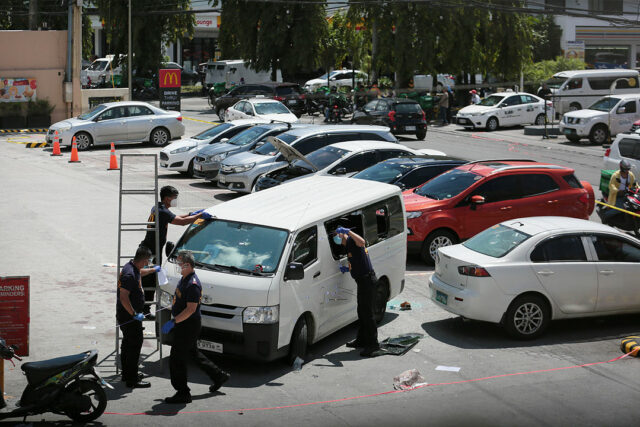
GOVERNMENT prosecutors have endorsed the indictment of three agents of the Philippine Drug Enforcement Agency (PDEA) and four police officers over the botched buy-bust operations in Quezon City last year, where four law enforcers were killed.

In a statement dated May 17 and sent to reporters on Thursday, the Department of Justice (DoJ) said the agents would be charged with homicide for the death of a police officer. The police officers would face direct assault charges for mauling several PDEA agents.

On Feb. 24, last year, PDEA and the police separately held buy-bust operations along Commonwealth Avenue in Quezon City when a shootout between law enforcers took place. Two policemen, a PDEA agent and an informant died.

“After an evaluation of the evidence, the panel of prosecutors found sufficient evidence to charge [the PDEA agents] with homicide for the death of a police officer,” DoJ said in the statement. “There is also probable cause to charge some police officers for direct assault due to the injuries sustained by the PDEA responders.”

Prosecutors also dismissed two homicide complaints for the death of another cop and a PDEA agent for lack of evidence.

Philippine prosecutors have filed charges in court against law enforcers in four cases and plan to probe 250 more of what could have been wrongful deaths in Mr. Duterte’s drug war, Justice Secretary Menardo I. Guevarra told the United Nations Human Rights Council in February.

An inter-agency committee formed 15 teams last year that probed extralegal killings and human rights violations involving the government’s anti-illegal drug operations.

The Justice department on Tuesday dropped 29 cases from its list of extralegal killings and torture cases for lack of evidence.

The cases involved witnesses that could not be found or complainants who decided not to pursue their complaints, Mr. Guevarra told reporters in a Viber message.

Meanwhile, the Commission on Human Rights (CHR) scored the Duterte government for encouraging a culture of impunity by hindering independent inquiries and failing to prosecute erring cops involved in the deadly drug war.

Internal investigations of anti-drug operations that led to deaths have been “inaccessible and nontransparent,” it said in a 48-page report.

Survivors of Mr. Duterte’s war on drugs found it difficult to pursue justice despite overwhelming evidence because the state refused to cooperate with independent probers, the human rights body said.

Police have “refused, denied or ignored” subpoenas and requests from the commission to review police documents even if they followed guidelines to obtain the information, according to the report.

“Independent and impartial accountability mechanisms, such as the fact-finding investigations by the CHR, have been hampered by the predilection and uncooperativeness of agencies involved in the campaign against illegal drugs.”

Authorities have cited a 2017 order from Mr. Duterte “not to participate in any investigation into alleged human rights violations committed by its agents without his clearance,” the agency said.

The CHR report presented 882 drug-related cases involving 1,139 victims, or 23% of the 3,790 drug-related killings examined by the commission from 2016 to 2021. Of the total, 2,305 investigations were finished.

Police had used “excessive and disproportionate force” in most of the drug raids, contrary to their self-defense claims, it said. It added that 73% of  511 victims who had allegedly resisted arrest were killed by gunshots to the head and torso.

These indicated “intent to kill by the police operatives and disproportionality of force used to repel aggression,” CHR said.

It urged police to conduct “full, immediate, transparent and impartial investigations on drug-related extra-judicial killings.”

The Justice department should also investigate the cases related to the deadly drug war through the National Bureau of Investigation and “prosecute persons charged with the commission of these extrajudicial killings through the National Prosecution Service.”

The agency said DoJ should also regularly and automatically furnish the human rights body with “complete and comprehensive reports” on the cases.

The latest report was among the last CHR assessments on the Duterte government’s war on drugs. The terms of the agency’s head and four other commissioners ended on May 5. — John Victor D. Ordoñez and Kyle Aristophere T. Atienza

Incoming House members eye barangay elections postponement to save funds for COVID response 

HOUSE OF REPRESENTATIVES

LEYTE Rep. Martin G. Romualdez, who has been reelected and is poised to assume the House speakership in the next Congress, said his colleagues are looking at proposals to postpone the barangay elections in December to save funds that could be used for the countrys pandemic response.   

We will have savings of P8.141 billion that we can use for COVID-19 response and economic stimulus such as ayuda (cash aid),he told reporters in mixed English and Filipino after meeting his allies in a luxurious hotel on Thursday, based on a video shared by his camp.   

The next Congress is already eyeing the passage of a pandemic response legislation that would be named after the famous initials of presumptive president Ferdinand BongbongR. Marcos, Jr.  

“It will allow the incoming president to harness the resources available during the closing period of 2022 and pass measures that are needed for the pandemic, hopefully endemic stage of this COVID,” Mr. Romualdez said.   

The solon, cousin of Mr. Marcos, said village officials had been asking them to postpone the democratic practice that could possibly replace those who would seek reelection.  

A barangay is the smallest political unit in the Philippines and its officials are deemed as governments frontline leaders.   

We shall consider [their proposal],said Mr. Romualdez, noting that the proposal would likely be among the priority items of the next Congress.  

Present at Thursdays meeting were PDP-Laban president and Energy Secretary Alfonso G. Cusi and Benjamin “Benhur” Abalos, Jr., who has been tapped by Mr. Marcos, Jr. to lead the Interior department.  

This is the message of unity, and this is whats happening at the House of Representatives,he said of the emerging coalition, which academics say is a coalition of influential clans in the country.  

Mr. Marcos campaigned on a general platform of unity and his tandem with presumptive vice president Sara Duterte-Carpio, daughter of the incumbent president, was labeled as the Uniteam

Mr. Romualdez has been meeting with known powerbrokers in Philippine politics and members of the incoming Congress. 

House Speaker Lord Allan Q. Velasco and former President Gloria Macapagal Arroyo, who will be taking a seat in the incoming Congress as representative of her home province Pampanga, have already endorsed his speakership bid. Kyle Aristophere T. Atienza 

Senator-elect Tulfo eyes changes in rules to carry over bills from previous Congress 

SENATE.GOV.PH

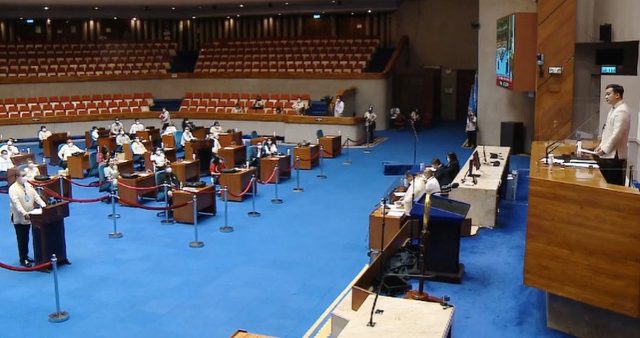
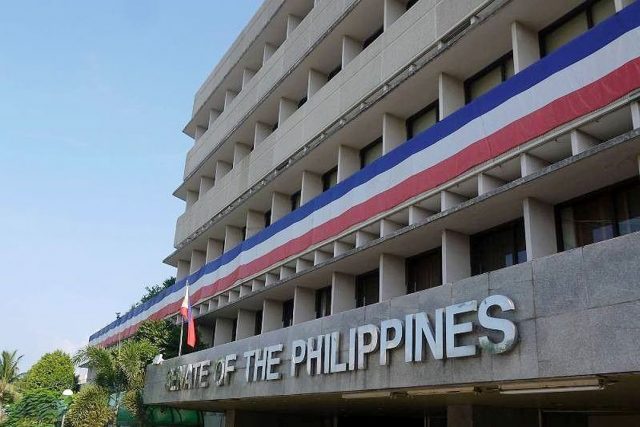
SENATOR-ELECT Rafael T. Tulfo will be proposing adjustments in rules to allow the new Congress to take up bills deemed important from where the previous legislature left off.   

Perhaps a few changes to the rules of both chambers can make this happen,Mr. Tulfo said in a statement released late Wednesday after he and the 11 other new senators were officially proclaimed by the Commission on Elections.  

I see several worthy bills which have gone through hundreds, thousands of man-hours of work. It would be a pity if those worthy bills will just go straight to the archives of Congress just because the 18th Congress ends,he said.  

By worthy bills, he meant proposed laws that have at least been approved at the committee level.  

I will therefore ask the current Senate leadership and my colleagues in the incoming 19th Congress to find ways to preserve the bills by keeping them alive, returning them to the committees they came from so that the members of the 19th Congress can build upon those bills with inputs from the new members of Congress,he said.  

Mr. Tulfo earlier said that he will prioritize legislation relating to labor issues.  

The current Congress will resume sessions on May 24 and adjourn on June 3, leaving only two weeks for lawmakers to pass bills and canvass votes for president and vice president.  

DEEMED DEAD
Senate President Vicente C. Sotto III said Mr. Tulfos plan is unlikely to happen, but bills that will be refiled in the 19th Congress can always use previous discussions as reference.   

All bills and resolutions filed are deemed dead after June 3 adjournment sine die,he said.   

What he (Mr. Tulfo) wants is easy to solve without violating laws and traditions. Refile, then those in advance stages can use the previous hearings and debates as references.” 

The senate chief has said that the upper chamber plans to pass bills on second and third reading during its six remaining plenary sessions.  

However, for all other bills that are not in their advanced stages, it is no longer possible, he added.  

Members from both chambers of Congress are expected to meet next week in a joint session at the House of Representatives to form the National Board of Canvassers.  

Mr. Sotto said they will work continuously to finish the canvassing of votes for president and vice president on time.  

If we start on (the) 24th, non-stop, we can finish by the 26th,he said. The practice or tradition is that proclamation follows immediately after.” 

Mr. Sotto and House Speaker Lord Allan Jay Q. Velasco will spearhead the canvassing of votes. Their goal is to proclaim the countrys two top leaders by May 28 at the latest.  

Canvassers need to “ensure that the canvassing of votes cast and proclamation of the countrys next two highest officials will be seamless and the integrity of the electoral process is upheld,said Mr. Velasco in a statement on Wednesday.  

The Senate has received 88% or 153 of 173 election certificates and returns for president and vice-president as of Thursday morning, it said in a statement.  

It took delivery of local certificates and returns from Sulu and overseas absentee voting certificates from the United States of America and Australia.  

Newly-appointed leaders of the country will assume office at noon on June 30. Alyssa Nicole O. Tan 

Duterte appoints new appellate court members 

PHILSTAR FILE PHOTO

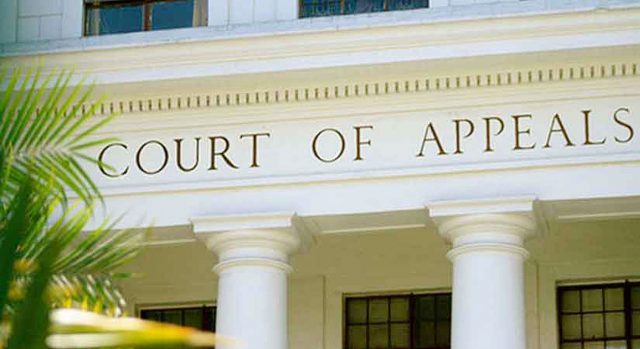
PRESIDENT Rodrigo R. Duterte has named two new members of the Court of Appeals, his office announced on Thursday.   

In a statement, Palace Spokesman Jose Ruperto Martin M. Andanar said Mr. Duterte has appointed John Zurbito Lee and Eleuterio Larisma Bathan as new associate justices of the appellate court.  

The two new members of the countrys second highest tribunal will replace Japar Dimaampao, who was appointed as an Associate Justice of the Supreme Court, and Dorothy Montejo-Gonzaga, who resigned last year. 

Prior to their new appointments, Ms. Bathan served at the Quezon City Regional Trial Court, while Mr. Lee became a managing partner of a private law firm where he handled taxation law, estate planning, corporate law,among others.  

Mr. Lee had also joined another private law firm that was co-founded by Louise LizaC. Araneta Marcos, wife of presumptive president Ferdinand BongbongR. Marcos, Jr. Kyle Aristophere T. Atienza 

Bangsamoro business council to help attract more investments in Cotabato City

@BANGSAMOROGOVT

THE BUSINESS sector in the Bangsamoro region in southern Philippines is mobilizing a multi-sectoral campaign to attract more investors in Cotabato City and build up on the local economys growth momentum last year.   

The Bangsamoro Autonomous Region in Muslim Mindanao (BARMM) Business Council met earlier this week with members of civil society organizations, business groups, and academic institutions to discuss opportunities in the city, the regions political and commercial center.   

Ronald Hallid Torres, the business councils chair, rallied stakeholders to work as one to sustain BARMMs economic development.  

BCC recognized that our business sector is doing very well. To all interested investors, this is the best time for you to come and we will work hard to ensure that we can work together here in Cotabato City,Mr. Torres is quoted as saying in a statement released by the BARMM government.  

The council is a region-wide group composed of directors from provincial business chambers. Its creation in October 2021 was facilitated by the BARMM Ministry of Trade, Investments and Tourism (MTIT).  

MTIT Director-General Rosslaini Alonto-Sinarimbo underscored that the business sector is the backbone of the economy.”  

They are the ones who pay taxes, can employ our constituents, and regenerate the structure and condition of our economy,she said. 

BARMMs economic performance grew by 7.5% last year after decelerating by 1.9% in 2020, based on Philippine Statistics Authority data released in April.   

All industries in the region saw positive growth in 2021, led by Human Health and Social Work Activities at 22.2%; Mining and Quarrying, 20.2%; Accommodation and Food Service Activities, 17.9%; Construction 12.2%; and Financial and Insurance activities, 10.6%.  

Bangsamoro Planning and Development Authority Director General Mohajirin T. Ali said the regions 2021 economic performance showed that BARMMwith its ongoing transition phase towards wider autonomy affected by the coronavirus pandemic has kept on track in fostering its concerted economic recovery efforts.”     

This demonstrates again that we are now waving the dividend of peace and we must keep the momentum as we are going for the BARMM advancement program, aimed at accelerating the socio-economic recovery and sustaining progress towards poverty reduction and economic growth,Mr. Ali said during the April 28 release of gross regional domestic product data.     

BARMM Chief Minister Ahod B. Ebrahim, for his part, said the regions economic performance reflects the Bangsamoro peoples determination and ability to adapt despite a health crisis.  

The economic data shows our shared work not just as the regional government but as one community,he said.   

Cotabato Citys incoming set of local government officials are led by members of the United Bangsamoro Justice Party of the Moro Islamic Liberation Front (MILF), which is at the forefront of the Bangsamoro transition.    

Mayor-elect Bruce D. Matabalao and Vice Mayor-elect Johari C. Abu, both of the MILF political party, were proclaimed last week.   

They defeated the tandem of Mayor Cynthia Guiani-Sayadi and Vice Mayor Graham G. Dumama, who were opposed to the inclusion of Cotabato City in the BARMM. MSJ