Home Blog Page 5890

Fiscally challenged: Should we worry?

RAWPIXEL.COM-FREEPIK

In a two-part column last year, I listed the 10 Must Do’s for the next administration in its first 365 days in office (https://bit.ly/Bernardo365-01 and https://bit.ly/Bernardo365-02). A collective work with inputs from economists and subject matter experts from the Foundation for Economic Freedom (FEF), the Management Association of the Philippines (MAP), and Makati Business Club (MBC), we cast a wide net, covering health, education, energy security, public-private partnership (PPP) revival, labor policy, ease of doing business, and rule of law.

What was not elaborated in that list is the subject matter of this column: the fiscal/ financial component of the plan, “Develop and signal to financial markets a medium-term fiscal consolidation plan.”

The current economic team led by Finance Secretary Carlos “Sonny” Dominguez is bequeathing to their successors a fairly healthy fiscal position, especially robust if one considers the ravages the pandemic has wrought: required massive spending on one hand, and a decimated revenue base on the other. This led to our public debt-to-GDP to rise from the pre-pandemic 40%, to now in excess of 60% — the pre-pandemic norm before credit watchers flash yellow lights — and a current budget deficit to GDP that ballooned to 7%, twice the normal that is deemed sustainable.

The Philippines is far from being unique in this. Emerging market countries are confronted with the same pandemic history, plus new strong headwinds: potential COVID resurgence, the impact of the Russian invasion of Ukraine on energy and food prices, slowing global economic growth with the possibility of stagflation, the US Fed’s progressive tightening of monetary policy after a decade long expansion, the resulting financial shocks and end of cheap credit this will bring. Not to mention lingering and scarring effects of COVID on micro-, small- and medium-sized enterprises (MSMEs), certain sectors like tourism, labor mismatches, and the damage to education/training.

What potentially differentiates the Philippines is a strong starting position pre-COVID. Thanks to fiscal reforms done over successive administrations, especially the tax reforms done under TRAIN (Tax Reform for Acceleration and Inclusion Law), we have cushions that mitigate the risks. Buffers in the external accounts side, a robust international foreign exchange reserve position which at over twice what the IMF has assessed to be adequate, made credit rating agencies maintain our current investment grade rating, even as many EMCs have been downgraded.

Does this mean we can relax and behave like it’s “business as usual”? No, far from it.

These fearful headwinds will adversely impact us all, especially the poor and more vulnerable. It made the business community, and the larger public, loudly applaud President-elect Ferdinand Marcos, Jr.’s choice of his core economic team — Bangko Sentral ng Pilipinas (BSP) Governor Benjamin Diokno for Finance Secretary, Monetary Board Member Felipe Medalla for BSP Governor, Arsenio Balisacan for National Economic and Development Authority Secretary (NEDA), Alfredo Pascual for Department of Trade and Industry Secretary, and Bangko Sentral ng Pilipinas (BSP) Assistant Governor Amenah Pangandaman for Budget and Management Secretary— highly respected professionals who are knowledgeable, experienced, and who can hit the ground running. I dare say, anyone would be hard pressed to name a better team.

It’s also recognition of these challenges, and a noble intent to help the next team that may have prompted Mr. Dominguez, NEDA’s Karl Kendrick Chua and company to put forward recommendations for a well spelt out fiscal consolidation program for the next administration. (See the link on proposed program at https://bit.ly/FiscalPlan2022)

Among others it advocates some tweaking in the VAT to further plug leakages (like regressive and abused seniors and PWD discounts), deferment in the TRAIN personal income tax reduction, VAT on digital service providers, excise taxes on motorcycle, repeal of immediate expending of input VAT on capital goods.

The reaction of incoming Finance Secretary Diokno to these is also understandable: while appreciating the initiative, they would rather not comment on the specific measures being proposed at this time, especially the more painful and thus contentious ones. (Though they are rightly already trying to walk back some of the more extravagant promises like P20 per kilo rice and oil price re-regulation.)

Doubtless, the Marcos Jr. administration will in due course unveil a fully articulated program for the entire economy, not just on the fiscal front: one that balances the need for spending and investment to nurture the emergent recovery, protect the most vulnerable especially from the food inflation that is already upon us, and lay the foundations for future robust investment led growth, while taking the needed steps to bring down the debt ratios necessary for macro stability and continued access to financing at affordable terms.

An excellent paper co-authored by Philippines Institute for Development Studies’ Drs. Margarita Debuque-Gonzales, Charlotte Justine Diokno-Sicat et al, “The Fiscal Effects of the COVID Pandemic: Assessing Public Debt Sustainability in the Philippines” should help guide them. (https://bit.ly/PIDS_FiscalEffects)

This outstanding contribution covers all the aspects of the fiscal impact of COVID past and prospective, some of the looming risks from macro-financial shocks, and already visible “grey rhinos” like the Mandanas ruling and the snowballing unfunded pension debt of the uniformed personnel. I highly recommend it not just to policy makers in both the executive and legislative departments, but also to private sector analysts, and academics keen to understand debt sustainability dynamics, and what constraints face our collective quest for development.

The key conclusion of Gonzales, Sicat et al.: “Results suggest that the country’s debt position today is less worrisome than it had been during previous debt crises, and that the debt-to-GDP ratio will remain manageable despite peaking above 65% over the next couple of years. Given the need to spend to prevent possible scarring from the pandemic and give the economy time as well as room to recover from the pandemic crisis, it may not be feasible to immediately return to pre-COVID-19 debt ratios, based on fiscal gap computations. This underscores the need for a sound medium- to long-term fiscal consolidation plan to anchor sentiments… This presupposes however the absence of major fiscal policy reversals, especially of hard-won fiscal reforms since the mid-1980s.”

I highlight two key variables in the report that will define future debt sustainability: a.) the rate at which the economy grows, and, b.) the rate at which they can reduce the deficit to GDP. For example, if the aim is to bring it down back to 40% in 10 years, GDP will need to grow at 7% annually plus deficit reduction of two percentage points of GDP per year. Far from being an easy task given the global headwinds described earlier.

Our own Global Source forecast for the medium-term growth is that this will be scaled down to 5-6% (from 6-7% over the last decade pre-pandemic) because total factor productivity had been slowing even before the pandemic, the worrisome scarring effects in education, potential labor mismatches, and end of decade-long cheap capital globally.

A potential game changer that can raise our medium-term growth rate back to 6-7%: if the Marcos Jr. administration is able to build upon the reforms lately passed that opens up the economy to more foreign direct investments (Public Service Act Amendment Law, Retail Trade Law, and Foreign Investment Law). And is able to sustain the 5% infrastructure spending to GDP annually initiated by the current one under the Build, Build, Build program that was interrupted by the pandemic.

This time around, government will need to depend on more private sector investments under PPP (public-private partnerships) due to constrained fiscal space, a subject covered by my esteemed Introspective co-columnist Dr. Raul Fabella (“Rule of Law, Credible Commitment and Investment under President Marcos” (https://bit.ly/Fabella060622) and my earlier columns “PPP: partnerships towards a progressive Philippines” (a two-part column, https://bit.ly/Bernardo_PPP).

In this regard, allow me to end by quoting TINA: “There Is No Alternative.”


Romeo L. Bernardo was finance undersecretary from 1990-96. He is a trustee/director of the Foundation for Economic Freedom, Management Association of the Philippines, and FINEX Foundation. He is Philippines principal adviser to Globalsource Partners

globalsourcepartners.com

romeo.lopez.bernardo@gmail.com

Shoppertainment

UPKLYAK-FREEPIK

Technology has disrupted the way brands are built and the way products are sold.

Whereas in the tri-media world (TV, radio, and print), ads spoke “at” you with messages that persuaded you to buy. In the social media world, ads speak “to,” “with,” and “through” you with messages that entertain, engage, and educate. With a full video and sound experience, social media ads connect to consumers at a different level, leading them towards brand discovery, conversion, and purchase.

There are two channels for advertising on social media. The first are online marketplaces like Amazon, Lazada, and Shopee. Although these online marketplaces are effective portals for e-commerce, it has become a crowded marketplace with little opportunities for brand building. The site format and sheer number of products on offer do not allow brands to stand out. The experience in online marketplaces is generally transactional.

The second channel is social media commerce and this is where TikTok, Instagram, Facebook, and Twitter come in. Through short-form videos, advertisers are able to create joyful experiences that draw their brands closer to consumers. Studies show that brands that elicit joy through humor, music, dance, or dialogue have greater chances of making it to shopping carts than traditional ads. Joyful content is the first step towards brand discovery, triggering brand desire, inducing trial usage, and fostering brand loyalty. A recent TikTok survey showed that 67% of users were introduced to new brands and realized new needs and desires they never thought they had before by way of joyful content.

Another way of looking at it is like this — while traditional advertising “push” products at you, social media advertising, through short form videos, draw you in through a “pull effect.”

This is how the word “shoppertainment” was coined. Shoppertainment is the space where entertainment and commercial advertising co-operate.

E-commerce has reached its inflection point in six of ASEAN’s largest economies. Although growth of e-commerce is seen to increase from $970 billion in 2021 to $1.19 trillion in 2025, its growth rates are generally decelerating across the region. E-commerce is mature in most markets. The Philippines, however, bucks the trend. E-commerce is still growing by a whopping 20% per annum, which is the highest in the region. Growth in the Philippines is buoyed by better internet connections and more consumer brands entering the e-commerce space.

In social media commerce, the shopping journey happens at lightning speed. For those unaware, the shopping journey consists of four steps — discovery, engagement, consideration, and conversion. While it could take months to go from brand discovery to conversion in traditional advertising, the same could happen in just a few minutes in the social media universe.

What is even more compelling about social media advertising is that after going through the four-step shopping journey, users are taken to a second adjunct journey consisting of four additional steps. The first is product review. This is when content creators talk about their experiences about the product. The second is audience participation. This is when other creators chime in to agree, disagree, fortify, or debunk the review. The third is amplification. The more a brand or product is reviewed, the greater mileage it gets on the platform. The fourth leads users to conversion all over again. So, in this sense, social media advertising does not end in the first conversion — it goes on and on in an intensifying loop.

All social media channels have an algorithm that feeds you only the videos that are of interest to you. In TikTok, it’s called “For you feeds.” For example, if you are an athletic man, the commercial feeds you get are akin to walking through the sporting goods section of a department store.

There are also ads called “Dynamic Showcase Ads.” These ads promote products that the user browsed through on other platforms before (many refer to these ads as “re-targeting ads”). The idea is to induce a snap sale. Re-targeting ads are powerful tools to make that final push towards closing the sale.

Still on that final push, advertisers can also offer “gift codes” (perks or discounts) as a final incentive to purchase.

Advertisers can also opt for “Spark Ads.” Spark ads are native, organic content (content not produced by the brand but by creators) that endorses a product or brand favorably. Advertisers can put money behind these videos to boost them to the target market.

Finding content creators whose style is in sync with the brand could be a challenge. For this, some social media platforms offer a creator marketplace. Here, brands can negotiate ad production or endorsement deals directly with seasoned creators.

Soon, social media channels will be offering commercial livestreams. Here, apparel brands can air live fashion shows and users can order the goods in real time. The same can be done with utility products and appliances where live demonstrations are beamed to a live audience.

Technology has changed traditional advertising practices in the same way it has changed almost every aspect of our lives. Businesses will do well to include shoppertainment in their marketing mix as it is the trend of the future.


Andrew J. Masigan is an economist

andrew_rs6@yahoo.com

Facebook@AndrewJ. Masigan

Twitter @aj_masigan

Independence Day 2022

124th Independence Day celebration at the Aguinaldo shrine in Kaingen, Kawit, Cavite on June 12 — PHILIPPINE STAR/EDD GUMBAN

It had to be clarified in Memorandum 2022-066 dated May 22, 2022 by the Department of Interior and Local Government (DILG) that directed the Independence Day flag-raising to local government units that it was the 124th Independence Day, reckoning from June 12, 1898 when Emilio Aguinaldo declared from his residence balcony in Kawit, Cavite that Pilipinas was free from the colonizer Spain. The DILG Memo is based on “Republic Act No. 4166 (An Act changing the date of Philippine Independence Day from July 4 to June 12 and declaring July 4 as Philippine Republic Day”).

But here we go again, debating and quarreling about when Filipinos really gained their independence. Perhaps the rise and fall of self-doubt are urged as historical events are celebrated (or generally ignored) such as Independence Day, the most significant marker of nationhood. But history is about concluded events more than emotional assumptions about the whys and wherefores that made it happen. Nor can post-facto emotions or changed principles and values justify any revision of what had already happened in history.

What better written history is there than the Official Gazette to review the events leading to the granting of Philippine Independence:

“The Philippine Revolution of 1896 was led by the Katipunan, a secret society led by Andres Bonifacio, which aimed to attain independence for the Philippines. The Katipunan expanded and affiliated with other revolutionary groups in Manila and other provinces in the Philippines. Due to political and other differences among the leaders, divisions arose in the organization. The Magdalo group headed by Emilio Aguinaldo of Cavite soon controlled the revolutionary movement. In the power play, Andres Bonifacio was accused of treason against the combined organization, and was arrested and sentenced to death in Maragondon, Cavite.”

When the Revolution was failing, “Aguinaldo entered into negotiations with the Spanish government. This resulted in an agreement under which Philippine Revolutionaries would go into exile in Hong Kong and surrender their arms in exchange for financial indemnities and pardons” (Official Gazette, “Araw ng Republikang Filipino, 1899”). That was just about the time that Spain was very busy, besieged and embattled by the United States of America, who came in to assist in the war for Cuban independence from Spain. That was the 10-week Spanish-American War for the colonies, fought in both the Caribbean and the Pacific, including the Philippines.

“The war ended with the 1898 Treaty of Paris (signed Oct. 1, 1898), negotiated on terms favorable to the United States. The treaty ceded ownership of Puerto Rico, Guam, and the Philippine islands from Spain to the United States and granted the United States temporary control of Cuba. The cession of the Philippines involved payment of $20 million to Spain by the US to cover infrastructure owned by Spain” (Benjamin R. Beede, The War of 1898 and US Interventions; 2013).

“Aguinaldo had returned to Manila on May 19, 1898 and declared Philippine independence on June 12. When it became clear that the United States had no interest in the liberation of the islands, Aguinaldo’s forces remained apart from US troops. On Jan. 1, 1899 following the meetings of a constitutional convention, Aguinaldo was proclaimed (by a rebel junta) president of the Philippine Republic. Not surprisingly, the United States refused to recognize Aguinaldo’s authority and on Feb. 4, 1899 he declared war on the US forces in the islands. After his capture on March 23, 1901, Aguinaldo agreed to swear allegiance to the United States, and then left public life. His dream of Philippine independence came true on July 4, 1946. He died in Manila in 1964.” (US Library of Congress: The World of 1898: The Spanish-American War: Emilio Aguinaldo y Famy 1869-1964)

“During the American occupation of the Philippines (1898-1946), the Filipinos were governed by the Commonwealth of the Philippines (since Nov. 15, 1935) and earlier by the Government of the Philippine Islands or PI, both under the Americans” (pna.gov.ph, July 4, 2021). Meantime, World War II broke out, and the Japanese Army overran all of the Philippines during the first half of 1942. “On Oct. 14, 1943, Japan symbolically granted independence to the Philippines by establishing a new government headed by its Filipino president, Jose P. Laurel. The government was branded by historians as a ‘Puppet Government’ because of the tight control that the Japanese wielded over its affairs.” (esquiremag.ph, June 7, 2019).

“The United States and Philippine Commonwealth military forces fought together to liberate the Philippines until the Japanese forces were ordered to surrender by Tokyo on Aug. 15, 1945.

“On July 4, 1946, pursuant to the provisions of the Tydings-McDuffie Law or the Philippine Independence Act, the Commonwealth of the Philippines became the Republic of the Philippines — the Third Republic. It was on this date that the United States of America formally recognized the independence of the Philippines and withdrew its sovereignty over the country.

“The independence of the Philippines — and the inauguration of its Third Republic — was marked by Manuel Roxas, third president of the Commonwealth, re-taking his oath, eliminating the pledge of allegiance to the United States of America which was required prior to independence, this time as the first President of the Republic of the Philippines. The Congress of the Commonwealth then became the First Congress of the Republic, and international recognition was finally achieved as governments entered into treaties with the new republic.” (officialgazette.gov.ph).

Yet despite the tight chronology of events that built up to the sure pinpointing of when is the factual date of Philippine Independence, President Diosdado Macapagal issued Proclamation No. 28 in 1962, moving the anniversary date from July 4 to June 12 — the date independence from Spain was proclaimed in Emilio Aguinaldo’s home in Kawit, Cavite. In his proclamation, President Macapagal cited “the establishment of the Philippine Republic by the Revolutionary Government under General Emilio Aguinaldo on June 12, 1898, marked our people’s declaration and exercise of their right to self-determination, liberty and independence” (Ibid.).

The Official Gazette says it for the record, “the move was made in the context of the rejection of the US House of Representatives on the proposed $73 million additional war reparation bill for the Philippines on May 28, 1962. The rejection, according to President Macapagal, caused ‘indignation among the Filipinos’ and a ‘loss of American good will in the Philippines.’ He explained that he deemed it the right time to push the change of the independence date, a political move he was planning even before his ascent to the presidency.”

There is surely no further protest or even the last whimper to review and possibly change Independence Day back to July 4, or to again consider yet another anniversary date. But it is still important that historical facts and events are accurate so that the remembering of a nation of its history is always in the context of the experiences, good or bad, that have shaped its soul and spirit.

It is thanks to President Corazon C. Aquino, president after the 1986 EDSA People Power Revolution, who by Executive Order No. 200 revived the Official Gazette that was stifled in Ferdinand Marcos’ martial law dictatorship 1972 to 1986. The Official Gazette, which is printed by the National Printing Office (NPO), is the public journal and main publication of the government of the Philippines. Its website only uploads what has been published; it is managed by the Presidential Communications Operations Office [PCOO] (based on the attribution found in the footer of the Official Gazette website).

Look it up, it’s there: “A History of the Philippine Political Protest — Official Gazette.” (www.officialgazette.gov.ph)


Amelia H. C. Ylagan is a doctor of Business Administration from the University of the Philippines.

ahcylagan@yahoo.com

Filipinos value honesty in the workplace the most — study

UNSPLASH

Honesty is highly valued by Filipino workers according to 78% of respondents in a May 2022 study by Milieu Insight, a Singapore-based market research firm, that surveyed employees in Southeast Asia on the importance of values at work.

This was true across age groups (75% among professionals who are 25–34 years old; 82% for those over the age of 55), and employment levels (77% for both directors and entry-level executives). 

The second and third most important work values, respectively, are taking responsibility (71%), and quality work (70%). 

Most respondents in the Philippines (93%) think the values of the company they work for are important, higher than the average, said Sonia Elicia D., associate director for marketing at Milieu Insight, in an email.  

“People yearn for a sense of humanity and community as part of the workplace experience, and being the ‘good guy’ by strengthening personal values and morals is fundamental to a strong, positive working culture,” she said. “This ensures that employees feel valued and never forced to compromise who they are or what is important to them.” 

Across the four Southeast Asian (SEA) countries represented by the study (Singapore, Thailand, Malaysia, and the Philippines), 71% of respondents indicated that the values of the company they work for matter to them. 

While close to half (49%) say they will not work in a job where the nature of it requires them to go against their values, about two-fifths (41%) also indicated their willingness to do so as long as it’s not illegal. 

“In an ideal world, you wouldn’t be working in a job that clashed with your values — but leaving a job out of principle is a rare luxury,” Ms. D. said. “Authentic expression of values might set someone on a collision path with the culture of a workplace, which is why they have to find a way to bridge the gaps they find between their values and the culture they work in.” 

The Milieu Insight study further found that only 40% of the respondents with a household income less than SG$3,000 answered “yes” to the question “Would you work in a job where the nature of it requires you to go against your values?” 

Meanwhile, 48% of those with a household income of at least SG$9,000 answered “yes” to the same question. 

“This is opposite the notion that people care a lot more about ESG [environmental, social, and corporate governance] goals when their finances can afford it,” she said.  

In terms of workplace camaraderie, meanwhile, 64% in the Philippines said they like most or all of their colleagues (23% strongly agree; 41% somewhat agree). Three quarters (76%) also said that their colleagues help each other out. The regional average for both points, respectively, were 57% and 73%. 

VOLUNTARY RESIGNATION 

Although The Great Resignation — where employees voluntarily resign from their jobs en masse — is more pronounced in countries like the US, the pandemic has compelled a number of white-collar workers in the Asia Pacific to seek a more equitable work-life balance. 

CBRE, a real estate brokerage from Dallas, reported in its 2022 market outlook that lower unemployment in the region has sparked a talent war

Workplaces, it added, “will need to be designed in such a way as to attract people and make them want to choose to work there.”  

The disruption caused by the pandemic has put the spotlight on factors beyond financial incentives, noted Mercer in a September 2021 SEA survey.  

“The challenges and sentiments of [Southeast Asians] with regards to work are definitely real. Factors such as intense work hours, burnout, rising stress levels and the lack of satisfaction from work are felt by workers in the region too,” said Ms. D. 

This is why in countries like Singapore, organizations are amping up their employee engagement efforts, flexible working arrangements, and job enrichment and redesign, she added.  

The Milieu Insight survey was conducted May 2022 with 1000 employed respondents each in Singapore, Thailand, Malaysia, and the Philippines. — Patricia B. Mirasol

Meralco power rates to rise in June

PHILIPPINE STAR/ RUSSELL PALMA

RESIDENTIAL customers in areas served by Manila Electric Co. (Meralco) can expect electricity rates this month to rise, with typical households consuming 200 kilowatt-hours (kWh) getting billed higher by nearly P80 or P10.4612 from P10.0630 per kWh previously.

In a press release on Friday, the listed distribution utility said the overall power rate in June will rise by P0.3982 per kWh. This means an increase of P119.46, P159.28, and P199.10 for those consuming 300 kWh, 400 kWh and 500 kWh, respectively.

Meralco said higher power generation costs had driven rates higher.

For this month’s billing, the generation charge went up by P0.3313 to P6.5590 from P6.2277 per kWh previously. The pass-through cost is paid to the power suppliers.

The company said charges from independent power producers (IPPs) and power supply agreements (PSAs) rose by P0.6083 and P0.0859 per kWh, respectively, mainly because of higher fuel costs.

It said fuel charges from the power plants under First Gas Power Corp. increased by 8% due to the higher usage of more expensive liquid fuel with the extended Malampaya gas supply restriction.

“Coal prices also went up by an average of 23%, contributing to the higher IPP and PSA charges,” Meralco said.

It added that prices at the wholesale electricity spot market (WESM) “remained elevated” after the secondary price cap was imposed twice in the last supply month, on April 29 and 30.

In May, peak demand in the Luzon grid hit a record 12,113 megawatt after the easing of mobility restrictions and the resulting rise in economic activity.

Meralco said June’s generation charge covers the last of three installments of the deferred generation costs for the March bill and the second of three installments for the April bill. It said the inclusion accounted for about P0.20 per kWh of the generation charge.

“PSAs, IPPs, and WESM accounted for 48%, 40%, and 12%, respectively, of Meralco’s energy requirement,” the company said.

Meanwhile, the transmission charge for residential customers is set to increase by P0.0083 per kWh, while taxes and other charges will also rise by P0.0586 per kWh. The collection of P0.0025 per kWh as universal charge for the environmental remains suspended as ordered by the Energy Regulatory Commission.

“The implementation of distribution-related refunds continues to temper the overall power rate. For residential customers, the total refund is equivalent to P0.9353 per kWh,” Meralco said, adding that it only earns from distribution, supply, and metering charges, which have stayed unchanged since the reduction in July 2015.

Pass-through charges from generation and transmission are paid to the power suppliers and the system operator, respectively. Taxes, universal charges, and the feed-in tariff allowance, or FiT-All, are remitted to the government.

On Friday, shares in Meralco slipped by 2.59% or P9.60 to close at P360.40 apiece at the stock exchange.

Meralco’s controlling stakeholder, Beacon Electric Asset Holdings, Inc., is partly owned by PLDT Inc. Hastings Holdings, Inc., a unit of PLDT Beneficial Trust Fund subsidiary MediaQuest Holdings, Inc., has an interest in BusinessWorld through the Philippine Star Group, which it controls. — Victor V. Saulon

Jobless rate eases in April

PHILIPPINE STAR/ MIGUEL DE GUZMAN

By Bernadette Therese M. Gadon, Researcher

The unemployment rate in April slowed to its lowest since the start of the pandemic as the size of the workforce shrank amid the disruptions caused by the ongoing Russia-Ukraine conflict.

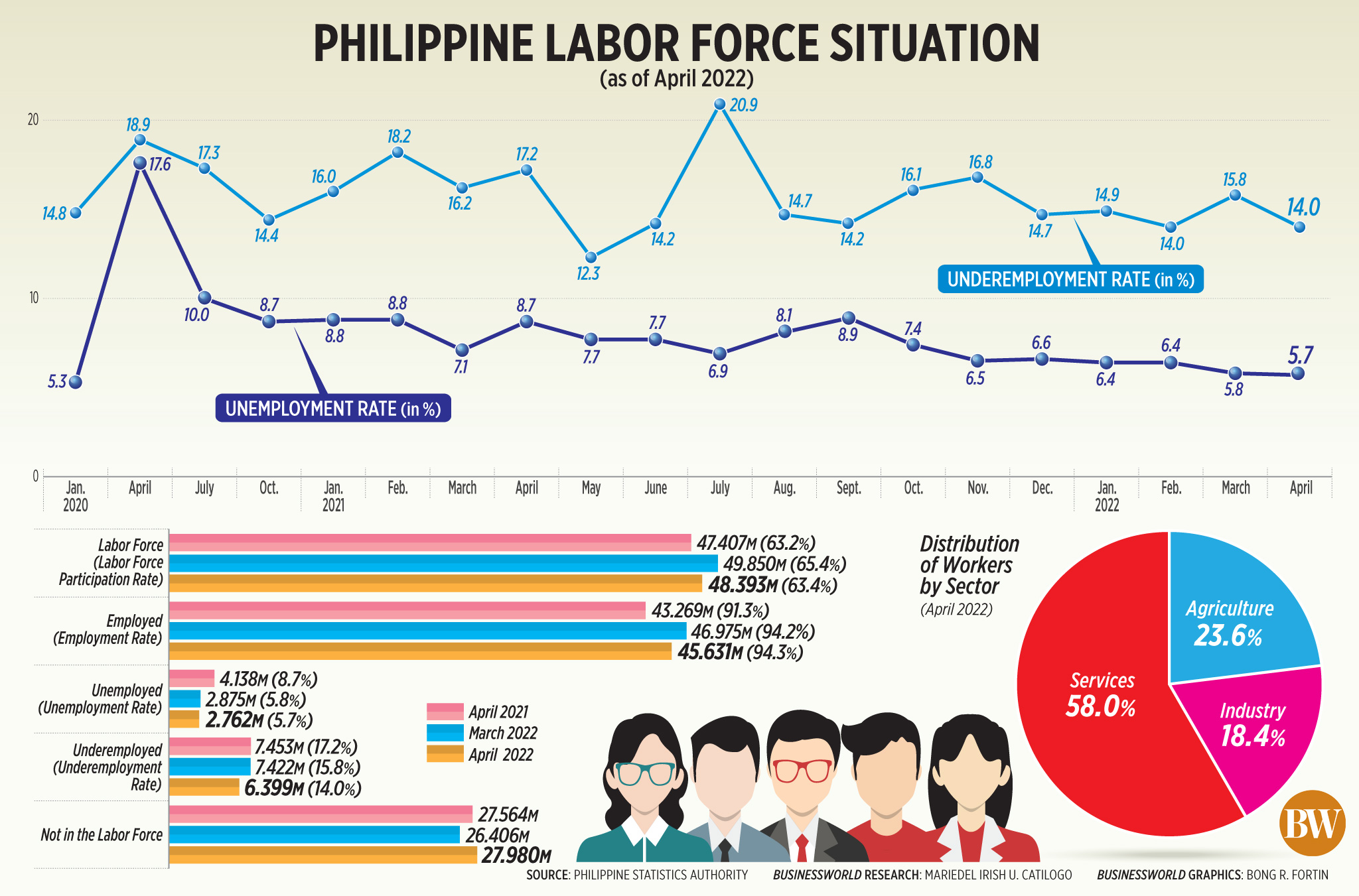
Preliminary results of the Philippine Statistics Authority’s (PSA) April round of the Labor Force Survey (LFS) on Friday showed the unemployment rate slowed slightly to 5.7% from 5.8% in March. This was also slower than the 8.7% jobless rate the year before.

This put the ranks of unemployed Filipinos to 2.762 million in April, down by 112,700 from 2.875 million in March. This was also a decrease by 1.376 million from 4.138 million in April 2021.

Philippine labor force situation

It was the lowest unemployment rate since before the pandemic or the 5.3% in January 2020.

The quality of jobs likewise improved as underemployment rate slowed to 14% in April from 15.8% in March and 17.2% in April last year.

This was equivalent to 6.399 million working Filipinos but still looking for more work or longer hours that month. This was lower than the 7.422 million underemployed in March and 7.453 million in April 2021.

The underemployment rate matched February’s share and the lowest since 12.3% in May last year.

However, the size of the labor force declined month on month by 1.457 million to 48.393 million in April. Compared to April last year, the size of workforce went up by 986,600 from 47.407 million.

This translated to labor force participation rate (LFPR) — the share of labor force to the total population 15 years old and over — of 63.4% in April, decreasing from 65.4% in March, but higher than the 63.2% in April last year.

It was the lowest LFPR in three months or since 60.5% in January.

The National Economic and Development Authority (NEDA) said fewer Filipinos participated in the labor force in April due to supply chain disruptions caused by the Russia-Ukraine conflict and seasonal factors in agriculture.

“Higher oil prices and seasonal factors have impacted workers in the transport and agriculture sectors, respectively, and hindered some from going to work,” Socioeconomic Planning Secretary and NEDA Director-General Karl Kendrick T. Chua said.

“To address this, the government will urgently distribute targeted subsidies to the hardest-hit sectors to cushion higher prices,” Mr. Chua said.

“Of the 1.3 million net employment loss, 1.1 million were from agriculture while 0.5 million were from services. This was slightly tempered by 0.3 million employment generated in the industry sector,” the NEDA said in a statement.

Services sector remained the largest employer in April with 58% share. Agriculture and industry accounted for 23.6% and 18.4%, respectively.

“Despite external risks, overall employment remains at 3.1 million above the pre-pandemic level as around 80% of the economy has been placed under alert level 1,” the NEDA said.

The ranks of Filipinos aged 15 to 24 years old looking for work for the first time decreased quarter on quarter to 1.148 million in April, lower by 508,700 from January’s 1.656 million. However, this was higher than the 977,000 a year ago.

The share of the new entrants to the total labor force reached 2.4% in the April, lower than 3.6% in January but higher than 2.1% in April last year.

During the press briefing, National Statistician Claire Dennis S. Mapa said of the total new entrants in April, around 993,000 were hired while 154,000 were unemployed.

The employment rate — the share of the employed to the total workforce — stood at 94.3% in April, lower than 94.2% the previous month but higher than 91.3% last year.

This was around 45.631 employed Filipinos in April, down by 1.344 million from 46.975 million in March, but higher than the 43.269 million employed in April 2021.

A Filipino worker worked on average of 40.1 hours a week in April, slightly lower than 40.6 hours in March but higher than 38 hours a year ago.

University of Asia and the Pacific Senior Economist Cid L. Terosa said the “vibrant” economic landscape this April due to ease in restrictions and election-related activities improved the labor force in April.

“The graduation season usually adds more people to the labor force and increases the actual number of individuals that are available for work,” he said in an e-mail.

Mr. Terosa said the slight improvement in the employment rate indicates that the employment situation is “getting better” post-pandemic.

He also added the slight month-on-month improvement of employment rate in April can be traced partly to inflation pressures due to rising fuel and production input prices.

“The employment rate would have recorded greater MOM (month-on-month) increase if inflation remained within the 2-4% range,” Mr. Terosa said.

Headline inflation climbed to 4.9% in April, breaching the Bangko Sentral ng Pilipinas’ 2-4% target band, as food and fuel costs rose amid the ongoing supply disruption due to Russia’s invasion of Ukraine since late February.

China Banking Corp. Chief Economist Domini S. Velasquez said election and harvest season in agriculture sector contributed to better employment figures in April.

“However, it is concerning that many of the jobs generated since the start of the year are in the agriculture sector, which is very vulnerable to any weather disturbances,” Ms. Velasquez said in an e-mail.

“Important to watch out for in terms of job quality is if the share of wage and salary workers segment is increasing. If so, this will usually imply permanent employment and more secure income for employees.”

OUTLOOK

Analysts are waiting for the incoming administration’s detailed plans in addressing current issues to see how this would affect the employment sector.

Federation of Free Workers President Atty. Sonny Matula said full-time employment and sufficient income are still the key to reducing unemployment rate.

“Three general measures are needed to be carried out by the new administration for this purpose: (1) faster economic growth based on increased investments in key infrastructure and by the private sector; (2) slower inflation; and (3) improved fiscal discipline based on good governance principles,” he said in a Viber message.

Mr. Terosa said that the Marcos administration “will definitely have its hands full” in employment creation as the administration is coming in post-pandemic.

“The new administration has to find ways to create more and better jobs despite the geopolitical tension, oil price increases, and supply chain disruptions,” he said.

Ms. Velasquez said President-elect Ferdinand R. Marcos, Jr.’s commitment to focus on jobs targeting micro, small, and medium enterprise’s’ recovery and by continuing Duterte administration’s infrastructure program “bodes well” for the labor market.

“However, recent minimum wage increases and higher cost of production due to oil prices might squeeze businesses’ working capital and might curtail their expansion plans and adding more workers,” she said.

The Labor department said fresh hikes in daily minimum wage in 14 regions will take effect starting this month.

“Agriculture must remain a priority sector for development and for the purpose of food security. Solid support for farmers, fisherfolks and forestry workers are necessary. This calls for review of existing laws and programs in agriculture to align this to higher and faster economic growth,” Mr. Matula said.

The PSA started reporting monthly jobs data in 2021. Prior to that, the agency published employment figures on a quarterly (January, April, July, and October) basis.

The April round of LFS was conducted from April 8 to 30, covering 43,500 sample households.

vivo X80 series available for pre-order

vivo X80

SMARTPHONE brand vivo launched on Thursday the vivo X80, the latest addition to its premium flagship smartphone category.

Co-engineered with optics manufacturer Zeiss, vivo said the X80 series has “powerful professional imaging capabilities suited for capturing moments and masterpieces.”

“The launch of the newest X80 series aims to encourage Filipinos to find art and capture the best moments of their lives in vivid, crisp, and surreal images,” said vivo Philippines senior brand marketing supervisor Kelly Grace Oliveros at the June 9 launch.

The X80 is priced at P45,999 while the X80 Pro, which is the first Pro variant of any vivo X series line released in the Philippines, is priced at P59,999.

Both variants feature lenses with color fidelity and night photography capabilities.

The phone can deliver professional and cinematic videos, including a reproduction of Zeiss anamorphic lenses that can create oval flares in videos and photos in film-standard 2.39:1 aspect ratio.

The X80 Pro variant has the first gimbal portrait camera in a smartphone in the Philippines, providing stability when shooting portraits.

“In 2020, we forged a long-term strategic partnership with Zeiss to promote and develop breakthrough innovations in mobile imaging technology,” said Kathlyn De Vera, vivo Philippines’ public relations executive.

As part of the collaboration, vivo and Zeiss established a research and development program to innovate smartphone imaging capabilities, giving birth to the latest technology in the X80 series.

To enhance the smartphone graphics, the vivo X80 series features a new custom chip as well — the vivo V1+ Chip — designed to improve night video denoising and high dynamic range performance despite unfavorable lighting conditions.

The vivo X80 is available for pre-order until June 17 via vivo’s website, Shopee, and Lazada. The first 10 buyers will get wireless earbuds and a clock speaker while the first 3 buyers of the X80 Pro will get earbuds, a power bank, and a neck massager.

A 50-watt wireless flash charger comes with every purchase of the Pro variant online until supplies last while offline purchases will include a Bluetooth speaker. — Brontë H. Lacsamana

South Korean truckers broaden strike action to chips; Hyundai output slides

The Ulsan plant of Hyundai Motor Co. — HYUNDAI

ULSAN, South Korea — South Korean truckers embarked on broader and more aggressive strike action on Friday, threatening to severely curtail shipments of raw materials for semiconductors and petrochemical products. 

That comes on top of action at steelmaking giant POSCO and automakers Hyundai Motor Co. and Kia Corp. 

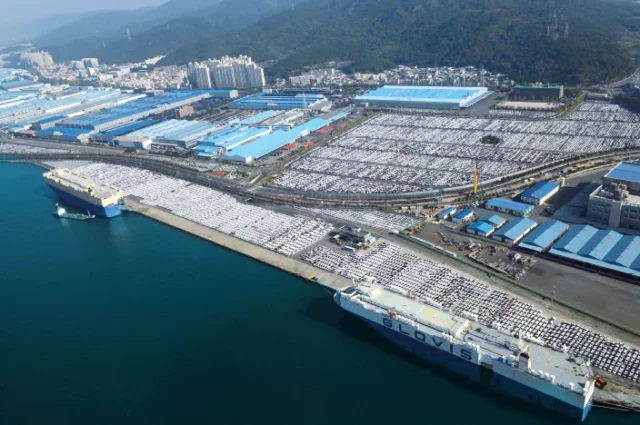
The strike led to a halving of production at Hyundai Motor’s biggest factory complex in the industrial hub of Ulsan on Thursday. Some 1,000 truckers were protesting in front of the complex on Friday, a Reuters witness said. 

“There are some disruptions to our production due to the truckers strike, and we hope production would be normalized as soon as possible,” a Hyundai spokesperson said. 

Hyundai normally makes about 6,000 vehicles a day at its plants in Ulsan, including the high-margin Genesis SUV and Ioniq 5 electric vehicle. 

Entering its fourth day, the strike has disrupted shipments for a wide range of companies and is slowing activity at ports. The movement of containers at Ulsan port, which accounts for about 10% of South Korea’s port traffic, has been suspended since June 7, a government official said. 

About 7,500 members, or about 35% of the Cargo Truckers Solidarity union in the country, are expected to go on strike on Friday, according to South Korea’s transport ministry. The government estimates that about 6% of the country’s 420,000 truck drivers belong to a union. 

Kim Gyeong-dong, a trucker union official, said the union ran out of funds to finance the strike on Thursday and that it was unlikely that strike could last another 10 days. 

South Korea is a major supplier of semiconductors, smartphones, autos, battery and electronics goods and the latest industrial action further raises uncertainty over global supply chains already disrupted by China’s strict coronavirus disease 2019 (COVID-19) restrictions and Russia’s invasion of Ukraine. 

The truckers plan to stop shipments of raw materials for semiconductors that are produced in Ulsan, Park Jeong-tae, a senior truckers union official, told Reuters on Friday. 

Samsung Electronics Co. and SK Hynix, two of the world’s biggest memory chip makers, declined to comment. 

Park added that the number of vehicles entering an Ulsan petrochemical complex has been cut to one tenth of normal levels and truckers would be telling non-union truckers not to enter the complex. 

South Korean President Yoon Suk-yeol, in power for just a month, said on Friday that the government planned to take a neutral stance in the dispute. 

Police said around 30 union members have been arrested so far and it will respond strictly to illegal acts at strike sites. 

The truckers, regarded as self-employed contractors in South Korea, are seeking pay increases and a pledge that an emergency measure guaranteeing freight rates would be extended. The emergency measure was introduced during the pandemic and is due to expire in December. 

The drivers also want freight rates to apply to a wider range of trucks, not just container trucks and cement trucks. 

Shares of Hyundai Motor were up 0.6% as of 0332 GMT, versus the benchmark KOSPI’s 1.2% fall. — Reuters

US approves $120M sale to maintain Taiwanese warships

WIKIMEDIA COMMONS

TAIPEI — The United States has approved a possible $120 million sale of parts to help Taiwan maintain its warships, which the island’s defense ministry said would help ensure combat readiness in the face of China’s “frequent activities” near the island.

The US Defense Security Cooperation Agency said it had delivered the required certification notifying Congress following State Department approval for the sale, which was requested by Taiwan’s de facto embassy in Washington. 

It said the sale covered unclassified spare and repair parts for ships and ship systems, logistical technical assistance, and US government and contractor representative technical and logistical support. 

“The proposed sale will contribute to the sustainment of the recipient’s surface vessel fleet, enhancing its ability to meet current and future threats,” the agency said in a statement, adding that the parts would be sourced from “approved US Navy vendors and/or US Navy stock”. 

Taiwan’s defense ministry said on Thursday the deal was expected to come into effect within one month, and expressed its thanks to Washington for its support in helping Taiwan be able to protect itself. 

“In view of the recent frequent activities of Chinese warships in the sea and airspace around our country, the ship parts that the United States has agreed to sell will help maintain the proper equipment and consumption of our naval ships and meet the actual needs of combat readiness tasks,” it said. 

Neither side gave details of the parts Taiwan would be receiving. 

Most of Taiwan’s main warships are US-made or -designed. 

The democratically governed island has complained of repeated missions by China’s air force in its air defense zone, part of what Washington sees as Beijing’s effort to pressure Taipei into accepting its sovereignty. 

China’s navy has also been conducting increasingly regular missions near Taiwan. 

The United States, like most countries, does not have official relations with Taiwan, but Washington is its biggest backer and is bound by law to provide it with means to defend itself. 

Successive US administrations have advocated the sale to Taiwan of inexpensive, mobile and survivable — or “asymmetric” — weapons that could outlast any initial assault by China’s larger military. 

The US-Taiwan Business Council, which counts defense contractors among its members, welcomed the latest authorization, but charged that President Joseph R. Biden, Jr.’s administration had undertaken “the most significant narrowing of US-Taiwan security assistance” since 1979. 

“There appears to now be little to no US support for substantial Taiwan force modernization efforts, so we should expect to see mostly sustainment and munitions programs through the remainder of President Biden’s term (or terms) in office,” Council President Rupert Hammond-Chambers said in a statement. 

Taiwan’s military was likely to see “the loss of infrastructure, hollowing out of operational experience, and the loss of decades of expertise,” as a result, he said. — Reuters


NASA to form scientific team to study UFOs

FLICKR/NASA HQ

WASHINGTON — The National Aeronautics and Space Administration (NASA) said on Thursday it plans to assemble a team of scientists to examine “unidentified aerial phenomena” —  commonly termed UFOs — in the latest sign of the seriousness with which the US government is taking the issue.

The US space agency said the focus will be on identifying available data, the best ways to gather future data and how it can use that information to advance scientific understanding of the issue. 

NASA tapped David Spergel, who formerly headed Princeton University’s astrophysics department, to lead the scientific team and Daniel Evans, a senior researcher in NASA’s Science Mission Directorate, to orchestrate the study. 

A team of scientists is due to be convened by the fall, then will spend roughly nine months developing a public report on its findings, Mr. Evans said. NASA will spend “anywhere from a few tens of thousands of dollars” to no more than $100,000 on the effort, Mr. Evans added. 

The announcement comes a year after the US government issued a report, compiled by the Office of the Director of National Intelligence in conjunction with a Navy-led task force, detailing observations mostly by Navy personnel of “unidentified aerial phenomenon,” or UAPs. 

Two Pentagon officials testified on May 17 at the first congressional hearing on UFOs in a half century. 

“We’re looking at the Earth in new ways, and we’re also looking the other way, at the sky, in new ways,” Thomas Zurbuchen, the chief of NASA’s science unit, told reporters on a conference call. “What we’re really trying to do here is start an investigation without an outcome in mind.” 

US officials have described UAPs as a national security issue, which NASA echoed. 

“Unidentified phenomena in the atmosphere are of interest for both national security and air safety. Establishing which events are natural provides a key first step to identifying or mitigating such phenomena, which aligns with one of NASA’s goals to ensure the safety of aircraft,” NASA said in a news release. 

Last year’s report said US defense and intelligence analysts lacked sufficient data to determine the nature of UAPs observed by military pilots including whether they are advanced earthly technologies, atmospherics or of an extraterrestrial origin. The two Pentagon officials last month acknowledged many observations remain beyond the government’s ability to explain. 

NASA said in a news release: “There is no evidence UAPs are extraterrestrial in origin.” 

The agency’s involvement is aimed at providing more data, with an aim to leverage NASA’s scientific talent, satellites and sensors otherwise tasked with monitoring Earth’s climate or observing atmospheric conditions, Mr. Zurbuchen said. 

“The first step is to figure out what data is at hand,” Mr. Evans said. 

NASA’s involvement in Pentagon efforts to characterize UAPs has been previously acknowledged by US officials. 

The Pentagon has made public some video of enigmatic objects exhibiting speed and maneuverability exceeding known aviation technology and lacking any visible means of propulsion or flight-control surfaces. — Reuters


China COVID jitters flare up as parts of Shanghai resume lockdown

REUTERS

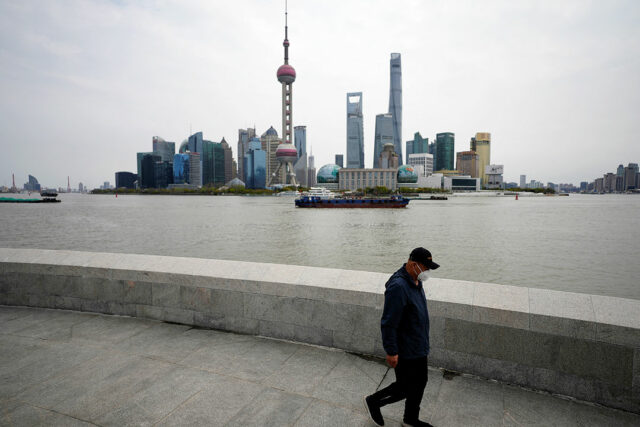
SHANGHAI/BEIJING — Shanghai and Beijing went back on a fresh coronavirus disease 2019 (COVID-19) alert on Thursday after parts of China’s largest economic hub imposed new lockdown restrictions and the city announced a round of mass testing for millions of residents.

The most populous district in the Chinese capital, meanwhile, announced the shutdown of entertainment venues, while news of the lockdown of Shanghai’s Minhang district, home to more than 2 million people, pulled down Chinese stocks.

Both cities had recently eased heavy COVID curbs, but the country has stuck with a “dynamic zero-COVID” policy aimed at shutting down transmission chains as soon as possible.

Shanghai residents in particular are on edge as new cases flare up after the city’s grinding two-month lockdown ended, with officials on Thursday tracing three infections to the Red Rose, a popular beauty salon in the city center that reopened when the city did on June 1.

The shop had served 502 customers from 15 of Shanghai’s 16 districts in the past eight days, a local media outlet, The Paper, reported.

“When is this ever going to end?,” a user of the Twitter-like Weibo commented on the Red Rose, which is in the trendy former French Concession area of the Xuhui district. “I just want to have a normal life.”

Authorities said a preliminary investigation found that some of the salon’s 16 employees did not undergo daily COVID testing as required, and that 90,000 people linked to Red Rose staff or customers had been tested.

While China’s infection rate is low by global standards, President Xi Jinping has doubled down on a zero-COVID policy that authorities say is needed to protect the elderly and the country’s medical system, even as other countries try to live with the coronavirus.

Shanghai’s two-month lockdown, the shuttering of many malls and venues across Beijing and movement curbs imposed in many cities in recent months have battered the Chinese economy, disrupted supply chains and slowed international trade.

Authorities have been keen to revive business and started to relax some curbs in May which helped China’s exports that month to grow at a double-digit pace, beating expectations, but residents, businesses and investors are wary. China’s blue-chip CSI300 index ended 1.1% lower.

“The business climate is not positive because despite the fact that the cities opened, there is still the problem of the zero-COVID policy,” Christophe Lauras, president of the French Chamber of Commerce in China, told Reuters.

“That is to say that every morning people don’t know if they’ll be locked down,” he said.

LOCKDOWNS AND TESTS

Shanghai’s Minhang district said it will conduct nucleic acid tests for the entire population on Saturday and ordered residents to stay home during the testing. Six other Shanghai districts, including some of its largest, also announced a round of mass testing for the weekend.

Several local-level authorities in Shanghai, which is home to 25 million people, have also issued notices saying residents will be subject to two days of confinement and another 12 days of rigorous testing starting Thursday.

Many of the notices were in the central Xuhui district, where green fences and red wooden boards have sprung up in the past week, barricading residents in and triggering fresh public anger.

In Beijing, authorities in Chaoyang district, home to more than 3 million people, ordered entertainment venues and internet cafes to shut on Thursday, while patrons of four bars were told to identify themselves and self-isolate.

China reported 240 new coronavirus cases on June 8, of which 70 were symptomatic and 170 were asymptomatic, the National Health Commission said on Thursday. — Reuters

CDO Foodsphere and Kraft Heinz enter a distribution agreement

On 1 April 2022, a partnership was signed between two of the biggest names in food manufacturing to help bring a better mealtime experience to consumers in the Philippines. Philippine meat processing giant CDO Foodsphere will take charge of the distribution of Kraft Heinz products in the foodservice industry in the Philippines. This includes hotels, full-service restaurants, quick-serve restaurants, canteens, and caterers.

Both companies are major players in the food business. Kraft Heinz is one of the largest food and beverage companies in the world. CDO Foodsphere was recognized by Campaign Asia-Pacific to rank number 14 in the top 100 brands in the Philippines and was the recipient of the ASEAN Business Award in 2020 in the regional category.

“It is good to have this collaboration between our two companies,” says Jerome D. Ong, President & CEO of CDO Foodsphere. “It allows both us to further strengthen and expand the reach of our product portfolios.”

Through their products, the companies bring to life dishes that delight customers and families who go out to eat and spend quality time together.

“We see the Philippines as an important market to grow our Kraft Heinz presence,” said Rafal Walendzik, Managing Director of Asia Trading at Kraft Heinz. “We look forward to our partnership with CDO Foodsphere and chose them because of their credibility and strong distribution network in the local foodservice channel.”

CDO Foodsphere has been in the food processing business for 47 years and is known to introduce innovative products that can win in the market.

With the company now handling the distribution of Kraft Heinz products, both companies are able to expand their presence in various categories. Vice President for Emerging Business Jason D. Ong explained, “With the partnership with Kraft Heinz we can provide customers with their need for condiments and seasonings which complete the delightful mealtime experience. This is important to us and it is good to find a partner in Kraft Heinz who also has consumers at the center of how it operates.”

With the distribution agreement signed, the full implementation commenced on April 10. This is very promising especially with the Philippines being in an election year and maneuvering its way towards recovery from the pandemic.

“We’ve always been passionate about our consumers and our customers. We want them to succeed and we want their businesses to grow,” said Jerome Ong.


Spotlight is BusinessWorld’s sponsored section that allows advertisers to amplify their brand and connect with BusinessWorld’s audience by enabling them to publish their stories directly on the BusinessWorld Web site. For more information, send an email to online@bworldonline.com.

Join us on Viber to get more updates from BusinessWorld: https://bit.ly/3hv6bLA.