Home Blog Page 5887

France offers Philippines submarines 

FRANCE is prepared to provide diesel-electric submarines to the Philippines to help it respond to potential conflicts in the Indo-Pacific region, according to its top envoy. 

“France is obviously committed to working more closely with the Philippines and to have more strategic relations,” French Ambassador to the Philippines Michèle Boccoz told a news briefing on Wednesday. “Should the Philippines make the decision, of course we are more than ready to work on that perspective with them.” 

She said France’s position in the Indo-Pacific is nonconfrontational, allowing partnerships in some areas while having competition and rivalry in others. 

But Ms. Boccoz cited the need to be prepared for potential conflicts. Deterrence, she added, is the preferred response and “we have to have the right tools for that.” 

The Philippines should consider submarine ownership as one of the most efficient deterrents, the envoy said. 

Ms. Boccoz cited a vow that Philippine President Ferdinand R. Marcos, Jr. made in his first address to Congress, where he said he would “not preside over any process that will abandon even one square inch of territory of the Republic of the Philippines to any foreign power.” 

“He was very clear on his position on protecting the territorial integrity of the country, may it be maritime or terrestrial,” she said. 

“I listened very carefully to the very interesting presentation of the strategic dimension and the positioning of the country, and we are definitely ready to partner with the Philippines on that by providing the force,” she added. — Alyssa Nicole O. Tan 

Philippines issues notice on China rocket debris 

THE PHILIPPINE Space Agency on Tuesday said debris from a Chinese rocket might fall near Cagayan and Ilocos Norte provinces in northern Luzon. 

A Long March 7A rocket was launched from China’s Wenchang Space Launch Center on Hainan Island on Tuesday at 9:19 p.m. 

The agency identified drop zones based on a notice from the Civil Aviation Administration of China — the first is 71 kilometers from Burgos, Ilocos Norte and the second is 52 kilometers away from Sta. Ana, Cagayan, it said in an advisory. 

The Civil Aviation Authority in a separate statement said has notified airmen about the “closure of several area navigation routes in preparation for possible debris drops from the rocket launch.” 

“Though the debris from the rocket launch will unlikely fall on inhabited land, it may still pose danger to aircraft and seacraft,” it said. — Norman P. Aquino 

House urged to restore P500-M cancer fund 

A PARTY-LIST lawmaker on Wednesday asked his peers to restore P500 million in cancer funds for 2023 that were cut from the national budget. 

“We will do everything in our power to make sure that the cancer assistance fund will be included in the final version of the 2023 national budget,” Party-list Rep. Bernadette Herrera-Dy said in a statement.  

The House of Representatives deputy minority leader said state funding would ease treatment expenses of poor cancer patients.  

Cancer funding was excluded from next year’s proposed budget, Health officer-in-charge Maria Rosario S. Vergeire told a House hearing on Monday.  

She said the Budget department had turned down their request to restore the cancer assistance fund.  

The Department of Health (DoH) proposed the budget under the National Integrated Cancer Control Act of 2019.  

“I hope we can return the P500-million fund assistance for cancer patients to the DoH,” Ms. Dy said. — Matthew Carl L. Montecillo  

House passes SIM card bill on 2nd reading 

PHILSTAR FILE PHOTO

CONGRESSMEN on Wednesday approved on second a bill that will require the registration of subscriber identity module (SIM) cards to prevent mobile phone scams. 

Under House Bill 14, telecommunication companies will become the gatekeeper of information obtained in the registration process. No data may be divulged except in compliance with laws, upon a court order or with the written consent of the subscriber. 

Any breach of confidentiality will be punished with imprisonment or a fine of as much as P1 million. 

“This act is not going to be a silver bullet against the ongoing scams that have proliferated in the last few months,” Ilocos Norte Rep. Ferdinand Alexander A. Marcos said in his sponsorship speech. 

House Bill 14 is the exact version approved in the past Congress and was refiled by Mr. Marcos, Speaker Ferdinand Martin G. Romualdez and Party-list Reps. Yedda Marie K. Romualdez and Jude A. Acidre. 

Ex-President Rodrigo R. Duterte vetoed the bill in April after senators and congressmen included social media accounts in the coverage. 

The former president found that certain aspects of state intrusion had not been defined, discussed or threshed out in the enrolled bill with regard to social media registration, the presidential palace at that time. — Kyanna Angela Bulan 

Justice, Interior chiefs confirmed 

THE COMMISSION on Appointments (CA) on Wednesday confirmed the appointments of Jesus Crispin C. Remulla as Justice secretary and Benjamin C. Abalos, Jr. as Interior chief. 

“This for me is the most challenging public office I’ve ever held, and hopefully will hold in my entire career as a public servant,” Mr. Remulla said at the hearing. “I am a man of action, willing to ignite several reforms for the improvement of the administration of justice.” 

The Justice chief did not directly answer a question on his stance on capital punishment, saying it would always be a choice between the value of life and society. 

“That is still one that will divide society forever,” he said. “The value of life will always be important to all of us, and the value of society is also very important to all of us.” 

“It is up to a democratic country like ours to vote on this issue. I believe that policymakers should debate it properly and vote on it as representatives of the people,” he added. 

He also called for the amendment of the Witness Protection Law, which he said would aid the state’s anti-illegal drug campaign. 

The law should also cover law enforcers who might speak against their colleagues, Mr. Remulla said. 

Mr. Remulla was reelected Cavite governor in May before President Ferdinand R. Marcos appointed him Justice secretary. 

Meanwhile, Mr. Abalos said the Philippine National Police is lacking 5,000 body cameras, which the Supreme Court required in all the agency’s operations. 

They want to seek a budget from Congress but expects the funding to made in phases given high costs,” he said. — Alyssa Nicole O. Tan 

Congressmen eye bigger Education budget 

PHILSTAR FILE PHOTO

PUBLIC school teachers on Wednesday marched to the House of Representatives, calling for an increase in the education budget for 2023. 

“A significant increase to as much as two times the current education budget is central to enabling a 100% safe school reopening and recovering education from the learning crisis,” Alliance of Concerned Teachers (ACT) Philippines Chairman Vladimer Quetua said in a statement. 

“With the projected gross domestic product of P23.73 trillion in 2023, the government should spend about P1.42 trillion on education,” he added. 

The House heard Education officials on the agency’s proposed budget for next year. Vice-President and Education Secretary Sara Duterte-Carpio said they had initially proposed P810.41 billion but the budget department only gave them P666.25 billion, which is 12.7% higher than this year. 

Ms. Carpio said the Budget department had allotted P5.9 billion for the construction of 2,739 classrooms, lower than the original proposal of P86.4 billion for 34,468 new classrooms. 

DepEd had proposed P7.6 billion for the repair of 11,700 classrooms, but the budget department only allotted P1.5 billion covering 2,358 classrooms, she added. 

The state should prioritize education, Cagayan de Oro Rep. Rufus B. Rodriguez said at the hearing, citing the Constitution. 

Albay Rep. Edcel C. Lagman, Baguio City Rep. Mark O. Go and Misamis Oriental Rep. Yevgeny Vincente B. Emano supported an increase in DepEd’s budget. 

Meanwhile, Party-list Rep. France L. Castro asked Ms. Carpio about overpriced laptops bought by the agency, which the Senate is investigating. 

The vice-president said they had requested fraud audits from the Commission on Audit and ordered the agency’s chief of staff to explain the purchase. — Kyanna Angela Bulan 

Under-construction generating facilities still mostly coal-fired

PIXABAY

COAL FACILITIES made up just over half of power plants under construction in the 2022-2027 period, the Department of Energy (DoE) said.

The capacity of plants being built, which the DoE calls “committed power projects,” amounted as of July to 8,864.29 megawatts (MW), with coal facilities accounting for 50.63% or 4,488.40 MW. The commitments refer to those facilities that have secured financing.

Natural gas accounted for 38.48% or 3,500 MW; renewable energy (RE) 9.41% or 834.14 MW; and oil-fired plants 0.47% or 41.75 MW.

Capacity from committed battery energy storage system projects is expected to hit 2,129.13 MW by 2027, according to the DoE.

Among indicative projects, or those not yet at the financial milestone, renewables dominated the projected capacity of 43,884.56 MW.

RE accounted for 35,441.36 MW, followed by natural gas (6,588 MW); coal-fired (1,520 MW) and oil-fired (335.30 MW).

Indicative RE projects in Luzon had combined capacity of 30,088.55 MW; the Visayas 4,394.86 MW and Mindanao 957.95 MW.

In 2021, the Philippines had a total grid generating capacity of 26,882 MW while off-grid installed generating capacity was 636 MW, according to DoE’s accomplishment report for that year. — Ashley Erika O. Jose

Peso bond market growth slows in Q2

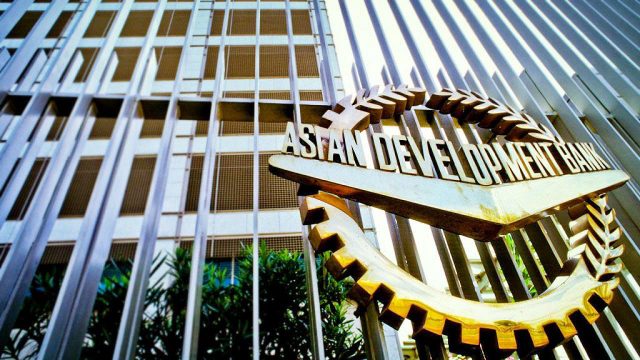
THE growth of the peso bond market slowed to 2.4% from a quarter earlier to P10.68 billion in the three months to June, following reflecting a corresponding slowdown in government and corporate bond issues, the Asian Development Bank (ADB) said.

According to the September issue of the ADB’s Asia Bond Monitor, growth in bond issues slowed from 6.5% in the first quarter.

Growth in the rest of the region’s bond markets was 8.1% for Vietnam, 3.5% for China, and 3% Singapore. Philippine growth was ahead of those for Malaysia (2.3%), Hong Kong (2.1%), South Korea (1%), Thailand (0.7%), Indonesia (0.3%), and Japan (-0.7%).

The year-on-year growth rate for peso bonds in the second quarter was 14.2%.

The peso market consisted of 86.83% in government securities and 13.18% in corporate issuances.

Outstanding government issuances totaled P9.27 trillion as of the second quarter, up 4.1% quarter on quarter and 18.4% year on year. The former represents a slowdown from the 6.5% recorded in the previous quarter.

“The slower growth stemmed from a contraction in the stock of Treasury bills and a slower expansion in the stock of Treasury bonds. On the other hand, growth in the central bank bond stock moderated, while the stock of other government bonds posted strong growth during the review period,” the ADB said.

Treasury bill (T-bill) issues declined 17.1% to P544 billion as of June from the previous quarter and by 46.8% from the previous year, amid a rise in short-term interest rates.

Meanwhile, outstanding Treasury bonds (T-bonds) grew 3.9% quarter on quarter and 27.7% year on year to P8.11 trillion at the end of June “due to a relatively high base in the previous quarter as the Philippine government had issued Retail Treasury Bonds amounting to P457.8 billion in March.”

Outstanding bills issued by the central bank totaled P567 billion, up 38.3% from a quarter earlier and up 41.8% from a year earlier.

This was attributed to efforts by the Bangko Sentral ng Pilipinas (BSP) to mop up excess liquidity to curb inflationary pressures. Inflation was at 6.1% in June, above the BSP’s 2-4% target band.

Meanwhile, corporate bonds outstanding declined 7.1% quarter on quarter to P1.41 trillion and 7.2% from a year earlier.

According to the ADB, this was due to higher borrowing costs, as well as “uncertainties in the Philippine economic outlook and policy direction.”

The second quarter includes May, when the national elections were held and market participants likely paused to gain more clarity on the direction of the new government.

The local currency bond market in emerging East Asia expanded 3.1% quarter on quarter and 14% year on year to $22.91 trillion as of June.

The ADB said bond yields in the Philippines and in emerging East Asia region have been fluctuating according to the monetary authorities’ rate adjustments in reaction to inflation.

Yields for peso government bonds flattened between June 15 and Aug. 15, the ADB reported, citing higher yields on the short end of the curve and declines for longer-dated securities.

“Market optimism over a milder US Federal Reserve tightening supported a modest improvement in financial conditions. But this seems to have been short-lived, as the Fed has been pretty clear in recent weeks that further interest rate hikes are likely,” ADB Chief Economist Albert Park was quoted as saying.

Fed Chairman Jerome H. Powell last week said the US central bank is “strongly committed” to fighting inflation and needs to continue acting aggressively to bring prices down.

The Fed will meet to review policy on Sept. 20-21, with markets expecting another aggressive hike. It has raised rates by 225 basis points (bps) so far since March, including back-to-back 75-bp hikes in June and July.

The BSP is also in the middle of tightening its policy settings to rein in inflation and has raised benchmark rates by 175 bps since May, including an off-cycle rate hike of 75 bps in July.

The Monetary Board’s next meeting is on Sept. 22.

BSP Governor Felipe M. Medalla has said the central bank may need to respond if the Fed remains hawkish, as spillover effects on the market, especially the peso, could affect inflation.

The ADB also cited other risks that might dampen the investor outlook, such as persistent inflation, the lingering impact of the coronavirus disease 2019 (COVID-19) pandemic, a slowdown in China, and the outcome of the Russia-Ukraine conflict. — Diego Gabriel C. Robles


House plenary urged to raise threshold for VAT on digital transactions

GLENN CARSTENS PETERS-UNSPLASH

THE threshold for requiring digital service providers (DSPs) to charge value-added tax (VAT) needs to be raised to P5 million in gross sales or receipts, from P3 million as specified in a measure currently undergoing plenary debate, a legislator said.

Samar Rep. Paul R. Daza said in a statement on Wednesday that he approved in principle of making DSPs collect VAT, but cited the need “to protect SMEs (small and medium enterprises) and other small players.”

According to his statement, he also told the plenary session debating House Bill No. 4122 on Monday that “VAT, a consumption-based tax, is not always good for the economy.”

“The intention is certainly good as we indeed need to impose VAT on big companies such as non-resident DSPs,” he added.

He said as a matter of policy, he prefers getting foreign DSPs to establish a presence in the Philippine, where their earnings can be directly taxed.

The bill is part of a broader effort to find new sources of government revenue to fund pandemic recovery efforts. — Kyanna Angela Bulan

Fish aggregating devices tapped to help fisherfolk manage costs

THE Bureau of Fisheries and Aquatic Resources (BFAR) is planning to distribute fish aggregating devices (FADs) to help fisherfolk maximize output without raising production costs.

FADs “attract high-value fish species (and) also provide fishers with a precise fishing area, effectively cutting down production costs including fuel consumption,” the BFAR said.

The BFAR said it hopes FADs will help ensure an ample supply of fish on the market and keep prices of fish stable.

The agency said it is also upgrading the National Fish Broodstock Development Program to include high-value marine species such as snapper, pompano, grouper, and sea bass.

“Through this program, more Filipino fisherfolk will be able to locally source quality fry or fingerlings at an affordable rate,” it added.

Inflation for fish and other seafood slowed to 7.2% in August from 9.2% in July, according to the Philippine Statistics Authority.

“Among the factors attributed to its decline is the decrease in the prices of oil, a commodity which the fisheries sector, especially capture fisheries, is generally dependent on. With the price of oil gradually decreasing, more fishers were able to venture out to the sea to fish,” the BFAR added. — Luisa Maria Jacinta C. Jocson

NGCP ‘in discussions’ with DoE to ensure adequate power supply

NGCP.PH

THE National Grid Corp. of the Philippines (NGCP) said it is in talks with the Department of Energy (DoE) to ensure sufficient power, after it declared red and yellow alerts on the Luzon grid on Monday.

“The NGCP is in discussion with DoE to work together to assure that we have enough supply of energy,” NGCP President Anthony L. Almeda said during a Senate energy committee hearing.

Mr. Almeda gave no details. The NGCP is required to have access to a certain level of contracted power reserves should its baseload providers fail to supply adequate electricity. These reserves are known as ancillary services (AS).

AS contracts are entered into on a firm or non-firm basis. Firm contracts command a premium because they are considered more certain to deliver should the need arise, but the NGCP incurs costs to enter into both types of contracts.

The company has found itself in disputes with regulators over what level of reserves will ensure sufficient power in case major generating facilities come offline unexpectedly. 

On Monday, the NGCP placed the Luzon grid under red and yellow alerts following forced outages at seven power plants, while three power plants were operating at diminished capacity.

The Energy Regulatory Commission (ERC) said in a separate advisory that it will investigate the NGCP’s actions in the wake of the loss of the power plants’ output.

“The ERC will look into the cause of the tripping and the actions taken by the NGCP… including the reasons why the generating units were not able to get back online with the restoration of the transmission line,” the ERC said in an advisory posted on Facebook.

Senator Rafael T. Tulfo, chairman of the Senate energy committee, said the DoE needs to streamline the permit process for energy projects by making more use of the energy virtual one-stop shop (EVOSS).

“To facilitate the urgency of the processes there is a need to create an inter-agency council, to coordinate and monitor each agency’s task,” Mr. Tulfo said.

Mr. Tulfo said that EVOSS, as a coordinating entity, should help resolve any bottlenecks in augmenting supply. — Ashley Erika O. Jose

CARP seen unsustainable without support services

AGRARIAN REFORM beneficiaries (ARBs) need support services to sustain them and keep them productive after they have been awarded land, a senior legislator said.

“The Comprehensive Agrarian Reform Program (CARP) without adequate support services and with limited capital or entrepreneurship among farmer-beneficiaries, is shown to have reduced agricultural productivity in CARP lands by as much as 34.1%,” Albay Rep. Jose Ma. Clemente S. Salceda said at a hearing of the committee on agrarian reform on Wednesday.

Mr. Salceda said the agriculture industry foregoes about P418 billion a year in gross value added due to the absence of support, access to capital, and capacity among ARBs under CARP.

On Tuesday, President Ferdinand R. Marcos, Jr. signed an executive order imposing a one-year moratorium on payments of amortization and interest on loans to ARBS.

Mr. Salceda said condonation of ARB debt could result in an increase in productivity of between 23.8% and 38.3%, as land is allocated more efficiently and more interventions to boost production become available.

He proposed the distribution of 52,000 hectares of public agricultural land that Mr. Marcos earlier promised to grant to landless farmers during his State of the Nation Address.

Mr. Salceda also called for the revival of the Samahang Nayon and Kilusang Bayan programs as authorized by Presidential Decree No. 175.

“The best way to guarantee productivity for the newly emancipated and newly granted land is to make sure that the support ecosystem exists for their farmers-owners. That is the kind of support that Samahang Nayon and Kilusang Bayan programs can provide,” he said.

“Naturally contiguous or proximate land should be organized under ‘farmer association areas or farmer cooperative areas with an assigned agribusiness management consultant,” he added.

He also recommended that new beneficiaries sign up for the Registry System for Basic Sectors in Agriculture to ensure that they receive benefits under various Department of Agriculture programs, especially high-yielding seed.

He also backed types of irrigation more suited to crops other than rice.

“Solar-powered irrigation pumps with drip irrigation devices appear to be the most energy-efficient iteration of such irrigation systems,” he added. — Luisa Maria Jacinta C. Jocson

ADVERTISEMENT
ADVERTISEMENT