Home Blog Page 5796

Inflation zooms to 6.9% in Sept.
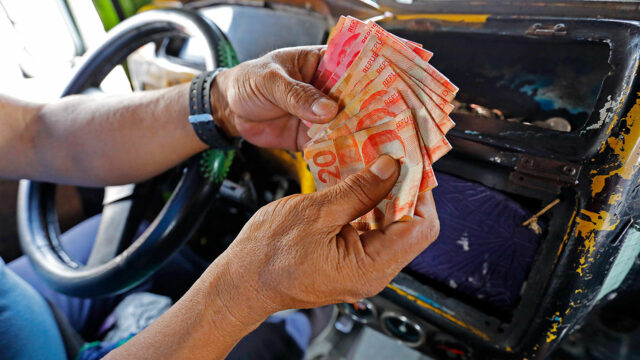
A jeepney driver shows peso bills in this file photo. Commuters began paying higher public transport fares on Monday. — PHILIPPINE STAR/ WALTER BOLLOZOS

INFLATION zoomed to its fastest pace in over 13 years in September, as food, utilities and transport costs spiked.

Preliminary data from the Philippine Statistics Authority (PSA) showed headline inflation accelerated to 6.9% in September, from 6.3% in August and 4.2% in September 2021.

The latest inflation print matched the 6.9% logged in September and October 2018. It was also the fastest in more than 13 years or since the 7.2% in February 2009 at the height of the global financial crisis.
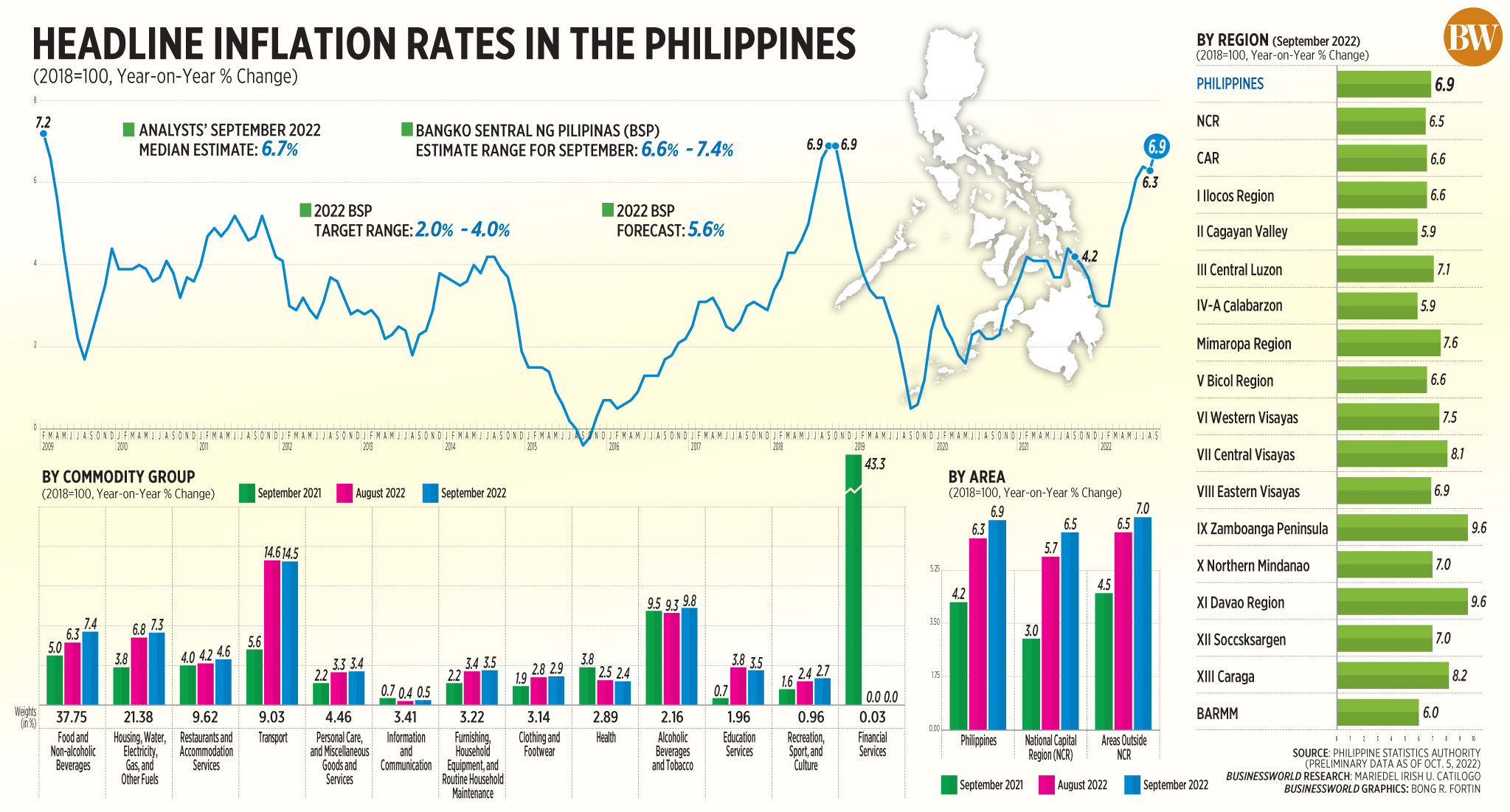
Headline inflation rates in the Philippines

“If you recall in 2008 global financial crisis there were a lot of high inflation rates,” National Statistician Claire Dennis S. Mapa said during the briefing on Wednesday.

September also marked the sixth straight month that inflation breached the Bangko Sentral ng Pilipinas’ (BSP) 2-4% target this year.

The latest headline figure was higher than the 6.7% median in a BusinessWorld poll conducted last week.

“The September 2022 inflation outturn of 6.9% is within the BSP’s forecast range of 6.6 to 7.4%, consistent with the BSP’s assessment of inflation remaining above target over the near term as price pressures broaden and signs of further adverse second-round effects emerge,” the central bank said in a statement.

On a monthly basis, headline inflation inched up 0.4% in September. Stripping out seasonal factors, inflation rose by 0.6% month on month.

This brought average inflation in the nine months to September to 5.1%, higher than 4% a year ago. However, it was still below the BSP’s 5.6% forecast for 2022.

Core inflation, which discounts volatile prices of food and fuel, eased to 4.5% year on year in September but still elevated from 2.6% a year earlier.
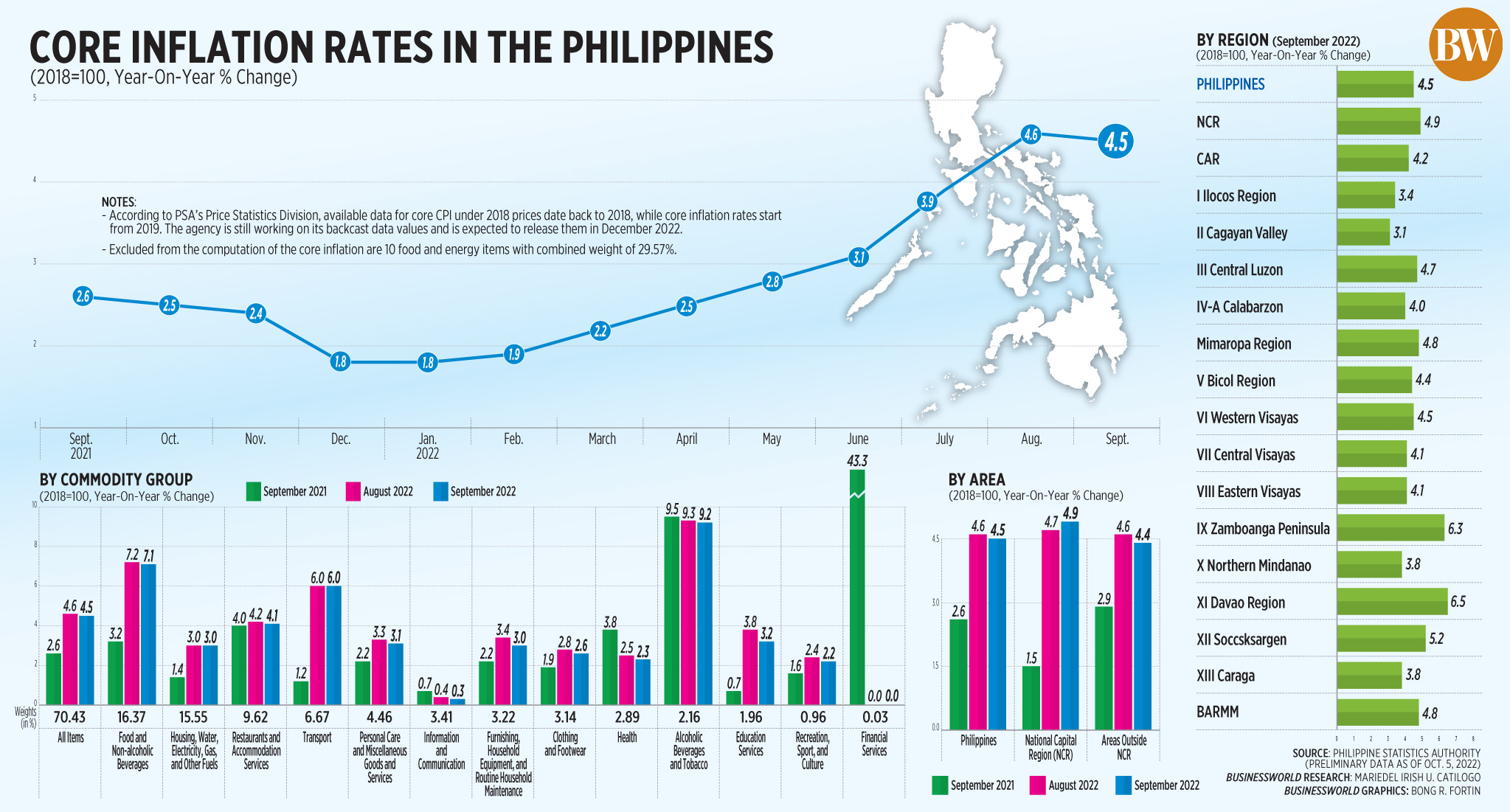
Core inflation rates in the Philippines

Out of 13 commodities, nine reported faster inflation in September.

Commodities that contributed to the faster headline inflation in September were the heavily weighted food and non-alcoholic beverages (7.4% annually from 6.3% in August); housing, water, electricity, gas and other fuels (7.3% from 6.8%); and transport (14.5% from 14.6%).

Inflation in the National Capital Region (NCR) jumped to 6.5% in September, from 5.7% in August, while inflation in the areas outside Metro Manila surged to 7% from 6.5% in the prior month.

Of the 17 regions in the country, nine posted inflation faster than the national average of 6.9%. It was led by Zamboanga Peninsula (9.6% in September from 9.1% in August), Davao Region (9.6% from 8.9%), and Caraga (8.2% from 7.5%).

Similarly, inflation as experienced by the bottom 30% income households climbed to 6.7% in September from 5.9% in August. It averaged 4.6% in the nine months to September, lower than 4.9% average last year. However, this segment still uses the consumer price index under 2012 prices compared with the rebased 2018 prices for the national inflation rate.

The National Economic and Development Authority (NEDA) said inflation has been accelerating not just in the Philippines but in other countries as well due to robust domestic demand, high commodity prices, supply chain disruptions, weather disturbances and the strong US dollar.

“The government’s priority is to make sure that there is sufficient and affordable food supply for every Filipino family,” NEDA Director-General and Socioeconomic Planning Secretary Arsenio M. Balisacan was quoted in the statement as saying.

Security Bank Corp. Chief Economist Robert Dan J. Roces attributed the higher inflation to the faster rise in prices of food and beverages, as well as housing, electricity and gas.

“The September print is the first full month where the impact of the [peso’s] depreciation to current levels were felt, along with initial price effects of the recent typhoons. As such, the country remains vulnerable to inflation shocks caused by exchange rate swings,” Mr. Roces said via e-mail.

The Philippine peso breached multi-year record lows in September. It traded to P57 levels against the US dollar for the first time on Sept. 6, and crossed the P58-to-a-dollar territory on Sept. 20. The local unit finished the month at P58.625 against the greenback.

Philippine National Bank (PNB) economist Alvin Joseph A. Arogo said in a separate e-mail the September inflation reflected the impact of the supply shortages “caused by the combination of the delayed effect of higher fertilizer prices and immediate disruption from Typhoon Karding,” as well as rising fuel and transport costs.

Latest government data showed Super Typhoon Karding caused over P3 billion in agricultural damage. Affected regions include Ilocos, Cagayan Valley, Central Luzon, Calabarzon, Bicol, Cordillera Administrative Region, and Western Visayas.

‘REMAIN ELEVATED’
“Inflation is expected to remain elevated for the last quarter of 2022 with the recent fare hike and the impact of Typhoon Karding on food supply,” the Department of Finance (DoF) said in a statement.

The DoF said full-year inflation is still expected to fall within the 4.5-5.5% target by the interagency Development Budget Coordination Committee.

For its part, the BSP cited several upside risks that cloud the near-term inflation outlook, such as “potential impact of higher global non-oil prices, pending petitions for further transport fare hikes, the impact of weather disturbances on prices of food items, as well as the sharp increase in the price of sugar.”

PSA’s Mr. Mapa said October inflation may further rise due to the higher public transport fares that took effect this month.

“The transport commodity group, which carries 9% weight in inflation, we are seeing spillover effects on other subgroups, such as food. The PSA is monitoring this in our data collection, the fare hike in October and the rise in food prices,” Mr. Mapa said.

On Monday, the Land Transportation Franchising and Regulatory Board implemented fare hikes for public utility jeepneys and public utility vehicles, taxis, and Transport Network Vehicle Service.

“For inflation, we continue to expect a possible peak in the headline print this October before slowing in the final two months mostly on base effects,” Security Bank’s Mr. Roces said.

PNB’s Mr. Arogo said his average inflation forecast for the fourth quarter is 7.3%.

“The second-round effects of the global commodities spike earlier in the year and impact of the depreciation of the peso against the US greenback on imported products will likely still be felt in the coming three months. This is evidenced by the upward trend in the price growth in housing & utilities and restaurants & accommodation,” he said.

Pantheon Macroeconomics Chief Emerging Asia Economist Miguel Chanco raised his average inflation forecast for 2022 to 5.4% from 5%, after the release of the September inflation data.

“The BSP won’t be sitting again until November and, if we’re right about September being the peak in inflation and the underlying sluggishness in the economy — the [third-quarter] GDP report is due before the next Board meeting — then an imminent pause in the tightening cycle will be play,” Mr. Chanco said.

The central bank said it is “prepared to take further policy actions to bring inflation toward a target-consistent path over the medium term.”

The Monetary Board has raised rates by 225 bps so far since May. It will have its next policy-setting meeting on Nov. 17. — Bernadette Therese M. Gadon

PHL launches dollar bond offering

REUTERS

THE PHILIPPINES returned to the global bond market again this year via a three-tranche, US dollar-denominated bond offering.

This is the first global bond offering under the Marcos administration, which took office on June 30.

Documents from the Bureau of the Treasury (BTr) showed the offering consists of dollar bonds with tenors of five years and 10.5 years, as well as 25-year green or sustainability bond, at benchmark size or at least $500 million.

The initial price guidance for the five-year and 10.5-year tenors are set around the level of Treasuries plus 155 basis points (bps) and 220 bps, respectively, the document showed.

The 25-year sustainability bonds are set around 6.550%.

Proceeds of the bonds would be used for general budget financing, as well as the financing or refinancing of assets in line with the Philippines’ sustainable finance framework.

BofA Securities, Goldman Sachs, HSBC (B&D), JPMorgan, Morgan Stanley, SMBC Nikko, Standard Chartered Bank, and UBS have been tapped as joint bookrunners. The latter two are designated as sustainability structuring banks.

S&P Global Ratings assigned a “BBB+” long-term foreign currency rating to the US dollar senior unsecured notes to be issued by the Philippines, while Fitch Ratings gave it a “BBB” rating.

Moody’s Investors Service also assigned the notes a senior unsecured rating of “Baa2” which mirrors the Philippine government’s issuer rating.

The five-year notes will mature in October 2027, the 10.5-year bonds in April 2033, and the 25-year sustainability bonds in October 2047.

Finance Secretary Benjamin E. Diokno previously said that 69% of the current debt stock was sourced domestically. The government targets to increase that to 75% this year, and to 80% in the longer term, to minimize foreign exchange risks.

In a Viber message to reporters, Mr. Diokno said that while 75-25 is the preferred mix, “sometimes one has to be opportunistic.”

The government raised $559 million from a yen-denominated Samurai bond issue in April, and sold $2.25 billion worth of dollar-denominated notes in March.

Last year’s offshore debt issues by the Philippines included $3-billion dual-tranche global bonds, the 2.1-billion-euro triple-tranche global bonds, and the 55-billion-yen Samurai bonds.

The government will borrow from local and external sources to help fund a budget deficit capped at P1.65 trillion this year, equivalent to 7.6% of GDP.

The National Government’s outstanding debt rose to a record-high P13.02 trillion at the end of August due to additional domestic borrowings and a weak peso.

As of the second quarter, the Philippines’ debt-to-gross domestic product (GDP) ratio was at 62.1%, above the 60% threshold deemed sustainable for developing countries. The government intends to bring it down to 52.5% by 2028. — Diego Gabriel C. Robles

PHL banks’ NPL ratio falls to 23-month low

PHILIPPINE STAR/MICHAEL VARCAS

By Keisha B. Ta-asan

SOURED LOANS held by banks fell for a sixth straight month in August, bringing the nonperforming loan (NPL) ratio to a 23-month low amid the economy’s continued reopening.

However, the decline in NPLs may slow in the coming months due to the recent rate hikes by the Bangko Sentral ng Pilipinas (BSP), economists said.

Latest data from the BSP showed the Philippine banking sector’s gross NPL ratio inched down to 3.53% as of end-August from 3.57% as of end-July and 4.51% in the same month last year. 

The NPL ratio in August was the lowest in 23 months or since 3.51% in September 2020.    

Bad loans declined by 15% year on year to P418 billion as of end-August. It was also 0.5% lower than the P420.254 billion seen at end-July.

Loans are considered nonperforming once they remain unpaid for at least 90 days after the due date. They are deemed as risk assets given borrowers are unlikely to settle such loans.

“Continued improvement of cash flows for households and firms due to economic reopening helped borrowers service payments and thus NPLs continued to slide,” ING Bank N.V. Manila Senior Economist Nicholas Antonio T. Mapa said in an e-mail on Wednesday.   

Metro Manila and some provinces have been under the most lenient alert level since March, which meant businesses are now allowed to operate at full capacity.

“We think that the continuous decline of the NPL ratio is indicative of improving business conditions and robust economic recovery post-pandemic,” China Banking Corp. Chief Economist Domini S. Velasquez said in a Viber message.

“The increase in economic activities as the economy further reopened likely boosted borrowers’ incomes and cash flows, allowing them to settle their loans on time,” she added.   

BSP data showed banks’ gross loan portfolio grew by 8.72% to P11.84 trillion in August from P10.89 trillion a year ago. It also went up by 0.5% from the P11.77 trillion in July.      

Meanwhile, past due loans fell by 14.4% year on year to P496.135 billion in August, bringing the ratio to 4.19% from 5.32% a year ago.

Restructured loans rose by 4.4% to P319.892 billion, which accounted for 2.7% of banks’ loan portfolio. 

Banks continued to beef up their loan loss reserves to P418.059 billion in August from P410.848 billion a year ago. This brought the ratio to 3.53% from 3.77% a year earlier.   

The industry’s NPL coverage ratio improved to 100% from 83.52% in 2021.

However, rising interest rates may slow the decline in bad loans.

“Moving forward, we expect the NPL ratio to remain on a downward trend but the pace of decline may slow, as higher interest rates and inflation as well as the slowdown in the economy continue to pose credit risks,” Ms. Velasquez said.   

The consumer price index at the national level climbed by 6.9% year on year last month. It was the sixth straight month that inflation exceeded the central bank’s 2-4% target.

To tame inflation, the BSP has raised benchmark interest rates by a total of 225 basis points so far this year, bringing the overnight reverse repurchase rate to 4.25%.

The central bank earlier said the NPL ratio of Philippine banks might peak at 8.2% this year. The ratio stood at 3.99% as of end-December 2021, as the economy started to reopen.

Customs exceeds collection target for 9th straight month

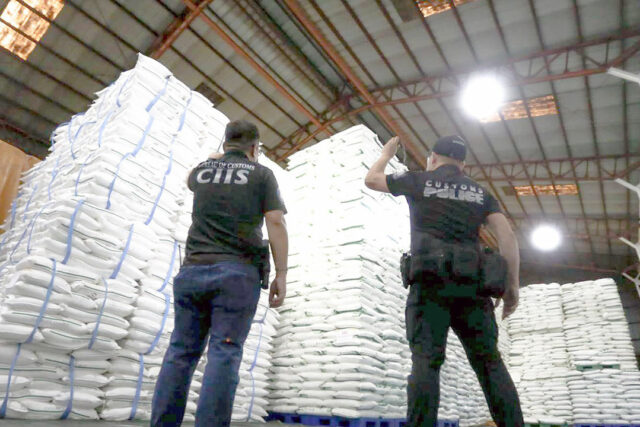
Agents from the Bureau of Customs - Customs Intelligence and Investigation Service inspected a sugar warehouse in Quezon City, Aug. 23, 2022. — COURTESY OF BUREAU OF CUSTOMS

THE BUREAU of Customs (BoC) said on Wednesday that it exceeded its target for a ninth straight month in September, amid improved collection and higher duties on oil.

In a statement, the BoC said September collections hit P79.5 billion, exceeding the target of P61.9 billion by 28.4%. This is the ninth consecutive month it has exceeded its monthly target.

“This shows an increase of P21.9 billion in garnered revenues and a 38.1% collection improvement as compared to September of last year,” the BoC said.

In the January to September period, the BoC collected P638.7 billion, surpassing its collection target for the period by 17.8%.

Year on year, Customs collections increased by 35.9%, as oil prices soared.

As of end-September, the BoC has already collected 88.5% of its P721.5-billion target for this year.

The BoC urged all of its offices and collection districts to sustain its performance throughout the year by taking advantage of its modernization programs and reform initiatives of the Marcos administration.

The BoC is set to implement an online processing payment system via selected banks this month called the Philippine Clearing House Corp. Payment Application Secure System Version 6.0.

Last month, Budget Secretary Amenah F. Pangandaman said that P3.56 billion of the 2023 proposed national budget will be allocated to digital transformation programs of the BoC and the Bureau of Internal Revenue.

The BoC was given a P765.59-billion collection target for 2023, up by 6.11%. — D.G.C.Robles

SMC studies legal options after rate hike denial

SMC Global Power Corp. said it would explore other legal remedies to continue supplying power after the decision of the Energy Regulatory Commission (ERC) to deny its rate hike petition.

In a press release on Wednesday, the power arm of listed conglomerate San Miguel Corp. (SMC) said it would ensure that the energy supply to Manila Electric Co. (Meralco) will not be disrupted.

“We regret the ERC’s denial of our joint petition with Meralco for temporary relief on our 2019 power supply agreements (PSAs),” the company said.

On Monday, the ERC released its order denying the joint temporary rate hike sought by Meralco and SMC for the losses incurred by the latter’s two power plants.

SMC had sought the increase, citing a “change in circumstance” when surging fuel costs breached the price range contemplated during the execution of the PSAs with Meralco.

In a separate release on Tuesday, Meralco said that it would comply with the ERC order and exert all available options to prevent the termination of its PSAs with SMC.

In August, SMC said that its units South Premiere Power Corp. and San Miguel Energy Corp., administrators of the Ilijan and Sual power plants, respectively, had issued notices of PSA termination to Meralco. It said the termination is effective starting Oct. 4 if the temporary relief is not given.

After the ERC ruling, SMC Global Power said the temporary relief would have allowed it to preserve the last remaining fixed-rate PSAs of Meralco that are keeping power rates in Metro Manila low, compared with other parts of the Philippines, amid the volatility of global fuel prices.

“We will never withhold our available power capacity to the detriment of the country and the consumers,” SMC Global Power added.

ERC Chairperson Monalisa C. Dimalanta said on Tuesday that the regulator denied the temporary increase because both Meralco and SMC had not exhausted all available options before filing a rate increase petition.

Ms. Dimalanta added that SMC only submitted an unaudited financial statement to support its claim that its two power plants suffered losses, which the company placed at P15 billion.

She said SMC should follow what is in the PSAs, which set 60 days before it can terminate the supply deal after the receipt of the ERC decision.

“They should follow the contract because the contract itself is the one that set the period, it’s a fixed price financial contract,” she added.

SMC earlier said that the losses, of which it was trying to recover P5 billion through the rate increase, were caused by a “change in circumstance,” including supply disruptions triggered by a coal export ban, Russia’s war on Ukraine, and value chain issues triggered by the pandemic.

Had the ERC approved the petition for temporary relief, SMC said electricity prices in Luzon would go up by only 30 centavos per kilowatt-hour over a period of six months. It previously warned that a denial of the petition might result in a 30% increase in electricity prices.

On Wednesday, shares in SMC rose by P2.35 or 2.43% to close at P99 apiece. — Ashley Erika O. Jose

North Star seeks foreign investors after deferred IPO

NORTH Star Meat Merchants, Inc. is eyeing potential foreign and private equity investors after it deferred its initial public offering (IPO).

“We have more projects in the pipeline. We have so much more to invest in. Our end goal is to provide safe, compliant, and real protein to all Filipinos,” North Star Chief Executive Officer Anthony Ng said in an interview.

In June, the meat retailer deferred its planned P4.5 billion IPO due to market volatility and inflationary pressures.

North Star Chief Financial Officer Jed Tan said: “There are a lot of foreign, private equity interests…we are targeting foreign investors.”

Mr. Ng said that there is no target date for the refiling of the IPO, but that it will definitely push through in the near term. “We hope next year, but we’re not rushing,” he said.

“In my head, it’s a very providential move to defer the IPO at the time. We want to create value for our investors. We see our valuation going up,” he said.

Next year, the firm sees further growth but is keeping its expectations managed.

“Right now, we are targeting flat sales, coming from last year, but the bottom line is that we expect to improve a lot. We’re targeting flat, we’re being conservative,” Mr. Tan said.

The meat retailer announced that it recently inaugurated its solar energy project in Guiguinto, Bulacan with WEnergy Power Pilipinas, Inc.

“As we continue our push for food sufficiency in the country, we remain socially and environmentally conscious of minimizing our carbon footprint, reducing greenhouse gas emissions, and mitigating climate change,” Mr. Ng said.

The firm said that the savings in electricity costs will allow it to focus on its overall operations and live out its commitment to providing an adequate supply of quality meat at affordable prices.

Under the project, the company will utilize 1,846 pieces of monocrystalline solar photovoltaic (PV) panels covering 4,035 square meters.

“This newly launched project is expected to reduce the cost of power consumption and increase the proportion of clean energy in their mix as it is presumed to have 15% reduction in its monthly power expenses and a 23% reduction in carbon footprint,” North Star said.

It added that solar facility translates into an annual savings of 501 metric tons of carbon dioxide- or CO2-equivalent, which is the yearly equivalent of more than 99 million smartphones charged, or at least 26,000 LED lights powered, and planting over 406 hectares of forests.

WEnergy Global also supplied North Star’s main storage system and meat-cutting plant with an 830.7-kilowatt-peak solar PV rooftop.

“We hope that we are able to inspire other enterprises in the years to come into promoting green solutions as it will benefit not only the company but more so the society and the environment,” Mr. Ng said.

North Star, an end-to-end fresh frozen meat retailer, operates in SM Markets, WalterMart, and Alfamart across the Philippines.

Its facilities have a cold storage capacity of 8.09 million kilograms and a capacity to deliver up to 120,000 kilograms of meat daily. — Luisa Maria Jacinta C. Jocson

Ayala logistics firm, FLOW set to build data centers

AYALALAND Logistics Holdings Corp. (ALLHC) and FLOW Digital Infrastructure have agreed to a joint venture that aims to develop and operate carrier-neutral data centers in the country.

“We see long-term strategic value in expanding ALLHC’s product offering and capabilities to meet the rapidly expanding needs of the digital economy,” ALLHC Chief Operating Officer Patrick C. Avila said in a disclosure on Wednesday.

“We view this joint venture as a cornerstone of ALLHC’s growth and we believe this partnership with FLOW will provide the distinct advantage for ALLHC to become the data center provider of choice of global hyperscalers and enterprises in the Philippines,” he added.

ALLHC said the expansion is a step forward to its goal of adding complementary new economy segments to its portfolio.

It added that it “is the latest step in FLOW’s ongoing Asia-Pacific expansion as a platform providing customized solutions to meet the region’s growing demand for digital infrastructure.”

“We are very pleased to be partnered with ALLHC to deliver best-in-class solutions to meet the Philippines’ growing demand for high quality, carrier-neutral data center services,” FLOW Chief Executive Officer Amandine Wang said.

“The Philippines is at a tipping point to embrace the growth of the digital economy where digital infrastructure plays a critical role as the foundation of the information and communications technology industry,” Ms. Wang said.

The agreement allocates the first data center facility in a hyperscale campus designed to provide a total information technology capacity of 36 megawatts (MW), which can expand through a modular deployment.

“The initial roll-out of 6 MW is targeted to be ready-for-service by end of 2024,” ALLHC said.

FLOW operates in the key physical assets of the digital infrastructure ecosystem, including cloud, hyperscale, enterprise data centers, and network and fiber assets across the Asia-Pacific region.

Meanwhile, ALLHC is a subsidiary of Ayala Land, Inc. that engages in leasing industrial parks, warehouses, cold storage facilities, and commercial spaces.

On the stock market on Thursday, ALLHC shares added five centavos or 1.56% to P3.25 apiece. — Justine Irish D. Tabile

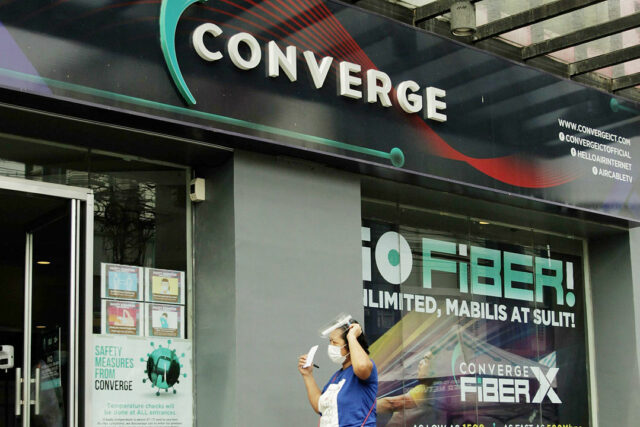
Converge proposes shared underground pipes to reduce costs

CONVERGE ICT Solutions, Inc. said installing underground pipes for telecommunication cables will translate to lower capital costs for internet service providers.

This will “make sure telecommunications infrastructure is already installed whenever new road infrastructure is built,” Converge said in an e-mailed statement on Tuesday.

To attain this goal, “multi-stakeholder coordination among government, information and communications technology players, and utility companies” is necessary, the company added.

The Department of Public Works and Highways (DPWH) is undertaking an underground cable system project in the National Capital Region.

The project involves relocating the overhead utility lines on major roads below ground. This will cover Epifanio de los Santos Avenue, Radial Road 10, and Circumferential Road 5.

According to Converge Chief Operations Officer Jesus C. Romero, the “joint use” mechanism allows the government to install underground pipes for telecommunication cables wherever there is public works construction.

“This can be done in expressways linking parts of the metro together. Submarine cables are expensive. We could do with a lot more diversity and connectivity. This joint use of infrastructure will go a long way,” he said.

“As an internet service provider, we’re willing to pay for our share [of the cost],” he added.

He said the shared use of underground pipes “will translate to lower capital costs” for Converge and “will widen access to the broadband infrastructure, especially to rural communities.”

“In pursuing this policy, cooperation among the national government agencies such as the DPWH, local government units, and private sector operators is critical as the digital infrastructure deployment has to be aligned with public works plans,” Converge also said.

Utility service providers have said they are willing to shift to an underground cable system if the government provides subsidies and if given adequate planning of the infrastructure. — Arjay L. Balinbin

SMC’s Eagle Cement acquisition seen to cut costs

BW FILE PHOTO

SHARES in Eagle Cement Corp. are seen to rise with the planned acquisition of the cement maker by San Miguel Corp. (SMC), which in turn could see its input costs decline after the deal, analysts said on Wednesday.

“The tender offer could possibly prompt Eagle’s stock price to surge during the offer period, and is likely to plunge once it has ended,” Regina Capital Development Corp. Head of Sales Luis A. Limlingan said in a Viber message.

Separately, Rizal Commercial Banking Corp. Chief Economist Michael L. Ricafort said the acquisition is important for SMC to reduce costs in its projects.

“Cement business is an important component to [SMC’s] various infrastructure projects, both ongoing and upcoming. This would help reduce input costs, especially for large infrastructure projects,” he said in a Viber message.

Both analysts said estimates placed the value of the acquisition at around P97.4 billion.

On Wednesday, SMC said that a special board meeting on Oct. 4 authorized the acquisition of 88.5% of Eagle Cement, which manufactures and distributes cement.

Both companies are chaired by Ramon S. Ang, who is also among the selling shareholders in Eagle Cement for P22.02 per share.

Eagle Cement separately said that its controlling stockholder, Ang-led Far East Holdings, Inc., was in discussions with SMC.

SMC said that the acquisition will trigger notification with and clearance from the Philippine Competition Commission (PCC) due to the value involved.

“[It has to be raised to the PCC] due to the large amount of transaction value involved as thresholds have been reduced recently, after being raised during the pandemic,” Mr. Ricafort said.

Last month, the PCC provisionally placed thresholds for mandatory mergers and acquisitions notification at P6.1 billion for the size of a transacting party, and P2.5 billion for the size of the transaction.

As defined by the PCC, size of party is the aggregate value of assets in the country of the ultimate parent entity of one of the parties to a transaction, while size of transaction is the value of assets of the acquired entity and the entities it controls.

“The conglomerate’s P97-billion acquisition for Eagle Cement is part of the business amalgamation of business tycoon [Mr.] Ang,” Mr. Limlingan said.

SMC and Eagle Cement both said that they would make additional disclosures in due time about the acquisition.

On the stock market on Thursday, SMC shares added P2.35 or 2.43% to P99 apiece, while Eagle Cement shares climbed by P3.16 or 20.52% to P18.56 each. — Justine Irish D. Tabile

Tax court partially grants Philex Mining’s refund claim

CTA.JUDICIARY.GOV.PH

THE Court of Tax Appeals (CTA) has granted a P9.6-million refund to Philex Mining Corp. that was part of its original refund claim worth P68.9 million representing its excess value-added tax (VAT) traced to zero-rated sales for 2017.

In a 28-page ruling dated Sept. 29 and made public on Sept. 30, the CTA full court said that of its original claim, the firm could only substantiate P9.6 million through documentary evidence.

“In fine, petitioner (Philex) has sufficiently proven its entitlement to the refund or issuance of a tax credit certificate in the amount of P9.6 million valid VAT attributable to valid zero-rated sales of P56.4 million less the P46.72 already refunded,” according to the ruling penned by Associate Justice Erlinda P. Uy.

Contrary to Philex’s original claim, the CTA noted that the mining company’s zero-rated sales could only amount to P56.42 million.

Under the country’s revenue code, zero-rated sales are transactions made by VAT-registered taxpayers that do not result in any output tax.

The court noted that taxpayers are only required to present VAT invoices to support a refund claim for VAT-registered entities.

“A VAT invoice is required only for domestic purchase of goods and properties, while an import entry or other equivalent document showing actual payment of VAT on the imported goods is required for importation of goods,” it said, citing the Bureau of Internal Revenue’s rules.

On Jan. 31, 2019, the commissioner of internal revenue (CIR) ruled that only P46.72 million of Philex’s original claim would be refunded due to a lack of documentary requirements.

A month after, Philex appealed the case to the CTA, seeking a refund worth 21.5 million after its claim was reduced. The tax court denied the petition due to lack of merit.

“It is clear that Sections 110 and 113 of the National Internal Revenue Code of 1997, as amended, are applicable only to VAT-registered persons and not to foreign sellers who are not subject to Philippine tax laws and are not VAT-registered,” said the tribunal.

These provisions within the country’s revenue code require taxpayers to present VAT invoices to prove creditable input tax subject to a refund. — John Victor D. Ordoñez

Aboitiz unit, EdgeConnex to develop data center platform 

ABOITIZ InfraCapital, Inc. (AIC) has partnered with EdgeConneX to address the rising data usage by developing a data center platform in the country.

AIC, the infrastructure arm of the Aboitiz group, said in a press release on Wednesday that it plans to develop the data center in the National Capital Region. It also targets developing a secondary “hyperscale” campus in the so-called greater Manila area.

It described EdgeConnex as a global provider of full-range sustainable data center solutions.

“Businesses are increasingly turning to cloud service providers — or ‘hyperscalers’ — for cost efficiency, flexibility, and scalability; and thus, the need for data centers has never been more demanding,” Sabin M. Aboitiz, president and chief executive officer of Aboitiz Equity Ventures, Inc. (AEV), said.

Hyperscale data centers are business-critical facilities designed to support robust, scalable applications of cloud service providers, AIC said.

“This is complemented by AIC’s local expertise, assets, and infrastructure portfolio, including its 1,400 hectares of prime industrial real estate and its affiliate AboitizPower’s diversified renewable energy capacity, which the company aims to triple by 2030,” it said.

AIC President and Chief Executive Officer Cosette V. Canilao said the partnership would boost the country’s infrastructure ecosystem and serve the local market demand.

“The Philippines is an underserved market, and is witnessing high data demand growth relative to Southeast Asia. The market size, favorable demographics, and proliferation of subsea cables make the Philippines an ideal destination for data center investments,” Ms. Canilao said.

In 2021, AIC entered the digital infrastructure sector through a joint venture with Unity Digital Infrastructure, Inc.

On Wednesday, shares in AEV closed 1.97% higher to finish at P56.90 apiece. — Ashley Erika O. Jose

Jereme Leung celebrates the harvest

COCONUT Superior Soup under Pastry Crust

Fresh ingredients, even herbs from the Conrad’s garden, made it into a special lunch

THE THEME of celebrity chef Jereme Leung’s return to the Philippines was a majestic harvest, a reason to celebrate amidst the difficulties of the past two years. Mr. Leung’s China Blue at Conrad Manila harvested more than herbs during his visit. Last month, Mr. Leung’s restaurant won the ninth spot in Tripadvisor’s list of Top 10 Fine Dining Restaurants in Asia.

“We are extremely proud as a team. We are mostly grateful for having a very good team here,” he said in an interview with BusinessWorld. (https://www.bworldonline.com/arts-and-leisure/2022/09/29/477214/the-conrads-china-blue-by-jereme-leung-makes-it-to-tripadvisors-top-asian-fine-dining-restaurants-list/).

Mr. Leung had been presented with the Five Star Diamond Award by the American Academy of Hospitality Science in 2000 and 2008.

His celebratory menu with six courses called “Majestic Harvest,” unfortunately, was only available until Sept. 29. However, he guesses that some of the dishes will make it to the restaurant’s main menu.

The meal opened with a combination platter of dim sum, including Marinated King Oyster with Chinese garlic vinegar sauce, Deep-fried Egg White Pillow Spring Roll with sea urchin black garlic, and Pan-fried Shao Hsing Yellow Wine Chicken Pancake with Black Caviar. The King Oyster mushroom and the Yellow Wine Chicken Pancake were rustically luxurious (but then, as in the chicken’s case, that tends to happen when dishes are sprinkled with black caviar).

Next came a crowd favorite, a Coconut Superior Soup Stock with a pork and shrimp dumpling and dried scallops, all baked under a pastry crust. According to Mr. Leung, the soup was double-boiled for two to three hours. “Just use your spoon and dig right through,” he said.

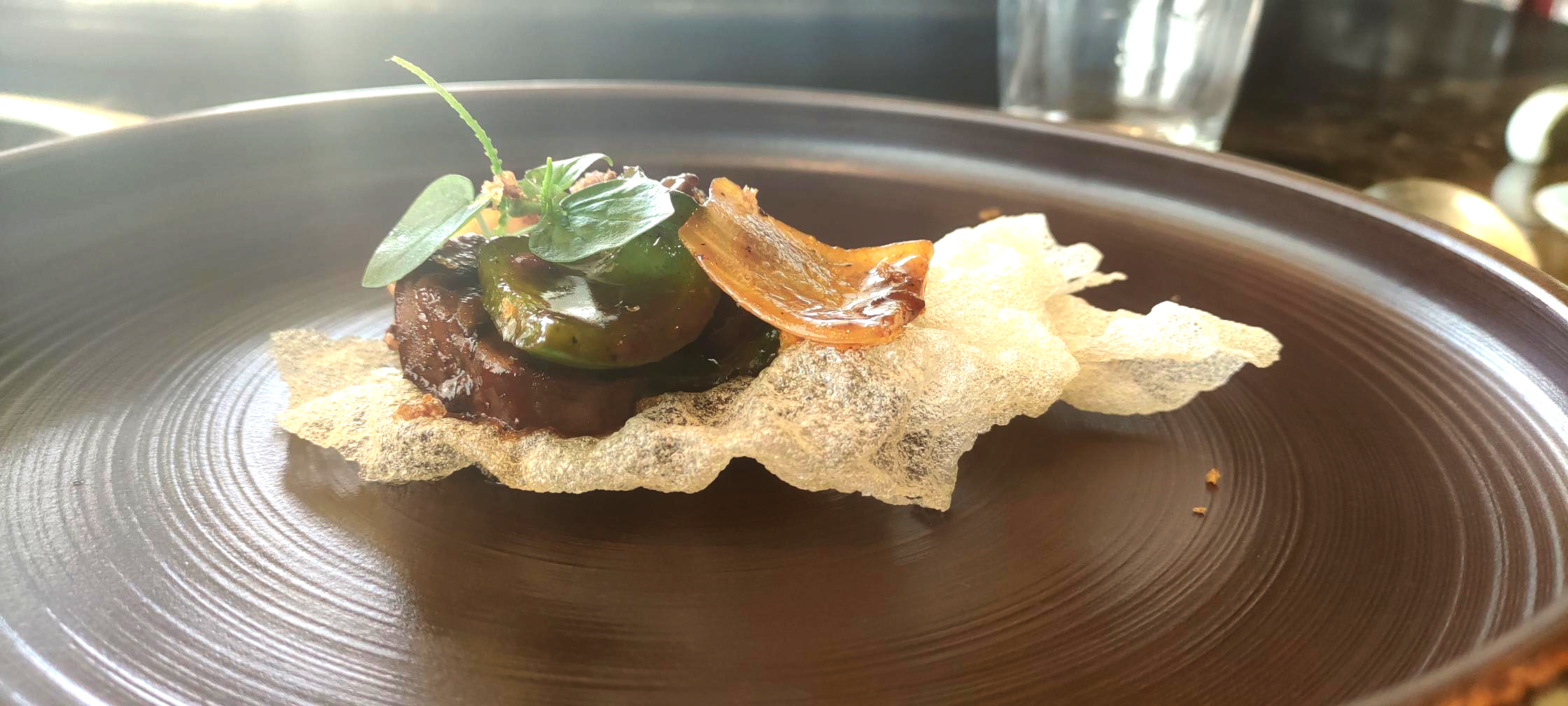
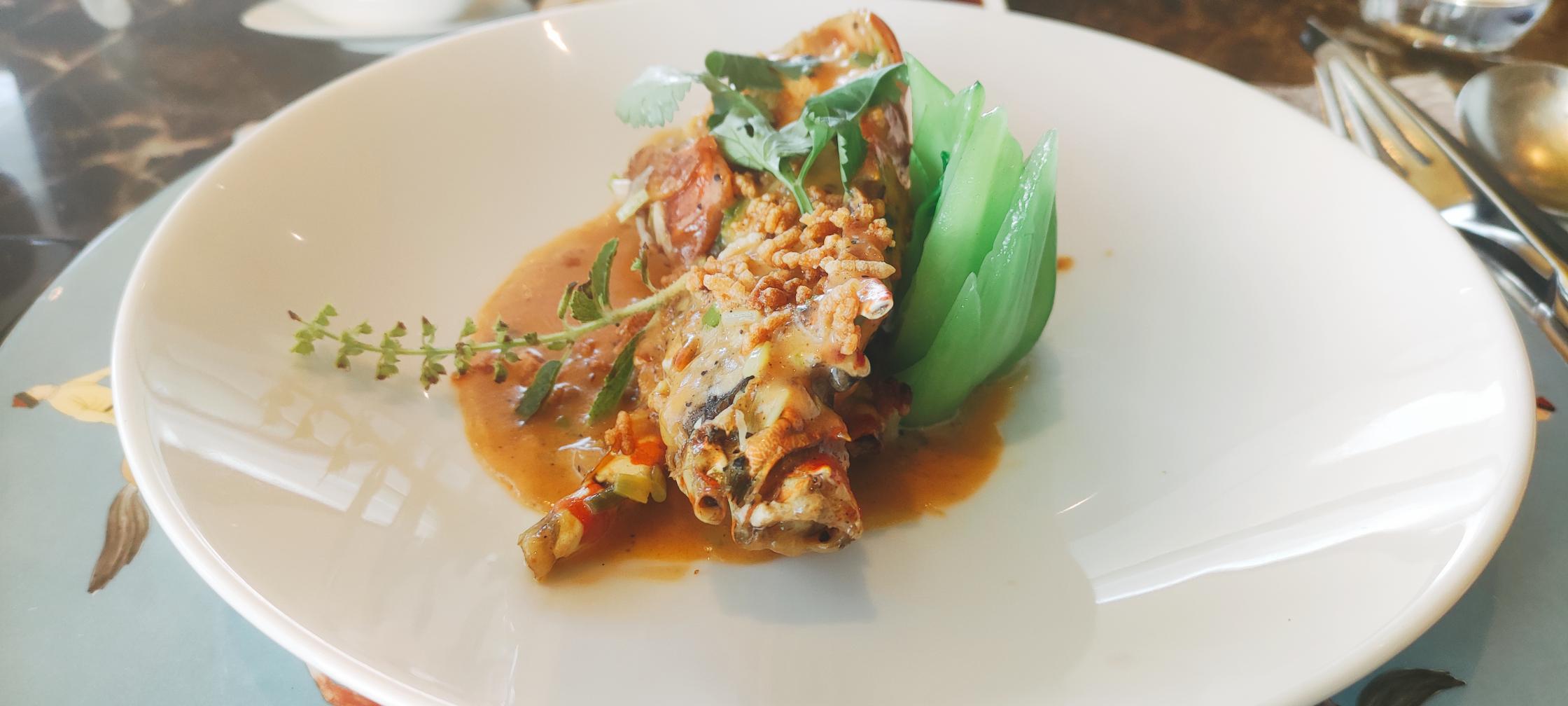
The main courses came in three parts: a Wok-fried Lobster with Mongolian Cream Pepper Sauce and Rice Pops, a Pan-Fried Beef Tenderloin with Crispy Preserved Radish, and Braised White Misua with a Sea Clam Onion-Ginger Sauce with Shrimp Roe. Of these, he was particularly proud of the misua (noodles). The shrimp roe was sun-fried, then powdered, then sprinkled all over the plate. “These are shrimps before they were shrimps,” he said. They contained all the potentiality of shrimp flavor in miniature, imbuing the flavor all throughout the dish. What could have been middling noodles was made extraordinary with the amplified flavor of shrimps. The pan-fried beef tenderloin was another joy, as the radish — with the texture of leather — became surprisingly juicy as it yielded to a closing mouth.

Dessert was a pan-fried Mango Coconut Matcha pancake paired with Peanut Satay Ice Cream. This was a genuine surprise as the ice cream seemed like a simple nut-flavored sweet, but revealed notes of deep spices with every bite. This just might make the cut for the new menu, according to Mr. Leung.

“We came out with this menu based on that thought,” he said about majestic harvests. “We put this menu together with the thought of introducing ingredients that are less commonly used.” One recalls the lemon basil sprinkled on top of the lobster, which had been harvested from the herb gardens of the Conrad Manila. “It would be a waste if we do not utilize the herb garden upstairs,” he said. “We’ve been nipping on it every day.”

“We try to bring different elements into the food without making it too fusion. We still want the tastebuds to [sense] provincial Chinese.” — Joseph L. Garcia

ADVERTISEMENT
ADVERTISEMENT