Home Blog Page 5759

China’s zero-COVID policies save lives — but not livelihoods

REUTERS
A RIDER travels on an empty road after lockdown measures to curb the spread of the coronavirus disease (COVID-19) in Xian, Shaanxi province, China, Dec. 26, 2021 . — CNSPHOTO VIA REUTERS

BEIJING — China’s ultra-strict coronavirus disease 2019 (COVID-19) curbs are taking a toll on businesses and jobseekers as Beijing stresses again and again the need to maintain its zero-tolerance approach to the virus, to save lives, if not livelihoods.

Since 2020, China has reported 5,226 COVID fatalities among its population of 1.4 billion. In contrast, over 1 million people have died of the disease in the United States.

Keeping a lid on China’s COVID death toll has come at a cost to its economy.

Beijinger Cai Xu, 36, has shut four of his five bars in Beijing and Chengdu in three years. Business was disrupted at first by temporary closures to comply with COVID policies. Now, hardly a customer walks through the door.

“Since the epidemic I’ve become anxious, flustered and lost, and then the bars started to close down one by one,” said Mr. Cai, who in 2016 gave up his job as an architect at a state-owned enterprise to open his first establishment.

To offset the drop in walk-in customers, Mr. Cai has started livestreaming music performances at his bar to people quarantined at home, in what has been a surprise hit. For now, that will do, while Mr. Cai finds other ways to keep his remaining bar in Beijing afloat.

In January–March, China’s economy barely grew as authorities battled with the highly transmissible Omicron variant. In April, the urban jobless rate hit 6.1%, its highest since February 2020. In July, unemployment among those aged between 16 and 24 reached a record 19.9%.

Since July, Zheng Mili, 30, has sent hundreds of job applications and done dozens of interviews in Beijing. But the more promising positions are offering just half of what she used to earn.

“One company called me up for an interview, and before I went, told me they had received thousands of applications in one day,” she told Reuters.

“In just one day, a job that offers you 10,000 yuan ($1,390) per month has got thousands of people applying,” Ms. Zheng said in disbelief.

“The job market is so very tough now.” — Reuters

BSP makes case for 75-basis-point rate hike

BW FILE PHOTO

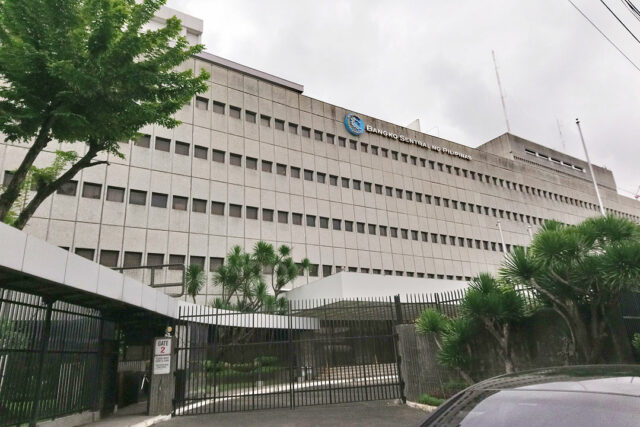
The Philippines will consider another round of outsized interest-rate hike to keep the peso from weakening and feeding into domestic price pressures, central bank Governor Felipe M. Medalla said.

“It’s a question of whether it is 50 or 75 basis points,” Mr. Medalla said in an interview in Washington with Bloomberg Television on Thursday, when asked on the outlook for the next rate meeting. While a 75-basis-point move will ease pressure on the peso and cool inflation, it could impact the economic recovery, he said.

Policymakers in the Philippines, home to Southeast Asia’s worst performing currency this year and among the region’s fastest inflation, are under pressure to halt the peso’s slide and rein in price gains, which risk eroding President Ferdinand R. Marcos, Jr.’s popularity.

The peso dropped more than 13% this year, one of the steepest declines among major Asian currencies. Bangko Sentral ng Pilipinas (BSP) raised the key rate by 225 basis points so far this year, the most in Southeast Asia.

“The argument for not responding point-by-point is that our inflation rate is lower, but the argument for doing something bolder is that the question of the currency also has to be addressed,” Mr. Medalla told Bloomberg Television’s Kathleen Hays and Haidi Lun.

While the central bank may have already done enough as the forecast for inflation is already consistent with the target, “what the Fed does has a very significant effect on what we will do,” he said.

The BSP has been intervening in the currency market to curb excessive volatility and stem the peso’s drop and on Sunday said it may tighten reporting requirements on foreign-exchange transactions. Policymakers are next scheduled to review the key rate on Nov. 17.

“What’s on the table is a combination of using reserves, raising rates, and of course, if possible some form of international cooperation,” Mr. Medalla said. The nation’s foreign-exchange reserves fell to a two-year low of $95 billion in September. — Bloomberg

Japan ready to take ‘appropriate’ action vs yen volatility — finmin

WASHINGTON — Japanese Finance Minister Shunichi Suzuki reiterated the government’s readiness to take “appropriate action” against excessive currency volatility in the wake of the yen’s fall to 32-year lows driven by red hot US inflation data.

“We cannot tolerate excessive volatility driven by speculative moves. We’re watching market developments with a strong sense of urgency,” Mr. Suzuki said in a news conference on Thursday after attending the G20 finance leaders’ meeting in Washington.

“We’d like to take appropriate action against excessive volatility,” he said, when asked whether Japan could intervene in the currency market again to prop up the yen.

The dollar briefly hit a 32-year peak of 147.665 yen after the release of stronger-than-expected US inflation data, before falling below 147 yen. It stood around 147.275 yen in early Asia trade on Friday.

A Ministry of Finance (MoF) official declined to confirm whether the dollar’s drop below 147 could have been due to intervention, telling reporters decisions on whether or not to disclose any Japanese action in the market is taken on a case-by-case basis.

Mr. Suzuki said he did not hold a bilateral meeting with US Treasury Secretary Janet Yellen during his stay in Washington this week, but that Japan was closely communicating with the United States including on market moves.

Japan intervened in the currency market last month to arrest sharp yen falls, driven largely by the policy divergence between aggressive US interest rate hikes and the Bank of Japan’s (BoJ) resolve to keep monetary policy ultra-loose.

Speaking at the same news conference, BoJ Governor Haruhiko Kuroda said it was “inappropriate” to raise interest rates now in light of Japan’s still-weak economy and modest inflation.

“Japan’s economy is emerging from the COVID-19 pandemic’s wounds but the pace of recovery is slow compared with countries like the United States,” Mr. Kuroda said. — Reuters

US extends COVID-19 public health emergency declaration

A woman takes a coronavirus disease test at a pop-up testing site as the Omicron coronavirus variant continues to spread in Manhattan, New York City, U.S., Dec. 27, 2021. — REUTERS
REUTERS

WASHINGTON — The United States on Thursday extended the coronavirus disease 2019 (COVID-19) pandemic’s status as a public health emergency for another 90 days, thereby preserving measures like high payments to hospitals and expanded Medicaid.

The extension was announced by US Health Secretary Xavier Becerra on Thursday. Last month, President Joseph R. Biden, Jr., said in an interview that “the pandemic is over,” which prompted criticism from health experts.

The toll of the COVID-19 pandemic has diminished significantly since early in Mr. Biden’s term when more than 3,000 Americans per day were dying, as enhanced care, medications and vaccinations have become more widely available.

But hundreds of people a day continue to die from the coronavirus in the United States, according to the US Centers for Disease Control and Prevention.

Mr. Biden has asked Congress for $22.4 billion more in funding to prepare for a potential case surge.

Former President Donald J. Trump had declared a national emergency in 2020 to free up $50 billion in federal aid. — Reuters

Lower pork tariffs to be extended

PORK meat products are sold at the Murphy Market in Cubao, Quezon City, Feb. 11, 2021. — PHILIPPINE STAR/ MICHAEL VARCAS

THE MARCOS administration is planning to extend lower tariff rates on key commodities such as pork, corn, rice, and coal to next year, Finance Secretary Benjamin E. Diokno said, as the government seeks to curb rising food inflation.

“[The] economic managers have repeatedly raised the needed measures to address food inflation. In the last Cabinet meeting, a comprehensive set of measures including the extension of EO (executive order) 171 has been put forward by the Department of Finance (DoF), with inputs from across the Cabinet,” Mr. Diokno told reporters in a Viber message on Wednesday.

“Hopefully, the guidance from President [Ferdinand R. Marcos, Jr.] during that meeting will translate to EOs, circulars, and administrative orders soon,” he added.

Mr. Diokno said there is a plan to issue a joint memorandum on EO 171 “for the economic managers to highlight the latest food supply demand assessment and options to anticipate price shocks moving forward.”

In May, President Rodrigo R. Duterte issued EO 171 which extended lower tariffs on pork and rice until end-2022, as well as slashed duties on corn and coal.

Under the EO, tariff rates on pork for in-quota and out-quota shipments were kept at a reduced rate of 15% (from 30%) and 25% (from 40%). Rice tariffs were also kept at a lower rate of 35% for in-quota and 50% for out-quota.

The EO also cut corn tariff rates to 5% for in-quota imports (from 35%) and 15% (from 50%) for out-quota, and temporarily removed the 7% duty on coal imports.

The Foundation for Economic Freedom (FEF) earlier said the Marcos administration should extend EO 171 in order to ensure prices remain stable and to tame inflation. FEF noted that the country continues to face headwinds such as supply chain disruptions, the Russia-Ukraine conflict, and the African Swine Fever outbreak, and recent typhoons.

“It is arguable that conditions have aggravated since the passage of EO 171, with inflation now hovering just short of 7% versus the 4% level back in May 2022,” the FEF said.

“In the backdrop of all of these is a weakening economy and higher interest rate environment, which will cause sluggish economic recovery into at least 2023.”

Headline inflation hit a four-year high of 6.9% in September from 6.3% the previous month and 4.2% last year, driven mostly by the increase in food prices.

Inflation for food rose to 7.7% in the same month from 6.5% in August and 5.2% year on year.

“Although agriculture’s contribution to the gross domestic product (GDP) is only around 10%, the food manufacturing industry depends highly on agriculture for its raw materials,” the FEF added. “Taken together, both agricultural and the food manufacturing industries contribute around a third of our total GDP. In addition, around 50% of our manufacturing sector is agriculture- and food-based.”

PORK IMPORTS
Meanwhile, Philippine pork imports will likely drop in 2023 if the lower tariffs are not extended, according to the United States Department of Agriculture (USDA).

“Despite persistent issues with African Swine Fever, Philippine pork imports are also forecast to decline due to the end of policies favoring imports in 2022,” the report stated.

“The temporary increase in pork quota volumes ended in May 2022 and reduced tariffs were extended through the end of 2022,” it added.

The USDA projected that the Philippines will import 450,000 MT of pork in 2023, lower than its 2022 forecast of 550,000 MT.

From January to September this year, pork imports reached 545,213 MT, according to the latest data from the Bureau of Animal Industry.

In 2021, the country’s total meat imports rose by 30.3% to 1.17 million MT. Of the total, pork imports accounted for 554,698 MT in 2021.

The USDA forecasts local pork production to hit 1 million MT in 2023, slightly higher than its 950,000 MT projection for this year.

The Philippine Statistics Authority reported that hog production in the first quarter was approximately at 418,400 MT. In the second quarter, output was at around 416,720 MT.

The USDA also said that next year’s domestic consumption of pork will remain at 1.45 million MT, the same amount it slated for 2022. — Luisa Maria Jacinta C. Jocson and Diego Gabriel C. Robles

Central bank faces tough balancing act — economists

THE BANGKO Sentral ng Pilipinas (BSP) still has room to raise borrowing costs, but it will be tough to balance growth while ensuring price stability, economists said.

“BSP is fully aware of the need to preserve price stability but it also recognizes that it must never put the horse before the cart. Wielding its double-edged sword of a policy rate will be effective in snuffing out demand side inflation, possibly halving headline inflation, but also at the cost of decimating its own growth story,” ING Bank N.V. Manila Senior Economist Nicholas Antonio T. Mapa said in an e-mail note.

Since May, the Monetary Board has raised interest rates by 225 basis points (bps), as inflation continued to quicken beyond the BSP’s 2-4% target band.

Inflation rose to 6.9% in September, bringing the nine-month average to 5.1%. The BSP expects inflation to average 5.6% this year, before easing to 4.1% in 2023 and 3% in 2024.

BSP Governor Felipe M. Medalla on Wednesday said the central bank’s monetary policy settings “remain accommodative,” pledging to do all that is needed to bring down inflation.

“Real policy rate is still quite low. Achieving a target consistent path of inflation is of paramount concern to us,” Mr. Medalla had said.

Rizal Commercial Banking Corp. Chief Economist Michael L. Ricafort agreed that the policy rate is still considered accommodative and the BSP can further increase borrowing costs to maintain a comfortable rate differential with the US Federal Reserve. 

“It is a delicate balance to sustain the country’s economic recovery from the pandemic when it comes to local policy rate hikes, while also ensuring stable inflation since higher prices reduce economic growth,” Mr. Ricafort said.

“So, it is also important to stabilize both the peso exchange rate (that also contributes to import prices) and overall inflation,” he added. 

The Philippine peso closed at P59 against the dollar on Thursday, weakening by 3.5 centavos from its P58.965 finish on Wednesday. It was the third time the peso closed at its record-low this month.

Year to date, the peso has weakened by 15.68% or P8 from its P51 close on Dec. 31, 2021.

‘STEEP PRICE TO PAY’
Mr. Mapa said the BSP could do a “full-on assault on inflation” but this may come at the cost of thousands of jobs in extreme cases.

“A steep price to pay but at times a cost the BSP may need to bear. Thus, the delicate balancing act to ensure price stability while not unduly harming the employment dynamic, and if so by not that much,” Mr. Mapa said.

“Given the choice between a little more inflation and keeping our jobs may ultimately be more enticing than a situation of a little less inflation but losing our source of livelihood. If BSP is called to deliver price stability on its own, lower prices may be delivered but at steep cost,” he added.

The Philippine economy expanded by 7.4% in the second quarter, bringing the first-half average to 7.8%. Economic managers are targeting 6.5-7.5% gross domestic product (GDP) growth this year.

Asian Institute of Management economist John Paolo R. Rivera said the BSP cannot afford to be as aggressive as the US Fed due to “certain macroeconomic variables” that need to be balanced.

“While there is still room to raise policy rates, BSP should watch out for the lagged effects of recent policy rate hikes,” Mr. Rivera said.

The Monetary Board’s next policy-setting meeting is on Nov. 17.

Reuters reported that minutes of the Fed’s latest policy meeting released on Wednesday showed many officials “emphasized the cost of taking too little action to bring down inflation likely outweighed the cost of taking too much action.”

Several policy makers did stress, however, that it would be important to “calibrate” the pace of further rate hikes to reduce the risk of “significant adverse effects” on the economy.

Fed Governor Michelle Bowman took a hawkish stance in a speech on Wednesday, saying that if high inflation does not start to wane, she will continue to support aggressive rate rises.

Markets lay 90% odds for another 75-bp rate hike in November, versus 10% probability of a half-point bump. — Keisha B. Ta-asan with Reuters

Gov’t budget utilization hits 98% as of end-Sept.

BW FILE PHOTO

GOVERNMENT AGENCIES raised their cash utilization rate to 98% at the end of September, as the economy continued to reopen, the Department of Budget and Management (DBM) reported on Thursday.

The DBM said the National Government, local governments and state-owned firms used 98% of the P3.11 trillion in Notice of Cash Allocation (NCA) issued to them in the first nine months of the year, leaving P52.15 billion unused.

This was an improvement from the year earlier usage rate of 95%, while utilization as of end-August was also at 95%.

NCAs are a quarterly disbursement authority from the DBM issued to agencies, allowing the latter to withdraw funds from the Bureau of the Treasury to support their spending needs.

“Government agencies have been very active in disbursement most likely in the financing of programs and projects since the economy is more open now,” Asian Institute of Management economist John Paolo R. Rivera said in a Viber message, citing expenditures on relief operations after recent typhoons and the continuation of programs from the previous administration such as the “Build, Build, Build” infrastructure program.

Rizal Commercial Banking Corp. Chief Economist Michael L. Ricafort likewise attributed the improved cash utilization rate to the continued reopening of the economy. He noted there are less disruptions this year, compared with the lockdowns and mobility restrictions in 2021.

“Government spending was expedited, especially before the election ban and some elected officials also rushed the completion of some government projects before the elections,” Mr. Ricafort said in a Viber message.

A ban on public works was implemented from March 25 to May 8, in an effort to prevent politicians from using state resources for their election campaign. The national election was held on May 9.

According to the DBM, line departments used 98% or P2.1 trillion of their NCAs in the nine months, leaving P51.63 billion unused.

The departments of Foreign Affairs, Health, Interior and Local Government, National Defense, Transportation, as well as the Judiciary, the Civil Service Commission, the Commission on Audit, the Office of the Ombudsman, and the Commission on Human Rights recorded the highest budget usage rates at 100%.

Meanwhile, the Department of Information and Communications Technology posted the lowest rate of 67%.

Budgetary support to government-owned companies as well as allotments to local government units were 100% used in the nine-month period, out of P965.26-billion NCAs issued.

The DBM had released 99.7% of this year’s P5.01-trillion spending plan as of September, leaving P12.76 billion for the remainder of the year.

In the same period last year, the DBM had released P4.35 trillion or 96.5% of that year’s P4.51-trillion budget. — Diego Gabriel C. Robles

Three leading men with three talents in three concerts

IN theater, a “triple threat” is a performer who is skilled in three important skills: singing, dancing, and acting. Three tenors who are considered triple threats are the featured performers in Cultural Center of the Philippines’ appropriately named concert series Triple Threats.

The performances will be held at the Cultural Center’s Tanghalang Ignacio Gimenez (Black Box Theater) from October to December.

The Triple Threats series is composed of solo concerts with music, featuring songs personally selected by the artists from their vast repertoire of favorites. Dubbed as a series of “concept concerts,” the narrative of the performance is dictated by the song choices.  It is a rare opportunity for the audience to see a different facet of the featured artist. In previous years, the series, which kicked off in 2013, saw performances by theater stalwarts such as Menchu Lauchengo-Yulo, Audie Gemora, Nonie Buencamino, Sheila Francisco, Michael Williams, and Bituin Escalante.

“It began with the premise of someone who can sing act and dance,” said Ariel Yonzon, Associate Artistic Director of the Cultural Center’s Production and Exhibition Department, at a press conference on Oct. 11. “Not only do they come in a package of three talents, or gifts, they also come in threes.”

MARKKI STROEM
This year’s lineup features theater artists Markki Stroem, Arman Ferrer, and Poppert Bernadas.

Kicking off this year’s series on Oct. 14 is Markki Stroem with a show titled Leading.

Mr. Stroem was a finalist on ABS-CBN’s show Pilipinas Got Talent Season 1 and has nine theater credits under his belt, including playing the one of the leads, Christian, in the recent restaging of Mula Sa Buwan, and Joe Pitt in Angels in America. He has also performed the roles of Tommy Ross in Carrie: The Musical, Shane Gray in Camp Rock, Henry in Next To Normal.

Aside from theater, he is also a familiar face on television as he is in the cast of the variety show, ASAP’s Boys R Boys (BRB) and where his group won Most Promising Male Group in the Guillermo Mendoza Box Office Awards.  For his work in the 2012 Cinema One Originals film Slumber Party, Stroem was nominated as Best Actor (Cinema 1 Originals Awards), Best Breakthrough Performance by an Actor (Golden Screen Awards), Best Breakthrough Actor (Gawad Tangi), and New Movie Actor of the Year (PMPC Star Awards for Movies). He has also produced and directed music videos for artists Rachelle Ann Go, Christian Bautista, and Noel Cabangon.

His first album, Thousands of Pieces topped the Astroplus top-selling album charts in 2012.

Like so many things, the concert was belayed by the COVID-19 pandemic — “2020 was supposed to be when we were supposed to do the show. Because of what happened, we had more time to prepare for this concert,” Mr. Stroem said.

“I already had so many things brewing in my mind. So when I found out during the last week of rehearsals of Mula sa Buwan that I was going to be doing the show. I already knew what I needed to do for this show,” he said.

Act 1 of tonight’s concert consist of his band arrangements and song compositions; Act 2 will feature one song from each musical production he has starred in; and Act 3 will feature special guests.

ARMAN FERRER
The second concert in the Triple Threats series, titled All of Me, features operatic tenor Arman Ferrer.

Directed by Floy Quintos and Noel Ferrer, the show on Nov. 18 includes classical music, songs from musicals, songs of inspiration, and songs about our country.

Arman Ferrar was 21 years old, an operatic tenor, and had no acting experience when he went to his first audition for the zarzuela, Walang Sugat at Ateneo, bagging the lead role of Tenyong in 2010.

He has since appeared in The Best of Opera at Resorts World Manila, 9Works’ A Christmas Carol, Tanghalang Pilipino’s Mabining Mandirigma, and two original musicals by director Joel Lamangan — Maynila: Sa Mga Kuko ng Liwanag and Binondo: A Tsinoy Musical, where he received great reviews.  In 2021, he got the title role in Lapu Lapu, Ang Datu ng Mactan, directed by Dexter Santos and the first production staged at the newly renovated Metropolitan Theater.

More than acknowledging his vocal abilities, Mr. Ferrer is now focused on the impact he exhibits through his performance.

Ang hinahanap ko na ngayon is after the show or after the singing, and music, is hindiyung boses ko ang mapapansin kundi ano yung binigay ko as an artist… (What I look for now after the show or after the singing, and the music, is not the attention given to my voice but what I am able to give as an artist),” he said.

“It’s more than the music, lyrics,” he added. “Dapat makuha nila yung gusto mong sabihin (The audience has to understand the message you are trying to get across).”

POPPERT BERNADAS
Closing the series on Dec. 21 is Poppert Bernadas, with his show titled Musika, ang Teatro at Ako.

Mr. Bernadas was an original member of the vocal group the Ryan Cayabyab Singers or RCS since 2007.

In 2014, he was cast as Kenny in longest-running Filipino musical, PETA’s Rak of Aegis. He has been a part of other productions such as Magsimula Ka!, LORENZO the Musical, Ang Huling Lagda ni Apolinario Mabini, and Godspell. Last year, he became part of a management called Ateam, headed by singer-songwriter Ogie Alcasid.

Mr. Bernadas’ show will be an ode to his mentors: National Artist for Music Ryan Cayabyab, Mr. Alcasid, and Robert and Isay Seña, his co-performers in Rak of Aegis.

“Expect [the show] to have 85 to 95% OPM material,” he said, referring to Original Pilipino Music.

The three concerts begin at 7:30 p.m. at the Tanghalang Ignacio Gimenez at the Cultural Center of the Philippines complex. Visit the CCP’s official website (https://culturalcenter.gov.ph) and Facebook page (http://(www.facebook.com/culturalcenterofthephilippines)(www.facebook.com/culturalcenterofthephilippines) for more information about the series. — Michelle Anne P. Soliman


Precious Paula Nicole named first PHL Drag Race Superstar

SCREENSHOT FROM DISCOVERYPLUS.COM

AFTER two months of challenging photoshoots, creative runaway looks, and lip-sync battles, the first season of Drag Race Philippines has crowned Precious Paula Nicole as the Philippines’ first-ever Drag Race Superstar.

Precious Paula Nicole bested fellow queens Marina Summers, Xilhouette, and Eva Le Queen who were finalists.

Dahil isa ako sa mga matagal na sa industriya, napaka-laking bagay dahil ni-represent ko ’yung mga seniors namin na mga naunang queens (Since I have been in the industry for a long time, it’s a big deal to represent our seniors who were the first queens),” said Precious Paula Nicole who has been performing drag for 12 years, during the reenactment of her crowning at the Drag Philippines Finale viewing party at The Cove in Okada Manila on Oct. 12.

“Life is precious and so are we. Let’s continue to inspire and let’s continue to love,” she added.

Precious Paula Nicole is member of the drag group Divine Divas. A regular performer at the O Bar, she is a professional dancer and is also known for her comedy shtick and impersonation of singers such as Mariah Carey, Beyoncé, and Regine Velasquez. In the Drag Race competition, her Regine Velasquez-Alcasid performance garnered praise from the actual singer who was a guest judge in the show.

During the show’s 8th episode where contestants had to transform relatives and friends, Precious Paula Nicole transformed her youngest brother into a drag queen.

Drag Race Philippines’ first season premiered on Aug. 17 featuring 12 Filipino drag artists competing for the crown.

The final episode began with a performance from the previously eliminated queens and Drag Race Philippines host Paolo Ballesteros. It was followed by two fashion shows with the themes “Bangga Ka Day” and “Indigenous Extravaganza.”

The title of Miss Congeniality was awarded to Lady Morgana before the final four showdowns.

The Top 4 competing queens performed final lip sync battles of Drag Race founder Ru Paul’s songs “Sissy That Walk” and “Call Me Mother,” until it came down to Precious Paula Nicole and Marina Summers who performed Gloc-9’s Sirena.

Along with the title, Precious Paula Nicole won a one-year supply of ONE/SIZE beauty cosmetics by Patrick Starr, and P1 million.

Fans can rewatch all episodes of the first season of Drag Race Philippines on discovery+, HBO Go, and WOW Presents Plus. — Michelle Anne P. Soliman

Disney pushes back several Marvel movie release dates

WALT DISNEY Co. announced on Tuesday that it will be pushing back the release dates for numerous upcoming Marvel films including Blade, Fantastic Four, and Avengers: Secret Wars.

Following Blade director Bassam Tariq’s departure from the project in September due to scheduling conflicts, Marvel has decided to temporarily shut down production of the film to search for a new director. Blade is now slated to premiere on Sept. 6, 2024 instead of Nov. 3, 2023, which has impacted the rest of the studios’ production scheduling.

Deadpool 3 has moved from Sept. 6, 2024 to Nov. 8, 2024; Fantastic Four has been shifted from Nov. 8, 2024 to Feb. 14, 2025; an untitled Marvel project was moved from Feb. 14, 2025 to Nov. 7, 2025; Avengers: Secret Wars has been pushed from Nov. 7, 2025 to May 1, 2026; and an untitled Marvel movie went from May 1, 2026 to no longer being on Disney’s release schedule.

A source familiar with the studio’s plans told Reuters that Marvel is using the Blade production break to find a replacement for Tariq to work with Moon Knight writer Beau DeMayo, who’s the main screenwriter for Blade.

An unnamed source with authority on the film starring Oscar winner Mahershala Ali told The Hollywood Reporter that “They want to get it right,” which subsequently means delays.

The Marvel Blade character who first appeared in comic book The Tomb of Dracula, written by Marv Wolfman in 1973 eventually had his own storyline that was later adapted into the Wesley Snipes film trilogy which includes Blade, Blade II, and Blade Trinity.

Throughout the Marvel Cinematic Multiverse, stories have been intertwined and a significant delay from one film often impacts the slate for others. A similar postponement was made for the film Doctor Strange in the Multiverse of Madness due to the pandemic and led to Thor: Love and Thunder and Black Panther: Wakanda Forever being pushed back as well. — Reuters

DITO: Discussion with PLDT on P430-million demand ongoing

DITO CME Holdings Corp. on Thursday said its telecommunications subsidiary DITO Telecommunity Corp. is currently in talks with PLDT, Inc. about the latter’s P430-million demand.

“In connection with the reported demand letter that was sent by PLDT to our subsidiary, DITO Telecommunity, DITO Telecommunity believes that there is no material breach,” DITO CME said in a disclosure to the stock exchange.

“It will also ensure that the company will thresh out and exhaust all available remedies. The issue is currently being discussed by both DITO Telecommunity and PLDT,” it added.

On Oct. 7, the Pangilinan-led PLDT said it had served DITO with a notice of material breach and demand for payment “as a result of its refusal to pay the amount of P429.73 million for contracted services which PLDT has fully performed and delivered, relating to the building and provisioning of transmission facilities that DITO required and is using for the delivery of telecommunication services.”

For its part, DITO said it was “compelled to enter into an agreement” with PLDT for the provisioning of the transmission facilities to allow DITO to interconnect with the subscribers of PLDT’s Smart Communications, Inc. “for the purpose of supporting the parties’ obligations under their interconnection agreement.”

The third telco player said Smart’s refusal to augment DITO’s capacity to interconnect with the latter’s subscribers “has to no small degree compromised DITO-Smart voice traffic, adding to the underutilization of the initial bandwidth capacity provided by Smart to DITO.”

“DITO, in a series of letters to PLDT and prior to the delivery of the subject transmission facilities, informed the latter that the same are no longer needed,” it added.

According to PLDT, its demand has nothing to do with the interconnection capacity issue.

“PLDT understands that [Smart Communications] is unable to give DITO any additional bandwidth until DITO agrees to compensate Smart for illegal overseas call traffic that is coming from DITO and which defrauds Smart and the government of legitimate income,” PLDT said in a separate statement.

“This has nothing to do with DITO’s refusal to pay an overdue obligation to PLDT for transmission facilities that DITO has asked PLDT to build and which DITO has leased from PLDT and which, to repeat, DITO continues to use,” it added.

Hastings Holdings, Inc., a unit of PLDT Beneficial Trust Fund subsidiary MediaQuest Holdings, Inc., has a stake in BusinessWorld through the Philippine Star Group, which it controls. — Arjay L. Balinbin

AboitizPower, partner to build 90-MW wind project in Bicol

ANNA JIMÉNEZ CALAF-UNSPLASH

ABOITIZ Power Corp. and Mainstream Renewable Power are planning to build a 90-megawatt (MW) onshore wind project in Libmanan, Camarines Sur.

In a media release, AboitizPower, through its subsidiary Aboitiz Renewables, Inc. (ARI), signed a joint venture agreement with Mainstream for the development of the wind project in the Bicol Region.

“This joint venture marks AboitizPower’s first foray into wind energy and underscores our aspiration to be a strong renewable energy partner,” Emmanuel V. Rubio, president and chief executive officer of AboitizPower, said in a media release on Thursday.

AboitizPower is targeting to grow its portfolio to 4,600 MW of sustainably sourced energy by 2030. To date, the power company said it owns, together with its partners, a total net sellable capacity of 1,248 MW.

It said that with its partners, the total net sellable capacity of the group is 5,322 MW, with an energy mix of 23% Cleanergy and 77% thermal energy. Cleanergy is the company’s renewables brand.

“This is the beginning of an exciting new era for AboitizPower and [Aboitiz Renewables], as we take a key step towards our 10-year strategy of growing our renewable energy capacity and striking a 50:50 balance between our renewable and thermal portfolios,” said James Arnold D. Villaroman, Aboitiz Renewables’ president and chief executive officer.

Aboitiz Power said the joint venture is awaiting regulatory approvals. It said that the deal will be delivered through an investment agreement for Aboitiz Renewables’ proposed acquisition of a 60% stake in the Libmanan onshore wind project, which was being developed by Mainstream since 2017.

Under the Philippine Energy Plan, the country is targeting to increase renewable energy in its energy mix to 35% by 2030, and 50% by 2040.

Mary Quaney, chief executive officer of Mainstream, said that the Philippines is one of the company’s priority countries.

“We are committed to working in partnership with AboitizPower to support the country’s ambitious and commendable target to cut its greenhouse gas emissions (GHG) by 75% by 2030,” she said.

The Department of Environment and Natural Resources said that the Philippines has committed to the United Nations to cut GHG emissions by 75% between 2020 and 2030. — Ashley Erika O. Jose

ADVERTISEMENT
ADVERTISEMENT