Home Blog Page 575

The Bistro Group, going loca(l)

THE RETURN of Krazy Garlik under The Bistro Group’s portfolio signifies Bistro’s respect for local culture and its motivation to do more in the local scene (as opposed to their forte, bringing in international franchises).

It’s a comeback concept, having first opened in 2014, patterned after a Korean concept that worshipped the flavor (albeit a bit toned down for Filipino palates), which then closed in 2018.

Lisa Ronquillo-Along, chief marketing officer for The Bistro Group, speaking to BusinessWorld during the Krazy Garlik opening at the SM Mall of Asia on Dec. 4, gave us a list of their local concepts, which is about to get longer. There’s Krazy Garlik (the SM Mall of Asia branch is their second after opening in One Ayala this year), Siklab, Las Flores, and Rumba; not to mention the restaurants by their corporate executive chef, Josh Boutwood. One of them, Helm, was the country’s first two Michelin-starred restaurant, awarded earlier this year.

Siklab is also a comeback concept, sharing the 2014 timeline with Krazy Garlik. It reopened last year in Shangri-La Plaza Mall and is set to open nine branches next year (including in Visayas and Mindanao), according to Ms. Ron-quillo-Along. Krazy Garlik might follow in the same lines, because it is “very scalable.”

We had a taste of their tangy 40 Kloves Chicken (the taste is akin to a very flavorful adobo), and the Adobomb Rice with pork adobo flakes, as well as the Hara Kiri Rice (garlic, bell pepper, shrimp, squid, bacon, red chili, teriyaki sauce, and tobiko). While we were warned that the Hara Kiri rice would be a spicy challenge, it was mostly an easy ride (for us).

“We’ve always wanted to have homegrown brands, local concepts,” said Ms. Ronquillo-Along. “We’ve tried in the past.

“There were some challenges because we were so used to these structural, corporate franchise(s),” she said. “We wanted to be everything… maraming (there was lots of) trial-and-error.”

For starters, she mentioned improving interiors and streamlining menus: “If you want to attract the new generation now, it has to resonate with them.”

She also discussed the difference between developing their international franchises and these homegrown brands. To date, The Bistro Group holds the franchises for TGI Friday’s, Olive Garden, Dave & Buster’s, Fogo de Chao, and Longhorn Steakhouse; among others. They have 30 concepts under their belt, and 218 restaurants around the Philippines. They have an upcoming Korean dessert franchise (slated to open this week, but a media tasting has been postponed).

“With franchises, we have the international (support), so we can’t really just move freely,” she said. “They’re flexible, (but) you have to work with them.

“With the homegrown brands, we’re free to make mistakes, develop something new, innovate. We’re free to do that,” she said.

Earlier this year, the Chen-led Inoza Business Holdings, Inc., an affiliate of Progeny Global Holdings (the operators of the Bounty Fresh brand) announced they had acquired a major stake in The Bistro Group (more details can be found here: https://tinyurl.com/2k5968mj). Of the new ownership, Ms. Ronquillo-Along said, “They want the homegrown brands to take lead in development — hand-in-hand with ours,” she said. “We have their support, and be-cause they’re already in the food business, they understand it.”

Krazy Garlik is located at SM Mall of Asia, Level 2, Entertainment Mall. — Joseph L. Garcia

Ovialand targets almost double profit growth

OVIALAND.COM

REAL ESTATE developer Ovialand, Inc. expects near-double growth in its net income this year, on the back of strong demand for its premium-affordable housing projects across Luzon, a company official said.

“Despite heavy rains, supply challenges, and a very active construction year, we continue to build and deliver,” Ovialand Investor Relations and Compliance Officer Monica Ann V. Mendoza said during an event on Wednesday.

The company reported a net income of P507 million last year, she said.

Across its Luzon portfolios, Ovialand constructed 770 new housing units and turned over 645 units this year.

“Right now, we’re really focusing on our existing areas in Luzon because there is still a lot of room to grow,” Ovialand President and Chief Executive Officer Pammy Olivares-Vital told reporters on the sidelines of the event.

Anara, the company’s latest project in Bulacan, will have 310 house-and-lot units, with turnover scheduled by the third quarter of 2026.

“We want to be the most trusted homebuilder in the Philippines, and trust is built on consistency, transparency, and aligning with the right people,” Ms. Vital added.

In the first half of the year, Ovialand’s consolidated net income rose 37% to P420 million, while revenues increased 20% to P1.1 billion.

Ovialand’s current housing portfolio includes Seriya and Anara in Baliwag, Bulacan; Caliya in Candelaria, Quezon; Terrazza in Santo Tomas, Batangas; and Santevi, Savana, and Sannera in San Pablo, Laguna. — Beatriz Marie D. Cruz

SM Prime reached 100-MWp rooftop solar target, DoE says

SM CITY FAIRVIEW’S ROOFTOP solar photovoltaic system. — SMPRIME.COM

SM PRIME HOLDINGS, Inc. has installed 100 megawatt-peak (MWp) of solar panels on its properties, meeting its target, the Department of Energy (DoE) said.

The Sy-led property developer has deployed rooftop solar photovoltaic (PV) systems in 59 of its properties, using about 200,000 solar modules across 65 hectares of rooftop area, the DoE said in a statement on Wednesday.

The Energy department said the initiative shows how private companies can support the country’s shift toward a low-carbon and climate-resilient energy system.

“Every megawatt of clean energy that comes online helps reduce our reliance on imported fuel, shields consumers from volatile energy prices, and strengthens our long-term climate commitments,” Energy Secretary Sharon S. Garin, who attended the switch-on ceremony, said.

According to the DoE, SM Prime’s rooftop solar installations help cut emissions and reduce grid consumption while improving comfort and boosting energy resilience.

“We encourage more companies to follow this example and invest in renewable energy and energy efficiency solutions,” Ms. Garin added.

In July, SM Prime switched on what the DoE described as the country’s largest rooftop solar PV system on a commercial building at SM City Fairview.

SM Prime currently operates 88 shopping malls in the Philippines and eight in China. — Sheldeen Joy Talavera

A chicken-beer alliance

WHILE Korean fried chicken is fast becoming a staple for Filipinos, we haven’t completely embraced the culture of chimaek (a portmanteau of the Korean words for “fried chicken” and “beer”), a combination that began to gain popularity in South Korea in the 1970s.

Enter Daily Beer, one of South Korea’s leading fried chicken brands which elevates the concept with craft beers, flown in from South Korea. It opened its first branch in the Philippines in Pasig’s Arcovia City on Nov. 30, with a media preview the day before on Nov. 29.

“Everywhere in the world, there’s a lot of fried chicken, and there’s a lot of beer. But most fried chicken places use commercial, mass-produced, generic beer, which is not considering the food pairing at all,” said Sang Jin Lim, the chief executive officer of Daily Beer Co., Ltd. (which first opened in 2014), speaking through Jay Lim, Business Development Division/Global Business Manager Daily Beer Co., Ltd.

“We specifically make beers for the fried chicken we have,” said Mr. Lim. “It’s perfectly tailored for our dishes.”

There are four varieties of chicken at the restaurant: Original, Red (spicy sauce), Black (sweet garlic soy sauce), and Crunch (garlic and sweet and spicy seasoning). They also have other Korean dishes: gimbap, tteokbok-ki, and the sweet-and-sour chicken gangjeong; among others. Matching the dishes are the five craft beers they have on tap: K-Red Lager, K-Seoul Weizen, K-Daily Pale Ale, K-Super Fresh Hazy IPA, and K-Ginseng Lager, which was specifically developed for the Philippines. “We have the capacity to create new beers for the local market,” said Mr. Lim.

We tried out the K-Ginseng beer (woody and with a wet, herby taste; excellent), and all the chicken flavors. We will say that the experience becomes sublime with the beer (and our beer choice was perfect with the Black flavor).

According to Daily Beer’s website, they had 402 stores as of 2024, with a bulk of them in South Korea; but they also have a presence in Bangkok, and Singapore.

“We’re the only company that’s growing two-digit numbers, every year for 12 years straight. Never any kind of decline,” said Mr. Lim. Their website said that they have enjoyed 39.4% growth from 2022 to 2024.

It was in Singapore where Kirkland Whang, chairman of Opulence Prime Ventures, Inc., which brought the concept to the Philippines, first tried Daily Beer. Opulence Prime Ventures is in real estate, online retail, and even mattresses.

“The first time we tried Daily Beer in Singapore, we immediately knew that the taste of the chicken is unique, together with the beer selection they have,” he said. “I know that our culture here will love that taste,” said Mr. Whang.

The senior Mr. Lim said that he liked the original flavor with the Red Lager, while Mr. Whang likes the original, and varies his beer choices depending on his mood. The junior Mr. Lim said, “I like the IPA personally. I don’t mind what I eat with the IPA. The fragrance, the aroma, is really strong.”

According to Mr. Whang, they’re on track to open a second branch in SM Fairview this month, and another in Makati next year. — Joseph L. Garcia

From quake to typhoons: DigiPlus Foundation mobilizes P8 million in disaster relief across the Philippines

Helping hand in Bulacan: DigiPlus Foundation’s Program Manager Paul Tamayo leads the distribution of relief goods to families in Bulacan displaced by Typhoon Uwan, ensuring aid reaches those needing to rebuild.

In the wake of the Northern Cebu earthquake and the successive onslaught of Typhoons Tino and Uwan, DigiPlus Foundation, formerly known as BingoPlus Foundation and the social development arm of DigiPlus Interactive Corp., has mobilized a total of P8 million worth of disaster relief to help nearly 70,000 Filipinos rebuild their lives across Visayas and other severely-affected provinces in Luzon through its “BayanihanPlus” Community Resilience Program.

The Foundation reached an estimated 56,000 individuals affected by the magnitude 6.9 earthquake in Northern Cebu. Relief operations covered six hard-hit locations: Bogo, Daanbantayan, Medellin, San Remigio, Tabogon, and Borbon, where families faced damaged homes, disrupted livelihoods, and recurring aftershocks.

Following the devastating earthquakes, the DigiPlus Foundation rapidly expanded its nationwide relief operations to address the severe impacts of Typhoons Tino and Uwan, which brought heavy rains, floods, and landslides to Cebu and strong winds and widespread flooding to Luzon. The Foundation quickly coordinated with local government units to deliver essential aid to an estimated 14,350 affected individuals across targeted communities in Luzon, including Hagonoy, Bulacan; Cabanatuan City, Nueva Ecija; Dumaguete City and Bacolod City in Negros Island; and San Fabian, Pangasinan, as well as several barangays in Cebu City, reinforcing its sustained commitment to immediate disaster response and fostering community resilience throughout the Philippines.

“The scale of devastation from the recent Typhoons Tino and Uwan demands an even greater collective response to deliver hope to affected communities,” said Angela Camins-Wieneke, executive director of DigiPlus Foundation. “With affected areas spanning from Cebu to Bulacan, Nueva Ecija, and Pangasinan, we call on more partners to join our efforts. Working with our BingoPlus store volunteers and partners on the ground, we have already mobilized around P8 million in relief, but to truly help communities rebuild their lives, we need more support.”

Upholding the organization’s nationwide commitment to disaster resilience, Michael Linatoc, regional manager for Luzon, emphasized the readiness of his team to mobilize for immediate rehabilitation efforts. Mr. Linatoc highlighted the inspiring dedication of the workforce in the Luzon as a benchmark for service, noting, “I witnessed the heroic efforts of our colleagues in the Visayas, and I am proud to see how our Luzon team mirrored this spirit in the areas of Pangasinan and Nueva Ecija to respond to the needs of affected communities,” and assured the public that this spirit of solidarity extends northward. He confirmed that, likewise, branches in Luzon are fully prepared and eager to support the recovery of Filipinos devastated by the calamities, standing united with the rest of the nation in the mission to rebuild lives and livelihoods.

DigiPlus Foundation will continue working with local governments, partners, and its nationwide network of BingoPlus stores to support affected communities, from immediate relief to long-term recovery and resilience, staying true to its mission to multiply the good for Filipinos across the country.


Spotlight is BusinessWorld’s sponsored section that allows advertisers to amplify their brand and connect with BusinessWorld’s audience by publishing their stories on the BusinessWorld Web site. For more information, send an email to online@bworldonline.com.

Join us on Viber at https://bit.ly/3hv6bLA to get more updates and subscribe to BusinessWorld’s titles and get exclusive content through www.bworld-x.com.

Bohol’s asin tibuok inscribed in UNESCO

Intangible Cultural Heritage list

facebook.com/boholislandgeoparkph.tif

THE BOHOLANO artisanal salt making tradition joins Philippine chants, epics, and weaving onto the Intangible Cultural Heritage (ICH) List of the United Nations Educational, Scientific, and Cultural Organization (UNESCO).

Asin tibuok was officially inscribed on Dec. 9 during the 20th Session of the Intergovernmental Committee for the Safeguarding of the Intangible Cultural Heritage in New Delhi, India.

“The UNESCO-Philippine National Commission (UNACOM) congratulates the Boholano community on the inscription of the practice of making asin tibuok, the artisanal sea salt of the Boholano of Bohol Island, Philippines to the UNESCO List of Intangible Cultural Heritage in Need of Urgent Safeguarding,” said UNACOM in a Facebook post.

Asin tibuok is the first Philippine traditional food process to be included in a UNESCO ICH list.

UNACOM further explained that “the Urgent Safeguarding List includes intangible cultural heritage elements identified by communities and States Parties as needing immediate support, enabling international cooperation and assistance to help ensure their continued survival.”

According to UNESCO, “‘intangible cultural heritage’ refers to living practices — traditions, skills, rituals, music, crafts and social customs that communities pass on from one generation to the next. “Through its lists, UNESCO works with governments and communities to promote these traditions, strengthen transmission and mobilize support to ensure their survival, particularly where they are threatened by social, economic or environmental change.”

Asin tibuok is made by family-owned workshops and enterprises in the town of Alburquerque in Bohol. Often described as a dinosaur egg, the making of asin tibuok involves a lengthy process that includes soaking gathered coconut husks in seawater, cutting the husks, drying, burning, collecting the ash-salt mixture, collecting the produced brine, and cooking it in clay pots.

Asin tibuok joins six other traditions that have been inscribed on UNESCO’s Heritage lists including the hudhud chants of the Ifugao (2008), the Darangen epic of the Meranaw people of Lake Lanao (2008), the Punnuk tugging game of the Ifugao (2015), and Aklan piña handloom weaving (2023) all of which are on the List of the Intangible Cultural Heritage of Humanity; the Subanen ritual buklog (2019) in the Urgent Safeguarding List; and the School of Living Traditions (2021) in the Register of Good Safeguarding Practices.

Also inscribed on this year’s list were: India’s festival of lights, Deepavali; the craft of Đông Hồ folk woodblock printing of Vietnam; the Mwazindika spiritual dance of the Daida community in Kenya; Pakistan’s Boreendo clay musical in-strument; Panama’s quincha mud-house construction techniques; Paraguay’s Ñai’ũpo ceramic craftsmanship; Portugal’s moliceiro wooden boats; the Kobyz string instrument of Uzbekistan; Albania’s lahuta epic singing; landships cultural traditions in Barbados; and the Negliubka textile tradition of Belarus.

Other inscriptions are the Bisht, a ceremonial men’s garment worn across several Middle Eastern countries including Qatar, Iraq, Jordan and the United Arab Emirates; Venezuela, Joropo, a lively tradition combining music, poetry and dance; Bo-livia’s Festivity of the Virgin of Guadalupe in Sucre; Argentina’s dance-music genre cuarteto; Tangail saree weaving in Bangladesh; Behzad-style miniature art associated with Afghanistan; Belgian rod marionette theater; Belize’s Christmas Bram and Sambai celebrations; Bulgarian bagpipe traditions; and Zaffa wedding procession across parts of Africa and the Middle East.

ACEN inks P859-M share subscription in JV

ACENRENEWABLES.COM

AYALA-LED ACEN Corp. is subscribing to P859.11 million worth of new shares in its joint venture (JV) firm Greencore Power Solutions 3, Inc. to help settle the latter’s project-related obligations.

In a disclosure on Wednesday, ACEN said Greencore 3 signed a subscription agreement with the company to partly settle an earlier loan used to finance the 115.671-megawatt (MW) Arayat-Mexico Photovoltaic Solar Power Plant in Arayat and Mexico, Pampanga.

The subscription covers 2.41 million common A shares at P1 each and 41.97 million redeemable preferred shares A at P20.41 apiece.

ACEN said the transaction forms part of the planned increase in Greencore 3’s authorized capital stock, pending approval by the Securities and Exchange Commission.

The company is subscribing to a portion of the increase consistent with its 45% stake in the joint venture.

The capital infusion supports Greencore 3’s obligations for the P2.75-billion solar project, which began full commercial operations in August 2022 and can supply enough power for about 19,450 homes.

The Pampanga solar plant forms part of ACEN’s 7.1-gigawatt renewable energy portfolio across the Philippines, Australia, Vietnam, India, Indonesia, Laos, and the United States.

ACEN has allocated over P80 billion in capital expenditure to support its renewable energy pipeline. — Sheldeen Joy Talavera

IRIS Audio eyes rapid growth next year on strong demand for AI-driven voice tech

By Beatriz Marie D. Cruz

IRIS AUDIO TECHNOLOGIES, a London-based company known for its voice isolation technology, is looking to increase its sales in the Philippines to 10,000 users per quarter through 2026, banking on the information technology-business process management’s (IT-BPM) industry’s demand for artificial intelligence (AI)-driven voice communication solutions.

“We’ve had a successful second half of this year in the Philippines and it’s now time to gear that up as we go into 2026,” IRIS Founder and Chief Executive Officer Jacobi Anstruther said in a virtual interview.

“We’re looking to gather up sort of 10,000 additional users per quarter through 2026,” he said.

In the Philippines, IRIS is also looking to expand in industries with mission-critical communications like air traffic control, defense, intelligence, or emergency services, Mr. Anstruther said.

Founded in 2018, IRIS specializes in AI-powered voice isolation and noise removal technology with its key products, namely Viper, SDK, and its flagship Clarity.

IRIS products have been used by companies across the United Kingdom, United States, and Europe.

The company has been working with the Information Technology and Business Process Association of the Philippines (IBPAP) to boost its client reach within the business process outsourcing industry.

Mr. Anstruther said the Philippines, a leading call center hub, remains a strategic market for IRIS as more companies seek to adopt AI-powered voice tools to improve customer experience.

The company is also banking on IT-BPM firms’ English proficiency and cultural connection to the West to drive demand for its voice communications platforms.

Mr. Anstruther said they only use AI to optimize voice calls, citing the importance of upskilling human workers to boost their productivity.

“Human-to-human communication is moving to a premium, and there’s a value shift in that. We’re very focused on using AI not to replace humans, but to optimize performance,” he said.

“There’s increased demand for a higher level of communication, both in terms of the talent and training, but also in terms of the communication channels itself. That’s where IRIS sort of sits very neatly — making sure that the customer experience is at the level,” Mr. Anstruther added.

IRIS is looking to open a physical office in the Philippines late next year, he said.

The Philippine IT-BPM industry is projected to reach $42 billion in revenues and employ 1.97 million workers by 2026, according to the IBPAP

Messaging, messaging…

Credits: AI-generated image provided by the author

Okay, that was some relief for a change.

Malacañang, in a meeting of the Legislative-Executive Development Advisory Council (LEDAC) last Tuesday, asked leaders of both chambers of Congress to prioritize for action four bills deemed key to fixing a system that has allowed graft and corruption to flourish, namely:

• a measure that will define political dynasties to ban;
• one that will make sure that only those genuinely representing marginalized/underserved sectors are accredited for party-list elections;
• another that will institutionalize public finance transparency and accountability;
• and one that would set up a new body that will be stronger than the currently handicapped (by lack of funds and of powers) Independent Commission for Infrastructure, or ICI, in investigating anomalies in all government infrastructure projects (not just those for flood mitigation/control).1

HMMM…
I don’t know if according such a priority would be enough to ensure the approval of any of these bills in the remaining session week which lawmakers have till they adjourn for the holidays on Dec. 19 (the session reconvenes to run from Jan. 19 to March 20, before a March 21 to May 3 break, then resumes on May 4 to June 5 before closing the first regular session of the 20th Congress).2

To be sure, there are two more regular sessions left till mid 2028 to approve them under this administration — so there’s enough time for Congress to act on these measures, which the President could claim among his lega-cies when he steps down.

Still, some observers immediately asked why Malacañang waited three years to push these difficult reforms. Why didn’t it do so when its political capital was high in the beginning — thus, ensuring better chances of legislative approval — and not as eroded as it is today?

Better late than never, some may say.

But even more so: why send mixed signals? If the President truly wanted to push these reforms, why didn’t he go all the way by certifying them as “urgent”? Such a certification — indicated in a formal letter sent to both the Senate Pres-ident and the Speaker of the House of Representatives — would enable Congress to cut the gap of days required between second- and third-reading approval, and approve measures concerned successively in second and third reading with-in a day. (Much in the same way that we ask why the ICI was left without sufficient funding and powers if it was expected to do its job properly).

Did that LEDAC meeting decide that it would be prudent for the President not to certify urgency — and so avoid the risk of humiliation — since neither Congressional leader could assure support for approval of these contentious reforms (considering, among others, that an estimated 80% of House district seats are occupied by members of political dynasties3)?

But at least these are some of the bills needed to make sure that anti-corruption efforts are sustained beyond merely jailing those most guilty (and not just small fry like Public Works officials and contractors).

It remains to be seen if Congress will act on them at all (on occasion, lawmakers have turned a deaf ear to the President when they perceived their vested interests threatened), or else will dilute these reforms to the point of making the resulting laws inutile — just recall what happened to Republic Act No. 7941, which established the otherwise well-intentioned party-list representation system 30 years ago.

Noticeably missing from LEDAC’s list, of course, is that long-desired measure to lift the secrecy on bank accounts, needed to make it easier to track illicit money flows (a proposal more than two-decades-old now, but towards which most lawmakers since at least 2004 have been allergic), as well as an encompassing freedom of information law.

IMPERATIVE
Credible steps to recover flagging consumer and business confidence in public governance — seen as partly to blame for state underspending that led to the country’s four-year-low 4% gross domestic product (GDP) growth in the third quarter, or Q3 (and January-September’s below-target 5%), together with the 45-day public works ban ahead of the May midterm elections — are seen as key to arresting the current drop in foreign direct investments (-40.5% year on year to $494 million in August, and -22.5% annually to $5.2 billion in January-August)4 and pushing overall economic growth back on track.

Key to boosting confidence is a clear anti-corruption commitment, especially demonstrated by putting in place governance reforms that will make such crimes more difficult to commit from here on in.

In a presentation last Tuesday of their latest biannual Philippine Economic Update, World Bank officials noted that “domestic drivers” have come to the fore as key risks to the country’s macro-fiscal outlook since the third quarter. It is now “[c]ritical to accelerate governance and institutional reforms to restore confidence, fiscal reforms to ensure fiscal consolidation is achieved without sacrificing long-term growth, and structural reforms to support investment and job creation,” according to the presentation.5

It particularly warned that “[h]eightened perceptions of governance risks could erode investor confidence, delay public investment execution, and weaken growth… making it ever more important that the Philippines double down on domes-tic reforms.” Such reforms — besides investors’ long-standing plea for the government to further cut the cost of doing business — include “[g]overnance and institutional reforms to restore confidence, and increase the growth and jobs impacts of public spending.”

The World Bank, as well as other international lenders and organizations have lately been cutting their Philippine growth projections to below the government’s already-tempered targets of 5.5% to 6.5% this year, 6% to 7% in 2026-2028 in the wake of dismal third-quarter economic expansion.

And as I write this piece on Wednesday morning, the Asian Development Bank (ADB) released its latest projections in the December issue of its Asian Development Outlook, showing higher Southeast Asian GDP growth forecasts for 2025 and 2026, driven mainly by “strong Q3 performance in Indonesia, Malaysia, Singapore, and Vietnam, steady growth in Thailand” but capped by “lower growth prospects for the Philippines due to weak infrastructure spending and investiga-tions of publicly funded projects, and natural hazards.”6

While ADB’s Philippine GDP growth projections remain the second-best in Southeast Asia after Vietnam (both slower only than Asia-Pacific topnotcher India), and still outpace the Asia-Pacific region on the whole, one can just im-agine if we could best even Vietnam (as we have on very rare occasions before) should we make substantial, sustained inroads vs. corruption once and for all.

WHEN THE MILITARY SNEEZES…
Let me now turn to one specter that rears its ugly head every time an administration’s popularity declines and political elites engage in a protracred public squabble, namely: noise about a brewing military intervention in government.

In the past administration, such noise arose amid news that the President then made rounds of major military camps and increased soldiers’ salaries (by such amounts that even enlisted personnel I have spoken with recently ex-pressed gratitude to him).

In this government, the same rumors began after the former Finance chief (now Executive Secretary Ralph G. Recto) said in August that moves to reform the pension system for military and uniformed personnel (MUP) had been shelved “for the remainder of the term [of this administration?].”7 That, after his predecessor (now central bank Monetary Board member Benjamin E. Diokno) had warned in 2023 that the government faced “fiscal collapse” by maintaining the sys-tem in its current form without regular contributions from MUPs to fund their pensions. Thus, the government in August appeared to have turned its back on a key, but politically risky, fiscal reform.

Such talks picked up when Senate President Pro Tempore Panfilo M. Lacson said late last month that he had rejected an offer to form part of a civil-military junta8. (Good for him, because in a situation where only one party holds the gun, guess who weilds the real power?)

This administration afterwards seemed to find a new way forward acceptable to the troops, as it packaged MUP pension review by an inter-agency technical working group with a phased 15% hike in base pay between Janu-ary next year and 2028.9

NOT THAT SIMPLE
Anyone interested in military coup dynamics has a slew of literature to peruse, beginning with Edward Luttwak’s seminal 1968 work, Coup d’Etat: A Practical Handbook and on to at least 10 other studies well into the 2000s that iden-tify conditions that make a coup possible: from eroded political authority, to a government preoccupied with a serious crisis, an alienated military establishment (i.e., politicized promotions, military sees itself as a “guardian” of na-tional stability, etc.), to a disillusioned citizenry that is unlikely to defend the regime, and a history of previous coups, etc.

While a few of these conditions may exist today, one officer — who had co-founded the then virulent Young Officer’s Union (YOU), which nearly topped the government in the late 1980s, and then went on to earn top star rank — belittled current signals in a recent chat.

He noted, for instance, that the recently ordered hike in military pay actually dovetails a similar earlier increase in civil service wages. “Actually, there was already a plan for this increase way before this flood control controversy erupted so that there will be equity between civilian and military wages,” the officer said. “So, it does not follow that military pay hike is a response to coup rumors.”

The problem was in the timing of the announcement. “It’s a strategic communication issue in which timing is crucial,” he said. “Making a mistake there would be tantamount to self-flagellation… so, now, you have all this talk about the government buying soldiers’ loyalty.”

Noting that business turns understandably jittery every time coup rumors surface, he prescribed more frequent dialogues between them and the military “so that you do not just fall for propaganda and, instead, see the real score with the military.”
A REASON TO BITCH
Not that soldiers are immune from complaints, this officer said. “Yes, of course, I have heard [rants],” he admitted. “But remember that soldiers are citizens like you and me: their gripes are a reflection of society’s mood.”

“But, personally, I have not heard anything serious that would graduate into actions like what we did in the 1980s,” he continued.

“Soldiers will always find a reason to bitch. But acting on that is another matter.”

Obvious in current destabilization tries, he noted, is the inability of perpetrators to attract support from outside their immediate circle and the lack of a mobilization platform as organized as the Reform the Armed Forces Movement/Rebolusyonaryong Alyansang Makabansa and its splinter YOU in the 1980s.

Otherwise, “[b]aka nung September [anti-corruption rally] pa lang, marami nang sumama eh [perhaps back during September many others would have joined them]. Four to five months since July [when President Ferdinand “Bongbong” R. Marcos, Jr. railed against corruption in his mid-term State of the Nation Address], hindi makausad [they could not gain wider support].”

“In fact, they have become pariah among the retired [hence, the end-November statement of support for the government from the Association of General and Flag Officers10], more so among those in active service.”

Any coup, he explained, needs a “blasting cap” to set off an explosion. But in this case, he noted, “basa eh” (the blasting cap is wet).

Come to think of it, why haven’t the handful of those who called for the withdrawal of military support from the government been arrested for inciting people to sedition? Would any one of us be able to espouse the same stand without courting arrest? That is different from calling for the President to resign, which is a Constitutional mode of power transition.

Still, the government cannot be complacent, since soldiers — like their civilian counterparts — are watching to see if the government will jail those most guilty of corruption in flood control projects since “kitang-kita naman kung sinu-sino ang pinaka may sala [it is plain to see who is most at fault].”

“A professional military follows a professional civilian leadership,” the officer said.

“We need to improve mutual confidence.”

1https://tinyurl.com/25nzddha
2https://docs.congress.hrep.online/legisdocs/basic_20/HCR0002.pdf
3https://tinyurl.com/23yhkqwx
4https://tinyurl.com/267xvmr6
5https://tinyurl.com/2zfzn75c
6https://www.adb.org/sites/default/files/publication/1102431/ado-december-2025.pdf
7https://tinyurl.com/2yctph87
8https://tinyurl.com/2axk4qx7
9https://tinyurl.com/27l7xewz
10https://tinyurl.com/2yr88eav


Wilfredo G. Reyes was editor-in-chief of BusinessWorld from 2020 through 2023.

Dining In/Out (12/11/25)

THE HOLIDAYS just got a whole lot tastier at Shake Shack. For a limited time only, Shack fans can look forward to a new lineup featuring the all-new Bearnaise Burger, Bearnaise Chicken, and Bearnaise Fries, along with three festive drinks. Inspired by classic steakhouse flavors, the Bearnaise Burger has a 100% all-natural Angus beef patty topped with melted Gruyere cheese, pickled red onions, frisée, and a rich steak sauce mayo made with herb butter, a fla-vorful nod to French béarnaise. For those who prefer a crisp bite, the Bearnaise Chicken delivers the same flavor in a golden, crispy chicken breast layered with pickled red onions, frisée, and that same steak sauce mayo. The Bear-naise Fries come loaded with Parmesan and a side of steak sauce mayo. The new holiday beverages are: the Frozen Hot Chocolate Shake, a blend of chocolate frozen custard and cocoa powder, topped with whipped cream and mini marshmallows; Salted Iced Chocolate; and Pink Lemonade, mixed with pomegranate juice and yuzu juice. There are exclusive deals on shakeshack.ph including Combo Meals such as the ShackBurger Combo (P550), Chicken Shack Combo (P545), and SmokeShack Combo (P670), each coming with fries and a 16 oz Fresh Lemonade at P100 off their regular ala carte total. The Crave Crew Bundle includes four ShackBurgers, fries, and lemonades for P1,950, essentially one full set comes free when buying three. These offers are available exclusively at shakeshack.ph for pick-up or delivery until Dec. 15, at all Shacks except NAIA Terminal 3. Shake Shack also has opened two new branch-es: Shake Shack Robinsons Magnolia and Shake Shack Capitol Commons. Available only until January, the Holiday lineup can be enjoyed at all Shake Shack branches, including NAIA Terminal 3 and these two newly opened stores.


Tanduay Especia Spiced Rum gets Double Gold Medal

TANDUAY Especia Spiced Rum has bagged a Double Gold Medal from the Asia Spirits Ratings, a leading spirits brand competition based in Hong Kong. The award-winning Philippine product was also declared Rum of the Year and Best Spirit of the Year by Value for 2025. “Every medal we receive is an honor not just for Tanduay but for the Philippines. We share this recognition with our hardworking team, whose dedication and passion enable us to showcase the best of Filipino craftsmanship to the world,” said Roy Kristoffer Sumang, international business development manager of Tanduay. The Asia Spirits Ratings recognizes spirit brands according to their quality, value for money, and what they look like. To earn a Double Gold, a product needs to score 96-100 points. The Gold Medal is awarded to those that score 90-95 points; the Silver Medal to a score of 85-89 points; and the Bronze Medal for a score of 80-84 points. Tanduay Especia Spiced Rum received the highest score in the contest, earning 96 points, to earn the top honor alongside Kenya’s Mara Gin. The judges were particularly impressed with Tanduay Especia Spiced Rum’s taste, noting how “gingerbread and biscotti aromas open to a layered palate of chocolate, almond, and nutmeg, finishing long with butterscotch and warm spice.” Apart from Tanduay Especia Spiced Rum, several other Tanduay products also earned medals from Asia Spirits Ratings. Tanduay Asian Rum Gold, Tanduay Double Rum, and Tanduay 10-Year-Old Rum all received Silver Medals; Embassy Whisky, Tanduay Overproof Rum, Tanduay Rhum Dark 5 Years, Tanduay Asian Rum Silver, Tanduay 1854, and Tanduay Superior were awarded Bronze Medals.


Coke, foodpanda make holidays affordable with promo

THIS HOLIDAY SEASON Coca-Cola, Jollibee, and McDonald’s offer 25% off meals on foodpanda. From Dec. 1 to 21, foodpanda brings together all-time favorites from Jollibee and McDonald’s, paired with Coca-Cola in a promo called PamasCoke. Customers can enjoy 25% off Jollibee and McDonald’s meals paired with Coke. These include McDonald’s McShare Bundle for three with Coke or Cheeseburger with Fries Small Meal with Coke, both available at 25% off with a maximum P100 discount and no minimum spend. For those craving Jollibee, there are the Family Super Meal A, featuring a six-piece Chickenjoy Bucket with three rice and Coke, at 25% off with a P170 maximum discount. This offer is available only at selected times in Luzon and Visayas only.


Jollibee Group, GrabFood team up for traffic concerns

THE Jollibee Group has partnered with GrabFood to introduce Rush Hour Rewards, an initiative designed to ease the strain of weekday travel by helping commuters in Greater Metro Manila plan their meals during the busiest times of the day. Ongoing until Dec. 26, the program offers customers a P100 discount when they order ahead from participating Jollibee Group brands during the morning and evening rush hours, subject to a minimum order value that varies per brand on the GrabFood app. The offer is available on weekdays between 7 to 9 a.m. and 5 to 9 p.m. Rush Hour Rewards is available across the Jollibee Group’s GrabFood-listed stores in Metro Manila and Greater Metro Manila. The 11 participating brands are: Jollibee, Mang Inasal, Chowking, Greenwich, Red Ribbon, Burger King, Panda Express, Yoshinoya, Tiong Bahru Bakery, Common Man Coffee Roasters, and Milksha.


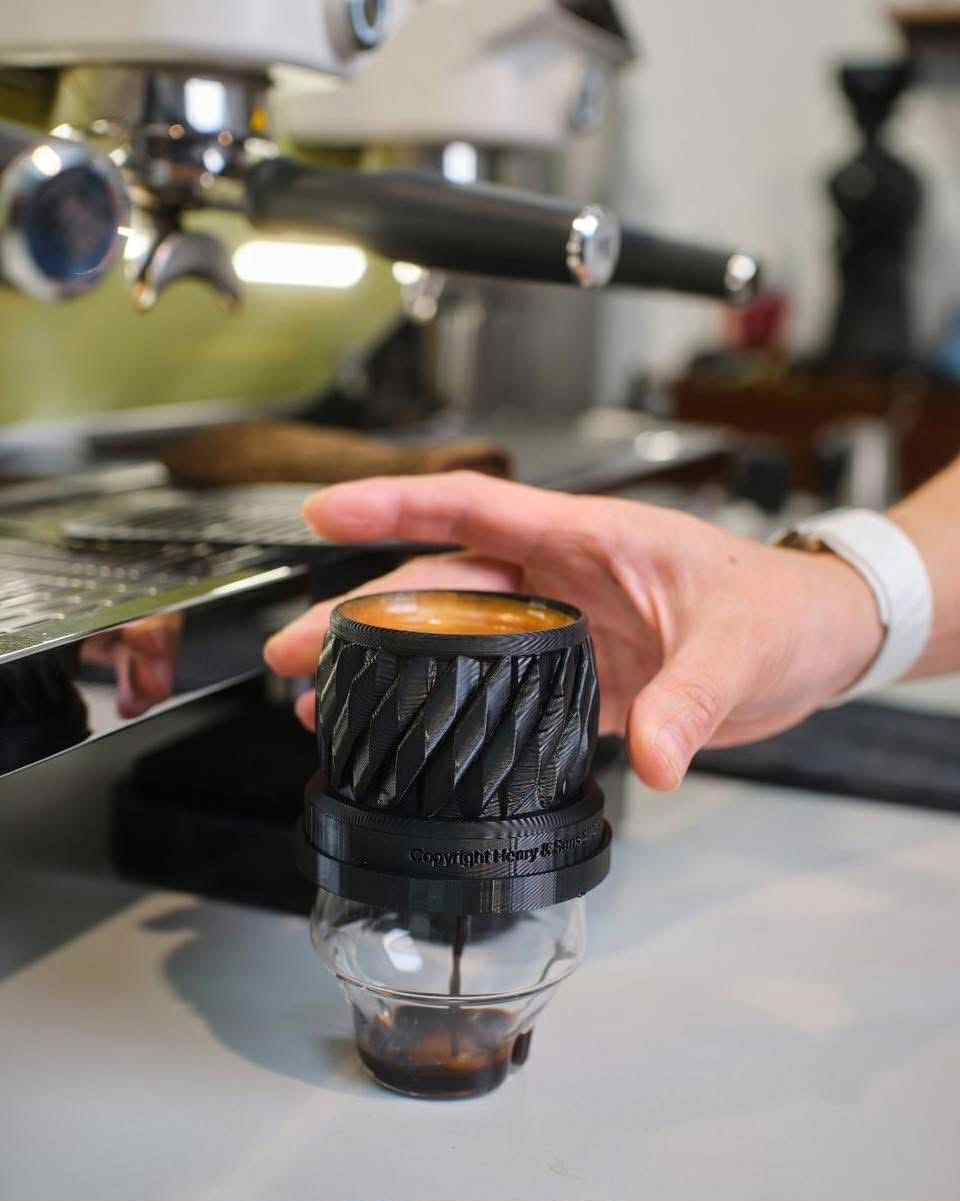
Pinoy invents ‘The Better Vessel’ (for espresso)

FOLLOWING a performance at the 2025 World Barista Championship (WBC) in Milan, two-time Philippine National Barista Champion Michael Harris Conlin is ushering in a new Filipino coffee innovation. Conlin, who placed 13th overall and earned the award for Best Espresso in Round One, is now introducing his invention, The Better Vessel. The Better Vessel works by gently and selectively removing the bitterness and harshness of crema in espresso, al-lowing baristas to extract a longer, cleaner, and sweeter shot with greater consistency. This refinement allows for better espresso, regardless of a café’s size, equipment, or level of expertise. Within days of its soft introduction at WBC, Mr. Conlin received pre-orders from baristas and café owners in the US, Japan, Australia, Singapore, and parts of Europe, many expressing eagerness to integrate the tool into their workflow. Industry leaders abroad noted its potential to cut waste, reduce dialing-in time, and improve flavor consistency. “My hope is that the Philippines sees The Better Vessel not just as a tool, but as proof that Filipino ideas can lead global change,” said Mr. Conlin in a statement.

SMC releases another P296M for airport project

SAN MIGUEL CORP.

SAN MIGUEL CORP. (SMC) said it has made an additional P296.48-million disbursement from its P20-billion bond proceeds for the Manila International Airport Project.

In a disclosure to the stock exchange on Tuesday, the conglomerate said the release represents another investment in the airport project.

The company earlier reported having released a total of P19.73 billion from the bond proceeds, leaving no remaining balance from the net proceeds of the offering.

The bond issue forms part of SMC’s fundraising program to finance infrastructure projects, including the New Manila International Airport (NMIA), which is aimed at easing congestion at Ninoy Aquino International Airport.

Through its unit San Miguel Aerocity, Inc., the company is developing the P740-billion airport project across 2,500 hectares in Bulacan.

SMC said the project is designed to accommodate up to 100 million passengers annually once completed.

In September, SMC disclosed a P471.12-million disbursement for the NMIA project, bringing total spending from the bond proceeds to P16.91 billion at the time and leaving a balance of P2.82 billion.

The conglomerate has also reported delays in construction that pushed back the airport’s targeted commercial opening to 2028.

SMC shares closed unchanged at P79.50 apiece on Wednesday. — Alexandria Grace C. Magno

Term deposit rates drop as market eyes BSP move

THE BANGKO SENTRAL ng Pilipinas’ (BSP) seven-day term deposits fetched a lower average rate on Wednesday as the offer was oversubscribed, with below-target November inflation bolstering bets on another rate cut this week.

Bids for the central bank’s term deposit facility (TDF) reached P156.981 billion on Wednesday, nearly double the P80 billion placed on the auction block and higher than the P135.643 billion in tenders for the same offer volume a week ago. The BSP made a full P80-billion award of the seven-day papers.

Accepted yields ranged from 4.52% to 4.724%, wider and lower than the 4.6% to 4.7408% band logged in the previous auction. With this, the average rate of the one-week deposits declined by 4.82 basis points (bps) to 4.6798% from 4.728% last week.

The BSP fully awarded its term deposit offering on strong demand, it said in a statement.

“Demand for the seven-day term deposit facility increased,” the central bank said. “The BSP maintained the offer volume at P80 billion, resulting in a bid-to-cover ratio of 1.96x.”

This was higher than the 1.7x bid-to-cover ratio seen the previous week.

The BSP did not offer the 14-day term deposits for a sixth auction in a row, as it last offered both the seven-day and 14-day papers on Oct. 29.

Meanwhile, it has not auctioned off 28-day term deposits for more than five years to give way to its weekly offerings of securities with the same tenor.

Both the TDF and BSP bills are used by the central bank to mop up excess liquidity in the financial system and better guide market rates towards the policy rate.

“The BSP seven-day TDF auction yield again slightly declined week on week, now at 4.6798%, even slightly below the key BSP overnight rate at 4.75%, after better-than-expected headline inflation data in November 2025, still below the BSP’s inflation target of 2-4% [and] thereby could justify another 25-bp BSP rate cut on Dec. 11,” Rizal Commercial Banking Corp. Chief Economist Michael L. Ricafort said in a Viber message.

He added that the strong demand for the offering came as investors likely wanted to lock in “still relatively high” yields amid expectations of further monetary easing.

Headline inflation eased to 1.5% last month from 1.7% in October and 2.5% in November 2024, the Philippine Statistics Authority reported last week. This was within the BSP’s 1.1-1.9% forecast for the month, but was slightly below the 1.6% median estimate in a BusinessWorld poll of 15 analysts.

The November clip brought the 11-month average to 1.6%, below the central bank’s 1.7% full-year forecast and 2-4% annual goal.

Analysts said the below-target inflation print gives the BSP room to ease its policy settings further, with another cut likely at the Monetary Board’s meeting on Thursday (Dec. 11).

A BusinessWorld poll showed that 17 of 18 analysts expect the central bank to deliver a fifth straight 25-bp reduction at this week’s meeting to bring the policy rate to 4.5%, its lowest since September 2022.

Meanwhile, one analyst said the Monetary Board could announce a jumbo 50-bp cut.

The BSP has cut benchmark borrowing costs by a total of 175 bps since it kicked off its easing cycle in August 2024. BSP Governor Eli M. Remolona, Jr. said last week that weakening growth prospects raise the chances of a cut on Thursday, adding that they expect Philippine gross domestic product (GDP) to expand by just 4-5% this year, below the 5.5-6.5% target.

He earlier said that they could continue cutting rates until next year to help provide economic stimulus as a graft scandal involving anomalous flood control and infrastructure projects has caused a slowdown in public spending and dampened consumer and investor confidence.

In the third quarter, Philippine GDP grew by an over four-year low of 4%, bringing the nine-month average to 5%.

Mr. Ricafort said expectations of a rate cut by the US Federal Reserve also caused TDF yields to go down.

The Fed was due to announce its policy decision at the end of its two-day meeting overnight. A rate cut is largely priced in, but markets will monitor the statement of Fed Chair Jerome H. Powell for clues on the central bank’s future policy path. — Katherine K. Chan

ADVERTISEMENT
ADVERTISEMENT