Home Blog Page 5551

When the chips go up: Big banks bet on S. Korea, Taiwan stocks for 2023

Global banks are turning bullish on South Korean and Taiwanese shares, expecting a revival in semiconductors to drive a rally next year, while they see Japan’s market as resilient thanks in part to its weak currency.

The calls come as US rates are still rising, with most markets around the world eyeing their worst annual returns since the 2008 global financial crisis and with chipmakers’ profits cratering.

Goldman Sachs says South Korean stocks are the bank’s top “rebound candidate” for 2023 due to low valuations, made cheaper by a nosediving Korean won, and as companies benefit from an expected recovery in Chinese demand. It expects a 2023 return in dollar terms of 30%.

Morgan Stanley also gives Korea top billing. Together with Taiwan, it is the best place to be, says the bank, as the two markets have a reputation as “early-cycle” leaders in the demand recovery.

Bank of America, UBS, Societe Generale, and Deutsche Bank’s wealth manager DWS are all bullish on Korean stocks, with analysts’ conviction in that trade lying in sharp contrast to its divided view on India and China.

“In the semiconductor area, demand should bottom in the first quarter of next year and the market always starts to run before that,” said DWS’ Asia-Pacific chief investment officer, Sean Taylor, who added Korean exposure in recent months.

“We think (Korean stocks) sold off too much in September and August.”

South Korea’s benchmark KOSPI index has lost about 17% so far this year and the won has declined 9%, though both have shown signs of recovery in recent months.

Goldman Sachs also noted that five years of selling has driven foreign ownership of Korean stocks to its lowest level since 2009, but inflows of about $6 billion since end-June “indicates a turn in foreign interest” that could lift the market further.

Societe Generale’s recommendation for investors to increase their exposure to Korea and Taiwan comes at the expense of China, India, and Indonesia. Goldman’s preference for Korean stocks comes as it has suggested a reduction in Brazil exposure. Morgan Stanley downgraded its view on Indian exposure in October, when it upgraded its recommendation for South Korea.

Morgan Stanley is most bullish on chipmakers turning out commoditized low-cost chips as well as chips destined for consumer goods — including companies such as Samsung Electronics or SK Hynix. Morgan Stanley has a price target for SK Hynix about 50% above the current share price.

RISK-REWARD

Taiwan and Japan offer attractions for some similar and some novel reasons. Like South Korea, Taiwan is another heavily-sold and chip-maker dominated market — though tensions with China make some investors a bit less enthusiastic.

Goldman Sachs is underweight Taiwanese stocks, citing geopolitical risk, while Bank of America is neutral and its most recent survey of Asian fund managers shows they are bearish.

Japan also offers chips exposure as well as some security and diversification, with the weak yen also a tailwind for exporters and typically a boon for equities.

“A sustained stay at such undervalued levels, as expected by our FX strategists, augurs well for Japan equities,” said Bank of America analysts, who recommend overweight allocation to Japan. Morgan Stanley, DWS, UBS are also positive, as is Goldman Sachs, especially for the second half when it forecasts inflows.

There is less agreement when it comes to China, where big investors seem to be in a wait-and-see mode, or India where investment houses feel an 8% rally for the benchmark Sensex has left valuations a bit pricey.

To be sure, much of the banks’ investment calls rest on assumptions that US interest rates eventually stop going up and China eventually relaxes its COVID rules.

Meanwhile, Taiwan and South Korea are both geopolitical flashpoints — but analysts argue at least some of that is already in the price.

“There has been some political issue in both Korea and Taiwan for a long time,” said Societe Generale’s head of Asia equity strategy, Frank Benzimra.

“Things can always get worse,” he said. “But in terms of the risk-reward, what we find is that a number of the lowly valued markets, whether it’s Korea or Taiwan … have more limited downside because of the accumulation of bad news that we have seen over the last 12 months.” — Reuters
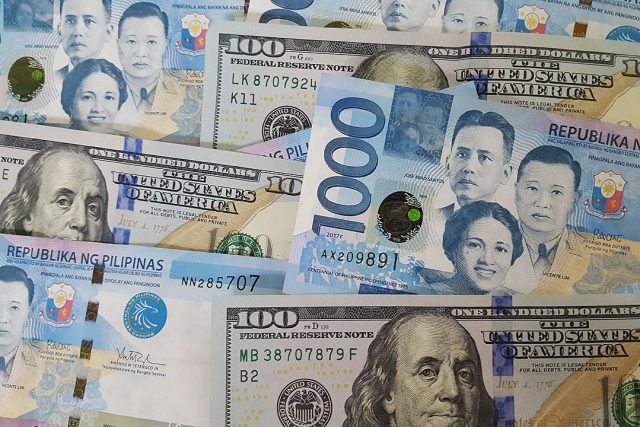
 

Medalla voices caution over plans to create $4.9B sovereign fund

BW FILE PHOTO

Central bank governor Felipe M. Medalla on Friday voiced caution over a legislative proposal to create a sovereign wealth fund overseen by President Ferdinand R. Marcos, Jr., saying transparency over its governance would be key.

Mr. Medalla, in an interview with Bloomberg TV, said a key concern for him would be how the fund would be managed and by whom, and to what extent it would affect the independence of the central bank, Bangko Sentral ng Pilipinas (BSP).

Mr. Medalla cited Malaysia’s experience with the scandal-tainted state fund 1Malaysia Development Berhad (1MDB) as the “biggest risk” in creating such a fund.

1MDB raised billions of dollars in bonds, ostensibly for investment projects and joint ventures, between 2009 and 2013. Malaysian authorities, however, believe more than $4.5 billion were allegedly misappropriated from the fund by high-level officials and their associates in an elaborate globe-spanning criminal scheme.

“Key to me is the governance issue,” Mr. Medalla said.

The legislation, whose principal authors include Mr. Marcos’ cousin, the current house speaker, and his eldest son, also a member of the lower house representing his home province, names the Philippine president as chairman of the board that will oversee the fund.

The fund would serve as another source of liquidity for development projects. It would be created using P275 billion ($4.91 billion) in seed money from five agencies, including state-run pension funds. Subsequent contributions would come from other government institutions, including the BSP.

“If they say we will take the central bank’s dollars…we will have less ammunition the next time there is international volatility,” Mr. Medalla said.

The bill proposes that the fund may invest in various types of instruments including, cash, foreign currencies, metals, tradeable commodities, bonds, Islamic investments, and listed or unlisted equities.

A lower house committee has approved the bill, and its backers are targeting to complete its third and final reading before a Christmas break on Dec. 17. The senate has yet to file a counterpart measure, which is required to pass the legislation, along with the president’s approval.

Investment analyst Aaron Say told ANC news channel the bill should be “close to airtight in transparency.” — Reuters


FTX collapse crushes crypto dreams in Africa and beyond

REUTERS

LAGOS/BANGKOK — Days before his FTX cryptocurrency exchange collapsed, co-founder Sam Bankman-Fried tweeted “Hello, West Africa!” — his latest nod to a region where a growing number of kitchen table investors had put their faith, and savings, in FTX.

In South Africa, Nigeria, and Ghana, FTX held a series of swish events in the months leading up to its bankruptcy filing in the United States on Nov. 11, which sent shockwaves through the crypto world and major coin prices plummeting.

At least $1 billion of customer funds have vanished from the collapsed crypto exchange, Reuters reported, and it is now the subject of investigations by authorities in the Bahamas — where it was based — for “criminal misconduct.”

In Nigeria, where many young people see cryptocurrency as offering a chance for income amid economic woes including double-digit inflation and high unemployment, FTX’s demise has been painful.

“It hurts more than I can express,” said Osarieme Aghedo, who works in marketing at a Nigerian startup and had $8,720 in FTX as news of its implosion circulated on Twitter.

He tried in vain to withdraw his money, which he had hoped to use to buy a car next year.

Mr. Aghedo said he had been trading in digital currencies since 2017, and had lost money before as their values dipped.

But the FTX loss has hit him harder, he said, because he thought it was “risk free” and kept his savings there.

Like him, many Africans used FTX as a bank, as it offered 8% annual interest rate on the stablecoin stored on the platform. Customers also used FTX to convert their local currencies to dollars.

Even as regulators crack down on crypto, people in developing nations are embracing virtual currencies to avoid high commissions on remittances, and to preserve their savings in times of hyper inflation and political instability.

Many exchanges have courted users in Africa, and crypto adoption is growing in the continent, with Nigeria ranked 11th on a global index by research firm Chainalysis, which also includes Kenya and Morocco in the top 20.

Despite the FTX blow, Mr. Aghedo said he was not giving up on crypto.

“Crypto has connected the global economy. I receive and pay people in crypto from many countries, and that would have been impossible before,” he said.


NO PROTECTION 

Cryptocurrencies were designed to be free of authorities such as governments and central banks. They allow for “peer-to-peer” transfers between users online without any intermediaries.

Their relative anonymity offers a haven for criminals, extremist groups and sanctioned governments — but champions say they also support citizens caught up in crises.

Now, crypto’s highest-profile collapse in recent years has left millions in the lurch, and it is unclear how many FTX users — estimated at about 1 million in the United States and many more across the world — will be able to recover their funds.

South Korea, Singapore and Japan accounted for the highest number of visitors to FTX.com until October, according to data compiled by crypto site Coingecko.

Singaporean Edward Choy was at work when he heard about a liquidity crunch at FTX. He immediately began getting his deposits out, just hours before withdrawals were suspended.

“I was able to pull out about 90% of my funds,” said Mr. Choy, 43, an actor and voice artist who has been a crypto investor since 2017.

“But I know many others were unable to get anything out — some had put nearly all their assets into FTX and have now lost everything,” he told the Thomson Reuters Foundation.

Regulation of crypto currencies has come into sharp focus following the collapse of several platforms this year and increased volatility, with bitcoin down more than 70% from an all-time high of $69,000 in November last year.

Several investors have also blamed regulators for failing to regulate platforms and protect users.

On a Facebook group for crypto users in Singapore, Alfred Lee posted: “Shifted my six-figure portfolio from Binance to FTX. Didn’t manage to get out fast enough as I was on vacation,” he said, referring to his move after Binance was banned in Singapore last year for breaching local payment services rules.

The Monetary Authority of Singapore (MAS) said it could not protect local users from the FTX collapse, as it had not given FTX a license, and that the exchange had operated offshore.

“The most important lesson from the FTX debacle is that dealing in any cryptocurrency, on any platform, is hazardous,” MAS said in a statement last week.

“As MAS has repeatedly stated, there is no protection for customers who deal in cryptocurrencies. They can lose all their money.”

In Ghana, where authorities have not commented on the FTX collapse, 21-year-old content creator Elisha Owusu Akyaw, who often posts about crypto on Twitter and TikTok, said he had $200 on FTX when it collapsed.

“It’s now worth just $6,” he said, adding that he had earlier held the equivalent of about $70,000 on the platform, but had withdrawn most of it some months ago as the value of cryptocurrencies fell.

Mr. Akyaw, who has collaborated with FTX and other exchanges to boost their products to his more than 12,000 followers on Twitter, said he was worried about how the ongoing chaos would impact his role as a crypto influencer.

“The money lost, for me, isn’t the biggest focus,” said Mr. Akyaw, who began trading in crypto in his teens.

“It’s the impact it has had on the reputation of the crypto industry … it’s about trust in a space I’ve dedicated most of my life to.” — Thomson Reuters Foundation


BSP to hike interest rates by 25 or 50 bps in Dec.

BW FILE PHOTO

MANILA — The Philippine central bank will hike interest rates this month, though the monetary board is likely to be split over whether to raise the policy rate by 25 or 50 basis points, its governor said on Friday in an interview with Bloomberg TV.

Felipe M. Medalla expressed relief that the US Federal Reserve was likely to scale back its interest rate hikes. On Tuesday, he said the Bangko Sentral ng Pilipinas (BSP) could pause policy tightening by the first quarter next year barring “no major shocks.”

“Certainly we will not do zero and I cannot speak for the rest of the board. But I think the board members will probably be split between whether doing 25 or 50,” he said.

Mr. Medalla heads the seven-member monetary board, which will review the BSP’s interest rate settings on Dec. 15 in its last policy meeting of the year.

The BSP has increased its benchmark interest rates by a cumulative 300 basis points since May to battle inflation.

When asked if he thinks the BSP’s key rates will peak in the first half of 2023, Mr. Medalla replied: “Yes.”

Fed Chair Jerome Powell on Wednesday said it was time to slow the pace of coming rate hikes, ahead of the U.S. central bank’s Dec. 13–14 meeting, at which a half-point increase is widely expected. — REUTERS

12 reasons why the Chery Tiggo 8 PRO 1.6T delivers the safest and most stress-free drive

In this age of pandemic, one of the most crucial aspects in the car-buying decision is safety—especially at a time when people are revenge-traveling and going back to face-to-face work and school.

And we’re not talking about your basic seatbelts, airbags, ABS, and crumple zones. We’re talking about features that will actively protect you and your loved ones by helping avoid or eliminate the risks that can lead to accidents. These are state-of-the-art smart features that will not only help prevent accidents before they happen, they actually help direct you away from situations that can lead to an accident. 

Which is why CHERY Auto Philippines has loaded its new 7-seater midsized SUV, the Tiggo 8 PRO 1.6 Turbo, with no less than 12 Advanced Driver Assist Systems (ADAS).

  1. Rear Cross-Traffic Assist – RCTA alerts you when another vehicle is approaching you just as you reverse out of a parking space
  2. Blind Spot Detection – BSD notifies you if a vehicle is approaching your blind spots on either side of your car
  3. Autonomous Emergency Braking – AEB automatically activates the brakes once it detects an obstacle and doesn’t receive any braking inputs from the driver
  4. Door Opening Warning – When DOW detects an oncoming car from behind as you or your passengers are about to go down from the car, the DOW automatically issues an alert 
  5. Forward Collision Warning – FCW detects objects ahead and alerts the driver for potential collisions
  6. Adaptive Cruise Control – ACC automatically adjusts your vehicle’s speed depending on the speed and distance of the vehicle in front
  7. Lane Keeping Assist – LKA helps the driver remain inside the marked lanes, which comes in handy during drives with low visibility or when temporarily blinded by other cars’ high beams
  8. Traffic Jam Assist – TJA serves as an extension of cruise control, but works in slow-moving traffic for enhanced comfort in gridlock situations. It will autonomously accelerate and brake the vehicle in traffic. 
  9. Integrated Cruise Assist – ICA constantly measures the distance to the vehicle in front of you in real time and automatically maintains a safe distance
  10. Intelligent High-Beam Control – IHBC automatically adjusts the headlights to maximize vision even in poorly lit roads
  11. Lane Departure Warning – LDW alerts you via audible alert and force-feedback when your vehicle inadvertently drifts to another lane—very helpful when the driver’s alertness is impaired due to fatigue or other factors 
  12. Traffic Sign Recognition – TSR alerts you when your speed exceeds that of posted speed limits

Over and above these 12 Advanced Driver Assist Systems, the Tiggo 8 PRO 1.6 Turbo offers an Anti-lock Braking System (ABS), Electronic Brakeforce Distribution (EBD), Electronic Stability Program (ESP), Traction Control System (TCS), Hill Assist Control (HAC), Hill Descent Control (HDC), Tire Pressure Monitoring System (TPMS), and ISOFIX child-seat tethers, among others.  

With all these smart safety features and Advanced Driver Assist Systems (ADAS), the new CHERY Tiggo 8 PRO 1.6 Turbo is convincingly one of the safest automobiles on the market.   

The Tiggo 8 PRO 1.6T is made even more irresistible with the brand’s industry-leading CHERY Premium Preserv consisting of a 7-year engine warranty, 7-year bumper-to-bumper general vehicle warranty, FREE 3-year preventive maintenance service (PMS), and FREE 3-year roadside assistance.

The CHERY Tiggo 8 PRO 1.6T has been a recipient of numerous awards and accolades globally, and was recently lauded as the Best Midsize Crossover by the respected C! Magazine.   

The all-new CHERY Tiggo 8 PRO 1.6 Turbo has a retail price of PHP 1,698,000. 

For more info, follow CHERY Auto Philippines (Facebook) and @cheryautophilippines (Instagram). You may also call the 24/7 CHERY Auto Philippines hotline at (0917) 552 4379 or email chery@uaagi.com for more inquiries.


Spotlight is BusinessWorld’s sponsored section that allows advertisers to amplify their brand and connect with BusinessWorld’s audience by enabling them to publish their stories directly on the BusinessWorld Web site. For more information, send an email to online@bworldonline.com.

Join us on Viber to get more updates from BusinessWorld: https://bit.ly/3hv6bLA.

Factory activity inches higher in Nov.

REUTERS

By Luisa Maria Jacinta C. Jocson, Reporter

FACTORY ACTIVITY in the Philippines expanded for a tenth month in a row in November, although jobs fell for the first time since March, a survey by S&P Global showed on Thursday.

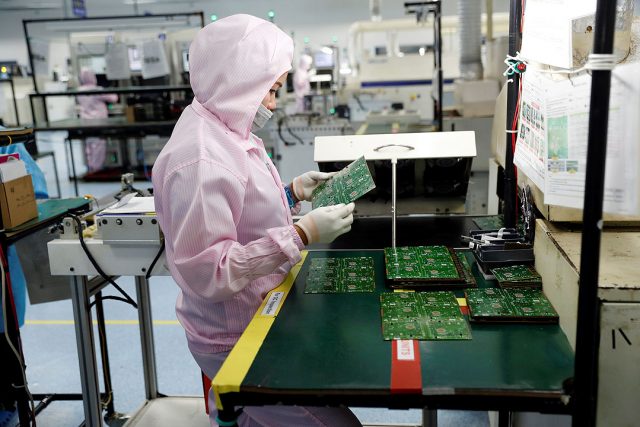
The S&P Global Philippines Manufacturing Purchasing Managers’ Index (PMI) inched up to 52.7 in November, from 52.6 in October, reflecting a “modest” pace of expansion.

“Growth across the Philippines manufacturing sector entered its tenth successive month, with modest expansions in operating conditions seen since September. The improvement across the sector primarily stemmed from greater demand conditions which drove higher sales and output,” Maryam Baluch, economist at S&P Global Market Intelligence, said in a report.

Manufacturing Purchasing Managers’ Index (PMI) of select ASEAN Economies, November 2022A PMI reading above 50 denotes improvement in operating conditions compared with the preceding month, while a reading below 50 signals deterioration.

The Philippines had the highest PMI reading among six Association of Southeast Asian Nations (ASEAN) economies in November, and exceeded the regional PMI average of 50.7.

Thailand had the second-highest PMI reading with 51.1, followed by Indonesia with 50.3. On the other hand, Malaysia (47.9), Vietnam (47.4) and Myanmar (44.6) all saw a contraction in November.

“Growth across the ASEAN manufacturing sector slowed again during November, with the latest PMI data signaling only a mild improvement in operating conditions. The slowdown reflected softer growth in output, while factory orders declined for the first time in 14 months,” S&P Global said.

JOBS DROP
S&P Global said the latest data signaled a sustained improvement in operating conditions in the Philippine manufacturing sector.

“Growth stemmed from greater demand which resulted in quicker expansions in production levels and factory orders. Buying activity also increased at a faster pace during November,” it added, noting that manufacturing output and factory orders grew for the third consecutive month.

However, the seasonally adjusted employment index fell below the 50 neutral mark, indicating a drop in employment numbers for the first time since March.

“Firms also recorded a reduction in staffing numbers during the latest survey period, thereby ending the run of job creation that began in May. Resignations among employees was commonly cited as a reason for the fall in workforce numbers,” S&P Global said.

Sales were also affected by sluggish export conditions.

“Weak foreign client demand weighed on total new order growth across the sector which was primarily driven by domestic demand. Nonetheless, the downturn in export sales softened from October’s recent low,” S&P said.

Firms ramped up their purchases of inputs for a third month in a row, as they anticipated more orders in the next few months.

“The rate of expansion quickened from October to the fastest in six months, and signaled a solid increase overall. Growth in output and buying activity resulted in stocks of inputs increasing during November. Businesses increased their holdings in anticipation of greater demand,” S&P said. 

Meanwhile, supply-chain disruptions were persistent during the month due to port congestion and material shortages, but the incidence of delays was at a three-month low.

Rising inflation pushed firms’ expenses higher.

“The rate of input price inflation gathered pace for the second month running, as higher energy costs were primarily blamed for the latest uptick in expenses. Similarly, output prices increased at a quicker rate during November as firms chose to pass costs on to clients,” S&P said.

The Bangko Sentral ng Pilipinas (BSP) expects inflation to range from 7.4% to 8.2% in November.

“While the manufacturing sector has shown strong gains during 2022, elevated price pressures pose an ongoing threat. Coupled with supply-chain issues, the peso weakening against the dollar adds further fragility,” Ms. Baluch said.

Ms. Baluch said rising interest rates and further monetary tightening may affect customer spending.

The BSP has raised rates by 300 basis points (bps) since May, bringing the benchmark rate to a 14-year high of 5%. It is widely expected to deliver another 50-bp rate increase at its December policy meeting.

Factory activity was impacted by “less upbeat” labor trends, as the decline in the seasonally adjusted labor index curbed potential growth, ING Bank N.V. Manila Senior Economist Nicholas Antonio T. Mapa said in a Viber message.

“This shows that the labor market recovery is still ways before we get back to pre-COVID levels,” he said.

Mr. Mapa also said that domestic demand fueled growth as the bulk of manufacturing is related to food items consumed locally. However, flat foreign demand reflected the slowdown in global trade, he added.

S&P Global said manufacturing firms are “strongly optimistic” of output growth in the next 12 months.

“Moreover, the degree of confidence strengthened in the month. This was often linked to greater client activity, the economy opening up and more firms undertaking new projects,” it added.

Rizal Commercial Banking Corp. Chief Economist Michael L. Ricafort said in an e-mail that increased production activities ahead of the holiday season would also boost manufacturing activity.

“Nevertheless, we are also sensing seasonal demand creeping into the main demand scene. I do expect the PMI to continue to be in expansion territory as we end the year,” UnionBank of the Philippines, Inc. Chief Economist Ruben Carlo O. Asuncion said in a Viber message.

The headline PMI measures manufacturing conditions through the weighted average of five indices: new orders (30%), output (25%), employment (20%), suppliers’ delivery times (15%) and stocks of purchases (10%).

WB sees slower growth in PHL remittances in 2023

Passengers wait inside the Ninoy Aquino International Airport Terminal 3 in Pasay City, Oct. 29, 2022. — PHILIPPINE STAR/ MIGUEL DE GUZMAN
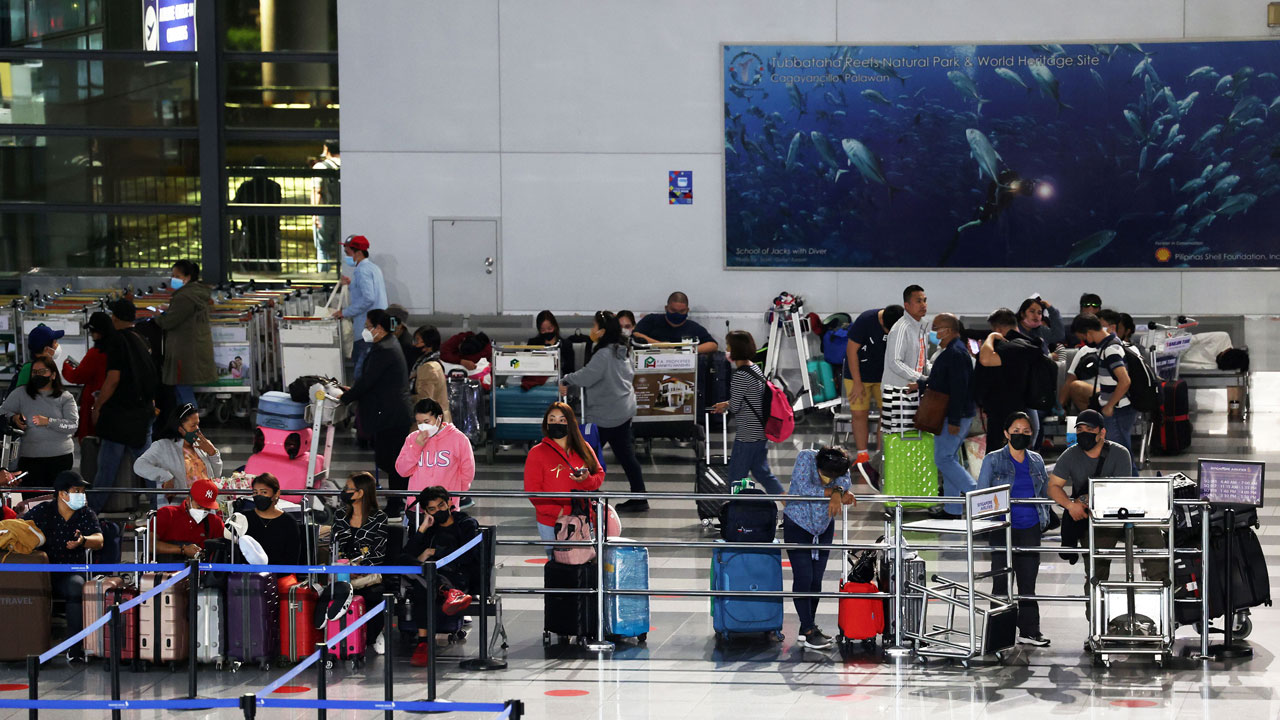
Passengers wait inside the Ninoy Aquino International Airport Terminal 3 in Pasay City, Oct. 29. The growth in remittances is expected to slow next year amid a looming global economic slowdown. — PHILIPPINE STAR/ MIGUEL DE GUZMAN

By Keisha B. Ta-asan, Reporter

REMITTANCE INFLOWS to the Philippines are expected to rise by 3.6% this year, the World Bank (WB) said, but it sees growth slowing in 2023 as a looming global economic slowdown is likely to weigh on overseas Filipino workers’ (OFWs) ability to send more money home.

On the other hand, Bangko Sentral ng Pilipinas Governor Felipe M. Medalla said he expects OFW remittances “to be 4% to 5% higher (in 2022) than last year.”

In the latest World Bank Migration and Development Brief, the multilateral lender said remittance inflows to the Philippines are estimated to go up 3.6% to $38 billion this year.

The World Bank and BSP’s remittance growth forecasts are slower than the 5.1% annual expansion seen in 2021.

“(Remittance growth) reflected benefits of bilateral arrangements that the Filipino government forged recently with destination governments (including Saudi Arabia) to improve the treatment of Filipino workers,” the World Bank said.

The Philippines lifted the ban on the deployment of OFWs to Saudi Arabia in November. The ban was imposed in 2021 due to reports of alleged maltreatment of OFWs by Saudi employers.

The World Bank also said demand for skilled Filipino workers in the health and hospitality sectors also drove remittances higher.

“With nearly 40-60% of their emigrants employed in the United States and the United Kingdom, the Philippines and Vietnam benefited from the wage hikes and labor shortages in these countries, even as the pandemic-related stimulus subsidies were phased out and record-high inflation eroded their remitting ability,” it said.

According to the World Bank, remittances to low- and middle-income countries jumped by an estimated 5% to $626 billion this year, slower than the 10.2% increase in 2021.

This year, the Philippines is expected to be the fourth-biggest recipient of remittances, after India ($100 billion), Mexico ($60 billion) and China ($51 billion).

India is the first country on track to receive more than $100 billion in annual remittances, the World Bank said.

Remittances to East Asia are projected to have inched up 0.7% to $134 billion in 2022, reversing the decline in the last two years. Excluding China, remittances to the region likely went up 3.7%.

“Migrants help to ease tight labor markets in host countries while supporting their families through remittances. Inclusive social protection policies have helped workers weather the income and employment uncertainties created by the COVID-19 (coronavirus disease 2019) pandemic. Such policies have global impacts through remittances and must be continued,” Michal Rutkowski, World Bank Global Director for Social Protection and Jobs, said in a statement.

SLOWER GROWTH
The World Bank said remittances may grow at a slower pace of 2% to $639 billion in 2023, as a global slowdown may slash migrants’ wage gains in host countries.

“Downside risks, including a further deterioration in the war in Ukraine, volatile oil prices and currency exchange rates, and a deeper-than-expected downturn in major high-income countries, are substantial,” it added.

The World Bank expects the growth of remittance inflows to the Philippines to ease to 2% to $39 billion in 2023.

An economic slowdown and a cost-of-living crisis in migrants’ destination countries will likely affect remittance inflows to East Asia, including the Philippines.

“Real GDP growth in high-income countries is projected to halve from 2.4% to 1.1%, with inflation remaining high at 4.4%. This will curtail East Asian migrants’ ability to remit, especially if job losses occur,” it said.

The World Bank noted lower oil prices may dampen remittance growth from Middle East countries to East Asian nations. Slower demand for East Asia’s manufactured exports “is expected to depress remittance flows to the lower-income East Asian countries,” it added.

Higher-income East Asian countries like China, Malaysia and Thailand, which export manufactured goods, usually employ migrants from lower-income countries like the Philippines.

“When global demand for manufactured products slumps and migrants loses their jobs, remittance flows to the lower-income countries are adversely affected. The combined impact of these factors suggests that remittance growth in East Asia will be marginally negative (-1%) in 2023 with inflows totaling $133 billion,” the World Bank said.

Excluding China, remittances to East Asia are expected to grow “sluggishly” or 0.8% to $84 billion from $82.9 billion in 2022, the World Bank said.

Foreign chambers targeting $128-billion investments by 2030

Philippine flags are displayed along the streets, June 3, 2022. — PHILIPPINE STAR/EDD GUMBAN

By Revin Mikhael D. Ochave, Reporter

THE JOINT Foreign Chambers of the Philippines (JFC) is now targeting to generate $128 billion in foreign direct investments (FDIs) in the Philippines by 2030.

“We set the target to $50 billion (in 2020) and now it’s at $78 billion. So we have raised it. Make it a total of $128 billion (target) by the end of 2030,” Ebb Hinchliffe, American Chamber of Commerce of the Philippines (AmCham) executive director, said during a press conference in Makati City on Thursday

According to Mr. Hinchliffe, the JFC is banking on more investments in renewable energy, agriculture, and manufacturing to reach its 2030 target.   

He said the target will be achievable especially with the passage of laws amending the Public Service Act (PSA), Retail Trade Liberalization Act (RTLA), and Foreign Investment Act (FIA).

The law amending the PSA effectively allows foreigners to fully own public services such as railways, telecommunications, shipping, air carriers and subways.

“Energy will be a big part. I know there is a lot of interest on the energy side especially as we shift away from coal to renewable energy. I think the recently issued implementing rules and regulations (IRR) on renewable energy (RE) is bigger than the PSA,” Mr. Hinchliffe said.   

The Department of Energy (DoE) last month issued a circular amending the IRR of the Renewable Energy Act of 2008 to allow 100% foreign capital in RE projects. Section 19 of the IRR had previously limited foreign ownership of RE projects to 40%.

The DoE earlier said the circular now paves the way for foreign nationals and foreign-owned entities to explore, develop and use RE resources in the country such as solar, wind, biomass, ocean or tidal energy.

“Manufacturing is coming. I think there will be more investments in the semiconductor and electronics field. We’ve learned our lesson on chips. Agriculture is a tremendous opportunity especially on technology and software to help farmers increase productivity. Infrastructure also. We have a lot of infrastructure projects being done,” Mr. Hinchliffe said.

In terms of projected job generation from these new investments, Mr. Hincliffe said that it may vary depending on the sector.   

“I think it’s just about the same ratio. It depends on the sectors. We saw a lot of foreign investment into the business process outsourcing (BPO) industry. And what we need now is an investment into the manufacturing sectors,” Mr. Hinchliffe said.   

Lars Wittig, European Chamber of Commerce of the Philippines (ECCP) president, said recent economic reforms would also attract more investments into the Philippines.   

“It should also be mentioned that the game-changing reforms that we have seen within the last 18 months affecting big investment industries, and the most recent taking effect also this month, the IRR regarding sustainable energy, these will result in billion-dollar investments from Europe alone,” Mr. Wittig said.

“We believe that a highly experienced and competent economic team is in place and we trust they will manage appropriate interventions to influence inflation, supply chain blockages, and similar major challenges and headwinds to economic growth,” he added.   

Bradley Norman, Australian-New Zealand Chamber of Commerce Philippines, Inc. (ANZCHAM) vice-president, said the JFC is optimistic of the economy’s recovery.

“We are optimistic with respect to the performance of the Philippines and that optimism hasn’t changed…We still see that the Philippine economy is going to grow very strongly,” Mr. Norman said.   

The Philippines’ gross domestic product (GDP) rose to 7.6% year on year in the third quarter, bringing the nine-month GDP growth to 7.7%. Economic managers are confident GDP growth will exceed the 6.5-7.5% target for this year.

“It will encourage FDIs and of course they will as well for employment. Just how much employment and how that employment relates to the FDI figure is really something that you can’t calculate. We’re very positive that the Philippines is heading in the right direction,” he added.   

MAHARLIKA FUND
Meanwhile, several JFC members said that they are neutral about the lawmakers’ proposal to create a sovereign wealth fund called the Maharlika Investments Fund (MIF).

Mr. Wittig said that the JFC is monitoring the developments on the fund, adding that they are waiting on further details regarding the proposal.   

“(We are) neutral for now. We are monitoring it. We are learning more. We don’t have many details yet. It’s a big issue with a few details on the table,” Mr. Wittig said.   

Mr. Norman added that the ANZCHAM supports the proposed creation of the MIF if it would spur more opportunities for the mining industry.   

“From our point of view, we are very supportive of mining and if a sovereign wealth fund being set up would create further mining opportunities, then it’s something that we would look at,” Mr. Norman said.   

Mr. Hinchliffe added that he is still uncertain on the importance of the proposed sovereign wealth fund.   

“I don’t know how necessary it is in the Philippines or how it is going to work,” Mr. Hinchliffe said.   

On Tuesday, the House Committee on Banks approved “in principle” House Bill No. 6398 seeking to create the sovereign wealth fund.

Sovereign wealth funds are usually funded by proceeds sourced from commodity exports such as oil.   

JFC members include the AmCham, ANZCHAM, ECCP, Canadian Chamber of Commerce of the Philippines, Japanese Chamber of Commerce of the Philippines, Korean Chamber of Commerce Philippines, and the Philippine Association of Multinational Companies Regional Headquarters, Inc.

Gov’t urged to extend devolution transition for LGUs

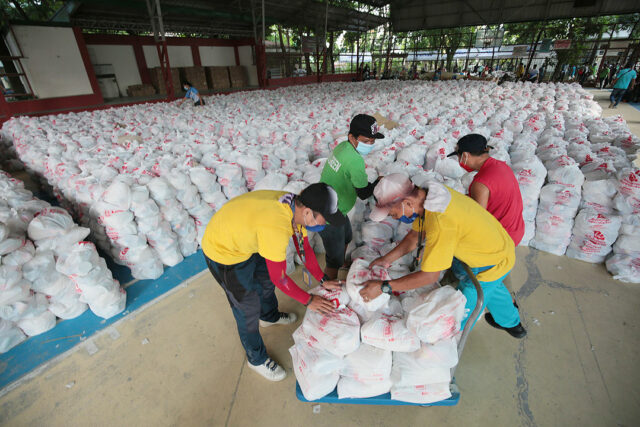
Workers prepare relief packs in Pasig City, Aug. 13, 2021. — PHILIPPINE STAR/ MICHAEL VARCAS

LOCAL GOVERNMENT units (LGUs) should be given more time for the smooth transition of devolved functions from the National Government (NG) agencies, according to a report.

A Mandanas-Garcia Ruling Transition Report by the Department of the Interior and Local Government (DILG) and the United Nations Development Programme (UNDP) in the Philippines called the implementation of the transition program from 2022-2024 “highly ambitious.”

“The implementation of this transition in the midst of the COVID-19 (coronavirus disease 2019) pandemic greatly amplifies the risks of failure and unintended consequences of the move,” the report said. 

“In the given context, a more incremental approach towards full decentralization, such as by expanding the three-year transition to a six-year span to coincide with a full presidential term,” it said, noting that the current period is aligned with the term of local officials elected in 2022.   

Extending the timeline for the transition would also mean a more gradual transfer of programs from NG agencies to LGUs within that period.

“A longer and more phased transition will also allow the both national and local government agencies to build/transfer the necessary capacity to ensure the continuity of performance in service-delivery responsibilities, as well as to course-correct for unintended consequences,” the report said.

The Supreme Court’s Mandanas-Garcia ruling granted LGUs a larger share of the national taxes by expanding their 40% cut to also include revenues from Customs duties, and not just those collected by the Bureau of Internal Revenue.

Last year, President Rodrigo R. Duterte signed Executive Order (EO) 138 which transfers a number of basic services to LGUs by 2024.   

With this, the government has shifted programs and projects, worth an estimated P234.4 billion, to LGUs.

During the report’s event launch on Wednesday, Jerik Cruz, co-author of a study called “From Dependency to Autonomy,” said there is a need to further boost LGUs’ capacity amid the transition to full devolution.

“They’re not able to adapt as well as we would like them to new and challenging circumstances. And partly related to this is what we found to be the surprising level of the lack of digitization of local governments,” Mr. Cruz said.

“Their ability to harness new digital technologies has not yet been maximized. We find that there tends to be a very big inequality among local governments where already capable local governments are able to tap into them whereas those which are poorer and left behind, generally are unable to make the most of them,” he added.   

Mr. Cruz said in their surveys of LGU budget officers, the biggest constraint in relation to spending is the lack of investment funds and resources, followed by a lack of staff.    

“So, we may see as a result of Mandanas ruling based on certain parts of the survey, that we may find greater inequality among local governments, where high performing local governments especially the highly urbanized cities, tend to pull away from the rest. Whereas those who are poorer and lower performing to begin with, especially municipalities, tend to fall behind further,” Mr. Cruz said.   

He emphasized that strengthening the LGUs’ local fiscal autonomy is possibly “one of the most neglected pillars of strong good local governance.”

“It’s not a silver bullet. But for most of the concerns that have been raised about the Mandanas ruling such as possibly challenges with budget execution, challenges with capacity, accountability, strengthening their own fiscal autonomy will help address every single one of those objectives,” he said.   

“We do recommend that we consider a lengthening of the transition from three years to six years so as to coincide with the full presidential term. A gradual transition in this way will give local governments more time to augment their capacity,” he added.   

Meanwhile, Cielo D. Magno, author of the study titled “Breaking Down the LGU Fiscal Performance,” said underspending among local governments is a main concern that needs to be addressed.   

“The Mandanas-Garcia ruling is expected to increase the budget of local government units and if we’re not able to address the constraints, we will expect LGUs to continue with the lower budget execution rates and lower budget execution rates mean underperformance or delay in service delivery,” Ms. Magno said.   

According to their study, LGUs have not been able to fully utilize their resources to combat the threat of COVID-19, climate related disasters, and other conflicts.

Between 2015 to 2018, LGUs utilized about 80% of their budgets on average, with cities having the lowest utilization rate at 72.7% and municipalities at the highest at 79.2%.   

“If we are not able to address this, LGUs will not be able to keep up with the increase in their current budget and they will tend to keep pushing balances to the following year. And this will also affect the quality-of-service delivery at the local level,” she added.   

The study recommends the government to review fiscal transfers and assignment of functions to LGUs. It should also review procurement policies particularly around capital outlay and boost oversight as enabler of good governance and delivery. — Keisha B. Ta-asan

SEC warns public about three unlicensed investment-takers

IN separate advisories, the Securities and Exchange Commission (SEC) has warned the public not to invest in CashBaka, Hero Mining International Group, and BitBankUps.com as the three entities have not secured the license to solicit investments.

According to the regulator, the three are neither registered as a corporation nor a partnership with the SEC. It also found them to have been soliciting investments without securing the necessary license as prescribed under the Securities and Regulation Code.

CashBaka has been promising the public a 150% to 200% interest within 30 days and a return of capital within 15 days. Investors who put in P500 are promised to get a P25 income per day, while those who put in P10,500 are told to expect a P2,170 income per day.

Meanwhile, Hero Mining offers seven investment options to its investors, starting from $10 up to $789, depending on the chosen scheme. Investors are promised to earn from P1,000 up to P144,905 with a 60% bonus from the profit of every successful recruit.

BitBank has been enticing the public to invest in its virtual currency called BBT.

According to the SEC, the entity has been promising a guaranteed profit through commissions with an initial capital of $100 to $5,000 in the form of a US dollar-pegged cryptocurrency like Tether.

Investors of BitBank were also promised referral bonuses each time they successfully recruited an individual to invest.

In a separate advisory, the commission also warned the public to not engage in advance-fee loan scams wherein victims are asked to pay a certain amount in exchange for the release of a loan.

“An advance-fee scam is a form of fraud and one of the most common types of confidence trick,” the SEC.

According to the regulator, the scam promises the victim a large sum of money, in return for a required small up-front payment.

“If a victim makes the payment, the fraudster either invents a series of further fees for the victim or simply disappears,” the SEC explained.

The commission said that people who are engaged in these scams are liable for the violation of Article 315 on swindling under the Revised Penal Code of the Philippines. — Justine Irish D. Tabile

D.M. Consunji’s order book down 8% as projects ease

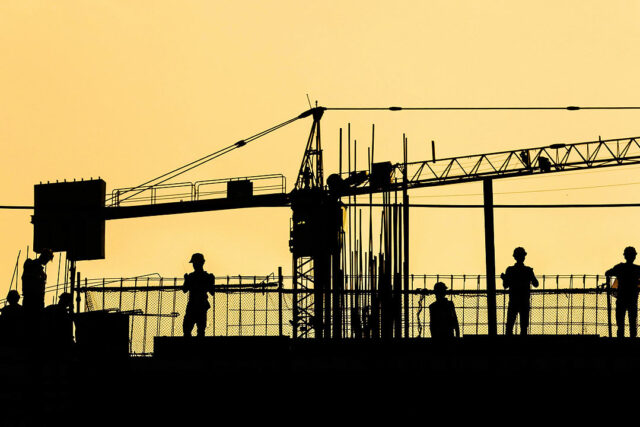
SHIVENDU SHUKLA-UNSPLASH

D.M. CONSUNJI, Inc.’s (DMCI) order book declined by 8.1% to P45.3 billion for the past three quarters from P49.3 billion in the same period last year amid a slowdown in project bidding and contract awarding.

In a press release on Thursday, its parent firm DMCI Holdings, Inc. said the “moderate” decrease was recorded for both the private and public sectors. It said the unit recorded P8.4 billion worth of contracts and P1 billion in change orders for the nine-month period.

“[The order book] was a bit lower than last year, but next year there’s a lot in the pipeline,” D.M. Consunji President and Chief Executive Officer Jorge A. Consunji told reporters in a recent gathering.

The company recorded P13.3 billion in construction accomplishments as of September this year.

According to Mr. Consunji, the contractor expects headwinds over the medium term amid high inflation, rising interest rates, and higher office and commercial vacancies.

“Public infrastructure projects could provide some upside but it would still depend on the rollout strategy and spending priorities of the national government,” he said in the press release.

In the nine-month period, D.M. Consunji posted P796 million net income, higher by 1.4% than the P785 million income it recorded last year.

“As far as profit is concerned, it is not ideal because [we were hit by] price volatility. It could’ve been better, but we are positively better than last year,” Mr. Consunji said.

Meanwhile, the company’s nine-month revenue declined by 7% to P15.33 billion from the P16.48 billion revenue it booked last year.

“If you talk about revenue, it will be slightly lower than last year because na-delay kami sa mga right-of-way (we were delayed by right-of-way issues),” he said.

According to Mr. Consunji, although the contractor did not reach its 2022 targets due to fuel price increases and foreign exchange losses, he remains optimistic about the company’s performance in 2023.

“We expect [next year to be] a little better than this year,” he said. “Remember we are doing some jobs with joint ventures — Department of Transportation, [and] Japan International Cooperation Agency — [as long as the projects acquire the] right of way as they promised, we’re okay.”

Mr. Consunji said that the company held back on some of its projects this year as the promised right-of-way acquisitions were not all awarded.

On Thursday, shares in DMCI Holdings rose 1.56% or P0.15 to close at P9.75 apiece. — Justine Irish D. Tabile

Century Properties to open mid-scale hotel in Manila

CENTURY-PROPERTIES.COM

PROPERTY developer Century Properties Group, Inc. (CPGI) is set to open a mid-scale hotel in Mandaluyong City on Dec.15, targeting to cater to tourist influx during the holidays.

“December is an opportune time for Novotel Suites Manila to open as Century Properties can actively participate and address the demand surge for tourism and leisure travel,” CPGI President and Chief Executive Officer Jose Marco R. Antonio said in a press release.

According to Mr. Antonio, the opening of the new hotel is in line with the government’s thrust of promoting the tourism industry.

He also noted that the hotel is expected to meet the growing demand for intimate gatherings in the area coming from the increasing number of multinational companies in Taguig and Makati.

The hotel will sit at a master-planned development called Acqua in Brgy. Hulo, Mandaluyong City, which will make it accessible through various points in the cities of Makati and Mandaluyong.

It will house 152 rooms and will be jointly owned by Century Properties and Century Acqua Lifestyle Corp. The hotel’s upper floors will be allocated for residential condominium units, which are all pre-sold.

The hotel, which was conceptualized with an augmented hospitality group called Accor, will be the sixth and final tower of Acqua Private Residences.

The rooms it will offer will range from 32 square meters (sq.m.) to 87 sq.m. The hotel will also have a pool, restaurant and bar, lounge café, pastry shop, fitness center, and meeting rooms suitable for small-scale events.

Novotel Suites Manila is the pilot hospitality development for Century Properties as it has been originally known for its high-rise condominiums.

“We are proud to carry the Novotel name, along with other 500 establishments globally. It’s a trusted brand, known for excellent rooms and service. It’s our pleasure to work with Accor,” Mr. Antonio said. — Justine Irish D. Tabile