Home Blog Page 548

The Pen, Nay Palad named to Condé Nast Traveler’s Gold List 2026

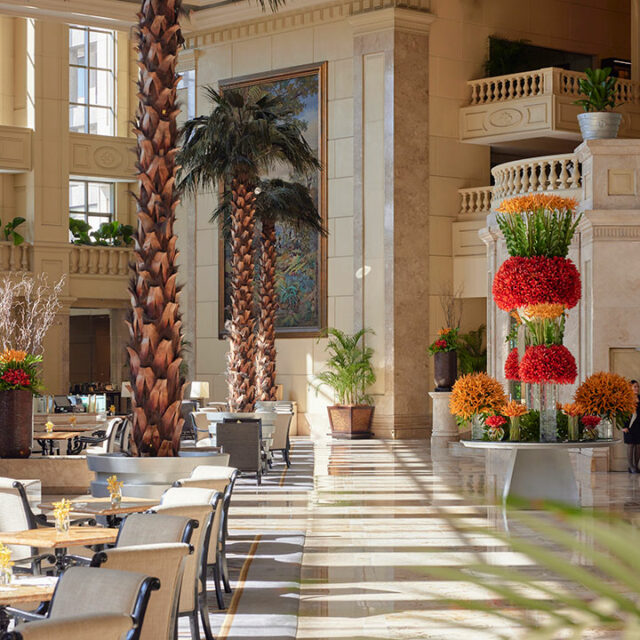
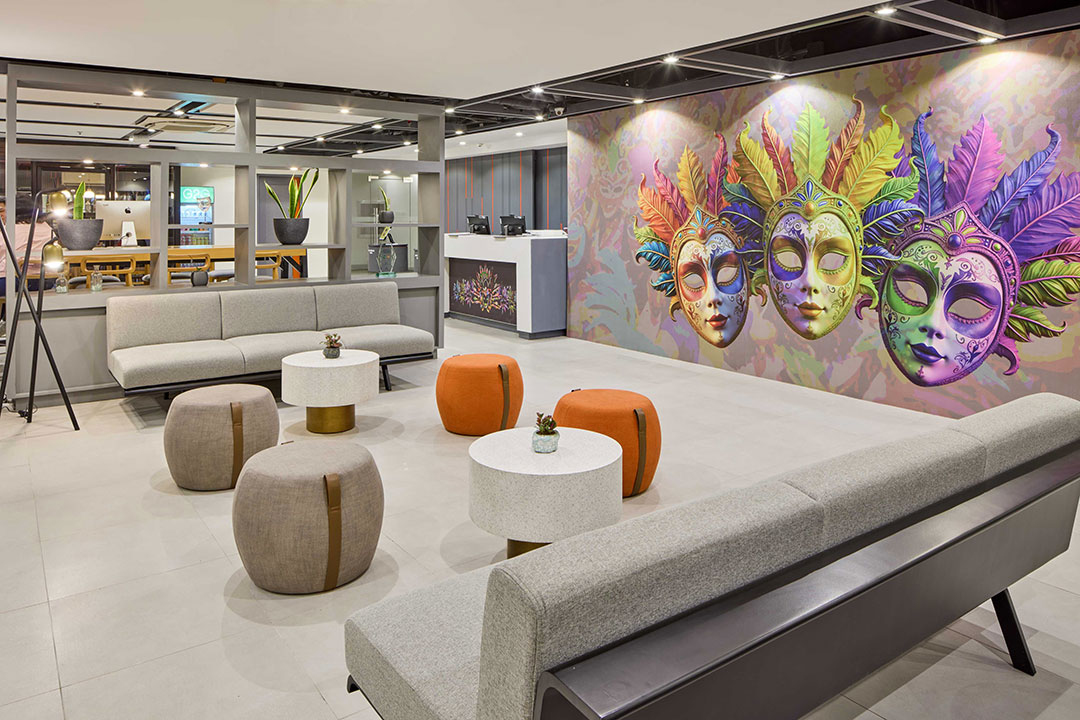
The Lobby of The Peninsula Manila

TWO DESTINATIONS in the Philippines made it to Condé Nast Traveler’s The Best Hotels and Resorts in the World: The Gold List 2026, one of the most prestigious editorial honors in global luxury travel. They are The Peninsula Manila and Nay Palad Hideaway in Siargao.

This is the first time The Peninsula Manila has received this international accolade and it is the only hotel in the national capital included on the list.

“It is a tremendous honor for The Peninsula Manila to be named to Condé Nast Traveler’s 2026 Gold List as we approach our 50th anniversary next year,” said Kevin Tsang, managing director of The Peninsula Manila. “This recognition reflects the timeless elegance, history, and hospitality that has made our hotel a cherished part of life in Manila for almost 50 years.”

The Condé Nast Traveler Gold List is a highly selective annual compilation of the world’s top hotels and resorts personally curated by the magazine’s editors. Hotels and resorts included on the Gold List are distinguished by exceptional service and staff dedication, a strong sense of character and history, memorable experiences across dining, wellness, and family hospitality, and an enduring emotional resonance.

In his review of The Peninsula Manila, Condé Nast Traveler Associate Editor Matt Ortile highlights the personal connection that many Filipinos have with the property: “Almost every Manileño I know has a story to tell about Manila Pen, as we call it. The Peninsula Manila belongs to everyone, I know that. Perhaps what I feel is that I belong only to Manila Pen.”

Meanwhile, Condé Nast’s Chris Schalkx pointed out how Nay Palad overcame the damage after Siargao was hit by Super Typhoon Odette in 2021. “This is the kind of can-do, no-fuss hideaway you’ve always dreamed of,” he writes.

The full list of winners will be published in the January/February 2026 print issue of Condé Nast Traveler and is now live online on the Condé Nas Traveler website: The Best Hotels and Resorts in Asia: The Gold List 2026.

Business leaders agree AI is the future. They just wish it worked right now.

STOCK PHOTO | Image by DC Studio from Freepik/THIS RESOURCE WAS GENERATED WITH AI

SAN FRANCISCO/STOCKHOLM — Last spring, CellarTracker, a wine-collection app, built an artificial intelligence (AI)-powered sommelier to make unvarnished wine recommendations based on a person’s palate. The problem was the chatbot was too nice.

“It’s just very polite, instead of just saying, ‘It’s really unlikely you’ll like the wine,’” CellarTracker CEO Eric LeVine said. It took six weeks of trial and error to coax the chatbot into offering an honest appraisal before the feature was launched.

Since ChatGPT exploded three years ago, companies big and small have leapt at the chance to adopt generative AI and stuff it into as many products as possible. But so far, the vast majority of businesses are struggling to realize a meaningful return on their AI investments, according to company executives, advisors and the results of seven recent executive and worker surveys.

One survey of 1,576 executives conducted during the second quarter by research and advisory firm Forrester Research showed just 15% of respondents saw profit margins improve due to AI over the last year. Consulting firm BCG found that only 5% of 1,250 executives surveyed between May and mid-July saw widespread value from AI.

Executives say they still believe generative AI will eventually transform their businesses, but they are reconsidering how quickly that will happen within their organizations. Forrester predicts that in 2026 companies will delay about 25% of their planned AI spending by a year.

“The tech companies who have built this technology have spun this tale that this is all going to change quickly,” Forrester analyst Brian Hopkins said. “But we humans don’t change that fast.”

AI companies including OpenAI, Anthropic and Google are all doubling down on courting business customers in the next year. During a recent lunch with media editors in New York, OpenAI CEO Sam Altman said developing AI systems for companies could be a $100-billion market.

All this is happening against the backdrop of unprecedented tech investment in everything from chips, to data centers, to energy sources.

Whether these investments can be justified will be determined by companies’ ability to figure out how to use AI to boost revenue, fatten margins or speed innovation. Failing that, the infrastructure build-out could trigger the kind of crash reminiscent of the dot-com bust in the early 2000s, some experts say.

THE ‘EASY’ BUTTON
Soon after ChatGPT’s launch, companies worldwide created task forces dedicated to finding ways to embrace generative AI, a type of AI that can create original content like essays, software code and images through text prompts.

One well-known issue with AI models is their tendency to please the user. This bias — what’s called “sycophancy” — encourages users to chat more, but can impair the model’s ability to give better advice.

CellarTracker ran into this problem with its wine-recommendation feature, built on top of OpenAI’s technology, Mr. LeVine said. The chatbot performed well enough when asked for general recommendations. But when asked about specific vintages, the chatbot remained positive — even if all signals showed a person was highly unlikely to enjoy them.

“We had to bend over backwards to get the models (any model) to be critical and suggest there are wines I might not like,” Mr. LeVine said.

Part of the solution was designing prompts that gave the model permission to say no.

Companies have also struggled with AI’s lack of consistency.

Jeremy Nielsen, general manager at North American railroad service provider Cando Rail and Terminals, said the company recently tested an AI chatbot for employees to study internal safety reports and training materials.

But Cando ran into a surprising stumbling block: the models couldn’t consistently and correctly summarize the Canadian Rail Operating Rules, a roughly 100-page document that lays out the safety standards for the industry.

Sometimes the models forgot or misinterpreted the rules; other times they invented them from whole cloth. AI researchers say models often struggle to recall what appears in the middle of a long document.

Cando has dropped the project for now, but is testing other ideas. So far the company has spent $300,000 on developing AI products.

“We all thought it’d be the easy button,” Mr. Nielsen said. “And that’s just not what happened.”

HUMANS MAKE A COMEBACK
Human-staffed call centers and customer service were supposed to be heavily disrupted by AI, but companies quickly learned there are limits to the amount of human interaction that can be delegated to chatbots.

In early 2024, Swedish payments company Klarna rolled out an OpenAI-powered customer service agent that it said could do the work of 700 full-time customer service agents.

In 2025, however, CEO Sebastian Siemiathowski was forced to dial that back and acknowledge that some customers preferred to talk with humans.

Mr. Siemiathowski said AI is reliable on simple tasks and can now do the work of about 850 agents, but more complex issues quickly get referred to human agents.

For 2026, Klarna is focused on building its second-generation AI chatbot, which it hopes to ship soon, but human beings will remain a big part of the mix.

“If you want to stay customer-obsessed, you can’t rely [entirely] on AI,” he said.

Similarly, US telecommunications giant Verizon is leaning back into human customer service agents in 2026 after attempts to delegate calls to AI.

“I think 40% of consumers like the idea of still talking to a human, and they’re frustrated that they can’t get to a human agent,” said Ivan Berg, who leads Verizon’s AI-driven efforts to enhance service operations for business customers, in a Reuters interview this fall.

The company, which has about 2,000 frontline customer service agents, still uses AI to screen calls, get information on customers, and direct them to either self-service systems or to human agents.

Using AI to handle routine questions frees up agents to handle complex issues and try new things, such as making outbound calls and doing sales.

“Empathy is probably the key thing that’s holding us from having AI agents talk to customers holistically right now,” Mr. Berg said.

Shashi Upadhyay, president of product, engineering and AI at customer-service platform Zendesk, says AI excels in three areas: writing, coding and chatting. Zendesk’s clients rely on generative AI to handle between 50% and 80% of their customer-support requests. But, he said, the idea that generative AI can do everything is “oversold.”

THE ‘JAGGED FRONTIER’
Large language models are rapidly conquering complex tasks in math and coding, but can still fail at comparatively trivial tasks. Researchers call this contradiction in capabilities the “jagged frontier” of AI.

“It might be a Ferrari in math but a donkey at putting things in your calendar,” said Anastasios Angelopoulos, the CEO and cofounder of LMArena, a popular benchmarking tool.

Seemingly small issues can unexpectedly trip up AI systems.

Many financial firms rely on data compiled from a broad range of sources, all of which can be formatted very differently. These differences might prompt an AI tool to “read patterns that don’t exist,” said Clark Shafer, director at advisory firm Alpha Financial Markets Consulting.

Many companies are now looking into the potentially expensive, lengthy and complex process of reformatting their data to take advantage of AI, Mr. Shafer said.

Dutch technology investment group Prosus says one of its in-house AI agents is meant to answer questions about its portfolio, similar to what the group’s data analysts on staff already do.

Theoretically, an employee could ask how often a Prosus-backed food-delivery firm was late to deliver sushi orders in Berlin last week.

But for now, the tool doesn’t always understand what neighborhoods are part of Berlin or what “last week” means, said Euro Beinat, head of AI for Prosus.

“People thought AI was magic. It’s not magic,” Mr. Beinat said. “There’s a lot of knowledge that needs to be encoded in these tools to work well.”

MORE HANDHOLDING
OpenAI is working on a new product for businesses and recently created internal teams, such as the Forward Deployed Engineering team, to work directly with clients to help them use OpenAI’s technology to tackle specific problems, a spokesperson said.

“Where we do see failure is people that jump in too big, they find that billion-dollar problem — that’s going to take a few years,” said Ashley Kramer, OpenAI’s head of revenue, during an onstage interview at Reuters Momentum AI conference in November.

Specifically, OpenAI is working with companies to find areas where AI can have a “high impact but maybe low lift at first,” said Ms. Kramer.

Rival AI lab Anthropic, which draws 80% of its revenue from business customers, is hiring “applied AI” experts who will embed with companies.

For AI companies to succeed, they will have to view themselves as “partners and educators, rather than just deployers of technology,” said Mike Krieger, Anthropic’s head of product, in an interview earlier this year.

An increasing number of startups, many founded by former OpenAI employees, are developing AI tools for specific sectors such as financial services or legal. These founders say companies will benefit from specialized models more than general-purpose or consumer tools like ChatGPT.

It’s a playbook that Writer, a San Francisco–based AI application startup, has been adopting. The company, which is now building AI agents for finance and marketing teams at large firms such as Vanguard and Prudential, puts its engineers on calls directly with clients to understand their workflows and co-build the agents.

“Companies need more handholding in actually making AI tools useful for them,” said May Habib, CEO of Writer. — Reuters

The Suez Canal reopening is a 2026 gift for commodities

SUEZCANAL.GOV.

By Javier Blas

THE business of shipping goods around the world has suffered shock after shock since 2000, culminating in the effective closure of the Red Sea and Suez Canal two years ago. Don’t say it too loud, but there’s a good chance the waterway can reopen in 2026, reducing transportation costs and easing the strain on global supply chains.

It’s hard to overstate the canal’s importance: It’s a choke point for about 15% of global trade in goods — and double that for container traffic. It’s been effectively closed since November 2023 when the Houthis, a rebel group controlling large swathes of Yemen, started attacking commercial vessels in the southern mouth of the Red Sea, sinking at least four ships, setting ablaze several others, and killing several mariners.

The closure forced shipping companies to take the long route around the southern tip of Africa, adding 10 days of sailing time from Asia to Europe and millions of dollars in extra costs. ING Bank NV estimates the detour is currently absorbing around 6% of global fleet capacity due to the longer voyage.

It was the culmination of five chaotic years for the shipping industry, which included the impact of COVID-19, the US-China trade war, the grounding of a huge container ship in the Suez Canal in 2021, and the disruption to Atlantic-Pacific traffic in 2023-2024 due to a drought affecting the Panama Canal.

The Houthi attacks have decreased after the US brokered a ceasefire between Israel and Hamas in Gaza in late September. It’s a fragile respite, but if it holds — a big if — it would allow traffic to resume through the waterways. Officially, the world’s top shipping companies and the largest commodity traders say the canal route is still closed. Quietly, however, they are testing the waters, sending single ships, including some of the world’s largest container vessels, up and down the Red Sea to see what happens. So far, the vessels have crossed without problem. The number of vessels crossing the canal hit the highest in more than a year and a half in November, according to data compiled by Bloomberg.

Crucially, some companies are now taking steps that go beyond single-vessel tests and are more akin to a partial reopening. Take CMA CGM SA, the French company that’s the world’s third-biggest shipping operation. For the first time in two years, it’s committing to a regular service from India to the US East Coast via the Suez route starting in early 2026. Others are keeping mum about their schedules, but are signaling their wait-and-see stance could change soon. “If the ceasefire holds, then I think we’ve crossed a gate and made a big step towards returning through the Red Sea,” Vincent Clerc, head of shipping giant AP Moller – Maersk A/S, said last month.

The industry has three good reasons to remain cautious, however.

The first is Yemen — and Gaza. The two ongoing conflicts are linked, and the calm in the Red Sea depends on sustaining the peace between Israel and Hamas. If the deal collapses, the Houthis could restart their attacks against vessels. 

The second is that shipping companies are eager to avoid so-called double disruption: the risk of returning to the Red Sea too early only to have to switch back again to the long route around Africa if the Houthis renew their terrorism. That uncertainty calls for testing the Suez route with limited sailings, perhaps for as long as six months, before contemplating a full resumption, industry executives say. The more likely scenario is that container ships will initially take the long route around Africa when sailing from Asia to Europe fully loaded and keeping to schedules is crucial. On their backhaul sail to Asia, they may test the Suez route, as they carry fewer goods, and timing isn’t as important.

The third is that insurance costs remain very high for the Red Sea, denting the economics of the route. On top, fuel oil prices have crashed to a five-year low of $350 a metric ton from a peak of more than $500 in 2003, reducing the extra costs of the trip around Africa. Put both together, and the financial incentive to switch back to the canal route is low.

“We think this will take a couple of quarters to gradually unwind the re-routing,” Constantin Baack, the head of MPC Container Ships ASA, recently told investors. “It’s about balancing security, insurance, network adjustments, potential congestions, etc.” 

There’s an unspoken fourth reason for caution: money. The moment the canal reopens, freight rates will nosedive as roughly 6% of global capacity suddenly isn’t needed to support the extra miles the route around Africa created. Already, container shipping costs are coming down in anticipation. The industry’s benchmark has fallen to about $2,000 per 40-foot (12-meter) box, down from almost $4,000 at the beginning of the year and more than $10,000 during the peak in 2021, according to Drewry World Container Index. Further declines are likely if the logistics picture improves.

Transportation costs aren’t the only price measure likely to be affected by an easing of shipping friction. Oil prices could come under pressure too, as the boost voyaging around Africa gave to fuel-oil consumption fades. Other commodities could also come under pressure, as the potential disruption to supply chains that prompted companies to hold higher stockpiles as a precaution against shocks fades.

After five chaotic years, few shipping executives want to tempt fate by talking up the chances of the reopening of the Red Sea route. But finally there’s light at the end of the, ahem, canal.

BLOOMBERG OPINION

South Palms Panglao opens Bohol’s first luxury wellness spa

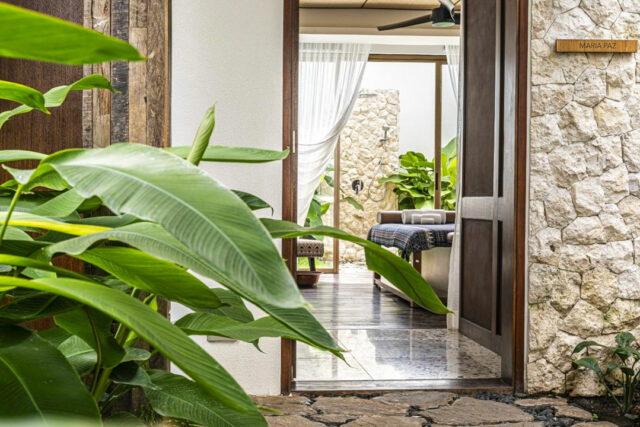
SOUTH PALMS Resort & Spa Panglao – MGallery Collection has opened Bohol’s first luxury wellness spa, aiming to attract both local and international tourists seeking traditional Filipino wellness practices.

The spa, named Lola’s Sanctuary, blends heritage-inspired treatments with modern design, using farm-grown botanicals in its wellness offerings. It follows the August opening of the 188-room luxury resort, developed by the tourism arm of the Uy-led Alturas Group of Companies and managed by French hospitality chain Accor.

“The new space draws on the region’s deep-rooted healing traditions to create an experience that is both restorative and culturally resonant,” the resort said in a statement on Wednesday.

One of the signature treatments, Hilod Dalisay, is a 90-minute ancestral body-purifying ritual using asin tibuok, Bohol’s traditional sea salt, combined with lemongrass and virgin coconut oil.

“We wanted to preserve Bohol’s ancestral healing traditions while presenting them through a refined, contemporary lens,” said Danish Khan, general manager of South Palms Resort & Spa Panglao – MGallery Collection.

The spa features an open-air reception surrounded by pandan, lemongrass, and fruit trees, where guests can enjoy detox juices and herbal teas.

According to the resort, “every treatment reflects knowledge passed through generations of Filipino healers, blending botanicals grown at South Farm with techniques that balance authenticity and refinement.”

The spa complements the resort’s other luxury offerings, including beach yoga sessions and a fitness studio. Guests can also learn about Bohol’s traditional salt-making practices through the resort’s cultural immersion activities, branded as “M Moment.”

South Palms MGallery Panglao is Accor’s second luxury MGallery property in the Philippines. It sits within the 50-hectare Panglao Shores estate, which is slated for future residential and commercial developments.

In the Philippines, Accor operates hotels under brands including Fairmont, Raffles, Pullman, Mercure, and ibis Styles across Metro Manila and the Visayas. — Beatriz Marie D. Cruz

Indonesia’s central bank keeps rates steady, focuses on rupiah’s stability

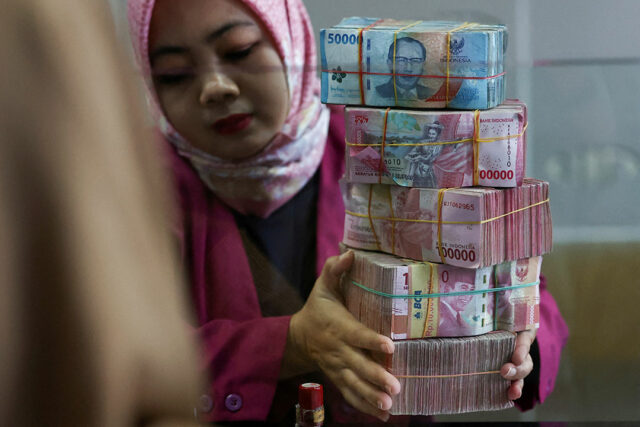
A teller prepares rupiah bank notes at a money changer in Jakarta, Indonesia, April 9, 2025. Picture taken through glass. — REUTERS/WILLY KURNIAWAN

JAKARTA — Indonesia’s central bank held its policy rates unchanged for a third straight meeting on Wednesday, maintaining its focus on supporting the rupiah currency while it assesses the impact of its earlier easings.

Bank Indonesia (BI) kept the benchmark 7-day reverse repurchase rate at 4.75%, as expected by 18 of 31 economists polled by Reuters. The rest had predicted BI would resume its rate cut cycle.

The bank also left unchanged its overnight deposit rate and lending rate at 3.75% and 5.5%, respectively. BI had slashed its main rates by a total of 150 bps between September 2024 and September 2025 as it looked to stimulate growth in Southeast Asia’s biggest economy.

Governor Perry Warjiyo said in an online press conference the decision was in line with efforts to maintain the stability of the rupiah as global market uncertainties remain high, while the central bank  continues to monitor if it has room for further policy rate easing.

BI has forecast growth of 4.9% to 5.7% next year, from 4.7% to 5.5% in 2025.

The rupiah has been among emerging Asia’s weakest currencies against the dollar this year. Hoping to increase domestic US dollar supply to bolster the rupiah, the government has said it would change export earnings retention rules to make exporters keep their dollars onshore for longer from next year.

Inflation has remained comfortably within the central bank’s 1.5% to 3.5% target range for most of the year, with the November rate at 2.72%. BI expects inflation to stay anchored next year. — Reuters

Rising chip costs to push smartphone shipments down in 2026 — Counterpoint

STOCK PHOTO | Image by Pongsawat Pasom from Unsplash

GLOBAL smartphone shipments are expected to decline 2.1% next year as rising chip costs are likely to impact demand, technology-focused market research firm Counterpoint said on Tuesday.

Electronics supply chains around the world have been hit by a shortage of legacy memory chips in recent months as manufacturers turned their focus to high-end memory chips suited for semiconductors designed for artificial intelligence (AI) applications.

What we are seeing now is the low end of the market (below $200) being impacted most severely, with bill-of-materials costs (total cost of parts) increasing by 20% to 30% since the beginning of the year, Counterpoint’s Research Director MS Hwang said.

Chinese Smartphone brands such as Honor Device and Oppo are expected to be more vulnerable, particularly in the entry-level segment, due to tight margins, the report said.

“Apple and Samsung are best-positioned to weather the next few quarters,” Counterpoint senior analyst Yang Wang said.

The research firm said last month that Nvidia’s move to use smartphone-style memory chips in its AI servers could cause server-memory prices to double by late 2026.

As each AI server needs more memory chips than a handset, the change is expected to create sudden demand that the industry is not equipped to handle, according to Counterpoint.

Earlier this month, research firm IDC also said it expects a decline of 0.9% in 2026 smartphone shipments globally, citing rising memory chip prices. — Reuters

Dining In/Out (12/18/25)

FOR THIS EDITION, we’re compiling a list of gifts: not just physical gifts in the form of holiday hampers and goodies, but holiday experiences that set a standard for years to come.


GIFTS

Hilton’s shiny hampers

CELEBRATE the season with hampers inspired by Filipino flavors and holiday traditions at Hilton Manila Newport World Resorts. The Tala (P3,000 net), Liwayway (P3,800 net), and Sinagtala (P5,800 net) hampers are named after the stars that guide and shine, carrying within them a selection of sweets, treats, and fine beverages. Reach out to 0917-851-4044 or e-mail MNLPH_FB@hilton.com for more information.

Meaty hampers from Marriott

WITH the Manila Marriott Hotel at Newport World Resorts Cru Steak Box, a Michelin-standard feast is created for holiday tables at home. The 250 gm Portoro Rib Eye rests in a box with the signature Cru Spice, offering rich flavors. The special offer of one complimentary box for every four purchases adds a flourish to gifting or entertaining. For orders and inquiries, contact 0917-827-6656 or 0917-859-9521.

Sheraton Manila Hotel hampers go local

AT THE Pinas Muna Hub of Sheraton Manila Hotel at Newport World Resorts, the Festive Hamper allows guests to create a personalized holiday gift by mixing and matching retail and bakery favorites with a minimum purchase of P3,000. The selection includes whole cakes, mini cakes, mini tarts, cookies, and seasonal specialties such as the Christmas Treeffle Chocolate Cake at P2,200, along with many more holiday treats perfect for gifting and sharing. For reservations and inquiries, contact 0917-859-7496.

Christmas Hamper at Garden Wing Café

CELEBRATE the joy of the season at Garden Wing Café on the Ground Floor of the Garden Wing of Newport World Resorts with its Christmas Hamper. Priced at P6,888 net, the hamper features a choco dip gingerbread man, lebkuchen cookies, WR La Belle Vie Cabernet Sauvignon (750 ml), and other festive treats. The life-sized Gingerbread House returns to the Garden Wing Café. Step inside and discover an array of holiday delights, including the grand White Chocolate Christmas Tree for P2,900, the traditional Pandoro for P4,500, the Panettone 500 gm for P3,000, and other handcrafted treats. For more information, contact 0917-878-0182 or 7908-8889.

Hotel Okura Manila hampers

SWEET CONFECTIONS for the holiday tradition at the Yawaragi Pastry Boutique are available until Jan. 6. Choose from pastries, Christmas cookies, chocolate bars, chocolate figurines, loaves of bread, banana bread, festive mochi donuts, and cakes such as the Bibingka Negra Navidad at P1,900++, Holly Jolly Matcha at P2,000++, and Berry Merry Velvet at P2,450++. For orders and inquiries, call 5318-2888, 0917-842-9067, or e-mail yawaragi.service@hotelokuramanila.com.

Venchi Philippines unveils exclusive Rum Raisin flavor

VENCHI PHILIPPINES introduces Rum Raisin, a Philippine-exclusive gelato flavor created in collaboration with Don Papa Masskara Rum. Available in-store at all Venchi Philippines branches from Dec. 15 to March 31, Rum Raisin invites guests to indulge in the rich flavors of Venchi and Don Papa. This exclusive creation features Venchi’s signature creamy milk gelato, layered with chocolate inclusions and plump raisins soaked in Don Papa Masskara Rum. The flavor is available as gelato scoops or takeout tubs, making it ideal for in-store enjoyment or indulgent moments at home. Please note: Rum Raisin contains 1.44% alcohol content and is intended for adult consumption.

City of Dreams Manila hampers

CAFÉ SOCIETY offers seasonal breads, pastries, handcrafted chocolates, and confections thoughtfully prepared to spread cheer and capture the season’s flavors. From buttery cookies, rich fruitcakes, and decadent chocolates to elegant hampers and artisanal gift sets, the creations are wrapped in festive packaging. Available until Jan. 4, choices include Christmas hampers starting at P7,980; gingerbread houses in different sizes with the smallest at P1,500; and various Panettone (Italian Christmas bread) at P3,600. Holiday indulgences include Christmas-themed cakes including the Christmas Gift Box Surprise Cake (P2,400), Pistachio Wreath Cake (P2,200), Santa Belt Cake (P1,900), and other yule log cakes. For reservations and more information, guests may call 8800-8080, or e-mail guestservices@cod-manila.com.


EXPERIENCES

City of Dreams Manila holiday stays

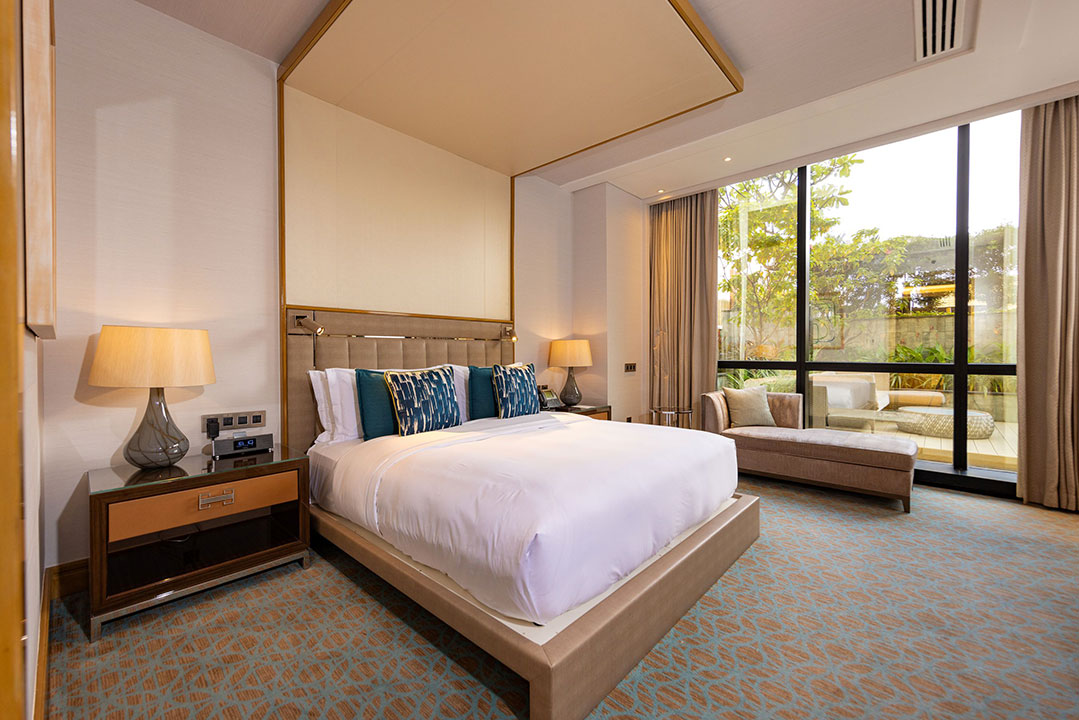
TWO-NIGHT STAY holiday packages beckon families starting at P19,600 at Hyatt Regency, P20,600 at Michelin Guide recommended property Nobu Hotel Manila, and P22,600 at Nüwa Manila, all of which include: daily complimentary breakfast buffet at The Café for two adults and two children, 12 years old and below; a special Christmas welcome amenity of handcrafted chocolates, and a complimentary maxibar; two participant tickets and two non-participant tickets at DreamPlay, and one Gingy plush toy, per stay. Booking period is until Dec. 29 with stay period until Dec. 30. For reservations and more information, guests may call 8800-8080, or e-mail guestservices@cod-manila.com.

Conrad Manila presents Manila’s longest brunch

THIS HOLIDAY SEASON, Conrad Manila sets the stage for a celebration with the launch of Manila’s longest brunch at Brasserie on 3. Part of the hotel’s “Bright Holidays, Brilliant Memories” collection of experiences, this dining highlight will take place on Dec. 25 and 31, offering an extended, indulgent brunch from noon to 3:30 p.m. Guests can expect a spread of holiday classics and festive specialties, including herb-crusted roast beef with red wine jus, honey-glazed ham with pineapple chutney, lemon-rosemary roast lamb with tzatziki, roast turkey with sage and chestnut stuffing, tomahawk ribeye roast, lechon, and Omaha beef leg, among other culinary masterpieces. This holiday spread is priced at P4,888 net per person, with an optional beverage upgrade at P1,000 net per person for select alcoholic beverages to elevate the celebration. Meanwhile, they are also open for dinner on Christmas Eve (lunch at P3,188 net per person and dinner at P4,888 net per person), and Christmas Day Dinner (P4,888 net per person). They will have a Radiant New Year Feast on Dec. 31, with dinner buffet at a standard table at P4,799 net and a Bay View table at P4,899 net. There is also an afternoon tea buffet at the C Lounge featuring sweet indulgences such as Santa chocolate dome belt, gift box mango coconut, strawberry macaron, mini Christmas yule log, and Christmas tree red wine jelly panna cotta while savory delights include peppered roasted beef, cucumber and cream, smoked apple cheddar, honey-glazed ham slider, Parmesan and polenta bite, avocado tuna tartare on savory tart, turkey sage and onion stuffing ball, and more treats. Guests may also savor a crepe made based on their preference at the live station. Served with freshly brewed coffee or a pot of tea, they can enjoy moments overlooking Manila Bay for P3,288 ++ per person, from Dec. 20 to 26 between 2 to 5 p.m. Visit www.conradmanila.com, or call 8833-9999.

Holidays at Richmonde

RICHMONDE HOTEL Ortigas’ holiday room offerings — starting at P4,500 net — provide a soothing escape from the rush of December. Special stays on Dec. 24 and 31 come with inclusions. Richmonde Café becomes a gathering place for dining, serving Fil-Hispanic-inspired Christmas Eve and New Year’s Eve dinner buffets at P1,950 net, along with Christmas and New Year breakfast buffets starting at P1,250 net. The hotel continues its tradition of fun festivities with its New Year’s Eve Countdown Party (P1,450 net), complete with a bar chow buffet, select drinks, live entertainment, and party favors for a thrilling welcome event for 2026 at the hotel lobby. To enjoy the evening affair, the New Year’s Eve Celebration Bundle combines the dinner buffet and countdown experience, available at the discounted rate of P2,850 net. For children six to 12 years old, all buffet and countdown offerings are at half price and are free for those five years old and below. For more information or to make a reservation, call 8638-7777 or 0917-534-4352 (Richmonde Café) / 0917-859-7914 (Room Reservations) or e-mail stay@richmondeortigas.com. For instant confirmation on room bookings, log on to www.richmondehotelortigas.com.ph. Over at Eastwood Richmonde, the Eastwood Café+Bar sets the stage for radiant celebrations. The Christmas Eve Dinner Buffet (P2,250 net) offers festive local and international dishes, wine and drinks, plus fun giveaways, while the Christmas Day Breakfast Buffet at P1,399 net per person, sets a comforting tone for holiday mornings. The hotel keeps the merriment bright with its Decades & Dancing New Year’s Eve Countdown Party (P2,250 net) at the hotel lobby featuring a cocktail buffet, bottomless drinks, live band performance, games, and dancing ‘til the clock strikes 12. The festivities continue the next morning with a hearty New Year’s Day Brunch Buffet served at the Ballroom for P1,699 net. And for feasting that’s truly family-friendly, children six to 12 years old get a 50% discount on buffet rates and toddlers five years and below eat for free. For more information or to make a reservation, call 8570-7777/ 0917-821-0333 (Eastwood Café+Bar) / 0917-531-6867 (Room Reservations), or e-mail stay@eastwoodrichmonde.com. For instant confirmation on room bookings, log on to www.eastwoodrichmondehotel.com.ph.

Book a room, support a cause with Robinsons Hotels

ROBINSONS Hotels and Resorts (RHR), the hospitality arm of Robinsons Land Corp., is welcoming the Christmas season with a festive lineup of holiday offerings across its portfolio of Grand Summit, Summit Hotels & Resorts, Go Hotels, and Go Hotels Plus nationwide, from Luzon to Mindanao. The season is unified under the theme, “A Brighter Christmas Together.” To encourage family bonding and leisure escapes, RHR’s local brands are offering special room rates. The most significant feature of this campaign is RHR’s commitment to giving back: a portion of the revenue from every room booking throughout the holiday season will be donated directly to partner organizations supporting meaningful advocacies nationwide. These beneficiaries include the elderly, children with cancer, orphans and abandoned children, tribal communities, street children, persons with disabilities, and marginalized women. On Dec. 24, 25, and 31, guests can enjoy special buffet spreads at the brand’s signature Café Summit, featuring seasonal specialties and crowd favorites. Summit Hotels & Resorts properties are located in Greenhills, Robinsons Magnolia, Tagaytay, Naga City, Cebu City, and Tacloban City. Go Hotels Plus are located in Mandaluyong, Naga, Tuguegarao, and Bacolod; while Go Hotels are found in the Ortigas Center, Otis-Manila, Puerto Princesa, Dumaguete, Iloilo, Tacloban, Butuan, Iligan, and Lanang-Davao. Room reservations can be made through the brand websites: summithotels.ph, gohotels.ph, and grandsummithotels.ph/ or through the Robinsons Hotels and Resorts app.

Pancake House bringing people together

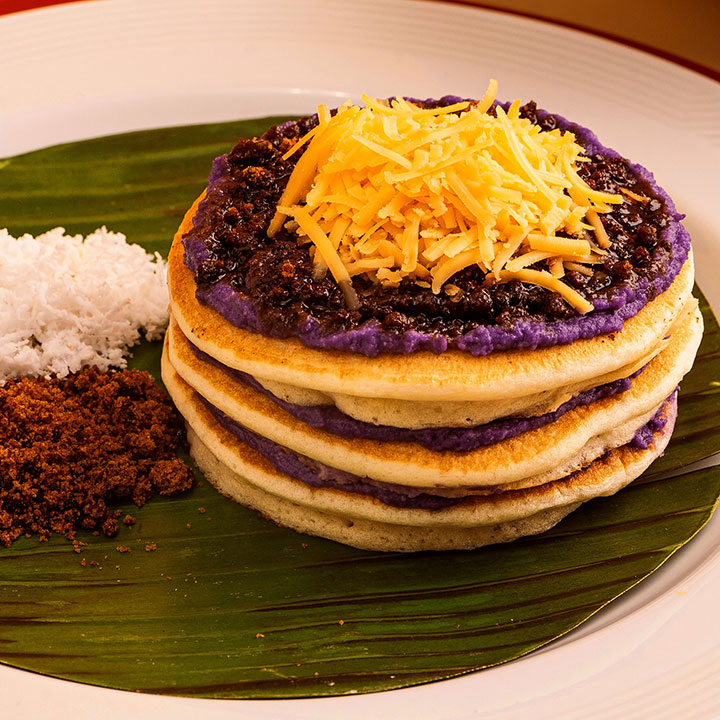
WITH refreshed interiors, more seats, and extended hours, Pancake House is opening its doors with familiar favorites in brand-new locations. These include Ayala Malls Capitol Central (Bacolod), SM City San Lazaro (Manila), and NAIA Terminal 3 (Pasay). This season, they’re also pushing their catering for holiday parties. Whether at home, the office, or anywhere else, Bulk Orders, To-Go Trays, and Takeout Boxes make sharing easy, with favorites like Pan Chicken, Breaded Pork Cutlet, Salisbury Steak, and Fish Rolls. E-mail catering@pancakehouse.com.ph, call 888-79000, or visit pancakehouse.com.ph/catering. Select Pancake House stores transform into private venues for friends, family, or colleagues. Guests can enjoy all menu items or curated packages; each served with Iced Tea or Minute Maid Orange Juice. Menus range in price from P399 to P599 per person with dishes like Pan Chicken, Spaghetti, and Salisbury Steak. Celebrate in-store with a P5,000 minimum spend. Reservations are valid for two hours, with extensions at P1,500 per hour (consumable). Rates include 12% VAT; service charges may apply. Meanwhile, enjoy their holiday menu, with dishes like Bibingka Pancakes (P199), Puto Bumbong Pancakes (P199), Maple Walnut and Apple Salad (P349), and Pan Chicken Steak (P349). These are available until Dec. 31 in all Pancake House stores, for dine-in, takeout, curbside pick-up, and delivery.


Checking on lifestyles

STOCK PHOTO | Image from Freepik

LIFESTYLE CHECKS as a way of establishing the integrity (or the opposite) of public officials are premised on a simple assumption. A person, especially in public service, is expected to live within his means. This income source is defined as his monthly salary, net of taxes.

The lifestyle check is based on the principle of “living within one’s legitimate (or explainable) finances.” It pays attention to “discretionary” spending. These are purchases of goods and services outside the “basket” of necessities, such as rent, food, and energy. Prices of these commodities are used to set the Consumer Price Index (CPI) and track the quarterly inflation rate.

There is also the statement of assets, liabilities, and net worth (SALN) that details a government official’s financial status. This is intended to include any wealth already amassed or liabilities incurred, and unconnected with present government service. This list does not include assets, including cash, in the name of other people.

Does the salary of a public official buy the same goods and services as an identical amount for his private sector counterpart?

Public officials don’t pay for their staff (some of them are designated as researchers or executive assistants), cars, drivers, domestic help, caregivers; and gasoline, restaurant meals when they’re guest speakers, salaries and food allowances for their security contingent, first class travels abroad, planes for private use when visiting devastated areas, and parking fees when eating out. Do these expenses come out of their own declared income?

Add to these savings and other perks like Christmas and birthday gifts, insider info on stocks and allocations on IPOs, and associates in car dealerships providing discounts (or free test driving) for bullet-proof cars. And what about the undisclosed and undeclared income from other members of the family, some of whom may be management consultants or franchisees of fast-food outlets?

One assumption in a lifestyle check is clear — that flaunting wealth leads to suspicion. Public servants, like academics and NGO leaders, are not expected to be rich or even look like they are.

In the corporate world, lifestyle checks, which are also randomly conducted, can have a second purpose. Does an executive’s lifestyle support the corporate brand? What if a senior executive lives in a low-income rented apartment? Why is this vice-president of a large utility company living in dire straits? Isn’t he paid enough? What does he do with his money?

Can lifestyle checks also deal with unexplained poverty?

Is it only the poor in spirit (and assets) who are certain to be above suspicion? But should that be the case? In the private sector, financial distress is too readily explained by a lack of talent or enterprise, or a clerical position achieved after all those years.

Certain countries aim to make public service attractive by matching corporate remuneration to attract the best and the brightest to serve in government. It is also presumed that the temptation to steal public funds is lessened, if not made unnecessary, when the paycheck is hefty. Even locally, this remuneration practice is upheld, especially in the banking and monetary sector, including sovereign funds. Of course, sometimes the greed is insatiable, and “other income” outpaces the paycheck.

Socially, there is not the stigma that the lifestyle police seem to attach to an extravagant lifestyle. A possible reaction to a government official’s life of unexplained poverty is a distinct lack of ability or a low position in the totem pole. How come his cousin seems to be raking it in at the public works?

Perhaps there is an accepted decorum in spending. In a high-income economy where tech billionaires now rule, there is more attention paid to market cap than a luxurious lifestyle and multiple spouses.

Of course, the definition of an accomplished person is not limited to wealth and how it is flaunted. There are elements of public service, employment generation, intelligence, and long-term vision that enhance the perception of public figures.

Perhaps more than lifestyle checks, rating effectiveness in one’s job is more relevant. Usually, it is the dedicated public servant anyway that adds value to the efficiency of the public sector. He can have a steak dinner with the family now and then… entitled to a senior discount.


Tony Samson is chairman and CEO of TOUCH xda

ar.samson@yahoo.com

Jollibee sees momentum in domestic and overseas markets

PHILSTAR FILE PHOTO

JOLLIBEE FOODS Corp. (JFC) said its sales continue to show momentum, driven by international markets and consistent domestic operations.

“The underlying fundamentals of the Jollibee Group remain strong. Based on preliminary internal indicators, we are seeing continued sales momentum in fourth-quarter 2025, consistent with our previously communicated full-year systemwide and same-store sales growth guidance,” JFC Chief Financial and Risk Officer Richard Shin said in a statement on Wednesday.

The company reported positive operating updates, with preliminary fourth-quarter sales showing growth aligned with prior forecasts. JFC added that it expects this momentum to carry beyond 2025 as it executes its growth strategy across key markets.

For the third quarter, JFC posted attributable net income of P3.03 billion, up 8.03% from a year earlier, supported by same-store sales growth (SSSG) in most major markets. Overall SSSG was 3.1%, including 1.2% in the Philippines despite adverse weather, and 6.2% from international operations.

Revenues for the period rose 13.1% to P77.38 billion, while operating income increased 7.3% to P5.2 billion.

The company also reported steady network expansion, with store openings in line with prior plans. “This reflects sustained confidence in consumer demand, disciplined site selection, and the Group’s continued shift toward a more asset-light growth model,” JFC said.

Jollibee Group operates over 10,000 stores and cafés in 33 countries, managing 19 brands. Its portfolio includes nine wholly-owned brands — Jollibee, Chowking, Greenwich, Red Ribbon, Mang Inasal, Yonghe King, Hong Zhuang Yuan, Smashburger, and Tim Ho Wan; five franchised brands in the Philippines — Burger King, Panda Express, Yoshinoya, Common Man Coffee Roasters, and Tiong Bahru Bakery; and stakes in other ventures such as 80% of The Coffee Bean & Tea Leaf, 70% of Compose Coffee, 60% of SuperFoods Group (Highlands Coffee), 51% of Milksha, and interests in Tortazo LLC (US) and Botrista.

Jollibee has also been expanding internationally. In October, Coffee Bean & Tea Leaf opened its first store in the Maldives, while Mang Inasal launched its first South Luzon drive-thru store in Santo Tomas, Batangas, the chain’s fourth drive-thru location nationwide. Mang Inasal currently operates 597 stores across the Philippines.

At the Philippine Stock Exchange on Wednesday, JFC shares fell 0.9% or P1.70, closing at P187.30 each. — Alexandria Grace C. Magno

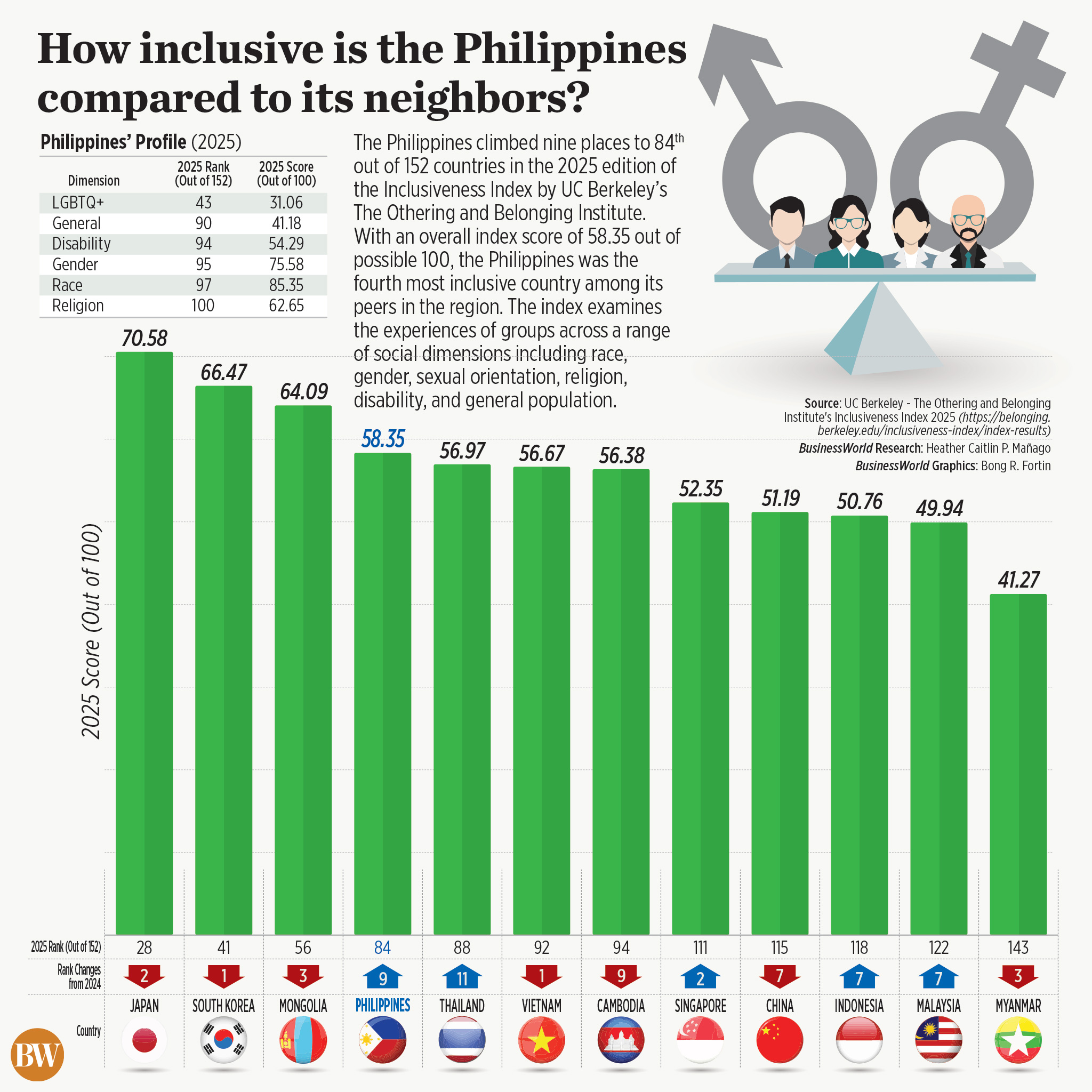
How inclusive is the Philippines compared to its neighbors?

The Philippines climbed nine places to 84th out of 152 countries in the 2025 edition of the Inclusiveness Index by UC Berkeley’s The Othering and Belonging Institute. With an overall index score of 58.35 out of possible 100, the Philippines was the fourth most inclusive country among its peers in the region. The index examines the experiences of groups across a range of social dimensions including race, gender, sexual orientation, religion, disability, and general population.

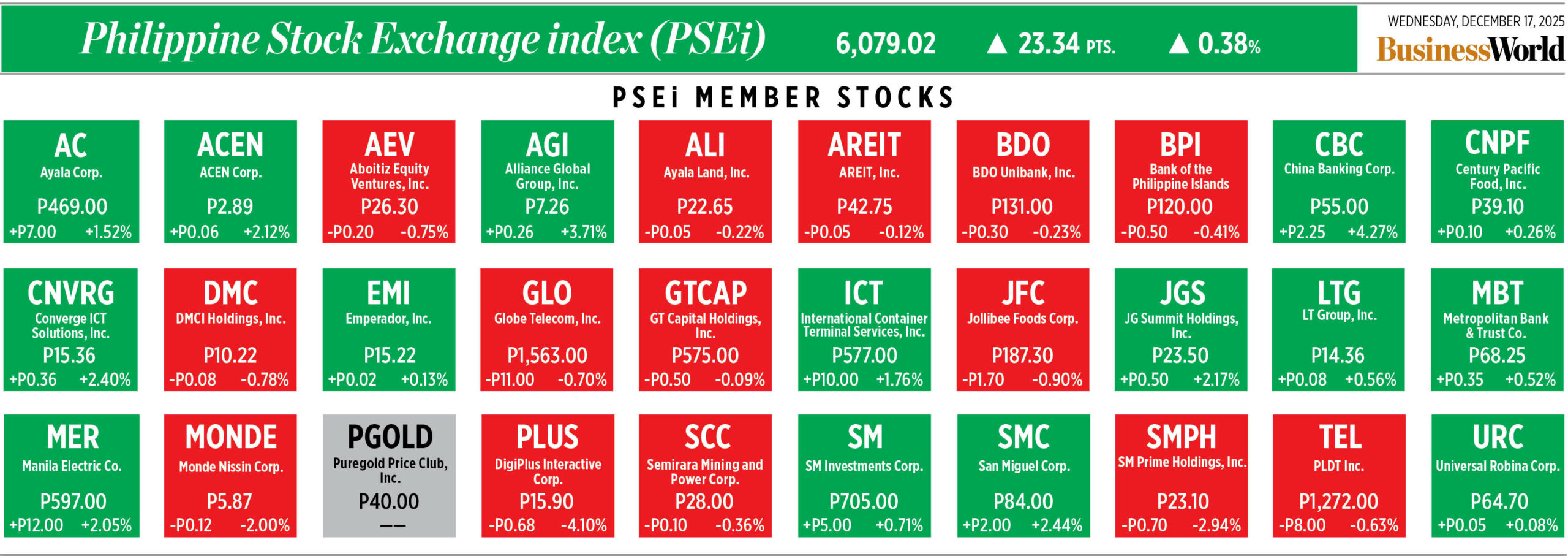
How PSEi member stocks performed — December 17, 2025

Here’s a quick glance at how PSEi stocks fared on Wednesday, December 17, 2025.


President Marcos rejects Philippines portrayal as terrorist training hotspot

PHILIPPINE STAR/KRIZ JOHN ROSALES

THE Philippines rejected claims by some foreign media outlets that portrayed the country as an Islamic State training hub following reports the alleged gunmen linked to the Bondi Beach mass shooting in Australia entered the country 15 days before the incident.

President Ferdinand R. Marcos, Jr. “strongly rejects” what Malacañang called a sweeping and misleading characterization of the Southeast Asian nation.

There is no validated report or confirmation that the individuals involved in the Bondi Beach incident received any form of terrorist training in the Philippines, Palace Press Officer Clarissa A. Castro quoted the National Security Council (NSC) as saying, in a briefing on Wednesday.

No evidence have also been presented to support such claims, the council noted.

“The President strongly rejects the sweeping statement and the misleading characterization of the Philippines as the ISIS (Islamic State of Iraq and Syria) training hotspot,” she said.

The Palace also urged foreign media to be “critical and responsible” in their reporting, warning that unverified characterizations could undermine the country’s integrity and international image.

The NSC said ISIS-affiliated groups have been significantly weakened since the 2017 Marawi siege and now operate in a fragmented capacity, with violence in Mindanao largely driven by local conflicts rather than extremist groups.

“Recent assessments indicate significant improvements in the domestic security environment that [was] previously affected by terrorism,” the NSC added.

“These developments reflect the sustained efforts of our security forces and the resilience of our communities in advancing peace, order and development across the nation.”

National Security Adviser Eduardo M. Año said the government is investigating the travel of the two alleged gunmen, adding that Philippine authorities are coordinating with their Australian counterparts.

“There is no valid report or confirmation that the two received any form of military training while in the country and no evidence supports such a claim at present,” he said in a statement. “A mere visit does not support allegations of terrorist training and the duration of their stay would not have allowed for any meaningful or structured training.”

The NSC earlier assured there is so far no indication their visit posed a security threat and described the matter as not a serious or immediate concern.

Mr. Marcos ordered the Anti-Terrorism Council and member agencies to remain vigilant in preventing any terrorist activity within Philippine territory and to continuously enhance coordination with international partners to safeguard national security.

MINDANAO EXTREMIST NEUTRALIZED
Also on Wednesday, the Philippine military said it had already neutralized top leaders of extremist groups in Mindanao.

Armed Forces spokeswoman Col. Francel Margareth Taborlupa said the military had made strides in keeping the peace in Mindanao, which had long grappled with Muslim extremism, dismantling the leadership and structures of terrorist cells in the region.

She acknowledged, however, that some members of what she called “local terrorist groups” remain in Mindanao.

“There is no training capability or large-scale attacks,” she said in a media briefing. “There have been no recorded terrorist training activities, recruitment efforts or large-scale attacks by domestic groups since 2016.”

Australian police said on Tuesday the two alleged gunmen behind the country’s worst mass shooting in nearly 30 years had traveled to the Philippines before the assault and may have been inspired by Muslim extremists.

At least 25 people remain hospitalized following the attack, which killed Sajid Akram at the scene and injured his son, and was described by police as a terrorist incident during a Hanukkah event.

Philippine officials said no Filipino casualties have been confirmed, with the consulate in Sydney coordinating with local authorities as Australia reviews its gun laws after confirming the older Akram was a licensed firearm owner.

A Philippine Immigration bureau spokesman confirmed the two men traveled to Manila and flew to Davao on Nov. 1 and left on Nov. 28, just weeks before carrying out Sunday’s shootings that killed 15 people.

The National Bureau of Investigation has also launched its own counterterrorism probe and is coordinating with the Immigration bureau, the military and regional offices to trace the suspects’ activities in Davao and nearby areas.

About 26.2 million people live in Mindanao, recognized as one of the Southeast Asian nation’s most volatile regions long plagued by militant groups advocating for the major Philippine island’s separation.

The region has a long history of extremist attacks, including the 2017 siege of Marawi, when the Islamic State-inspired Maute group seized the southern city and held it for five months through military counterattacks. 

Ms. Taborlupa said that only 50 members of extremist groups remain, from more than 1,200 in 2016. “The numbers will clearly show that there are now very few of them, and they are fragmented.”

“They no longer have any real leadership, and the vacuum of leadership is evident,” she said. “These gains are the result of sustained security operations, peace building efforts and strong community engagement.” — Chloe Mari A. Hufana and Kenneth Christiane L. Basilio

ADVERTISEMENT
ADVERTISEMENT