Home Blog Page 548

Brickman Wonders of the World: For families and kids at heart


BRONTË H. LACSAMANA

SOME of the world’s most iconic landmarks as recreated using thousands of Lego bricks by Ryan McNaught (a Lego-certified professional also known as “The Brickman”) are now on view in the Philippines for the first time in an exhibit at The Space at Solaire in Entertainment City.

It’s worth checking out, whether you’re in it to relive how it was like playing with blocks in your childhood, or to pull your kids away from their phones for a tactile experience. Either way, it’s a holiday treat, perfect for spending time with family and unlocking one’s inner child.

As soon as you enter, you are greeted by the “Ancient Wonders of the World,” the most eye-catching of which is the Great Pyramid of Giza in the center. The great thing about the displays is that they tell you everything about the build — its size, weight, the number of bricks used, and the hours it took for the designer/builder to create it.

In the case of the Great Pyramid, Mr. McNaught spent 71 hours putting together the iconic landmark, using 28,259 Lego bricks.

Aside from marveling over those facts, guests get to engage with the structure indirectly (since no one is allowed to touch it) by building their own mini pyramids with the sand-colored Lego blocks surrounding it. It’s specifically for the kids, because the moat is mounted very low, allowing the younger ones to play and let their imaginations run wild.

Wandering through the exhibit can be done in 15 minutes if you’re there just to look at each structure, but playing with the bricks provided and staring closely at the little figurines placed inside guarantees a whole afternoon of fun and creativity. You get to travel the world admiring Lego versions of monuments like Brazil’s Christ the Redeemer, France’s Arc de Triomphe, India’s Taj Mahal, and Britain’s Big Ben and Stonehenge.

In total, there are 45 Wonders of the World in the exhibit.

“It comes in five different shipping containers via sea and they are brought here and unloaded,” Samantha Sewell, GMG Productions’ executive producer, told BusinessWorld, explaining the process for setting up the exhibit.Brickman professionals come and set everything up for us. It took three or four days to put it all together.”

The tallest structure in the exhibit is the replica of Michelangelo’s statue of David, which towers over everything else at 2,560 millimeters in height. It was designed by Russell Søren-Larson and built by Claire Ashworth. The longest structure in the exhibit is the Tokyo Subway System map, at 4,650 millimeters in length. It was designed by Mr. McNaught and built by Ms. Ashworth and Troy Walker.

FOR KIDS AND ADULTS
For Ms. Sewell, the best part about the exhibit is seeing the children engage with the artworks and play with the bricks.

“They can sit down on the carpeted floor, use their hands, go around the world, be inspired, and do things themselves. Exhibitions are great when you can walk around, but for it to be tactile like that is unique to Brickman,” she explained. “They invite you to do that.”

Carlos Candal, chief executive officer of GMG Productions, told BusinessWorld that it’s a cathartic experience for parents as well.

“I’m fed up with my children being on their iPads all the time,” he said candidly. “When we came around, my son played with the Legos, built a little pyramid next to the Giant Pyramid, and we took some Lego sets home.”

“It’s good for parenting because the Philippines is number one in social media in the world. We have to get kids to re-engage in more traditional play,” he added.

Ms. Sewell clarified that adults get a lot out of the exhibit, too. For example, the most complex structures in it are engineering marvels — most notably the model of the doomed ship Titanic, made up of 133,900 bricks, built over 240 hours by Mitchell Kruik and The Brickman himself.

It is one of the highlights of the show, with the ship broken in half above water, the sinews of the interior in plain view, and the lifeboats of people scrambling to get away as it sinks painting a tragic picture. Figurines of Jack and Rose, from the film Titanic, can be spotted atop the deck.

“There are so many little Easter eggs that the Lego figurines are doing that only adults will catch and appreciate. If you look close enough, you’ll see so many of them,” Ms. Sewell said.

Himeji Castle is another example. Made of 71,392 bricks and built over 185 hours by Mr. McNaught and Mr. Walker, its facade looks just like the famed Japanese castle, but behind it is a cross-section of its interior with figurines playing out scenes on each level — sumo wrestlers, katana-wielding samurai, and even Karate Kid characters doing karate.

Other notable movie references are King Kong atop New York’s Empire State Building, familiar fish from Finding Nemo swimming in the Great Barrier Reef, and a certain hunchback and figures of gargoyles in Paris’ Notre-Dame Cathedral.

Towards the end of the exhibit, there is a Mystery Mosaic mounted on the wall, with a Lego play area allowing visitors to build a portion of the mosaic on a small plate. It lets everyone participate in making a mystery piece together, before heading to the souvenir shop, then going home.

THE SPACE AT SOLAIRE
Solaire Resort Entertainment City in Parañaque hosted the exhibit in its relatively new event venue, The Space at Solaire, located on the third level, just a few steps away from The Theatre.

It spans over 1,400 square meters, described as “a modern facility for up to 500 guests that can be converted to host corporate functions, art exhibitions and immersive experiences, among other events.”

GMG Productions’ Mr. Candal told BusinessWorld that they had wanted to bring the Brickman Wonders of the World exhibit to the Philippines for years now but had to wait for the right venue to open.

“The Theatre along with The Space make up the top-class entertainment hub in the Philippines now,” he said. “I asked Solaire back in March if I could have the space, and they agreed.”

On how he expects the exhibition will do, he explained that its “worldwide appeal” makes it one of the best experiences that can be brought from around the world. It is also just the first of many more planned in the coming years.

“We have a lot in store in the next few years. The plan is to keep bringing the best experiences — not just mall activations, but proper, international-standard major attractions — to The Space,” he said.

Brickman Wonders of the World runs until Feb. 8 at Solaire Resort in Entertainment City, Parañaque. Santa Claus is present at the attraction until Jan. 4, from 1 to 6 p.m., for kids to interact and take pictures with.

Tickets, roughly P1,500 for adults and P750 for kids, are on sale exclusively via TicketWorld. Family packages are available. — Brontë H. Lacsamana


Building mini dams all over: From clean water to power

ACCIONA.COM

(Part 2)

Given the vast experiences of Spanish companies in building mini dams, it would be logical that our Government and the private sector should turn to Spanish infrastructure companies as potential business partners in this very important industry. Fortunately, one of the largest infrastructure companies in Spain, Acciona, is already investing in water facilities (as well as in bridges and other large infrastructure). It was Acciona that partnered with DMCI and First Pacific Metro in building what is now the longest bridge in the Philippine archipelago, the one connecting the town of Cordova in Cebu to Mactan island.

In the water sector, Acciona is heavily invested in the Putatan water treatment plant, the Laguna drinking water treatment plant, and the ongoing construction of the East Bay 2 drinking water treatment plant. These projects aim to provide safe drinking water to millions of people in the National Capital Region and surrounding areas (some 10 million inhabitants) by treating raw water from sources like Laguna de Bay. Additionally. Acciona has been installing solar power systems in rural areas through its “Light Home” program.

The Putatan II drinking water treatment plant is located in Muntinlupa and has been turned over to Maynilad Water Services, Inc. In 2020, it had a capacity of 150,000 cubic meters per day, serving up to 6 million people. The Laguna Lake drinking water treatment plant is built in a consortium and treats raw water from Laguna de Bay. It has a capacity of 150,000 cubic meters per day, supplying water to over 1.2 million people. Finally, the East Bay drinking water treatment plant is the most recent project and is being built in a consortium with Prime Metro BMD Corp. and Santa Clara International. It will have a capacity of 200,000 cubic meters per day, serving 2 million people in the Pakil, Laguna area. Acciona has also expressed interest in developing desalination plants in the Philippines.

Fortunately, there are already local water firms that can partner with foreign companies like Acciona. A good example is Summa Water Resources, a Philippine enterprise that is partnering with an LGU, the Lapu-Lapu City Government in the province of Cebu. This Public-Private Partnership project involves the construction of a desalination plant in Barangay Punta Engano. The private water provider will lay out distribution lines to supply water to consumers, addressing 60% of the water shortage of the city.

Summa Water Resources is owned by a young entrepreneur, Jose Soler, who is an alumnus of the university where I have been teaching for more than 50 years, the University of Asia and the Pacific (UA&P). I am encouraging Mr. Soler to consider partnering with Acciona to construct mini dams in some water-short islands like Siquijor in Central Visayas. This coming May, I am accompanying some 40 Filipino businesspeople on a road show to Spain for them to seek potential partners in a whole range of infrastructure projects, including mini dam projects.

Another Filipino entrepreneur who is investing in small hydro-electric facilities is the famous Ateneo basketball player Chris Tiu, who is CEO of Blue Energy Lower Labayat Hydro Power and Upper Tignoan Corp. which owns and will operate 1.4-MW and 1.9-MW mini hydropower plants in Real, Quezon. Tiu said that the power plants they intend to build will harness the abundant river waters to generate electricity in a clean and sustainable manner. It was projected that in the construction of the facilities, some 400 jobs would be generated. The two power plants are expected to power around 7,000 households and generate almost 17 gigawatt hours annually.

It is heartening to see young entrepreneurs venturing into the water and energy business.

A related development is that of the planned Northwin Global City of real estate giant Megaworld, headed by Kevin Tan (who is also an alumnus of UA&P). A notable feature of this pioneer central business district in the province of Bulacan is a stormwater detention facility for flood prevention, which is extremely necessary in one of the most flood-prone provinces in the Philippines. It is no coincidence that the flood control corruption scandal first erupted in the province of Bulacan.

By leading in investing in flood control in one of its major real estate projects, Megaworld is showing to the entire real estate sector that they can contribute significantly to privatizing flood control projects and take them away from the stranglehold of corrupt government offices.

I would like to see the day when practically all public works projects, except farm-to-market roads and other projects geared towards helping small farmers eke a better living, will be in the hands of the private sector.

We should encourage consortia of Philippine investors in real estate and water and energy facilities to explore possible joint ventures with Spanish companies like Acciona and others in putting up more mini-dam projects in the Pampanga River, the Pasig-Marikina River, and Laguna de Bay basins. As reported by Nyah Genelle C. de Leon in a Philippine daily, a recent study of the Japan International Cooperation Agency (JICA) revealed that these river basins are at risk of extreme climate events.

More extreme rainfall and prolonged dry spells are projected to hit the Pampanga River Basin, thus threatening the surrounding areas with more severe flooding and droughts. The Pampanga River Basin is the fourth largest in the country and flows through the central plain of Luzon, which contributes a third of the rice production of the entire country. Rapid urbanization and warming climate have increased the chance of annual flooding in the basin. The basin covers an approximate aggregate area of 10,540 square kilometers and extends over the southern slopes of the Caraballo Mountains, the western slopes of the Sierra Madre range, and the major portions of the central plain of Luzon. This vast area can provide opportunities for the likes of Summa Water Resources and Blue Energy Corp. They can look for more opportunities to build mini dams in the mountainous areas of the Pampanga River Basin.

More people would invest in hydropower if higher tariffs are allowed by government regulators. This was a message coming from Gertrude V. Roque, president of PhilHydro Association, Inc., on the sidelines of the 3rd Philippine Hydro Summit recently. As reported by Sheldeen Joy Talavera in this paper, increasing tariffs would attract more investors.

Launched in 2011, the government’s feed-in tariff (FIT) program offers fixed payments per kilowatt hour to developers. This is also a uniform charge billed to all on-grid electricity consumers to support the development of renewable energy. During the previous FIT rounds, the rate for run-of-river (RoR) hydropower ranged from P5.90 per kilowatt-hour (kWh) to P6.0804 per kWh, depending on the scheduled completion date of each project. PhilHydro proposed the use of “actual average capacity” as the basis of setting the tariff. This sets the rate based on how much electricity a power plant actually generates over a period of time, compared to how much it could generate if it ran at full power continuously. PhilHydro is also asking for RoR hydro to be shielded from contingency costs, citing “constant exposure to weather climate change and natural disasters.”

The attractiveness of hydropower got a boost from a report that leading power producer, First Gen Corp., posted a nine-month attributable net income of $215.4 million, up 4% from the same period last year, as higher contributions from its hydropower portfolio offset declines in natural gas and geothermal earnings. The company attributed the hydropower gains to a higher starting elevation at the Pantabangan-Masiway plant, resulting in increased energy production.

Hopefully, similar high rates of return will be reaped by the smaller hydropower plants or mini dams. That way we will see a proliferation of these multi-purpose facilities that can simultaneously address the energy and water shortages all over the archipelago, while at the same time addressing the perennial problem of floods victimizing both human lives and properties.

(To be continued.)


Bernardo M. Villegas has a Ph.D. in Economics from Harvard, is professor emeritus at the University of Asia and the Pacific, and a visiting professor at the IESE Business School in Barcelona, Spain. He was a member of the 1986 Constitutional Commission.

bernardo.villegas@uap.asia

Peso climbs to two-week high

ANGIE REYES-PEXELS

THE PESO surged to a two-week high against the dollar on Tuesday amid a decline in global oil prices.

The local unit climbed by 32 centavos to close at P58.72 versus the greenback from its P59.04 finish on Monday, data from the Bankers Association of the Philippines showed.

This was the peso’s best finish in two weeks or since it closed at P58.521 on Dec. 2.

The peso opened Tuesday’s trading session stronger at P58.93 against the dollar. It traded at the P58 level the entire day, reaching an intraday best of P58.71 and the weakest at P58.965 versus the greenback.

Dollars traded rose to $1.46 billion from $911.5 million on Monday.

“The US dollar-peso exchange rate again improved for the second straight trading day… after global crude oil prices declined to new lows in nearly five years or since Feb. 3, 2021 that could reduce the country’s oil import bill and help narrow the country’s trade deficit and net imports than otherwise,” Rizal Commercial Banking Corp. Chief Economist Michael L. Ricafort said in a Viber message.

He also attributed the peso’s performance to the rise in remittance inflows for the holidays.

For Wednesday, Mr. Ricafort sees the peso trading between P58.60 to P58.85 per dollar.

The US dollar hovered around multi-week lows against the euro and yen on Tuesday as investors awaited US economic data later in the session that could affect expectations for the US Federal Reserve’s policy path, Reuters reported.

The dollar index, which measures the currency against a basket of six key rivals, was trading at 98.20, a little lower after earlier approaching the lowest level since Oct. 17.

Analysts hold mixed views: some expect the data to clarify employment trends during the US government shutdown, while others doubt it will fully lift the fog. — K.K. Chan with Reuters

Blackwall aims to close cybersecurity gap among MSMEs

STOCK PHOTO | Image from Freepik

By Edg Adrian A. Eva, Reporter

LOCAL cybersecurity startup Blackwall Industries is focusing on micro, small and medium enterprises (MSMEs) to address what it sees as a largely untapped and highly vulnerable segment of the market.

Before its formal establishment in May, the company initially targeted large corporate clients to secure stable revenues, but found it difficult to gain traction without an established track record, said Joseph Daniel B. Ferido, co-founder and head of sales of Blackwall Industries.

“Cybersecurity deals with very sensitive data, so without a name or strong backing, it was difficult for us to close deals with big corporations,” he said in an interview via Zoom.

This prompted his team to shift its focus to MSMEs, which account for about 99% of businesses in the Philippines and are among the most exposed to cyber risks.

“We realized cybersecurity should be for everyone. It shouldn’t be limited to corporations that can afford enterprise-level solutions,” Mr. Ferido said.

He cited a 2025 global report by US-based cybersecurity and consulting firm BD Emerson, which showed that around 60% of businesses shut down within six months of a major cyberattack.

The same report found that 43% of cyberattacks in 2023 targeted small- and medium-sized businesses, resulting in average losses ranging from $254,445 to as much as $7 million.

Since its formal launch, Blackwall Industries has tailored its offerings to MSMEs by providing lower-cost, customized cybersecurity services based on each client’s needs, Mr. Ferido said.

Among its products is the Fort Package, which includes vulnerability assessment and penetration testing, incident response and recovery, managed security services, continuous threat hunting, and compliance support.

Pricing for the Fort Package varies depending on the number of devices covered and the scope of work required, he said.

The company also offers cybersecurity packages for individual and household users.

The Shelter Package covers two devices for P600 per month, while the Bunker Package protects up to 10 devices for P1,500 per month, both providing round-the-clock protection against cyberthreats and online scams.

Mr. Ferido said Blackwall’s services cater to a wide range of sectors, including brick-and-mortar businesses, agriculture, and business process outsourcing firms.

“Any business that uses software or digital systems needs cybersecurity,” he said.

To protect client data, Blackwall Industries uses its proprietary “Black Wall Systems” technology, which it says is developed entirely in-house.

“We don’t use third-party applications or licensed software. Everything is built from the ground up,” Mr. Ferido said.

“That allows us to keep overhead costs low and price our services more competitively.”

The startup has recently been inducted as a founding member of the Cybersecurity Council of the Philippines and has collaborated with major industry players, he said. It has also partnered with international firm Simple Security and is working with the Philippine National Police Anti-Cybercrime Group.

Looking ahead, Mr. Ferido said Blackwall Industries aims to support government-led cybersecurity initiatives and potentially partner on national programs as digitalization efforts accelerate.

Globe, GCash complete initial test for silent authentication

BW FILE PHOTO

GLOBE TELECOM, INC. and its electronic wallet platform GCash have completed the initial tests for the implementation of the silent authentication system.

“Security and accessibility must go hand in hand. This milestone is about building trust for the financially included… By working with GCash, we’re showing how network level innovation can directly improve safety and convenience for millions of Filipinos who rely on digital platforms every day,” Globe Vice-President Stella Christine “KD” D. Dizon said in a media release.

A silent authentication system allows the verification of users through a secured network. This technology replaces the need for one-time passwords (OTPs).

“The successful testing reinforces the integrity and capability of Globe’s network to automatically verify the user’s identity,” Globe said.

Earlier this month, Globe and Bank of the Philippine Islands (BPI) announced that they are developing a proof of concept for silent network authentication to combat fraud.

This technology verifies a user’s identity by checking if the mobile number provided matches the SIM card active in the current data session, Globe said, describing it as a powerful layer of defense against phishing and other SIM-based fraud.

“For GCash users who rely on the app as their primary way to pay, send money, or manage finances, this means stronger protection and a smoother, worry-free experience every time they log in or make a transaction,” Globe said.

At the local bourse on Tuesday, shares in Globe closed P1, or 0.06% higher, at P1,574 apiece. — Ashley Erika O. Jose

Arts & Culture (12/17/25)


Poets’ organization marks 40 years

LINANGAN SA IMAHEN, Retorika at Anyo (LIRA), the organization of poets who write in Filipino founded by National Artist Virgilio Almario, marked its 40th anniversary on Dec. 15, the date of the 150th birthday of Emilio Jacinto, a general during the Philippine Revolution who is often referred to as the Brains of the Katipunan. The celebration kicked off with a wreath-laying ceremony at Jacinto’s tomb in Himlayang Pilipino in Quezon City. Twenty winners of recent literary contests spearheaded by LIRA, the Quezon City local government, and book publisher San Anselmo Press were also awarded, led by En Villasis, Mikael de Lara Co, and Frank Cimatu.


Jacinto descendants mark 150th birth anniversary

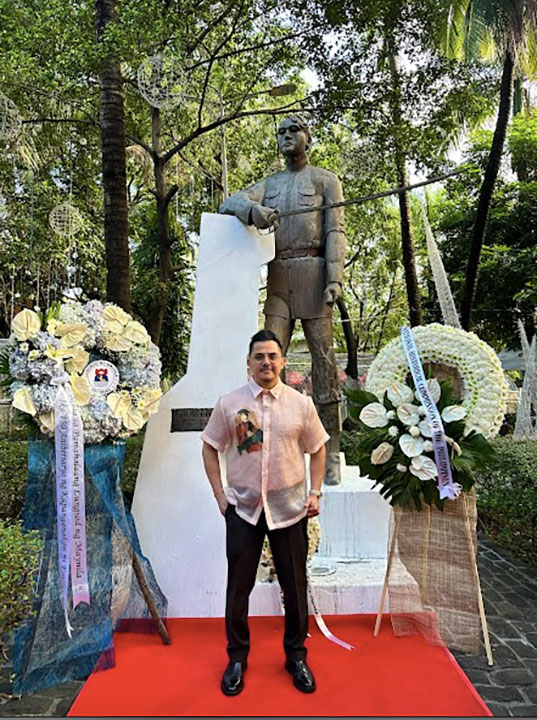
THE LEGACY of Emilio Jacinto, the “Brains of the Katipunan,” was honored on Dec. 15 as his descendants took part in official wreath-laying ceremonies marking his 150th birth anniversary at the Kartilya ng Katipunan monument in Manila. Present at the ceremony were filmmaker and writer Real Florido, a descendant of Jacinto, alongside Jeff Jacinto, representing the direct family line. The event was hosted by the National Historical Commission of the Philippines (NHCP) in partnership with the City of Manila,


CCP releases Simbang Gabi schedule

TO EMBRACE the rich tradition of Filipino Catholicism, the Cultural Center of the Philippines (CCP) is hosting its annual Simbang Gabi from Dec. 16 to 24. The nine dawn masses are set to happen every 5 a.m., culminating in the Christmas Eve Mass on Dec. 24 at 8 p.m. All will take place at the CCP Annex Parking Lot along Vicente Sotto St. at the CCP Complex in Pasay City. On Dec. 24, the CCP will also hold special pre-mass activities, starting at 7 p.m., including a nativity story and a performance by the Philippine Madrigal Singers along with soprano Myramae Meneses.


Ballet Manila brings back Snow White

BALLET MANILA is continuing its “Holiday Cheer Series,” a family oriented program for the Christmas season, with the timeless story of Snow White, which will run from Dec. 25 to 29, 4 p.m., at the Aliw Theater at the CCP Complex in Pasay City. This year’s Snow White features two alternating casts in the lead roles for the very first time: real-life couple Abigail Oliveiro and Mark Sumaylo, and the fresh pairing of Nanami Hasegawa and Romeo Peralta. Tickets are available via TicketWorld.


REP announces 89th season titles

ANCHORED on the theme “By love, transformed,” Repertory Philippines (REP) will present four diverse productions for its 89th season in 2026. First is Unplugged: Staged Readings Reimagined set for March 21, 22, 28, and 29. It will take on two beloved classic comedies: Noel Coward’s Private Lives, directed by REP’s Artistic Director Jeremy Domingo, and Anton Chekhov’s The Proposal, directed by Cara Barredo. Next is the musical The Man of La Mancha from June 5 to 28, to be directed by Nelsito Gomez, in partnership with the Manila Symphony Orchestra. Third is a fairytale, Cinderella, care of REP’s Theater for Young Audiences (RTYA), scheduled for August. These shows will be held at the Repertory Eastwood Theater, at the Eastwood Citywalk in Quezon City. The last production is Shakespeare’s comedy A Midsummer Night’s Dream, to be shown in September at Saint Cecilia’s Hall, St. Scholastica’s College, Manila. REP’s season passes are available to order, allowing patrons 30% off regular ticket prices, via https://tinyurl.com/REP89SeasonPass.

Fuel costs, climate fears, and the new Filipino car buyer

Freepik | Senivpetro

One of the most frustrating headlines Filipinos often read is rising fuel prices. This is because every time pump rates jump, many Filipinos quietly rethink one of their big purchases: their next car. Add growing concern about climate change and worsening floods, and purchasing cars can be very problematic with increasing concerns on fuel economy, emissions, and long-term cost of ownership.

The rising costs of fuel, mostly due to the war on Ukraine, supply disruptions, and global shortages of available supply, are well-known among car owners in the country. Just in the third week of November this year, per-liter price increased by P1, extending gasoline’s streak of hikes to seven weeks. Add this to the fact that so much of the country’s energy use still relies on oil and transport, households are directly exposed to global price volatility.

Unsurprisingly, fuel efficiency has moved from “nice to have” to “non-negotiable” for many buyers. This has resulted in growing interest in smaller engines, start-stop systems, and fuel-saving technologies, while some families delay upgrading to bigger vehicles out of fear of future fuel shocks.

Having a similar impact on Filipino car-buying behavior is the growing environmental awareness among consumers. A great reminder of the need to be environmentally aware came in the last month when several typhoons ravaged scattered regions in the Philippines resulting in flooding, landslides, and loss of lives.

While not blamed as the direct cause of climate change, severe weather events, worsening urban air pollution, and recurring floods have made the environmental footprint of vehicles a mainstream talking point rather than a niche concern. If a decade ago the typical car buyer only cared about horsepower, ground clearance, and monthly amortization, today more Filipinos are asking about carbon emissions, alternative powertrains, and whether their next purchase aligns with a more sustainable lifestyle.

Freepik | Aleksandarlittlewolf

This shift is most visible in the surge of interest in hybrid vehicles and full electric cars. Last year, around 18,690 units of electric vehicles were sold in the country. This year, the Chamber of Automotive Manufacturers of the Philippines, Inc. (CAMPI) forecasted a possible growth rate of 7% which could amount to nearly 35,000 electric cars sold, supported by the zero import tariffs on such vehicles and the rollout of new models.

“The growth of EV sales is expected to track overall industry sales growth, driven by increasing consumer adoption, supportive government policies, expanding charging infrastructure and entry of more players,” CAMPI President Rommel Gutierrez reportedly said in a BusinessWorld report.

Current numbers show that while 7% may be a too optimistic projection, electrified vehicle sales reached 20,662 units in the first nine months of 2025, representing 6% of total sales. Additionally, the Electric Vehicle Association of the Philippines (EVAP) and the Department of Energy (DoE) expect EV registrations to reach 35,000 by yearend, up from 29,715 as of July.

Still, the transition is far from straightforward. Even as electrified options gain traction in the country, a number of barriers prevent large-scale adoption. The most frequently cited challenge is the limited charging infrastructure, which remains heavily concentrated in Metro Manila and a few major cities.

Although, there has been major progress in this particular area. In 2023, only 300 public charging stations were available for EV owners. As of March of this year, that number has tripled throughout the archipelago with the DoE aiming to build several thousands more to over 7,300 public charging stations by 2028. Nearly 12% of these public charging stations are found among SM Supermalls (69), Ayala Malls (31), Megaworld Lifestyle Malls (5), and Robinsons Malls (4).

Beyond electrification, the larger story is how Filipino car-buying behavior itself is changing. A decade ago, decisions were influenced heavily by aesthetics, engine power, and monthly amortization. Today, the mindset is more analytical. Buyers weigh fuel consumption, potential long-term savings, maintenance and parts availability, resale value in a market that is slowly shifting toward efficiency, and the broader environmental impact of their choice.

Ultimately, what is happening in the Philippines mirrors a broader global pattern in which rising fuel prices and environmental pressures influence consumer mobility choices. However, local realities such as limited infrastructure, budget-conscious buyers, and a deeply car-centric culture, mean that the shift will be gradual rather than abrupt. And how quickly that change happens may shape the future of mobility in the Philippines. — Jomarc Angelo M. Corpuz

Fighting corruption is a sound economic strategy

STOCK PHOTO | Image from Freepik

Earlier this month the World Bank said it had lowered its growth forecast for the Philippine economy. Initially, the projection was 5.4% in 2026 and 5.5% in 2027. Its downgraded forecasts are now 5.3% in 2026, and 5.4% in 2027. These fall below the government’s own targets of 5.5% to 6.5% this year, and 6% to 7% for 2026 through 2028.

Reasons for the downgrade include mounting domestic headwinds, including climate-related disasters. Governance risk is also a culprit, as shown by the massive flood control corruption scandal. News of the widespread plunder of government funds by public officials has indeed weighed down investor confidence and economic performance.

“Corruption is unacceptable,” said Zafer Mustafaoğlu, World Bank’s Division Director for the Philippines, Malaysia, and Brunei. “The Philippines can leverage its strong economic foundation to implement bolder reforms that can unlock faster, more inclusive growth.”

The empirical evidence showing corruption’s toll on the economy is not only from the World Bank. Philippine government data also tells a story. Specifically, on Dec. 1, Department of Economy, Planning, and Development (DEPDev) Secretary Arsenio M. Balisacan acknowledged that reaching even the lower end of the government’s 2025 growth target is “very unlikely.”

It had also downgraded its 2025 target from the original 6% to 8% to a lower range of 5.5% to 6.5%. The reason: GDP growth slowed sharply to 4% in the third quarter — the weakest in four and a half years — largely due to restrained government spending. Again, this followed the infrastructure corruption scandal involving billions of pesos in alleged “ghost” and substandard flood control projects.

We believe that the government knows what needs to be done to address these slowing growth prospects at a time when they should be accelerating. Corruption has been identified as the main culprit for our economic woes. Therefore, it is almost a no-brainer that improving our economic outlook requires newer, more decisive, and more sustainable ways to combat corruption and increase confidence in Philippine governance.

PRIORITY REFORM MEASURES
During a meeting of the Legislative-Executive Development Advisory Council (LEDAC) on Dec. 9, President Ferdinand Marcos, Jr. called for swift action on four priority reform measures, namely the Anti-Dynasty Law, the Independent People’s Commission Act (IPCA), the Party-list System Reform Act, and the CADENA Act.

The proposed Anti-Dynasty Law seeks to limit the concentration of political power by restricting members of the same family from holding or succeeding in elective positions. The Anti-Dynasty bills in both chambers seek to bar spouses and relatives within the fourth degree of national or local officials from running in the same legislative district, province, or city.

The Independent People’s Commission Act aims to establish an autonomous body that will strengthen citizen oversight and accountability in government. Senate President Tito Sotto filed the IPCA in response to the multibillion-peso flood control scandal. Senate Bill No. 1512 proposes an autonomous investigative body with broad powers to address systematic corruption in public works projects, recover stolen funds, and prevent abuses that worsen disaster impacts.

The Party-list System Reform Act seeks to restore the system’s original intent by preventing its capture by political dynasties and vested interests. The bill requires the Commission on Elections to hold public hearings to verify that party-list nominees genuinely represent their claimed constituencies. It also bars nominees related to incumbents up to the third degree and those with links to government contractors or firms handling state-funded projects.

Meanwhile, the Citizens Access and Disclosure of Expenditures for National Accountability (CADENA) Act or Blockchain the Budget Act, requires agencies to upload and maintain budget-related records — including contracts, project costs, bills of materials, and procurement documents — on a digital platform accessible to the public. The measure aims to improve transparency by granting the public greater access to government spending and procurement information.

FIGHTING CORRUPTION
Running after the corrupt and jailing them are important steps in the fight against corruption. They send a clear message that the thievery of public funds that should go to the benefit of the people is unacceptable, and that it carries serious consequences.

But there are other equally important aspects to fighting corruption and instituting governance, on a wider scale.

For many decades, corruption has thrived in the Philippines because of weak systems, enabling some people to work around loopholes and exploit the gray areas of the law. The abovementioned pieces of legislation are bold decisive steps in introducing systemic reform. Enacting these reforms is a crucial step toward institutionalizing inclusive governance, where government processes are transparent, accountable, and accessible to all citizens.

Ultimately, when investors see that the government is taking steps to ensure transparency and accountability across the board, and when corruption is no longer the norm, more investments will pour in, translating into more jobs and greater opportunity for income generation.

Ordinary Filipinos are the most affected by slower economic growth, especially amid persistent inflation and high prices. When investor confidence weakens, job opportunities lessen and the cost-of-living crisis worsens. Tackling corruption is essential to restoring growth and delivering real benefits to the Filipino people. In turn, there will be greater trust in both the government system and its leaders.

By curbing corruption, promoting political equality, and ensuring citizen oversight, these measures can create a transformed and revitalized ecosystem in which every Filipino benefits from economic growth and efficient management of public resources, reinforcing trust in government and strengthening the country’s long-term development.


Victor Andres “Dindo” C. Manhit is the president of the Stratbase ADR Institute.

Nasdaq seeks to extend trading hours as Wall Street gears up for 24/7 move

The Wall Street sign is pictured at the New York Stock exchange (NYSE) in the Manhattan borough of New York City, March 9, 2020. — REUTERS/CARLO ALLEGRI/FILE PHOTO

NEW YORK — Nasdaq, one of the world’s largest exchanges that is home to tech companies Nvidia, Apple and Amazon, is planning to submit paperwork with the US Securities and Exchange Commission (SEC) on Monday to roll out round-the-clock trading of stocks, as it looks to capitalize on a global demand for US equities.

Investor demand for nonstop trading in US stocks has surged in recent years, prompting regulators to introduce new rules and green-light proposals from major exchanges to enable trading beyond normal market hours. The US stock market represents almost two-thirds of the market value of listed companies globally, while total foreign holdings of US equities reached $17 trillion last year, according to data compiled by Nasdaq.

Nasdaq’s filing with the SEC will mark its first formal step towards rolling out round-the-clock trading, five days a week. In March, Nasdaq President Tal Cohen said the exchange operator had started discussions with regulators. and expected to launch nonstop five-day-a-week trading in the second half of 2026. The New York Stock Exchange (NYSE) and CBOE Global Markets also recently announced plans to move to round-the-clock trading for stocks.

“There’s been this trend towards globalization for some time and we’ve seen the US markets themselves become much more global,” Chuck Mack, senior vice-president of North American markets at Nasdaq, told Reuters.

TWO DAILY TRADING SESSIONS
Nasdaq plans to expand trading hours of stocks and exchange-traded products from 16 hours to 23 hours, five days a week. Currently, Nasdaq operates three daily sessions during weekdays: the pre-market session from 4 a.m. to 9:30 a.m. Eastern US time, the regular market session from 9:30 a.m. to 4 p.m., and the post-market session from 4 p.m. to 8 p.m. When Nasdaq moves to 23/5, it plans to operate two trading sessions, with the day session starting at 4 a.m. and ending at 8 p.m., followed by a one-hour break for maintenance, testing, and clearing of trades. The night session will kick off at 9 p.m. and end at 4 a.m. the following calendar day.

The day session will continue to include pre-market, regular, and post-market trading hours, and will feature the opening bell at 9:30 a.m. and the closing bell at 4 p.m. In the night session, trades executed between 9 p.m. and 12 a.m. will be considered trades for the following day.

Under the new plan, the trading week will start on Sunday at 9 p.m. and end on Friday at 8 p.m. after the day session.

The successful rollout of round-the-clock trading hinges on upgrades to the securities information processor that displays the most accurate stock quotes on US exchanges. The central clearing hub, the US Depository Trust and Clearing Corp., is scheduled to roll out nonstop clearing for stocks by the end of 2026.

Advocates of the broader move to round-the-clock trading have argued it will allow investors, especially those based outside the US, to react more quickly to developments that happen outside regular market hours. Major Wall Street banks, however, are cautious about the push toward nonstop trading, citing concerns around lower liquidity, heightened volatility, and uncertainty over returns on investment.

‘OWN TERMS, OWN TIME ZONES’
While volumes during extended hours are usually much lower than during regular hours, demand has been booming for trading during overnight US hours, Mr. Mack said. Investors who want to trade 24/7 currently rely on off-exchange trading venues, or alternative trading systems, such as Blue Ocean, Bruce ATS, and OTC Moon.

“We see these things manifest themselves in the US equities market, through increasing demand for companies specifically listed on Nasdaq from geographies outside of the US, much more now than in the past,” Mr. Mack said. “If you think of those investors around the world, they want to access this huge market on their own terms and they want to do it in their own time zones.”

Trading hours on large stock exchanges such as the NYSE date back more than a century, to when trades were placed in person on trading floors by brokers who took orders on paper. While most stock trading is now done electronically, trading hours on most US exchanges have largely remained the same over the decades.

Earlier this year, Nasdaq filed with US regulators to introduce trading of tokenized stocks, as it sought to double down on a boom in tokenization amid an easing of crypto regulations under the Trump administration.

“When there’s market stress and volatility, the traffic in the market and the activity levels pick up significantly. We have built systems that are extremely resilient, have a lot of throughput, and have the ability to handle those types of situations,” Mr. Mack said. — Reuters

Reelist8 uses AI to lower barriers to homeownership

PHILIPPINE STAR/MIGUEL DE GUZMAN

REELIST8, a startup with an artificial intelligence (AI)-powered ecosystem, streamlines property transactions and renovations to boost homeownership in the Philippines.

“Our mission is to provide the pathway for more people to own the good life,” Reelist8 Chief Executive Officer Marianne Aubrey S. dela Cruz said in an interview with BusinessWorld on Nov. 14.

“The affordability aspect of the properties, as well as the gap between what you know and what you can do, it’s that expertise gap that we’re trying to solve,” she added.

Backed by the Department of Science and Technology, Reelist8 utilizes an AI-powered marketplace, Property Options, that enables users to discover and bid on low-market and unoccupied properties.

“This is our exclusive, invitation-only marketplace that connects serious buyers with verified sellers. Every bid is tracked. It’s fast, fair, and completely transparent,” Reelist8 Chief Operating Officer Borj de Borja told reporters during the launch of the platform.

“For qualified properties and qualified buyers, this new path to ownership can start at as low as 0.5% equity,” he added.

After securing the property, users can also generate real-time price quoting from floor plans through a project management tool called Buildin.

“Find the deal, fund the purchase, and start the build — this is the new ecosystem for real estate,” Mr. De Borja said.

The Reelist8 executive noted that access to quality property deals and insufficient income are among the main barriers to property ownership.

The 2025 ULI Asia-Pacific Home Attainability Index ranked the Philippines among the most expensive livable cities in the Asia-Pacific region, underscoring the disparity between residential property prices and income.

The report noted that condominium prices in Metro Manila reached 19.8 times the median annual household income, far above the affordable levels. Townhouses remain more unattainable at 33.4 times the average income.

“This is why 90% of Filipinos will never own a property,” Mr. De Borja said. “Not because they don’t want it badly enough, not because they don’t work hard enough, but because the system is broken.”

The Reelist8 seeks to expand its services and provide in-house financing following its venture into property transactions, according to Ms. Dela Cruz.

“We’re really gearing towards becoming a fintech company,” she said. “We want to be the fintech backbone for all Asia-Pacific real estate properties.” — Almira Louise S. Martinez

SEC warns public vs unauthorized Hajj pilgrimage offerings

BW FILE PHOTO

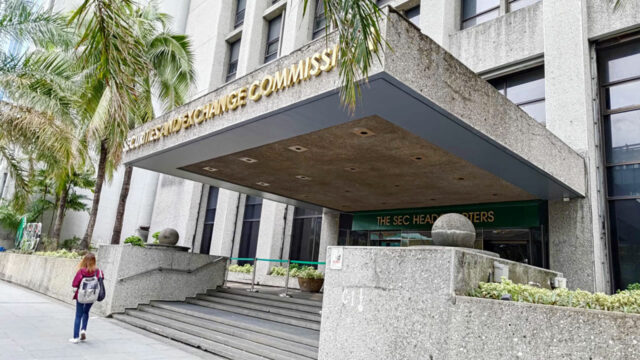
THE Securities and Exchange Commission (SEC) has issued an advisory cautioning the public against certain entities allegedly engaged in fraudulent and unauthorized activities related to the offering of Hajj pilgrimage packages.

According to the advisory, these entities promote packages promising airfare, accommodation, transportation, Hajj visas, and khemah (tent accommodations) through physical offices, websites, and social media, and collect funds from prospective pilgrims.

“The public is strongly reminded that under Republic Act No. 9997, otherwise known as the National Commission on Muslim Filipinos Act of 2009, only the National Commission on Muslim Filipinos (NCMF), through its Bureau of Pilgrimage and Endowment, is empowered to administer all programs, projects, and activities related to the annual Hajj pilgrimage to Mecca, Kingdom of Saudi Arabia,” the SEC said.

It added that the NCMF is responsible for formulating guidelines to ensure the timely processing of pilgrims’ travel documents and the equitable and reasonable collection of authorized fees.

Pilgrims are also entitled to choose their travel agencies and airlines or other means of transportation to and from the pilgrimage site.

The SEC emphasized that travel agencies are not authorized to organize, run, or sell Hajj packages. Their role is limited to selling plane tickets from the Philippines to Saudi Arabia.

The commission also noted that proposals for Hajj privatization are still pending in Congress. Private agencies cannot process, manage, or administer Hajj packages until such proposals become law.

“The public is strongly encouraged to report and file complaints regarding the unauthorized offering of Muslim pilgrimage (Hajj) packages by private entities with law enforcement authorities such as the National Bureau of Investigation (NBI) or the Philippine National Police for possible criminal action,” the SEC said.

The SEC did not provide the names of the entities. — Alexandria Grace C. Magno

Louvre museum closed as workers begin rolling strike

LOUVRE Museum — WIKIPEDIA

PARIS — The Louvre in Paris was closed on Monday after staff began a rolling strike to demand better working conditions and urgent renovations, disrupting access at the world’s most-visited museum at one of the busiest times of the year.

The walkout comes as the museum is still reeling from the brazen theft in October of jewels worth 88 million ($103.30 million) and recent infrastructure problems including a water leak that damaged ancient books.

The Louvre normally welcomes approximately 30,000 visitors daily. Because the museum is routinely closed on Tuesday, it will not re-open before Wednesday, when workers will have to decide whether the strike continues.

After unions warned of a strike last week, the museum remained shut at the usual opening time of 9 a.m. on Monday, shortly before a vote confirming the walkout. Some 400 out of the museum’s 2,200 employees supported the labor action.

“Due to a strike, the museum is closed for the day,” the Louvre said on X.

COMPLAINTS OVER WORKING CONDITIONS
The strike, called by the CFDT, CGT, and Sud unions, follows what they described as “increasingly degraded working conditions” and insufficient staffing.

The unions said employees were suffering from “an ever-increasing workload” and “contradictory instructions” that prevented them from carrying out their duties properly.

Union requests include hiring more permanent staff, particularly in security and visitor services, and improved working conditions. The unions also oppose a 45% ticket price increase from mid-January for non-European Union tourists. The hike is meant to help finance renovations.

“We know very well that visiting the Louvre is sometimes the trip of a lifetime. So we really don’t want to penalize visitors,” Elise Muller, national secretary of Sud Culture union, told Reuters.

“In fact, we feel like we’re the last ones trying to insist that the public should be able to visit a Louvre that is safe, a Louvre that has been neglected by its management for several years now.”

TOURISTS DISAPPOINTED
Some tourists came to the Louvre early on Monday despite the threatened strike, and found it shut.

“We get here and we see them taking the placards that say the time and turning them around, and one of them said the Louvre is closed,” said Gretchen Johnson, an American visitor from Texas.

“And so then we went up and asked: ‘when will it open?’ He said: ‘probably not this morning, for sure not this morning.’”

Melissa Frisvold, also from Texas, said: “As tourists we do not want to interfere in your politics. We just want to be gracious. So we understand when people need to go on strike.” — Reuters

ADVERTISEMENT
ADVERTISEMENT