Home Blog Page 5412

Megawide says 2023 a ‘renewed opportunity’ for more projects 

MEGAWIDE.COM.PH

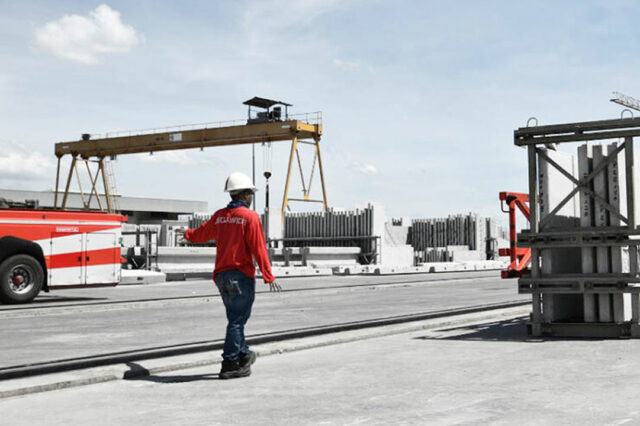
MEGAWIDE Construction Corp. aims to pursue more projects this year, including transport infrastructure, as it banks on the confidence of its stakeholders, the company’s chairman said.

“As for Megawide, we see 2023 as a renewed opportunity to leverage on the confidence of our stakeholders as we pursue developments that accelerate the country’s growth, including transport infrastructure,” Megawide Chairman and Chief Executive Officer Edgar B. Saavedra told BusinessWorld recently.

“We also have a positive outlook for our precast and construction solutions business, which can take on construction contracts as part of our value chain in servicing the other contractors who are doing the infrastructures and commercial buildings,” he added.

The company seeks to diversify its revenue streams apart from general construction. It recently reported that its unit, the Precast and Construction Solutions, has the potential to become a growth driver for the company after recording P720 million in revenues for the first nine months of 2022, or higher by 2% than the previous year.

According to Mr. Saavedra, the company’s optimism is partly anchored on the government’s rollout of more projects, including rail and real estate.

“Affordable housing is where we can help address the nationwide housing backlog,” he said.

According to some analysts, the Philippine central bank is likely to continue monetary tightening this year as inflation is expected to remain above target until the second quarter.

Despite this, Megawide’s Mr. Saavedra said the construction industry is seen to sustain its post-pandemic momentum.

“In terms of rising interest rates, the industry runs a self-sustaining business model and will not necessarily be burdened by the increased cost of borrowing,” he noted.

On the demand side, he said that the company sees the real estate sector, especially the end-user segment in affordable to mid-market housing, to continue to generate healthy sales.

“Banks are offering flexible payment terms and long-term financing amid the pressure on interest rates, which augurs well for the buyers,” he added.

“And of course, there is the infrastructure push from the government started in previous leaderships, which will keep construction companies very busy in the coming years. Overall, the industry will remain vibrant and be a significant contributor to the economy.”

For the January-to-September period of 2022, the company’s attributable net loss widened to P445.3 million from a loss of P80.8 million in 2021.

The company’s consolidated net loss reached P970 million compared with the consolidated net loss of P510 million in 2021. This was “due to a higher loss contribution from the airport business as well as landport operations,” Megawide said in a statement. — Arjay L. Balinbin

ACEN secures A$277-M loan for its RE projects in Australia  

ACEN Corp. said it had secured a total of 277 million Australian dollars to fund its renewable energy (RE) portfolio in Australia.

In a disclosure to the stock exchange, the Ayala-led listed energy company said its subsidiary ACEN Australia signed the syndicated green term-loan facility, its largest to date, with major international banks.

“This syndicated green term loan facility continues to build on the funding secured at the end of last year, and will be mobilized into our Australian portfolio. ACEN continues on the journey in decarbonizing Australia. It is exciting to work with quality financial institutions, and the appetite for quality investments is real,” Anton Rohner, chief executive officer of ACEN Australia, said in a media release.

The lending banks are comprised of Bank of China (BOC) in Manila and Hong Kong, CTBC Bank in Manila and Singapore, and Standard Chartered Bank in Australia. ACEN said Bank of China (Hong Kong) Ltd. was the green loan structuring bank, while Commonwealth Bank of Australia served as the agent for the loan facility.

Herbert Smith Freehills was legal counsel for ACEN Australia, while King & Wood Mallesons was the counsel for the lenders.

The loan facility is part of ACEN’s 600-million Australian dollar target for its renewables project in the foreign country. It will fund several projects in Australia, the first of which is the New England solar farm that is set to start operation by the middle of the year.

Once fully constructed, the solar farm project is expected to power approximately 250,000 households annually.

ACEN Australia represents ACEN’s renewable energy assets in Australia. It has more than 1.5 gigawatts of projects in the pipeline, under construction, or at the advanced stage of development.

ACEN said it sees its renewable energy portfolio in Australia to be a significant contributor to the company’s aspiration to expand its renewable energy capacity to 20 gigawatts by 2030. Its project pipeline in Australia encompasses solar, wind, battery storage, pumped hydropower and energy storage.

At the local bourse on Monday, shares in ACEN closed 1.47% higher or P7.60 apiece. — Ashley Erika O. Jose

Cebu Landmasters tops off P3-B Davao City project

CITADINES Paragon Davao

CEBU Landmasters, Inc. (CLI) has completed its P3-billion mixed-use development in Davao City which it envisions to be a lifestyle and convention destination.

“We’re pleased that The Paragon Davao will be completed just as Southern Mindanao fully opens up to travel and heightened business and leisure activity,” CLI Chairman and Chief Executive Officer Jose Soberano III said in a press release.

Inside the 80,000-square-meter (sq.m.) development, the company topped off a 26-storey residential tower called One Paragon Place and a hotel under a joint venture with the Villa-Abrille clan’s YHES, Inc.

One Paragon Place has 554 units set to be turned over in the fourth quarter of the year, it was named the “Best Condo Development” in 2021 by the PropertyGuru Philippine Property Awards.

The hotel, Citadines Paragon Davao, will be opening its doors in 2024 with 263 hotel rooms and serviced residences. It is the fourth hotel under CLI’s partnership with Ascott Ltd. and is expected to boost the company’s hotel revenues.

In the third quarter of 2022, the company posted a 21.3% increase in attributable net income to P649.88 million, while its nine-month income grew by 18.7% to P2.2 billion.

CLI’s nine-month revenues totaled P10.96 billion, up by 43.2%, after booking 111% revenue growth in its hotel and recreational developments.

The 2.9-hectare development will also have a convention center called The Paragon Davao Convention Center. It has a grand ballroom that can house 2,500 guests, event and meeting rooms, and pre-function areas.

The Paragon Davao was masterplanned by CallisonRTKL, Inc. and RMDA (Rolando Mercado Design Associates) Architects Co. It will also house The Paragon Davao Lifestyle Mall, which will have 4,398 sq.m. of retail, food and beverage outlets. — Justine Irish D. Tabile

DTI seeks more tech investments from US

THE Department of Trade and Industry (DTI) is eyeing more technology-related investments from the United States as part of efforts to improve the country’s electronics industry.

“The Philippine mission aims to establish and strengthen trade and investments’ linkages with global industry players, advance research and development, promote Philippine start-ups, and gain information on the latest consumer products, technologies, and innovations,” the DTI said in a statement on Monday.

The Philippine delegation promoted the country’s electronics sector in the Consumer Electronics Show (CES) 2023, spearheaded by the DTI and the Semiconductor and Electronics Industries in the Philippines Foundation, Inc. (SEIPI).

“Dubbed as the ‘most influential tech event in the world’, CES 2023 presents wide opportunities for the Philippines to promote its capabilities in the electronics industry and explore partnerships with academic and research institutions,” the DTI said.

“CES 2023 features manufacturers, developers, and suppliers of consumer technology hardware, content, technology delivery systems, and more; it also includes a conference program where the world’s business leaders and pioneering thinkers address the industry’s most relevant issues,” it added.

Other activities attended by the Philippine delegation in the US include a business forum networking session on Jan. 6 at Las Vegas Convention Center, and the World Electronics Forum meeting on Jan. 7.

Meanwhile, the DTI said that the Philippine delegation is undergoing business meetings at Silicon Valley until Jan. 11.

Some of the members of the Philippine delegation are representatives from Airspeed International Corp., Integrated Microelectronics Inc., Ionics EMS Inc., Kaertech Electronics Philippines, Manila Electric Co., the Department of Science and Technology, the Philippine Export Zone Authority, and the Department of Information and Communication Technology.

According to the DTI, the local electronics industry was the country’s top exporter, accounting for 61.5% or $45.9 billion of total Philippine merchandise exports in 2021. — Revin Mikhael D. Ochave

Star Magic, Mavx Productions collaborate on 3 films

STORIES about faith and finding love, exploring open relationships, and searching for the purpose of living, are the main themes of upcoming films starring Star Magic artists.

The three films are being done in collaboration with Mavx Productions (A Far Away Land and Doll House) as part of talent agency Star Magic’s 30th anniversary.

Naniniwala ako sa kakayanan ng Mavx (I believe in the ability of Mavx) to produce a lot of quality programs. Kaya naman ’pag may pini-pitch sa ’min na concept, masigasig din kami magprisinta ng aming artista (So when they pitch a concept, we are enthusiastic about suggesting our artists) so we can have good content. Good content and good artists will make a good movie,” Star Magic head Laurenti “Lauren” Dyogi said at a media conference held on Jan. 7 at District 8 Manila in San Juan City which was also streamed online.

The three films, directed by RC Delos Reyes, are I Love Lizzy, Swing, and Unravel, all of which present different perspectives on love.

A CHOICE
The first in the lineup to premiere is I Love Lizzy, starring Carlo Aquino and Barbie Imperial. The movie opens in cinemas on Jan. 18.

It follows Jeff (played by Mr. Aquino), a seminarian, who visits Albay for a vacation. While there, he meets Lizzy (played by Ms. Imperial), who serves as his tour guide. This leads to a romantic relationship with Lizzy which complicates his impending commitment to the priesthood.

“I enjoyed shooting in Albay kasi doon ako lumaki (I grew up there). Iyung mga places na napuntahan namin for the shoot, hindi pa ako nakakapunta doon kahit taga-doon ako (The places where we went to shoot, I hadn’t been there yet even if I am from that area),” Ms. Imperial said of the filming experience.

The two other films, whose release date have not yet been announced, were set and shot in Switzerland.

OPEN MARRIAGE AND MENTAL HEALTH
Real-life couple RK Bagatsing and Jane Oineza star in The Swing.  They play Kevin and Pam, a married couple struggling to have a child. After Kevin starts going out with different women, the couple, instead of separating, moves to Switzerland. They agree to have an open marriage setup. Then Pam has an affair with a Swiss man.

Mr. Bagatsing said that the story is new for the Filipino audience.

“It doesn’t mean that if it doesn’t work for (the characters), it doesn’t work for others. In other places, iyun iyung tugma sa kung ano iyung preference nila (it fits into their preferences),” Mr. Bagatsing said of the concept of open relationships.

The third film in the lineup is Unravel, starring Gerald Anderson and Kylie Padilla, who has agreed to collaborate with Star Magic for the film.

Unravel tackles the mental health issues of Lucy (played by Ms. Padilla) who meets Noah (Mr. Anderson) in Switzerland. Noah joins Lucy in a series of adventures prior to her plan to take her own life. They develop a deeper connection while together, which makes Lucy gain a different perspective.

“I was very careful with this project. I did not want it to be like we were romanticizing this subject. It was very sensitive,” Ms. Padilla said, adding that the story is very character driven.

“I really felt for my character Lucy… When you watch it, you’ll see that hopefully there is a more positive outlook in life,” she added. “After I read the whole script, naging positive iyung outlook ko (I developed a positive outlook) and it helped me out in a way that I didn’t think it would.

“I think it’s a good way to start a conversation because it happens. Suicide is a thing in our reality. I think this movie would be a good conversation starter,” she said.

THEATER OR STREAMING
While the three films were in production in 2022, the idea of theatrical distribution only came later.

“It’s still a risk with the turnout of cinema sales (globally and internationally). …because of the pandemic, lumakas ang streaming so malaking epekto iyun sa sales ng cinema (streaming strengthened because of the pandemic, so that had an impact on cinema sales),” Mr. Delos Reyes said.

Para sa isang director, iba pa rin kasi iyung feeling kapag ang pelikula mo, makikita mo sa big screen (A director gets a different feeling when they see their film on the big screen),” Mr. Delos Reyes said.

The three films are among Star Magic’s 30th anniversary projects. Last year, the talent agency kicked off its anniversary celebration with a US concert tour featuring several of its contract artists.  — Michelle Anne P. Soliman

Ayala Land gets high scores from global ESG rating firms

AYALA LAND, Inc. (ALI) said it recently received high scores from several global ESG (Environmental, Social, and Governance) rating firms.

The property developer secured a B rating for water management, as noted by the CDP (formerly known as the Carbon Disclosure Project). ALI secured the highest rating for a company in the Philippines, along with Manila Water.

“As the only Philippine member with leadership rating since 2020, ALI also maintained its A- rating on the CDP Score Report on Climate Change, which is higher than Asia’s regional average of C,” the company said in a statement.

The CDP is a global non-profit that runs the world’s environmental disclosure system, which is considered the gold standard in corporate environment reporting.

Also, ALI remains the only Philippine member in the Sustainability Yearbook of S&P Global since 2017.

For 2022, S&P Global ranked ALI within the 96th percentile, which is an improved score from 2021. This puts ALI’s sustainability performance at the top 4% in the real estate industry, and makes it the highest ranked company in the country.

ALI also retained its Dow Jones Sustainability Indices membership for the 9th year, while still being the only Philippine member.

“I am confident that we will reach our goals given the progress we’ve made to offset our carbon footprint for our Scopes 1 and 2 emissions in all our commercial properties,” ALI President and CEO Bernard Vincent O. Dy said in a statement.

“We will be clearly defining our year-on-year targets so that we can measure and reach our 2030 carbon reduction and 2050 Net Zero goals. To achieve this, we will be working in partnership with our suppliers and customers to ensure that our initiatives are in line with our business goals,” he added.

Grab PHL readies for more passengers, brings back ride-sharing

GRAB.COM

GRAB Philippines on Monday said its “Multi-Stop Ride and GrabShare” services are critical in addressing supply challenges, especially during the holiday season.

Grab said there is an ongoing shortage of drivers, but there are efforts to support passengers and existing drivers while remaining compliant with the fare matrix of the Land Transportation Franchising and Regulatory Board (LTFRB).

“Among such efforts include the Multi-Stop Ride and GrabShare,” Grab Philippines Senior Director for Operations Ronald Roda said in a statement.

He said the company is preparing to serve more passengers as the economy further reopens this year.

The LTFRB plans to open 4,433 slots for the application of transport network vehicle service or TNVS this year.

“This is a much welcome development for many passengers in the immediate term, and if we are to make mobility work for our commuters in the long term, there needs to be proactive, data-driven planning and forecasting of driver supply to ensure that at any given time, passengers are able to book a ride whenever they need to,” Grab’s Mr. Roda said.

“There is still hope for our state of transportation, and Grab remains deeply committed to playing an active role in supporting the needs and safeguarding the wellbeing of our passengers and driver-partners,” he added.

Grab’s Multi-Stop Ride allows two different passengers from the same pickup point to share two individual rides in a single booking.

Meanwhile, GrabShare allows passengers to share their rides with other passengers at more affordable fares.

“Similar to Multi-Stop Rides, GrabShare helps maximize the limited number of cars on the road while helping serve the high passenger booking demands on Grab’s transport business,” the company said. — Arjay L. Balinbin

T-bills partially awarded at higher rates

BW FILE PHOTO

THE GOVERNMENT partially awarded the Treasury bills (T-bills) it auctioned off on Monday as rates climbed across the board on expectations of further tightening by the Philippine central bank due to still-elevated inflation.

The Bureau of the Treasury (BTr) raised P14.75 billion from the T-bills it auctioned off on Monday, short of the P15-billion program, even as bids reached P27.995 billion or almost twice as much as the amount on offer.

Broken down, the Treasury raised P5 billion as planned via the 91-day T-bills with tenders reaching P11.875 billion, more than twice the programmed amount. The average rate of the three-month paper went up by 7.7 basis points (bps) to 4.232% from the 4.155% quoted for the tenor last week, with accepted rates ranging from 4.195% to 4.35%.

The government also made a full P5-billion award of the 182-day securities as bids for the paper reached P9.18 billion. The six-month paper was quoted at an average rate of 4.959%, up by 5.6 bps from the 4.903% seen in the previous week, with accepted rates ranging from 4.85% to 4.959%.

Meanwhile, the BTr raised just P4.75 billion from the 364-day debt papers despite demand reaching P6.94 billion, above the P5 billion on the auction block. The average rate of the one-year T-bill rose to 5.393%, 15.3 bps higher than the 5.24% fetched for the tenor last week. Accepted yields ranged from 5.5% to 5.325%.

At the secondary market before Monday’s auction, the 91-, 182- and 364-day T-bills were quoted at 4.2673%, 4.874%, and 5.2682%, respectively, based on PHP Bloomberg Valuation Reference Rates data provided by the Treasury.

“Results were mixed in today’s Treasury bills auction as the Auction Committee decided to fully award bids for the 91- and 182- day T-bills while partially awarding the 364-day security,” the BTr said in a statement on Monday.

A trader said in a Viber message that the government made a partial award of its T-bill offer as rates climbed across all tenors as inflation remained well above target last month.

“Treasury bill auction yields were again higher week on week … after the latest inflation data was at a new 14-year high of 8.1% in December 2022, which could still justify further local policy rate hikes, which could follow any further hike in Federal Reserve rates on Feb. 1,” Rizal Commercial Banking Corp. Chief Economist Michael L. Ricafort likewise said in a Viber message.

Headline inflation quickened to 8.1% in December from 8% in November and 3.1% in December 2021. This was the fastest since the 9.1% print in November 2008.

This was below the 8.3% median estimate in a BusinessWorld poll of 11 analysts and within the 7.8-8.6% estimate given by the Bangko Sentral ng Pilipinas (BSP) for the month.

Full-year inflation averaged 5.8%, matching the BSP’s forecast but faster than its 2-4% annual target and the 3.9% average posted in 2021.

The BSP has said it will likely need to continue raising rates this year as inflation is expected to remain above its 2-4% target in the first semester.

In 2022, it hiked borrowing costs by 350 bps, bringing its policy rate to 5.5%.

Meanwhile, the Fed last year hiked its fed funds rate by 425 bps to a 4.25%-4.5% range and is likewise expected to continue tightening, albeit at a slower pace, to bring down elevated inflation.

The Fed’s first meeting for this year is on Jan. 31 to Feb. 1, while the BSP Monetary Board will hold its own review on Feb. 16.

On Tuesday, the BTr will offer P35 billion in reissued 25-year Treasury bonds (T-bonds) with a remaining life of 12 years and eight months.

The Treasury wants to raise P200 billion from the domestic market in January, or P60 billion through T-bills and P140 billion via T-bonds.

The government borrows from domestic and external sources to finance its budget deficit, which is expected to reach P1.47 trillion this year or 6.1% of gross domestic product. — A.M.C. Sy

The Great Podcasting Market Correction

AS THE podcasting universe has matured in recent years it has picked up many of the trappings of more established media industries, ranging from a flourishing trade press to its very own awards show circuit. This past year, podcasting finally achieved one of the ultimate signifiers of middle age — an unsettling realization that the best days of its high-spirited youth may now be behind it.

While overall podcasting revenue and listenership continue to grow, the runaway exuberance many felt about state of the medium has dissipated lately, even among some of its most ardent practitioners. “At what point do you have to just call it, and say that rather than being a ‘big thing’ in waiting, it’s just a run-of-the-mill ‘medium thing,’” Nick Hilton, a podcast entrepreneur, wrote in a recent blog post, entitled “2022: The Year That Podcasting Died.”

It was illustrated with a gravestone.

Comic hyperbole aside, there is an unmistakably dour vibe now permeating podcast land — and for good reason. Following a prolonged buying spree, some of the industry’s biggest spenders are now pulling back due to growing concerns about the economy and the possibility of weakening advertising sales in audio.

Sirius XM Holdings, Inc. has slowed down its dealmaking, and Spotify Technology SA is freezing its US budget for new podcasts, according to people familiar with the situation. Amazon Music has pulled back on new deals and instructed its team to reduce offers that were already on the table but unsigned, said two people who asked not to be identified because of the sensitivity of the negotiations. In some cases, all three companies are offering smaller upfront payments to new shows and seeking to keep more of the resulting advertising revenue, according to several people familiar with the matter. Shows that used to be able to claim 80% of advertising sales are now often forced to settle for 50%, two people said.

Representatives from Amazon.com, Inc. and Spotify declined to comment. Scott Greenstein, SiriusXM’s president and chief content officer, said the company feels “very good” about its podcast slate and looks forward to “growing it even further next year” with the launch of several new shows.

“A lot of these platforms acquiring and spending big dollars in the podcast space have made those bets and are putting those businesses to work,” said Chris Peterson, founder and CEO of Modish Media, an audio advisory firm. “This is a little bit of a slowdown period, but we will continue to see more M&A as more companies and money come into the space.”

During the boom years, it felt like podcast licensing deals were ever escalating in value. But lately there have been signs that the steep upward trajectory may be tapering off.

Earlier in 2022, Jacob Weisberg, the founder of podcast producer Pushkin Industries, began looking around for a new licensing partner. Pushkin’s current deal with iHeartMedia, signed in 2020, was about to expire. Pushkin started working out a promising new arrangement with Amazon that would have paid the podcast network more than $10 million in exchange for the rights to distribute and sell advertising on the company’s shows, which include Malcolm Gladwell’s Revisionist History and Rick Rubin’s Broken Record, over a several-year period.

But then the retail giant returned with bad news. Due to spending constraints across Amazon, the audio division could only offer an amount significantly less than the initial proposal, according to people familiar with the negotiations. Pushkin, which declined to comment, has so far balked at the reduced offer.

“There are just so many shows out there, so many good shows, and it’s harder and harder to break through.”

Meanwhile, lucrative exits, once common for podcast entrepreneurs, are getting harder to come by. In 2018, Rob Herting left his job at Hollywood talent powerhouse Creative Artists Agency to start QCode, a podcast company aiming to use his Hollywood connections to capitalize on the booming industry. Mr. Herting raised $6.4 million and assembled a lineup of scripted series performed by A-list performers including Demi Moore, Matthew McConaughey, and Rami Malek.

Earlier last year, Mr. Herting considered cashing out. He was approached by a prospective buyer and over the summer engaged in a series of conversations about a potential acquisition. According to people familiar with the chats, he was seeking more than $100 million. But to date, Mr. Herting has yet to sell. A spokesperson for QCode said the company has received multiple offers but hasn’t yet been able to find the right partner or deal structure, citing market timing. QCode declined to comment on the valuation number.

In the four years since Mr. Herting founded QCode, the number of Americans who listen to a podcast every month has grown to 38 million from 26 million, according to Edison Research. Ad sales have increased to more than $1 billion per year from nearly $800 million, according to the IAB. In 2022, multiple categories of ad buyers, including retailers, surpassed their estimated total spending from the prior year, according to data from Magellan AI, which tracks podcast ad buys.

“It’s not doomsday,” said John Goforth, chief revenue officer at Magellan.

But in recent years, even as revenues kept rising, the number of podcasts competing for attention and ad money grew at an even faster rate. In the first quarter of 2020, Spotify had 1 million podcasts on its platform. By September of last year, the number had more than quadrupled to 4.7 million. A similar explosion in supply happened across the industry. The resulting glut of programming helps explain, in part, how an industry that is still expanding can now often feel like one that is contracting. The overall pie may still be growing but lately most everyone’s relative slice has gotten smaller.

For years, many entrepreneurs believed that podcast advertising would not only continue to grow but also improve on traditional radio ads with more targeted messages and a more automated sales process. Likewise, the big tech platforms hoped that they would make back the money they spent on podcast acquisitions, in part, by instituting a type of advertising that would make podcast ads more like those on the web — easy to buy, no matter one’s budget, and simple to manage.

But for the most part, getting an ad inserted into a show still requires a hands-on sales team and time-intensive dealmaking. As a result, the imagined efficiencies haven’t materialized, which, in turn, has made it harder for the tech platforms to justify new, outsized acquisitions.

The surge in podcasts has also created a new and unresolved technological challenge. How, with so much to choose from, can consumers find something new to listen to? While some companies have invested in or launched products to aid in podcast discovery, a sense of stagnation has taken hold at the top of the industry charts. As of August, none of the 10 most popular podcasts in the US had debuted in the last couple of years. For new podcasts, gaining widespread attention can feel harder than ever — not the best dynamic for producers looking to attract outside investment in new products.

“A big factor in Campside’s growth was in podcasts that landed on or near the top of the charts and stayed there, allowing us to create a network effect for our other shows,” said Matthew Shaer, co-founder of Campside Media, a podcast production company. “If we were a studio starting out in 2022, I think we would find that much harder to do — there are just so many shows out there, so many good shows, and it’s harder and harder to break through.”

The podcast industry is also suffering from the broader, macroeconomic downturn hurting media and tech companies. The Media Titans 30 Index, which includes audio companies like Spotify and SiriusXM, is down nearly 40% over the past year, shedding more than $300 million in market value.

Employment in the podcasting industry is also feeling less secure. Acast AB, which in May signed a three-year deal with Marc Maron, recently laid off 15% of its work force because of the concerns about a potential recession. SiriusXM is planning to reduce its staff. Recently, Spotify also laid off some of its podcast editorial workers in addition to employees at its Gimlet Media and Parcast studios. In November, National Public Radio revealed that it would institute budget cuts and a near hiring freeze.

Even so, many in the industry expect 2023 to be a strong year, no matter what the skeptics are saying. YouTube formally entered the podcast space in August, and networks that have posted shows on the platform hope to benefit from its billions of users. Multiple companies see international markets as an untapped opportunity to distribute domestic hits abroad, and the need for new technology is high, possibly presenting different M&A opportunities.

“I’m optimistic because the same things that have always worked in podcasting continue to work,” said Ben Riskin, principal of Room Tone, an audio advisory firm. “The medium and model continues to evolve, but we have to trust our own instincts about how to grow rather than letting uninformed speculation drive our definition of success.” — Bloomberg


Pueblo de Oro taps online platform to make loan processing easier

PUEBLO DE ORO Development Corp. (PDO) is tapping an online platform that will make processing of loan applications easier for homebuyers.

The residential development arm of the ICCP Group signed a partnership agreement with Snapp Ventures, Inc. (SVI), owner and operator of the mortgage brokerage system Matchmo.

Matchmo is described as an online platform that digitalizes the process of home loan applications for home buyers and real estate professionals.

SVI will assist potential borrowers in loan applications with Matchmo’s network that include 21 local banks.

“With the partnership, Pueblo de Oro offers an additional option to buyers of our properties nationwide through Matchmo’s partner financing institutions,” PDO President and Chief Operating Officer Rhoel Alberto B. Nolido said in a statement.

Pueblo de Oro is known for developing affordable housing projects in high-growth areas, including Cagayan de Oro; Malvar and Sto. Tomas in Batangas; San Fernando, Pampanga; and Mactan in Cebu.

EDC to power Mc Bride’s shift to renewables 

ENERGY Development Corp. (EDC), the renewable energy arm of First Gen Corp., said on Monday that it will power Mc Bride Corp.’s shift to renewable energy.

“We are more than glad to be a part of Mc Bride’s decarbonization journey by helping them reduce their carbon footprint even as they continue to grow their business through our reliable source of 100% clean and green power,” Carlos Lorenzo L. Vega, vice-president and head for power marketing, trading and economics of First Gen.

In a media release, EDC said MC Bride will switch its operations to renewables, which will involve the latter’s entire 1.39-megawatt (MW) power demand for its two facilities in Caloocan.

Mc Bride is a provider of plastic packaging to various manufacturers of fast-moving consumer goods in the ASEAN region.

“Aware of the impact of plastics to the environment, the company is taking great strides to reduce this through various measures such as implementing proper waste segregation and disposal, and energy conservation,” EDC said.

Mc Bride’s move to renewable energy will allow the company to reduce its carbon footprint by 7,231 tons per carbon dioxide equivalent each year.

The company will also launch its polyethylene terephthalate bottle recycling facility to accelerate the reduction of its carbon footprint. It said it “hopes that First Gen will also be able to power it with 100% RE.”

“In line with our green goal, Mc Bride is really looking for a partner that has the same mission and care for the environment. We actually want to slowly shift to the use of renewable energy, especially considering our present situation,” Harvey S. Keh, president of Mc Bride, said.

EDC is sourcing the renewables from its geothermal facility whose output is considered baseload energy. The company’s renewable energy brand is called Geo 24/7.

On its website, EDC said that it has an installed renewable energy capacity of 1,476.59 MW. It also said geothermal energy is the company’s major power source at an installed capacity of 1,181.8 MW or 61.3% of the country’s total. — Ashley Erika O. Jose

Avatar 2 is 7th highest grossing film with $1.7 billion in global sales

TRINITY Jo-Li Bliss in Avatar: The Way of Water

TICKET sales for Walt Disney Co.’s Avatar: The Way of Water have reached the $1.7 billion mark, making it the highest-grossing film released in 2022.

The sci-fi epic, directed by James Cameron, is ahead of Paramount Global’s Top Gun: Maverick, the Tom Cruise-action picture which has generated close to $1.49 billion in ticket sales since its May debut. That includes a two-week re-release in theaters in December. Top Gun: Maverick got less than half of its sales from overseas — and never opened in China — whereas the Avatar sequel scored 69% internationally, with China alone producing $169 million.

The Way of Water’s haul goes some length to vindicating Burbank, California-based Disney’s vision for the Avatar franchise, which includes sequels every two years through 2028. Disney acquired the Avatar rights as part of its $71 billion purchase of 20th Century Fox in 2019.

Mr. Cameron’s original Avatar, released in 2009, is the highest-grossing film of all time with $2.9 billion in sales. Like that picture, The Way of Water started off strong but not spectacularly, before gaining steam over the coming weeks. Over four weekdays between Christmas and New Year’s, the film took in around $300 million, more than most pictures generate in a year.

The softening economy and three hour-plus length of the film many have delayed many people from seeing it immediately after its Dec. 16 release, according to Kevin Near, an analyst with Bloomberg Intelligence.

“I really suspect there is a large lump of consumers out there who were just trying to make it to Christmas before taking their family out to go see it,” he said.

Now, the test will be whether The Way of Water can continue to generate these kinds of sales with consumers returning to work and students going back to school. The film benefits from a movie release schedule with little competition, notes Barton Crockett, an analyst with Rosenblatt Securities. These box office numbers should allow the picture to be profitable for Disney, even given its high production costs.

“My bet is that the movie can make money at this point,” Mr. Crockett said. — Bloomberg

ADVERTISEMENT
ADVERTISEMENT