Mida Food President and Chief Operating Officer Enrique Miguel Valles — PHOTO FROM TOYOTA MOBILITY SOLUTIONS
1 of 2
Mida Food President and Chief Operating Officer Enrique Miguel Valles — PHOTO FROM TOYOTA MOBILITY SOLUTIONS
The Logistics Platform of Toyota Mobility Solutions supports Mida Food’s goal to achieve optimal truck utilization, which is one of the considerations in lowering delivery costs. — PHOTO FROM TOYOTA MOBILITY SOLUTIONS
MIDA FOOD Distributors, Inc. (or Mida Food) — a leading seafood importer, distributor, and processor in the country — is now benefiting from one of the “flagship new mobility solutions” of Toyota Mobility Solutions Philippines, Inc. (TMSPH). The platform aims to digitalize the logistics processes and support the operating efficiency and growth of local enterprises.
The specialized system is designed to automate daily planning, which covers delivery routing, loading optimization, vehicle assignment, and trip booking. TMSPH’s Logistics Platform also offers real-time delivery status tracking for the daily management of business. Through the platform, Mida Food can address the limitations in its delivery operations, such as the difficulty in route planning due to various client restrictions, challenges with truck capacity vis-à-vis demand and product load, and lack of visibility in delivery status.
The Logistics Platform streamlines administration and generates the ideal route and loading plan that easily integrates the variable delivery conditions. This supports Mida Food’s goal to achieve optimal truck utilization, which is one of the considerations in lowering the delivery costs. Drivers are also equipped with a mobile application for real-time sending of delivery status updates to Mida Food.
Prior to the platform introduction, TMSPH together with Mida Food conducted a series of ground operation study to improve end-to-end processes — from order taking to warehouse operation, and dispatching. In this process, TMSPH applied Toyota’s quality management principles and effective practices based on its solid experience in manufacturing, warehouse management, logistics and distribution in the Philippines.
In a release, Mida Food President and Chief Operating Officer Enrique Miguel Valles said, “TMSPH has been instrumental in modernizing the way we plan, manage, and track our goods movement during our last mile fulfilment. (The company’s inputs), as we continue to improve our systems, have been invaluable, and together we are realizing efficiencies through its logistics platform.”
He added, “We are thankful for TMSPH’s assistance in helping us continually add value to the products and services we offer our customers.”
Mida Food provides quality frozen seafood products for businesses in the food service industry, as well as individuals and households, through its retail brand, Pacific Bay.
ASIALINK Finance Corp. has tied up with e-commerce firms Lazada and Shopee to offer an easier way for clients to pay their loans, it said in a statement over the weekend.
“One of the challenges we want to overcome is [the] payment of loans. We partnered with online and offline payment solutions so that our clients can easily settle their loans,” said Robert B. Jordan, Jr., chief executive officer of Asialink.
The finance company said the partnership with Shopee is powered by ECPay, an electronic purchase and payment system provider, to allow offline and online channels with a one-stop-shop option.
The team-up with Lazada is powered by Bayad, a full-service fintech company that offers a suite of financial products and services, available in its physical and digital touchpoints.
Asialink said it has tapped into these platforms to make it easier for its clients to pay their loans and insurance premiums. Its clients can also pay through ECPay via Gcash, 7-Eleven CLIQQ, Truemoney, ExpressPay, Gaisano Grand, Cebuana, Tambunting and ECPay accredited sari-sari or family-owned stores.
Loan payments can also be made via Bayad’s all-in-one pera transaction applications, the Bayad Online, a web-based facility accessible; and the Bayad App, a mobile-based solution downloadable via Google Play, App Store, and Huawei App Gallery.
Asialink also has payment partnership deals with Asia United Bank, BDO, Eastwest Bank, RCBC and Robinsons Bank.
Asialink’s loan products cater to the unbanked and under-served sector. It offers competitive interest rates at a streamlined application process.
“There’s a huge untapped market there,” Mr. Jordan said. “Business owners who have a truck or car and in need of additional capital can come to us. It doesn’t matter what the model of the vehicle is, as long as we see value in it.”
YIELDS on government securities (GS) declined last week as the market expects smaller rate increases from the US Federal Reserve and the Bangko Sentral ng Pilipinas.
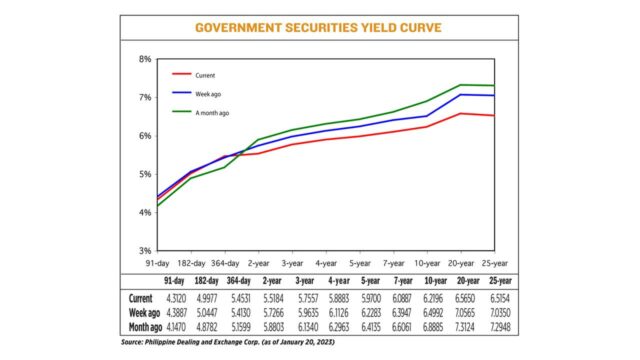
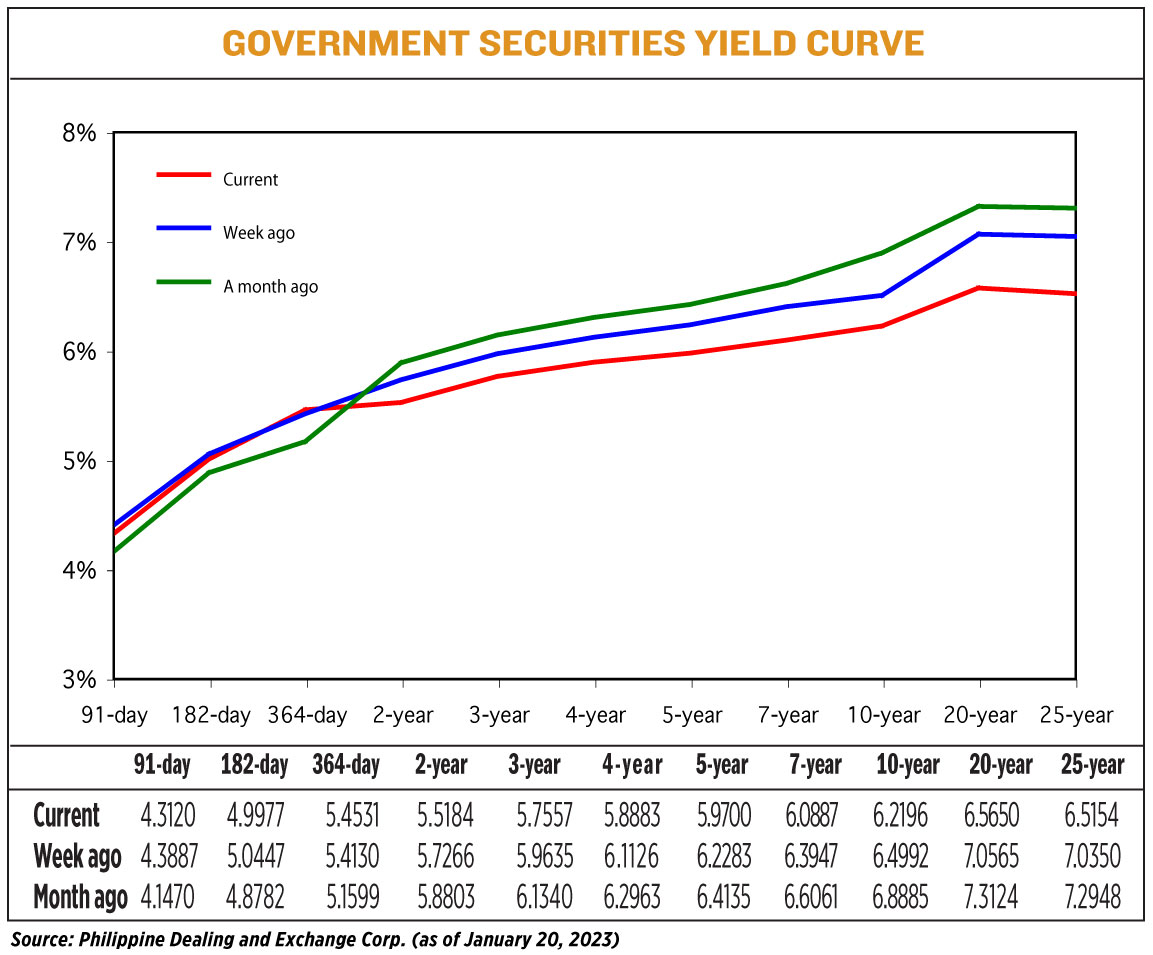
GS yields, which move opposite to prices, dropped by 23.44 basis points (bps) on average week on week, based on PHP Bloomberg Valuation Service Reference Rates as of Jan. 20 published on the Philippine Dealing System’s website.
Rates at the short end of the curve fell except for the 364-day Treasury bill (T-bills), which saw its yield inch up by 4.01 bps to 5.4531%. Meanwhile, the 91- and 182-day T-bills decreased by 7.67 bps and 4.7 bps to fetch 4.312% and 4.9977%, respectively.
At the belly of the curve, rates of the two-, three-, four-, five-, and seven-year Treasury bonds (T-bonds) decreased by 20.82 bps (to 5.5184%), 20.78 bps (5.7557%), 22.43 bps (5.8883%), 25.83 bps (5.97%), and 30.6 bps (6.0887%), respectively.
The long end of the curve likewise moved downwards as yields on the 10-, 20-, and 25-year debt papers fell by 27.96 bps (to 6.2196%), 49.15 bps (6.565%), and 51.96 bps (6.5154%), respectively.
Total GS volume traded amounted P13.842 billion on Friday from the P30.902 billion recorded on Jan. 13.
A bond trader attributed the downward movement of GS rates last week to investors’ preference for higher-yielding longer tenors amid expectations of slower tightening by the Fed and the BSP.
“More on improved risk sentiment as drop in US Treasury yields and weak US data are causing traders to price in a rate cuts this year, thus lessening pressure on emerging markets like the Philippines to match Fed rate hikes,” the bond trader said in a Viber message last week.
“Short-term tenors corrected slightly lower week on week while long-term PHP BVAL (Bloomberg Valuation Service) yields continued to post the biggest declines for the second straight week after recent dovish signals or possible smaller rate hikes by the Fed and locally,” Rizal Commercial Banking Corp. Chief Economist Michael L. Ricafort said in a Viber message.
On Wednesday, Philadelphia Federal Reserve President Patrick Harker signaled a less hawkish stance, Reuters reported.
“I expect that we will raise rates a few more times this year, though, to my mind, the days of us raising them 75 basis points at a time have surely passed,” Mr. Harker said about the heavy rate hiking cycle embraced by the Fed in the previous year.
Other US Fed policy makers are also expected to support for a higher and continuous interest rate hikes for the year to bring the fed funds rate to 5%-5.25% from 4.25-4.5% currently amid slowing inflation and weaker economic activity.
The US central bank increased borrowing costs by 425 bps last year.
Back home, BSP Governor Felipe M. Medalla this month said the central bank is likely to raise benchmark rates by 25 or 50 bps at its meeting on Feb. 16 as it still needs to anchor inflation expectations.
The BSP hiked rates by 350 bps in 2022 in an effort to bring down elevated prices, with its key rate now at 5.5%.
For this week, the bond trader said yields may continue to move downward “as long as US data continue to support the assumptions of a pause or cut in policy rates.”
Rates could also drop amid increased supply of T-bonds following the Treasury’s full awarding of its first two offerings for the month. —M.I.U. Catilogo
MOSCOW — Russia’s Agriculture Ministry said it expected Russia to export 55-60 million tons of grain in the 2022/23 season, and that it had no plans to lower the grain export quota, according to the Interfax news agency.
President Vladimir Putin said earlier last week that Russia needed to maintain stable food reserves, if necessary by restricting some exports, but did not provide specific details.
It was not clear whether Mr. Putin was suggesting that Russia might limit exports of major food commodities such as grain, which much of the world depends on. — Reuters
Financial technology (“fintech”) is not only heard but is mostly felt as well in recent years in the Philippines. The marriage between finance and innovation have been so far fruitful and seemingly limitless. Data from a study done in 63 countries showed that fintech is positively and significantly correlated with financial stability (Daud et al., 2021). This simply tells us that the Philippines is on the right track when it comes to innovation in finance.
Embracing change
Prior to fintech being introduced in the Philippines, major banks relied heavily on fixed assets to operate and scale. Customers did so as well, only being able to complete financial transactions in person and within certain hours of the day. Without digital means, all transactions and inquiries had to be completed over the counter, at the nearest branch, mall, or kiosk with the help of a live agent.
Since there were no disruptors to their regular offerings, banks were not challenged to deliver game-changing services to consumers, which is why business opportunities were limited during those times,” said UnionBank Head of Data Science Solutions Josh Bosiños. “Consumers were boxed in doing traditional banking, which limited access to those who could afford to bank,” Mr. Bosiños added, describing the pre-fintech state of finance in the country.
“The problem was, most banks were not geographically accessible, which barred the majority of Filipino citizens — especially from rural areas — from opening their own bank accounts,” shared RCBC Executive Vice-President and Chief Innovations and Inclusion Officer Lito Villanueva. In 2019, it was reported that only 29% of Filipinos owned a basic deposit account. “It was difficult for Filipinos to rely on brick-and-mortar operations just to receive, withdraw, or send cash to pay for basic services and essential goods since that incurred extra costs of transportation, fuel, time, energy, distance, and offsetting work days,” Mr. Villanueva added.
With the continuous rise of technology since the late ’90s, we’ve seen the disruption of the traditional finance industry. Smartphone owners — which account for the majority of Filipinos — can now participate in the formal banking system without having to leave their homes, allowing convenience, safety, ease, and inclusion when it comes to financial transactions. Adapting to the changing trends, the finance industry has learned to be quick and agile as new innovations are introduced.
Non-banking financial institutions (NBFIs) were one of those which leaned hopeful to the beginning of the fintech revolution. Nontraditional ways to apply for or open bank and insurance accounts were encouraged to millions of Filipinos. This also triggered the development of regulatory sandbox by the government in support of the inevitably growing finance landscape. This meant that the marketplace started expanding for a very big consumer base, with gradually easing restrictions. Alternatives like credit cards and cashless payments were born.
Challenging the status quo
In photo (from left to right): Patricia Poco-Palacios (Global Dominion president & COO), Robert B. Jordan, Jr. (Global Dominion vice-chairman & CEO), and Ruben Y. Lugtu II (Global Dominion chairman of the Board)
But fintech was not without challenges as more and newer technologies unfold amidst socio-political and cultural changes in the Philippines. “Resistance is inevitable, but results always alleviate resistance,” said Global Dominion CEO and Vice-Chairman Robert B. Jordan, Jr., describing their early digital transformation journey as one the Philippines’ leading financing companies. “Innovation is not always about systems or machines; it can also be about new ways of doing things to achieve better results,” Mr. Jordan added.
There’s still no stopping fintech’s growth against all odds, including the wrath of the COVID-19 pandemic. In fact, the event has been a catalyst for innovation. The pandemic has paved the way to innovation for many finance firms in the country. Those with a ton of paperwork for transactions in the past had to develop digital ways to transmit documents and communicate with their colleagues and teams. Lockdowns drove significant increases in the adoption of finance-related mobile applications. And over the protracted period, fintech startups were able to accelerate the uptake of their digital services over-and-above traditional incumbents (Fu & Mishra, 2021).
Financial inclusion is also accelerated, as banks like RCBC and UnionBank, have learned to widen their reach and concentrate their efforts on banking the unbanked and underserved citizens from far, rural areas. Aside from a cash-lite society, fintech has also allowed the rise of “phygital” — the fusing of digital and physical features in services and adding a human touch to formal banking.
RCBC launched MoneyBela: Barangayan Banking, a financial solution banking more Filipinos in regional communities using e-tricycles and live agents in regional communities. “Technology has enabled the finance ecosystem to be a thriving ground for empathetic innovations, financial inclusion, and empowerment for all, regardless of class, gender, age, community, and background,” Mr. Villanueva uttered.
UnionBank went as far as initiating further artificial intelligence (AI) exploration to aid in improving the state of financial inclusion and improve risk management in the country, through AI-powered alternative credit scoring and risk models, to make it possible to offer loans and credit to a broader range of individuals and small businesses.
In Global Dominion, customer experience is at the core of digital transformation. “Even before the pandemic, we started servicing our borrowers online because many of them were reaching out through various social media sites. But that didn’t mean we stopped communicating with them offline; in fact, we have been adding more branches through the years,” said Global Dominion President and COO Patricia Poco-Palacios. “We intend to meet them wherever they want, and as much as possible, whenever they want, as well. This is where technology has been instrumental to our development,” Ms. Palacios added. The latest in Global Dominion’s digital transformation endeavor involves exploration of alternative credit scoring methods.
The future is now
When asked about the essence of innovation in the economy, University of Asia and the Pacific (UA&P) School of Economics Professor Jose Leo Lemuel Caparas, Jr. pointed to the economist Joseph Schumpeter’s description of innovation as part of process of technological change in a free market, “arranging the economic requirements for implementing an invention — and as such, for a nation to grow and develop, there must be a critical mass of businesses doing innovation.” However, he added that while exciting developments can be seen, like in the case of the rising Buy Now Pay Later (BNPL) scheme in the Philippines, there is still much improvement needed in other aspects of finance, e.g., credit card accessibility and market penetration.
In one of the many studies done in Asia, digitalization in finance is said to effectively promote the level of innovation. In cities with low levels of urban commercial attractiveness, digital finance plays a larger role in raising the level of urban innovation, due to its inclusiveness and balanced development impact (Li et al., 2022). This further pushes the need for countries to invest money, time, and effort in cultivating innovative ideas to continue revolutionizing finance in the years to come.
“It’s not a one-size-fits-all approach anymore. As a means to financially include everyone, banks are now multi-faceted organizations that offer not just finance solutions, but livelihood and lifestyle solutions — payments, savings, investments, insurance, loans, telemedicine, and the like,” Mr. Villanueva shared closing his interview.
“In a country where several areas are heavily dependent on cash transactions, I’ve seen how fintechs and banks revolutionized our day-to-day transactions. New technologies enabled us to do cashless transactions that introduced convenience, low-cost fees, and secure financial integration. And with the vast amount of data that FIs [financial institutions] have, it is fascinating how many firms have been leveraging their data to do data science and AI to discover new opportunities, improve products and services, and further strengthen their businesses and operations,” Mr. Bosiños uttered, surfacing how much UnionBank is investing in AI for the future of banking.
For UnionBank, Global Dominion, and RCBC, it is just a matter of time before technology becomes fully integrated to financial services, and it will be for the mutual benefit of the consumers and financial service providers. With Web 3.0, more advancements are expected to unfold.
Contributors:
Lito Villanueva, RCBC Executive Vice-President and Chief Innovations and Inclusion Officer (Co-authored “Embracing Change”) Patricia Poco-Palacios, Global Dominion President and Chief Operating Officer Robert Jordan, Jr., Global Dominion Vice-Chairman and Chief Executive Officer Josh Bosiños, UnionBank Head of Data Science Solutions Jose Leo Lemuel Caparas, Jr., University of Asia and the Pacific — School of Economics Professor
References:
Daud, S. N. M., Ahmad, A. H., Khalid, A., W.N.W. Azman-Saini, & W. N. W. (2021). FinTech and financial stability: Threat or opportunity? Finance Research Letters 47 (2022) 102667
Fu, J. & Mishra, M. (2022). Fintech in the time of COVID-19: Technological adoption during crises. Journal of Financial Intermediation 50 (2022) 100945
Li, Z., Chen, H., & Mo, B. (2022). Can digital finance promote urban innovation? Evidence from China. Borsa Istanbul Review 2214-8450
Spotlight is BusinessWorld’s sponsored section that allows advertisers to amplify their brand and connect with BusinessWorld’s audience by enabling them to publish their stories directly on the BusinessWorld Web site. For more information, send an email to online@bworldonline.com.
COS releases Lunar New Year Capsule Collection 2023
AS LUNAR New Year marks the arrival of Spring, the COS Lunar New Year 2023 capsule collection is a nod to the auspicious belief that flowers in full bloom bring good luck in the new year. Consisting of looks for women and men, the collection puts forward a palette of pastels like lavender, cornflower blue, and muted teal, accompanied by a range of elevated wardrobe staples for more dressed-up occasions. Bold, tonal suiting acts as a stylish day-to-night solution while graphic stripes are here to make a colorful statement. Padded pieces are introduced to provide warmth and style in the transitional months — light enough to wear as a buildable layer or as outerwear when the weather gets warmer. The collection is available at the COS Store in SM Aura, 26th Street, corner McKinley Parkway, Taguig City.
Uniqlo launches Spring/Summer Collection
GLOBAL apparel retailer Uniqlo launched the Uniqlo U 2023 Spring/Summer collection last week. Designed by Artistic Director Christophe Lemaire and his Uniqlo R&D team in Paris, the new collection themed “A Sense of Ease” as it offers a modern, timeless modular wardrobe centered on clothes that make life easier. The collection layers pieces in soft matte cotton and AIRism cotton with airy utilitarian outerwear to create a complete range of versatile basics with often unexpected but thoughtfully considered proportions. The color palette combines understated neutrals and rich blues and beiges with bright pops of green, orange, yellow, purple, and pink. Womenswear offers versatility; refined, seamless activewear that is interchangeable between exercise and everyday life. Tailoring is soft and easy. A sheer shirt with patch pockets in matte-finish cotton is a fresh staple. The new jeans are slightly curved with a fitted leg to create a fresh silhouette. Menswear has a complete range of versatile basics for a modern yet timeless look. Seersucker striped shirts and cotton shorts are cut wide for an easy summer silhouette. An oversized utility jacket is a new proportion for outerwear. The crew neck 3/4 sleeve T-shirt has been further perfected with a boxy fit. Parachute pants are utilitarian and effortless with adjustable drawstrings at the hem. When it comes to accessories, the collection has Blocktech hats and jet caps, and a new bucket bag in two sizes. The drawstring shoulder bag returns for another season.
Longchamp offers The Box-Trot
WITH spring in the air and summer on the way, the Longchamp woman steps out with her Box-Trot. This elegant and Parisian bag has a distinctive, feminine design, with sleek, structured lines and smooth, subtly patinated calf leather. The eye is drawn to the bag’s oversized metal medallion featuring the Longchamp horse and rider. With its palette of pop-to-pastel shades, the Box-Trot takes up the season’s Glamping theme. It comes in both canvas and leather versions in pale pink, natural colors, shades of candy and lemon feature a tonal racehorse medallion, while an orange version is complemented by the same accessory in gold-tone metal. Longchamp is exclusively available at Rustan’s Makati, Rustan’s Shangri-La, Rustan’s Cebu, Greenbelt 5 and Rustans.com.
SHELL recently introduced its newest brand ambassador, Piolo Pascual. The veteran actor said that his “lifestyle and mobility habits are fueled” by the energy company. Mr. Pascual is an avid cyclist, among other “adrenaline-wired activities,” and said he gets “second wind” at Shell stations and the services these offer.
“I’m happy to represent a brand that is about quality, service, and reaching as many Filipinos as possible,” he declared. “When I’m out on a ride and stop at one of their stations, I can see how much they take care of their customers. Their passion for service is a value that’s important to me, helping me meet all my needs on the road. That’s why I trust Shell.”
The celebrity is seen as a down-to-earth, relatable person. He is a car owner, a motorcycle driver, an athlete, a traveler, and someone who looks for quality and security.
He fuels up early in the morning to make sure his vehicle is in top shape before he hits the road. As he travels cross-country, he knows he can refresh himself with snacks and drinks at any of the more than 1,100 Shell stations across the Philippines.
Pilipinas Shell Vice-President and General Manager for Mobility Randy del Valle said, “We are happy about Piolo’s positive experience with us which shows our commitment to our customers. We will keep innovating and finding ways to better our service across our network of mobility stations.”
“My partnership with Shell is something I’m completely sure of, and I hope that more people can see all the reasons why, in the months ahead,” Mr. Pascual said. He is able to redeem rewards and get exclusive perks through the Shell Go+ app at over 1,100 Shell stations nationwide.
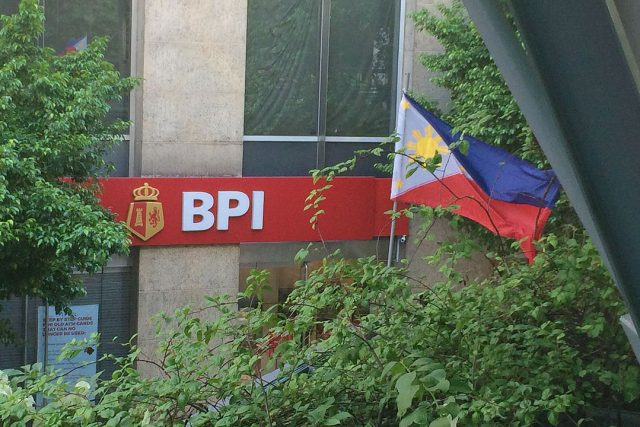
THE share price of Bank of the Philippine Islands (BPI) moved sideways last week after shareholders approved its proposed merger with Robinsons Bank in a move seen to boost the former’s revenues and market presence.
A total of 11.84 million BPI shares worth P1.32 billion were traded from Jan. 16 to 20, data from the Philippine Stock Exchange (PSE) show.
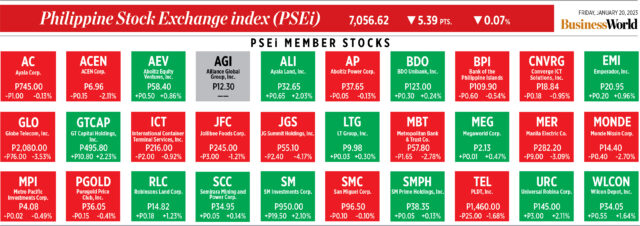
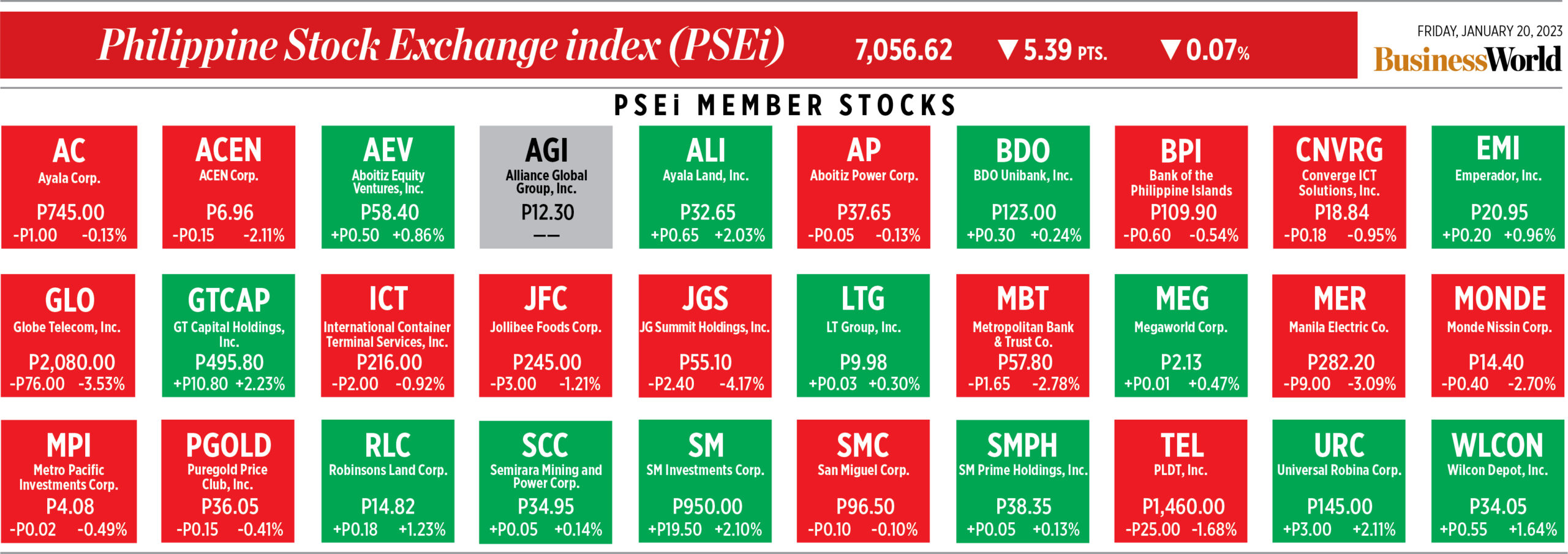
The Ayala-led bank’s share price went down by 0.1% week on week, finishing at P109.90 apiece on Friday from its P110-per-share close the previous week. Year to date, however, the stock has risen by 7.7%.
“The merger was seen as a bullish move for both companies as the two companies can unlock various synergies. However, we think this is a good move for Robinsons Bank,” Mercantile Securities Corp. Head Trader Jeff Radley C. See said in an e-mail interview.
Regina Capital Development Corp. Head of Sales Luis A Limlingan said in a separate e-mail that the market anticipated the approval of BPI’s merger with Robinsons Bank days ahead, which led to its rally above P108.
“A day after the PR (press release) was released, BPI rallied by almost 3%, implying that the investing public generally viewed the merger positively,” he said.
On Jan. 17, the Ayala group’s banking arm secured shareholders’ approval of its merger with Robinsons Bank, with the former as the surviving entity.
BPI President and Chief Executive Officer Jose Teodoro K. Limcaoco said on Tuesday that the merger is expected to boost BPI’s customer and deposit base, and tap into the Filipino-Chinese market, which other banks have an advantage over BPI.
The Ayala-Gokongwei tie-up is expected to boost BPI’s bottom line this year as well.
Mr. Limcaoco said that Robinsons Bank is estimated to contribute up to 7% to BPI’s revenues and add 5% to 6% to its net income. He forecast BPI’s bottom line to have reached around P41 billion in 2022, and around P43 billion this year, with Robinsons Bank’s contribution to be around P2 billion.
BPI reported a third-quarter net income of P10.14 billion, up by 77.3% from P5.72 billion in the same quarter in 2021.
In the nine months to September last year, BPI’s net income grew by 74% to P30.70 billion from P17.64 billion in the same period in 2021.
However, Regina Capital’s Mr. Limlingan warned of other factors that could affect the local bourse, and BPI directly.
“As always, investors should keep their tabs on how the BSP (Bangko Sentral ng Pilipinas) will react to the upcoming Fed’s policy meeting. This is because a sharp unexpected increase in our local benchmark rate could potentially dampen loan demand and strain the paying capacity of BPI’s borrowers,” Mr. Limlingan said.
For the week, analysts are looking out for profit taking on BPI’s stock as it is currently trading at a 52-week high.
Mercantile Securities’ Mr. See placed BPI’s support levels at P100-P105 and resistance levels at P115-P125.
Meanwhile, Mr. Limlingan placed the bank’s support and resistance levels at P106.20 and P115.40, respectively.
“On the technical front, BPI’s already at a premium to its historical key price levels. Therefore, profit taking may take place in the next few days,” he said. — Bernadette Therese M. Gadon
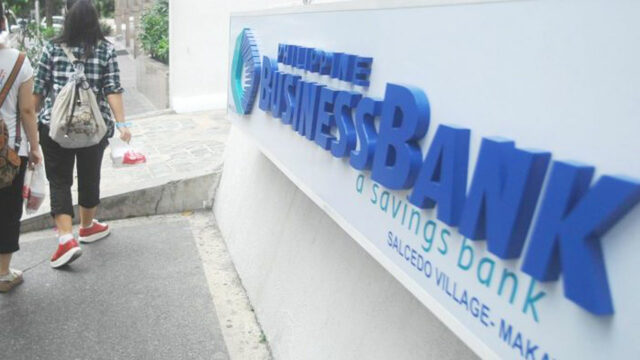
PHILIPPINE Business Bank (PBB) has hiked its capital stock as it aims to expand its operations, it said on Friday.
In a disclosure to the local bourse, PBB said its board of directors has approved to raise the bank’s authorized capital to P15 billion from P10 billion.
Members of the board approved the bigger capital stock by adding 1.37 billion common shares priced at P10 apiece, from 870 million common shares priced at the same amount.
Meanwhile, preferred shares will remain steady at 130 million.
“The increase in authorized capital stock is in preparation for the continuing expansion of the bank’s core deposit-and-lending business. An expanded capital base will allow the bank to grow its risk assets and provide financing to its clients,” PBB said.
The lender said the capital hike has been approved by the Securities and Exchange Commission.
PBB’s board of directors likewise approved an amendment to the bank’s Articles of Incorporation to reflect the increase.
The bank also amended its preferred shares to convertible as it would lower PBB’s financing costs.
“The conversion of the preferred shares to common is in line with the Bank’s capital raising exercise. A strong capital base will help the Bank sustain its business, prepare for future growth, maximize returns, and mitigate strategic risks,” the lender said.
In a filing last week, PBB said its principal shareholders have completed the subscription payment to the private placement of P1.25 billion worth of shares to cover PBB’s capital stock increase. This was equal to 125 million common shares at P10 apiece.
Shareholders first paid P312.5 million in September last year. The remaining balance of P937.5 million was paid this month. These are booked under deposit for future stock subscription.
PBB’s net income climbed to P306.280 million in the third quarter of 2022, up by 9.3% from the P280.294 million posted in the same quarter a year prior, on the back of a higher core income and an expansion in its loan portfolio.
This brought the bank’s net income for the first nine months of 2022 to P926.6 million, 15.2% higher year on year.
PBB’s shares closed unchanged at P11 apiece on Friday. — K.B. Ta-asan
PARIS — French authorities said on Friday they had asked oilseed processor Saipol to tighten procedures on handling imports after genetically modified (GM) rapeseed, cultivation of which is banned in the European Union (EU), was found growing wild last year.
The plants were found by anti-GM crop association Inf’OGM growing along a road linking a port terminal with a crushing facility operated by Saipol, a unit of oilseed group Avril, at Rouen in northern France, French health and safety agency ANSES said in a report.
EU countries including France import large volumes of GM crops, including varieties of rapeseed, soybeans and maize, notably to feed livestock.
However, cultivation of GMO varieties is rare due to public opposition and no GMO rapeseed has been approved for growing. Imports of GM rapeseed, also used to produce biodiesel fuel, mostly come from Canada and Australia to complement non-GM supply from Europe.
ANSES had requested that Saipol improve prevention of grain spilling from lorries and increase monitoring of wild plants in an extended port zone, the agency said, adding there was little risk of contamination of local farmland.
Saipol said in an e-mailed statement that it had taken additional measures, including more frequent weeding of wild plants.
“These actions seem to be effective and we will continue to monitor the matter with the authorities and reinforce the measures if needed,” it said.
The French Agriculture Ministry, which had requested ANSES’ report, said in a separate statement that inspections of other factories in France that process imported GMO rapeseed had been launched last year. — Reuters
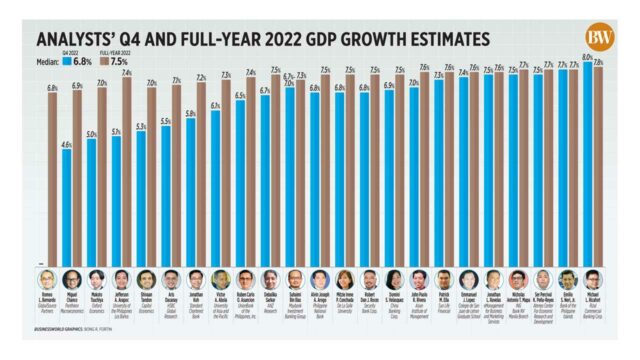
THE PHILIPPINE ECONOMY may have slowed in the fourth quarter of 2022, but still likely hit the upper end of the government’s full-year growth target, according to analysts. Read the full story.