Home Blog Page 5257

Retired generals call on gov’t to curb corruption

EKATERINA BOLOVTSOVA-PEXELS

By John Victor D. Ordoñez, Reporter

FORMER senior military and police officers and government officials on Tuesday urged the government of President Ferdinand R. Marcos, Jr. to boost its anti-corruption efforts.

In a Philippine Star ad, the retired officials who called their group the Advocates for National Interest said they support the president’s call to “tighten checks and balances” to ensure public funds are not stolen.

They cited the need for legislation that would outlaw political dynasties and push electoral reforms to reduce vote-buying and “money politics.”

“Any country dreaming of one day becoming peaceful, strong and respected must once and for all slay the monster that is corruption,” they said.

They also said public funds are often used for personal gain, depriving Filipinos of basic government services.

“We believe that addressing these societal dysfunctions — corruption, poverty and injustice — will require good governance by elected and appointed officials imbued with integrity, intelligence and competence.”

The Philippines ranked 116th  out of 180 countries in Transparency International’s Corruption Perceptions Index released on Feb. 1.

The country’s score remained unchanged at 33 out of 100 in a scale that measures perceived levels of corruption in the public sector. A score of 100 shows that a country is “very clean,” while a zero means it is “highly corrupt.” 

The Philippine score was below the global average of 43 and the Asia-Pacific region’s average of 45.

The watchdog said democracy has been declining in some of the world’s most populous countries including the Philippines, India and Bangladesh.

Maria Ela L. Atienza, who teaches political science at the University of the Philippines, said it is difficult to expect good governance from an administration that is led by someone from a prominent political dynasty.

“If retired generals and former government officials can articulate their experiences, then there could be a wider pressure for better governance, accountability, strong and capable institutions and greater substantive democratization,” she said in a Viber message. “There must be more multisectoral efforts and pressure to effect change.”

Ms. Atienza said the Philippines suffers from weak political parties and accountability mechanisms that lead to poor government service.

“People and institutions will continue to be inclined toward supporting corruption or turning a blind eye when a culture of special treatment and favors are given economic or procedural value,” Hansley A. Juliano, a political economy researcher studying at Japan’s Nagoya University’s Graduate School of International Development in Japan, said in a Facebook Messenger chat.

“What they call for is very straightforward and consistent with good governance advocacy,” he added.

“Corruption first festers, and is most corrosive in public office,” the retired officials said. “It is most damaging when perpetrated against the public coffers.”
Marcos, Zelensky discuss ties amid Russia’s invasion of Ukraine

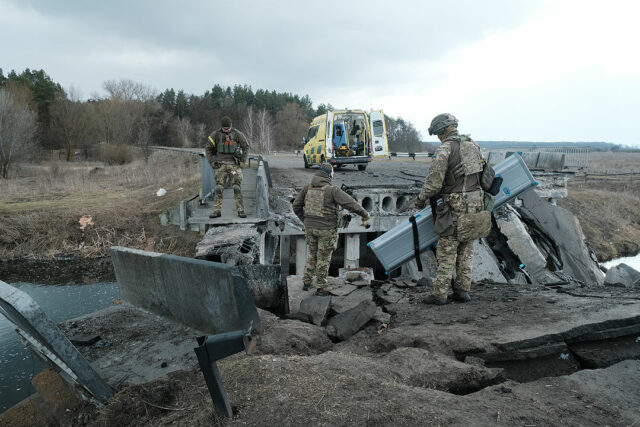
UKRANIAN SOLDIERS check out a destroyed bridge in Hostroluchchya, Ukraine. — DEPOSITPHOTOS/OLES_NAVROTSKYI

PHILIPPINE President Ferdinand R. Marcos and Ukraine President Volodymyr Zelensky talked on the phone on Monday night to discuss cooperation amid Russia’s invasion of the European nation.

The Philippines was ready to help Ukraine peacefully resolve its conflict with Russia,” the Philippine leader tweeted on Tuesday.

“I told him that we in the Philippines are watching with admiration the bravery and nationalism that has been displayed by the Ukrainians during this crisis,” he said.

Mr. Zelensky thanked Mr. Marcos for “supporting the sovereignty and territorial integrity” of Ukraine. “We discussed further deepening of cooperation, in particular on international platforms,” he tweeted.

Ukraine had been seeking to arrange a phone call between the two heads of state to discuss the war against Russia, Denys Mykhailiuk, counselor of the Ukraine Embassy in Malaysia, told reporters last month.

“The message of President Marcos reflects the pacifist and cautious position of most nations calling for the ending of armed conflict in Ukraine through a peaceful approach,” Rommel C. Banlaoi, chairman of the Philippine Institute for Peace, Violence and Terrorism Research, said in a Viber message.

As of Feb. 5, more than 7,000 civilians have died during Russia’s invasion of Ukraine including 438 children, according to the Office of the United Nations High Commissioner for Human Rights. The number could be higher, it said.

DFA has said the Philippines has a long tradition of providing refuge to civilians fleeing from conflict and in protecting them “through our many decades of involvement in peacekeeping.”

The agency said it has “strongly supported” the European Union’s (EU) 10-point plan for stronger European coordination on welcoming people fleeing the war in Ukraine and the United Nations’ resolution on the Russia-Ukraine war.

“We are with you in your search for peace,” Mr. Marcos told Mr. Zelensky. — John Victor D. Ordoñez

Pimentel says charter change should focus on political dynasties, party-list 

SENATE PRIB

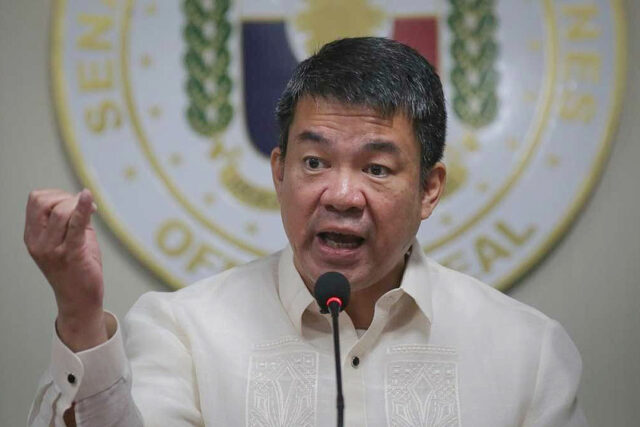
THE SENATE minority leader on Tuesday said initiatives to change the 1987 Constitution should focus on political provisions that will enhance the countrys system of governance.   

Senator Aquilino Martin KokoD. Pimentel III recommended amendments in the party-list system and introducing safeguards against political dynasties.   

He also proposed a shift in the countrys form of government to parliamentary with a unicameral system.   

President Ferdinand R. Marcos, Jr. said on Sunday that changing the 1987 Constitution is not a priority of his administration even as some lawmakers push for amendments, particularly economic provisions to supposedly allow more foreign investments.    

The President is correct to say that there are better things that need to be done first and that we can generate foreign investments without amending the Constitution,Mr. Pimentel said.   

He added that even reforms to the countrys political system can wait in favor of more pressing issues.” 

What is more urgent now is to alleviate the struggles of ordinary Filipinos,he said. If we can help them improve their daily lives, then we give them better chances in participating in the growing economy.”  

Mr. Pimentel said the government, for now, can focus on fully realizing the benefits of the amended Public Service Act, the Retail Trade Liberalization Act, and the Foreign Investment Act.  

These laws, Mr. Pimentel said, were amended to specifically cater to the present needs of the nation by stimulating the economy.  

We should maximize the implementation of these economic laws first,he said. Alyssa Nicole O. Tan

Water, climate change expert appointed to DENR 

NIGS.SCIENCE.UPD.EDU

PRESIDENT Ferdinand R. Marcos, Jr. has appointed a geologist with expertise on water and climate change as undersecretary of the Department of Environment and Natural Resources (DENR).  

In an appointment letter dated Dec. 28 and made public on Feb. 14, the president appointed Carlos Primo C. David as DENR undersecretary for scientific and technical services.  

Mr. David earlier served as a convenor and trustee of the Albert del Rosario Institute, which provides strategic solutions to domestic governance, socio-economic, and other policy concerns.   

He was also a convenor of the Philippine Business for Environmental Stewardship and is a member of the panel of experts of the Climate Change Commission.  

He also previously worked as executive director of the Department of Science and Technology Philippine Council for Industry, Energy, and Emerging Technology Research and Development (DoST-PCIEERD).   

He was also one of the project leaders of DoSTs Nationwide Operational Assessment of Hazards (NOAH) Program, which is now under the University of the Philippines.  

The geologist is the son of Randall “Randy” S. David, a journalist and sociologist who is a vocal critic of the Marcos administration.  

The newly appointed undersecretary completed his doctorate in environmental science and geology from Stanford University in 2003. He is also a geology professor at the University of the Philippines. John Victor D. Ordoñez

P202.5-M worth of smuggled agri-fishery goods seized in Jan. 

BOC

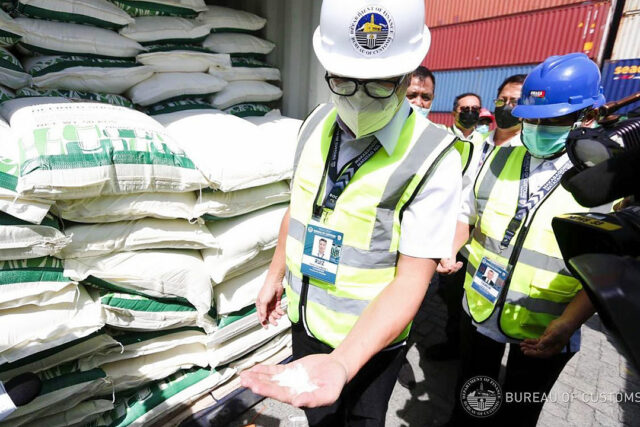
THE DEPARTMENT of Agriculture (DA) on Tuesday said it seized P202.5 million worth of smuggled farm and fishery products at the Manila International Container Port (MICP) in January.  

In a statement, the DA said the misdeclared and misclassified goodsinside a total of 24 container vans were confiscated in several operations. 

The smuggled commodities include red and white onions, potatoes and roasted sweet potatoes, imitation crab stick, frozen boneless beef, and assorted meat products.  

The DA said the container vans were consigned to Seaster Consumer Goods, Inc. and Asterzenmed, Inc.  

The operations were conducted in cooperation with the Philippine Coast Guard, Bureau of Customs, Bureau of Plant Industry, Bureau of Animal Industry, and Bureau of Fisheries and Aquatic Resources, according to the DA.   

It also reported that the goods which originated from Hong Kong, China have no Sanitary and Phytosanitary Clearance. Sheldeen Joy Talavera

Parts of Mindanao placed under flood, landslide alert due to trough of LPA 

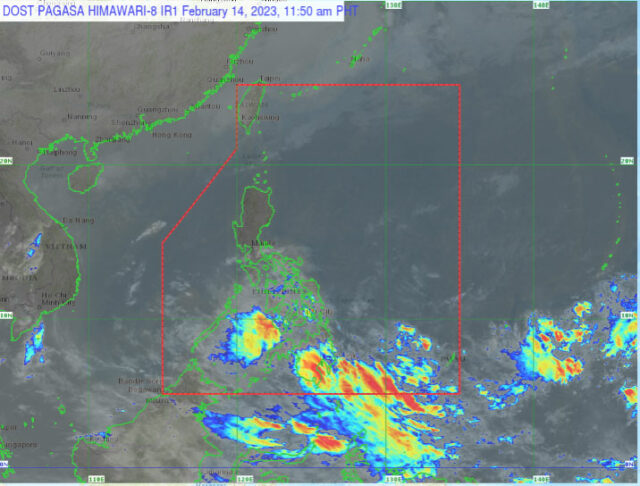
PARTS of the southern Philippine island of Mindanao have been placed under alert for flooding and landslides due to rains brought by the trough of a low pressure area (LPA), according to state weather bureau PAGASA.  

In its Tuesday weather bulletin, PAGASA said the LPA is outside the Philippine area but will bring moderate to heavy rains in the regions of Zamboanga Peninsula, Davao, and Soccsksargen.   

The local government of Dipolog City, capital of Zamboanga del Norte province, suspended classes in all levels on Tuesday due to continuous downpour.  

Light to moderate rains were also expected over the rest of Mindanao and the Visayas in the central part of the country, PAGASA said.   

Under these conditions, flooding and rain-induced landslides are possible,the agency said, especially in high-risk areas and those that have seen significantrainfall in the past weeks.   

Several parts of Mindanao were affected by flooding and landslides in January, triggered by continuous rains brought by LPAs, shear line, and localized thunderstorms.   

Although no tropical cyclone entered inside the Philippine Area of Responsibility during the month, several areas in Mindanao incurred damages due to the aforementioned weather systems,PAGASA said in its climate assessment for January.   

Aside from Mindanao, unusual rains last month poured into 14 of the 17 regions in the country, affecting over 2.1 million people, based on the last related monitoring report of the national disaster management agency dated Feb. 3.   

There were 45 reported deaths, with 20 confirmed and 25 still up for validation. Another seven were missing while 11 were injured.  

Cost of damage to infrastructure mostly roads, schools, and flood control structures was estimated at almost P522 million, according to the National Disaster Risk Reduction and Management Councils (NDRRMC) report.  

Damage to agriculture reached P1.135 billion, with more than 47,000 farmers and fisherfolk affected, NDRRMC said. MSJ

President reorganizes communications office 

PRESIDENTIAL Communications Office Secretary Cheloy Velicaria-Garafil  monitors the press briefing at the Media Center in Malacañang on Jan. 10, 2023. — PHILIPPINE STAR/KRIZ JOHN ROSALES

PRESIDENT Ferdinand R. Marcos, Jr. has signed an executive order reorganizing the Presidential Communications Office (PCO), which will have five undersecretaries and 15 assistant secretaries supporting the secretary.    

In a statement on Monday, the PCO said Executive Order (EO) No. 16, signed on Feb. 13, is intended to consolidate its communications activities and ensure efficient delivery of its core services.”   

The order also tasks the PCO to closely coordinate with the presidential adviser for creative communications, a position held by Paul D. Soriano, a filmmaker and godson of the president.  

The PCO, formerly the Office of the Press Secretary, was renamed in December under Mr. MarcosExecutive Order 11.  

The new order also places state-owned media networks such as the People’s Television Network, Inc., APO Production Unit, and International Broadcasting Corporation under the supervision of one of PCOs assistant secretaries.   

The National Printing Office will also be placed back under the PCOs supervision.   

Other communications agencies that will be directly under PCO are: the Presidential Broadcast Service-Bureau of Broadcast Services; Bureau of Communication Services; News and Information Bureau; Freedom of Information-Program Management Office; Philippine Information Agency; and the Presidential Broadcast Staff-Radio Television Malacañang.  

Under EO 11 signed Dec. 29, the Office of the President was streamlined into five offices.    

These are the Executive Office, Office of the Chief Presidential Legal Counsel, Private Office, Office of the Special Assistant to the President, and the PCO. John Victor D. Ordoñez

Comelec denounces killing of Maguindanao del Sur election officer  

PHILSTAR
PHILSTAR

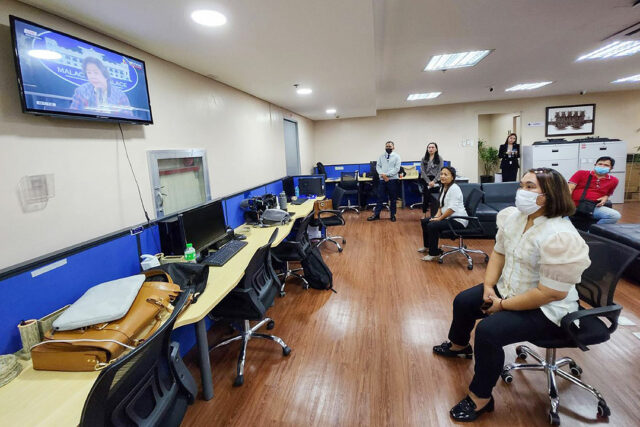
THE COMMISSION on Elections (Comelec) has condemned the killing of an election officer assigned in Maguindanao del Sur, who was shot dead on Monday in the neighboring province of Sultan Kudarat.  

In a statement on Monday evening, Comelec said it is coordinating with the police in investigating the murder of election officer Haviv M. Maindan.  

Citing a police report, the election body said unknown assailants shot at Mr. Maindan and another Maguindanao resident who were onboard a vehicle along the national highway in Purok Libas, Sultan Kudarat. The other victim was unharmed.  

The election officer, who was turning 56 this year, worked for 15 years in government service.  

“With the unknown assailants still at large, Comelec Chairman George Erwin M. Garcia, the Commissioners and the whole Commission on Elections commit to the family of election officer Maindan that we will not rest until justice is served,” Comelec said. John Victor D. Ordoñez 


Senator calls for crackdown on child trafficking, online abuse 

PIXABAY

SENATOR Sherwin T. Gatchalian has reiterated his call for better implementation of laws against child trafficking and abuse in the Philippines, citing a United Nations International Children’s Emergency Fund (UNICEF) study indicating that the problem persists.    

“It is our duty to enforce the laws to ensure the safety of our youth from various forms of trafficking,he said in Filipino in a statement on Tuesday. 

UNICEFs Disrupting Harm in the Philippines report showed 20% of Filipino internet users aged 12 to 17 have been victims of grave online sexual abuse and exploitation in 2021. This accounts for about two million minors.  

Mr. Gatchalian sought for a stronger crackdown on child traffickers through effective enforcement of newly-passed laws such as the Expanded Anti-Trafficking in Persons Act of 2022, and the Anti-Online Sexual Abuse or Exploitation of Children and Anti-Child Sexual Abuse or Exploitation Materials Act.  

Under the United States’ Trafficking in Persons Report last year, the Philippines remained at the Tier 1 status, meaning the country was able to meet the minimum standards for the elimination of trafficking. 

The report, however, identified the need for additional personnel and training on handling digital evidence. It also recommended increased support for programs providing specialized care for trafficking victims. Alyssa Nicole O. Tan 

Solons call for probe on UP professor’s arrest 

LAWMAKERS called for a House investigation on the alleged illegal arrest of a professor at state-owned University of the Philippines (UP), citing the cases relation to a pending bill protecting academic freedom.  

The three-member Makabayan coalition said the probe can also look into the need to amend accords between UP and the Department of Interior and Local Government (DILG), and UP and the Department of National Defense. 

Under House Resolution No. 774, the Makabayan bloc condemned the illegal arrest and other human rights violations committed by the police against UP professor Melania Flores.  

Ms. Flores, a unionist and former president of the All-UP Academic Employees Association, was arrested for alleged violation of Republic Act No. 11199 or the Social Security System Act as she supposedly failed to remit contributions for her house helper.  

The lawmakers said the arrest violated her right to due process. 

She did not receive a copy of any complaint informing her of any charge, much less the grounds therefor, nor was she sent any notice or subpoena relative to the complaint and proceeding, they said in the resolution.  

They said the arrest also violated the UP-DILG agreement, which prohibits police and military officers from entering UP premises or conducting arrests without informing the universitys president, chancellor, or dean.  

The resolution was filed by Deputy Minority Leader France L. Castro, Assistant Minority Leader Arlene D. Brosas, and Kabataan Party-list Raoul Danniel A. Manuel. Beatriz Marie D. Cruz

Philippine strategic environment for corporate planning

TIRACHARDZ-FREEPIK

(Part 1)

President Ferdinand Marcos, Jr. recently signed an executive order adopting the Philippine Development Plan (PDP) 2023-2028 which can be a guideline for both the public and private sectors to help the Philippines achieve the goal of becoming an upper middle-income economy by 2025 and over the longer term lay the foundation for First World economic status 15 to 20 years from now. In a recent event sponsored by the American Chamber of Commerce of the Philippines, I was privileged to listen to a detailed presentation of this PDP from Undersecretary Rosemarie Edillon. There were two other speakers who complemented the very valuable information presented by the Undersecretary. These were Dante Tinga, Jr., Senior Vice-President and Director for Research, Investor Relations and Corporate Planning Group, BDO Unibank, Inc. and Dr. Ragnar Gudmundsson, Resident Representative of the International Monetary Fund in the Philippines. The wealth of information and insights presented by these three distinguished speakers prompted me to write this series of articles to help executives and managers of both the private and government sectors in their very important task of strategic, operational and project planning during the next three to five years, to coincide with the term of President Marcos, Jr.

Let me start with the vision-mission statement implied in the PDP. Although these statements are necessarily merely aspirational, they are still useful for focusing the attention of all members of Philippine society on what all should be trying to achieve as long-term goals. I abbreviate the vision contained in the now popular “Ambisyon Natin 2040” of the National Economic and Development Authority (NEDA) into “attaining First World status by the decade of 2040 to 2050.” The eight-point agenda presented by President Marcos Jr. in his inaugural State of the Nation Address in July 2022 can be reduced to the overall goal of reinvigorating job creation and accelerating poverty reduction by steering the economy back on the high-growth path and, more importantly, effecting economic and social transformation for a prosperous, inclusive and resilient society.

What are the characteristics of a First World economy that we want to achieve some 20 years from now? The answers given in the PDP, as summarized by Ms. Edillon are: 1.) High-trust society with pro-active, smart and innovative people with high regard to quality of life, inclusive opportunities, continuous human development and innovative thinking; 2.) an economic sector that is competitive and globally connected; resilient, technology-enabled and agile; provides opportunities for all through innovation and entrepreneurship; 3.) Institutions that are collaborative, responsive, reliable and efficient, thus providing the needed services that are trustworthy, safe and secure; 4.) A physical environment that is efficient, clean and sustainable, in which resources are utilized to optimum levels without compromising balanced and healthful ecology for present and future generations.

In the process of transforming the Philippines, six items are envisioned. The first is digitalization. Every sector of the economy can improve its productivity through the use of digital technology as Industrial Revolution 4.0 intensifies. Artificial Intelligence, the Internet of Things, Data analytics and robotization can be increasingly applied to agriculture, industry and services, including the whole gamut of services that the government provides to the population. The second item is called “servicification.” Especially in an economy like that of the Philippines where services account for close to 70% of GDP, services play an increasingly important role in increasing income, creating employment, productivity improvement, investment and trade. Indeed, manufacturing activities and competitiveness increasingly depend on services. This is the phenomenon called servicification. Services are also crucial for achieving the 2030 Sustainable Goals. As we read in publications of the United Nations Conference on Trade and Development (UNCTAD), strengthening the domestic services sector by increasing its backward and forward linkage with agriculture and industry, as well as its linkage with trade, can be an effective component of comprehensive development strategy. For an emerging market like the Philippines, service trade is the new frontier for enhancing their participation in international trade and, in turn, realizing its development gains. Moreover, as services trade demonstrated relative resilience in the latest financial and economic crises (including that which resulted from the COVID-19 pandemic), this creates additional incentives for countries to incorporate services trade into their national trade and growth strategies. This is more than evident in the case of the phenomenal growth of the BPO-IT sector that is projected to earn $50 billion and employ 2 million skilled workers in the next five years.

The other four items are Dynamic Innovation Ecosystem, Enhanced Connectivity, Greater Collaboration between Local and National Government, and Partnership with the Private Sector. Innovation is especially of great importance in the agricultural sector which is the Achilles heel of the entire economy, having suffered negative growth over the last three years. All efforts must be exerted to attain an average of at least 2% to 3% annually in this sector during the present administration. This can be reasonably achieved through the innovation of consolidation of small farm units, diversification of products especially into high-value food items for both domestic consumption and exports, digitalization, and industrialization (the processing of raw materials into finished products like cacao into chocolate candies).

Enhanced connectivity is now more within reach with the opening of the telecom sector to 100% foreign direct investments. There are some megaprojects in the telecom sector, like the submarine cable connecting the US to Pagudpud, Ilocos Norte that Amazon and Meta are building that will be a game changer in significantly improving connectivity that can transform a city like Laoag into a major venue for data centers. The Mandanas-Garcia ruling can lead to the LGUs playing a greater role in implementing the development goals as they utilize their increased share of national tax revenues in development projects. Finally, the intensification of Public-Private Partnership (PPP) ventures can unlock vast amounts of foreign capital, especially through the instrumentality of the proposed Maharlika Investment Fund which can be tweaked to become a Philippine Long-Term Investment Fund that will address the serious shortage of long-term capital in the Philippines resulting from the low savings rate of only 9-10% of GDP (as contrasted with the average in the East Asian region of 25-35%) and the existing very high debt-to-GDP ratio of the economy of more than 60% as the government was forced to borrow billions of pesos to address the pandemic.

(To be continued.)


Bernardo M. Villegas has a Ph.D. in Economics from Harvard, is professor emeritus at the University of Asia and the Pacific, and a visiting professor at the IESE Business School in Barcelona, Spain. He was a member of the 1986 Constitutional Commission.

bernardo.villegas@uap.asia

‘A new growth story’: Creating a conducive investment environment

VIRGIL CAYASA-UNSPLASH

We at Stratbase have always advocated a shift away from consumption-led growth toward investment-driven development. Our experience of COVID-19 — specifically, its economic consequences — emphasized the need to be less vulnerable to external developments and hence be more resilient to external shocks. The lockdowns which restricted people’s movements, and hence consumption and other economic activities, dealt a serious blow not only to businesses, but to the economy as a whole.

When an economy is driven by investments, however, economic shocks do not have as much power to derail growth. Investments also make it easier to recover from disruptions.

But it is one thing to say a shift to investments is ideal. Even our leaders have acknowledged this. It is quite another to actually create an environment and adopt strategies that would, in fact, attract — and keep — investments.

We gathered a small group of economic experts to dissect this topic during a virtual round-table discussion held Feb. 9. The consensus was that infrastructure building through collaboration between the government and the public sector is key, but this has to be balanced with all the other problems hounding the country and our people.

University of the Philippines Professor Emeritus of Economics and former Socio-Economic Planning Secretary Dr. Ernesto Pernia, said infrastructure consists of three aspects: human, social, and physical infrastructure. Resolute action from both the public and private sectors is needed to improve all these.

The human challenges include the health of our children so that they can reach their full potential. Social challenges include schools and medical facilities. Physical infrastructure is costly and would need public-private partnerships, so “it is crucial that the conditions and guarantees imposed by the public sector on private sector partners are fair and sufficiently attractive for them to recover their investment cost and with reasonable returns.”

Mr. Pernia believes that the key strategies to fulfilling the Philippine Development Plan 2023-28 would be maintaining robust macroeconomic fundamentals for rapid economic recovery, keeping in mind that the vitality of the economy is only as good as the country’s health and educational system, and using a whole-of-government/whole-of-society approach in ensuring policy efficacy.

Dr. Alvin Ang, Chair of the Department of Economics of Ateneo de Manila University, said that the Philippines has to attract investments in areas that produce the same kind of productivity that will increase wages like finance, information and communication, and manufacturing.

But there is a gap that needs to be narrowed. The Philippines is not creating enough jobs in the agriculture sector and that most of the jobs being created are in the services sector. Addressing the problems of the agricultural sector will benefit its huge workforce and push down poverty levels.

Former Bangko Sentral Deputy Governor for the Monetary and Economics Sector, Diwa Guinigundo, said building the momentum for growth this year would entail addressing large infrastructure gaps. This, in turn, could enhance investment-led growth and appropriate the attraction of investments to the right sectors.

But there are numerous issues that he pointed out, such as the low per-capita GDP, fiscal deficit, public debt, low business and consumer confidence, and inflation.

He aptly cited a publication from the World Economic Forum in January that said what the world needs is a new growth story: “A new approach to sustaining strong and inclusive economic growth.”

The Philippines also needs a new growth story.

Jonathan Ravelas, Managing Director of eManagement for Business and Marketing Services, said that despite challenges like inflation and high interest rates, the Philippines has many advantages including its strategic location.

Investments are a special kind of economic activity, different because they transcend the here and now. They contemplate the future. It’s a commitment: when they come in, they are in for the long haul. They are a crucial tool in increasing a nation’s productivity while also generating employment, providing income security, and alleviating other economic hardships being experienced by millions of Filipinos.

It is impossible for the government to undertake this formidable task on its own. After all, the capital for investments will come from the private sector — big and small alike, foreign and domestic. The crucial role of government is to create a competitive business environment that encourages investors to come, stay, and invest some more. This can only be done through market friendly, consistent and reliable policies and regulations, and good governance — a highly efficient and transparent system of government.

The Philippines needs investments in the right sectors. For example, we believe that the manufacturing sector is an area with great potential. I would go as far as saying that the manufacturing sector that caters to the domestic market, if reinvigorated, could propel our economy to new heights. Renewed attention to domestic manufacturing will significantly narrow our trade deficit because then, there would be less imports for local consumption. It would also create jobs and other opportunities for the population, providing them income security, alleviating poverty, and revitalizing consumer spending.

And, as in any type of investment in any economic sector, the government’s role is definitive. There have to be serious policy and governance reforms to support to domestic investors via incentives, and to address issues such as the unstable supply and high cost of electricity, and ease of doing business.

At both the local and national levels, these uneven bureaucratic and regulatory roadblocks need to be squarely addressed to truly attract — and keep — investments, for a more resilient, sustainable, and most important, an inclusive economy.


Victor Andres “Dindo” C. Manhit is the president of the Stratbase ADR Institute.

ADVERTISEMENT
ADVERTISEMENT