A mural in memory of Kobe Bryant and his daughter Gianna is painted hours after they died in a helicopter crash, on the basketball court of a housing tenement in Taguig City, Jan. 28, 2020. — REUTERS
LOS ANGELES COUNTY will pay the wife of late basketball star Kobe Bryant nearly $29 million to settle a lawsuit over allegations that sheriff officers and firefighters shared gruesome photos of the helicopter crash that killed Mr. Bryant and his 13-year-old daughter.
“Today marks the successful culmination of Mrs. Bryant’s courageous battle to hold accountable those who engaged in this grotesque conduct,” said Luis Li, attorney for Vanessa Bryant, Kobe Bryant’s wife. “She fought for her husband, her daughter, and all those in the community whose deceased family were treated with similar disrespect.”
Mr. Li confirmed that the settlement was for $28.85 million. That includes the $15 million that a jury in a federal court awarded to Vanessa Bryant in August in the case after finding that firefighters and deputies violated her privacy and caused her emotional distress.
Vanessa Bryant had sued Los Angeles County, alleging invasion of privacy, after accusing members of the Los Angeles County sheriff’s and fire departments of sharing images of the crash in unofficial settings, including to patrons in a bar.
Kobe Bryant, his daughter Gianna and seven other people died in the crash in Calabasas, Calif., on Jan. 26, 2020.
Kobe Bryant was 41 when he died. The Los Angeles Lakers great and 18-time All-Star won five NBA championships and was elected to the Hall of Fame in 2020.
Mira Hashmall, an attorney representing the county in the case, told the Los Angeles Times that the settlement was “fair and reasonable.”
She added that it resolves “all outstanding issues related to pending legal claims in state court, future claims by the Bryant children, and other costs, with each party responsible for its respective attorneys’ fees.” — Reuters
ePLDT Vitro Data Center Cebu where Prince Retail Group houses its mission-critical servers to sustain its operations without any disruption
ePLDT brings Prince Retail Group closer to the people with cloud, data center solutions
When stores open, more or less, the economy in that area benefits. That’s what one humble warehouse that turned into a fast-growing social enterprise has proven for four decades.
Julius Foronda, chief information officer of Prince Retail Group (PRG), shared that every time they open a new store the surrounding economy thrives as a result.
“We often hear ‘Salamat sa Prince, may kutson na ako, may paninda na ako (Thanks to Prince, I now have beddings, I now have merchandise to sell),’” Mr. Foronda said during the PH Digicon event last year.
Since its humble beginnings in 1990 in Cebu, the passion for “serving the underserved” continues to inspire PRG in its goals of expanding and reaching more customers around the Philippines. Beyond building mere physical stores, the mission now includes ensuring that every store is able to deliver better and uninterrupted services, even in times of crises.
It is for this reason that the group has partnered with ePLDT to employ holistic digital solutions — ranging from connectivity improvements, digital systems such as ERP (enterprise resource planning) and cloud-based solutions — that will help fully realize its potential as a social enterprise.
“ePLDT has been a forerunner in bringing in new technologies to our country. It is a reliable partner in providing holistic solutions, whether in increasing connectivity through reliable Internet connections, all the way down to cloud solutions, enabling productivity and integration system solutions,” Mr. Foronda said.
Ultimately, all these innovations were put to the test in the past two years, as the country went through the COVID-19 pandemic and typhoon Odette.
More than online selling
One of the hypermarts of the Prince Retail Group in Cebu City continued to serve its customers despite the onslaught of Typhoon Odette and the COVID-19 pandemic with the help of ePLDT’s cloud and data center services.
While many retail business migrated to online selling during nationwide lockdowns, PRG had to take a bolder and innovative approach. After all, many of its stores — some of which are in far-flung areas in the CARAGA region, Negros, Samar, and Mindanao to name a few — served underdeveloped communities whose access to the Internet is still quite limited.
Staying true to its “sabay sa buhay” tagline, PRG also put its money where its mouth is. Rather than simply shifting to online selling, the company invested in several digital solutions that could help increase productivity and provide uninterrupted service to its customers.
“ePLDT enabled our data warehouse and visualization requirements and designed solutions that covered various tech points, touching on connectivity, application integration via API platform management, among other things,” Mr. Foronda explained.
PRG rolled out Microsoft 365 across all stores and platforms, enabling frontliners in its stores to exchange e-mails and communicate easily during the pandemic. More importantly, PRG automated formerly manual business processes through the creation of a series of mini-apps, automated workflows, and extensive use of SharePoint as its document collaborative platform.
With Microsoft 365 and Azure API in place, PRG successfully integrated majority of its systems and is able to efficiently track data and develop intelligence at a store level. This empowered frontliners to deliver “strong operational unified commerce” to its customers — even in the midst of lockdowns or immediately after any calamities. These tools also helped productivity among employees to increase by 73%, which is even higher than Microsoft’s benchmark of 53%.
Optimal connectivity
PRG also benefitted from its earlier decision to move its mission-critical servers to ePLDT Vitro Data Center in late 2018.
“The need for better and reliable Internet connectivity remains to be a struggle, especially in many of the areas that we serve. As the cost to sustain operations continue to increase, moving our mission-critical servers to ePLDT Vitro Data Center in later part of 2018 proved to be the right decision and solution to continue our operations without disruption,” Mr. Foronda explained.
One of the hypermarts of the Prince Retail Group in Cebu City continued to serve its customers despite the onslaught of Typhoon Odette with the help of ePLDT’s cloud and data center services.
True enough, PRG employees were able to complete their tasks and serve customers consistently and continuously, even when Typhoon Odette inflicted structural damage to some of the group’s stores in the Visayas in late 2021. Its servers, on the other hand, continued to run its merchandising, financial, and other operational applications, as a result of its earlier migration to ePLDT Vitro Data Center.
As it moves toward hitting its target of reaching 100 stores in the next three years, PRG looks forward to extending its partnership with the PLDT Group by engaging in more collaborations in the areas of marketing, product promotion, and even environmental and social initiatives.
“On top of our continuous store renovations, commitment to providing customers with affordable merchandise and providing them with means to apply in our loan facility to help them fund their sari-sari stores, we also expect to accelerate our digital transformation to cater to more customers through online shopping — all these as we continue to evolve into a seamlessly integrated business that remains connected through technology,” Mr. Foronda said.
And while many might find the costs and complexity of embarking on a digital transformation daunting, PRG’s chief information officer encourages other business owners and enterprises to be bold and to invest in digital solutions as soon as they can.
“In the beginning, we asked, how could we afford this investment as a social enterprise that only puts a very low percent markup on our goods compared to our competitors? And eventually, we found out that once the systems are in place, and productivity begins to pick up, the tech ultimately pays for itself,” he concluded.
For more on ePLDT’s multi-cloud and data center solutions, contact your Relationship Manager or visit www.ePLDT.com.
Spotlight is BusinessWorld’s sponsored section that allows advertisers to amplify their brand and connect with BusinessWorld’s audience by enabling them to publish their stories directly on the BusinessWorld Web site. For more information, send an email to online@bworldonline.com.
Join us on Viber at https://bit.ly/3hv6bLA to get more updates and subscribe to BusinessWorld’s titles and get exclusive content through www.bworld-x.com.
BEIJING – China’s manufacturing activity expanded at the fastest pace in more than a decade in February, an official index showed on Wednesday, smashing expectations as production zoomed after the lifting of COVID-19 restrictions late last year.
The manufacturing purchasing managers’ index (PMI) shot up to 52.6 from 50.1 in January, according to China’s National Bureau of Statistics, above the 50-point mark that separates expansion and contraction in activity. The PMI far exceeded an analyst forecast of 50.5 and was the highest reading since April 2012.
The world’s second-largest economy recorded one of its worst years in nearly half a century in 2022 due to strict COVID lockdowns and subsequent widespread infections. The curbs were abruptly lifted in December as the highly transmissible Omicron spread across the country.
Global markets cheered the big surprise in the PMI with Asian stocks and the Australian dollar reversing earlier losses, the offshore yuan perking up and oil rallying, as investors took a more optimistic view on China’s economic prospects.
“The high PMI readings partly reflect the economy’s weak starting point coming into this year and are likely to drop back before long as the pace of the recovery slows,” said Julian Evans-Pritchard, head of China economics at Capital Economics.
“We had already been expecting a rapid near-term rebound, but the latest data suggest that even our above-consensus forecasts for growth of 5.5% this year may prove too conservative.”
Markets expect the annual meeting of parliament, which kicks off this weekend, will set economic targets and elect new top economic officials.
“The decent PMI readings provide a positive note for the upcoming National People’s Congress. We expect the government to roll out further supportive policies to cement the economic recovery,” said Zhou Hao, economist at Guotai Junan International.
The official PMI came out just before an upbeat private sector index from Caixin/S&P that showed activity rising for the first time in seven months.
Businesses accelerated their resumption of work and production, as the effect of economic stabilization policies was felt by the sector while the impact of COVID-19 receded, the NBS said in a separate statement.
Furniture manufacturing, metal products and electrical machinery equipment saw big improvements, with production and new orders indexes in these industries all above 60.0.
MIXED OUTLOOK
New export orders rose for the first time since April 2021, the PMI showed.
More broadly, the outlook remains mixed as the country’s major trading partners deal with surging interest rates and cost pressures.
China’s manufacturing sector had been under pressure this year with factory-gate prices falling in January, data last month showed, due to still cautious domestic consumption and uncertain foreign demand.
Manufacturing companies have also seen surging purchasing prices in steel and related downstream industries, the NBS said.
The official non-manufacturing purchasing managers’ index (PMI) rose to 56.3 from 54.4 in January, indicating the fastest pace of expansion since March 2021.
Construction activity, which is part of the official non-manufacturing PMI, picked up further, standing at 60.2 from 56.4, partly due to the resulting boost to infrastructure spending and increasing financing to help developers complete stalled projects.
Services activity also continued to rise with improvements in the transportation and accommodation sectors.
On Friday, China’s central bank said the domestic economy was expected to generally rebound in 2023, although the external environment remained “severe and complex.”
The composite PMI, which includes both manufacturing and non-manufacturing activity, rose to 56.4 from 52.9. – Reuters
WASHINGTON – FBI Director Christopher Wray said on Tuesday the agency has assessed that a leak from a laboratory in Wuhan, China, likely caused the COVID-19 pandemic.
“The FBI has for quite some time now assessed that the origins of the pandemic are most likely a potential lab incident in Wuhan,” Wray told Fox News.
His comments follow a Wall Street Journal report on Sunday that the US Energy Department has assessed with low confidence the pandemic resulted from an unintended lab leak in China.
Four other agencies, along with a national intelligence panel, still judge that the pandemic was likely the result of a natural transmission, and two are undecided, the Journal reported.
White House national security spokesman John Kirby said on Monday the US government has not reached a definitive conclusion and consensus on the pandemic‘s origins.
China‘s foreign ministry, asked to comment on the Wall Street Journal report, which was confirmed by other US media, referred to a WHO-China report that pointed toward a natural origin for the pandemic, rather than a lab leak.
Wray said he couldn’t share many details of the agency’s assessment because they were classified.
He accused the Chinese government of “doing its best to try to thwart and obfuscate” efforts by the United States and others to learn more about the pandemic‘s origins. – Reuters
General Motors Co. is cutting hundreds of executive-level and salaried jobs as it looks to cut costs and streamline operations, a person briefed on the matter told Reuters on Tuesday.
The global reductions are in the “low hundreds,” the person said.
GM Chief People Officer Arden Hoffman said in a letter to employees on Tuesday the Detroit automaker is “committed to $2 billion in cost savings in the next two years, which we’ll find by reducing corporate expenses, overhead, and complexity in all our products.”
GM disclosed the $2 billion cost cut target in January. The automaker said in January it did not plan layoffs and on Tuesday did not characterize the cuts as layoffs.
GM said the job action Tuesday “follows our most recent performance calibration and supports managing the attrition curve as part of our overall structural costs reduction effort.”
Hoffman said “in an environment where our competitors’ margins are improving, it’s imperative that we act now and focus on our own efficiency.”
Hoffman added that “to deliver on our commitments and to beat the competition, we need to have the winning team, bar none. We need a culture shift that enables us to hold ourselves accountable for achieving the higher levels of operating that are now required.”
GM shares closed down 1.5%.
Hoffman said “globally, employees and leaders will be equipped with options to address any issues with greater urgency, so we can achieve our boldest goals…. This is a fundamental cultural shift to be more performance-driven and accountable.”
Earlier this month, Ford Motor said it was cutting one in nine jobs in Europe, axing 3,800 roles in product development and administration as part of a drive to lower costs in the region and concentrate engineering know-how in the United States.
Stellantis. and unions on Monday signed an agreement to cut up to 2,000 workers from the carmaker’s Italian operations this year through voluntary redundancies. On Tuesday, Stellantis indefinitely idled a plant in Illinois that employs about 1,350 workers. – Reuters
MEXICO CITY. – Tesla In. will build a new assembly plant in northern Mexico, the country’s president announced on Tuesday, marking a push by the electric vehicle maker to broaden operations outside the US in a deal an official said was worth over $5 billion.
President Andres Manuel Lopez Obrador said “the whole Tesla company” was coming to Mexico to build a “very big” automotive plant, noting that potential investment in batteries was still pending. He did not reveal what models it would produce.
One Mexican official said the plant would be a Tesla “gigafactory” that could produce the Semi truck, Roadster sports car, and potentially other vehicles. Another official said the plant could produce a kind of sport utility vehicle (SUV).
The Model Y is Tesla‘s best-selling SUV. Tesla will likely give details of its plans on Wednesday, Mexico‘s government said.
Lopez Obrador’s announcement of the plant in the Monterrey metropolitan area dispelled recent concerns that he could upend the investment by imposing conditions on the company due to problems over a lack of water in the arid border region.
“This will represent a considerable investment and many, many jobs,” Lopez Obrador told reporters, saying Chief Executive Elon Musk had been receptive to Mexico‘s concerns and made commitments on how to address the shortage of water.
That would in part involve Tesla recycling water used in the assembly process, the president said.
Martha Delgado, a Mexican deputy foreign minister, told Milenio Television the investment was worth “in excess of $5 billion,” and that Tesla would produce about one million vehicles a year there for domestic and international markets.
Tesla has a combined annual production capacity of more than 1.9 million cars at other factories.
Separately, a Mexican source with knowledge of the matter said the initial investment will be worth around $1 billion and further phases could bring total spending to $10 billion.
Tesla did not respond to a request for comment.
The company has car factories in the US states of California and Texas as well as in Berlin and Shanghai.
Musk has said for months that the EV maker will announce a new factory, and he is set to discuss expansion plans, next-generation vehicle platforms and other topics at an “Investor Day” event on Wednesday. The company is also expected to give details of a new, cheaper model of vehicle at the event.
The news is a boost for Mexico, which is working to establish itself as a hub for the so-called nearshoring of investment – capitalizing on geopolitical tensions and supply- chain disruptions caused by the COVID-19 pandemic by luring manufacturing capacity to North America, and away from Asia.
Lopez Obrador said Mexico and Tesla had reached agreement after a call with Musk on Monday, following a separate conversation he said the two held late last week.
EYES OF THE WORLD
The plant will be built in Santa Catarina in the greater Monterrey area, said the municipality’s mayor, Jesus Nava, echoing reports that have circulated for weeks.
“Santa Catarina will have the eyes of the world,” he said on Instagram. In another video, captioned “10 billion dollars” in bright red, Nava said Tesla‘s investment would be five times the private investment in the municipality over the past decade.
Mexican Foreign Minister Marcelo Ebrard hailed the news on Twitter, calling it the result of 14 months of “patient labor.”
Mexican-made electric cars shipped to the United States qualify for subsidies provided by the Biden administration to boost EV adoption, according to industry officials.
The call between Musk and the Mexican president took place after Lopez Obrador had on Friday stirred fears he might block the investment in Monterrey if water was too scarce there.
Lopez Obrador said he had told Musk Mexico would not be granting subsidies to make batteries or semiconductors.
The discussions around Tesla have been a major test of how investors respond to Lopez Obrador’s resource nationalism and how he influences the decision-making process on investments, which have sparked misgivings among business groups.
Lopez Obrador has put a stop to billions of dollars’ worth of investments using referendums, and some Mexican media portrayed his decision to back the Tesla plant as a concession to Musk.
Antonio Ocaranza, head of consulting group Oca Reputacion, said the president ultimately showed common sense in allowing such a major deal, which should attract further investment.
“The president knows how far to push it,” he said. “Behind (his) rhetoric and ideological zeal, there’s pragmatism.”
Speculation about Tesla going to Mexico has circulated for months, and the plant promises to be one of the major investments of the Lopez Obrador administration.
Mexico recorded its highest foreign direct investment for years in 2022, as businesses took advantage of a lower-cost and skilled work force as well as its free trade deal with the U.S. that has made the country a global center of the car industry.
However, overall investment has been held back by companies unsettled by Lopez Obrador’s efforts to strengthen state control of the energy market at the expense of private capital. – Reuters
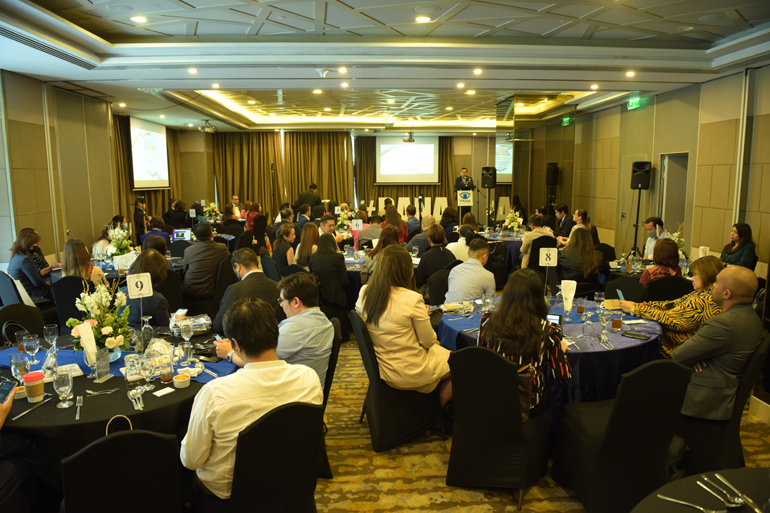
The private sector is confident after pronouncements made by the National Economic and Development Authority (NEDA) Secretary Arsenio Balisacan that Private-Public Partnership (PPP) will play a huge role in the country’s infrastructure development. According to the Secretary “the only way to sustain massive infrastructure development is by tapping into the private sector, which is awash with capital.” Mr. Balisacan echoed the sentiments of the audience in making the country attractive to foreign investment thereby increasing high-quality jobs.
As of December 2022, there are 98 public-private partnership projects in the pipeline amounting to over P3 trillion. “We are moving quickly to get these projects approved by the NEDA Board,” Mr. Balisacan added.
MBC’s Chairman Edgar Chua opened the session by praising Mr. Balisacan on his quick actions upon appointment, particularly his revisions on the Build-Operate-Transfer (BOT) IRR. “His revisions restore the attractiveness of PPPs. I know everyone in this room thank you for your quick action on that, secretary,” Mr. Chua remarked. Furthermore, NEDA is pushing for the amendment of the BOT Law. “It is number one on the legislative agenda of both the Executive and Legislative branches. Hopefully we can have it by June,” the secretary added.
Inflation soared to 8.7% in January, marking the fastest pace since the 9.1% recorded in November 2008, which could be attributed to higher prices of food, water, electricity, gas, and other fuels. The country’s latest inflation rate outpaced other ASEAN countries such as Thailand (5.02%), Vietnam (5.21%) and Indonesia (3.27%).
However, NEDA, despite being surprised by the recent number, reiterated that economic managers could expect inflation to ease this year. Mr. Baliscan said the government will prioritize increasing agricultural productivity, food and energy security to temper rising price pressures. The secretary noted that the government needs to provide farmers with technology that would raise the level of profitability and address their constraints. “When the technology is profitable, you don’t have to widely advertise it — they will grab it!,” Mr. Balisacan said.
“Sec. Arsi and the government have our full support in transforming the economy to make a big leap in getting better lives and better jobs for Filipinos. We also support their efforts to navigate global economic headwinds and still-high inflation,” Mr. Chua said.
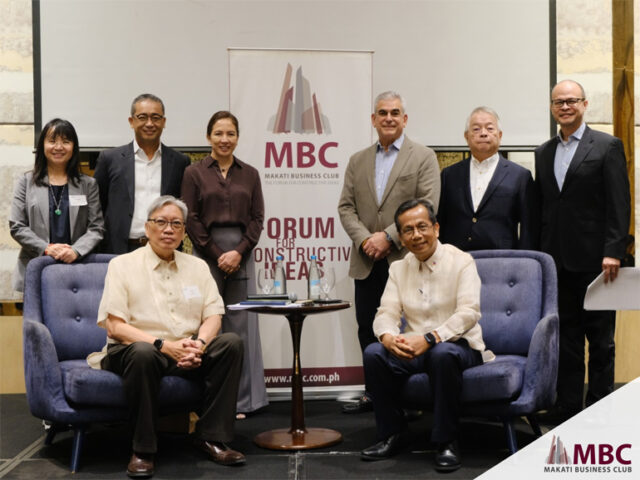
The NEDA Secretary’s meeting with MBC is the second in a series of face-to-face sessions with the country’s key economic managers. Department of Energy Secretary Raphael Lotilla will be featured next on March 16. The “F2F with Cab Secs” is part of MBC’s ongoing efforts to strengthen public-private dialogue and collaboration. Last year, MBC visited 11 Marcos Administration leaders to discuss key areas where business can help.
Spotlight is BusinessWorld’s sponsored section that allows advertisers to amplify their brand and connect with BusinessWorld’s audience by enabling them to publish their stories directly on the BusinessWorld Web site. For more information, send an email to online@bworldonline.com.
Join us on Viber at https://bit.ly/3hv6bLA to get more updates and subscribe to BusinessWorld’s titles and get exclusive content through www.bworld-x.com.
The Cloud Native and Open Source Philippines 2023 Conference is set to take place on March 29, 2023 in Bonifacio Global City. The conference, which is focused on cloud-native microservices, open-source software, DevOps/DevSecOps, cybersecurity, big data analytics, digital transformation, and AI & ML, is expected to draw a large audience from various industries.
The conference will feature keynote speeches, presentations from renowned industry leaders, interactive panel discussions, and networking opportunities to explore how cloud-native microservices and open-source software are transforming industries and driving innovation across the globe. In addition to the conference, there will be an exhibition of the latest technologies and solutions from leading vendors in the industry giving attendees the opportunity to learn from experts in the field and connect with peers.
“We are excited to bring together the best and brightest minds in the industry to share their knowledge and expertise,” said the conference organizers, Escom Events. “The Cloud Native and Open Source Philippines 2023 Conference is the perfect platform for professionals and businesses to learn, network, and explore the latest trends and developments in cloud-native technologies, open-source software, and related fields.”
The conference will cover various topics, including:
Cloud-native microservices and their impact on businesses and industries
Best practices for developing, deploying and managing cloud-native applications on Kubernetes
Latest trends in open-source software and their impact on the software development lifecycle
The role of DevOps in cloud-native application development
Cybersecurity best practices for cloud-native applications
The integration of DevSecOps practices in the software development lifecycle
Big data analytics insights
The potential of digital transformation in industries
The future of AI & ML and the current impact it had on the society
The Cloud Native and Open Source Philippines 2023 Conference is organized by Escom Events and co-hosted by CyberSecAsia, a team of industry experts and technology enthusiasts who are passionate about promoting cloud-native technologies and open-source software in the Philippines and Southeast Asia. The conference is open to anyone interested in learning about cloud-native technologies and open-source software, including software developers, IT professionals, and business leaders.
Spotlight is BusinessWorld’s sponsored section that allows advertisers to amplify their brand and connect with BusinessWorld’s audience by enabling them to publish their stories directly on the BusinessWorld Web site. For more information, send an email to online@bworldonline.com.
Join us on Viber at https://bit.ly/3hv6bLA to get more updates and subscribe to BusinessWorld’s titles and get exclusive content through www.bworld-x.com.
PANA Officers and Board of Directors: (Upper row, L-R) Jonjon San Agustin (SM Supermalls), Treasurer Rey Marc San Juan (Julie’s Franchise Corp.), Vice-President Mick Atienza (SMART Communications, Inc.), PANA President Adi Timbol-Hernandez (McDonald’s Philippines), (Front row, L-R) Bea Atienza (Colgate-Palmolive Phils., Inc.), Mary Julie Balarbar (De La Salle University), Chrissy Roa (Ayala Land, Inc.), Auditor Cathy Santamaria (Bank of the Philippine Islands), P.R.O. Monday Gonzalez
(GLOBE Telecom, Inc.). Not in the photo are Secretary Maye Yao Co Say (Richwell Philippines, Inc.) and Ron Molina (Ginebra San Miguel, Inc.). Inducting officer was Neogin Evangelista, president and general manager of PHILUSA.
Incoming PANA President avows elevation of competence, cooperation among brand builders and industry partners
The 2023-2024 PANA and PANAF officers, board of directors and trustees of the Philippine Association of National Advertisers (PANA) and its Foundation (PANAF), who were just inducted at Ascott Hotel Makati to a full house of brand builders and industry partners, vowed to continue PANA’s commitment of championing responsible brand building.
According to the incoming PANA President, Adi Timbol-Hernandez of McDonald’s Philippines, the goal is to continue to elevate the standards of competence, ethical foundation and cooperation among brand builders.
She elaborated on the 3C’s as her game plan for the year. This consists of connection, collaboration, and champion.
On the other hand, Blen Fernando, chairperson for PANAF, emphasized that the organization’s thrust this year is to curb proliferation of fake news among the youth through its flagship programs whose emphasis will be on developing creativity through responsible content creation and consumption.
PANA Foundation Officers and Board of Trustees: (Upper row, L-R) Wendell Labre (CIS Bayad Center, Inc.), Aji Santiago (Moldex Land), Gigi Tibi(RadManila Communications, Inc.), Len Pozon (Pioneer Life, Inc.). (Front row L-R) Treasurer Andrew Ahorro (Kolin Phils. Int’l, Inc.), Mike Villa-Real (Philippine Veterans Bank), Chairperson Blen M. Fernando (Magna Anima Teachers College, Inc.), Mark Louie Napoles (Asian Hospital and Medical Center), Secretary Eric Samuel P. Joven (Marie France Group of Companies). Not in the photo are Vice-Chairperson Alan Fontanilla (Packworks) and Albette Buddahim (Primer Group of Companies). Inducting officer was Neogin Evangelista, president and general manager of PHILUSA.
The induction coincided with the 2nd general membership meeting (GMM), whose theme was “Brand Recovery to Growth: Anchored on Values, Accelerated by Purpose.” During the GMM, the brand builders were treated to lively discussions on elaborate, innovative and implementable sustainability programs from Neogin Evangelista, president and general manager of PHILUSA, who also served as the inducting officer; and Chito Maniago, head for Government Affairs, Communications and Sustainability of ZUELLIG Pharma. Angel Guerrero of adobo magazine served as the moderator of the discussions, keeping the conversation engaging and interesting.
Here is the official list of the PANA/PANA Foundation board and officers for the year 2023:
PANA President is Adi Timbol-Hernandez (McDonald’s Philippines), Vice-President is Mick Atienza (SMART Communications, Inc.), Secretary is Maye Yao Co Say (Richwell Philippines, Inc.), Treasurer is Rey Marc San Juan (Julie’s Franchise Corp.), Auditor isCathy Santamaria (Bank of the Philippine Islands), and Public Relations Officer is Monday Gonzalez (Globe Telecom, Inc.). Directors are Chrissy Roa (Ayala Land, Inc.), Bea Atienza (Colgate-Palmolive Phils., Inc.), Mary Julie Balarbar (De La Salle University), Ron Molins (Ginebra San Miguel, Inc.), and Jonion San Agustin (SM Supermalls).
1 of 3
PANAF Chairperson is Blen M. Fernando (Magna Anima Teachers College, Inc.), Vice-Chairperson is Alan Fontanilla (Packworks), Secretary is Eric Samuel P. Joven (Marie France Group of Companies), and Treasurer is Andrew Ahorro (Kolin Phils. Int’l, Inc.).
PANAF’s trustees are Mark Louie Napoles (Asian Hospital and Medical Center), Wendell Labre (CIS Bayad Center, Inc.), Aji Santiago (Moldex Land), Mike Villa-real (Philippine Veterans Bank), Len Pozon (Pioneer Life, Inc.), Albette Buddahim (Primer Group of Companies) and Gigi Tibi (RadManila Communications, Inc.).
The PANA Foundation is the advocacy arm of the country’s biggest organization of advertisers and brand builders, the Philippine Association of National Advertisers (PANA).
Constantly referred to as the heart of the advertisers’ community, the Foundation’s main mission is the enhancement of competence and character formation among future industry practitioners — students taking up multimedia, marketing, advertising, communicationsand business courses.
Over 40 years since its inception in 1980, it has consistently carried out this commitment through its two key projects.
Inviting top students from the country’s colleges and universities offering marketing, advertising and communications courses, PANAnaw is a venue where the future practitioners can validate all their classroom learning. Here, they are given the chance to conceptualize, design, present and defend an implementable and relevant brand plan for a cause or a product. The judges for the competition include marketing leaders and gurus who can further inspire and challenge the students.
Pre-pandemic, the event has attracted more than 1,000 students in attendance and dozens of schools competing. Post-pan, both organizers and participants pivoted to virtual presentations. As internet technology is second nature to the youth, it was observed that the interest and anticipation did not wane at all.
PANAF YOUTH CREATIVITY FESTIVAL
The Youth Creativity Festival (YCF) features a multi-panel of marketing rockstars from different creative disciplines talking about an issue or concern that interests the youth. With insights from their own success stories, the speakers generously share with these young creatives, lessons and ‘moments’ that can be enjoyed when they join the industry. The intention is to stimulate and excite them of the endless possibilities the world of advertising has to offer.
Since YCF is scheduled in tandem with the PANAnaw, the attendees are usually the same for both events.
2023 THRUST
The foundation will be more specific this 2023. As pointed out by its chairperson, Blen Fernando, “We will be championing responsible and truthful communications among young learners and educators. By communications, we refer to both content creation and consumption.”This is a reaffirmation that PANAF is indeed a partner of its mother organization in fostering ethical values for brand building. No longer is KPI the sole indicator for good brand performance. It now encompasses multiple bottom lines: business profit, community advocacy, environmental concern and upright moral behavior. What better way to prosper this than to start them young! PANAF also works closely with the academe — professors and school authorities — to reach out to the students.
She further elaborates, “We believe it is urgent and important that learners and educators be continuously exposed to the inculcation and propagation of responsible creation and consumption of marketing communications through the 3Cs: Competence (building skills for their future work in the industry), Character (strengthening their values as future leaders), Collaboration (working with others). The theme of responsible content and consumption cannot be relegated to the background, whether in school or at home.”
For the projects this year, the Cs will be incorporated in PANAF’s gold initiatives — the Youth Creativity Festival and the PANAnaw Students Competition.
“Our silver initiatives include the PANAF Roadtrip among schools and the PANAF Reputation-Building and Bedrock programs where effective partnerships with like-minded organizations and universities/colleges will be explored. We will also work to get PANA Foundation the elusive PCNC accreditation for its sustainability,” Ms. Fernando added.
It looks like a promising year for PANAF. Students can now look forward to an exciting journey into the world of brand building with insightful conversations with the communication celebrities and influencers.
A vendor arranges eggs in boxes at a store along Blumentritt in Manila. — PHILIPPINE STAR/WALTER BOLLOZOS
A vendor arranges eggs in boxes at a store along Blumentritt in Manila. Prices of eggs continued to increase in February, which may have contributed to faster inflation. — PHILIPPINE STAR/WALTER BOLLOZOS
By Keisha B. Ta-asan, Reporter
HEADLINE INFLATION may have breached the 9% level in February, amid higher prices of cooking gas, pork, fish, and eggs, the Bangko Sentral ng Pilipinas (BSP) said on Tuesday.
In a statement, the BSP said February inflation likely settled within the 8.5% to 9.3% range in February. This would follow January’s 8.7% print, which was the quickest since November 2008.
If realized, February would mark the 11th straight month that inflation would exceed the BSP’s 2-4% target range.
The upper end of the forecast or 9.3% would be the fastest pace recorded in more than 14 years or since the 9.7% recorded in October 2008.
“Upward price pressures for the month are expected to emanate from higher LPG (liquefied petroleum gas) prices as well as elevated prices of key food items, such as pork, fish, egg, and sugar,” the BSP said in a statement.
Cooking gas prices increased by P10.00-11.20 per kilogram in February, while the price of eggs rose to P8-9 per piece from P6 a year ago.
Refined sugar prices reached as high as P110 per kilogram in February, nearly double the P65 per kilogram seen a year ago.
“Meanwhile, the lower prices for domestic petroleum, fruits and vegetables, chicken, and beef, along with the peso appreciation could contribute to easing price pressures during the month,” the central bank said.
In February alone, pump price adjustments stood at a net decrease of P0.50 a liter for gasoline, P5.45 a liter for diesel and P6.85 a liter for kerosene.
The peso depreciated by 1.25% or P0.69 in February, closing the month at P55.33 against the dollar on Tuesday from its P54.64 close on Jan. 31.
Elevated inflation will put more pressure on the central bank to continue its aggressive monetary tightening.
BSP Governor Felipe M. Medalla said the Monetary Board may continue to hike policy rates to tame inflation.
“We cannot rule out (rate) increases. Exactly how many, we don’t know. We need more data,” Mr. Medalla told BusinessWorld on the sidelines of the House Appropriations Committee hearing on Tuesday.
The BSP raised its benchmark interest rate by 50 basis points (bps) at its first policy meeting of the year, bringing the key benchmark rate to 6%, the highest in nearly 16 years.
Since May 2022, the BSP has raised policy rates by a total of 400 bps.
“I think there is room for a few more (rate hikes) that will not affect growth. Because our calculation is (that for) every 25-bp rate increase, the impact on growth is 0.01-0.02%, so (our 6-7% growth target is) achievable,” Mr. Medalla said.
“(However,) if you take a longer view that’s no longer the case. Most of the increases don’t have to be necessarily permanent,” he added, indicating that a policy rate cut is possible in the long term.
Mr. Medalla earlier said the Monetary Board is considering an interest rate hike by 25-50 bps at its March meeting.
BSP Senior Assistant Governor Iluminada T. Sicat said February inflation is “still elevated” and the central bank will “make use of all available tools in order to stabilize and bring back inflation trend back to the target range.”
“Inflation for some of these vegetables is still high… We’ve already seen prices are going down. Probably by March, you can see some improvement in the inflation path,” Ms. Sicat told reporters on the sidelines of an economic forum in Makati City.
“We are expecting inflation to come down by October (and be) within target. Hopefully, there are no more shocks coming,” she added.
The BSP sees inflation averaging 6.1% this year, before easing to 3.1% in 2024.
“The BSP will continue to adjust its monetary policy stance as necessary to prevent the further broadening of price pressures as well as the emergence of additional second order effects,” the central bank said in Tuesday’s statement, adding it will closely monitor emerging price developments.
UNCERTAINTY Meanwhile, the International Monetary Fund (IMF) said the BSP may need to tighten policy further this year to tame inflation and keep inflation expectations under control.
“The BSP has taken prompt action to tackle inflation and continued near-term tightening of monetary policy is appropriate to keep inflation expectations well-anchored,” IMF Representative to the Philippines Ragnar Gudmundsson said at the same economic forum on Tuesday.
Mr. Gudmundsson also sees the US Federal Reserve to continue policy tightening by another 50 bps or more this year before pausing.
He said the Philippine consumer price index (CPI) may moderate this year, but there is still some uncertainty as to when inflation will peak.
“The risk to inflation exists and they consist of higher commodity prices following China’s reopening, the war in Russia-Ukraine, weather disturbances, and higher wage increases,” Mr. Gudmundsson said.
The IMF expects Philippine inflation to average 4.7% in 2023, lower than the actual 5.8% price growth in 2022 and the 6.1% forecast of the BSP.
In a text message, Mr. Gudmundsson said the BSP may hike borrowing costs by 25 bps or 50 bps more this year, bringing the key rate to a peak of 6.5% this year.
“This is subject to change, based on evolving conditions, but most likely another 25 or 50 basis points,” he said.
The Monetary Board is set to review policy on March 23. — with inputs fromBeatriz Marie D. Cruz
THE INFORMATION TECHNOLOGY and business process management (IT-BPM) sector saw its revenues jump by 10.3% in 2022, driven by key segments such as banking, financial services, and healthcare.
In a statement, the IT and Business Process Association of the Philippines (IBPAP) said the sector posted $32.5 billion in revenues last year, higher than the $29.5 billion in 2021.
The IT-BPM sector also saw an 8.4% increase in the number of full-time employees to 1.57 million.
IBPAP said the sector had “outperformed the aggressive targets” — 8-10% rise in revenues and 7-8% increase in full-time employees — set under the Philippine IT-BPM industry roadmap 2028.
“The boost in headcount and revenue may be attributed to growth in Banking, Financial Services & Insurance (BFSI), Healthcare, Retail, Technology, and Telecommunications,” IBPAP said.
For 2023, the IBPAP said it is targeting to increase the number of full-time employees by at least 8% to 1.7 million, and revenues by 10% to $35.9 billion.
The industry group said there was “significant expansion” in areas outside of Metro Manila last year such as in Cebu, Davao, Bacolod, Pampanga, and Laguna.
“Over 70,000 new jobs were created in locations outside Metro Manila — a 17% increase from the previous year. By the end of 2022, 31% of the sector’s total headcount or 486,000 (full-time employees) were in the countryside,” the IBPAP said.
The sector’s positive performance came as many IT-BPM firms shifted their registration to the Board of Investments from the Philippine Economic Zone Authority, in order to continue conducting work-from-home arrangements while enjoying fiscal incentives.
“We’re working on Roadmap 2028 with purpose and momentum. That’s the only way that we can hope to achieve our goal of building the industry to a 2.5 million-strong workforce and generating $59 billion in revenues for the country,” IBPAP President and Chief Executive Officer Jack Madrid said.
“We still have a long way to go, but Philippine IT-BPM’s stellar performance in 2022 brings us closer to generating 1.1 million new jobs for Filipinos.”
OPTIMISM Citing a survey it conducted, IBPAP said 83% of IT-BPM firms are expecting to post growth this year despite a potential global economic slowdown, while 17% are neutral on their projections.
“Results also showed that organizations will continue to outsource and use global business services this year as a lever to drive some of their cost optimization initiatives,” it added.
IBPAP’s survey showed more investments will come from animation and game development, contact center, cybersecurity, financial technology, healthcare, internet service providers, IT solutions, and shared services.
However, many companies believe that the talent and skills gap and cost pressures are some of the main business challenges they face this year.
Companies also noted that more work is being shifted to competitors in India, Poland and South America.
Other challenges include adapting to changing customer needs and business models, as well as insufficient supply of related infrastructure in the countryside.
To address these challenges, IBPAP will hold the IT-BPM Talent Summit on April 26 to 27. The event aims to help the sector establish a national upskilling framework, accelerate educational reforms, and create 1.1 million new jobs. The summit is being organized by the IBPAP in collaboration with the Trade department and the Board of Investments.
“This is just the tip of the iceberg. We have more partnerships, projects, and programs in the pipeline for talent development and the other acceleration levers and we don’t plan on letting up or slowing down because we realize that a lot is at stake here that’s beyond revenues, margins, or profits,” Mr. Madrid said.
The IBPAP has over 300 members and six partner associations consisting of the Animation Council of the Philippines, Inc., Global In-House Center Council Philippines, Contact Center Association of the Philippines, Game Developers Association of the Philippines, Healthcare Information Management Association of the Philippines, and the Philippine Software Industry Association. — Revin Mikhael D. Ochave








 Inflation soared to 8.7% in January, marking the fastest pace since the 9.1% recorded in November 2008, which could be attributed to higher prices of food, water, electricity, gas, and other fuels. The country’s latest inflation rate outpaced other ASEAN countries such as Thailand (5.02%), Vietnam (5.21%) and Indonesia (3.27%).
 The NEDA Secretary’s meeting with MBC is the second in a series of face-to-face sessions with the country’s key economic managers. Department of Energy Secretary Raphael Lotilla will be featured next on March 16. The “F2F with Cab Secs” is part of MBC’s ongoing efforts to strengthen public-private dialogue and collaboration. Last year, MBC visited 11 Marcos Administration leaders to discuss key areas where business can help.