Home Blog Page 5156

House approves rightsizing bill on 2nd reading

PHILSTAR FILE PHOTO

THE HOUSE of Representatives on Wednesday approved on second reading a bill seeking to rightsize the bureaucracy to improve the delivery of government services.

Lawmakers voted by voice to pass House Bill No. 7240 or the National Government Rightsizing Act, one of the House’s priority bills.

“The government shall… minimize, if not eliminate redundancies, overlaps and duplications in its operations and simplify its rules and regulations, and systems and processes, while protecting the welfare of civil servants and other government workers,” the bill stated.

The bill grants the President of the Philippines the authority to rightsize the different agencies of the Executive branch.

Under the bill, the President can scale down or eliminate functions, programs and projects “that could be better carried out or undertaken by the private sector or have already been devolved to LGUs (local government units).” The President can also transfer or integrate functions from one agency to another.

A Committee on Rightsizing the Executive Branch (CREB) will be created to review and study the roles, functions and manpower of different agencies under the Executive branch. The Executive Secretary will be the chairman of the committee, with the Budget Secretary as vice-chairperson.

The bill also detailed the retirement benefits and separation incentives for government employees affected by the rightsizing program.

For instance, a government employee who has worked in government for five to 11 years will get one-half of the actual monthly basic salary for every year of service. Those who have 31 years of service and above can get one and one-fourth of their actual monthly basic salary for every year of service.

A minimum of five years of government service is required before an affected worker can avail of the separation benefits.

If enacted into law, the rightsizing program should be implemented over a three-year period.

The program will cover all agencies under the Executive branch, namely departments, bureaus, offices, commissions, boards, councils, government-owned and -controlled corporations, and their attached agencies. LGUs may also rightsize their offices based on their financial capacity.

Budget Secretary Amenah F. Pangandaman previously said that trimming the government workforce by 5% would save P14.8 billion in funds.

Although President Ferdinand R. Marcos, Jr. has not certified the bill as urgent, he has expressed support for the program.

During his State of the Nation Address last year, he described rightsizing as  “a reform mechanism that seeks to enhance the government’s institutional capacity to perform its mandate and provide better services, while ensuring optimal and efficient use of resources.” — Beatriz Marie D. Cruz


Global investors contemplate fallout from US rates reaching 6%

The seal for the Board of Governors of the Federal Reserve System is on display in Washington, DC, U.S. on June 14, 2017. — REUTERS/JOSHUA ROBERTS/FILE PHOTO

ALL OF A SUDDEN, the prospect of US rates hitting 6% is becoming real enough for investors to rethink their strategies.

BlackRock, Inc. and Schroders Plc are among those who are weighing in on the debate of what will happen if US rates peak at 6%. As late as end-February, investors across bonds, stocks and currency markets were still calling for an end to higher rates with expectations for a broad rally in the second half.

Instead, US Federal Reserve Chair Jerome H. Powell’s testimony on Tuesday is fueling expectations of a bigger hike this month, with traders pricing in peak rates of 5.6% from less than 5% at the end of last year. Treasury traders are doubling down on recession expectations, the dollar has rebounded while equity markets from the S&P 500 Index to the MSCI Asia Pacific gauge are giving up gains.

Given the robust job market and sticky inflation, “we think there’s a reasonable chance that the Fed will have to bring the federal funds rate to 6%, and then keep it there for an extended period to slow the economy and get inflation down to near 2%,” Rick Rieder, chief investment officer for global fixed income at BlackRock, said in a Tuesday note.

The Federal Reserve’s latest messaging sets the stage for the central bank to revert to a half-point hike, and stands in marked contrast to the softer stance adopted by peers in Australia and Canada. It’s also fueling fears of a hard landing for the US economy as the bond market telegraphs the growing odds of a recession.

Swaps traders are now pricing in a full percentage point of Fed hikes over the next four meetings.

“A 6% terminal rate is not out of the question now,” said Kellie Wood, deputy head of fixed income at Schroders Plc in Australia. “Expect to see a broad-based sell-off in Aussie and Asian markets today led by the short end but with US rates underperforming.”

In the US, the spread between 2- and 10-year yields are showing a discount larger than a percentage point for the first time since 1981, when then-Fed Chair Paul Volcker was pushing through hikes to tackle double-digit inflation. The yield inversion indicator has over the decades anticipated recessions in the wake of aggressive Fed tightening campaigns.

Commodity currencies have retreated as the prospects of a US recession grow, with the Australian dollar sinking 2% on Tuesday. The Bloomberg Dollar Spot Index climbed to the highest since early January on Wednesday after rallying 1% the previous day. The yen is once again closing in on the 140 level against the greenback.

“Before Powell last night, we were more inclined to try shorting USD/JPY around the 137-138 level — think we would probably hold off on that, with Fed terminal rates very possibly heading to 6%,” said John Bromhead, a currency strategist at Australia & New Zealand Banking Group Ltd.

The Fed rhetoric risks worsening the outlook for emerging-market assets, after Beijing’s modest economic growth target earlier this week dashed hopes of a resumption of the reopening rally that buoyed global markets earlier. The South Korean won, a proxy for risk sentiment in Asia, sank 1.8% on Wednesday.

“Higher-for-longer is becoming the base-case scenario, and if that scenario materializes, EM (emerging markets) can suffer,” said Brendan McKenna, emerging markets strategist at Wells Fargo in New York. “Markets were really hoping for an early Fed pause and cuts this year, so far that scenario is not unfolding.”

Still, some investors see buying opportunities in the stock market.

“We would expect the more cyclical and cheaper markets of North Asia to be favored and rotation away from South Asia to continue,” said Sat Duhra, fund manager at Janus Henderson Investors. “Finally, the higher-quality tech names in North Asia, in particular semiconductors, are beginning to appear attractive on valuation and is a sector that should fully participate in any recovery in earnings.” — Bloomberg

MPIC income up 15% as toll traffic, power use rise

By Justine Irish D. Tabile, Reporter

METRO Pacific Investments Corp. (MPIC) reported a 15% jump in its consolidated core net income to P14.2 billion in 2022 from P12.3 billion a year earlier amid the recovery of toll road traffic and the growth in power consumption.

“The improved financial and operating results at MPIC’s operating companies delivered a 10% increase in contribution from operation mainly driven by the strong recovery in toll roads traffic and consistent growth in power consumption,” MPIC Executive Vice-President and Chief Financial Officer Cheryl A. Cabal-Revilla said during the company’s financial briefing on Wednesday.

The group’s power segment contributed 65% to MPIC’s net operating income, while toll roads shared 30%, and water contributed 14%. Its other businesses — light rail, healthcare, agribusiness, real estate, and fuel storage — incurred a loss of P1.8 billion.

“These losses include those of light rail and the other losses are actually characteristic of the startup nature of our new businesses. This also includes the last tranche of our winding down costs related to our logistics business, which we started to close down in the fourth quarter of 2021,” Ms. Cabal-Revilla said.

Total revenues of the power business, Manila Electric Co. (Meralco) and its subsidiaries, rose by 34% to P426.5 billion on higher volumes and pass-through generation charges.

Meralco energy sales grew by 6% to a record high of 48,916 gigawatts per hour as businesses and public confidence recovered from the pandemic.

Its core net income increased by 10% to P27.1 billion after Meralco PowerGen Corp. posted a P5.5 billion income, up by more than four times its previous year’s P1.2 billion.

Revenues in toll roads business Metro Pacific Tollways Corp. increased by 31% to P22.9 billion for a 46% rise in its core net income to P5.7 billion.

Maynilad Water Services, Inc., MPIC’s water business, recorded a 4% jump to P22.9 billion. However, its core net income declined by 7% to P6 billion.

The group’s light rail business, Light Rail Manila Corp., booked a 58% increase in revenues to P1.8 billion but recorded a core net loss of P472 million due to the start of the amortization of concession assets and borrowing costs.

Its healthcare segment through Metro Pacific Health (MPH) recorded P20 billion in revenues, a decline of 1% versus the 2021 level.

MPH’s consolidated core net income declined 24% to P1.1 billion on fewer coronavirus disease-2019 cases, investments in network integration and digitalization, and higher depreciation expense from completed projects.

Ms. Cabal-Revilla said MPIC this year is likely to maintain its 2022 income growth of 15%, which is expected to be driven by the toll road, power and water businesses.

“Likely, we should be able to maintain the 15% growth [in 2023]. We actually have good metrics coming from our toll road business and also the power consumption in Meralco. If these pan out and do well, with respect to the first two months’ results, we would be able to hit more or less the same,” she said.

In 2022, the group ventured into agribusiness through Metro Pacific Agro Ventures, Inc. (MPAV), which Ms. Cabal-Revilla said had a minimal impact on the company’s results last year.

“For 2022, the impact was very minimal because we only have Carmen’s Best at that time. Revenue from Carmen’s Best was at P150 million, not much of an impact to MPIC,” she said.

“But for 2023, [MPAV’s impact] would depend on our acquisitions, timing, and planned new ventures of MPAV,” she added.

CAPITAL EXPENDITURE IN 2023
MPIC is earmarking P80 billion for capital expenditure (capex) in 2023, which according to Ms. Cabal-Revilla is slightly higher compared with what the company spent in 2022.

“For the rest of the MPIC group, [the capex] is going to aggregate to almost P80 billion. The biggest chunk of it will come from power and then next would be toll roads given their existing projects that need to be completed,” she said.

When asked about how much the group spent in 2022, Ms. Cabal-Revilla said: “Last year was slightly lower.”

For 2023, MPIC is earmarking about P8 billion for its two acquisitions under its agribusiness, which Ms. Cabal-Revilla did not disclose.

“For this year alone, [our budget is] close to about P8 billion on agri. The projects and programs we will go into will really depend on the partnership with the LR Group,” she said, referring to the MPIC unit’s Israel-based partner in a vegetable greenhouse facility.

The capex is expected to be funded through internally generated funds and some through borrowings, said Ms. Cabal-Revilla.

On Tuesday, MPIC shares fell by 4.56% or 20 centavos to close at P4.19 apiece at the stock exchange.

MPIC is one of three key Philippine units of First Pacific, the others being Philex Mining Corp. and PLDT Inc. Hastings Holdings, Inc., a unit of PLDT Beneficial Trust Fund subsidiary MediaQuest Holdings, Inc., has a majority stake in BusinessWorld through the Philippine Star Group, which it controls.

SMC unit posts 10% profit rise as beer sales jump

SAN MIGUEL Food and Beverage, Inc. (SMFB) posted a 10% increase in consolidated net income to P34.7 billion in 2022 as sales volume expanded by double digits, the company said in a media release on Wednesday.

“SMFB’s results prove the resilience of our business model as we navigated a very difficult environment in 2022,” SMFB President and Chief Executive Officer Ramon S. Ang said.

Consolidated revenues for the San Miguel Corp. (SMC) subsidiary grew by 16% to P358.9 billion due to higher volume growth in its beer, spirits, and food sections.

Its earnings before interest, taxes, depreciation and amortization (EBITDA) grew by 12% to P62.7 billion, while its income from operations rose by 11% to 48.7 billion.

The company said revenues from its beer business, San Miguel Brewery Inc., rose by 17% to P136.2 billion, driven by the rise in domestic operations and easing COVID-19 restrictions, a “buoyant” economy, and “robust” consumer spending.

Its international operations saw a 10% growth in income from operations to P29.5 billion, mostly due to export earnings and gains in its Indonesia and Thailand operations.

Its beer business also saw a 10% increase in EBITDA to P36 billion.

Additionally, SMC’s spirits business, Ginebra San Miguel, Inc., saw a 13% growth in income from operations to P6 billion as sales increased by 11% to P47.3 billion due to price increases and higher volumes.

Ginebra’s EBITDA rose 7% to P6.7 billion.

The company said its spirits business “continues to invest in strengthening brand equity and expanding distribution reach to further its market presence.”

Meanwhile, San Miguel Foods, Inc. saw 16% higher revenues at P175.3 billion after distributions, promotional activities, and new product launches. Its operating expenses grew 15% to P13.3 billion, while its EBITDA increased by 18% to P20.1 billion.

“Looking to 2023, we expect to continue to deliver operational excellence and invest in growth to drive long-term value for our shareholders,” Mr. Ang said.

“At the same time, we will continue to ensure that our products are within reach of every Filipino,” he added.

On Wednesday, shares in SMFB remained unchanged at P52.50 apiece, while Ginebra shares rose by 14.17% or P18 to close at P145 each. — Adrian H. Halili

Megaworld township to house commuter railway station

MEGAWORLD Corp.’s township project is set to house a commuter railway station, a company official said on Tuesday, as the development of the 85-hectare property in Bulacan begins.

“I take so much pride to bring excitement and dynamism of a Megaworld township development in the province,” Megaworld Executive Vice-President for Sales and Marketing Noli D. Henandez said during the project’s launch.

“In just a few years you would be able to see how we transform this landscape into a private development that carries the same dynamism as our other developments,” he added.

Northwin Global City is the company’s newest 85-hectare township. It will feature the Marilao-Bagong Ilog station, which is part of the 147-kilometer North-South Commuter Railway project or the Manila-Clark Railway.

When finished, the township will offer residents, workers, and visitors convenient access to and from the Clark International Airport.

The project is located along the North Luzon Expressway. Bulacan is also the location of the proposed New Manila International Airport.

According to Christina C. Tuzon of the Bulacan Chamber of Commerce and Industry, Bulacan has been attracting investors as the province has been creating more desirable locations for investment opportunities.

“With this huge project we will expect economic growth that will help us create more jobs, promote tourism, decrease our unemployment rate, improve quality of life, and increase and protect our purchasing power,” Ms. Tuzon said.

Meanwhile, Megaworld has begun construction and development of the P98-billion mixed-use township.

The township will feature commercial, retail, and residential areas for use by various businesses. It was initially proposed in 2021. It will have a 16-hectare central business district called the Northwin Main Street, which will feature corporate offices, retail shops, hotels, and mixed-use commercial towers.

Megaworld previously announced its plans to build a 23-storey high-rise condominium in the township, which will house 478 “smart home” units and feature wireless systems that will allow residents to control various functions in the home.

Northwin Global City project is expected to be finished by 2027.

At the stock market on Wednesday, Megaworld shares fell by 3.32% or P0.07 to close at P2.04 apiece. — Adrian H. Halili

AREIT sets P22.5-B property-for-share swap with Ayala Land

AYALA-LED real estate investment trust company AREIT, Inc. has secured approval from its board of directors for its multibillion property-for-share swap with Ayala Land, Inc. and its subsidiaries Ayala Land Malls, Inc. and North Beacon Commercial Corp.

In a disclosure to the stock market on Wednesday, AREIT said that about 607.56 million primary common shares would be given to Ayala Land in exchange for flagship offices and malls with an aggregate value of P22.48 billion.

“The rebound of commercial businesses is an opportunity for AREIT to widely diversify its assets with more retail buildings,” AREIT President and Chief Executive Officer Carol T. Mills said.

The agreement is subject to a third-party fairness opinion and the approval of AREIT shareholders at their annual meeting on April 26.

Under the deal, Ayala Land properties will be added to the portfolio of AREIT. These are One Ayala Avenue East and West BPO Towers, Glorietta 1 and 2, business process outsourcing (BPO) buildings at Ayala Center, and MarQuee mall in Pampanga.

Their overall gross leasable area (GLA) is 190,000 square meters (sq.m.), with an overall occupancy rate of 99% and a weighted average lease expiry of 14.5 years.

Both companies are targeting to finalize the deal within the year.

“The infusion of Glorietta 1 and 2 malls and BPO buildings, as well as the brand new One Ayala Avenue BPO towers, is testament to AREIT as Ayala Land’s flagship REIT,” Ms. Mills added.

Currently, AREIT has recorded 673,000 sq.m. equivalent to P64 billion in assets under management (AUM) and a 52% growth in total shareholder returns.

The company said the new infusion in 2023 will nearly triple its AUM to P87 billion and boost its GLA more than fivefold to 863,000 sq.m.

On Tuesday, AREIT shares dropped by 2.78% or a peso to close at P35 apiece. — Adrian H. Halili

AbaCore partners with Chinese company to build Batangas resort

ABACORE Capital Holdings, Inc. has partnered with Chinese property developer Shanlin Real Estate Co. Ltd. for a P1.5-billion resort project in Batangas, the company said in a media release.

The project will be headed by a joint-venture company, Fluvion Real Estate Development ,Inc., and will be constructed at Montemaria Shrine, a pilgrimage center owned by AbaCore.

Shanlin is expected to spend P1.5 billion for the completion of the project while AbaCore will contribute the land for the resort.

“We aim for the resort project to elevate the status of Montemaria Shrine beyond that of a religious destination,” Fluvion President Guoan Wu said. “This is because we envision the Montemaria Shrine to be a lifestyle destination for tourists who want to experience the natural beauty of Batangas and of the Philippines as well.”

The company aims to attract 1 million visitors every year and to employ 1,000 people in the local community. It expects P800 million to P1 billion in annual income.

The resort will feature a glass walkway, which the company expects to be completed this year. It will also have a waterpark, “envisioned to be the largest in the Philippines,” which is expected to be finished in 2024. A hotel with a 360-degree view of Batangas Bay is scheduled to be completed the following year.

“This resort project is a significant milestone for all of us, and we look forward to fulfilling its potential so that our stakeholders can fully benefit from what it has to offer to them,” Mr. Wu said.

On Wednesday, shares in AbaCore rose by 0.45% or a centavo to close at P2.22 apiece. — Adrian H. Halili

Cool business advice from the man behind an ice cream brand

PHOTOS FROM CARMENSBEST.COM

THINGS that helped Francisco “Paco” Magsaysay stay in the ice cream business include courage and a certain persistence (dedicating the business to someone important would also help).

During last week’s The Future of F&B conference at the Conrad, Carmen’s Best founder Mr. Magsaysay discussed what to him are important pointers for food entrepreneurs, but his points seem to resonate in any industry.

Mr. Magsaysay founded Carmen’s Best in 2011. In 2022, Metro Pacific Investments Corp. acquired a 51% stake in Mr. Magsaysay’s company.  The Carmen’s Best Group consists of Carmen’s Best Dairy Products, Inc., Carmen’s Best International Dairy Co., Inc., Real Fresh Dairy Farms, Inc., and The Laguna Creamery, Inc. The group is also behind Holly’s Milk, the country’s sole brand of “locally pasteurized and homogenized fresh milk.” Mr. Magsaysay’s group retains a 49% equity interest.*

Mr. Magsaysay began the brand when his father (the son of the former president Ramon Magsaysay) acquired a dairy farm in Laguna in 2007, developing the ice cream some time later.

“Don’t be afraid of the unknown,” he said during his talk, which he had to deliver remotely due to a diagnosis of COVID-19 a day before. “I say this because it’s human to be afraid of the unknown.”

“You get yourself in a position that you’re not too familiar with, that’s when you learn the most,” he said, recalling that when he started Carmen’s Best, his previous work experience was in the tech industry. “It was quite a change. But since I loved what I was doing, I decided to take the plunge headfirst. I haven’t looked back since then.”

Contrary to most business advice, he also eschews having a backup plan, or a Plan B. “What you’re going to go through, starting a business from scratch, is so different. It’s going to take a lot of your time,” he said. “If you have a Plan B, there’s a good chance that you will transfer to that Plan B.”

He said that if he did have a Plan B, Carmen’s Best would not exist to this day. He only gave himself two options: to make it work, or for it not to. “But since I named it after my daughter, I felt like I couldn’t let her down,” he said.

“When I look back, I think the fact that I named the company after my daughter gave me that extra push to keep on persisting and trying my best to succeed and making the company work.”

He also says that one must not always do what is expected, but to do what is necessary. He applied this to his choice of target market then, which included customers in the A and B income bracket. “I felt that there was no local ice cream maker that was catering to the A and B market. I decided that I would cater (to them), given that fact that I wanted to use the fresh milk from our farm. We were only starting with 100 cows… I was limited with the amount of milk I could work with.”

He said that normally, when people begin a product, they offer it to the largest market, which is usually with the C, D, and E income bracket. “But what I did was, I did something that I felt was necessary.”

Having made that decision, he said that it surprises him now when people from all walks of life approach him and tell him how much they enjoyed his ice cream. “It’s become an aspirational product for people in the Class C category. They’ll buy the ice cream maybe for special occasions or for when it’s pay day,” he said. “Even though they don’t buy it as regularly as the A and B market, I never imagined that the C market would buy our product. I’m glad that it’s caught on.”

That reflects the importance of finding a niche. “You just have to be clear who’s the market you’ve targeted, and to be true to your product. If you say that you’re making the best ice cream, you better be making the best ice cream.”

Their secret continues to be the use of real, fresh dairy cream, and not vegetable fat-derived mellorine. “Once you use vegetable fat, you can’t even call it ice cream,” he said, which is why some selections from brands have “frozen dessert” on their labels instead.

“You know what you have is good, and you know that you’re not fooling anyone and you’re not lying to anyone.” — Joseph L. Garcia

* See the BusinessWorld story at https://www.bworldonline.com/corporate/2022/06/28/457857/mpic-enters-agribusiness-takes-51-of-dairy-firm/

HONOR to launch X8a in the Philippines next week

HONOR X8a

SMART devices brand HONOR will launch the X8a, the latest smartphone in its X Series lineup, in the Philippines next week.

The X8a will arrive in the country on March 14, HONOR Philippines said in a statement on Wednesday.

“As promised to our HONOR fans, we will continuously give the smartest and most affordable solutions to our consumers’ needs. With the new HONOR X8a, users can take more breath-taking photos in high quality with its 100MP ultra-clear camera and enjoy a premium edgeless display,” HONOR Philippines Vice-President for Marketing Stephen Cheng was quoted as saying.

The new phone has a 100-megapixel rear camera, which HONOR said is the highest megapixel count for a camera among its X Series phones.

“Paired with the Super Resolution AI technology, the HONOR X8a also enables users to take stunning, high-definition photos with greater ease and convenience than ever before,” the company said.

Based on HONOR’s website, the X8a’s rear camera array also has a 5MP ultra-wide lens and a 2MP macro lens.

The phone also features a 16MP selfie camera.

The HONOR X8a has a 6.7-inch IPS LCD display with a 90Hz refresh rate and is powered by a Mediatek Helio G88 chipset. It has a 4,500mAh battery compatible with 22.5-watt HONOR SuperCharge.

The phone has 128GB in storage and has two memory options: 6GB and 8GB.

It comes in three colors: Cyan Lake, Midnight Black, and Titanium Silver.

“To create a stylish look and feel, the HONOR X8a features a flat-edge design with smooth rounded corners. The sharp, clean lines not only add a touch of attitude to the design, but also give the device a comfortable and secure grip, demonstrating a subtle balance between form and function,” the smart devices brand added.

The local launch of the X8a on March 14 will be streamed live on HONOR Philippines’ Facebook page.

Term deposit yields climb on tightening bets

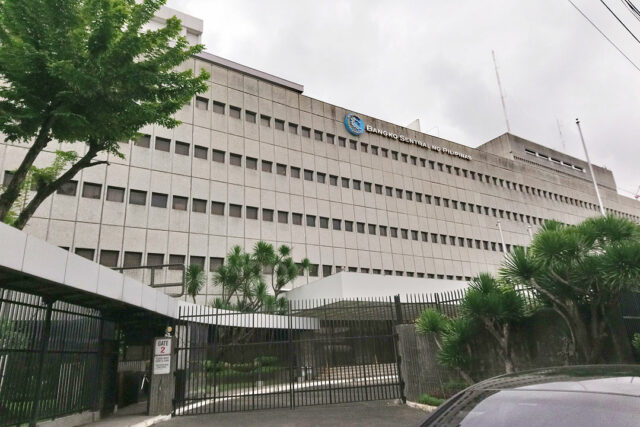
YIELDS on the central bank’s term deposits rose on Wednesday as still-elevated inflation could prompt the Bangko Sentral ng Pilipinas (BSP) to further tighten monetary policy.

Demand for the BSP’s term deposit facility (TDF) reached P356.153 billion on Wednesday, above the P340 billion auctioned off by the central bank and the P245.13 billion in bids for a P300-billion offering seen last week.

“The BSP raised the volume offering for the TDF auction to P340 billion (from P300 billion),” BSP Deputy Governor Francisco G. Dakila, Jr. said in a statement on Wednesday.

“Based on actual bids received last week, the total offer volume was reallocated between the 7-day and 14-day tenors at P200 billion (from P160 billion) and P140 billion (same as the previous auction), respectively,” he said.

Broken down, bids for the one-week term deposits amounted to P223.392 billion, above the P200 billion on the auction block and the P149.636 billion in tenders logged the previous week for a P160-billion offer.

Accepted rates were from 6.4375% to 6.6%, narrower than the 6.368% to 6.65% band seen a week ago. This brought the average rate of the seven-day papers to 6.507%, increasing by 3.83 basis points (bps) from the 6.4687% quoted previously.

Meanwhile, the 14-day papers attracted bids totaling P132.761 billion, a tad lower than the P140 billion auctioned off by the central bank but surpassing the P95.494 billion in tenders recorded on March 1.

Lenders asked for yields ranging from 6.395% to 6.749%, wider than the 6.3945% to 6.62% margin logged a week earlier. With this, the average rate of the two-week deposit rose by 4.55 bps to 6.5387% from 6.4932% in the prior auction.

The central bank has not auctioned off 28-day term deposits for more than two years to give way to its weekly offering of securities with the same tenor.

The term deposits and the 28-day bills are used by the BSP to mop up excess liquidity in the financial system and to better guide market rates.

“The results of the TDF auction came following the release of the February 2023 inflation data, which remained elevated and further raised the possibility of a continued hawkish monetary policy stance from the BSP,” Mr. Dakila said.

He added that the BSP’s monetary operations will continue to be guided by its assessment of liquidity conditions and market developments.

TDF yields climbed on expectations of another BSP hike as headline inflation only eased slightly last month, Rizal Commercial Banking Corp. Chief Economist Michael L. Ricafort said in a Viber message.

The consumer price index (CPI) eased to 8.6% in February from the 14-year high 8.7% in January, data from the Philippine Statistics Authority (PSA) showed.

February inflation was below the 8.9% median in a BusinessWorld poll conducted last week, but within the central bank’s 8.5-9.3% projection.

For the first two months of the year, inflation averaged 8.6%.

The BSP expects inflation to average 6.1% this year before easing to 3.1% in 2024.

BSP Governor Felipe M. Medalla earlier said they could consider raising borrowing costs by 25 bps or 50 bps at their policy meeting on March 23.

The central bank hiked benchmark interest rates by 50 bps in its Feb. 16 review, bringing the key rate to 6%. The move brought cumulative increases since May 2022 to 400 bps. — Keisha B. Ta-asan

Cebu Pacific to resume more flights from Iloilo

CEBUPACIFICAIR

BUDGET carrier Cebu Pacific will be resuming its routes to Puerto Princesa and Cagayan de Oro from its Iloilo hub by June.

In a press release on Wednesday, the airline announced that it will start to fly Iloilo to Puerto Princesa routes, four times weekly, starting June 23.

For its flights to Cagayan de Oro from Iloilo, Cebu Pacific will be flying thrice weekly starting June 24.

“With two more routes, Cebu Pacific will now directly fly to six domestic destinations from Iloilo. The airline currently operates direct flights to Manila, Cebu, Davao, and General Santos from Iloilo,” the airline said.

Cebu Pacific will offer a P27 one-way base fare promo for the resumption of flights, which travelers can book until March 10. The promo’s travel period will be from April 1 to Sept. 30.

“Passengers with existing Travel Funds may use these to pay for flights and other add-ons. Apart from the Travel Fund, other payment options such as payment centers, credit or debit cards, and e-wallets may also be used,” Cebu Pacific said.

At the beginning of the year, the budget carrier said that it is set to restore 100% of its pre-pandemic network and capacity by March this year.

At present, it now flies to 34 domestic and 25 international destinations across Asia, Australia, and the Middle East.

On Wednesday, shares in Cebu Pacific or Cebu Air, Inc. climbed by 15 centavos or 0.37% to close at P41.20 apiece. — Justine Irish D. Tabile

Manila Coffee Festival 2023 to be held this month

JULIA FLORCZAK/UNSPLASH

THE MANILA Coffee Festival 2023 (MCF2023), a celebration of Philippine coffees, Filipino coffee growers, and Filipino coffee culture, will be held on March 17, 18, and 19 at the Manila Marriott Hotel’s new MGBX Convention Hall.

This year’s Manila Coffee Festival is expected to be bigger and better, with more activities, more exhibitors, more networking and learning opportunities, and more interesting things to try, taste, and see.

Visitors will get an opportunity to try their hand at latte art, see demonstrations from the coffee community’s best professionals, watch live coffee competitions, take part in free coffee tastings, listen to stories of people shaping the future of Philippine coffee, and get a behind-the-scenes look at some of the work people are doing for a better coffee future.

The Manila Coffee Festival features the entire spectrum of exhibitors from the world of coffee. There are coffee growers, professional baristas, coffee roasters, café and restaurant owners, industry experts, innovators, food artisans, interactive workshops, pottery and ceramic artisans, eco-friendly advocates, specialty coffees, coffee cocktails, live music, DJs, art exhibits, visual artists, cultural performers, theater performers and so much more.

The three-day event has a number of different sections.

There is the Single Origin Bar — a more than 20-foot-long bar that is divided into multiple brewing stations and serving free unlimited cups of the Philippine’s finest regional coffees giving attendees the opportunity to try new origins and discover new favorites. The coffee growers themselves serve their coffees at the bar, allowing a rare meet-up of coffee consumers and producers in one event.

Then there is the MCF Theatre. Throughout the weekend, festival-goers will be treated to demos and workshops by experts in the coffee industry sharing knowledge and insights into the coffee-making process, as well as the latest industry products, trends and innovations. It’s also an opportunity to discover new coffee-related products including equipment, accessories, and merchandise. The theater will also host coffee competitions, and daily live musical performances by local artists.

The Manila Coffee Festival is a celebration of the arts and culture as well, with a 200-foot art hall. The MCF Art Hall will feature works from the Association of Coffee Artists of the Philippines and Kape, Sining at Kultura groups. Part of the proceeds from the coffee art exhibit will go for the benefit of local coffee farmers.

Throughout the festival will be held the MCF KTalk sessions where visitors can learn more about the current and emerging trends in the coffee industry, and inspiring stories shared by people who are shaping the coffee landscape.

If Single Origin Bar is the heart and soul of the event, the Double Shot Bar is its “spirit” — quite literally. The Double Shot Bar serves coffee-based cocktails created exclusively for the event.

Then there is the “MOVE” Pavilion and Eco Pavilion, a showcase for alternative modes of transport curated by the “MOVE” organization which is advocating for alternative mobility movement and lifestyle. “MOVE” will be featuring a wide array of bicycles and e-scooters in different styles, material, and other related products that go with it.

MCF2023 takes a mindful approach to its carbon-footprint and partners with Eco-Nest + Greenspace for its sustainability programs, activities, and services. The Eco Pavilion will also launch a variety of innovative sustainable products for both commercial and home use.

The Manila Coffee Festival will be held at the MGBX Convention Hall, Manila Marriott Hotel, Newport World Resorts, Pasay City.

ADVERTISEMENT
ADVERTISEMENT