Home Blog Page 5012

Budget gap widens in February as revenue collections decline

PHILIPPINE STAR/EDD GUMBAN

By Keisha B. Ta-asan, Reporter

THE NATIONAL GOVERNMENT’S (NG) budget deficit slightly widened in February as revenue collection slipped and spending was flat, the Bureau of the Treasury (BTr) reported on Monday.

Data from the BTr showed the Philippines’ budget gap reached P106.4 billion in February, up by 0.5% from P105.8 billion recorded in the same month in 2022.

Month on month, the NG’s fiscal balance swung back to a deficit in February from the P45.75-billion surplus in January.
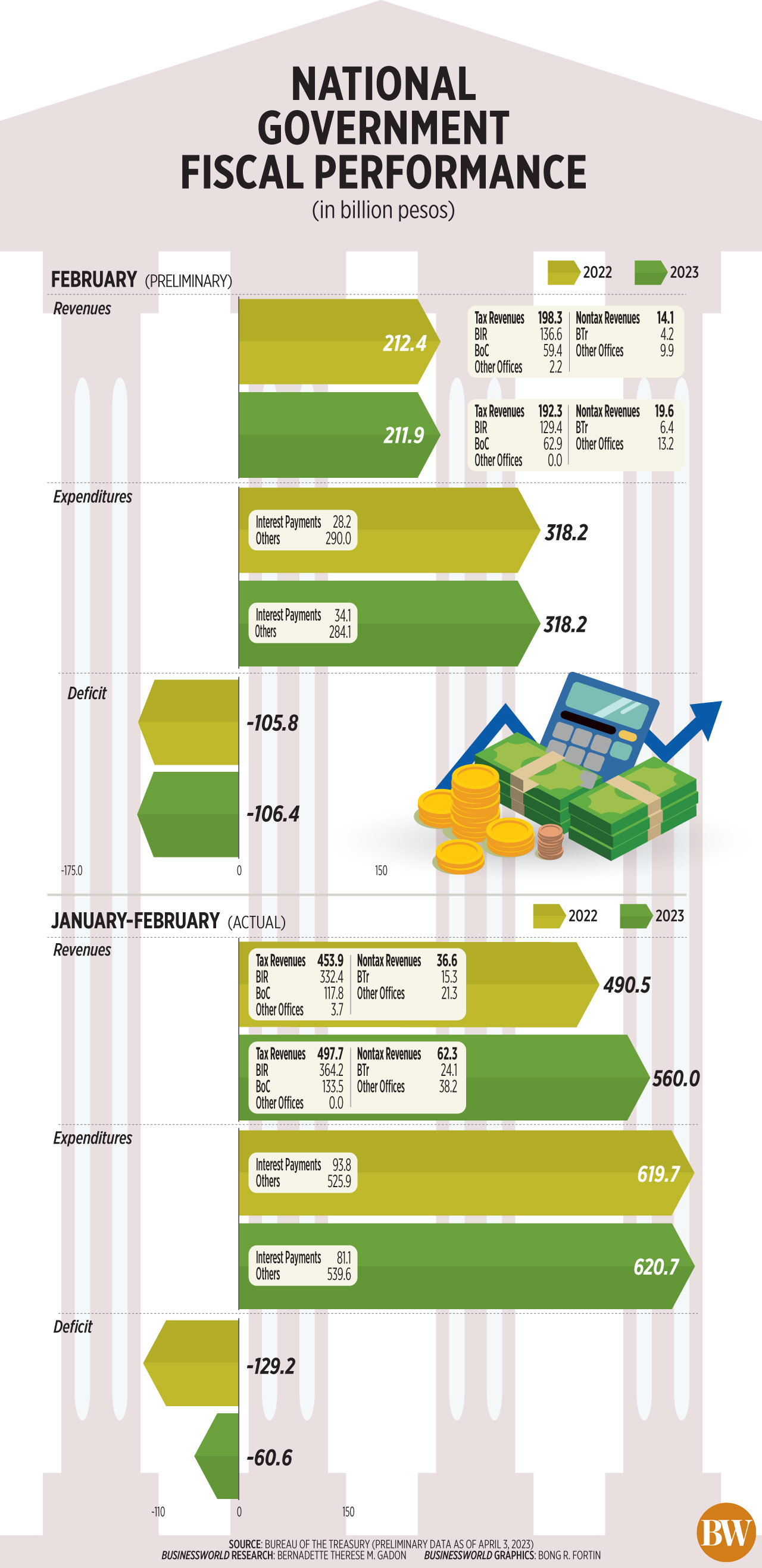
National Government fiscal performance“The fiscal performance was mainly attributed to a marginal 0.25% decrease in revenue collection, coupled with the flat expenditure outturn during the period,” the BTr said.

State revenue collections dipped by 0.25% year on year to P211.9 billion in February as tax revenues declined.

In February, tax revenues fell by 3.01% to P192.3 billion, amid a 5.29% drop in collections by the Bureau of Internal Revenue (BIR) to P129.4 billion. The Bureau of Customs (BoC) reported a 5.83% rise in revenues to P62.9 billion for the month.

Nontax revenues, on the other hand, climbed by 38.37% to P19.6 billion in February, thanks to a 51.16% increase in income from the Bureau of the Treasury to P6.4 billion.

“The upturn was driven by the higher remittance of NG share from Philippine Amusement and Gaming Corp. (PAGCOR) earnings, as well as income from Bond Sinking Fund (BSF) investment and interest on NG deposits,” the Treasury said.

Nontax collections from other offices such as privatization proceeds and fees and charges, grew by 32.93% to P13.2 billion.

Nicholas Antonio T. Mapa, a senior economist at ING Bank N.V. Manila, said February revenue collections have declined as base effects waned.

“BIR collections were benefiting from the positive base effects due to the economic reopening but that appears to be ebbing,” Mr. Mapa said in an e-mail.

Union Bank of the Philippines, Inc. Chief Economist Ruben Carlo O. Asuncion said Customs collections also grew at a softer pace in February.

“It may be a signal that the reopening narrative and its momentum may be starting to fade with easing domestic demand particularly on imports,” Mr. Asuncion said.

Meanwhile, expenditures were flat, inching up by 0.01% to P318.2 billion in February. Interest payments climbed by 20.83% to P34.1 billion.

“The growth of disbursements was dampened by the decline of the National Tax Allotment (NTA) shares of local government units (LGUs) resulting from the lower national tax collections in 2020,” the BTr said, adding that this was due to the impact of the pandemic.

Mr. Asuncion said the sharply lower LGU revenue allocations on the expenditure side “may have mitigated the fiscal impact of the drop in tax collections.”

According to Mr. Mapa, lower spending suggests that the government may not be a significant source of economic growth this year.

Primary spending — which refers to total expenditures minus interest payments — contracted by 2.01% to P284.1 billion from P290 billion a year ago.

TWO-MONTH GAP
For the first two months of the year, the fiscal deficit sharply narrowed to P60.6 billion, 53.07% lower than the P129.2-billion gap a year ago.

Total revenues jumped by 14.2% to P560 billion in the January-to-February period, 88.9% of which were from taxes.

Tax collection rose by 9.66% to P497.7 billion. Broken down, the BIR collections rose 9.6% to P364.2 billion, while Customs collections went up by 13.3% to P133.5 billion.

Nontax revenues surged by 70.3% to P62.3 billion, driven by an 80% surge in revenues from other offices to P38.2 billion. BTr income also jumped by 57.3% to P24.1 billion.

On the other hand, expenditures in the January-to-February period inched up by 0.16% to P620.7 billion as interest payments fell by 13.5% to P81.1 billion.

Primary expenditures rose by 2.6% to P539.6 billion.

Aside from the high base effect, Mr. Asuncion said disinflation and slower spending conditions may dampen total collections this year.

“Less upbeat revenues will restrain primary expenditure growth to 4% in our estimate. Next year, tax revenues may improve by 5-6% as economic growth heads back to potential with inflation back to the (2-4%) target range,” he said. 

Primary expenditure gain is also expected next year, but the government may decide to keep spending in line with revenue growth, he added.

Mr. Mapa said lower revenue collection may continue in the coming months due to the uncertain growth outlook.

This year, the government has set a budget deficit ceiling of P1.47 trillion, equivalent to 6.1% of gross domestic product. The program consists of P3.71 trillion in revenues and P5.18 trillion in disbursements.


PHL told to use UN climate ruling to demand more from polluters

Plastic bottles float on the heavily polluted San Juan River, June 21, 2021. — REUTERS/ELOISA LOPEZ

By Kyle Aristophere T. Atienza, Reporter

PHILIPPINE CLIMATE and good governance advocates urged the Marcos government to use the landmark United Nations (UN) ruling asking the world’s top court to clarify states’ obligations regarding climate change in demanding more action from top polluters.

On March 29, the United Nations General Assembly adopted a resolution led by the Pacific Island nation of Vanuatu seeking an International Court of Justice (ICJ) advisory opinion on the obligations of states to combat climate change.

The resolution asks the ICJ to outline the “legal consequences” for states which “have caused significant harm to the climate system and other parts of the environment” in consideration of climate change’s impacts on small island states and peoples.

“This is really a historic move by the UN and a very important one for climate-impacted countries like ours,” Lea Guerrero, country director of Greenpeace Philippines, said in a phone interview.

“We believe that the Philippine government can substantially contribute to the proceedings,” she said.

It might take about 18 months for an ICJ opinion to be issued, which will include inputs from different countries, Ms. Guerrero said, citing Vanuatu’s estimate. 

She urged the administration of President Ferdinand R. Marcos, Jr. to use the decision in calling for more climate commitments from rich countries.

“This move should also be cited by the Philippine government as a basis to continue calling on rich countries to meet their targets in terms of reducing greenhouse gas emissions,” Ms. Guerrero said. 

The decision, she said, should also prompt the government to craft a coherent climate policy that would take into consideration the Commission on Human Rights’ (CHR) report indicting more than 40 companies for driving the climate crisis and causing harm to Filipinos. 

The National Government has yet to formally acknowledge the CHR report. 

“Through this landmark resolution, countries and corporations with high carbon emissions and those funding or supporting environmentally destructive projects in climate-vulnerable developing countries will be held accountable,” Jerwin Baure, public information officer of Manila-based AGHAM, said in a Facebook Messenger chat.

“Countries like the Philippines have been suffering from worsening climate-related disasters, and this resolution could serve as a basis in demanding reparations.”

Joshua Villalobos, a 17-year-old climate activist from the central Philippine province of Negros Occidental, is among those who rejoice over the landmark ruling, which he said is “long overdue.”

“For the longest time, we have seen the inaction of polluter countries and vulnerable countries like the Philippines and our people have been at the receiving end of destructive and deadly climate impacts,” he said via Messenger chat.

‘POWERFUL WEAPON’
The UN’s adoption of the Vanuatu-led resolution came on the same day that the European Court of Human Rights opened cases against France and Switzerland over alleged failures to protect the environment.

Gerry C. Arances, executive director of Center for Energy, Ecology, and Development, said the expected opinion from ICJ will be a “powerful weapon” for the Philippines and other vulnerable countries in demanding more climate actions from big countries.

“[It will compel them] to act in the best interests of peoples and protect them from worsening climate impact,” he said via Messenger chat.

Mr. Arances said the UN resolution should be taken as a “challenge” by the Philippine government to align all its development and economic plans to the “most ambitious” climate targets, advance a long overdue transition plan, and amplify the call for a global energy transition and the phaseout of fossil fuels.

Philip Arnold “Randy” P. Tuaño, dean of the Ateneo School of Government, said the UN decision should prompt the Marcos government to thoroughly document the impact of climate change on Philippine communities.

It should also compile reports showing climate change’s impact on the education and health sectors as well as economic activities including food production.

“The top polluters are…becoming more aware of these adverse impact and compensation was one of the key discussions in the previous Conference of Parties on the environment,” Mr. Tuaño noted. “There is some talk in European countries of increasing tariffs on goods and services that have a high carbon content but we hope that the European Union helps developing countries adjust to this situation before this is undertaken.”

Last year, Greenpeace said as much as 80% of Manila could be submerged by 2030, potentially impacting 87% of its economic output.

Antonio Gabriel “Tony” M.  La Viña, a lawyer and environmental expert, said that although an advisory opinion is non-binding, it has a legal and moral weight. “It will send a strong signal to carbon-emitting countries and companies,” he said via Messenger chat.

Mr. Marcos, who vowed to work towards a shift to green energy, has yet to declare a climate emergency, which would authorize the government to mobilize funds to step up climate mitigation efforts.

The House of Representative made a declaration in 2019, but Greenpeace said last year that a “follow-through” from the National Government has yet to be seen.

The US has yet to declare a climate emergency, nor has China. They accounted for 41.89% and 34.75% of world GDP in nominal and purchasing power parity terms, respectively, in 2021.

Terry L. Ridon, a public investment analyst and convenor of infrastructure think tank InfraWatch, said that although the ruling would target big countries, it should not “preclude the Philippines from undertaking voluntary commitments to contribute to the global climate mission.”

Mr. Ridon, meanwhile, said expediting the adoption of electric vehicles (EVs) is one of the “most realistic” commitments the Philippines can make, as the prices of EVs continue to drop.

“The current pricing of EVs is starting to compete with the pricing of mass market internal combustion engine vehicles,” he said.

Mr. Marcos earlier said there’s a need to “look properly at what the real timetable is for the introduction of electric vehicles” since the country does not have enough renewable energy capacity yet to complement green transport.   

Sonny S. Melencio, chairman of Partido Lakas ng Masa, which has been actively campaigning for climate justice, said the Marcos government should follow the lead of Vanuatu and urge the ICJ and local courts “to pursue charges and cases against the polluters, and to develop a people-centered, socially equitable and inclusive just transition program for the Philippines.”

Mr. Melencio said the ruling would push people’s movements to continue “mobilizing the people and putting pressure on governments to stop building coal and fossil fuel projects and pursuing other destructive projects.”

Upson IPO lifts shares by 21% 

(FROM left): UPSON Founder and Director William Lim, UPSON former COO Catherine M. Lee, UPSON Founder and Director Ricardo A. Lee, UPSON President and CEO Arlene Louisa T. Sy, UPSON Chairman Lawrence O. Lee, PSE President and CEO Ramon S. Monzon, PSE COO Atty. Roel A. Refran, PSE Issuer Regulation Division Head Atty. Marigel M. Baniqued-Garcia, PSE Capital Market Division Head Mark Frederick V. Visda, and Securities Clearing Corp. of the Philippines COO Renee D. Rubio.

UPSON International Corp. saw its share price jump by 20.8% on its market debut on Monday, closing at P2.90 per share from its initial public offering (IPO) price of P2.40 each.

“Price action moved swiftly higher in the last hour of trading, with trading volumes picking up after lackluster trading earlier in the day,” China Bank Securities Corp. Research Director Rastine Mackie D. Mercado said in a Viber message.

On its maiden listing on the main board of the Philippine Stock Exchange, the company — under the ticker symbol UPSON — hit a high of P3.30 per share.

The information technology retailer offered about 625 million common shares with an over-allotment option of 62.5 million common shares.

Mr. Mercado said the company’s value turnover for the day amounted to P47.8 million, which was below the average of P300 million reported by non-real estate investment trust IPOs in the last 12 months.

He said that while Monday’s price action may reflect investors’ optimism on Upson’s growth prospects, “the relatively low value turnover points to possible selling pressure in the coming days as investors could look to secure gains.”

Mr. Mercado said the possible outcome is “against a backdrop of continuing broad market weakness.”

Meanwhile, Regina Capital Development Corp. Head of Sales Luis A. Limlingan said in a Viber message that investors would be banking on the company’s store expansion plans.

Upson said in its final prospectus that it will use proceeds from the IPO to open 250 stores from 2023 to 2027, or an additional retail space of 25,000 square meters.

For the year, the company plans to open 50 stores within the National Capital Region and key cities of the country. It has about 200 stores nationwide as of September 2022.

“We are the digital partner of choice in the Philippines with over 200 stores in the broadest range of information technology products,” Upson President and Chief Executive Officer (CEO) Arlene Louisa T. Sy during the company’s listing ceremony.

“We are a partner to the Filipino consumer, and we are a partner to the world’s biggest brands looking to expand in this market,” Ms. Sy added. — Adrian H. Halili

MacroAsia turns profitable with P446-M net income

LISTED aviation-support provider MacroAsia Corp. recorded P446.08 million in attributable net income last year, turning around from a net loss of P2.16 million a year earlier, as revenues more than doubled with the easing of travel restrictions.

“Due to less-restrictive measures of the country and other governments in the region, travel and tourism in 2022 saw a rebound,” the company said in a disclosure on Monday.

In 2022, the company’s revenues reached P4.88 billion, up by 2.5 times the P1.95 billion in 2021.

“MacroAsia saw domestic travel volumes in 2022 climb to pre-pandemic levels, with international travel trailing closer to 2019 pre-pandemic level,” the Lucio C. Tan-led company said, citing the easing of restrictions worldwide.

Revenues from in-flight and other catering accounted for P2.29 billion of revenues in 2022, almost three times the P592.16 million in 2021, the company’s financial statement shows.

Revenues from ground handling and aviation reached P2.05 billion, a 95% jump from the P1.05 billion booked in 2021.

During the pandemic, MacroAsia saw its airport-related businesses greatly affected by travel restrictions, prompting it to adjust its strategy by growing other businesses not related to aviation.

“Thus, 24% of the topline for MacroAsia in 2022 now comes from non-airline-related activities,” the company said.

In 2022, revenues from water distribution reached P515 million, up by 85.8% from P277.19 million in 2021.

Meanwhile, administrative fees generated revenues of P30.44 million, up by 4.5% from P29.12 million.

A portion of the company’s catering revenues came from its commissary in Muntinlupa City, which it said became a “significant revenue pillar” for its food group.

For 2023, MacroAsia expects to be on track for revenue growth as the aviation business recovers and as it continues to expand its non-airline-related business.

“The momentum for MacroAsia’s revenue growth in 2023 is apparent, as the aviation services industry tracks towards strong recovery while the non-airline businesses of the group continue to expand,” it said.

On Monday, shares in MacroAsia closed unchanged at P4.88 apiece. — Justine Irish D. Tabile

ACEN outlines net zero target, reaffirms aim for full renewables

AYALA-LED ACEN Corp. has reaffirmed its commitment to transition the company’s power generation portfolio to 100% renewable energy by 2025.

In a media release on Monday, ACEN outlined its “robust net zero roadmap” that includes the company’s target for near-term and long-term emission reductions.

“We are pleased to share our progress on our commitment to achieve Net Zero GHG (greenhouse gas) emissions by 2050, including reaching our long-term decarbonization goals by 2040, with clear milestones providing an accountable and transparent framework for measuring progress,” said Eric T. Francia, president and chief executive officer of ACEN.

The energy company said that it is important to cut GHG emissions to as close as zero or to reach a net zero target for the power sector.

“ACEN is the first energy company in Southeast Asia to take this critical step towards achieving net zero, providing an accountable and transparent framework for monitoring progress,” the company said.

ACEN said that it targets to achieve its near-term emission reduction by 2030, deliver its long-term emission reduction targets by 2040, and neutralize residual emissions to achieve net zero by 2050.

“This 2050 goal is in line with the broader Ayala group net zero target, while ACEN will continue to explore opportunities to further accelerate these targets in future,” ACEN said.

The company is targeting to reach 20 gigawatts of renewable capacity by 2030. To date, it has 4,000 megawatts of attributable capacity spread across the Philippines, Vietnam, Indonesia, India, and Australia.

In November last year, ACEN completed the full divestment of its South Luzon Thermal Energy Corp. stake through an energy transition mechanism, or a scheme that funds the transition from coal to renewables.

The move allowed the early retirement of the coal plant in Batangas, bringing the company closer to its target of 100% renewable energy generation by 2025.

“To fight climate change, the world has to meet the ultimate goal of reaching Net Zero emissions by 2050. To get there, carbon dioxide emissions from the power sector need to shrink by approximately 60% between 2019 and 2030,” ACEN said.

At the local bourse on Monday, shares in the company closed unchanged at P6.12 apiece. — Ashley Erika O. Jose

Manila Water ensures uninterrupted supply within its service area

PHILIPPINE STAR/EDD GUMBAN

MANILA Water Co., Inc. will continue to implement its augmentation projects to sustain an uninterrupted water supply, especially during the summer months.

In a statement on Monday, Manila Water said that it has started to maximize the operations of its Cardona treatment plant to accommodate the treatment of 110 million liters per day (MLD).

“As the Philippine Atmospheric Geophysical and Astronomical Services Administration (PAGASA) officially announced the beginning of summer, Manila Water assures its 7.4 million customers in the East Zone of Metro Manila and Rizal sustained 24/7 water service even throughout the Holy Week,” water concessionaire said.

Manila Water said that due to the anticipated surge in demand, it has also tapped other auxiliary sources such as the Marikina River through its 15 to 20-MLD Marikina water portable treatment plant and the 20-MLD Wawa-Calawis water supply system in Antipolo.

The company expects the first phase of its East Bay water supply system project at the Laguna Lake to contribute about 50 MLD for the municipalities of Baras, Binangonan, Cardona, Jalajala, and Morong in Rizal.

Manila Water also said that it has been conducting regular maintenance and rehabilitation of old primary lines to reduce water loss due to leakages.

Manila Water said that the backwash recovery program in its two water treatment plants in Balara, Quezon City is also being implemented. The process involves re-treating the water treatment byproduct, which then results in the plants treating an average of 24.7 MLD.

The company also said that its deep wells are also on standby to provide additional water sources.

Earlier, it said that demand could increase by about 10-15% in the summer months. The current demand is at 1,600 MLD.

Manila Water serves Metro Manila’s east zone network, which is made up of Marikina, Pasig, Makati, Taguig, Pateros, Mandaluyong, San Juan, portions of Quezon City and Manila, and several towns of nearby Rizal province. — Ashley Erika O. Jose

PAL expects 20% rise in Holy Week arrivals

BW FILE PHOTO

FLAG carrier Philippine Airlines (PAL) said on Monday that it is expecting up to a 20% increase in the number of its passengers arriving at Terminals 1 and 2 of the Ninoy Aquino International Airport.

“Normally, the arrival level at Terminal 2 is at 18,000 daily, and then 6,700 arrivals in Terminal 1. So, we are expecting a 15% to 20% increase because that is the pegged increase during the pre-pandemic,” PAL Spokesperson Cielo C. Villaluna said in the Laging Handa briefing.

Ms. Villaluna said the airline is expecting to reach the pre-pandemic arrival level during the Holy Week, citing passengers’ revenge travel.

“With the revenge travel, we are hoping that we can have the same level or even more because this is the first Holy Week after the pandemic period that the travel borders are finally opened and there is easing of travel restrictions,” she added.

This Holy Week, PAL will allow passengers to check in as early as six hours before their flight from the previous three hours.

“This would create a spread in terms of the volume of passengers utilizing the check-in counters. So imbes na lahat three hours nagkukumpuni sa check-in counters, ngayon naka-spread within a five- to six-hour period (So instead of everyone going to check-in counters within three hours, now it will be spread within a five- to six-hour period),” Ms. Villaluna said.

At present, the airline has been operating 92% of its pre-pandemic number of flights, she said.

“Pre-pandemic, we are operating an average of 300 flight legs, and we are currently operating 92% of pre-pandemic level,” she said.

In 2022, PAL reported an operating income of $297.2 million and a total comprehensive income of $196.9 million. Its first positive bottom line since 2019 was supported by consolidated revenues of $2.57 billion in 2022, more than two times the $1.21 billion in 2021.

“We have registered positive income for all four quarters of 2022, and this is a continuing profit-taking streak from our performance in 2021,” Ms. Villaluna said.

“We attribute the positive performance to the support of our stakeholders, the support of the flying public, the support of the Philippine government, and the support of creditors, stakeholders and employees of PAL,” she added.

In 2022, PAL flights achieved an average passenger load factor of 72%, higher than the 42.6% load factor it recorded in 2021.

The flag carrier’s total number of passengers in 2022 reached 9.2 million, which it said increased by 214% or more than three times 2021’s around 2.92 million.

Analysts said the airline benefited from revenge travel as restrictions worldwide ease.

“PAL’s operating income was up on revenge travel as global travel restrictions ease, enabling a more than doubling of carriage level plus the benefit of restructured debt,” First Metro Investment Corp. Head of Research Cristina S. Ulang said in a Viber message.

“Consistent with overall trends in the airline industry, PAL itself recognized its first positive full-year operating income since the pandemic as global air travel continued to improve with the easing of covid restrictions,” Regina Capital Development Corp. Head of Sales Luis A. Limlingan said in a Viber message.

First Grade Finance, Inc. Managing Director Astro C. del Castillo said the airline also benefited from the demand for business travel.

“Just like any other industry, it’s benefiting from the more open economy as things are getting back to normal. PAL is benefiting from the demand to travel not only for leisure but also for business,” Mr. del Castillo added. — Justine Irish D. Tabile

Apex Mining posts P3-B income on higher gold sales

APEX Mining Co., Inc. reported on Monday a consolidated net income of P3.34 billion in 2022, five times more than the previous year’s level, as higher gold sales and prices boosted revenues.

“The consolidated revenues and net income are an all-time high for Apex Mining,” the company said in a disclosure.

In 2021, the listed mining company recorded P657.25 million in consolidated net income, a decline from P1.53 billion in 2020.

Last year, consolidated revenues jumped by 39% to P10.31 billion from the P7.4 billion reported in the previous year.

Gold revenues reached P9.85 billion, higher by 41.3% than the P6.97 billion posted a year earlier. Silver revenues stood at P455.81 million, up 4.6% from P435.8 million previously.

According to Apex Mining, the total volume of gold sales was up by 28% to 101,096 ounces while silver sales were up by 6% to 382,345 ounces.

Realized prices for gold inched up by 1% to $1,797 per ounce while realized prices for silver fell by 11% to $21.78 per ounce.

“The expansion plans that were rolled out in 2022 generated the desired efficiencies,” the company said.

The Maco gold mine in Maco, Davao De Oro, increased its milling capacity by 11% to 250 tons per day, which brought its daily average to 2,300 tons.

Total tonnage milled was higher by 15% year on year to 815,910 tons. Gold output was higher by 23% to 91,072 ounces, while silver output was up by 5% to 377,729 ounces.

Sangilo, the operating mine of Apex Mining’s subsidiary Itogon-Suyoc Resources, Inc., also increased its milling capacity by 100% to 200 tons per day.

“ISRI milled a total of 131,481 tonnes in 2022 and produced 9,270 [ounces] of gold and 629 [ounces] of silver,” it said.

For 2022, the consolidated production jumped by 28% to P5.43 billion from P4.3 billion in the previous year.

The company’s milling throughput increased by 15% to 815,910 tons from 708,447 tons in 2021.

Of the total increase, the cost of materials and supplies only accounted for 12%. This was followed by depreciation and depletion costs (6%); personnel cost (3%); and repairs and maintenance (2%).

Apex Mining is primarily engaged in mining, milling, buying, and selling all kinds of ores including gold, silver, and copper.

On Monday, shares of Apex Mining at the stock exchange fell by P0.01 or 0.47% to close at P2.12 apiece. — Sheldeen Joy Talavera

Fili Hotel’s Mott 32 restaurant launches lunch menu offering

SHREDDED Peking Duck Spring Roll

MOTT 32 in Cebu City launched its first lunch menu offering on March 31. It is one of the restaurants at the Fili Hotel in NUSTAR Resort and Casino, a Robinson’s Land Corp. development.

Beginning April 1, lunch at Mott 32 Cebu is available four days a week from Thursday to Sunday, 11:30 a.m. to 2:30 p.m. Diners can choose either of the two lunch sets — priced at P5,500 and P6,100 per person, respectively — or go choose ala carte among the restaurant’s dishes or dim sum.

“Our food and beverage business has been really growing,” said Paolo L. Campillo, general manager of NUSTAR Resort and Casino.

“The biggest attraction is Mott 32. I’ve had people come in from Malaysia who couldn’t get into Mott 32 in Singapore travel here,” he told BusinessWorld in an interview on the same day. “I’ve had friends who I haven’t talked to in 18 years since I’ve been away call me to say… ‘I’m coming over for the weekend. Can you get me a table?’”

Mott 32 is a Chinese restaurant with dishes created from a Cantonese palate, but with flavor influences from Beijing and Szechuan in China. It has locations worldwide including in Hong Kong, Singapore, Las Vegas, and Vancouver.

The name is a homage to 32 Mott Street in New York, where the city’s first Chinese convenience store opened in 1891.

MIXING PEKING DUCK WITH TRUFFLES
The starters at the menu launch were shredded Peking duck salad with beetroot, crispy taro, and citrus truffle dressing, plus a cold free-range chicken with Szechuan peppercorns and chili sauce. This was followed by several dim sum, including vegetable dumpling with garoupa, chopped chili, and prawn; taro croquette with chicken and prawn; and a soft quail egg variant with Iberico pork and black truffle siu mai.

Signature cocktails such as Forbidden Rose (vanilla infused pisco, passionfruit, lychee, chili, and lemon) and Fujian Negroni (amaro, aperol, ginseng, lapsang souchong tea, and Sichuan pepper) were also available.

Truffles are not a typical ingredient in Chinese cuisine, admitted head dim sum chef Fu Wing Chin. In a dim sum making session at the launch, he said through his interpreter that Mott 32 incorporates innovative and modern twists to its offerings.

“We only incorporated mango here in Cebu to give a nod to Filipino culture,” the interpreter told guests as she explained the ingredients of the Peking duck salad. “You have fantastic mangoes.”

The meal ended with a fresh mango, coconut, and glutinous rice roll and a sesame chocolate tart with lime, sea salt, and pine nut.

“We are very excited to offer this lunch,” said Lee Man Sing, Mott 32’s group Chinese executive chef, at the launch. —  Patricia Mirasol

Sa Wakas: Sugarfree’s music endures after 20 years

PHOTO BY JOHN VICTOR D. ORDONEZ

By John Victor D. Ordoñez, Reporter

Concert Review
Sa Wakas: 20th Anniversary Celebration
Ebe Dancel
March 31
123 Block in Mandaluyong City

THE MUSIC of Sugarfree continues to resonate with fans across age groups — an easy observation to make during the weekend’s concert which saw the band’s former vocalist Ebe Dancel at his very best performing Sugarfree’s iconic hits to mark 20 years of the band’s iconic 2003 debut rock album Sa Wakas.

The rock band’s frontman reunited with its original drummer Mitch Singson to perform the album front to back along with the band’s other songs that became staples of Original Pilipino Music (OPM).

Mr. Singson — who now plays drums for alternative rock band Ciudad — picked up his sticks once again to play alongside his former bandmate for the second time this year after having left the iconic rock outfit in 2006.

This was the second show dedicated to the album’s 20th anniversary, as the two OPM icons had played a sold-out show back in January, also held at 123 Block in Mandaluyong City.

Sa Wakas has maintained a loyal following over the years, spawning such hits asBurnout” and “Mariposa” that continue to garner millions of streams online.

No less than Sandwich, another iconic local alternative rock band, opened the show.

The ensemble of Raymund Marasigan, Diego Castillo, Myrene Academia, and Michael Dizon played their face-melting hits from the Sandwich discography such as “2 Trick Pony,” “Butterfly Carnival,” and “Betamax.”

During the set, Mr. Marasigan reminisced about the time he produced music for Mr. Dancel during the early days of Sugarfree.

Mr. Castillo chimed in as he recalled a few occasions when he played guitar for Sugarfree, punctuating his recollection by playful singing the line “Huwag kang tumingin nang ganiyan sa akin,” from “Burnout.”

Cheers erupted as the Sugarfree frontman kicked off the night’s setlist with the song “Prom,” a staple of the mid-2000s alternative Filipino rock music.

“We started the band in 1999 and to this day we still check up on each other as we became really close friends,” Mr. Dancel told the crowd at the concert, referring to his relationship with Mr. Singson.

“I think we became closer when we weren’t bandmates anymore since there was less pressure that was there when we wrote songs together.”

The rock vocalist recalled the times when they used to hand out demos of Sugarfree’s music to the different radio stations hoping to have their songs played on air.

Energetic acoustic guitar playing, smooth lead electric guitar riffs, and tasteful drum fills captured Sugarfree’s distinct sound during the set, despite the fact that only two of the original members played that night.

Mr. Dancel’s vocal range was on full display at the show, as he seemed to sound even better than the studio versions of Sugarfree’s hits.

The band also played revamped and polished renditions of “Huwag Ka Nang Umiyak,” “Mariposa,” and capped the show with the OPM heartbreak classic “Burnout.”

Fans were also treated to deeper cuts of the Sugarfree catalog such as “Unang Araw” and “Fade Away.” The duo showed an unspoken connection and chemistry as they freely improvised guitar, vocal, and drum melodies between song refrains.

The frontman thanked the many fans who came from across the country to watch him perform the band’s songs which are rock anthems of the mid-2000s. He noted that some fans came all the way from the province of Laguna to see their favorite Sugarfree songs performed live.

“It’s hard to believe that we’ve played in so many places with names that we could not even pronounce,” Mr. Dancel said of the band’s heyday. “We are grateful to have found our sound and to still be in the music scene after all this time.”

Alsons Dev, DoubleDragon open new township

ALSONS PROPERTIES PHOTO

By Marifi S. Jara, Mindanao Bureau Chief

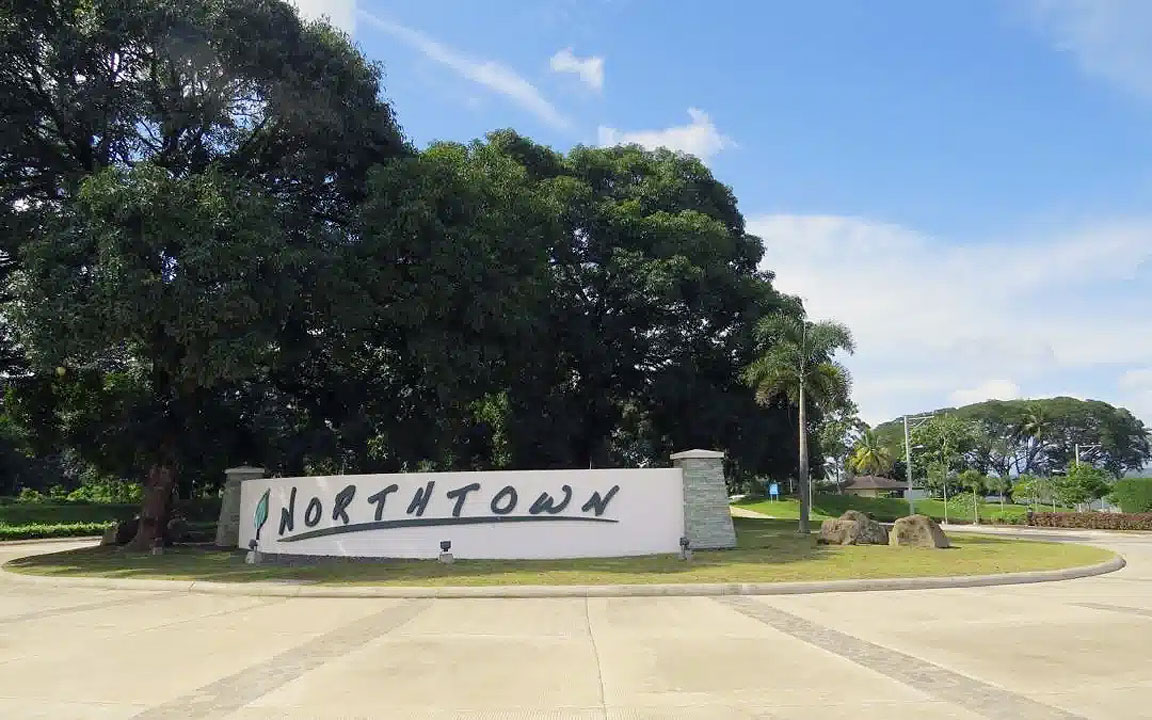
ALSONS Development and Investment Corp. (Alsons Dev), alongside its partner DoubleDragon Properties Corp., has launched Northtown Center, a township project in the central part of Davao City.

The 116-hectare property consists of a sprawling residential area with open lots on offer and a 10-hectare commercial hub with the first CityMall branch in the city.

“Even if we have been building communities in the past six decades, I am still filled with excitement by the expansion of Northtown from a purely residential project into a suburban township,” Alsons Dev Executive Vice-President Rosvida Alcantara-Dominguez said during the launch on March 30.

Alsons Dev, the real estate development arm of the Alcantara Group, has eight other residential communities in Davao. It is also the developer of the former Aldevinco Shopping Center known for locally-made products, which has been moved to the more modern Poblacion Market Central.

Northtown is the company’s first mixed-use venture that also features the first community-based, integrated safety and security center with a Central 911 sub-station, and police and fire bureau posts.

Under the masterplan, the complex will later have residential buildings, other commercial blocks, and educational institutions.

“The mix of these elements provide Northtown residents and the surrounding communities a unique experience that brings together the conveniences of the city and the natural beauty of the countryside,” Ms. Dominguez said.

The residential area’s amenities complex — with a banquet hall, swimming pool and other sports and fitness facilities — is connected to the commercial center through an open green space with walking paths.

CITYMALL
Meanwhile, the new CityMall branch will have the network of retail and food stores of MerryMart Consumer Corp. and Jollibee Foods Corp., local food shops, other lifestyle brands, and an activity center that can be leased for various events.

“The activity center might be very useful for small communities like this, for like birthdays and even LGUs (local government units) can utilize the space for their trainings,” DoubleDragon Properties President Ferdinand J. Sia said.

CityMall Commercial Centers, Inc., a subsidiary of DoubleDragon Properties, has been operating several malls in other parts of Mindanao, the southern Philippine islands.

“We are proud to open CityMall’s first branch in Davao City at Northtown Center, and we are looking forward to working with Alsons Dev for more developments in Mindanao,” Mr. Sia said.

This will be the 42nd CityMall in the country.

Alsons Dev and DoubleDragon Properties, through its CentralHub Industrial Centers, Inc., are also partnering for a warehouse complex in Davao City, located near air and sea ports.

Meralco gains de-loading capacity 

MANILA Electric Co. (Meralco) has secured an additional de-loading capacity under its interruptible load program (ILP) as part of its commitment to ensuring reliable electricity services especially for the summer months when power demand usually surges.

“Electricity consumption historically rises during the dry months because of the increased use of cooling appliances. That’s why we, in Meralco, continue to share a wealth of energy efficiency tips, not only to help our customers better manage their power consumption, but also to encourage its adoption as a way of life,” Joe R. Zaldarriaga, Meralco’s spokesperson and vice-president for corporate communications, said in a media release on Monday.

The power utility giant said it will gain an additional 56 megawatts (MW) of de-loading capacity as committed by Ayala Property Management Corp. (APMC). Meralco said this would increase APMC’s total commitment to 144 MW from 88 MW, while also expanding Meralco’s ILP capacity to 616 MW from the current 560 MW.

ILP participants are large power users that have their own power-generating facilities. These entities stop drawing power from the grid for a time by tapping their own generators, reducing the overall demand from the grid. Meralco taps its ILP participants when a red alert is declared by the grid operator, reducing electricity drawn from the system.

Michael F. Magpusao, chief engineer and chief operating officer of APMC, said that participation in the ILP is a “win-win” for the companies and communities.

“The ILP exemplifies the spirit of bayanihan because while the national government prepares the grid for a more reliable supply, we, in the load side, are doing our part to help communities,” he said.

Abraham Uy, chairman of WalterMart, said that ILP reduced unplanned power outages and also helps prevent damage to equipment.

“Meralco’s management of the ILP program benefits companies which no longer need to worry about surges,” Mr. Uy said.

To date, Meralco said 117 companies are part of ILP.

In December last year, Meralco and the Department of Energy called on more companies to enroll in the ILP in preparation for the expected surge in demand in the summer months.

Meralco’s controlling stakeholder, Beacon Electric Asset Holdings, Inc., is partly owned by PLDT Inc. Hastings Holdings, Inc., a unit of PLDT Beneficial Trust Fund subsidiary MediaQuest Holdings, Inc., has an interest in BusinessWorld through the Philippine Star Group, which it controls. — Ashley Erika O. Jose