Home Blog Page 5

Could the Iran crisis reshape global supply chains again? When distant conflicts reach the Philippine economy

STOCK PHOTO | Image by Macrovector_official from Freepik

By Cesar Polvorosa, Jr.

(Part 2)

The Strait of Hormuz is only one of several maritime chokepoints that sustain the modern global economy. The Bab-el-Mandeb linking the Red Sea and Gulf of Aden is also of urgent concern.

Energy shipments moving from the Middle East to East Asia must also pass through the Strait of Malacca and the South China Sea before reaching major manufacturing hubs and consumer markets. The Suez Canal is the vital channel between Europe and Asia while the Panama Canal provides the critical link between the Pacific and the Atlantic Oceans. Container ships carrying electronics, industrial components, and consumer goods follow similar routes.

These narrow waterways form a critical infrastructure network for global trade. A disruption in any one of them can reverberate through supply chains that stretch across continents.

The 2026 Iran crisis therefore highlights a broader vulnerability in the architecture of globalization. Modern trade depends not only on efficient markets but also on the stability of a small number of maritime corridors that carry a disproportionate share of the world’s commerce.

If the US-Iran War escalates further, the Philippine economy could experience magnified effects through several channels.

OIL PRICES AND INFLATION
The most immediate impact would be higher oil prices. Because the Philippines imports nearly all its crude oil requirements, global price increases quickly feed into domestic fuel costs.

Higher energy prices affect transport, utilities, and industrial production. Over time, these costs pass through to consumers in the form of higher food and transportation prices. From just about $69.41 per barrel on Feb. 28, the benchmark Brent crude rose to $109-$111 as of April 6. Subsequently, inflation forecast for 2026 is significantly up to 3.9% from a mere 1.7% in 2025. There had already been substantial local fuel price hikes.

OVERSEAS WORKERS AND REMITTANCES
Another channel involves overseas Filipino workers in the Middle East. Remittances from overseas workers constitute a major pillar of the Philippine economy, and many Filipino workers are employed in Gulf countries linked to the energy sector.

In the short term, higher oil prices can strengthen the economies of oil-exporting countries, potentially supporting employment opportunities for overseas workers. However, prolonged instability and shipping blockade could also create security risks or economic disruptions that affect Filipino communities abroad. From an exchange rate of P57.63 to $1 as of Feb. 28 the Philippine Peso has depreciated, breaching the P60 mark to P60.14-P60.17 per $1 as of April 6. While this may imply that overseas Filipino workers (OFWs) remit more peso equivalent of the same number of US dollars, the real impact will be less purchasing power due to higher inflation rates as well as less stable income sources especially from the Persian Gulf countries.

TRADE AND INVESTMENT
Geopolitical tensions can also influence investor sentiment and financial markets. Periods of global uncertainty often lead investors to shift capital toward safer assets, which can place pressure on emerging market currencies.

Higher shipping and logistics costs may also affect export competitiveness by raising transportation expenses for manufacturers and agricultural producers.

SUPPLY CHAIN DIVERSIFICATION IN SE ASIA
The potential consequences of this shift are particularly significant for Southeast Asia. In recent years, several countries in the region have benefited from supply chain diversification as companies seek alternatives to traditional manufacturing centers. Vietnam has emerged recently as one of the world’s fastest-growing export economies. Its integration into global manufacturing networks has been supported by competitive labor costs, expanding industrial infrastructure, and participation in major regional trade agreements.

Similarly, Indonesia, with its large domestic market and abundant mineral reserves, has attracted significant interest from firms seeking to diversify supply chains in sectors such as electric vehicle batteries and advanced manufacturing.

These developments illustrate an increasing broader shift toward the regionalization of global production. Firms are increasingly distributing production across multiple countries within the same region. Such arrangements can reduce transportation risks, improve supply chain flexibility, and, significantly, better protect firms against geopolitical disruptions.

For the Philippines, this transformation presents both challenges and opportunities.

On one hand, global instability can impose economic costs. The Philippines is heavily dependent on imported energy, making it vulnerable to fluctuations in oil prices. For a country integrated into global markets through trade, remittances, and international services, geopolitical shocks can reverberate through multiple channels.

On the other hand, the restructuring of global supply chains also opens new opportunities for investment and industrial development. As multinational enterprises seek to diversify production locations, countries able to provide stable business environments and competitive economic conditions may attract new industries.

The Philippine fundamentals could support such a shift. Its young and English-speaking workforce has already made it a global leader in BPO and other service-based industries. Expanding digital infrastructure and a growing consumer market further enhance the country’s economic potential.

However, capturing a larger share of emerging supply chains will require addressing long-standing structural challenges of infrastructure gaps, regulatory complexities, and governance issues. Countries that can combine political stability, good governance, efficient logistics, and supportive industrial policies will be best positioned to attract new investments.

The United States-Israel and Iran War therefore serves as more than a reminder of the fragility of energy markets. It also reflects a deeper transformation in the nature of globalization itself.

THE RESHAPING OF GLOBALIZATION
For decades, globalization was driven largely by the search for efficiency and seamless integration of markets across the world. Today, however, geopolitical tensions, trade disputes, and security concerns are reshaping that model.

Globalization is evolving, becoming more complex and fragmented. Supply chains are accommodating geopolitical risk as an enduring factor in economic decision-making.

For Philippine policymakers and businesses, the challenge is to adapt to this changing landscape. Firms must increasingly incorporate geopolitical risk into their strategic planning. The stability of supply routes, the reliability of energy sources, and the political dynamics of global trade are no longer peripheral concerns — they are central elements of the global business environment.

The current crisis involving the United States, Israel, and Iran may eventually fade from the headlines. Yet the broader forces reshaping global production networks are likely to endure. For trade-dependent economies such as the Philippines, the real question is not whether globalization will continue, but how its changing geography will influence the opportunities of the decades ahead.

RESILIENCE IN AN ERA OF GEOPOLITICAL RISK
Over the past several years, companies have already begun adjusting their strategies. Firms are diversifying suppliers, relocating production facilities, and developing regional manufacturing hubs to reduce exposure to geopolitical risk.

Governments are also reconsidering the meaning of economic resilience. Energy diversification, strategic reserves, domestic agricultural capacity, and diplomatic engagement with key trade partners are increasingly viewed as components of national economic security.

For the Philippines, strengthening resilience may involve accelerating investments in renewable energy, improving agricultural productivity, building strategic infrastructure and maintaining stable diplomatic relationships with major energy suppliers.

Globalization has created enormous economic opportunities. But it has also tied national economies more closely to geopolitical developments.

The broader lesson is that the global trading system is more fragile than it often appears. Events in the Middle East, disruptions in key shipping lanes, and increasingly frequent climate-related shocks remind us that trade networks are vulnerable to sudden systemic disruptions — what risk analyst Nassim Taleb famously called “Black Swan” events.

If the Iran crisis escalates or maritime routes are disrupted, the effects transcend oil prices but in the reconfiguration of global supply chains themselves. For countries like the Philippines, the lesson is clear: resilience in an uncertain world requires preparing not only for predictable risks but also for the unexpected.


Cesar Polvorosa, Jr. is a professor of economics and international business at a Canadian university. He is an occasional contributor on Philippine and international economic development and geopolitics. His literary work have been published in North American and Asian anthologies and publications, including Likhaan: Book of Poetry and Fiction. He was an economist at the Central Bank of the Philippines and an AVP at a Philippine bank.


PDIC revises guidelines for appealing denied deposit insurance claims

PHILIPPINE DEPOSIT INSURANCE CORP.

THE PHILIPPINE Deposit Insurance Corp. (PDIC) has revised its appeals process for denied claims, making it more accessible, transparent, and time-bound.

“Approved on Feb. 25, Regulatory Issuance (RI) No. 2026-01 sets out a straightforward path for depositors to request a reconsideration of denied claims, whether these were rejected in full or in part. This move ensures that every legitimate depositor is given a meaningful opportunity to be heard and to present additional proof supporting the claim,” the state deposit insurer said in a statement on Thursday.

“The revised RI reflects the state deposit insurer’s continuing effort to improve public service, enhance accountability, and maintain confidence in the banking system. By clarifying the rules and streamlining the process, the PDIC aims to ensure that no legitimate claim is left unheard, while upholding the highest standards of diligence and verification.”

Under the new issuance, depositors have 60 calendar days from receipt of a denial notice to file a request for reconsideration. The PDIC requires requests to be submitted with relevant documents like deposit slips, bank statements, or other proof of transactions, and accompanied by authorization to allow it to verify records.

More options for filing these requests are now available, as they can now be made in person, by mail, through courier, or electronically via e-mail.

The PDIC has also cut processing time to 60 days from the receipt of the reconsideration request from 120 days previously.

“Each request will undergo careful  evaluation, and the PDIC may grant or deny the appeal based on its merits or dismiss it if  it fails to meet the required standards,” it said.

While decisions at the PDIC level are final, depositors can elevate their case to the Court of Appeals within 30 calendar days after they receive the notice dismissing or denying the request for reconsideration.

The issuance will take effect on April 30. — A.M.C. Sy

Using silence in executive headhunting

STOCK PHOTO | Image by Benzoix from Freepik

I’m a headhunter for private organizations that rely on me to choose their best job candidates. I guess I’ve already perfected silence as a diagnostic tool for candidates vying for management positions. Please challenge my approach. — Crimson Banner.

​I’m not sure about your “silence” approach. How would you do that? Do you mean using dead air to assess candidates’ capability while interviewing them? In my experience with headhunters, they don’t spend much time with job candidates other than conducting a paper review of their CVs.

​Silence is powerful, but it’s not for headhunters. Besides, your “silence” approach contradicts the job of headhunters who play a behind-the-scenes role in shaping the leadership team of organizations. Think of them as intelligence agents with a dynamic database of candidates.   

​Their most important role is in convincing high-performing talent who are not in the job market to consider moving to another organization. A good headhunter knows where these candidates are located, their contact details, their background, what motivates them, and when they might listen.

​If this is the case, then how could headhunters be successful with candidates if they’re to be tested with silence as a diagnostic tool?

​Headhunters prioritize persuading executive candidates to join the search. It’s not to be used for deep behavioral testing which is the role of the client. Speed is essential because the headhunter and their client have only a 30-day window to process a replacement.   

BENEFITS OF SILENCE
While headhunters shouldn’t rely on silence, employers can use it effectively in interviews. They’re not to be used by search consultants or risk delaying the process and losing a client to another headhunter. When used by an employer in determining the qualifications of a candidate, silence is beneficial for the following reasons:

​One, reveals authentic thinking. Candidates know the advantages and tricks of rehearsed answers. This is often a challenge to companies that are trying to discover the best candidate with the right fit. After asking a difficult question, an employer may use silence to ask for clarification, if not a better answer. This is where candidates are forced to fill the dead air.

​Two, analyzes emotional composure. For employers, silence can be a stress test for candidates. This is often done when the interviewer doesn’t react — no nodding, no smiling, no “uh-huh.” This forces a candidate to recalibrate their answer by over-explaining or backpedaling, when they sense something was wrong with their answer.   

​Three, encourages deeper insight. This allows employers to compare initial responses with more thoughtful follow-ups. By staying silent after the first answer, an employer is subtly prompting a candidate to continue that leads to candid but more substantive insights. This process allows a candidate to do deeper self-reflection.

​Four, observes listening skills. Silence flips the spotlight. Instead of giving immediate answers, the candidate is tested for their listening aptitude to the question, to their own thoughts, and even to the silence itself. This requires an employer to ask tricky questions to assess whether a candidate is a good listener.

​Five, detects bluffing. When a candidate makes a bold claim, a prospective employer might respond with… silence. No challenge. No follow-up. Just silence. When this happens, candidates are expected to substantiate their claim or quietly retreat, if not soften the blow. Silence is used to test the candidates’ credibility or penchant to exaggerate.

​Six, simulates boardroom reality. Savvy and seasoned senior executives don’t immediately react to corporate issues without self-reflection. It’s the same tactic that employers would want from candidates. Not people who are trigger-happy in crisis briefings. This is “executive presence” often characterized by comfort in an ambiguous setup.

Seven, understands who controls the conversation. This happens when silence helps understand who needs control versus who commands the situation. The best job candidates don’t panic. Instead, they pause, check, and reflect if the interviewer wants more.

​Silence reveals a candidate’s maturity to distinguish between dialogue and monologue.

EXECUTIVE SILENCE
Unfortunately, many employers misinterpret silence as lack of leadership qualities. That’s why some candidates answer fast to impress. On the other hand, seasoned ones pause to think because they know the answer will live longer than silence.

​American philosopher Elbert Hubbard (1856-1915) said: “He who does not understand your silence will probably not understand your words.” Experienced, senior leaders know that not everything needs explaining.

​Silence can carry authority, even mystery — much better than over-explaining.

​In conclusion, a prospective employer would want to see their best candidate show how they think when they’re not being coached or given instructions. In other words, employers would want to see how you respond to a situation when not being helped.


Consult Rey Elbo for his free insights on people management. Send your workplace questions to elbonomics@gmail.com or DM him on Facebook, LinkedIn, X or https://reyelbo.com.

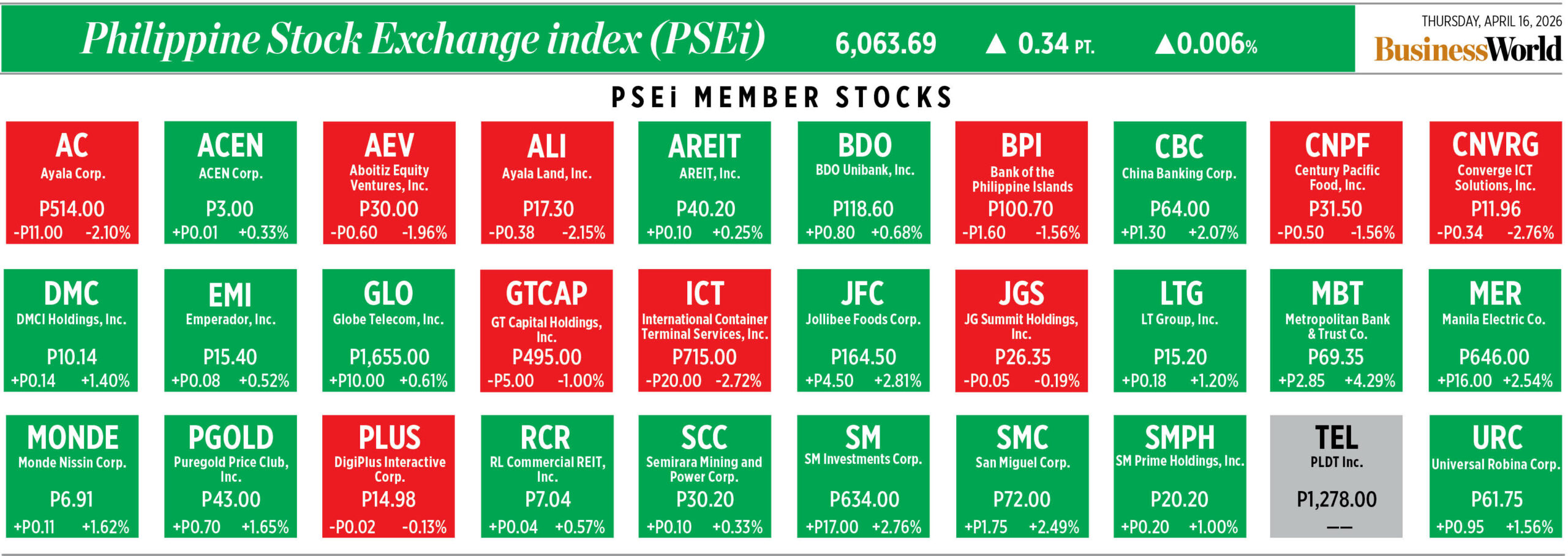
How PSEi member stocks performed — April 16, 2026

Here’s a quick glance at how PSEi stocks fared on Thursday, April 16, 2026.


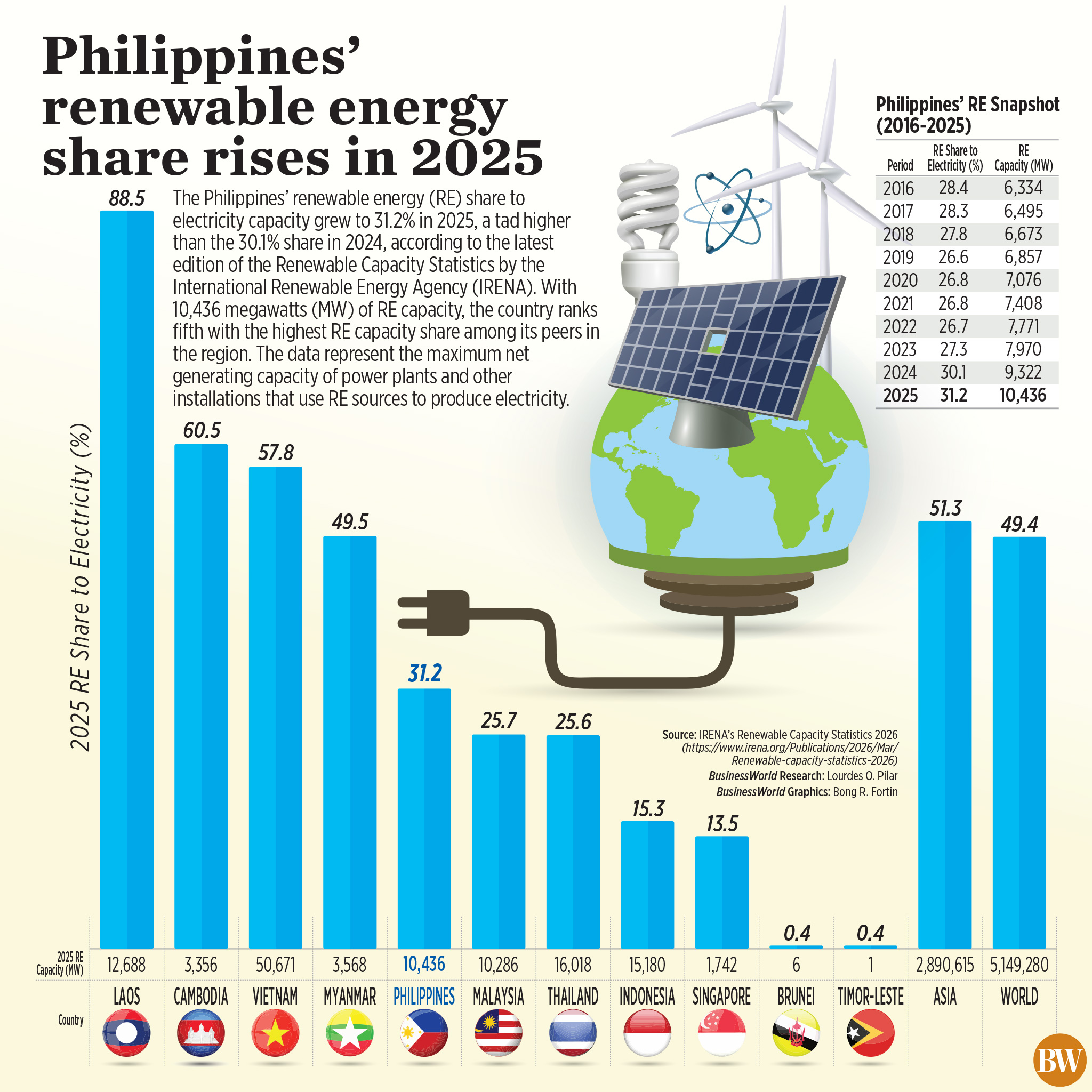
Philippines’ renewable energy share rises in 2025

The Philippines’ renewable energy (RE) share to electricity capacity grew to 31.2% in 2025, a tad higher than the 30.1% share in 2024, according to the latest edition of the Renewable Capacity Statistics by the International Renewable Energy Agency (IRENA). With 10,436 megawatts (MW) of RE capacity, the country ranks fifth with the highest RE capacity share among its peers in the region. The data represent the maximum net generating capacity of power plants and other installations that use RE sources to produce electricity.

PSEi ends flat amid hopes for Mideast peace talks

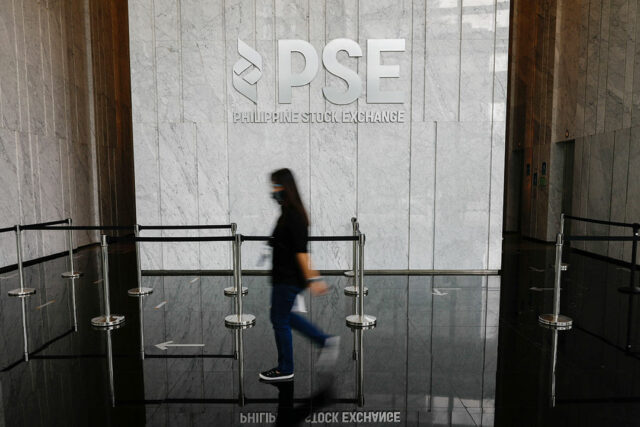
The lobby of the Philippine Stock Exchange in Taguig City, Sept. 30, 2020. — REUTERS

PHILIPPINE STOCKS ended flat on Thursday as the market stayed on the sidelines while awaiting developments in the Middle East conflict.

The Philippine Stock Exchange index (PSEi) edged up by 0.34 point to end at 6,063.69, while the broader all shares index went up by 0.05% or 1.93 points to end at 3,398.81.

“The Philippine market ended relatively flat as investors remained cautious. Sentiment held steady as the market waits for developments in possible peace talks in the Middle East, keeping risk appetite in check. Despite this, selective buying in key stocks helped keep the market afloat,” Regina Capital Development Corp. Head of Sales Luis A. Limlingan said in a Viber message.

“The local market moved sideways, reflective of investors’ indecisiveness and cautious trading amid the uncertainties over the Middle East conflict and its impact on the local economy. Hopes of a second round of talks between the US and Iran gave the market support in Thursday’s session,” Philstocks Financial, Inc. Research Manager Japhet Louis O. Tantiangco said in a Viber message. “However, economic effects brought by the war from rising inflation to the possibility of the BSP (Bangko Sentral ng Pilipinas) tightening their policy stance weighed on sentiment.”

BSP Governor Eli M. Remolona, Jr. told BusinessWorld on the sidelines of the International Monetary Fund and World Bank’s 2026 Spring Meetings in Washington, DC that the central bank has room to raise rates to quell rising inflation amid the Middle East conflict as they expect government spending to support growth.

Mr. Remolona said that second-round effects may emerge sooner than expected as the global oil price shock is expected to spill over into domestic food and transport prices.

In March, elevated oil prices amid the conflict drove inflation to a near two-year high of 4.1%, faster than the BSP’s 3.1%-3.9% forecast and 2%-4% target for the year.

In an off-cycle meeting last month, the Monetary Board left benchmark interest rates unchanged. It last raised borrowing costs in October 2023.

Sectoral indices were split on Thursday. Industrials rose by 0.99% or 87.61 points to 8,919.86; financials increased by 0.67% or 12.86 points to 1,915.02; and holding firms went up by 0.65% or 30.20 points to 4,678.74.

Meanwhile, services declined by 1.79% or 50.61 points to 2,776.75; mining and oil retreated by 0.36% or 65.22 points to 18,017.78; and property went down by 0.04% or 0.90 point to 2,017.08.

Decliners outnumbered advancers, 100 to 91, while 64 names closed unchanged.

Value turnover decreased to P7.80 billion on Thursday with 2.14 billion shares traded from the P8.16 billion with 1.45 billion issues that changed hands on Wednesday.

Net foreign selling went down to P1.01 billion from P1.37 billion in the previous session. — Alexandria Grace C. Magno

Marcos to roll out nationwide program on subsidized rice amid inflation risks

PHILSTAR FILE PHOTO

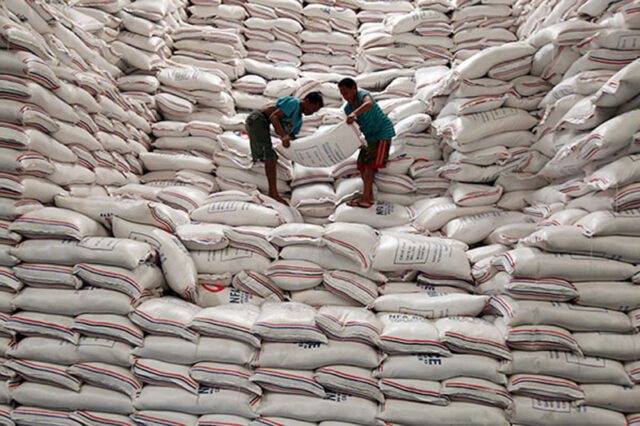
PRESIDENT Ferdinand R. Marcos, Jr. said his administration plans to expand a subsidized rice distribution program nationwide, positioning it as a buffer against rising food prices and external shocks linked to volatile global oil markets.

Speaking at the launch of “Biyayang Bigas para sa Maynila” in Manila on Thursday, Mr. Marcos said the initiative would be scaled up across the country, with local government units (LGUs) leading the identification of beneficiaries and the distribution of assistance.

“We will do this nationwide,” he said in Filipino, adding that the goal is to ensure “that all our countrymen have at least something to eat.”

The program rollout comes as the Philippines remains under a year-long state of national energy emergency triggered by the US-Israel war on Iran, which has disrupted global fuel supply chains and pushed up oil prices.

The surge in fuel costs has raised concerns about broader inflationary pressures particularly on food, as higher transport and production expenses are passed on to consumers.

Mr. Marcos acknowledged that the government has limited control over global oil prices but said it could intervene to ease the burden on households through food access programs.

“We know that when oil prices rise, everything follows, especially food,” he said. “That is why we are closely monitoring this so that the impact on the public will not be too heavy.”

The government has so far allocated about P15 billion for the program through the Local Government Support Fund, which allows faster release of resources directly to local governments.

Mr. Marcos said decentralizing the implementation would help avoid delays tied to national procurement and distribution systems, noting that LGUs are better positioned to identify vulnerable households and maintain updated beneficiary lists.

Under the program, eligible households will receive 10 kilos of rice up to six times a year. In its initial phase, about 80,000 households in Manila are expected to benefit before the program is expanded nationwide.

The initiative forms part of the government’s broader response to rising costs driven by the global energy crisis.

Earlier this week, Mr. Marcos approved the suspension of excise taxes on liquefied petroleum gas and kerosene, which are commonly used by households, to help temper price increases.

However, he has yet to decide on whether to extend similar tax relief to diesel and gasoline, which have a wider impact on transportation and overall inflation.

Inflation rose to 4.1% in March, nearing a two-year high, largely due to higher fuel prices.

Some lawmakers have proposed suspending the 12% value-added tax on petroleum products to further ease costs, but the administration has cautioned that such a move could significantly reduce government revenues needed to fund social programs.

Mr. Marcos said the rice subsidy initiative reflects the government’s effort to provide immediate relief to vulnerable sectors while managing the broader economic impact of global supply disruptions.

OIL SUBSIDIES
Meanwhile, Executive Secretary Ralph G. Recto has ordered local governments to closely coordinate with transport and energy agencies to accelerate the rollout of fuel subsidies and fare discounts.

In a statement, Mr. Recto said LGUs, in coordination with the Department of the Interior and Local Government (DILG), should align with the Department of Energy (DoE), Department of Transportation (DoTr) and the Land Transportation Franchising and Regulatory Board (LTFRB) to ensure the “seamless implementation” of the transport assistance package.

The directive followed a meeting on April 15 with agencies handling the service contracting program, where officials finalized key implementation details ahead of a broader rollout.

“In keeping with the whole-of-government approach, the DoTr and LTFRB need to work closely with the DILG, LGUs and DoE to make sure that all target beneficiaries are able to avail themselves of the financial support under the program and that these recipients provide the 20% fare discount to all of their passengers,” Mr. Recto said.

Under the program, public utility vehicle operators and drivers will get subsidies ranging from P40 to P100 per kilometer. In exchange, they must grant passengers a 20% fare discount on top of existing privileges for students, senior citizens and persons with disabilities.

The LTFRB is expected to release a standardized fare matrix this week to guide implementation.

Once fully implemented, the program is projected to benefit about 50,000 drivers and as many as 15 million commuters, while helping curb second-round inflation effects driven by higher transport and logistics costs.

The order comes as the government moves to expand the initiative beyond its initial rollout in Metro Manila, with a phased nationwide implementation planned for key urban centers and provincial routes.

Officials said the program forms part of the administration’s broader effort to cushion the impact of global oil market disruptions triggered by the Middle East war.

Although global crude prices have eased after a temporary ceasefire, authorities have warned that pump prices remain vulnerable to renewed spikes after the US and Iran failed to reach a longer-term agreement. — Chloe Mari A. Hufana

Jobs, wage hikes are top concerns among Pinoys

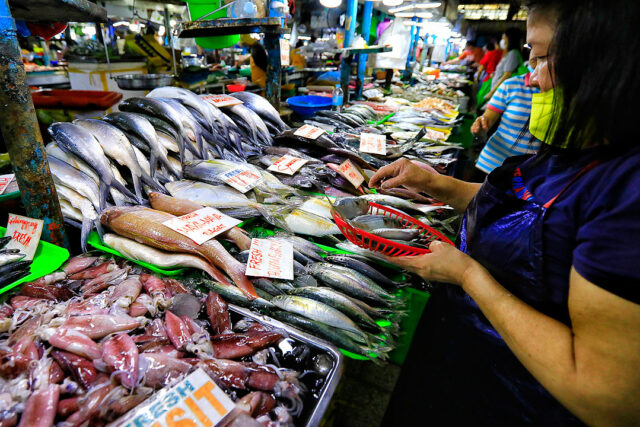
A wide variety of fish at the Marikina Public Market. — PHILIPPINE STAR/ WALTER BOLLOZOS

RISING oil prices driven by the Iran conflict are reshaping public priorities, with most adult Filipinos now calling for job creation and wage increases as the government’s top concerns, according to a nationwide survey by WR Numero Research.

Results of its March Philippine Public Opinion Monitor showed that 63% of Filipinos cited the need for more jobs and livelihood opportunities — almost triple from the 23% recorded in November 2025.

The sharp increase reflects mounting pressure on households as higher fuel costs push up transport and food prices, contributing to faster inflation.

The research firm said the 40-percentage-point surge in job concerns was the biggest shift among all issues tracked in the survey, signaling growing anxiety over income stability.

The poll also found that financial strain remains widespread, with only a small minority of Filipinos reporting no difficulty meeting basic needs.

Food, rent and transportation were identified as the most difficult expenses to afford, highlighting how oil-driven cost increases are feeding into daily living costs.

About 22% of the respondents said they struggle daily, while 30% reported experiencing such difficulty often or at least once or twice a week.

Another 29% said they encounter these challenges occasionally, while 14% experience them only rarely. Just 5% said they never struggle to meet basic needs.

Aside from employment, 49% of the respondents said wage increases should be prioritized, reflecting concerns that incomes are failing to keep pace with rising prices.

Other key issues cited include curbing illegal drug use (40%), eliminating corruption in government (32%) and lowering the cost of food and basic commodities (26%).

Public sentiment also turned more pessimistic, with 58% saying the Philippines is headed in the “wrong direction,” compared with 32% who think it is on the right track.

WR Numero Research said the findings underscore the need for policies that address both employment and inflation as external shocks continue to weigh on household finances.

The survey was conducted from March 10 to 17 through face-to-face interviews with 1,455 respondents nationwide, with a margin of error of ±2.57 percentage points at a 95% confidence level. — Erika Mae P. Sinaking

Bill cutting VAT to 10% amid oil-driven price surge filed

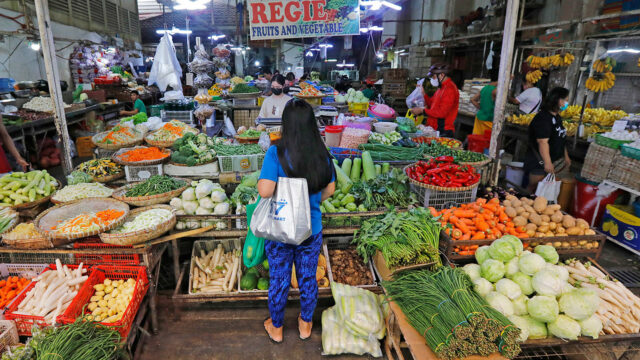
A customer buys fresh produce at the public market in Marikina. — PHILIPPINE STAR/ WALTER BOLLOZOS

SENATOR Paolo Benigno A. Aquino IV has filed a bill seeking to cut the value-added tax (VAT) to 10% from 12% to ease the burden on households as surging oil prices linked to the Middle East war push up the cost of living.

Filed on Thursday, Senate Bill No. 2047 proposes changes to key provisions of the National Internal Revenue Code of 1997 to lower VAT on goods and services.

Mr. Aquino said the measure could support economic recovery while making prices more manageable for consumers, particularly lower-income households.

“While VAT has been an important source of government revenue, its uniform application means that it takes up a larger share of the income of poorer households,” he said in the bill’s explanatory note. “In times of crisis, this regressive impact becomes even more pronounced.”

The proposal comes as fuel-driven inflation continues to ripple through the economy following the US-Israel war on Iran that began on Feb. 28 and disrupted global oil markets.

Since March, the government has rolled out subsidies for the transport and agriculture sectors to cushion the impact of higher fuel costs, which have driven up prices of food and other basic goods.

Mr. Aquino said a VAT reduction would complement these targeted support measures by providing broader relief to consumers.

Other lawmakers have also pushed tax relief on fuel, with some proposing to suspend VAT specifically on petroleum products.

Senator Lorna Regina B. Legarda earlier filed Senate Bill No. 2043, which seeks to suspend or reduce VAT on fuel, while calling on the administration to clarify its policy direction.

Senator Maria Imelda R. Marcos has likewise backed a suspension of fuel VAT to ease costs for municipal fisherfolk and commercial fishers registered with the Bureau of Fisheries and Aquatic Resources.

However, Senator Panfilo M. Lacson warned of the potential fiscal impact of such measures, estimating that the government could lose about P320 billion in revenues, including about P119.3 billion from VAT removal on fuel products alone.

The Marcos administration has so far opted for more targeted interventions.

In March, President Ferdinand R. Marcos, Jr. was granted emergency powers allowing him to suspend excise taxes on petroleum products if global oil prices breach certain thresholds.

On April 13, the President approved the suspension of excise taxes on liquefied petroleum gas and kerosene, both commonly used by households, to help temper rising costs.

He has yet to decide whether similar tax relief will be extended to diesel and gasoline, which have a wider impact on transport and inflation.

The proposed VAT cut adds to a growing list of policy options being considered as the government balances the need to provide immediate relief with concerns over revenue losses and fiscal sustainability. — Kaela Patricia B. Gabriel

Davao opposition to US oil depot ‘misplaced’

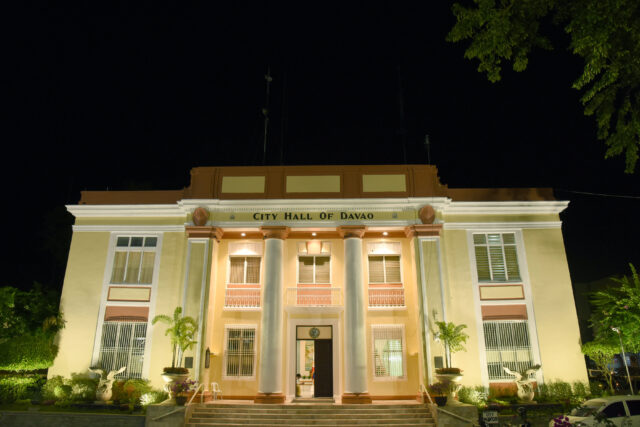
DAVAO CITY HALL — DAVAOCITY.GOV.PH

DAVAO CITY’S opposition to a proposed US military fuel facility in the city is “misplaced,” an analyst said, arguing that decisions involving national security and defense cooperation fall under the authority of the National Government.

Political analyst Edmund S. Tayao, president and chief executive officer of Political Economic Elemental Researchers and Strategists, said local government units do not have the full strategic view needed to assess defense arrangements tied to broader security concerns.

“The National Government is the one that is capable of understanding the overall security requirements of the whole country,” he said in a Facebook Messenger call.

The statement comes after the Davao City government rejected a reported US plan to establish a Defense Fuel Support Point in southern Philippines, citing concerns over foreign military presence and its relevance to fuel price pressures linked to the Middle East war.

The US Naval Institute, an independent forum, on April 7 said the Pentagon is considering a refueling depot in Mindanao as part of a wider network of maritime logistics hubs in the Indo-Pacific region.

Davao City on April 13 said it would not allow foreign military facilities within its jurisdiction, stressing that such projects would only be acceptable if they directly address the country’s fuel shock triggered by the Middle East crisis that began on Feb. 28.

The proposed depot reportedly involves storage capacity of as many as 41 million gallons of fuel and is expected to be operational by 2028, forming part of a broader US logistics network with similar facilities in Australia and Papua New Guinea.

Mr. Tayao said the local opposition might also reflect longstanding political leanings in the city, noting that past leadership had been critical of US military presence.

He added that concerns over foreign partnerships should be weighed against broader security risks, including alleged espionage activities in some provinces.

“In the past months, many provinces reported the arrest of sleeper agents of China,” he said. “That should be the more pressing concern compared with the presence of partners who are helping in defense preparation.” — Kaela Patricia B. Gabriel

Luzon grid sees first yellow alert

BW FILE PHOTO

THE Luzon grid has recorded its first yellow alert this year following the outage of a major gas-fired power plant and some hydropower plants, according to the National Grid Corp. of the Philippines (NGCP).

In an advisory on Thursday, NGCP said it has placed the Luzon grid under yellow alert from 4 p.m. to 10 p.m.

Peak demand hit 11,966 megawatts (MW) while the available capacity was at 12,223 MW.

A total of 5,137.2 MW was unavailable to the grid after 35 plants went on forced outage while 14 were running on derated capacities.

A yellow alert is issued when the operating margin is insufficient to meet the transmission grid’s contingency requirement.

NGCP attributed the raising of yellow alert to the tripping of two major gas plants in Batangas, as well as the unavailability of hydroelectric power plants in Magat, Isabela.

The outage has triggered Manila Electric Co. to implement automatic load dropping that lasted for 10-15 minutes within its franchise areas.

Power supply was restored in all affected areas at 3:01 p.m.

A yellow alert was also raised over the Visayas grid from 6 p.m. to 7 p.m. due to the lack of power imported from Luzon.

The grid’s available capacity was at 2,597 MW, nearly outpacing the demand of 2,368 MW. — Sheldeen Joy Talavera

Sugar over-importation probe urged

PHILIPPINE STAR/ERNIE PENAREDONDO

A SENATOR on Thursday filed a resolution seeking to investigate alleged mismanagement in sugar regulation resulting in its over-importation.

In Senate Resolution No. 369, Senator Joseph Victor G. Ejercito asked the Senate Committee on Agriculture, Food, and Agrarian Reform to conduct an inquiry on a possible sugar over-importation.

“Excessive or poorly timed importation resulted in oversupply in the domestic market, depressed farmgate prices, and reduced income for local farmers and mill workers,” the resolution read.

Data from the Sugar Regulation Authority, an attached agency of the Department of Agriculture (DA) has shown that the Philippines has 668,405 metric tons of sugar stock as of March 22 which is 99,534 metric tons higher compared to the previous year’s supply.

Mr. Ejercito, in the resolution, said this marks a “significant increase” in domestic supply which may lead to the decline of farmgate prices.

“There is a need to review existing policies and the basis for determining the timing and volume of sugar importation to ensure that such policies remain responsive to present challenges and promote long-term sustainability,” the resolution stated.

In 2025, the DA put sugar imports on hold until December this year to prioritize domestic raw sugar and raise the product’s farmgate prices. — Kaela Patricia B. Gabriel

ADVERTISEMENT
ADVERTISEMENT