Marcos to roll out nationwide program on subsidized rice amid inflation risks
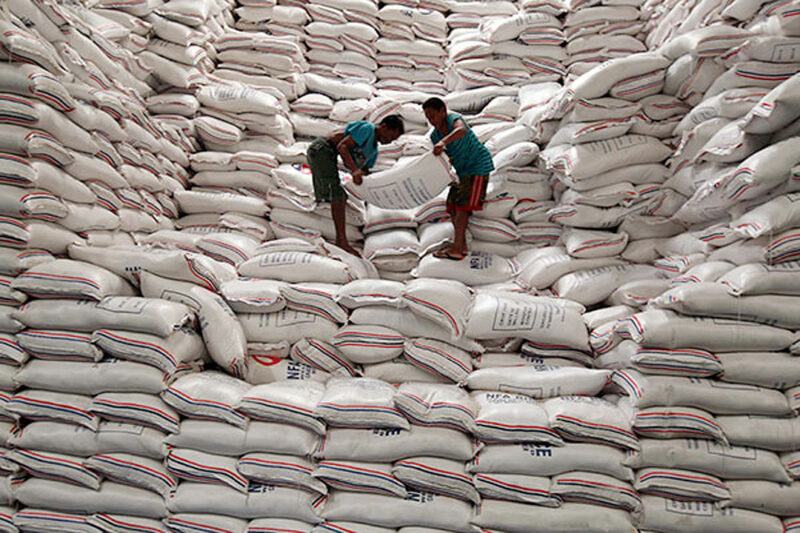
PRESIDENT Ferdinand R. Marcos, Jr. said his administration plans to expand a subsidized rice distribution program nationwide, positioning it as a buffer against rising food prices and external shocks linked to volatile global oil markets.
Speaking at the launch of “Biyayang Bigas para sa Maynila” in Manila on Thursday, Mr. Marcos said the initiative would be scaled up across the country, with local government units (LGUs) leading the identification of beneficiaries and the distribution of assistance.
“We will do this nationwide,” he said in Filipino, adding that the goal is to ensure “that all our countrymen have at least something to eat.”
The program rollout comes as the Philippines remains under a year-long state of national energy emergency triggered by the US-Israel war on Iran, which has disrupted global fuel supply chains and pushed up oil prices.
The surge in fuel costs has raised concerns about broader inflationary pressures particularly on food, as higher transport and production expenses are passed on to consumers.
Mr. Marcos acknowledged that the government has limited control over global oil prices but said it could intervene to ease the burden on households through food access programs.
“We know that when oil prices rise, everything follows, especially food,” he said. “That is why we are closely monitoring this so that the impact on the public will not be too heavy.”
The government has so far allocated about P15 billion for the program through the Local Government Support Fund, which allows faster release of resources directly to local governments.
Mr. Marcos said decentralizing the implementation would help avoid delays tied to national procurement and distribution systems, noting that LGUs are better positioned to identify vulnerable households and maintain updated beneficiary lists.
Under the program, eligible households will receive 10 kilos of rice up to six times a year. In its initial phase, about 80,000 households in Manila are expected to benefit before the program is expanded nationwide.
The initiative forms part of the government’s broader response to rising costs driven by the global energy crisis.
Earlier this week, Mr. Marcos approved the suspension of excise taxes on liquefied petroleum gas and kerosene, which are commonly used by households, to help temper price increases.
However, he has yet to decide on whether to extend similar tax relief to diesel and gasoline, which have a wider impact on transportation and overall inflation.
Inflation rose to 4.1% in March, nearing a two-year high, largely due to higher fuel prices.
Some lawmakers have proposed suspending the 12% value-added tax on petroleum products to further ease costs, but the administration has cautioned that such a move could significantly reduce government revenues needed to fund social programs.
Mr. Marcos said the rice subsidy initiative reflects the government’s effort to provide immediate relief to vulnerable sectors while managing the broader economic impact of global supply disruptions.
OIL SUBSIDIES
Meanwhile, Executive Secretary Ralph G. Recto has ordered local governments to closely coordinate with transport and energy agencies to accelerate the rollout of fuel subsidies and fare discounts.
In a statement, Mr. Recto said LGUs, in coordination with the Department of the Interior and Local Government (DILG), should align with the Department of Energy (DoE), Department of Transportation (DoTr) and the Land Transportation Franchising and Regulatory Board (LTFRB) to ensure the “seamless implementation” of the transport assistance package.
The directive followed a meeting on April 15 with agencies handling the service contracting program, where officials finalized key implementation details ahead of a broader rollout.
“In keeping with the whole-of-government approach, the DoTr and LTFRB need to work closely with the DILG, LGUs and DoE to make sure that all target beneficiaries are able to avail themselves of the financial support under the program and that these recipients provide the 20% fare discount to all of their passengers,” Mr. Recto said.
Under the program, public utility vehicle operators and drivers will get subsidies ranging from P40 to P100 per kilometer. In exchange, they must grant passengers a 20% fare discount on top of existing privileges for students, senior citizens and persons with disabilities.
The LTFRB is expected to release a standardized fare matrix this week to guide implementation.
Once fully implemented, the program is projected to benefit about 50,000 drivers and as many as 15 million commuters, while helping curb second-round inflation effects driven by higher transport and logistics costs.
The order comes as the government moves to expand the initiative beyond its initial rollout in Metro Manila, with a phased nationwide implementation planned for key urban centers and provincial routes.
Officials said the program forms part of the administration’s broader effort to cushion the impact of global oil market disruptions triggered by the Middle East war.
Although global crude prices have eased after a temporary ceasefire, authorities have warned that pump prices remain vulnerable to renewed spikes after the US and Iran failed to reach a longer-term agreement. — Chloe Mari A. Hufana