Home Blog Page 4969

Hontiveros denounces appointment of SRA officer-in-charge 

A SENATOR slammed the appointment of Agriculture Senior Undersecretary Domingo F. Panganiban as officer-in-charge of the Sugar Regulatory Administration (SRA), citing the need to hold him accountable for irregular sugar importations earlier this year.  

For Malacañang and Panganiban, it appears that crime really does pay it even rewards,Senator Ana Theresia RisaN. Hontiveros-Baraquel said in a statement on Thursday. 

In any other government, Panganiban would already be suspended and the subject of multiple criminal and administrative investigations for his issuances which openly violate existing laws and enable the formation of a government sponsored sugar cartel in the country,she said.  

Large shipments of sugar were brought in via the Port of Batangas earlier this year and were released on Mr. Panganibans authority. The arrival date of the shipments was not covered by a new or earlier SRA orders.    

Mr. Panganiban had defended that he acted based on a directive from the Office of the Executive Secretary citing the need to import sugar to help address the impact of rising food prices on inflation.  

The lawmaker called Mr. Panganibans designation to the SRA top post an epitome of impunity.”  

What sort of message do we hope to send here to our fellow government employees, to our farmers, to our consumers by rewarding corruption instead of punishing it?she said.  

If left unchecked, large-scale smuggling and outright corruption in the selection of importers will be just the beginning,she said.  

The senator added that the SRA under Mr. Panganiban will continue to deny requests by industries to procure their own sugar supplies and justify the high prices of sugar being forced on consumers and businesses alike.Beatriz Marie D. Cruz 

CoA flags Cavite industrial estate developer for failing to move on with abolition 

PHILIPPINE STAR/MICHAEL VARCAS

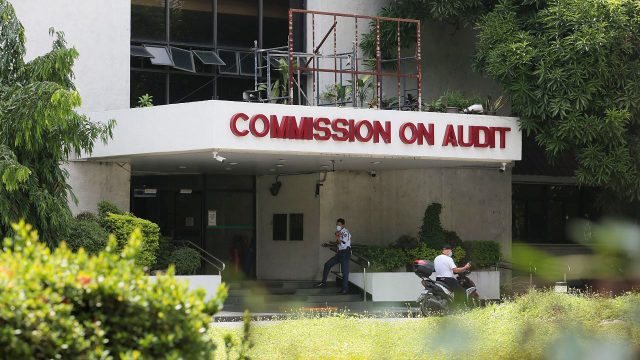
THE COMMISSION on Audit (CoA) flagged a Cavite industrial estate developer for failing to make progress on its abolition after a directive from the Office of the President last year, racking up expenses worth P28.64 million.  

In its 2022 report dated March 23, state auditors said the closure of First Cavite Industrial Estate, Inc. (FCIEI) has not been started,resulting in the non-liquidation of assets, non-settlement of liabilities, and continued incurrence of expenses accumulating to P28.64 million.  

The FCIEI was registered with the Securities and Exchange Commission in 1990 and began as a joint venture project of the National Development Company (NDC), Marubeni Corp., and Japan International Development Organization Ltf., a corporation established by KEIDANREN (Japan Business Federation).   

It was formed to develop the NDCs property in Dasmariñas, Cavite in southern Luzon into an industrial estate and economic zone. It was able to sell all its designated lots to locators in 1995 but the complex was not completed.   

The FCIEI was ordered for abolition on June 23, 2022 through Memorandum Order No. 62 of the Office of the President.  

Given that the intention of the FCIEI to undertake another development project did not materialize, the abolition of the company was recommended, and was approved in principle in 2015, with the condition that the FCIEIs liabilities, particularly to the Philippine Economic Zone Authority (PEZA) are settled,the memorandum order is quoted in the audit report.  

CoA recommended that the FCIEI coordinate with the technical working group (TWG) created under the memorandum order to fast track and immediately start with the legal processes covered by the abolition of a government-owned and -controlled corporation (GOCC).  

The TWG is composed of representatives from the NDC, PEZA, and the Governance Commission for GOCCs. 

FCIEI had assets worth P7.33 million in 2022, and unsettled notices of disallowances amounting to P220,933. Beatriz Marie D. Cruz

CAAP aims to top pre-pandemic passenger traffic with Davao airport expansion   

CAAP

THE CIVIL Aviation Authority of the Philippines (CAAP) is eyeing a five-million annual passenger traffic at the Davao International Airport with the P700-million terminal expansion project that is planned to start in July. 

CAAP-Davao Area Manager Rex A. Obcena said the target is higher than the 4.2 million passengers recorded in 2019, considered as the banner year.  

We hope to be able to entice more international stakeholders and airlines to come in and consider Davao as a key destination,he told the AFP-PNP Press Corps media forum Wednesday.   

There are now an average 35 daily flights at the airport, including international flights served by Singapore Airlines and its subsidiary Scoot, and Qatar Airways.  

Before the coronavirus pandemic lockdown in March 2020, there were several other international services to and from Davao City, including Hong Kong by Cathay Dragon, Quanzhou by Xiamen Air, and Manado by Garuda Indonesia.  

Mr. Obcena said the current average daily passenger movement is about 9,500 to 10,000, or around 3.6 million annually since restrictions were eased in mid-2021.  

It is not within the 2019 pre-pandemic level, but with the improvements we have now and revitalizing the civil aviation sector, air transport, we are anticipating a very rosy 2024 and beyond,he said.  

The airport, also known as the Francisco Bangoy International Airport, has been undergoing terminal facilities upgrade, which is expected to be completed by mid-May.    

That is a very minor improvement, specifically in the check-in area but the project includes the replacement of the escalator and elevators, and so far, the civil and architectural works in front probably 80% (complete) and its about to finish,he said.  

The P700-million terminal expansion project, on the other hand, will primarily be for international operations.  

Contract bidding is underway and give or take within the month towards early May, we hope that there will be a qualified bidder already,he said. Maya M. Padillo

CoA orders Mapandan Water District to pay loans, halt tariff rate hike 

MAWADI.GOV.PH

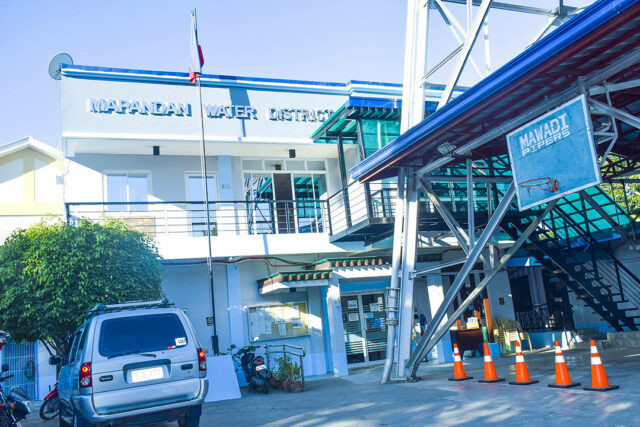
STATE AUDITORS ordered the Mapandan Water District (MAWADI) in Pangasinan to settle its outstanding loan balance to a government agency as well as include a portion of its lot in its transfer certificates of title.  

In a report dated April 13, the Commission on Audit (CoA) said MAWADI did not settle its outstanding loan balance with the Local Water Utilities Administration (LWUA) of P24.6 million as of Dec. 31, 2022.”   

CoA recommended that the management pay all its loan obligations with the LWUA to avoid legal actions against the District.” 

The state-owned MAWADI entered into a joint venture with private company PrimeWater Infrastructure Corp. in 2019, with the aim of improving and expanding water and septage services in Mapandans 15 villages.   

PrimeWater imposed a water rate increase, which state auditors said did not go through public consultations and was not supported with the computation of the recoverable and prudent costs, thus, prejudicial to the interest of the public.”   

CoA recommended that MAWADI advise PrimeWater to immediately stopimplementing the higher rates pending review and approval by LWUA.  

CoA also said that four parcels of lot of the District costing P3.76 million were not covered by Transfer Certificates of Title,making the absolute ownership and valuation of the properties not ascertained, posing risks of claims by other parties.”  

The audit team has discussed the observations and recommendations with the managementon Feb. 1 and that the comments incorporated in the report were appropriate,CoA said.  

MAWADIs assets amounted to P86.63 million in 2022 but has unsettled disallowances of P522,348.59. Beatriz Marie D. Cruz

Coca-Cola PHL expands recycling program to Laguna 

COCA-COLA PHL PHOTO

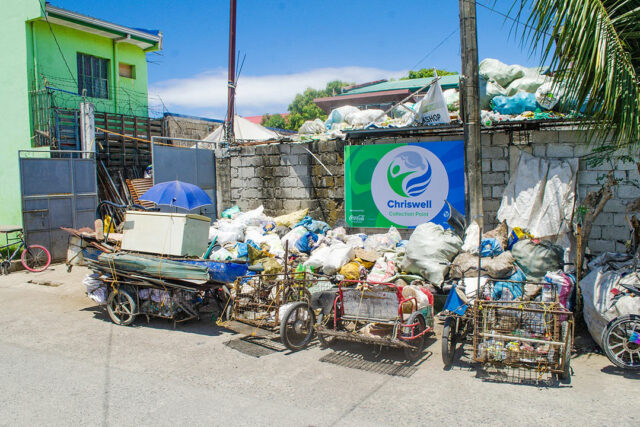
COCA-COLA Beverages Philippines, Inc. has expanded its recycling program to Laguna province in partnership with social enterprise Plastic Bank Philippines.  

In a statement on Thursday, the beverage company said they have rolled out their Ecosystem Impact Program in Laguna following initial implementation in Cavite since 2021.  

It said nine new partner shops have come on board, adding to a total of 15 recyclable wastes collection branches within Coca-Cola Philippines and Plastic Bank’s program areas. More partners in Laguna are expected to join in the coming months.   

Plastic Bank sets up collection and recycling ecosystems in communities to prevent ocean-bound plastic waste. It has an online app that shop owners can use to track collections and share their waste collection impact online.  

Furthermore, over 160 new waste collection members have joined the Plastic Bank ecosystem, bringing the total number of members to 600. These new additions to the ecosystem have helped scale the collection of the Program,Coca-Cola said.  

Under the program, partner junk shops and other organizations are given access to tools and equipment for efficient waste collection, such as sacks, branch uniforms, weighing scales, and shop signages.  

The Coca-Cola Philippines and Plastic Bank Ecosystem Impact Program works directly with individuals in the informal waste sector and micro, small and medium enterprises like junk shops to create collection and recycling ecosystems in communities that help prevent plastic waste from going into the ocean,the company said.   

Waste collection members get an above-market rate for collected plastic, which is convertible to cash or digital tokens that can be used for health, work and life insurance, and social and fintech services.  

Plastic pollution is a major crisis that affects all life on Earth. It requires the collective effort of all humanity to address this issue,Plastic Bank Chief Supply and Countries Officer Gidget Velez said in the statement.   

The Philippines passed in 2022 the Extended Producer Responsibility (EPR) Act, which holds companies responsible for managing the impact of their product packaging over the full life cycle. 

Marcos issues order to expedite rollout of offshore wind projects

ELECNOR

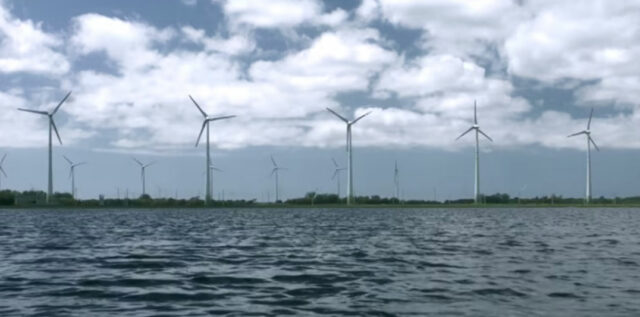
PRESIDENT Ferdinand R. Marcos, Jr. has signed an executive order (EO) directing the Department of Energy (DoE) to draft a framework that will expedite the rollout of offshore wind (OSW) projects.

Executive Order No. 21, released on Thursday, calls for a fast-track approval process for offshore wind proponents as they apply for licenses and permits.

“There is a need to adopt a whole-of-government approach by streamlining and expediting the approval process by the permitting agencies… and eliminate unnecessary delays in every stage of an offshore wind project,” the President said in the EO.

The DoE was ordered to establish a policy and administrative framework to efficiently develop the OSW resources.

The Department of the Interior and Local Government has also been required to submit to the DoE a complete list of permits required by all local government units.

Citing the Philippine Energy Plan 2020 to 2040, Mr. Marcos said the government seeks to raise renewable energy’s contribution to the power mix from 22% to 35% by 2030, and eventually to 50% by 2040.

In February, the Energy department said it has awarded 55 offshore wind service contracts with a combined capacity of 40.68 gigawatts. — John Victor D. Ordoñez

PHL to seek $350-million China loan for preliminary Bataan-Cavite bridge works

DPWH

THE PHILIPPINES is seeking a $350-million loan from the Beijing-based Asian Infrastructure Investment Bank (AIIB) to fund the first phase of the Bataan-Cavite Interlink Bridge project.

“Phase one of the project will finance a segment of the civil works component involving the navigation bridges, marine and land viaducts, and approach roads,” the AIIB said on its website.

The project connects Bataan and Cavite through a 32-kilometer-long bridge consisting of two long-span navigation bridges, 24-kilometers of marine and land viaducts, and five kilometers of approach roads.

It also includes a ramp connecting Corregidor Island, which sits at the mouth of Manila Bay, to the bridge.

Public Works and Highways Secretary Manuel M. Bonoan has said that the project is estimated to cost P175 billion.

Construction is set to begin in the latter part of 2023 with an expected completion time of five years.

“The project will be co-financed with the Asian Development Bank as lead co-financier, and the project’s environmental and social (E&S) risks and impacts are being assessed in accordance with ADB’s safeguard policy statement,” the AIIB said.

It noted that the project will involve involuntary resettlement that will likely be “significant.” It will also require mitigation measures for its environmental and social management plan and land acquisition and resettlement plan.

The AIIB said that the project will “contribute to efficiency improvements of road travel in Bataan, Cavite, and the National Capital Region (NCR).” — Luisa Maria Jacinta C. Jocson

Review of corporate rehab law urged to improve ‘batting average’ in reviving troubled companies

HANJIN FACEBOOK PAGE

THE Federation of Philippine Industries (FPI) is calling for a review of Republic Act No. 10142 or the Financial Rehabilitation and Insolvency Act (FRIA) to improve the chances of reviving companies that became distressed during the pandemic.

“We need this review of the efficacy of the corporate rehab law to… learn from actual cases how companies were successfully resuscitated or not. We need new investment, but we also need a better batting average on rehabilitation cases because this will save us a lot of economic wastage,” FPI Chairman Jesus L. Arranza said in a statement on Thursday.

On March 23, the House Committee on Banks and Financial Intermediaries conducted an inquiry based on House Resolution No. 797 which called for an evaluation of the effectiveness of FRIA.

The legislators examined the outcomes of rehabilitation proceedings filed with the Securities and Exchange Commission (SEC) and regular courts, the duration of such rehab exercises, and the reasons for delay.

“Also to be scrutinized are successful and failed corporate rehabs under the guidance of the SEC and courts to determine how the lapses in the existing law can be corrected and how the good provisions can be improved further,” Mr. Arranza said. 

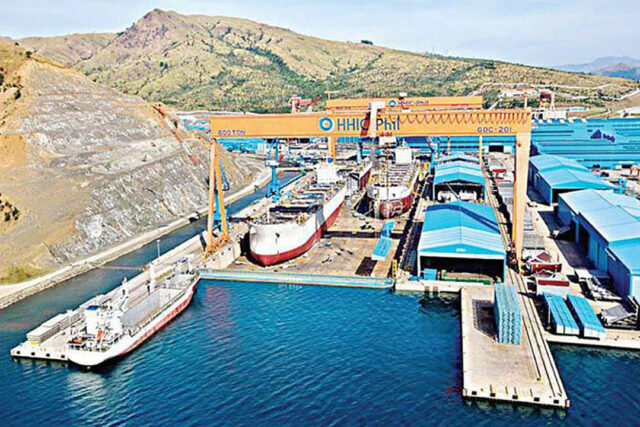
Mr. Arranza, who is also the chairman of Fight Illicit Trade group, said the actual cases to be reviewed include the failed rehabilitation of Uniwide Group of Companies, the rehabilitation of Hanjin Heavy Industries, and the rehabilitation of Victorias Milling Co.  

Mr. Arranza was a former Uniwide president.

“I believe Uniwide will be a very good case study and will provide Congress a wealth of information that they will need in introducing revisions to the FRIA, including the restructuring of bank loans and valuation of properties subjected to dacion en pago (transfer of ownership to settle a debt),” Mr. Arranza said.

“The FPI members share the view of the lawmakers that there shouldn’t be more failed rehab cases to prevent economic wastage and the loss of jobs due to the closure of businesses. No business is immune to the impact of the pandemic, so this inquiry is really timely,” he added.  — Revin Mikhael D. Ochave

USAID brought in to advise on energy industry restructuring

JEROME CMG-UNSPLASH

THE Energy Regulatory Commission (ERC) said it is exploring with the United States Agency for International Development (USAID) ways to restructure the energy industry.

The initiative involves a collaboration with the National Energy Authority of Papua New Guinea, with which the Philippines shares many common issues.

“It is interesting to learn that the prevailing issues are not unique to the Philippines. There is so much to learn from this collaboration that will mutually benefit both regulators,” ERC Chairperson and Chief Executive Officer Monalisa C. Dimalanta said in a statement.

The ERC said it met with USAID and the New Guinea regulator to discuss energy security and approaches to reforming the energy industry.

“The Philippine energy sector was structured 22 years ago. With more than two decades, we are more than privileged to share our experience in hurdling the challenges in ERC’s journey towards energy transition,” Ms. Dimalanta said.

The Electric Power Industry Reform Act (EPIRA) of 2001 deregulated the industry and privatized most state-owned power generation and transmission assets.

The ERC has said that its priorities for this year are reviewing distribution utility and transmission rates and revising the guidelines for the competitive selection process.

New Guinea’s regulator is currently developing renewable resources and carrying out rural electrification.

Under the Philippine Energy Plan, the share of renewables in the energy mix is expected to rise to 35% by 2030 and 50% by 2040.

The National Electrification Administration (NEA) is targeting full electrification by 2028. 

To date, the NEA said that about 600,000 households potentially serviceable by the main grid are still without power while another 23,000 households are located in off-grid areas. — Ashley Erika O. Jose

NGCP upgrades North Luzon substations 

BW FILE PHOTO

THE National Grid Corp. of the Philippines (NGCP) said it has energized power transformers in several substations in northern Luzon.

In a statement on Thursday, the NGCP said that the upgrading of these substations “is being done to cater to the load growth and provide N-1 contingency to substations in NGCP’s North Luzon Region. Without the project, power interruptions may be experienced by customers in the event of failure of existing transformers and power circuit breakers.”

 According to the Philippine Grid Code, an N-1 contingency is the ability of the grid to withstand major system disturbances with minimal or without impact to the system.

The grid operator said that in February it energized its 100 megavolt-ampere (MVA) transformer 1 at its Tuguegarao substation in Cagayan and another 100 MVA transformer 1 at San Esteban substation in Ilocos Sur.

On March 15, the NGCP also energized a 100-MVA transformer at Laoag substation in Ilocos Norte.

The NGCP said the upgrading of the entire North Luzon 230-kilovolt substation stage 2 is expected to cost P9.93 billion.

The NGCP said that it is also set to upgrade substations in La Union, Nueva Vizcaya, Nueva Ecija, Isabela, Pangasinan, Tarlac, Pampanga and Zambales. — Ashley Erika O. Jose

Domestic trade growth in 2022 slows to 13.3% by value

PHOTO COURTESY OF ICTSI

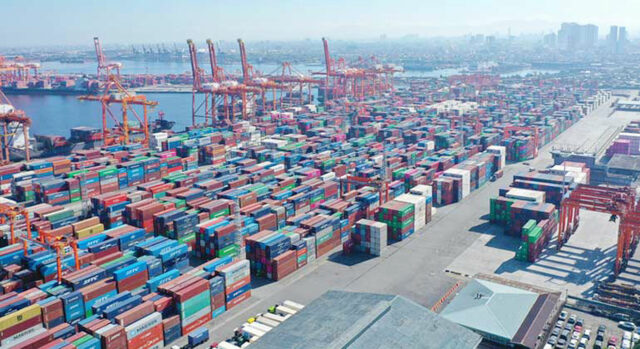
Domestic trade growth by value eased 10 13.3% in 2022, the Philippine Statistics Authority (PSA) reported Thursday.

According to the PSA’s Commodity Flow in the Philippines final report, the value of goods traded for the year reached amounted to P845.50 billion.

By volume, domestic trade declined 20.1% to 18.63 million tons.

Domestic trade in the regions: which have (un)favorable trade balances?Commodity flow, also known as domestic trade, refers to the flow of goods through water, air, and rail transport systems. Most domestic trade is waterborne.

Robert Dan J. Roces, chief economist at Security Bank Corp., said that the easing in value and decline in volume could be attributed to the China lockdown.

“One possible explanation could be the impact of the restrictive lockdowns in China last year which disrupted global supply chains and dampened demand for certain products,” Mr. Roces said in an e-mail.

He added that global economic uncertainty and political instability, as well as the Russia-Ukraine conflict, may have played a role in dampening domestic trade.

The impact of inflation on consumer purchasing power may have also been a factor

“As prices rise, consumers may become more selective in their spending, leading to reduced demand for certain goods,” Mr. Roces added.

In 2022, the economy saw accelerating inflation, which hit 8.1% in December. In response to these developments, the central bank raised interest rates by a cumulative 400 basis points starting May 2022 bringing the policy rate to a 16-year high of 6%.

Global oil and commodity prices became more unstable after Russia invaded Ukraine in late February 2022, which pushed prices of oil above $100 per barrel amid supply concerns.  

Seven out of 10 traded commodity groups monitored by the PSA grew by value last year.

Machinery and transport equipment — which accounted for the biggest share of trade in terms of value at 31.3%— grew 32.2% to P265.06 billion. Volume rose 43.5% to 2.87 million tons.

The value of food and live animals increased 9.5% to P188.97 billion. By volume, it contracted 13.6% to 4.16 million tons.

The value of animal and vegetable oils, fats and waxes accounted for 0.4% by volume. The category was valued at P3.44 billion.

The National Capital Region remained the top source of commodities last year with total outflows amounting to P215.96 billion, for a trade surplus of P150.97 billion.

Meanwhile, Central Visayas was the top destination of commodities with total inflows amounting to P193.16 billion, logging a P36.81 billion trade deficit.

Mr. Roces said that the 2022 domestic trade data highlight the challenges faced by the country and the global economy.

“But with China’s reopening as well as tempering inflation, trade may yet improve by the second half of the year. The volatility in oil prices though remains a risk,” Mr. Roces added. — Abigail Marie P. Yraola

ASEAN framework seen building confidence in green finance

PHILSTAR FILE PHOTO

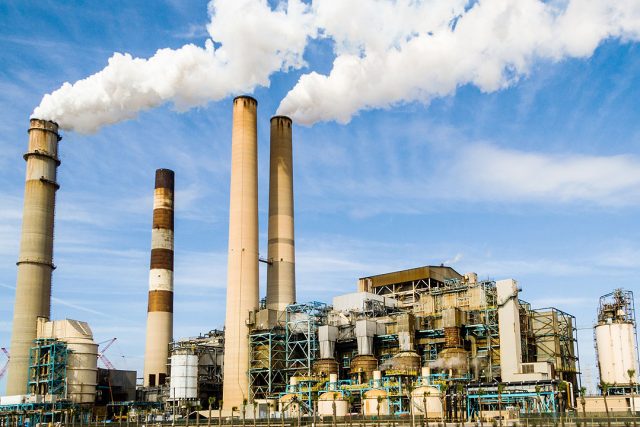
CONFIDENCE in supporting Southeast Asia’s energy transition is expected to grow following the issuance of the second version of an ASEAN framework which is expected to unlock green financing for phasing out coal-fired power plants, Sustainable Fitch said in a report.

The ASEAN Taxonomy for Sustainable Finance adapts global sustainability standards to suit local conditions. Under the taxonomy, coal-fired power plants are eligible for green financing if they are retired early, with the cap on their operating life set at 35 years.

“Coal accounts for about half of southeast Asia’s energy mix, but the region faces pressure to reduce reliance on the carbon-intensive fossil fuel,” according to Sustainable Fitch, a specialist ESG unit of the Fitch Solutions group.

It said transition efforts are high on the region’s list of sustainability priorities.

The framework ”serves as a powerful signaling tool that transition efforts are high on the region’s list of sustainability priorities and helps to define transition activities and finance in the region,” Sustainable Fitch said.

“Sustainable Fitch expects this localized approach to promote more regional environmental, social and governance (ESG)-labeled debt issuances and support the funding needs for a scalable energy transition,” it said.

The report said that the ASEAN Taxonomy will help build confidence in the region, as it is an adaptation of the EU Taxonomy, which requires an exit from coal to access financing.

“As a result, we expect these to encourage more transition financing via a combination of green, sustainability and sustainability-linked bonds and loans in the short to medium term,” the report said.

According to the report, from the period of 2000 to 2019, the Philippines total climate financing is composed of debt accounting 89.9% and grants at 9.4%.

Citing a report from the International Renewable Energy Agency, Sustainable Fitch said that Southeast Asia will need about $29.4 trillion in financing up to 2050 to achieve full renewable power generation.

“With an additional resource to help global investors align their portfolios with meaningful transition and encourage growth in renewables, the potential flow of institutional capital could also contribute to structural economic reform in the long-term by helping countries diversify energy sources,” the report said. — Ashley Erika O. Jose

ADVERTISEMENT
ADVERTISEMENT