Home Blog Page 4803

Regulators want fashion brands to pay for their textile waste

REGULATORS in the US and Europe are waking up to the mounting clothing waste problem that’s clogging local landfills and overwhelming countries such as Ghana and Chile. Increasingly, they’re asking brands to pay for it.

Under rules that have been separately proposed in California, New York, Sweden, the Netherlands, and Italy — and are also under discussion in the UK and European Union (EU) — fashion companies would have to fund textile recycling programs, in most cases by paying for the volume of clothing they produce. These “extended producer responsibility” (EPR) schemes, modeled after programs for other hard-to-recycle goods such as batteries, mattresses, and medical sharps, require brands to pay fees based on their product output, or to set up their own recycling programs.

Fashion industry waste is a growing and largely unchecked problem. In the EU, textile waste totals about 4 million tons each year, while in the US it hit 17 million tons in 2018, up 80% over 2000. Garments that don’t end up in local landfills are often shipped in bulk to countries in the Global South. In Ghana, as many as 15 million discarded garments arrive every week, according to the Or Foundation, which advocates for fashion waste reform.

EPR regulations aim to make fashion brands part of the solution. “It’s forcing businesses to consider their footprint and getting them to think top to bottom and ask themselves, ‘How much do we need to be producing and how do we make sure we don’t have to pay for it on the backend?’” said Betina Baumgarten, a fashion law attorney and consultant at Fashion CUTS.

Supporters of EPR programs for textiles hope they will curb overproduction, lead to recycling innovations and encourage companies to make higher-quality products. It’s also likely that EPR fees would be passed on to consumers, whose thirst for cheap clothing is exacerbating overconsumption. But price increases would “have to be quite significant” to curb serial shopping, said Nusa Urbancic, campaigns director at the Changing Markets Foundation.

In most places considering textile EPR programs, fees are still being debated. But France is indicative: The country has had a program in place since 2007, which bases each company’s financial obligation on the quantity of goods it produced in the preceding year. Products are bucketed into 107 categories — from clothing to footwear to household linens — and further segmented by weight. In 2021, more than 6,000 brands were included, and paid a collective €51 million ($55 million) in fees across 2.8 billion items. That averages out to around €8,500 ($9,242) per company, or €0.16 ($0.17) per garment.

The Or Foundation says fees should begin at $0.50 per garment and go up to at least $2.50 based on the item’s cost to reuse and recycle, and the impact of its decomposition. Lower fees, like those levied in France, “are far too low to be impactful on any level,” said Liz Ricketts, the Or Foundation’s co-founder and director. The French government has conceded that its fees are too low; in November, it ordered the group that executes the EPR program to propose new pricing criteria.

In California and Connecticut, the success of EPR programs for mattresses suggests these schemes can divert a significant amount of waste. In Connecticut, where EPR fees run companies $11.75 per mattress, an estimated 76% of discarded mattresses are recycled. In California, which charges companies $10.50 per mattress, 1.6 million mattresses were recycled in 2021, resulting in the recovery of 90 million pounds of materials.

Fashion companies have already started to mobilize around their own resale programs, or selling used goods through platforms like ThredUp, Inc. Many EPR policies would also require companies to collect used garments, including a scheme that will go into effect in the Netherlands in July. Apparel-makers like Levi Strauss & Co., Madewell Inc., Zara (owned by Inditex SA) and Hennes & Mauritz AB have been running voluntary take-back programs for years, but not at a scale large enough to curb overall waste.

“[These] are largely isolated efforts to capture the economic value of high-quality clothing, leaving other textile products and materials entirely unaddressed,” the Ellen MacArthur Foundation noted in a 2022 paper. “We need a collective system and infrastructure to capture the value of used textiles.”

Textile recycling has obvious appeal, but modern clothing — made of thousands of material blends that include polyester, elastic, cotton, linen and silk — is notoriously difficult to recycle. Sorting and processing used clothes is expensive and labor-intensive, and the technology needed to recycle garments made from blended fibers is still in its infancy. That means many clothes turned in for “recycling” are in fact downcycled into insulation or shredded for rags.

Some brands see EPR legislation as a cost-sharing mechanism that would help scale recycling solutions, said Joanne Brasch, special project manager at the California Product Stewardship Council, which helped craft a textile EPR bill now under consideration in the state. That measure contains grants and research funds to support new recycling technologies. H&M endorsed the bill, saying it wants to use 100% recycled or sustainably sourced materials by 2030, but many such materials “are not yet commercially available or even invented.”

Lululemon Athletica, Inc. recently partnered with Sydney-based Samsara Eco to turn apparel waste into recycled nylon and polyester. Evrnu, a Seattle-based material innovation company, is also working on converting clothing waste into yarns for new fabrics. Its first product — Nucycl, made from discarded textiles with 98% cotton content — is already used by Zara and Pangaia.

But converting clothing with high levels of polyester into new fabrics is both pricey and technologically challenging, and risks exacerbating microplastic pollution. “The amount of capital is sizable to invent new solutions,” said Evrnu Chief Executive Officer Stacy Flynn. “Brands don’t have the checkbooks to invest. We don’t have an innovation pipeline in the apparel industry to solve for the scope of the problem.”

EPR programs would also improve the landscape for recycling companies that sort and recirculate textiles, said Chloe Sonder, co-founder and CEO of SuperCircle, which helps companies manage their textile waste. These operations need a large amount of material to make the process economical. While tiny bits of cotton from underwear or T-shirts are difficult to aggregate, EPR programs could help recyclers pull in more cast-offs.

EPR advocates say these programs have an upstream impact as well. Resale, rental, and repair helps ensure garments are worn more times before entering waste streams, but brands have to “rethink how they design clothing in order to scale reuse and recycling in a cost-effective way,” said Rachel Kibbe, executive director of the American Circular Textiles Group, which is pushing for policy regulation in the textile industry.

Better product design, improved sorting mechanisms and more recyclable materials would in turn help address the burden shouldered by countries in the Global South, where much of what enters the secondhand textile trade ends up as environmentally hazardous waste. At the moment, though, countries receiving and managing clothing collected through EPR programs receive no financial support from those funds.

“If anything is proven by the waste crisis we see here in Accra every day, it is that clothing exists on our planet in absurd excess,” said Ms. Ricketts of the Or Foundation. “It will be a monumental undertaking to repair the ecological damage, and that’s what we are here for.” — Bloomberg

Fashion designer Pepito Albert, 64

PEPITO ALBERT was also one of Leon Gallery’s guest curators during the 2020 lockdown. — FACEBOOK.COM/LEONGALLERYMAKATI

FASHION designer Pepito de Leon Albert, a fixture in Manila high society having designed outfits for some of Manila’s best-dressed women, died on May 27.

Mr. Albert was a long-time friend of the current First Lady Liza Araneta-Marcos, and one of his last big projects was designing the inaugural outfits of President Ferdinand Marcos, Jr. and Ms. Araneta-Marcos last year.

“Hello friends and family. It is with a very heavy heart that we need to let you know that Pepito passed away peacefully tonight,” said a message from his family making the announcement. “As you all know, he has been battling colon cancer for almost two years. Today, he joins Ramon, Mommy, and Daddy in heaven. While we are very sad, we are consoled in the knowledge that he is in a much better place free from sickness and pain. We will reach out again to provide you with details on memorial services.”

The message was forwarded to BusinessWorld by a publicist connected to Mr. Albert, who last worked with him at the Algodon fashion show held at the Pinto Art Museum earlier this year. Mr. Albert was absent from the show (a source told BusinessWorld that Mr. Albert was “recuperating,” but preferred not to say why), but his lone outfit, the show’s finale, showed off 1990s model Jo Ann Bitagcol in a jacket with wide bell sleeves and a voluminous black skirt.

Mr. Albert promoted the use of local fabrics and techniques in his designs, with local piña a staple in his clothes.

Born on Christmas Day in 1959, Mr. Albert was educated at the Fashion Institute of Design and Merchandising in Los Angeles, California, returning to the Philippines in the 1990s. Since then, he has designed the gowns of a number of people in the political and social sphere. A favored designer of presidential sister Irene Marcos-Araneta, he also designed outfits for actress Dawn Zulueta-Lagdameo, the spouse of Special Assistant to the President Anton Lagdameo. He also designed the wedding gown of Korina Sanchez-Roxas in 2009, the news anchor-turned-spouse of politician Manuel “Mar” Araneta Roxas II, a cousin of the current First Lady and once-head of the Liberal Party.

In an Instagram post, fashion designer Rajo Laurel said: “My dear Pepito, my mentor, my teacher, my boss, my friend. Thank you for everything. The world is truly less brighter now. I will see you in my dreams.”

In an interview with the Philippine Star’s Lifestyle Editor Millet Mananquil last year, he said, “I need to do something positive to fire my creative energy once more.” — Joseph L. Garcia

Nueva casa

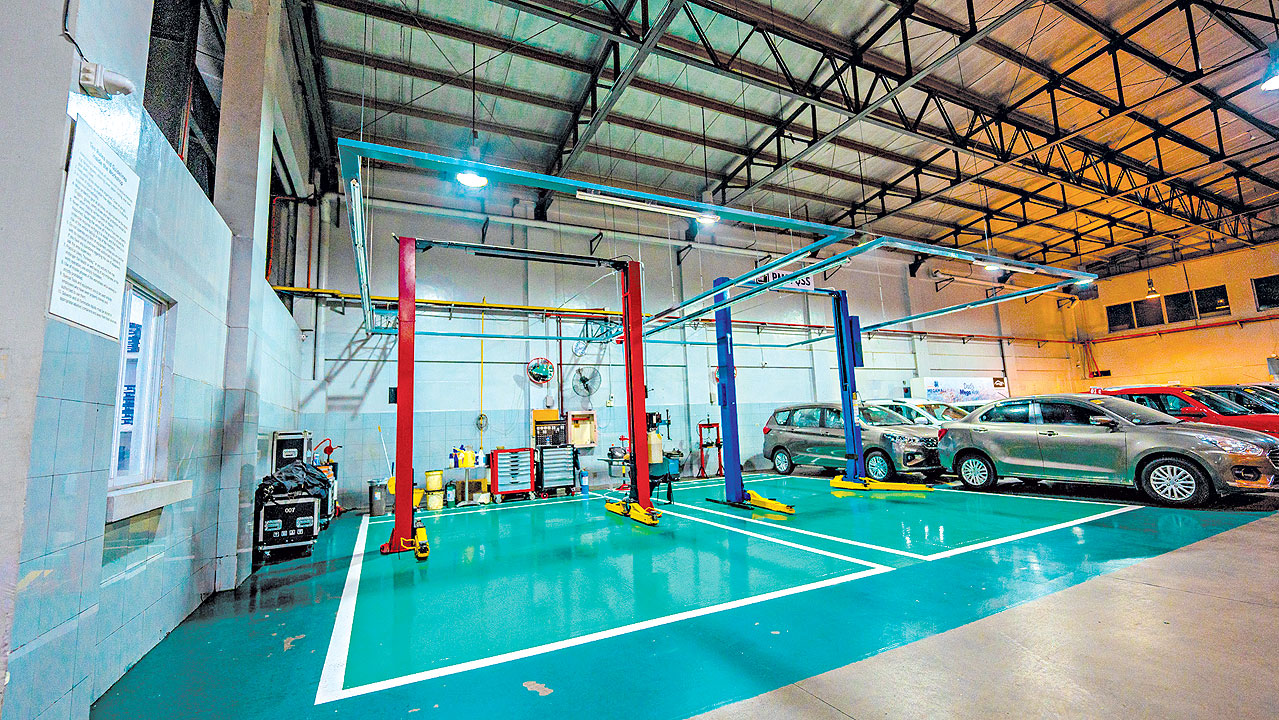
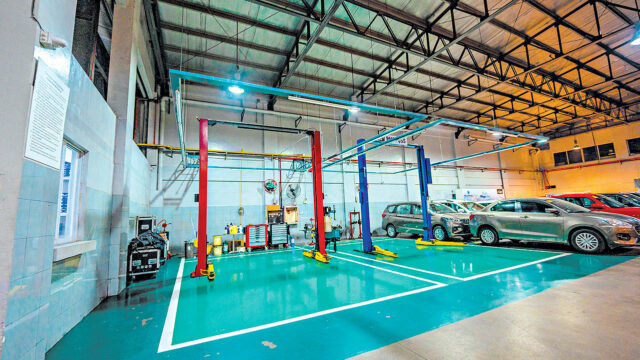
A couple of service bays at Nexthub Auto Care Premier in Bonifacio Global City, Taguig — PHOTO BY KAP MACEDA AGUILA

Nexthub positions itself as the go-to facility for out-of-warranty vehicles

IF YOU OWN a new vehicle, you make a beeline to your dealership (or casa) when the odometer reading calls for it. Of course, you are careful to adhere to your ride’s preventive maintenance schedule (PMS), else you risk voiding its warranty.

But what if you’ve reached past that point? The usual practice is for owners of out-of-warranty vehicles to seek the path of least resistance — to their budgets, that is. That often means eschewing the casa in favor of more affordable third-party service centers. But that also carries an inherent risk of getting less-than-ideal service and, gasp, even sub-standard parts.

Cognizant of this anxiety, the Autohub Group, a distributor, retailer, and service provider to “some of the most desirable brands renowned throughout the world,” has opened Nexthub Auto Care.

Last Thursday, its seven sites — in Taytay, Quezon Avenue, Valenzuela, Otis, Marikina, Pasig, and the Bonifacio Global City (BGC) — were simultaneously launched in a ceremonies held at the BGC location.

“Nexthub was conceptualized because we know that a lot of customers, after the warranty period lapses on their vehicles, don’t return to our dealerships. We think it’s a pity if we lose these customers who have been going to our (OEM) dealerships for three or five years. After the warranty period, a lot of them would transfer to three-star shops,” said Autohub Group President Willy Tee Ten.

He continued, “It’s an opportunity for us to continue taking care of their vehicles after the warranty period. Nexthub is designed to service clients with the same casa quality and experience, but with lower prices. The customer also has the option to go for original equipment or parts, or an aftermarket one. However, the aftermarket parts we sell are also high-end, reputable parts. We don’t want to work with disposable parts.”

Expect Nexthub to be cheaper than your casa, while having a slight premium over what Mr. Tee Ten called “three-star shops.” He explained, “We’re a five-star shop with four-star pricing.”

Even if the Autohub Group does boast a portfolio of vehicle dealerships, Nexthub is positioning itself as brand agnostic. Mr. Tee Ten replied to this writer’s question that they welcome brands that are not in the fold of the group. “There are only a few brands not among the Autohub marques — like Toyota, Honda, and Isuzu. What we do is hire technicians for these brands that are not in our group. As for the rest, we’ll take care of them as members of the Autohub Group.”

The executive clarified, “We don’t want to compete with our casas. Rather, instead of losing out-of-warranty clients to three-star shops, why don’t we go after them ourselves?” Even luxury brands are welcome — specifically at the BGC location, which has been dubbed Nexthub Premier.

The girth of the Autohub Group also allows Nexthub to accommodate a large number of clients. “We’re open to accommodating the needs of fleets,” joined Autohub Group VP for Marketing, Creatives, and Fleet Owee Cruz. “We bring in expertise and the best practices in casa operations to Nexthub.”

Being brand agnostic doesn’t mean slacking off on quality, either. “We may not be under any manufacturer, but we set our standards high, and are practical. After 24 years in the auto industry, we know what is appreciated by our customers. We’ve also tied up with reliable and prestigious companies to make sure that our products are not only above average but the best,” maintained Mr. Tee Ten.

These partners are Motolite, Shell lubricants, Automobile Association Philippines, Pioneer Insurance, All Inclusive Sales, ACCS, and Moto ACCS. Nexthub promises best pricing on Motolite batteries. “If there’s anybody cheaper, we’ll refund the difference,” declared the executive.

Nexthub offers services such as oil change, mechanical repairs, ATF dialysis, wheel alignment, towing, rotor disc refacing, exterior and interior detailing, and underwashing. It can even facilitate vehicle trade-in and insurance renewal. Meanwhile painting and body repair services are handled by sister company Painthub.

Mr. Tee Ten is understandably bullish on the company, which he described as a “pandemic-proof business.” He concluded, “Customers will always need to maintain their vehicles, and we’re here for them.”

For more information, follow the company on Instagram and Facebook (NexthubAutoCare).

L’Oreal, QC partner to train ‘beauty influencers’

YANNICK RAYNAUD, Managing Director of L’Oreal Philippines

IN LINE with the increasing importance of social media in the marketing of products, L’Oreal Philippines is now training Quezon City residents to become digital content creators under its Digital Beauty Academy program. The company has tapped Quezon City as its corporate social responsibility partner for project.

Currently 250 participants are being trained to become “beauty influencers,” with two tracks available: they can either become TikTok affiliates earning between 5% to 10% in commission for every item sold on their platform; or as L’Oreal live streamers, slated to earn between P25,000 to P30,000, with benefits and more opportunities to work for other L’Oreal brands. The global beauty giant headquartered in France has under its umbrella L’Oreal Paris, Garnier, Maybelline, Nyx, Kiehl’s, and Kérastase, among others; spanning categories between makeup, hair care, and skin care.

The project is done in partnership with social media platform TikTok and SPARK! Philippines, a non-profit organization dedicated to the development and inclusivity of women, LGBTQ+, and other marginalized sectors.

During the inauguration of the project on May 18 — the project runs from May 19 to June 30 — the participants were in Quezon City Hall for an initial briefing. Krhizzy Pasigan, Corporate Affairs Head of L’Oreal Philippines, said that the beneficiaries were from the six districts and about 70 barangays of Quezon City. They had to fulfill certain criteria, including being at least 18 years old, having a smartphone, and willing to commit to the month-and-a-half training sessions, which will run on Thursdays, Fridays, and Saturdays. The Thursday and Friday training sessions will be conducted online, while the weekend training sessions will be held live, with time given for each participant to go one-on-one with the trainers.

Seven out of 10 people in a survey would buy products because of what they see on social media said Yannick Raynaud, Managing Director of L’Oreal Philippines, during a speech. She presented data that the money generated by content creators worldwide has reached $104 billion, and is projected to reach $1 trillion in the next few years.

In a statement, L’Oreal said, “In line with this trend, the social commerce industry in the Philippines is expected to grow by 24.3% on annual basis to reach $928.8 million in 2023. By 2028, it’s expected to reach $2348.3 million. Additionally, the beauty industry in the Philippines is projected to reach a staggering $601 billion by 2024.”

“This is a power of social media: to make and generate livelihood,” said Ms. Raynaud.

The future influencers will be trained in four segments: Beauty and Personality Development, including Beauty 101 by L’Oréal experts (skin, make-up, and hair basics) and Effective Management of Emotions by MindYou, a mental health technology company; Content Creation 101 that covers a TikTok Platform overview, guidelines for basic production, tips, and tricks to start and grow an account, best practices, policies, and community guidelines, as well as livestreaming guidelines; Earning as an affiliate and live streamer featuring a TikTok creator inspiration session, introduction to the TikTok Shop, and Live streamer track by L’Oréal; and Becoming a Responsible Content Creator, which covers Digital Literacy, small business registration, and mental health support training.

“Financial literacy plays a role in the academy, with participation from GCash and the Department of Trade and Industry (DTI), which will educate participants on banking options and guide them through the business registration process,” said a company statement.

This is a pilot program for L’Oreal, Ms. Raynaud said, the first of its kind not just in the Philippines, but in the world.

“I wish you to have fun while doing it. It’s not easy. Not all of you will become Kim Kardashian,” Ms. Raynaud told the gathered participants, referencing the celebrity currently at the top levels of the influencer heap. “But if you put in the work, the dedication, the passion; if you’re authentic, if you keep your sanity… and you care deeply about what you’re doing, you will thrive.”

In a speech at the launch, Quezon City Mayor Joy Belmonte explained that the Digital Beauty Academy is an extension of a previous partnership with L’Oreal that began in 2017 called Beauty for a Better Life program which trained an initial pool of 50 city residents in hairdressing and makeup, among other skills. For L’Oreal to choose them again as a partner, she said, “That means that pinaniniwalaan nila tayo, at may tiwala sila sa atin (they believe in us, and they have trust in us).”

“This project promotes one of our core advocacies in Quezon City, and that is women empowerment,” she added.

Ms. Raynaud said, “Beauty is not just superficial, beauty is not just putting on makeup to look more beautiful. It’s also to feel more beautiful, or to feel part of a group that you want to belong to — to feel fierce.” — J.L. Garcia

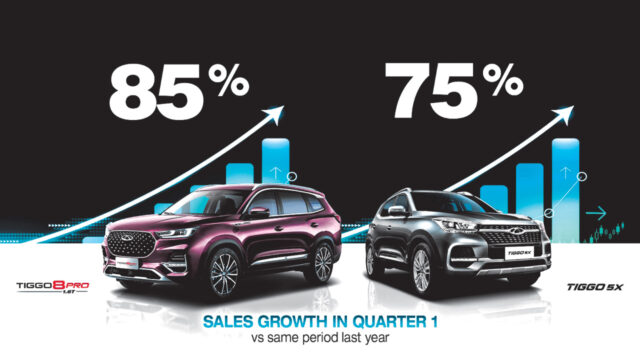
Chery Tiggo 8 Pro, Tiggo 5X notch huge sales growth in Q1

IMAGE FROM CHERY AUTO PHILIPPINES

CHERY AUTO PHILIPPINES reported significant growth in sales of its two key models. The company’s subcompact Tiggo 5X crossover sold a total of 331 units in the first quarter of 2023, representing 75% growth compared to the same period last year. Meanwhile, Chery’s top-of-the-line midsize seven-seater, the Tiggo 8 Pro, moved a total of 128 units in Q1 versus 69 units over the same period last year — reflecting an increase of 85%.

In a release, the company noted that these rates “far outpace the total industry growth, which averaged 35% over the course of last year… It also brings Chery Auto Philippines on track for achieving, or even surpassing, its sales targets for 2023.”

“We are proud to be able to offer the styling, prices, and technology that even the most discriminating Filipino car buyers are looking for,” said Chery Auto Philippines Chairman Rommel Sytin. “People need reliable, safe yet affordable mobility and we have the right mix of value-packed models with luxury, comfort, and safety features to suit any need or budget.”

The distributor said that the robust growth “also reflects Chery’s over 20 years of independent innovation, having established no less than five global R&D centers employing over 7,000 technology-driven team members responsible for over 14,000 patents. Chery is the leading Chinese company in developing technology through independent R&D.”

Chery Auto Philippines is looking to sustain its sales momentum with the brand’s “Summer Blazing Tiggo Deals” promo, which runs until June 30, and offers deals such as all-in down payment as low as P28,888, monthly amortization as low as P7,796, and savings as much as P130,000, depending on the vehicle model.

The Tiggo 2 Pro small crossover is powered by a fuel-efficient Euro-5-compliant, 1.5-liter DOHC 16-valve VVT engine mated to a continuously variable transmission (CVT). It has a nine-inch touchscreen with Apple CarPlay and QD Link (for Android phones) connectivity and push-button engine start/stop. The vehicle is available with a down payment of P28,888, a low monthly of P7,796, or a cash savings of P50,000.

The larger Tiggo 5X also has a 1.5-liter engine and CVT. The fully loaded subcompact crossover Tiggo 5X Luxury boasts a sunroof, leather-covered seats, and an array of comfort and convenience features. It can go for a low down payment of P38,888, low monthly of P8,235, or cash savings of as much as P95,000.

The compact SUV Tiggo 7 Pro’s 1.5-liter engine is turbocharged, delivering 145hp and 210Nm. It gets a nine-speed CVT with electronic shifter. Features include a six-way power driver seat and four-way power passenger seat, panoramic sunroof, 18-inch alloy wheels, wireless charging, 10.25-inch touchscreen infotainment system, six air bags, multi-color ambient lighting, and advanced safety features. It is available with a down payment of P48,888, low monthly of P10,871, and savings as much as P130,000.

The aforementioned midsize seven-seater SUV Tiggo 8 Pro receives a turbocharged 1.6-liter engine mated to a seven-speed DCT automatic transmission promising 195hp and 290Nm of torque. It has a 12.3-inch touchscreen infotainment system with eight speakers and over a dozen Advanced Driver Assist Systems (ADAS). The Tiggo 8 Pro 1.6 is available with a low down payment of P98,888, low monthly of P16,449, or cash discount of as much as P100,000.

Chery boasts the “industry-leading Premium Preserv warranty and PMS program,” highlighted by a 10-year/one-million-km engine warranty, five-year general warranty, three-year free roadside assistance, and a three-year free preventive maintenance service. Tiggo 8 models have a seven-year bumper-to-bumper warranty, and three-year free roadside assistance and PMS.

Chanel’s $10,000 handbags may become even pricier in September

PRICES of Chanel handbags, including the fashion house’s signature “flap” bags, could rise again in September, a top executive said.

Chanel typically reviews handbag prices twice a year, in March and September. In March, the company applied an average 8% price increase on bags worldwide, Chief Financial Officer Philippe Blondiaux said in an interview Thursday.

A classic medium-sized flap bag currently costs €9,700 ($10,400) in France, or about €1,900 more than 18 months ago. By comparison, a Hermes 25-centimeter Birkin bag currently sells for around €8,000.

Chanel plans to follow its policy of applying price increases in line with input-cost inflation, while also looking at currency volatility. The fashion house aims to minimize the price gap for the same product between different regions.

Chanel has applied an average 8% price increase on their bags.

“These are the two factors which will make us change our prices or not in the remainder of 2023,” Mr. Blondiaux said. The March price increases varied widely depending on the country, he added.

A combination of increased unit sales and higher prices helped the luxury house boost sales by 17% in 2022, he said, adding that price increases for its bags were in line with inflation.

Hermes usually reviews its prices annually, at the start of the year. The Kelly bag maker increased product prices on average by 7% in January. — Bloomberg

NGCP energizes P10.2-B Bataan transmission line

NATIONAL Grid Corp. of the Philippines (NGCP) has energized the P10.2-billion Hermosa-San Jose 500-kilovolt (kV) transmission line that is expected to boost power generation in Bataan.

“Despite many challenges, our teams worked 24/7 to complete this facility. With the energization of the line comes the improved transmission from generation sources towards the load center Metro Manila and nearby provinces,” NGCP said in a statement on Sunday.

It described the project, which was energized at 7:22 a.m. on May 27, as a major component in its planned 500-kV transmission backbone in Luzon.

The Hermosa-San Jose transmission project, which spans the provinces of Bulacan, Pampanga, and Bataan, is expected to strengthen services and accommodate fresh bulk of power in Bataan. It was certified as an energy project of national significance in 2019 making it eligible under Executive Order 30 for speedy permits and reviews by local and national government agencies.

The grid operator said that even though the project was provisionally approved with a P10.2-billion cost, the Energy Regulatory Commission (ERC) has only allowed the recovery of about P19 million of the actual project cost.

“Our priority has and will always be doing what is best for the public. Financial considerations can take a back seat and be threshed out later,” said Henry T. Sy, Jr., a major stockholder of the company and its former president and chief executive officer.

“We hope to correct the impression that the consumers are somehow shortchanged with how rates are computed. Our commitment has never wavered: we serve the public, and we work within the legal and regulatory framework of our concession and franchise,” he added.

BusinessWorld sought comment from the ERC but has yet to receive a reply as of press time.

NGCP has also committed to finishing its other transmission projects in the Visayas and Mindanao regions in the coming months.

“Our stakeholders can be assured that we will continue our grid improvement, expansion, and reinforcement initiatives to deliver quality and reliable transmission services,” it added. — Ashley Erika O. Jose

APEC Business Advisory Council advocates for shared prosperity and collaboration across the region

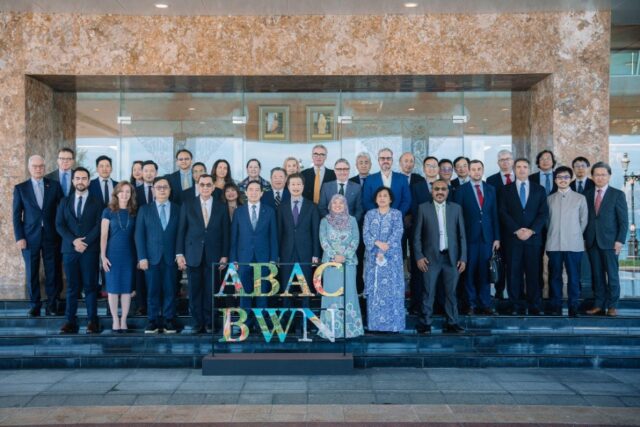
Members of the Asean Business Advisory Council came together in Bander Seri Begawan, Brunei Darussalam for the 2nd leg of ABAC 2023 conference. The conference was from April 27 to 30 at The Empire Hotel.

As the host for the third leg of the APEC Business Advisory Council (ABAC) Conference, ABAC Philippines (PH) eagerly anticipates the arrival of over 200 esteemed members and guests from the 21 APEC economies who will be attending the conference at the NuStar Convention Center from July 27-30, 2023. For four days, this gathering will serve as a platform for meaningful dialogue, collaborative decision-making, and fruitful exchanges between economies. Led by ABAC PH Chair Tomas Alcantara, and ABAC PH members Joanne de Asis and Sabin Aboitiz, the ABAC PH takes great pride in facilitating an engaging and productive environment, fostering strong relationships, and paving the way for new opportunities and partnerships. This conference is poised to make a lasting impact on regional cooperation and to further strengthen the ties of the diverse economies of the Asia-Pacific.

ABAC is a key institution for fostering economic growth, cooperation, and partnership across the Asia-Pacific region. Comprising leading business executives from the 21 APEC economies, ABAC serves as a vital conduit between the private sector and APEC leaders, offering strategic advice and recommendations to shape policies that promote sustainable and inclusive development. With its unwavering commitment to facilitating trade, investment, and innovation, ABAC plays a pivotal role in driving economic integration and enhancing the competitiveness of businesses in the dynamic Asia-Pacific market. As ABAC embarks on its latest initiatives, it continues to be at the forefront of advocating for collaborative and forward-thinking approaches that harness the region’s vast potential for shared prosperity.

In November 1995, APEC leaders created the ABAC because they were cognizant about the vital role of the business community and the value of having business leaders as experts in providing their views and advice on important matters.

Aboitiz’s First Vice President and Chief Sustainability and Reputation Officer Ginggay Hontiveros-Malvar (left on screen) represented Aboitiz Group President and CEO and ABAC’s Sustainable Growth Working Group (SGWG) Co-chair Sabin Aboitiz by proposing two initiatives on Climate Risk Scenario and the use of Nuclear Energy – Small Modular Reactors before the ABAC members and to ABAC China member and SGWG Chair Frank Gaoning Ning (right on screen) last ABAC 2 meetings in Brunei.

ABAC holds the distinction of being the only non-governmental organization that engages in a formal dialogue at the APEC Economic Leaders’ Meeting. The council serves as a dynamic platform that facilitates communication and collaboration between the private sector and APEC governments. Its primary objective is to provide recommendations and guidance on policy matters that impact the economic development of the Asia-Pacific region.

The Council convened its inaugural meeting and engaged in a dialogue with economic leaders in 1996, coinciding with the Philippines’ first presidency of APEC. Ambassador Roberto Romulo of the Philippines assumed the role of ABAC’s inaugural chairman, bringing valuable leadership and expertise to the council’s initiatives.

To effectively communicate its insights, ABAC produces an annual report that encompasses a comprehensive examination of significant economic challenges and opportunities. These reports offer practical information to policymakers, corporations, and other stakeholders in the region, enabling informed decision-making.

Guided by this year’s theme of “Equity. Sustainability. Opportunity,” the ABAC 2023 work program prioritizes several key areas:

Economic Integration Working Group: This group focuses on promoting and advancing economic integration within the Asia-Pacific region. By facilitating trade and investment flows, reducing barriers, and fostering cooperation, ABAC aims to enhance regional economic integration.

Sustainable Growth Working Group: ABAC recognizes the importance of sustainable development and endeavors to promote environmentally friendly practices and policies. The Sustainable Growth Working Group addresses issues such as climate change, resource efficiency, and green technologies to foster sustainable economic growth in the region.

Digital and Innovation Working Group: In the era of rapid technological advancement, ABAC recognizes the significance of digitalization and innovation. This working group explores ways to harness digital technologies, promote digital inclusion, and foster innovation to drive economic growth and development.

Finance Task Force: The Finance Task Force focuses on financial matters that impact the Asia-Pacific region. It addresses issues such as financial stability, access to finance, and infrastructure financing to ensure a conducive financial environment for businesses and sustainable economic growth.

Inclusion Task Force: ABAC is committed to promoting inclusive growth that benefits all segments of society. The Inclusion Task Force works towards reducing inequalities, promoting gender equality, empowering marginalized groups, and fostering social inclusion within the region’s economies.

Through these priority areas, ABAC aims to provide valuable insights and recommendations to APEC leaders, contributing to the economic development, prosperity, and sustainability of the Asia-Pacific region.


Spotlight is BusinessWorld’s sponsored section that allows advertisers to amplify their brand and connect with BusinessWorld’s audience by enabling them to publish their stories directly on the BusinessWorld Web site. For more information, send an email to online@bworldonline.com.

Join us on Viber at https://bit.ly/3hv6bLA to get more updates and subscribe to BusinessWorld’s titles and get exclusive content through www.bworld-x.com.

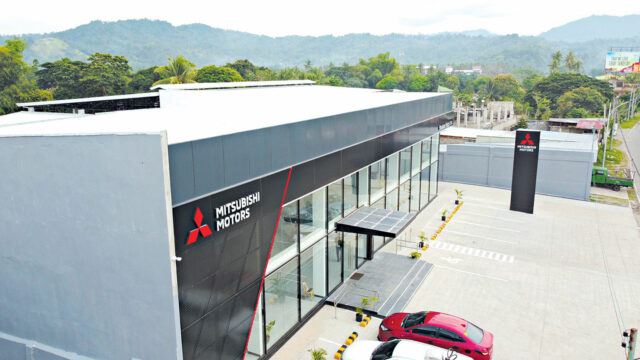
Mitsubishi PHL inaugurates Iligan showroom

PHOTO FROM MITSUBISHI MOTORS PHILIPPINES CORP.

Mitsubishi Motors Philippines Corp. (MMPC) has grown its network of dealerships with the opening of a facility in Iligan, Lanao Del Norte, Mindanao. Operated by Mizukawa Motors Corp., the new showroom sits on a 4,000-sq.m. property. It features a four-car showroom and full-service facility with 18 car bays to cater to different requirements, from periodic maintenance to major body repairs. Mitsubishi Motors Philippines President and CEO Takeshi Hara shared in a release, “Thank you, Mizukawa Group, for fulfilling our brand’s promise of making Mitsubishi cars more accessible to all, more opportunity for us to making life better for all Filipinos. We at MMPC are very excited to cater to the very promising area of Iligan, a continuously emerging city with strong local development.” The newly inaugurated dealership is located on the National Highway, Brgy. Hinaplanon, Iligan City, Lanao Del Norte.

The shoes of summer

WE think you can still squeeze in a few more days at the beach in these waning days of summer. Might we suggest some shoes for that holiday?

TONI PONS ESPADRILLES
Earlier this month, Vogue declared espadrilles officially back, so it might be time to step into a pair. And just in time, Spanish brand Toni Pons arrived in the Philippines earlier this month, showing off the classic rope-soled shoe.

Toni Pons is a brand from Spain, their first shoes coming out in 1946. However, the shoes’ origins date back to Medieval times. The shoe has made strides from being peasant footwear in Spanish-speaking countries to the most well-heeled in the world. In France, Yves Saint Laurent popularized the current shape, with wedge-shaped heels. Recently, a pair of Toni Pons had been seen worn by Pippa Middleton, sister of Catherine, Princess of Wales.

Toni Pons is now led by Jordi Pons, of the family’s third generation.

“The espadrille is an iconic style for summer footwear. Toni Pons is truly a brand that will resonate with many in the Philippines since our country has an abundance of sunshine year-round. We are proud to share Toni Pons, a Spanish heritage brand, wherein everyone can now gain access to footwear that is simple, sophisticated and comfortable to wear no matter the season,” said Ivan Yao of the Lucerne Group, which distributes the shoe in the Philippines through its company, Catalonia Enterprise, Inc.

Toni Pons stores are located in SM Megamall and Robinsons Place Manila, and The Hue Hotel, Boracay.

Be warned though — it is the rare espadrille that survives an encounter with rain, so check the weather forecast before stepping out, or bring a spare more waterproof pair.

SALT-WATER
For a day that threatens to get wet, there is another long-time favorite, Salt-Walter sandals which have also been made since the 1940s in the US by entrepreneur Walter Hoy.

While made of leather, Salt-Water sandals are unique in that they are made to be worn around and in water. The website says that they mold to the shape of the foot with repeated wear. “All of our sandals are 100% water resistant. Salt-Water Sandals are defined by their 100% leather straps which are coated with a water-resistant sealant and secured with rust proof buckles,” explains the website.

This year, they launched their new line via a Manila Bay cruise while showing off new colorways in Cobalt Blue, Light Blue, and Latte.

In the Philippines, Salt-Water Sandals for adults and kids are available in The Playground stores at Robinsons Magnolia, Shangri-La Plaza Mall, TriNoma, Ayala Malls Feliz, online at www.theplaygroundstore.com.ph, and in Rustan’s Department Stores at Alabang Town Center, Makati, Shangri-La Plaza Mall, and Rustan’s Cebu. Shop online at www.saltwatersandals.com.ph. — J.L.G.

Full capacity for Ilijan plant set

SAN Miguel Global Power Holdings Corp. targets full capacity resumption of the Ilijan natural gas-fired power plant by June 9, an official from the Energy department said.

“They will start gas in on Monday and if tuning is completed, they will start with 600 megawatts (MW) and ramp it up to 1,200 MW,” Energy Undersecretary Rowena Cristina L. Guevara said in a Viber message.

She said the testing and commissioning for the operation of the Ilijan plant started last week.

“June 1-9 is their target for 1,200-MW output,” she said, adding that the plant is “in testing and commissioning right now.”

The Ilijan power plant is deemed vital to the country’s power supply as it is expected to bring much-needed power supply while demand stays high. Its gas contract with Malampaya expired in June 2022.

For this year, the Department of Energy (DoE) has projected 15 yellow alerts in the Luzon power grid, indicating thinning power reserves, but the situation is likely to change once the Ilijan plant comes online.

In an earlier statement, the energy company said that its first liquefied natural gas (LNG) shipment was expected to arrive in April.

According to San Miguel Global Power’s website, its import terminal has a planned combined cycle gas plant in Batangas City’s Ilijan and Dela Paz Proper.

To date, seven LNG terminal projects have been approved by the DoE, two of which are expected to come online in the first half of 2023. — Ashley Erika O. Jose

ADVERTISEMENT
ADVERTISEMENT