Home Blog Page 476

NPC asks Jollibee, Viber to explain Christmas campaign

THE National Privacy Commission (NPC) asked Jollibee Foods Corp. (JFC) and Viber for explanations on the Christmas campaign after user complaints.

In a statement on Tuesday, the NPC said it noted media reports and user backlash against JFC’s Christmas campaign as branded marketing materials, such as automated greetings and digital stickers, appeared in private Viber chats when triggered by certain words like Merry Christmas and holiday, among others.

This prompted concerns about “boundaries of digital marketing” and the “unsolicited processing of personal data.”

The commission said it is assessing if the campaign violated the Data Privacy Act of 2012 (DPA).

“If the campaign involves the processing of personal data, PICs (personal information controllers) must ensure adherence to the principles of transparency, legitimate purpose, and proportionality,” the commission said.

“In such cases, consent must be specific and freely given, and data subjects must be afforded the right to object to the processing of their information for direct marketing purposes,” it added.

Under the DPA, PICs must ensure that processing personal data for direct marketing adheres to the key principles of transparency, legitimate purpose, and proportionality.

JFC did not immediately respond to an e-mail seeking comment. — Alexandria Grace C. Magno

LRTA logs 58M passengers in 2025

PHILIPPINE STAR/MIGUEL DE GUZMAN

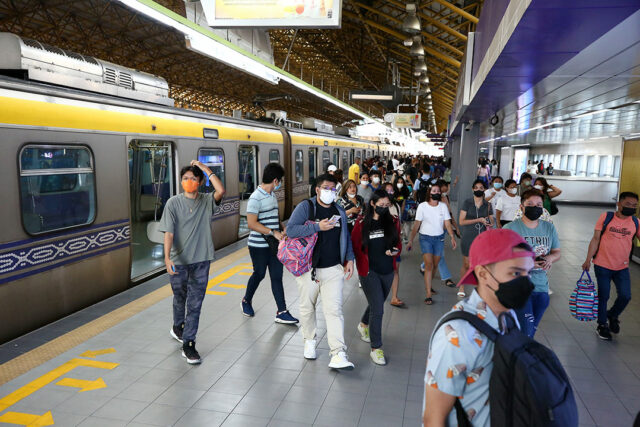
THE Light Rail Transit Authority (LRTA), operator of Light Rail Transit Line 2 (LRT-2), recorded 58.75 million passengers in 2025, up 10.25% from the previous year on the back of stronger fourth-quarter ridership.

“October was the month with the highest number of passengers, totaling 5.85 million ridership, a testament to the public’s continued trust in LRT Line 2 as a safe and reliable mode of transportation for daily travel,” LRTA said in a media release on Tuesday.

LRTA closed 2025 with passenger traffic above expectations, reaching beyond its 57.15-million target for the year and outpacing the 53.29 million riders recorded in 2024.

It also said it logged three million passengers who have availed the Department of Transportation’s (DoTr) free ride program for 2025.

On Monday, LRTA said it is projecting fare collections of P1.1 billion in 2026 on a ridership of 60.62 million.

The LRTA said average daily ridership will be about 165,624 passengers. If the LRTA target for the year is realized, the total will exceed the pre-pandemic passenger count of 56.98 million in 2019.

For the January-to-November period of 2025, LRTA said revenue collections amounted to P1.16 billion, down 0.85%. The LRT-2 operator is targeting a rail revenue of P1.38 billion for full year 2025.

Last year, the Transportation department said it is planning to launch the bidding process for the LRT-2 operations and maintenance contract within the first six months of 2026.

The DoTr is working with International Finance Corp. to privatize LRT-2, with a public-private partnership expected to increase ridership and extend the rail line. — Ashley Erika O. Jose

Nueva Vizcaya State University gets P5.7M for coffee dev’t, climate projects

BAYOMBONG, Nueva Vizcaya — The provincial government of Nueva Vizcaya rolled out P5.7 million to Nueva Vizcaya State University (NVSU) to support its coffee development and climate monitoring projects.

Governor Jose V. Gambito turned over the funds to NVSU President Wilfredo A. Dumale, Jr. on Monday, to help farmers improve productivity and to strengthen the province’s ability to respond to climate change. The funding was sourced from the 2025 Provincial Development Fund provided by Oceana Gold Philippines.

Mr. Gambito said the funding shows the province’s commitment to supporting farmers and schools through the use of modern technology. He added that the projects are expected to benefit local farmers, small businesses, and the agricultural sector as a whole.

Provincial Planning Officer IV Katalina K. Acpal said P3.9 million of the total amount will go to upgrading equipment at the Nueva Vizcaya Coffee Processing and Innovation Center under NVSU.

The project’s total cost is nearly P10 million, with the remaining funds to be released next year.

The upgraded coffee center aims to improve coffee research, processing, and technology sharing to help coffee farmers and micro, small, and medium enterprises across the province.

The other P1.8 million will be used to improve the Nueva Vizcaya Climate Change Center by adding more field monitoring systems to track local weather conditions. Provincial officials said these efforts will help make coffee production more efficient and protect farmers’ livelihoods. — Artemio A. Dumlao

4 shabu peddlers clamped down

COTABATO CITY — Authorities nabbed four men covertly peddling crystal meth (shabu) in streets in this city within three days of operations.

The now detained suspects also occasionally sold marijuana supplied by few remaining members of the now defunct Dawlah Islamiya and the Bangsamoro Islamic Freedom Fighters hiding in secluded areas in Maguindanao del Norte and Maguindanao del Sur provinces, according to their relatives and friends.

The siblings and cousins of the four suspects separately told reporters on Tuesday that they are thankful to the Police Regional Office-Bangsamoro Autonomous Region (PRO-BAR) and to the office of Mayor Bruce C. Matabalao for giving attention to their reports about their peddling of shabu and marijuana in Cotabato City.

Police Brig. Gen. Jaysen C. De Guzman, director of PRO-BAR, said on Tuesday that four suspects were entrapped one after another by operatives led by the city’s police director, Col. Jibin M. Bongcayao and his subordinate officers, Captain Anuar M. Mambatao, Major Albert P. Carillo and Lt. Patricia E. Bueno of the City Police Drug Enforcement Unit. — John Felix M. Unson

CARS funding veto ‘breaks promises’ made to investors

REUTERS

THE removal of budget funds to incentivize domestic auto manufacturing could undermine foreign investor confidence, Sen. Sherwin T. Gatchalian said.

“(This potentially affects) our reputation with foreign investors. I’m just worried that the whole world might think that we are making promises, but we are not fulfilling it,” he said at a briefing.

On Monday, President Ferdinand R. Marcos, Jr. vetoed P4.32 billion in unprogrammed appropriations meant for the Comprehensive Automotive Resurgence Strategy (CARS) program, which provides incentives to automakers to produce 200,000 units of mass-market car models over six years in the Philippines.

Toyota Motor Philippines (TMP) Corp., a participant in the CARS program, called on the government to continue supporting incentives to maintain trust and confidence among investors.

In a statement on Tuesday, TMP President Masando Hashimoto noted that government support for CARS is critical in keeping the Philippines competitive as an investment destination.

“After six years into the CARS program, we believe it has been a win-win concept between government and private sector in attracting foreign direct investment and at the same time provided benefits to manufacturers and consumers,” he said.

“We would like to underscore how sustained government support through industry development programs such as CARS is critically important for competitiveness as observed in the region,” he added.

The incentives come in the form of tax payment certificates (TPCs), which can be applied to offset participants’ tax and duty liabilities. The other company enrolled in CARS is Mitsubishi Motors Philippines Corp.

Mr. Gatchalian added: “We’re trying to attract foreign investors to come to the Philippines. We have a lot of things to fix. Let’s as much as possible avoid reputational damage,” he said at a briefing.

“It is embarrassing to foreign investors that are here (that we made promises to), and we did not pay,” he said.

Mr. Gatchalian said that the Board of Investments (BoI) had earlier requested the Senate to provide funding to fulfill its CARS obligations.

“We have a debt to Mitsubishi and Toyota; they came here to invest. We said we would give them tax incentives,” Mr. Gatchalian added.

Business groups had called on the government to fulfill its commitments to car manufacturers, stressing that doing so would be vital to sustaining competitiveness as an investment destination.

British Chamber of Commerce Philippines Executive Chair Chris Nelson said the government should be looking for ways to improve investor confidence after the flood control corruption scandal.

“What we’re looking for as a chamber is the passage of key legislation which says that the government… recognizes it needs to keep moving and continue to liberalize the economy,” he added.

The BoI has said that it is seeking to fulfill its remaining P3.99-billion obligation to CARS participants. It has already granted P1.44 billion worth of incentives.

According to Mr. Gatchalian, the government should use its contingency fund, or order the Bureau of Internal Revenue (BIR) to record a book entry indicating that the companies have received their incentives.

He added that the CARS program’s classification as an unprogrammed item would facilitate a book-entry approach.

“That’s why we placed it in unprogrammed appropriations because it is (effectively a) book entry, from one pocket to another. It means that (CARS participants) will not pay tax… but the government will,” he said. “Nevertheless, it is still government debt.” — Adrian H. Halili and Justine Irish D. Tabile

Fiscal discipline seen eroded by unchecked budget allocations

BUSINESS GROUPS said the government has not gone far enough in curbing unprogrammed appropriations in the newly signed 2026 General Appropriations Act (GAA), warning that these could undermine fiscal discipline and governance.

The Makati Business Club (MBC) said that though the GAA improved, with fewer items not supported by available funding compared to the 2025 edition, it had been hoping that President Ferdinand R. Marcos, Jr. would take aggressive action on constitutionally questionable allocations.

“We believe they could be subject to discretionary disbursement, i.e., patronage. Many of these are social welfare programs, falling under the heading of ayuda, which we classify as ‘soft pork,’” the MBC said in a statement on Tuesday.

Although the President has promised that no politicians will be allowed to intervene in funding allocation, the MBC said an executive order is needed to firm up such promises.

“We are requesting an executive order to create rights-based and rules-based mechanisms to govern the disbursement of ayuda funds and to strictly limit confidential and intelligence funds to legitimate security uses,” it added.

The MBC is also urging the government to classify some of these projects into “conditional implementation” and “later release” categories.

The MBC is a member of the People’s Budget Coalition, which closely monitored the formulation of the 2026 GAA.

On Dec. 29, the coalition sent an open letter to the President flagging P633 billion worth of line items that it considered “vulnerable to plunder,” including P243 billion worth of unprogrammed appropriations.

“The President has vetoed P92.5 billion of the unprogrammed appropriations. We acknowledge that this shows that the President is responsive to feedback from the private sector,” the MBC said.

“The President further assured that the funds’ utilization (comes with) safeguards and is only available when clearly defined triggers and tests are met and will be released only after careful validation,” it added, noting that the implementation phase will be critical.

Foreign Buyers Association of the Philippines President Robert M. Young said that though the GAA report “was quite impressive and substantive in content, the implementation and execution will determine if it indeed is a true and real government action.”

The President signed this year’s P6.793-trillion national budget on Monday, saying that unprogrammed appropriations were held to the “absolute bare minimum” of about P150 billion.

The Financial Executives Institute of the Philippines (FINEX) also expressed concern about the scale of unprogrammed appropriations, noting that these “inherently create uncertainty, weaken fiscal discipline, and heighten governance risks if not subject to strict, transparent conditions.”

“Without clear triggers, safeguards, and public disclosure, unprogrammed funds risk undermining budget credibility, distorting spending priorities, and eroding public trust,” it said.

FINEX welcomed the President’s decision to veto P92.5 billion of the unprogrammed funds.

“This commitment sends a strong signal to markets, taxpayers, and institutions that fiscal discipline and accountability remain priorities,” it said.

“Economic stimulus should not come at the expense of transparency, and every peso, whether programmed or unprogrammed, must be guided by clear objectives, measurable outcomes, and strong oversight,” it added.

Meanwhile, Philippine Chamber of Commerce and Industry  President Ferdinand A. Ferrer urged the adoption of strong fiduciary safeguards and institutionalized stakeholder dialogues during the budget execution phase.

He also supported the passage of the proposed Citizens’ Access and Disclosure of Expenditures for National Accountability, which he said will make every peso of public spending fully transparent, traceable, and accountable.

“It is not enough to know what projects are created and funded, but rather the detailed cost of the project should be transparent to ensure efficient use of taxpayers’ money. There has to be a proper check and balance in every project spending,” he added.

He likewise welcomed Mr. Marcos’ decision to veto P92.5 billion in unprogrammed funds but cited five priority areas where the national budget should be programmed.

These include the development of hard and soft infrastructure systems, investment in education and workforce skills, measures to boost trade competitiveness, initiatives to reinforce economic resilience and manage inflation, and policies that safeguard food, water, and energy security.

“Implemented with integrity and in close consultation with the private sector, the 2026 GAA can be a transformative tool for enhancing Philippine competitiveness,” he said.

“We look forward to deepening our collaboration to ensure public spending effectively empowers micro, small and medium enterprises, creates quality jobs, and catalyzes long-term, inclusive growth,” he added. — Justine Irish D. Tabile


Manufacturing PPI growth slows to 0.1% in Nov.

Workers are seen at an electronics manufacturing assembly plant in Biñan, Laguna, April 20, 2016. — REUTERS/ERIK DE CASTRO

PRICE GROWTH at the factory gate slowed in November, with transport equipment dragging down the overall index, according to the Philippine Statistics Authority (PSA), citing preliminary data.

The PSA said the Producer Price Index (PPI) for manufacturing grew 0.1% year on year in November, against the 0.5% year-earlier rate. November growth also slowed from the month-earlier rate of 0.5%.

PPI measures the average change in selling prices received by domestic producers for their manufactured goods, tracking inflation at the wholesale level.

“The deceleration in the annual growth rate of PPI for the manufacturing section in November was primarily due to the annual decline in the PPI for manufacture of transport equipment,” the PSA said in a statement on Tuesday.

The PPI for the manufacture of transport equipment slipped to 0.1% year on year in November after having risen 2.1% a year earlier.

“Among the 22 industry divisions for manufacturing, manufacture of transport equipment has the third-highest weight in the computation of PPI,” the PSA added.

Another contributor to the decline was the slowdown in price growth of food products to 0.1% year on year in November after having risen 2.4% a year earlier.

PPI growth was also dragged down by the sub-index for computer, electronic and optical products, which fell 0.5% in November compared to a 3.5% rise a year earlier.

“Of the remaining 19 industry divisions, ten exhibited annual increases, while nine industry divisions registered annual decreases during the period,” the PSA said.

Meanwhile, coke and refined petroleum products were the main driver on the upside of PPI growth for manufactured goods, rising 3.4% in November from 0.4% a year earlier.

Month on month, the PPI for manufacturing grew 0.2% in November, decelerating from the 0.6% rise in both October 2025 and November 2024.

“The top contributor to the slower monthly growth rate of PPI for manufacturing in November 2025 was the manufacture of computer, electronic and optical products, which registered a slower monthly increment of 0.4% during the period from 1.9% in October 2025,” the PSA said.

Jonathan L. Ravelas, senior adviser at Reyes Tacandong & Co., told BusinessWorld via Viber that producer prices stayed soft throughout 2025 as global commodity costs stabilized and supply chains continued to normalize.

He said the slowdown in PPI growth to 0.1% in November points to weak pricing power and softer demand conditions, with the transport equipment sector weighing on the index.

“Petroleum products remain the main driver, but even that is losing steam as oil prices cool,” Mr. Ravelas added. “For manufacturers, the playbook is clear: keep prices competitive and focus on efficiency and value-added products rather than relying on price hikes.”

John Paolo R. Rivera, a senior research fellow at the Philippine Institute for Development Studies, told BusinessWorld that while the slower PPI growth suggests easing cost pressures, it may also reflect a slowdown in industrial activity. 

“It also hints at sluggish industrial activity and cautious business sentiment toward year-end. PPI growth may remain subdued unless manufacturing demand and export orders pick up alongside a stronger domestic recovery this 2026,” he said via Viber.

Meanwhile, Michael L. Ricafort, chief economist at Rizal Commercial Banking Corp., told BusinessWorld that prices could pick up in December due to the seasonal increase in demand during the holidays, before easing again after the new year.

He said global oil prices and currency movements will shape producer price trends in the coming months.

“Going forward, (this will be) a function of global crude oil prices in view of geopolitical risks recently, as well as the peso exchange rate, with its effects on import costs,” Mr. Ricafort said via Viber. 

He added that improved weather conditions heading into the dry season could also help keep prices subdued. — Vonn Andrei E. Villamiel

Stronger action needed to stabilize food prices — Agri dep’t

PHILIPPINE STAR/EDD GUMBAN

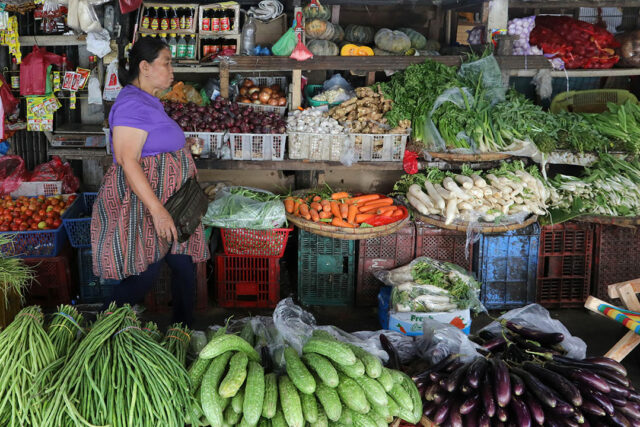
THE Department of Agriculture (DA) said aggressive action is needed to stabilize food prices after they rose during the December holidays.

In a statement on Tuesday, Agriculture Secretary Francisco P. Tiu Laurel, Jr. said that while rice prices remain low, holiday demand, weather damage, and supply issues pushed up December food inflation overall.

“The DA must move faster — tightening market monitoring, accelerating production, swiftly deploying available stocks, and expanding safety-net support like the P20 rice program to blunt price spikes,” he was quoted as saying in the statement.

Food inflation accelerated to 1.2% in December from 0.3% in November. A year earlier, the rate had been 3.5%.

Inflation for households in the bottom 30% of the income table was also 1.1%, ending a six-month streak of deflation.

Rice prices fell 12.3% year on year in December against a 15.4% drop in November. Vegetable, tuber and plantain prices accelerated 11.6% from 4% a month earlier.

Other staples, including flour, bakery products, pasta, fish, and ready-to-eat food products, also accelerated in terms of price growth.

Partly offsetting these gains were softer inflation in meat, dairy products, eggs and oils and fats. Sugar and confectionery prices, meanwhile, declined year on year.

Food accounted for nearly a quarter of December’s headline inflation, contributing 0.4 percentage point.

To ease the inflation burden, the DA said it is expanding the reach of its P20-per-kilo rice program to up to 15 million households, or roughly 60 million people, by the end of 2026.

The subsidized-rice program is intended to improve access to the staple grain for vulnerable members of society.

The DA said the expansion will be accompanied by production support to address both seasonal demand surges and weather-related supply disruptions. — Vonn Andrei E. Villamiel

Rice inventory up 5.8% in Dec. as NFA holdings rise sharply

PHILIPPINE STAR/MIGUEL DE GUZMAN

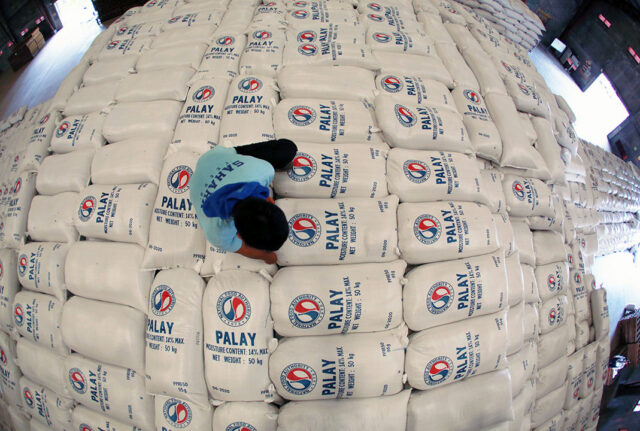
THE national rice inventory rose 5.8% year on year to 2.7 million metric tons (MMT) as of Dec. 1, the Philippine Statistics Authority (PSA) reported.

Of the total stock, 45.2% was held by commercial traders, 38% by households, and 16.9% by the National Food Authority (NFA).

Rice held by the NFA more than tripled to 456,140 MT as of Dec. 1, it said.

Rice held by commercial establishments amounted to 1.22 MMT, down 19.2% from a year earlier.

Rice held by households rose 14.3% to 1.03 MMT.

Month on month, the volume of rice stocks grew 5.9%.

“In comparison to November 2025, increment was noted in the rice stocks in the commercial sector by 29.4%. Meanwhile, decreases in the rice inventory were noted in the holdings of households by 10.7% and NFA depositories by 1%,” the PSA said.

The PSA also reported a 23.1% year-on-year increase in the corn inventory to 675,000 MT as of Dec. 1.

Corn held by the commercial sector accounted for 86.4% of the total, with the remainder held by households.

Month on month, the corn inventory declined 14.6%. — Vonn Andrei E. Villamiel

BIR, FIRB data-sharing deal grants reciprocal access to tax records, incentives information

THE Bureau of Internal Revenue (BIR) and the Fiscal Incentives Review Board (FIRB) said the data-sharing agreement they signed last year allows reciprocal access to taxpayer records and tax-incentive information.

BIR Commissioner Martin R. Mendoza released the full text on Tuesday of the data sharing agreement between the BIR and the FIRB.

The agreement was entered into on Oct. 27.

“This agreement allows the FIRB Secretariat to access taxpayer registration information from BIR systems and grants the BIR access to tax incentive information of Registered Business Enterprises through the Fiscal Incentives Registration and Monitoring System (FIRMS) platform,” he said.

Mr. Mendoza said the agreement ensures secure and efficient data sharing compliant with the Data Privacy Act of 2012 and National Privacy Commission Circular No. 16-02.

Under the agreement, the FIRB Secretariat will have access to taxpayer registration records with on-site and online access to BIR documents and databases, he said.

The BIR will share its taxpayer registration information with the FIRB Secretariat, limited to the registered name and taxpayer identification number.

Meanwhile, the FIRB Secretariat will provide real-time access to FIRMS data like the master list of registered business enterprises and verify the Certificate of Entitlement to Tax Incentives submitted to the BIR. It will also grant access to the firm-level Annual Tax Incentives Report data.

The agreement runs for five years from the date of signing, “unless pre-terminated by either party for reasonable grounds, without prejudice to entering into a new data-sharing agreement before or upon the expiration thereof.” — Aubrey Rose A. Inosante

DBM issues budget call for 2027

BW FILE PHOTO

THE Department of Budget and Management (DBM) has notified government departments and agencies to start preparing their budget proposals for 2027.

Budget Secretary Rolando U. Toledo issued National Budget Memorandum No. 156, signaling the preparatory stage for drafting the National Expenditure Program (NEP) and outlining the priorities for next year.

“The FY 2027 budget aims to capitalize on the gains of the previous years while responding to the emerging challenges of the country,” he said.

The memorandum, dated Jan. 5, was issued on the same day President Ferdinand R. Marcos, Jr. signed the record P6.792-trillion national budget for 2026.

Mr. Toledo said the 2027 budget seeks to protect the public’s purchasing power amid lingering inflationary pressures, drive inclusive growth through infrastructure investment, and boost climate resilience.

The NEP, the document prepared by the executive branch that serves as the basis for budget legislation, also aims to improve public service quality, accessibility and transparency through sustained digitalization, he said.

He said the budget also hopes to promote balanced development by aligning local, regional and national programs. Other priorities include empowering local governments and staying adaptable to emerging domestic and foreign risks.

“As the country is nearing its final phase of the PDP implementation, the proposed FY 2027 budget will serve as a critical pipeline to implement its strategic objectives,” he said.

The PDP Midterm Update 2023-2028 serves as the medium-term blueprint for inclusive, sustainable growth, anchored on AmBisyon Natin 2040’s goal of a middle-class society with per-capita income tripling.

Mr. Toledo told agencies to align their budget proposals with the roadmap’s main goals such as aggregate fiscal discipline, allocative efficiency, and operational efficiency.

“Avoid proposing PAPs (Programs, Activities and Projects) that duplicate devolved functions/services, except where allowed by law or necessary to address significant capacity gaps or exigencies,” he said.

The DBM has come under fire for failing to flag duplicate infrastructure projects in the 2025 budget, described by a former Budget Secretary herself as the “most corrupt budget,” due to allocations for the Department of Public Works and Highways.

In addition, Mr. Toledo said prudent debt management and efficient resource allocation remain a “critical priority” of the administration’s budgeting strategy.

The Bureau of the Treasury reported outstanding debt of P17.562 trillion at the end of October, 1.2% above the P17.36-trillion projected debt level by the end of 2025.

The Department of Finance has said that debt is projected to rise to P20.5 trillion in 2027, P21.9 trillion in 2028 and P23.3 trillion in 2029.

“Given the limited available fiscal space, agency budget proposals will be carefully evaluated in terms of value for money, performance metrics and alignment with the government’s fiscal consolidation strategy,” he said. — Aubrey Rose A. Inosante

Alex Eala rallies to beat Croatia’s Vekic, advances to quarterfinals

ALEX EALA — FACEBOOK.COM/ASBCLASSIC

ALEXANDRA “ALEX” EALA recovered from a first-set meltdown to hack out a 4-6, 6-4, 6-4 comeback win against Croatia’s Donna Vekic in Round 1 of the 2026 ASB Classic singles on Tuesday at the ASB Tennis Centre in Auckland, New Zealand.

Ms. Eala, WTA No. 53, wasted a red-hot 3-0 start in the opener to move on the brink of an early exit before showing steely nerves in the next two frames for a hard-earned first singles win this season.

The fourth-seeded Ms. Eala, on the heels of a doubles victory with American partner Iva Jovic, needed two hours and 40 minutes in the marathon match to get the better of the WTA No. 69 Ms. Vekic.

Up next for Ms. Eala in the Round of 16 on Wednesday is another Croatian in WTA No. 82 Petra Marcinko, who scored a 6-4, 0-6, 7-6(2) win over Colombia’s Camila Osorio, WTA No. 76.

“It’s so special. If there’s one thing I learned in 2025, it’s that home is the people and not the place. Thank you everyone. Maraming salamat,” said the 20-year-old wunderkind as Filipinos abroad came in groves anew to rally behind her.

“Like you said, Donna is such an experienced and super talented player. She’s definitely a decorated player so I really had a tough time today. I’m most happy about being able to compete and show up at a level like this after a tough pre-season. I’m proud about that.”

Ms. Eala did, facing an acid test from the 29-year-old Croatian who has won four WTA titles in her career.

Holder of a lone title in her young career so far, the lefty sensation rode on the momentum of her doubles win against the super tandem of Ukraine’s Elina Svitolina and the US’ Venus Williams on Monday for a 3-0 start in the first set only to settle for just one win the rest of the way.

Ms. Vekic unloaded a 6-1 blast on Ms. Eala to take the opener and even led 3-2 in the second set for a potential sweep.

But Ms. Eala wasn’t keen on absorbing an early elimination in her first tournament this year after a banner 2025 campaign, returning the favor on the more seasoned foe with a 4-1 run of her own to force a rubber.

It proved to be a back-and-forth duel from there with both players taking turns at the driver’s seat before Ms. Eala netted the last two, breaking Ms. Vekic’s serve punctuated by a lightning forehand at the baseline for the win.

The Southeast Asian Games gold medalist will take a break from the singles campaign to prepare for the doubles quarterfinals on Thursday at 6:30 a.m. against Czechia’s Jesika Maleckova and Mexico’s Renata Zarazua, who beat home bet Erin Routliffe and Asia Muhammad of the United States, 3-6, 6-2, 12-10.

Ms. Eala and the 18-year-old Ms. Jovic, WTA No. 35, advanced to the Last 16 after stunning the seven-time major champion Ms. Williams and former WTA Tour finals titlist Ms. Svitolina in the opener, 7-6 (9-7), 6-1. — John Bryan Ulanday

ADVERTISEMENT
ADVERTISEMENT