Home Blog Page 4674

ILO chief urges dialogue among labor stakeholders
ILO.ORG

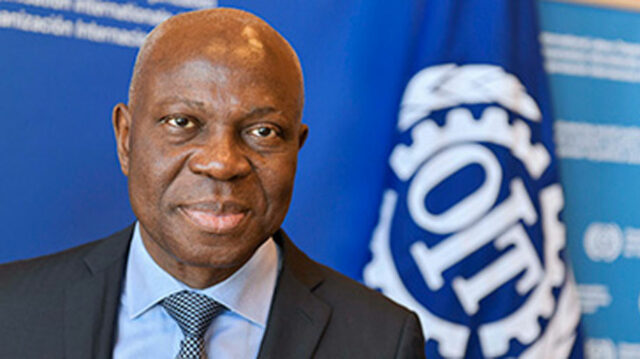
INTERNATIONAL Labour Organization (ILO) Director-General Gilbert F. Houngbo concluded his first official visit to the Philippines on Wednesday, during which he cited the need to strengthen social dialogue among the government, employers and workers.

At a conference with employers in Manila, he also urged them to invest more in education and skill programs, adding that work environments should be conducive to growth and productivity.

“In the fast-moving job market, life-long learning is now essential for workers and these skills allow workers to thrive,” Mr. Houngbo said. “Employers and businesses must maximize productivity because without this, they cannot create jobs and provide prosperity.”

Mr. Houngbo said it is crucial for employers to incorporate new technologies such as artificial intelligence to upgrade workers’ skills.

The ILO chief said the government and employers should start educating and training young people to build the foundation for the future workforce, and to address youth unemployment.

“It will be critical to invest in youth empowerment programs to equip young people with the tools they need to succeed to help build a better future for the country,” he said.

The ILO chief met with President Ferdinand R. Marcos, Jr. on Tuesday as the two agreed for the Philippines and ILO to continue to collaborate to address labor issues, Labor Secretary Bienvenido E. Laguesma said at the same event.

“The government and its stakeholders will continue to work towards increasing employability and equal access to work opportunities,” he said, citing a plan that would be sent to the Cabinet for approval.

The plan includes providing worker skills, such as raising the quality of teachers and modernizing training institutions, he said. He added that his agency would consult labor stakeholders to seek improvements for the labor roadmap.

Mr. Laguesma earlier said his agency plans to narrow the gap between worker skills and employer needs this year through upskilling programs.

“Together with our tripartite partners, we will continue working towards decent work and improved quality of life for our workers,” he said. “We invite our partners from the employers’ sector, workers, and other stakeholders to help us implement our labor and employment plan.”

During his visit, Mr. Houngbo also held a dialogue with representatives of workers’ and employers’ organizations.

“This visit has provided an excellent opportunity to discuss a wide range of world of work issues faced by the Philippines,” he said in a separate statement. “The open and productive talks we have held leave me confident that the Philippines is on track towards a bright future.”

“However, I encourage greater social dialogue between representatives of government, employers and workers in order to make progress on outstanding issues as well as to make decent work and social justice a reality for all,” the ILO chief said.

He took part in celebrations to mark the 75th anniversary of the Philippines joining the ILO and delivered the keynote address at a global seafarers’ summit.

Mr. Houngbo also met with the president of the Asian Development Bank (ADB), heads of agencies and members of the United Nations Country Team, and the UN resident coordinator.

While in Metro Manila, he also visited the Migrant Resource Centre (MRC) in Quezon City where he had a chance to interact with migrant Filipino workers and their families.  

“What I have seen and heard during this visit and from my discussions at the Department of Migrant Workers confirms the excellent work being carried out to support Filipino migrant workers and their families,” Mr. Houngbo said. “I sincerely hope that these best practices from the Philippines can be shared with other countries in this region and beyond.” — John Victor D. Ordonez


MWSS water allocation cut 

BW FILE PHOTO

THE NATIONAL Water Resources Board (NWRB) will cut the water allocation of the Metropolitan Waterworks and Sewerage System (MWSS) starting next week to ensure adequate supply. 

“For Metro Manila’s water allocation, the board decided to grant the 50 cubic meters per second (m3/s) water allocation for the month of July,” NWRB Executive Director Sevillo D. David, Jr. told reporters on Wednesday.  

The agency decided to cut the allocation amid fears that the water level in Angat Dam could no longer supply the water needs of Metro Manila and due to the threat of El Niño.  

He said the 50 cms water allocation would cover July, subject to adjustments depending on Angat Dam’s water level.   

The NWRB earlier approved 52 m3/s for June 1-15, which it extended until June 30. Normally, MWSS only draws 48 cms from the dam. 

As of 6 a.m. on Wednesday, the water level in Angat Dam had declined to 183.25 meters from 183.52 meters a day earlier, data from Philippine Atmospheric, Geophysical and Astronomical Services Administration’s (PAGASA) website showed.  

Angat Dam is the main source of water for Metro Manila, accounting for about 90% of the capital’s potable water. — Ashley Erika O. Jose 

Marcos cites value of sacrifice 

PRESIDENT Ferdinand R. Marcos, Jr. on Wednesday urged Filipinos to remember the value of sacrifice and selflessness, as the local Muslim community observed Eid’l Adha of the feast of sacrifice.   

In a statement, Mr. Marcos Jr. recognized Filipino Muslims for helping “weave our rich tapestry of diversity.”  “Let their devotion to these beliefs shine above all throughout the festivities and further strengthen the bond among our families, friends and communities,” he said. 

Eid’l Adha commemorates the willingness of the prophet Abraham to sacrifice his son Ishmael as an act of obedience to God. 

Muslims make up about 6% of the Philippine population, which is predominantly Catholic. — Kyle Aristophere T. Atienza 

Mindoro shooting suspect yields 

BAGUIO CITY — The suspected gunman in the May 31 killing of Mindoro Oriental radio commentator Cresenciano Bundoquin surrendered to the National Bureau of Investigation (NBI) in Manila on Tuesday afternoon.   

“The arduous road towards uncovering the truth and giving justice to Bundoquin just hurdled a major obstacle,” Presidential Task Force on Media Security Executive Director Paul Gutierrez said in a statement. 

The suspect denied shooting the victim several times at close range, and promised to cooperate with the NBI probe, Mr. Gutierrez said.  

Mr. Bundoquin, a radio block timer at DWXR, was shot and killed by two armed motorcycle-riding men in front of his store at the Sta. Isabel village in Calapan City at dawn on May 31. — Artemio A. Dumlao

Poor private students get P53B 

THE GOVERNMENT is spending P53 billion this year to fund the tuition fees of poor students studying in private schools, a congressman said on Wednesday.  

“The P53 billion is nearly double the P28-billion budget for Government Assistance to Students and Teachers in Private Education in 2022,” Quezon City Rep. Marvin D. Rillo, a member of the House appropriations panel, said in a statement.  

He said P39.3 billion will be allotted to the Senior High School Voucher program, which provides tuition grants to qualified Grade 10 completers who will enroll in Grades 11 and 12. 

Mr. Rillo said P12.5 billion will be given to elementary graduates who wish to enroll in junior high school or Grades 7 to 10.  

He added that P1.4 billion will be spent on tuition grants for senior high school students taking the Technical-Vocational-Livelihood track. — Beatriz Marie D. Cruz 

Consultant for EDSA Busway study targeted for hiring by Q3

PNA/JESS M. ESCAROS JR.

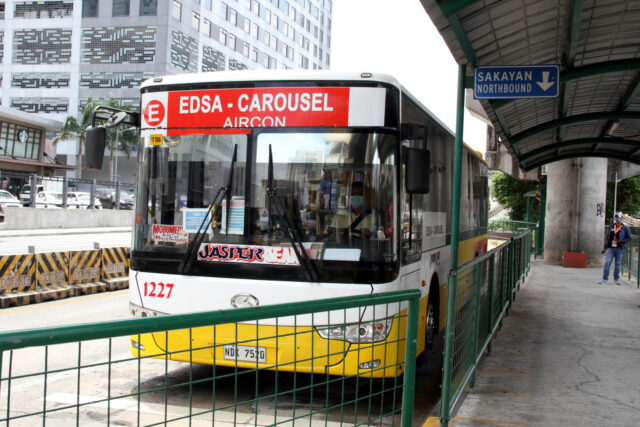
THE Department of Transportation (DoTr) said it hopes to sign a consulting contract by the third quarter for a feasibility study on rehabilitating the bus system along Epifanio delos Santos Avenue (EDSA).

Dapat matapos na ’yan kaagad. Mabilis na ’yan, pagpipilian na lang, siguro bago matapos ang third quarter (This needs to be done soon. It’s a simple matter of selecting a contractor, maybe by the third quarter),” Transport Secretary Jaime J. Bautista told reporters on Monday.

On May 26, the DoTr and Public-Private Partnership (PPP) Center received a total of four submissions from consulting firms for two projects.

According to the PPP Center, the proposals include the technical and financial proposals for project preparation for the Manila Bay-Pasig River-Laguna Lake Ferry Project and the NCR EDSA Busway Project.

Once awarded, the consulting services for these projects include the preparation of pre-feasibility, feasibility, and assistance to the DoTr in securing government approvals.

Tinutulungan kami ng PPP Center sa feasibility study nito (We are receiving help from the PPP Center on the feasibility study),” Mr. Bautista said.

On April 5, the PPP Center and the DoTr signed a Technical Assistance Agreement for the provision of Project Preparation and Transaction Advisory Services for the two projects.

The NCR EDSA Busway Project involves the financing, design, construction, procurement of low-carbon buses, route planning, and operations and maintenance of the busway. — Justine Irish D. Tabile

PHL pork imports expected to fall this year as poultry shipments rise

PHILSTAR FILE PHOTO

THE Philippines is expected to import less pork this year amid a broader global downtrend in trade, according to the UN Food and Agriculture Organization (FAO).

In a report, the FAO projected the global trade of pork to dip to 11.4 million metric tons (MT) in 2023 from the 11.5 million MT estimated last year.

The FAO said the supply of exportable quantities in producing countries has declined as supply levels rise in East Asia.

“The latest forecasts point to reduced pig meat imports by the US, Japan, Mexico, Vietnam and the Philippines, with likely higher imports by the UK, China, Canada, Uruguay and the Republic of Korea,” the FAO said.

The FAO projected Philippine pork imports this year at 489,000 MT, down 2.02%. Philippine pork production is expected to increase 3.62% to 1.26 million MT, upgraded from an earlier estimate of 1.22 million MT.

“Similarly, domestic production recoveries could lead to subdued imports by Vietnam and the Philippines, even though the continuation until 31 December 2023 of the reduced import tariff in the latter may encourage more imports.”

Hog production rose 5.1% to 437.99 thousand MT, on a liveweight basis, in the first quarter, according to the Philippine Statistics Authority.

The Bureau of Animal Industry tallied pork imports of 114.8 million kilos, accounting for 43.2% of all meat imports.

The executive order (EO) setting the current tariff rates for imported pork is set to expire by the end of 2023, which would bring about a reversion to the previous tariff rates of 30% within the minimum access volume quota and 40% for shipments in excess of the quota.

At present, the pork tariff rate is 15% for in-quota imports, and 25% for out-of-quota following EOs issued by presidents Rodrigo R. Duterte and Ferdinand R. Marcos, Jr.

Meanwhile, the FAO forecast global poultry meat trade to rise 1% to 16.4 million MT this year, driven by expanded shipments to Asia, Central America, and the Caribbean.

“Significant increases in poultry meat imports are expected for China, Saudi Arabia, Iraq, the European Union and South Africa, as well as in the Philippines, Canada and the Democratic Republic of the Congo, due to growing internal demand amid tight domestic supplies, high prices, more active food services sales and relative affordability,” it said.

The FAO did not provide a specific projection for the Philippines.

First-quarter poultry production in the Philippines rose 3.3% to 470.21 thousand MT while imports amounted to 102.7 million kilos. — Sheldeen Joy Talavera

Manila pitches FTA to EU as platform for Asian expansion

REUTERS

THE PHILIPPINES is touting itself as a potential “platform” for broadening European trade in the Indo-Pacific in free trade feelers sent to the European Union (EU).

Trade Secretary Alfredo E. Pascual made the pitch during a meeting with European Commission Vice-President and Trade Commissioner Valdis Dombrovskis on June 26 in Brussels, during which he pressed for the resumption of talks on a free trade agreement (FTA).

Mr. Pascual described a free trade agreement with the Philippines as a “strategic platform for economic engagement for the EU in the Indo-Pacific,” which would result in a “more permanent mechanism” for furthering the Philippines-EU economic relationship.

The meeting was part of the Department of Trade and In dustry’s (DTI) three-week European Investment Roadshow, running from June 18 to July 6.

“To maintain strong economic relations with the EU, it is important that a PH-EU FTA is in place before the Philippines eventually loses its Generalised Scheme of Preferences Plus (GSP+) status due to continued economic growth,” Mr. Pascual said.  

“With the country’s positive trajectory towards reaching upper-middle income status, it is high time for the Philippines and the EU to resume FTA negotiations,” he added.

The last round of negotiations for the Philippines – EU FTA took place in 2017 after talks officially began in 2016.

Aside from the FTA, Mr. Pascual said the reauthorization of GSP+ status is vital, adding that the finalization of the new GSP scheme will result in more certainty for Filipino exporters and EU importers.

The current GSP+ regulation is set to expire by the end of 2023.

“The continuation of EU GSP+ is beneficial both for the Philippines and the EU in driving inclusive growth and sustainable development,” Mr. Pascual said.  

In response, Mr. Dombrovskis said the Philippines should await the result of the EU’s ongoing trialogue deliberations regarding the finalization of the new GSP scheme regulation.

In September 2021, the European Commission published a proposal for a new EU-GSP scheme from 2024 to 2034.

GSP+ is an incentive arrangement that grants the Philippines zero-tariff treatment on 6,274 products or 66% of all EU tariff lines. Some of the top Philippine GSP+ exports are crude coconut oil, vacuum cleaners, prepared or preserved tuna, and electro-thermic hair dressing apparatus.

In 2022, the Philippines exported €2.93 billion worth of products to the EU under the GSP+, equivalent to a 77% utilization rate.

The DTI said in a separate statement that Mr. Pascual also met with European Investment Bank (EIB) Vice-President Kris Peeters in Brussels on the possibility of financing Philippine projects.

According to the DTI, the EIB has expressed interest in the Mindanao Agro Enterprise Development Project, which seeks to improve competitiveness and develop the food value chain for the main southern island.

It added that the EIB is also interested in financing projects related to digital connectivity, public transport, green economy, renewable energy, agriculture, and health.

“As the largest multilateral financial institution globally, owned by EU member states, the EIB… prioritizes projects related to climate change mitigation and adaptation, social and economic infrastructure development, and support for small and medium enterprises (SMEs) at the local level,” the DTI said.

The DTI said that Mr. Pascual also met with a Belgian delegation consisting of officials from Walloon Export and Foreign Investment Agency, Belgian Foreign Trade Agency, and Flanders Investment and Trade on June 26. 

According to the DTI, Belgian companies in the Philippines are engaged in manufacturing, services, energy, and logistics.

“Trade between Belgium and the Philippines has shown a significant increase, primarily in the exports of Belgium to the country of its machinery, pharmaceutical products, chemicals, and vehicles,” the DTI said.

In 2022, the EU was the Philippines’ fifth largest trading partner with trade valued at €15.23 billion. It was the sixth largest export market at €7.96 billion, and sixth leading source of imports at €7.14 billion. — Revin Mikhael D. Ochave

Palay average farmgate price up 9.1% in April

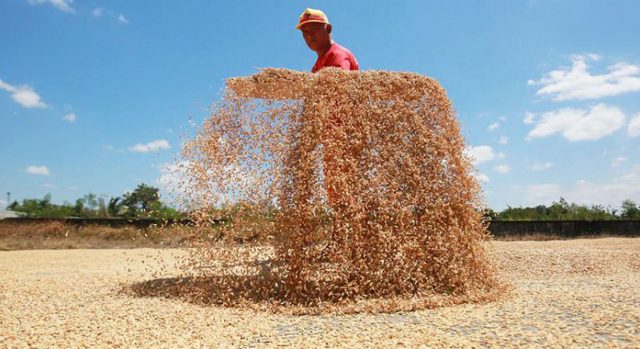
THE average farmgate price of palay or unmilled rice rose 9.1% year on year to P18.79 per kilogram in April, according to the Philippine Statistics Authority (PSA).

“All regions continued to record positive annual increments in the average farmgate price of palay in April 2023,” the PSA said in its report.

The highest farmgate price of palay was recorded in Northern Mindanao at P20.77. The lowest was the Eastern Visayas price of P16.09.

“The highest year-on-year increase was registered in Northern Mindanao at 14.6%, while the lowest annual increment was noted in Cordillera Administrative Region at 3.7%,” the PSA said.

The average farmgate price in the Ilocos Region rose 7.7% year on year to P20.40 per kilo.

The Central Luzon farmgate price during the period grew 11% to P20.02.

The farmgate price rose 8.3% to P19.53 in the Western Visayas.

The farmgate price in the Central Visayas rose 13.5% year on year to P19.52.

On a month-on-month basis, the PSA said that the average farmgate price rose 1.2% from P18.57 in March.

“Month on month, 12 regions recorded higher average farmgate prices, while CAR, Ilocos Region, Cagayan Valley, and Eastern Visayas posted decreases for this month,” the PSA said.

Jayson H. Cainglet, executive director of Samahang Industriya ng Agrikultura (SINAG), estimated the current palay farmgate price at between P21 and P24 per kilo.

“As long as imports don’t compete with harvest season, the millers are encouraged to buy palay, even some (local government units),” he said. The peak of the harvest is March to May and September to October.

Mr. Cainglet said that SINAG affiliated millers signed a memorandum of agreement with the National Food Authority (NFA) in October, committing to buy palay at a base price of P21 per kilo.

He said with many buying at P21 per kilo, other traders and millers followed suit.

Under Republic Act No. 11203 or the Rice Tariffication Law, the NFA has been stripped of its power to import rice and has been reduced to maintaining an emergency inventory from domestically produced rice.

In the five months to May, the Philippines has imported 1.62 million metric tons of rice, up 7.69% from a year earlier. — Sheldeen Joy Talavera

VAT refund for tourists

After the Director-General of the World Health Organization declared an end to COVID-19 as a global health emergency, many of us grew eager to return to life as we knew it before COVID-19. Tourism was one of the hardest-hit industries during the height of the COVID-19 pandemic due to the mobility and international travel restrictions that were aimed at reducing the spread of the virus. Now, although many of us remain cautious and continue to wear face masks despite the lifting of most mask mandates, “revenge travel” — to make up for lost time — is a high personal priority for many.

While there are broader factors that will boost tourism (airport capacity and infrastructure, to name two), one proposal aims to improve our attractiveness as a travel destination from a tax perspective. Under House Bill (HB) No. 7292, non-resident tourists would be allowed to obtain a value-added tax (VAT) refund on their purchases of goods worth at least P3,000. The bill was approved by the House of Representatives on third and final reading, and the President himself has signaled his backing for the proposal in principle.

INTERNATIONAL PERSPECTIVE
The concept of recouping VAT or similar consumption taxes on foreign tourists’ purchases is not new. In fact, according to the House Ways and Means Committee Chairman, we are one of the last few Asian destinations that do not have a tourist VAT refund system. To better understand this proposal, let’s take a brief look at some of our neighbors.

In Indonesia, Malaysia, Singapore, Thailand, and Vietnam, the general procedures can be outlined as follows: 1) obtain and keep the tax invoices for eligible purchases; 2) show travel documents together with the invoices and the goods purchased (and not consumed) to the refund counter at the airport; and 3) claim the tax refund, most commonly in cash (local currency). Naturally, each jurisdiction has its own set of procedures and rules regarding controls (some have specific “tax-free” shops), purchase or tax amount thresholds, the number of days between when the purchase was made and when the refund is claimed, and even the actual refund mechanism (some allow refunds via credit card reverse charge). Nevertheless, the overarching procedures appear quite similar.

Outside of ASEAN, Taiwan seems to have similar procedures as outlined above, albeit with an option to use an “E-VAT Refund Machine” instead of proceeding to a refund counter. Interestingly, Japan has a drastically different approach: either a) pay for the purchase with consumption tax already deducted upon presentation of a passport, or b) obtain a refund by visiting the designated tax exemption bulk deduction counter (in-store, not at the airport) and presenting the purchased goods, receipt, and passport.

CURRENT PHILIPPINE VAT RULES
The purchase of goods within the Philippines is generally subject to 12% VAT. As an indirect tax, VAT is passed on to and shouldered by the buyer. As a tax on the “value added,” the ultimate consumer or end-user primarily bears the cost of VAT. This burden is especially felt by individual buyers, who are typically not VAT-registered and do not have the benefit of claiming input VAT credits on their purchases.

The proposal for VAT refunds on tourist purchases would add Section 112-A to the Tax Code, the salient portions of which read as follows:

“SEC. 112-A. TOURIST VAT REFUND. — A tourist shall be eligible for a value-added tax (VAT) refund on goods purchased from accredited retailers in the Philippines if such goods are taken out of the country within sixty (60) days from the date of purchase, and the value of goods purchased per transaction amounts to at least three thousand pesos (P3,000.00) …

For purposes of this section, a ‘tourist’ shall refer to a foreign passport holder, who is a non-resident individual not engaged in trade or business in the Philippines.”

The proposal seems simple enough. Tourists who are foreign nationals and not residents of the Philippines can refund the 12% VAT imposed on goods that they purchase within 60 days before they leave the country. The bill authorizes the Secretary of Finance to promulgate the rules and regulations for the law’s implementation. It appears that the legislators prefer giving leeway to the executive branch as to the exact mechanics of the VAT refund process.

POINTS FOR CONSIDERATION
According to the Presidential Communication Office, the VAT refund program for foreign tourists is targeted for implementation by 2024 and is billed as an effort to boost tourist arrivals. The counterpart Senate bill still faces hearings at the Senate Committee on Ways and Means at this writing. Nevertheless, here are a few salient points to consider about the pending measure:

1) Administration: With the ultimate goal of boosting tourist spending in mind (thus helping retailers generate more sales and growing our economy), the government should ensure that rules or requirements are simple to comply with for retailers.

2) Convenience: From the foreign tourists’ perspective, a tedious process for obtaining a VAT refund will discourage them from applying in the first place, in turn discouraging them from spending. It bears highlighting that, at 12%, we have the highest VAT rate in ASEAN.

3) Safeguards: As a refund program, this measure will likely entail funds to be programmed into the government’s annual budget. As with any government-funded measure, policies for transparency and governance must be strictly enforced.

As we welcome foreign visitors, we can, in addition to showing them a great time at our beaches and other destinations, perhaps they will also buy more “pasalubong” for their loved ones back home — VAT-free, if this proposal becomes law.

The views or opinions expressed in this article are solely those of the author and do not necessarily represent those of Isla Lipana & Co. The content is for general information purposes only, and should not be used as a substitute for specific advice.


Marion D. Castañeda is a senior manager at the Tax Services department of Isla Lipana & Co., the Philippine member firm of the PwC network.

+63 (2)8845-2728

marion.castaneda@pwc.com

Philippines ranked 22nd heading into FIBA World Cup tournament

GILAS Pilipinas will head into battle as 22nd-ranked team in a field of 32 at the 2023 FIBA Basketball World Cup, according to the federation’s initial power rankings.

The Philippines, serving as the tournament’s main host, topped rivals Iran (No. 31), Jordan (No. 28) and Lebanon (No. 26) in the rankings.

FIBA said the presence of NBA guard Jordan Clarkson from the Utah Jazz is expected to bolster the Gilas bid along with the hometown advantage.

Australia, following its first-ever podium finish in the Tokyo Olympics with a bronze medal, is top ranked in the region at No. 4.

The continent’s other teams are co-host Japan (No. 14), New Zealand (No. 16) and China (No. 21).

Dominican Republic and Italy, two of the men’s teams’ opponents in Group A, are ranked No. 12 and No. 13, respectively. Angola is at No. 29.

Reigning Olympic champion USA and World Cup titlist Spain paced the 32-team cast at No. 1 and No. 2, respectively. Also in the Top 5 are France (No. 3) and Slovenia (No.5).

Canada, Germany, Serbia, Greece and Brazil, in order, rounded the Top 10. — John Bryan Ulanday

Gilas beaten by Estonia 81-71 in European training camp ‘friendly’

GILAS Pilipinas lost 71-81 to home side Estonia, which coach Chot Reyes described as essential to the overall development of the FIBA World Cup-bound Filipinos.

Groping for form early but displaying fighting heart in the first friendly of its European camp Tuesday night in Tallinn, Gilas fought back hard after trailing by 22 but faded in the end.

“Like I said in the dugout, I was very impressed, I was very happy with our first game considering this is June Mar’s (Fajardo) first game in six months and Japeth’s (Aguilar) first game in four months,” Mr. Reyes said in an update posted by the Samahang Basketbol ng Pilipinas.

Estonia, which was represented by younger players from its men’s team, opened the game held at the Kalevi Sports Hall with nine unanswered points en route to a 41-19 lead.

The Estonians held a 49-35 lead at the break before Gilas cut it to 64-59 after three and threatened further at 66-63 midway through the fourth. But with Justin Brownlee forced to the bench on cramps, the Filipinos failed to complete the fightback.

“For us to continue to battle — we were down 20 and still we showed a lot of fight, putting ourselves within a basket, we were three points down in the middle of the fourth, and we played the fourth without Justin Brownlee who had suffered cramps already by that time,” said Mr. Reyes.

“So (it’s a) good first step (and I’m) very, very happy. Going into this ballgame, we know we still have a long way to go, still a lot of work to be done because this is a work in progress, so (I) can’t ask for more.”

Dwight Ramos showed the way with 16 for Gilas, which played with only 11 players with Scottie Thompson nursing back spasms. Mr. Brownlee, who entered the camp just two days before the game, finished with eight in 19 minutes as Thirdy Ravena shot nine and Mr. Fajardo hauled down nine boards.

“I thought we didn’t play good defense in the first half but in the second half we tightened up a lot more and that allowed us to get back and stay in the game,” Mr. Reyes said.

The Nationals were undone by 23 turnovers, which Estonia converted into 21 easy points.

Mr. Reyes’ troops had little time for rest and recovery with a tough duel against fellow World Cup team Finland in the cards Wednesday night.

“The good news is it was a good first step. The bad news is tomorrow’s game is going to be five or ten times tougher than today’s game,” Mr. Reyes said.

“So again, we’ll see how we respond and how we react tomorrow. Like I said, that’s the reason why we’re here. This is the time that we make our mistakes, that we adjust and we grow and we develop resilience as a team.” — Olmin Leyba

ADVERTISEMENT
ADVERTISEMENT