Home Blog Page 46

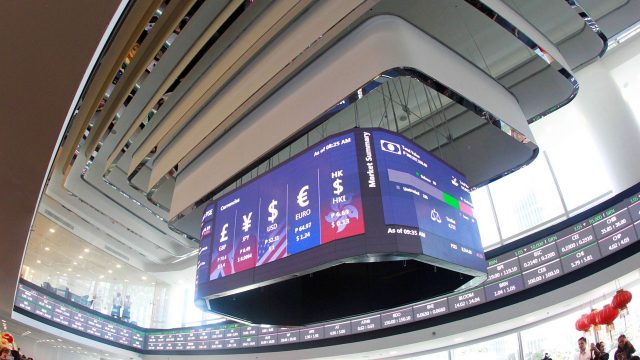
PHL shares to consolidate amid fragile ceasefire
PHILIPPINE STAR/KRIZ JOHN ROSALES

STOCKS may consolidate when trading resumes on Friday after a holiday as investors carefully assess risks amid the fragile truce between the United States and Iran.

On Wednesday, the Philippine Stock Exchange index (PSEi) climbed by 2.21% or 132.04 points to close at 6,089.91, while the broader all shares index went up by 1.94% or 65 points to end at 3,415.16.

This was a near one-month high for the PSEi as the market joined a global relief rally after the US and Iran agreed to a temporary ceasefire.

F. Yap Securities Investment Analyst Marky Carunungan said Wednesday’s rally was driven by easing tensions, but he said gains may be limited.

“With gains already frontloaded and the ceasefire still temporary, we expect the market to consolidate when trading resumes on Friday, with upside becoming more selective,” he said in a Viber message.

Any signs of a renewed escalation in the conflict could wipe out gains and shift markets back into risk-off mode, he added.

Regina Capital Development Corp. Head of Sales Luis A. Limlingan likewise said that the Philippine market will take its cue from “any developments from the two-week ceasefire negotiations.”

Asian share markets were in a sober mood on Thursday as cracks quickly began to appear in the fragile Gulf truce, nudging oil prices back up and reminding investors the inflationary fallout would last a long time yet, Reuters reported.

Crucially, there was scant sign that the Strait of Hormuz was open in any meaningful way, with Iran flexing its control over the vital oil artery and demanding tolls for safe passage.

President Donald J. Trump took to social media to declare US forces would remain in the Gulf until a deal was reached and complied with, otherwise the shooting would begin again. Meanwhile, Israel carried out its heaviest strikes on Lebanon since its conflict with Iran-backed Hezbollah militia began last month, killing more than 250 people on Wednesday.

As a result, prices for US crude futures bounced 3.1% to $97.33 a barrel and Brent rose 2.1% to $96.86.

At midday, Japan’s Nikkei dithered either side of flat, after jumping 5.4% the previous session. South Korea dipped 0.4%, following a leap of 6.8%.

Chinese blue chips slipped 0.6%, while MSCI’s broadest index of Asia-Pacific shares outside Japan eased 0.7%.

On Wall Street, S&P 500 futures and Nasdaq futures were both off 0.2% as Wednesday’s surge petered out.

For a mixed Europe, EUROSTOXX 50 futures eased 0.1%, while DAX futures fell 0.5% and FTSE futures rose 0.4%.

With oil prices still around 40% higher than pre-conflict, an inflationary spike is about to show up in the hard data across the globe. — A.G.C. Magno with Reuters

Gov’t agencies face 20% cut in non-essential spending

BW FILE PHOTO

THE Department of Budget and Management (DBM) said it will issue a circular ordering National Government (NG) agencies to reduce non-essential spending by 20%, citing the need to create additional fiscal space.

“We will be issuing the circular on this for all National Government agencies,” Budget Secretary Rolando U. Toledo said at a House hearing on Wednesday.

In a statement issued on Thursday, the DBM said efficiency measures include limiting official travel, maximizing virtual engagements, strengthening energy conservation efforts, and streamlining operational expenditures.

“We exempted education, health, social, general public service, and defense (operations) with frontline services and significant supplies and materials required based on their mandated functions,” Mr. Toledo said.

Depending on the level of compliance, he said the measure is expected to generate savings of between  P12.8 billion and P25.6 billion. 

A legislator on Wednesday proposed cuts as deep as 40%, noting that the projected savings accounted only for 0.3% of the total budget for 2026.

“The DBM welcomes the proposal from our lawmakers to increase the reduction in non-essential government spending from 20% to 40%,” Budget Undersecretary Goddes Hope O. Libiran told BusinessWorld via Viber.

The DBM will undertake a careful and data-driven assessment of the proposal, including an estimate of projected savings, impact on operations, and second-order effects on service delivery and economic activity.

“While expenditure rationalization is a necessary tool during periods of fiscal stress, it must be calibrated to ensure that it does not inadvertently constrain critical government functions or dampen ongoing priority,” Ms. Libiran said.

“Therefore, any adjustment to the current 20% reduction policy will be guided by rigorous analysis, implementation feasibility, and alignment with the administration’s broader fiscal consolidation strategy,” she added.

The DBM has identified P238 billion in available funding to support the government’s response to the energy crisis.

Sourced from the 2026 General Appropriations Act, the funding pool will support fuel subsidies for the transport sector, assistance to farmers and fisherfolk, healthcare support, and other targeted social protection programs. — Justine Irish D. Tabile

Fuel rollback seen possible next week after Iran truce

PHILIPPINE STAR/KRIZ JOHN ROSALES

SOME RELIEF from consecutive fuel price increases could be coming as early as next week as global fuel prices tracked downward after the US announced a two-week ceasefire in its war against Iran, industry officials said.

Bri-gitte Car-mel C. Lim, senior vice-pres-id-ent and chief oper-at-ing officer of Top Line Busi-ness Devel-op-ment Corp., a Cebu-based fuel distributor, said there are strong indications of a rollback next week based on the trends in the first three days of trading this week.

“However, we usually wait for full-week trading before confirming, as market movements can still change,” Ms. Lim told BusinessWorld. “We remain hopeful that the downward trend continues.”

An industry official who declined to be identified told BusinessWorld that initial projections show gasoline prices could drop by as much as P2.50 per liter next week, while diesel may either remain unchanged or fall by P1.

The estimates were based on the three-day trading of the Mean of Platts Singapore (MOPS), a benchmark used for refined oil products.

“MOPS prices and premiums have softened due to the ceasefire deal in the Middle East. However, modest rebounds are seen based on today’s projections,” the source said.

Global markets, particularly those heavily dependent on imported oil such as the Philippines, continue to face volatility in both supply and prices amid the ongoing disruptions in the Middle East and the Strait of Hormuz.

US President Donald J. Trump said the US will stop attacking Iran for two weeks, hours before his deadline for Tehran to reopen the waterway.

In a hearing on Wednesday, Energy Secretary Sharon S. Garin said that it is remains difficult to predict how the ceasefire will impact fuel prices.

“I think the problem will be stay longer than the war itself. It will take some time (before prices) go back to P100 (per liter) or below,” Ms. Garin told legislators.

Fuel companies carried out another round of price increases this week, with increases ranging from P15-P19.80 per liter for diesel and P1.50-P5.90 per liter for gasoline. 

According to global energy price database Global Petrol Prices, the Philippines posted some of the largest increases in gasoline and diesel prices since the outbreak of fighting in the Persian Gulf.

Ms. Garin has said prices may not immediately retreat due to the extensive damage to energy infrastructure in the Middle East, particularly Qatar.

“The speed of the increase in pump prices will not be the same as the drop in prices. In fact, it will be way, way slower (because of the infrastructure damage),” she said. — Sheldeen Joy Talavera

New SIPP expected by next SONA in July

THE Board of Investments (BoI) said it is planning to release the Strategic Investment Priority Plan (SIPP) 2025-2028 before the President delivers his State of the Nation Address (SONA) in July.

“It will be released before the SONA,” Trade Undersecretary Ceferino S. Rodolfo told reporters on the sidelines of the opening day of the Manila International Auto Show on Thursday. 

The DTI is considering adding coal mining and production to the SIPP, he added.

The draft SIPP currently confers priority status to industries that address modern basic needs, as well as export activity and sustainability-driven industries.

The modern basic needs list includes agriculture, fisheries and forestry, manufacturing, halal, kosher, and organic-related activities, services, healthcare and disaster risk reduction management services, infrastructure and logistics, and energy.

Tier-2 priority activities includes goods and services not locally produced and import-substituting activities, while Tier 3 includes highly strategic and innovation-driven activities.

Sustainability-driven industries include industrial and hazardous waste treatment, bulk water treatment and supply, wastewater treatment, and environment or climate change-related projects.

The BoI is set to hold hybrid public consultations with industry, the public, and other partners on the Proposed Partial General Policies  and Specific Guidelines of the draft SIPP.

The SIPP outlines priority industries eligible for tax incentives under the Corporate Recovery and Tax Incentives for Enterprises to Maximize Opportunities for Reinvigorating the Economy Act.

The incentives framework seeks to attract high-value investments to support economic growth and industrialization.

According to the Foreign Investment Promotion and Marketing Plan, the government aims to increase foreign direct investment (FDI) by 5%, with an additional percentage point of growth expected annually until 2028.

Net FDI inflows slumped to a five-year low $7.791 billion in 2025, according to the Bangko Sentral ng Pilipinas. — Beatriz Marie D. Cruz

Changan PH sees sales of 2,500 units this year led by hybrid vehicles

CHANGAN.PH

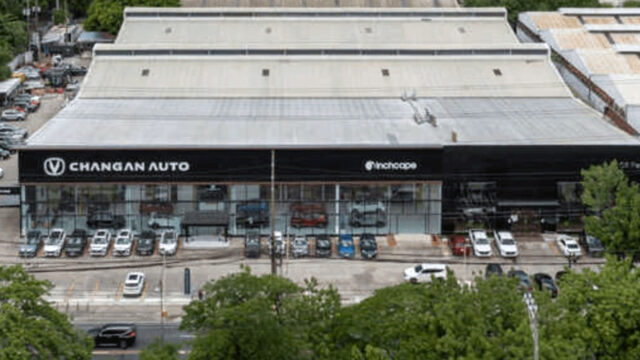
CHINESE AUTOMAKER Changan PH expects sales to hit 2,500 this year, led by hybrid electric vehicles (HEVs).

“Our target for the year is 2,500 sales, and that’s both the ICE (internal combustion engine) and the EVs,” Changan PH Business Unit Director Ryan Bermudez told BusinessWorld.

For 2026, Mr. Bermudez expects hybrid EVs to account for 70% of the company’s sales, with ICE vehicles will make up 30%. Last year, 80% of Changan’s sales were ICE engines.

He said high fuel prices are expected to boost demand for EVs, as consumers seek more energy‑efficient alternatives to gasoline‑powered vehicles.

“We all know that with fuel prices going up, the perception is there’s going to be a shift to EVs,” Mr. Bermudez said.

Despite this, he noted that gas-powered vehicles remain a practical option for some buyers.

“In terms of the balance of pricing, a hybrid sedan would cost you close to a million pesos. But for an ICE engine, a compact sedan would cost you less than P800,000,” Mr. Bermudez said. 

He added that Filipinos’ awareness of EVs remain limited due to the lack of charging infrastructure nationwide.

“We see companies building charging stations. However, how visible are they to the consumer?” Mr. Bermudez said.

At the end of February, EV sales jumped 66.9% to 5,701, according to a joint report by the Chamber of Automotive Manufacturers of the Philippines, Inc.  and the Truck Manufacturers Association. The segment includes battery EVs, plug-in hybrid EV, and HEVs.

Overall vehicle sales dropped 9.4% to 69,538 units in the two months to February.

For this year, Changan is hoping to launch five models.

The company launched two ICE cars in the first quarter — the entry-level CS15 in January and the Eado Plus car in March. 

At the Manila International Auto Show on Thursday, the company launched its CS35 Max model, which it describes as “a balance of an ICE and a PHEV.” Changan also previewed its CS55 vehicle, which will have ICE and HEV variants.

The company will launch another EV model in the third quarter, Mr. Bermudez said.

“If you look at the cars that we are launching in the Philippine market, it’s a balanced line-up that will cater the needs of our  consumers,” he said.

Changan is exclusively distributed in the Philippines by Inchcape Philippines, a joint venture between British automotive distributor Inchcape PLC and CATS Group of Companies. Beatriz Marie D. Cruz

Unsolicited pipeline reflects keen interest by private sector investors — PPP Center

PPP.GOV.PH

By Justine Irish D. Tabile, Senior Reporter

THE Public-Private Partnership Center of the Philippines (PPP Center) is projecting a healthy flow of unsolicited proposals this year, reflecting sustained interest from private investors, who may have been spurred to play a bigger role in infrastructure after last year’s massive corruption scandal.

PPP Center Executive Director Rizza Blanco-Latorre said the growing number of unsolicited proposals submitted to the PPP Center also reflects a desire to sidestep delays inherent in solicited proposals.

“What happens (with solicited projects) is that the government develops the project. Maghihintay ’yung private sector kailan ipapabid (This will force investors to wait until projects are bid out). There are a lot of  private investors (who) cannot wait for the government,” she told BusinessWorld.

“Since they have the resources and technical expertise, they develop the project and then submit it to the government to evaluate,” she added.

She is expecting more unsolicited proposals to be submitted in the remaining months of the year.

Ms. Blanco-Latorre said prospective investors have not been deterred by the infrastructure corruption scandal, judging by the volume of proposals filed in the last six months.

“I believe that the private sector has so much faith and trust in the PPP framework here in the Philippines, especially that we now have the new PPP code and its implementing rules and regulations,” she added.

She said the corruption issues surrounding last year’s flood control projects have actually increased private sector interest in major government projects.

“Because (of the corruption concerns), the private sector now wants to be part of infrastructure projects,” she added.

As of April 8, the PPP Center said there were 251 projects in the pipeline valued at P3.3 trillion.

Of the total, 195 or 78.3% are solicited projects worth P1.96 trillion, while the remaining 54 projects are unsolicited projects worth P1.34 trillion.

Most of the projects are in property development (46 projects), maritime (45 projects), and information and communications technology (23 projects).

By value, the top categories are railways (P1.97 trillion), property development (P361.89 billion), and land transport (P274.06 billion).

Of the pending projects 223 are under development, and 18 have reached the approval stage.

Meanwhile, the remaining 10 projects are advancing through bidding or comparative challenge processes, depending on whether they are solicited or unsolicited.

The PPP Center said 167 projects worth P3.16 trillion will be implemented by the National Government, while 84 projects worth P136 billion will be overseen by local government units.

World Bank PHL inflation scenario projects 0.62 ppt rise for every $20 crude move

REUTERS

EVERY $20 rise in the price of crude, persisting for six months, is expected to raise Philippine inflation by 0.62 percentage point (ppt), the World Bank said.

It added that Thailand is even more sensitive, with inflation there rising 0.67 ppt for the same crude price movement.

Thailand and the Philippines were described as “among the more exposed economies given their reliance on imported oil,” the bank said in its East Asia & Pacific (EAP) Economic Update 2026.

Philippine inflation surged to a nearly two‑year high of 4.1% in March, breaching the 2-4% target band set by the Bangko Sentral ng Pilipinas, amid rising rice, fuel and electricity costs.

According to the World Bank, in the Philippines,“rising fuel costs are straining the transport sector and driving up logistics and commuting expenses for businesses and households alike.”

“Higher energy and fertilizer prices are likely to feed through to food costs and lower household purchasing power,” it added.

The Philippines is a net importer of oil and sources most of its needs from the Middle East, making it vulnerable to crude price swings.

According to the report, imported inflation via rising oil prices hurts poorer households more, making the effect regressive.

“Household expenditure data from the Philippines … demonstrate that lower-income quintiles allocate a disproportionately larger share of their total consumption to fuel and related transport costs, rendering them highly vulnerable to energy price shocks,” it said.

“Across the region, a sustained 50% increase in fuel prices could lead to a 3-4% loss in income for households in the region through both direct and indirect effects,” it added.

After the Iran war broke out in early March, the government declared a one-year state of national energy emergency to shield the economy from the impact of the crisis.

“The government’s declaration of an energy emergency underscores the severity of the situation. Growth is projected to remain below potential at 3.7%,” the World Bank said.

This projection represents a downgrade of the bank’s January estimate of 5.3%.

If realized, the downgraded projection will fall below the post-pandemic low of 4.4% in 2025 and end up missing the Philippines’ 5-6% GDP target range for 2026.

The 2026 projection for the Philippines was also below the average for the EAP.

“Growth in developing EAP is projected to moderate to 4.2% in 2026, as the conflict in the Middle East raises commodity prices, trade barriers and economic policy uncertainty remain elevated, and the boost from export front-loading ahead of higher tariffs fades,” the World Bank said.

Meanwhile, the World Bank raised its GDP growth projection for the Philippines to 5.6% in 2027 from 5.4% previously.

World Bank Vice-President for EAP Carlos Felipe Jaramillo said that the region’s growth still outperforms much of the world, even in uncertain times. 

“Yet, sustaining growth levels requires countries to confront structural challenges and seize the opportunity of the digital age to increase productivity and create more jobs,” he said.

The report said artificial intelligence could lead to higher productivity.

However, it said that regional adoption remains limited because of gaps in connectivity and skills. — Justine Irish D. Tabile

Mindanao Rail pre-feasibility study completed for project’s third phase

JOHANNES PLENIO-UNSPLASH

THE Department of Transportation (DoTr) is moving to the full feasibility study stage of the P100.64‑billion Mindanao Railway project Phase 3, according to the Public‑Private Partnership (PPP) Center.

“The PPP Center through its Project Development and Monitoring Facility (PDMF), completed the pre‑feasibility study (pre‑FS) for the Mindanao Railway Project, Phase 3,” PPP Center said via Viber on Wednesday. 

It said the project is undergoing further preparation at the DoTr the railway’s implementing agency.

The DoTr will move to a comprehensive feasibility study to assess and refine the project’s technical, financial, and economic viability, the PPP Center said.

Only phase three of the Mindanao Railway is being put forward for a solicited PPP.

Phase 3 is a 61-kilometer high-capacity, inter-city passenger and cargo railway system linking the industrial and commercial centers of Cagayan de Oro, according to the PPP Center website.

Phase 3 has an estimated project cost of P100.64 billion.

The rail line will link Laguindingan International Airport, the port of Cagayan de Oro City, and the Mindanao Container port.

Transportation Undersecretary Timothy R. Batan said the DoTr and the Asian Development Bank are also updating the feasibility study for the first phase of the Mindanao Railway project. 

The Philippines dropped China as a funding source for the first phase, the South Long-Haul railway, and the Subic-Clark Railway, due to lack of progress on financing decisions by Beijing.

The DoTr is revising Mindanao Railway’s original study to make the project more modern and environment-friendly. — Ashley Erika O. Jose

Fertilizer supply seen adequate until year’s end if blended with biofertilizer

ATLASFERTILIZER.COM

THE Department of Agriculture (DA) said stocks of inorganic fertilizer will be sufficient until the end of June, but can stretch to the end of the year if blended with  biofertilizers.

Agriculture Secretary Francisco P. Tiu Laurel, Jr. said industry groups have assured the government that current inventory can cover near-term demand.

“I talked to the Fertilizer Association of the Philippines. Practically, we have enough supply until the end of June. They are confident that unless there is another terrible event, supply will continue to come in,” Mr. Laurel told reporters.

He said fertilizer shipments are arriving steadily, though prices are expected to remain elevated.

Mr. Laurel added that combining fuel-derived and alternative inputs could ensure adequate supply for the rest of the year.

“We have enough fertilizer. If we combine biofertilizer and inorganic fertilizer… we have enough if we use them as a blend,” he said.

The DA has been promoting alternative fertilization technologies to help farmers manage rising input costs, particularly for urea, now one of the most expensive fertilizers on the market.

Mr. Laurel said urea prices have risen to between P2,600 and P2,800 per bag following supply disruptions linked to the war in the Middle East, a key source of fuel-derived inputs.

Among the options being introduced are biofertilizers, soil inoculants, and liquid nitrogen products, which can substitute for traditional inputs at lower cost.

“That is what our farmers need to try — alternative fertilization technologies and techniques. We need to convince them to adopt these so they can protect their income,” Mr. Laurel said.

“We need to convince our farmers to try this and shift so that they can protect their income,” Mr. Laurel added. — Vonn Andrei E. Villamiel

Cloud seeding planned for Negros Occidental

SOUTHCOTABATO.GOV.PH

THE Sugar Regulatory Administration (SRA) said it is preparing to seed clouds in Negros Occidental due to the dry conditions, with El Niño possibly developing in the coming months.

In a statement on Thursday, the SRA said it is working with local government units to prepare for cloud seeding.

The United Federation of Sugarcane Farmers (UNIFED) urged the government to seed clouds in the province due to the threat to crop yields and farmer livelihoods.

“The sugar industry, which plays a vital role in our local economy and sustains the livelihood of many farmers and workers, is currently facing significant challenges due to the dry season,” UNIFED President Manuel R. Lamata said in a letter to the SRA.

He said insufficient rainfall is hampering crop development and raising the risk of substantial economic losses in the country’s top sugar-producing province.

UNIFED said that without immediate intervention, water scarcity could further disrupt irrigation systems and reduce output in the coming harvest cycles.

“Immediate cloud seeding intervention is crucial to help alleviate water scarcity, support irrigation needs, and mitigate the negative impact of drought on sugarcane production,” Mr. Lamata said.

The federation added that early action would not only help preserve current crops but also ensure the continuity of sugar farming operations in the coming months.

The government weather service, known as PAGASA ((Philippine Atmospheric, Geophysical and Astronomical Services Administration), has raised its El Niño Watch, citing forecasts that indicate an increasing likelihood of the warming phenomenon emerging as early as July.

The Philippines typically experiences below-normal rainfall during El Niño episodes, which can significantly affect agricultural production, particularly for water-intensive crops such as sugarcane. — Vonn Andrei E. Villamiel

Rice wholesale prices rise sharply in March

PHILIPPINE STAR/KRIZ JOHN ROSALES

THE wholesale price of rice rose sharply year on year in March, according to preliminary data from the Philippine Statistics Authority (PSA).

The PSA said the national average wholesale price of well-milled rice rose 12.6% to P50.06 per kilo. The average was the highest since the P50.08 per kilo recorded in July 2024.

The biggest decline in the well-milled wholesale price was logged in Soccsksargen, where it rose 26.8% year on year to P49.55 per kilo.

Wholesale prices of well-milled rice in the National Capital Region rose 18% from a year earlier to P56.45 per kilo.

The average wholesale price of regular-milled rice in March rose 12.2% year on year to P44.71 per kilo. The national average was the highest since the P44.79 per kilo posted in October 2024.

The Central Visayas posted the biggest increase in the wholesale price of regular-milled rice, with the regional average rising 36.7% year on year to P51.01 per kilo.

The wholesale price of regular-milled rice in the National Capital Region rose 13% year on year to P48.44 per kilo.

Premium and special rice posted wholesale price increases in March, with their national averages rising 13.2% and 10.2% year on year, respectively.

Meanwhile, the national average wholesale price of yellow corn grains in March rose 16% year on year to P25.39 per kilo. The corresponding price for white corn grains rose 37.1% to P25.34 per kilo.

The wholesale price of yellow corn grits in March  rose 10.5% year on year to P32.60 per kilo, while the price of white corn grits surged 40.7% to P41.29. — Vonn Andrei E. Villamiel

PHL urged to stock up on petroleum, fertilizer while Strait of Hormuz remains open

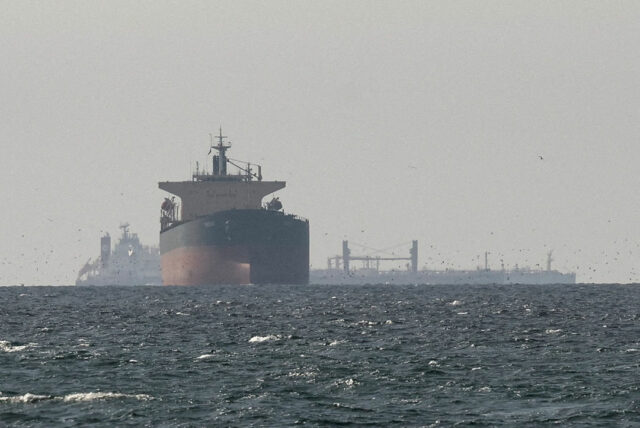
Tankers sail in the Gulf, near the Strait of Hormuz, as seen from northern Ras al-Khaimah, near the border with Oman’s Musandam governance, amid the US-Israeli conflict with Iran, in United Arab Emirates, March 11, 2026. — REUTERS

BUSINESS GROUPS urged the government and industry to obtain stocks of oil and fertilizer during the two‑week Iran War ceasefire, during which cargo ships are expected to be allowed to transit the Strait of Hormuz.

In a statement late Wednesday, the Philippine Chamber of Commerce and Industry (PCCI) called the ceasefire “an opportunity for the Philippines to secure vital imports. We need a buffer stock for any possible disruptions,” PCCI President Ferdinand A. Ferrer said.

“We see this temporary opening as a critical to stabilizing global oil prices,” he also said.

Nearly 20% of the world’s oil and liquefied natural gas transit the Strait of Hormuz, which closed in March when fighting broke out in Iran following attacks by the US and Israel.

The reopening of the strait provides an opportunity for exporters and importers to stabilize logistics schedules, clear backlogs, and mitigate further cost escalations, Philippine Exporters Confederation, Inc. (Philexport) President Sergio R. Ortiz-Luis, Jr. said.

However, it will provide only temporary relief to exporters, he said in a statement on Thursday.

“The two-week reopening may help temper these pressures, but the organization cautions that volatility in fuel prices and insurance premiums for vessels transiting high-risk areas may persist beyond this period,” Philexport said.

Uncertainty about the accessibility of key trade routes underscores the vulnerability of global supply chains to disruption, Mr. Ortiz-Luis said. In particular, exporters are concerned that freight rates and delivery timelines remain unpredictable, directly impacting competitiveness, he noted.

“We urge government economic managers to take proactive steps to cushion the impact on exporters and the broader economy,” Mr. Ortiz-Luis said.

This includes monitoring fuel price movements; exploring targeted support for affected sectors; and boosting engagement with international partners for the continued flow of trade, he noted.

President Ferdinand R. Marcos, Jr. said on Wednesday that the Philippines will “take full advantage” of the two-week Middle East ceasefire, as it looks to increase fuel stocks and ease costs. — Beatriz Marie D. Cruz

ADVERTISEMENT
ADVERTISEMENT