


Home Blog Page 4507

BMW XM now here

The BMW XM is a plug-in hybrid that offers both high performance and premium appointments. — PHOTO BY KAP MACEDA AGUILA

Brand’s first electrified performance vehicle is priced at P15.89 million

SMC ASIA CAR Distributors Corp., official importer and distributor of BMW in the Philippines, has now made available the BMW XM. Described by company president Spencer Yu as “the epitome of power, luxury, and sustainability in the M car lineup,” the XM is a plug-in hybrid electric model that demonstrates BMW’s “dedication to a greener future.”

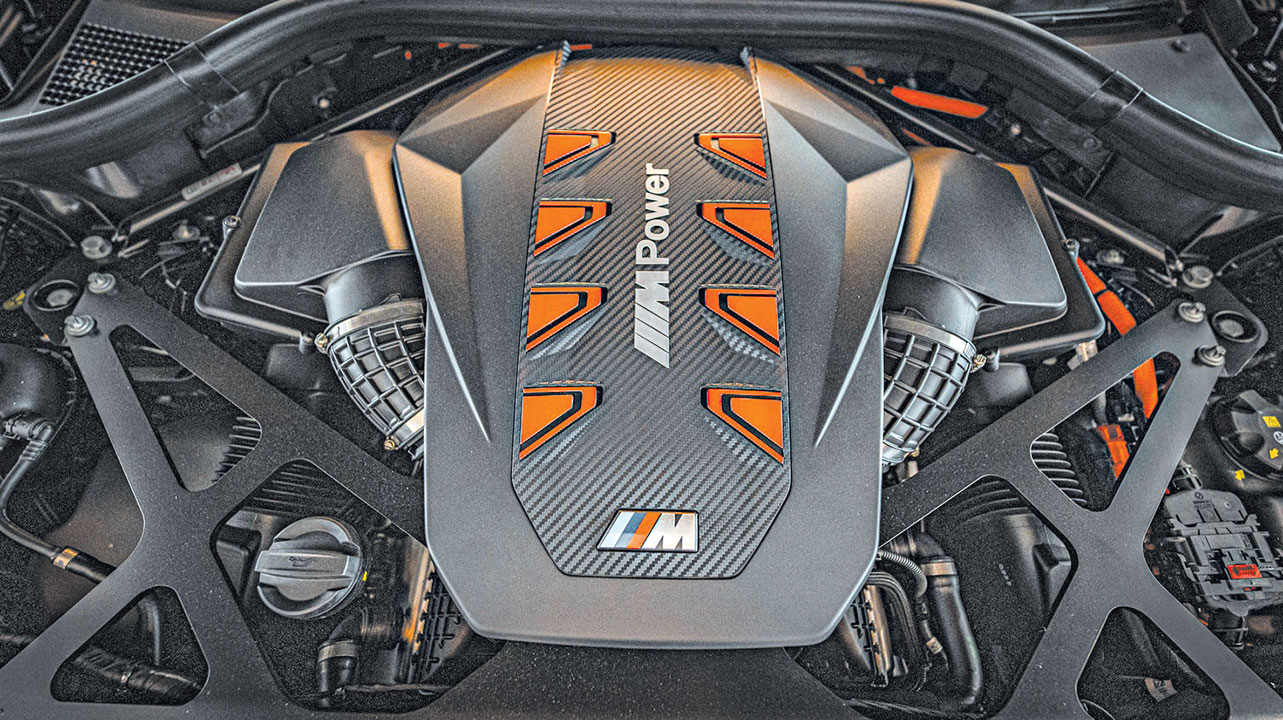
Primarily powering the SUV (or Sport Activity Vehicle in BMW parlance) is a 4.4-liter V8 with M TwinPower Turbo technology delivering 653hp. This is supplemented by an electric drive system churning out 197hp. The motor is integrated into the eight-speed M Steptronic transmission. The M Hybrid drive system produces maximum overall torque of 800Nm, and a pre-gearing stage increases the electric motor’s effective maximum torque to 450Nm at the transmission input.

BMW said that the XM “is defined by an immense build-up of power that begins instantaneously and is sustained throughout the rev range,” enabling the vehicle to sprint from a standstill to 100kph in 4.3 seconds. The exhaust system features electronically controlled, continuously adjustable flaps and hexagonal dual tailpipes arranged one above the other for the first time on a BMW M model. The M Hybrid button on the center console is used to select one of three operating modes, including an Electric setting for cruising with zero local emissions at speeds of up to 140kph and over a maximum distance of 82 to 88 kilometers in the WLTP cycle. It uses a lithium-ion high-voltage battery mounted in the car’s underbody delivering 25.7kWh of usable energy. The Combined Charging Unit in the BMW XM enables AC charging at up to 7.4kW.

The BMW IconicSounds Electric developed in a collaboration between the BMW Group and film score composer Hans Zimmer creates “a suitable backing track for the electric motor’s power delivery,” while the M-specific electric drive sound provides feedback to inputs on the accelerator pedal when driving in the locally emission-free operating mode. If the Sport or Sport Plus setting is selected while the drive system is operating in Hybrid mode, a boost sound will underline the electrical assistance being provided to the combustion engine.

The power generated is channeled to the road via the all-wheel-drive system M xDrive, whose rear-biased setup is particularly noticeable in 4WD Sport mode. Drivers can also select the 4WD Sand mode, designed specifically for driving over dunes and similar surfaces. Operation of the M Sport differential in the rear axle is also fully variable.

Outside, the XM dons the looks of a modern BMW SAV with powerful contours, a dynamically stretched silhouette, M-typical design cues, a reworked interpretation of the front-end look created for BMW’s luxury-segment models, and a host of distinctive accents.

In the cabin, the XM delivers a feeling of space — employing high-quality materials and featuring extravagant design to transform the rear into an “exclusive M Lounge.” The interior is equipped with BMW Leather Merino with extended contents in Deep Lagoon upholstery and carbon fiber interior trim finishers for the upper sections of the instrument panel and door panels. Heated backrests extending well into the sides of the rear compartment and specially designed cushions offer passengers luxurious levels of comfort. The sculptural headliner is unique with its three-dimensional prism structure, photo mount-style border, and 100 LED units for illumination.

The cockpit and front seats are designed entirely around an active driving experience. Standard specification includes M multifunction seats, knee pads and a model-specific M leather steering wheel, along with M-specific graphics including shift lights for the BMW Widescreen Display and BMW Head-Up Display.

The XM has ambient lighting, four-zone automatic climate control, and a Bowers & Wilkins Diamond Surround Sound System. The surround audio system with studio-quality acoustic technologies and 3D audio via speakers in the headliner are installed in the BMW XM with an overall power of 1,475W and over 20 loud speakers dispersed around the vehicle. The Travel and Comfort System are also included as standard features in the first-ever BMW XM.

The BMW XM retails for P15.89 million. Purchase also includes a five-year BMW factory warranty, and a BMW Wallbox Charger which will be installed in the customer’s home free of charge.


Barbie: the movie

What is a movie review on a hyped-up PG-13 rated bio-flick about a child’s doll doing in an opinion column in a business newspaper?

This is just an opinion of a former professor of business administration at the MBA level, whose basic liberal arts education in literature and the arts has acknowledged other perspectives in the conundrum of “Art imitating Life” or “Life imitating Art.” Mainstream and social media are already deluged with reviews and comments for and against the form and substance of the Barbie movie, and conspiracy theories abound on the grand scheme of the marketers of the product riding on the eternal gender equality issues since Adam and Eve in the Garden of Eden.

Barbie: the movie is an interesting marketing case study, as it would be dissected in an MBA class. But more than just for showing marketing strategy as it has used the art form that is the movie, it must be analyzed for its substance — which is the message the movie will convey to its audience at various levels from intuition to enlightened passion for or against the issues raised.

The Barbie movie audience is 66.2% female and 33.8% male, according to thewrap.com. It said 74.6% of viewers are under the age of 29 (Gen Z), while 16.9% are Millennials (30-39 years old) and 8.5% are Gen X (40+ years old). As of Aug. 3, 2023, Barbie has grossed $406.4 million in the United States and Canada, and $429.3 million in other countries and territories, for a worldwide total of $835.7 million, according to Barbie IMDb. It is expected to reach a $1-billion record-breaking box office success and set the record for any film that was not a sequel, remake or superhero property.

The main character in the movie is Barbie, an 11.5” molded plastic toy doll with a stylized adult female body with big pointy breasts, teeny-tiny waist, and overly long shapely legs on tiptoes (for high-heeled shoes).  Barbie’s pretty smiling face crowned with comb-able long fiber-hair perfects what might be the conditioning of a child’s mind of how she should look, when she grows up.

Barbie was created by Ruth Handler in 1959, when she and her husband Elliot decided to expand their little business of making dollhouses on a contract basis. The revolutionary adult Barbie doll concept was modeled on “the German Bild Lilli doll, a risqué gag gift for men based upon a cartoon character featured in the West German newspaper Bild Zeitung, Britannica says. And the Handlers approached the toy company, Mattel, to manufacture Barbie, launched on March 9, 1959.

But marketing the sexy, adult Barbie doll was a problem for Mattel.  “Mothers in a 1958 Mattel-sponsored market study before the doll’s release criticized Barbie for having ‘too much of a figure.’ Mattel circumvented this problem, however, by advertising Barbie directly to children via television. Mattel, in fact, upon sponsoring Walt Disney’s Mickey Mouse Club program in 1955, became the first toy company to broadcast commercials to children.” Britannica adds.

Barbie-scaled peripherals, i.e., clothes, jewelry, cars, fully equipped dollhouses, cars and even backdrop/settings were advertised and sold briskly in the US and international markets (but not manufactured in the US to avoid higher labor costs, according to Britannica). In 1961, Mattel brought out the male Ken, Barbie’s ultimate “accessory” who was not really her boyfriend.   Midge, Barbie’s best friend, came next, and in 1964 Barbie’s little sister, Skipper and other siblings. By 1968 Barbie had “friend” dolls of color and in 1980 Barbie herself had an African-American incarnation, and then came a Latina Barbie.

From the late 1970s through the 1980s the social issues on gender equality rose to fever-pitch, specially because of the global financial and economic crises, and the discriminatory “glass ceiling” for women in the workplace.   Marketers of the Barbie doll jumped into the fray of gender discrimination issues and came up with Barbies costumed for different professions and jobs, from being a utility service person to an astronaut, a wildlife conservationist, a United Sates Air Force pilot, a news anchor and an astrophysicist. To date, Barbie has had over 200 jobs, according to today.com.

“You can be anything you want! No dream’s impossible, because you’re unstoppable,” the official music video of Barbie Magical Dream Camper chants to mesmerize Barbie fans and fans-to-be. And that’s the point of Barbie: the movie.  You, every woman, can be like me, Barbie — you can be anything you want to be.  Watch me!

In the movie, the original blonde, blue-eyed, reed-thin but big boobs Barbie doll wakes up to her usual perfect day in her perfect Barbie Land with perfect girl buddies in varied roles who are perfect personality replicas of her perfect self.  One blight in Barbie Land might be the existence of not-so-perfect males led by the original Ken and Ken replicas in various attires mostly for leisure and play.  Note that not one Ken is marked as a respected professional or a VIP, unlike the Barbies who display empowerment and a take-charge attitude toward what happens next. “Barbie has a great day every day. But Ken only has a great day if Barbie looks at him” — the introductory annotations (voiced by Helen Mirren) say it so clearly in the opening scenes.

Tickly romance is definitely out of the question for Barbie when Ken asks the loaded question, “Can I see you tonight?”  “(No), it is ‘girls’ night (as every night is girls’ night),” Barbie replies flatly. And that’s when Barbie decides to cross over to the real world to test her empowerment and self-sufficiency and sadly learns about defeat and dying.  And she takes to the real world with Ken in tow (she’s driving).

The tragedy for Barbie is finding the role reversal between her and Ken in the real world. Ken is awakened to the power of possession — fancy cars and mammoth vehicles like Hummers, jewelry and land, with his own “Kendom” exclusive only to male friends. His attire to match his vanity for his newfound power is a floor-length pristine white mink coat, same as that worn by Silvester Stallone in the movie Rocky. He maximizes on the “patriarchy” (male dominance) in the real world, where women serve and cater to men’s pleasures.  Barbie is shocked that women willingly accept subservience and would even want to be attractive to men. Or that some women can hate or envy other women.

Ken proposes a “constitution” to take over Barbie Land. Barbie refuses.  She then  meets the pre-adolescent Sasha who used to play with her Barbie doll in her childhood, and Sasha’s mom Gloria, a sympathetic Mattel employee who helps whisk Barbie from the all-male Mattel executives who are chasing her to “put her back in the box” and return her to Barbie Land.

The experience with the real world has shattered Barbie’s self-confidence. “I am not good enough for anything,” she says to the spirit of Barbie Land — Ruth Handler herself, Barbie’s own creator. Gloria echoes the same, speaking as a “human”:  “You can’t be the greatest, and not too great.  Everything is your fault.” Her daughter Sasha, who had openly rebelled against her, at last embraces her in poignant realization and acceptance of her not-so-perfect mother’s perfect love for her.

Barbie decides to return to the real world and become human.  First, she sets up an appointment with a gynecologist.

Critic Peter Debruge in Variety Magazine was candid, praising the humor “for giving permission to challenge what Barbie represents” and lauded Gosling’s physical performance, but concluded that the film is “an intellectual experience, not an emotional one, grounded largely in audience nostalgia.”  The nostalgia that drew the crowds (two-thirds female, three-fourts under 29 years old) validated the winning marketing strategy for Mattel, more than rousing the passion and commitment for the protracted gender equality and nondiscrimination issues.

Katie Pickles of The Conversation observed that Barbie shows how “the matriarchy can be as bad as the patriarchy, with the Kens being the objectified and excluded sex in Barbieland.” Many reactors deplore the male-bashing that portrays a wimpy, jobless Ken in Barbieland and an arrogant and vain (but still jobless) Ken in his Kendom in the real world.

But what upset this writer the most in the Barbie movie is the gray, dreamlike opening scene (ala Stanley Kubrick in “2001”) where little girls are sitting in small chairs on a beach, quietly playing with their infant baby dolls, pretending to feed them and then gently caressing them to sleep.  A towering 10-feet-high Barbie, dressed in her signature striped swimsuit, suddenly appears in their midst, grinning down on them. Instead of being frightened by the Barbie giant, the little girl’s faces grimace into crazed violence as they smash their baby dolls against the rocks.  Enough of mother roles!

The dashing and splintering of the sacred primary role and duty of Woman as giver of life is too painful an exchange for independent self-determination and empowerment that some hard-core feminists might obsess for.  Something is wrong somewhere.

A successful marketing strategy cannot justify a flawed message.


Amelia H. C. Ylagan is a doctor of Business Administration from the University of the Philippines.

ahcylagan@yahoo.com

Upland rice farming touted as hunger prevention program

IRRI

DAVAO CITY — Former Agriculture Secretary Emmanuel F. Piñol said upland rice farming on small plots could serve to mitigate hunger among farmers.

The “Kalahating Ektarya sa Bawat Pamilya (A half hectare for every family)” program (KEBP) will involve both hybrid and inbred rice, and is designed to address a possible downturn in production due to the prevailing El Niño.

Ang focus nito ay may makain ang pamilyang Pilipino in the rural areas kasi sila ang pinaka vulnerable whenever the prices of commodity goes up (The focus is for rural families to have something available to eat because they are the most vulnerable whenever rice prices rise),” he said.

Mr. Piñol, who is also a former chairman of the Mindanao Development Authority, said the recommended hybrid seed variety is the Tatag TH82 (mestizo 51 NSIC 350H) alongside AMO Foliar Fertilizer and chicken manure slurry. The combination has a target yield of at least two metric tons per half hectare, ultimately yielding 1,200 kilos of milled rice or 24 50-kilo sacks of rice.

According to Mr. Piñol, other ways of cushioning the expected rice shortage include the repair and rehabilitation of irrigation systems, especially those used for communal irrigation, and maximum use of high-yielding hybrid and inbred seed to increase production, including the Inbred RC 222 variety.

He urged all companies in the hybrid rice seed industry to conduct an inventory of the seed supply.

He said upland areas benefit from high moisture and regular rainfall even during El Niño events.

Mr. Piñol said the program will engage local government units to use their development and calamity funds to prepare for the impending rice crisis by aiding farm families in planting rice for their own consumption during the crisis and eventually as an eventual component of a broader food security strategy.

The KEBP initially targets North Cotabato’s upland rice areas in Arakan, Antipas, President Roxas, Magpet, Kidapawan, Makilala, Tulunan, M’Lang, Matalam, Aleosan, Midsayap, Libungan, Pigcawayan, Alamada, and Banisilan, where upland rice farming had long been practiced.

“For every farm family in the highlands or in non-irrigated but water supply-accessible areas, seed good for half a hectare will be provided along with the needed inputs for land preparation, fertilization, and plant care,” Mr. Piñol said.

Mr. Piñol created the program in partnership with Seedworks Philippines, a company that is promoting TH82.

According to Remus Morandante, vice-president of Seedworks Philippines, with TH82 farmers can enjoy high yields despite the many biotic and abiotic stresses affecting rice farming.

TH82 has a proven tolerance to intermittent drought and is applicable for direct and dry seeding cultures.

Seedworks, a plant science company, is engaged in the research, production, and marketing of rice, cotton, millet, mustard, and vegetables that grow even in adverse weather and soil conditions. — Maya M. Padillo

Weavers, start your looms

Likhang Habi Fair returns with two flagship weaving competitions

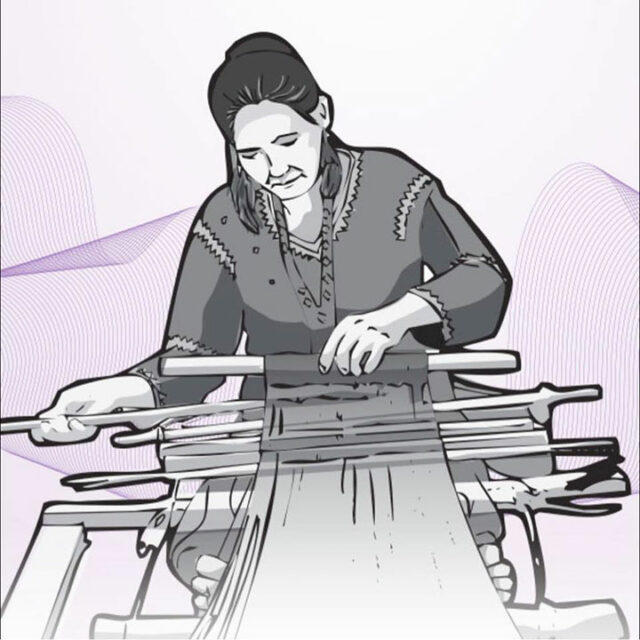
HABI: The Philippine Textile Council launches the sixth edition of the Lourdes Montinola Piña Competition, and the second Eloisa Hizon Gomez Abaca Competition.

A yearly highlight of the Likhang Habi Fair, which will be held October 13-15 at the Glorietta Activity Center in Makati City, the piña (pineapple leaf fibers woven into a translucent fine material used for formalwear) competition is the country’s premier piña weaving contest. Named after local textile champion Lourdes Reyes-Montinola, chair emeritus of the Far Eastern University, the competition invites local artisans from all over the Philippines to join and proudly exhibit their talents in weaving, dyeing, embroidering, and embellishing piña. The competition aims to keep this traditional craft alive, as well further promote appreciation and use of Philippine textiles.

Interested participants should submit a panel of their creation at least two meters long, along with a detailed description of the work, and a photograph of the weaver with their entry. More than 50% of the cloth’s body must be made of piña.

Three major winners will be selected, and two weavers will be granted special awards including the Innovation Award from Len Cabili of Filip+Inna.

Last year’s winning weavers all came from Kalibo, Aklan: Ursulita de la Cruz, whose design “Kahel” featured pure piña liniwan with sinuksok detail in orange, green, and white; Delara Eliserio, a 13-year-old who created a checkered pattern piña design titled “Sorbetes”; Melanie Palmon, who created piña silk with scattered suksuk; Marilyn Almario and her piña linen yarn and silk with a double weave and pocket details; and Rosabelle from Balete, who created piña silk with all-over sinuksok and tablero renggue.

Another highlight of the upcoming Likhang Habi Fair is the Eloisa Hizon Gomez Abaca Weaving competition, which celebrates the well-loved and versatile abaca fiber, globally known as Manila hemp.

The competition, now on its second year, is inspired by its namesake — a prominent Kapampangan who actively encouraged the use of Filipino textiles, and is mother to popular 70s fashion designer-turned-monk Gang Gomez, now known as Dom Martin Gomez, OSB. Last year, the contest attracted 13 entries from South Cotabato, Aklan, Davao, and Bicol — a roster that Habi aims to expand as it renews its call for entries this year.

Winners of last year’s Eloisa Hizon Gomez Abaca Weaving Competition include Nening Tuan, whose entry featured a traditional pattern on a cloth made of doun basag (palm leaf) woven  on a backstrap loom with abaca filament, and dyed using T’boli ikat technique; Rolly Arboleda, who won two awards for his pure abaca circular fabric and pure abaca fino barong; Annaliza Angcoy, whose design titled “Hafak Menual” depicted the wings of an eagle, woven on a back strap loom with abaca filament and dyed using the T’boli ikat technique; and Rhoda Rose Monon Dillera, who created an inabal design (inherited from Salinta Monon, Recipient of the Gawad Manlilikha Award in 1998) woven on a backstrap loom with abaca fiber and dyed using the Bagobo Tagabawa ikat technique.

Three awards will be given to participating artisans, who can work either individually or as part of a group.

Interested participants can enter their abaca creations under the following contest categories: Woven – Pure Abaca; Woven – Abaca Blended (at least 50% abaca plus other fibers); and other applications (e.g. macrame, flat, or three-dimensional). Cloth entries should be at least six yards long and 30 to 36 inches wide or the maximum width of a backstrap loom.

Aside from exhibiting their entries, weavers can also sell their creations at the Likhang Habi Fair. Those interested in doing so must indicate their selling price. All entries for both competitions must be submitted to the Habi: Philippine Textile Council Office at 962 May Street, Mandaluyong City.

The deadline for submissions is on September 30, 2023. Interested parties may call Habi: The Philippine Textile Council at 0921-849-6974 or send an e-mail to support@habiphilippinetextilecouncil.com for more information.

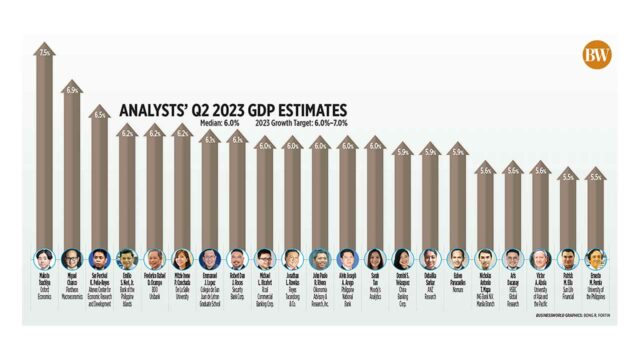
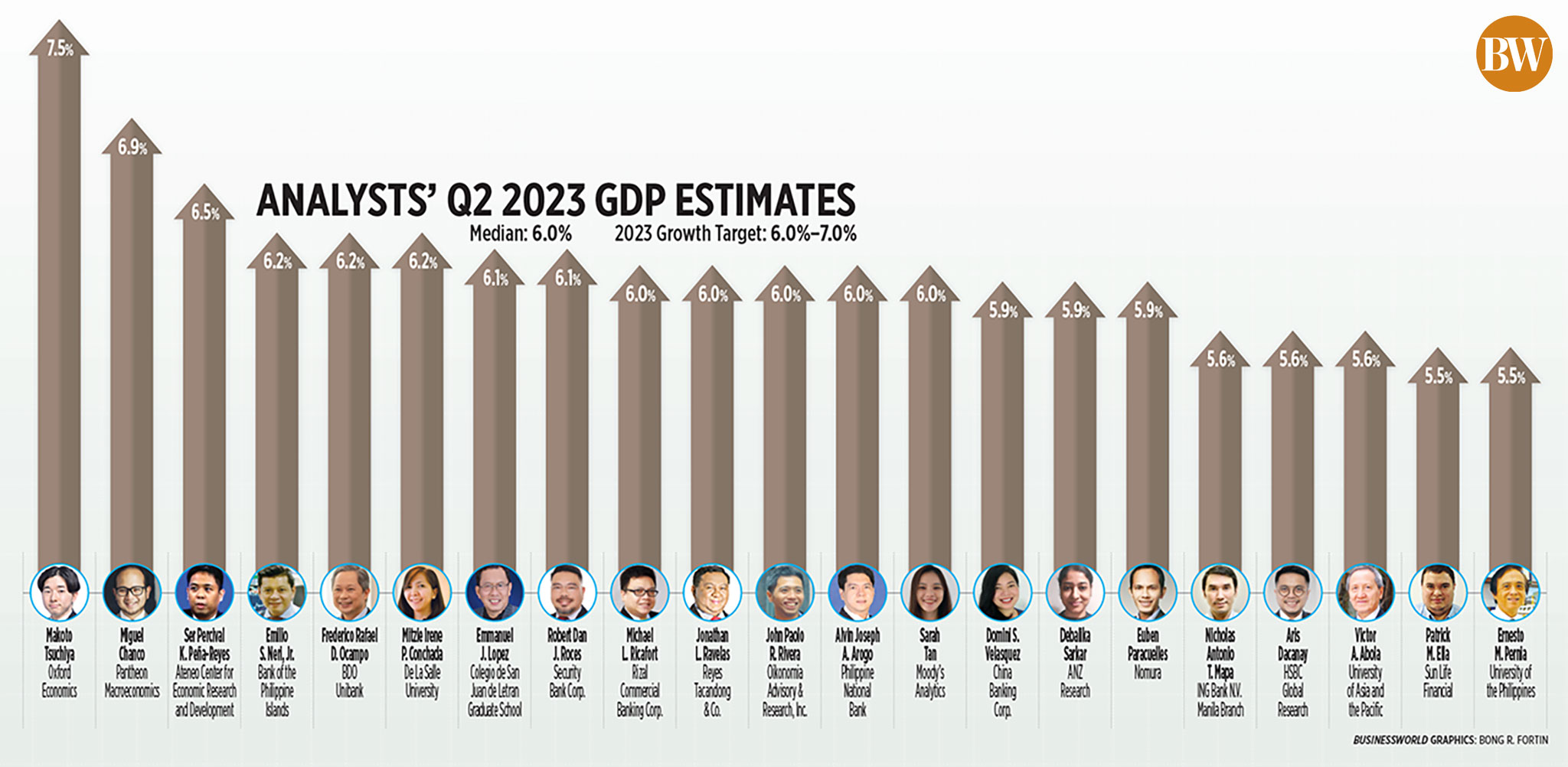
Analysts’ Q2 2023 GDP estimates

PHILIPPINE ECONOMIC GROWTH likely moderated in the second quarter as still-elevated inflation and high borrowing costs continued to dampen consumption. Read the full story.

China’s July economic losses from disasters exceed January-June

BEIJING — China’s direct economic losses from natural disasters surged to 41.18 billion yuan ($5.74 billion) in July, more than in January to June combined, driven by severe weather as two powerful typhoons hit the country in one month.

The impact of floods, while common in China in summer, has grown more pronounced this year, affecting over seven million people nationwide in July, when Beijing was struck by the worst rains in 140 years after the capital’s hottest June on record.

August, when rainfall usually peaks and summer temperatures soar, is set for further economic impact from floods and heatwaves. Rainfall in northeastern provinces could be as much as 50% higher than normal in August, China’s national forecaster have warned.

July losses from Typhoon Talim, which landed in southern China in the middle of the month, were 2.61 billion yuan, while losses from the more destructive Doksuri, the remnants of which are still being felt in northeastern China, reached 14.74 billion yuan as of the end of July, the Ministry of Emergency Management said in a statement late on Friday.

Overall losses, compounded by damage from floods in southwest and northwest China, far exceeded the 38.23 billion yuan in the first half of 2023, and pose an unexpected drag on quarterly growth in the world’s second-largest economy, which is already in want of stimulus. — Reuters

MMPC, MarCoPay make vehicle purchase easier for seafarers

IMAGE FROM MITSUBISHI MOTORS PHILIPPINES CORP.

MITSUBISHI MOTORS Philippines Corp. (MMPC) and MarCoPay, Inc., a Nippon Yusen Kabushiki Kaisha (NYK) group company that operates the MarCoPay financial platform for seafarers, recently entered into an agreement to promote new vehicle sales to Filipino seafarers on MarCoPay’s mobile app.

The Philippines is one of the world’s leading providers of seafarers, with approximately 200,000 seafarers on oceangoing cargo ships being Filipino. In Japan’s merchant fleet, about 40,000, or 70% of all seafarers on board, are Filipino. Typically, they disembark after several months to six months or more on board, take a leave of absence, then return for another multi-month stint on board.

In a release, the companies said that while Filipino seafarers have a solid need to purchase vehicles, they need help getting approved by banks for vehicle loans because, even though they earn well above the average income in their home country, they are considered term employees on a per-ship basis or are classified as expatriates and subject to complicated paperwork.

MarCoPay, Inc., established in 2019, mainly targets Filipino seafarers with payroll payment in electronic currency, remittance and exchange functions, and preferential conditions. MarCoPay is a financial platform that introduces various types of loans and insurance. In 2022, it partnered with banks in the Philippines to offer MarCoPay-affiliated loans to improve the approval rate of auto loans for seafarers. MarCoPay’s affiliated loan program offers many benefits to seafarers, such as MarCoPay acting as an intermediary between seafarers and banks to negotiate for auto loan approvals, and offering auto loans and auto insurance products with some of the lowest interest rates in the Philippines.

MMPC and MarCoPay will match their services to strongly encourage loan approvals and vehicle purchases for Filipino seafarers. A special MMPC page will appear in the MarCoPay app to help seafarers research the purchase of new Mitsubishi Motors vehicles and apply for a MarCoPay-affiliated loan. The two companies will collaborate to continuously offer exclusive promotions and services which can only be experienced through this type of loan. Meanwhile, MMPC expressed its commitment to expanding and improving its services to enrich the vehicle-related lifestyles of its customers, and MarCoPay will further strengthen cooperation with its partner banks and strive to establish benefits, such as a pre-approval system that will enable seafarers considering the purchase of a vehicle to obtain a loan more smoothly and with a higher probability.

Motor vehicle road user’s tax

PHILIPPINE STAR/MIGUEL DE GUZMAN

In his State of the Nation Address (SONA) on July 24, 2023, President Marcos announced the motor vehicle road user’s tax as an essential measure under the medium-term fiscal framework.

Given the urgency of addressing the country’s need for greater fiscal space, the House committee on ways and means promptly tackled House Bill No. 376 at its first meeting after the SONA.

The measure is authored by Albay Rep. Joey Salceda, who heads the committee. His bill aims to update the existing motor vehicle user’s charge with a simpler and more responsive tax structure on motor vehicle road users.

Reforms on this front have been long overdue since the motor vehicle user’s charge rates were legislated in 2004 and have not been adjusted to inflation. Had indexation been automatically applied, about P114 billion could have been generated over the past 18 years. Furthermore, the existing charge structure consists of 23 different tax rates, making things unnecessarily complex and difficult to implement.

Rep. Salceda’s bill is projected to generate an additional P13.5 billion in the first year of its implementation and up to P64 billion by the third year. More importantly, the reform is not merely a revenue-generating measure as it also aligns with principles of social justice and progressivity.

For one, this measure is fundamentally a tax on the rich. Over half of the richest decile of households own at least one car, according to data from the 2021 Family Income and Expenditure Survey. Meanwhile, the car-owning proportion of the next decile with the highest income (9th decile) falls to about 17%. For the poorest 30% of households, only 1.6% likely own a car.

Thus, increasing the rates on motor vehicles is highly progressive. Salceda’s proposal furthers this by levying a higher rate on sports utility vehicles.

Additionally, the bill will exempt motorcycles from the tax, which likely stems from the perception that these are consumed by lower-income households. Perhaps the principle of progressivity can nuance this feature by taxing the big bikes that are more likely to be luxury or nonessential. But we also argue that taxing all motor vehicle road users, including motorcycles, is socially and economically justified because they all contribute to what economists call negative externalities such as traffic and pollution.

While it is obvious that the burden of a motor vehicle tax falls mostly on the rich, we must also carefully weigh the equitability of the government’s current expenditures on the road sector.

The University of the Philippines School of Urban and Regional Planning says 70% of people in Metro Manila rely on public transportation, while taking up just 22% of the space. Meanwhile, only 30% are private vehicle users, but they take up 78% of the space. An efficient transportation system is necessary to facilitate economic growth and development. Conversely, inequitable transport policy may exacerbate economic inequalities.

Not only do the benefits of our existing road infrastructures skew toward the rich, but the cost of these programs is also effectively subsidized by government resources.

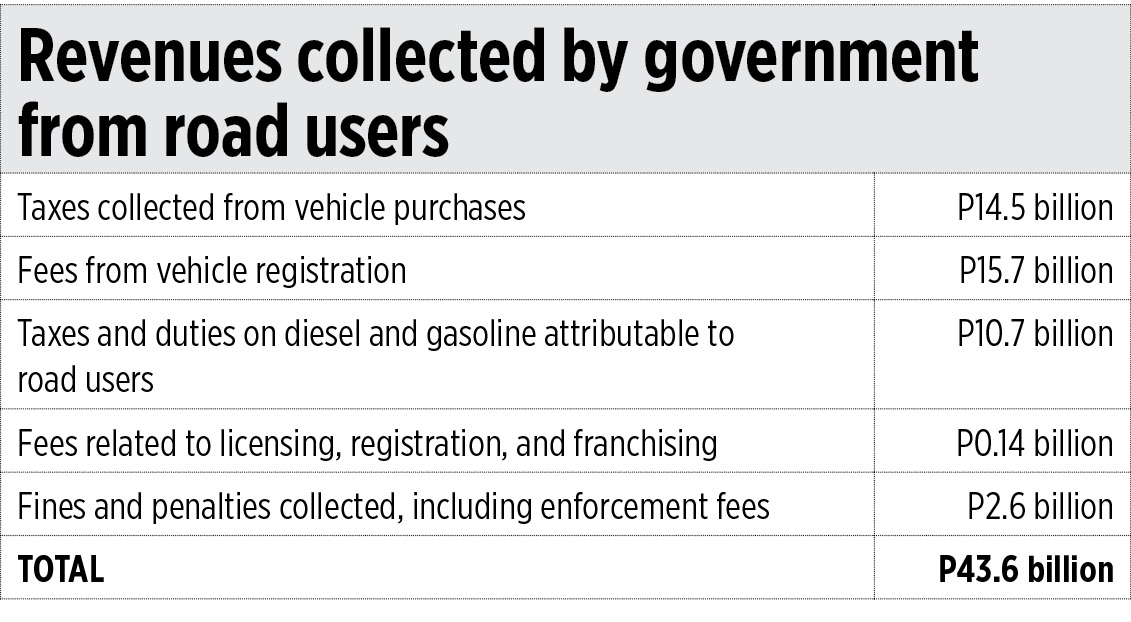
The government collected about P14.5 billion from taxes related to vehicle purchases, such as automobile excise taxes and value-added tax (VAT), based on 2019 data from the Bureau of Internal Revenue, Land Transportation Office (LTO), Land Transportation Franchising and Regulatory Board (LTFRB) and Metro Manila Development Authority (MMDA). Vehicle registration fees generated about P15.7 billion. Gasoline and diesel taxes generated P37.2 billion in total revenue, but we attribute just P10.7 billion or less than 30% to road users, based on the country’s petroleum demand profile. Including other fees collected as well as fines and penalties, the total fiscal resources generated from road users amounted to P43.6 billion in 2019.

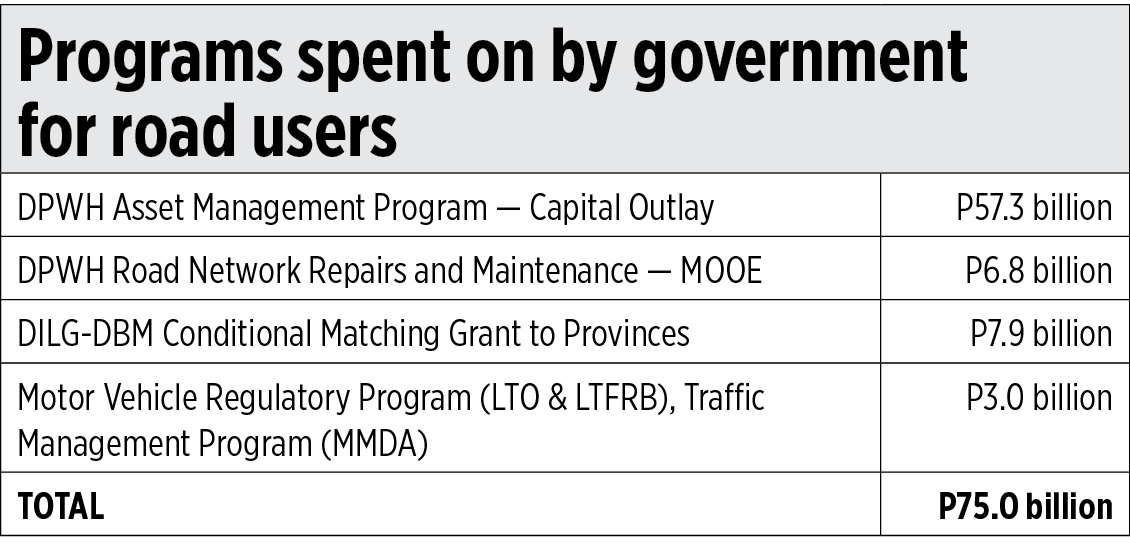
On the other side of the equation, the 2019 General Appropriations Act allocated P75 billion to benefit road users in the form of road repairs and construction, traffic management and general regulation. This included P57.3 billion worth of capital outlays for construction of road networks and P6.8 billion in maintenance and operating expenditures for the road network repairs and maintenance program of the Public Works department; P7.9 billion for the Conditional Matching Grant to Provinces initiative to implement road construction, repairs and rehabilitation; and nearly P3 billion allocated for the regulatory and management programs of the LTO, LTFRB and MMDA.

The net result is that road users are subsidized to the tune of at least P30 billion every year. Unfortunately, revenues from motor vehicle user’s charge have only eroded due to inflation, while the cost of road infrastructure has risen over time.

Deliberations on the motor vehicle road user’s tax are on the right track; the ways and means committee is receptive toward proposals to increase allocations that will benefit people and not just cars. These should include greater emphasis on active transport, road safety and public transportation such as PUV modernization.

Given Salceda’s demonstrated political adeptness in swiftly shepherding the President’s priority tax measures and his support for more progressive policies, we anticipate that the motor vehicle road user’s tax bill will get public support.

Given the above, too, Rep. Salceda will likely go the extra mile to champion further tax reforms. These include taxes on alcopops, vapes and nonessential goods, among other products. The additional revenues from the different tax measures are necessary to create the fiscal space and fund urgent social programs that the administration has identified.


AJ Montesa heads the tax policy team of Action for Economic Reforms.

BDO slips as US credit rating downgrade affects PHL market

BW FILE PHOTO

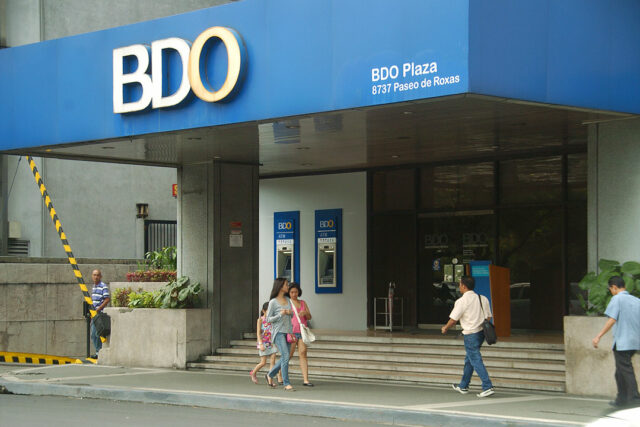
BDO Unibank, Inc. inched down last week after the United States’ credit rating downgrade affected the local market, eclipsing the bank’s strong financial results.

A total of 13.13 million BDO shares worth P1.90 billion were traded from July 28 to Aug. 4, data from the Philippine Stock Exchange (PSE) showed.

The Sy-led bank’s share price finished at P141 apiece, 4.1% lower than its July 28 close of P147 each.

Year to date, the stock’s price rose by 33.4%.

“While BDO’s strong results could have led to some positive reactive moves, we think that much of the price action this week was driven by external factors,” Rastine Mackie D. Mercado, research director at China Bank Securities Corp., said in an e-mail.

These external factors, he said, include the broad market risk-off sell-off last week following Fitch’s downgrade of the US credit rating.

“We also think that some investors treated BDO’s earnings release as a ‘sell-on-news’ opportunity to take some profit,” Mr. Mercado added.

Japhet Louis O. Tantiangco, senior research analyst at Philstocks Financial, Inc., said investors focused on the Fitch move despite the bank’s “impressive” financial results.

“The downgrade has negative implications for the US and consequently the global economy which is why investors opted to exit the market last week,” he said in a Viber message.

BDO reported last week that its consolidated net income soared by 52.6% year on year to P18.72 billion in the second quarter.

Its attributable net income, likewise, grew by 53.2% to P18.70 billion from the P12.21 billion booked in the same period last year.

This brought the attributable net profit in the first semester of the year to 47%, higher than the P23.94 billion posted in the January to June period in 2022.

Meanwhile, debt watcher Fitch downgraded the US government’s top credit rating, Reuters reported, a move that garnered an angry response from the White House and surprised investors, coming despite the resolution of the debt ceiling crisis two months ago.

Fitch lowered the US to AA+ from AAA, citing fiscal deterioration over the next three years and repeated down-the-wire debt ceiling negotiations that threaten the government’s ability to pay its bills, Reuters said.

The downgrade made Fitch the second major rating agency after Standard & Poor’s strip the country of its triple-A rating.

For Mr. Tantiangco, the bank’s lending operations will remain healthy and be sustained in the second half of the year.

“BDO’s full-year net income attributable could rise by 30.4% year on year while for the [third quarter], bottom line could increase by 22.5% year on year,” he said.

He added that from a historical standpoint, BDO is at bargain levels, which should make it compelling for investors.

For BDO, investors are expected to monitor the country’s bank lending data.

“If the growth continues in our bank lending, then this could spur positive sentiment for our banks in the market,” Mr. Tantiangco said.

For Mr. Mercado, prospects of continued top-line growth remain given the outlook of sustained loan growth, Net interest margin strength and fee income expansion can convince investors to consider BDO.

“While current valuations could lead to continuing near-term profit taking, we think that BDO could still have some room to eventually run higher.” 

He also added that the Sy-led bank has built a strong NPL (nonperforming loan) coverage to guard against potential adverse impacts to asset quality in case macro risks materialize.

He pegged BDO’s support and resistance at P141.80 and P150, respectively.

Mr. Tantiangco, on the other hand, placed support at the P140.00-P142.00 range and resistance at P150. — Abigail Marie P. Yraola

Cotabato farmers trained in VCO, coco water production

COTABATO PROVINCE

THIRTY FARMERS from Libungan, Cotabato Province have undergone training in virgin coconut oil (VCO) and coconut water production, provincial officials said.

The training was conducted by the Office of the Provincial Agriculturist (OPAg).

Provincial Advisory Council member Rosalie H. Cabaya said the training was designed to raise farmer incomes by preparing them to sell higher value-added products.

Governor Emmylou J. Taliño-Mendoza has said one of the goals is also to make Cotabato farmers practice sustainable agriculture.

Ms. Mendoza said the province is continuing to identify areas suitable for coconut plantations and to develop new technology for coconut manufacturing.

According to OPAg, Cotabato Province had 78,727 hectares deemed suitable for coconut plantations. — Maya M. Padillo

5 Tips for Sustainable Fashion

FAST FASHION, the mass production of disposable clothing manufactured within a short period, cements the field as one of the most polluting industries in the world. Designer and entrepreneur Roxoanne Bagano-Dizon of wedding atelier Roxoanne Bagano Couture confirmed this phenomenon contributes a considerable amount to social and environmental damage.

“It exploits human labor, degrades local economies and pollutes nature,” she explained. “While the traditional model involves raw materials, fast fashion utilizes synthetic and low-quality alternatives created rapidly.”

Ms. Bagano-Dizon, an educator under the Fashion Design and Merchandising (FDM) Program of the De La Salle-College of Saint Benilde (DLS-CSB) School of Environment and Design (SED), likewise expounded on the importance of sustainable fashion in this issue.

“It is designing, generating and distributing clothing with ethics in mind,” she stated. “Adopting this approach to both production and consumption can help reduce our footprint and lessen our impact on society.”

To guide the general public to contribute to this movement, Ms. Bagano-Dizon listed some choices one can consider to protect the environment, starting with their own wardrobes.

1. Shop smarter.

Before any purchases, ask yourself if you need it. Source from brands that adopt eco-friendly methods. Avoid clothes from synthetic materials. Choose organic, natural or recycled fibers.

2. Embrace minimalism.

Do not buy impulsively. Invest in timeless pieces which you can wear for a long time. Try to avoid short-lived trends. Make do with what you have.

3. Thrift.

Go for second-hand or consignment stores. You may find affordable and unique items. Consider swapping clothes with friends. You likewise divert clothes from landfills.

4. Rent.

Rent for special events. There are many online options for formal attire, designer accessories and even everyday wear. It likewise allows you to don outfits you cannot afford to buy.

5. Care.

Practice good clothing care habits. Wash in cold water, use eco-friendly detergents and air-dry. Follow the instruction label and avoid excessive laundering.

Judge allows US antitrust Google search claims to go to trial

REUTERS

WASHINGTON — A US judge hearing the Justice Department’s antitrust lawsuit accusing Google of unlawfully maintaining monopolies in the internet search market let stand key claims made by the federal government.

Google, a unit of Alphabet, had asked for summary judgment on all the government’s claims in the case.

US Judge Amit Mehta, in a decision made public in Washington on Friday, granted Google’s request on some grounds but allowed the remainder of the claims to proceed to trial next month.

The Justice Department sued Google in 2020, accusing the $1.6-trillion company of illegally using its market muscle to hobble rivals in the biggest challenge to the power and influence of Big Tech since it sued Microsoft Corp. in 1998.

Mehta is also hearing a case brought against Google by the attorneys general of 38 states and territories.

Mehta tossed out accusations brought by the states that Google made it harder for internet users to find specialized search engines, like Expedia for travel or OpenTable for restaurants, saying the states “have not demonstrated the requisite anticompetitive effect in the relevant market.”

Google said Friday it appreciated the court’s “careful consideration and decision to dismiss claims regarding the design of Google Search” in the case brought by the states. — Reuters

ADVERTISEMENT
ADVERTISEMENT