Home Blog Page 430

Lawmakers reposition as corruption row dogs Marcos

PRESIDENT FERDINAND R. MARCOS, JR. FACEBOOK PAGE

By Kenneth Christiane L. Basilio, Reporter

LAWMAKERS are expected to begin repositioning and quietly shifting allegiances this year as President Ferdinand R. Marcos, Jr.’s influence over Congress weakens, with a widening graft scandal complicating efforts to hold the ruling coalition together, political analysts said over the weekend.

Senators and congressmen are expected to start hedging as Mr. Marcos enters the “lame duck” phase, when presidential influence traditionally fades in the second half of a six-year term.

That decline, they said, is being accelerated by corruption allegations tied to government infrastructure projects, which have weighed on public trust and unsettled political alliances.

“The positioning for 2028 is already happening,” Ederson DT. Tapia, a political science professor at the University of Makati, said in a Facebook Messenger chat. “You can see it in who chooses to speak loudly, who suddenly rediscovers independence and who carefully avoids being too closely associated with unpopular decisions.”

Public support for the President has weakened. A December survey by the Social Weather Stations showed Mr. Marcos’ net trust rating slipping to -3 from +7 in September, reflecting growing frustration among Filipinos over corruption issues and governance concerns.

Congress is set to resume session on Jan. 26, with lawmakers returning amid lingering outrage over irregularities in flood control projects and looming impeachment complaints against both Mr. Marcos and Vice-President Sara Duterte-Carpio.

The administration is also pushing legislation it says will address corruption concerns and ease business conditions, even as scrutiny of public spending intensifies.

The Philippines ranked 114th out of 180 countries in the 2024 Corruption Perceptions Index, underscoring the depth of governance challenges confronting the administration. Analysts said that while bills framed as vital for economic recovery are likely to pass, tougher measures that threaten entrenched interests might struggle.

“Reforms especially those involving accountability, redistribution or entrenched interests may face stronger resistance,” Mr. Tapia said. “Legislators have begun to ask why they should absorb political risk for a President whose influence is perceived to be declining.”

Arjan P. Aguirre, a political science lecturer at the Ateneo de Manila University, said allies of Mr. Marcos might try to keep the coalition intact by distributing political favors and maintaining access to resources. However, he said this approach faces limits.

“The controversy surrounding flood control projects, increasing public demand for transparency in the budget process and growing resistance to discretionary funds all limit the administration’s room to maneuver,” he said via Messenger.

He added that the same scandal could also be used as a tool to enforce discipline within the ruling bloc.

“Many incumbents and established political families have been linked — directly or indirectly — to these projects during the 19th and 20th Congresses, making them vulnerable to political pressure,” Mr. Aguirre said.

Anthony Lawrence A. Borja, an associate political science professor at De La Salle University, said Mr. Marcos could still retain some control over lawmakers if corruption investigations remain credible and active.

“The President can maintain some semblance of control if the threat of being subject to corruption-related investigations remains credible,” he said in a Messenger chat. “If the corruption investigations intensify, then Mr. Marcos might get a better grip on legislators.”

Authorities have accused several government officials, politicians and private contractors of diverting funds meant for flood mitigation projects in a country frequently battered by typhoons. Some contractors and lower-level public works officials have been arrested, but no senior politicians have been detained so far.

Despite these pressures, analysts said a sudden collapse of the ruling coalition is unlikely. Instead, lawmakers are expected to move cautiously as they assess political winds ahead of the 2028 presidential race.

“Defections will come, but not immediately,” Mr. Tapia said. “What we are seeing first is hedging. Legislators are testing how far they can go without fully severing ties.”
Bonoan back in PHL, BI says

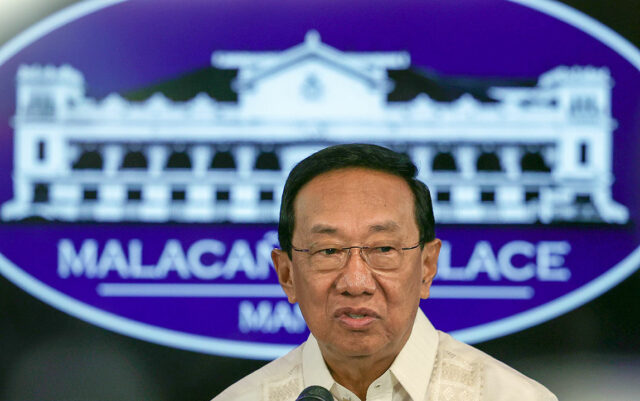
Former Public Works Secretary Manuel M. Bonoan speaks during a press briefing in Malacañang, March 14, 2023. — PHILIPPINE STAR/KRIZ JOHN ROSALES

FORMER Public Works Secretary Manuel M. Bonoan returned to Manila from the United States on Sunday, the Bureau of Immigration (BI) confirmed, amid ongoing inquiries into alleged anomalous flood control projects during his tenure.

“Bonoan arrived aboard China Airlines flight CI0701 from Taipei,” the BI said in a statement on Sunday. “Records indicate he left the country last year to accompany his wife for a medical procedure.”

Mr. Bonoan is subject to a travel lookout issued by the Department of Justice (DoJ) following legislative and executive scrutiny of purported ghost projects under the Department of Public Works and Highways. BI Commissioner Joel Anthony M. Viado said the bureau had already informed the DoJ of his arrival.

The former official is expected to attend a Senate Blue Ribbon Committee hearing on Monday, Jan. 19, after a subpoena was issued last week. Senate President Pro Tempore Panfilo “Ping” M. Lacson had noted that the subpoena could be withdrawn if the DoJ approved an extension of Mr. Bonoan’s stay abroad.

The senator earlier said that Mr. Bonoan had submitted documents to Malacañang that allegedly contained incorrect grid coordinates for thousands of flood control projects.

The DoJ had approved his request to remain in the US until mid-February, making his return ahead of schedule. — Erika Mae P. Sinaking

Bill resetting BARMM polls filed

@BANGSAMOROGOVT

A SENATOR has filed a bill setting the Bangsamoro Autonomous Region in Muslim Mindanao’s (BARMM) parliamentary elections in March 2026.

Under Senate Bill No. 1587, Senator Juan Miguel F. Zubiri proposed to set the BARMM election to March 30, with the elected officials’ term of office commencing at noon of April 30.

“It has been more than six years since the BARMM was established, and the Bangsamoro people have yet to exercise their power to elect their own leaders,” he said in a statement.

The bill mandates that the next BARMM parliamentary elections coincide with the 2028 national elections and should be held after three years.

It also orders the Commission on Elections, through the Bangsamoro Electoral Office, to promulgate rules and regulations for the conduct of the elections and enforce and administer it in pursuant to national law, the Bangsamoro Organic Law and the Bangsamoro Electoral Code.

The bill also states that the Bangsamoro Transition Authority (BTA) will continue as the interim government of BARMM during the extension of the Transition Period, unless the President replaces any interim members or their tenure is shortened by election to another office.

The interim members will serve until their successors have been elected and qualified in an automated election.

“It is very important that the BARMM elections proceed. Let us pray for the speedy enactment of our proposal so that preparations can be completed in March,” the senator said.

The BARMM was initially set to hold its first election in October last year, this was postponed following the Supreme Court’s ruling that declared as unconstitutional two laws passed by the BTA creating and reconstituting parliamentary districts. — Adrian H. Halili

DoF may secure loans for military modernization

THE Philippines’ Finance department is authorized to secure loans for modernizing the Southeast Asian nation’s armed forces, a congressman said on Sunday, a move that may give military planners fresh funding sources to sustain the buildup.

Lawmakers have authorized the Finance department chief to enter into loan agreements to fund the Philippines’ military modernization under the 2026 budget law, a power not previously allowed, House Minority Leader and Party-list Rep. Marcelino C. Libanan said.

“This special provision gives the national government greater flexibility to finance critical modernization projects in a timely and cost-effective manner,” he said in a statement. “Access to a mix of financing options — such as concessional loans, grants, or blended facilities — can significantly reduce costs and speed up project delivery.”

The Philippines is at the tail-end of its military modernization program called “Horizon,” which began in 2012 when tensions with China flared after a naval standoff at Scarborough Shoal in the South China Sea. Manila has earmarked about $35 billion for military upgrades in the next decade.

Mr. Libanan said the 2026 budget law allows the Finance department to “negotiate, contract, and enter into foreign and domestic financing arrangements, including but not limited to loans, grants, credit facilities, and blended financing mechanisms” for the military modernization program.

Any funding schemes need to have President Ferdinand R. Marcos, Jr. and the Monetary Board’s approval, he added. — Kenneth Christiane L. Basilio

BI deports Russian vlogger

INTERIOR SECRETARY Juan Victor C. Remulla announced the deportation of Russian vlogger Vitaly Zdorovetskiy during a press conference in Quezon City, Jan. 15. — PHILIPPINE STAR/MIGUEL DE GUZMAN

THE Bureau of Immigration (BI) has deported Russian social media personality Vitaly Zdorovetskiy after he spent approximately nine months in a Philippine detention facility following a series of incidents involving the harassment of local citizens.

In a statement on Sunday, the agency said 33-year-old Mr. Zdorovetskiy, known worldwide for his high-profile stunts and pranks, was flown to Irkutsk, Russia, on Jan. 17 via IrAero. 

The move concludes a months-long detention that began in April 2024 after the vlogger’s disruptive behavior in Manila’s Bonifacio Global City went viral, drawing significant public backlash and government scrutiny.

The deportation order, finalized by the BI Board of Commissioners in December, officially designated Mr. Zdorovetskiy as an “undesirable alien.” The agency said that during inquest proceedings, Mr. Zdorovetskiy admitted involvement in multiple acts, including harassing a security guard and commandeering a tricycle that resulted in a vehicular accident.

BI Commissioner Joel Anthony M. Viado said that he has been blacklisted, noting that foreign visitors must comply with Philippine laws and maintain public order. — Erika Mae P. Sinaking

PSA integrates Nat’l ID with USSC

PHILIPPINE STAR/ MICHAEL VARCAS

THE Philippine Identification System (PhilSys) or National ID is now integrated with Universal Storefront Services Corp. (USSC), aimed at securing identity verification for financial transactions such as remittances and bills payments.

In a statement on Jan. 16, the Philippine Statistics Agency (PSA) said it integrated the National ID with financial services provider USSC to boost financial inclusion.

“The integration allows the USSC to utilize the authentication services of the National ID to verify identity of clients availing financial services such as remittances, micro-insurance, bills payment, digital banking, and distribution of ayuda or social protection benefits,” it said.

USSC adds to the financial institutions already integrated with the National ID, such as HelloMoney, GCash, OwnBank, the Rural Bank of Cavite City, Inc., Salmon of Sunprime Finance, Inc., and Wise.

Jose Xavier B. Gonzales, president and chief executive officer of USSC, said the digital transparency anchored on the National ID would allow more accurate targeting of beneficiaries, minimize leakages, and strengthen confidence in subsidy distribution.

“We laud what you have done [with the National ID system]. We’d like to take [digitalization even further] so that you won’t need IDs [in transactions],” he said.
“You can walk into our store [and] do biometric [verification]. We can do e-KYC (Know Your Customer) for you and you can receive whatever you need to receive.” — Aubrey Rose A. Inosante

Lawmakers criticize flood probe

OPPOSITION lawmakers on Sunday criticized President Ferdinand R. Marcos, Jr.’s handling of a multi‑billion peso graft scandal, saying his claim that a fact‑finding probe was nearing its end would deprive Filipinos of accountability.

Mr. Marcos on Friday hinted the Independent Commission for Infrastructure’s (ICI) mandate may be nearing its conclusion, following the resignations of Commissioners Rogelio “Babes” L. Singson and Rossana A. Fajardo that left the body with a lone member.

“The Filipino people deserve better than this charade,” Party-list Reps. Antonio L. Tinio, Renee Louise M. Co and Sarah Jane I. Elago said in a joint statement. “They deserve genuine investigations that hold the powerful accountable, not toothless commissions designed to protect the corrupt elite.”

Mr. Marcos in mid-September created a fact-finding panel into billions worth of bogus flood control deals, which is tasked to investigate irregularities in public works projects involving substandard, incomplete or nonexistent infrastructure.

“The truth is, this administration does not really want to investigate the real masterminds of corruption in infrastructure,” the lawmakers said. “The ICI was created to deflect public outrage, not to pursue genuine accountability.” — Kenneth Christiane L. Basilio

Upland Nueva Vizcaya coffee farmers get P1M in aid

BAYOMBONG, Nueva Vizcaya — Coffee farmers in Barangay Talbek, Dupax del Sur, Nueva Vizcaya received a huge boost after P1.5 million worth of farm inputs and shared service facilities were turned over this week to support local coffee production.

The assistance, given to the Bugkalot Casecnan Coffee Farmers Association, was led by Governor Jose V. Gambito along with Department of Labor and Employment (DoLE) Provincial Director Elizabeth U. Martinez and Mayor Neil Magaway.

Officials said the support will help farmers grow more coffee, improve bean quality, and expand processing and marketing, allowing them to earn more from their harvests.

Ms. Martinez said the program will strengthen upland livelihoods and confirmed that more DoLE funding is lined up for Nueva Vizcaya in 2026 to support additional livelihood and job programs.

Dolly Rose C. Minas of the Office of the Governor said the aid is part of a P7.5-million DoLE package that includes farm tools, coffee processing equipment, shared facilities, and training. Similar assistance is planned for coffee farmers in Kayapa, Kasibu, Sta. Fe, and Ambaguio.

Mr. Gambito said the province will continue working with national agencies to support agriculture and improve access to mountain communities through his road program, “Kalsada ti Kabanbantayan at Dalan ti Umili.”

Association President Sonny Nangitoy welcomed the support, noting that a P10-million coffee processing facility funded by the Department of Agriculture is now being built to further expand their market reach. — Artemio A. Dumlao

DTI sees export boost from UAE trade agreement

REUTERS

THE Department of Trade and Industry (DTI) said it is confident that exports will grow this year due to the boost provided by the recently signed Comprehensive Economic Partnership Agreement (CEPA) with the United Arab Emirates (UAE).

“Our merchandise exports have been good … so our outlook is very good,” Trade Secretary Ma. Cristina A. Roque said on the sidelines of the reopening of the Likhang Filipino Exhibition Halls.

“The UAE is a big market, as there are a lot of Filipinos there. The second largest population of Filipinos in the world is in the UAE, so there is a huge market now, especially for Philippine food products and franchises,” she added.

She said that with the signing, 95% of the goods exported to the UAE will enjoy a preferential tariff.

“There are a lot of winners here, like agri products, and then there are cosmetics, personal care, sardines, canned tuna, electronics, aerospace, and automotive products, among others,” she said. 

“We are very upbeat, as we have a lot of products here, even from small and medium enterprises (SMEs), that are accepted by the UAE,” she added.

To prepare Filipino exporters, she said the department will be working with other government agencies to help them secure the certifications needed for export.

“We are trying to beef up Food and Drug Administration approval. Next is halal certification. And then also, we are trying to improve packaging,” she said.

“Other than that, most are ready to export. There are really a lot of export-ready products. We just have to really entice the others,” she added.

Center for International Trade Expositions and Missions Executive Director Leah Pulido Ocampo said the main challenges faced by SMEs are marketing and promotion.

“Our artisans really need marketing and promotion assistance. And then, we will also be giving a lot of assistance in product development,” she said.

“Product development should be a constant thing. It should not be stagnant … we will have, together with Design Center, product development, training, and certification,” she added.

Apart from an increase in exports, the trade department is also expecting an increase in investment from the UAE, particularly in petrochemicals, machinery, fruit, and nuts.

On the sidelines of the signing of the CEPA, the Philippine government met with companies from the UAE, including Damac Digital, Abu Dhabi Future Energy Co. (Masdar), and Abu Dhabi National Oil Co. — Justine Irish D. Tabile

Taiwan demand for hospitality workers projected at 6,600 jobs

STOCK PHOTO | Image by Hannah Tu from Unsplash

TAIWAN’s hospitality industry will require about 6,600 workers in 2026, according to the Taipei Economic and Cultural Office (TECO) in the Philippines.

Emilie Xung-Chieh Shao, director of the Political Division at TECO, told BusinessWorld by phone that Taiwan employers have been authorized to directly hire foreign workers to fill slots in the tourism and lodging industry.

“Taiwan has opened up employment opportunities for foreign skilled workers in the hospitality services sector, allowing employers to directly hire skilled workforce from overseas,” Ms. Shao said.

“The hospitality sector is expected to need approximately 6,600 workers in 2026,” she added.

Taiwan employers must first demonstrate a commitment to the island’s own workforce, according to Ms. Shao.

“Employers must increase the wages of their full-time Taiwanese employees to (before they can fill positions with) foreign skilled workers.”

For hospitality, the government reportedly set a salary threshold of 32,000 New Taiwan Dollars (approximately P57,000) for foreign skilled workers.

Taiwan has selected the Philippines as its primary partner for the program, having established its first overseas recruitment center in Manila.

The facility is designed to centralize critical operations, including direct government-to-government (G2G) recruitment and matching Filipino workers with verified employers in Taiwan.

“This direct G2G cross-border recruitment process between Taiwan and the Philippines will help ensure fair recruitment,” Ms. Shao said, noting that the system is designed to bypass third-party brokers and reduce the financial burden on workers.

Taiwan plans to open similar recruitment centers in other countries to diversify its sources of skilled labor, TECO said.

Taiwan faces a shrinking workforce due to an ageing population, prompting the government to overhaul its classification system for foreign hires from “intermediate skilled workers” to “foreign skilled workers.”

The Ministry of the Interior reported that Taiwan reached the “super-aged” threshold — where 20% of the population is aged 65 or older — at the end of 2025, citing United Nations and World Health Organization criteria.

As of late 2025, roughly 250,000 Filipinos live and work in Taiwan, according to the Department of Migrant Workers. — Erika Mae P. Sinaking

Agriculture spending refocused on reducing poverty, stabilizing supply

BW FILE PHOTO

THE Department of Agriculture (DA) said it is recalibrating its spending with a shift away from “fragmented, input-driven” programs toward a results-based framework aimed at raising farmer income and minimizing supply shocks.

Speaking at the Big Bold Reform forum organized by the Department of Finance and the Bangko Sentral ng Pilipinas, Agriculture Secretary Francisco P. Tiu Laurel, Jr. said decades of government spending have failed to significantly improve rural incomes or stabilize food supply, prompting the administration to rethink the economics of Philippine agriculture.

“Despite sustained public spending, outcomes on the ground remain fixed… Productivity gains have been uneven, farmer incomes remain low, and food supply shocks continue to affect consumers,” he was quoted as saying in a statement.

The DA said its new approach will focus on investing in poor areas with weak productivity and strong production potential.

The DA is also moving away from rice-centric policies and expanding support for fisheries, livestock, and high-value crops to diversify farm incomes and reduce vulnerability to weather and market disruption.

Mr. Laurel said the department will also promote transparency and accountability across the project cycle, including open access to program information and formal feedback mechanisms for farmers and fisherfolk.

“Effective policies are not only about what we implement, but how transparently and accountable we do so,” Mr. Laurel said.

The DA said it is allocating P33 billion for logistics and post-harvest infrastructure, including farm-to-market roads, cold storage facilities, agricultural food hubs, ports, and processing facilities.

Mr. Laurel said investments in agricultural infrastructure will help address the “missing middle” in farm value chains. — Vonn Andrei E. Villamiel

VAT oversight on local sales transferred to BIR from BoC

BW FILE PHOTO

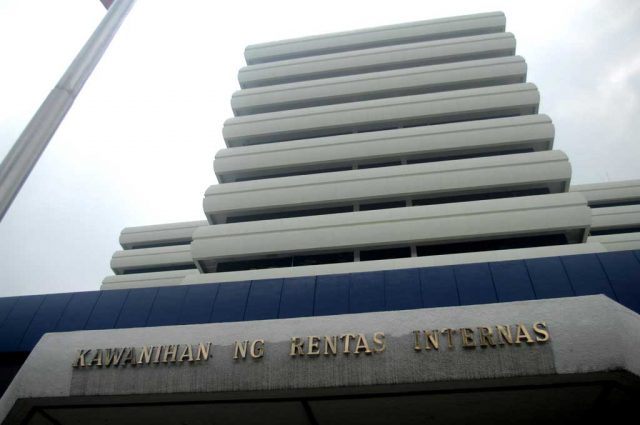
THE Bureau of Customs (BoC) has clarified that sales to domestic market enterprises will now be treated as local transactions, shifting oversight to the Bureau of Internal Revenue (BIR) for value-added tax (VAT) purposes.

“The sales of goods and services to domestic market enterprises or nori-Registered Business Enterprises (RBEs) are now considered ‘local sales,’ which fall outside the mandate of the BoC, and is now under the jurisdiction of the BIR,” the agency said in a memorandum circular.

The change followed Revenue Regulations No. 009-2025, outlining the rules for implementing the provisions of the Corporate Recovery and Tax Incentives for Enterprises to Maximize Opportunities for Reinvigorating the Economy (CREATE MORE) Act.

President Ferdinand R. Marcos Jr. signed the CREATE MORE Act in 2024, which further reduced the corporate income tax to 20% from 25% for RBEs.

RBEs are individuals or companies registered with an Investment Promotion Agency qualify for special tax incentives, particularly export-oriented or high-value domestic ventures. — Aubrey Rose A. Inosante

ADVERTISEMENT
ADVERTISEMENT