Home Blog Page 4237

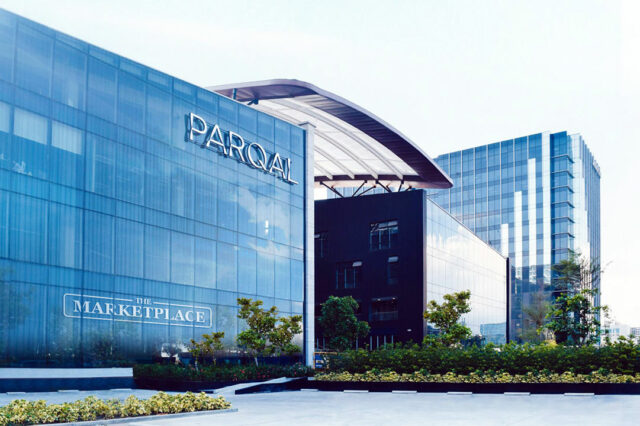
The Marketplace set to open its 38th Philippine store at Parqal

THE Marketplace is opening its 38th Philippine store at Parqal in Aseana City in Parañaque City on Oct. 4.

For its grand opening, The Marketplace Parqal will hold a one-day only flash sale featuring P99 deals, buy one take one offers, and 50% off some items.

The Marketplace Parqal offers a range of food items, organic products and international brands, as well as premium meat choices, different cheeses and wines.

Shoppers can also find global brands such as Casino, Waitrose, El Corte Ingles, No Brand, and Meadows at The Marketplace Parqal.

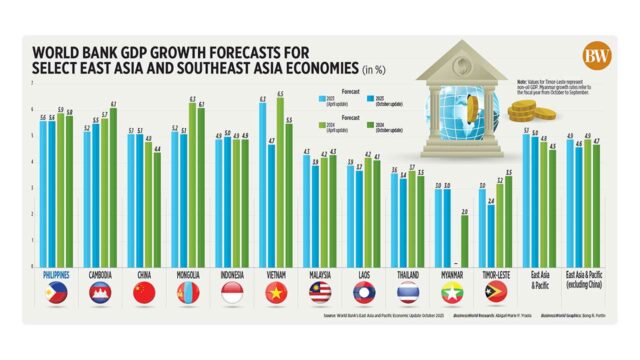
World Bank GDP growth forecasts for select East Asia and Southeast Asia economies

THE WORLD BANK expects the Philippines to be the fastest-growing economy in Southeast Asia this year, despite trimming its gross domestic product (GDP) growth projection due to persistent inflation and global headwinds. Read the full story.

World Bank GDP growth forecasts for select East Asia and Southeast Asia economies

SGV goes 100% renewables

PROFESSIONAL services firm SGV & Co. is taking a step towards achieving sustainable operations as it shifts to renewable energy (RE) sources to power its buildings, the firm said on Monday.

“By transitioning to renewable energy sources, SGV aims to significantly reduce greenhouse gas emissions, decrease dependence on non-renewable energy, and contribute to a cleaner and greener future,” SGV Chief Sustainability Officer Clairma T. Mangangey said in a media release.

“This commitment underlines our dedication to leading by example, taking responsibility as a corporate citizen, and inspiring other organizations to follow suit,” she added.

The firm said it had partnered with its building operators Marilag Corp. and US-based venture capital firm Owl Ventures in shifting to renewables through the green energy option program of the Department of Energy.

The program is a voluntary policy mechanism under the Renewable Energy Act of 2008 that allows users consuming at least 100 kilowatts of power to choose a purely RE source to meet their energy requirements.

“The decision to go to 100% renewable energy is a strategic step informed by rigorous assessment and careful planning,” SGV said.

“SGV has worked with a leading renewable energy provider to ensure a reliable and seamless transition. The work has resulted in a comprehensive renewable energy strategy that encompasses solar, wind, and other renewable sources for powering the SGV buildings,” it added.

The company did not disclose its RE provider.

According to the company, the transition has been facilitated by “a series of technology upgrades, energy efficiency measures, and employee-engagement initiatives” to optimize energy consumption throughout its buildings.

The firm also said it had invested in energy consumption measures, lighting upgrades, and employee awareness campaigns to promote sustainability and responsible energy use. — Sheldeen Joy Talavera

Banks’ loans to MSMEs fall short of 10% quota

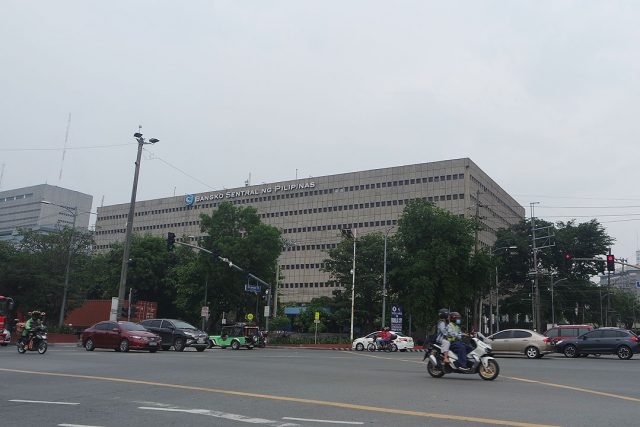
PHILIPPINE BANKS failed to hit the mandated quota for small business loans in the first half of the year, data from the Bangko Sentral ng Pilipinas (BSP) showed.

Loans extended by the banking industry to micro-, small-, and medium-sized enterprises (MSMEs) amounted to P461.387 billion as of June or just 4.71% of their total loan portfolio of P9.8 trillion.

This was 3.1% higher than the P447.69 billion in loans they extended to the sector in the same period in 2022.

Lenders are mandated by the Republic Act No. 6977 or the Magna Carta for MSMEs to allocate 10% of their credit portfolio for small businesses to boost the sector — 8% for micro and small enterprises (MSEs) and 2% for medium-sized enterprises.

However, banks have long opted to incur penalties for noncompliance instead of taking on the risks associated with lending to small firms.

Broken down, MSE loans extended by banks amounted to P189.08 billion in the first quarter, comprising just 1.93% of their total loan portfolio and well below the 8% quota, central bank data showed.

On the other hand, lending to medium-sized enterprises stood at P272.307 billion in the period, equivalent to 2.78% of these banks’ credit book and beyond the 2% minimum ratio required under the law.

Based on the type of bank, universal and commercial banks disbursed P126.885 billion in credit to MSEs, equivalent to only 1.48% of their P9.02-trillion loan portfolio, BSP data showed.

Meanwhile, their lending to medium-sized enterprises hit P229.03 billion or 2.54% of their loan book.

Thrift banks were also unable to meet the quota for MSE credit as they only extended P26.037 billion or 3.54% of their P566.94-billion loan portfolio to the sector.

Still, these lenders went beyond the credit quota for medium enterprises as their loans to the sector hit P25.319 billion or 4.5% of their portfolio.

Meanwhile, rural and cooperative banks extended loans worth P36.116 billion to MSEs, equivalent to 18.59% of their P192.67-billion credit book, well above the minimum amount required by law.

These banks’ lending to medium enterprises hit P17.958 billion or 9.32% of their loan portfolio.

The central bank has also started tracking the loans granted by digital banks  to the MSME sector.

Digital banks disbursed P40 million in credit to MSEs in the first half, less than 1% of these lenders’ P14.29 billion-loan portfolio. These banks didn’t lend at all to medium enterprises.

The BSP allowed banks to count MSME loans as alternative reserve compliance during the coronavirus pandemic to help prop up the sector. This relief measure expired on June 30.

In April, the central bank launched the Credit Risk Database Scoring Model, which is expected to serve as an additional tool that lenders can use to analyze the creditworthiness of MSMEs, especially those without credit history or enough collateral. — K.B. Ta-asan

The Academy of Management Annual Meeting: Discussions on workers roles, AI

FREEPIK

The 2023 Academy of Management (AoM) Annual Meeting — which was held in Boston, Massachusetts, from Aug. 4 to 8 — was the first entirely in-person meeting since the pandemic started. (The 2020 meeting was canceled, the 2021 one was held virtually, and the 2022 one was held in hybrid mode.) Although I had attended the 2021 and 2022 meetings, I was eager to be with about 10,000 of my fellow business academics once again. With over 2,300 sessions, the Annual Meeting is the world’s premier event for scholarly engagement, and the largest gathering of management and organization scholars worldwide.

This year’s theme, “Putting the Worker Front and Center,” signified a profound shift in perspective that acknowledges that organizations are not just profit-driven machines but also social systems comprising human beings. Traditionally, management scholarship focuses on executives, managers, and professionals and the issues important to them, such as leadership, team effectiveness, governance, innovation, network facilitation, organizational identity, resilience, and transformation. However, as AoM’s Vice-President and Program Chair of this year’s meeting, Peter Bamberger of Tel Aviv University, said, “The 2023 theme calls for our community to rebalance our attention, and pivot towards those at the very core of productive enterprise, namely the workers.”

I was invited to join a Professional Development Workshop (PDW) on Fostering International Education and Research Collaborations with Underrepresented Nations. I shared how I had introduced my students to the Sustainability Mindset Principles, a framework for viewing the world to make decisions based on the triple bottom line of people, planet, and profit, in the course Sustainable Management. Being exposed to various teaching pedagogies, including case method, experiential learning, and reflection, our students shift their thinking and experience a deeper connection to and caring for others and their planet. Reading their reflection journals, I found emergent themes that showed the students’ development. The students’ words showed their increased appreciation of how complex economic, environmental, and social issues are integral to the business landscape. They are optimistic about a future in which they will lead their organizations and care for their people in their quest for a more sustainable future.

During this PDW, I was touched by the story of a scholar from Africa whose country entices foreign direct investment by setting a maximum wage for factory workers. Since higher labor rates have driven the sweatshops that were once in Asia to Africa, he lamented the failure of both businesses and his government to put the workers front and center. Instead, these institutions contribute to the continued exploitation of workers, especially women, in underdeveloped nations.

While I usually attend sessions focusing on sustainability and spirituality, the continuing debate on using Artificial Intelligence (AI) drew me to several AI forums. One session, “AI, Ethics, and Academia,” weighed in on the debate regarding the transformation that AI brings to the classroom. Here are some arguments for and against the use of AI. First is academic rigor. Those who advocate banning AI in the classroom argue that it would prevent students who lack knowledge in the subject matter from simply showcasing their ability to use AI well and would instead offer them the opportunity to develop their knowledge and skills. In contrast, those who advocate unrestricted AI use argue that students will learn new knowledge and skills, such as creating effective prompts or checking AI’s accuracy.

The second argument is fulfilling curiosity and creativity. On one hand, banning AI use pushes students to come up with unique viewpoints and to think critically. On the other hand, encouraging AI’s use will allow students to ask ChatGPT questions they may be too uncomfortable to ask their professors and be their “learning partner.”

A third argument is real-world application. A ban on AI use will allow students to develop the ability and confidence to think and write for themselves, skills needed for the workplace of the future. However, unrestricted use of AI may develop in students new skills learned through ChatGPT that can enhance their personal lives and job endeavors.

While the debate continues, some preliminary prescriptions offered by the presenters include strong prompts for questions for homework assignments and online tests; oral assignments and examinations; and suggestions on the role ChatGPT should have for a particular task. Some roles include Socratic Opponent, Collaboration Coach, Personal Tutor, and Study Buddy.

I have returned from the annual meeting refreshed and enthusiastic about the new academic year of teaching, research, and outreach. The five days in August allowed me to meet and renew ties with fellow academics, to listen as they disseminated knowledge addressing the 21st century’s most pressing issues, and to enjoy the food and history of Boston. Next year’s conference will be in Chicago, with the theme, “Innovating for the Future.” I am hoping more Filipinos will attend so that they can have the opportunity to interact with thousands of like-minded AoM members and colleagues from around the world.


Pia T. Manalastas is a faculty member of the Department of Management and Organization of De La Salle University. She teaches Sustainability Management, Integral Human Development, and Lasallian Business Leadership with Ethics and CSR.

pia.manalastas@dlsu.edu.ph

Turkish film festival canceled after row over censorship

60TH Antalya Golden Orange Film Festival —ANTALYAFF.COM

ANKARA — A municipality in southern Turkey on Friday canceled a 60-year-old film festival after a controversy over a political documentary.

“I regret to inform filmgoers that we canceled this year’s Antalya Golden Orange Film Festival scheduled for Oct. 7-14 due to events beyond our control,” Antalya Mayor Muhittin Bocek said in a post on X.

The festival, Turkey’s most prestigious, last week removed documentary Kanun Hukmu or Decree about a physician and a teacher who were dismissed from their government jobs under a state of emergency after a failed coup attempt in Turkey in 2016.

The festival on Thursday reversed that decision after many directors withdrew films from the festival and jury members resigned, saying they were protesting “censorship and threats to artistic expression.”

Turkey’s Culture and Tourism Ministry withdrew its support from the festival on Thursday, accusing the organizers of allowing “terror propaganda.” The festival then eliminated the documentary again and the city on Friday canceled the entire festival.

Nejla Demirci, the director of the documentary, rejected the government’s propaganda accusation, saying that none of the featured people was convicted of any crime.

After the failed coup, the government dismissed more than 125,000 state employees, saying they were connected to the coup attempt and defending the move as necessary for national security. Critics said the Turkish government used the failed putsch as a pretext to quash dissent. — Reuters

Phinma Properties partners with Iloilo LGU

PHINMA PROPERTIES signed a memorandum of understanding with the City Government of Iloilo to provide affordable housing in urban resettlement areas.

“Partnerships such as this one with the City Government of Iloilo align with our nation-building mission to create and cultivate sustainable and vibrant communities across the established and upcoming urban centers in the country. This also contributes to our broader goal of inclusive growth, where housing security plays a critical role in creating a more equitable society for all,” Raphael B. Felix, Phinma Properties president and chief executive officer, said in a statement.

Phinma Properties has previously partnered with local government units (LGUs) for housing projects such as Bistekville in Quezon City, L’Oasis Malabon in Malabon City, and Grand Strikeville in Bacoor.

How PSEi member stocks performed — October 2, 2023

Here’s a quick glance at how PSEi stocks fared on Monday, October 2, 2023.


Stocks decline as market awaits inflation report

REUTERS

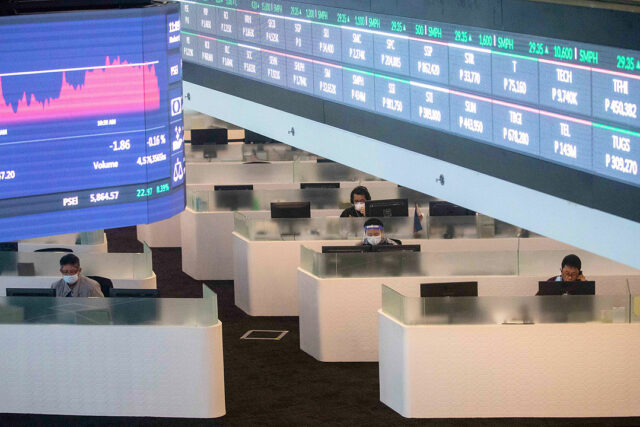
STOCKS dropped on Monday as investors remained cautious as they await the release of September inflation data this week.

The Philippine Stock Exchange index (PSEi) went down by 16.71 points or 0.26% to end at 6,304.53 on Monday, while the broader all shares index shed 1.71 points or 0.05% to 3,399.12.

“The PSEi ended lower as several index names continued to take a breather after last week’s rally, which was driven by the extra liquidity resulting from the index rebalancing and MPIC’s (Metro Pacific Investments Corp.) tender offer,” Unicapital Securities, Inc. Senior Equity Research Analyst Carlos Angelo O. Temporal said.

“Investors may have also taken profit ahead of key inflation reports this week,” Mr. Temporal added.

Investors “adopted a cautious stance and stayed on the sidelines” before the release of September inflation data, AB Capital Securities, Inc. Vice-President Jovis L. Vistan likewise said in a Viber message.

“The significance of this data release lies in its potential to influence the Bangko Sentral ng Pilipinas’ (BSP) decisions regarding interest rates,” Mr. Vistan said.

September consumer price index (CPI) data will be released on Thursday.

A BusinessWorld poll of 17 analysts yielded a median estimate of 5.4% for September inflation, near the low end of the BSP’s 5.3-6.1% forecast for the month.

If realized, the September CPI would pick up from the 5.3% print in August but would be lower than 6.9% in the same month in 2022.

September will also be the 18th straight month that inflation was above the BSP’s 2-4% annual target.

The majority of sectoral indices dropped on Monday. Mining and oil went down by 48.71 points or 0.45% to 10,745.38; property fell by 13.61 points or 0.52% to 2,600; financials dropped by 9.40 points or 0.5% to 1,852.38; and holding firms declined by 9.86 points or 0.16% to 6,023.71.

Meanwhile, industrials rose by 27.78 points or 0.31% to 8,943.44 and services climbed by 1.61 points or 0.1% to 1,509.90.

Value turnover went down to P3.86 billion on Monday with 591.37 million shares changing hands from the P13.11 billion with 1.71 billion shares seen on Friday.

Advancers outnumbered decliners, 92 versus 75, while 63 shares closed unchanged.

Net foreign selling stood at P402 million on Monday versus the P5.49 billion in net buying recorded on Friday.

For the rest of the week, Mr. Vistan placed the PSEi’s support at 6,100 and resistance at 6,400.

MPIC is one of the three key Philippine units of Hong-Kong based First Pacific Co. Ltd., the others being Philex Mining Corp. and PLDT Inc.

Hastings Holdings, Inc., a unit of PLDT Beneficial Trust Fund subsidiary MediaQuest Holdings, Inc., has a majority share in BusinessWorld through the Philippine Star Group, which it controls. — SJT

Peso drops vs dollar as market expects faster September inflation

BW FILE PHOTO

THE PESO depreciated against the dollar on Monday due to expectation of faster September inflation.

The local currency closed at P56.775 versus the dollar on Monday, weakening by 20 centavos from Friday’s P56.575 finish, data from the Bankers Association of the Philippines’ website showed.

The local unit opened Monday’s session stronger at P56.70 per dollar. Its intraday best was at P56.67, while its weakest showing was at P56.80 against the greenback.

Dollars traded went down to $1.15 billion on Monday from the $1.19 billion on Friday.

“The peso weakened amid market expectations of a potential uptick in domestic inflation for September,” a trader said in a text message.

A BusinessWorld poll of 17 analysts yielded a median estimate of 5.4% for September inflation, near the low end of the Bangko Sentral ng Pilipinas’ (BSP) 5.3-6.1% forecast for the month.

If realized, September inflation would pick up from the 5.3% print in August but would be lower than 6.9% in the same month in 2022.

September will also be the 18th straight month that inflation was above the BSP’s 2-4% target for the year.

The Philippine Statistics Authority will release September inflation data on Thursday.

The peso weakened due to broad dollar strength, Rizal Commercial Banking Corp. Chief Economist Michael L. Ricafort added in a Viber message.

The US dollar index edged back from its recent 10-month high and was last at 106.21, after clocking its best quarterly performance in a year thanks to persistently hawkish US Federal Reserve rhetoric and a surge in US Treasury yields, Reuters reported.

For Tuesday, the trader said the peso could weaken further due to potentially hawkish signals from US Federal Reserve Chair Jerome H. Powell.

The trader sees the peso moving between P56.65 and P56.90 per dollar on Tuesday, while Mr. Ricafort sees it ranging from P56.65 to P56.85. — AMCS with Reuters

Franchisers see revenue growth of 10%-13% in 2024

ALFRED KENNEALLY-UNSPLASH

By Justine Irish D. Tabile, Reporter

THE Philippine Franchising Association (PFA) said the industry is expected to grow 10% to 13% next year, driven by the food, services and retail segments.

“The 10% is our projection next year and on the high end, we are looking at 13%,” according to Sherill R. Quintana, PFA chair, adding that she hopes the growth rate extends to a five-year timeline.

She delivered her projection at a briefing on Monday ahead of the Franchise Asia Philippines 2023 International Franchise Expo.

Last year, the franchising industry booked P27 billion in revenue, with revenue growth projected at 13% this year.

PFA President Chris Lim said one of the big drivers for industry this year is food, while services are expected to recover next year after having lagged coming out of the pandemic.

“This year, food is what’s been driving it a lot. If you look at all the reports, a lot of the food players are probably higher than pre-pandemic levels. Services in the industry have lagged, like salons and spas. Some of them haven’t even fully opened yet, but we see a lot of them opening and recovering by next year,” he said.

He said that the industry should watch out for agricultural franchising as there is a big push for such businesses in the Philippines.

“We think franchising can serve that sector a lot from the retailers, from those who supply inputs to the franchise or to the agriculture sector, or even servicing,” Mr. Lim said. “We can see a whole ecosystem building that will support this agricultural shift.” 

Richard Sanz, overall co-chair of Franchise Asia Philippines 2023 and chief executive officer of BBK Group, said coffee could drive the growth of the industry in the next five to 10 years.

“During the pandemic, we noticed that there were a lot of homebrewers who really specialized or upgraded their coffee experience,” Mr. Sanz said. “When things opened up, there was a void that needed to be filled … driving so many coffee shops to open.”

He said this trend is apparent elsewhere in Asia.

“If you look at Korea and Japan, coffee has been driving a lot of their F&B (food and beverage) markets. The Philippines is, I would say, maybe 10 years behind… but it’s quickly growing and it’s a very big market to fill,” he added.

The international franchise expo is set to run between Oct. 27 and 29, running back-to-back with meetings of the World Franchise Council and Asia-Pacific Franchise Confederation between Oct. 25 and 27.

Investor confidence ‘solid’ despite FDI decline — DTI

THE Department of Trade and Industry (DTI) said investor confidence remains “solid” despite a decline in foreign direct investment (FDI) inflows, noting that locators continue to direct their earnings to new projects in the country while foreign investment applications are still coming in.

“Although FDI in the Philippines declined in the first semester of 2023, there remains solid foreign investor confidence, as demonstrated by the high reinvested earnings and the rising foreign investment approvals by the Board of Investments (BoI) and other investment promotion agencies (IPAs),” Trade Secretary Alfredo E. Pascual said.

“Under the Marcos Jr. administration, a representative metric of investment performance is the foreign investment approvals by the DTI’s IPAs,” he added, citing a consistent increase in approvals since last year.

Mr. Pascual issued the statement after FDI inflows were estimated to have declined 20.4% to $3.9 billion in the first half in a report from the Bangko Sentral ng Pilipinas.

Meanwhile, the DTI reported that IPA approvals in the first half amounted to $8.45 billion, up from $1.06 billion a year earlier. 

The DTI said that FDI does not solely arise from investment leads but could also be based on decisions made years prior.

“The gestation period, or the time from initiation to realization, varies considerably depending on factors like the project’s nature, the sector, and the host country’s regulatory environment.

He noted that business process outsourcing centers only take months to set up, whereas manufacturing projects can take four to five years.

It added that renewable energy projects have varying timelines depending on the scale.

Mr. Pascual said that the FDI numbers reflect decisions investors made before the actual fund inflows recorded by the central bank, adding that global financial conditions may have contributed to the decline.

“Factors such as inflation rates and investment rates substantially influence FDI decisions. Stable inflation and competitive interest rates generally attract FDI, whereas high inflation and unfavorable rates can repel foreign investors,” he said.

“The future looks promising, given the rising trend in foreign investment approvals by the BoI and our other IPAs and the continued efforts to promote the Philippines as an attractive investment destination,” he added. — Justine Irish D. Tabile

ADVERTISEMENT
ADVERTISEMENT