Home Blog Page 4155

Local shares drop further as conflict continues

BW FILE PHOTO

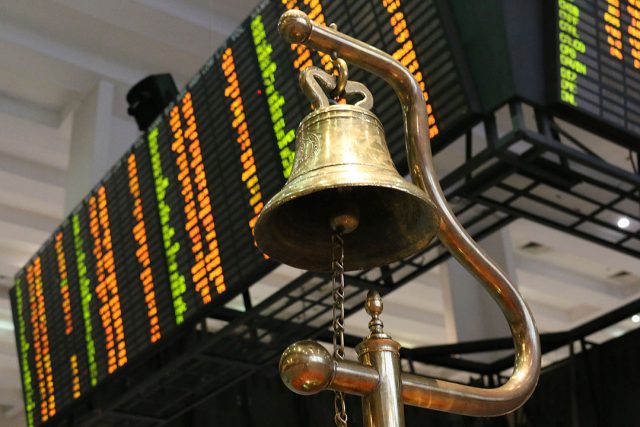
PHILIPPINE SHARES dropped further on Thursday as the conflict in the Middle East raged on and ahead of the speech of US Federal Reserve Chair Jerome H. Powell overnight.

The Philippine Stock Exchange index went down by 49.11 points or 0.78% to close at 6,219.16 on Thursday, while the broader all shares index declined by 19.61 points or 0.57% to end at 3,365.79.

“The index fell in today’s session due to heightened cautiousness and risk-off sentiment among investors following fresh developments in the Middle East, as well as the resurgence of the sell-off in bond markets overnight,” China Bank Securities Corp. Research Director Rastine Mackie D. Mercado said in an e-mail on Thursday.

“Trading opened and stayed in the red territory for the whole session as the aforementioned headwinds weighed on sentiment. The ongoing tension in the Middle East kept many on the sidelines as well,” Philstocks Financial, Inc. Research and Engagement Officer Mikhail Philippe Q. Plopenio likewise said in a Viber message.

Egypt agreed to reopen its border crossing with the Gaza Strip to allow aid to reach Palestinians, the US said, as the humanitarian crisis worsened for the 2.3 million people trapped in the enclave and anti-Israel protests flared across the Middle East, Reuters reported.

Selling pressure continued amid a rise in US Treasury yields and as oil prices exceeded the $90-per-barrel mark again amid the war in the Middle East, Unicapital Securities, Inc. Senior Equity Research Analyst Carlos Angelo O. Temporal said.

The yield on 10-year Treasury notes was up 6.4 basis points to 4.966%, touching its highest since mid-2007, Reuters reported.

US crude eased 0.16% to $88.18 per barrel and Brent was at $91.11, down 0.43% on the day.

“Selling pressure ramped up through the day, as investors likely trimmed exposures ahead of a speech by Fed chair Powell later tonight. For tomorrow, we are likely to see reactive moves to overnight developments,” Mr. Mercado added.

Fed Chair Jerome Powell will take the podium in New York on Thursday with his colleagues at the US central bank in apparent agreement to hold interest rates unchanged at their next meeting in two weeks.

At home, almost all sectoral indices dropped on Thursday. Financials went down by 28.47 points or 1.58% to 1,770.99; services fell by 20.84 points or 1.35% to 1,520.26; industrials dropped by 91.34 points or 1.02% to 8,824.68; mining and oil declined by 22.80 points or 0.21% to 10,830.69; and holding firms decreased by 10.41 points or 0.17% to 5,897.06.

Meanwhile, property climbed by 3.81 points or 0.14% to 2,656.40.

Value turnover went down to P4.24 billion on Thursday with 575.68 million shares changing hands from the P5.12 billion with 1.12 billion issues seen on Wednesday.

Decliners outnumbered advancers, 117 versus 50, while 53 shares closed unchanged.

Net foreign selling climbed to P524.69 million on Thursday from P32.59 million the previous day. — SJT with Reuters

Energy-efficiency projects eligible for more incentives

ROBERT LINDER-UNSPLASH

THE Board of Investments (BoI) has issued a memorandum circular (MC) that will allow self-financed energy-efficiency projects (EEPs) to avail of duty-free equipment imports and other incentives.

In an online briefing on Thursday, Trade Undersecretary and BoI Managing Head Ceferino S. Rodolfo said MC 2023-006 was signed on Monday.

The new MC amends the BoI’s MC 2022-008, which BoI Director Sandra Marie Recolizado said only offered renewable energy projects for the proponent’s own use the incentive of “duty-free importation of capital equipment.”

Citing Executive Order 226 or the Omnibus Investments Code of 1987, the BoI said it holds the authority to attract investment in desirable activities through an investment incentives scheme.

Under MC 2023-006, the self-financed EEP will also be entitled to an income tax holiday (ITH) and a duty exemption on imported raw materials, spare parts and accessories.

“The ITH incentive shall be limited to the prescribed ITH entitlement period under the CREATE Act or until the recovery of 50% of its capital investment, whichever comes first,” according to the MC, referring to the Corporate Recovery and Tax Incentives for Enterprises Act.

The new MC will take effect after publication in a newspaper of general circulation.

During the briefing, Mr. Rodolfo said that Japan’s MinibeaMitsumi will be the first private entity to avail of the additional incentives.

On Thursday, the Japanese electronics manufacturer inaugurated a P500-million solar power farm in Danao City, Cebu.

The project is located on a 6.8-hectare site and is expected to generate 12.8 gigawatts of energy annually, equivalent to 6,833 tons of carbon dioxide reduction per year.

“Even though this is a very big solar farm, it can cover only 8% of our total consumption here in the Danao factory. The savings amount will fully depend on the costs of the power which is fluctuating,” Minibea President Tatsuya Mori said.

Minibea Group Executive Officer Caesar Augusto said that the company spends close to P8 billion a year on energy costs.

According to Mr. Rodolfo, the Japanese company is considered a major investor, employing 18,500 at its facility in Danao, 3,000 in Bataan and 1,000 in Batangas.

“We are now studying solar panels on the roof of our factory in Bataan … It is the direction of the group, to be more renewable and to be more carbon-neutral towards 2030,” Mr. Mori said. — Justine Irish D. Tabile

PHL pinning hopes on Indian rice to help plug deficit in early 2024

REUTERS

THE rice export quota assigned to the Philippines by India could be tapped to address the expected shortage in January, when the supply of grain typically diminishes as planting season starts, an agriculture official said.

“If (the Indian rice) comes in, that will definitely provide us with the supply that we will be needing at the end of the harvest,” Agriculture Undersecretary Mercedita A. Sombilla told reporters on the sidelines of the International Rice Congress.

Ms. Sombilla said Indian shipments will add to the supply during January and February, when planting season begins.

“Hopefully the impact of El Niño will not be severe; that volume will be very important and necessary for us to be able to get through,” she added.

India’s Director of Foreign Trade announced on Wednesday a rice export quota for the Philippines of 250,000 metric tons (MT). It also approved smaller quotas for Nepal, Cameroon, the Ivory Coast, Guinea, Malaysia, and the Seychelles.

Earlier, India had banned the export of non-basmati white rice to ensure adequate domestic supply. Basmati is the preferred domestic variety in India, while non-basmati white rice is the most-traded international variety.

India is the world’s largest rice exporter, and its export ban had exerted upward pressure on international rice prices. The Philippines is the world’s largest rice importer.

Philippine rice imports totaled 2.49 million MT as of Sept. 21, according to the Bureau of Plant Industry, with India accounting for 13,493.39 MT, equivalent to 0.6% of the total.

Vietnam remained the Philippines’ top source of rice, shipping 2.24 million MT or 89.96% of Philippine imports for the period.

The government weather service, known as PAGASA (Philippine Atmospheric, Geophysical and Astronomical Services Administration), expects El Niño to strengthen towards late 2023, persisting until the first quarter of 2024.

Ms. Sombilla said imports will help curb surging retail prices of the staple grain.

High retail prices of rice prompted President Ferdinand R. Marcos, Jr. to order price controls on Sept. 5. This fixed the maximum price at P41 per kilogram for regular-milled rice and P45 for well-milled rice, caps which have since been withdrawn.

The Samahang Industriya ng Agrikultura (SINAG) cited the need to re-impose the P45 per kg price cap on well-milled rice in November, alleging that traders are creating “artificial” supply conditions to justify high prices.

“Rice farmers and millers have reported to us that some millers and traders are offering to buy palay between P21-23.50 per kilo of fresh palay (unmilled rice) and between P26-29 per kilo of dry palay,” SINAG Chairman Rosendo O. So said.

“While this is positive for our farmers, we are all worried about a possible repeat of the rice price spikes last August,” Mr. So added.

Asked to comment, Ms. Sombilla said that there are other measures available to curb any increases in rice prices.

“The price cap should really be a short-term (measure). I don’t think we will resort to that… Napilitan lang talaga mag-price cap noon (we were forced to impose price controls at the time),” she added. — Adrian H. Halili

Adjustments to next PHL Energy Plan expected to reflect rapid developments in renewables

PHILSTAR FILE PHOTO

POSSIBLE adjustments to the Philippine Energy Plan are in the works, with the Department of Energy (DoE) acknowledging that developments in the power industry are taking place faster than anticipated.

Patrick T. Aquino, director of the DoE’s Energy Utilization Management Bureau, made the remarks to reporters on the sidelines of Philippine Electric Vehicle Summit on Thursday, after being asked whether the new plan will include higher renewable energy (RE) targets.

“As mentioned by (Secretary Raphael P.M. Lotilla), there might be slight adjustments, tweaks… I would like to reiterate the developments (in the energy sector) are happening faster than we envisioned,” Mr. Aquino said.

The current share of RE in the power generation mix is 29.3%, Mr. Aquino said, adding that the DoE is optimistic of achieving its RE growth targets.

The latest edition of the Philippine Energy Plan has a 35% target for RE share by 2030, with a 50% target set for 2040.

“We will do the necessary revisions, and work with private sector partners to reflect what is really happening. There are consultations ongoing,” he added. 

The upcoming Philippine Energy Plan will seek to cover the years to 2050. The current plan only runs until 2040.

The DoE has said that it is considering a target of 2,400 megawatts for nuclear power capacity by 2035 when it issues the next energy roadmap. — Ashley Erika O. Jose

Airlines cleared to increase fuel surcharge in November

REUTERS

THE Civil Aeronautics Board (CAB) said it increased the fuel surcharge that airlines can collect from passengers in November.

In an advisory on Thursday, the CAB said the passenger fuel surcharge for domestic and international flights will reset to Level 7 next month from Level 6 in October.

At Level 7, the domestic passenger surcharge is between P219 and P739. For international flights, the surcharge is between P722.71 and P5,373.69.

At Level 6, the domestic passenger surcharge was between P185 and P665, while the international surcharge was between P610.37 and P4,538.40.

The Level 7 setting also applies to air cargo services, it said.

Airlines are allowed to collect a fuel surcharge according to a matrix approved by the CAB.

The surcharge is an optional fee charged by airlines to recover fuel costs. It is set based on the movements of jet fuel prices. — Ashley Erika O. Jose

IRRI signs on as partner to develop yield-based crop insurance program using satellite mapping

PHILIPPINE STAR/MICHAEL VARCAS

THE Philippine Rice Research Institute (PhilRice) and the Philippine Crop Insurance Corp. (PCIC) said they entered into a partnership with the International Rice Research Institute (IRRI) to develop a satellite-enhanced crop insurance program which will compile a map of riceland yields.

“This partnership is a step towards making insurance protection available to Filipino farmers at a crucial time when we are facing severe weather challenges,” PhilRice Executive Director John C. de Leon said.

The yield database will help the PCIC assign a value to policies taken out by rice farmers.

The three organizations intend to collaborate in bringing crop insurance to about 2.4 million rice farmers.

The program will use data from the rice mapping and monitoring system known as PRISM (Philippine Rice Information System) to design and test an Area-Based Yield (ARBY) index.

ARBY considers historical yields of plots of land to help determine insurance payouts in the event of losses.

“The fusion of satellite technology and advanced modeling is revolutionizing how we can insure crops,” IRRI Interim Director-General Ajay Kohli said.

“(The) satellite-based ARBY index insurance for rice can help simplify the much-needed coverage for small farmers,” Mr. Kohli added.

PCIC President Jovy C. Bernabe said technology has the potential to help improve insurance products and services.

“(It) can bring efficiencies to our operations compared to traditional indemnity-based crop insurance models which involve site visits and verification of every claim,” Mr. Bernabe added.

The PCIC said about 1.6 million rice farmers carried insurance in 2022. — Adrian H. Halili

Philippines elected to UNWTO vice presidency for East Asia

CHRISTINA G. FRASCO — PHILIPPINE STAR/KRIZ JOHN ROSALES

THE Department of Tourism (DoT) said on Thursday that the Philippines was elected to the vice presidency for East Asia and the Pacific at 25th United Nations World Tourism Organization (UNWTO) general assembly.

Tourism Secretary Maria Esperanza Christina G. Frasco represented the Philippines at the meeting on Wednesday in Uzbekistan.

In a statement, the DoT said the Philippines will help the UNWTO achieve its goal of promoting responsible, sustainable and universally accessible tourism.

In June 2024, the Philippines will host the Joint Regional Meetings of the Committee for East Asia and the Pacific and South Asia in Cebu. — Justine Irish D. Tabile

Urgency of investing in agriculture, food grows as climate change threat looms

TIM MOSSHOLDER-UNSPLASH

THE agrifood sector was identified as a priority area for global investment, though investment prospects currently offer limited visibility going forward, the United Nations Conference on Trade and Development (UNCTAD) said.

In a report, UNCTAD said high debt levels and a volatile investment climate are key obstacles to attracting global investment.

Philippine Chamber of Commerce and Industry (PCCI) President George T. Barcelon said global economies are facing supply chain disruptions caused by geopolitical uncertainties.

“Even among ASEAN countries, we rely heavily on imported fertilizer … geopolitical tensions will impact the supply of this key ingredient,” he said.

UNCTAD estimated the global investment gap in developing countries at $4 trillion a year.

Mr. Barcelon said ministers at UNCTAD’s 8th World Investment Forum are also now seeing the implication of climate change.

“Some countries used to have predictable harvests of rice and wheat … but now we are seeing droughts,” he said.

Michael L. Ricafort, chief economist of Rizal Commercial Banking Corp., said that prioritizing agrifood is crucial for food security, citing the particular need to invest in improving productivity.

He noted the availability of technology to raise the level of mechanization, as well as the presence of higher-yielding varieties of crop, and cited the potential of improved irrigation and infrastructure.

“(These will) further bring down costs and prices of food and other agricultural products,” he said.

He added that assigning priority to the sector is a “more effective and a more structural approach in improving the supply chains of food and other agricultural products in a more sustained manner over the long term.” 

“It would also force competitors to adopt the best available technologies (funded by) foreign direct investment,” he added.

UNCTAD said that the ministers attending the forum reached a consensus on the need for a business-friendly environment, attracting environmentally responsible investment, and establishing strategic public-private partnerships.

“They deemed investment in transformative and sustainable technologies to be crucial for a paradigm shift in global food security and environmental sustainability,” UNCTAD said.

“This involves accelerating the transition to renewable energy, harnessing green technologies and promoting supportive business environments,” it added. — Justine Irish D. Tabile

Women-owned PHL small businesses lag in access to financial services, ADB says

A vendor sits in a stall selling products in sachet packaging at a public market in Manila, Philippines, Aug. 1, 2019. — REUTERS

FEMALE-OWNED micro, small and medium enterprises (MSMEs) in the Philippines need greater access to financial services, the Asian Development Bank (ADB) said.

“Women and men entrepreneurs operate in the same business environment but the challenges they face differ. Women face more challenges than men in starting, managing, and growing businesses as they are more likely to be constrained by a lack of human and financial capital and by social norms that commit women to family and home responsibilities,” it said in a report.

“There is a major gender disparity between female and male entrepreneurs in the utilization of financial services and products,” it added.

The ADB said female entrepreneurs used a narrower range of financial services and products. It found that 17% of women-owned MSMEs used a business or merchant account, against the 39% of male-owned MSMEs.

The ADB said there is a need to “tailor products and services to (female entrepreneurs’) needs and preferences.”

“Although the majority of financial institutions acknowledged that they have a sizable proportion of female clients in their portfolio, none had developed an offering that would enable them to penetrate this underserved market,” it said.

“A value proposition tailored to WMSMEs requires a holistic approach that includes financial and nonfinancial services as well as digital solutions. Addressing the particular needs of women includes adapting the way financial institutions deliver financial solutions, features, and conditions such as the flexibility of loan terms and repayment schedules,” it added. — Luisa Maria Jacinta C. Jocson

Digital finance seen critical to unlocking PHL growth potential

FREEPIK

THE Department of Finance said it is working on creating a policy environment that will give digital finance a bigger place in the economy.

“The administration of President Ferdinand Marcos, Jr. is determined to harness this technological wave to fuel the Philippines’ growth momentum. We are establishing a fertile policy space that allows for a sustainable digital finance ecosystem to take root and thrive,” Finance Secretary Benjamin E. Diokno said in a speech at the Singapore FinTech Festival Industry Collaboration launch.

“That is why we are aiming to broaden public access to information by observing open data formats, lowering barriers to internet connectivity, and boosting broadband access,” he added.

Mr. Diokno said the government will invest in assets to “meet the requirements in the domestic backbone and middle-mile segments (and) encourage infrastructure-sharing among industry players.”

Five infrastructure flagship projects address digital infrastructure needs, with an indicative cost of $1.7 billion. Mr. Diokno said that four of these are ongoing while one is in the preparatory stages.

Mr. Diokno also called on the private sector to ramp up support for digital infrastructure.

“Fintech offers solutions that could augment business services and products as well as reach previously unbanked segments of the population,” he said.

“This extended reach and accessibility calls for a strong and adequate consumer protection regime for financial services. Consumer trust is essential for the sound deepening of our financial systems,” he added.

Mr. Diokno said that they will also “aggressively pursue the digital transformation of government agencies.”

He cited agencies like the Bureau of Internal Revenue and Bureau of the Treasury, which have expanded their digital platforms. — Luisa Maria Jacinta C. Jocson

Extension of import duty concessions seen as crucial for growing EV adoption

EREN GOLDMAN-UNSPLASH

A LONGER validity period for import duty concessions on four-wheeled electric vehicles (EVs) is considered crucial in expanding their adoption in the Philippines, industry officials said.

At the 11th Philippine Electric Vehicle Summit on Thursday, Electric Vehicle Association of Philippines President Edmund A. Araga said the industry is hoping for lowered tariffs offered in Executive Order (EO) 12 to be valid for five more years.

“Yes, we want it to be extended,” he said. “Another five years will be better.”

EO 12, signed on Jan. 13, temporarily modified the rates of import duty on EVs, parts, and components.

It removed tariffs for certain types of EV for five years, while reducing rates on parts and components.

Mr. Araga said EV sales grew immediately after the EO was issued. — Justine Irish D. Tabile

AFP eyes cyber command vs internet hackers

FREEPIK

By Kyle Aristophere T. Atienza, Reporter

THE PHILIPPINE military is creating a cyber command to improve defenses against almost daily cyberattacks and will relax recruitment rules to ensure it can attract information technology experts, the Armed Forces chief said on Thursday.

The cyber security force will have a presence in the entire archipelago, Armed Forces of the Philippines (AFP) chief Romeo S. Brawner, Jr. told a news briefing.

“It will have the whole archipelago as its territory. It will have command and control over all the cyber units that we have in the AFP,” he said. He added that the military must integrate its cyber units because both local and foreign hackers are targeting the “whole network.”

“Some of the attacks are foreign, some are local,” he said. “Almost every day, we experience attempts (directed at) the entire network of the Armed Forces.”

“The plan to invest in cyber security is long overdue due to the cyber dimension of multi-domain warfare,” Joshua Bernard B. Espeña, a resident fellow at International Development & Security Cooperation, said in a Facebook Messenger chat. “It is very much reflected in today’s conflicts around the world.”

He noted that for years, the AFP only had a cyber group composed of fewer than 100 workers for the entire country.

“The AFP must push for an AFP Cyber command that will be pooled from the Filipino civilian IT/ICT/computer engineering population and donned with special-rank officers and enlisted personnel with competitive salaries and benefits,” he added.

Mr. Brawner said they would relax the recruitment process for the cyberforce, adding that workers need not have military skills.

“When we say we are going to hire cyber warriors, it’s not on top of the usual recruitment,” he said. “Instead of recruiting soldiers for infantry battalions, this time we will recruit cyber warriors.”

Mr. Brawner said they plan to acquire more cyber security equipment under the last phase of the military modernization program slated for 2023 to 2028.

None of the cyberattacks have succeeded so far, Mr. Brawner said.

Tensions between the Philippines and China have worsened after the Chinese Coast Guard fired water cannons to block Manila’s attempt to deliver food and other supplies to a grounded ship at Second Thomas Shoal on Aug. 5.

Cyber defense was part of the Philippines’ joint drills with the US this year, Mr. Brawner said.

The military chief said they would no longer let telecommunication companies build cell towers in their camps.

The military has allowed the installation of cell sites inside its sites to protect them from communist attacks. In 2020, lawmakers opposed the decision to allow Dito Telecommunity, where China Telecommunications Corp. has a stake, to set up cell sites in military camps, saying it posed serious threats to national security.

Senate President Juan Miguel F. Zubiri in August urged the Defense department to remove cell towers built by Chinese companies inside Philippine military bases.

While creating a cyber command has implications for the overall Defense budget, “the trade-off will be worth more than the cost in terms of boosting intelligence, surveillance and reconnaissance capabilities,” Mr. Espeña said.

“This will also enable the AFP to protect the software of platforms and combat management systems of the military’s newest assets from the modernization wish list,” he said. “In terms of offense, a robust cyber capability will enable the AFP to cook the enemy’s software and disable their command-and-control and firing systems.”

Mr. Espeña said the cyber command must have an independent computer system that is distinct from the usual computers used in normal day-to-day business. “This is the logistics side that the AFP and its political masters must consider.”

VFA WITH JAPAN
Don Mclain Gill, who teaches foreign relations at De La Salle University, said recent hacking of several government websites should prompt the government to “establish a consolidated national cyber-security strategy that will integrate existing national security structures.”

“The threats brought by cyberattacks are growing given their muddled characteristics, making it difficult for governments to address them effectively,” he said in a Facebook Messenger chat. “Therefore, a strategy that involves consolidating internal and external resources will be crucial for Manila.”

Mr. Brawner said the government should declare the domestic shipping industry as a strategic sector amid rising external threats.

“It’s important especially because we are a maritime nation,” he said. “For the longest time, we’ve been ordering ships from other countries. It’s high time that we develop our shipping industry, particularly for the defense sector.”

The shipping sector, along with other industries deemed as public services, has been opened to full foreign ownership.

Meanwhile, Mr. Brawner said expect to finalize talks for a visiting forces agreement with Japan this year.

Concerns over China have pushed the Philippines to boost its security ties with the US and Japan.

In February, President Ferdinand R. Marcos, Jr. gave the US access to four military bases on top of the existing five sites under a 2014 Enhanced Defense Cooperation Agreement (EDCA).

Mr. Brawner said they are building disaster-proof facilities at EDCA sites instead of adding more bases. More than 60 new projects in existing EDCA sites include warehouses, drainage systems and roads.

Also on Thursday, Mr. Brawner said the military does not plan to have any engagements with Taiwan, a democratically governed island that China claims as its own.

He said the military is ready for any conflicts involving Taiwan.

The Philippine military recently inaugurated a naval detachment in the northernmost island of Itbayat, which is about 150 kilometers from the southern tip of Taiwan.

The Philippines adheres to the “One China Policy” and has ties with Taipei, with its Manila Economic and Cultural Office in Taiwan serving as a de facto embassy.

“Such a statement appears to be consistent with the previous statements of President Marcos, who in May 2023 said the AFP had received no request from the US to engage in active operations in case of conflict with China over Taiwan,” Enrico Cau, associate researcher at the Taiwan Center for International Strategic Studies, said via Messenger chat.

“The course of action undertaken by the Marcos administration appears to reflect a traditional hedging strategy aimed at containing China’s assertiveness through a calibrated adjustment of existing security agreements with the US,” he added.


ADVERTISEMENT
ADVERTISEMENT