Home Blog Page 4106

TNT duels with Chiba Jets anew in Laguna for EASL

EAST ASIA SUPER LEAGUE

Game Wednesday
(Sta. Rosa Sports Complex, Laguna)
7 p.m. — TNT vs Chiba Jets

REVENGE and a breakthrough victory in the East Asia Super League (EASL) are foremost on the minds of TNT as it duels with Japan’s Chiba Jets tonight at the Sta. Rosa Sports Complex in Laguna.

The All-Saints’ Day showdown serves as the first EASL gig on Philippine soil and the Tropang Giga are poised to mark it by getting even with a Jets side that handed them a 75-93 defeat over in Japan last Oct. 11 and posting a first W in the regional league.

Unlike in that previous outing on the road, the Jojo Lastimosa-coached TNT goes into the 7 p.m. return match with a fuller-bodied team.

Calvin Oftana, who missed the first game while taking his post-Asian Games breather, was reactivated for the Laguna showdown as did trade acquisition Jewel Ponferada, whose papers weren’t completed in time for the initial showdown. Prolific import Rondae Hollis-Jefferson, who saw action in Japan with hardly a rest from his stint with Jordan in Hangzhou, also reports for duty with fresher legs this time.

He and fellow import Quincy Miller had likewise logged more practice time with TNT stalwarts led by Jayson Castro, Kelly Williams and vastly-improved Glen Khobuntin.

“We got two key players back practicing (since the first match in Messrs. Oftana and Jefferson) and we’re in better shape now,” said TNT assistant coach Sandy Arespacochaga, whose team ran out of gas in the Jets’ home court.

The Jets (2-0) come in full force for the Philippine swing with reinforcements Justyn Mutts and DJ Stephens and top gun Yuki Togashi as spearheads.

Mr. Togashi, who once played for the Dallas Mavericks in the NBA Summer League, was held to just two points during the game against TNT. He however, erupted for 38 points in the Jets’ 85-82 overtime win over the Taipei Fubon Braves last Oct. 18, including the game-winning trey and should be a marked man for TNT’s defenders. — Olmin Leyba

Triple Giga score first PBA 3×3 three-peat in Leg 3 of Season 3 Second Conference

TNT TRIPLE GIGA — PBA.PH

BACK-to-back-to-back.

TNT took the honors as the first team to win three consecutive legs in the PBA 3×3 after stamping its class in Leg 3 of the Season 3 Second Conference on Tuesday  at the Ayala Mall Fairview Terraces.

The Triple Giga, riding on Almond Vosotros’ four two-pointers, sealed the three-peat with a masterful 21-12 romp over finals rival Cavitex.

Mr. Vosotros finished with 12 points and joined hands with Chester Saldua (four markers and 11 rebounds), Ping Exciminiano (three points, five boards) and Gryann Mendoza (two points) in keeping the franchise’s winning tradition roaring.

The Triple Giga annexed their 16th leg win in the three-year-old league and banked P100,000 in a perfect advanced birthday gift to coach Mau Belen.

“It’s as sweet as it can be, winning this three-peat. It’s a first for the franchise and it’s a great honor to be a part of it,” said Mr. Saldua.

The Triple Giga broke free from a 6-6 tie with an 11-3 salvo that Mr. Vosotros started and capped with a booming deuce. It was a cruise from there as TNT reasserted its mastery of Cavitex, the same team it defeated in the golden battle in Leg 1, 18-16.

Despite falling short anew, Cavitex’ Marion Magat (six), Ken Ighalo (four), Tonino Gonzaga (one) and Bong Galanza (one) were successful in bouncing the Braves back from their disappointing seventh place standing last week.

TNT and Cavitex arranged a Last Dance after beating Pioneer, 21-18, and Meralco, 21-19, respectively, in the semis.

The Bolts’ Joseph Sedurifa, Jeff Manday, Reymar Caduyac and sub JJ Manlangit took third place worth P30,000 after prevailing over the Katibays, 21-16. — Olmin Leyba

Chery Tiggo rout Gerflor in straight sets

Games Thursday
(Sta. Rosa Sports Complex, Laguna)
2 p.m. — PLDT vs Nxled
4 p.m. — Choco Mucho vs Galeries Tower
6 p.m. — F2 vs Petro Gazz

CHERY Tiggo vented its ire on Gerflor with a quick, merciless victory on Tuesday to get back on track in the Premier Volleyball League All-Filipino Conference at the Filoil EcoOil Arena.

Eya Laure played fierce and unforgiving anew as she paced all scorers with 12 points including 11 on kills as the Crossovers registered their third win in four outings and solidified their perch in the magic four.

It also somehow soothed the pain from Chery Tiggo stinging 25-20, 18-25, 25-22, 25-20 heartbreaker to Akari last Oct. 24 in Antipolo City that sent the former’s two-game streak to a screeching halt.

The 24-year-old former University of Santo Tomas superstar said it all started from their serve on offense and reception on defense.

Ms. Laure also praised the second unit headed by Princess Robles, who chipped in nine hits, for stepping up big particularly in the third set when the Defenders pushed the Crossovers to the wall and almost snatched the same period.

The Chery Tiggo mentor, however, was a little bit disappointed with his team’s third-set performance.

“Anything can happen in the blink of an eye, we have to be aware of that,” said coach Aaron Velez.

The Defenders remained winless in four starts. — Joey Villar

Lionel Messi wins record eighth Ballon d’Or

PARIS — Argentina captain Lionel Messi won a record eighth Ballon d’Or for the best player in the world on Monday, beating Norway’s UEFA player of the year and treble winner Erling Haaland of Manchester City to the prestigious prize.

Inter Miami’s Mr. Messi, who last won the award in 2021, played a pivotal role in guiding Argentina to their first World Cup title in 36 years when they beat defending champions France in the final last year.

The 36-year-old is now three Ballons d’Or clear of rival Cristiano Ronaldo, who won the last of his five trophies in 2017. Mr. Messi has now finished among the top three a record 14 times in total, finishing runner-up on five occasions.

“I couldn’t imagine having the career that I’ve had. Everything that I’ve achieved. The fortune I’ve had playing for the best team in the world, the best team in history. It’s nice to win these individual trophies. To win the Copa America and then the World Cup, to get it done is amazing,” Mr. Messi said.

“All of them (Ballon d’Or awards) are special for different reasons,” he added.

“I’m happy to get that recognition that I’m getting thanks to what we have achieved with the national team,” Mr. Messi told Reuters.

“This (World Cup) title we had been aiming for so many years makes it even more special.”

Asked if he would carry on until the 2026 World Cup, Mr. Messi said: “I don’t think about it. I’ll enjoy (my career) day by day. There will first be the Copa America in the United States (in 2024). (The World Cup), I don’t think about it.”

Earlier, Mr. Messi’s World Cup-winning teammate Emiliano Martinez won the Lev Yashin award for the world’s best goalkeeper.

Spain’s Women’s World Cup winner and Barcelona midfielder Aitana Bonmati won the women’s Ballon d’Or. “It’s an individual trophy but it can’t exist without a team,” she told reporters. — Reuters

Bucks survive a scare

The Bucks clearly wanted to put the Heat away early yesterday, and not just because they knew the penchant of the 2023 National Basketball Association finalists for solid plays in the clutch. Having been on the wrong end of scores in the closing matches of the first round of the immediate past playoffs against the never-say-die red and black, they understood the value of creating separation before crunchtime. And, to their credit, they did, outscoring the visitors by double digits in each of the middle quarters to take a 24-point lead with them in the payoff period.

Unfortunately, the Bucks then eased up on the gas, resulting in the very nail biter they precisely wanted to avoid. Perhaps they got too comfortable, seeing as how the Heat went with reserves for the final 12 minutes. Although they didn’t veer from their regular rotation, they wound up being outhustled on both ends of the court, and to the point where their seemingly insurmountable advantage was down to single digits with four minutes and change still remaining on the clock. To argue that they went through a scare would be an understatement.

The Bucks did go on to win, effectively bouncing back from the blowout they suffered against the otherwise-hapless Hawks in their previous outing. The way they did so, however, left much to be desired; instead of taking a well-deserved rest, their starters had to scramble in the dying minutes to preserve the triumph. As top dog Giannis Antetokounmpo said in his post-mortem, “Once you’re up 20, you’ve got to put them away. We weren’t able to do that tonight. Hopefully, we can learn from this.”

The outcome is nonetheless a plus for the Bucks, who aim to improve as the season progresses in the face of significant changes to the roster. New acquisition Damian Lillard has been a boon save for a clunker against the Hawks. That said, there remains the a chasm between performance and potential. They’ll definitely get better when they meet the Heat again in four weeks. The extent of their improvement, however, depends on how well he gets his partnership with Antetokounmpo down pat in the interim.


Anthony L. Cuaycong has been writing Courtside since BusinessWorld introduced a Sports section in 1994. He is a consultant on strategic planning, operations and human resources management, corporate communications, and business development.

Singapore’s $110,000-a-month mansion market grinds to halt

BLOOMBERG

SINGAPORE’s luxury housing deals are drying up as one of the nation’s largest-ever money laundering scandals weighs on the market.

High-end bungalow sales are set for their worst year in nearly a decade with just eight sold as of the end of September, according to data compiled by Knight Frank. Realstar Premier Group Pte. — an agency specializing in landed homes — says that for September, it sold fewer than half of the 10 properties it usually brokers a month.

The transaction drought follows money laundering investigations into a group of people of Chinese origin, significant tax hikes on foreign buyers and rising interest rates. Rental demand for mansions that once hit S$150,000 ($110,000) a month has also cooled as the wealthy think twice about flashy homes in the city-state.

“The recent anti-money laundering blitz by the Singapore police force has tainted the luxury property market,” said Lewis Cha, executive director for List Sotheby’s International Realty. “It will take a while for the dust to settle and the market to forget this negative image of luxury real estate.”

Knight Frank figures don’t include undisclosed deals, but the eight mansions sold compare with 20 last year. That’s a fraction of the 60 units transacted in 2021, representing an 80% drop from that year’s S$2.1 billion in sales. Figures that low have not been seen since 2014, when S$431 million worth of such assets were purchased.

Prices of landed homes dropped by 3.6% in the third quarter this year compared with the previous three months, when they rose 1.1%, according to government data.

Sellers, landlords and agents are turning cautious and employing more rigorous background checks — and in some cases have actively turned down deals from prospective clients.

The owner of a so-called good class bungalow rejected a potential tenant from China’s Fujian province despite the person’s offer to pay for five years of rent upfront on the S$100,000-a-month home, said a person familiar with the matter, asking not to be named discussing private information. Authorities have revealed that most of the suspects arrested in the money laundering case hail from Fujian.

While Singapore’s Council for Estate Agencies (CEA) advises against placing ads that are discriminatory or stereotyped in nature against any race or group and warns of disciplinary action against property agents who flout the guidelines, there are no laws specifically penalizing landlords for refusing rental on such grounds. The CEA did not respond to a request for comment.

Potential buyers are also “taking a wait-and-see attitude on how the market goes in terms of pricing and the full extent of the investigations and punishment to be meted out,” said Jennifer Chia, a partner at TSMP Law Corp. who heads the firm’s corporate real estate, banking and finance practices.

A reserve for the uber-rich, good class bungalows refer to mansions that have plot sizes of at least 1,400 square meters (15,100 square feet), often situated in the most exclusive neighborhoods. At least half of the 10 arrested took up such dwellings. Among them, Su Baolin stayed in a mansion at Nassim Road, an ultra-exclusive area that’s home to several embassies.

Another accused, Vang Shuiming, lived in a villa with a large rooftop pool and gym, located in a leafy enclave called Bishopsgate near Singapore’s premier shopping belt. Rental data released by the government shows he paid at least S$150,000 a month in November 2020 to live in the property, a record at the time.

After the laundering case, “it’s not easy to find anyone to spend over S$100,000 a month,” said Julian Yip, managing director at Realstar.

Interest rates, rising costs and tax hikes have also curbed buyer interest. Good class bungalows are generally restricted to local buyers — unless the government provides special approval — meaning foreigners often pay exorbitant rents for such property.

“With increased interest rates and uncertainty, buyers have become more circumspect,” said Leonard Tay, head of research at Knight Frank Singapore. “Overall price increases from 2020 have also made it more costly to acquire these luxury landed properties.” — Bloomberg

Canada bans WeChat, Kaspersky applications on government devices

PRAVEEN KUMAR NANDAGIRI-UNSPLASH

OTTAWA — Canada on Monday banned Chinese messaging application WeChat and Russian antivirus program Kaspersky on government-issued mobile devices due to privacy and security risks, but said government information had not been compromised.

The ban was announced after an assessment by Canada’s chief information officer that Tencent-owned WeChat and applications made by Moscow-based Kaspersky “present an unacceptable level of risk to privacy and security,” the Treasury Board of Canada, which oversees public administration, said in a statement.

Kaspersky said it was surprised and disappointed, and that the decision was made without warning or an opportunity for the firm to address the government’s concerns.

“As there has been no evidence or due process to otherwise justify these actions, they are highly unsupported and a response to the geopolitical climate rather than a comprehensive evaluation of the integrity of Kaspersky’s products and services,” the company said in a statement.

WeChat did not immediately respond to a request for comment.

The Treasury Board said it has no evidence that government information has been compromised, but the collection methods of the applications provide considerable access to a device’s contents, and risks of using them were “clear.”

“The decision to remove and block the WeChat and the Kaspersky applications was made to ensure that government of Canada networks and data remain secure and protected and are in line with the approach of our international partners,” the statement said.

The applications will be removed from government-issued mobile devices on Monday, and users will be blocked from downloading them in the future.

Canada in February banned TikTok, the short-video app owned by Chinese company Bytedance, from government-issued devices due to similar privacy and security concerns. — Reuters

Russia blames West for anti-Semitic riot at airport

RUSSIAN PRESIDENT VLADIMIR PUTIN — KREMLIN.RU-COMMONS.WIKIMEDIA.ORG

PRESIDENT Vladimir Putin accused the West and Ukraine of stirring up unrest inside Russia after rioters in the predominantly Muslim Dagestan region stormed an airport to “catch” Jewish passengers on a flight from Tel Aviv.

The United States condemned the events, which a State Department spokesperson said had “looked like a pogrom.”

Ukrainian presidential adviser Mykhailo Podolyak told Reuters that Kyiv had “nothing to do” with the violence, while a senior Russian Rabbi said there had to be a harsh response against those who took part.

Videos obtained by Reuters from the airport at Makhachkala, the regional capital of Dagestan, showed the rioters, mostly young men, waving Palestinian flags, breaking down glass doors and running through the airport on Sunday evening shouting “Allahu Akbar” or “God is Greatest.”

One group was seen trying to overturn a police patrol truck, while another video showed rioters on the tarmac surrounding a Red Wings aircraft which had arrived from Tel Aviv.

One placard brandished by rioters in an unverified social media post said: “There is no place for child killers in Dagestan.”

Another said: “We are against Jewish refugees.”

The unrest in Dagestan, where Russian security forces once fought an Islamist insurgency, is a headache for Mr. Putin, who is waging a war in Ukraine and is keen to maintain stability at home ahead of an expected presidential election next year.

Mr. Putin accused the West and Ukraine of helping whip up the unrest via social media, part of what he said was Washington’s agenda of creating global chaos to ensure its continued dominance and prevent rivals like Russia from taking their place in a new multipolar world.

Speaking at a meeting with security chiefs Mr. Putin said shadowy US-backed forces were trying to destabilize and split Russia’s multi-ethnic and multi-confessional society.

“For this purpose, they use a variety of means, as we can see — lies, provocations and sophisticated technologies of psychological and information aggression.

“The events in Makhachkala last night were inspired also through social networks, not least from the territory of Ukraine, by the hands of agents of Western special services.”

Maria Zakharova, a spokeswoman for the Russian foreign ministry, had earlier accused Ukraine of a “direct and key role” in preparing the “provocation”.

Ms. Zakharova referred to online resources linked to former Russian lawmaker Ilya Ponomaryov, who is based in Ukraine as a self-styled anti-Kremlin partisan. Mr. Ponomaryov said that he used to be an investor in a Telegram channel which had called on people to go to the airport but no longer had any connection to it.

The mob converged on the airport after the message on the channel, “Utro Dagestan”, urged Dagestanis to meet the “uninvited guests” in “adult fashion” and to get the plane and its passengers to turn around and fly somewhere else.

The channel, which was later banned by Telegram, did not use the word “Jew” but referred to the plane’s passengers as being “unclean.”

“We need to wait for them on the street outside the airport and catch them before they go their separate ways,” a message on the channel said.

BUS CHASE
Police said they had arrested 60 people in connection with the unrest.

Shmuel, 26, an Israeli citizen and one of the passengers, told Israeli publication Ynet that police had got passengers onto a bus which was chased around the airport by rioters.

“The bus kept turning around…and people were chasing it and throwing stones. I put my suitcase against the window,” he said.

At one point, he said the passengers had been questioned by locals about their religion.

“They came inside, went from person to person, and asked if they were a Muslim or a Jew. I said I was a Muslim, because I was scared to death. Fortunately, they believed me and continued on,” he said.

It was unclear in what circumstances that questioning took place with another passenger telling the Mediazona news website that a small group of locals had been shown the passengers’ documents in an airport building where the passengers were being held at the time.

Rabbi Alexander Boroda, the president of Russia’s Federation of Jewish Communities, called for a tough response.

In a statement, Mr. Boroda said that the riot had “undermined the basic foundations of our multi-cultural and multi-national state” and that anti-Israeli sentiment fuelled by events in the Middle East had become open aggression towards Russian Jews.

“Moreover, we see that local authorities were not prepared for such incidents and allowed large-scale violations of law and order and mass demonstrations with open threats to Jews and Israelis,” Mr. Boroda said.

“I call on the country’s leadership and law enforcement agencies to find and punish all the organisers and participants of these anti-Semitic actions in the strictest possible manner.”

Israel’s ambassador to Russia was cited by the RIA news agency as saying that no Israeli citizens had been hurt amid unconfirmed reports they had been taken to a military base before being flown out of the region.

Makhachkala airport resumed normal operations on Monday afternoon, Russia’s aviation authority said, but it announced that flights from Israel would temporarily be re-directed to other cities in Russia.

Israel raised its travel warning for Russia’s North Caucasus region, which includes Dagestan, to its highest level.

The unrest followed several other anti-Semitic incidents in recent days in the region in response to Israel’s war against Hamas militants in Gaza. Israel has urged Russian authorities to protect Israelis and Jews in their jurisdictions.

In the past few days, a Jewish centre under construction in Nalchik, the capital of the nearby Russian republic of Kabardino-Balkaria, was set on fire, emergency officials said.

Russia, which wants an immediate ceasefire in Gaza and backs a two-state solution, has tried to maintain contact with all sides in the Israel-Hamas conflict, but has angered Israeli authorities by inviting a Hamas delegation to Moscow. Israel’s foreign ministry summoned the Russian ambassador on Sunday. — Reuters

White House planning to share ransomware data with allies — source

PIXABAY

WASHINGTON — The White House is working to finalize as soon as Tuesday a new policy outlining how governments should respond to ransomware attacks, including sharing information on attackers and the accounts they use to collect ransoms, a senior administration official with knowledge of the matter said.

Ransomware is a type of cyberattack where hackers lock up a victim organization’s systems and demand ransom in exchange for unlocking it. It hits a range of industries every year, from schools and hospitals to critical infrastructure departments and the government. Analysts say ransomware attackers also increasingly steal sensitive data to extort victims.

The White House has long advised against paying ransoms and has been pushing other countries to make the same commitment.

During the third International Counter Ransomware Initiative, the administration will announce “significant” outcomes, including initiatives for sharing information on the ransomware attackers between counties.

“We’re committing to sharing bad wallets — wallets that are used to move illicit ransom funds — as well as a number of other related projects,” the official said.

Figuring out the scale of ransomware attacks can be tricky because many companies don’t report them. According to the data platform Statista, globally organizations detected 493.33 million ransomware attack attempts last year.

The criminals behind these hacks often used data from victims in one country to wage attacks on organizations in another country, which makes alliance across countries essential in fighting them, the official said.

A US-led alliance aimed at tackling these threats now includes 50 countries – from Nigeria and Costa Rice to Singapore and South Korea — said the official, adding that the Interpol and the European Union were also part of it.

That geographical breath reflects the US government belief that “we have to work to ensure that all the digital connectivity we rely on for our citizens is secure,” said the official. — Reuters

What’s the Israel-Palestinian conflict about and how did it start?

Toy soldiers, Hamas and Israel flags are seen in this illustration taken, Oct. 15, 2023. — REUTERS

THE WAR between Israel and Hamas militants who stormed Israeli towns and kibbutzes from the Gaza Strip on Oct. 7, is the latest in seven decades of conflict between Israelis and Palestinians that has destabilized the wider Middle East.

In Hamas’ rampage, some 1,400 Israelis, mainly civilians, were killed and 229 were taken hostage.

In response, Israel carried out airstrikes before troops and tanks poured into Gaza in a ground assault, all with the declared aim of wiping out the Islamist militant group.

Medical authorities in Hamas-run Gaza said on Monday that 8,306 people — including 3,457 minors — had been killed in the enclave.

WHAT ARE THE ORIGINS OF THE CONFLICT?
The conflict pits Israeli demands for security in what it has long regarded as a hostile Middle East against Palestinians’ aspirations for a state of their own. Hamas rejects the two-state solution and is sworn to Israel’s destruction.

On Nov. 29, 1947, the United Nations General Assembly agreed a plan to partition Palestine into Arab and Jewish states and for international rule over Jerusalem. Jewish leaders accepted the plan giving them 56 percent of Palestine land. The Arab League rejected the proposal.

Israeli founding father David Ben-Gurion proclaimed the modern state of Israel on May 14, 1948, establishing a safe haven for Jews fleeing persecution and seeking a national home on land to which they cite deep ties dating to antiquity.

A day later, troops from five Arab states attacked Israel and Israeli forces operating in areas the U.N. had proposed for Arab rule.

Palestinians lament Israel’s creation as the –Nakba, or catastrophe, asserting it resulted in their mass dispossession and blocked their dreams of statehood. Israel contests the assertion that it drove Palestinians from their homes.

In the war that followed, some 700,000 Palestinians, half the Arab population of what was British-ruled Palestine, fled or were driven from their homes, ending up in Jordan, Lebanon and Syria as well as in Gaza, the West Bank and East Jerusalem.

Armistice agreements halted the fighting in 1949 but there was no formal peace. Palestinians who stayed put in the war and their descendants today make up about 20% of Israel’s population.

WHAT MAJOR WARS HAVE BEEN FOUGHT SINCE THEN?
In 1967, Israel made a pre-emptive strike against Egypt and Syria, launching the Six-Day War. Israel captured the West Bank and Arab East Jerusalem from Jordan, the Golan Heights from Syria and the Gaza Strip from Egypt.

An Israeli census that year put Gaza’s population at 394,000, at least 60% of them Palestinian refugees and their descendants.

In 1973, Egypt and Syria launched a surprise attack on Israeli positions along the Suez Canal and Golan Heights, touching off the Yom Kippur War. Israel pushed both armies back within three weeks.

In 2005 Israel unilaterally withdrew settlers and soldiers from Gaza. But Gaza saw major flare-ups of fighting in 2006, 2008, 2012, 2014 and 2021.

Israel invaded Lebanon in 1982 and thousands of Palestinian fighters under Yasser Arafat were evacuated by sea after a 10-week siege. Israeli troops pulled out of Lebanon in 2000.

In 2006, Lebanon’s Iran-backed Hezbollah militants captured two Israeli soldiers in the volatile border region and Israel launched military action, triggering a six-week war.

Besides wars, there have been two Palestinian intifadas, or uprisings, in 1987 to 1993 and 2000 to 2005. During the second, Hamas carried out suicide bombings against Israelis, and Israel waged tank and air strikes on Palestinian cities.

WHAT ATTEMPTS HAVE THERE BEEN TO MAKE PEACE?
In 1979, Egypt and Israel signed a peace treaty. In 1993, Israeli Prime Minister Yitzhak Rabin and Arafat, the Palestine Liberation Organization leader, shook hands on the Oslo Accords on limited Palestinian autonomy. In 1994, Israel signed a peace treaty with Jordan.

US President Bill Clinton, Israeli Prime Minister Ehud Barak and Arafat took part in the Camp David summit in 2000, but failed to reach a final peace deal.

In 2002, an Arab League plan offered Israel normal relations with all Arab countries in return for a full withdrawal from the lands it took in the 1967 Middle East war, the creation of a Palestinian state and a “just solution” for Palestinian refugees. The presentation of the plan was overshadowed by Hamas, which blew up an Israeli hotel full of Holocaust survivors during a Passover seder meal.

Further peace efforts have been stalled since 2014, when talks failed between Israelis and Palestinians in Washington.

Palestinians boycotted dealings with the 2017-21 administration of US President Donald Trump after it reversed decades of US policy by refusing to endorse the two-state solution — the peace formula that envisages a Palestinian state established in territory that Israel captured in 1967.

WHERE DO PEACE EFFORTS STAND NOW?
The administration of US President Joseph R. Biden has focused on trying to secure a “grand bargain” in the Middle East that includes normalization of relations between Israel and Saudi Arabia, custodian of Islam’s two holiest shrines.

The latest war is diplomatically awkward for Riyadh as well as for other Arab states, including some Gulf Arab states next to Saudi Arabia, that have signed peace deals with Israel.

WHAT ARE THE MAIN ISRAELI-PALESTINIAN ISSUES?
A two-state solution, Israeli settlements on occupied land, the status of Jerusalem, agreed borders, and the fate of Palestinian refugees are at the core of the dispute.

Two-state solution: An agreement that would create a state for the Palestinians in the West Bank and Gaza Strip alongside Israel. Israel has said a Palestinian state must be demilitarized so as not to threaten its security.

Settlements: Most countries deem Jewish settlements built on land Israel occupied in 1967 as illegal. Israel disputes this and cites historical and biblical ties to the land. Continued settlement expansion is among the most contentious issues between Israel, the Palestinians and international community.

Jerusalem: Palestinians want East Jerusalem, which includes the walled Old City’s sites sacred to Muslims, Jews and Christians alike, to be the capital of their state. Israel says Jerusalem should remain its “indivisible and eternal” capital.

Israel’s claim to Jerusalem’s eastern part is not recognized internationally. Trump recognized Jerusalem as Israel’s capital, without specifying the extent of its jurisdiction in the disputed city, and moved the U.S. embassy there in 2018.

Refugees: Today about 5.6 million Palestinian refugees — mainly descendants of those who fled in 1948 — live in Jordan, Lebanon, Syria, the Israeli-occupied West Bank and Gaza. About half of registered refugees remain stateless, according to the Palestinian foreign ministry, many living in crowded camps.

Palestinians have long demanded that refugees should be allowed to return, along with millions of their descendants. Israel says any resettlement of Palestinian refugees must occur outside its borders. — Reuters


Apple revamps Mac lineup and pricing with new family of chips

STOCK PHOTO | Image by matcuz from Pixabay

– Apple on Monday introduced new MacBook Pro and iMac computers and three new chips to power them, with the company saying it had redesigned its graphics processing units (GPU), a key part of the chip where Nvidia NVDA.O dominates the market.

The new computers and the M3, M3 Pro and M3 Max chips were unveiled at an online event heavily focused on professional users.

In the US, the 14-inch MacBook Pro laptop will start at $1,599 and a 16-inch version starts at $2,499. The new iMac desktop with the M3 family of chips starts at $1,299. Some will be available next week, while others will not ship until later in November.

Apple has seen a revitalization in its Mac business, roughly doubling its market share to nearly 11% since 2020 when it parted ways with Intel and started using its own custom-designed chips as the brains of the machines, according to preliminary data from IDC.

As part of the focus on business users on Monday, it showed off a new secure screen sharing feature that would let them on their machines from remote locations.

The company’s custom chips, which use design technology from Arm Holdings, have given its Macs better battery life and, for some tasks, better performance than machines using Microsoft’s MSFT.O Windows operating system.

Unlike other laptop makers that might combine a central processor unit (CPU) from Intel with a GPU from Nvidia, Apple has combined both parts in its Apple silicon chipswhich the company claims gives it better performance than its rivals.

Apple‘s shakeup of the market has spurred Qualcomm to redouble its efforts to make Arm-based chips for Windows, announcing plans last week to release a chip that is both faster and more energy efficient than some Apple offerings. Reuters last week reported that Nvidia also plans to jump into the PC market as early as 2025.


CORPORATE BUYING

Apple aimed the new machines squarely at designers, musicians and software developers, at one point highlighting that the way it users memory can be used by artificial intelligence researchers, whose chatbots and other creations are often constrained by how much data can be held in the computer’s memory.

Apple also tweaked its overall lineup of computers in ways that could change the behavior of corporate buyers.

While slashing the US price of the new 14-inch MacBook Pro from $1,999 to $1,599, Apple appeared to have eliminated a cheaper $1,299 13-inch model of its MacBook Pro that was a big seller to businesses, said Ben Bajarin, chief executive and principal analyst at Creative Strategies.

That move will likely clarify the choice between the company’s model lines, prompting choices between Apple‘s productivity-oriented MacBook Air models that top out at $1,299 or the new $1,599 starting price for MacBook Pro models.

At Apple, the Mac hit $40.18 billion in revenue for its fiscal 2022, or about 11% of its revenue. While that was up 14% from the previous fiscal year, sales this year have slowed along with the rest of the PC industry, which has suffered a post-pandemic slump.

Apple said the new chips would be the first for laptops and desktops that use 3 nanometer manufacturing technology, which will give the chips better performance for each watt of electricity used.

Apple did not name who is making the chips, but analysts believe it is Taiwan Semiconductor Manufacturing Co 2330.TW, which uses the same technology to make chips for the top-end iPhone 15 models.

Throughout the event, Apple executives compared the performance of the new MacBooks and iMac machines to older Apple machines with chips from Intel, playing up how much speed customers would notice by upgrading to devices with Apple‘s own chips. – Reuters

Argentina drivers hunt for fuel ‘like water in the desert’ amid shortage

PEXELS

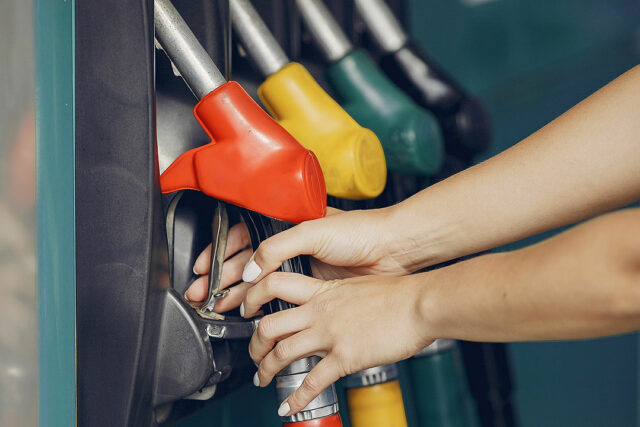
 – Argentine drivers ran the gauntlet on Monday to find scarce supplies of petrol to fill their tanks amid the most acute fuel shortage in years, which has left many filling stations out of supply and long lines at any pumps still operating.

The South American country, a major shale oil and gas producer, has suffered shortages of petrol and diesel since late last week because of domestic refining problems and as a lack of dollars has delayed imports.

That has sparked anger at the government ahead of a second-round presidential election runoff next month between the ruling Peronist coalition’s economy chief Sergio Massa, seen as the front-runner, and radical libertarian Javier Milei.

“The truth is that I work with the car and it’s like looking for water in the desert,” said 38-year-old Cabify driver Raul Paretto. “It is distressing because you don’t know on a day-to-day basis what can happen; we are living one day at a time.”

Around the capital Buenos Aires, Reuters reporters saw empty filling stations with signs saying no more petrol. In other places, long queues formed and some rationed sales. There were, however, some signs of things starting to improve.

“Today they sold me only super, though there was no premium,” said self-employed worker Leonardo Villa with his car. “But, well, yesterday there was none anywhere, the day before neither. At least today I was able to fill up.”

In Argentina‘s farmlands, producers said a shortage of diesel showed signs of abating too, key for the start of the planting season of soy and late season corn, the country’s main cash crops.

“It is not completely normalized but there is a little more supply,” Jorge Chemes, the head of the Argentine Rural Confederations (CRA), told Reuters on Monday.


EXPORT HALT THREAT

Oil executives cited planned halts at local refineries, which provide 80% of domestic supply, and the country’s scarce foreign currency reserves that have held up imports.

“It’s not a problem of lack of crude oil, the problem is that there’s no more processing capacity with the refineries we have in Argentina,” said one industry source, asking not to be named because he was not authorized to speak to the media.

“On top of that, you need dollars to pay for imports and the central bank does not have them. And even when they do import, the refining companies make a loss selling at the pump below the price they are buying,” the source said.

Argentina‘s government has fixed a local oil price at $56 per barrel, far below the international price around $86 LCOc1 to try to calm local inflation of nearly 140%. That skews the economics for firms importing product from overseas.

During the weekend Economy Minister Massa told oil companies they must solve the domestic supply crisis by the end of Tuesday or the government would halt crude oil export shipments from the huge Vaca Muerta shale formation.

“I am going to defend the internal supply, I am going to defend the consumption of Argentines,” he said.

Argentina‘s largest fuel producers and refiners said in a joint statement on Monday they had presented a plan to the government to bring gas stations back up to full supply and to boost stocks.

“We will use all methods possible to accelerate the unloading of ships with imported fuel, which, like every year, supplements local production,” they said.

Local unions backed Massa’s position and threatened a strike from Wednesday unless the domestic situation was resolved. They said crude production was at a record and the oil companies were being “opportunistic and petty.” — Reuters

ADVERTISEMENT
ADVERTISEMENT