Home Blog Page 39

Post-Resurrection thoughts: From the empty tomb to empty promises

STOCK PHOTO | Image from Freepik

The story of the resurrection is not merely a cornerstone of Christian doctrine; it is a test of moral integrity, both personal and national. From the first witnesses of the empty tomb to modern believers navigating power, politics and public life, the question has never changed: What does it mean to truly believe that Christ is risen?

Early on that first Sunday morning, Mary Magdalene came to the tomb and found the stone rolled away. What she encountered was not just an empty grave, but the beginning of a transformed understanding of faith. In fact, she was searching for the dead body of Jesus, not exactly for the Risen Christ. She reported to Peter and John, who rushed to the burial site, confronted by a mystery they did not immediately understand. The folded linen, the empty tomb, and the quiet order within it all pointed to something extraordinary, yet comprehension unfortunately lagged behind their observation.

The resurrection would later be confirmed through Jesus’ multiple appearances: to Cephas, the 12 disciples, more than 500 believers, James and Paul, as recorded in I Corinthians 15:3–8. These accounts established not just an event, but a foundation, one that affirms Christ’s death, validates his resurrection and anchors the Christian faith in verifiable witness.

But the deeper lesson lies not only in the evidence but also in the responses.

Mary responded with deep devotion. Hers was an affective faith, marked by love and loyalty. John demonstrated intuitive faith; he saw and believed, even before everything made sense. Peter’s response was more complex — contemplative, uneven, yet ultimately transformative. He had inner conflicts to resolve before his enlightenment. And then there was Thomas, who demanded empirical proof before belief could take hold.

These responses are not relics of the past; they are reflections of the present. Modern believers and skeptics alike still fall into these patterns: some led by emotion, others by insight, others by struggle, and still others only by evidence. Faith engages the whole person. But it also demands something more, and that is the consistency between what is professed and how one lives such a profession.

It is here that the quiet yet profound figure of Nicodemus becomes especially relevant.

Nicodemus in John chapter 3 first appears as a man of stature, a Pharisee who approached Jesus under cover of night. He was curious, searching, but cautious, unwilling to risk his position or reputation. His faith, if it could yet be called that, remained hidden, obviously tentative, and yes, incomplete. In John chapter 7, he starts to openly articulate some thoughts about justice and fairness when the Pharisees debated what to do with the prophet from Galilee.

But the resurrection narrative reveals a different Nicodemus.

No longer concealed by darkness, he emerges into the open with a bold and costly act of devotion. In John chapter 19, Nicodemus brings an estimated 75 to 100 pounds of burial spices. This is an offering fit for kings; he honors Jesus publicly. The value of this act, in modern terms, could range from $150,000 to $200,000. More than the cost, however, was the risk. To align himself with a crucified man was to defy the very establishment that had condemned Jesus.

Nicodemus crossed the line from curiosity to conviction, from secrecy to open defiance.

And in doing so, he exposes the central tension of faith, both then and now: the gap between belief that is spoken and belief that is lived.

Many today profess faith. They invoke God in speeches, display religiosity in public by kneeling in the open and beating their chests, and identify with spiritual traditions. But like Nicodemus in his earlier phase, their belief often remains cautious, calculated and convenient. It avoids cost. It resists accountability. It seeks the appearance of faith without its demands.

This is not merely a personal failing. It becomes a structural problem when carried into positions of power.

Nowhere is this contradiction more visible than in public life in the Philippines.

There is no shortage of leaders who speak eloquently of love for country and concern for the Filipino people. Nationalism is invoked. Service is proclaimed. The language of sacrifice is repeated. Yet behind these declarations, patterns of corruption, patronage, and abuse persist.

To top it all, public funds are misused. Regulatory systems are manipulated. Policies meant to protect the vulnerable are weakened by self-interest. Institutions that should safeguard accountability are compromised.

This is not a failure of competence alone. It is a failure of moral coherence.

To claim love for the nation while participating in its exploitation is not merely inconsistent. It is no less than a betrayal. It reflects a deeper problem: a form of belief that has been emptied of substance. It is faith reduced to rhetoric, conviction replaced by convenience.

And this is precisely where the resurrection speaks most forcefully, not just as theology, but as a standard of public ethics.

The resurrection affirms that truth cannot be buried indefinitely. It declares that accountability is real, that justice matters, and that even elected authority is ultimately answerable to the Filipino people, or if they are ignored, to a higher moral order. It validates not only belief, but the transformation that must follow belief.

For policymakers and leaders, this has concrete implications, especially at this time of enormous challenges posed by the global hostilities and energy uncertainty.

Faith cannot remain a private sentiment while public decisions contradict its core principles. A genuine response to the resurrection demands:

• Integrity in governance: transparent use of public funds, strict enforcement of anti-corruption laws and institutional reforms that prevent abuse rather than merely punish it.

• Consistency in policy: economic and social programs that genuinely prioritize the poor, rather than enrich a few under the guise of national development.

• Accountability in leadership: willingness to submit to scrutiny, uphold the rule of law and accept the consequences for wrongdoing.

• Moral courage: the readiness to act rightly even when it is politically costly.

Anything less is not simply inadequate; It is deceptive.

Nicodemus offers a hopeful reminder that transformation is possible. His journey shows that even those who begin in hesitation can arrive at conviction. But his story also removes every excuse. He did not remain in the shadows. He acted decisively, publicly and sacrificially.

That is what makes the contrast today so stark.

The resurrection has already been proclaimed. The evidence has already been given. What remains is not a lack of proof but a lack of courage to align belief with action.

For too many, faith has become a tool used to inspire trust, secure legitimacy or maintain influence. It is invoked when convenient and set aside when it demands reform. This is not faith as seen in Mary Magdalene’s devotion, in Peter’s repentance or in Thomas’ honest search for truth. And it certainly does not resemble Nicodemus, who ultimately chose costly obedience over silent compromise.

It is something else entirely, a hollow profession that masks ethical failure.

The resurrection stands in judgment against such a life.

It declares that truth cannot be manipulated, that justice cannot be postponed indefinitely and that leadership without integrity will ultimately be exposed. The empty tomb is not a symbol for ceremony. It is a call to transformation.

And that call is urgent.

To believe that Christ is risen is to reject corruption in all its forms. It is to confront systems that perpetuate inequality. It is to build institutions that reflect justice rather than undermine it. It is to ensure that love of country is demonstrated not in speeches, but in policies that uplift the dignity of every Filipino.

The time for ambiguity has passed.

The empty tomb leaves no space for neutral ground especially for those entrusted with public responsibility. One either leads in the light of truth or participates in the perpetuation of darkness. One either embodies the values one proclaims or erodes the very foundations of trust and nationhood.

In the end, it will not be declarations of faith that define a people or its leaders but the structures they build, the justice they uphold and the lives they protect.

The stone has already been rolled away.

The only question that remains for believers, for leaders, for the nation is invariably this: Will we live as if the resurrection is true, or will we continue to speak of it while denying it in the way we lead, decide, and live?


Diwa C. Guinigundo is the former deputy governor for the Monetary and Economics Sector, the Bangko Sentral ng Pilipinas (BSP). He served the BSP for 41 years. In 2001-2003, he was alternate executive director at the International Monetary Fund in Washington, DC. He is the senior pastor of the Fullness of Christ International Ministries in Mandaluyong.


BSP looks to remove salary loan tenor cap for flexible payments

DEPED.GOV.PH

THE BANGKO SENTRAL ng Pilipinas (BSP) is looking to remove limits on tenors of salary-based loans and instead allow financial institutions to decide on terms based on their assessment of borrowers’ capacity to pay.

This comes amid calls from teachers asking for longer loan repayment terms to help ease their financial burden.

A draft circular showed that the central bank plans to scrap the three- to five-year term limit for salary-based loans.

“The BSP seeks to enhance the regulations governing salary-based general-purpose consumption loans to provide greater repayment flexibility to borrowers and salaried employees, including teachers, and help ease debt-servicing burden, while ensuring adherence to prudent credit standards,” the central bank said. “Consistent with this objective, the revised regulations move away from a prescriptive prudential limit on loan tenor toward a principles-based approach.”

“The Bangko Sentral recognizes the helpful role of salary-based, consumer lending schemes in allowing an individual borrower to manage his/her cash flows provided these are granted under sound credit standards and fair consumer practices. The Bangko Sentral likewise encourages competition and transparency to promote efficient and innovative delivery of financial services and fair dealing with customers.”

Under the proposed changes, financial institutions are expected to decide on the terms and conditions of a salary loan, including the tenor and repayment structure, based on their assessment of the borrower’s creditworthiness, including their ability to pay, sources funds, and repayment history.

“The repayment period may likewise be set through mutual agreement between the lender and the borrower, subject to prudent credit risk controls,” the BSP said.

It added that loan renewals or extensions of maturity can only be granted after a reassessment of the borrower’s capacity to pay.

“Further, no loan renewal shall be allowed unless accrued interest receivable has been paid and there has been a substantial reduction in the outstanding principal.”

The proposed amendments also clarify the scope of salary-based general-purpose consumption loans, distinguishing them from other personal loan products.

“This includes credit accommodation for education, hospitalization, emergency, travel, household, and other personal consumption needs,” the central bank said.

Meanwhile, credit card receivables, motor vehicle loans, loans to individuals for housing purposes, and other personal loans for non-consumption purposes like those for business or income-generating activities, are not considered as salary loans, even if repayment is facilitated through salary deduction or similar arrangements, it added. — Bettina V. Roc

Ilonggo cuisine takes center stage in Filipino Food Month

BATWAN, kadyos, and sigarilyas.

ILOILO CITY — Iloilo City showcased its cuisine during the launch of Filipino Food Month (FFM) 2026 on April 6, underscoring its position as a culinary gem in the Philippines.

“One of the highlights of why they choose Iloilo for conventions and events is because of the food,” Iloilo City Mayor Raisa Treñas-Chu told BusinessWorld in an interview.

“They’re saying that the food here is not only good, but it’s also cheap, so we get to highlight our food, and we also help in the local economy,” she added.

Since 2018, the Philippines has celebrated Buwan ng Kalutong Filipino (translated: Filipino Food Month; FFM) to honor the country’s vibrant culinary heritage and local food sources.

Beyond the famous batchoy (a noodle soup) and pancit molo (a soup with dumplings), Ilonggos take pride in their unique dishes, reflecting a rich culinary heritage that fosters local pride and appreciation.

“The best thing here is Iloilo cuisine has a definitive cuisine or food which is locally known here, and not every province has it,” Iloilo-based Chef Miner del Mundo told BusinessWorld in an interview.

“Not all Filipino households would claim that KBL or kadyos [pigeon peas], baboy [pork], and langka [unripe jackfruit] originated from them because it is really very Iloilo,” he added. KBL is a sour soup quite similar to sinigang but with a different take. Unlike sinigang, which uses either tamarind, kamias, unripe mangoes, or guava as its souring agent, KBL offers a more subtle sourness from batwan, a fruit primarily found in Western Visayas.

Another popular batwan-based sour beef soup is kansi. Its taste profile is like a mix between the traditional bulalo (a soup made from simmering beef shanks) of the Tagalogs and sinigang — both savory and sour in every sip.

The same goes for their version of adobo. While most adobo recipes consider soy sauce a staple ingredient, Ilonggo Adobo rarely uses it. Instead, they use vinegar, garlic, salt, pepper, and annatto oil, creating an earthy, tangy flavor.

Iloilo also has its own version of paella served during occasions and gatherings called Arroz Valenciana.

Arroz Valenciana is a rich, sticky rice dish featuring chicken, pork, c, raisins, green peas, and egg. Compared to Pampanga’s bringhe (another celebratory rice dish), which has a suman-like (rice cake) texture and is heavily reliant on coconut milk, Valenciana has a moist texture from the combination of regular and glutinous rice.

As for their desserts, Iloilo has its bibingka [baked rice cake], which is relatively small in size but hefty in flavor. They also have a local variety of palitaw [chewy rice cake] called muasi that has toasted shredded coconut, muscovado sugar, and toasted sesame seeds.

Food is more than just a language of love for Ilonggos; it is a shared culture of abundance that unites communities and fosters a sense of belonging.

Visitors from the outskirts of town bring endemic ingredients like batwan fruit, kadyos, darag chicken (a native variety), and libas (a native tree whose leaves are used as souring agent and vegetable), highlighting the resilience and richness of Ilonggo culinary traditions.

Our visit to Filipino Food Month in Iloilo proved to us that the secret recipe for its native dishes lies in the hearts of its people and its longstanding traditions, making it deserving of its title as the City of Love (a much older nickname for the city) and Gastronomy (as per UNESCO). The city received its recognition as one of UNESCO’s (United Nations Educational, Scientific and Cultural Organization) Creative Cities of Gastronomy in 2023. Only 56 cities globally have received the title from the organization.

“The ingredients used in all the restaurants, carinderias, and food establishments in this city make it more appealing to the visitors, to the tourists,” Mr. Del Mundo said.

“They don’t go as far as traveling to other municipalities; they could taste it here in the city,” he added.

The city’s population is about 500,000, but rises to 800,000 during the day due to students and workers, according to UNESCO Focal Person for Iloilo City of Gastronomy Leny T. Ledesma.

While native ingredients play a significant role in all Ilonggo dishes, reliance on produce sourced outside the city poses challenges. “The environment, it’s changing already, and it’s affecting our seas. It’s affecting our planting,” Ms. Ledesma told BusinessWorld in an interview.

More than 80 backyard farms across the city aim to ensure sustainable sourcing and preserve Iloilo’s culinary heritage for future generations.

“We’re creating more farms and teaching the youth how to do this, so that the future is still there,” Ms. Ledesma said.

“We’re teaching them to eat local food so that more of the ingredients that we need can be grown. Otherwise, those foods will die if they are not eaten,” she added. — Almira Louise S. Martinez

Velox Networks enters Philippine market

STOCK PHOTO | Image by terimakasih0 from Pixabay

SINGAPORE-BASED Velox Networks Pte. Ltd. has expanded into the Philippines, bringing its cloud-based business communication services to the country as it seeks to tap demand for enterprise voice solutions.

“The Philippines is at an inflection point,” Velox Networks founder and Chief Executive Officer Martin Nygate said in a statement on Thursday. “New legislation is finally creating the regulatory framework for modern telecommunication infrastructure, and businesses across the country are ready for enterprise-grade voice solutions that don’t depend on aging copper and cable networks.”

Velox Networks, which provides cloud telephony services, is entering its third Southeast Asian market after Singapore and Malaysia, following the enactment of the Konektadong Pinoy Act, which lapsed into law in August 2025.

Cloud telephony removes reliance on physical cable networks by delivering business voice infrastructure over the internet.

The company said it has established teams in Manila and Cebu as part of its Philippine rollout.

Velox Networks said the Konektadong Pinoy Act creates favorable conditions for cloud communication providers, citing opportunities from the modernization of telecommunication infrastructure.

The law adopts an open-access policy aimed at creating a more competitive environment across the data transmission network, while encouraging investment in digital infrastructure to support reliable and affordable data services.

It also allows cloud-based service providers to deliver voice, messaging and compliance-grade communications without requiring heavy investment in physical network infrastructure.

Under its implementing rules, the law promotes asset-sharing between existing and prospective data transmission players.

“The regulatory environment is moving in the right direction, the business community is ready and we’re committed to being here for the long term,” Mr. Nygate said. — Ashley Erika O. Jose

Could the Iran crisis reshape global supply chains again?

STOCK PHOTO | Image from Freepik

By Cesar Polvorosa, Jr.

(Part 1)

WHEN OIL TANKERS are blockaded in the Strait of Hormuz, the consequences can reach far beyond the Persian Gulf. For countries like the Philippines — an economy that imports almost all its oil — events thousands of kilometers away can quickly translate into higher gasoline prices, rising transportation costs and eventually higher food prices at home.

Thus, the Iran vs US and Israel war that started on Feb. 28 has immediate economic implications for Asia. Iran commands control over the strategic Strait of Hormuz, which carries roughly one-fifth of global oil shipments, making it one of the most important chokepoints in the global trading system. When disruptions occur there, energy markets react almost instantly, sending price shocks through transportation networks, manufacturing supply chains and agricultural production systems.

The Philippines is particularly exposed. The country imports most of its crude oil from the Middle East, leaving it vulnerable to supply disruptions and price volatility triggered by geopolitical events in the region.

Recent diplomatic efforts illustrate how real these concerns have become. Manila has sought and reportedly gotten assurances from Tehran that Philippine-flagged vessels and energy shipments would be allowed safe passage through the Strait of Hormuz so that oil supplies and Filipino seafarers could continue moving through the vital route.

Such diplomatic moves amidst severe volatility reveal a deeper reality about globalization: international trade may be driven by economic efficiency, but it ultimately depends on geopolitical stability.

GLOBALIZATION’S HIDDEN ASSUMPTION
Economics textbooks often describe globalization as a system where countries specialize according to comparative advantage and trade freely across borders. For decades, global production networks were organized primarily around efficiency. Multinational enterprises’ (MNE) supply chain span different countries to take advantage of lower labor costs, specialized production capabilities and favorable trade policies. This system allowed firms to minimize costs while integrating markets across continents.

This framework rests on a largely unspoken assumption: that geopolitical conditions remain stable enough for global trade routes to function normally. Business-as-usual conditions assume the smooth functioning of globalization that depends on secure maritime corridors and predictable political relationships between states. When those conditions deteriorate, supply chains can quickly become vulnerable.

Recent history has repeatedly challenged this assumption. The COVID-19 pandemic disrupted global manufacturing networks and exposed the risks of concentrated supply chains. The trade tensions between the US and China forced MNEs to reconsider production locations. Russia’s invasion of Ukraine reshaped global energy flows and food markets.

Military engagement, confined to bombings as of April 6 involving Iran, the US and Israel, has impacted Persian Gulf states. The spreading conflagration raises the possibility of another shock — this time centered on one of the world’s most strategically important maritime corridors.

Because energy prices influence transport costs, fertilizer production and industrial inputs, disruptions in oil supply can ripple across entire supply chains. The result can be a simultaneous combination of inflation, currency pressures and sluggish economies.

These developments are pushing many firms to reconceptualize the structure of their production systems. Increasingly, firms are shifting from a model based purely on efficiency toward one that balances efficiency with resilience.

Resilience in this context refers to the ability of supply chains to continue functioning even when disruptions occur. Instead of concentrating production in a single country, MNEs are exploring strategies that diversify manufacturing across multiple locations. Regional production networks, redundant suppliers, selective import substitution and shorter logistics chains are becoming more attractive as businesses attempt to reduce exposure to geopolitical risk.

ENERGY AND FOOD SECURITY
The connection between energy and food security is often underestimated.

Oil prices affect almost every stage of modern agriculture: the production of fertilizer, the operation of farm machinery, irrigation systems and the transportation of crops to domestic and international markets. When oil prices surge, food prices often follow.

Thus, disruptions in the Strait of Hormuz impact not only energy markets but also global agriculture. Fertilizers such as ammonia and urea — essential inputs for modern farming — are produced using energy-intensive processes and are frequently transported through the same maritime corridors that carry oil shipments. For countries dependent on imported energy and agricultural inputs, this creates a double vulnerability that exerts upward pressure on food prices.

For the Philippines, the implications are clear. Energy inflation can easily spill over into food inflation, particularly in an economy where logistics and transportation costs play a significant role in agricultural supply chains.

LESSONS FROM JAPAN
One useful comparison comes from Japan, an advanced economy that has long confronted the challenge of deep dependence on global supply chains.

Like the Philippines, Japan imports most of its energy resources and a significant portion of its food supply. Yet Tokyo has long treated food and energy security as strategic priorities rather than purely market outcomes.

Japan’s food self-sufficiency ratio stands at roughly 38% on a calorie basis, one of the lowest among major developed economies. Despite this dependence, the government maintains strong policies designed to preserve domestic agricultural capacity.

The most notable is Japan’s rice policy. Rice is the Japanese staple crop and central to their national identity. The government has long protected domestic rice farmers through tariffs, subsidies and strict import controls.

From an economic perspective, such policies might appear inefficient since domestic rice production is costlier than the global average. Domestic rice production ensures that Japan retains a minimum level of food security should global supply chains face major disruptions.

Japan complements this agricultural policy with other measures: large strategic petroleum reserves, diversified energy suppliers and active diplomacy with Middle Eastern energy exporters. Collectively, these policies reflect a broader principle: in a world where geopolitical shocks can disrupt supply chains, resilience can require accepting higher costs in exchange for greater security.

Climate change adds another layer of uncertainty to global food supply chains. Increasingly frequent droughts, floods and extreme weather events are affecting the agricultural sectors of major exporting countries. Japan’s long-standing policy of maintaining domestic rice production, despite higher costs, reflects a strategic recognition that food security cannot rely entirely on global markets in an era of climatic uncertainty.

(To be continued.)


Cesar Polvorosa, Jr. is a professor of economics and international business at a Canadian university. He is an occasional contributor on Philippine and international economic development and geopolitics. His literary works have been published in North American and Asian anthologies and publications, including Likhaan: Book of Poetry and Fiction. He was an economist at the Philippine central bank and an AVP at a Philippine bank.

Kids who can’t read put Philippines’ status as call center hub at risk

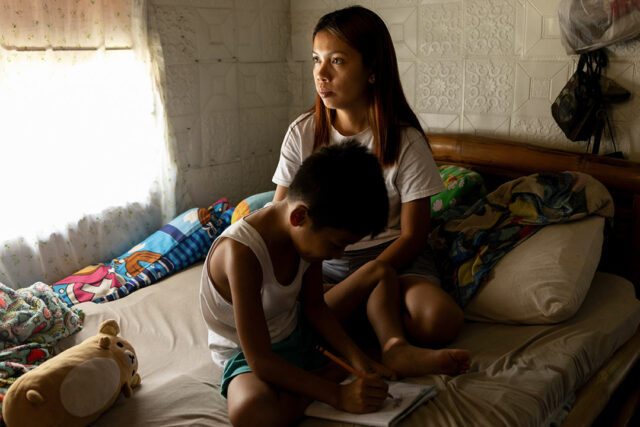
CARLA JOYCE ESPINO at her home with her child in Hagonoy, Bulacan. — GERIC CRUZ/BLOOMBERG

THE Philippine call center industry is a juggernaut, employing over a million and generating billions in revenue. Its workers’ voices are a familiar sound for callers from around the world, the nation’s deep pool of English speakers underpinning the country’s rise into a global hub for customer service outsourcing.

Artificial intelligence is shaping up to be a huge disruptive force but another, more insidious problem is emerging — an education system that’s producing graduates who were never properly taught to read in the first place.

Nestor Flores, the chief executive officer of Abba Personnel Services, Inc., a Philippines-based recruitment firm specializing in overseas placements, said the most noticeable gaps are in math and English, particularly in comprehension, grammar, and vocabulary.

“We administer a written exam as part of our hiring process. It’s essentially the same exam we’ve used for many years, yet it appears to be more difficult for applicants to pass today,” Mr. Flores said.

According to a three-year review of the country’s education system that culminated in January with the release of the Second Congressional Commission on Education report, nine in 10 Filipino children can’t read and understand a simple text by age 10. The failure persists throughout high school, leaving millions of students effectively functionally illiterate by the time they graduate.

It’s an educational crisis that’s already holding back the potential of the call center-dominated outsourcing industry, Jack Madrid, president of the IT & Business Process Association of the Philippines, said.

“Communication is more than just English fluency, it’s comprehension,” Mr. Madrid said. “Regardless of whether you’re in healthcare or banking, you need to be able to comprehend because the type of work our global customers expect from us is problem solving. This is no longer directory assistance.”

US outsourcing firm Concentrix Corp., which has a significant presence in the Philippines, is witnessing similar shortcomings. The Fremont, California-based group runs multiple sites across cities including Manila, Cebu and Davao.

“As a company that hires thousands of Filipinos every year, we do see the impact of learning gaps in areas such as reading comprehension, critical thinking and problem solving,” Amit Jagga, Concentrix Philippines chief business officer, said. “The Philippines continues to generate a large volume of applicants but not all are immediately job ready for the demands of modern customer experience roles.”

Concentrix is donating computers to schools and has a program that seeks to strengthen teacher capabilities, providing them with training on English proficiency, digital literacy and business ethics.

Abba Personnel’s Mr. Flores said when foreign employers hire Filipino workers, they prioritize relevant work experience and that “usually comes with the underlying assumption that workers already have a solid academic foundation. Work experience builds on that foundation rather than replacing it.”

In the decades after World War II, thanks to its adoption of a nationwide public school system under US rule, the Philippines had one of the highest literacy rates in Asia. Its large, English-proficient labor force helped make the nation one of the world’s top suppliers of migrant workers, including nurses and seafarers. A booming business process outsourcing industry emerged, and the country has long sought to move into more advanced electronics manufacturing, alongside regional peers such as Malaysia and, more recently, Vietnam.

Now, the unfolding education emergency risks turning those industrial aspirations into a pipe dream.

“Human capital has been one of the country’s greatest strengths, particularly given its young and dynamic population,” Asian Development Bank Philippines Country Director Andrew Jeffries said. “But when large numbers of learners leave school without strong foundational skills, it can affect productivity, workforce readiness and the country’s ability to move into higher-value sectors of the global economy.”

President Ferdinand R. Marcos, Jr. has vowed to prioritize education for the remainder of his term that ends in 2028.

“The challenges that hound our education sector are immense,” he said in February at the launch of an initiative to fast-track the construction of school buildings. “But now we have the opportunity to correct at least part of those problems.”

In an interview with Bloomberg last month, he said the nation’s workforce is considered “our greatest asset.”

“They are relatively well-trained, but we have to do reskilling and upskilling,” Mr. Marcos said. “Our people have to be ready to maximize the advantages that AI provides and watch for the dangers that sometimes AI will bring.”

There’s no single reason to explain the education decline. In part, it’s a culture of mass promotion, where teachers are encouraged to move students up even if they’re not ready. Teacher evaluations often depend on student pass rates and schools want to avoid high failure or dropout numbers.

Carla Joyce Espino, a 28-year-old single mother from Hagonoy, a town in Bulacan province north of Manila, says she was surprised when her son Draven managed to move up to Grade 2 without being able to read.

“I fear my son will be among the many hordes of students who reach high school without learning how to read and write,” Ms. Espino said. “I really don’t want that to happen.”

Starting this summer, a tutoring program called “Tara, Basa!” — Tagalog for “Let’s Read” — will be made available to Grade 1 pupils. The program seeks to aid low-income families by tapping college students as tutors for children who are struggling. “I have high hopes it’s not yet too late for Draven to learn how to read and reach his ambition, whatever that might be,” Ms. Espino said.

Some schools meanwhile have outdated text books and other materials, raising concerns about quality, and poverty is another major factor. Malnutrition and financial hardship play a central role in keeping children out of the education system, with many families unable to afford transport or sufficient food and kids instead needing to work or stay at home to help instead of studying.

In Happyland, a densely populated informal settlement in Manila, Angel Ramos, a 35-year-old mother of five, had to make a painful choice between education and food. Three of her children have stopped school because the family can’t afford it. Ms. Ramos acknowledges the possibility that education could be her children’s way out of poverty, “but when I think about it, it’s more important they eat.”

One policy advisor and former finance agency undersecretary blames a lack of focus on learners’ formative years.

“Basic education has been neglected, that’s the root cause. Children drop out as early as Grade 2,” said Milwida Guevara, president at Synergeia Foundation, a non-government organization working to improve basic education.

The EDCOM II study released in January also found that by age 15, just when children are finishing junior high school, only one in 10 can read with understanding. More than 70% don’t have the minimum proficiency in math. “Most Filipino learners are not mastering foundational competencies — literacy and numeracy — leading to lifelong handicaps,” the commission said.

Education has also been underfunded in recent decades, even as the nation’s constitution mandates it should get the biggest share in the annual budget, said Ruby Bernardo, national chairperson of Alliance of Concerned Teachers, the country’s biggest teachers union.

“It’s a decades-old problem that’s now burdening the students,” Ms. Bernardo said, pointing to the lack of classrooms, teachers and learning materials.

The Philippines this year allocated P1.3 trillion ($21.6 billion) in its budget for education, the highest ever, equivalent to 4.4% of gross domestic product and the first time the country has met the United Nations benchmark of 4% to 6% of GDP for education spending.

Corruption is an issue as well, Ms. Bernardo said, considering that for many years the construction of classrooms has been handled by the public works department, which is embroiled in a graft scandal over billions of dollars of substandard and non-existent infrastructure projects. It’s estimated the Philippines has a shortage of some 145,000 classrooms.

“The risk for the Philippines is not simply that some children learn less; it is that the country gets trapped in a low-skills, low-productivity, low-complexity growth model just as global competitors are reorganizing around higher-value manufacturing, digitally enabled services and AI,” World Bank lead economist for the East Asia Pacific region, Tara Beteille, said.

While that’s a threat for the business process outsourcing industry, it’s “even more consequential for semiconductors and advanced manufacturing,” she said. The Philippines is seeking to expand into higher-value design and manufacturing of chips, from more basic assembly and packaging.

“The Philippines has a young, growing population, and every percentage point of improvement in student proficiency translates into real, lasting economic growth,” Ms. Beteille said. The World Bank has done some economic modeling on the Philippines that shows acting on learning today could translate into growth gains equivalent to 73% of current GDP over the next five decades.

Danilo Lachica, president of the Semiconductor and Electronics Industries in the Philippines Foundation, Inc., acknowledges the many problems but is reassured the country’s main education agencies are coordinating their efforts.

“I’m encouraged by the fact that Education Secretary Sonny Angara and TESDA Director-General Kiko Benitez are there and they’re interested in making the changes,” Mr. Lachica said, referring to the Technical Education and Skills Development Authority, which oversees vocational training and certification. “But how do you eat an elephant? You just have to take it one bite at a time.” — Bloomberg

Peso recovery hinges on US-Iran ceasefire deal

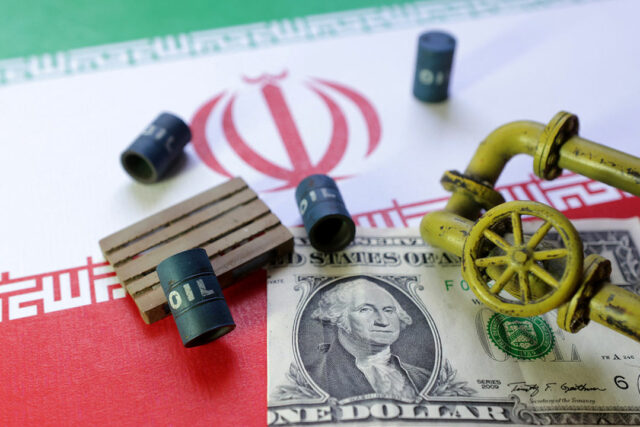
AN IRANIAN FLAG, a US dollar banknote and miniatures of oil pipes and barrels are seen in this illustration taken on June 23, 2025. — REUTERS/DADO RUVIC/ILLUSTRATION

THE PESO could still return to the P60 level versus the dollar and even weaken further  despite the United States and Iran forging a temporary ceasefire as markets await significant improvements in the situation in the Middle East and in oil prices.

On Wednesday, the local unit surged by 90 centavos to end at P59.43 against the greenback from its Tuesday close, data from the Bankers Association of the Philippines showed.

This was its largest one-day gain since it advanced by 96 centavos on Nov. 11, 2022 to close at P57.23. This was also the peso’s strongest close in almost a month or since it ended at P59.385 on March 12.

Analysts said the truce provides some relief to markets, but it remains to be seen if this would translate into an extended recovery as the situation stays fragile.

“The ceasefire gives the peso much-needed breathing room. With oil prices pulling back sharply, inflation and import pressures could ease, which is supportive for the currency,” Reyes Tacandong & Co. Senior Adviser Jonathan L. Ravelas said in a Viber message.

He said markets will watch whether the ceasefire sticks, where oil prices settle, and how the US Federal Reserve and the Bangko Sentral ng Pilipinas  would respond.

“As long as geopolitical tensions stay contained, optimism should be enough to keep the peso closer to P60,” he said. “A move back to P60 is my base case as risks of ceasefire break down are high and oil spikes again.”

The peso will “comfortably” remain below the P60 level if global crude oil prices stay below $100 per barrel levels and if the Strait of Hormuz stays open, Union Bank of the Philippines Chief Economist Ruben Carlo O. Asuncion likewise said in a Viber message.

However, any renewed disruption to oil supply could quickly revive depreciation pressures, keeping the dollar-peso largely headline-driven in the near term, he said.

The peso remains vulnerable to risk-off sentiment as there are no material changes aside from the announcement of the ceasefire, a trader said in a text message.

The currency could see an extended recovery if the risk of escalation in the Middle East war is averted moving forward, Rizal Commercial Banking Corp. Chief Economist Michael L. Ricafort said in a Viber message.

“There is also a need to normalize the flow of crude oil, natural gas, and other energy products through the Strait of Hormuz to help further reduce global and local fuel prices that will also help further stabilize the peso exchange rate,” he said.

The dollar remained on shaky footing on Thursday after broad losses, as investors anxiously assessed whether a fragile ceasefire between the United States and Iran would hold, Reuters reported.

The ceasefire deal appeared to be on thin ice, as Israel continued its parallel war against the Iran-aligned militia Hezbollah in Lebanon, while Tehran accused both Israel and the US of violating the agreement and said that proceeding with peace talks would be “unreasonable.”

The Strait of Hormuz also remained shut to vessels sailing without a permit and shippers said they needed more clarity before resuming transit, sending oil prices higher.

US President Donald J. Trump said all of its ships, aircraft, and military personnel would stay in place in and around Iran until it fully complied with a deal.

The five-week war has shaken investor confidence, triggering the largest disruption to global oil and gas supplies on record. — Aaron Michael C. Sy with Reuters

Taiwanese artists HengJones, Our Shame to perform in Manila

TWO ARTISTS from Taiwan, HengJones and Our Shame, will be coming to the Philippines to join the fourth edition of the music festival All Of The Noise.

The event is slated for April 17 to 19 at two venues: Sari-Sari in Makati City and 123 Block in Mandaluyong City.

HengJones is an acclaimed hip-hop artist of Pangcah ethnicity, which is an indigenous group in Taiwan. Hailing from the city of Hualien, he’s known for trilingual rap that blends Pangcah, Mandarin, and English to tell stories of resilience.

Meanwhile, rising indie pop duo Our Shame has been gaining attention for their blend of acoustic folk and electronic music genres. They’re composed of singer-songwriter Estelle Huang and percussionist Isan Cheng.

Ahead of their performances in Manila, the artists spoke to Philippine press in a virtual roundtable interview on April 7.

“We’re very excited to be performing in the Philippines for the first time. We’ve always been very interested in the sonic activity of Filipinos,” said Ms. Huang of Our Shame.

“This is our fifth time performing overseas and the third in an Asian country. We’re thrilled to be in Manila. I’ve been to Boracay a few years ago and I saw local people just chilling and enjoying music, which tells me that the music aura is everywhere,” she added.

For HengJones, who was unable to join the press conference, it will be his third time to perform overseas. His manager, Hanako Purapuran, conveyed her excitement for the cultural exchange.

“Our language and other Southeast Asian languages are similar, so he is very excited to see how our cultures are similar,” she said.

As for potential collaborations with Filipino artists, both representatives of Our Shame and HengJones shared that they’re fans of certain types of music.

“I host indigenous parties in Taiwan and, in our community, we all love DJ Love’s songs. A lot of construction workers play budots a lot,” said Ms. Purapuran. “I really want to meet DJ Love!”

While Our Shame has already performed for Sonik Philippines online in 2020, meeting Filipino musicians face-to-face will surely be different, the duo said.

“We were very impressed by a Filipino singer called Jason Dhakal. His music introduced us to the sonic scene in the Philippines,” Ms. Huang explained. “We would definitely love to meet One Click Straight, a very talented band, and possibly have a little collaboration. We also met PLAYERTWO, a fantastic alternative R&B group, in Bangkok this January.”

All Of The Noise 2026 is set to have local and international artists over the three-day run. It is organized by The Rest Is Noise, a music curation and events production outfit.

Ms. Purapuran expressed the importance of joining such events, especially for indigenous artists.

“A lot of our indigenous artists in Taiwan don’t have companies or are not signed to labels, and they need to know the industry secrets. This is why I asked HengJones to join festivals,” she said. “It’s important for artists to know the industry side alongside their creative work.”

For Our Shame percussionist Ms. Cheng, festivals are a great way to showcase the musical diversity of a country and of an entire region.

“Taiwan is a very blended country, so identifying who I am and what is Taiwan is a very important question for all of us to face,” she explained. “I think Our Shame’s music is similar. We are blending different things; we try different sounds.”

“This is similar to seeking an answer to the question, ‘who am I?’”

Our Shame will be performing on April 17 at Sari-Sari Bar in Makati City while HengJones will be performing on April 18 at 123 Block in Mandaluyong City.

Tickets, ranging in price from P400 to 700 for single-day access and costing P999 for the three-day pass, are available via allofthenoise2026.helix.pay.ph. — Brontë H. Lacsamana

ACEN pushes lower threshold to expand household RE access

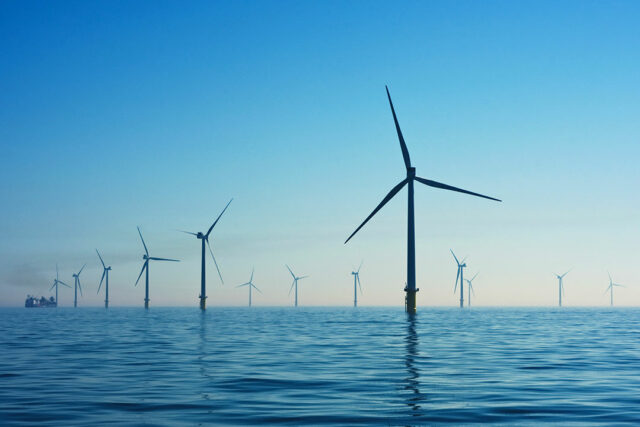
STOCK PHOTO | Image by Nicholas Doherty from Unsplash

RENEWABLE ENERGY (RE) producer ACEN Corp. is pushing to lower the threshold under the government’s green energy option program (GEOP) to allow more households, including lower-income consumers, to access clean power.

“I’m really hopeful that this administration leadership will be the one responsible for democratizing renewables and making them available to households,” ACEN President and Chief Executive Officer Eric T. Francia told reporters on Wednesday.

Launched in 2021, GEOP allows eligible consumers with a monthly average peak demand of 100 kilowatts (kW) to source 100% renewable energy from a preferred supplier.

The Department of Energy has moved to revise the rules governing GEOP and is set to lower the threshold to 50 kW, which would broaden eligibility beyond larger consumers.

“That’s the golden opportunity now, that the Department of Energy has set the framework for starting to lower the GEOP threshold and for the secretary of Energy now having the authority to declare when this would go down to the household level,” Mr. Francia said.

He said further reductions in the threshold would expand the market and encourage industry players to invest in additional capacity to meet rising demand for renewable energy.

Mr. Francia said ACEN plans to build on the GEOP segment, aligning with the Electric Power Industry Reform Act, which lets consumers choose their electricity supplier.

ACEN, the listed energy platform of Ayala Corp., is active in renewable energy generation and retail electricity supply.

Through its retail electricity supply unit ACEN RES, the group has maintained a leading position in the retail renewable energy market for three straight years, according to the Philippine Electricity Market Corp.

Its share among end-users rose from 36% in 2022 to 65% in 2025, reflecting growth in its customer base and supply volumes.

Mr. Francia said expanding GEOP access would help accelerate household participation in renewable energy adoption, particularly among consumers seeking alternatives to conventional power sources.

“If you want renewables to be taken advantage of by households, especially lower-income households, it’s best to just open the GEOP to all households,” he said. — Sheldeen Joy Talavera

Philippine blockchain push runs ahead of safeguards

STOCK PHOTO | Image from Freepik

By Paolo Joseph Lising

WHAT WAS JUST a few years ago a fringe technology for startups, blockchain is now entering the machinery of the Philippine state. Yet its rapid growth is outpacing the protections needed to safeguard everyday users — a challenge seen across markets worldwide. The Senate has approved the CADENA Act, as the Securities and Exchange Commission (SEC) heightened its oversight to safeguard investors, while the Bangko Sentral ng Pilipinas (BSP) is cautiously yet proactively shaping the Philippines’ digital future. The promise is sweeping: greater transparency, reduced corruption and a more inclusive financial system.

However, blockchain’s promise carries a dark reality. For example, the Philippine National Police said it logged 311 online investment scams last year, including 12 involving cryptocurrency. Last month, local users reported phishing attacks and unauthorized access, including a recent incident at Coins.ph, the country’s most widely used licensed exchange. During the Holy Week break, users of UNO Digital Bank reported missing or unauthorized InstaPay transfers. These risks extend to global platforms that users in the Philippines can easily access, including potential exposure to the recent $280-million hack of the Solana‑based Drift Protocol, an exploit that analysts have linked to a suspected North Korea‑affiliated operation.

The events are not a series of isolated failures; they reflect a pattern where adoption is outpacing protection. The risks inherent in this trend raise the question of whether this rapid growth represents real advancement or merely a focus on perception rather than substantive development. My recent paper shows that blockchain and digital token systems can fund development, but they are not inherently inclusive. Without careful design, regulation and user readiness, benefits accrue to wealthier, better informed participants, leaving vulnerable populations exposed to greater financial risk. In other words, blockchain as a development infrastructure can reproduce inequality.

Blockchain risks stem from three areas — the inherent nature of technology, system design choices and the real-world environments of its users. Blockchain systems rely on irreversible transactions, complex interfaces and volatile markets, features that often constrain everyday users. Product builders encode decisions about who owns assets, who earns yield and who absorbs losses, often favoring early entrants and those with capital despite the appearance of open access. Lastly, protocols deploy blockchain in environments with uneven financial literacy, limited access to reliable information and varying levels of institutional protection.

The scams, unauthorized transactions and platform failures that users experience come from how digital financial systems are built and used. For instance, the Philippines ranks 61st out of 67 economies in the IMD Digital Competitiveness Index, reflecting weaknesses in the overall digital environment. Financial literacy remains low, with an OECD/INFE score of 58 out of 100. At the same time, a survey by the analytics technology group YouGov shows that only 46% of Filipinos fully understand cryptocurrencies.

Furthermore, infrastructure constraints compound these gaps. The Philippines ranks 104th globally in internet affordability, according to the Surfshark Digital Quality of Life Index. This comes as Filipino participation in cryptocurrency expands rapidly. The country ranks ninth globally in crypto adoption, according to Chainalysis (2024). This combination of high adoption and limited financial and digital capacity means users are entering complex, volatile systems without sufficient tools to assess risk.

The Philippines’ experience with Axie Infinity back in 2021 illustrates this tension. At its peak, the “play-to-earn” system was widely framed as a new model of financial inclusion, enabling users to earn income by participating in a blockchain-based game economy. What appeared as inclusion masked a structural divide between ownership and labor. Asset holders captured the upside, while participants supplied labor and absorbed volatility. When token prices fell, these differences became decisive. Early entrants and capital holders were able to exit or adapt. Later users, often dependent on the system for income, were left exposed.

As the CADENA Act proceeds in the House of Representatives, the Philippines’ focus has shifted from fringe adoption of blockchain to actual governance. Policymakers are driving the adoption of blockchain to promote transparency and combat corruption. Yet, these narratives can obscure a more immediate challenge: protecting users operating within these systems. A key use case being floated in the industry is payments and remittances, one of the country’s most vital economic lifelines, with inflows reaching $35.63 billion in 2025, or roughly 7.3% of GDP, according to the BSP. The immense scale of this linkage means any systemic failure could severely impact the entire economy.

https://tinyurl.com/42m3p49f


Paolo Joseph Lising is an ALM candidate in Global Development Practice at Harvard Extension School. Some of the insights in this article are drawn from his peer-reviewed paper, “Reassessing Blockchain in Global Development: Tokenization of Infrastructure, Social Impacts and the Axie Infinity Case in the Philippines,” which examines the social implications and equity challenges of blockchain adoption in emerging economies. He is also a researcher at Sora Ventures, a venture capital firm specializing in Web3 and blockchain investments in Asia.

Most Filipino Gen Z workers seek career growth — study

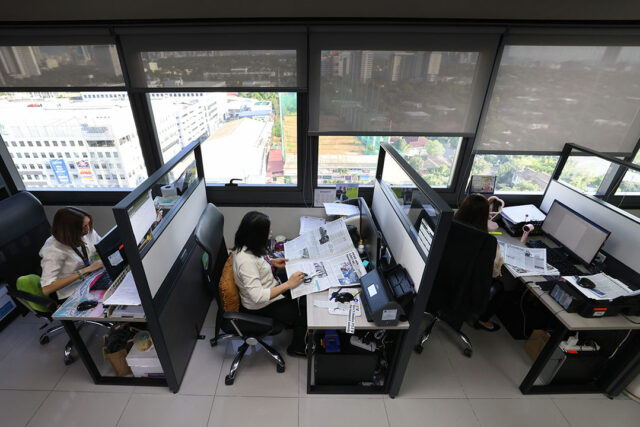
Employees are seen at a government office in Pasig City. — PHILIPPINE STAR/MIGUEL DE GUZMAN

OPPORTUNITIES for career advancement have emerged as the leading incentive for retaining the youngest members of the Philippine workforce, according to a study by global talent solutions firm Robert Walters.

In a statement, Robert Walters said its 2026 Salary Survey showed 52% of Filipino Gen Z professionals cite growth opportunities as the main reason for staying with their current employer.

“Gen Z is not afraid to move quickly if their developmental needs are not met. They view a career as a series of challenging roles rather than a single, long-term commitment,” Gavin Henshaw, country director at Robert Walters Philippines, was quoted as saying.

Gen Z, generally refers to individuals born between the late 1990s and early 2010s and now roughly aged 14 to 29, makes up a growing share of the workforce.

Robert Walters also noted that the 2026 Salary Survey showed 50% of Filipino companies are already using mentorship and guidance programs to attract Gen Z talent.

It added that 56% of Gen Z professionals prefer a hands-on, transformational approach to mentorship, where leaders actively demonstrate workplace practices. Only 34% favor a more hands-off style.

“To retain this dynamic generation, companies must move beyond mere salary packages and actively invest in tangible growth pathways and leaders who can genuinely inspire their teams,” Mr. Henshaw said.

Across Southeast Asia, 49% of Gen Z employees expect to remain with a company for one to two years, while 32% anticipate staying for three to five years.

In the Philippines, job security and stability remain key considerations, with 78% of Gen Z professionals citing these factors as important in their employment decisions. The study also found that 8% of Gen Z workers discuss their salaries openly, while 26% share compensation details with close colleagues, reflecting a growing awareness of workplace earnings.

“By offering security through transparency, growth through mentorship, autonomy through structured flexibility, and retention through regular milestones, you create an environment where the most mobile generation in history actually chooses to stay,” said Kimberly Liu, chief executive officer of Robert Walters Southeast Asia. — EMPS

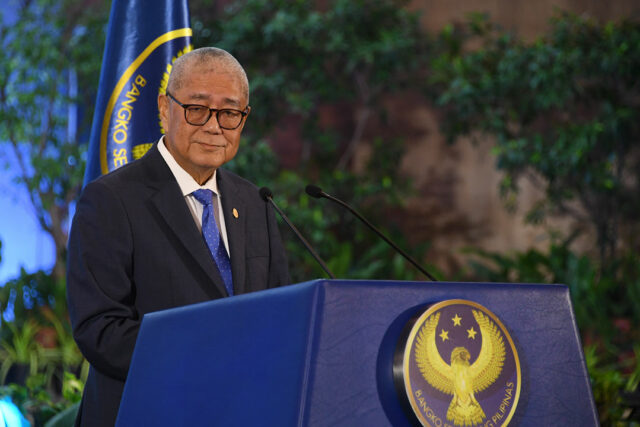
ASEAN members working to strengthen currency swap lines as crisis bites, Bangko Sentral chief says

BANGKO SENTRAL ng Pilipinas Governor Eli M. Remolona, Jr. — COURTESY OF BANGKO SENTRAL NG PILIPINAS

MEMBERS of the Association of Southeast Asian Nations (ASEAN) are working on expanding a regional crisis financing initiative as they deal with the economic fallout from the Middle East conflict, the Bangko Sentral ng Pilipinas (BSP) said.

BSP Governor Eli M. Remolona, Jr. said the 11-member regional bloc seeks to strengthen regional swap lines to help provide its members with emergency liquidity.

“So, one of the things we’re working on is expanding what’s called the Chiang Mai Initiative, which is ASEAN’s way of providing emergency liquidity to each other in times of crisis,” he told Money Talks with Cathy Yang on One News on Thursday.

The Chiang Mai Initiative is a multilateral currency swap arrangement among ASEAN members designed to address short-term liquidity issues in the region during times of crises. It was first established in May 2000 after the Asian Financial Crisis.

Mr. Remolona said the crisis credit line will not be a mere “symbolic gesture,” noting that they are already working on enhancing the initiative.

“It won’t be symbolic,” he said. “We’re talking even as we speak — strengthening those credit lines and those swap lines, making them bigger (and) more serious than before.”

However, the central bank chief said he hopes the energy situation would not worsen further so that the region would need not tap these emergency lifelines.

Meanwhile, Mr. Remolona added that the BSP is also working on improving regional financial integration as part of the Philippines’ ASEAN chairship this year.

The central bank wants Filipinos to be able to invest in stocks of companies in other ASEAN countries and for its neighbors to have access to the Philippine market as well, he said.

This can be achieved through open finance, where individuals may gain access to markets through financial institutions, Mr. Remolona said.

He added that they will support local consumers amid the ongoing crisis by ensuring prices remain manageable, especially for the bottom 30% of households.

“As a central bank, we’re not really very good at subsidizing stuff. It doesn’t work very well with us,” Mr. Remolona said. “What we can do for the Filipinos, especially the lower 30%, is to do our best in terms of price stability, try to prevent high inflation when it comes to the consumer basket of the lower 30% of Filipinos. We can’t do very much more than that.”

Inflation picked up to a 20-month high of 4.1% in March, with faster inflation seen for the bottom 30% at 4.2%, as soaring oil costs due to the Middle East conflict weighed heavily on consumer prices.

The BSP has said that its monetary policy will focus on tempering the spillover effects of oil shocks on transport fares, food and fertilizer prices, electricity rates and wages. — Katherine K. Chan

ADVERTISEMENT
ADVERTISEMENT