Home Blog Page 3877

IT-BPO sector leads as office demand exceeds 1 million square meters

PETR MACHACEK-UNSPLASH

LEECHIU Property Consultants (LPC) said that local office demand has breached one million square meters (sq.m.) as of Dec. 13 led by demand from the information technology and business process outsourcing (IT-BPO) sector.

LPC Director for Commercial Leasing Mikko Barranda said during a media briefing in Makati City on Wednesday that office demand stood at 1.07 million sq.m., up 8% from 988,000 sq.m. in the same period a year ago.

“Based on the figures we’ve recorded as of Dec. 13, we already reached that mark and we’re about to conclude the year above 1 million sq.m.,” he added.

According to Mr. Barranda, the country’s office space demand has been carried by the IT-BPO sector.

“The business itself has expanded their footprint in terms of employment. The base has expanded. It’s just a question of how much of that will report to the office versus those working remotely,” Mr. Barranda said.

“Despite the hybrid setup, the IT-BPO industry remains the primary driver of demand,” he added.

Mr. Barranda said that the office vacancy rate in the Philippines stands at 18%, equivalent to 3.3 million sq.m.

He added that 520,000 sq.m. of current live requirements are expected to extend into next year.

“We have conservatively also based our projections on what we’re seeing today since there’s 500,000 sq.m. of live demand as we enter 2024. It should be a sign for us to continue that same trajectory,” Mr. Barranda said.

“We predict a deceleration in contractions and vacancy levels starting next year. Approximately 711,000 sq.m. of new vacancy will be added to the supply by next year,” he added.

Recently, the Information Technology and Business Process Association of the Philippines (IBPAP) said the IT-BPM industry is expected to record 8.8% growth in terms of revenue to $35.4 billion this year.

“The growth sectors are healthcare; all the global healthcare companies are already here, banking and finance; and of course, the contact centers,” IBPAP President Jack Madrid said.

“We don’t have a problem with demand. There’s a lot of demand for the Philippines. Our challenge is the supply of employees, we need more employees,” he added. — Revin Mikhael D. Ochave

Small businesses, startups need more funding options, says SEC

SEC.GOV.PH

THE Securities and Exchange Commission (SEC) said available financing instruments for micro, small, and medium enterprises (MSMEs) need to be expanded to boost their business operations.

“In our continuous bid for financial inclusion, we recognize that there really is a need to broaden the financing instruments available for MSMEs,” SEC Commissioner Karlo S. Bello said during the 11th and last leg of the commission’s 2023 nationwide roadshow on capital formation for MSMEs and startups held in Tacloban City on Dec. 7.

“Together with our industry partners, we wish to present the different ways you can acquire financing through the capital market in order to jumpstart your business or expand your operations,” he added.

With this, the SEC pitched crowdfunding as an “accessible and viable capital-raising option for MSMEs and startups for their business expansion.”

The corporate regulator defines crowdfunding as a fundraising activity done by startups and SMEs where the public can fund a business idea via an online platform.

“It is unmistakable that MSMEs and startups have a crucial role in driving economic growth, fostering innovation, and generating employment,” Tacloban City Mayor Alfred S. Romualdez said in his opening remarks delivered by City Planning and Development Coordinator Janis Claire S. Canta.

“Understanding the challenges they face in accessing capital and in navigating the financial market, we have committed ourselves to create an environment conducive to entrepreneurship and investment,” he added.

In February, the SEC’s roadshow was done in Cebu, Cagayan de Oro, Zamboanga, Bacolod, Legazpi, Iloilo, Clark in Pampanga, Baguio, and Metro Manila. The roadshow attracted around 1,500 in-person at-tendees and over 8,000 online attendees.

Meanwhile, the SEC launched the Call-a-Friend and Engage with SEC (CAFÉ SEC) platform during the roadshow to give startups more opportunities to explore financing options in the capital market.

CAFÉ SEC is a channel for roadshow participants to reconnect with crowdfunding intermediaries and the Philippine Stock Exchange, Inc. for questions regarding their financing needs, and additional information on capital market-based products and services.

The newly launched initiative set the start of weekly consultation meetings on Dec. 13, with succeeding meetings scheduled every Wednesday. — Revin Mikhael D. Ochave

Focusing on the Filipino Demos during CCA Manila’s anniversary reinforce an emerging program on local recipes

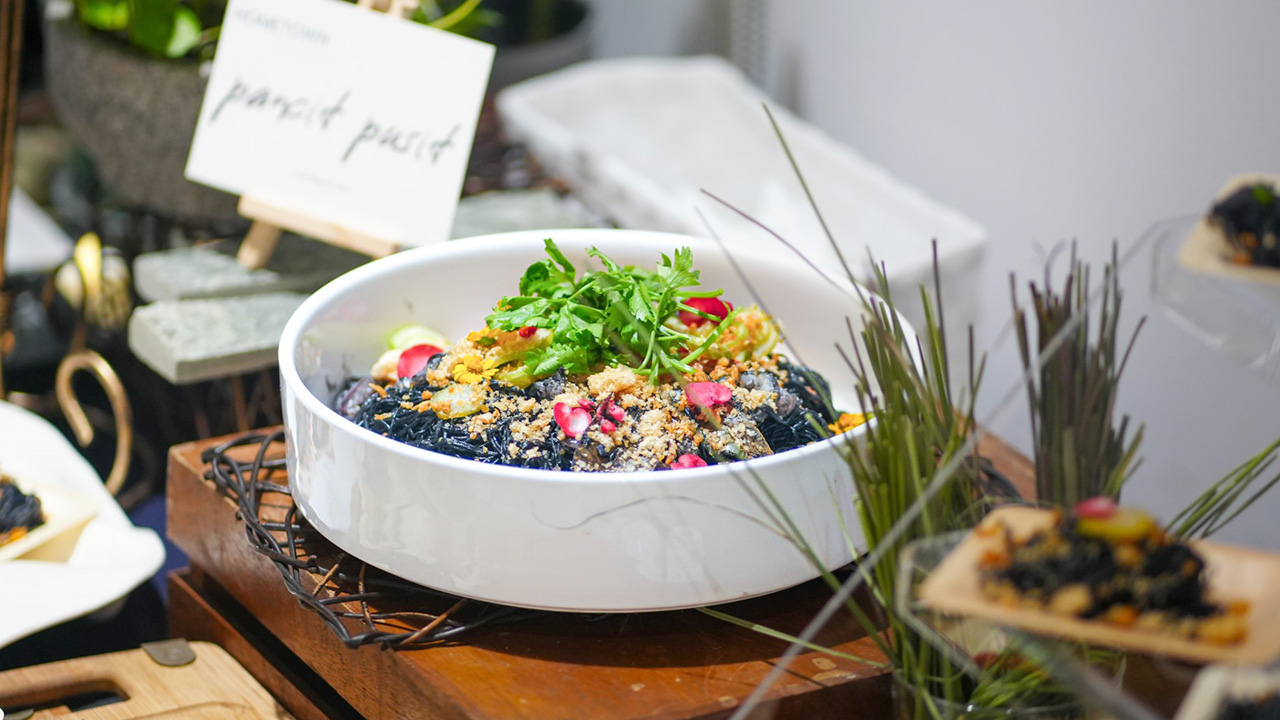
PANCIT PUSIT by CCA Manila chef-instructor Miguel Lorino.

THE CENTER for Culinary Arts (CCA) Manila celebrated its 27th anniversary on Nov. 29 with a culinary showcase, but also an intimate gathering of its alumni.

The CCA demo kitchen in Bonifacio Global City (BGC), a new campus inaugurated just this year in the University of the Philippines (UP) BGC complex, was transformed into a home kitchen, with four of the school’s instructors sharing their unique hometown recipes, each dish is a celebration of regional cuisine.

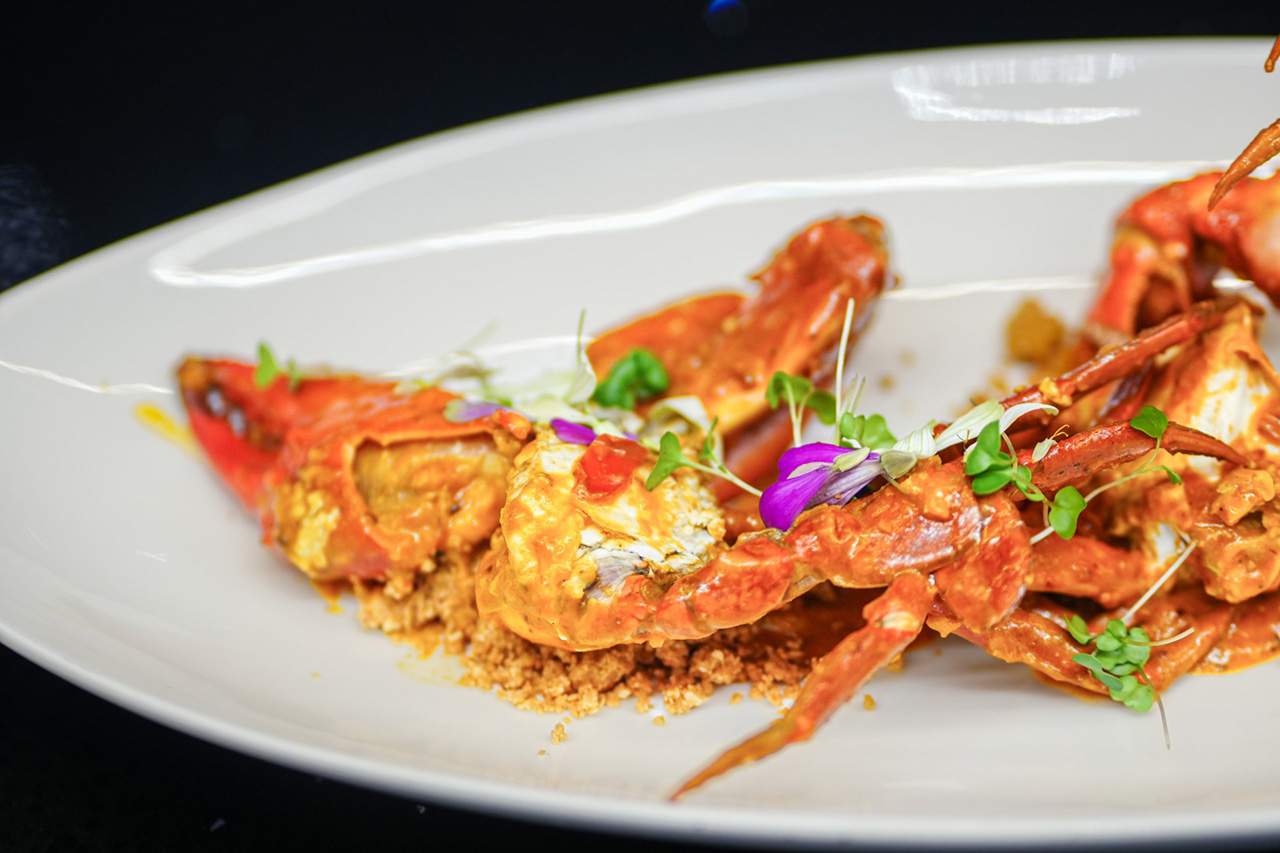
Kerwin Funtanilla, program manager of CCA Manila hails from Zamboanga. For his dish, he showed a Cangrejo con Salsa Alavar, blending spices and coconut milk to create a rich, flavorful crab dish that was both aromatic and visually stunning. The crabs were simmered in a fragrant sauce,  and then garnished with chopped peanuts. Another chef-instructor, Miguel Lorino, presented his Cavite hometown’s Pancit Pusit, reflecting Cavite’s coastal offerings. The dish delighted the audience with its deep, dark hues and tangy vinegar-infused squid ink, topped with crispy chicharon for an added texture. Anne Atanacio, representing Rizal, brought comfort in a bowl with her Caldo ng Rizal. This was a blend of malagkit rice, chicken, and aromatic spices, garnished with hard-boiled eggs and spring onions. Finally, Jay Recio from Aklan presented Inubaran na Manok, a dish with chicken, coconut milk, spices; but especially ubod (banana pith) and libas leaves. This was garnished with chili flakes, microgreens, and edible flowers.

The presentation seems to be connected to several elements in the school’s five-year plan: according to Badjie Trinidad, President of CCA Manila, they’re in the process of fine-tuning a program exclusively for Filipino cuisine.

“Our biggest project is really doing a program for Filipino cuisine,” she told BusinessWorld at the sidelines of the alumni homecoming. The program has 16 days worth of in-person classes, and, for students overseas who want to learn about Filipino cuisine (including Filipinos abroad who want to learn more about their heritage), there are options to take it online.

Ms. Trinidad walked us through other plans for the next five years: these include the construction of a kitchen with Thames International as part of a partnership, as well as building a kitchen in the University Hotel at the UP Diliman campus. Through the years, they have developed several programs in partnership with other institutions, such as the UP Los Baños campus and the University of Asia and the Pacific (UA&P).

She credits these partnerships with the institution’s longevity, keeping in mind how they were battered during the pandemic due to lower enrollment rates. “I think it’s the community that we have. We have a lot of support from our suppliers, our alumni -— because of the network that we have, we are able to connect with people who help us,” she said. “Definitely we cannot survive just by ourselves… the support of other institutions helped us.”

While a generation in the profession benefited from the original campus at Katipunan, Quezon City, Ms. Guerrero says the fate of the former complex is still uncertain. “Right now, it’s still under discussion. Hopefully, it gets redeveloped. For now, we’re focusing on building satellite locations.”

Looking back through their almost 30 years of existence, Ms. Trinidad has a few thoughts on how educating chefs changed not just the culinary landscape, but also the country’s professional one. “When we opened 27 years ago, people didn’t really look at being a chef as a career. It was more of like just a hobby; their passion that they do on the side,” she said.

“With CCA professionalizing it, it has become a career; a career that parents are supporting right now.” — Joseph L. Garcia

Alternergy prepares up to P4-B offering

ALTERNERGY Holdings Corp. is set to apply for the issuance of green corporate notes amounting to up to P4 billion as part of the listed energy company’s capital-raising activities to support its renewable power projects.

In a stock exchange disclosure on Wednesday, Alternergy said its board of directors approved the appointment of BDO Capital & Investment Corp. as its mandated lead arranger (MLA) for the fixed rate green corporate notes is-suance after a meeting on Dec. 12.

“The appointment of BDO Capital as MLA for the notes is in relation to Alternergy’s capital-raising activity for the development of the renewable power projects won by its subsidiaries under the Green Energy Auction 2 (GEA-2) program of the Department of Energy (DoE),” the company said.

“The board has authorized management to discuss and negotiate on the terms of the notes. The final terms and issuance of the notes shall be subject to the approval of the board,” it added.

On Monday, Alternergy said its subsidiary Alternergy Tanay Wind Corp. received certificates of award from the DoE for two wind power projects under the GEA-2 program. These projects are the 86-megawatt (MW) Tanay wind farm in Rizal and the 55-MW Alabat wind farm in Quezon province by the second quarter of 2024.

The GEA program is a competitive process of procuring renewable energy supply by offering capacities to qualified bidders at a set maximum or ceiling price.

According to the company, the certificates formally award the wind projects with 20-year off-take agreements with state-led National Transmission Corp. with a specific tariff.

Previously, Alternergy said it was seeking to develop up to 1,370 MW of renewable energy sources such as onshore and offshore wind, solar, and run-of-river hydropower.

Shares of Alternergy at the local bourse closed unchanged at 76 centavos on Wednesday. — Revin Mikhael D. Ochave

Agile regulation necessary amid firms’ growing adoption of AI

STOCK PHOTO | Image by Gerd Altmann from Pixabay

By Miguel Hanz L. Antivola, Reporter

THE ADOPTION of artificial intelligence (AI) among Philippine organizations is expected to grow next year, prompting the need for focused and agile regulation amid privacy concerns, industry officials said.

“We’ve let the genie out of the bottle already, so it’s going to be a matter of course,” Peachy Pacquing, managing director at creative business school Hyper Island, told BusinessWorld on the sidelines of an event.

“Some industries are more prepared than others, but by and large, we’re not prepared yet,” she added. “We need to talk about it, and more than that, act on it.”

Ronald B. Gustilo, national campaigner for Digital Pinoys, said AI adoption in the country is expected to increase next year amid continued infrastructure improvement, especially in the governance, healthcare, finance, and education sectors.

“This integration is poised to play a crucial role in advancing the nation’s technological landscape,” he added.

The Trade department earlier said that AI could contribute as much as $90 billion to the Philippine economy by 2030.

International Data Corp. said the Philippines ranked 12th out of 14 economies in the Asia-Pacific region in terms of AI adoption for business and consumer transactions.

Meanwhile, a report released by technology firm Cisco this month said only 17% of Philippine organizations are ready to utilize and deploy AI, with the majority of them raising concerns about the impact of not adopting these advances.

It added that about 44% of Philippine organizations consider themselves chasers or are only moderately prepared, while 35% are followers with limited levels of preparedness and about 4% are laggards, or those not prepared to leverage AI at all.

A thoughtful and strategic approach is needed when adopting AI, Mr. Gustilo said.

“Leveraging insights from nations that have successfully implemented AI, nurturing public-private partnerships, and allocating resources to AI education are pivotal steps that can elevate the Philippines’ standing in the region,” he said.

“A focused strategy is imperative to navigate the diverse landscape of progress and ensure a seamless assimilation of AI advancements across different sectors,” Mr. Gustilo added.

AI is still “very conceptual, unless it is being offered to the B2B (business-to-business) and corporate sector for execution,” Donald Lim, chief innovation officer at holding company Udenna Corp., said in an interview.

“Once AI is [more] consumerized like ChatGPT, you’ll see more and more discussions on the consumer segment,” he said.

There are already some applications of AI in the Philippine setting, he said, like in call centers.

“If they call, track, or text you, you are already more known and targeted, which is why privacy becomes more important,” he said.

Speed and scale should be taken into account by organizations and regulators when discussing AI, Mr. Lim said.

“Just make it open. Don’t clock down when it shouldn’t be. We really need AI to push us forward and move us onto the next level,” he said.

Still, ethical considerations must precede all other considerations as the technology intersects with data privacy issues, Mr. Gustilo noted.

“Collaborating with industry experts, adhering to international standards, and maintaining policy adaptability to accommodate evolving AI technologies are indispensable elements for ensuring responsible AI use,” he said.

“Striking a delicate balance between fostering innovation and implementing safeguards is paramount as the Philippines charts its course through the intricate terrain of artificial intelligence in 2024,” he added.

Mr. Lim said the Philippines is far from being a leading producer of AI solutions in the region.

“We’re not creators of technology or software solutions, but that’s okay. We’re not the creator of TikTok or Facebook, but we became the primary users of it globally,” he added.

As for regulating the use of AI, there is a need to push against the narrative that policy will always trail behind technology, Ms. Pacquing noted.

“If you’re a regulator or policy writer, you have every opportunity to be just as agile as a technologist… I only hear excuses. There must be speed, but very calculated intentional speed, in creating these policies,” she said, citing Singapore, where she is based, as an example, noting that policies there related to technology evolve in real time.

“My fearless forecast is all bets are off… It really depends on us as individuals to say this is important and therefore, we will invest in and develop our ability to work alongside AI,” Ms. Pacquing added.


Wine shop’s sales data reflect Filipino tastes

FOR the fourth year running, Winery.ph is tapping into its sales data to show Filipino wine preferences based on what they’re ordering. While once an online-only operation, Winery.ph opened its first physical store earlier this year.

The top-performing wines are listed in the store’s Kavino Choice Awards. Chris Urbano, the Managing Director and Chief Sommelier at Winery.ph said in a statement, “These awards are backed by real sales data from real transactions. They’re like a GPS for navigating the Philippine wine market’s tastes and preferences.”

Sixty-six wines are on the list out of the store’s 2,000 bottles, and are available at discounted prices at its sale, running until Dec. 16.

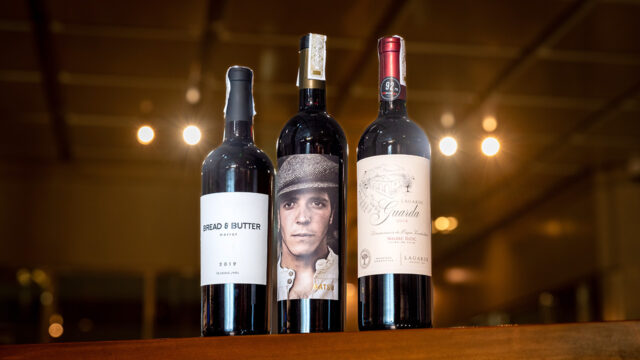
The Top Value Reds (those ranging in price from P500 to P1,999) list is led by Matsu El Picaro from Spain. Other wines completing the list are Lagarde Guarda DOC Malbec (Mendoza, Argentina), Bread & Butter Merlot (Napa Valley, United States), Santa Macarena Pinot Noir (San Antonio, Chile), Pra Vinera Reserve Cabernet Sauvignon (Napa Valley, United States), Odfjell Armador Cabernet Sauvignon (Maipo Valley, Chile), Gonzalez Byass Beronia Reserva (Rioja, Spain), Beringer Founders’ Estate Cabernet Sauvignon (Napa Valley, United States), Printhie Mountain Range Merlot (Orange, Australia), Chrismont Sangiovese (King Valley, Australia), Butcher’s Cut Malbec (Mendoza, Argentina), and Ramon Bilbao Crianza Rioja Tempranillo (Rioja, Spain).

While Spanish influences are still strong in red wine preferences, Mr. Urbano notes an emerging taste for New World wines, especially from Chile and Argentina. “Many Filipinos continue to prefer styles of red wine that are more intense and fruit-forward, which is best seen in bottles from outside of Europe,” Mr. Urbano said. “But the greatest commonality we see is that they are gaining a deeper appreciation for regions with bang for buck.”

The Bestselling Value Whites list (same price range) has the Cloudy Bay Sauvignon Blanc from New Zealand as its top performer. Several Sauvignon Blancs from the same Marlborough region in New Zealand are also on the list: second-placer Matua Valley Sauvignon Blanc, No. 6 Marlborough Vines, and 10th-placer Dog Point Sauvignon Blanc. Mr. Urbano credits this to “the burst of tropical fruits it presents alongside the varietal’s high acid and herbaceousness that makes it so food friendly.” He does note that Riesling is becoming a more popular choice, alongside Albarino and Pinot Grigio.

For sparkling wines in the value range, the Chandon Brut Sparkling NV from Argentina takes top place. “We’ve observed that, when they’re not buying something as luxurious as Champagne, Filipinos are actually quite adventurous when it comes to sparkling wine,” noted Mr. Urbano. “It’s likely that many buy sparkling wine because of its carbonation, rather than other preferences like specific tastes or styles — though we do see that Sparkling Moscato is popular, possibly for the fact that it is sweet. Australian Prosecco is also growing in popularity.”

In one category, the Philippines is consistent with the rest of the world: we also prefer rosé from Provence.

For their bestselling rosé, Château d’Esclans Whispering Angel (Cotes de Provence, France) takes first place, with the rest of the list dominated by New World wines, save for the Minuty M rosé, also from Provence.

In another category, Premium Whites (ranging all the way to P7,000 per bottle), the winner is a Joseph Drouhin – Chablis Reserve de Vaudon Chardonnay from Burgundy in France. Mr. Urbano notes, “While Filipino wine drinkers generally have a preference for New World styles, we start to see a bigger interest in French wine as they look for premium white wines.”

Winery.ph’s new Global Cellar Door showroom is at 2247 Chino Roces Ave., San Lorenzo, Makati. — Joseph L. Garcia

Term deposit yields inch lower on Fed, BSP bets

BW FILE PHOTO

YIELDS on the Bangko Sentral ng Pilipinas’ (BSP) term deposits went down on Wednesday, with market players betting that both the US Federal Reserve and the Monetary Board will keep rates steady amid easing inflation concerns.

The central bank’s term deposit facility (TDF) attracted bids amounting to P391.323 billion on Wednesday, above the P270 billion on the auction block as well as the P336.436 billion seen a week ago for a P290-billion offer.

Broken down, tenders for the seven-day papers reached P215.640 billion, higher than the P140 billion auctioned off by the central bank and the P178.186 billion in bids for a P160-billion offer seen the previous week.

Banks asked for yields ranging from 6.59% to 6.6875%, narrower than the 6.5% to 6.72% band seen a week ago. This caused the average rate of the one-week deposits to decline by 3 basis points (bps) to 6.6627% from 6.6927% pre-viously.

Meanwhile, bids for the 14-day term deposits amounted to P175.683 billion, higher than the P130-billion offering and the P158.250 billion in tenders for the same offer seen on Dec. 6.

Accepted rates were from 6.60% to 6.6975%, lower than the 6.655% to 6.71% margin recorded a week ago. With this, the average rate for the two-week deposits inched down by 1.36 bps to 6.6756% from the 6.6892% logged in the prior auction.

The BSP has not auctioned off 28-day term deposits for three years to give way to its weekly offerings of securities with the same tenor.

The term deposits and the 28-day bills are used by the central bank to mop up excess liquidity in the financial system and to better guide market rates.

TDF yields went down on Wednesday amid expectations of a continued pause in tightening in the US and the Philippines this week, Rizal Commercial Banking Corp. Chief Economist Michael L. Ricafort said in a Viber message.

A BusinessWorld poll last week showed 15 out of 17 analysts expect the Monetary Board to hold the target reverse repurchase rate steady at 6.5% for a second straight meeting on Thursday, which will be the BSP’s last policy review for the year.

Philippine headline inflation eased to 4.1% in November from 4.9% in October and 8% in November 2022.

For the first 11 months, the consumer price index (CPI) averaged 6.2%, faster than 5.6% in the same period a year ago. This is still above the BSP’s baseline forecast of 6% and 2-4% target for 2023.

Meanwhile, market players are betting on policy easing from the Fed in 2024, pricing in at least 100 bps in rate cuts that could be matched locally, Mr. Ricafort added.

The Fed was expected to keep its target rate unchanged at 5.25-5.5% for a third straight meeting this week. The decision was scheduled to be announced at the end of their two-day meeting overnight.

The US central bank has raised borrowing costs by 525 bps since March 2022.

TDF yields corrected lower on Wednesday as global crude oil prices declined to $68 per barrel levels, the lowest in more than five months, Mr. Ricafort said.

This would help support the downward trend in inflation in the US and in the Philippines, he said.

In the US, the CPI edged up 0.1% last month after being unchanged in October, the Labor department’s Bureau of Labor Statistics said.

In the 12 months through November, the CPI increased 3.1% after rising 3.2% in October. — Keisha B. Ta-asan

ACEN RES to power The Penshoppe Group’s headquarters with renewable energy

From L-R: Ted Belza, Vice-President for Human Capital Management at GABC; Bryan Liu, Vice-President for Strategy & Operations at GABC; Alice Liu, President and Chief Operating Officer of GABC; Miguel de Jesus, COO for Philippine Operations at ACEN; Tony Valdez, SVP and Head of Market Transformation at ACEN; and Ela Mina, AVP for Commercial Operations and Head of Account Management at ACEN

ACEN Renewable Energy Solutions (ACEN RES), the retail electricity arm of the Ayala group, partnered with international fashion enterprise Golden ABC, Inc. (GABC), owner of The Penshoppe Group, to power the latter’s corporate office in Quezon City with 100% renewable energy.

Through a Retail Electricity Supply Agreement, the partnership allows ACEN RES to support GABC’s pivot towards more sustainable practices by procuring renewable energy from ACEN’s diverse set of solar and geothermal assets, potentially avoiding 2,540 metric tons of carbon emissions equivalent to around 552 cars off the road per year.

GABC, the company behind famous fashion brands Penshoppe, OXGN, ForMe, Memo, Regatta, and BOCU, switched to ACEN RES under the government’s Retail Competition and Open Access (RCOA) program as mandated by the Electric Power Industry Reform Act (EPIRA).

RCOA empowers customers with a minimum average monthly demand of 500 kilowatts to directly purchase electricity from licensed retail electricity suppliers such as ACEN RES. Such initiative likewise aligns with GABC’s long-term sustainability roadmap.

The retail group has carefully endeavored to implement greener practices and technology throughout its headquarters and facilities, as well as across its supply chain and operations. Similarly, through its corporate social responsibility program, Get Up, GABC has already commenced some of its sustainability practices in partnership with the likes of Plastic Credit Exchange.

Alice Liu, president of Golden ABC Inc., shared that Environment is one of the company’s CSR pillars: “We have been doing several initiatives, from forest planting to removing plastic packaging from our stores, from using biodegradable polybags to creating environmentally sustainable fashion collections, and many more.”

“As the business expands, our power needs for our day-to-day operations grow too. Switching to renewable energy is a natural choice so we can continue serving our customers while we take care of the planet. We are in this for the long haul, and fittingly, Stewardship is a core value of The Penshoppe Group. Our partnership with ACEN RES will help us do our part in securing a good future for the next generations,” she added.

To date, some of the group’s green milestones include its commitment to ensuring 80% recovery of waste by December 2028, the groundbreaking of its forthcoming solar-powered facility, conserving 1 million gallons worth of water by converting to recycled water for flushing, using sustainably sourced materials (including PET bottles) and less water for some of its garments, and shifting to 100% sustainable packaging.

Miguel de Jesus, ACEN COO for Philippine operations, said, “We are happy to partner with the Penshoppe Group, a proudly Filipino company whose innovation in the fashion retail space is nothing short of inspiring. We hope that this partnership with ACEN RES, which allows the Penshoppe Group to tap renewable energy for their dynamic operations, will help them innovate even further.”

As the supply retail electricity arm of the Ayala group, ACEN RES is leading the way in encouraging businesses and industries to switch to renewable energy through RCOA and the Green Energy Option Program (GEOP) and reinforce the global decarbonization agenda.


Spotlight is BusinessWorld’s sponsored section that allows advertisers to amplify their brand and connect with BusinessWorld’s audience by enabling them to publish their stories directly on the BusinessWorld website. For more information, send an email to online@bworldonline.com.

Join us on Viber at https://bit.ly/3hv6bLA to get more updates and subscribe to BusinessWorld’s titles and get exclusive content through www.bworld-x.com.

Singlife Philippines targets double-digit growth in policies

SINGLIFE PHILIPPINES, Inc. is targeting high double-digit growth in issued policies next year as it banks on more partnerships to help boost insurance penetration and awareness in the country.

The life insurer has issued close to a million policies since it began operating in 2020, Singlife Philippines Co-Founder and Executive Director Sherie Ng said on Wednesday.

“Our ambition is big. If you look at the penetration rate at 2%, I think there is a significant role that we can play in this community so that every Filipino gets basic financial protection. We are definitely driving for high dou-ble-digit growth,” Ms. Ng said.

“We are actively partnering to educate… and to make the reach more extensive. Besides the convenience, it’s to be able to reach different Filipino communities. So, the partnerships will be very key to that strategy in scaling and offering our solutions,” she added.

As of end-September, the country’s insurance penetration rate, or the premium volume as a share of gross domestic product or contribution of the insurance sector to the national economy, went down to 1.68% from 1.81% in the same period last year, latest data from the Insurance Commission (IC) showed.

Singlife Philippines’ partners include Union Bank of the Philippines, Inc., Konsulta MD, and GCash.

The insurer will continue pursuing partnerships with digital banks, e-commerce platforms, health and wellness, and others next year, Ms. Ng said, adding that they also aim to offer more low-cost policies to drive premium growth.

Singlife Philippines on Wednesday launched a holiday promo, letting clients access its interest-earning emergency fund product for an initial cash-in of just P250, down from P1,000 previously. Clients will also receive an addi-tional P250 cash credit as a welcome bonus.

Contributions in the Singlife Emergency Fund can earn interest of up to 5% annually tax-free. The product comes with life and disability insurance coverage.

“The P250 is Singlife’s way of increasing awareness and penetration. It’s Singlife’s gift to every consumer who wants to start that financial journey,” Ms. Ng said.

Singlife Philippines, a fully digital life insurance company, is the local unit of the Singapore Life Private Ltd.

Its premium income stood at P73.63 million as of March, based on IC data. It recorded a P139.7-million net loss in the same period. — AMCS

Doritos Nacho Cheese-flavored booze has just become a reality

DORITOS Nacho Cheese chips partnerships have gone to countless places, from Call of Duty to virtual concerts with the Netflix series Stranger Things.

One place Doritos has never gone, at least in a way officially sanctioned by parent company PepsiCo, Inc., is into alcohol.

But on Dec. 12, the flaming orange chips will get sloshed with the launch of Empirical x Doritos Nacho Cheese.

The partnership with Doritos — the most popular savory snack among Gen Z and the 8th-ranked brand overall — is the most commercial offering from Empirical Spirits, a Copenhagen-based distillery. The limited release of the beverage, available at doritos.x.empirical.co and at to-be-announced locations in New York and California, will go for $65 for a 750-milliliter bottle. (The companies did not disclose the number of bottles they’re releasing.)

“We’re doing more disruptive partnerships,” says Courtney Larson, Dorito’s senior director of marketing. “When one of the most innovative flavor leaders in the world reaches out to you, you take notice.”

Empirical was started by Lars Williams and Mark Emil Hermansen, both veterans of the kitchen at Copenhagen’s acclaimed Noma. Mr. Williams oversaw the mad-scientist experiments in the restaurant’s Nordic Food Lab.

Its unconventional releases so far have included Symphony 6, a citrusy, light pink distillation of pilsner malt, lemon leaf, figs, and coffee. A line of canned cocktails in 2020 used ingredients like toasted birch tea and Douglas fir infusion. The Doritos partnership is a “chance for us to get out in front of a whole new group of people, and showcase what Empirical can do,” says Mr. Williams.

Though PepsiCo is not paying for the partnership, they are supplying the chips: Mr. Williams estimates that they use a standard, 2¾-ounce bag in each bottle of the 42% ABV product.

SO, WHAT DOES IT TASTE LIKE?
Empirical’s liquid tastes uncannily like a bag of Doritos nacho cheese flavored tortilla chips. From the first whiff, there’s an instant hit of corn, then the follow-up of nacho-cheese powder.

Then when you take a sip, any initial skepticism may well dissolve, depending on your tolerance for the flavors of toasted corn, as well as the cheese and onion powder that define so much of that Doritos flavor hit, in liquid form.

If you don’t want the full unvarnished experience, there are some cocktail recipes included to help maximize the corn and cheese powder kick, including the Double Triangle Margarita and a Bloody Mary incarnation. They were formulated by Iain Griffiths, who has worked at the acclaimed Mr. Lyan bars in London.

The Doritos Nacho Cheese flavor has been hanging out in Empirical’s lab for a while, according to Mr. Williams. The original version was made around the time the brand started in 2017. It was an “accident” — that came about during preliminary experiments with ingredients such as licorice, parsley, and the North African spice mix ras el hanout.

“One production guy went out to lunch and came back with a bag of Doritos,” says Mr. Williams. “I decided, ‘why not’ and threw it in.” The impact of the infusion was shockingly successful. “When I tasted it, it was so much like Doritos, I just started laughing,” says Mr. Williams. But he ruled it out as an early Empirical flavor in favor of more artisanal blends.

Not long after Empirical launched, however, a handful of PepsiCo executives ate at Noma and then, according to Williams, stopped by the lab. “I was clear with the team, do not give them the Doritos spirit, there’s a 99% chance we’ll get sued,” says Mr. Williams. Instead, it was applauded. Mr. Williams says he recently came across a bottle of the spirit and decided it might be time for a Doritos nacho cheese-flavored spirit to become reality.

Doritos has no current plans to extend the collaboration once the run is sold out, but there’s a “very strong possibility we will renew,” says Ms. Larson. The Doritos After Dark platform is encouraging its fans to cook more with the chips, whether throwing them into cookies or crushing them to form a salty rim of a cocktail glass. “We want to be creators in the culinary space.” The Empirical release could also be the beginning of a line of Doritos-meets-booze products. “I think there might be more,” says Ms. Larson.

If production is extended beyond the initial limited release, Mr. Williams says the Doritos flavor will be available when Empirical opens a 5,000-square-foot distillery in Brooklyn early next year. — Bloomberg

BSP extends moratorium on grant of EMI licenses

THE BANGKO SENTRAL ng Pilipinas (BSP) has extended its moratorium on the issuance of electronic money issuer (EMI) licenses to nonbank financial institutions (NBFIs) for another year.

“The Monetary Board, in its Resolution No. 1598 dated Dec. 7, approved the extension for another year or until Dec. 15, 2024, the moratorium on the regular application for new EMI-NBFI,” the central bank said in a memorandum.

The memorandum was signed by BSP Deputy Governor Mamerto E. Tangonan on Dec. 12.

The BSP had imposed a two-year ban on the issuance of EMI licenses since Dec. 16, 2021 to allow it to monitor the sector and prevent the misuse of e-money licenses.

Still, the central bank said interested nonbank EMI applicants with proposals involving new business models, unserved, targeted niches, and new technologies could request an exception. This will be processed through the regulatory sandbox approach.

“These exceptions are intended to modify the current landscape in the e-money industry with new business models and new technologies shifting the focus to unserved and underserved markets,” it said.

“Interested new EMI-NBFI applicants which meet the above-mentioned exception/s and offer strong value propositions to provide e-money services may apply through the regulatory sandbox framework under BSP Circular No. 1153 dated Sept. 5, 2022,” it added.

As of July, the BSP had issued EMI licenses to 43 nonbanks and to 28 banks, bringing the total registered and licensed EMI financial institutions to 71.

Licensed EMIs provide money transfer or remittance services using electronically stored money value system and similar digital financial services.

Based on the BSP’s 2021 Financial Inclusion Survey, financial account ownership in the country grew to 56% of Filipino adults from 29% previously amid the growing use of e-money accounts.

Among the banked population, 36% had e-money accounts in 2021, up from the 8% share in 2019. This became the most used type of account among adults in the middle class, the low-income population and those aged 15 to 49 years old. — Keisha B. Ta-asan

Suspected fraudulent online transactions rose during Thanksgiving holiday

TRUSTPAIR.COM

THE NUMBER of e-commerce transactions in the Philippines suspected to be fraudulent rose by 19% during the holiday shopping season.

At least 12.8% of e-commerce transactions in the country were suspected to be fraudulent during the Black Friday or Thanksgiving holiday period in the United States from Nov. 23 to 27, a study by TransUnion Philippines found.

This was higher than the 10.7% suspected fraudulent transactions seen during the rest of the year.

It was also higher than the 12.2% recorded in the same holiday period last year but lower than the 17.2% seen in 2021.

Black Friday is the day after Thanksgiving in the US. It has become a big retail event globally and is seen as the start of the holiday shopping season.

“Just as the holiday season drives consumers online to begin shopping for gifts for their loved ones, so does it become a destination for fraudsters seeking to take advantage of this time for their financial gain,” TransUnion Philippines Chief Commercial Officer Yogesh Daware said.

“Online retailers must ensure that consumers shopping their sites for the best deals are at the same time protected from fraud in the most seamless and friction-right way possible,” he added.

The report showed that highest digital fraud rate in the Philippines during this holiday period was recorded on Nov. 24 or Black Friday itself at 14.7% of transactions, followed by Nov. 23 or Thanksgiving Day at 13%. Meanwhile, Nov. 27 or Cyber Monday saw the third highest digital fraud rate at 12.5% of transactions, followed by Nov. 25 at 11.7% and Nov. 26 at 11.3%.

The strongest indicator of a fraudulent transaction was a high volume of activity coming from a single Internet Protocol address to a customer’s site during a short period, TransUnion said.

An “unusual” volume of activity from a single device to a customer’s site in a short period was also a top indicator of a possible fraud attempt.

“The days leading up to the Christmas holidays mark the biggest shopping season of the year for retailers in the Philippines, but equipping themselves with the proper tools to detect fraud at the first warning sign is a year-round priority,” Mr. Daware said.

“ A critical way to minimize fraudulent transactions while at the same time protecting legitimate ones involves implementing holistic fraud solutions that can verify customer identity and authenticity at the very beginning of a transaction, including both account creation and login,” he added.

TransUnion Philippines’ Consumer Pulse Survey for the fourth quarter also found that 93% of Filipinos are extremely, very or moderately concerned about being victimized by online fraud during the holidays.

The Philippines recorded the highest percentage of consumers worried about fraud among the countries studied. It was followed by India at 88% and South Africa at 84%.

The survey was conducted from Sept. 25 to Oct. 18 among 13,706 adults living in the Philippines, Brazil, Canada, Chile, Colombia, the Dominican Republic, Guatemala, Hong Kong, India, South Africa, Spain, the United Kingdom, and the US. — AMC