Home Blog Page 3876

Big banks’ Q3 asset growth fastest in two quarters

BW FILE PHOTO

By Abigail Marie P. Yraola, Researcher

THE COMBINED ASSETS of the Philippines’ biggest banks rose by 8.78% in the third quarter, while lending growth slowed amid high borrowing costs.

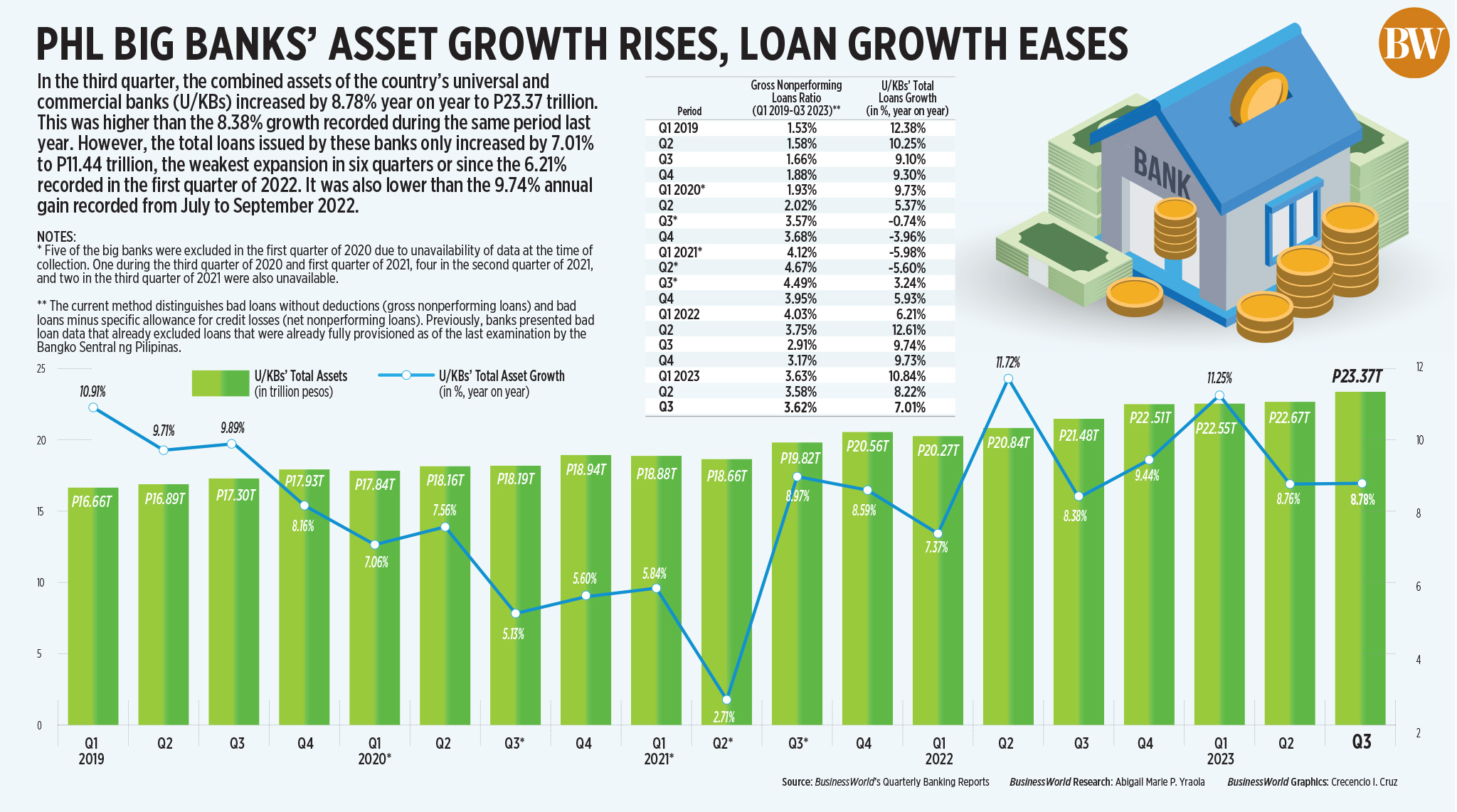
The latest edition of BusinessWorld’s quarterly banking report showed the combined assets of 45 universal and commercial banks (U/KBs) increased by 8.78% year on year to P23.37 trillion in the July-to-September period from P21.48 trillion a year ago. 

This was a tad faster than the 8.38% growth logged in the same period last year and 8.76% in the second quarter.

PHL big banks’ asset growth rises, loan growth eases

Asset growth was the fastest in two quarters or since 11.25% in the first three months of 2023.

Meanwhile, total loans of these big banks inched up by 7.01% to P11.44 trillion in the third quarter, slower than the 9.74% growth posted a year ago.

The third-quarter loan growth was the slowest in six quarters or since the 6.21% growth in the first quarter of 2022.

The slowdown in lending was reflected in soaring borrowing costs, which discouraged consumers from taking out loans. The Bangko Sentral ng Pilipinas’ (BSP) key rate stood at a near 16-year high 6.25% in the third quarter.

In late October, the Monetary Board raised policy rates by 25 basis points (bps) in an off-cycle hike, which brought the benchmark rate to 6.5%. Between May 2022 and October 2023, the BSP has raised borrowing costs by a cumulative 450 bps.

Bad loans, also known as nonperforming loans (NPLs), jumped by 6.8% to P374.27 billion in the July-to-September period from P350.44 billion in the same period a year ago.   

This brought the NPL ratio — the share of soured loans to the total loan portfolio — to 3.62% from 2.91% in the same quarter a year ago.

Loans are considered to be nonperforming if any principal and/or interest are left unpaid for more than 90 days from the contractual due date or accrued interests for more than 90 days have been capitalized, refinanced, or delayed by agreement. 

Meanwhile, the nonperforming asset (NPA) ratio — the share of NPLs and foreclosed properties to total assets — further eased to 0.89% from 1.1% a year ago.

Relative to total assets, foreclosed real and other properties stood at 0.25% in the third quarter, lower than 0.28% posted in the same period last year.

Total loan loss reserves went up by 8.4% to P413.09 billion during the July-to-September period from P381.25 billion a year ago.

These big banks median capital adequacy ratio (CAR) — the lender’s ability to absorb losses from risk-weighted assets — reached 21.54% in the third quarter, better than the 19.6% median a year ago. However, this was lower than the 21.75% median CAR in the second quarter.

The ratio remained well above the regulatory minimum of 10% set by the BSP as well as the international minimum standard of 8% under the Basel III framework.

The median return on equity (RoE), which is an indicator of profitability, increased to 9.42% in the third quarter from 6.42% in the same quarter a year ago.   

The RoE, the ratio of net profit to average capital, measures the amount that shareholders make on every peso they invest in a company.

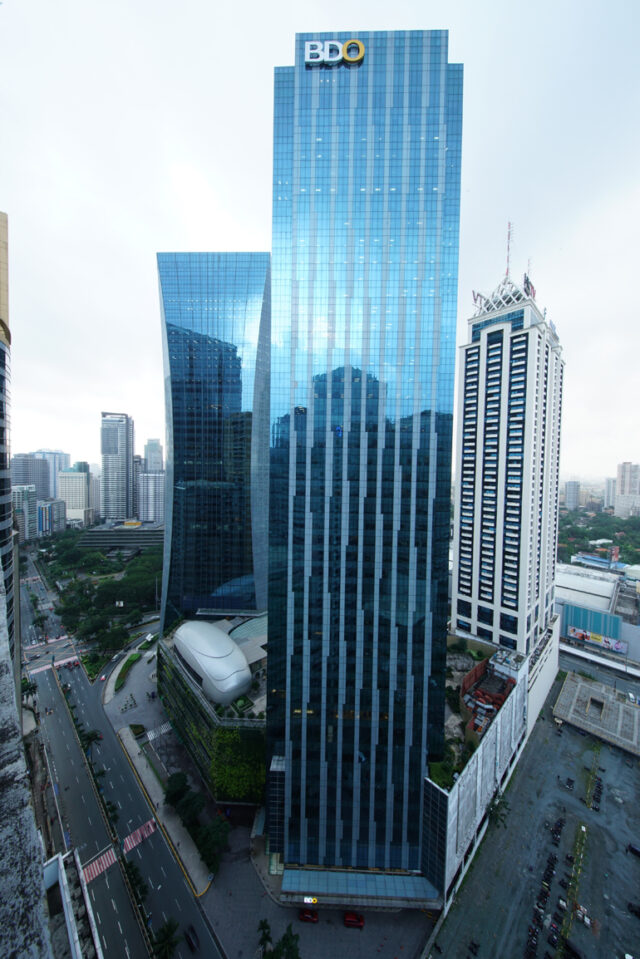
Sy-led BDO Unibank, Inc. (BDO) remained the largest bank in terms of total assets with P4.22 trillion, followed by Metropolitan Bank & Trust Co. (Metrobank) with P3.15 trillion and Land Bank of the Philippines (LANDBANK) with P3.1 trillion.

BDO also led the industry in lending with P2.63 trillion worth of loans issued, followed by Bank of the Philippine Islands (BPI) with P1.73 trillion and Metrobank with P1.4 trillion.

In terms of deposits, BDO led with P3.41 trillion, followed by LANDBANK with P2.74 trillion and Metrobank with P2.35 trillion.

Among banks with at least P100 billion assets, China Banking Corp. logged the fastest year-on-year asset growth of 21.16%, followed by Philippine Bank of Communications (15.23%) and Rizal Commercial Banking Corp. (14.63%).

Meanwhile, Standard Chartered Bank was the most aggressive lender with an annual increase of 31.08%, followed by Bank of Commerce with 20.66% and East West Banking Corp. with 18.42%

BusinessWorld Research has been tracking the financial performance of the country’s large banks on a quarterly basis since the late 1980s using banks’ published statements.

Driving sustainability and comfort with Lexus’ signature BEV

Lexus RZ 450e

The automotive industry is currently undergoing a significant global transformation due to the increasing awareness of sustainability and the demand for eco-friendly yet luxurious transportation options.

As concerns about environmental impact and climate change continue to grow, automakers are shifting their attention toward developing cleaner, greener, and more sustainable solutions.

Major car brands are now investing heavily in research and development to create innovative and sustainable electric alternatives. As a result, these vehicles are harnessing the power of renewable energy sources, significantly reducing greenhouse gas emissions and diminishing the industry’s carbon footprint.

Lexus, a luxury car brand based in Japan, seeks to address the importance of sustainability, technological innovation, and a seamless driving experience with their first battery electric vehicle (BEV) on the market — the Lexus RZ 450e.

Lexus’ flagship model is designed with precision and purpose, showcasing its commitment to pushing the limits of electric vehicle capabilities as the automotive industry enters the age of electrification.

Lexus Chief Engineer Takashi Watanabe said that the development of RZ strongly emphasizes the delivery of an incredible driving experience.

“The RZ has been developed with the aim of creating a unique Lexus BEV that feels secure to ride in, is pleasing to the touch, and is exhilarating to drive. Our vision is to use electrification technology as a means to enhance fundamental vehicle performance so that we can continue to pursue driving pleasure for all future generations,” said Mr. Watanabe.

Lexus’ electrification

At the heart of the RZ innovation lies the commitment to the Lexus Driving Signature, a philosophy that revolves around elevating the core characteristics of the brand — confidence, control, and comfort — in all driving situations.

Central to achieving this vision was the meticulous design, focusing on enhancing aerodynamics and energy efficiency.

The Lexus RZ boasts an impressive drag coefficient of 0.28 Cd, dedicated to minimizing air resistance by incorporating aerodynamic measures at every level.

The cabin shape is optimized to ensure smooth airflow on the outside and comfort inside. The belt molding sits flush with the bodywork, helping regulate the airflow and stabilize the car. The rear spoiler design contributes to handling and stability in straight-line driving and crosswinds without producing drag. The back door is shaped to adjust the airflow angle from the roof, reducing drag and contributing to the driver’s sense of the car being in firm contact with the road.

To further reduce drag, the car features a fully covered underfloor, with the front section featuring a dimpled surface that helps maintain stability at high speeds, and the rear features fins that direct airflow from the wheels.

Lexus RZ also comes with new e-Axles, the compact motor units used front and rear that work in conjunction with the new DIRECT4 all-wheel electronic drive torque control. The system adjusts the vehicle’s posture, traction, and power distribution according to the driving conditions.

In addition, the engineers and designers of Lexus RZ made it a priority to ensure that the cabin environment was calm and quiet. Lexus applied a three-part strategy: controlling the noise, preventing it from entering the cabin, and paying particular attention to the noise experienced in the rear seats.

The vehicle is equipped with the all-new Lexus Link multimedia platform, enabling faster operation and providing increased functions for connectivity, efficient planning and communication.

The RZ’s cockpit is an evolution of Lexus’ Tazuna concept to offer maximum convenience to the driver, featuring a precise arrangement of meters, controls, and displays that allow the driver to operate the vehicle with minimal hand and eye movements.

Partnering with premium audio equipment brand Mark Levinson, Lexus provides the vehicle with Pure Stage technology, which replicates the distinct sound features of specific performance venues, providing a unique and immersive sound experience. The car’s 10-speaker system ensures high-quality sound reproduction across all genres of music.

Safety features

The RZ also benefits from the latest generation of the Lexus Safety System +, which includes new and enhanced functions that work seamlessly in the context of a battery-electric vehicle, recognizing and responding to a wider range of accident risks.

The Pre-Collision System used by the RZ employs radar and camera technology that has a greater detection range and can recognize a broader range of hazards than before, including the risk of a head-on collision with traffic from the left or right when turning at an intersection.

The Lexus Safety System + package for the RZ also provides an Automatic High Beam or an Adaptive High-beam System (AHS) for automatic adjustment of the headlight beams to achieve optimal forward illumination without dazzling oncoming traffic. The RZ is the first Lexus to be equipped with AHS using a single bi-projector LED headlight.

The RZ uses the smooth and simple e-latch electronic door release system, which is linked to the car’s Blind Spot Monitor to provide Safe Exit Assist. This prevents doors from being opened in the path of cycles or vehicles approaching from the rear. Lexus estimates that this safety feature can prevent more than 95% of accidents caused by hazardous door openings.

Other safety features include the following: Emergency Steering Assist to keep the car stable within its traffic lane; Dynamic Radar Cruise Control (DRCC) to allow driver to customize inter-vehicle distance setting; Lane Departure Alert (LDA) and Lane Tracing Assist (LTA) to distinguish road markings; Deep Neural Network to recognize 3D objects in adjacent lanes or work zones; Road Sign Assist to recognize highway warning and command signs; and Advanced Park to move the car efficiently into parking spaces.

Battery

The RZ 450e is equipped with a 71.4-kWh lithium-ion battery, which is expected to retain at least 90% of its capacity after ten years of driving. The vehicle achieves energy consumption between 16.8 kWh and 18.7 kWh per 100 km in the combined Worldwide Harmonized Light Vehicles Test Procedure (WLTP) cycle.

The RZ comes with a compact and lightweight 11-kW onboard charger. When connected to a three-phase power supply, it only takes approximately 6.5 hours to fully recharge the battery. On the other hand, it will take about 10 hours when connected to a one-phase supply. The fastest way to recharge the battery is by connecting it to a DC fast-charging system, which can provide up to 80% charge in 30 minutes.

The all-new Lexus RZ 450e is available in several exterior finishes, including the new Aether Metallic, inspired by the blue sky, and the striking Sonic Copper. It is also available in Sonic Chrome, Sonic Quartz, Sonic Iridium, Graphite Black, and a bi-tone design with a black finish. The vehicle price starts at P4,828,000.

For more information, visit the Lexus website at lexus.com.ph or its Facebook (Lexus Philippines) and Instagram (@lexusph) pages. Android and iOS users can also get the latest updates and premium services via the MyLexus app.


Spotlight is BusinessWorld’s sponsored section that allows advertisers to amplify their brand and connect with BusinessWorld’s audience by enabling them to publish their stories directly on the BusinessWorld website. For more information, send an email to online@bworldonline.com.

Join us on Viber at https://bit.ly/3hv6bLA to get more updates and subscribe to BusinessWorld’s titles and get exclusive content through www.bworld-x.com.

Maximizing investment in a volatile environment with BDO Securities

Knowing how to properly invest, particularly in the stock market, is key to successful financial planning and thus in productively making money grow. Investors should constantly be aware of the latest developments in the economy and across industries, as well as how such trends affect the stock market in order for them to decide about their next moves for their respective portfolios, whether to buy, sell, or hold.

The performance of listed banks, for instance, have been affected by high inflation and borrowing costs during the third quarter of the year, according BDO Securities Research Head Abi Chiw.

“High inflation and borrowing costs during the quarter continued to curb credit demand with industry loan growth slowing further to 6.5% in September vs. 7.8% in June,” Ms. Chiw said in an email to BusinessWorld. “Nonetheless, banks are still able to deliver robust net interest income growth on higher loan margins and additional yield income from investment securities.”

The big banks, including BDO Unibank, Inc., were able to maintain earnings growth and double-digit return on equity (ROEs). Asset quality of their loan portfolios also remain strong despite the high interest rate environment, with nonperforming loan ratios still benign at 1.7%-2.0%, Ms. Chiw said.

Going forward, Ms. Chiw noted that economic trends affecting loan demand will likely to be monitored by market players. “Improving GDP growth and household incomes are likely to encourage consumer segment growth (credit cards, auto loans, home loans), while still elevated interest rates are seen to discourage companies from taking on new debt,” she said.

Regarding the impact of recent developments (BSP keeping interest rates at high levels and the Israel-Hamas conflict, to name a few) on the prospects of bank stocks in the coming quarters, banks generally benefit from higher-for-longer interest rates since it helps loan yields. However, prolonged periods of high interest rates may also bring about the risk of rising problem loans.

“Philippine banks and the BSP (Bangko Sentral ng Pilipinas) are monitoring the war between Israel and Hamas, since the risk of increasing tensions in the Middle East region may exert upward pressure to global oil prices and inflation, which in turn, would have negative spillover effects to economic growth and equity markets,” Ms. Chiw explained.

Ranked as one of the leading investment banks in the Philippines, BDO Securities, a BDO Capital & Investment Corp. subsidiary, is stepping up its game in helping Filipinos invest, from investment funds to bank stocks, fixed-income securities, and more.

Whether their clients seek to starting up, build, or expand their wealth, BDO Securities is there to serve Filipinos and guide them through achieving their financial goals. As a full-service brokerage firm, BDO has got clients covered with trading, diversification of investments, and research reports.


Spotlight is BusinessWorld’s sponsored section that allows advertisers to amplify their brand and connect with BusinessWorld’s audience by enabling them to publish their stories directly on the BusinessWorld website. For more information, send an email to online@bworldonline.com.

Join us on Viber at https://bit.ly/3hv6bLA to get more updates and subscribe to BusinessWorld’s titles and get exclusive content through www.bworld-x.com.

Alternergy raises P3-B equity since March IPO — president

ALTERNERGY Holdings Corp. announced on Tuesday that it has raised a total of P3 billion in equity this year, including an investment from the Government Service Insurance System (GSIS).

“Alternergy has raised a total of P3 billion in equity capital in the last nine months following our P1.62-billion initial public offering (IPO) in March this year,” Alternergy President Gerry P. Magbanua said in a stock exchange disclosure.

Alternergy said it has received P1.45 billion worth of perpetual preferred shares from GSIS, a deal that was signed last month.

“We are pleased to receive the GSIS investment which boosts our equity base,” Mr. Magbanua said.

He said that the recent capital-raising activities would enable the company to initiate the next phase of project development, focusing on the construction of the 86-megawatt (MW) Tanay and 55-MW Alabat wind power projects.

The company previously said that it had received certificates of award from the Department of Energy for the two projects under the Green Energy Auction (GEA) 2 program.

The GEA program is a competitive process for procuring renewable energy supply by offering capacities to qualified bidders at a set maximum or ceiling price.

The company aims to complete the Tanay wind farm in Rizal and the Alabat wind farm in Quezon province by the second quarter of 2024.

Last week, Alternergy announced that its board of directors had approved the appointment of BDO Capital & Investment Corp. as its mandated lead arranger for an up to P4 billion fixed-rate green corporate note issuance.

Alternergy aims to develop up to 1,370 MW of renewable energy sources, including onshore and offshore wind, solar, and run-of-river hydropower.

At the local bourse on Tuesday, shares of the company fell by three centavos or 4.05% to close at P0.71 apiece. — Sheldeen Joy Talavera

Opening new avenues for film discussion

Academic journal pursues unique questions about PHL cinema

IN ORDER to document today’s knowledge on Philippine film and the moving image, one would have to simultaneously focus on its history, its contemporary situation, and its future.

This is the very goal of film scholar and programmer Patrick F. Campos, who is editing the PELIKULA journal.

“I keep to heart researchers and readers 50 or 100 years from now so that they will have a resource to look back on to gain significant insight into what was happening during a specific conjuncture,” Mr. Campos told BusinessWorld in an online interview.

Published by the University of the Philippines Film Institute (UPFI), of which Mr. Campos was previously director, PELIKULA was revived in 2019 a full 20 years since it first began its short stint in 1999.

Since then, it has been tasked with commemorating Philippine cinema’s 100th anniversary, chronicling the alternative filmmaking movement spurred on by red-tagging and lockdowns, and celebrating the many films that have depicted momentous cultural changes over the last few years. The project, curated for specialists and general readers alike, publishes academic research, thought pieces, reviews, interviews, and visual essays. And it is no small feat to put together.

“As far as the last five volumes I’ve edited since 2019 are concerned, the vision has been to catalyze knowledge production on film and the moving image for posterity and the future,” Mr. Campos said.

In Volume 8, which comes out by the end of 2023, performance and film scholar Loujaye Sonido and programmer Merv Espina put together sets of essays on dance films, recorded choreography, experimental moving images, and multimedia works.

Another group of articles will revisit the history and productivity of sex cinema, known colloquially as bomba films. It will also tackle its political, economic, and commercial implications.

Mr. Campos said that PELIKULA emphasizes “looking at Philippine films in comparative ways, as regional phenomena, and through the lenses of history and politics.

“It explores new avenues for thinking and talking about Philippine cinema and the moving image, alternative questions we’ve not really pursued,” he said.

While the journal takes the form of a digital-format magazine, it is still academic, which means it publishes and highlights original research under a peer-review process.

On a poignant note, the eighth volume of PELIKULA is dedicated to the memory of oral historian, film programmer, cultural organizer, and archiving and regional filmmaking advocate Teddy Co, who passed away in November.

“He had been a supporter of PELIKULA’s revival in 2019. He understood that a cinema does not only succeed because of the films; it flourishes because of the film culture and the cinephiles surrounding it,” said Mr. Campos.

Volume 8 of PELIKULA: A Journal Of Philippine Cinema And Moving Image is coming soon this holiday season. For updates, visit pelikulajournal.com or https://www.facebook.com/pelikulajournal. — Brontë H. Lacsamana

Cosco plans to acquire 60% stake in Catuiran Hydropower 

RETAIL holding company Cosco Capital, Inc. has announced plans to acquire 60% of the outstanding shares in Catuiran Hydropower Corp., operator of the eight-megawatt hydroelectric plant in Naujan, Oriental Mindoro.

In a stock exchange disclosure on Tuesday, Cosco Capital said its board of directors approved the proposal at a meeting on Dec. 14.

The acquisition signals Cosco Capital’s strong interest in the renewable energy sector.

Earlier this year, the company announced that it was looking to venture into the renewable energy space, seeing the industry as a profitable portfolio in the medium and long term.

The listed company will acquire a total of 360 million shares, representing 60% of the outstanding shares of Catuiran, Cosco Capital said, without disclosing the amount of the transaction. 

The company added that the acquisition is below 10% of its total value.

For the third-quarter period, Cosco Capital reported an attributable net income of P1.82 billion, up by 1% from the P1.81-billion profit in the same period last year, driven by higher revenue for the period.

The company recorded a gross revenue of P52.89 billion for the third quarter, marking a 7.2% increase from the P49.36 billion recorded previously.

Incorporated in 1988, Cosco Capital has a portfolio of businesses in retail, real estate, wine and liquor, and oil and minerals.

At the stock exchange on Tuesday, shares in the company closed two centavos or 0.44% higher at P4.59 per share. — Ashley Erika O. Jose

Dancer and Ballet Manila founding member Osias Barroso, Jr., 58

OSIAS “SHAZ” BARROSO, JR., a danseur and choreographer best known as a founding member of Ballet Manila and prima ballerina Lisa Macuja-Elizalde’s long-time dancing partner, died on Saturday, Dec. 16. He was 58.

In honor of their former co-artistic director, Ballet Manila posted a short tribute for him on Facebook two days after his death.

“The role we in Ballet Manila will remember him for will be as the exacting yet compassionate rehearsal master, a most generous mentor, constant friend. Thank you for your life of and in dance, Shaz,” the post said.

In October, the company held the event Dance for Shaz: A Celebration of a Life in Dance, which commemorated his long-time service to Philippine ballet. It featured 22 dance groups led by Ballet Manila, of which Mr. Barroso was co-artistic director until his retirement in 2021 following a stroke.

Known by many as “Teacher Shaz,” he started dancing ballet at the relatively old age of 18, and worked hard at it until he eventually became known as the “Ballerina’s Prince” for always putting his partner first in a performance.

“I think that the number one duty of the male classical dancer is to present the ballerina well. If I can’t do that first, then my solo variations and my coda suffer because I feel I did not do the job right. I want my ballerinas to look good,” Mr. Barroso once said, according to the Ballet Manila archives.

After retiring from the stage in the mid-2000s, he channeled more of his time and energy into choreography and teaching. He created the neoclassical piece In Quest as part of Ballet Manila’s debut program in 1995 and would later also choreograph Tatlong Kuwento ni Basyang for the company. He was also widely celebrated for his work in Ecole.

To generations of students at the Lisa Macuja School of Ballet and dancers at Ballet Manila, “Teacher Shaz” was a strict and demanding mentor and coach. He was focused on drawing out the best from his students.

Ms. Macuja-Elizalde lamented the passing of her good friend in a Facebook post, with the caption: “No more suffering. No more pain. Shaz, I love you. I miss you. And I promise I will take very good care of what we built together.” — Brontë H. Lacsamana

Ban stays on transfer fee hikes

BW FILE PHOTO

THE BANGKO SENTRAL ng Pilipinas (BSP) is maintaining the moratorium on transfer fee increases to encourage Filipinos to use digital payments.

The central bank released Memorandum No. M-2023-037, which states that the moratorium on fee increases remains in effect.

“Participants who currently charge transfer fees for person-to-person fund transfers via InstaPay and PESONet are directed to maintain said fees,” it said.

The BSP first imposed the moratorium in 2021 through Memorandum No. M-2021-071. It aimed to boost digital finance.

PESONet caters to high-value transactions and is considered as an electronic alternative to paper-based checks while InstaPay is a real-time electronic fund transfer facility for low-value transactions of up to P50,000.

“Institutions planning to introduce fees for new fund transfer services shall apply for prior BSP approval. These fees must also be reported to the BSP 60 days before implementation,” the BSP said.

“Moreover, a transfer fee that is currently waived may only be restored up to the amount reported to the BSP before the waiver,” it added.

The central bank said it is also working on lowering and ultimately eliminating fees on small electronic payments.

“The reduction or removal of transfer fees for small e-payments supports our vision of digitalization and inclusivity. We are engaging the industry through dialogue to explore ways to reduce or completely eliminate fees for small-value transactions,” BSP Governor Eli M. Remolona, Jr. said in a statement.

The BSP did not give a set date for when the moratorium will be lifted.

“Accordingly, the moratorium on fee increases for InstaPay and PESONet transactions shall be lifted, subject to BSP review, once zero fees are operationalized by the payments industry for small e-payments,” it added.

The BSP is targeting to digitalize 50% of total retail transactions and onboard at least 70% of Filipino adults to the financial system by the end of this year.

“The BSP encourages Filipinos to actively use their accounts for digital payments, savings, and investments. The central bank is working with the industry to bring more of our countrymen into the fold of the formal financial system,” Mr. Remolona added. — Luisa Maria Jacinta C. Jocson

DMCI, Marubeni target to launch Pasig condo project in first quarter

DMCI Corp. and Marubeni Corp. are set to launch a joint residential condominium project in the first quarter of 2024, the two companies announced on Tuesday.

In a statement, DMCI said it had signed a memorandum of understanding with the Japanese trading company for the development of The Valeron Tower, a single dual-wing condominium that will rise along C5 E. Rodriguez, Jr. Avenue in Pasig City.

“We have fostered a strong relationship with DMCI built on mutual trust. Considering the longevity of our partnership, we anticipate that this business venture will also be long-term. This is just a kickoff,” Shigeru Shimoda, president and chief executive officer of Marubeni, said in a statement on Tuesday.

Marubeni is also keen on expanding its operations into the country’s real estate sector, Marubeni Overseas Real Estate Business Department Senior Manager Shinya Matsuo said. 

The company sees the Philippines as an attractive market for business expansion, he said, citing the country’s “favorable” demographic trends. 

“Our collaboration extends beyond project completion. By leveraging our real estate related business expertise accumulated both in Japan and internationally, we envision a long-term commitment that extends business collaboration between DMCI Homes to include asset management, property management, and building management,” said Noritake Miyaguchi, Marubeni’s general manager for overseas real estate business. 

Further, Alfredo R. Austria, president of DMCI Homes, said the tie up between DMCI and Marubeni is expected to enhance the quality of residential condominiums by combining the expertise of the two entities.

“Our collaboration signifies a joint commitment to further enhancing quality living and providing innovative home solutions for homebuyers in the Philippines,” he said. — Ashley Erika O. Jose

Why banks should reconsider their lending approach to MSMEs

By Abigail Marie P. Yraola, Researcher

THE COUNTRY’S small enterprises have been the backbone of the economy but their access to credit to grow their business has been challenging.

A total of 1.11 million business enterprises were operating in the Philippines in 2022, Trade department data showed.

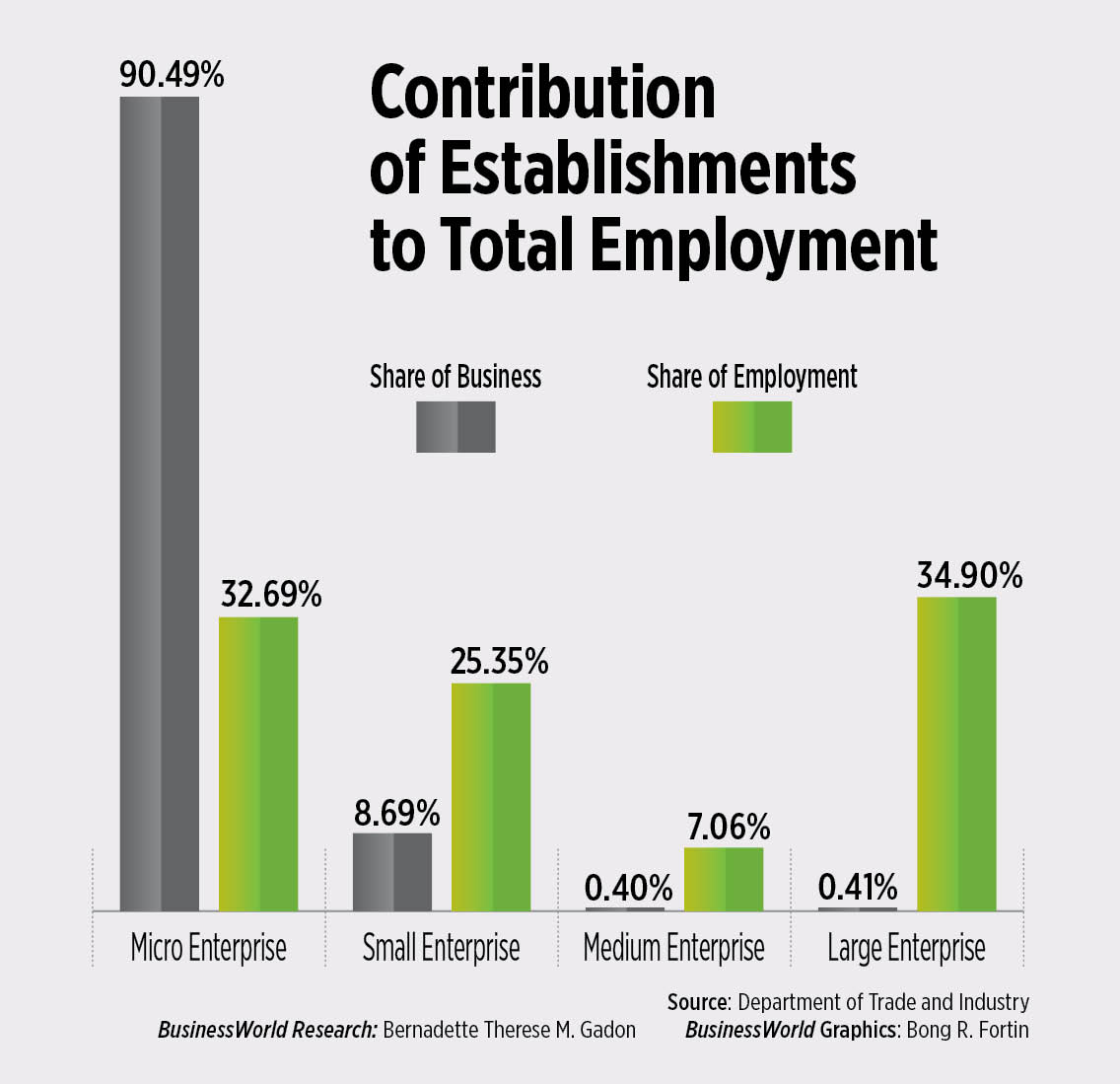
About 99.59% of these were MSMEs while 90.49% were micro enterprises. Additionally, of these establishments, 8.69% were small enterprises while 0.40% were medium enterprises.

Large enterprises, meanwhile, accounted for 0.41% of the businesses operating in the country.

Latest Bangko Sentral ng Pilipinas (BSP) data showed that as of June, banks in the country did not meet the mandatory credit allocation targets for small businesses.

As of June, the country’s banking industry’s loan portfolio reached P9.8 trillion, with loans to micro-, small-, and medium-sized enterprises (MSMEs) accounting for just 4.71% or P461.387 billion.

The compliance rate for micro and small enterprises (MSEs) is still under the mandated 8%, with only 1.93% of the required funds allocated to these businesses.

On the other hand, medium-sized enterprises (MEs) have exceeded the mandated 2% allocation with a compliance rate of 2.78%.

BSP data also showed that the rural and cooperative banks’ compliance rate with MSEs stood at 18.59% while for MEs at 9.32%.

The central bank has stated that they are aware of the importance of financial and digital infrastructure in reducing risks and costs associated with financing for MSMEs.

They also emphasized that they are continuously providing regulations that enable financial support for MSMEs and make it easier for them to access funds. The BSP is working towards bridging the information gap and addressing information asymmetry in the MSME market. 

BSP reiterated that they are committed to providing a regulatory environment that addresses financial access barriers such as cost, lack of infrastructure, and information asymmetry, among others.

Karen L. Cua, senior vice-president at BDO Network Bank, said commercial banks struggle to meet the mandatory credit allocation targets for small business principally for two reasons.

They are either undocumented or under-documented so that traditional methods for credit evaluation would be challenged and the owners of these small business have little or no assets against which banks can secure their exposure.

BDO Network Bank, the rural banking arm of BDO Unibank, Inc., has invested in serving MSMEs over the last six years.

For Japhet Louis A. Tantiangco, senior research analyst at Philstocks Financial, Inc., the high interest rates on loans for MSMEs could be due to the high risk associated with lending to this group.

This makes it difficult for many in the MSME sector to afford these loans.

“There may also be capacity constraints wherein many of the MSEs are unable to comply with the loan application requirements of the banks,” Mr. Tantiangco said in an e-mail.

The MSME sector is “highly vital” not only for economic growth, but also for the livelihoods of the majority of the population, Rachelleen A. Rodriguez, head of research at Maybank Investment Banking Group – Philippines, said in an e-mail.

“Growth of the sector would raise per capita wealth and overall standard of living, and for the banking sector, would raise yields and profits,” she added.

For his part, Mr. Tantiangco said that if the productivity of these enterprises increases, it may then provide a significant boost in economic growth.

“MSMEs, especially the micro businesses, may also help in narrowing the income inequality in the country. Microenterprises are usually the path to go of individuals in lower quintile groups if they wish to pursue business,” he added.

These businesses are growth engine for the economy, said Ms. Cua.

In rural areas, MSMEs dominate the business landscape compared with medium to large companies.

Moreover, she explained that banks help MSMEs cover short-term cash flow gaps and fuel their growth and expansion.

THE FRAMEWORK
According to the Magna Carta for MSMEs, banks are required to allocate 10% of their credit portfolio to small businesses — 8% of it should be allotted to micro and small enterprises while 2% of it to medium enterprises.

Republic Act (RA) No. 6977 or the Magna Carta for Small Enterprises promotes, supports, strengthens, and encourages the growth and development of MSMEs in all productive sectors of the economy.

Additionally, RA 6977 sets the minimum percentage of banks’ loan portfolios to be allocated for MSME lending, which makes the process for MSMEs to operate and obtain financial support for their businesses easier.

BDO’s Ms. Cua said that the Magna Carta highlights the role of the private sector in serving MSMEs by participating in government programs for MSMEs.

She also added that the RA 6977 specifies the government assistance that must be made available and the proper government agencies who will be responsible in achieving the set objectives.

In the third quarter, the economy saw the continued rise in inflation rates alongside the rise in interest rates.

In hopes to stabilize and anchor inflation expectations, the BSP resumed hiking its policy rate by 25 basis points to 6.5% in an off-cycle meeting held in late October.

However, in its November meeting, the central bank decided to maintain its interest rate unchanged following the favorable ease in inflation that was seen in October.

Ms. Cua said that given these developments, corporate demand softened while consumer demand sustained loan growth.

“MSME growth is similarly affected as inflation has limited consumption and demand for goods [and] interest rate hike has increased the cost of funding,” she added.

For Ms. Rodriguez, she said that third-quarter market performance is largely impacted by the movement and expectation of hikes on both the Fed and BSP’s policy rates.

“As rates appear to be higher for a longer period of time, banks will benefit from higher margins for a few more quarters,” she said.

She further explained that policy rates, meanwhile, does not impact the MSME sector as interest rate movements for all consumer type loans are driven more by competition, rather than policy rate movements.

HURDLES
Though simply, one could not overlook that MSMEs in the country may have challenges or struggles they may be facing as well.

Ms. Cua noted that some key challenges that MSMEs may experience are limited access to reasonable bank financing, regulatory compliance, and insufficient financial education.

Other reasons are financial difficulties which include inadequate risk management to mitigate the impact of natural disasters, fire outbreaks, personal accidents, and illnesses.

Additionally, many people lack sufficient credit, capital, and savings to cope with short-term cash flow disruptions caused by supply chain shocks, collection delays, or large personal expenses like tuition fees.

For Ms. Rodriguez, rising inflation would still be the biggest hurdle MSME may face as this largely impacts their input costs and may result to reducing their margins.

“High commodity prices would force them to stock up more inventory, raising their need for leverage while their profits are actually shrinking.”

Meanwhile, Mr. Tantiangco believes that the MSME sector currently faces challenges in accessing financing, rising production costs, market competition, and productivity.

EFFORTS IN ACTION?
The central bank should continue its efforts in enabling institutions to better serve MSMEs, BDO’s Ms. Cua said.

The BSP has been actively promoting the digital landscape, with initiatives such as the implementation of the Basic Merchant Account (BMA) allowing MSMEs to accept and make digital payments.

Other initiatives include creating digital footprints for MSMEs which enables banks to do better credit assessments.

Ms. Cua believes that strengthening the credit bureaus will enable more institutions to serve MSMEs more effectively. She further explained that the central bank, along with the government and private sector, can develop and implement more risk-shared programs to reach other underserved segments within MSMEs such as the agricultural sector.

Ms. Rodriguez said that BSP assigns a lower risk weighting for MSME loans compared with other types of loans, which means that banks are incentivized to lend to the sector.

“It’s a win-win situation as banks could improve their yields through MSME lending at a lower capital charge,” she said.

Furthermore, she explained that the risk weight was reduced to 50% during the pandemic but was increased to 75% in 2023, coinciding with the BSP’s lowering of the reserve requirement to 9.5%.

She also said that implementing programs aimed at enhancing financial education would prove to be beneficial.

For his part, Mr. Tantiangco said that the government should increase the capacity of its agencies that provide financial aid to MSMEs and raise awareness about the availability of such aid.

Additionally, he emphasized the importance of helping MSMEs adopt digital means of conducting business, which could significantly improve their efficiency. Given this, the DTI is already executing efforts.

REVAMPING LENDING PRACTICES
What should banks do to rethink their lending practices to small businesses and bring about growth opportunities?

In a 2022 McKinsey and Co. report titled “How banks can reimagine lending to small business and medium-sized enterprises,” modernizing business-lending processes can help banks capture more growth.

McKinsey highlighted that while banks face both opportunities and challenges in the market for lending to small businesses, most of them are not reaching their full potential.

This failure to meet the needs of small businesses makes them miss out on certain opportunities that could be advantageous to them.

“There is no one-size-fits-all approach to suit every bank and market, but banks that rethink their SME-lending businesses can increase their market share and promote profitable growth,” the report said.

Furthermore, the report emphasized that lending to small- and medium-sized enterprises (SMEs) will be crucial for banks’ economic growth and profitability, especially after the economic impact the pandemic has left and scarred.

Despite the opportunities and trends laid out for them, the report also pointed out that banks often struggle to provide appropriate lending solutions to their SME customers and reduce the cost of serving them.

Banks, therefore, need to re-strategize their lending practices to small businesses and create credit offerings that will cater to the specific needs of SMEs. This, in turn, will help them to better serve their customers and increase their revenue growth.

Banks are primarily responsible for developing their business strategies, on the other hand, MSMEs constitute an untapped segment that can actively contribute to the country’s economic growth.

The central bank’s role is to create an enabling environment that will encourage banks to lend to viable and productive sectors and enterprises, including MSMEs.

“BSP has adopted a three-pronged approach to improve access of MSMEs to financing,” BSP said in an e-mail.

This approach includes strengthening credit infrastructure, enabling digital and bankable MSMEs and agriculture enterprises, and promoting innovative financing approaches which are all supported by financial literacy programs.

BDO’s Ms. Cua said that establishing a complete banking relationship is crucial for sustainable and rewarding lending to MSMEs.

She said that rethinking lending for MSMEs requires challenging conventional lending methods.

Ms. Cua also said that business loans are heavily reliant on financial statements, require collateral for security, and involve extensive write-ups and committee discussions for credit approval.

For Mr. Tantiangco, he believes that banks should incorporate more technological means in their dealings with SMEs, especially in their processes.

Additionally, they should rely more on data analytics when assessing SME loan applicants.

However, he also noted that there are no necessary changes needed in banks’ credit offerings for MSMEs. Instead, banks should focus on digitizing their processes and becoming more data analytics dependent in their dealings with these enterprises.

The rise of digitalization has led to a boom in e-commerce, Ms. Rodriguez said.

And as a result, banks are aggressively expanding their digital lending offerings and simplifying the borrowing process for even the non-tech savvy Filipinos.

“Data science and AI (artificial intelligence) can help identify lending opportunities based on borrowing patterns, enabling banks to offer personalized services that cater to clients’ specific funding needs,” she said.

Additionally, there is a huge untapped market in non-urban areas that banks can tap into, she said.

Banks are constantly enhancing their data mining capabilities to identify lending opportunities more effectively.

She also said that offering lending and other financial products to existing depositors is beneficial, as they represent a large pool of potential customers.


New York’s Met Museum to return looted antiquities to Cambodia

A STANDING Female Deity from Cambodia, dating to the second quarter of the 10th century according to the Metropolitan Museum of Art which has deaccessioned the piece for return to Cambodia. — METMUSEUM.ORG

NEW YORK’S Metropolitan Museum of Art agreed with the Department of Justice (DoJ) to return more than a dozen antiquities to Cambodia, a major step in a decade-long investigation into the theft and trafficking of artifacts from the Southeast Asian country.

The pieces being returned “were tied directly to illicit trafficking,” Damian Williams, the US attorney for the Southern District of New York, said in a statement on Friday. In particular, all are connected to Douglas Latchford, a Bangkok-based British art dealer who the DoJ indicted in 2019 on fraud and conspiracy charges related to his sales of Cambodian works into Western collections.

Though Mr. Latchford died in 2020 before he could face trial, the effort by Cambodian and US investigators to track down and repatriate the works he sold continued, and gradually expanded into one of the most complex investigations of the art market ever undertaken. Thousands of stone and bronze sculptures — dating to the ancient Khmer Empire, the polity that constructed monuments such as Angkor Wat — were stolen from Cambodia during the country’s 30-year civil war, which ended in 1998 with the final defeat of the Khmer Rouge.

Ripped from their pedestals with picks, shovels, and sometimes explosives, the works were smuggled to Bangkok and sold onward to museums and private collectors in the US and Europe. In a deal announced in 2022, Netscape co-founder James Clark agreed to give up more than 30 works that he’d purchased from Mr. Latchford for about $35 million. The family of late Florida billionaire George Lindemann agreed to return a similar number of pieces in an accord earlier this year.

The Met said that this week’s agreement amounts to “effectively removing” Latchford-associated Cambodian objects from its collection. The museum also said it was returning two additional pieces to Thailand.

The Cambodian government has long taken the position that virtually all Khmer pieces abroad were illicitly obtained, regardless of their connections to Mr. Latchford, because permission was never granted for them to be exported.

Some two million Cambodians perished under the Khmer Rouge, who ruled the country from 1975 to 1979, when they were deposed by an invading Vietnamese army. The US, Soviet Union, and China all backed different factions in the violent turmoil that followed, which provided ideal conditions for looters to ransack archaeological sites — and to feed growing global demand for Asian art. Repatriating the stolen objects “is an act of healing for our nation,” Minister of Culture and Fine Arts Phoeurng Sackona said in a statement Friday.

Identifying and proving the origins of looted objects has taken considerable detective work. One of the pieces being returned by the Met, a Standing Female Deity dating to the 10th century, was identified by a former looter as having been stolen from Koh Ker, a major archaeological site in northern Cambodia, in 1997. When researchers excavated the site in line with his recollections, they discovered a severed stone foot that they concluded matched the Met statue.

Brad Gordon, a lawyer representing the Cambodian government, said he hopes the Met “will now more closely inspect, and allow us to see, the records for the remaining Cambodian collection to determine if there is any reasonable basis for the Met’s continued possession of Cambodia’s national treasures.”

For its part, the Met said it is “continuing to review its collection of Khmer art” and will exchange further information with Cambodian representatives, as well as those of Thailand. It added that it hopes to pursue “partnerships and collaborations with our colleagues” in both countries.

Mr. Williams said the DoJ will continue to investigate the trade in looted antiquities, and urged institutions in possession of them to come forward. “Come see us before we come see you,” he said. — Bloomberg

EEI gears up for infrastructure boom with equipment refleeting — CEO

CONSTRUCTION company EEI Corp. announced on Tuesday a partnership with two companies as part of its equipment refleeting project in the Philippines and abroad.

“We anticipate a surge in infrastructure projects from next year onwards, which we are committed to accomplishing not just in terms of target schedules and completion, but also with excellent service and quality that come with working with EEI,” Henry D. Antonio, president and chief executive officer (CEO) of EEI, said in a statement.

The company has signed a memorandum of understanding with ZL Machinery Philippines, Inc. and Chinese construction machinery maker Zoomlion Heavy Industry Science & Technology Co., Ltd. to buy heavy and construction machinery for its refleeting project in the Philippines and abroad.

EEI expects its infrastructure projects to grow starting next year, the listed construction company said, adding that this growth will hinge on the reliability of the company’s equipment.

“We also have to be efficient with our capital expenditure budget. Acquiring equipment for several projects is one of the prudent investments we have to make to meet the demands of infrastructure work,” Mr. Antonio said.

Established in 1931, EEI has business interests in construction services and the distribution of industrial and machinery systems. Its energy arm offers power solutions for electrical equipment and services.

At the local bourse on Tuesday, shares in the company fell by nine centavos or 1.51% to end at P5.86 apiece. — Ashley Erika O. Jose