Home Blog Page 375

Car sales may reach 503,000 in 2026, says CAMPI

Former Chamber of Automotive Manufacturers of the Philippines, Inc. (CAMPI) President Rommel R. Gutierrez (left) shakes hands with the new CAMPI President Jose Maria M. Atienza on Tuesday. — JUSTINE IRISH D. TABILE

By Justine Irish D. Tabile, Reporter

CAR SALES are expected to breach 500,000 this year, driven by rising demand for electrified vehicles (EVs) and multi-purpose vans, according to the Chamber of Automotive Manufacturers of the Philippines, Inc. (CAMPI).

“We see that there’s a big chance that the market can reach 500,000 this year. That’s around a 2% to 2.5% increase,” said Jose Maria M. Atienza on the sidelines of the CAMPI president turnover ceremony on Tuesday.

“We’re pegging it at around 503,000,” he added. “But again, it would depend on how the market grows coming from the trend.”

Auto industry data showed that 491,395 vehicles were sold in 2025, up 3.7% from 473,842 in 2024. This includes sales of CAMPI and Truck Manufacturers Association, Inc. (TMA) members which reached 463,646 in 2025, down 0.8% from 467,252 units sold in 2024.
“For CAMPI and TMA, same as our projection for industry, around 2%,” Mr. Atienza said.

Mr. Atienza said that the outlook reflects the conservative optimism of the industry after seeing a sales decline in the second half of 2025.

“Right now, we are just accepting the reality of what happened during the second half but are still positive that at least we will bottom out and then see some growth,” he said. “But we are very hopeful that the market will reach 500,000 units.”

In particular, he said that the imposition of excise tax on pickup trucks has resulted in a decline in the segment’s sales, especially in the second semester.

“There was a big reduction in our pickup sales because of the change in excise tax structure. So, there’s a big, actually, there’s a 20% drop in pickup sales in the second half compared to maybe the same period in the previous year,” he added.

Mr. Atienza said industry sales growth this year will be driven by demand for EVs as well as multi-purpose vehicles.

“EVs have improved and increased in terms of sales. We also saw some good segments, such as multi-purpose vehicles like L300s and Tamaraws. I think there was a 70% increase,” he said.

“So, there are growth areas in the market. And again, it would just depend on when it will grow. It is a very sound market, and it would depend on when the customers would again have the confidence to purchase more vehicles,” he added.

Data from CAMPI and TMA showed that 32,489 EVs were sold in 2025, accounting for 7.01% market share. Including other available industry data, CAMPI said that EV sales hit 58,905 units last year, which reflect 12% market share.

“We see this growth [continuing]. But of course, it is just a matter of customer preference and how ready we are. But I think we already saw the increase in hybrid and EV sales in 2023, and it continued into last year,” he said.

“And we are quite positive that with the introduction of additional models, this trend would still continue for EVs,” he added.

He also said that the group is expecting some improvement in the passenger car segment after CAMPI members saw a 23.1% drop in passenger car sales to 92,924 in 2025 from 120,770 in 2024.

“It would depend on how much individual brands can introduce new models. There are cycles of demand, again depending on the model introduction,” he said.

Meanwhile, Mr. Atienza said that the group is hoping the government will implement the Revitalizing the Automotive Industry for Competitiveness Enhancement program.

“We all know how important it is for automotive manufacturing. And we are always here to work with the government and concerned agencies on how to make sure that this is finally implemented,” he said.

“I am sure there are many stakeholders also, not only CAMPI, but individual members and even the parts makers and suppliers who really want to see this program through and finally implemented,” he added.

To further attract car manufacturing, he said that the government must pursue initiatives that will make the country more competitive in terms of cost.

“We have a good cost structure, but there are some areas in cost that are not as favorable. So, that is where collaboration with the agencies should come in on how to make the Philippines a good environment for investments,” he added.

On Tuesday, CAMPI held a ceremonial turnover for its new president, Mr. Atienza, who is also the executive vice-president of Toyota Motor Philippines Corp.’s marketing division. He took over from Rommel R. Gutierrez.

Gov’t eyes emerging tech board at PSE as 15 firms signal interest

PHILIPPINE STAR/EDD GUMBAN

By Justine Irish D. Tabile, Reporter

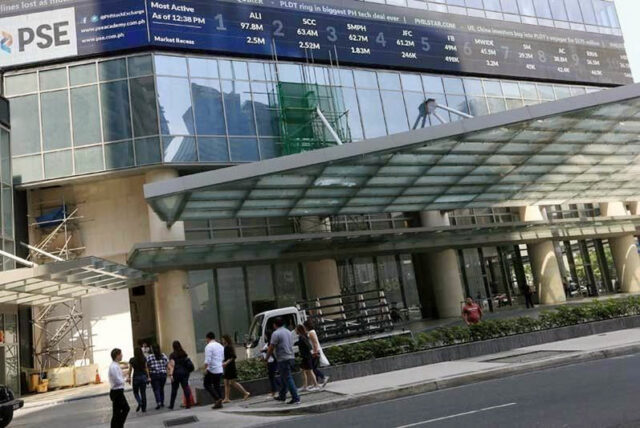
THE government is exploring the creation of an emerging technology board at the Philippine Stock Exchange (PSE) to allow high-growth technology firms to access public capital, the Department of Information and Communications Technology (DICT) said.

DICT Secretary Henry R. Aguda said he is working with the PSE, the Securities and Exchange Commission (SEC), and the Department of Trade and Industry (DTI) to establish the board.

“So, we’re still conceptualizing,” he told reporters on Monday, noting that the board’s design will be inspired by the Nasdaq-style technology board, a US-based exchange known for listing high-growth technology companies and innovation-driven firms.

“We started talking about it last year… Right now, we are still doing the technical evaluation,” he added.

Mr. Aguda said the board aims to advance President Ferdinand R. Marcos, Jr.’s vision of making the capital market more accessible.

“Second, we should have an honest-to-goodness technology stock market because, in other countries, it is the technology that’s driving the [market],” he said. “So, we should do the same.”

He added that the government plans to finalize policy for the emerging technology board this year.

“Realistically, we can complete it this year. Hopefully by the first half,” he said.

The proposal has received support from PSE President and Chief Executive Officer Ramon S. Monzon and SEC Chairperson Francisco Ed. Lim.

“The two of them combined are very progressive. So, I think it is going to move fast,” Mr. Aguda said.

On the board’s regulatory framework, Mr. Aguda noted that the agencies have yet to define specific rules on public float, minimum market capitalization, and other listing requirements.

He said several Philippine technology companies are already preparing for potential listings.

“So, there are 15 companies that have signified interest… but of course, we do not expect all of them to list; interest is different from actually listing. So, 15 companies and counting,” he said.

China Bank Capital Corp. Managing Director Juan Paolo E. Colet described the board as a “promising concept.”

“Depending on how it is designed, the new board could potentially encourage local emerging technology companies to list on the PSE for fundraising,” he said in a Viber message.

He noted that the targeted companies would benefit from more flexible listing, disclosure, and corporate governance requirements.

“Moreover, it would help if the government would create or sponsor a public-private fund that will invest in PSE-listed technology companies to spur the growth of the sector,” he added.

Toby Allan C. Arce, head of sales trading at Globalinks Securities and Stocks, Inc., said the board could address “structural weaknesses that have long weighed on the Philippine stock market.”

“At its core, such a board could lower the barriers for high-growth, innovation-driven companies to access public capital by offering more flexible listing requirements, valuation frameworks, and disclosure rules that better reflect the realities of tech and digital businesses,” he said in a Viber message.

He added that conservative listing standards have discouraged fast-growing firms from going public locally.

“By broadening the type of companies that can list, the local course could become more representative of the modern economy rather than being dominated by mature conglomerates and traditional sectors,” Mr. Arce said.

He said the board could also attract younger investors, foreign funds, and domestic capital currently on the sidelines.

“Even a small number of credible tech listings could help re-rate market sentiment by shifting perceptions of the PSE from a low-growth, dividend-focused exchange to one with longer-term capital appreciation potential,” he said.

However, he cautioned that the board’s success will depend on execution and credibility, with investors expecting strong governance, clear risk disclosures, and robust regulatory oversight.

“If the board is perceived as a dumping ground for weak or speculative issuers, it could damage confidence rather than enhance it,” he said.

“Coordination among regulators will therefore be crucial to ensure consistent rules on disclosure, investor sustainability, and post-listing compliance, while allowing enough regulatory innovation to support new business models,” he added.

Meanwhile, the DICT on Monday signed a memorandum of understanding with the Intellectual Property Office of the Philippines to strengthen support for digital infrastructure innovations through a responsive and robust intellectual property system.

Under the partnership, the two agencies will work together to enhance the technical capacity of examiners who assess and manage innovations in artificial intelligence, blockchain, the Internet of Things, big data, and other emerging ICT fields.

Meralco, gencos get ERC nod to collect P31-B fuel cost recovery

PHILIPPINE STAR/MICHAEL VARCAS

By Sheldeen Joy Talavera, Reporter

OVER EIGHT MILLION customers of Manila Electric Co. (Meralco) may see higher electricity charges starting March after the Energy Regulatory Commission (ERC) approved P31 billion in fuel cost recovery sought by power generators.

In separate orders promulgated Jan. 26, the ERC approved the request of Meralco and four power generation companies (gencos) to collect an additional P0.2816 per kilowatt-hour (kWh).

The cost recovery period may span 12 to 36 months, or until the full amount is recovered.

The fuel cost recovery stems from terminated power deals between Meralco and Ayala-led ACEN Corp., as well as subsidiaries of Ang-led San Miguel Global Power Holdings Corp. (SMGP) — South Premiere Power Corp. and Sual Power, Inc.

Panay Energy Development Corp. (PEDC), the thermal subsidiary of Meralco PowerGen Corp., which in turn is the power generation arm of Meralco, will also collect recoveries.

Broken down, ACEN’s recovery from two power supply deals totals P1.75 billion, while the SMGP subsidiaries will collect a combined P29.21 billion. PEDC will collect P380.62 million.

The power generation companies cited “change in circumstance (CIC)” due to the surge in fuel costs brought on by Indonesia’s coal export ban and the Russia-Ukraine war.

Since September last year, Meralco has been collecting P5.1 billion from its customers under ERC directive as an initial payment to SMGP subsidiaries for fuel cost recoveries.

ERC Chairperson and Chief Executive Officer Francis Saturnino C. Juan expects the upcoming price adjustments of Meralco to be “minimal or none at all,” as the earlier collection is set to end in February.

“That is why we directed the implementation of the remaining CIC adjustments starting in March 2026 only so as to mitigate any impact on the overall rates of Meralco,” he told reporters on Tuesday.

Last month, Meralco rates declined by P0.1637 per kWh to P12.9508 per kWh from P13.1145 per kWh in December, driven by lower transmission charges.

Meralco’s controlling stakeholder, Beacon Electric Asset Holdings, Inc., is partly owned by PLDT Inc. Hastings Holdings, Inc., a unit of PLDT Beneficial Trust Fund subsidiary MediaQuest Holdings, Inc., has an interest in BusinessWorld through the Philippine Star Group, which it controls.

DoTr orders Aleson Shipping Lines to suspend passenger operations

M/V TRISHA KERSTIN 3 — KINGPRINCE2424/WIKIMEDIA.ORG

THE Department of Transportation (DoTr) has ordered Aleson Shipping Lines, Inc. to suspend all passenger operations following the sinking of one of its vessels.

“We are grounding the entire fleet of Aleson Shipping Lines, and I am asking MARINA (Maritime Industry Authority) to conduct a maritime safety audit, together with the Philippine Coast Guard,” Transportation Acting Secretary Giovanni Z. Lopez said in a statement on Tuesday.

The order aims to allow a thorough maritime safety and inspection audit of Aleson Shipping Lines’ vessels and crew.

Aleson Shipping Lines operates the passenger vessel M/V Trisha Kerstin 3, which sank in the territorial waters of Basilan on Sunday, leaving at least 15 passengers dead.

Mr. Lopez said the ongoing investigation will determine the cause of the vessel’s sinking and identify any lapses on the part of the ship owner and the government.

The DoTr also instructed MARINA to submit a complete maritime safety audit and inventory of the country’s entire passenger vessel fleet.

MARINA is expected to release the results of its audit and inventory in the coming days, the DoTr said.

“Maritime safety is not negotiable; it is not optional. Business is only secondary, maritime safety will always be the paramount and primordial concern,” Mr. Lopez said.

The agency added that it is prioritizing the shipping company’s prompt issuance of insurance claims and the provision of emergency assistance to the families of victims and rescued passengers. — Ashley Erika O. Jose

Isuzu Philippines remains top truck brand with 42.2% market share

Isuzu Philippines Corp.

ISUZU PHILIPPINES CORP. said it achieved 42.2% market share in truck sales last year after selling 4,794 units.

Mikio Tsukui, president of Isuzu Philippines, said this marked the 26th consecutive year the company has retained its position as the country’s No. 1 truck brand.

Citing reports from the Chamber of Automotive Manufacturers of the Philippines, Inc. (CAMPI) and the Truck Manufacturers Association, Inc. (TMA), Isuzu Philippines said it sold 4,794 truck units in 2025.

“This represents a 4.4% year-on-year sales growth, further strengthening Isuzu’s dominance in the highly competitive truck market,” it said in a statement on Tuesday.

The company also topped sales in the light-, medium-, and heavy-duty truck categories.

In particular, Isuzu Philippines sold 2,814 light-duty trucks, representing a slight 0.1% increase from a year prior and accounting for 41.5% of the market share.

“Central to this success is the Isuzu N-series … [It is] widely used in logistics, retail distribution, and construction,” it said.

The company also saw a 7.4% jump in medium-duty trucks to 1,647 units, representing 44.6% market share.

This increase, Isuzu Philippines said, reflects growing demand for the Isuzu F-series in sectors such as logistics, cold chain, and industrial transport.

Meanwhile, the company booked 333 heavy-duty truck sales, reflecting a 35.9% increase and a 37.4% market share.

“Demand in this segment was driven by the Isuzu S- and E-series, widely utilized in large-scale logistics and government-led infrastructure projects,” it said.

“These models feature robust chassis construction, high payload capacity, and advanced safety technologies,” it added.

For 2026, the company said it expects growth in the truck market to be driven by infrastructure development, logistics expansion, and evolving business needs nationwide.

“Building on its solid foundation, Isuzu Philippines is set to introduce more integrated business solutions, combining reliable products, digital tools, aftersales innovations, and customer-centric services to further support the operational success of Filipino enterprises,” it added. — Justine Irish D. Tabile

Avida Land invests P3.1B in new Quezon City condo project

The Heights Katipunan — AVIDALAND.COM

AVIDA LAND CORP., the middle-income residential brand of Ayala Land, Inc., is investing P3.1 billion in its newest high-rise condominium project along Katipunan Avenue in Quezon City.

The upcoming development, called The Heights Katipunan, will cater to students from nearby schools as well as investors seeking steady income streams, Avida Land Chief Operating Officer Aristides Antonio C. Gonzales told a briefing on Tuesday.

“The Heights Katipunan is designed to serve both end-users and investors — offering efficient, climate-resilient homes that align with how people live, study, and work today,” he said.

Avida Land is looking to generate P6 billion in revenues from the project.

The Heights Katipunan will rise on a 1,833-square-meter land area and will have 758 residential units across 33 floors. The development is slated for completion by September 2030.

Available unit types include studio, one-bedroom, and two-bedroom layouts ranging from 21 sq.m. to 68 sq.m., with prices starting at P6.7 million.

The development will feature CLIMADAPT innovations such as heat-reducing materials and rainwater harvesting systems. Security and safety features include RFID access control, digital locks, CCTV surveillance, and emergency power supply.

Key amenities include a swimming pool, meeting room, study hall, multi-purpose hall, and gym. Units offer various orientations, including east-facing with mountain range views, west-facing overlooking low-density cityscapes, as well as north- and south-facing options.

Avida Land collaborated with The Buchan Group Australia Pty Ltd. to design the project’s façade.

Bing C. Gumboc, core residential business group national sales head at Avida Land, said the project has recorded P900 million in reservation sales since its launch earlier this month.

For the first quarter, the company plans to launch three horizontal residential projects, Avida Land President Raquel S. Cruz told BusinessWorld on the sidelines of the event.

“This is our target because we’re just waiting for the permits to come out,” she said, noting that the projects will be located in Nuvali in Laguna, Tarlac, and Rizal.

“We also saw that the demand continues to be strong in the horizontal [segment], so that’s where we want also to be able to focus and provide inventory,” Ms. Cruz noted.

She added that the company will be deliberate in launching vertical residential projects, with several mid-rise and high-rise developments lined up.

“I think we’ll have to balance it all — the inventory of RFO (ready-for-occupancy), the pre-selling units, and then these new launches,” she said.

To date, Avida Land has launched 106 mid-income residential projects across 36 locations nationwide. — Beatriz Marie D. Cruz

RLC raises P7B from block sale of RCR shares

ROBINSONSLAND.COM

By Beatriz Marie D. Cruz, Reporter

GOKONGWEI-LED property developer Robinsons Land Corp. (RLC) has completed the overnight block placement of shares in its real estate investment trust (REIT), raising proceeds of around P7 billion to support its expansion plans.

In a stock exchange disclosure on Tuesday, RLC’s board of directors authorized the sale of 945.95 million common shares of RL Commercial REIT, Inc. (RCR).

The sale had a transaction price of P7.40 per share and is anchored by high-quality institutional local and international investors, the company said.

The proceeds from the block sale are to be settled on Jan. 29 under a Secondary Block Trade Agreement, RLC also said.

Following this placement, the public float of RCR increased to 8.64 billion common shares or 44.18% of the total issued and outstanding common shares.

The company will submit a reinvestment plan outlining the use of proceeds from the transaction.

The shares were sold via transactions exempt from registration under the Securities Regulation Code (SRC) and offered offshore under Regulation S of the US Securities Act of 1933. They will not be registered with the Securities and Exchange Commission.

“Any future offer or sale of the placement shares by the buyers thereof in the Philippines is subject to the registration requirements of the SRC unless such offer or sale qualifies as an exempt transaction in accordance with the applicable requirements of the SRC,” RLC added.

China Bank Capital Corp. Managing Director Juan Paolo E. Colet said the block transaction signals that RLC is looking to infuse additional properties into its REIT.

“The block sale helps raise the public float of RCR, giving the company enough headroom for future asset-for-share swaps with RLC,” he said in a Viber message.

The share sale proceeds would also provide RLC with fresh capital for its project pipeline, Mr. Colet said.

The company earlier said it is aiming to reach P25 billion in net income by 2030, in time for its 50th anniversary.

“The block sale allows RLC to monetize part of its REIT stake to fund its expansion pipeline and improve liquidity now that passive funds tracking the index will eat up more RCR shares,” Shawn Ray R. Atienza, equity research analyst at AP Securities, Inc., said in a Viber message.

“However, the transaction could exert downward pressure on RCR’s price short-term given the timing of the sale,” he added.

Last year, RLC raised P7.75 billion from an overnight block sale of one billion common shares of RCR at P7.75 each.

In June, the company also infused nine lifestyle malls into RCR, bringing its total assets to 38 and increasing its gross leasable area to 1.15 million square meters.

On the local bourse on Tuesday, RLC shares declined 0.54% or 10 centavos to close at P18.30 apiece, while RCR shares fell 3.57% or 28 centavos to P7.56 each.

The emotional landscape of travelers

A PAINTING by Anita Magsaysay-Ho on view at the exhibit Sown by the Traveler: Women and Migrants in Philippine Art at the UP Visayas Museum of Art and Cultural Heritage in Iloilo City.

WHEN he was studying in Germany in 1886, Philippine national hero Jose Rizal wrote a poem titled “To the Flowers of Heidelberg.” Since then, many Filipinos have experienced the same melancholy of missing one’s homeland — a distinct sense of transience that only migrants pursuing a life outside of their home know.

From moving between provinces to settling in distant parts of the world, Filipinos leave home in pursuit of opportunity and discovery. To highlight the meaningful contributions of migrants in Philippine art, the Lopez Group Foundation, Inc., has once again partnered with the University of the Philippines Visayas (UPV) Museum of Art and Cultural Heritage in Iloilo to present an exhibition of works by renowned Filipino diaspora artists.

Running until the first week of June, Sown by the Traveler: Women and Migrants in Philippine Art tells stories of the Filipino people through the shared experience of migration. The paintings on display — by Macario Vitalis, Alfonso Ossorio, Anita Magsaysay-Ho, Nena Saguil, Fernando Zobel, and Juvenal Sansó — all come from the Lopez Museum and Library collection.

“The title evokes the desire of Filipinos to fill the world with the imagination of homeland. This wistful vision of a common world is sourced from the gifts of nature, like flowers which know no borders and can bring faraway places together,” said exhibit curator Patrick Flores in a video message.

He added that the artists were all shaped by the considerable time they each spent in various countries: Zobel in Spain; Ossorio in the US; Vitalis, Sansó, and Saguil in France; and Magsaysay-Ho in the US and Hong Kong.

Last year, the Lopez Foundation and the museum in UPV mounted The Patrimony of All: Paintings from the Lopez Museum and Library Collection, featuring the paintings of Juan Luna, Felix Resurreccion Hidalgo, Fernando Amorsolo, and Juan Arellano.

For Mr. Flores, this second exhibition born from that institutional partnership provides a different perspective from the first.

“It overcomes the exalted patriarchy of Philippine artistry as well as the confines of the nation,” he said.

There are two to three paintings by each artist on display, giving ample opportunity for visitors to chart both shared and varying styles and sensibilities among the six artists.

Lopez Museum director Mercedes Lopez-Vargas said at the vernissage on Jan. 23 that they aim to “honor Iloilo as a vital part of the [Lopez] family’s roots.”

“Like the Dinagyang Festival, this exhibition is not just a cultural event, but also a commemoration, an expression of the Lopez family’s enduring spirit of giving back to the community that has shaped our history,” she said. “By bringing the museum’s collections to Iloilo, the family affirms its belief that heritage is a shared legacy by all.”

The UP Visayas Museum of Art and Cultural Heritage is in the UP campus in Iloilo City. Its mission is to be a center of art and culture in Western Visayas while also welcoming visitors from all over the Philippines, according to Martin G. Genodepa, director of UPV’s office of initiatives for culture and the arts.

Meanwhile, the Lopez Museum and Library hopes to help Filipinos uncover connections that foster deeper understanding and empathy through its Filipiniana collection, which comprises artworks, books, manuscripts, and artifacts that span from the pre-colonial era to the present.

Sown by the Traveler: Women and Migrants in Philippine Art runs until the first week of June at the UP Visayas Museum of Art and Cultural Heritage in Iloilo City. — Brontë H. Lacsamana

PLDT plans P1.22- billion subscription to Kayana shares

WIKIMEDIA COMMONS/PATRICKROQUE01

PANGILINAN-LED PLDT Inc. said its board of directors has approved its subscription to additional shares in Kayana Solutions, Inc. for P1.22 billion.

The listed telecommunications company will subscribe to 1.22 billion additional common shares in Kayana, priced at P1 apiece, pending the execution of definitive agreements, it said in a regulatory filing on Tuesday.

PLDT’s investment in Kayana Solutions is part of its initiative to create new opportunities for value and growth within the Pangilinan-led companies, it said, noting that its stake in Kayana Solutions will remain unchanged.

PLDT holds a 45% stake in Kayana Solutions, while its parent company, Metro Pacific Investments Corp., and affiliate Manila Electric Co. each own 27.5%.

Kayana Solutions, formerly DigiCo, is a data-powered digital experience company launched to accelerate digital transformation by leveraging data assets to provide personalized customer experiences.

In September last year, PLDT executed a subscription agreement for 594 million additional common shares of Kayana Solutions.

At the local bourse on Tuesday, shares of PLDT closed P12, or 0.89% higher, at P1,360 per share.

Hastings Holdings, Inc., a unit of PLDT Beneficial Trust Fund subsidiary MediaQuest Holdings, Inc., has a majority stake in BusinessWorld through the Philippine Star Group, which it controls. — Ashley Erika O. Jose

First butoh gathering in Asia platforms dance performances, cultural discourse

THE Asia Butoh Gathering (ABG) 2026, led by the Kapwa Movement and the Japan Foundation, Manila, is set to take place on the first week of February. The inaugural edition of the festival will have a lineup of performances, workshops, talks, and exchanges exploring butoh as a dance practice responding to various social, cultural, and ecological contexts in Asia.

ABG will serve as “a space for cross-border dialogue, artistic research, and collective reflection through movement and performance.” With the theme “Moving Roots, Moving Cultures,” it also marks 70 years of Japan-Philippines diplomatic relations.

Sasa Cabalquinto, Kapwa Movement founder and ABG program director, said at the media launch on Jan. 19 that the gathering will be the first time that butoh practitioners from all over Asia will convene.

“The artists featured here in the festival have been actively pursuing butoh in their own communities, contexts, and cultures,” said Ms. Cabalquinto.

Butoh is seen as a solitary underground practice. In many parts of Asia, artists usually work in isolation without much access to dialogue, history, or collective community. This festival creates that rare space. This is a once in a blue moon opportunity,” she added.

SHARED PULSE
ABG will run for three days, welcoming butoh artists from Japan, Thailand, Taiwan, Singapore, South Korea, Malaysia, Indonesia, Hong Kong, and the Philippines. It invites participants to “explore the shared pulse of an Asian identity through embodied movement.”

“Originating from Japan, butoh has a very rich and complex history as a dance, as a movement. Brought as a seed to different lands, to different countries, how did it grow and what does it look like now as a tree, as a plant, as a flower?” said Ms. Cabalquinto. “That’s what ABG is all about, discussing the Japanese artistry but also separating the ways it has rooted, grown, and continued to move forward.”

Butoh emerged in post-war Japan, but the festival’s theme of “Butoh in the Time of Ecological Crisis” addresses a world grappling with environmental collapse and holding on to a desperate hope for renewal.

Ms. Cabalquinto said that the art form “responds to the ecological consciousness,” especially in the Philippines where a lot of natural disasters had led practitioners in the Kapwa Movement to sit and reflect on what has been happening to the earth.

For Vinci Mok from Hong Kong, there’s a line that can be traced from the origins of butoh in Japan to the present day, where many people of different cultures welcome it as a healing practice.

“The spirit of it is very important because it comes from World War II and hard times in Japan. Right now, there are hard times in Hong Kong, so it helps us experience calm,” Mr. Mok explained. “How do we survive in a limited space? Our body is limited, so how do we find our way out? When we live with this kind of philosophy, we move in a way that’s detailed.”

Xue from Singapore told the press that different communities find empowerment in butoh depending on their respective contexts.

“In our community in Singapore, people are quite repressed and shy about our bodies and movement. Butoh is an extremely liberating form of movement for people who are not trained in dance. The community aspect, being able to move together, has inadvertently empowered practitioners to feel more empowered in their movement,” she said.

On Feb. 6, there will be a dialogue held at WhyNot Manila in Karrivin Plaza, Makati City. This includes roundtable conversations featuring speakers from nine different parts of Asia, moderated by Katrina Stuart Santiago. The evening will transition into a physical workshop led by Yuko Kawamoto.

On Feb. 7, attendees can experience a screening of the 84-minute film Darkness Princess Bamboo, followed by lecture-presentations from Japanese masters Kae Ishimoto, Tenko Ima, and Yuko Kawamoto.

Butoh started in Japan, so we wanted to emphasize in this festival that there have been efforts from the Japanese themselves to bring butoh across Asia,” said Ms. Cabalquinto. “That’s one of the highlights, the Japanese film screenings documenting archives, and lecture presentations.”

The festival will culminate on Feb. 7 at the Carlos P. Romulo Auditorium in RCBC Plaza, Makati City, with the ticketed performance of Falling Earth, Moving Sky, an exploration of ancestry, land, and gender.

“Performances represented here are an embodied response to the world that has been unraveling, remaking itself, and how it affects us as human beings,” Ms. Cabalquinto said.

While the entire festival is free, the general admission tickets for the final performance cost P1,000, with an early bird rate of P800 applicable until Jan. 31. — Brontë H. Lacsamana

ACEN keeps P30-B stock rights offering on the table

ACENRENEWABLES.COM

ACEN CORP., the listed energy platform of the Ayala group, is likely to pursue its P30-billion stock rights offering (SRO) by the second half of the year as it assesses its capital expenditure (capex) plans, its president said.

“Hopefully, we’ll be making a decision maybe in the second quarter on the latest plans for capital raising. But it’s on the table,” ACEN President and Chief Executive Officer Eric T. Francia told reporters last week.

He said the company will hold the SRO “indefinitely” and will revisit the plan in the middle of the year.

ACEN had planned to hold its SRO by September last year, offering shares at a floor price of P2.30 each.

The company later postponed the offering due to a revised schedule for its capex across Southeast Asian markets.

“We will revisit it middle of the year to assess where we stand in terms of the pace of capex deployment,” Mr. Francia said.

He added that proceeds from the SRO would be allocated to growth capital projects.

An SRO is a capital-raising mechanism that allows existing shareholders to purchase additional shares, usually at a discounted price.

For 2026, ACEN has earmarked more than P80 billion to fund large-scale energy projects.

The company currently operates 4.3 gigawatts of renewable energy projects across its markets, including the Philippines, Australia, Vietnam, India, Indonesia, Laos, and the United States.

At the local bourse on Tuesday, ACEN shares dipped 0.34% to close at P2.94 apiece. — Sheldeen Joy Talavera

Ye apologizes for antisemitic remarks, says he was treated for bipolar disorder

YE, formerly known as Kanye West, in Lollapalooza Chile, 2011. — COMMONS.WIKIMEDIA.ORG/RODRIGOFERRARI

LOS ANGELES — American rapper and record producer Ye, formerly known as Kanye West, took out a full-page advertisement in the Wall Street Journal on Monday to apologize for antisemitic remarks that drew years of backlash.

“I lost touch with reality,” Ye wrote in the ad, attributing his behavior to an undiagnosed brain injury and an untreated bipolar disorder.

“I regret and am deeply mortified by my actions in that state, and am committed to accountability, treatment and meaningful change. It does not excuse what I did, though. I am not a Nazi or an antisemite. I love Jewish people,” he added.

Ye also voiced regrets for past expressions of admiration for Adolf Hitler and the use of swastika imagery.

The Anti-Defamation League (ADL), which tracks antisemitism, issued a statement describing his apology as overdue and noting his prior antisemitic remarks.

“Ye’s apology to the Jewish people is long overdue and doesn’t automatically undo his long history of antisemitism — the antisemitic ‘Heil Hitler’ song he created, the hundreds of tweets, the swastikas and myriad Holocaust references — and all of the feelings of hurt and betrayal it caused,” an ADL spokesperson said in a statement to Reuters.

“The truest apology would be for him to not engage in antisemitic behavior in the future. We wish him well on the road to recovery,” the statement added.

Ye’s next album, Bully, is due out on Friday, according to the Spotify website.

The rapper referred in the full-page ad to his struggles with his mood disorder over the years.

“Bipolar disorder comes with its own defense system. Denial. When you’re manic, you don’t think you’re sick. You think everyone else is overreacting. You feel like you’re seeing the world more clearly than ever, when in reality you’re losing your grip entirely,” he wrote.

Ye wrote that 25 years ago he was in a car accident that caused significant brain damage that he said wasn’t properly diagnosed until 2023. He added that the medical oversight caused mental health problems that led to his bipolar type-1 diagnosis.

The songwriter said that being in “a four-month-long manic episode of psychotic, paranoid and impulsive behavior” in early 2025 destroyed his life.

Ye added that he “hit rock bottom a few months ago” and had thoughts of not wanting “to be here anymore.”

The “Gold Digger” rapper also addressed the Black community with both appreciation and more apologies. He said it was “unquestionably, the foundation of who I am. I am so sorry to have let you down. I love us.”

The “Stronger” rapper previously said he was on the autism spectrum rather than having bipolar disorder. However, looking through Reddit posts of other “manic” people helped him feel “not alone” and understand that he has a chronic mood disorder. — Reuters

ADVERTISEMENT
ADVERTISEMENT