Home Blog Page 341

S&P: PHL on track for rating upgrade

PHILIPPINE STAR/NOEL B. PABALATE

THE PHILIPPINES remains on track for a possible credit rating upgrade as improving fiscal and external balances outweigh risks from the government’s flood control controversy, Standard & Poor’s (S&P) Global Ratings said.

“We also see the Philippine sovereign credit metrics strengthening over the next one to two years,” the rating company said in a Feb. 3 report. “Over this period, we expect that narrowing fiscal and current account deficits could augment sovereign credit buffers sufficiently to better support a higher rating.”

S&P last affirmed the Philippines’ long-term “BBB+” and short-term “A-2” credit ratings in November. It also kept a “positive” outlook on the country, signaling that a rating upgrade is possible over the next one to two years if improvements in credit fundamentals are sustained.

The debt watcher said it remains optimistic about the Philippines’ medium-term growth prospects despite the political fallout from allegations of corruption tied to flood control projects.

However, it cautioned that the controversy could slow progress in strengthening the country’s credit profile.

“The political spillover of alleged corruption related to flood control projects may slow the credit improvement,” S&P said.

It added that the government has devoted significant attention to investigating the misuse of public funds and addressing impeachment complaints against the President, while some infrastructure projects have been suspended as a result.

Still, S&P kept its gross domestic product (GDP) growth forecast for the Philippines at 5.7% this year, near the upper end of the government’s 5% to 6% goal.

This would make the Philippines one of the fastest-growing economies in the Asia-Pacific region, trailing only India and Vietnam, which are projected to expand by 6.7%.

“Despite a likely economic slowdown, we still expect the Philippines to remain an outperformer among peers at similar levels of average income,” S&P said.

The Philippine economy grew 4.4% last year, its weakest performance in five years. Fourth-quarter GDP growth slowed to 3%, the lowest in 16 years excluding the pandemic period, as delays in flood control projects weighed on investment, household spending, and government disbursements.

Fiscal pressures also remained evident. The National Government’s budget deficit had widened to P1.26 trillion as of end-November 2025 from P1.18 trillion a year earlier, according to Treasury data. This reflected sluggish revenue growth alongside restrained spending during the period.

State revenue reached P340.7 billion in November, a marginal 0.72% increase from a year earlier.

Even so, S&P said reduced capital spending would likely limit the impact of weaker revenue performance on the fiscal deficit. It expects the deficit to continue narrowing over the medium term as fiscal consolidation efforts take hold.

For 2027 and 2028, S&P projected GDP growth at 6.5%. The Development Budget Coordination Committee is targeting economic growth of 5.5% to 6.5% next year and 6% to 7% in 2028.

S&P said an upgrade to the Philippines’ credit rating could occur if the government strengthens fiscal consolidation and further narrows its current account deficits, supporting a stable external position over the long term.

Ensuring that the narrow net external balance supports a structural net asset position would be credit positive.

On the other hand, S&P warned that a deterioration in fiscal or debt metrics, coupled with weaker long-term growth prospects, could prompt it to revise the country’s outlook to “stable.”

“We could also revise the outlook to stable if persistently large current account deficits lead to a structural weakening of the Philippines’ external balance sheet,” it said.

Data from the Bangko Sentral ng Pilipinas (BSP) showed that the country’s current account deficit narrowed to 2.8% of GDP in the third quarter of last year from 4.8% a year earlier.

The BSP expects the current account deficit to have settled at 3.2% of GDP at end-2025 and ease further to 3% this year. — Katherine K. Chan

Japan, Philippines seal P8.18-B MRT-3 rehab loan

PHILIPPINE STAR/MIGUEL DE GUZMAN

By Adrian H. Halili, Reporter

MANILA AND TOKYO on Wednesday signed an P8.18-billion loan agreement to rehabilitate the Metro Rail Transit Line 3 (MRT-3), as the heavily used rail line continues to face technical and operational disruptions.

Foreign Affairs Secretary Ma. Theresa P. Lazaro said the funding aims to restore MRT-3 to its original “as-designed condition,” allowing for improved reliability, higher capacity and sustained performance over the long term.

“More importantly, it will translate into safer journeys, shorter travel times, and an improved commuter experience for the millions of Filipinos who rely on MRT-3 every day,” she said in prepared remarks sent to reporters.

The loan amounts to ¥21.63 billion, or P8.18 billion, with a repayment period of 40 years, including a 10-year grace period, at an interest rate of 0.8% per annum, the Japanese Embassy in Manila said in a statement.

The rehabilitation project includes the replacement of the MRT-3’s mainline rails, the overhaul of train vehicles and integration with other MRT-related projects. It also covers the procurement of bogie frames and bogie assemblies needed to improve train stability and safety.

The project also seeks to restore and upgrade key railway subsystems, including tracks, the signaling system, power supply system, overhead catenary system, communications system and various maintenance and station facilities. The rehabilitation is targeted for completion by October 2029.

“The continued rehabilitation of this vital transport system is therefore not merely an infrastructure project, but a direct investment in the productivity, safety and quality of life of our people,” Ms. Lazaro said.

Japanese Ambassador to Manila Endo Kazuya said the concessional loan would support the continued rehabilitation and maintenance of a rail system that plays a central role in Metro Manila’s daily transport needs.

“The MRT-3 has been an essential part of everyday life in Metro Manila, carrying hundreds of thousands of passengers every day,” he said. “Over time, however, aging facilities and operational challenges affected the quality of service.”

In 2023, the Philippines and Japan signed the first tranche of the loan package worth ¥18.4 billion, which was used to begin overhauling worn-out tracks and light rail vehicles.

“Through various forms of support, Japan is proud to contribute to the advancement of the Philippine railway system,” Mr. Endo said, adding that Japanese railway experts are involved in most major rail projects in the country.

Running along a large stretch of Epifanio de los Santos Avenue (EDSA), Metro Manila’s main thoroughfare, MRT-3 serves as a critical connector in the government’s effort to integrate existing and future rail lines.

Rene S. Santiago, an international transport development consultant and former president of the Transportation Science Society of the Philippines, said faster improvements could be achieved by allowing wider use of the government’s long-idled Dalian trains.

“There can be immediate improvement if the prohibition versus Dalian trains is lifted,” he said in a Viber message.

The Philippines acquired 48 China-made Dalian train cars in 2016, but most were left unused for years due to technical compatibility issues. Only nine cars were deployed on MRT-3 last year.

Nigel Paul C. Villarete, a senior adviser on public-private partnerships at Libra Konsult, Inc., said the rehabilitation would extend the MRT-3’s lifespan and improve service reliability, but stressed the need to assess the economic impact of the investment.

“Is it worth spending money for the expected improvement?” he said via Viber. “The metric is not how much is spent, but how much the benefits amount to in economic terms.”

He also warned that the EDSA Bus Rapid Transit system, which serves a similar commuter base, could be affected without integrated transport planning.

“No one analyzes that upgrading one mode can have a negative economic effect on another when both serve the same market,” he said.

John Paolo R. Rivera, a senior research fellow at the Philippine Institute for Development Studies, said sustained upgrades for the MRT-3 is needed for long-term viability.

“A more dependable MRT-3 reduces congestion, lowers travel time costs and strengthens the National Capital Region’s productivity,” he said in a Viber message.

He added that the government should make rehabilitation continuous and not episodic, so operational difficulties do not recur.

The MRT-3, which carries about 400,000 passengers daily, has long struggled with frequent technical glitches, limited train availability and maintenance backlogs, prompting renewed calls for urgent rehabilitation of the 27-year-old system.

ASE eyes 26,000-sqm expansion in Philippines

PHILSTAR FILE PHOTO

By Justine Irish D. Tabile, Senior Reporter

OUTSOURCED semiconductor assembly and test firm ASE Co., Ltd. is planning a 26,000-square-meter (sqm) expansion in the Philippines, the Philippine Economic Zone Authority (PEZA) said on Wednesday, underscoring continued investor interest in the country’s electronics and semiconductor sector.

“This is a high-tech company,” PEZA Director-General Tereso O. Panga told BusinessWorld via Viber. “It is the biggest outsourced semiconductor assembly and test company in the world… There are big prospects for their planned expansion in the Philippines.”

“We are also partnering with them on electronics manufacturing services and semiconductor manufacturing service workforce development, as well as artificial intelligence and machine learning,” he added.

Headquartered in Kaohsiung, Taiwan, ASE has been operating in the Philippines for three decades and employs about 825 workers.

The company makes electronic and semiconductor products, with investments worth billions of pesos, PEZA said.

In a social media post, PEZA said the company outlined a “strong growth trajectory” anchored on its planned 26,000-sqm expansion.

The project is expected to generate more jobs, raise export output, deploy advanced manufacturing technologies and strengthen linkages within the local semiconductor supply chain, the investment promotion agency said.

ASE’s Philippine facility is located at the Gateway Business Park Special Economic Zone in General Trias, Cavite province. The company traces its roots to 1994, when it began operations as Cypress Semiconductor Philippines.

PEZA said the expansion reflects sustained confidence by ASE’s Taiwan-based parent group in the country’s manufacturing ecosystem and long-term investment prospects.

During a visit to the plant on Jan. 22, PEZA officials were briefed on the company’s Autoline-enabled manufacturing platforms, which allow a 24-hour turnaround time. These systems support product validation, rapid fault isolation and high-reliability assurance.

These capabilities “strengthen ASE’s role as a critical semiconductor manufacturing and service hub for Internet of Things, automotive, industrial and other high-reliability applications,” PEZA said.

The company has also established the ASE Institute, which aims to provide intensive entry-level training for engineering roles to help meet the growing demand for skilled and future-ready talent in the semiconductor industry.

Mr. Panga said ASE has been invited to participate in the PEZA AI Academy by integrating its internal training programs into the academy’s curriculum.

“We want to pursue an industry-wide approach to human resource development for our PEZA-registered business enterprises,” he said.

“Strong linkages with universities and colleges are crucial in strengthening the supply chain and sustaining high-technology industries,” he added.

John Paolo R. Rivera, a senior research fellow at the Philippine Institute for Development Studies, said the expansion suggests that major investors are willing to deepen their presence in the country despite global and domestic uncertainties.

“Such expansions help validate the country as a viable destination for higher-value, export-oriented projects and can generate jobs, boost supply chain activity and attract related investments,” he said in a Viber message.

He added that better policies and business confidence can offset short-term challenges, showing that the country’s long-term fundamentals remain strong.

Michael L. Ricafort, chief economist at Rizal Commercial Banking Corp., said the announcement sends a positive signal to investors despite recent political and governance issues.

“This sends a good signal on investor confidence and sentiment on the country, transcending political noise,” he said, citing favorable demographics and economic fundamentals.

However, he said the Philippines should continue easing regulatory bottlenecks and lowering the cost of doing business to draw more foreign direct investment.

“These will create jobs and business opportunities that will further support inclusive and sustainable economic growth over the long term,” he added.

PEZA said it expects to approve about P300 billion worth of investment pledges this year, up 15% from 2025.

Philippine garment makers find they can’t quit the US just yet

ROBERT YOUNG, head of the Foreign Buyers Association of the Philippines. — NEIL JEROME MORALES/BLOOMBERG

WHEN US PRESIDENT Donald J. Trump set a 19% tariff on exports from the Philippines last July, its key body representing foreign buyers of apparel including Walmart, Inc. and Neiman Marcus Group LLC pledged to shift gear and focus on other destinations such as the Middle East and Europe.

Six months on, it’s becoming evident how difficult that transition will be to make.

For the Foreign Buyers Association of the Philippines, the US remains a critical market, accounting for 80% to 85% of its business, despite a push to move up the value chain and branch into new geographies.

Garment sales to overseas buyers are expected to hit $1 billion this year, largely in line with 2025, because other nations can’t rival US demand.

“We’re exploring other markets that could pay better,” association head Robert Young said in an interview. “They’re interested, however, the volume, they cannot match the US. In the export business, you have to have volume.”

Long-standing relationships built over decades with US clients have helped to soften the blow, however. Mr. Young said several large US buyers have agreed to either fully shoulder the 19% levy or at least share the load 50:50, but those agreements aren’t necessarily permanent.

With higher input costs like power, logistics and labor making clothes made in the Philippines about 15% more costly than in places like Vietnam, India and China, Mr. Young said his group is working with manufacturers to move away from mass produced, lower-end garments.

The Philippines has “about the third most-expensive labor costs in ASEAN (Association of Southeast Asian Nations). In power costs, we’re one of the highest,” Mr. Young said. “Also, our productivity is becoming lower and lower due to other countries being mechanized. We don’t have the machines due to a lack of capital. Those things can be solved by the government, but there’s a little bit of neglect.”

Most large-scale textile mills in the nation closed years ago due to high operational costs and Mr. Young said there isn’t enough political will from Philippine President Ferdinand R. Marcos, Jr.’s government to reinvest in the sector.

Garment factories have been going out of business too. At the end of last year, Charter Link Clark, Inc., a supplier for Lululemon Athletica, Inc. operating in the Clark Freeport Zone north of Manila, closed its doors, laying off about 500 workers.

Sourcing denim from China and South Korea, and cotton from India, Pakistan and Turkey, the Foreign Buyers Association is encouraging factories to lean into clothes with greater detailing and higher-end finishes, like hand embroidery and beading, to boost margins and reach new buyers.

“We used to be very strong, selling jogging pants, sportswear in Canada and the US,” Mr. Young said. “Not anymore. We can only sell those things with higher, more elaborate trends.”

To that end, an export arm of the government last month converted a sprawling former trade center complex into the Likhang Filipino Exhibition Halls — six curated galleries, with each dedicated to product categories like fashion and textiles, furniture and lighting, home décor and traditional arts.

Meant as a permanent showroom and marketplace to showcase Filipino products and host international buyers, the space opened on Jan. 20 but had few visitors on a recent weekday.

“This is good, at least this is something,” Mr. Young said in a hall laid out with lounge room furniture and lights. “But it’s not enough. No matter how many showcases you build, it’s infrastructure and the ease of doing business that you have to attend to.” — Bloomberg News

Megaworld boosts capex to P65B for 2026

MEGAWORLD CORP.

TAN-LED property developer Megaworld Corp. has set a higher capital expenditure (capex) budget of P65 billion for 2026, up from the P50 billion it earmarked for 2025, as it accelerates the development of township projects in key provinces.

In a disclosure to the stock exchange on Wednesday, the company said the spending will cover land acquisition, land banking, and the development of existing projects outside Metro Manila.

Megaworld is set to start land development this year for several key townships, including Ilocandia Coastown in Ilocos Norte, The Upper Central in Cagayan de Oro City, and Nascala Coast in Nasugbu, Batangas.

Last month, the company launched its 37th township development in the country, located in Negros Occidental.

Megaworld also has ongoing expansions in its residential, office, and retail segments in regional locations such as Bacolod, Iloilo, Pampanga, Cavite, and Palawan.

“We are seeing opportunities ahead, and we look forward to the sustained growth in the office, commercial, hospitality, and tourism sectors,” Megaworld President and Chief Executive Officer Lourdes T. Gutierrez-Alfonso said.

In its residential segment, Megaworld is launching 19 projects valued at P65 billion this year. These projects will be located in Pasig, Taguig, Manila, Ilocos, Cavite, Batangas, Laguna, Palawan, Iloilo, Cebu, and Cagayan de Oro.

“Our residential business remains a strong growth engine, especially as we introduce more pioneering projects that integrate new technologies such as the use of artificial intelligence into our new developments,” Ms. Gutierrez-Alfonso said.

Megaworld is also looking to add 2,000 rooms to its hotel portfolio with the construction of five hotels this year, the company said.

Hotel properties in its pipeline include ArcoVia Hotel in Pasig City; Savoy Hotel Capital Town in San Fernando City, Pampanga; Savoy Hotel Palawan and Paragua Sands in San Vicente, Palawan; and The Kingsford in Bacolod City.

Megaworld said it remains optimistic about the growth of its hospitality portfolio, adding that this supports its goal of reaching more than 9,000 room keys within the next three years.

The property developer’s expanding portfolio is also expected to result in additional asset infusions into its real estate investment trust, MREIT, Inc., it said.

Kevin Andrew L. Tan, president and chief executive officer of parent firm Alliance Global Group, Inc. (AGI), said the group is looking to inject 250,000 square meters (sq.m.) of retail and office assets into MREIT this year.

This is in line with MREIT’s goal of expanding its asset portfolio to one million sq.m. of gross leasable area (GLA) by 2027.

In the first nine months of 2025, Megaworld posted a 14% increase in net income to P17.9 billion, while MREIT’s distributable net income rose by 27% to P2.8 billion in the same period.

At the local bourse on Tuesday, Megaworld shares rose by 1.36% or three centavos to close at P2.23 apiece, while MREIT shares gained 0.14% or two centavos to finish at P13.82 each. — Beatriz Marie D. Cruz

Globe sees modest 2026 revenue growth, trims capex

BW FILE PHOTO

GLOBE TELECOM, INC. said it expects low- to mid-single-digit revenue growth this year, following a decline in 2025.

The Ayala-led telecommunications company saw its 2025 net income fall by 4.12% to P23.3 billion from P24.3 billion in 2024, weighed down by higher depreciation and interest expenses and lower revenues for the year, it said in a statement on Wednesday.

Globe’s total revenue declined by 1.3% to P178.24 billion in 2025 from P180.59 billion a year earlier, due to slightly lower service revenues during the period.

Service revenues reached P165.08 billion, down 0.04% from P165.02 billion a year earlier, while non-service revenues fell by 15% to P13.16 billion from P15.57 billion.

The company said data revenues supported service revenue, accounting for about 88% of total consolidated revenue for the period.

Within its service segments, the home broadband business generated P24 billion in revenues, as sustained fiber adoption offset the decline in legacy fixed wireless services, Globe said.

Total costs and expenses fell by 3% to P90.62 billion from P93.77 billion previously.

The company said ongoing network investments led to higher depreciation and amortization expenses.

“Our 2025 results provide a solid springboard for 2026, as we deepen our focus on creating everyday impact for our customers. We will further enhance our 5G footprint, broaden GFiber Prepaid’s reach, and scale our digital ventures such as GCash and enterprise solutions to meet the consumer’s evolving demands,” said Globe President and Chief Executive Officer Carl Raymond R. Cruz.

Globe said the equity share of Globe Fintech Innovations, Inc. (Mynt) reached P6.1 billion, contributing around 22% of the company’s pre-tax income.

Mynt, the operator of GCash, is a partnership among Globe, Ayala Corp., and Ant International, a digital payment, digitization, and financial technology provider.

“Mynt was a significant contributor to Globe’s earnings and a cornerstone of its digital ecosystem, supporting the country’s ongoing digital and financial inclusion efforts,” it said.

For the fourth quarter, Globe’s core net income rose by 8% to P5.44 billion from P5.02 billion previously. Operating revenues increased by 5% to P46.65 billion from P44.37 billion in the same period a year ago.

“Our fourth-quarter results marked another resilient year for Globe… Coming off a record 2024, we gathered momentum in the last three quarters following a soft start and delivered a record performance in 2025, reaffirming the strength, and adaptability of our core business. The sustained pace across mobile, broadband, and corporate data, coupled with disciplined cost management, enabled us to achieve positive free cash flow while continuing to invest in network quality and customer experience,” Mr. Cruz said.

Globe said Mynt’s full-year performance remained strong, citing the rapid growth of its CreditTech business, supported by its core payments and transfer operations.

However, Globe said Mynt’s equity share in the fourth quarter was affected by a change in accounting policy for loans, a regulatory change affecting licensed online gaming, and higher spending during the quarter.

For 2026, Globe said it expects its capital expenditure (capex) to fall below $1 billion, citing a disciplined approach to capital optimization and a focus on extracting greater returns from prior network investments as it continues network expansion.

At the local bourse, Globe shares rose by P81, or 5.07%, to close at P1,678 apiece. — Ashley Erika O. Jose

Tim Ho Wan doubles Hong Kong presence with 10th outlet

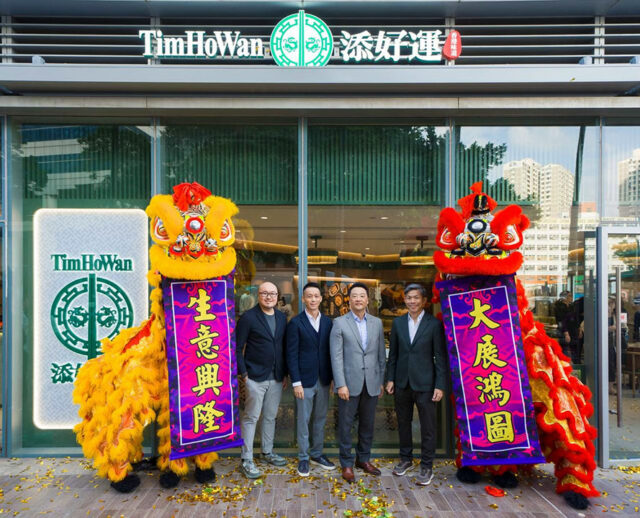
Pictured (from left): Daniel Lin, Tim Ho Wan Hong Kong general manager; Carl Tancaktiong, Jollibee Group China chairman; Richard Shin, JFC International chief executive officer and Jollibee Group global chief financial and risk officer; and Sheng Lee, Tim Ho Wan chief executive officer. — TIM HO WAN

TIM HO WAN, the Jollibee Group’s flagship Chinese cuisine brand, has opened its 10th restaurant in Kowloon, Hong Kong, doubling its city footprint from last year.

“Tim Ho Wan reflects our group’s purpose of delivering superior taste and joyful dining experiences to more people. It shows how culinary heritage can be scaled successfully when supported by disciplined systems,” Jollibee Foods Corp. (JFC) International Chief Executive Officer and Jollibee Group Global Chief Financial and Risk Officer Richard Shin said in a statement on Wednesday.

JFC said Tim Ho Wan’s accelerated expansion in Hong Kong has strengthened financial performance across all markets.

System-wide sales rose 5.2% in the third quarter of 2025 compared with the first half of the year, led by growth initiatives in Hong Kong, Singapore, and China.

Franchise markets recorded 6.5% growth in the same period, supported by double-digit gains in the Philippines and Taiwan.

“With a profitable Hong Kong network as the foundation, we are optimistic that Tim Ho Wan is well-positioned to expand to more markets worldwide, as it works toward becoming the first truly global dim sum brand,” Mr. Shin added.

Hong Kong serves as Tim Ho Wan’s primary test market, where operational methods are developed before being implemented across company-run and franchise stores. Since joining the Jollibee Group, operations have adopted stricter procedures, more frequent audits, and increased spending on chef training and quality oversight.

“Hong Kong is where Tim Ho Wan began, and where our standards are set and proven,” Tim Ho Wan Chief Executive Officer Sheng Lee said.

“Across all stores, we focus on Cantonese craftsmanship, taste, and quality, supported by a stronger operational discipline that ensures authentic flavors are delivered consistently. Those fundamentals give us the confidence to grow while staying true to what defines Tim Ho Wan.”

Tim Ho Wan has also opened its first company-operated store in North America at Irvine, California, following a new outlet at LaLaport Tokyo Bay in Japan, and has achieved strong results in Singapore, where its teams earned a Service Excellence Award from the Restaurant Association of Singapore.

Jollibee Group completed its takeover of Tim Ho Wan in January 2025 through its subsidiary Jollibee Worldwide Pte. Ltd., acquiring 166.46 million shares from Titan Dining Group Ltd. for $20.2 million under a share purchase agreement signed in November 2024.

At the local bourse on Wednesday, JFC shares rose by 1.49% to P205 apiece. — Alexandria Grace C. Magno

Banking on certainty: Affluent Filipinos are now choosing time deposits to grow their wealth

Time deposits are often dismissed as conservative instruments — reliable but unremarkable. Today, however, they are quietly reemerging as a preferred tool for growing wealth among affluent Filipinos seeking stability, predictability, and competitive returns amid persistent market volatility.

As global markets experience heightened uncertainty, the wealthy are increasingly prioritizing capital preservation without sacrificing yield. This has resulted in renewed interest in time deposits, particularly those offering rates that rival more complex investment products.

This trend is especially evident in the growing uptake of high-yield time deposit offerings from digital-forward banks. Salmon Bank (Rural Bank)’s “Bank on Eight,” which offers up to 8% per annum on qualified time deposits, is one example of how traditional saving instruments are being redefined for today’s premium clients.

Among affluent savers, time deposits are no longer viewed merely as parking spaces for idle cash. Instead, they are increasingly considered strategic components of a diversified wealth portfolio, especially when yields rival that of higher risk instruments.

Salmon Bank (Rural Bank), Inc. has observed this firsthand. In 2025, the bank’s deposits client base doubled, driven largely by strong demand for its time deposit products. Approximately 85% of its clients are classified as affluent, an indication that wealthy Filipinos are deliberately choosing time deposits as a core savings vehicle.

Industry observers note several reasons behind this shift.

First, stability has become paramount. In an environment marked by volatile equity markets and evolving interest rate expectations, time deposits provide certainty. Funds are placed with a regulated bank, returns are contractually defined, and principal is protected — attributes that resonate strongly with investors seeking long-term wealth preservation.

Second, predictability remains a powerful draw. Unlike market-linked products, time deposits deliver guaranteed returns. Savers know exactly how much they will earn over a given period, reducing anxiety and enabling more precise financial planning. For business owners and professionals alike, peace of mind is often worth more than the potential upside of riskier instruments.

Third, attractive yield has changed the conversation entirely. While time deposits are traditionally associated with modest returns, select banks now offer rates that can even compete with other investment options — like money market funds. Salmon Bank (Rural Bank)’s 8% per annum rate is well positioned in the Philippine banking sector today, providing what many clients view as the “best of both worlds” — low risk with compelling returns.

Lastly, the low maintenance feature of time deposits plays a crucial role. Time deposits require minimal monitoring, allowing clients to focus on growing their businesses, managing careers, or pursuing personal priorities.

‘Bank on Eight’ with Salmon Bank (Rural Bank)

Adapting to the evolving preference of affluent savers, Salmon Bank (Rural Bank)’s “Bank on Eight” offer provides an 8% per annum interest rate on time deposit placements of at least P1 million, with a minimum term of 1 year. For placements below said amount, clients can still enjoy a competitive 6% interest rate.

The promo is available for time deposit terms ranging from a minimum of one year up to five years for accounts opened between Dec. 1, 2025 and June 1, 2026.

To illustrate the potential returns: a P1-million placement for one year can generate gross compound interest earnings of P82,388. Over five years, the same placement can grow to gross earnings of approximately P469,945. Both amounts are still subject to withholding tax. These figures underscore why time deposits are being reevaluated not merely as savings tools, but as meaningful wealth-building instruments.

Built on trust, modernized for the present

Tracing its roots to the former Rural Bank of Sta. Rosa (Laguna), Inc., which has served Filipinos since 1963, Salmon Bank (Rural Bank), Inc. blends decades of institutional trust with a modern, customer-centric approach to banking.

Today, Salmon Bank operates under the full regulation of the Bangko Sentral ng Pilipinas (BSP), with deposits insured by the Philippine Deposit Insurance Corp. (PDIC) for up to P1 million per depositor.

Customers may open a Salmon Bank account via the Salmon App — available on the Google Play Store and Apple App Store — or opt to visit Salmon Bank (Rural Bank)’s branch in Bacoor, Cavite and Sta. Rosa, Laguna.

Salmon Group is the parent company of Salmon Bank. Salmon Group itself is backed by world-class investors, including the International Finance Corporation (member of the World Bank Group); ADQ/Lunate, Abu Dhabi’s sovereign wealth fund; and leading US venture capital firms.

For more information, visit https://salmon.ph/salmonbank.

Terms and Conditions apply. Per DTI Fair Trade Permit No. FTEB-242399 Series of 2025. Salmon Bank (Rural Bank), Inc. is regulated by the Bangko Sentral ng Pilipinas (http://www.bsp.gov.ph). Deposits are accepted only within bank premises or through authorized bank channels. Deposits are insured by PDIC up to P1 million per depositor.

Salmon Group is the parent company of Salmon Bank. Salmon Group itself is backed by world-class investors, including the International Finance Corporation (member of the World Bank Group); ADQ/Lunate, Abu Dhabi’s sovereign wealth fund and leading US venture capital firms.


Spotlight is BusinessWorld’s sponsored section that allows advertisers to amplify their brand and connect with BusinessWorld’s audience by publishing their stories on the BusinessWorld Web site. For more information, send an email to online@bworldonline.com.

Join us on Viber at https://bit.ly/3hv6bLA to get more updates and subscribe to BusinessWorld’s titles and get exclusive content through www.bworld-x.com.

SN AboitizPower to build 80-MW battery energy storage in Benguet

Binga Hydro, Itogon, Benguet — ABOITIZPOWER.COM

SN ABOITIZ POWER (SNAP), a joint venture between Aboitiz Renewables, Inc. and Norwegian firm Scatec ASA, is set to begin construction of an 80-megawatt (MW) battery energy storage system (BESS) in Benguet.

In a statement on Wednesday, Aboitiz Power Corp. (AboitizPower) said it had reached financial close for two BESS projects: a 40-MW system at the Binga hydroelectric power plant and a 40-MW system at the Ambuklao hydroelectric power plant.

Co-located with SNAP’s existing hydro facilities, both projects are designed to provide power reserves to the Luzon grid through the reserve market.

The facilities are targeted to begin commercial operations later this year.

Once completed, SNAP’s total BESS capacity in operation and under construction will rise to 160 MW.

The new capacity adds to SNAP’s growing energy storage portfolio, including the 24-MW BESS at the Magat Hydroelectric Power Plant, which has been providing ancillary services since 2024.

A BESS stores electricity from the grid and releases it when needed to augment supply or improve power quality, helping stabilize the grid and manage fluctuations in renewable energy generation.

“As the Philippines continues to scale up renewable energy under its energy transition goals, the need for flexible and reliable ancillary services is expected to grow,” the company said.

Aboitiz Renewables, the renewable energy arm of AboitizPower, said it aims to help the group reach its renewable energy target of 4,600 MW by 2030.

“Through continued investments in hydro, battery energy storage, and other renewable technologies, Aboitiz Renewables and SNAP are advancing a more resilient and flexible portfolio that supports long-term energy security and sustainability,” the company said. — Sheldeen Joy Talavera

Great British Festival gathers Filipino and British community to celebrate 80 years of bilateral relations

BCCP Executive Vice-Chairman Chris Nelson with Pru Life UK CEO Sanjay Chakrabarty

The Great British Festival in Manila 2026, held from Jan. 31 to Feb. 1, concluded with vibrant energy and strong community turnout. The two-day celebration brought British culture, creativity, and lifestyle experiences to Manila audiences with engaging activities, performances, and exhibits that highlighted UK-Philippines cultural and bilateral ties.

The event is organized by the British Embassy Manila, the British Chamber of Commerce Philippines (BCCP), and the British Council Philippines, and BusinessWorld as a media partner, as both countries celebrate the 80 years of diplomatic relations between the United Kingdom and the Philippines, standing out as a meaningful and inclusive event, blending lifestyle and culture while honoring the long-standing diplomatic ties between the two nations.

The event is organised with the following supporting partners: PruLife UK, VFS, HSBC, BPI, Shell, Union Jack Tavern, David’s Salon, MINI (Autohub Group), Lotus (Autohub Group), Triumph (Autohub Group), Jaguar / JLR, Cargo Fish, Robinsons Marketplace, Yummy Organics Food Products, Nutrigen, Don Revy Philippines, Mamas & Papas, Sainsbury’s, Exceed, CTC Group Philippines, Pina Beauty + Pamme, Chevening, AUG, AECC, StudyIn, and IDP.

HMA Sarah Hulton, David’s Salon President and CEO Laura Charlton, and BCCP Chairman Sarah McLeod

The festival offered visitors a mix of cultural showcases and interactive experiences. Attendees explored themed areas that featured British arts, food, music, and creativity alongside opportunities to learn about innovation, education, and business collaborations between the UK and the Philippines. Live entertainment was a key highlight throughout the weekend, giving festival-goers a lively atmosphere to enjoy performances and cultural displays reflective of British influence and creative exchange.

Local and international guests alike enjoyed the relaxed yet dynamic setting, with plenty of family-friendly activities, food options, and interactive exhibits that encouraged participation and exploration.

The two-day festival brought together families, students, professionals, and culture enthusiasts for a dynamic showcase of British culture, creativity, and lifestyle experiences. The event formed part of the year-long activities commemorating eight decades of UK-Philippines friendship and cooperation. The festival also served as a platform to reinforce cultural connections and celebrate the unique ties between the UK and the Philippines, an ongoing collaboration that extends beyond cultural exchange into education, business, and community engagement.

Beyond culture, the festival reflected a broader message of confidence in UK–Philippines relations. More recently, during the Chamber’s “Forecasting 2026: UK–PH Economic Perspectives” forum, the Philippine Economic Zone Authority (PEZA) Director-General Tereso Panga reported that British companies in PEZA ecozones now number 75 firms, with cumulative investments of P229.3 billion since 1995 and $1.4 billion in export value as of November 2025.

The Department of Trade and Industry Undersecretary Atty. Allan Gepty underscored that the Philippines offers a “consistent, credible, and forward-looking policy direction,” anchored on long-term development planning and openness to trade and investment. He noted that this clarity of direction positions the Philippines as “a reliable and attractive partner for investors seeking stability, growth, and long-term value,” particularly as cooperation with the UK deepens through platforms such as Joint Economic and Trade Committee (JETCO) and the country’s ASEAN Chairship priorities.


Spotlight is BusinessWorld’s sponsored section that allows advertisers to amplify their brand and connect with BusinessWorld’s audience by publishing their stories on the BusinessWorld Web site. For more information, send an email to online@bworldonline.com.

Join us on Viber at https://bit.ly/3hv6bLA to get more updates and subscribe to BusinessWorld’s titles and get exclusive content through www.bworld-x.com.

Allied Care Experts (ACE) Medical Center -Palawan to hold Annual Meeting of Stockholders on April 27 via Zoom


Spotlight is BusinessWorld’s sponsored section that allows advertisers to amplify their brand and connect with BusinessWorld’s audience by publishing their stories on the BusinessWorld Web site. For more information, send an email to online@bworldonline.com.

Join us on Viber at https://bit.ly/3hv6bLA to get more updates and subscribe to BusinessWorld’s titles and get exclusive content through www.bworld-x.com.

BSP’s term deposits fetch lower rate on easing hopes

BW FILE PHOTO

THE BANGKO SENTRAL ng Pilipinas’ (BSP) one-week term deposits fetched a lower average rate on Wednesday amid strong demand as weak growth data strengthened the case for further monetary easing.

Total bids for the central bank’s seven-day term deposit facility (TDF) reached P121.841 billion, exceeding the P110-billion auctioned off and the P106.037 billion in tenders for the same offer volume a week ago.

This led to a bid-to-cover ratio of 1.1076 times, up from the 0.9640 ratio recorded last week.

However, the BSP only accepted P107.441 billion in bids for the one-week papers, below the program, as it sought to keep the average yield low.

Tenders accepted had yields ranging from 4.45% to 4.5185%, slightly wider than 4.45% to 4.5125% band in the previous auction. This brought the average accepted rate to 4.4967%, edging down by 0.06 basis point (bp) from 4.4973% last week.

“The seven-day BSP TDF average auction yield was again marginally lower… after the relatively weaker local GDP growth data that somewhat increased the odds of a 25-bp BSP rate cut in the next BSP rate-setting meeting on Feb. 19,” Rizal Commercial Banking Corp. Chief Economist Michael L. Ricafort said in a Viber message.

He added that expectations that inflation remained benign in January also support prospects of an easing move.

Philippine gross domestic product (GDP) grew by 3% in the fourth quarter, slower than 5.3% in the same period a year prior and the revised 3.9% print in the third quarter, the government reported last week.

This was the slowest quarterly print in nearly five years or since the 3.8% contraction in the first quarter of 2021. Outside of the coronavirus pandemic, this was the economy’s worst performance since the 1.8% growth recorded in the fourth quarter of 2009, or during the Global Financial Crisis.

This brought full-year 2025 GDP growth to 4.4%, below the government’s 5.5%-6.5% goal. This was slower than 2024’s 5.7% and was the weakest annual expansion since the 3.9% in 2011, counting out the 9.5% contraction in 2020 due to the pandemic.

Officials said tighter public spending and weak investor confidence due to the flood control scandal continued to drag growth.

BSP Governor Eli M. Remolona, Jr. said on Sunday that a cut is possible at the Monetary Board’s Feb. 19 policy review if the fourth-quarter GDP slowdown proves demand-driven.

“If we can help on the demand side and still keep inflation low, then of course we’ll help,” he said.

He added that they will continue to assess the available data and decide “one meeting at a time.”

The Monetary Board has slashed benchmark borrowing costs by 200 bps since August 2024, bringing the policy rate to 4.5%

Analysts said weak economic prospects and manageable inflation give the BSP room to deliver one to two more cuts this year to end its current easing cycle.

A BusinessWorld survey of 18 economists yielded a median forecast of 1.8% for the January consumer price index, within the BSP’s 1.4% to 2.2% projection for the month. That means inflation would be unchanged from December and slower than 2.9% a year earlier.

January would also mark the 11th straight month that inflation stayed below the BSP’s 2% to 4% target.

The Philippine Statistics Authority is set to release January inflation data on Thursday (Feb. 5).

The central bank uses the TDF and BSP bills to mop up excess liquidity in the financial system and better guide market rates towards the policy rate.

It last auctioned off both the seven-day and 14-day deposits on Oct. 29. It has not offered 28-day term deposits for over five years to give way to its weekly offerings of securities with the same tenor.

Based on the BSP’s latest monetary policy report, its market operations have absorbed P1.5 trillion in liquidity as of mid-November 2025, with 5.4% of this being siphoned off via the term deposit facility. — Katherine K. Chan

ADVERTISEMENT
ADVERTISEMENT